Tag Archives: Australian Women Writers Challenge

Anna, Kim and Stephen’s Monsters

Anna Fienberg (writer), Kim Gamble and Stephen Axelsen (illustrators), Monsters (Allen & Unwin 2018)

monsters.jpgThis is the final collaboration between Anna Fienberg and Kim Gamble, the creators of the wildly popular Tashi books. They began it when they both knew Kim didn’t have long to live. When Kim became too ill to continue he bequeathed the job of finishing the illustrations to his close friend Stephen Axelsen. In the  published book it’s all but impossible to tell where Kim’s work finishes and Stephen’s starts. So the book is a testament to love and friendship, a cairn of lyrical words and luminous images.

It’s also a funny, scary picture book about a little girl, Tildy, who is terrified of monsters in the night and finds a way to overcome her fear through her friendship with Hendrik. There’s plenty of room to play spot-the-monster (and an occasional thieving magpie), and plenty of the visual and verbal wit and warmth that has made Anna and Kim (and, until now separately, Stephen) such beloved giants of Australian children’s literature.

Monsters is the eighth book I’ve read for the 2018 Australian Women Writers Challenge.

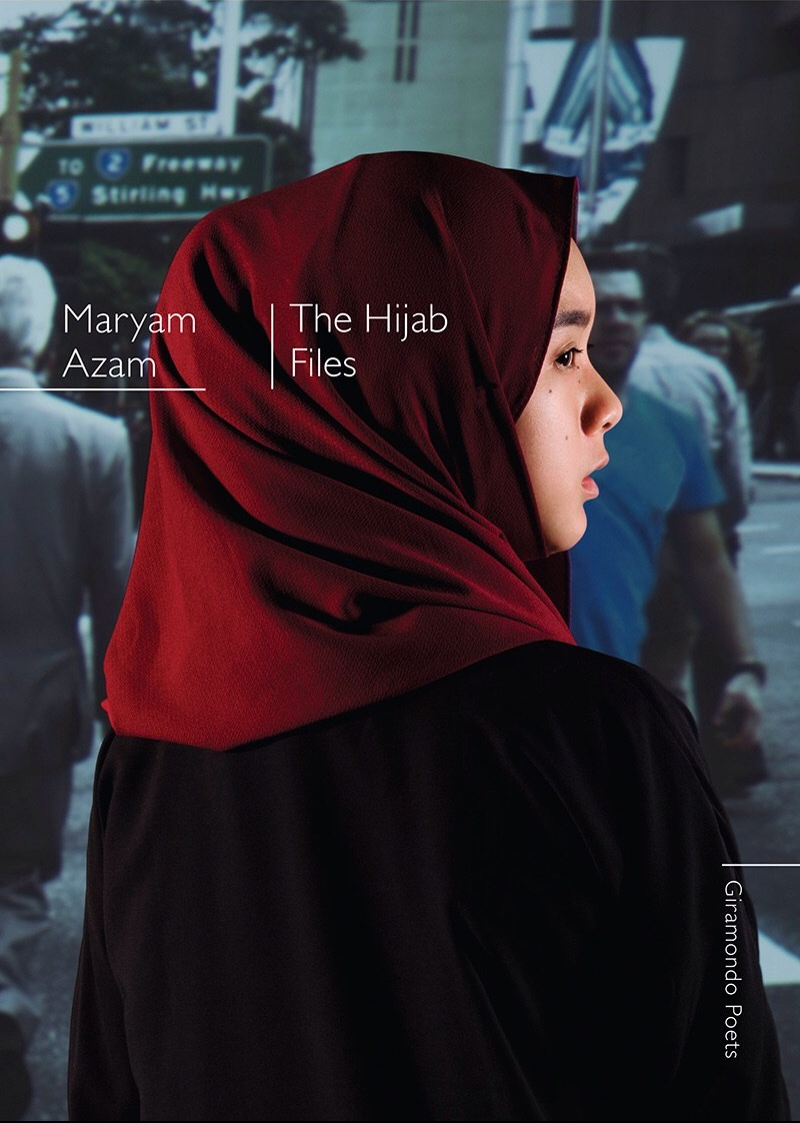
Maryam Azam’s Hijab Files

Maryam Azam, The Hijab Files (Giramondo 2018)

img_2516.jpg

In ‘Hotel Golf’ in the current issue of The Monthly, Erik Jensen writes that Helen Garner doubts if many people who attend church actually believe – she thinks that’s a myth maintained by non-religious people.

As a non-believer, I understand how Garner herself can participate in religious services without subscribing to the underpinning beliefs, but surely it’s just a failure of imagination to project that lack of belief onto the other participants. To put that another way, Helen Garner doesn’t seem to have met ‘many people’ like my Catholic  mother, or me in my teenage years, or – to get to the point – Maryam Azam, the author of The Hijab Files.

The 29 poems in this small book aren’t religious poems, but they are infused with a religious understanding of the world. Many of them focus on the hijab, and it’s hugely refreshing to hear a clear, nuanced, non-Orientalist voice on the subject, sometimes cheerfully practical (‘A Brief Guide to Hijab Fashion’, ‘Places I’ve Prayed’), sometimes satirical from an unexpected viewpoint (‘Modestique’), sometimes touching on friendly or hostile reactions from non-Muslims (‘The Hobbling Bogan’, ‘Praying at School’), sometimes addressing difficulties with other Muslims (‘Fashion Police’).

To single out one poem, here’s ‘Fajr Inertia’ (the Arabic fajr is explained in the epigraph):

Come to prayer! Come to success! Prayer is better than sleep!
FROM THE FAJR ADHAN (DAWN CALL TO PRAYER)

I lie in the knowledge of my failure
the way I lie through my chance at success,
hip sunk into the mattress
blanket over my chin
staring at a yellow flower clock
with a missing plastic cover
that reads six minutes past seven;
twenty-five minutes too late.
The broken gas canister of sleep
slowly clears from my head.
I hide under the covers from
the light invading my room
but I can't hide the fact
I'll have to live today outside
of Allah's protection.

You don’t have to be a devout Muslim to understand this: the emotion isn’t a million miles from how I feel when I missed my pre-breakfast visit to the swimming pool, and realise I’ll have to live the day without that half hour of self-care. Who hasn’t woken up befuddled by a ‘broken gas canister of sleep’? With a gorgeous lack of portentousness, the poem places Allah’s protection in the middle of this commonplace experience.

Helen Garner’s scepticism about other people’s religious belief is probably typical of non-believers in these secular times. The Hijab Files speak back quietly but definitely to challenge that scepticism.

If you’re interested in getting more of a sense of this poet, you could have a look at a short, 5-question interview with her on Liminal magazine, here.

The Hijab Files is the seventh book I’ve read for the 2018 Australian Women Writers Challenge. I am grateful to Giramondo for my review copy.

Suneeta Peres da Costa’s Saudade

Suneeta Peres da Costa, Saudade (Giramondo 2018)

saudade.jpg

I recently spent a wonderful couple of weeks in Portugal, visiting countless galleries and museums, walking the Caminho Portuguès, being blown away by the neolithic site at Evora. It’s a great place to visit. One cause for unease, though, was that at least in touristy circles conversation about Portugal’s past generally glossed over or completely ignored unsavoury topics: we heard quite a lot about the Age of Discovery, and very little about colonisation and slavery.

Saudade, a novella in Giramondo’s Shorts series (whose previous titles include Luke Carman’s An Elegant Young Man and Michael Mohammed Ahmed’s The Tribe), offers a welcome counterpoint to that silence and evasion. It is set in Angola, beginning in 1961, the year the Angolan War of Liberation began, and ending with the declaration of Angolan independence in 1975. It’s not a fictionalised account of the struggle of those years, but the coming of age story whose protagonist-narrator Maria-Cristina, born in Angola to Goanese parent, is three years old in 1961. The war and the process of decolonisation are rarely foregrounded: they affects the characters’ lives profoundly but remain in the background.

For the benefit of readers who know as little about Portuguese culture as I did three months ago, saudade is a pretty much untranslatable term described by Wikipedia as ‘a deep emotional state of nostalgic or profound melancholic longing for an absent something or someone that one loves.’ Wikipedia continues, ‘Moreover, it often carries a repressed knowledge that the object of longing might never return.’ It’s an emotion that looms large in Portuguese culture dating back, we were told on a walking tour of Lisbon, to the collective feeling of mourning and messianic hopes following the death of King Sebastian in a sixteenth century battle in northern Africa.

In this novella, it hovers over everything: it could refer to the yearning for independence (our protagonist earns the wrath of a ‘teacher from Coimbra’* when she repeats what she has heard on the radio and calls Bartolomeu Dias ‘the invader’); the general sense of dislocation (Portuguese is the official language, but the parents sometimes speak their mother tongue of Konkani, while African characters speak Creole or Kimbundu, which the protagonist doesn’t understand); a sense of not having a place in the world (which is explicit in the case of the young man who is Maria-Cristina’s first real sexual partner); and perhaps in a more diffuse way in a general sense that Maria-Cristina is telling her story as a way of reaching for some understanding of her past, some grounding.

Christos Tsiolkas said on radio recently that when he was young he read for pleasure, but came to understand that sometimes one could read to be challenged. I think of Saudade as a challenging book. Each of its eleven chapters is printed without paragraph breaks, and only sometimes do ellipses indicate where a paragraph would be in a conventionally laid out narrative. We learn Maria-Cristina’s name in Chapter 8. The elements of Angolan geography and history are not glossed. Chapter 2 begins:

The Brazilian mutineers from the Santa Maria did not get to the harbour of Luanda. Captain Galvâo did not start a revolution. None of the prisoners that escaped from the Sâo Paulo penitentiary tapped on our door, entreating us to harbour him as a fugitive. Yet in the days after the revolt at Baixa de Cassanje, there was a telex to say that a client of Papá’s, a German cotton-farm owner, had been killed in a northern reprisal.

That’s surely an invitation and a challenge to readers who (like me) don’t know anything about Angolan history to do a bit of research. I now know that three separate events in January and February 1961 marked the beginning of the Angolan War of Liberation.

Responding to invitations like this (and there are many throughout the book) seems to be a necessary part of reading the book: they ground the narrative in a particular time. At times they more questions than they answer. For example Maria-Cristina has an unsettling sexual encounter with a soldier in a movie theatre, and names the film they are watching. It’s La chinoise. Well, that’s a movie made by Jean-Luc Godard in 1967. If you allow a couple of years for dubbing and shipping, Maria-Cristina is probably about 11 years old, and by doing this calculation we realise that it’s a story of child sex abuse. That’s not how Maria-Cristina narrates it, though. The question I couldn’t shake, though, was: what self-respecting Angolan soldier would go to see a French movie about a house full of students arguing about Maoist politics? I’m not saying this was a mistake. It’s clearly deliberate, and it’s part of the generally unsettling nature of the book. Nothing is simple, nothing is straightforward in a complex world the colonised are fighting back and searching for solid ground.

Saudade is the sixth book I’ve read for the 2018 Australian Women Writers Challenge. I am very grateful to Giramondo for my review copy.


• A city in Portugal

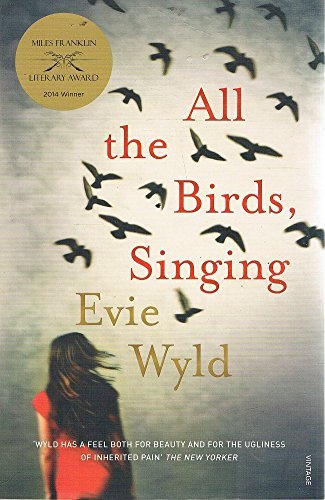
Evie Wyld’s All the Birds, Singing

Evie Wyld, All the Birds, Singing (Vintage 2013)

wyld.jpg

My copy of All the Birds, Singing announces on the cover that it won the Miles Franklin Award in 2014. As I read the first chapter, which is set in a generic British countryside, I wondered about that prize, given the insistence in past years that the Miles Franklin winner had to be set in Australia. The first paragraph of the second chapter put my questioning to rest:

We are a week from the end of the job in Boodarie. I’m in the shower at the side of the tractor shed watching the thumb-sized redback that’s always sat at the top of the shower head. She hasn’t moved at all except to raise a leg when I turn on the tap, like the water’s too cold for her.

Then, as if Boodarie and the redback aren’t enough to signal that we are now in rural Australia, the next paragraph lays it on thick:

The day has been a long and hot one – the tip of March, and under the crust of the galvo roof the air in the shearing shed has been thick like soup, flies bloating about in it. […] The first stars are bright needles, and in the old Moreton Bay fig that hangs over the tractor shed and drops nuts on the roof while I sleep, a currawong and a white galah are having it out; I can hear the blood-thick bleat of them. A flying fox goes overhead and just like that the smell of the place changes and night has settled in the air.

The novel continues in alternate chapters. On an unnamed British island, the protagonist has a small sheep farm, and someone or something is killing her sheep. In Australia, some years earlier, she is a lone woman shearer, with a dark secret in her past. On the island, she has to deal with a series of men who refuse to take her story of a sheepkiller seriously. In Australia, the telling moves back in time through a series of unfortunate incidents, mostly involving physical and sexual abuse by men.

It’s a good read, but I have to tell you that if, like me, you prefer a book that sets up a mystery to arrive at a solution to that mystery, you will want, like me, to throw this one across the room when you reach the final pages.

All the Birds, Singing is the fifth book I’ve read for the 2018 Australian Women Writers Challenge.

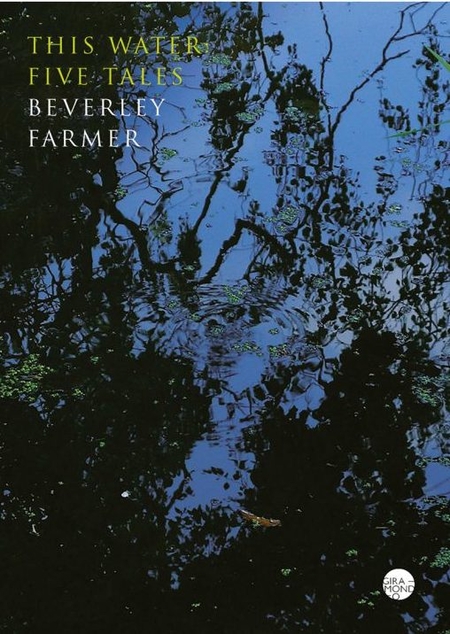
Beverley Farmer’s This Water

Beverley Farmer, This Water (Giramondo 2017)

5tales.jpgThis Water is Beverley Farmer’s tenth book. Her first, the novel Alone, was published in 1980. Her short story collection Milk won the Christina Stead Prise for Fiction in 1984. She was shortlisted for the Miles Franklin Award in the 1990s, and in 2009 she received the Patrick White Award, given each year in November to an Australian writer ‘who has been highly creative over a long period but has not necessarily received adequate recognition’.

As Alexis Wright said in her acceptance speech for this year’s Stella Prize, ‘any book is nothing less than a monumental achievement’. To have written book after book as Beverley Farmer has done, with just enough recognition from those who bestow cultural credibility, is beyond monumental.

I haven’t read any of her earlier work, apart from an essay or perhaps two in the late lamented Heat, but I suspect that This Water represents something like a Late Style. There’s something about its five stories that signals a grand indifference to fashion or indeed to how any reader might judge them. They are:

  • ‘A Ring of Gold’, which features an old white woman living alone (though surrounded by other people) in coastal Victoria, long after the death of her husband and her only sustaining relationships being in memory and with the natural world. I thought of this as a kind of Portrait of the Artist as an Old Woman, only deliberately leaving out the art-making
  • ‘This Water’ and ‘The Blood Red of Her Silks’, two tales in the mode of Celtic stories of princesses and curses. Unlike the magnificent tellings of such stories for young readers by the late Ruth Manning Sanders, or for that matter Hans Christian Andersen’s ‘The Wild Swans’, these – especially the second, much longer one – leave their folk origins to tell challenging adult tales (adult in the sense of grappling with difficult ideas)
  • ‘Tongue of Blood’, a monologue from a figure from Ancient Greek tragedy
  • ‘The Ice Bride’, the longest of the tales. With motifs and structural elements from fairy tales – especially “Bluebeard’ and ‘Beauty and the Beast’, and perhaps a gender-reversed ‘The Snow Queen’ – this is a deeply creepy, dream-like fantasy. I haven’t read Fifty Shades of Grey, and I imagine that this is infinitely better written, but the abject dependence of the female protagonist on her ‘Lord’ made me think of that book.

None of the characters in any of the tales has a name.

I can’t say I loved the book, but it’s beautifully written, uncompromising in its commitment to exploring aspects of women’s experience, and strong enough that when ‘light year’ is referred to as a measure of time (‘Our dreams are like the stars. What we see is light years ago.’) my irritation was forgotten within a couple of pages. If you plan to read just one of the stories, I recommend ‘The Blood Red of Her Silks’.

This Water is the fourth book I’ve read for the 2018 Australian Women Writers Challenge. I gratefully acknowledge that my copy is a gift from Giramondo.

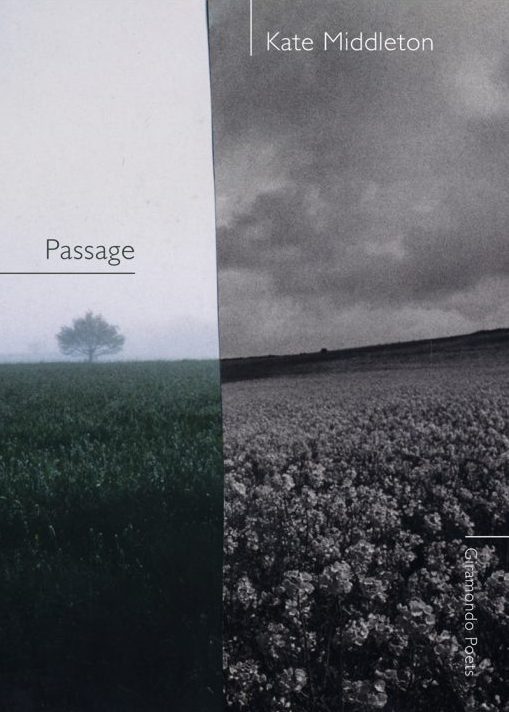
Kate Middleton, Passage

Kate Middleton, Passage (Giramondo 2017)

passage.jpg

Most of the poems in Passage are either erasures or centos.

/Explanatory note for the benefit of readers who know even less than I do:/
Cento is defined in my excellent Gepp & Haigh Latin–English dictionary (1888) as ‘a poem or composition made up of scraps from various authors or parts of an author’. A basic, nonsensical nursery-rhyme cento, for example, might be:

The mouse ran up the clock
to fetch a pail of water.
He put in his thumb,
see how they run,
How does your garden grow?

An erasure is created by erasing some or most of another piece of writing. I enjoy making them from newspaper columns that annoy me.  Here’s one based on a recent attack on the #changethedate movement:

erasure005-e1517140699925.jpg

/End explanatory note/

Both forms can be fun, but when, as in Kate Middleton’s work, the source material isn’t well known or readily available, and the poem is longer and more than a fun game, questions arise that I don’t know the answers to.

Given my new policy of just talking about a single poem when blogging about poetry books, I was tempted to choose one of Kate Middleton’s fine poems that aren’t centos or erasures or in some other way symbiotic with another text (such as the handful that are responses to episodes of a TV show I’ve never heard of). There are plenty of such fine poems –  but to choose one of them would feel craven. So here’s the cento ‘Elegance’, which I’ve singled out because I’ve read its source text, Luke Carman’s An Elegant Young Man.

elegance006.jpg

It’s possible to read this without any attention to its cento-ness. The opening couplet announces an emotional tone and names a locality. The next two stanzas sketch an unprepossessing urban landscape – this is not the West of movies but western Sydney. Then the poem turns to address the person looking at this landscape, and becomes a portrait of a writer as one who conceals his metaphorical knife in public, is loud alone at home, and struggles to avoid clichés (‘ordinary answers’).

It’s a cento not only from Luke Carman but for him. Writing cover letters to nowhere is a pretty nice description of a writer’s job, and the references to chance and repeated falls are extraordinarily apposite to the way Carman’s writing often mimics an intense distractibility, and so much of it is about his own social awkwardness and other struggles.

It’s a sweet tribute. By the end, one wants to revisit the capitalised ‘West’ from the second line. Carman is a kind of Western hero after all, even though his West is not Monument Valley, but Western Sydney.

So what does it mean that the poem is a cento?

Being by profession a proofread type editor, and by inclination a bit pernickety, I got out my copy of An Elegant Young Man. I didn’t have time to reread it all, but I read enough to find some of the poem’s source text. ‘Barred shopfronts flicker phantasmic blue’ is distilled from ‘shuttered-up Asian supermarkets and squash centres and brick unit blocks with TV flickering a phantasmic blue through the windows’. ‘I guess you’re like a minor Aussie character / in movies’ comes from this: ‘I mostly stood still and tried to seem happy-go-lucky, like those minor Aussie characters in movies like Chopper and  Getting Square’.

So Kate Middleton hasn’t been rigid in quoting the original. As the Emerging Artist said, she’s referencing the text rather than quoting it. In these examples, she leaves out the detail of the shopfronts and the TV, and the happy-go-lucky appearance (which is ironic in its original context anyhow). It’s not just referencing, but also repurposing. She finds in Carman’s text words that describe him in relationship to the milieu that is his subject in ways that he (presumably) wouldn’t think to describe himself. It’s a kind of alchemy.

I still don’t know how the longer centos work, from writers including Siri Hustvedt, Eliot Weinberger and Sir John Mandeville; or erasures that run to several pages. I’m happy to leave that question to better informed readers than I am.

Passage is the third book I’ve read for the 2018 Australian Women Writers Challenge. I was given a complimentary copy by Giramondo, for which horizon-expanding gift I am grateful.

Fiona Wright’s Domestic Interior

Fiona Wright, Domestic Interior (Giramondo 2017)
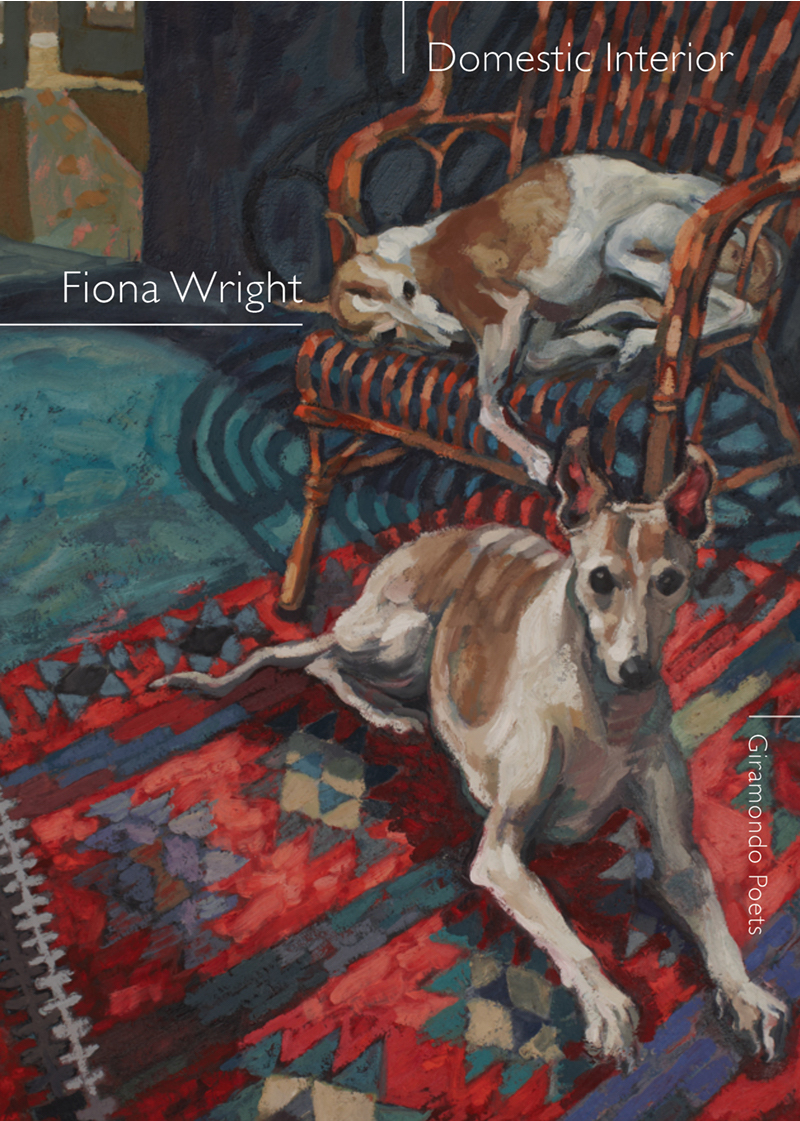
Domestic.jpgOne of my New Year resolves for the blog is not to attempt to review every book of poetry I read. I’ll still blog about them, but for each book I’ll focus on one or possibly two poems that resonate with me in some way.

Domestic Interior tests that resolve, because an awful lot of its poems speak to me loud and clear.

I haven’t read Fiona Wright’s first book of poetry, Knuckled (2011), or her collection of essays, Small Acts of Disappearance  (2015), both published by Giramondo, but somehow I’d picked up an expectation that her work would bristle with introspective misery. That expectation, even though endorsed by the back cover’s reference to ‘highly charged moments of emotional extremity’, turned out to be wide of the mark. Even the section titled ‘A Crack on the Skin: On Illness’, there’s much lightness, grace, good humour and a pervasive celebration of friendship. And always, especially for Sydney readers, there’s plenty of recognisable life as we know it or, in a number of poems, as we overhear it.

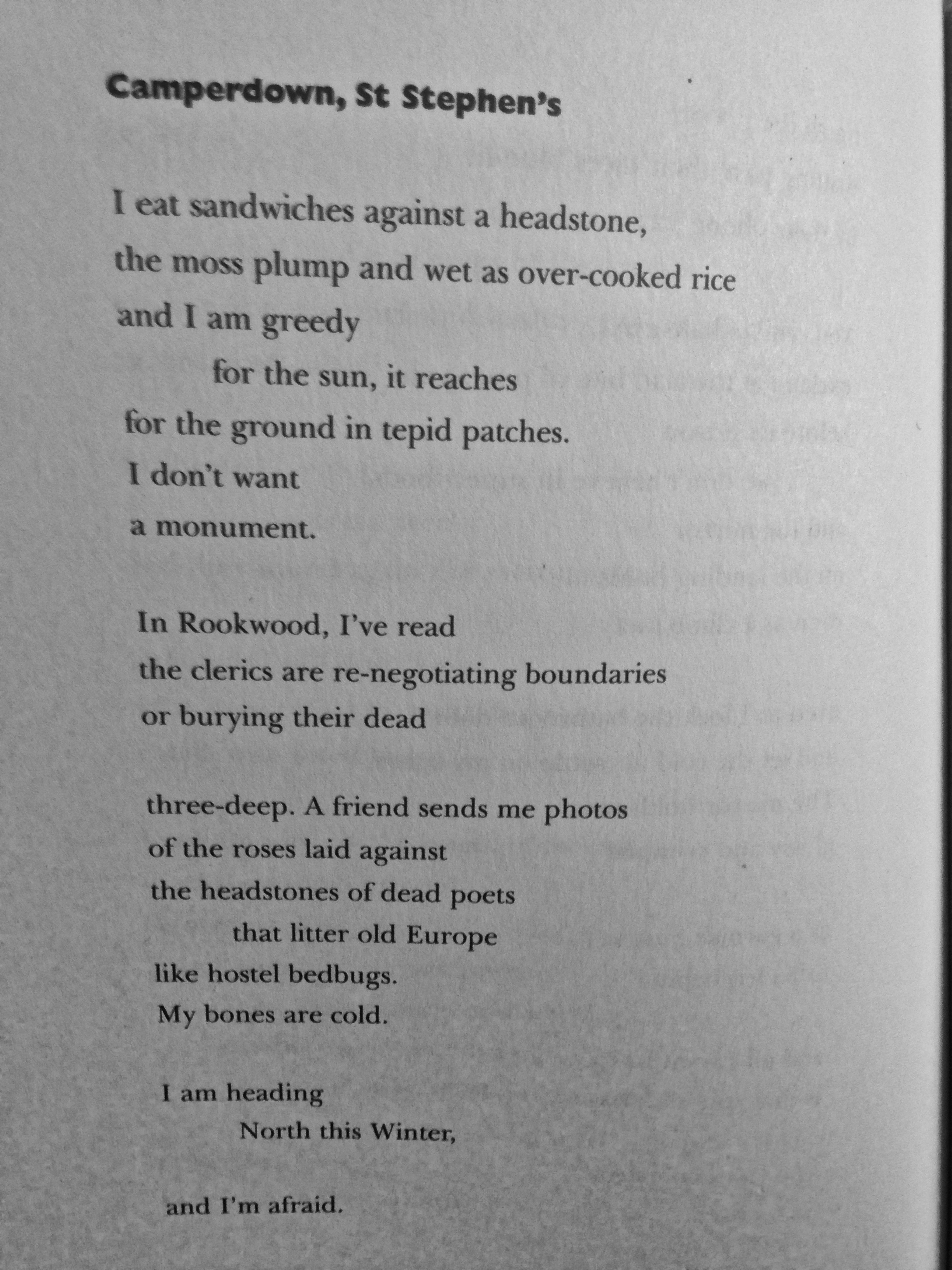
I caught a glimpse of Fiona Wright at a funeral when I was still part way through my first reading of the book, reason enough to choose to blog about ‘Camperdown, St Stephen’s’:
StStephens

For the benefit of non-Sydneysiders: St Stephen’s Anglican Church is the site of the historic Camperdown Cemetery. The Moreton Bay fig that grows there featured in Nadia Wheatley and Donna Rawlins’s classic and totally not-morbid picture book, My Place. It’s a beautiful and almost intimate setting, where it’s not terribly weird or morbid to eat a sandwich leaning against a headstone, so it may take a while for the force of that image to sink for a local reader. Rookwood is a suburb in Sydney’s west whose name is enough to evoke thoughts of mortality in most of Sydney and well beyond: it is home to what Wikipedia calls the ‘largest necropolis in the southern hemisphere’, now facing problems of overcrowding.

From the opening image, in which a stark memento mori lurks beneath a pleasantly mundane lunchtime scene, the poem plays first with the idea of hunger, associated with the sandwiches: the moss is like rice, the speaker is greedy for sun, and the sun for the earth. (It must be autumn, warm enough to have lunch outdoors, but cool enough that patches of sunlight are tepid.) Then, in a neat couple of almost rhyming short lines (‘I don’t want / a monument’), the headstone comes to the fore.

Which leads to Rookwood – yes, it stands in for death on a grand scale, but the lines are rooted in this specific time and place: there really are debates about how to deal with the vast numbers of bodies needing to be buried. Camperdown Cemetery is comfortably historical; Rookwood is today’s news. The dead are named for the first time, slyly rhyming with ‘read’ (maybe she’s reading news on her phone while eating her sandwiches).

Then she thinks of her friend’s photos (received on the same phone?). Roses lie against headstones, just as the poet does in the first stanza. Only now it’s many poets and they are the dead.  No sun no pleasant sandwiches there: the roses laid in homage don’t carry much force – images of litter and bedbugs come to mind, and from this distance perhaps the roses are reduced to something like little bursts of blood on hostel sheets.

‘My bones are cold’: she now identifies with the dead poets. And in the last three lines, the chill of that identification goes deeper: she is heading North, to that Europe littered with dead poets, and she fears that she is about to join them.

Maybe it’s just me, but I laughed. I don’t think the poem or I are trivialising death or the fear of dying. But the poet’s fear here is not the kind that strikes with a diagnosis of stage 4 pancreatic cancer. There’s something fancifully neurotic about it, an edge of mockery that doesn’t trivialise the fear but allows us to breathe around it, to approach it playfully: after all, how seriously can you take the the graves of poets when they are presented as littering Europe like bedbugs in a hostel?

My writing of this blog post was interrupted by an expedition to Manly. After visiting North Head Project at the Manly Art Gallery (open until 18 February and worth the ferry ride), we went up to North Head itself and wandered in one of the three cemeteries connected to the Quarantine Station there. Walking among the graves of mostly young people, I thought of this poem, and realised that for all its lightness of touch, its rootedness in 21st century Sydney and a particular friendship network, it sits squarely in a tradition: ‘and I’m afraid’ echoes the refrain, ‘Timor mortis conturbat me (The fear of death confounds me)’, common in mediaeval European poetry. I went hunting and realised I knew it from William Dunbar’s ‘Lament for the Makers‘. That 16th century poem, of which every stanza ends in the Latin refrain, includes a kind of honour roll of poets who have died, beginning with ‘noble Chaucer’ and continuing with names now long forgotten. Rereading ‘Camperdown, St Stephen’s’ in that context, I like it even more, but you don’t have to have read Dunbar or visited North Head for the poem to work for you.

Domestic Interiors is the second book I’ve read for the 2018 Australian Women Writers Challenge. I received a complimentary copy from Giramondo, for which I am grateful.

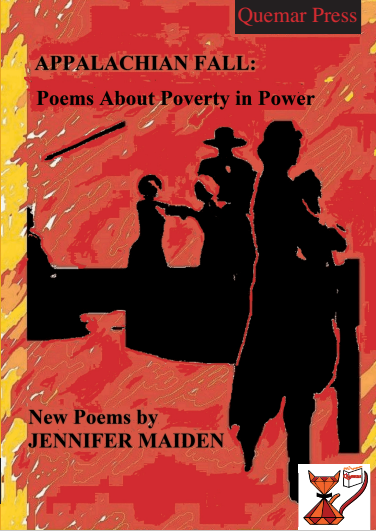
Jennifer Maiden’s Appalachian Fall

Jennifer Maiden, Appalachian Fall: Poems about Poverty in Power (Quemar Press 2017)

appalachian.pngQuemar Press published the ebook of Jennifer Maiden’s  Metronome the day after the 2017 US presidential election. In its last poem, Maiden’s fictional alter egos George Jeffreys and Clare Collins watch the election results on TV, and chat to Donald Trump on the phone. One insistent strand of Appalachian Fall is a continuation of the Trump theme.

Jimmy Carter chats with his re-awakened distant cousin Sara Carter Bayes at Trump’s inauguration. Jane Austen comments on his rivalry with Kim Jong-Un. Eleanor Roosevelt and Hillary Clinton chat about him.  Trump himself appears with George Jeffreys, with his mother, Mary Anne Macleod, and solo.

Maiden’s lively, questioning intelligence worries away at the double mystery of Trump: who is he and what happened to make him President? The book’s subtitle, ‘Poems of Poverty in Power’, gestures towards her answer to the second question: Jimmy Carter, reflecting on Sara’s music, articulates it:

thought: we knew ourselves when we heard it:
the low gut scream of hunger,
for some food, some pride, for any sort of
civilising action, answered passion, and if all
these people were Trump voters, maybe that in fact
was why he couldn’t despise their desperation.

Maiden addresses the first question –’who is he?’– with something approaching compassion, or at least an attempt to understand the human being, which is a kind of poetic heroism. Just as, years ago, she made poetry from her observations of George W Bush’s nose and Kevin Rudd’s pursed lips, in ‘Wind-rock’ she makes us see Donald Trump’s characteristic walk, and so the man himself, with fresh eyes:

 brace and blend into a finish. Trump’s erratic pace
wind-rocked staggers stubborn with its hunching
at growth and gust in air and no escape.

There’s a lot more than Trump here, but I won’t attempt a proper review. I’ve spent far too long on this blog post already, partly because I keep rereading the poetry – I love the sound of Jennifer Maiden’s voice, even when, occasionally, I don’t get what she’s saying or think she’s way off the mark. And partly because, well, see the next paragraph. For an excellent review, I recommend Magdalena Ball’s at Compulsive Reader.

So this is what took me too much time. There’s an extraordinary wealth of reference in Maiden’s poetry: to the Australian poetry scene past and present, poetry in general, politics in Australia, the US, the UK and Catalonia, art, music, the publishing industry, TV shows, movies, famous and little-known political and cultural figures. I thought it would be interesting to put together a visual representation of the intricate web of associations and connections created in this book, and produced the slide show below, which is still not exhaustive).

Enjoy. And then read the book. Quite a lot of it is up on Quemar’s website as a PDF.

This slideshow requires JavaScript.

Though I read Appalachian Fall last year I’m counting it as my first book  for the 2018 Australian Women Writers Challenge.

AWW 2017 challenge completed

aww2017.jpg

This is my mandatory round-up post about the Australian Women Writers’ Challenge 2017. I undertook to read 10 books by Australian women writers. I read 14. Here they are. I’ve tried to be clever with the lay-out. My apologies if it shows up on your screen as a jumble (as it certainly will on a phone).

Seven poetry collections:

Four novels, three of them e-books:

Three memoirs:

Not a dud among them!

I’m signing up for the 2018 challenge.

My general gender stats: This year I read 20 books by women and 46 by men.

Shocked at my own gender bias, I can massage the figures:

  • If I don’t count comics, the male-written books come down to 24, or 29 if I count each comics series as a single work
  • If I include journals, add 5 to the women’s score and 3 to the men’s (or 6 and 3 respectively if you count Southerly 76.3, jointly edited by Laetitia Nanquette & Ali Alizadeh)

So, with a bit of creative counting, I have read 26 books by women and 32 by men.

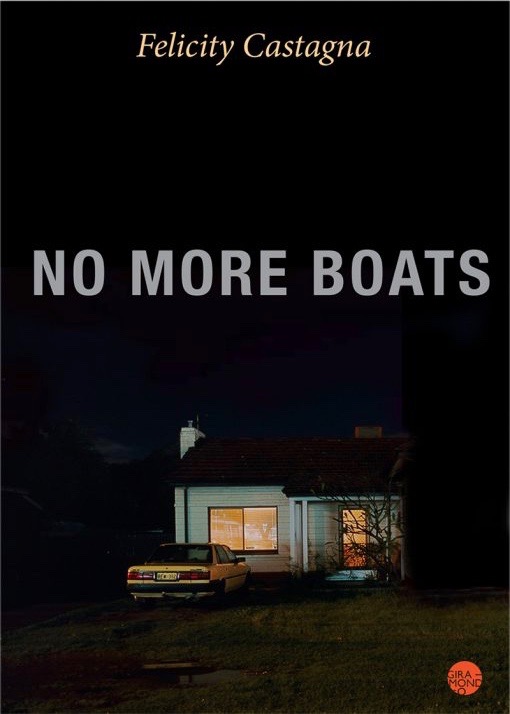
Felicity Castagna’s No More Boats

Felicity Castagna, No More Boats (Giramondo 2017)

boats.jpgIt’s 2001. The Tampa is all over Australian television with its burden of asylum seekers saved from drowning, alternating with John Howard’s uttering his infamous cry, ‘We will decide who comes to this country and the circumstances in which they come.’ And one working-class migrant family in Parramatta is coming apart at the seams.

Antonio Martone came to Australia after World War Two and married Rose, an Anglo woman he met in the migrant hostel. In 2001 he is injured in a terrible accident on a building site trying to save his best friend’s dignity, and after decades of skilled labour is forced to retire. Francis, their son who still lives at home, works by day on the same projects as his father, though without the pride of a first-generation migrant, and he knocks around by night with a small group of partying friends. Their daughter, Clare, has lit out for the inner city where she works in a bookshop and aspires to be a writer (though as far as the family is concerned she is still a high-school teacher): ‘She was born to these city streets, even though she wasn’t really born in the city; she was made to be born here and when she walked these streets she told herself that she was.’ And Rose tries to keep it all together as Antonio becomes increasingly bitter and erratic.

The novel’s title may lead you to expect it to be about Australian immigration policy. Well, maybe it is, but the domestic story, the story of Antonio’s deterioration and other people’s responses to it, is at the book’s heart. Here’s Antonio just after discovering that Clare has been lying about keeping her teaching job:

He felt the weight of something pressing against his chest. A memory interrupted his exit from the school: Clare with her pigtails in plaits, standing with a piece of chalk at the blackboard he’d given her for her twelfth birthday, writing down words for a five-year-old Francis to copy onto a sheet of paper.

He wondered who his children were now. This was the hardest thing about being a parent, the thing that no one tells you about. The fact that you grieve for your children from the moment they are born. Not so much because you’ve lost them but because they are always changing and you can’t get back all those different versions of what they once were.

Antonio grapples with many kinds of loss – of the pre-migration life, of youth, of employment, of physical wellbeing, of dignity, and of friends. Flailing around for a way to deal with his wretchedness, he seizes on the issue of immigration: he’s offended by the poor workmanship of the underpaid recent migrants on the worksite, and becomes obsessed with the objects of John Howard’s televised indignation. At a crucial moment he smokes some marijuana from Francis’s secret supply, and creates a spectacular piece anti-boat-people graffiti. The family is suddenly in the headlines, the dramas being played out on the television are much closer to home, and there’s a strong undercurrent suggesting that Antonio’s deterioration may be a metaphor for a similar process in Australian ciivil society.

There are other characters: a Vietnamese former student who surprises Clare by becoming a love interest; a Lesbian next door neighbour who provides respite for Rose; Francis’s mates Jesús and Charbel; a right-wing opportunist who exploits Antonio’s confusion; the ghost of Antonio’s friend who was killed in the accident – and more. It’s a story told at a pace that keeps the pages turning, with compassion for all players (John W Howard – ‘the dull man’ – and right-wing opportunists excepted), and a strong sense of place: the Martone home with its concreted front yard and gap in the fence to the house next door, the streets of Western Sydney and the inner city, the banks of the Parramatta River, this is a book in which you always know where you are.

aww2017.jpgNo More Boats is the fourteenth book I’ve read for the 2017 Australian Women Writers Challenge. I gratefully acknowledge that I received a complimentary copy from Giramondo Books.