Tag Archives: journals

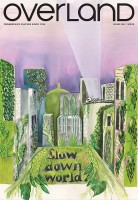
Overland 222

Jacinda Woodhead (editor), Overland 222 (Spring 2015)
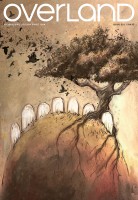
overland222.jpgLike most issues of Overland this one includes:

the results of at least one literary competition: Peter Minter asks in his judge’s report on the 2015 Overland Judith Wright Poetry Prize, ‘Isn’t nurturing the penniless avant-garde something we should all embrace?’ As well as the poetry prize, this issue announces the Neilma Sidney Short Story Prize.

the regular columnists: I always enjoy Alison Croggon, who here takes issue with the idea of art as therapy, and Giovanni Tiso, who airs his ambivalence about his preference for old books. Natalie Harkin, a Narungga woman, poet and academic, makes her debut, reflecting on the importance of sharing personal narratives.

at least one intelligently provocative article: Stephanie Convery in Get your hands off my sister sounds a forceful warning against ‘activism centred on an unshakeable faith in women’s accusations of sexual assault’. The whole essay is worth reading, but I was struck by her point that harsher penalties for sexual assault don’t prevent it, but move it to a different location, ie, especially in the USA, to prisons.

• an excerpt from a work in progress: This is usually my least favourite thing in a magazine, especially when not clearly labelled, because the reader tends to be left hanging. Maxine Beneba Clarke’s The current inhabitants of the island is an exception. It’s a sharp stand-alone story of encountering racism in her childhood that make me look forward to her memoir, The Hate Race, later this year.

high level journalism: Antony Loewenstein’s After independence throws light on the state of South Sudan four years after gaining its independence. Loewenstein had been living in Juba, the capital, for most of the year before the anniversary, and what he reports isn’t pretty.

• a literature report: Ben Brooker’s article on vegetarianism and the left cites sources from Marx to Anna Krien, including books with titles like Brutal: Manhood and the Exploitation of Animals and The Sexual Politics of Meat, on the links between vegetarianism and progressive social movements (Marx wasn’t convinced). I met the term ‘carnism’ here for the first time, and learned that vegetarian scholarship is a thing. Incidentally, he mentions Hitler, but not that Hitler was vegetarian.

cultural studies. Dean Brandum and Andrew Nette give a workmanlike account of the Crawfords dramas HomicideDivision 4 and Matlock Police, with emphasis on their function as at times ‘a kind of entertainment auxiliary in the fight against crime’. It’s oddly comforting to see the TV shows one deliberately didn’t watch in one’s 20s become the stuff of cultural history.

debate: Well, not exactly a debate this issue, but Four perspectives on race & racism in Australian poetry by AJ Carruthers, Lia Incognita, Samuel Wagan Watson and Elena Gomez presents four strikingly different takes on their given subject and they do strike some sparks off each other. Racism and neo-orientalism run deep in Australian culture in general and Australian poetry in particular, but it depends where you look. Spoken word, conceptual poetry, radically experimental writing are thriving sites for non-white poets. The ‘narrowly expressive “I-poem”‘ may or may not be part of the problem. Sam Wagan Watson has the best single sentence: ‘There is no clinical evidence to suggest that racism is a by-product of mental illness, although I’ve heard many try to argue the fact.’

fiction: five short stories in this issue, including the Neilma Sidney Prize winner. It’s a grim lot, featuring anti-Muslim nastiness in the suburbs (the prize-winner, by Lauren Foley), a refugee school teacher who (not really a spoiler) kills himself (Ashleigh Synnott), a young, possibly Aboriginal woman entering a situation of sexual exploitation (Jack Latimore), a dystopian future where birds and insects are mechanical (Elizabeth Tan), and a woman who remains painfully silent when her boyfriend jokes about violence against women (Jo Langdon). All good stories, but not a lot of laughs and no real twists in the tail.

poetry: Toby Fitch takes over from Peter Minter as poetry editor with this issue. They judged the poetry prize together, and the three place-getters are the full poetry content, making this in effect a hand-over issue. Apart from writing his own poetry, Toby runs the poetry nights at Sappho’s in Glebe and is poetry reviews editor on Southerly. I look forward to his Overland regime.

Always a good read, usually cover-to-cover.
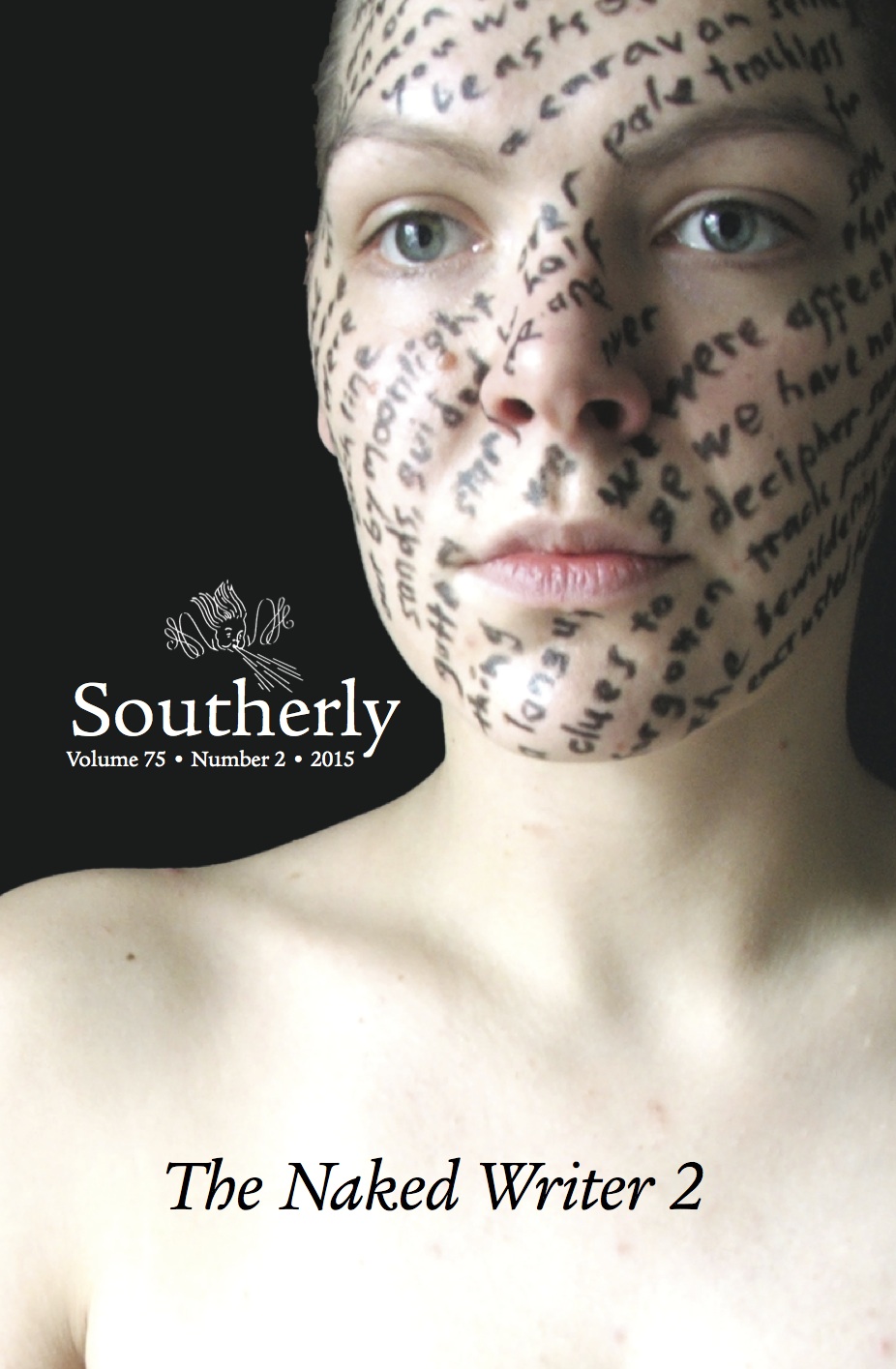
Southerly 75/2

Elizabeth McMahon and David Brooks (editors), Southerly Vol 75 No 2 2015: The Naked Writer 2 (The Journal of the English Association, Sydney, Brandl & Schlesinger)

southerly752.jpg

John Kinsella and Charmaine Papertalk-Green have a collaborative poem in this Southerly. The son of an Anglo-Celtic farmer, Kinsella lived in Geraldton, Western Australia, for the last three years of high school. Papertalk-Green is a Yamaji woman who grew up in nearby Mallewa and now lives just outside Geraldton. The poem – actually a sequence of poems written by the two poets alternately – responds to the works of Western Australian religious architect Monsignor John Hawes as enduring symbols of colonisation.

In what looks like an anxious concern that readers appreciate the significance of the poem, it is embedded in an article by Kinsella, ‘Eclogue Failure or Success: the Collaborative Activism of Poetry’, which among other things spells out the back story, makes learned observations about Virgil’s Eclogues, quotes Wikipedia, throws in a few Greek words, and makes sure we don’t confuse the poem’s first-person elements with the ‘entirely self-interested and subjective’ phenomenon of the selfie. Kinsella is willing to risk being annoyingly self-important if that’s what it takes to ensure that we take him and his collaboration with Papertalk-Green seriously.

Maybe it worked, or maybe the poems would have spoken for themselves, but it’s the kind of project that makes one glad to be alive in the time that it is happening. (Of course, it’s not unique: another stunning example is My Darling Patricia’s 2011 theatrical work, Posts in the Paddock, a collaboration between descendants of Jimmy Governor and descendants of a white family he murdered. That one seems to have sunk without a trace, so maybe all such works do need a John Kinsella to tell us how important they are.)

The challenge of unsparing conversation between Aboriginal peoples and settler Australians is also the subject of Maggie Nolan’s essay ‘Shedding Clothes: Performing cross-cultural exchange through costume and writing in Kim Scott’s That Deadman Dance‘. Apart from calling to mind the pleasure of reading the novel and quoting from it generously, Nolan suggests that, though Bobby/Wabalanginy’s failure to communicate to the colonisers by means of dance may end the book, ‘perhaps his invitation remains open, and Kim Scott, through this novel, is re-extending it to his readers’. I think she’s hit the nail on the head.

There is plenty else here to exercise and delight the mind. In no particular order:

  • David Brooks bids an idiosyncratic and clearly deeply felt farewell to his friend the literary critic Veronica Brady, who died last year.
  • Fiona McFarlane’s ‘On Reading The Aunt’s Story by Patrick White’, originally a Sydney Ideas lecture, is a warmly intelligent revisiting of that novel.
  • Hayley Katzen’s personal essay ‘On Privacy’ rings the changes on the perennial theme of its title, interestingly resonating with John Kinsella’s distinction between the writerly ‘I’ and the facebook or selfie ‘I’, and also with Kim Scott’s meditations on what happens when you write things down.
  • Jill Dimond and Helen O’Reilly delve into their respective family histories, the former with an engrossing tale of failed literary aspirations, the latter with the story of the connection between her second cousin Eleanor Dark and poet Christopher Brennan.
  • Joe Dolce, whom I should be able to mention without referring to ‘Shuddupaya Face’, interviews the late Dorothy Porter about C P Cavafy and they discuss his poetry’s importance to both of them.
  • Of the wide-ranging selection of poems, I particularly enjoyed Alan Gould’s ‘The Epochs Must Go Chatterbox’ and ‘The Insistent Face to Face’, Geoff Page’s genial ‘A Drinking Song for A D Hope’, and Mark Mordue’s Sydney train journey, ‘A Letter for The Emperor’.
  • Craig Billingham’s ‘The Final Cast’ reads like a slice of wryly observed Glebe literary life, though its ‘Fiction’ label should spare embarrassment all round.
  • Nasrin Mahoutchi’s story of widowerhood, ‘Standing in the Cold’, evokes a bitter Iranian winter with just the right amount of twist at the end.
  • In the review section, A J Carruthers discusses Michael Farrell’s Cocky’s Joy and Les Murray’s Waiting for the Past, justifying this unlikely pairing by claiming both poets as ‘experimental’, and arguing that experimental poetry is mainstream in Australia now (and as I write that I realise that the four poems I have singled out above are probably the least ‘experimental’ in this Southerly – ah well, I’m now in my 70th year, so I hope I may be forgiven).
  • In The Long Paddock, the journal’s online extension, Jonathan Dunk gives what he describes as a ‘gloves off’ review of Jennifer Maiden’s Drone and Phantoms, and elicits a bare-knuckled response from Maiden. Good on you, Southerly, for putting the conversation out in the open.

I tend to skip the densely scholarly articles (the ones that use words like chronotopic), or at best dip into them. Dipping can come up with some pleasant oddities. In this issue I stumbled on a quote from one Eric Berlatsky to the effect that in some ways ‘the institution of heterosexual marriage is “always already queer”‘. How far we’ve come since William Buckley Junior caused an uproar by calling openly gay Gore Vidal a ‘queer’ on US television in 1968. Now, it seems, in academic parlance, even those ensconced in heterosexual marriages are queer.

Overland 221

Jacinda Woodhead (editor), Overland 221 (Spring 2015)

As usual, this Overland is well worth reading. Two articles stand out for me:

  • Transgender justice by Eliora Avraham. Noting that the mainstream media’s fascination with transgender didn’t start with Caitlin Jenner (I remember being fascinated by an article on Christine Jorgensen while my mother was under a dryer in a hairdressing salon in the mid 1950s), the essay moves on to a discussion of economic discrimination against trans people, and makes an interesting contribution to the debate about whether calling an event for women, say, ‘Pussy Power’ is oppressive to those trans women who have penises. The essay makes an excellent companion to the recent episode of the Jill Soloway’s TV series Transparent where the Jeffrey Tambor character is shattered to discover that only ‘women who were born women’ are welcome at the Wimmin’s Music Festival. Apart from occasional moments such as the bald characterisation of some disagreers as purveyors of hate speech, the case is argued carefully and respectfully all round.
  • Are Australian universities creating good artists? by Lauren Carroll Harris,  an excellent general article on the state of art education under neoliberalism in Australian universities. The writer attended the institution now known as UNSW Art and Design, and perhaps it’s an interesting product of the rivalries and snobberies the permeate the art education scene that she  fails to mention the National Art School in Sydney as a surviving studio-based tertiary art education institution. Likewise, no mention of the recent evisceration of art education in TAFE NSW.

There’s a lot more besides. Sophie Cunningham has another study of urban USA in Gold Rush, about the politics of murals in San Francisco’s Mission District. Stephen Wright’s column On male fear does a nice turn on sexism as a key concept in addressing domestic violence. Alison Croggon’s reliably elegant column defends vulgar language as often less vile than perfectly polite words (an argument that has turned up in the newspapers recently in New South Wales as prosecution of profanity is coming under question). In The excellence criterion, Ben Eltham lays out the arguments against George Brandis’s recent proposed changes to arts funding – proposals not substantially changed by Brandis’s departure from the ministry. Facebook absolution by Laurie Penny makes me seriously consider quitting facebook before it’s too late.

There are the judges’ reports and winners of two short story prizes the Victoria University Short Story Prize and the Story Wine Prize, the winner of the latter, with an 800 word limit, soon to appear on a wine label. I enjoyed all the stories but none of them took me by storm.

There’s Peter Minter’s last selection as poetry editor, with joanne burns (‘fate curves like a recycled / frisbee in search of destiny’) and  John Kinsella (‘I hear no birds at night / through thick concrete /and the lack is critical’) heading the bill.

And there’s a very welcome three-page selection of drawings by Sam Wallman from time spent recently working to support people crossing europe’s borders.

One advantage of being late to write about this issue of Overland is that most if not all of its content is now available online, hence my links


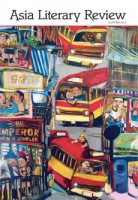
Asia Literary Review 28

Martin Alexander (editor) Asia Literary Review 28, [Northern] Summer 2015

This issue of Asia Literary Review was part of a collaboration with Australia’s Griffith Review. I subscribe to ALR (actually I have a complimentary sub, for which I am grateful) but have only read one or two issues of the GR, which I guess makes me an atypical Australian reader of this joint publication.

Because the ALR is an English-language journal, every issue engages with cultural complexities: inter-generational stories, post-colonial hybridity, expat and emigrant writing, and some translation. In this issue, Australia is the non-Asian pole of much of the interaction. As always, the Asian presence is nothing if not diverse, including writing from or about mainland China, Hong Kong, India, Indonesia, Japan, Kashmir, Malaysia, Myanmar, Nepal, North Korea (a defector), the Philippines, Singapore, Thailand, and Vietnam.

Among the Australian contributors, Omar Musa – rapper from Deniliquin, spoken-worder and author of Here Come the Dogs – strikes a different tone in ‘Supernova’, a sober, reflective story about an older emigrant who has returned to Malaysia and takes part in the political process there; Ellen van Neerven’s ‘Half a Butterfly’ reports on a visit to Goa as part of a cultural exchange between Aboriginal Australian writers and Dalit writers; and Jessie Cole’s ‘The Asian Invasion’ is, among other things, a memoir of her childhood in Hippie Nimbin that challenges the received version of that community as drug-fuelled, self-indulgent and delusional, offering instead a recollections of one that was diverse, open to new experiences and other cultures.

One or two articles seem to be written with Australian readers in mind: Keane Shum’s marvellous ‘Ripple from Hong Kong’ tells a history of that island from the perspective of a Hong-Konger whose people were there long before the Chinese ceded it to Britain; in ‘All for the People, without the People’, André Dao starts from his own experience of voting in Melbourne, complete with sausage sizzle, and goes on to consider what democracy and ‘human rights’ might mean in Vietnam, a familiar subject presented through a personal prism; Miguel Syjuco’s ‘Beating Dickheads’, an argument for mockery as a form of resistance to tyranny, invites Australian readers to consider their own practice of mocking those in power (‘Every nation has its unfair share of dickheads, douchebags, dingleberries and degenerates. But my country, the Philippines, bests most in democratic tomfoolery.’); when Prodita Sabarini’s ‘Let Bygones Be Bygones‘ discusses the great Indonesian silence about the 1965 massacres, her main non-Indonesian reference point is Joshua Oppenheimer’s movies The Act of Killing and The Look of Silence – Oppenheimer is a USer, but his films have made a big splash in festivals here, as, evidently, they have in parts of Indonesia.

I don’t want to give the impression that everything is geared towards Australian readers. Far from it. The pleasure of encountering the unfamiliar, of being an invited eavesdropper, is as strong here as in any other issue. A number of pieces, for instance, discuss the role of humour, which notoriously travels poorly. Apart from ‘Beating Dickheads’, there’s Murong Xuecun unpromisingly titled ‘Chinese Thinking the Age of the Internet’. ‘If President Xi Jinping is clearheaded,’ he writes, ‘he will understand that although he may be able to seal people’s mouths, he can never stop them sniggering.’ Fair enough, one thinks, but the essay becomes really interesting when it gives examples of the subversive humour that the Internet allows to spread:

New English words with Chinese characteristics are popping up: Chinese citizens become shitizens; Chinese democracy begat democrazy; secretaries with Chinese characteristics (especially the female secretaries of high officials) are sexcretaries. Political jokes are also spreading. Here’s one I encountered recently: Xi Jinping went into the Qingfeng Dumpling Shop and asked what the fillings were. The waitress answered, ‘This one is cabbage and pork; this one is pork and cabbage; this one is pork with added cabbage. Which do you want?’ Xi thought about it for a moment and said, ‘They’re all the same, there’s no choice.’ The waitress responded, ‘Aren’t you forgetting, that’s how we chose you?’

You have to love the people who make these jokes, even if you don’t laugh. And though the essay doesn’t mention Ai Wei Wei, it changes the way one sees what some critics describe as his self-promoting poseurdom (and incidentally, I recommend the Ai Wei Wei / Andy Warhol exhibition that’s currently at the National Art Gallery of Victoria).

I also recommend Asia Literary Review. This blog post has barely skimmed the riches of this issue.

Overland 220 and my November rhyme #6

Jacinda Woodhead (editor), Overland 220 (Winter 2015)

220-cover

Almost a third of this Overland is given over to the winners of the inaugural Overland NUW Fair Australia Prize: two essays, two short stories, a poem and a cartoon.

The prize encourages artists and writers to engage with questions like: How does insecure, casual, precarious work affect a person and their community? What do you think a fair Australia looks like? How can we change Australia together? It’s not surprising, then, that there’s a certain sameness about the winners, but also a refreshingly straightforward sense that capitalism is a) brutal and b) not here forever. These 37 pages are a timely counterpoint to the recent publicity the NUW has been receiving from a Royal Commission.

As for the journal proper: Jacinda Woodhead’s editorial cites Slavoj Žižek (a Slovenian cultural critic – I had to look him up) as naming the four horsemen of the ‘apocalyptic zero-point’ of global capitalism as climate change, biogenetics, system imbalances and ever-increasing social divisions. The first and last of these figure prominently in the  rest of the journal.

The non-fiction sections put attention to a shopping list of pressing issues: misogyny and violence against women, the unsettled state of Europe, climate change, plus the politics of the science fiction ‘community’. It’s all worth reading, though some of it tends to be reporting on what has been written by someone else, and it sometimes feels that it might be better to just read the original. Three pieces stood out for me:

  • Anwen Crawford puts shoe leather into ‘No Place Like Home‘, an excellent piece of journalism about the destruction of the public housing community in the Rocks in Sydney
  • Jennifer Mills takes her fiction-writer’s skill to the abandoned buildings of a once great US city in Detroit, I do mind
  • In A person of very little interest David Lockwood adds his personal story to the growing body of funny but unsettling literature about ASIO’s activities back in the day.

Alison Croggon’s regular column is always a pleasure. This time she riffs on reading as a dangerous drug.

In the fiction section (and yes, Overland still presents its fiction and its poetry in two colour-coded clumps), it’s interesting to see Omar Musa – rapper, spoken word performer and author of the novel Here Come the Dogs – move away from the milieu of disaffected youth in an elliptic story, No breaks.

There’s some really interesting poetry. Two John Tranter ‘terminals‘ (a form that I believe he invented, in which he uses the end-words of other poems) are masterly, but create for me a nagging sense that the poem’s relationship to its ‘original’ is more important than the poem itself. I also enjoyed, and am in awe of, poems by Kate Lilley, Michael Farrell and Fiona Wright.

And now, because it’s November, I need to write a little verse. I went looking for the names of past editors (not as easy as you’d expect), and on the way I found a fabulous recent piece of invective against Overland that managed to include blatant sour grapes, sleazy innuendo, dubious history, straw-man arguments, weird illogicality, and one lovely typo. I won’t link to the invective (a search for ‘Overland’ and ‘cesspit’ will find it), but I’ve included the typo:

Rhyme # 6: On reading Overland No 220
Since 1954, when Stephen
Murray-Smith first sought to avoid
dread humourlessness, dogma, even
orthodoxy, we’ve enjoyed
two-twenty Overlands. The Party,
then the Green Left Literarti
gave the helm to Barrett Reid,
McLaren, Syson, then – new breed –
to Hollier–Wilson, Sparrow, Woodhead:
eight editors in sixty years,
provoke our thinking, laughter, tears
and even action. Here a good Red
is alive and well read. Long
may this voice sing its rebel song.

Rhyme #4 and Southerly 75/1

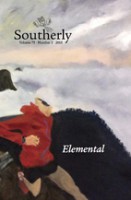
Elizabeth McMahon and David Brooks (editors), Southerly Vol 75 No 1 2015: Elemental (The Journal of the English Association, Sydney, Brandl & Schlesinger)

Rhyme #4: What's in a title (with anagrams)?
Blow the wind southerly, Southerly, southerly,
rattle our windows and slam dunny doors,
blow off the same old stuff, bring on the Otherly,
bust up the torpor that stifles these shores.
The name holds promise that the journal
challenges what seems eternal –
our bow to all that's from the North,
our faith in all it issues forth.
The title tells us what's been hidden:
a home-made tool that truly hoes
this soil, as surely hot it grows.
Shout, lyre! Play something that's forbidden.
The RSL you knew is now
A rusty hole, a sacred cow.
s152

I have a love-hate, or at least an affection-irritation relationship with Southerly.

As one who was educated before what someone in this issue calls ‘the cultural turn’, which I guess refers to the rise of Theory and cultural studies in the academy, I am often left whimpering uncomprehendingly in the dust of the more scholarly work – of which there’s a fair bit in this issue, including at least five examples of reviewers indulging in clever exegesis of a book or other work’s title (hence my rhyme above). On the other hand, there is always something that more than justifies the price of admission.

In this issue, two essays – ‘Oi Kaymeni (“The Burnt Ones”)’ by George Kouvaros and ‘Angry Waves’ by Dael Allison – are wonderful.

Kouvaros’ essay begins with his mother’s reluctance to watch the 1950s movie A Place in the Sun on TV, and fans out to tell the story of her emigration from Cyprus, then to reflect on the role played by Hollywood movies in the lives of people in peasant cultures facing rapid modernisation and sometimes massive dislocation. An excerpt:

Recounting this history helps me to understand the events that shaped my mother’s personality. It also provides an opportunity to clarify two interrelated propositions. The first is that migration is not just about a dispersal of individuals  across continents; it is also about a dispersal of the narrative details that we use to understand the people close to us.

His second proposition, which has to do with a movie’s unchangingness as opposed to that of living people, leads to the realisation that for his mother ’embedded in the film’s story was her own history as  a sixteen or seventeen year old cinemagoer’.

What he writes is specific to his mother’s life, and to the history of Cyprus, but it will resonate richly for anyone of a certain age who loves the movies.

Dael Allison writes about the impact of climate change on Kiribati (pronounced Kiribass – Kiritimati is the Kiribati spelling of Christmas) from the point of view of a westerner who has lived, worked and had friendships there for some years. As you’d expect, the picture is alarming – the brunt of climate change is and will be felt by those who have done least to cause it. Allison’s wealth of detail and observation and quotation brings the situation home sharply. For instance, the recent damage done on Kiribati, unlike that on, say, Vanuatu, is not the result of cyclones, but of tidal events which bring the angry waves of the essay’s title; unlike the damage on Vanuatu it cannot be quickly healed because coral reefs do not regenerate as forests do. There’s no cause for total panic:

Unless there is a massive global catastrophe like a melting Antarctic ice shelf sliding into the sea, Kiribati will not all become unliveable at once. But the process of relocating villages because of inundation, coastal erosion or salt contamination due to wave over-topping of the fragile freshwater lens, has already begun. Projections suggest entire atolls may become uninhabitable in the next generation. Some islanders say they will stay on their land despite that outcome.

There are other treasures: ‘Wyenondable Ashes’, Alice Bishop’s memoir of losing  her family home on Black Saturday 2009; ‘St Thomas’ Churchyard’, in which Roslyn Jolly takes a closer look at the gravestones that dot her local park, formerly a colonial cemetery; ‘A Richer Dust’, where John Stephenson finds resonance between a passage from the Aeneid he happens to be reading and a ‘sentimental conversation’ from a week earlier, and arrives at a sweet elegiac moment.

The poems that stand out for me are Dugald Williamson, ‘Caprice’; Pam Brown, ‘Twelve noon’; Stuart Cooke, ‘Old World’; Laurie Duggan, ‘After a storm, Brisbane’; David Brooks, ‘Choosing to Stay’ and ‘Silver’ (which only a vegan could have written); and Brett Dionysius, ‘American Love Poem’ (not a sonnet, not set in Queensland, but terrific).

Of the short fictions, Moreno Giovannoni’s ‘The Bones of Genesius’ make one look forward to Tales from San Ginese, the book he is writing about his birthplace; and Claire Corbett’s ‘The Trillion Pearl Choker’ is a weird tale of the forces of nature fighting back on the climate change front.

As a rule, I don’t read Southerly‘s reviews of books I haven’t read, of which there are many here. But I did dip this time. Felicity Plunkett introduces her review of a book of criticism with a selection of trenchant quotes from writers ‘writing back’ to the critics; Nicolette Stasko makes me want to read Peter Boyle’s Towns in the Great Desert; Vivian Smith and Chris Wallace-Crabbe’s grey hairs lend distinction to the review pages; Kate Livett draws attention to a timely new edition of Judith Wright’s 1971 account of a battle to save the Barrier reef, The Coral Battleground:

Weirdly, although this battle for the Reef took place from 1969 to 1975, Wright’s text initially reads as if it could be taking place today, with the ridiculous ‘postmodern’ political moves made by Bjelke-Petersen’s government, such as employing an American geologist with no knowledge of biology, let alone marine biology, to do a three-week survey on the Reef.

And now for a little grumpiness. Some of the writers here would do well to read Joseph M Williams’ Style: Lessons in Clarity and Grace. One essay in particular  veered from banal to incoherent to impenetrably technical. I persevered for a while, but threw in the towel when principle appeared as an adjective – just a typo perhaps, but in that context very dispiriting. And what’s with the US spellings throughout – harbor, jewelrymeter (as a measure of distance)? In the absence of a statement that this is policy, it creates the impression that the English Association, Sydney is made up of people who don’t care much about the language.

Australian Poetry Journal, recent issues

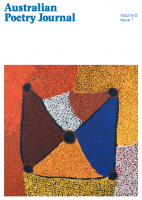
Michael Sharkey (editor),  Australian Poetry Journal, Volume 5, Issue 1 (2015)
Bronwyn Lea (editor),  Australian Poetry Journal, Volume 3, Issue 1 (2013)

apj51

Australian Poetry Journal is a twice yearly publication of Australian Poetry Ltd, which describes itself, surely with a wistful edge, as the peak industry body for poetry in Australia. You don’t have to be a poet to join APL (the poetry industry includes readers), and membership fees cover a subscription to the journal.

This issue is attractively democratic. Award winners with many books on their CVs rub shoulders with people who have had poems published in newspapers and journals. I wouldn’t dream of singling any poems out as ‘the best’ but I do need to give you a taste of some. This is from Judith Beveridge’s ‘Clouds’:

Let blue skies stop their rhetorical grandstanding.
We know they’re filled with the breath of men cocked
and fettled by greed. One by one I call the clouds in.
A cloud for each child hungry, ragged, naked. A cloud

for all exiles whose voices can’t find a single raindrop,
whose eyes are stones that out-weather the past.
A cloud for those in war-ravaged places where shadows
terrorise doorways, and the old live between rubble
and crumbled bread.

Jeff Rich’s ‘Not getting things done’ deals with those to-do lists where some items just got moved from list to list, or projects dreamed of but never begun. The final lines bring it all home beautifully:

Whole careers, projects without plans.
Journeys of recovery and feats of weakness

Pile like chaos in the attic
Awaiting defeat

By distraction and habit and boredom and chance
Four deadly horsemen more real than the rest.

Fay Zwicky’s ‘Boat Song’ responds to the callous feral poetry of a Tony Abbott slogan with child-like rhyming that is anything but infantile. I’ll resist the pull to quote the whole thing:

Remote ideologies send bonnie boats
Like broken-winged birds to our merciful votes.

And we turned them away, yes we turned them away
As we went out to play
In our dead-hearted country, the bounteous place
Where neighbourly love puts a smile on each face.

Apart from the poetry, there are interviews – Paul Magee interviews Samuel Wagan Watson and Josh Mei-Ling Dubrau interviews Julie Chevalier; a personal introduction to Greek poet Tasos Leivaditis by his translator N N Trakakis; a review by Tim Thorne of eleven titles from Ginninderra Press – which expresses gratitude for the publisher’s ‘let a hundred flowers bloom’ policy while being unsparing of the blooms that aren’t up to scratch; a history of another small publisher of poetry, Black Pepper Press, by Margaret Bradstock, who paints a fascinating picture of the critical reception of a number of their books; and three review articles that I found illuminating, especially Bonny Cassidy on Spatial Relations, a two-volume collection of John Kinsella’s prose.

Bonny Cassidy begins her review, ‘It must be said, straight up, that this two-volume publication … is unlikely to attract the recreational reader.’ (And she might have finished it by saying that a smaller, more selective publication may yet bring Kinsella’s prose to a wide and appreciative readership.) I could have said, straight, up that while Australian Poetry Journal might not attract too many recreational readers, any who wander into its pages are likely to be pleasantly surprised.

1apj31Having been pleasantly surprised by Volume 5 No 1, I realised Volume 3 No 1 had been wallflowering on my bookshelf for a year. It turns out to be another treasure trove. I’ll just mention two very funny poems by Anthony Lawrence –  ‘The Pelican’, in which the eponymous bird snatches a Jack Russell puppy, flies off with it

clearly visible through the lit
_____transparent pouch beneath its beak

and swallows it in full view of a horrified human crowd, and ‘Lepidoptera’, in which a gift of butterflies to the speaker’s sister meets with a dreadful fate, with an implied analogy to the frequent fate of poems.

There’s  a section on the poetry of the late Philip Hodgins – an introduction by Anthony Lawrence and then a selection of poems, mostly in some way to do with farming life, and death. A section titled ‘Criticism’ includes, among others, David McCooey on Jennifer Maiden; Martin Duwell – always worth reading – on a book about postwar US poetry; and an essay by Stuart Cooke about stray animals in Central and South America, which I enjoyed but whose title suggests I missed the point: ‘A Poetics of Strays’.

Overland 219

Jacinda Woodhead (editor) & Giovanni Tiso (guest editor), Overland 219 (Winter 2015)

O219

This is a special Aotearoa / New Zealand issue of Overland. It isn’t so much about that country as by writers from there, in the belief, as Giovanni Tiso, regular columnist and guest editor of Nº 219, writes, ‘that this difference, this shift in perspective, can be a value in itself’.

This probably isn’t the kind of shift Tiso had in mind, but John Clarke is here, in an unfamiliar persona. With none of the satirical deadpan of his Clarke and Dawe TV spots, he gives us The things she did, a biography of his remarkable mother Neva Yvonne Morrison Clarke McKenna, who died this year. Everyone should be able to write about their mother with such deep respect and pleasure.

A number of this issue’s articles address familiar themes with a fresh twist:

  • Settled peacefully by Morgan Godfery discusses issues our two settler nations have in common. I had thought Prime Minister Tony Abbott’s recent remark that before 1788 Australia was ‘unsettled or, um, scarcely-settled’ was an unfortunate misspeak. But Godfery quotes his own Prime Minister John Key, ‘New Zealand was one of the very few countries in the world that were settled peacefully,’ and Stephen Harper’s announcement that Canada has ‘no history of colonialism’.  One is a journalisic gotcha; two is a coincidence; three is a sign of what James Baldwin, quoted by Godfery, called the ‘habits of thought [that] reinforce and sustain the habits of power’.
  • Faisal Al-Asaad’s In a rage almost all the time discusses recent events in Ferguson and elsewhere in the USA in the context of globalisation and the politics of occupation, drawing out the correspondences between Palestinian resistance and US anti-racist activism.
  • Catriona MacLennan’s The ethics of defence tackles a subject that has been much discussed: the ordeal that defence lawyers often inflict on women who allege rape, while the accused has the right not to take the stand. Her list of commonly held false beliefs about rape (she calls them myths) is not novel, but it clearly bears repeating, since she quotes a number of cases where they emerge – still – from the mouths of judges and lawyers:

    1. false rape complaints are common, frequently being made by lying and vindictive women as a means of punishing or getting back at men
    2. women’s behaviour or clothing are a justification for rape as men are ‘led on’ by skimpy female clothing and are unable to control their sexual urges
    3. women who consent to sex at night wake up the next morning regretting it and make false rape complaints to cover their regrets
    4. real rape is perpetuated by strangers in dark alleys; sexual assaults on wives or girlfriends are not really rape – if a woman has consented once to sex with a man, she has consented in perpetuity
    5. women make up false complaints of rape against famous men to try and extort money
    6. women who are out alone or without men at night are foolish and it is understandable if they are raped
    7. women who are drunk or have used drugs are to blame if they are sexually violated
    8. where sexual conduct occurs at teenage parties after drinking, it is simply experimentation and a prank and not really rape
    9. if the survivor has no obvious traumatic physical injuries she has not been raped.

    She argues that the ethics of defence lawyers need to be re-examined, and goes a step further:

    We should … consider moving to an inquisitorial rather than an adversarial legal system. The inquisitorial system aims to get to the truth of a matter through extensive investigation and examination of all evidence. By contrast, the adversarial system is a competition between the prosecution and the defence to make the most compelling argument.

    I have a lawyer friend who tells anyone who will listen that a prosecutor’s duty is to discover the truth of a criminal matter, that his adversarial relationship with the defence is secondary to that duty. The notion that the adversarial approach is paramount is, he argues, true of the US system, and we think it holds here because we watch so much US television. I sent him the url for this article. His emailed response, which I take to refer to the argument for inquisitorial system, was brief: ‘Just rubbish. What more can I say?’ Perhaps the New Zealand system is closer to the US one than ours. Catriona MacLennan is as much a barrister as my friend. Maybe they should have a cup of tea some time.

  • Evidently the question of free speech is as significant across the Tasman as it is here. It’s nice to have it discussed in At a price by Max Rashbrooke with reference to Milton, Mills and eminent legal philosophers rather than to Andrew Bolt, Alan Jones and the Institute of Public Affairs. Nice too to read Loose lips, in which NZ investigative journalist Nicky Hager reveals trade secrets on how to find and protect whistle-blowing sources.
  • ‘Pass the ta’e please’ by Scott Hamilton is a fascinating account of kava and politics in Tonga, from traditional ritual use among high-ranking men to current use by rebel artists (ta’e, the Tongan word for excrement, is their word for kava). By no means the main point of the article, but one that provided an odd shift in perspective for me, is that Futa Helu, ‘Tonga’s most important modern intellectual’, was part of the Sydney Push as a young man: who would have thought that that circle of dedicated drinkers and talkers I knew in my youth had contributed such a force to Tongan culture and politics?

There are poems, too, and short stories (one of which does that irritating thing of revealing only at the end that it is an excerpt from a novel in progress), and a small but creditable Australian presence, including regular columnists Stephen Wright and Alison Croggon: the former’s On backyard cricket is a splendidly deranged rant about successive Federal governments’ treatment of child refugees (‘Australia appears to have become a nation governed by people who proudly engage in legalised child abuse, torture and neglect’); the latter’s On the intellectual life of a nation offers some acerbic home thoughts from an enviable writers residency abroad (‘The problem is not with the quality of work that is made here. Au contraire! Australia has the oldest living culture on the planet, and the contemporary work Australians produce is as worthy of notice as anything that emerges from other centres. It’s more in its mediation, in what art is assumed to be in the wider culture.’).

Asia Literary Review 26 & 27

Martin Alexander (Editor), Asia Literary Review 26, [Northern] Winter 2014
———————————————————- 27, [Northern] Spring 2015

ALR26

How cool is it that there’s a quarterly journal dedicated to literature from Asia that’s either written in English or translated into it? Such a gift to those of us who don’t speak or read any Asian languages!

After a two year hiatus, Asia Literary Review revived in November last year with Issue 26, under new ownership and with a greater focus on its digital platform. Martin Alexander is still editor.

Issue 26 is a feast. Of the many interesting things, let me mention some of the non-fiction:

  • Sister Philomena’s Veil by Kavita Jindal, a memoir of schooldays in a convent in India, which has a similar subcontinental girls-own adventure flavour to Swapna Dutta’s Juneli stories, but takes an altogether darker turn
  • The Secret Happy Life of Uncle Renfeng by Fan Dai, an extraordinary account of a life, which would be satisfying if it was an exemplary tale, and is all the more so when one realises at the end that it’s the story of the writer’s actual uncle
  • Eid in Oghi by Nighat Gandhi, in which the author, described in her bio as ‘a writer, mother, Sufi wanderer and mental health counsellor’, visits a village in dangerously tribal region of Pakistan and comes to know, like and admire the women who are her hosts, so that we too come to like and admire them.

There’s also plenty of fiction and poetry. I particularly enjoyed two dystopian stories, Michael Vatikiotis’ A Case of Penetration and Dipika Mukherjee’s Conjuror of Divinity, though the latter may well be too realistic a tale of the rich and ruthless to be really a dystopia. I also enjoyed Eliza Vitri Handayani’s From Now On Everything Will Be Different, an Indonesian romantic comedy gone wrong.

Among the many poems I was struck by Yong Shu Hoong’s prose poems Tanglin Halt and After the Fire; Kathleen Hellen’s Salmon Said Surrender, which captures a moment when history pushes into the present moment. Justin Hill’s translations of six poems introduced me to T’ang poet Yu Xuanji. I was prompted to go looking for other translations of this, from ‘On a winter’s night I wrote this poem for Wen Ting Yun‘:

Shit happens.
I think now I've found fulfilment.
Success follows failure follows what?
There's a third way forward.

I found one by Leonard Ng, here, which translates the same lines as:

Thoughts scattered and released, at last I found fulfilment:
through the emptiness of rise and fall, I saw True Mind.

And I learned again that to really understand a poem in translation you need to read at least one other translation. ‘Thoughts scattered and released’ is almost certainly more literal, but ‘Shit happens’ brings the shrugging of meaning home more sharply. And what if it’s a vulgarity? Yu Xuanji was after all a courtesan.

alr27

Issue 27 is, if anything even richer. It has its share of dystopian fiction, this time – perversely – a Singapore buried deep in ice in ‘And Now There Came Both Mist and Snow by Clara Chow, and of strong non-fiction, including:

  • The Sinking City‘ by Bill Tarrant, about Jakarta, which is literally sinking, and a disaster waiting to happen
  • ‘The West Sea Battle’ by Jang Jin-sung, translated by Shirley Lee, an account of his debriefing North Korean sailors after a skirmish, trying to persuade them to tell what actually happened rather than the politically desired version
  • Challenging Convention – The Kung Fu Nuns’ by Namgay Zam, about a striking (pun intended) feminist initiative in Nepal and Bhutan.

The fiction includes a number of stories that feel only slightly removed from reportage: Beijing Hospital by Jeremy Tiang, an account of an expat hospital experience; ‘Comfort Woman Eleanor’ by James Tam, an altogether uglier crosscultural encounter that’s particularly telling at the time of Prime Minister Abe’s too-litle-too-late apology for Japan’s wartime atrocities; Phillip Y Kim’s ‘Run’, a family encounter in the midst of the recent Hong Kong demonstrations.

Again, there’s plenty of poetry, including the marvellous, long, elegiac ‘Peng Chau’ by living Chinese poet Zheng Danyi, translated by Luo Hui. According to Wikipedia Peng Chau is a small island near Hong Kong less than one square kilometre in area, ‘known for its small island lifestyle’. Really, I didn’t need to consult Wikipedia, when the poem includes this:

Post office and doctor's office, one each, police station
and fire station, one each

One laundry shop, called 'Laundry Shop'
One bakery, called 'Bakery'
One library, called 'Library'

Tin Hau Temple, one and only
Mother Dragon Temple, one

Daoist, Buddhist, Catholic Protestant –
one each in peaceful co-existence.

There’s much more, in that poem, and in the journal.

I am grateful to the editors for my complimentary digital subscription, beginning with Issue 26.

Overland 218

Jacinda Woodhead (editor), Overland 218 (Autumn 2015)

overland218

The editor has gone, long live the editor. With this edition of Overland, Jacinda Woodhead, who has been deputy editor for a while, takes over the main job. Most of the old editorial and design staff remain, and there has been no radical transformation.

For example, like the previous edition, this one includes the results of two writing prizes. These are the Nakata Brophy Short Fiction and Poetry Prize for Young Indigenous Writers, and the Judith Wright Poetry Prize:

  • The judges praise the winner of the former, Backa Bourke by Marika Duczynski, for its ‘energetic prose that knows when to withdraw’. What looks like a rough and ready outback yarn about floods and death and young men on motorbikes takes a surprising turn right at the end, in prose so withdrawn that the surprise hangs on a single word. To be parochial for a moment, I was chuffed to see that the writer, in this overwhelmingly Melburnian journal, lives in Sydney.
  • Peter Minter’s judge’s report on the Judith Wright Prize pays elegant tribute to Judith Wright herself in reflecting on form in poetry as ‘a moral or ethical problem, a political gesture’. Interestingly enough, the first prize winner, Hyper-reactive by Melody Paloma, has a similar linguistic vigour to ‘Backa Bourke’.

This issue is also like its predecessors in including writing about writing (including an essay on literary envy/jealousy that takes its title from the Clive James poem that begins, ‘The book of my enemy has been remaindered / And I am pleased’), and an interesting mix of short stories, this time two realist pieces and two that nudge into the surreal.

The issue differs, perhaps accidentally, in having an identified theme. Jacinda Woodhead’s editorial says it ‘gives voice to women’s unfiltered experiences of this world, and other subjects on which there’s been far too much silence’. To mix metaphors, it delivers that voice in spades, though it by no means a predominantly female voice.

Alison Croggon’s column begins ‘The first time I was raped,’ builds to a passionate cry that her children ‘have to live in this world where, all the time, men hurt women, dismiss women, marginalise women, silence women, kill women’, and ends with a quietly lethal account of a ‘pleasant and intelligent man’ communicating by his manner that a protest at women being ignored was ‘a footling political point about feminism’. It’s two tough pages and Croggon has an equally fine piece online about the writing of it.

Hackers, Gamers and Cyborgs by Brendan Keogh discusses the phenomenon of Gamergate, in which a number of woman video game developers have been attacked vehemently. I’ve been aware of Gamergate as one of those online places where outrage and reciprocal vilification flourishes. This essay instructively situates it in ‘the broader patriarchal structures in which video game culture emerged’. Even though the word sexism doesn’t appear, it’s reassuring that the concept of patriarchy is still alive and doing good work.

Justin Clemens, who is a poet among other accomplishments, writes about the US Senate Select Committee on Intelligence’s report into the CIA’s detention and interrogation program. The essay, Torturing folk, explores the implications for civil society of the current practice of and debate about torture. Paradoxically, he argues that even to debate the appropriateness of torture is in effect to close down freedom of speech.

Russell Marks  puts his head above the parapet in More than taboo, arguing the case against demonising paedophiles. Specifically, government funding has been channelled primarily into identifying and punishing offenders; funding has been withdrawn from programs that provide support to survivors, including programs such as SafeCare in Perth and Cedar Cottage in New South Wales that also offered treatment to offenders, with demonstrated success in preventing recurrence.

There’s more: Fiona Wright on grieving communally on facebook; Stephen Wright on different children; Michael Bogle on The Atomic Age, an exhibition about nuclear weapons shown in Brisbane, Melbourne and Sydney in 1947 and 1948 (which sent me back to Robin Gerster’s wider-ranging ‘Exile on Uranium Street: The Australian Nuclear Blues’, in Southerly No 1 2104).

Overland is clearly still in good hands.