Tag Archives: Robbie Arnott

Sydney Writers’ Festival 2026: My Day One, part 2

After a quick lunch at the pub a block away from the Carriageworks, we were back for three more sessions.

4 pm: Bringing the Past to Life

This was three novelists talking about historical fiction. Robbie Arnott (author of Limberlost and Dusk, links to my blog posts), Yann Martel (Life of Pi, which I read and loved long before blogging, and most recently Son of Nobody), and Tasma Walton (actor most notably in the Mystery Road television and film franchise, author of I am Nannertgarrook). They were wrangled by the incomparable Kate Evans.

Tasma Walton started from a family story, a great love story: one of her ancestors, an Aboriginal woman, met a white man and eloped with him to live on an idyllic island. She knew early on that something was not right about that version, and when she explored it she found the now familiar story of sealers raiding First Nations communities in what is now Victoria and kidnapping women to live a life of slavery. The book is part of the larger project of reclaiming language, and she told us that her training as an actor was important in creating these historical characters: she would give them a back story, imagine herself into the skin of the character, like an actor preparing for performance, then write.

Robbie Arnott was charming and funny. After saying, ‘I don’t like to be perceived,’ he cooperated and talked interestingly about himself and his books. No one had noticed, he said, that the sealers from Tasma’s book turn up in Dusk. ‘Oh, I noticed,’ Kate Evans said, ‘but we’ll get to that.’ Robbie said that Dusk had its origins in fishing trips with his father to the Tasmanian/lutruwita highlands. He was enchanted by that landscape and in particular by a moment when a herd of deer appeared out of the bush. He tries to capture the feel of that land in the book. Questioned about his invention of giant bones poking up out of the earth, he said they were his way of communicating how ancient the land felt. Jokingly (I think), he said that Dusk, the giant puma who gives the book its title, was inspired not by legends about big cats in the Australian bush but by cane toads – the prime example of disastrously introduced species.

Yann Martel really wanted to talk about his earlier book, Beatrice and Virgil, which is more accurately described as a historical fiction than Son of Nobody. But he did what Kate Evans asked of him and discussed the latter book – it’s a story of the Trojan War with footnotes. There’s a black line across the middle of each page – the Troy story unfolds above the line and the story of the footnote creator below it. Though he didn’t read the actual Iliad until he was an adult he was fascinated by the story as a child (Robbie Arnott interjected that he had read it as a child – ‘I didn’t have any friends.’) Because Troy is myth as much as history, he had freedom to invent, to jin the many authors these days who, for instance, retrieve the women’s stories. His Holocaust book features two taxidermied animals, a donkey and a monkey. He didn’t elaborate on how that relates to the history, beyond saying that it was his way of taking a fresh look at the familiar horrors.

There was an interesting discussion of violence. All three books include a lot of it. Tasma Walton said that every act of violence in her book comes from the colonial records, so it was difficult to write in the first person. Again her training as an actor came into play, especially the instruction, ‘Open your heart.’ Which is a good instruction for readers as well.

I came away from the session with Book Club possibilities in mind.

Two hours later, we came back for:

7 pm: Writing in the Age of Trump

This was a panel. Sisonke Msimang did a terrific job as host/facilitator. After introducing her three US writer guests – Tayari Jones, S.A. Cosby and Deborah Baker, all from the south of the USA – she said something like, ‘The title of the session means we have to talk about Donald Trump, but first tell us what your southern heritage means to you.’ And we didn’t get to Trump for at least 40 minutes.

S.A Cosby writes crime novels, but that was not what he was there for and I came away knowing very little about his books. He, like Tayari Jones (see previous blog post), writes against the assumption that the South is all about the oppression of Blacks. He and she spoke eloquently about Black culture, and Black community. She identified herself as a suburban Southerner.

Deborah Baker, the only non-Black person on stage, is the author of Charlottesville: An American Story, which gives the background of the ‘Unite the Right’ demonstration in 2017. She did a lovely job of explaining that there was debate in that city over three Confederate monuments – a lot of emotion, but generally attempts to hear each other – some African Americans, for instance, were in favour of keeping the memorials because without them important history is in danger of being forgotten. But white supremacists, emboldened by the election of Donald Trump, decided to make it their issue, and things turned lethal.

In the lifetimes of the panellists – and none of them is as old as me – public schools in the south called the Civil War the ‘War of Northern Aggression’. It wasn’t about slavery but about state rights, they were told. I think it was Sean Cosby who said his response to that is, ‘States’ rights to do what?’

Some tidbits:

  • In 1956 Ezra Pound, incarcerated in a mental hospital in Washington DC because of his support for the Nazis, sent one of his disciples to start a race war in Charlottesville. History has echoes.
  • When Tayari Jones was at school, her parents wouldn’t give permission for her to ‘participate in white supremacist activities’ including an excursion to see the largest bas-relief sculpture in the world at Stone Mountain Park.
  • Sean Cosby’s face was mostly obscured by a baseball cap, which I think was to protect his eyes – because when he read to us, he seemed to have so much trouble making out the words that it was hard for us to follow the thread. But when at last the conversation turned to Donald Trump, he delivered a wonderful, passionately articulate rant that made one’s heart sing.

Again, with moments to spare, the Emerging Artist and I headed to our next sessions. She went to ‘Brave Conversations‘, which left her less than enthused, while I went to:

8 pm: Rhythm of Truth poetry gala

As the title suggests, this was a line-up of poets, the only poetry event I managed to attend in the whole festival. It was terrific.

Sara M. Saleh was in the chair. Sadly , she didn’t read any of her own poetry, though Maxine Beneba stepped into the breach and read one of Sara’s poems in her set. Riffing on the festival’s theme, ‘Show me the truth’, Sara said in her general introduction: ‘It’s a poet’s job to tell the truth, the kind that slips in before your mind catches up.’

Mariel Roberts Musa had two solo spots where she played the cello with electronic effects. They were intense and mesmerising intervals, but the poets were the main event (I’ve found links to some of the poems in case you want to chase them up):

  • Evelyn Araluen (I’ve blogged about Dropbear and The Rot) read three poems from The Rot, which she said were originally intended to be three parts of one long poem: ‘Sleep Act One’, ‘Sleep Act Two’ and ‘You’.
  • Michael Pedersen, among other things, Edinburgh’s Makar/Poet Laureate, stepped onto the stage with a stand-up’s flair and a thick Scottish accent, and performed ‘The cat prince‘ (featuring a weird little boy and a wonderful mother) and what he elsewhere calls a super-short friendship love poem, ‘Boys holding hands‘.
  • Nikita Gill, of Irish and Indian heritage, is apparently big on instagram. She read to us from a work in progress called ‘Men say things to me and then I have an existential crisis’. I especially loved the one where a man tells her to go back to the kitchen imagining it to be a confining space, but which she reimagines as the place where women connect and make things happen, including perhaps a revolution.
  • After reading a poem by Sara M. Saleh, Maxine Beneba Clarke read from her own book Beautiful Changeling. ‘I want to grow old’ speaks back eloquently to the idea that ageing is a bad thing, from the perspective of someone not yet 50. Good poem, I thought, but what do these whippersnappers know about growing old?
  • David Stavanger asked landlords in the audience to raise their hands and then sneered when no one did, ‘Landlords never raise their hands.’ His main theme seems to be mental illness. I liked ‘I’ve been thinking about your birth lately‘.
  • Omar Musa finished up the evening with a number of poems accompanied by ‘my beautiful wife’ Mariel Roberts Musa. He performed a version of ‘Queanbeyan‘. Then they totally destroyed the room with ‘The burning‘, which you can get some idea of from the video at the link: ‘you and me / we have become numb / numb even to burning’.

And that was the end of our first day.
Robbie Arnott’s Dusk and (not) the book group

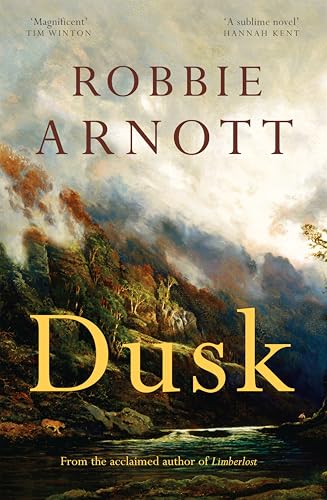
Robbie Arnott, Dusk (Picador 2024)

Before the meeting: we had enjoyed Robbie Arnott’s previous novel, Limberlost, so Dusk was a promising choice.

It’s set in a place very like nineteenth century Tasmania. Iris and Floyd Renshaw, the twin children of notorious outlaws, travel to the highlands and aim to kill a puma named Dusk that has been ravaging the region, killing livestock and people. A bounty has been offered by the graziers, and the twins see it as a chance to move away from their life at the margins. The story of their encounters with graziers and other hunters, and with a community of people who lived there before the settlers arrived, is full of elegant twists and moral dilemmas. There are moments of sheer horror, and moments of great tenderness. The writing is consistently vivid – you can tell that Robbie Arnott has visited the landscape even while he adds surreal elements like giant bones protruding from the ground; and the twins’ physical ordeals are viscerally real.

Even as I recognised all these qualities, I had trouble engaging. From about page 100, when the twins and their companions come close to Dusk, I started to care, and where a couple of pages are blacked out after a dramatic moment, what might have seemed a bit of cleverdickery had me on the edge of my seat. But then I got lost again and the final pages left me, as the song says, wondering why.

At page 78*, the twins have just arrived in a small town full of men who are hunting the killer beast. She – Dusk, the puma – has killed the son of a wealthy grazier, whom the twins have encountered grieving extravagantly in the street. For the first time since they came to the highlands, Iris finds herself confronting what they may be up against, ‘the probability of being ripped into death, faster than blinking’. Now, ‘starkly aware of the softness of her flesh, the smallness of her body, the stumbling clumsiness of her humanity’, she encounters for the second time Patrick Lees, a man who stands out from the crowd of hunters. On page 77 he has proposed that the twins join him to help track down the beast. Floyd, characteristically, stays more or less silent.

‘So you are chasing the bounty,’ said Iris, annoyance bending her voice.
Lees contemplated his pipe before slipping it back between his lips and speaking around it. ‘Maybe I’m just endlessly curious.’
 Iris clenched her teeth, holding her irritation in. Floyd kept rubbing his chin, seeming to take in Lees’ words without making any effort to respond. All of it was maddening to Iris – Floyd’s stupid performance, the sudden appearance of Patrick Lees, the unmoored feeling she had while being near him, his casual offer, his playful duplicity – and she wanted to get away from both of them and from herself, so she tugged at the collar of her coat and touched her hat. ‘We’ll think about it.’
  Lees nodded. ‘Of course.’ He indicated a lemon-gold building that rose above the stable. ‘I’m staying at the inn. I’ll be leaving at first light.’ Another little smile. ‘I hope to see you then.’

They left Patrick Lees breathing smoke at the plains and walked back through the stable to the street.

The main thing on display in this passage is Robbie Arnott’s deft use of tropes from romance novels. Iris is irritated by a suave, superior man, while having an ‘unmoored feeling’ while she’s near him. It’s no spoiler that Iris can’t resist the offer to go on the hunt with him, or that they do spend a night together. But as in the romance genre, there is every indication here that Lees is a cad: his little smile is surely a red flag, and while Iris may be uneasy, the reader can be reasonably certain that someone who breathes smoke is dangerous. You leave this page with a subliminal sense that Lees may not be just a romance-genre cad, but a horror-genre monster.

There’s a lot to admire in this book. There’s a lot to discuss. The surreal elements of the landscape read as both hamfisted metaphor and strategy for including First Nations characters who won’t be mistaken for actual palawa. But I was unconvinced. Even the basic set-up didn’t work for me, even if someone were to tell me that pumas were once introduced to Tasmania / lutruwita. I enjoyed some parts but never got on its wavelength


After the meeting: I couldn’t go to this meeting, and though I missed the people, I wasn’t sorry not to discuss the book. The WhatsApp report painted a picture of a very convivial evening, where everyone liked the book, some more than others. Evidently one person liked it more as the evening wore on – maybe I would have joined him in that movement. Maybe not.


I have written this blog post near what was once luxuriant wetland, in Gadigal and Wangal country. I acknowledge Elders past and present of those clans, and welcome any First Nations readers.


My blogging practice is to focus on the page that coincides with my age, currently 78.

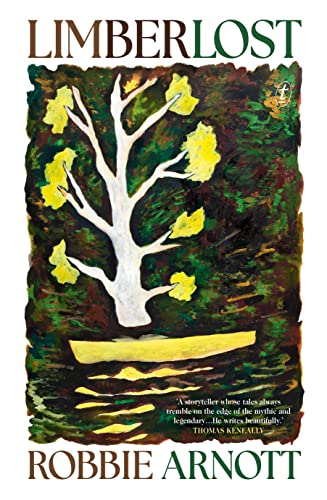
Robbie Arnott, Limberlost and the Book Group

Robbie Arnott, Limberlost (Text Publishing 2023)

Before the meeting: To fully appreciate this book, you may need to have read Gene Stratton-Porter’s 1909 classic of USA children’s literature, A Girl of the Limberlost. I haven’t read it, but Sue at Whispering Gums has, and loved it. You can read her review of Limberlost at this link.

The novel’s main character is Ned, a young teenager living on an orchard in Tasmania towards the end of World War Two. His two older brothers are away at the war, leaving Ned and his older sister to help their gruff, widowed father on the struggling farm. Ned has a secret goal of buying a boat – he’ll raise the money over summer by shooting rabbits and selling their pelts. Rabbit fur is prized as material for making slouch hats for soldiers, and Ned hopes his father will believe his killing project is inspired by patriotism rather than self-interest.

The story unfolds as you’d expect, reaching forward to Ned’s later life as father of two adult daughters and back to an incident involving a whale. There’s more I could say about the book as a whole – the Tasmanian bush, Ned’s father, the boat, the whale and a wounded quoll – but this is a ‘Page 76’ blog.

Page 76 comes almost exactly at the novel’s one-third point. The local vet has given Ned’s project a boost by asking as payment for services rendered that he clear rabbits from her garden and the forest behind her place. (US readers note: in Australia a vet is a veterinarian surgeon, not a former soldier.)

Before rereading the page closely for this blog post, I would have said that it deals with the practicalities of trapping and shooting rabbits – a necessary bit of telling before we move on to the important bits of the story (the boat, the quoll, the father, the girl next door, etcetera). But slowing down to read it, I realise that it’s full of the stuff that makes the book engrossing.

Bending my rules a little, here’s part of the description of the vet’s patch of forest on page 75:

A place of dark-eyed wallabies and fat-faced possums and flickering wrens and eagle-sized ravens and swarms of rabbits beyond counting, beyond thought. A place so thoroughly non-paddock and non-river and non-orchard that, when he picked his way through its structures, Ned began to unmoor from the leafy dirt and drift away from the version of the world he knew. A wave of prickles needled through him. He felt a shifting beneath his flesh: all his pain and shame and anger and sorrow would peel off his nerves, steam from his bones and fry off his skin.

Only after bringing the place to our attention as so full of life and a kind of enchantment, the narrative moves on to Ned’s activities. The first full sentence on page 76 pulls us up short:

By the time the sun had fully risen, his hands were full of death.

What follows a brutal edge to it. First the traps:

Each morning he’d find at least two of their corpses in the teeth of his traps, sometimes three. He’d skin them at the edge of the garden and hurl the bodies far into the trees.

Then the shooting:

After he’d stashed the skins in his bag he’d move through the forest, towards the small clearings that lay within its interior. Here other rabbits inched over the grass, grazing at pace, their cheeks swelling in the low light. Ned stepped quietly, made sure he was obscured by the darkness of the ferns, waited. He’d raise the rifle and pick out the fattest animal, the cleanest fur. Missing was difficult, although occasionally he managed it.

It’s not that Ned has any particular feeling about the killing. Earlier, we’ve seen him working out the best way to place the traps, and he’s fascinated by skinning techniques. Here his focus is on moving quietly, picking the best victim. But Robbie Arnott’s prose insinuates a different perspective: the dead rabbits are ‘corpses’ and ‘bodies’; the living animals graze ‘at pace’. The comment that ‘missing was difficult’ comes from Ned’s pragmatic perspective, but it conjures up an image of innocent, vulnerable creatures. I’m reminded of the hunting scene in Renoir’s La règle du jeu, where the humans are cheerful and relaxed, but the camera shows rabbits first fleeing for their lives then dying in close-up, tails and ears twitching. The counterpoint there between the characters’ perspective and that of Renoir’s camera is similar to the tension between Ned’s view and Arnott’s prose.

The narrative doesn’t pass judgment. It leaves that to Ned’s daughters much later. This page offer a final harsh image (‘In the trees, ravens picked apart his kills.’), and something that has underlain much of the story so far comes into full view. As Ned makes his way back, ‘his bag heavy with pelts’, he feels ‘the unmooring, the needling, the shifting’ named on the previous page:

The burning away of his emotions, until he saw only the forest around him, and felt only the weight of his bag and gun, and the warmth of the morning.

Then this (moving on to page 78 – Maggie, Toby and Bill are his siblings):

Outside of those mornings in the forest he was exposed to an uncontrollable stinging in the folds of his mind … To counter this, he avoided thinking about anything that brought on the sting. The war. The school year that awaited him. The mare. The quoll. Maggie, ice hammered from metal ships, northern seas of endless chop. The rush of Toby’s smile, and how soon they might see each other. His father. How his father, after he’d read Toby’s letter, had asked Ned if anything had come from Bill. The blank fissure in the old man’s face when Ned had shaken his head.

The saga of the rabbits and the boat is something that Ned has dreamed up to distract himself from deeper issues: the questions of his relationship to the land that the captured quoll embodies, the ordinary angst of being a teenager, and over it all the cloud of war. Arnott doesn’t hit us over the head with this, but it’s always bubbling under the surface.

After the meeting:

As always it was a fun evening with far too much to eat. A couple of chps brought Tasmanian-themed food and drink. I had offered to host at short notice when our designated host came down with Covid (not as bad as the first time, he said, but still rotten). As a result I inherited substantial leftovers. We spent some time, quite unrelated to the book, as a bunch of old codgers trying to help each other understand the young people these days. We had minimal success, perhaps because the younger and wiser group members (overlapping categories) were detained elsewhere by work, family commitments and the aforementioned Covid.

The book struck a deep chord for a number of people. Two had read it twice. One said he resonated strongly because like Ned he had two older brothers and has two adult daughters, and Ned’s experience chimed with his own. The other had read Robbie Arnott’s first novel, Flames, then returned to Limberlost, enjoying the way it revisited similar concerns in a very different mode. One man’s partner had loved A Girl of the Limberlost with a passion, but otherwise we’d all read this book without illumination from that one.

I confessed to blogging about page 76. Someone promptly read a beautiful passage from page 77-78, in which Ned is haunted by images of violence among birds, in ancient and modern warfare, and in the sight of the girl next door carrying a rifle.

Some insights were shared about the quoll that Ned accidentally traps and then keeps until it has recovered from its wounds: it mirrors back to Ned the wildness and rage he can’t admit to feeling; it’s a beautiful thing that transcends humdrum daily life; it becomes an intimate shared experience between Ned and the girl next door; it provides one of a number of occasions when Ned’s father surprises him by being sympathetic.

There was a lot more. I came away from the meeting with a much deeper understanding of the book, and of the traditional rural masculinity it depicts.