Monthly Archives: Nov 2010

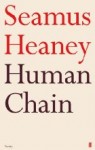
LoSoRhyMo 7: After reading Seamus Heaney’s Human Chain

Seamus Heaney, Human Chain (Faber & Faber 2010)

Blogging about Human Chain as part of my LoSoRhyMo sonneteering is lighting a penny candle to a star, and not just because none of its poems are sonnets. I  don’t have any pretensions to writing even a pastiche of Seamus Heaney. But a quota is a quota, so I’ll just say the book is something to immerse oneself in, and get on with it. I hope this makes some kind of sense.


Sonnet 7: Northern Ireland / Far North Queensland
Ask me to translate Seamus Heaney
(Derry, seggins, Upper Broagh),
I’ll try lantana, Mirriwinni,
Waugh’s Pocket – my dad’s puzzling laugh
when someone spelled that ‘whore’ – but stet
Church Latin, soil and honest sweat,
Virgil, cards: Bill Markwell, joker,
feared dona f’rentes Greeks at poker.
Wraiths of our fathers thirsting still,
voiceless now Kramastos, Markwell.
Like torches shining down a dark well
may poems give them drink until
they come back to the light of day,
beloved, but not all the way.

LoSo RhyMo 6: My mother enforces modesty

When I put up my fifth sonnet yesterday I was averaging one every three days. I’m going to have to get cracking if I’m to reach my goal of 14 in the month. I’ve been mulling over scenes from my childhood. Here’s one:

Sonnet 6: My Catholic mother enforces modesty
Our mum, mock-shocked, would cry, ‘Ooooh Venus!’
if any child by running nude
allowed a glimpse of bum or penis
(we called them ‘bom’ and ‘tail’ – less rude).
Though this was fine for either sister,
I whinged that I’d grow up a Mister,
so ‘Venus’ seemed a little wrong.
Deferring to my little dong
she’d call ‘Adonis!’ should I streak.
How glad I am (Oh yes, I glad am!)
She didn’t cry out ‘Eve!’ and ‘Adam!’,
invoke the sex-as-sin mystique.
We covered up – it was our duty –
not sinful shame, but ancient beauty.

LoSoRhyMo 5: On reading Home

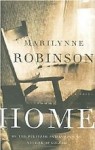
Marilynne Robinson, Home (Farrar, Straus & Giroux 2008)

I’m intending to write a little more about this book, probably in prose, after the Group meets to discuss it later in the week. But for now, it’s grist to the relentlessly demanding LoSoRhyMo mill. So far my sonneteering attempts have been in jaunty tetrameters. The cadences of Marilynne Robinson’s prose urge the more reflective pentameter.  First, a quote from the book.  This one come close to stating a central theme:

There is a saying that to understand is to forgive, but that is an error, so Papa use to say. You must forgive in order to understand. Until you forgive, you defend yourself against the possibility of understanding.

There are plenty of pearls of wisdom like this, that are even more profound in context than out. Papa spends most of the book struggling to live up to the wisdom attributed to him here. It’s a wonderful book, though perhaps not as luminous as MR’s previous novel, Gilead. But here goes with my sonnet (and I’m afraid this one isn’t so much verse as something less than prose that’s tortured into rhyme):

Sonnet 4: On reading Marilynne Robinson’s Home
At book’s page one, the youngest Boughton, Glory,
betrayed in love, tears ever in her eyes,
returns to father’s home, rejoins his story
where God is love and love won’t compromise.
Soon brother Jack arrives, to hymns of praise
(praise God, for Jack himself’s no saint, but rather
an anti–Seymour Glass, the clan’s disgrace
much loved, lamented, prayed for by his father).
So father, son and Glory join a dance
of careful kindness, trust that’s tentative.
When stern theology allows a chance
the ailing father struggles to forgive
until Jack’s tragic truth is clear to see:
‘Cry if you want to, chum,’ he says. ‘Feel free.’

LoSoRhyMo 4: Sculpture by the Sea

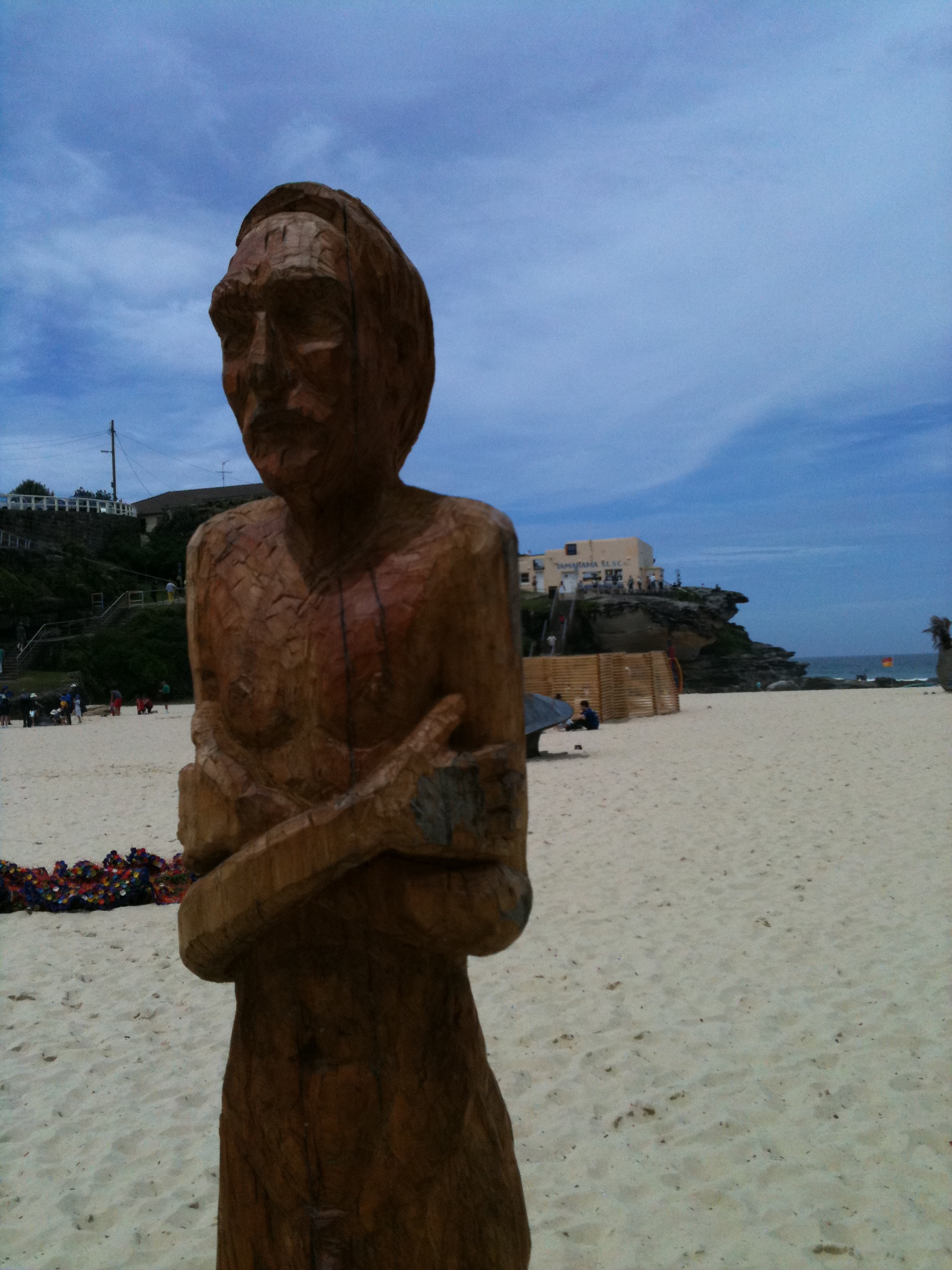
Sculpture by the Sea deserves more than 14 lines but it’s LoSoRhyMo (Local Sonnet Rhyming Month) in this house so an ekphrastic sonnet is all you’re going to get from me. You could pop over to Richard Tulloch on the Road for some lovely images, wittily presented (where I’ve just seen a comment expecting a sonnet from me – no pressure of course).

Sonnet 4: Sculpture by the Sea
We walk among these waking dreams
from Bondi’s cliffs to Tamarama –
dreams hewn from wood, stone, bronze, from streams
of plastic, garbage given glamour.
Weird weed things weep; a stringybark
man meets an old horse on some dark
grief-stricken shore; a corrugated
iron pair look up with bated
iron breath; a steel key
rolls turf back like a sardine can;
smooth abstract beauty from Japan.
These dream things teach our eyes and we
look round: two shags pose grace to grace,
the shelf below’s awash with lace.

If you’re interested, the handful of sculptures singled out for mention are:

  • Jennifer Orchard’s ‘Weeping Weeds’, a gathering of her ceramic Plantpeople and Plantanimals
  • Stephen King’s “Hello Mate” which got my vote for the People’s Choice Award, pics snapped by the Art Student below
  • Hannah Kidd’s ‘The Sky Is Falling’
  • Mimi Dennett’s ‘The Irresistible Force
  • Any number of Japanese sculptures, but perhaps especially Keizo Ushio’s ‘Oushei Zokei  2010 Circle’ and Toshio Iezumi’s ‘M.100901’, also snapped by the Art Student, below.

Sculpture by the Sea  finishes this weekend. Do go!

LoSoRhyMo 3: Flugtag

There’s more to life, even in Sydney, than house prices.

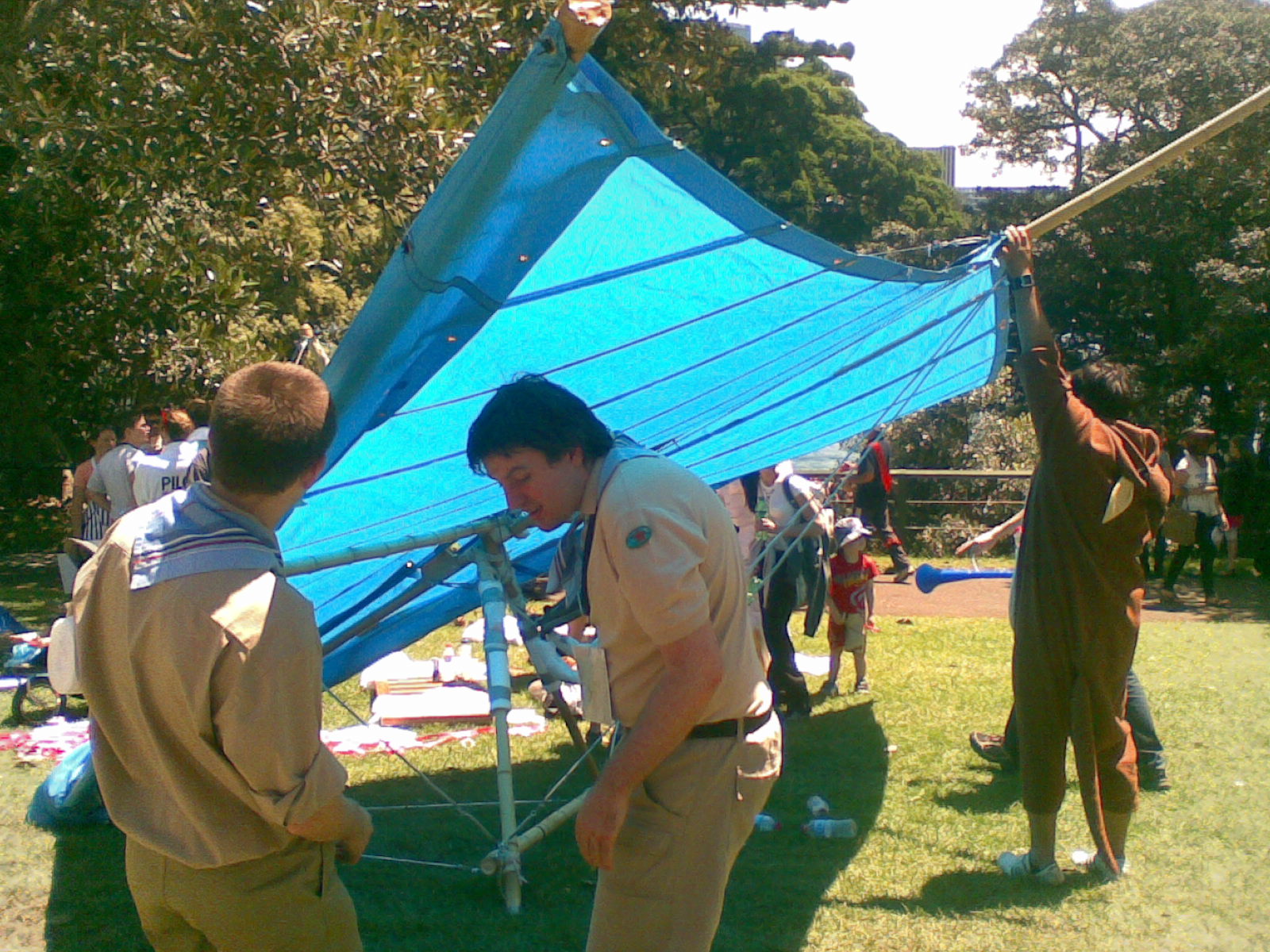
Some honey bees in the Flugtag competitors queue.

Sonnet 3: Flugtag
Flightday: young people spread their wings
where Ms Macquarie sat of yore.
Buzz Lightyear, bees and Monkey kings,
James Cook (with convicts) try to soar
in would-be gliders they’ve designed –
fantasies to blow your mind –
Hills Hoist, muffin, wedding cake,
but most plunge straight down to the lake.*
We joined the crowd outside the fence,
groupies for The Tent That Flew
(its crew: three scouts, one kangaroo,
one son of mine). And though the gents
who judged them scored them pretty low
they were the best in all the show.

The Tent (in glider configuration) in the queue. At the mike the pilot explained that they had come the night before to earn their Sleeping with Mrs M badges, and decided to compete in Flugtag almost by accident. Theirs was the wittiest talk to the mike we heard and they flew the third furthest.

* Well, it would have been the lake if we’d been at the Minneapolis Flugtag, say. Here it was actually the Harbour. But what rhymes with ‘harbour’?

LoSoRhyMo 2

Oh oh! If I’m to make my modest target of 14 sonnets in November I should be managing almost one every two days. I’m already falling behind and it’s only the 6th. And it can only get worse from here, for reasons hinted at in Nº 2:

Sonnet 2: Looking to buy
Flexible, unique and charming,
spacious, stylish, redesigned,
with northern sun, and traffic calming,
details of the classic kind,
potential for downsizers’ retreat
in much sought after treelined street,
we seek it here, we seek it there,
our new home could be anywhere,
in Earlwood, Petersham, St Peters,
Marrickville or Hurlstone Park,
(Burwood’s too far off the mark).
At each new door the agents greet us.
We turn up, armed  with cheques, not knives,
Buying, not fighting, for our lives

Dorothy Hewett’s Selected Poems

Selected Poems of Dorothy Hewett, edited and introduced by Kate Lilley (UWA Press 2010)

When she launched this book at Gleebooks Gail Jones warned against becoming so fascinated by the iconic figure of Dorothy herself that we forget to actually read her poetry. Good advice, no doubt, but I’m probably no different from anyone who knew Dorothy at all in being completely incapable of reading these poems without feeling that I’m in the presence, not so much an icon as a … well, a presence.

Dorothy was a frequent visitor to Currency Press, where I worked in the 1970s. She commanded attention, was never dull, and was never stuck for words. Her first appearance in my time there was by way of a letter written to her good friend our editor in chief Philip Parsons, which he read aloud to the staff (all three of us). She was approaching 50, and wrote that she wanted to celebrate her birthday on a beach in Bali, laid out in a coffin surrounded by black candles. We were amused. When she saw the Currency edition of her play The Chapel Perilous (on the front cover a glamorous photo of  Dorothy when young, on the back a pensive Dorothy in her late 40s), she exclaimed,  ‘Time’s cruel!’ I really don’t need to say this, but Dorothy approaching 50 didn’t exactly lack glamour. We were amused again. In 1976 we published her much earlier play, This Old Man Comes Rolling Home, and I marked up the typescript for the printer. When you mark up a text you take it one word at a time and if it’s a play it tends to perform itself in your head. As I neared the end of my pencil-wielding way through This Old Man, tears were streaming down my cheeks. Dorothy walked into the office soon after I’d finished it, and I told her, with feeling, how much I loved the play. ‘Ah well,’ she said, rolling her eyes, ‘you work away for ten years and they still say your first thing was the best.’ Once, impertinent pup that I was, I told her she had misused a word in a piece published in Overland (writing bisexual but meaning, I said, androgynous). She didn’t slap me down: her eyes lit up, and we had an animated conversation. The last time I saw her was at the NSW Premier’s Literary Awards dinner in 2000, where she received the Special Award, and though she was ill and walked with difficulty, she was as commanding and glamorous a presence as ever, her hair still wild.

If you said that none of those random memories had anything to do with the poetry I couldn’t say confidently that you were wrong.  But it would be odd to quarantine Dorothy’s poetry from her plays and prose, or from what we know of her life. The subject matter of her plays and autobiographical writing is revisited here: her childhood in the Western Australian wheat belt, her sexual adventures and ordeals, her history with the Communist Party. As Kate Lilley writes in her introduction, Dorothy was a ‘magnificently unabashed poet of female narcissism’. (She’s also a magnificently unabashed poet of Australian Communism and disillusion with Communism.) In the poems, even more explicitly than in the plays, she puts herself on the … I was going to say ‘on the chopping block’, and I think I’ll stick with that. If this is narcissism, it’s a ruthless variety; if sometimes her laments over her suffering as a woman sound like self pity, there’s a pitilessness in the way she holds that emotion up to the light. Nothing is quarantined in these poems, and when I read them, I hear Dorothy’s voice.

I think I’m blathering.

Excerpts from the autobiographical  ‘The Alice Poems’ take up about a third of the book, and fill me with chagrin that the book Alice in Wormland is out of print. But the quieter poems of the last 20 pages, which look squarely at old age, the effects of cancer, and the approach of death, are the real treasure. From ‘The Last Peninsula’:

death in his blue cowl
takes one reluctant step away
while the suffering flesh
cut sewn and sealed
lies still in its narrow bed
the spirit looks down and is healed
Healed for what? says the voice
More of the same?
And the currawong sings Rejoice
I have called your name
.

I find the last poem in the book, ‘What I Do Now’,  intensely moving. After a quote from Frank O’Hara (‘I always wanted my life / to have some kind of meaning’), the poem walks us through the speaker’s day – lying in bed reading, getting up at 6 pm, watching television until midnight, and staggering back to bed. Then, with what might be read as desolation, but which to me sounds like a reprise in a minor key of Dorothy’s grimly stoic, eye-rolling response to the Chapel Perilous photos or my response to her early play:

–––––––––the wind howls
ripping my poems to shreds
the paper lantern whirls

I listen to the semis
changing gear
to tackle the 40 Bends
in the tapestry chair
the cat snores loudly
will I live to a great old age?
there are lots of mad old women
in these mountains
shut up in their houses dying.

Announcing LoSoRhyMo

Everywhere else it’s NaNoWriMo – [inter]National Novel Writing Month for those who don’t retain camel-abbreviations. I’ve decided that here it’s the much less ambitious LoSoRhyMo, or Local Sonnet Rhyming Month. My aim is to write not 30 but 14 sonnets this month. Hang the quality, I’ll just get them done. I plan to stick with, or at least start out with, the version of the sonnet Vikram Seth used in The Golden Gate, and to refer to current domestic events. If (which seems unlikely) you’re drawn to join me in the enterprise, please avail yourself the comments button: feel free to write any kind of sonnet you like, and to cover any subject that takes your fancy.

Sonnet 1: On selling the family home
Our home for more than twenty years
Our haven, our Three Seventeen,
Where children’s laughter, rage and tears,
And adults’ too, and in between
Have filled the air, where stains and scratches,
Dents and holes, loose threads and  patches
Are records of our history
With love’s abiding mystery
Was sold on Tuesday, seven thirty.
Our shell, our outer skin, alive,
We’ll trade for one point five two five.
It’s brick and wood, some bits quite dirty.
We’ll shuffle off to somewhere new:
New owners, may it welcome you.

Where Blade Runner came from

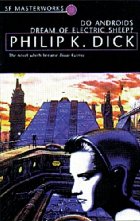
Philip K Dick, Do Androids Dream of Electric Sheep? (1968, Gollancz 1999)

Those who know about such things say the best introduction to Philip K Dick’s fiction is his short stories, especially ‘We Can Remember It for You Wholesale’. The advice came too late for me: my introduction was the movie based on this book, Ridley Scott’s Blade Runner, which I saw a shocking 28 years ago. Something – perhaps nothing more than the awkward title –  led me to expect the book to be a poor, pallid thing in comparison to the movie, but I’ve been meaning to read it anyhow since 1982.

Apart from the broad outlines of the plot (Rick Deckard, played by Harrison Ford, is a bounty hunter who tracks down and kills advanced robots who have rebelled against servitude and are trying to pass as human), what I remember of the film is the dark turbulence of the design, the crazed, ruthless, romantic robot played by Rutger Hauer, the tear that runs down the cheek of a female character when she discovers she’s not human, and not much else. The world of the book is a quietly decaying desolation rather than an overpopulated millrace; Roy Baty (not Batty as in the movie), the leader of the rogue androids, is unambiguously unsympathetic; and Rachael Rosen finds out she’s not human fairly early in the piece, though later plot points suggest she has always known it – and either way there’s no great emotion involved. It’s the same story, but very different.

I enjoyed the book. I would have enjoyed it if Blade Runner had never been made, but as a study (in my case a mighty superficial one) of book-to-film adaptation it’s fascinating. The book has a religious movement, Mercerism, that isn’t in the film, that emphasises and reinforces the human quality of empathy. It’s mainly an Orwellian method of population control, and but it also enables the characters to have genuine mystical experiences. Though there’s plenty of killing, none of it is graphic: the most horrifying moment – and it is truly horrifying – involves a few scissor snips that draw no blood. The movie goes for much bigger effects, though it’s probably tame by today’s bang and splatter standards, and uses noir conventions to establish a moral and metaphysical murk that has (for my money, and in my memory) a much more powerful effect than the book. The book raises the same basic questions – something like: what makes us human? what does it mean to care, and what are its limits? – and has its own ambivalence and ambiguities, but in a much cooler, more cerebral, register.

The movie, in other words (and I intend to see it again soon), departed from the book in major ways, leaving out not just the religious element but also a central strand about companion animals (which survives vestigially in images of artificial owls, and ostriches in the streets), and even the major back story of a nuclear war. It was a futurist noir piece (perhaps the first of its kind?), where the book is something much quieter, more measured, more individual. The movie became its own thing, broke free of the constraining obligation to be true to the book (which has such a dampening effect on, say the movie adaptations like the Harry Potter series or the Millennium Trilogy). Interestingly enough, this leaves the book relatively uncontaminated. The book’s hero is definitely not Harrison Ford. I’m free to imagine him freshly for myself as I read.