Monthly Archives: Nov 2012

The Book Group climbs Venero Armanno’s Black Mountain, plus sonnet #4

Venero Armanno, Black Mountain (UQP 2012)

Before the Book Group meeting:
A hasty read of this book’s cover blurb led me to expect a kind of fictionalised misery memoir cum migration tale, a book where a second or third generation Australian explores his European heritage:

Beginning in the sulphur mines of Sicily over a century ago … Based on factual events … Italy … rural fringes of coastal Australia … a haunting exploration of what it means to be human.

There are elements of misery memoir: in the most powerful and memorable part of the book the main character, Cesare Montenero, is sold as a child into virtual slavery to work in Sicily’s sulphur mines in the early 20th century. But Cesare’s story is told in the literary equivalent of found footage, and the sulphur mines account for only 40 of the 200 or so pages of the found manuscript. A 30-page prologue has already set some creepy, horror-genre expectations, so that one’s antennae are out for hints of the darker, weirder underlying story. It’s hard to say much more without giving stuff away, but there are plenty of pleasing twists and turns. I’m glad I didn’t read any reviews beforehand, as one of the book’s pleasures is in the way appearances turn out to be deceptive, the ground shifts constantly under your feet, you can’t really be sure what kind of book you’re reading.

I enjoyed it, but can’t say I found it satisfactory. Too often I became aware of the plot mechanics, that someone was making it all up. A gauge of my lack of engagement is that I kept wanting to have a conversation with the copy editor: ‘If we’re going to opt for the US practicing,’ I wanted to ask her/him, ‘why not consistently use US spelling, like sulfur?’ Or, ‘Are sure you shouldn’t have queried whether resiled to should have been resigned to?’ There are more such moments, and the fact that I noticed them may say more about me than the book, but it does indicate I was less than fully engrossed.

After the meeting:
This was an unusual meeting. The group had been going for exactly 10 years last night, so there was much taking stock and reminiscing, and passing on of lore to those of us, like me, who weren’t there at the start. But our in-house facilitator made sure we each had a moment to give our personal take on this book, and uncharacteristically a consensus emerged: the book was OK, no one hated it, but all but one of us found it fairly ho-hum. The sulphur mine section got a general thumbs up – one chap had read the book a while ago and had trouble remembering anything else about it. And, as someone said, we enjoyed the brothels of Paris. But, while I think we all read to the end, the overarching plot failed to impress. Most of us didn’t feel the sulphur mines and the brothels to be integrated, so when those parts came to an end, the wheels of the plot had to start from a virtual standstill. The one person who had a different reading argued for a deep thematic coherence, but I won’t say more because it really is a book that can be spoiled by too much being given away.

And the obligatory sonnet:

Sonnet 4:
Ten years and more than 60 books
discussed by us (and mostly read) –
by builders, architects, home cooks
and sundry ageing chaps, well fed
each time in mind and body. Park,
Malouf, McEwan, Stead, Houellebecq,
Coetzee (twice), White, Ghosh (a naval
title), Falconer, Miéville:
We all loved Tolstoy. Tsiolkas split us.
Tonight: Armanno, reminiscence,
but mostly – here’s the Book Group’s essence –
not so much a tute on lit as
time for sharing – hip, hooray-able –
lives and minds around a table.
Sonnet #3: Not By Ron

I’m making my way through Byron’s ‘Don Juan’ (pronounced Joo-ahn, as everyone except me probably knew) on the iPad. This sonnet’s first six words and other scattered phrases are from Canto the First. Because it’s Melbourne Cup day, I thought I’d work in a little gambling reference.

Sonnet 3: Not By Ron
‘My days of love are over,’ By-
ron wrote when he was thirty. How
the times have changed for lovers. I
met you when twenty-nine, and now
it’s thirty-six years later. ‘Tis
still sweet (long since the first-born’s birth,
the first and passionate love) to kiss
the lips you say have thinned. The earth
will have us soon enough – and then –
what then? – I do not know, or care.
We’ll die somehow, some time, somewhere,
but when that comes I’ll bet you ten
to millions that our loving days
aren’t over. All may change. This stays.

Sonnet #3: Not By Ron

I’m making my way through Byron’s ‘Don Juan’ (pronounced Joo-ahn, as everyone except me probably knew) on the iPad. This sonnet’s first six words and other scattered phrases are  from Canto the First. Because it’s Melbourne Cup day, I thought I’d work in a little gambling reference.

Sonnet 3: Not By Ron
‘My days of love are over,’ By-
ron wrote when he was thirty. How
the times have changed for lovers. I
met you when twenty-nine, and now
it’s thirty-six years later. ‘Tis
still sweet (long since the first-born’s birth,
the first and passionate love) to kiss
the lips you say have thinned. The earth
will have us soon enough – and then –
what then? – I do not know, or care.
We’ll die somehow, some time, somewhere,
but when that comes I’ll bet you ten
to millions that our loving days
aren’t over. All may change. This stays.

NSW Premier’s Literary Awards 2012

The shortlists for the NSW Premier’s Literary and History Awards were announced today, and the awards dinner will be on 30 November. I’ve been a fan of these awards for years, but this year it’s personal. My fabulous niece, Edwina Shaw, is in incredibly distinguished company on the UTS Glenda Adams Award for New Writing, for her novel Thrill Seekers. Much snoopy dancing and weeping for joy has ensued.

I couldn’t find the lists on the site of the State Library, which is administering the awards this year. The Sydney Morning Herald has them, here.

Apart from Edwina’s book, I’ve read two of the novels (blog posts here and here) and one of the non-fiction works (here), all with my book group. I’ve read one of the multicultural titles (here), and none of the poetry books, the children’s books or the ‘young people’s literature’. I’ve seen two of the three scripts (episodes of Rake and East West 101) and have no desire to see the third (Snowtown).

The Premier’s History Awards usually happen at a different time of year, but because of a general overhaul (not, Barry be thanked, a cancellation as in Queensland), the two lots of awards are happening at the same time for just this year. I haven’t read anything on the History Awards shortlists, though I do have one book beside the bed.

Added on 6 November: The shortlists are now up on the State Library web site, here and here. There are instructions there for how to vote in the People’s Choice Award.

Sonnet #2: The dogs outside Orange Grove Markets

There are so many more important things to be thinking about, from Woolworths’ continuing to make money out of problem gamblers to an Onion article about Sandy that rings too true for comfort, with the NSW government’s plans to destroy the employment prospects of thousands of aspiring artists somewhere in between. But the muse has handed me half a dozen dogs tied to a fence:

Sonnet 2: The Dogs outside Orange Grove Markets
The dogs line up at Orange Grove.
A Whippet whimpers, Shih Tzus yip
and won’t take comfort, Collies move
their twitchy eyebrows, Labs – so hip –
refuse to look abandoned, while
undaunted Staffies wag and smile.
It’s farmers’ market day. They’re tied
here while their owners go inside
for reasons past dogs’ understanding.
There is affection between species.
We house them, feed them, bag their faeces.
But now, resigned, sad or demanding,
dogs wait until, they know not when,
the rapture when we come again.

Sonnet month is here again

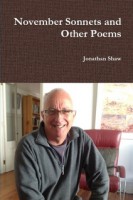
It’s November! My self-imposed month of blogging in verse has arrived. To see previous years’ mixed bag of efforts, click here, or you can buy the vanity publication of all 28 sonnets, plus my versification of Alan Jones’s epic ‘apology’ press conference, ‘The Apology, or Manning Up’, by clicking on this image:

Nsop

I may not stick to sonnets this year, but for tradition’s sake, I’m still calling it Local Sonnet Rhyming Month – LoSoRhyMo (as distinct from the much more demanding NaNoWriMo.)

Because it’s the start November, it’s also the last days of Sculpture by the Sea at Bondi. First some snaps:

Sonnet 1: Sculpture by the Sea again
We hear of artists living hand
to mouth, yet paying vast commissions
if they exhibit on the sand
or rocks near Bondi. Yet their visions –
moulded, cast, carved, planted, hung –
transcend commerce. They give tongue
to joys and sorrow, shape to fear
and hope and meaning year by year.
Cord and bamboo help us grieve.
Plastic cutlery cries, ‘Think!’
Glass, stone and steel forms bid us drink
their beauty, help us to perceive
what lies around us, and within.
To rip them off must be a sin.

The handful of sculptures specifically alluded to are:

  • Cave Urban (NSW), Mengenang (Memory), an installation of 222 Balinese-style bird scarers, whose sound hung over the park midway along the exhibition walk
  • Roh Singh (Victoria), Spatial Memorial, a white cord strung at the height of the 11 March tsunami
  • Jane Gillings, Midden (photo above)
  • Too many pieces of stone, steel and glass to mention.

One last note: my companion pointed out to me that where it was indicated in the catalogue that an artist was trained at TAFE, the skill level was manifestly superior. Despite whatever the government’s advisers have been saying, there is a need for the skills taught in fine arts at TAFE.