This fabulous thing has been up on YouTube for years, ignored by millions – there aren’t even any comments that need to be avoided.
Who’d have thought Gertrude Stein could be such fun? Thanks Harriet the Blog

This fabulous thing has been up on YouTube for years, ignored by millions – there aren’t even any comments that need to be avoided.
Who’d have thought Gertrude Stein could be such fun? Thanks Harriet the Blog
Regular readers will know that I’m a Jennifer Maiden fan. I expect few people will have read her poem ‘shortlist’, in her most recent book, Pirate Rain, and assume it counts as fair use if I give you the lines from that poem that refer to Dame Joan Sutherland, wrenched from their context with ragged edges, but a lovely description all the same:
when I was young, I heard the great
Sutherland sing quite often and saw
how she expanded the idea
_____ of voluptuousness
with a sweep of russet hair, her diaphragm
as wide as love’s horizon, lower lip
seductively trembling with each high note, as the dawn
flutters across a mountain, while
her molten silver, complex coloratura had
such ethical logic in it
There’s been an extraordinary confluence in my cultural intake over the last week: Hettie Perkins’s Art + Soul on the ABC, Big hART’s Namatjira at Belvoir Street, Andrew Stojanowski’s Dog Ear Cafe, and W E B Du Bois’ The Souls of Black Folk, which I’m just starting. If I was a public institution and the Coalition was in power I’d have my funding cut.
A major element of Namatjira is the story of the friendship between the man known to non-Arrernte people as Albert Namatjira and the white World War One veteran Rex Battarbee. If Dog Ear Cafe had a single take-home message, it would be about the importance of solid relationships. In an exchange between Stojanovski and Robin Japanangka Granites, a Warlpiri elder. Stojanovski (named Yakajirri in Warlpiri) says that he feels that blackfellas (Yapa) and whitefellas (Kadiya) are standing on opposite sides of the Grand Canyon ‘looking at each other and waving at each other, but our cultural worlds are so different that we are not connecting at all’. Robin answers:
No, Yakajirri, I think you are wrong. I see tightropes across that canyon, and I see people like you and me walking those tightropes, connecting both sides.
Probably the most attractive thing about Art + Soul is the way Hettie Perkins puts herself in the frame, letting us see the warmth, but also the awkwardness of her relationships, as an urban Aboriginal woman and curator, with artists from remote communities.
The first of the 14 essays in Du Bois’s 1903 book begins with a brief impression of white folk clumsily attempting relationship:
Between me and the other world there is ever an unasked question: unasked by some through feelings of delicacy; by others through the difficulty of rightly framing it. All, nevertheless, flutter round it. They approach me in a half-hesitant sort of way, eye me curiously or compassionately, and then, instead of saying directly, How does it feel to be a problem? they say, I know an excellent colored man in my town; or, I fought at Mechanicsville [site of a Civil War battle]; or, Do not these Southern outrages make your blood boil? At these I smile, or am interested, or reduce the boiling to a simmer, as the occasion may require. To the real question, How does it feel to be a problem? I answer seldom a word.
I know the legacy of US slavery is very different from that of Australian genocide and dispossession, but they do share some features, and I couldn’t resist blogging about this little volley of reminders of the importance of personal relationships in dealing with those histories.
Andrew Stojanovski, Dog Ear Cafe: How the Mt Theo Program beat the curse of petrol sniffing (Hybrid Publishers 2010)

Despite the subtitle, this is not a how-to book, but nor is it straightforward memoir. The author lived for more than 10 years at Yuendemu, a Warlpiri settlement in Central Australia. He worked for a number of different employers during his time there, but from the first months he saw his job as being to fill the whitefella (Kardiya in Warlpiri) functions in the campaign against the petrol sniffing that was devastating the young people, and imperilling the future, of the community. A number of qualities equipped him well for the job: he was young, and evidently possessed huge amounts of energy; he had studied anthropology, and was open to cultural differences; he had a deep seated, quasi spiritual yearning to know Indigenous Australia intimately as a way of understanding his own Australian identity; he wanted passionately to make a difference in the world. The book is as much his personal story as the story of the program.
Stojanowski says somewhere in the book that he has written it to fill his obligations to the people he worked with, so other people can learn from the Mt Theo success. I imagine any whitefella planning to work in a remote Aboriginal community would find useful information here: how to make sense of cultural attitudes and practices that derive their rationality from hunter-gatherer ways, and to come to see their counterparts that might seem like they’re simply rational as rooted in millennia of agriculture; the importance of non-violence if a white worker is to keep the confidence and trust of a traditional Aboriginal community; a little on the workings of Warlpiri skin-name system; how indispensably useful it is that a whitefella has ‘diplomatic immunity’ from the intricate web of avoidance and can’t-say-no obligations that bind initiated Warlpiri adults; that what a distant, bureaucratic perspective might see as ’empowerment’ can look like abandonment when seen up close; and much more.
The book is very readable. Its potential usefulness is fleshed out in wonderful anecdotes – yarns in fact. There are dramatic confrontations with young people out of their minds on petrol fumes, privileged visits to significant cultural sites, one or two ceremonies lyrically described, revelatory conversations with old men and women, places where Warlpiri and whitefella senses of humour are a perfect match. We get a richly textured picture of what it’s like to be a whitefella living and working closely and respectfully with Warlpiri people – elders and young people – in a Central Australian community. Stojanovski married soon after moving to Yuendemu, and his two daughters were born during his time there. He gives an unsparing, though tactful, account of the strain that his heroic dedication to the work placed on his marriage. I would have loved a chapter in which his wife told her story. As it stands, it’s hard to tell how much she was an equally heroic member of team Stojanowski, and how much a sufferer of collateral damage – though it’s fairly clear there were elements of both. I would also have liked a chapter from Peggy Nampijimba Brown, the old woman who challenged cultural norms by undertaking to look after other people’s children at Mt Theo, without whom nothing could have happened – but the detail of whose story Stojanovski can’t tell us. Those, of course, are other books.
In the shadow of the Howard–Brough–Rudd–Gillard–Macklin Intervention, which gives the message that Indigenous communities in the Northern Territory are so dysfunctional that only military force can bring order, and in the more specific shadow of recent headlines about payback violence and exile from Yuendemu itself, this book is a challenging source of genuine light and realistic hope. It’s also a ripping good read.
Brian Aldiss, Hothouse (1962, Baen Books 1984)
 What a luxury to read a book where a child dies horribly in the first couple of pages, where the earth’s temperature has risen to the point where almost all mammals are extinct and small groups of humans cling to a precarious existence, where women lead those human groups and the men are protected and pampered because reproduction depends on their survival, and where none of these things is weighed down by real-life concerns about child protection, anthropogenic global warming or hegemonic patriarchy. Hothouse was first published in 1962 (and a year earlier as a five-part serial in a science fiction magazine), when gender politics and ecological anxieties were dots on the horizon for most people, and it was possible to approach in a spirit of joyful play subjects that are now matters for earnest, urgent and often acrimonious discussion.
You can’t argue with a book that rewrites the laws of physics to allow vast spider-like plants to tether the moon to the earth with silken cables. You can’t get too gloomy over a dying Earth scenario that involves incredibly [sic] vicious vegetable species with names like killwillow, trappersnapper, wiltmilt or oystermaw. You can only sit back and enjoy the ride when human intelligence is explained as the product of symbiosis between ape-like mammals and a ratiocinative fungus.
This book won a Hugo when it was first published. It’s listed as one of David Pringle’s Best 100 Science Fiction Novels since the Second World War. It’s a wildly inventive odyssey in which the hero Gren meets more evolutionary monsters than any one story has a right to. There’s plenty of terror, romance and comedy, much physical and moral heroism, enough philosophy to keep the mind engaged, and a pinch of charming bawdry.
I was at boarding school in 1962, thirsting for genre fiction and making do with what slim pickings the school library had to offer. Hothouse and the 14-year-old me were meant for each other. We’ve met up nearly 50 years too late, but that’s much much better than never. I’ve just read on the Official Brian Aldiss Web Site that Penguin republished it in 2008 – may it bring joy to myriad readers, of whatever age.
The ‘dead white male’ critique of Western Civ […] did not lead, as many of us had hoped, to a new internationalism, but rather to a new form of nationalism that emphasised hyphenated Americans. Chinese-Americans and Chicanos were now part of the intellectual universe, which was fine as far as it went, but Chinese and Mexicans were still excluded. Multiculturalism was, and is, not very multicultural at all.
(Eliot Weinberger, ‘The Post-National Writer’ in Oranges and Peanuts for Sale)
I’ve just read three literary journals whose roots lie respectively in a rejection of Australian xenophobia, in Communism with its commitment to internationalism and in a mission to publish Asian writing in English. Although we don’t do hyphens in quite the same way as the US, it seems reasonable to see how these journals stack up against Weinberger’s complaint.
***
Ivor Indyk (editor), Heat 23: Two to Go (September 2010)
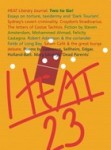 This issue of Heat is atypical in not including any work in translation. Multicultural themes are addressed, but very little attention is paid to the world beyond our shores. There’s not even any travel writing, unless you count Vanessa Berry’s ‘Dark Tourism: Three Graveyard Tales’, in which the author visits two graves and strolls in a London cemetery (in a piece that might have been more accurately titled ‘Mildly Crepuscular Travels with my Mum’).
Turkish born, ethnically Greek Melburnian Dmetri Kakmi’s ‘Salam Cafe and the Great Burqa Debate’ might seem to fit Weinberger’s description of Clayton’s multiculturalism pretty well – a non-Muslim man joins the argument about what Muslim women should or shouldn’t be allowed or made to wear. But he puts the lie to that pigeonholing by acting as a conduit for Muslim points of view, drawing on his childhood memories of Turkey and his time as a student in Istanbul, and discussing burqa-related artworks by Muslims Shadi Ghadirian (a woman) and Kader Attia (a man, whose ‘Kasbah’ was shown in this year’s Sydney Biennale).
Weinberger’s aspersions might also seem to apply to Michael Mohammed Ahmad’s story, ‘The Hat Dance’, the piece that comes closest to the kind of hyphenation he dislikes. But this account of a dust-up in an extended family living in Western Sydney is so gloriously exuberant only some kind of Diversity Bean-counter could fail to relish it.
Of course, Heat doesn’t claim to fill a hypothetical Diversity Quota in every issue, and there’s no reason it should. Its characteristic approach to fostering diversity is by presenting crosscultural encounters, an approach I’m fairly sure Weinberger would approve of. Kakmi’s piece is an example of that approach. So is Michael Atherton’s portrait of Harry (christened Charalambos) Vatiliotis, who lives in the Sydney suburb of Croydon and makes classical violins in the manner of Stradivere, each one a unique work of art. Cassi Plate quotes from letters of Costas Tachtis, Greek novelist who lived for some years in Australia, and his friend Carl Plate, an Australian artist: ‘The letters,’ she writes, ‘take us into a cosmopolitan world within the heart of what is often assumed to be parochial 1950s Sydney.’ Maybe cosmopolitanism is a better word than diversity for the thing that Heat does so well.
Cosmopolitanism can incorporate voices from elsewhere, and also bring a sharp eye to bear on the local, as Peter Doyle’s fascinating ‘Bashful City: Sydney’s Covert Criminality‘ does to photographs from the archives of Sydney’s Justice and Police Museum. It can also include intensely place-specific writing like Mark Tredinnick’s review of Judith Beveridge’s most recent book of poetry, in which, incidentally, he compares her to a shark and a Philip Marlowe thug, and convincingly means both as compliments.
I do worry about Heat‘s copy editing and proof reading. There’s curiousity, practicing (though correct Australian usage practises elsewhere), an umbilical chord. Someone is heard cluttering in his garage. In Robert Adamson’s delicately poised ‘The Coriander Fields of Long Bay Penitentiary’, a with is repeated over a line break – I know it’s poetry, but that’s just a mistake. One article has this near the beginning: ‘It is one of the great dividers between the civilised among us: those of impeccable taste.’ I wasn’t interested enough in the article’s subject – taxidermy – to endure whatever came after that.
****
Jeff* Sparrow (editor), Overland 200 (Spring 2010)
 The first issues of Overland, published in 1954,carried the slogan ‘Temper democratic; Bias, Australian’, hardly a promise of cultural diversity or cosmopolitanism. But as a project of the mainly Communist Realist Writers’ Group, the journal had a commitment to internationalism. Surprisingly, there’s not a lot of that in this anniversary issue, unless you count a deference to Europe and the US. Not that there’s necessarily anything wrong with that: for instance, Alison Croggon’s ‘How Australian Is It?‘ talks with her characteristic clarity and generosity about the way much of our theatre has opened out to the world, freed from constricting preoccupations with national identity but distinctively Australian all the same. On the other hand, when Clive Hamilton characterises the Australian as an agent of ‘the Republicans’ war on climate science’, he implies – perhaps intentionally – that in this matter Australia is humiliatingly no more than an arena in which US battles are being fought. There’s a fair whack of ‘theory’**, enough to create a gnawing sense of Australia as a site for the application of theory developed elsewhere – no sign of Raewyn Connell’s Southern Theory here. (The most theory-rich piece, Alwyn Crawford’s ‘Permanent Daylight‘, which deals with the intimate connection between capitalism and anorexia, is nevertheless compelling reading because of a ballast of passionate personal testimony.) Christos Tsiolkas is the Literary Big Gun of this issue, with a short story about the market in European art, but I found it unreadable (that is to say, I couldn’t tell what the story was trying to do, whether it was a spoof or something else very dull). There’s no non-European voice, and little interest in non-European culture: one piece, by a non-Muslim, quoting no Muslim voices, uses the Western burqa debate as a springboard for theoretical reflections on the visibility or otherwise of women in the West; Jacinda Woodhead gives us an attractive profile of Melbourne rapper-comedians Fear of a Brown Planet (there’s a wonderful YouTube clip of one of them here); Kabul is mentioned in one article, but it’s in a quote from an organisation aimed at creating a market for US cosmetics there.
So Weinberger’s kind of internationalism isn’t overwhelmingly evident in Overland. The three outstanding pieces, in fact, aren’t even particularly multicultural. Chris Graham does a demolition job on Noel Pearson in ‘Telling whites what they want to hear‘. Graphic novelist Bruce Mutard re-tells a story from Overland 1: the story is ‘Nine O’clock Finish’ by John Morrison, a marvellous socialist realist writer, and the resulting 8-page comic is to weep. Janette Turner Hospital’s short story ‘Weird People’ is a tour de force centred on the captain of a tourist boat that takes mainly US tourists out to look at humpback whales off the coast of New South Wales – I suppose it could be read as a protest against our cultural client-state identity.
In Overland, though less so than in Heat, proofreading is a worry: ‘haute bourgeois’, the Communications Minster, and at least one article written in an academic style that apparently defeated all attempts to wrangle it into English.
****
Stephen McCarty(editor), Asia Literary Review 17 ([Northern] Autumn 2010)
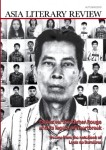 It’s a telling confirmation of Weinberger’s generalisation that the ALR’s web page header reads ‘Asia Literary Review – Asian American writing’, apparently promising US-ers that they can read it without danger of encountering anything genuinely foreign. Happily, it’s a false promise.
From the beginning, there’s no doubt that we’ve left the leisurely contemplation of anti-grand abstractions far behind. US-expat journalist Robbie Corey Boulet kicks off with a report on the first case tried – in 2009! – by the tribunal set up to deal with ‘those most responsible’ for the crimes of the Pol Pot regime. Itself a fine combination of court-reporting, historical background and interviews with people still looking for answers about their murdered relatives, it is followed a few items later by a suite of poems by Peauladd Huy whose parents were murdered by that regime and who now lives in the USA. And it finds a grim echo at the end of the journal, in an excerpt from Frank Dikötter’s Mao’s Great Famine, which draws on archival sources to explore the terror and violence of the Great Leap Forward (‘at least 45 million people worked, starved or beaten to death’). There are other pairings, including a story and a photo essay about floods in the Philippines. A good bit of the ALR probably amounts to armchair dark tourism – much stronger medicine than the piece wearing that label in Heat. The one actual piece of travel writing – about Mount Merapi, a Javan volcano – has enough disastrous loss of life for the darkest tourist sensibilities.
There aren’t many laughs, but there’s plenty of wit and imagination: ‘Youth-in-Asia‘, a story set in Korea by Canadian Ron Schafrick, delivers on its punning title; Priya Basil’s ‘Losing Their Religion‘ is a quietly entertaining memoir of religious conversion and un-conversion that spans three continents; GB Prabhat’s ‘The Silencer‘ gives us a clever inversion of celebrity stalking.
There is no Australian presence, apart from two full-page ads, for the Melbourne Writers Festival (featuring a Hokusai wave) and Heat (‘Australia’s only international literary journal’) respectively. Insert your own ironic comment.
One sentence leaps out to meet my eye. Jonathan Watts, an English journalist, moved from Korea to Beijing in 2003. His interviewer James Kidd tells us:
The signs of conspicuous pollution made an immediate impression: a keen runner, Watts found himself wheezing after a short jog; a father, he was alarmed when his two daughters were not allowed outside during breaks at their Beijing school. It was China that taught him to fear for the future of the planet.
I’m not sure I can afford to keep up my subscriptions to all three of these journals. I was thinking of letting my subscription to Asia Literary Review lapse – but it’s teaching me to think in terms of the whole planet
Posted in Books
Tagged Alison Croggon, Alwyn Crawford, Asia Literary Review, Bruce Mutard, Cambodia, China, Chris Graham, Christos Tsiolkas, Clive Hamilton, Communism, Dmetri Kakmi, editing, Eliot Weinberger, Frank Dikötter, Heat, Ivor Indyk, Janette Turner Hospital, Jeff Sparrow, John Morrison, journals, Judith Beveridge, Kader Attia, Mao Sze Dong, Mark Tredinnick, Michael Atherton, Michael Mohammed Ahmad, Noel Pearson, Overland, Peauladd Huy, Peter Doyle, Pol Pot, Robbie Corey Boulet, Stephen McCarty, The Book Show, Vanessa Berry
 Last night we went to another brilliant launch at Gleebooks: Rachel Perkins doing her first book launch, of Andrew Stojanovski’s first and he says only book, Dog Ear Cafe. It was a surprisingly intimate affair. Many members of the author’s family were there, including a couple of charming twin nieces who were just tall enough to reach the snack foods, and relaxed enough about the surroundings to keep up a sweet background noise during proceedings.
Stojanovski lived at Yuendemu in Central Australia for 11 years, and was part of the Warlpiri community’s successful campaign to wipe out petrol sniffing there. As he said, all through his time in the Centre Aboriginal elders would say, ‘Don’t write a book about this.’ They were sick of whitefellas blowing in, spending a bit of time there, and then going away and making a quid or getting jobs by writing anthropological or other treatises about them. But then, toward the end of this time there, one friend said to him, ‘You should write a book about this.’ The idea was that he should write a history or a manual to show other whitefellas how they could be useful. When he told a young friend – a former sniffer and active participant in the regeneration of the community – about the idea, the young friend said no one would read a history/manual, he should write it like an adventure with all the funny and dramatic incidents left in.
Rachel Perkins did a lovely job as launcher. She was there as an Aboriginal Big Name who could give the book her blessing, of course, but she let us know from the start that she had a friendship with the author dating back decades – she communicated her pleasure (and relief) in the excellence of the book, he affection for Andrew, and her own deep appreciation of the creativity, resourcefulness and above all compassion of the people of Yuendemu. Given that it’s been in the news recently as a place of violence and lawlessness, this was a refreshing perspective from one who has strong connections there.
So much of this launch was heartening. Andrew Stojanovsky told poignant stories (he cradled a glass of red wine under his nose, to illustrate the habitual posture of a petrol sniffer). He explained the benefits for Aboriginal communities in having white people there to perform functions that would be rendered extremely difficult if not impossible by the complex demands of avoidance and can’t-say-no kinship obligations. He relayed many conversations with friends young and old at Yuendemu. In one of these he was talking to a Warlpiri man about the challenge of making friendships between whitefellas and Warlpiri. He said that sometimes it felt as if there was a Grand Canyon between the two. The old man said, ‘Yes, but I see tightropes across the canyon.’
Inevitably, I thought of Seven Seasons in Aurukun, my niece Paula Shaw’s account of a much shorter time in a remote Aboriginal community. Rachel Perkins spoke of the importance of books by whites that move beyond the anthropological or ethnographic perspectives to portraying individual people – Paula’s book does that. And Andrew Stojanovsky described the conditions endured by school teachers when the community was still home to petrol sniffers – as Aurukun was during Paula’s time there – and commented that it was no surprise that few teachers managed to stay more than two years.
Dog Ear Cafe has already been reviewed by Will Owen in North Carolina. He would have enjoyed the launch. We bought a copy.
Posted in Books
Tagged Andrew Stojanovski, First Nations, Gleebooks, Paula Shaw, Rachel Perkins
Eliot Weinberger, Oranges & Peanuts for Sale (New Directions 2009)
 Eliot Weinberger is a poet, translator (most eminently of Octavio Paz from Spanish and Bei Dao from Chinese), literary critic (though he denies it), essayist (one of his essays – perhaps more accurately classified as a prose poem – was published in Heat Nº 5), anthologist (his 1993 anthology American Poetry Since 1950 was a bestseller in Mexico), editor. This book collects 28 pieces written on commission and first published between 2001 and 2009: introductions to other people’s books and to his own poetry translations and anthologies, reviews, magazine articles, contributions to anthologies and talks given at conferences. He ranges far and wide, and is always interesting, often illuminating, sometimes funny. Topics include EB White, Emily Dickinson, Susan Sontag, the changing face of Chinese poetry in the US since Ezra Pound, China in 2005, the failure of US literati, poets in particular, to engage politically under Reagan, the relationship of photography and anthropology (they’re siblings), a number of poets I’ve not heard of who are now high on my To be Read list, translation (I will never trot out the phrase traduttore traditore again), George Bush, the Iraq War, Barack Obama. And there are a couple of pieces – one on the colour blue, another on peanuts and oranges – that approach an abstract condition.
Weinberger is a great list maker. Often when I come upon a list in a piece of prose, I’m tempted to skip, feeling that it’s enough to know that many and various things were packed into the car, or growing in the garden, without having to read the name of every one of them. Weinberger’s lists don’t tempt in this way: he’s a list virtuoso, delighting in what he calls ‘strange conjunctions’. The longest piece in this book, ‘Things I Heard about Iraq in 2005’, delivers literally on the title, listing news reports, rumours, quotes and statistics, a paragraph (mostly beginning ‘I heard’) per item, and few paragraphs longer than 10 lines, without analysis, commentary or argument. The effect – partly a result of sheer accumulation, partly of masterful juxtaposition – is devastating.
Most of the lists in this book are integrated into more conventional essays. Take, from many possible examples, this list of biographical detail on David Rafael Wang, scholarly collaborator of William Carlos Williams:
Wang, also known as David Happell Hsin-fu Wand, was born in China – a direct descendent, he claimed, of Wang Wei – escaped to the US after the revolution, and became surely the only Chinese-American who was both a neo-Nazi white supremacist (and a member of the seedier circles around Pound in St Elizabeths) and a Black Panther (in Oakland in the 1960s). Among other things, he was also a stodgy professor, active in the academic bureaucracy; a bisexual boxing and martial arts fanatic who had long talks about poetry with Muhammad Ali; a poet (‘in the Greco-Sino-Samurai-African tradition’) and friend of many of the Beat and Black Mountain poets; a translator of Hawaiian and Samoan oral poetries, included in the Rothenberg Technicians of the Sacred anthology; and a possible suicide (at a MLA convention) who some people believe was murdered.
Let me try for a list of my own.
In ‘Postcard from China’, describing the familiar types found at poetry festivals, surely with himself in mind: ‘the polymath, equally at home discussing the latest American poetry or Shang Dynasty numismatics.’
In ‘Where Was New York’, a trenchant criticism of E B White’s version of that city: ‘New York is a city of outsiders where no one is a foreigner because everyone is a foreigner.’
In ‘Kenneth Cox’, quoting Cox describing Allen Upward, but could easily be describing his own effect on the reader: ‘an almost continuous sense of intellectual elation.’
In ‘Susan Sontag’ – a non-hagiographical tribute written after her death: ‘A famous writer with numerous friends and varied interests, she became, as is often the case, bogged down in ephemera and favours: speeches, statements, responses; program notes for performances of dance, theatre and opera; short texts for art catalogues; something on grottoes for House and Garden; something on Don Quixote for the Spanish Tourist Board.’
In ‘Anonymous Sources (A Talk on Translators & Translation)’: ‘cultures that do not translate stagnate, and end up repeating the same things to themselves.’ And later in the same essay, after explaining that the verses of the Quran known in English as the Satanic Verses, are known as gharaniq (the birds) in Arabic, so that when the title of Rushdie’s book was translated literally into Arabic it was generally read as meaning that some or even all of the Quran was written by Satan, which would be blasphemy enough, whatever was in the novel itself:
[T]he Japanese translator, Hitoshi Igarashi, an Islamic scholar, was stabbed to death in his office at Tsukuba Unversity in Tokyo. As far as I know, Rushdie has never made an extended comment on Hitoshi Igarashi. It would take another kind of novelist – Dostoevsky perhaps – to untangle the psychological, moral and spiritual meanings and effects of the story of these two: the man who became the most famous writer in the world at the price of what seemed, for some years, to be life imprisonment, and the anonymous man who died for a faithful translation of an old mistranslation, paying for the writer’s mistake.
He talks about ‘identity politics and its nerd brother, theory, who thought he was a Marxist but never allowed any actual governments to interrupt his train of thought’. He describes The New Yorker as having a style whose sentences are pathologically rewritten ‘until every article, whether a report from Rwanda or a portrait of a professional dog-walker, sounds exactly alike, driven by domestic similes and clever turns of phrase that mix colloquial speech with unexpected similes.’ I could go on, but you get the idea.
Not every piece in the collection is brilliant – one or two struck me as clever-dicky or obscure. On the whole, though: Best. Birthday Present. Ever.
WordPress automatically generates a list of possibly related posts, but so much in this book touches on things I’ve blogged about recently, I thought I’d compile a small list of my own. I’ll write his essay title, then my blog post title:
• ‘The United States of Obama’ – The Book Group’s Race of a Lifetime
• ‘Inventing China’ and ‘The T’ang’ – Shambhala Chinese Poetry
• ‘Postcard from China’ (‘in China, the US is Little Brother’) – Quarterly Essay 39: China Powers On
• ‘Poetry Is News’ – Narkiness and Trouble (both Jennings and Weinberger decry ‘theory’ – one of them is more entertaining than the other)
Tonight we went to hear Bob Ellis launch Ross Honeywill’s Wasted, the true story of Jim McNeil, violent criminal and brilliant playwright. There wasn’t a huge crowd – after all it’s nearly 30 years since Jim McNeil died,and his four plays haven’t had a production on a main stage for a long time. But it was a great launch, and looks like a very interesting book
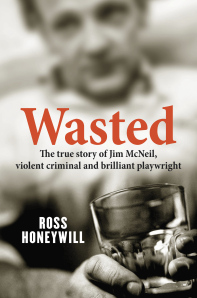 Jim McNeil (1935–1982), according to the Gleebooks web site, quit school at thirteen. Despite his love of reading and philosophy, as a teenager he lived among thugs and thieves. (When we showed him a draft biographical note for one of his Currency Press books in the 1970s, he crossed out the word ‘criminal’ referring to his early milieu and replaced it with ‘knockabout’.) In 1967, shot a policeman during an armed robbery. He was convicted and began a seventeen-year prison sentence. In Parramatta maximum-security prison he joined a debating group known as the Resurgents. Though he’d never seen the inside of a theatre he wrote one-act plays for the group to perform: The Chocolate Frog and The Old Familiar Juice. These plays were given productions at the Nimrod Theatre in Sydney, were a big success, and were published by The Currency Press (the first book I ever copy-edited). He wrote another, full-length play, How Does Your Garden Grow, and part of a fourth, Jack, while still in prison, and then was released ten years early thanks at least in part to lobbying by members of Sydney’s theatre scene. As Ellis said tonight, people were imagining him as being like other badly behaved writers like Brendan Behan, but he was something else altogether. Once he was released he never wrote anything decent again, and his life was a slow descent into violence, alcohol-related illness, and eventually death.
I hesitate to say I knew Jim, but I did visit him in Goulburn Gaol with my then boss, Managing Editor of Currency Press Katharine Brisbane, and he came to our office more than once after his release. I remember one memorable lunch when he and Peter Kenna, author of A Hard God, told anecdote after anecdote in fierce competition, to our great entertainment. I wasn’t there when, in response to some imagined insult, he broke a bottle on the edge of the kitchen table and threatened to use it on Philip Parsons, Katharine’s husband – but I heard the story from the horse’s mouth the next day. Katharine said she laughed and said, ‘Oh Jim, put it down,’ and he did.
Katharine was there tonight. So were a number of others who knew Jim, including David Marr, who gave him a roof on his release from prison. Ellis also shared a flat with him for some time. Bob Ellis read a piece that sounded as if he had written it soon after McNeil’s death, conveying his charm, his brilliant use of language (‘Dustbin of the Yard here. How are ya, Bobby?’), the ever hovering possibility of violence, and his chaotic alcoholism. Then he read from Wasted, and there was no doubt we were talking about the same man. I’d rate it just about the most moving launch I’ve ever been to. It didn’t turn away from Jim’s truly ugly qualities (Honeywill said that the thing that most surprised him in researching the book was how very violent Jim had been – a far cry from the charming ratbag one would wish him to have been). But there were people who loved him, and still hold a tender place for him. A number of people from the audience told anecdotes, both about his charm and his dangerousness. His story was one of redemption through discovering the life of the mind in prison, then returning to the damned space, almost by an act of will. It made me think – and someone may have said this – that the damage inflicted by the prison system runs very deep: he had lost the ability to make the kind of quotidian decisions necessary to a decent life. Ellis did say that imprisonment has been an experiment in dealing with criminal behaviour, and it has failed.
Posted in Books
Tagged Bob Ellis, David Marr, Gleebooks, Jim McNeil, Katharine Brisbane, Ross Honeywill
I received a text message yesterday afternoon: ‘You’re famous!’
Yes, the Hindsight program on The School Magazine went to air and my voice has now been heard by the vast multitudes who listen to the ABC on a Sunday afternoon, and the rest of the world can hear it on Thursday 16th at 1 o’clock in the afternoon. You can download it or listen to it here. My earlier post said it was scheduled for next Sunday – it was moved forward.
Lorena Allam, the producer, did a marvellous job. I expected her to use a couple of seconds of my semi-coherent ramblings, but it turns out there’s an awful lot of me in it, and she made me sound reasonably intelligent. Of course there are a dozen omissions, but since the program focussed on the period from 1950 to about 1980, it would have been a big ask to give Duncan Ball, Tohby Riddle or Joanne Horniman more than a passing mention, or to squeeze in a mention of Geoffrey McSkimming, Margrete Lamond, Kim Gamble, Di Bates, Judy Ridge, to mention only people who have worked for the magazine, let alone the writers who were first published there. And Oh, the poets!
But have a listen. There’s some lovely stuff there. I particularly like the way much is made, correctly, of Patricia Wrightson and Lilith Norman as formidable figures, and then Cassandra Golds, remembering herself as an opinionated 11 year old, says she had no time for them at all.
Added later: Joanne Horniman has written a blog post giving the long version of a major incident in the magazine’s history that was mentioned briefly in the program. It’s at http://www.secretscribbled.blogspot.com.
And later again: Another grace note from Joanne Horniman here.
 Currently reading & watching


