Category Archives: Books

Middle aged men talk about Anna K

anna002Last night my men’s group book group met to talk about Anna Karenina (Anna Karenin, as she’s called in the second hand copy I bought on Monday), and an excellent evening it was. We had Russian-themed food, largely bought from the venerable Cyril’s delicatessen, and unlike other books this one had us talking from the moment we arrived until suddenly, after a couple of hours, we moved on to fierce debate about what to read next.

Having been distracted by Other Things, I’d only managed to read a little more than 100 pages. But that didn’t stop me from joining in. In fact, as people talked about their favourite bits, I was able to remind them that almost all of those bits were foreshadowed in the early chapters. Another guy, who’d grown a Leninesque beard for the occasion, had read about half as much as I had (pushing out hairs on the chin clearly saps the reading power). Undeterred, he became a technical consultant for the evening, reading passages of exegesis or commentary from the essays up the back of the uni library copy someone had brought: why an adulterous woman in Russia at that time would lose her children, Tolstoy’s quasi-pointilliste method (not at all the mimesis it first seems – and we did have to chat a little about that word mimesis), the way Levin and Anna were two quite different ways of seeking, um, transcendence …

Sadly, if the way Anna dies hadn’t been the one thing I knew for sure about the book, it would certainly have been spoiled for me. No one bothered, in the manner of Mark Kermode discussing the latest Harry Potter, to refer to ‘the unhappy event’. I guess Anna’s suicide isn’t the big surprise that  Dumbledore’s death is.

What a wonderful book! As someone said, it’s a page-turner, yet it had us talking about spirituality, sexism, the industrial revolution, deep moral dilemmas, the uses of fiction, Tolstoy’s journey, the fascinating architecture of the book, excellent university moments from bygone days (two people remembered with awe Peter Shrubb‘s lecture on the first paragraph of Emma), the perils of translation (three translations in the room, three versions of the famous opening sentence) and much more. ‘I don’t read classics,’ one man said, ‘I don’t want to read stuff that someone thinks is good for me – but this was terrific.’ Now I’ve got a week to finish it.

The future prime minister and other animals

In days of yore at The School Magazine we used to comment to each other that Noelene Martin had a nose for the parts of someone’s life that would grab young readers’ interest. Her first book, Freda, a biography of Freda Whitlam, shows that her nose stays good when she’s writing for adults. In today’s Spectrum, it’s Bruce Elder’s Pick of the Week, and his review gives a good sense of the book:

This is not a conventional biography. It is, essentially, a life crafted out of a series of interviews and conversations with the subject. It reads like a quirky, chatty, anecdotal account of a life full of interest and incident. Some events, important in an individual life, but unimportant in an overview of a career, keep interjecting themselves into the narrative to such a point that Ms Whitlam’s childhood comes across like young Gerald Durrell in My Family and Other Animals.

freda002

But of course my regular readers read about it here first. Oh, and in case you’d like a copy (and you know you would) but are shy about calling the phone number given in the Spectrum, you can email mrsmarty AT aapt DOT net DOT au.

A poem I love that you won’t have read

I googled a phrase from this poem and came up with nothing, so I’m putting it up on the web for the world. It’s from Andrew Huntley’s Lyrical Ballast, Ode and Divers Poem, published (along with Martin Johnston’s first book, shadowmass, and Terry Larsen’s Tar Flowers) by Arts Society Publications in (I think) 1970. It was a big hit with student audiences.

An Essay on Criticism
(for Martin Johnston)

Maisie were a critical
Severe she wore her bun
She lecturing on literature be grim.
Arnold he be engineer
He’s reading just for fun –
Maisie meaning all the world to him.

Maisie has her secret
She blush when she bethink:
‘Tide me woe I Arnold loving you.’
But engineer is simple
He silently and blink
So other love the neither lover knew.

He pass around her passage
She walk with head abstruse
But fingernail she clench into a page.
Poor engineering Arnold
What skulking is the use?
She bridges scorn, he building them in rage.

Thus pass they days in likewise
Till one day force his mind –
He burst upon a paper ‘I love you’.
The brain alit in lightning
He search and searching find
A blending rhyme that rhyming ‘Eyes of blue’.

In short he writing poem
His first and only work.
He nameless post to Maisie English Lit.
Her greenly eye she cast up from
The paper with a jerk
She running find her colleagues of the crit:

‘Oh someone be me sending
Such funny little verse
What drivel are this word upon the sheet.’
They look and fog their glasses
It torn to shreds, and worse –
For Arnold pass and hear them in their heat.

His ears start to burning
His soul it next to go
He sneak away before his hair catch flame,
For Maisie she were laughing
At all the love he know
And take apart he’s poem like a game.

Her echo follow Arnold –
He rush where to forget –
Go building bridges on the upper Nile;
And one day – is it accident? –
He fall and getting wet
And getting eaten by a crocodie.

Maisie now professor are
A virgin do I add
She going down ‘The Great Tradition’ way –
She whittles off the authors
She think they mostly bad
And glaring from her pedestal she say:

‘Dismiss dismiss disnissing
Minor minor miss
Discuss disgusted there is only one!’
Her nightmare re-occurring
(She always dreaming this)
She in the campus bookstore getting Donne.

She publish pile of article
She talk and talking talk
She crossing out in pen that mostly red,
She pouring scorn on versicles –
Through literature she stalk –
She only still and silent in her bed.

If moment had y0u faltered
O Maisie long ago
You spy the love that helplessly he send,
You might have found it Arnold
You might have come to know
A poem can be way to make a friend.

I can’t track Andrew down to get his permission. (If you read this, Andrew, please get in touch. Of course I’ll take it down if you want, but I do think it deserves to live.)

Added 22 June 2020: Andrew has given this poem as his contribution to the Recollections page on the website commemorating the 30th anniversary of the death of poet Martin Johnson (at this link).

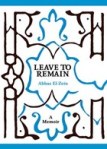
Leave to remain

Abbas El-Zein, Leave to Remain (UQP 2009)

9780702236921

There was a piece on the news recently about a conference on Islamophobia. My lay thought on the subject is that the best way to make headway against that polysyllabic malady is to make friends with actual flesh-and-blood Muslims. A probably less efficacious but also less challenging cure might be to read books by Muslim writers. Irfan Yusuf’s Once Were Radicals is a case in point. So is Leave to Remain. Both books are memoirs by Australian Muslims who were born elsewhere, both deal with what it means to be Muslim and ‘of Middle Eastern appearance’ living in Australia; Irfan Yusuf comes from the rough and tumble world of blogdom and doesn’t know when to write ‘my friend and me’ rather than ‘my friend and I’, whereas Abbas El-Zein is a university professor and novelist, parts of whose book have appeared in literary journals. Once Were Radicals did a beautiful job (for me at least) of ‘de-Othering’ Islam – that is to say, I felt that the author had done a brilliant job of bridging the Islamophobia chasm. I approached Leave to Remain expecting something of the same, for a different generation, a different national background (Yusuf left Pakistan for Australia when he was a small child; El-Zein was an adult when he came here from Lebanon).

Paradoxically, even though Abbas El-Zein’s childhood and youth in war-torn Lebanon could hardly have been more different from mine in what someone has called the cotton-wool peace of White Australia, I had much less of a sense of chasms being bridged with this book. Perhaps that’s because Yusuf’s memoir deals largely with his adolescent exploration of Islam, which is still pretty much a closed Book to me; while El-Zein identifies unwaveringly as ‘an adherent … to Enlightenment ideas and practices concerning the secular state, pluralism, science and technology’, close to my own cultural identity.

The book has elements of biography, but is actually a collection of personal essays, each with a stage of the writer’s life as subject and springboard. It’s divided into two parts, of roughly equal length: the first, ‘Origins and Departures’, takes us up to the 32-year-old El-Zein’s arrival in Sydney in 1995, the second, ‘Unhappy Returns’, deals mainly with his return visits to Lebanon and his responses to the wars that have afflicted that part of the world since. I don’t have time to say much more than that there’s some wonderful writing and give some samples.

On his adolescent anti-Americanism (which he repudiates as naive, but records all the same):

As a teenager, I worried about America because I could not understand how it could show off its wealth so casually on screens around the world. Was it not afraid of exposing itself, of being so present in the lives of so many individuals, a presence which was all about America itself? Once, during the war in Beirut, my mother told my teenage sister not to go out with too much jewellery round her neck because the only men she would be likely to attract were robbers. I thought America could benefit from a little talk from my mother. Not that America was likely to grant an audience. America was a blind Narcissus, constantly playing mental images of himself with no hope of seeing himself, let alone anyone else, because he was Narcissus and because he was blind. America could not see. It was made to be seen.

On the War on Terrorism:

A Manichean view of history – in which ‘we’ are indisputably good and ‘they’ are inherently evil – remains the West’s dominant form of expression about terrorism, post–September 11, and barely disguises its racial overtones. It is one of the mysteries of our time that the Soviet nuclear warheads and the IRA campaign on the British mainland, to name two relatively recent threats, did not cause nearly the same ‘existentialist’ panic that a Middle-Aged tribesman has succeeded in inflicting on the West’s collective psyche from his remote hideout in Afghanistan. For all the atrocious deeds of Al Qaeda and European Jihadists in New York, London and Madrid, who does seriously believe that they pose a threat to our existence in the West?

There is a wonderfully comic–grotesque description of his first walk from Redfern Station to Sydney University a few weeks after his arrival in Australia. ‘There was more mutilation around this street than I could live with,’ he writes – and we remember that this is a man who grew up in a civil war. He writes beautifully about his parental anxieties: his little son Ali announces with glee that his name can be found in the word Australia, and a few days later, just as excitedly, that it’s also in Alien. He writes graphic and instructive accounts of religious practices, especially of the Shi-ite festival of Ashura – mentioning in an aside that the public bloodletting that is so alien to Western sensibilities may well have been imported into Islam from the practices of Catholic Spain.

Incidentally, the book was designed, beautifully, by Jenny Grigg, who has been responsible for some of Australia’s most beautiful books (she redesigned The School Magazine ten or so years ago).

Not a 68er

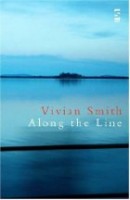
Vivian Smith, Along the Line (Salt Publishing 2006)

Having mentioned the ‘sixty-eighters’ a couple of times on this blog, I poked around on the net to find out what I was talking about. It looks as if the idea of a distinct ‘generation of 68’ among Australian poets can be traced to John Tranter’s 1979 anthology, The New Australian Poetry: the work of twenty-four poets from Australian poetry’s most exciting decade. The notion of a ‘generation’ was challenged almost immediately by, among others, Rae Desmond Jones (‘the … highly successful anthology and the polemical introduction had only marginal relevance to each other’), but it has lived on. More recently, as one might have predicted, the 24 68ers have been portrayed as a mob of up-themselves, cliquish poetry warriors, and – also no surprise – have been defended against those charges. (The article by Alan Wearne on that last link demonstrates nicely that reality is more complex, interesting and benign than the labels might suggest.) When the Tranter anthology came out I was distracted by being a new parent and earning a living and the like, but during the late sixties and early 70s I had been a regular at poetry readings in Sydney (and once, memorably, in Canberra) and can testify that the poetic times were pretty exciting. I have a copy of a 1971 publication, We took their orders and are dead: An anti-war anthology (edited by Shirley Cass, Ros Cheney, David Malouf and Wichael Wilding), which captures some of the feel of the Moratorium Poetry Readings where elder statesmen of Aust verse like AD Hope shared a stage with as yet un-labelled 68ers like John Tranter or Vicki Viidikas and quite a few in-betweeners like, say, David Campbell. (The 68ers themselves, of course, are now either dead or approaching elder status.)

All of which is a convoluted lead-in to Along the Line, which I bought a while ago as my contribution to Salt Publishing’s Just One Book campaign. If memory serves, Vivian Smith read at those long-ago Moratorium readings. He’s certainly got a poem in the anti-war anthology. But he’s not a 68er – and not just because John Tranter didn’t include him. The poems in this book have a quiet formality that shows none of the influences or impulses  that besotted the young ones in those heady days. The poems don’t spread across the page like spider webs catching and displaying apparently random flies of perception. They aren’t Chinese boxes or monkey puzzles. Neither the Ramones nor Bob Dylan are referred to even once. Iambic pentameters rule and straightforward subjects dominate: there are many arrivals in Sydney, the poet’s home, and at least as many returns to Hobart, where he grew up; there are poems about poetry, poets and painters, depression, friends alive and dead. I used the word ‘quiet’ , and that is the overwhelming effect: quiet reminiscence, quiet elegy, quiet observation, quiet wit, even, in ‘Deathbed Sketch’, some quiet philippic. Something of a quiet achiever, then, and reading him is a quiet pleasure.

Incidentally, ‘Return to Hobart’, the poem that appeared in the 1971 anti-war anthology makes another appearance here, unchanged except for much improved editing, which makes me realise that this is not a collection of new poems, but some kind of unspecified retrospective, which accounts for a sense of temporal dislocation –  the poet’s daughter is a little girl on one page, for instance, and quite grown up a couple of pages later, and all those comings and goings between Sydney, Hobart and the rest of the world don’t have any discernible sequence.

Rather than say more about the poetry, let me declare an interest. Vivian Smith was the supervisor of my aborted MA thesis in the mid 1970s. Of course it wasn’t his doing that the thesis came to nought, though I wish I’d got my facsimile copy of Edward John Eyre’s Journals of Expeditions back from him before leaving the university. (Vivian, if you chance to read this and happen by some miracle to have those books still in your possession, I love your poems, please drop me a line …)

I have a vivid memory of a Year 3 elective in which Dr Smith gave a series of lectures to a tiny scattering of students. He was a quiet, unassertive lecturer, poles apart from, say, David Malouf, who lectured us with passionate brilliance on the Jacobean playwrights. At about the third lecture, there may have been only three of us in the audience – me up the front dutifully taking notes, and two older women (they must have been at least 28), one of whom has since gone on to wield power and influence in the ABC and elsewhere, the other to do impressive work as a journalist and writer, leaning together like grumpy conspirators. As Dr Smith was discussing the two main kinds of poetry being written in England during the post-war years, open and closed poetry if I recall correctly, the future journalist interrupted his flow:

‘Excuse me, but aren’t these generalisations almost completely meaningless?’

She had a point. Dr Smith responded quietly, modestly, and not at all defensively, ‘Yes, but they provide a structure that allows me to talk about the poetry.’

And he continued with the lecture, of which I remember nothing else. (Maybe I should be explicit here: I’m not suggesting that the poetry in this book is ‘completely meaningless’: rather that it isn’t out to impress, or seduce, or dazzle, but offers itself as a mind at work and play, take it or leave it.)

Mars & Venus, Shmars & Shmenus

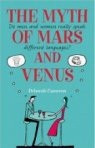
0199214476 Everybody loves a good smackdown, especially when it’s delivered judiciously, with careful marshalling of evidence and argument. The Myth of Mars and Venus is such a smackdown to the noxious theses of John (Men are from Mars, Women are from Venus) Gray and his ilk.

Deborah Cameron, currently visiting Australia and speaking at the Uni of NSW tomorrow afternoon, is a linguistics scholar (according to the jacket flap she is actually Rupert Murdoch Professor of Language and Communication at Oxford University, a title that might itself spawn a learned paper or two). And she casts an unfriendly eye on the agenda-driven cherrypicking, or worse inventing, of research results that lead to all those fabulous scenarios about women and men being hard-wired to use language differently, coming from different cultures, etc.

I recommend the book to anyone who has been made to feel not quite man enough, not quite woman enough, ot trapped in a role because of intransigent and immutable biological inheritance, to anyone who has run some of their writing through the gender genie and wondered what was wrong with them (rather than what was wrong with the GG, as Deborah Cameron points out would be a more sensible response). I also recommend it to anyone who wants to read fabulous snippets of research into the language of adolescents in US cities, in a traditional New Guinea village, in 19th century Japan.

That is to say, this is a debunking book of the best kind: it puts sound research in the place of shonky, restores one’s faith inhuman beings, and has fun on the way.

The book in brief:

The genius of the myth of Mars and Venus is to acknowledge eth problems and conflicts many people are now experiencing as a result of social change, while explaining those problems and conflicts in a way that implies they have nothing to do with social change. They are as old as humanity (quite literally in some versions of the myth) and their root cause is the irreducible natural difference between the sexes.  … The belief that [these problems] are timeless, natural and inevitable stops us thinking about what social arrangements might work better than our present ones in a society that can no longer be run on the old assumptions about what men and women can do.

Not the Blue Mountains

Mark Tredinnick, The Blue Plateau: a landscape memoir (UQP 2009)
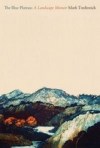
4541 As well as being a poet and writer of personal essays, Mark Tredinnick teaches writing in both creative and business contexts (not that I think business is never creative, but you know what I mean). I went to one of his Sydney Community College courses a couple of years ago, and not only got a boost for my writing but also was introduced to contemporary nature writing – Mark had us read passages from some of the great American practitioners, did a non-pushy but in my case successful sales job on The Land’s Wild Music, his book about them, and talked about his own longterm project, a memoir about the Blue Mountains. At the Sydney Writers Festival this year, beside stacks of his Little Red Writing Book and  Little Green Writing Book, there was the memoir, The Blue Plateau, in print at last.

You don’t have to scratch far in non-Aboriginal Australian literature before you come across the idea, usually accompanied by an element of yearning, that people live in close mutuality with the land they inhabit. It could hardly have been otherwise – the first settlers were discovering a new nature. Barron Field had fun describing a kangaroo

Nature, in her wisdom’s play,
on Creation’s holiday

and it probably makes sense to read a lot of Henry Lawson’s stories as exploring the deep interconnection of humans and environment – as in the oddly bathetic final sentence of ‘The Bush Undertaker‘:

And the sun sank again on the grand Australian bush – the nurse and tutor of eccentric minds, the home of the weird, and of much that is different from things in other lands.

Not to mention Judith Wright and all those poets who wrote about the landscape of the mind (‘South of my days’ circle, part of my blood’s country,/rises that tableland’ etc).

Mark Tredinnick is consciously part of a different tradition. Just as Patrick White decades ago revolted against ‘the dreary, dun-coloured offspring of journalistic realism’ which he saw as dominating Australian literature, looking instead to European models, Mark T looks to North American models. I know this, not because I’ve read any of them, and not just from the enthusiasm of The Land’s Wild Music, but from references embedded in the text – explicitly to Barry Lopez, in a nod and a wink to James Galvin, and perhaps by a mention of bell peppers where someone writing in an Australian tradition might have said capsicums or red peppers. The book offers a wealth of stories, mainly of three families – two who lived in the region for generations, transformed it in big and small ways by their labour, and were transformed by it; one who came as an immigrant and found home there. Actually make that four families, the fourth being the author, his partner and children: their stay in a place up on the ridge by Katoomba, and Mark’s attempt to belong there, is a central narrative thread. Many of the stories are classic bush yarns – miraculous escapes from bushfires, lives lost from flood and rockfalls. That is to say, they have the subject matter of classic bush yarns: they are told in elevated, mellifluous language, rich with simile and, especially, personification, a very far cry from the tightlipped, sardonic discourse we have come to think of as typically Australian. I wouldn’t want to give the impression that the book is a tapestry of yarns in the manner of Joseph Furphy’s Such Is Life, though in more high-falutin language. True, like Furphy’s fabulous book, it lacks a straightforward linear structure. But it is a very different beast: self-described as something that has been eroded, leaving only fragments of its whole, it is indeed fragmentary, to be read, I think, almost like a book of poetry. Some of the “poems” are ten pages or more long. The narrative of Les and May Maxwell stretches through the whole book like a backbone. There are many outcrops of observation, reflection or anecdote that are barely a paragraph long.

(A newspaper review on the weekend lamented the absence of Indigenous people, except ‘obliquely’. And it’s true that no Indigenous person appears as a character. But one of the distinctive features of The Blue Plateau is the way the Gundingurra people are a constant, though abstract, presence. Perhaps this is a book that’s easy to skip. And that’s every reader’s right, but one that, when exercised, makes it hard to be an accurate reviewer.)

Improbably, the opening paragraph reminded me of Terry Pratchett’s descriptive writing. I thought at first that to mention this would be to make fun of Mark Tredinnick’s elevated style. But that ain’t necessarily so. On reflection, I think it’s fair to say that my favourite fantasy writer manages to slip brilliantly lyrical writing past our defences by taking the mickey, Mark’s lyricism is full frontal, dares us to laugh, and restores the mickey to readers who are timid about lyricism in their prose. Here are a couple of excerpts from The Blue Plateau and bits of Terry Pratchett. See if you can tell which is which.

It’s early September, the driest month of the year, and the valley is rolling over into summer. The sun has been out all day, and now what’s left of it has fallen into the valley and is lying there on the yellow grasses like whisky in a glass.

The sun rose slowly, as if it wasn’t sure it was worth all the effort.

[The] soft yellow light of dawn flowed over the sleeping landscape like the caress of a gentle lover or, as some would have it, like golden syrup. It paused to fill up valleys. It piled up against mountain ranges. When it reached [placename here], it built up in heaps until it finally crashed in great lazy tsunami as silent as velvet, across the dark landscape beyond.

The valley is a woman who likes  a bath, and she likes to smoke while she lies there. She breathes down the sky, and she lets it travel through her body, and she holds it a long time, and then she breathes it out again, heavy with desire and complaint.

Me on Annabel on Malcolm

What might have been a blog entry grew up to be a paid review.

Once Were Radicals

Irfan Yusuf, Once Were Radicals: My years as a teenage Islamo-fascist (Allen & Unwin 2009)

Once Were RadicalsOver the years, I’ve regularly resolved to rectify my appalling ignorance about Islam. My bookshelves bear witness to my good intentions with a smattering of titles like The Complete Idiot’s Guide to Islam (though I don’t have that precise book) and What’s Wrong with Islam, and none of them have I ever read.

Enter Once Were Radicals. Perhaps it was the hint of B-grade horror movies in its subtitle that made it seem accessible, or perhaps it was the ludicrous cover image of the author – dark-skinned, bearded and brandishing an automatic weapon, but wearing a boxing kangaroo T-shirt, one cricket pad and a Gen-X smirk in front of a bullet-pierced rifle-range target. Whatever, this is book broke through my worthiness barrier.

Irfan Yusuf, Pakistani Muslim from North Ryde, former member of the Liberal Party, old boy of St Andrew’s (Anglican) Cathedral School, blogger (in fact, the book has its own blog), winner of the Iremonger Award for Writing on Public Issues the year my niece Paula Shaw was runner-up, has written a kind of demotic Apologia Pro Vita Sua, an extended episode of Pizza with political Islamic writings in place of bongs.

The comparison to the Apologia isn’t as far-fetched as it might seem. Compare John Henry Newman’s opening words

I cannot be sorry to have forced Mr Kingsley to bring out in fulness his charges against me. It is far better that he should discharge his thoughts upon me in my lifetime, than after I am dead.

to the way Irfan Yusuf begins his acknowledgements:

Believe it or not, the first person I’d like to thank is the former US President George W. Bush for popularising the clumsy term ‘Islamo-fascist’.

Both writers take personally the insult – of untruthfulness and terrorist tendencies respectively – to their religion, and respond with what Newman described as ‘draw[ing] out the history of [his] mind’:

I will state the point at which I began, in what external suggestion or accident each opinion had its rise, how far and how they were developed from within, how they grew, were modified, were combined, were in collision with each other, and were changed; again how I conducted myself towards them …

In Yusuf’s case this is a history of growing up as a middle-class immigrant in Sydney, revisiting Pakistan a number of times as ‘an Aussie kid’, gradually learning to distinguish among the interpenetrating religious heritages of his South Asian ‘uncles’ and ‘aunts’,  going to Muslim youth camps, learning parts of the Koran by rote in Pakistan and at home, reading books given him by his Wahhabist aunt, toying with conversion to Christianity, engaging passionately with Islam in a number of ways in his teenage years, and in the end achieving an impressive equilibrium. He is given a copy of The Protocols of the Elders of Zion, but his parents remove it deftly before he can read any of it; he reads The Satanic Verses, and his mother objects because it might interfere with his studies.

As one who was deeply involved in Catholic matters in my teenage years, I could relate to young Irfan’s trajectory, including the bit that involved learning by heart slabs of text in a language he didn’t understand. Even though I’d be hard pressed to name withy any confidence even one of the authors who attracted him to political Islam, the sheer complexity of his reading is in itself instructive: everybody knows there’s not just one Islam, but following the teenage Irfan’s quest made the complexity of Muslim cultures tangible, almost tasteable.

The Pizza connection: Once Were Radicals is at times very funny, with plenty of a specifically Australian quality of ethnic self-mockery. Yusuf impresses on us early in the book that his mother is highly educated, and that she made a calculated decision to speak Urdu in the home so that her children would not lose the language of their cultural heritage, and there’s no disrespect in his lampooning of her heavily accented English in the rest of the book. Lakemba’s Sheikh Hilaly features in one or two scenes whose comic effect couldn’t be further than the pot-shots taken at him by journalists and aspiring satirists: he treats a young bikini-clad Australian woman with friendly courtesy, and tells his astonished teenage charges:

Ostraalyan beebul goodh, nice friendly beebul. Wee Muslim fighth thoo mush. Vee should lurrn from za Ostraalyan beebul how show respect.

All of this is pretty much what I expected of the book after hearing the author speak at the Sydney Writers’ Festival. I didn’t expect to be moved to tears. It’s against my religion to tell how a book ends, but I can tell you that for me this one did end in tears.

Anathem, Heavy

Neal Stephenson, Anathem (Atlantic Books 2008)
14f4541I approached this book with enthusiasm (based on my love of everything by Neal Stephenson I’ve ever read) tempered with guilt (is it the best use of my time to read a 900 page science fiction novel?) and resentment (surely he could have told his story in fewer pages than that, and given us something not quite so heavy to lug around). Three hundred pages later, resentment was a dim memory, guilt had faded to irrelevance, and enthusiasm was transformed into something like exhilaration.

Imagine a cross between Harry Potter and The Name of the Rose, with a substantial dash of A Brief History of Time thrown in, and the faintest possible hint of The Da V*nci Code. A group of adolescent (that is, awfully earnest but also charmingly naughty) members of an religious order set out to solve a mystery, not of a murder but of an invasion from outer space, and uncover a secret conspiracy that’s thousands of years old – only it’s not a religious order exactly, but a vast enclosed community devoted to reason, debate and theoeticcal (theoric in the world of the novel); it’s oversimplifying to say that the invasion is from outer space, and the conspiracy … well, I’m not sure I quite grasped what was going on there, something you could never say about D*n Brown’s plots). There’s maths, there’s physics, there’s philosophy, all redolent of what we know on earth but twisted into new and strange shapes. There are space ninjas (sort of), time travel (sort of), 7000 years worth of back story, and more diverging alternative realities than you can poke a Diana Wynne Jones at. In fact, just when you think you’ve got the measure of this book, it does some kind of athletic sault (oh yes, it makes you want to do that sort of thing to language) and you’re casting about for a new measuring device. The sheer energy of Neal Stephenson’s mind is amazing. His erudition is matched only by his playfulness. His acknowledgements page more or less wrings its hands, says there’s not enough room, and refers the interested reader to 4700 words or so on the web. He can make a fifty-page conversation about the philosophical idea of multiple cosmi not just readable, but fun, though I confess that in that part of the book I was occasionally tempted to skip. But it’s hard to skip when the text is so thick with invention he coins the term Artificial Inanity to describe something that sounds very like spam, for example, and one of his ‘aliens’ says incomprehensibly alien things such as  ‘say zhoost’ to signify agreement or ‘monyafeek’ to express admiration. For those who enjoy an in joke, the marvellously long-lived Enoch Root, a character from earthbound novels Cryptonomicon and the Baroque Cycle, makes an appearance here – he has a different name, but there was no mistaking him.

I marked this passage at about the half way mark, just because I liked it. Interestingly, I think it comes close to articulating what the book, beneath all the prolixity, the explosions and the mind boggling theorics, is about:

Thousands of years ago, the work that people did had been broken down into jobs that were the same every day, in organisations where people were interchangeable parts. All of the story had been bled out of their lives. That was how it had to be; it was how you got a productive economy. But it would be easy to see a will behind this; not exactly an evil will, but a selfish will. The people who’d made the system thus were jealous, not of money and not of power but of story. If their employees came home at day’s end with interesting stories to tell, it meant that something had gone wrong: a blackout, a strike, a spree killing. The Powers That Be would not suffer others to be in stories of their own unless they were fake stories that had been made up to motivate them.