I read this book – another gift from strangers by way of our little Street Library – while in London with the Moving Hearts Project, which regular readers will know involves shaping hearts from clay. It was a lovely bit of serendipity that in the first couple of pages the narrator, an anatomy student in the mid 17th century, is ‘forced to contemplate an astounding phenomenon’:
I am encircling a human heart, a living human heart with my hand. I am now, in fact, squeezing it with controlled but not negligible force.
I had been doing the same with a heart of clay just minutes before I read that.
Robert Merivel, the narrator–hero, quits medicine for the pleasures and intrigues of the court of Charles II, where he sees himself as a kind of beloved fool. His fortunes rise, and fall dramatically. He finds himself working with an austere group of Quakers in an insane asylum, and again falls from grace. Merivel is his own worst enemy: his heart is in the right place but another part of his anatomy is too often in the wrong one. The book is often very funny, with moments of tenderness and heartbreak.
I haven’t read Pepys’ journals, but I’m guessing that the book owes quite a lot of its tone and ambience to them. I’m pretty sure that Pepys himself makes a brief unnamed appearance.
I enjoyed the book hugely. It was an extra pleasure to read it in London. I regularly walked around Lambeth and Vauxhall, where Merivel rides his horse through the woods (no woods there now), or beside the Thames as Merivel does. The echoes intensified my enjoyment of both the real and the imagined London. Though it doesn’t snow in the novel as it did in my time there, and there was no plague that I knew of in 2018 London, I was particularly struck by this little moment, which also gives some idea of Merivel’s voice:
I stood still and took my first breath of the city. The scent of the air dod not seem to have been altered by the presence of the plague. What I did notice at once, however, was a strange quietness in the street and beyond it, which was like the quietness of snow. It was as if the city had fallen into a trance, or else become a place that I was not really standing it, but only saw and heard from a long way off.
I gather Merivel is the hero of a second book by Rose Tremain. If it turns up in our Street Library it will be hard to resist.
Roxane Gay, Ta Nehisi-Coates, Yona Harvey and Rembert Browne (writers), Alitha E Martinez and Roberto Poggio (main artists) and others, Black Panther: World of Wakanda (Marvel 2017)
Ta-Nehisi Coates & Yona Harvey (writers), Scott Hanna (main pencils), Dan Brown (main colorist) and others, Black Panther & the Crew (Marvel 2017)
My resolve not to read any more superhero comics weakened when, soon after seeing Ryan Coogler’s fabulous Black Panther movie, I spotted these books written by, among others, Ta-Nehisi Coates, author of Between the World and Me, and Roxane Gay, who was a fabulous guest at last year’s Sydney Writers’ Festival. I bought them as a gift for the son who generally gives me comics – and read them first.
I’ve been lured to superhero comics by big name writers before, and been disappointed. Josh Whedon’s Astonishing X-Men and Neil Gaiman’s Marvel 1602 left me cold. Alas, so did these two.
World of Wakanda comprises three origin stories of characters who I assume feature in the Black Panther series proper. There’s a permeating sense that the main action is happening between episodes of these stories or is yet to come. Occasional footnotes refer the reader to other comics. Oddly, even some of the key moments in Roxane Gay’s story, which is the longest and most interesting, happen off the page.
Without the in-house Marvel elements, Gay’s story is of a kind that’s banned from my (mostly Lesbian) Book Club: a Lesbian story in which the Lesbianism is not incidental to the plot. I’m guessing that for Marvel cult members the story will work as thrilling feminist subversion of the prevailing indiviualistic male domination. I can applaud that at a notional level, but meh, I’m not part of the target readership.
Black Panther and the Crew is another origin story. Again, as evidence that I’m not the target readership, I found the superhero elements a fairly repugnant intrusion into a story about African American politics. I was with Brecht’s Galileo: ‘Unhappy is the land that needs a hero.’ I also found it hard to follow at times, possibly because unlike proper Marvel readers I don’t recognise the superheroes who make up ‘the Crew’ (and before them ‘the Crusaders’) and almost certainly because my grasp of Marvel’s visual language is patchy.
Both books include advertisements for the three volumes of Black Panther: The World Beneath Our Feet, the main Black Panther story written by Ta-Nehisi Coates. Even if I don’t read those myself, I’ll keep an eye out so I can include them in my gift to my son.
Amitav Ghosh, Flood of Fire (Straus and Giroux 2015)
When we set up a street library out the front of our house, we intended it as a way to send books from our shelves to good homes. We hadn’t thought about the reverse traffic: this book is like a gift from the benevolent Street Library deity. I loved the first two books in the Ibis trilogy when I read them for the book group some time back. When this third book urned up on our front fence I snuffled it gleefully.
I started reading it on the plane from Sydney to Singapore and finished it after a little more than a week in London, where I’m staying in culturally diverse Walworth (or SE17, to use the locals’ preferred term). That’s an eminently appropriate way to have read it.
The flood of the title is the firepower unleashed on China by the British in what is now known as the First Opium War in the mid nineteenth century, and the vivid account of that assault, including the brutal use made of Indian sepoys, is a salutary reminder of the blood-soaked foundations of England’s prosperity. By happy coincidence I just found this in my twitter feed:
Britain declared war on China on this day in 1857 to protect their drugs trade.
Britain was the largest drug trafficker the world has ever seen and in order to safeguard their trade they bombarded Chinese cities and razed historical sites. pic.twitter.com/Y8rgGEusfQ
That – or at least the similar events a couple of decades earlier – is the big historical event that provides the context and is front and centre for quite a lot of the narrative, but on the way we follow the adventures of a handful of characters who sailed on the Ibis in the first book, and whose paths continue to cross in unexpected ways. There’s comedy, melodrama, romantic tragedy, a sustained bawdy episode, and always a dizzying interplay of cultures.
I love the way Amitav Ghosh incorporates his research into the narrative. To give just one small instance, after an encounter in which the Chinese forces were routed:
There were corpses everywhere, many of them with black scorch-marks on their tunics. On some, the clothes were still burning: looking more closely, Kesri saw that the fires were caused by a fault in the defenders’ equipment. The powder for their guns was carried not in cartridges, as was the case with the British troops, but in rolled-up paper tubes. These tubes were kept in a powder-pouch that was strapped across the chest. In the course of the fighting the flaps of these pouches would fly open, spilling powder over the soldiers’ tunics; the powder was then set alight by the wicks and flints of their matchlocks.
I don’t suspect for a moment that Ghosh has made this up. Along with the horror, you can sense the novelist’s exhilaration in finding such telling details. I suppose you might read it as an info-dump that distracts from the story, but from my point of view it’s an info-dump that enriches the story with a sense of historical truth.
Similarly, I relish Ghosh’s seemingly endless play with language. I’d call this inventive if it didn’t seem to be the result of arduous research into the many englishes of South, Eastern and South-east Asia. This play is everywhere, but nowhere more joyful than in the pages where a sternly moralistic mem sah’b demonstrates her vast repertoire of synonyms for male masturbation. There a re many sentences elsewhere that, if taken out of context, would be mystifying. I defy you to guess the meaning of, ‘It isn’t decent for a girl to talk to mysteries.’
I had one discontent as I read. Neeti, the character who was in some ways the warm heart of the first book, is no longer a presence. We left her on Mauritius in the second book, and this one is set entirely in India, China and places nearby. But Ghosh is no idiot. My discontent was surprisingly and satisfactorily dealt with in the very last page.
My blog post about Overland 228 ended with a lament that I had lost my copy before I could finish reading it. To my surprise and delight, a couple of days after my blog post went up, I received a replacement copy in the mail with a friendly note from Jacinda Woodhead. I don’t know what pleased me more, the kindness of the gift or the fact that someone on Overland‘s staff had read my post all the way through. (I realise just now that I didn’t write to thank her. Better late than never: Thank you, Jacinda, especially for the chance to read Jennifer Mills’ conversation with Peter Carey.)
There’s lots of good stuff in issue 229, but I’m travelling and have to be brief. So here’s a list of things I found particularly wonderful:
‘Indefatigable Wings‘ by Allan Drew, which argues the case for the continuing influence John Milton, of Paradise Lost fame. The argument doesn’t completely convince, but it’s refreshing.
‘Napalm, guns & underwear‘, in which Aotaroan / New Zealander Michalia Arathimos tells the story of her Maori environmental activist partner’s arrest (and subsequently release) on terrorism charges. It’s a tale of dangerous absurdity.
‘Sleeping the deep, deep sleep‘ by Dean Biron and Suzie Gibson, an essay about the state of the world which begins with the photograph of the Earth taken from Apollo 17 in 1972 and ends with Voyager I’s 1990 photograph. Carl Sagan’s description of the latter photograph as showing ‘a tiny blue dot suspended in a sunbeam’ takes on tragic resonances. (I also liked the phrase ‘rouge states’, which may have been an original typo or, I hope, a typo quoted from the Spectator.
‘On sovereignty‘, a column by Tony Birch spelling out the epochal implications of the Turnbull cabinet’s summary rejection of the Uluru Statement from the Heart.
Every edition of Overland includes the results of at least one writing competition. (Long may the practice continue!) This issue has the third Fair Australia Prize, sponsored by the NUW in partnership with the MEAA and the NTEU: a poem, a short fiction, an essay and a cartoon. The Member Winner, ‘Beyond the Bridge to Nowhere‘ by Michael Dulaney, an essay about lead pollution in a South Australian town, is among the outstanding pieces in a generally excellent issue.
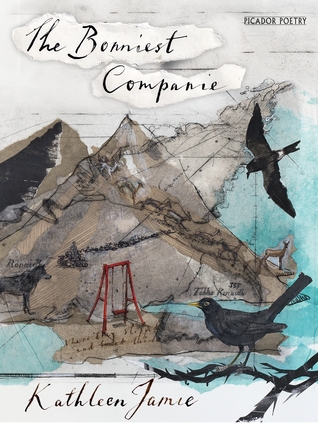
This book was a Christmas present from a friend who may have thought of me when she read that the book resulted from Kathleen Jamie’s project of writing a poem every week in 2014. I had a similar project, maybe even that same year.
My resulting rhymes went up on the fridge for a time and then mostly were seen no more, for which the world should be glad. Conversely, the world can be glad that Kathleen Jamie’s results are collected here – though there are slightly fewer than 52, so maybe, unlikely as it seems, there were a couple of duds.
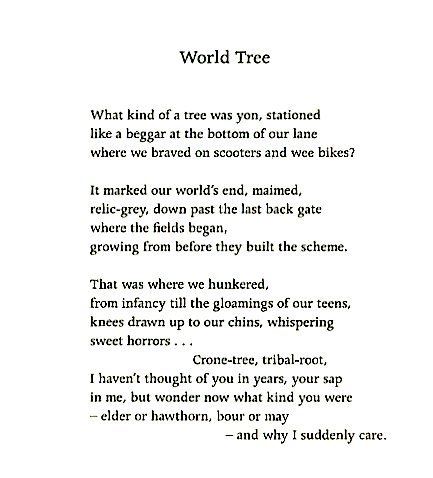
Kathleen Jamie is a Scottish poet. You can read her Wikipedia entry here, and a 2012 article by Sarah Crown in the Guardianhere. 2014 was the year of the Scottish independence referendum, and at least one of these poems refers to that explicitly. All the poems have to do with Scotland one way or another: the language moves back and forth between standard English and Scottish; the wild creatures and landscape are always present. But I’ll stick to my policy of picking just one poem:
I love the sound of this, as of these poems in general. In its sense, I recognise that experience of something remembered from childhood looming large in your mind in the present moment, with a new question about it. Here the speaker asks what kind of tree, as in what species, but she conjures up childhood memories that are full of a different kind of kind: tree as boundary, as relic, as something damaged, as a place for scary stories, magic and lore, as something not completely separate from herself (‘your sap in me’).
The bits of Scottish language – ‘yon’, ‘wee’, ‘gloaming’, ‘bour’ – link the adult speaker back to her childhood language. At least that’s how it reads to me: I imagine the speaker has had a more emphatic version of my experience of losing the accent and linguistic tics of my North Queensland childhood as I was educated into standard Australian in southern climes.
Anyhow, the last line performs a nice twist. The expected question is something like, ‘why this charged memory comes back so vividly after years of not being thought about’. But childhood memories just do that when one is of a certain age, and really to ask why would be futile. But the poem opens with a different question, and the last line brings us back to it: why do I ‘suddenly care’ about the kind of tree? Why does the mind, having gone back to a childhood experience, ask a question that was of no interest during all the years of the experience (‘from infancy to the gloaming of the teens’)? The tone is ambiguous: it could be like, ‘Why should I care about such an irrelevancy?’ or ‘What strange ways of the mind have made this interesting after all this time?’ Or, actually, both.
The title, ‘World Tree’, suggests a generalisation from the experience, that the poem is about the difference between a child’s immersive relationship to the world, and an adult’s more analytic one. The resonances then run deep.
At the beginning of 2013, the Carriageworks in Sydney hosted Song Dong’s extraordinary art installation, Waste Not, in which we were invited to walk about in the skeleton of a small house, along narrow pathways among the neatly arranged items that were found in the artist’s mother’s house when she died. The hundreds of duplicate humble household items – cakes of soap, hairbrushes, spectacles, shoes, plastic bowls, eggbeaters – had an uncanny power, like mute witnesses of a life lived with scrupulous thrift. As Song Dong says in the video below, the installation struck a chord with Chinese viewers: ‘This is not just your home. It is our home too.’
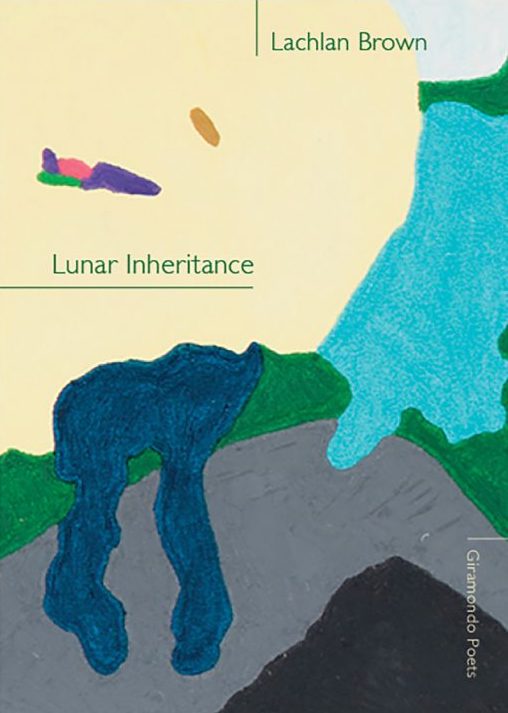
Lachlan Brown invokes that work in an epigraph to Lunar Inheritance*, and as we read on we realise it is a literal reminder of his own Chinese grandmother’s hoarding, as well as a rich metaphor for his own complex diasporic cultural heritage.
The book is neatly structured: two poems each consisting of eight eight-line stanzas (or call them sub-poems, because they don’t have the continuity of narrative or argument suggested by ‘stanza’), followed by a tightly rhyming sonnet; repeat four times; then one more 8×8 poem, and a final 7×8. Each of the sub-poems has a title in parenthesis.
As the structure suggests, the book has an over-all unity, which is woven from several strands: memories of growing up Chinese in rural New South Wales, memories of the poet’s grandmother, notes from a visit to China where, as the cover blurb puts it, ‘amidst the incessant construction and consumption of twenty-first century China, a shadowy heritage reveals and withholds itself.’
The book is exhilarating . There are so many beautifully crafted phrases, moments captured with brilliant clarity, sharp observations, surprising connections and juxtapositions – so much mind at play!
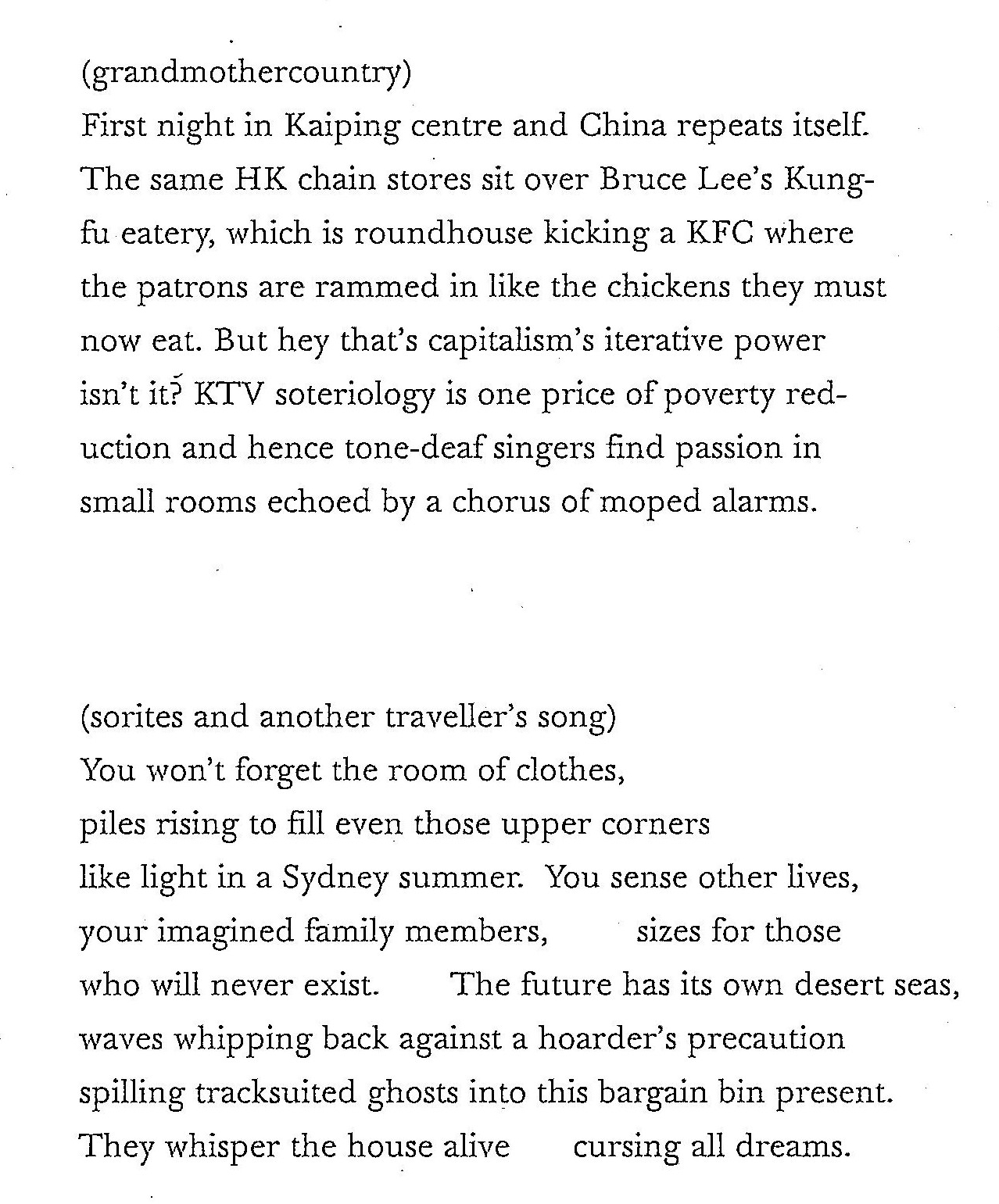
But I’m sticking to my policy of talking about just one poem, here’s the second page – the third and fourth ‘sub-poems’ – from the book’s third 8×8 poem, ‘Self Storage’:
(I had to look up a couple of words. KTV is Chinese Karaoke. Sorites is a term used in philosophy, but as far as I can tell that’s a red herring: it’s Greek for ‘heap’. Soteriology is the branch of theology that deals with salvation [I knew that]. I don’t expect many of my readers will have trouble with ‘HK’ or ‘KFC’.)
The first of these looks at first glance like a pure tourist poem, an outsider’s satirical observations with a bit of intellectual showing off in the reflection on ‘capitalism’s iterative power’ and a hint of traveller’s condescension in the description of the karaoke singers. Even the complex observation about the connection between poverty reduction and KTV as a kind of salvation is made from an outsider’s viewpoint. (Incidentally, the pun created by the line break ‘red-/uction’ is one of the sweet, sharp moments that make me love this book,) But the title, ‘(grandmothercountry)’, sets up a counter-current: even without reference to other poems in the book, it lets us know that the speaker is on some kind of quest to explore his heritage wit the result that the touristic commentary is tinged with deep melancholy. I doubt if Lachlan Brown had A D Hope’s 1962 poem ‘A Letter from Rome‘ in mind, but the final reference to moped alarms reminds me of Hope’s final lament about motor scooters in Rome:
A song the Sybil’s murmur taught to grow
From age to age, until the centuries
Heard the high trumpets in their passion blow,
Now lost in mindless roar from the abyss.
The parables of history can show
Surely no sadder irony than this
Which brings that noble, intellectual voice
To drown in trivial and distracting noise.
The second poem doesn’t obviously follow on from the first, but the title does suggest links: ‘another traveller’s song’ locates the poem as sung by a traveller (remembering home, as it turns out), and ‘sorites’, a hi-falutin word for ‘heap’, is a part anagram of ‘soteriology’ – which you notice because both words stand out like sore thumbs – perhaps suggesting that there’s some kind of salvation to be found in grandmother’s piles. If so, that salvation isn’t worth much more than the salvation offered by karaoke.
But isn’t it a terrific eight lines? The piles of clothes that fill the room the way Sydney summer light does – which means completely; hoarding as a gesture of futile hope so beautifully embodied in the image of tracksuited ghosts of people who will never exist; the final line, its whispers a slight echo of the tone-deaf singing of the previous piece, so poignantly capturing the paradox that the piles of clothes embody both a hope and its pathetic nature.
I recommend this book. But don’t take my word for it. Eileen Chong has a brilliant review in the Sydney Review of Books – here.
I gratefully acknowledge that Giramondo Publishing give me my copy of Lunar Inheritance.
—–
* ‘In Beijing as well as in Gwanjiu and Berlin, it evoked strong responses from the audience, some of whom wept in front of it as if encountering a long lost friend or relative.’ The other epigraphs are Matthew 6:19 and lines from contemporary Chinese poet Ya Sha‘s ‘The Ancient City’: ‘what’s the use of writing poetry / in this ancient city / since the new era has arrived’).
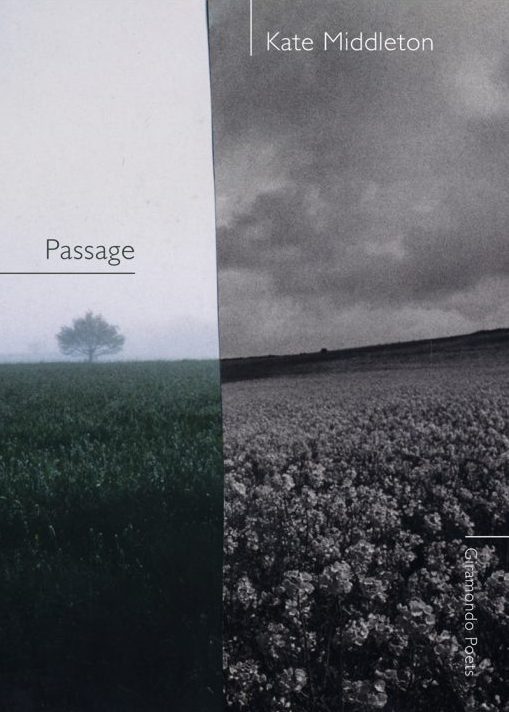
Most of the poems in Passage are either erasures or centos.
/Explanatory note for the benefit of readers who know even less than I do:/ Cento is defined in my excellent Gepp & Haigh Latin–English dictionary (1888) as ‘a poem or composition made up of scraps from various authors or parts of an author’. A basic, nonsensical nursery-rhyme cento, for example, might be:
The mouse ran up the clock
to fetch a pail of water.
He put in his thumb,
see how they run,
How does your garden grow?
An erasure is created by erasing some or most of another piece of writing. I enjoy making them from newspaper columns that annoy me. Here’s one based on a recent attack on the #changethedate movement:
/End explanatory note/
Both forms can be fun, but when, as in Kate Middleton’s work, the source material isn’t well known or readily available, and the poem is longer and more than a fun game, questions arise that I don’t know the answers to.
Given my new policy of just talking about a single poem when blogging about poetry books, I was tempted to choose one of Kate Middleton’s fine poems that aren’t centos or erasures or in some other way symbiotic with another text (such as the handful that are responses to episodes of a TV show I’ve never heard of). There are plenty of such fine poems – but to choose one of them would feel craven. So here’s the cento ‘Elegance’, which I’ve singled out because I’ve read its source text, Luke Carman’s An Elegant Young Man.
It’s possible to read this without any attention to its cento-ness. The opening couplet announces an emotional tone and names a locality. The next two stanzas sketch an unprepossessing urban landscape – this is not the West of movies but western Sydney. Then the poem turns to address the person looking at this landscape, and becomes a portrait of a writer as one who conceals his metaphorical knife in public, is loud alone at home, and struggles to avoid clichés (‘ordinary answers’).
It’s a cento not only from Luke Carman but for him. Writing cover letters to nowhere is a pretty nice description of a writer’s job, and the references to chance and repeated falls are extraordinarily apposite to the way Carman’s writing often mimics an intense distractibility, and so much of it is about his own social awkwardness and other struggles.
It’s a sweet tribute. By the end, one wants to revisit the capitalised ‘West’ from the second line. Carman is a kind of Western hero after all, even though his West is not Monument Valley, but Western Sydney.
So what does it mean that the poem is a cento?
Being by profession a proofread type editor, and by inclination a bit pernickety, I got out my copy of An Elegant Young Man. I didn’t have time to reread it all, but I read enough to find some of the poem’s source text. ‘Barred shopfronts flicker phantasmic blue’ is distilled from ‘shuttered-up Asian supermarkets and squash centres and brick unit blocks with TV flickering a phantasmic blue through the windows’. ‘I guess you’re like a minor Aussie character / in movies’ comes from this: ‘I mostly stood still and tried to seem happy-go-lucky, like those minor Aussie characters in movies like Chopper and Getting Square’.
So Kate Middleton hasn’t been rigid in quoting the original. As the Emerging Artist said, she’s referencing the text rather than quoting it. In these examples, she leaves out the detail of the shopfronts and the TV, and the happy-go-lucky appearance (which is ironic in its original context anyhow). It’s not just referencing, but also repurposing. She finds in Carman’s text words that describe him in relationship to the milieu that is his subject in ways that he (presumably) wouldn’t think to describe himself. It’s a kind of alchemy.
I still don’t know how the longer centos work, from writers including Siri Hustvedt, Eliot Weinberger and Sir John Mandeville; or erasures that run to several pages. I’m happy to leave that question to better informed readers than I am.
Passage is the third book I’ve read for the 2018 Australian Women Writers Challenge. I was given a complimentary copy by Giramondo, for which horizon-expanding gift I am grateful.
Before the meeting: Regretfully, I’m short of time to write about Taboo. It’s a very different book from Kim Scott’s That Deadman Dance. That earlier novel engages with the early history of Western Australian colonisation with almost superhuman breadth of sympathy and already has classic status. This one is set in the twenty-first century, and follows a group of Noongar people who are returning to the site of a massacre with the hope of making things right – reestablishing contact with the old people, and with culture and language, and making some kid of reconciliation with the descendants of the perpetrators.
Taboo is based squarely in Kim Scott’s experience as an activist in language reclamation in Western Australia. I’ve just watched a video of a talk he gave on the subject at Melbourne University in 2012, in which he speaks about ‘the responsibility and obligations of being a descendant of the people who first created human society in this part of the world and keep that sense of society alive’. He speaks with modesty, charm, humour, and great power. It is a revelatory 50 minutes. I doubt if he had even started writing Taboo at the time of the talk, but he tells a number of stories that are clearly the inspiration for key episodes in the novel.
The novel doesn’t romanticise its Noongar characters: they have been scarred and in some cases corrupted by their history. They struggle with drug and alcohol issues. But awkwardly, shambolically, two-steps-forward-one-step-back, they find hope in what they can piece together of their heritage. The central character, fifteen year old Tilly, has reconnected with her Noongar father only as a teenager, and in the course of the novel is welcomed into her extended family, who see her as important to their project of returning to the massacre site (she was fostered by the farming family of the place when she was a baby). Her claustrophobic response to their embrace is vividly realised.
Maybe it’s just me (I’ll find out at the meeting), but while the novel has vastly expanded my sense of the world, it’s no masterpiece. There are elements of something like magical realism that are weirdly unsatisfactory, many narrative threads that are started up and never resolved, and an ending that feels like a desperate but unsuccessful attempt to make it all come together.
After the meeting, just a hasty note before I go to bed, because time is a bit short just now: This book sustained conversation like few others, and everyone who had read it had something interesting to say about it.
One man said that it wasn’t like a feature film, but more like the beginning of a television series: we were left wondering what would happen next for just about every character. Another said it was about the importance of stories, that it told many stories that didn’t necessarily connect. As readers we are left in an unsettled state of never really knowing the full story. I don’t think he used the word ‘unsettled’, but we did notice that we are all white men of a certain age, and the way the book made us feel had a lot to do with that. Without really leaving the book, we talked about the prospect of a treaty, about the relative value of symbolic acts, about the different meaning of a sense of place for Indigenous and non-Indigenous persons.
Another said that he thought the book was about loss, scarring, grief, dislocation, that there was hope, but built on a fragile and fragmented base. Someone disagreed that it was about loss – that it was more about the power of community in the face of loss.
No one else seemed to find the magic realism elements unsatisfactory, and I was in a minority in disliking the ending. One man said he thought it was the best novel written in Australia so far – precisely because its lack of resolution was a true representation of how things stand in the relationship between Aboriginal people and mainstream Australia.
It was our first meeting for the year. Our host prepared a meal that set the bar high. The book led us to focus our minds on things that matter. We enjoyed each other, laughed a lot, and I think I can say we all came out into the night very glad for the gift that Kim Scott has given us in this book.
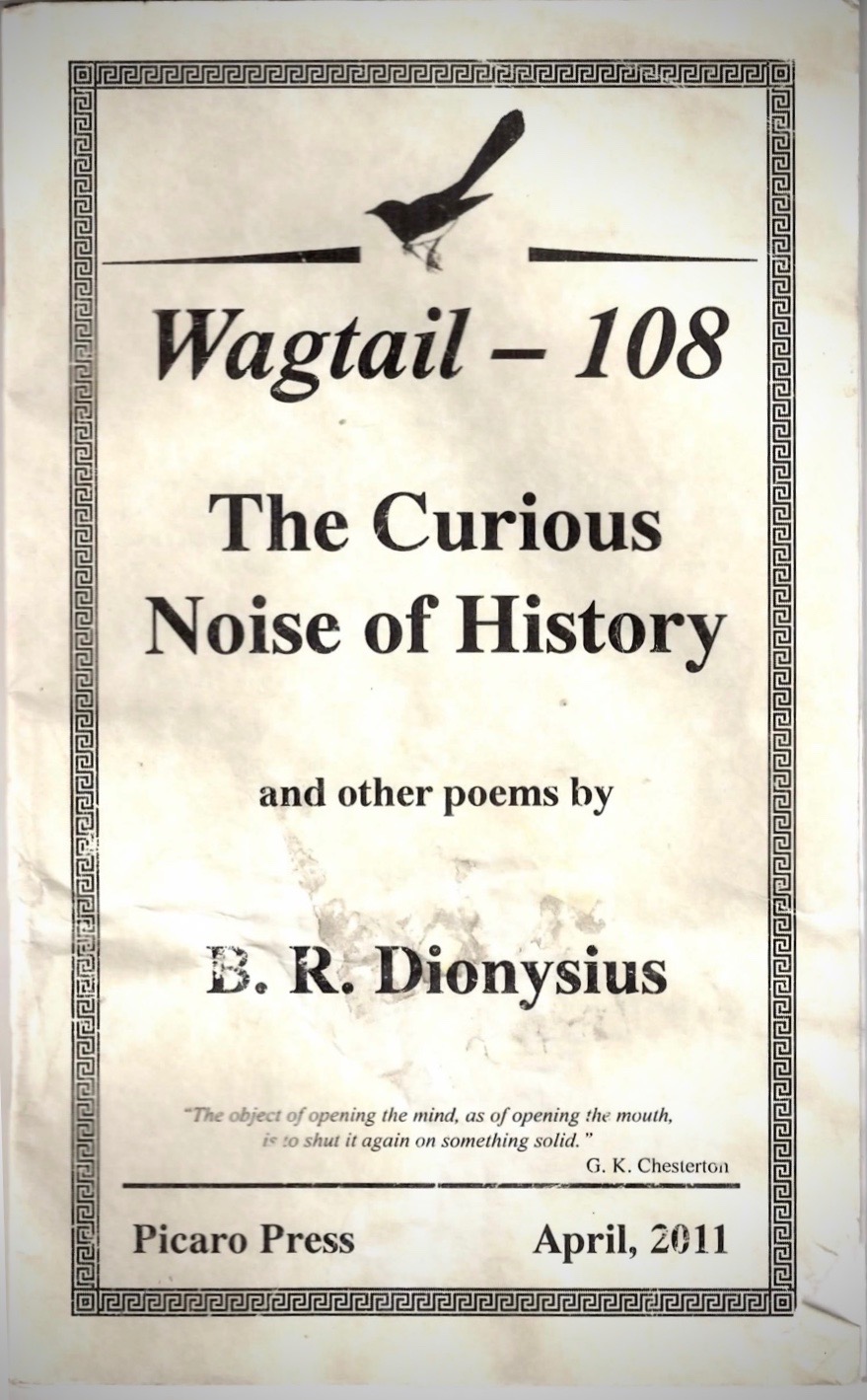
I first heard of the Wagtail series a couple of years ago when a member of my book group told us he subscribed: chapbooks, tiny publications each featuring work by a single poet, one arriving in his mailbox eleven times a year. They didn’t cost much, so if you didn’t hit it off with a particular poet you hadn’t wasted a fortune, and if a chord was struck you could go searching for more. More than 120 issues of the series were published by Rob Riel of Picaro Press in Warners Bay, New South Wales, before it finally folded last year. You can see a full list, unnumbered, here (it’s the Ginanderra site – Picaro is hard to find on the web), and an incomplete list with numbers, prices and availability here (at Gleebooks). The best account of the series I could find was this article by Warwick Wynne in Famous Reporter in 2004.
I came to Wagtails more than a day late and a dollar short when I spotted Book 108 among the economics textbooks and salvation tracts in an Erskineville Street Library. B R (Brett) Dionysius is a much published poet. A quick look at his web site, Bitter as the Cud, shows him to be a mover and, especially recently, shaker in the Queensland poetry scene. I’ve previously read poems by him in journals and anthologies and online, most memorably a sonnet sequence about the Brisbane floods, but never a whole book. Taking this 16-pager home seemed like a good step forward, even though it doesn’t send any money his way.
The Curious Noise of History is full of assured poems, mostly about violent or overbearing men, mostly a father who may be drawn from Dionysius’ own life. Possibly all of them appeared in his first book, Fatherlands. In ‘Crossing‘, the poem I want to single out, the man in question is the poem’s speaker. I’m drawn to talk about it because a) it’s probably the simplest poem in the book, and b) it reminds me of the mortification and joy of being a parent to young children.
(In case you can’t read it here, it’s on Dionysius’ web site at this link: you need to scroll down quite a way.)
I remember turning into that ogre myself more than once.
The narrative is straightforward, but there’s plenty to linger over. For example, what is ‘it’ in the first line? At first blush, it’s punching the pedestrian button. But the poem is about a different kind of hurting. The man is in a rage for an unspecified reason (what he says to his daughter isn’t necessarily the truth), and aims that rage at his little daughter. The ridiculously hyperbolic image of fairytale monsters captures, with just enough irony, the horror a raging parent feels at his (or possibly her) behaviour. But in this case the child takes a stand – she may be twisting her ring because internally she is terrified, but her words brings perspective to the emotional storm with the mundane adjective ‘grumpy’. So perhaps the first line also refers to the dissipation of the speaker’s rage; the daughter wasn’t hurt by the rage, and her calling him on his poor behaviour didn’t hurt either.
His wrist starts to throb. They hold hands. There is no more talk of monstrous ogres, but it a little man turning from red to green.
The poem is sweet enough, but taken in the context of the other poems in the collection – in which, for example, a father plays a game involving a stock whip and his children’s toes – it is also powerful. In those other poems, Dionysius looks at male domination from the perspective of one who has suffered it. Here, the perspective is that of the man swept up in the compulsion to voice his rage, and one feels a rush of gratitude to that little girl.
One of my New Year resolves for the blog is not to attempt to review every book of poetry I read. I’ll still blog about them, but for each book I’ll focus on one or possibly two poems that resonate with me in some way.
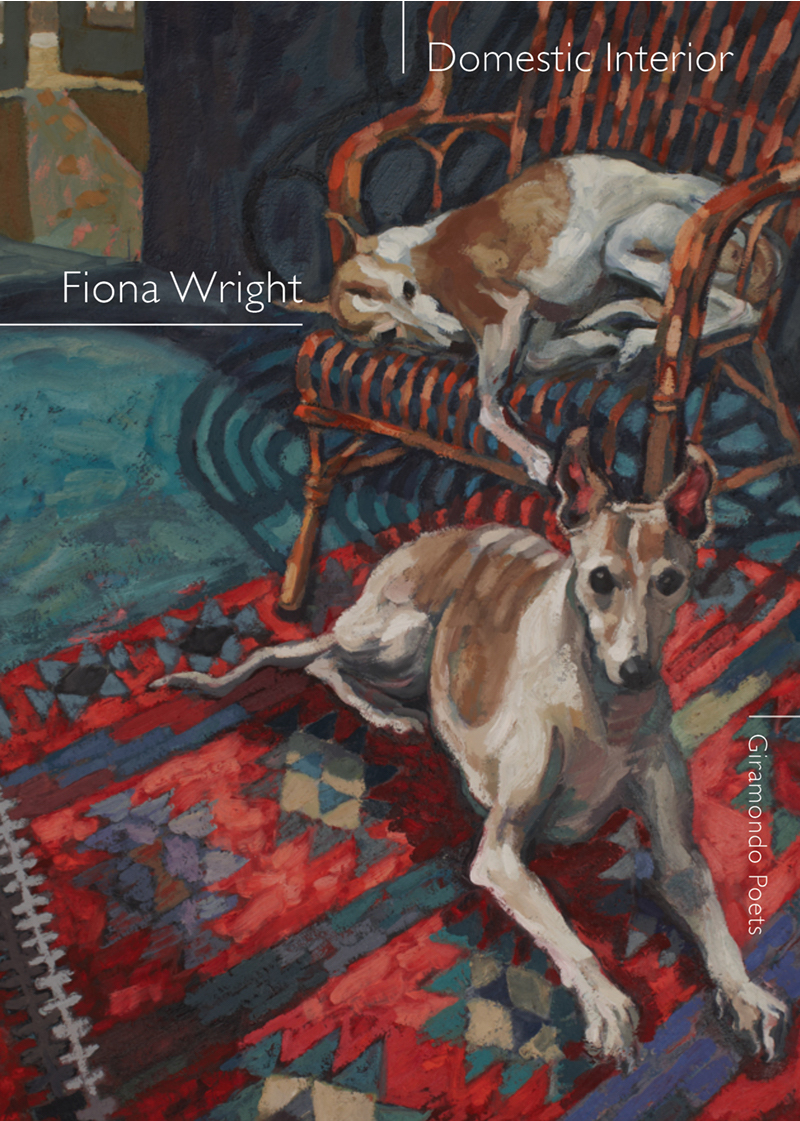
Domestic Interior tests that resolve, because an awful lot of its poems speak to me loud and clear.
I haven’t read Fiona Wright’s first book of poetry, Knuckled (2011), or her collection of essays, Small Acts of Disappearance (2015), both published by Giramondo, but somehow I’d picked up an expectation that her work would bristle with introspective misery. That expectation, even though endorsed by the back cover’s reference to ‘highly charged moments of emotional extremity’, turned out to be wide of the mark. Even the section titled ‘A Crack on the Skin: On Illness’, there’s much lightness, grace, good humour and a pervasive celebration of friendship. And always, especially for Sydney readers, there’s plenty of recognisable life as we know it or, in a number of poems, as we overhear it.
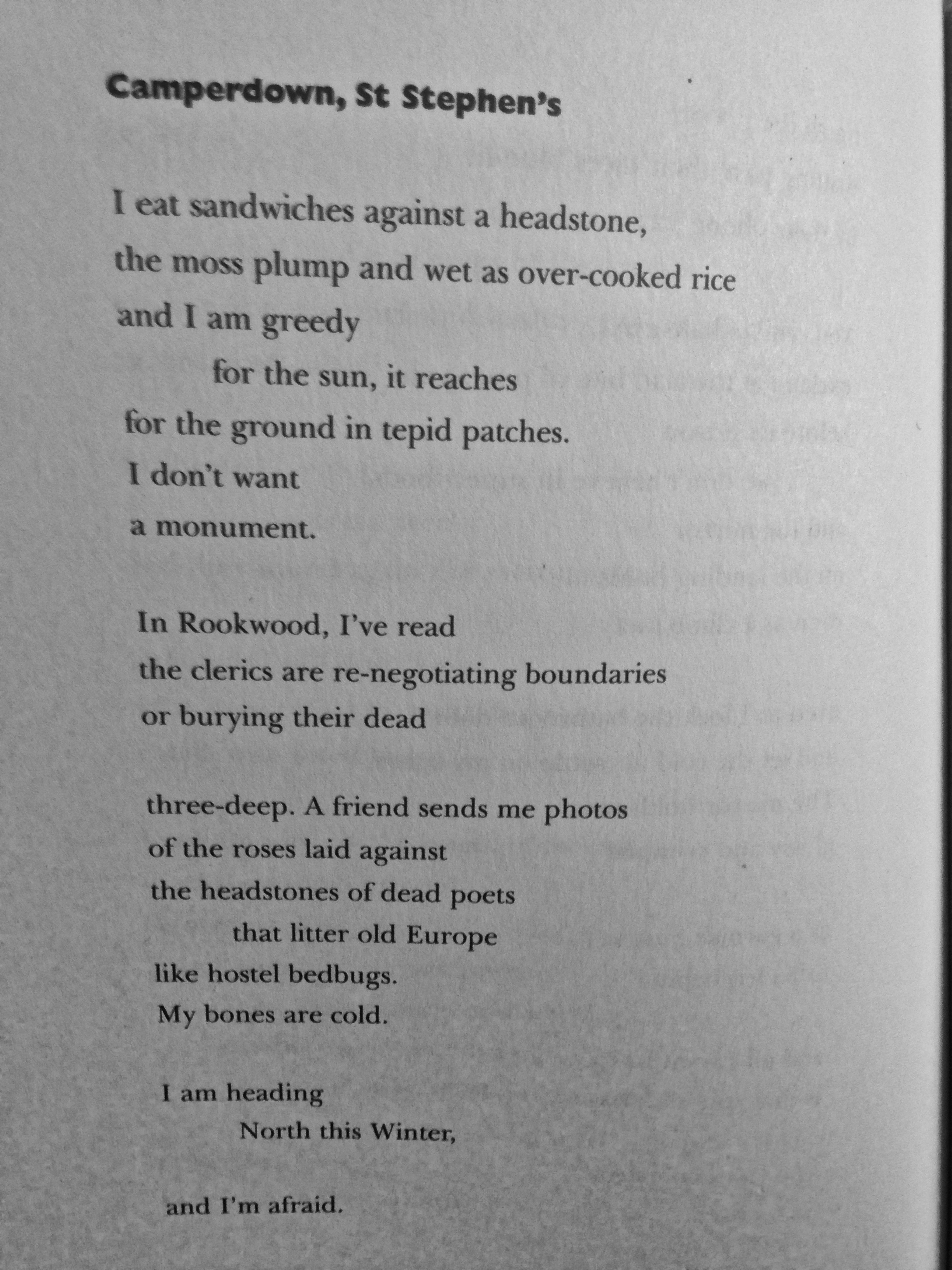
I caught a glimpse of Fiona Wright at a funeral when I was still part way through my first reading of the book, reason enough to choose to blog about ‘Camperdown, St Stephen’s’:
For the benefit of non-Sydneysiders: St Stephen’s Anglican Church is the site of the historic Camperdown Cemetery. The Moreton Bay fig that grows there featured in Nadia Wheatley and Donna Rawlins’s classic and totally not-morbid picture book, My Place. It’s a beautiful and almost intimate setting, where it’s not terribly weird or morbid to eat a sandwich leaning against a headstone, so it may take a while for the force of that image to sink for a local reader. Rookwood is a suburb in Sydney’s west whose name is enough to evoke thoughts of mortality in most of Sydney and well beyond: it is home to what Wikipedia calls the ‘largest necropolis in the southern hemisphere’, now facing problems of overcrowding.
From the opening image, in which a stark memento mori lurks beneath a pleasantly mundane lunchtime scene, the poem plays first with the idea of hunger, associated with the sandwiches: the moss is like rice, the speaker is greedy for sun, and the sun for the earth. (It must be autumn, warm enough to have lunch outdoors, but cool enough that patches of sunlight are tepid.) Then, in a neat couple of almost rhyming short lines (‘I don’t want / a monument’), the headstone comes to the fore.
Which leads to Rookwood – yes, it stands in for death on a grand scale, but the lines are rooted in this specific time and place: there really are debates about how to deal with the vast numbers of bodies needing to be buried. Camperdown Cemetery is comfortably historical; Rookwood is today’s news. The dead are named for the first time, slyly rhyming with ‘read’ (maybe she’s reading news on her phone while eating her sandwiches).
Then she thinks of her friend’s photos (received on the same phone?). Roses lie against headstones, just as the poet does in the first stanza. Only now it’s many poets and they are the dead. No sun no pleasant sandwiches there: the roses laid in homage don’t carry much force – images of litter and bedbugs come to mind, and from this distance perhaps the roses are reduced to something like little bursts of blood on hostel sheets.
‘My bones are cold’: she now identifies with the dead poets. And in the last three lines, the chill of that identification goes deeper: she is heading North, to that Europe littered with dead poets, and she fears that she is about to join them.
Maybe it’s just me, but I laughed. I don’t think the poem or I are trivialising death or the fear of dying. But the poet’s fear here is not the kind that strikes with a diagnosis of stage 4 pancreatic cancer. There’s something fancifully neurotic about it, an edge of mockery that doesn’t trivialise the fear but allows us to breathe around it, to approach it playfully: after all, how seriously can you take the the graves of poets when they are presented as littering Europe like bedbugs in a hostel?
My writing of this blog post was interrupted by an expedition to Manly. After visiting North Head Project at the Manly Art Gallery (open until 18 February and worth the ferry ride), we went up to North Head itself and wandered in one of the three cemeteries connected to the Quarantine Station there. Walking among the graves of mostly young people, I thought of this poem, and realised that for all its lightness of touch, its rootedness in 21st century Sydney and a particular friendship network, it sits squarely in a tradition: ‘and I’m afraid’ echoes the refrain, ‘Timor mortis conturbat me (The fear of death confounds me)’, common in mediaeval European poetry. I went hunting and realised I knew it from William Dunbar’s ‘Lament for the Makers‘. That 16th century poem, of which every stanza ends in the Latin refrain, includes a kind of honour roll of poets who have died, beginning with ‘noble Chaucer’ and continuing with names now long forgotten. Rereading ‘Camperdown, St Stephen’s’ in that context, I like it even more, but you don’t have to have read Dunbar or visited North Head for the poem to work for you.
Domestic Interiors is the second book I’ve read for the 2018 Australian Women Writers Challenge. I received a complimentary copy from Giramondo, for which I am grateful.

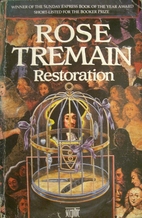 read this book – another gift from strangers by way of our little Street Library – while in London with the Moving Hearts Project, which regular readers will know involves shaping hearts from clay. It was a lovely bit of serendipity that in the first couple of pages the narrator, an anatomy student in the mid 17th century, is ‘forced to contemplate an astounding phenomenon’:

 When we set up a street library out the front of our house, we intended it as a way to send books from our shelves to good homes. We hadn’t thought about the reverse traffic: this book is like a gift from the benevolent Street Library deity. I loved the first two books in the Ibis trilogy when I read them for the book group some time back. When this third book urned up on our front fence I snuffled it gleefully.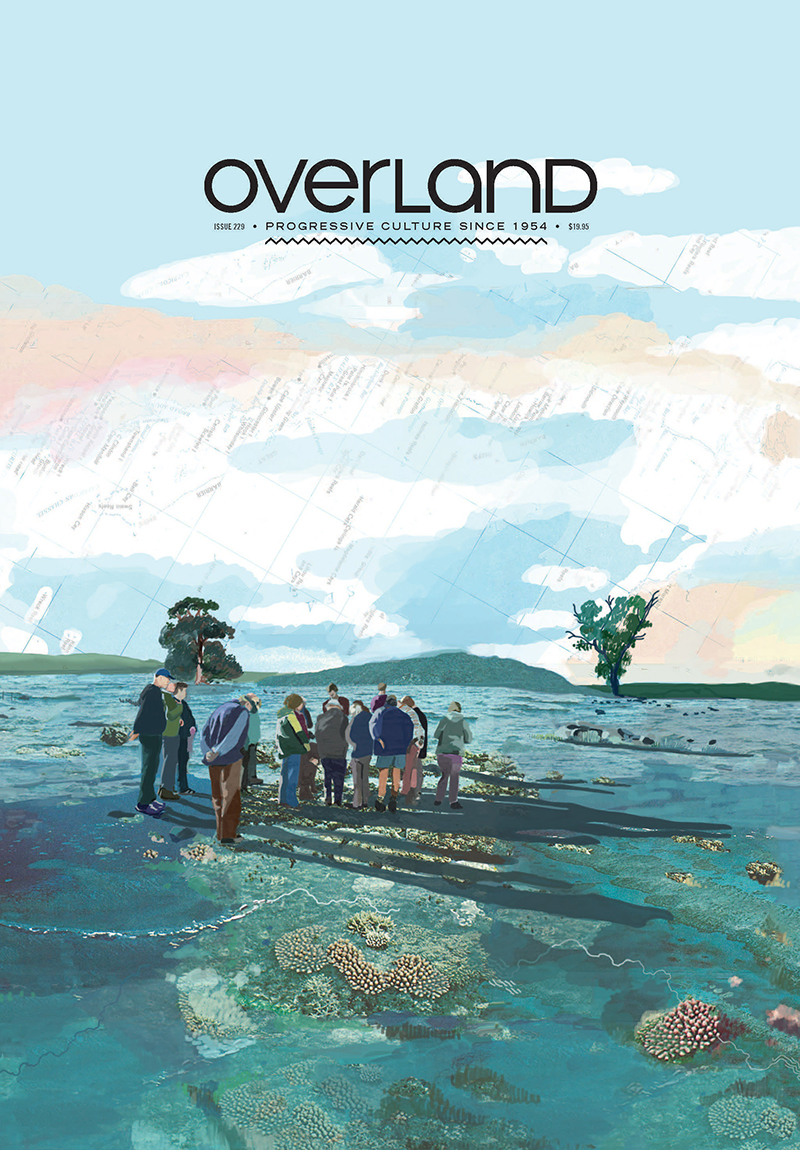





 Me fail? I fly!