Category Archives: Diary

John Freely’s Istanbul

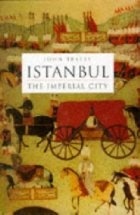
John Freely, Istanbul: Imperial City ( 1996, Penguin 1998)

20120617-184203.jpgOn a friend’s recommendation, I borrowed this from the library as preparation for our trip to Turkey. As it became clear I wasn’t going to finish it in time, I also bought an eBook, which I finished on the plane. I’m jabbing this entry on the iPad keyboard in the air.

The book is a bit of a hybrid – a biography of the city from 658 BCE to 1995, and a guide to the monuments and relics of that long history. It doesn’t aim to make sense of the history so much as to help reader–travellers understand what they are seeing. Istanbul is not the capital of modern Turkey, but it was an imperial capital for many centuries, so perhaps it’s inevitable that the book’s backbone is a chronology of a series of rulers – of Greek and then Roman antiquity, Christian Nova Roma / Constantinople, the Ottoman Empire and finally the Turkish Republic. We are told the name of each new Augustus/Sultan, how many relatives he killed on his way to power or after getting there (one new Sultan killed a record nineteen younger brothers), his age, and what monuments he left. Court intrigue, exile, mutilation, assassination and heroic exploits in war may make for high drama in close up, but in a narrative that covers more than 1500 years in 300 or so pages, they become a bit of a slog. Freely does his best to keep it lively. The quotes from contemporaries over the ages bring welcome insight into the look and feel of Byzantium/Constantinople/Istanbul at a given time, in particular the substantial passages from the fabulous seventeenth century writer Evliya Çelebi are just fabulous.

I’m glad to have read it and I’ve probably retained enough to enrich my impending visit, but I found myself constantly asking why – why did the populace sometimes support an invading leader, and why did they often turn against him soon after his coronation, how come a section of the army could just decide to make their leader the emperor, and so on. I would have appreciated a little discussion of, say, the relationship between secular and religious authorities in both Christian and Muslim empires, or the status of women, or the lives of everyday people. Without such discussion, a lot was left mysterious.There are plenty of events that raise questions about these issues. For example, though Turkey had its first woman prime minister when the book was being written, the Byzantine Empire had more than one Augusta and some women seem to have wielded enormous powered behind the Ottoman throne.

So I’m not sure I’d recommend the book but I wouldn’t recommend against it. Now our German pilot is telling us to prepare for landing, so I’ll stop poking at keys and switch off my electronic equipment.

Notes from a Tidy Town

The Art Student and I have just spent a couple of days in Singapore en route to Turkey. Apart from the fabulously welcome heat and the pleasure of walking about in an unfamiliar place, I’ve noticed:

  • the absence of graffiti, to the extent that an installation in the Singapore Art Museum was accompanied by a note saying that even though graffiti was awfully antisocial it could sometimes inspire artworks (though we did see a couple of lonely tags under a bridge near some equally rare skateboarders).
  • excellent, cheap underground rail, with a ticketing system that’s cumbersome for blow-ins like us who just want single-trip tickets, who have to pay a refundable deposit of a dollar on each ticket (the tickets are plastic – an anti-littering strategy?), reclaim able only from a machine at the other end
  • ‘Do Not’ signs that indicate customary practices: I only saw one ‘pedestrians must use crossing’, and it was in one of the few places where they mostly didn’t; ‘Do not lean on door’ was on the wall above two young men engrossed in their phones and leaning as if there was no other way to ride the subway; and my favourite, ‘$1000 fine for riding here’, failed to deter the gentleman who came zooming past us, who looked as if he wouldn’t have managed a fine of a tenth that size.
  • a definite child-friendly feel to the art galleries: Sakarin Krue-on’s installation ‘Cloud Nine’ in the Contemporary Asian Art exhibition at the Singapore Art Gallery featured stray dogs with beautiful wings that reminded me of S. D. Schindler’s magical illustrations for Ursula Le Guin’s Catwings; more substantially, we caught the tail end of a city-wide Children’s Season in museums – a whole building of the SAG was given over to interactive works that invited children’s participation, real works that made me want to join in, and a video art room that showed excellent children’s cartoons.
  • a system of pricing in which things aren’t always what they seem: if for instance you bought Dr Dre earphones for your iPad for $430 ( very cheap, it turns out, probably because they’re fake) you might find yourself paying more than $500 because of the 7 per cent GST, and if you challenged the maths of that, you might discover there was a government levy on credit card transactions. Not all of this is swift talking by clever salespeople – I saw a price tag on a Tiger beer tower (don’t ask) that read ‘$68 + +’.
  • It’s a terrific city. We walked a lot above ground and a lot below ground. We ate Indian, Japanese, Chinese, and ice cream. We discovered deep fried cereal prawns, which we ate but didn’t understand. Today as we swam upstream in Bugis Street against a current consisting almost entirely of cheerful young people, I thought to myself, ‘This is no country for old men.’ in a couple of hours we’ll be flying to Byzantium, those dolphin-torn, those gong-tormented seas.

    SWF 2012: Poetry, prose, performance

    Here it is, Sunday already and this is my blog on Friday at the Writers’ Festival. Sorry! All this talking to people takes up good blogging time.

    After a morning spent catching up on email and keeping the neglected dog company, I bussed back to the Wharf for what Kate Lilley called the Mum Show: Dorothy Hewett Remembered.

    It’s ten years since Dorothy died and this Monday would have been her 89th birthday. The room was full of fans, friends, fellow poets and family, including my former employer Katharine Brisbane, founder of Currency Press. The elderly woman sitting beside me told me that when she was a Communist in Melbourne in the 1950s, someone from the Party had said to her, ‘There’s a young woman Party Member who’s just come over from Perth. She doesn’t know anyone yet and has a very sick baby. Would you go and visit her?’ The young woman was Dorothy and her friendship with my new acquaintance endured.

    I expect that half the people in the room could have shared Dorothy Hewett / Merv Lilley stories (Merv, as larger-than-life as Dorothy, is her widower, whose health is too fragile to allow him to attend). On this occasion, fittingly, Dorothy was celebrated almost entirely through her own words: ‘I used to ride with Clancy’, ‘On Moncur Street’, ‘The Dark Fires Burn in Many Rooms’, other poems, excerpts from memoir and a conference paper.

    Kate Lilley was joined by her sister Rozanna Lilley and their brother Joe Flood, as well as Fiona Morrison (editor), Gig Ryan (poet), Rosie Scott (novelist). As a finale we were invited to sing along with Dorothy’s song ‘Weevils in the Flour’, which Joe described as ‘synonymous with the Depression in Australia’:

    Dole bread is bitter bread
    Bitter bread and sour
    There's grief in the taste of it
    And weevils in the flour.

    I had a ticket for my next session, so no need to queue, and could spend some time catching up with old friends, one of whom I didn’t recognise until we were introduced – embarrassingly, we had chatted as strangers the day before.

    Then I crossed the road to the Sydney Theatre for some prose in The Big Reading. This is as much a tradition as Thursday’s pitching session, but this one has been on my must-see list for years. I love being read to, and I’ve been introduced to some fabulous writers. I also tend to nod off – though not deliberately: my sleep mechanism has a mind of its own and is unyielding in its judgement. This year’s sleep-inducers will not be identified.

    As always, the writers were wonderfully diverse in age, gender, nationality, and reading style.

    Emily Perkins, from New Zealand, played a straight bat with an excerpt from her most recent novel Forest. Geoff Dyer’s comic tale of cultural difference and queue jumping from Geoff in Venice, Death in Varanasi struck a chord – pertinent for me as I’d just seen a man who could have been from Varanasi blithely bypass the previous session’s sluggishly moving queue.

    Riikka Pulkkinen read her quiet, introspective piece in Finnish first ‘so you get the idea’, a great way of educating us in how to listen to someone whose English is a little unsteady. Jesmyn Ward’s Katrina piece would have been the highlight of the evening if she hadn’t been followed by Sebastian Barry, who began and ended in resonant song and filled the space with the music of his narrative, from The Other Side of Canaan.

    Then we hopped in the car, stopped off at home to feed the aforementioned dog, picked up some friends and drove to Bankstown for the not-to-be-missed BYDS and Westside Publications event, this year entitled Moving People.

    With Ivor Indyk as tutelary deity and Michael Mohammed Ahmad as inspired energiser, these events are always strikingly staged. This year there was a microphone and a lectern on a bare stage, backed by a screen. Each of the fourteen participating writers in turn strode out from the wings and read to us without introduction, explanation or by your leave. This created a tremendous sense of connection between each reader and the audience – there was nowhere to hide. Unlike at the rest of the Festival, there was no veil of celebrity, no established persona to speak through. The exceptions test but don’t demolish the rule: Luke Carman has appeared in the pages of Heat and in This Is the Penguin Plays Rough Book of Short Stories, about which I’ll blog when I’ve finished reading it; Fiona Wright, also with Heat connections, published Knuckle, her first book of poetry, last year; Michael Mohammed Ahmad himself appeared recently in Roslyn Oades’s brilliant I’m Your Man Downstairs at Belvoir Street. Their pieces – respectively an oddly dissociative tale of male, twenty-something aspiring inner-city writers, a memoir of a stint as a young female journalist in Sri Lanka, and a riproaring cautionary tale about young Lebanese men, cars and drugs – were given no special treatment, simply taking their places as part of the evening’s tapestry. Benny Ngo did some spectacular break dancing while his recorded words played. Nitin Vengurlekar had a nice turn reading absurd short poems from crumpled pages found in his jacket pockets. A smooth essay on getting the dress codes wrong in Indonesia, a dramatic monologue from a supermarket security guard, traveller’s tales, the chronicle of a shared house experience, a young Muslim woman’s story of getting a tattoo and her family’s unexpected response (this one sounded like autobiography, but the writer’s family were in the row in front of us and their attitude was not at all that of the story’s family): it occurred to me that part of the reason that I was less enthusiastic than many people about Christos Tsiolkas’ The Slap may be partly that his treatment of multicultural suburbia doesn’t seem so very groundbreaking if you’ve been following the creations of this group.

    And they gave us pizza!

    [Added on Wednesday: Kevin Jackson, theatre blogger, was at Moving People too. You can read his excellent account of it here. And the Australian Bookshelf blogged it here.]

    I’ll write about the weekend tomorrow.

    SWF 2112: Poets, Harbour, pitches and more poets

    This was my first day at Walsh Bay, and in striking contrast to recent weather, the sky was cloudless and there was no wind – perfect festival weather.

    The tiny harbourside room generally reserved for poets at the Festival couldn’t have been a more appropriate venue for my first event of the day, Harbours and Rivers, with Robert Adamson, Neil Astley, Martin Harrison and Jennifer Maiden. I joined the uncharacteristically long queue with minutes to spare, and only when it became clear I wasn’t going to get in I realised I was in the wrong place: this time the tiny room had been given to young writers talking about the Second Novel Effect, and the poets had been given a much bigger and incidentally much darker space. I briskly walked the length of the Wharf and arrived part way through the introductions.

    The poets, refusing as poets should to be pigeonholed, paid at best slant regard to their allocated topic. Jennifer Maiden read a long new poem, ‘The Uses of Powerlessness’, which she described as a diary poem but was actually pretty much a philippic on Julia Gillard, not in the ‘X woke up in X’ form, but a straightforward furious meditation. I wrote down one of many striking lines: ‘The Labor Party, like Gillard, is an obedience addict.’ Martin Harrison and Robert Adamson both spoke of the complex interplay between observation of the natural world and self-discovery. ‘All my harbours and rivers are internal,’ the latter said, somewhat disingenuously, ‘even though I live on a river.’ Among the poems he read was the sublime ‘Kingfisher’s Soul’, an intensely personal love poem that grows richer with each hearing. Neil Astley, advertised as editor of English publishing house Bloodaxe Books, turns out to be a poet as well. He was in Darwin for Cyclone Tracy, about which he read two striking poems followed by an excerpt from a novel that engages with an English countryside.

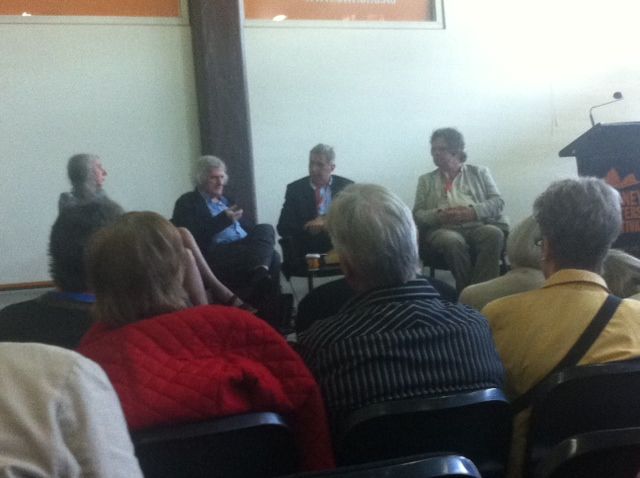
    Jennifer Maiden, Robert Adamson, Martin Harrison and Neil Astley not far from the Harbour

    In short, it was very good. Afterwards I ventured to introduce myself to Jennifer Maiden, but I was probably working so hard at no being too fanboyish for the conversation to have made much sense.

    After a brief interval I went to the Club Stage for So You Think You Can Write, my first time to this a regular Festival event in which random audience members get to pitch a project to a panel of publishers.

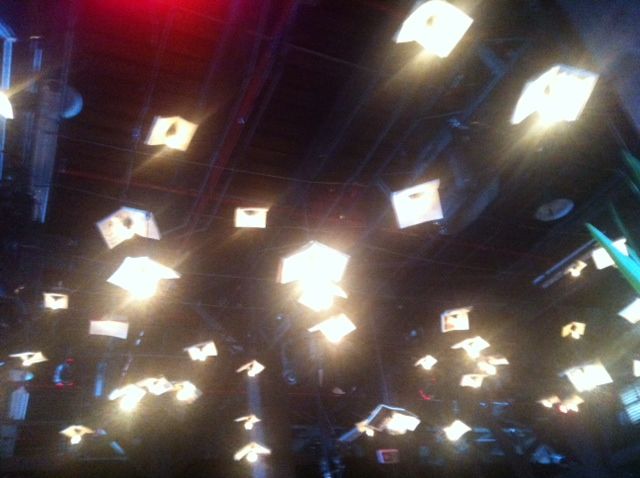
    The specially decorative lights for the Club Stage area – each bulb has an open book for a shade.

    I don’t know that anyone who was at all savvy about publishing would participate in this, unless for the sheer fun of it. And it was mostly fun. A 15 year old boy pitched a detective story set among the Egyptian pyramids. There was an earnest tract for children aiming to foster leadership skills and an understanding of democracy. One or two pitches were for books that could have been anything, so broad were the descriptions. One woman had already had an iBook version of her project downloaded thousands of times. The winner – of nothing apart from the glory – was a psychological detective story in which the character realises a day of her life has gone missing and then is shown photos of herself taken on the missing day. The thing that won the audience and panel’s approval was that the photos were improbably and bizarrely orgiastic, involving vegetables and cigars in unspecified lewd ways. It may not be Scandi-Crime, but this audience loved it. You read about it here first.

    And then off to the poets’ lightfilled room. Gig Ryan and Kate Lilley, feminist-identifying experimental poets, drew an overflow crowd, including Adamson, Harrison and Astley from this morning, plus John Tranter, Ivor Indyk, Toby Fitch and many faces familiar from the Sappho open mike nights. Each of the poets introduced the other. They read from recently published books and, on being requested by an audience member to  compose a poem together on the spot, they parlayed the request down to each of them reading a poem by the other – with interesting results.

    I confess that I went to this session expecting to suffer. I’ve read very little of either of them and my experience has been that if I don’t know a poet’s work I have trouble hearing it when read to me. (A possible contrary experience was hearing Jennifer Maiden this morning, but I am familiar with her voice and preoccupations, so had a head start.) Gig Ryan reads quickly, and her language is very compressed: I had difficulty distinguishing the words, let alone grasping the connections between them. Kate Lilley has a gratifyingly expressive delivery, and the woman beside me kindly allowed me to look over her shoulder and read along as the poems were read. But I was still pretty completely mystified. Both women talked about how people in their lives met their work with blank expressions, so I didn’t feel too stupid, or at least not alone in my stupidity.

    One of Kate Lilley’s poems, ‘Maisily’, consists of a string of about a hundred adverbs. This was the first time she’d read it aloud and it was quite a feat – all those lys. It seemed like pointless nonsense to me. Then she explained that it was made up of all the adjectives used by Henry James in What Maisie Knew. That made it seem like hi-falutin pointless nonsense to me. Then I remembered that it was part of an elegiac sequence about the poet’s relationship with her mother, and it no longer seemed so pointless – maybe I was finding an emotional subtext because that’s the kind of reader I am, but I did find one, like a deeply submerged nostalgia for childhood when the adult world was as inscrutable as to little Maisie in James’s novel. I wonder how it wold go if read, not as a near tongue twister, but with the rhythm of a tolling bell.

    As if the poets had read my thoughts, their conversation turned to the business of reading poetry aloud. Lilley said she knew and loved her poetry long before she heard her read, but when she did hear her read it was a revelation. Maybe my difficulty is as much to do with my increasing deafness as with unfamiliarity with the poetry.

    So the poetry was difficult, but the session was excellent. Both were very funny about the business of being poets, and how they see each other’s poetry. Even when they drew our attention to the complete absence of critical articles on Gig Ryan’s work, even though she is generally acknowledged as an important Australian poet, and surmised that this absence may well be because she is a woman, somehow that seemed richly comic.

    On the way home in the bus, I ran into an old friend who had been to a panel with Peter Hartcher, George Megalogenis and a third journalist talking about Australia’s parlous economic situation. I felt I had been very frivolous, but I was glad of it.

    SWF 2112: Tabloid – David McKnight on Rupert Murdoch

    The Sydney Writers’ Festival has started. In recent years I’ve been kicking my festival off by attending the Premier’s Literary Awards dinner on the Monday night, and it’s been a great way of getting momentum up. This year, the dinner – if there is one – will be in November, so I began with a visit to the State Library on this cold cold night to hear David McKnight talk about Rupert Murdoch in a conversation with Jonathan Holmes. It was good to see Mr Media Watch in person, and David McKnight has read and watched an awful lot of a certain kind of journalism so the rest of us don’t have to. And written a book, Rupert Murdoch: An Investigation of Political Power.

    My pick for quote of the evening was David McKnight on the anti-elite ideology pushed by Murdoch and his allies: ‘A librarian living on a pension is a member of the elite if she has liberal views, and Rupert Murdoch is not. It’s a beautiful move ideologically.’

    In the Q&A, someone remarked that the  Australian‘s columnists seem to have contempt for their readers, considering them incapable of rational thought. Jonathan Holmes said something to the effect that the columnists see themselves as speaking to the concerns of those readers, echoing and amplifying their anxieties and prejudices; if they have contempt, it is for people like the questioner, who is clearly one of the ‘elite’.

    No one asked David McKnight if he there was anything he admired about Rupert Murdoch, but he told us anyway, saying that he had prepared the answer and in all his presentation about the man no one had ever asked the question: he has never heard him be racist, and he seems to be a genuine believer in free speech, as he has never sued anyone, or even threatened to sue them, for libel.

    It was like a top level Gleebooks evening – which would cost maybe $5 and  be free to Gleeclub members. I don’t know if either of the presenters was paid for his appearance, but each of the mainly silvery heads at tonight’s sold out event  paid $20. I guess the money went to a good cause.

    SWF: A C Grayling, curtain raiser

    ‘The Private, the Public and the Line Between’, a lecture by A C Grayling

    This was the start of my 2012 Sydney Writers’ Festival. I’ve become accustomed to starting the Festival with the Premier’s Literary Awards dinner, which is always a good night out, though the last two had become a bit corporate. This year the awards evening has been moved to later in the year (not, as feared by some, cancelled altogether), so my Festival begins with this 90 minute event at the Angel Place Recital Centre a month or so ahead of the Opening Address. I’m calling it a curtain-raiser because that ‘s how Peter Shergold (from the SWF Board) described it when introducing the talk, but really it was more of an advance scatterling.

    A C Grayling is the very picture of an urbane philosopher. He spoke lucidly for an hour without notes, and fielded questions deftly and courteously. Sadly I slept for maybe as much as half the talk, so I’m not a reliable reporter. But I quizzed my four companions over dinner at the nearby Wagamama and my impression is that I didn’t miss a lot by dozing off. Basically, Professor Grayling told us, we are being watched by Internet corporations who track our online activities for commercial purposes, by government for security purposes, and by journalists for partly public interest and partly commercial interests, and that this isn’t a good thing. I have listened to his interview with Richard Glover on the ABC, which is an excellent 18 minutes of radio and includes everything that the $25 lecture had to offer, including the teasing references to the Professor’s impressive hair. What we got for our money was the sense of occasion, a chance to play Spot the Famous Person (both the Art Student and I saw David Marr and Annette Shun Wah, but some of our other companions hadn’t heard of either of them, which rather spoiled the thrill).

    If the purpose of a talk by a philosopher is to prompt one to think, then this one was a big success for me. During the question time, Professor Grayling talked about a village in southern Italy where, when a husband and wife have a quarrel the woman runs out into the street and the couple proceed to shout at each other, while all the neighbours come to their doors and windows to listen. These people, he said, live with a strong sense of community but at the cost of losing their privacy. That raises a much more interesting question about ‘The Private, the Public and the Line Between’ than the question of intrusion by the state, corporations and the press. I would have thought that that kind of intrusion is obviously a bad and dangerous thing – and of course that it’;s a good thing to have the dangers pointed out. But don’t we then need to think carefully and precisely about what it is that we’re protecting. Are we protecting our right to be isolated individuals, to have secrets and present a conforming face to the world? Sure, those young people who give out far too much information on facebook or twitter may be laying themselves open to attack, but isn’t also worth asking if there’s not something utopian about that rather than simply foolish? That’s what I’d have liked to hear him talk about.

    The festival is over …

    … the Sydney Festival, that is, and it’s been spectacular. In the fraction of it that I got to see (nothing at all in the Spiegel Tent, for example), we’ve had:

    incest
    rape
    cannibalism
    murder, including infanticide and uncle-murder
    suicide
    accidental beating to death
    genocide
    grave robbing
    race riots
    scalpings
    cruel and unusual sexual acts
    and two men pushing each other in the chest as they moved around the stage, creating the impression that they were stalling until someone remembered what came next.

    At different times I had a  jaw that wouldn’t close, a churning stomach, a singing heart, hands that stung from applauding, a mind in awe. A festival isn’t a festival without one brave failure. This was definitely a festival.

    LoSoRhyMo #9: Deadline

    Oh no, I’ve fallen behind schedule even on my fun! If I’m to manage 14 sonnets in November I need to push out one every two days, allowing for a couple of days slippage. It’s now the 21st and I’ve only done eight. Here’s a very quick one.

    Sonnet 9: I love to hear them whooshing by
    I cannot, will not touch a key
    on my computer keyboard now,
    although I know it’s time to be
    delivering that text. Oh how
    I though it would be fun to write –
    this guilt by day, this ghost by night,
    this task that makes my blood run slow
    and gives all else a tempting glow!
    St Frank the patron saint of writers
    is also patron of the deaf.
    That fact’s a whistle from the ref –
    don’t listen to the world’s detritus.
    Disconnect, log out, ignore
    all writing not being writ by Shaw.

    OK, now I’m off to have a tomato and cheese sandwich then take my own advice.

    LoSoRhyMo #4: Love and cash registers

    There are so many possibilities for my fourth November sonnet. I’m resisting the obvious subject, a farewell to our weekend visitor, even though said visitor went so far as to compose a final couplet for me:

    And now our Rita’s gone away
    the world has gone all flat and grey.

    I’m also resisting Sculpture by the Sea. It got a sonnet last year and this year I’m completely intimidated by Richard Tulloch’s beautiful blogging (that’s two separate links) about it.

    Instead, here’s one about what we did last night:

    Sonnet 4:
    The AGNSW is
    an auction house this rainy night
    for things owned by the late Ann Lewis.
    Six hundred people squeezed in tight
    to bid on art from all her walls:
    kitchen, bathroom, office, halls,
    Riley, Kippel, Napagnardis,
    Walpidi, Williams, packed like sardies.
    This vast, exuberant collection
    reduced to ‘dollars on the phone’,
    or ‘absentee with me’ – soul’s flown.
    That life of passionate connection
    (Helicopter,  Rosalie …)
    here has its hammered exequy.

    We were empowered to bid on two works on behalf of friends. Both were sold for three or four times our maximum. If there has been a slump in the art market recently, there was no sign of it last night. Perhaps people felt that Ann Lewis’s name added value, or perhaps they were being generous as a way of honouring her memory.

    LoSoRhyMo #3: Written early Saturday morning

    Sonnet 3: In anticipation
    Today our Rita comes to town
    God willing and the creeks don’t rise
    (that is, if fate or Joyce don’t frown
    and Qantas don’t forsake the skies).
    We’ll meet her plane at ten to ten,
    kiss-kiss, collect her bags and then
    that welded-on Melburnian
    will come with us a-journeyin’ –
    White Rabbit, Sculpture by the Sea,
    a ferry ride, so many jaunts.
    There’s time to tour our local haunts
    and if it rains, a cup of tea
    at home. Our Rita’s here to stay
    the whole weekend. Calooh! Callay,

    ‘The Second Coming’ it ain’t, but I had to make breakfast.