I had planned to start my third day at the Sydney Writers’ Festival with Maxine Beneba Clarke talking to Peter Polites at 10 am. But a text on Saturday advised that Maxine couldn’t be here, so we had an unexpectedly leisurely start to the day, arriving in time to queue for:
11.30 Resist!
‘Resist’ is a word that has come into frequent usage in the US since the election of Donald Trump as President. Let me say up front that there was a problem with this event: it was two USers (Teen Vogue Editor Elaine Welteroth and Nadja Spiegelman, daughter of two New Yorker illuminati) talking about US politics with a third USer (Slate‘s movie critic Dana Stevens) in the chair, so they could talk to each other as if they were at home and the rest of the world, including this audience, were peripheral. Luckily the third panel member, Hisham Matar (The Return), though he was born in New York, brought a very different perspective to the conversation.
The three US representatives addressed the word ‘resist’: why ‘resistance’ rather than the more usual ‘opposition’? is this self-dramatisation, or something more substantial? They generally agreed that the election had brought about a political awakening, a new energy and sense of purpose, in many people. It was interesting to learn that Nadja Spiegelman and her mother had produced Resist!, a free 40-page broadsheet of political comics and graphics by mainly female artists in time for the big women’s march after the election; and that Teen Vogue has become a key source of news for teen girls, including a regular feature describing the lies told by the President between issues.
Then Hisham Matar shifted the ground. It’s not so much the word that concerned him as the register. He spoke of his childhood in an intensely political home, listening to conversation among dissidents with life and death commitment. As a child, he asked (I think he said ‘mischievously’), ‘Who is more sculpted by the dictatorship, those who work night and day to defend it, or those who work night and day to resist it?’ The challenge is not to let the oppressive forces define the world. Political dogma tends inexorably to simplify matters, and rather than resist in equally simplified terms, to always honour complexity, to show up as your full, authentic self is powerful activism and resistance, to always be engaged with complexity. He hoped, I think he said, to have a response to the current situation in he USA that was complex enough to include the recognition that Trump is his brother.
Wonderfully, the other panel member responded to this perspective without defensiveness, and the conversation took an interesting turn. Spiegelman commented that in the art submitted to Resist!, the male artists tended to create images of Donald Trump (small hands, etc), while the women addressed the reality of their lives as women. Elaine Welteroth spoke of young women she knows who are taking powerful leadership, and then described her own version of ‘turning up as your full authentic self’: she was the first African American to have a particular position in a large US corporation, but when she applied for the job it wasn’t with the aim of being ‘the first’ or ‘the only’, it was simply the next challenge in her career; when the press made a big deal of it she realised that it brought responsibilities, which she embraced.
The first question at the end raised the question that had been hovering in my mind ever since I saw that the session was sponsored by a skincare product: to what extent is resistance to Donald Trump being coopted by corporate America. One of the panellists quotes a disparaging witticism, ‘Activism is the new brunch.’ We had to leave before that discussion unfolded. The last thing I heard was someone saying, ‘we could do a whole panel discussion on that Pepsi ad.’ Indeed!
1.30 Memoir: A Slippery Art
I went to this session mainly because of Kim Mahood’s wonderful Position Doubtful. All I knew about the other panellists was that Brentley Frazer’s youth was misspent to the max and Graeme Innes is a promoter of worthy causes.
Catherine Eccles, a ‘scouting agent’ from the UK, was in the chair for this unlikely gathering. She kicked the conversation off with a question about maps, and read a brief quote about maps from Kim Mahood’s book. Before addressing the question, Mahood said that she had laboured over the passage that had been read out, so as to express her meaning as clearly and precisely as she could. Asked to speak on the subject, she wasn’t sure anything she would say could measure up. I don’t think Mahood was trying to make a point when she said that, but she did make one. Nobody read to us at this session, and that is a shame.
There was much discussion of how Brentley’s use of English Prime – his writing the whole book without using any of the copular verbs, am, is, are, was, were, be, been, being – made his book Scoundrel Time wonderfully immediate, especially in its (unspecified) shocking moments, but we had to take the panel’s word for it. Graeme Innes has been blind from birth, and a natural story-teller from soon after. He described his book, Finding a Way, as all the stories he tells about his life connected up. He was a pleasure to listen to, but I would have liked to hear him, or someone else in the absence of a Braille text, read from his book. And Kim Mahood, well, I doubt if anyone in the audience who hadn’t read her book would have gathered from her unassuming manner just how profound the book is.
I mean no criticism of Catherine Eccles, but I did wonder if this session would have been more interesting with an Australian in the chair. All three books have something profound to say about Australia – Kim Mahood on relationships between settler and traditional Aboriginal people who have strong attachment to the same land; Brentley Frazer on how we imagine masculinity; and Graeme Innes is a brilliant exemplar of a distinctive Australian yarn-spinning humour. But these aspects of their work were only incidentally touched on.
3 pm Nevertheless, She Persisted
This is the second event today that owes its title to US politics. (If you don’t know the story of Elizabeth Warren’s silencing, you can read it here.) This time, though, the focus was on women, on feminism and the struggle against patriarchy.
Clementine Ford is a feminist celebrity and misogynist hate target. I haven’t read her Fight Like a Girl, a good reason to pay to hear her speak. Robert Jensen has written the intriguingly subtitled The End of Patriarchy: Radical Feminism for Men. Catherine Fox, a tireless worker for women in the corporate world and the armed forces, chaired.
Ford apologised at the start, saying she was struggling with fatigue, and a possible explanation became evident in the course of the hour as her little son woke up and demanded her attention, then struggled first to be fed then to pull himself around the table on the stage picking up styrofoam cups and generally providing an alternative focus of attention.
It was a good discussion. I loved Jensen’s argument for men to join this conversation. If we put our hands in the air and say we have no right to speak, we are abrogating our personal accountability. And it’s not enough to say one is a feminist. There are many versions of feminism; he is a radical feminist. We didn’t get down to definitions about what kind of feminism the other two panel members advocated.
There was civil but tense disagreement about pornography, about which the hour wasn’t long enough for real discussion.
Again, I would have liked to hear some of each of the authors’ books.
Then off to a little feast of poetry at:
4.30 AVANT GAGA
Toby Fitch, organiser of the monthly Avant Gaga readings at Sappho’s Bookshop in Glebe, hosted nine poets. The venue wasn’t quite as big as Thursday’s but it’s not late at night or tucked away in a glary room either. Maybe poetry is coming back out of the shadows. By way of general introduction, Toby said that all the poets had written or were writing books, some had won awards and they all had personal lives, so his individual intros consisted of a string of anagrams (which must have taken him hours to devise).
I jotted down notes of anagrams and lines that struck me, but sadly my nots are mainly illegible. In order, we heard:
- Toby Fitch (no anagrams, but he read us a cool list poem about clouds)
- Emily Stewart
- Aden Rolfe (‘ear fondle’, a found poem consisting of the editorial notes on a government tender form)
- Holly Isemonger (whose mother, in the audience, was cajoled into saying she didn’t like poetry because she didn’t ‘get it’)
- Alison Whittaker (I wrote down a lot of quotes from her, and they’re as legible as spiders’ tracks – sorry!)
- Ali Cobby Eckermann (‘mean backbone lyric’; again, she knocked us out of the park)
- Amelia Dale (this poem was brilliant in the performance, though Lord knows what it would look like on the page: she mimed while a computer-generated voice recited the text of Malcolm Turnbull’s side of an interview with Leigh Sales)
- Jane Gibian (‘Leftovers from a Pirate Party’, a poem made up of subject lines from freecycle emails – as a freecycler I loved this, even more than I loved Aden Rolfe’s editorial poem)
- Michael Farrell (‘While My Veranda Gently Weeps’)
Sorry, no more detail than that. But it was a lot of fun.
We walked up town, had dinner in the old GPO at Martin Plaza, then to the Town Hall for:
8.30 Advice from Nasty Women
And it’s a hat-trick for US-politics-derived naming of events today. This time it’s Donald Trump’s insult of Hillary Clinton that’s being reclaimed. (Surely some of our local reactionaries have given us a memorable phrase or two, or have they all shut up since the great success of ‘destroying the joint’?)
Here for an hour and a half we were read to, with Sophie Black as compere.
Anita Heiss kicked off with an acknowledgement of country, and a beautiful piece of writing about Barangaroo (the woman not the place), Oodgeroo, and Rosie Scott (a white woman with a black heart).
US writer, editor and cultural critic Chris Kraus, labouring through a heavy cold, took the ‘nasty’ in ‘nasty women’ literally, and read some of Kathy Ackers’s nasty letters.
Nadja Spiegelman read a personal essay about jealousy. This is the third time I’ve seen her at this Festival, and she has been good value every time, each time revealing another side of her writerly self.
Viola Di Grado, a depressed looking young Italian woman, read a depressing story about childhood bullying in a depressed manner, and ended with an exhortation, ‘Always be a witch. Always be real.’
Canadian Durga Chew-Bose read a letter to her infant niece, a kind of good-fairy blessing, and chief among the blessings she wished on the little one was to find meaning.
African-American Brit Bennett began by saying that the whole Twitter phenomenon of women reclaiming nastiness was pretty much restricted to white women, because in the US African American women have been labelled nasty already in a number of ways. In a serendipitous echo of Hisham Matar earlier in the day, she called for a more complex feminism than Twitter seems to envision.
So the take-home message from the day was to go for complexity. I took it home.

 ‘Shevaun Cooley,’ says the back cover blurb of Homing, ‘was born and raised in the south-west of Western Australia, but has been drawn ceaselessly to the landscapes of North Wales.’ The two main sections of the book have titles made up of geographic coordinates: 34º24’13.6″S 115º11’43.9″E and 52º45’34.4″N 4º47’11.6″W, with three unlocalised ghazals in between. A quick web search confirms that the two locations are at the south west corner of Western Australia and in North Wales respectively. The poems themselves have a strong sense of place. In particular, there are a number of lovingly observed mountains and mountain-climbing experiences.

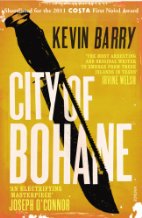 Before the Book Group’s meeting: At its last meeting, which I didn’t get to, the Book Group discussed a book about the parlous state of the human species. I imagine this one was chosen as our next title, if not as light relief, then as a source of stylistic delight. It’s a dystopian world, the world of Bohane, a ruthless world of gang warfare on the west coast of Ireland, possibly in some post-catastrophic future – not terribly unlike the world of A Clockwork Orange, The Threepenny Opera or maybe The Sopranos, for the violence and sexual exploitation, and also for the creative energy in the writing.



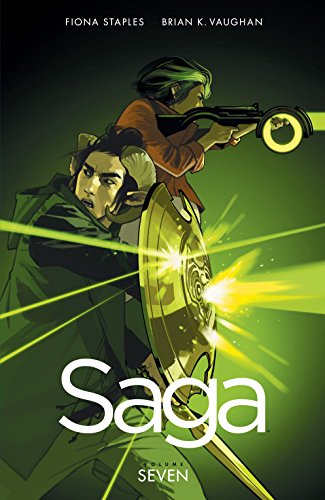 The adventures of Hazel, now at least five years old, and her two-species family continue.


