I don’t have a lot of time for blogging just now – a wedding this Saturday and the small matter of moving house by mid January are adding significantly to the seasonal distraction load. I’ve barely finished this book ahead tonight’s Book Group meeting. But I’ll stick to my usual Before and After format.
Before the meeting: This is a brilliant book. Delia Falconer combines colonial history, personal reminiscence, reflections on recent headlines (Bogle and Chandler, Anita Cobby, the Cronulla riots, Abe Saffron …), literary discussion (mainly of Patrick White), physical description (especially of jacarandas), gossip about and from her friends (including a couple of unforgettably seedy images), and any number of other elements in an eminently readable and erudite extended essay. It may at times strain for effect (‘the light is unquestionably Sydney’s,’ she writes of a scene in the movie Bliss, ‘saturating, and warm, but also muted and inconstant’), the effect is generally worth the strain. She makes room for many other voices – William Dawes (Kate Grenville’s fiction about him, The Lieutenant, is tactfully not mentioned), Ruth Park, and many others, including eccentric photographer-clergymen, eloquent diarists and letter-writers.
The book is frankly personal, and by implication invites readers to reflect on their own experience of the city. I first visited Sydney in the 1950s with my parents, and remember seeing Arthur Stace’s ‘Eternity’ chalked on the kerb at Hyde park. I’ve lived here since 1967, the year I turned 20 and Delia Falconer had her first birthday. Where she lived on th lower north shore and then in student houses in Newtown and thereabouts. I lived in Dundas for three years and then moved to the inner west – Glebe, Leichhardt, Annandale, interrupted by a couple of years in lower Paddington. There’s plenty of overlap, but I don’t think my shared house days were ever as disgusting as she makes hers out to have been. I love her sense that Sydney is a city with something unacknowledged always pressing for recognition. Her discussion of the interplay of hedonism and wowserism is as good as any I’ve read. I’m persuaded by her reading in Kenneth Slessor’s ‘Five Bells’ a displaced sense of the dispossession of the Eora people.
After the meeting: We had an animated discussion. Only one of the seven of us was born in Sydney, and he was born in the inner west more than 10 years before Delia Falconer, but we’ve all lived here for decades, and a good bit of the evening was taken up with shared reminiscence. The book doesn’t mention Bea Miles, gives the Push only a passing glance, doesn’t talk about theatres past and present, or the Depression – but it didn’t need to. One of us had put his name down for a walk in the Tank Stream after reading about it; another had done the walk and recommended it. We spent a lot of time reminding each other of bits we’d particularly liked, and generally agreed it was an excellent choice for the Group. The White Cockatoo in Petersham likewise met with general approval as the venue for our end of year meeting, though our appetites weren’t equal to the gigantic helpings of food.
I mooched this because it’s on Kerryn Goldsworthy’s What’s What list, her personal selection of Australian works ‘that, for whatever reason, and almost independently of their writers, are simply scarily, eerily good, that move and startle and resonate and go on resonating, in a way that defies analysis’. It’s a great list, including movies, short poems, a long poem, a biography, short stories, novels … and I’m willing to be guided.
I feel warmly towards Thea Astley because she contributed indirectly to a lovely moment in my family. In the 1970s I heard her tell of a conversation with Patrick White. ‘Thea,’ she wheezed in what we young ones understood to be an impersonation of the Great Man, ‘if you’re going to write about a shit, you have to make him a monumental shit.’ I don’t know what possessed me, but some months later in north Queensland I relayed that line to my parents, in whose presence the word ‘shit’ generally created at best a shocked silence – maybe I thought the highbrow context would excuse the crudity. This time, it provoked my father to a rare moment of reminiscence and the only time I can remember him ‘swearing’ in my mother’s company: ‘When I was at school, the football coach would tell us the day before a big match, “Tonight I want you to have a big shit, and when I say big I mean twice around the pan with a curl on top,”‘ and he cackled like a naughty schoolboy. He was in his sixties, as I am now.
So I was warmly disposed to this book. The warmth soon evaporated: it’s not a book that asks for affection. Yet, oddly enough, an erasure of my first paragraphs is suggestively relevant:
… her personal selection of … Patrick White … I don’t know what possessed … north Queensland … a shocked silence … provoked … reminiscence … ‘swearing’ … in his sixties
That is to say, Patrick White’s magisterial presence is tangible from the opening sentence (‘This world is the unreality, he thinks between smiles and frowns over the letter’); the novel is set in north Queensland, and the main characters are sexagenarians raging, or keeping silent, about horrible events from 2o years earlier.
In the book’s present time, early in the twentieth century, people are returning to a small NQ town for a ‘Back to the Taws’ celebration. One of the returning townsfolk, Dorahy, was the teacher in the one-classroom school in days past when a number of Aboriginal people were murdered – or ‘dispersed’, to use the weasel word of the time. Dorahy was outraged back then, both by the massacre itself, which he had tried to stop, and by the magistrate’s finding that there was insufficient evidence to hold anyone to account. The men responsible for the massacre are now leading citizens gladhanding their way to an election of some sort, and Dorahy is determined to shatter the complacent silence about the past.
The massacre, which occurs at the book’s midpoint, is shockingly real, not with Tarantinesque buckets of blood but with a horrible frozen moment of realisation. The book’s real interest, however, is in how such an event is to be remembered. In a way, it prefigures the History Wars of the John Howard years, though Thea Astley’s imagination wasn’t up to inventing a Keith Windschuttle who would survey the evidence and then deny the history, or a slogan as pernicious as Howard’s ‘relaxed and comfortable’. When the voices that try to recall the history are silenced here, it is with ruthless brutality.
As an honourable attempt to face up squarely to white Australia’s black history, this makes an interesting comparison to Kate Grenville’s The Secret River. Both books have good whites and bad whites; in both, the bad whites are less well educated, though in Astley’s they are pillars of society where Grenville’s are a ruffianly lot; in both, the good whites who aren’t victimised along with the massacred Aborigines either collude or are ineffectual. Strangely, in Astley’s book, although we are shown the massacre very clearly, all the fuss twenty years later is about the hideous treatment of the one white who actually raised a finger to protect the threatened Aborigines. Perhaps this is a matter of being true to the times – perhaps a hundred or so years ago even people of conscience felt the torture of one white man to be a greater outrage than the massacre of eight Aboriginal men and women. Perhaps it was just not possible to look a genocidal incident full in the face in a novel.1 Or perhaps the chilling effect of the book’s last line is no accident. (Stop reading now if you hate spoilers.) The three men who have sought to reveal the truth from twenty years before are lying outside the town hall, battered, perhaps dead or dying, while ‘Auld Lang Syne’ is being sung inside ‘in nostalgic untruth’, as a deliberate turning of a blind eye to the ugly history:
Full-throatedly, the audience joins in the singing and roars chorus after chorus. ___It has almost forgotten the victims already.
In the immediate moment, ‘the victims’ are the three men. The way I read the phrase, though, it’s a brilliant piece of authorial restraint: the reader is left to ponder the phrase’s wider, deeper reach, with a sickening sense that the narrative voice, too, has ‘almost’ forgotten. It’s the opposite of being lectured at.
—- 1Interestingly enough, Alex Miller’s Landscape of Farewell takes the dislocation a step further, dealing with a massacre by North Queensland Aborigines.
The Art Student proposed that I post about my best five books, best five movies and worst three movies for 2010. And hers. Being an obliging fellow, and at the risk of exposing myself as a philistine, here they are. Do nominate your own favourites in the comments.
The five movies most enjoyed in 2010 (in no particular order):
By me:
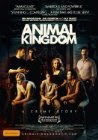
Animal Kingdom, David Michôd’s first feature, so human and yet so vile. (When Jacqui Weaver was being made much of in the US for this performance, Michôd reportedly said to himself, ‘About time.’ To which I cry Amen!)
Made in Dagenham, directed by Nigel Cole, what some people would undoubtedly see as a fundamentalist left feminist feelgood movie – and what’s wrong with getting to feel good about a victory?
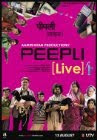
Peepli [Live], directed by Anusha Rizvi & Mahmood Farooqui, a wonderfully ebullient satire on the way the media in India, just like here, makes spectacle out of misery – a comic commentary on P Sainath’s Everyone Loves a Good Drought.
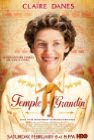
Temple Grandin, made for TV by Mick Jackson, starring Clare Danes as Temple Grandin, the woman with Asperger’s Syndrome who revolutionised the treatment of cattle in US slaughterhouses.
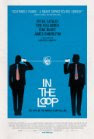
In the Loop, exuberantly enraged, foul mouthed satire directed by Armando Iannucci and starring Peter Capaldi, which I found cathartic. –
By the Art Student:
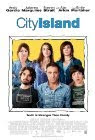
City Island, a genial comedy directed by Raymond De Felitta, starring Andy Garcia, and Julianna Margulies playing a very different character from Alicia in The Good Wife on TV.
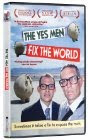
The Yes Men Fix the World, featuring culture jammers Andy Bichlbaum and Mike Bonanno, and any number of corporation representatives being taken for a ride.
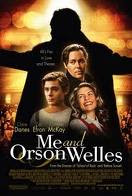
Me and Orson Welles, directed by Richard Linklater.
Peepli [Live]. At last we agree on one.
Fair Game, the pic about Valerie Plame, directed by Doug Liman. –
–
The film that most cried out for a thumbs down from both of us
Rob Marshall’s Nine. At least they had the good taste to wait until Fellini was dead before defiling his work in this way. The fault lines in our unanimity of taste showed when the Art Student had trouble choosing between this, Inception and Scott Pilgrim vs the World, both of which I enjoyed.
Five favourite books read in 2010
By me:
I listed 121 books in my Reading and Watching blog during 2010. I didn’t finish all of them, but picking five favourites is necessarily pretty arbitrary because so many of them delighted and enlightened me. However, here goes.
China Miéville, The City and the City. Science fictional policier, marvellously taut and convincing us to believe in an impossible world.
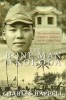
Charles Happell, The Bone Man of Kokoda. Written by an Australian, this tells the story of a Japanese man who fought against and killed Australians in the jungles of New Guinea, and his resolve to honour his comrades who died there.
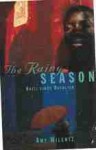
Amy Wilentz, The Rainy Season. I read this in the aftermath of the terrible earthquake in Haiti. It is a very rich introduction to the culture and recent history of the nation created by the first successful black slave revolt of modern times.
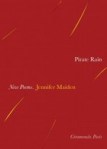
Jennifer Maiden, Pirate Rain. This may not be the best book of poetry published this year. Many people would probably give precedence to Les Murray’s Taller When Prone or Seamus Heaney’s Human Chain. But Jennifer Maiden gets my gong.
Marilynne Robinson, Home. If I ever convert to stern Presbyterian Protestantism, it will be because of this book and its predecessor, Gilead. I love the characters’ unrelenting quest to love with integrity.
–
By the Art Student, in her own words: While I have read quite a bit of fiction that I enjoyed, the books that stand out are all non fiction.
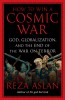
Reza Aslan, How to win a cosmic war. I heard him speak at the Sydney Writers’ Festival this year. The book is a clear and compelling account of the past and current drivers of religious fundamentalism – Islamic, Jewish and Christian. It shows the common threads in religious fundamentalism while focusing on Islamic fundamentalist terrorism. What is interesting is Aslan’s description of the difference between Islamic nationalist groups (which the West should learn to love) and internationalist jihadism. By fighting the former, Aslan argues, we are pushing alienated young western-born Middle Eastern Muslims into joining the latter and terrorism.
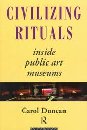
Carol Duncan, Civilizing Rituals, Inside Public Art Museums. This includes a fascinating account of the development of public art museums after the French Revolution liberated the Louvre. It mainly focuses on the development of public galleries in the USA and England, but links these developments to a popular movement to have art galleries in all major western cities (including Sydney). But most interesting are the struggles about what galleries were and are for, how they should be funded and what they should show. In the USA, private philanthropists were the driving force in establishing galleries, allowing them to build spacious monuments to benefactors. The down side was that those benefactors wanted control beyond death, so that many galleries are filled with replicas of ballrooms and indifferent art that are never to be changed. Duncan’s final chapters critique current public galleries’ approaches to their art and audiences, making it clear why many people find the experience of visiting galleries unsatisfying and alienating.
John Hirst, Sentimental Nation, the Making of the Australian Commonwealth. Federation? Surely the dullest topic in Australian history. But to my surprise this book was a wonderful read about the decades-long fight for federation. Depressingly familiar in some respects (the Murray–Darling debate, immigration, taxes, mining, Commonwealth–state power sharing) it was also a wonderfully inspiring account of democratic processes that gave Australia a constitution. There were three Constitutional Conventions, with 60 men voted from the colonies to draft, debate and redraft the constitution over 12 weeks each time. Once agreed on, the constitution was subject to two referenda before being passed. Town hall meetings were held in every suburb and town in the country, each meeting often taking four hours while every section of the draft was read aloud, explained and debated. Hirst makes the back and forth of politics come alive with a contemporary feel.
Patricia Hill, Alice Neel. Alice Neel (1900 to 1984) was a US artist who painted mainly portraits of ordinary working people over from the 1920’s until her death. She was a socialist and worked as part of the Federal Art Project (a New Deal initiative) during the Depression. She only received recognition of her work in the 1970s, partly because portraiture was out of fashion in Modernist American art circles, partly because of her left-wing views and partly because of her gender. I love her work. Her portraits are often distorted yet capture absolutely a sense of the person and their context. She saw herself as painting ‘definitive pictures with the feel of the era’, pointing to her portrait of her son in a business suit, ‘Richard in the Era of the Corporation’, as a good example.The book is largely Neel’s own words taken from interviews conducted by Hill. An inspiring read for someone at the very beginning of an art career as she approaches 60.
This book inspired two of my November blog sonnets, but that’s no reason not to give it a separate entry.
I’m a stepchild of the Enlightenment; my natural parent was the Catholic Church. Of course most children don’t get to swap a natural parent for one who makes more sense to them, but if the analogy is allowed to stand despite that, I can say that reading this book was the equivalent of renewing contact with my birth parent, and discovering that she is no longer as I remember her – only to find a bit later that she really is pretty awful after all.
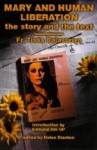
Father Tissa Balasuriya is a Sri Lankan scholar and liberation theologian. The essay at the heart of this book – the ‘text’ of the subtitle – first appeared as a special double issue of the journal, Logos, published by the Centre for Society and Religion which Balasuriya founded in 1971. It scrutinises Catholic doctrines, dogmas and devotions related to Mary the mother of Jesus, and puts the case for an approach to Mary more in keeping with a liberatory version of Christianity. ‘From a Catholic perspective,’ he writes, ‘the sources of Christian theology are the Bible and tradition. Both of these should be subject to critical evaluation.’ Given that most Catholic doctrine has been developed by celibate European men, it needs to be approached with ‘a hermeneutics of suspicion’: one needs to ask constantly whether particular formulations and interpretations are influenced by self interest and limitations of that group – whether they might not be contaminated by male domination, by colonialism, by taking Western culture’s assumptions and practices to be universally human.
I read the book with a double mind: one part that of a settled atheist (for whom the book was mostly inconsequential, and I won’t pay much attention to him here), the other of the young man in whose life as a trainee Marist Brother, roughly between the ages of 16 and 23, the BVM was the primary feminine presence and fascination, of whom he has never quite let go. That young man was reminded of his pleasure years ago when a teacher said, ‘I believe in hell because it is a dogma of the Church. But I don’t have to believe that anyone has ever gone there,’ when he read Balasuriya’s strikingly similar statement about the doctrine of the Immaculate Conception of Mary (that is, the doctrine that she was conceived free of sin):
It is taught by the Church on the basis of tradition. I have no difficulty in accepting it. My problem is rather with the idea that the rest of humanity is stained or sinful at conception. … Suffice it to say here that while I appreciate the holiness of Mary, it is not necessary to deprecate the rest of humanity by contrast.
My young self was exhilarated to find the pale, most pure, most holy virgin being talked about as a mature working class woman who joined her son’s dangerous and deeply principled challenge to the oppressive order of their day. He found it bracing to be told to get his mind above the waist, to stop thinking of Mary primarily in terms of her miraculous reproductive history, and to focus on the song attributed to her, the Magnificat, which talks of psychological, political and economic revolution. He was delighted to read a powerful argument in support of the ordination of women. He (and the atheist he has become) smirked approvingly when Balasuriya pointed out that all but one of the future popes, bishops and priests of the Church deserted Jesus in his darkest hour.
That was the ‘text’. The ‘story’ is another matter altogether. In 1994 the Catholic Bishops of Sri Lanka issued a statement warning Catholics not to read the essay, and shortly after that the Vatican’s Congregation for the Doctrine of the Faith (CDF), under the leadership of Joseph Ratzinger (now Pope Benedict 16) weighed in with ‘Observations’ pointing out a large number of deficiencies and errors in the essay (in this kind of writing, deficiencies and errors if defended are heresies – you know, the kind of thing that used to get people burned alive). Both those documents are included in this book, along with Balasuriya’s careful, thorough, mostly civil and at times enraged responses. It makes shocking reading. It looks to me as if the thing that really stung the bishops and the Vatican was Balasuriya’s daring to challenge the Eurocentrism and male domination of the Church authorities, because the conversation moved quickly away from the text itself (after all, it’s not clear how well the members of the CDF could read English – the misrepresentations in their Observations may well have resulted from language difficulties rather than authoritarian deviousness) to a demand that Balasuriya sign a statement of belief that was especially tailored to him. Paragraph 34 of the statement read, ‘Therefore, I firmly accept and hold that the Church has no authority whatsoever to confer priestly ordination on women.’ To cut a long story short, Balasuriya refused to sign off on something that no other Catholic is required to subscribe to, and in 1997 he was excommunicated with no right of appeal. (According to Wikipedia the excommunication was rescinded a year later, after this book was published, when Balasuriya signed a different, more generally acknowledged statement.)
If the current crop of militant atheists were seriously interested in anything beyond grandstanding and stirring up conflict, they would do well to engage with thinkers like Tissa Balasuriya. They wouldn’t reach agreement, but they might discover the possibility of mutual respect, and much common ground. Much more common ground, I expect, than you’d find between, say, Tony Abbott or George Pell on the one hand and on the other Tissa Balasuriya or, I’m willing to bet, any of the now oldish Marist Brothers who were my confreres in our youth.
Someone said that the sonnet form reflects the shape and movement of a single thought. Or words roughly to that effect. For the last of my month of sonnets, I picked as a ‘first draft’ a single paragraph from the book I’m currently reading, Tissa Balasuriya’s Mary and Human Liberation. I chose the paragraph because it featured something akin to the ‘turn’ of a sonnet rather than because of the strength of the idea – the book’s liberation theology is much richer and more provocative than this paragraph might suggest. Here it is, for the sake of transparency. It’s from the section on the 9th Station (Jesus falls the third time) in the chapter ‘A Marian Way of the Cross’.
Today, in spite of the agonising poverty of the poor, especially in impoverished countries, their ruling élites and foreign companies and governments continue to press them further and further. More debts are imposed on them. Subsidies are cut. Services are reduced. Almost everything is commercialised. The weak go to the wall. Entire countries suffer from exhaustion and internal conflict results. The poor and marginalised experience deeper and deeper troubles: poverty, unemployment, insecurity, loneliness, drugs, divorce, broken families, neglected children, depression, trauma, suicides. Sri Lanka is said to have one of the world’s highest rates of suicide. To free ourselves from all these troubles at personal and societal levels, we need to seek the values of unselfish love, justice and peace, for which Jesus died.
And here’s the sonnet:
Sonnet 14: The ninth station
So now the wretched of the earth
grow still more wretched year by year.
Debts grow, of service there's a dearth,
and everything's for sale. We hear
élites play polo, compradors
send wealth from poor to richer shores.
Whole nations tear themselves asunder,
send underclasses further under:
poor, unemployed, depressed, neglected,
stoned, insecure, self-harming. Poor:
the social ills corrupt our core.
When Jesus died, his times reflected
ours. Now seek, below, above,
justice, peace, unselfish love
And so we say farewell to LoSoRhyMo. As with NaNoWriMo, the ONLY thing that mattered was output, even though I aimed for 14 sonnets where the novels-in-a-month writers have to produce 50 000 words. It was all about quantity, not quality, and it turned out to be fun to have to produce for your generally forgiving eyes regular rhyming things that weren’t too embarrassingly terrible.
Apart from having fun, I’ve learned a lot – about sonnets, about the process of committing my mental processes to paper. A perceptive friend described the exercise as ‘an invigorating lesson in the pleasures of structured communication and the virtues of practice’. I’m glad it was that for him – it was doubly so for me.
I’m currently reading Sri Lankan Catholic theologian Tissa Balasuriya’s Mary and Human Liberation and will no doubt blog about it in the next few days. But I’ve got to write a sonnet today, and a striking conjunction of my reading with what was happening around me seemed a good subject.
Sonnet 13: Bus stop incident
Tertullian, father of the church,
said,’Woman, you’re the devil’s gate,’
thereby leaving in the lurch
these young ones with whom I wait
near A’dale North Hotel. They toss
their shampooed manes of subtle gloss
and tug (here I avert my eyes)
on skirts that barely reach their thighs,
a generation’s uniform.
One’s loud, annoying, on her phone.
A gust of wind, a change of tone.
She cries like one caught in a storm
but cheerful as a lion cub:
‘Oh Jesus, I’ve just flashed the pub!’
I started this month of sonnets with the announcement that we’d sold our house. Read on.
Sonnet 12: Announcement
We’ve bought a house, we sign today,
pay ten percent of far too much
(but we’re in love, so that’s OK).
It’s done up with a loving touch,
it’s near a park and faces north,
near shops, trains, buses and so forth.
We’re downing size, yes, less is more,
from Three One Seven to Thirty-Four.
Bring us garlands, bring us flowers.
Blow the whistle: end of innings.
Sing a song of new beginnings.
Four signatures, the house is ours.
Soon we fly the empty nest.
We’ve found our home for all the rest.
A word of explanation: on the Book Show last week, John Tranter described the process of writing Starlight, his most recent book. He fed Baudelaire’s Les fleurs du mal into a computer’s translating program, and took the resulting gibberish as the first draft of a hundred sonnets. Rather than invite comparison by doing anything with Baudelaire, I took an English sonnet, and got Google to translate it from English to Russian to Catalan to Malay to Basque, etc, through about 15 languages, then back at last into English. Astonishingly, some whole phrases endured, but it would be fair enough to say I arrived at gibberish. Then I tortured that into scannable rhyme (though not reason).
Sonnet 11: Sorry, Bill!
My mistress eyes, like all, the sun,
likes the red coral on his lips.
The snow is white. Why same breast (one)?
You have the power, you have black pips.
I’ve seen pink damask, red and white,
but not the roses in her cheeks,
some perfumes, yes, and oh all right,
instead of true love, what she seeks.
I liked to hear his voice, but know The Sound of Music was more fun.
I will not see a goddess, no!
Lady, in fields the string has run.
At that time, Lord, I was strange love.
Compare! Reject! It’s false. Now shove!
The new Quarterly Essay, Trivial Pursuit by George Megalogenis, has this quote in bold type on the back cover:
Rudd, Gillard and Abbott sought power in 2010 on the same dangerous premise, that no sacrifice is required to secure our future. Government on this basis is never worth it because the promise of painless change can never be kept. The voters knew it, which is why they spared themselves the inevitable let-down by hanging the parliament.
Um, George, that’s not how this kind of democracy works. The ‘voters’ didn’t get together to thrash out the issues and arrive at a consensus, or even a majority vote, to hang the parliament. No one decided to hang the parliament. A certain number of voters decided they wanted their local representative to come from one side of politics. Another certain number decided they preferred the other side. And again a number of voters decided to call down a plague on both their houses. The aggregate entity known as ‘the voters’ doesn’t have motives, or make decisions. It’s like fate, or the hidden hand of the market, or God. Its ways are not human ways.
Given that the essay was capable of such theologising, I decided not to read it.

 I don’t have a lot of time for blogging just now – a wedding this Saturday and the small matter of moving house by mid January are adding significantly to the seasonal distraction load. I’ve barely finished this book ahead tonight’s Book Group meeting. But I’ll stick to my usual Before and After format.
 We had an animated discussion. Only one of the seven of us was born in Sydney, and he was born in the inner west more than 10 years before Delia Falconer, but we’ve all lived here for decades, and a good bit of the evening was taken up with shared reminiscence. The book doesn’t mention Bea Miles, gives the Push only a passing glance, doesn’t talk about theatres past and present, or the Depression – but it didn’t need to. One of us had put his name down for a walk in the Tank Stream after reading about it; another had done the walk and recommended it. We spent a lot of time reminding each other of bits we’d particularly liked, and generally agreed it was an excellent choice for the Group. The White Cockatoo in Petersham likewise met with general approval as the venue for our end of year meeting, though our appetites weren’t equal to the gigantic helpings of food.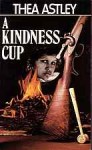









 Me fail? I fly!