Dorothy Hewett’s Selected Poems

Selected Poems of Dorothy Hewett, edited and introduced by Kate Lilley (UWA Press 2010)

When she launched this book at Gleebooks Gail Jones warned against becoming so fascinated by the iconic figure of Dorothy herself that we forget to actually read her poetry. Good advice, no doubt, but I’m probably no different from anyone who knew Dorothy at all in being completely incapable of reading these poems without feeling that I’m in the presence, not so much an icon as a … well, a presence.

Dorothy was a frequent visitor to Currency Press, where I worked in the 1970s. She commanded attention, was never dull, and was never stuck for words. Her first appearance in my time there was by way of a letter written to her good friend our editor in chief Philip Parsons, which he read aloud to the staff (all three of us). She was approaching 50, and wrote that she wanted to celebrate her birthday on a beach in Bali, laid out in a coffin surrounded by black candles. We were amused. When she saw the Currency edition of her play The Chapel Perilous (on the front cover a glamorous photo of  Dorothy when young, on the back a pensive Dorothy in her late 40s), she exclaimed,  ‘Time’s cruel!’ I really don’t need to say this, but Dorothy approaching 50 didn’t exactly lack glamour. We were amused again. In 1976 we published her much earlier play, This Old Man Comes Rolling Home, and I marked up the typescript for the printer. When you mark up a text you take it one word at a time and if it’s a play it tends to perform itself in your head. As I neared the end of my pencil-wielding way through This Old Man, tears were streaming down my cheeks. Dorothy walked into the office soon after I’d finished it, and I told her, with feeling, how much I loved the play. ‘Ah well,’ she said, rolling her eyes, ‘you work away for ten years and they still say your first thing was the best.’ Once, impertinent pup that I was, I told her she had misused a word in a piece published in Overland (writing bisexual but meaning, I said, androgynous). She didn’t slap me down: her eyes lit up, and we had an animated conversation. The last time I saw her was at the NSW Premier’s Literary Awards dinner in 2000, where she received the Special Award, and though she was ill and walked with difficulty, she was as commanding and glamorous a presence as ever, her hair still wild.

If you said that none of those random memories had anything to do with the poetry I couldn’t say confidently that you were wrong.  But it would be odd to quarantine Dorothy’s poetry from her plays and prose, or from what we know of her life. The subject matter of her plays and autobiographical writing is revisited here: her childhood in the Western Australian wheat belt, her sexual adventures and ordeals, her history with the Communist Party. As Kate Lilley writes in her introduction, Dorothy was a ‘magnificently unabashed poet of female narcissism’. (She’s also a magnificently unabashed poet of Australian Communism and disillusion with Communism.) In the poems, even more explicitly than in the plays, she puts herself on the … I was going to say ‘on the chopping block’, and I think I’ll stick with that. If this is narcissism, it’s a ruthless variety; if sometimes her laments over her suffering as a woman sound like self pity, there’s a pitilessness in the way she holds that emotion up to the light. Nothing is quarantined in these poems, and when I read them, I hear Dorothy’s voice.

I think I’m blathering.

Excerpts from the autobiographical  ‘The Alice Poems’ take up about a third of the book, and fill me with chagrin that the book Alice in Wormland is out of print. But the quieter poems of the last 20 pages, which look squarely at old age, the effects of cancer, and the approach of death, are the real treasure. From ‘The Last Peninsula’:

death in his blue cowl
takes one reluctant step away
while the suffering flesh
cut sewn and sealed
lies still in its narrow bed
the spirit looks down and is healed
Healed for what? says the voice
More of the same?
And the currawong sings Rejoice
I have called your name
.

I find the last poem in the book, ‘What I Do Now’,  intensely moving. After a quote from Frank O’Hara (‘I always wanted my life / to have some kind of meaning’), the poem walks us through the speaker’s day – lying in bed reading, getting up at 6 pm, watching television until midnight, and staggering back to bed. Then, with what might be read as desolation, but which to me sounds like a reprise in a minor key of Dorothy’s grimly stoic, eye-rolling response to the Chapel Perilous photos or my response to her early play:

–––––––––the wind howls
ripping my poems to shreds
the paper lantern whirls

I listen to the semis
changing gear
to tackle the 40 Bends
in the tapestry chair
the cat snores loudly
will I live to a great old age?
there are lots of mad old women
in these mountains
shut up in their houses dying.
Announcing LoSoRhyMo

Everywhere else it’s NaNoWriMo – [inter]National Novel Writing Month for those who don’t retain camel-abbreviations. I’ve decided that here it’s the much less ambitious LoSoRhyMo, or Local Sonnet Rhyming Month. My aim is to write not 30 but 14 sonnets this month. Hang the quality, I’ll just get them done. I plan to stick with, or at least start out with, the version of the sonnet Vikram Seth used in The Golden Gate, and to refer to current domestic events. If (which seems unlikely) you’re drawn to join me in the enterprise, please avail yourself the comments button: feel free to write any kind of sonnet you like, and to cover any subject that takes your fancy.

Sonnet 1: On selling the family home
Our home for more than twenty years
Our haven, our Three Seventeen,
Where children’s laughter, rage and tears,
And adults’ too, and in between
Have filled the air, where stains and scratches,
Dents and holes, loose threads and  patches
Are records of our history
With love’s abiding mystery
Was sold on Tuesday, seven thirty.
Our shell, our outer skin, alive,
We’ll trade for one point five two five.
It’s brick and wood, some bits quite dirty.
We’ll shuffle off to somewhere new:
New owners, may it welcome you.

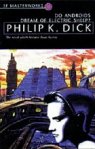
Where Blade Runner came from

Philip K Dick, Do Androids Dream of Electric Sheep? (1968, Gollancz 1999)

Those who know about such things say the best introduction to Philip K Dick’s fiction is his short stories, especially ‘We Can Remember It for You Wholesale’. The advice came too late for me: my introduction was the movie based on this book, Ridley Scott’s Blade Runner, which I saw a shocking 28 years ago. Something – perhaps nothing more than the awkward title –  led me to expect the book to be a poor, pallid thing in comparison to the movie, but I’ve been meaning to read it anyhow since 1982.

Apart from the broad outlines of the plot (Rick Deckard, played by Harrison Ford, is a bounty hunter who tracks down and kills advanced robots who have rebelled against servitude and are trying to pass as human), what I remember of the film is the dark turbulence of the design, the crazed, ruthless, romantic robot played by Rutger Hauer, the tear that runs down the cheek of a female character when she discovers she’s not human, and not much else. The world of the book is a quietly decaying desolation rather than an overpopulated millrace; Roy Baty (not Batty as in the movie), the leader of the rogue androids, is unambiguously unsympathetic; and Rachael Rosen finds out she’s not human fairly early in the piece, though later plot points suggest she has always known it – and either way there’s no great emotion involved. It’s the same story, but very different.

I enjoyed the book. I would have enjoyed it if Blade Runner had never been made, but as a study (in my case a mighty superficial one) of book-to-film adaptation it’s fascinating. The book has a religious movement, Mercerism, that isn’t in the film, that emphasises and reinforces the human quality of empathy. It’s mainly an Orwellian method of population control, and but it also enables the characters to have genuine mystical experiences. Though there’s plenty of killing, none of it is graphic: the most horrifying moment – and it is truly horrifying – involves a few scissor snips that draw no blood. The movie goes for much bigger effects, though it’s probably tame by today’s bang and splatter standards, and uses noir conventions to establish a moral and metaphysical murk that has (for my money, and in my memory) a much more powerful effect than the book. The book raises the same basic questions – something like: what makes us human? what does it mean to care, and what are its limits? – and has its own ambivalence and ambiguities, but in a much cooler, more cerebral, register.

The movie, in other words (and I intend to see it again soon), departed from the book in major ways, leaving out not just the religious element but also a central strand about companion animals (which survives vestigially in images of artificial owls, and ostriches in the streets), and even the major back story of a nuclear war. It was a futurist noir piece (perhaps the first of its kind?), where the book is something much quieter, more measured, more individual. The movie became its own thing, broke free of the constraining obligation to be true to the book (which has such a dampening effect on, say the movie adaptations like the Harry Potter series or the Millennium Trilogy). Interestingly enough, this leaves the book relatively uncontaminated. The book’s hero is definitely not Harrison Ford. I’m free to imagine him freshly for myself as I read.

Robert Dessaix’s Arabesques

Robert Dessaix, Arabesques: A tale of double lives (2008, Picador 2009)

Consider a hypothetical book that opens with two wealthy European men visiting a developing country. The elder of the two men asks the younger if he’d like to have sex with one of two adolescent musicians who are playing for them. When his friend answers in the affirmative he roars with laughter, and continues roaring as they drive away in a cab accompanied by the two boys. The younger of the two Europeans later reports that he had a great night with his boy. You’re likely to expect the book to be about sex tourism.

What if the Europeans were famous, not as sportsmen or politicians (which would make it a book about sex scandals), but as writers – one a great wit, playwright, essayist and children’s author and the other as a vastly erudite man of refined sensibility, a Nobel Prize winner? They’re still sex tourists, do I hear you cry? Why should having a way with words bestow immunity from ordinary moral considerations?

That hypothetical opening scene is strikingly similar to the opening of Robert Dessaix’s Arabesques. The Europeans are Oscar Wilde and André Gide, and the incident happens in the casbah of Algiers in 1895 . I don’t think I’m being unfair to Dessaix if I say that he appears to regard the power imbalance between the ‘moneyed’ writers on one hand and the Arab boys on the other as of no consequence – nobody forced the boys to do anything, after all, and it’s not paedophilia, because they were adolescents (which makes it pederasty, quite a different thing). When Dessaix’s friend Albert uses the mild word ‘sordid’ of this incident and Gide’s lifelong habit of visiting North Africa to have sex with adolescent boys, Dessaix wonders if Albert ‘secretly found something about homosexuals in general unpalatable’. Edward Said’s notion of Orientalism is mentioned only to be dismissed as ‘pretty one-sided, even wrong-headed, these days where I come from’. The word prostitution is never mentioned, nor is the phrase sex tourism. That would just be crude, rather like the pink tourists who turn up plodding and stunned at intervals throughout the narrative.

This is a very attractive book, beautifully designed and illustrated, written in mellifluous, finely nuanced prose, but it’s not a comfortable read. The casbah moment turns out to have stuck in Robert Dessaix’s mind from when he first read it at the age of 14, and he offers it to us as a moment at which Gide could ‘start living out who [he’d] been all along, at first in the shadows and now in the light’.

It’s a travel book. Dessaix visits Normandy, the south of France, Portugal, Algiers, Tunis. He does have living companions – a number of Parisians, an enigmatic north African – but his main travelling companion is André Gide. Dessaix visits Gide’s childhood home; the house where Gide lived with his pious wife Madeleine, whom he loved without sex and made miserable by going off on his sexual adventures; cities, towns and oases that Gide visited and wrote about. As well as the physical journey, he takes us on a journey to get to know Gide, and to get to know himself in relation to Gide. Though he eschews quick moral judgements, he does explore the ‘who’ that Gide lived out, questioning the effects on other people, defending him against criticism and then questioning his own motives for defending him.

The double lives of the subtitle are manifold. Dessaix sees himself as a kind of double of Gide: their lives have an astonishing number of similarities (a love of an eroticised North Africa, intensely Protestant adolescence, commitment to the writing vocation, marriage to a woman soon after discovering the joys of sex with men, and more). He and Gide each have a kind of doubleness – tension between adolescent religion and powerful homoerotic impulses that comes to a point of crisis and self-knowledge in their early 20s. And the book fairly teems with other doublings, pairings and dichotomies: the sexually active Gide and his wife Madeleine, who lived and died a virgin; Madeleine and the young man Dessaix describes as Gide’s beloved; European and North African attitudes to sexuality; Protestantism and Catholicism; and more.

One of the most interesting mini-essays deals with an ‘epiphany’ in a church in Oporto, in which Dessaix realises he is a Protestant. The moment of self-knowledge arrives when he looks at some women hearing Mass and realises that ‘every last loose thread’ of their lives ‘had already been lovingly gathered up and woven into the sacred tapestry of the Church’, that their ‘lives had been redeemed, not by understanding, not by seeing Truth face to Face, but by being gathered up into the Church’. His ensuing discussion of his own Protestantism is very interesting, but something about the scene gave me pause. Dessaix expresses his ‘realisation’ so beautifully that the reader almost fails to notice that he doesn’t know those woven women at all, that he’s projecting something onto them to  as a springboard for talking about himself. Which brings me back to my central worry about the book: when it talks about Gide’s sexual compulsions (another crude word that doesn’t darken its pages), isn’t there a similar projection involved? Edward Said may be old hat where Robert Dessaix lives, but those adolescent boys don’t emerge so much as individuals in their own right as dark-skinned screens onto which the finely tuned European can project his own desires.

I’m reminded of one of A D Hope’s ‘Sonnets to Baudelaire’ (just the last seven words, really, but here’s the whole thing):

You saw it rise, I see it set, that sun,
The bright aubade, the serenade's dying fall,
Between us, brother, we have seen it all.
But was it worth, now all is said and done,
The great Romantic theme: My heart laid bare?
One thing, like Ozymandias, they forgot:
To make it worth the trouble, someone must care

To watch Narcissus give himself a hug
Or Onan practise on his magic flute.
Now as the stars light up, for better or worse
Time throws away the key that locked those smug
Museums of self-regard, the universe
Expands, but something's slimy underfoot.

PS: If there’s a further edition I hope someone corrects the slip on page 242 where Gide is described as ‘reading the Aeneid in the original Greek’. Virgil wrote in Latin, chaps.

17 more syllables

The jacarandas
are all purple this morning
too late to start things

Another walk, another 17 syllables

Jacaranda’s green
Five bright flowers on the ground
Ten live in the leaves

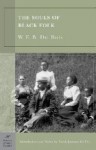
Meeting W E B Du Bois

W E B Du Bois, The Souls of Black Folk (1903, Barnes & Noble Classics 2003)

I got a BA Hons degree in English Literature from a Good Australian University in 1970. Forty years later, it’s as if I’m standing on a hilltop with a view to the horizon in every direction, and all I can see are the boundless plains of my own ignorance. I hope I’ll go to the grave reconciled to the fact that I know almost nothing about anything, but for now I find the condition not so much frustrating as tantalising: so much to learn and only one brain. It may be a kind of information gluttony, but I can’t quite see that there’s anything wrong with it.

Reading W E B  Du Bois was like climbing a little higher up my hill and seeing that my ignorance was even vaster than I imagined.  I knew vaguely that he was an eminent African American scholar who wrote about racism, that he became a Communist. I may have half heard that he renounced his US citizenship in the 1960s. It never occurred to me that I might want to read him until Marilyn Lake and Henry Reynolds began their Drawing the Global Colour Line with a quote from his ‘The Souls of White Folk’.

The Souls of Black Folk, published a couple of years before that essay, is his best known work. I’m going to assume that I’m not the only person in the world who doesn’t know it well, and tell you that it a passionate and judicious exposition of the condition of ‘Negroes’ in the USA, particularly the South with detailed attention to the ‘Black Belt’ of Georgia, three decades after Emancipation. This centenary edition has an excellent introduction by Farah Jasmine Griffin, a professor at Columbia University, who identifies features of the fourteen essays that account for their  status as ‘a founding text of African-American studies’:

its insistence on an interdisciplinary understanding of black life, on historically grounded and philosophically sound analysis, on the scholar’s role as advocate and activist, and on close study of the cultural products of the objects of examination

I would add that the book is beautifully written: all the marshalling of fact, the polemic, the analysis would stand strongly by themselves, but the music of the writing carries them home. And it’s intensely personal. Perhaps the most poignant moment  (poignard means dagger) occurs in the 11th essay, ‘On the Passing of the First-Born’, in his description of his infant son’s funeral procession:

The busy city dinned about us; they did not say much, those pale-faced hurrying men and women; they did not say much, – they only glanced and said, ‘Niggers!’

In a book that often says we to mean the society as a whole, that consistently speaks to our common humanity, that last word is worth a thousand pictures.

The word racism didn’t exist until the 1930s. Du Bois  talks about ‘the Veil’, sometimes ‘the Veil of race’. Far from being a literary affectation as a contemporary review included in this edition implies, the image communicates powerfully. Du Bois describes himself as living within the Veil; he holds his baby son in his arms and see the shadow of the Veil fall across him; he hopes that for the ‘thousand thousand dark children’ tempted to hate, ‘someone will some day lift the Veil, – will come tenderly and cheerily into those sad little lives and brush the brooding hate away’; he takes joy from Shakespeare, Balzac, Aristotle, because when he is with them, he dwells above the Veil.

There’s an awful lot in this book that’s quotable, an awful lot that could have been written this morning, though it probably would have been couched differently – less reference to classical myth, for instance). The need to communicate through the world’s many Veils is at least as pressing today as in 1903 (not for nothing did the government of the day ban journalists anywhere near the asylum seekers on the Tampa in 2001). Du Bois writes (ignoring the existence of women as he does when generalising though not when attending to specific events):

herein lies the tragedy of the age: not that men are poor, – all men know something of poverty; not that men are wicked, – who is good? not that men are ignorant, – what is Truth? Nay, but that men know so little of men.

But the book is not just about racism or Black folk as victims. It’s about people with souls. In the final essay, he writes:

Your country? How came it yours? Before the Pilgrims landed we were here. Here we have brought our three gifts and mingled them with yours: a gift of story and song – soft, stirring melody in an ill-harmonized and unmelodious land; the gift of sweat and brawn to beat back the wilderness, conquer the soil, and lay the foundations of this vast economic empire two hundred years earlier than your weak hands could have done it; the third, a gift of the Spirit. Around us the history of the land has centred for thrice a hundred years; out of the nation’s heart we have called all that was best to throttle and subdue all that was worst; fire and blood, prayer and sacrifice, have billowed over this people, and they have found peace only in the altars of the God of Right. Nor has our gift of the Spirit been merely passive. Actively we have woven ourselves with the very warp and woof of this nation, – we fought their battles, shared their sorrow, mingled our blood with theirs, and generation after generation have pleaded with a headstrong, careless people to despise not Justice, Mercy, and Truth, lest the nation be smitten with a curse. Our song, our toil, our cheer, and warning have been given to this nation in blood-brotherhood. Are not these gifts worth the giving? Is not this work and striving? Would America have been America without her Negro people?

I went for a two-hour walk …

… and all I got was 17 lousy syllables.

Footpaths stained purple
Jacarandas are still  green
Mulberries underfoot

Freebies

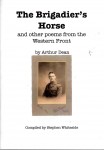
Arthur Dean, The brigadier’s horse and other poems from the western front (Stephen Whiteside 2010)
Michael Mohammed Ahmad (Editor), Violence: Westside Jr Vol 2 (Bankstown Youth Development Service 2010)

My initial reason for doing a combined blog entry about these two books – a very slim vol of verse written by the publisher’s grandfather and a glossy publication showcasing writing by young refugees in Western Sydney – was the accident of their both arriving in my letterbox last week. (Even a blog as modest and marginal as mine occasionally cops a freebie.) On reflection, yoking them together is a long way from meaningless.

Stephen Whiteside’s previous self-published booklets have featured his own poems, mainly bush ballads and C J Dennis parodies. This one is not so different in style, and even includes a Dennis tribute, but it’s quite a different beast: it rescues from obscurity the poems written during the First World War by Arthur Dean, later to be a Victorian Supreme Court judge, and the publisher’s grandfather. The judge’s poetic endeavours have not gone unnoted before now. His Australian Dictionary of Biography Online entry says: ‘He was something of a “trench poet”, contributing light verse to army magazines.’ In this little book are eight of his poems, all – as his grandson tells us in his introduction – probably written in 1916. The title poem won  a £3 prize from the Diggers’ newspaper The Rising Sun, for which young Arthur received a congratulatory letter from C E W Bean, reproduced in an appendix here.

Arthur Dean was no Rupert Brooke. This is accomplished light verse, composed to distract the poet and his comrades from their lot as soldiers, and perhaps allow a little relieving laughter. Though offered as entertainment in 1916, it still hits some living targets:

Everyone’s scavenger, everyone’s slave;
The papers may splutter about us being brave,
How nobly we fell and how honoured our grave,
But that is the luck of the few.
ooooooooooooooooooooooooooooooooo(from ‘Infantry’)

The ADB entry tells us that Dean’s ‘delight in composing “doggerel” was to continue all his life’, so perhaps we can expect further volumes – perhaps doing for the law what this one does for war.

In an Afterword to Violence, BYDS Director Tim Carroll tells us that his father, ‘a gentle man, full of love’, serves in the Air Force in World War 2: ‘He killed hundreds, if not thousands, of people in those dark times and carried the guilt of those killings with him to his death.’ This is the kind of thing that simply could not be said in prize-winning light verse written in the trenches, or perhaps in any poetry written by a soldier in a combat zone: do any of the celebrated war poets talk of themselves as killers? And how could they contemplate the long tail of war – the creation of refugees, the lives devastated by loss, the generations of dysfunction?

The long tail features loud and clear in this book.

Refugee Action Support (RAS) is a government funded program that supports young refugees with English language literacy. As part of the program, BYDS Bankstown Youth Development Service) ran a number of two-hour writing workshops in schools in Western Sydney. The bulk of the book is writing that emerged from those workshops. There are eloquent photographs of BYDS facilitators working with students, and a number of pieces by non-students (including interviews with a boxer, a psychiatrist, Wafa Zaim, manager of Muslim Women’s Association, and Craig Greenhill, who took some of the most telling photographs of the Cronulla violence in 2005), but it’s the refugee students’ writing that makes the book.

The editor, Michael Mohammed Ahmad, explains in his introduction that he decided ‘to present the raw versions of each artist’s work’ – that is, not to ‘repair the grammar’, and so on. He also decided to preserve words and passages that had been crossed out by the writers, so every few pages there is a word, a phrase a sentence with a line through it. My editor’s heart recoiled when I read this, but having read the result I think the decision was completely correct. The effect is to present the writing as process rather than as product: most of the young writers are clearly struggling with English as at best a second language, and most of the pieces are struggling with crushingly difficult subjects – war, domestic and other violence, dislocation, racism. The unconventional use of English and the occasional striking out effectively dramatise the difficulty of the undertaking. For example, this short piece (author not specified from the list of participants, as a way of protecting privacy):

Being Muslim is crime in this world. When some people heard of Muslim or meat a Muslim they think of terrorists. They don’t think who real Muslim people are. They don’t know who the real terrorists are.

Tidied up, that would lose what it now has, a strong sense of a mind seeking to communicate across a cultural divide. The reader is granted an unexpected sense of intimacy.

Interesting things are coming out of Western Sydney.

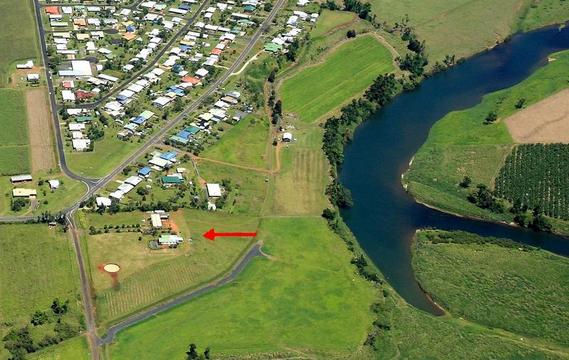
Anybody want to buy my childhood home?

The auction is on 13 November.

It’s quite a while now since it left our family. Cyclone Larry wasn’t kind to it, and tragedy struck the man who bought it from my brother and sister-in-law. So here it is again, shorn of cane paddocks and big trees, looking for a new owner.

Bath 2 Bed 4 [having been home to at least two seven-member families] Car 5
7 acres so close to town – red soil
Large queenslander – 2 sheds – High & dry
Fantastic views of river & surrounding area – very private