Tag Archives: art

Vivien Johnson’s Streets of Papunya

Vivien Johnson, Streets of Papunya ( 2015)
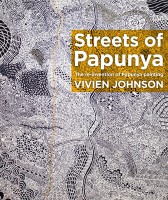
9781742232430This is a gorgeous book full of dazzling images from Australia’s Central Desert. Its publication coincides with an exhibition of the same name at UNSW Galleries, which is showing until 7 November. If you can’t get to see the paintings the book is the next best thing.

The book is more than its images. It is also a story of Papunya the place and the artists who live there.

The word Papunya has entered the general Australian and perhaps world vocabulary as synonymous with the rise of contemporary Australian Aboriginal art in the 1970s. It was in the small, artificially created settlement of Papunya that Aboriginal men, under the tutelage and encouragement of Geoffrey Bardon, began to use acrylic paints to depict traditional designs for non-Indigenous viewers. The company Papunya Tula must be the most recognisable name associated with Aboriginal art.

But Papunya was there before Geoffrey Bardon arrived. And so was Aboriginal art. Albert Namatjira painted his last watercolours while living there, and many of the local men could imitate his style (but chose not to because he was from a different country). And there was art in Papunya after Papunya Tula relocated in the 1980s and many of those original artists moved to other settlements. The town remained, as beset by disfunction as many other Aboriginal settlements in the Northern Territory, its artists left to pursue their talent without an art centre or any substantial support.

The history of Papunya has been told many times, possibly most beautifully in The Papunya School Book of Country and History, created by Nadia Wheatley and the children and adults of Papunya in 2002. That’s nominally a children’s book, but like that other great ‘children’s book’, Maralinga: The Anangu Story (by the Yalata, Oak Valley Communities with Christobel Mattingley), it tells an important story from an Aboriginal perspective. Without glossing over the terrible realities the consequences of colonial policies, these books convey a sense of Aboriginal agency and  intelligence.

Streets of Papunya is not a children’s book, and at times it can be hard going because it assumes prior knowledge, or else a high degree of interpretive skill on the part of the reader. But Vivien Johnson tells a story that has grown from her relationship with artists who have remained in Papunya. They may have been sidelined by the departure of Papunya Tula, but they continued to paint, and now, with the establishment of Papunya Tjupi, they once again have infrastructure to support their creative work.

There’s a lot of nitty-gritty in the book: the details of how the artists have been supported with supplies of canvas and paints over the decades; the legal wrangling over ownership of the 14 paintings from the 1970s known as  Papunya Community School Art Collection; the role of white managers in helping artists break out of narrowly conceived commercial imperatives; the arduous four years it took to get a new Art Centre up and running after two decades of false starts.

There’s also some splendid revision of received history. For example, you may have thought, as I did, that those early Papunya painters didn’t include women because of cultural considerations. But no, it was because the white managers couldn’t see their way to stretching the genuinely limited resources to a whole new population of potential painters. The impetus to include women in the ranks of the painters came, often enough, from the old men. You may have thought, as I did, that it was the lawmen, men of high cultural influence, who began the contemporary art movement.  But no, the first Papunya painters were risk-takers, cultural innovators, whose showing of painted stories to non-Indigenous people won the approval of the serious lawmen only after it was seen to succeed.

There are many stories on this book of frustration and defiance and hard work and triumph. Vivien Johnson sums things up nicely at the end (the lines of verse at the end are from Billy Marshall Stoneking’s ‘Passage‘):

These artists of Papunya live their lives amid the residue of successive government policy and planning failures over the half-century of Papunya’s existence. … Art centres are for them a kind of oasis from that devastation, places where through tirelessly painting the stories in which their ancestors’ deeds are recounted for the delight and edification of whitefellas, the painters symbolically invoke the power of those ancestors, just as Papunya’s street signs now invoke its cultural and artistic heroes. Surveying the ruins of their colonisers’ attempts to bring them into the mainstream of Australian life, for which places like Papunya were originally created, they are a reminder of another force at work here, underpinning all endeavours in its various names:

… the Dreaming does not end; it is not like the whiteman’s way.
what happened once happens again and again.
This is the Law. This is the Power of the Song.

‘Through the singing,’ the old men say, 
‘we keep everything alive; through the Songs,’
they say, ‘the spirits keep us alive.’
aww-badge-2015 Streets of Papunya is the nineteenth book I’ve read for the 2015 Australian Women Writers Challenge.
Hidden glory

I’m just back from the opening of the HIDDEN Sculpture Walk in Rookwood, Australia’s oldest, biggest and most culturally diverse cemetery, also the one with a sculpture exhibition showing from  sunrise to sunset from tomorrow, Friday 18 September to Sunday 18 October. Entry is free.

As I mentioned last week, the Emerging Artist is in the exhibition, and today when the prizes were announced,  she was one of the three commended works. (There are also three highly commended works, plus two that shared the $10,000 prize. Both the Emerging Artist and I were too thrilled to make  dependable notes on what the other 7 works were, but I expect they’ll be listed on the Hidden website soon.

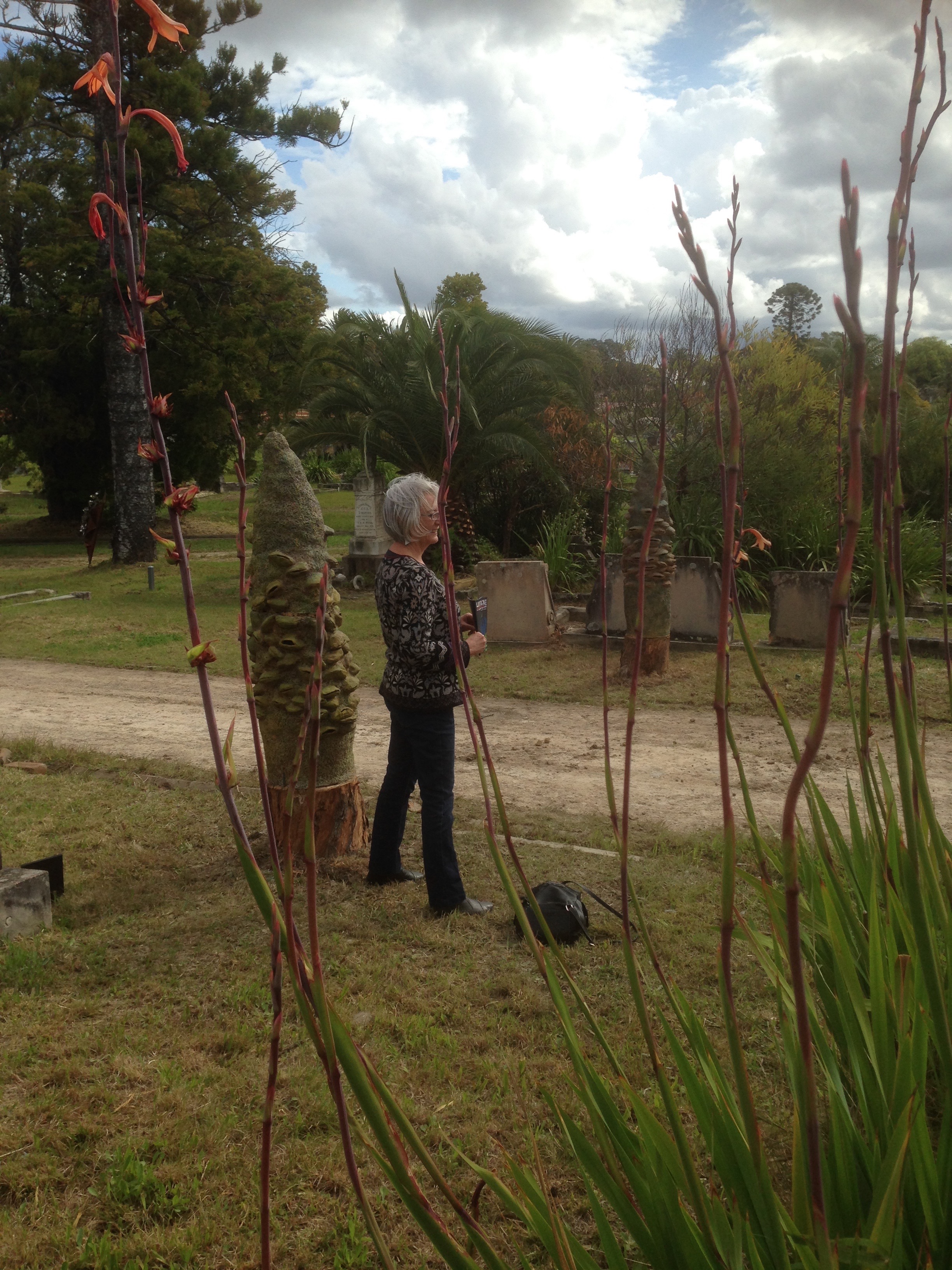
Heavy rain was forecast today, but the weather for the opening was cool, dry and very bright. Here’s yet another picture of the work and the artist:

IMG_1390

Coming Soon

If you live in Sydney, you ought to know about two fabulous things coming soon.

1.
HIDDEN: Rookwood Cemetery, from sunrise to sunset
Friday 18 September to Sunday 18 October
ENTRY IS FREE!

The Hidden website says it well:

Hidden is an outdoor sculpture exhibition that takes place amongst the gardens and graves in one of the oldest sections of [Rookwood] Cemetery. The exhibition invites artists to ponder the notion of history, culture, remembrance and love and allows audiences to witness creative expression hidden throughout Australia’s largest and most historic cemetery.

This is Hidden’s seventh year. I’ve been in previous years, and there’s something  marvellous about the sculptures placed among the tombstones. (It’s in an older part of the cemetery – no one will see the grave of someone who died recently being visited by an antic Don Quixote or a bright perspex rainbow.)

This year the Emerging Artist formerly known as the Art Student is part of the exhibition. Her piece, Bush Memorial, comprises two giant ceramic banksia seeds. Yesterday we installed it.

This slideshow requires JavaScript.

2.
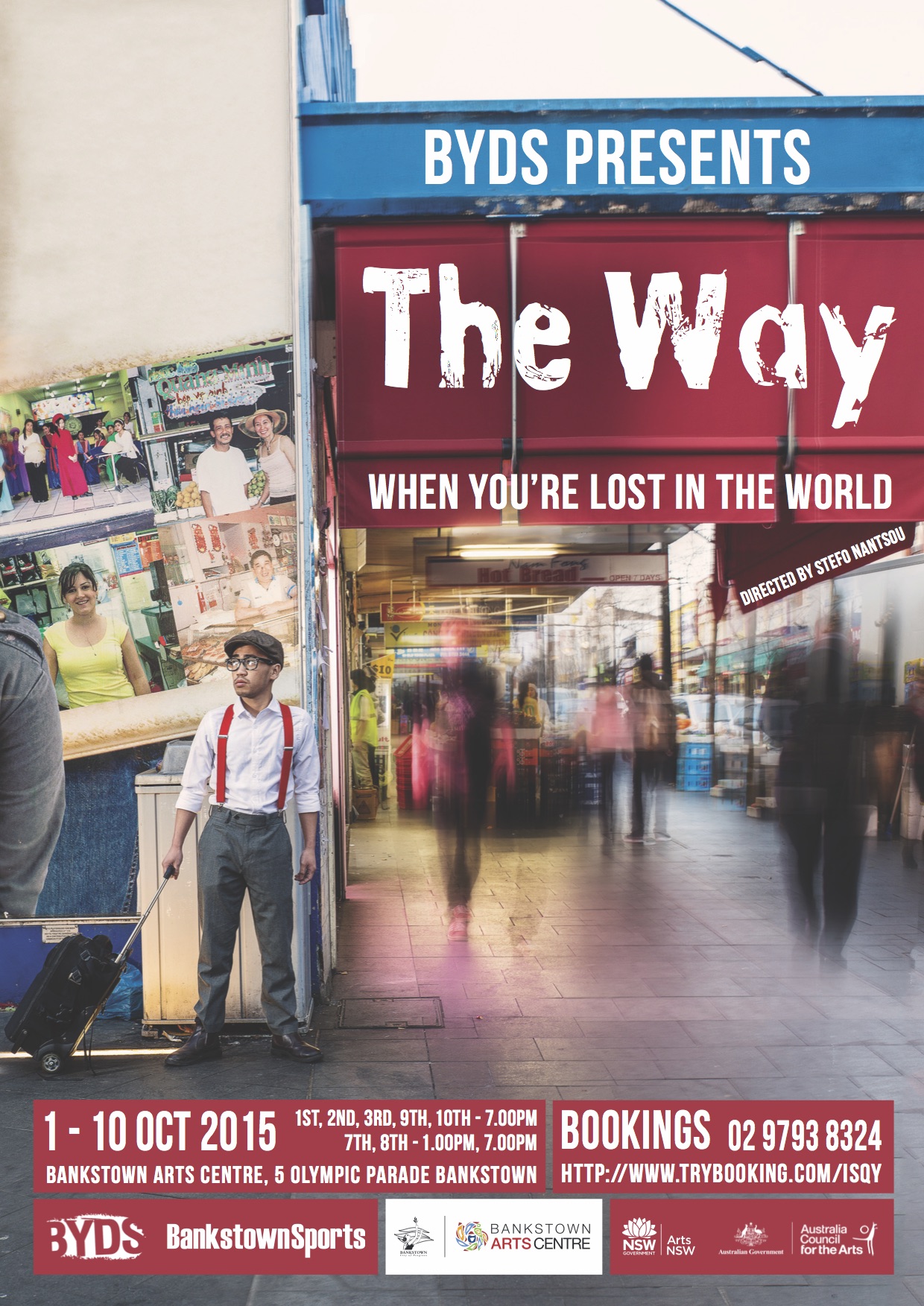
THE WAY: Bankstown Arts Centre, 1-10 October. (It’s not free but it’s unbelievably cheap)

The WayThis is the third play in a trilogy that has grown out of a collaboration between BYDS (Bankstown Youth Development Service) and the Sydney Theatre Company.  I saw the second play, The Other Way, in 2013. The collaboration of professional actors with local community members, led by actor/ writer/ director/ musician Stefo Nantsou, produced a brilliant evening of theatre. Here’s a bit from my blogging about it:

This isn’t professional/industrial theatre, where success is judged by the length of the run and size of box office takings. It’s community, where the division between audience and performers is porous, where there’s an intimate sense that people are telling their own stories and those of their neighbours.
There’s a wonderful scene where a group of boys are teasing/harassing a group of girls, who are giving back as good as they get. In the middle of the chiacking and posturing one of the girls looks one of the boys full in the face and says, ‘Hello!’ and the group falls silent. The whole thing falls apart, moves onto a different plane. Sure, it was scripted and stylised, but it felt like it was really happening right then and there.

I gather that The Way has a similar structure to its predecessors: over a single day in Bankstown, storylines intersect as people from diverse backgrounds experience their multitudinous joys and crises. I’m looking forward to it.

The Other Way was evidently seen by a relatively small total audience over its short run. The Way has eight scheduled performances. If you live in Sydney I recommend that you put it in your diary and book seats soon. You can read more about it here. Bookings: 02 9793 8324 or http://www.trybooking.com/isqy

Mark Doty’s Still Life with Oysters and Lemon

Mark Doty, Still Life with Oysters and Lemon: On Objects and Intimacy (Beacon Press 2002)

0807066095My copy of this book doesn’t have the subtitle it evidently carries in other editions: On Objects and Intimacy. If the subtitle had been there I might have been better prepared for what the book is. What it’s not is a dissertation on the painting it is named after (whose title has been changed to Still Life with a Glass and Oysters and which can be seen at New York’s Metropolitan Museum, or online here).
The book starts with the painting, or at least with the writer’s having fallen in love with it, and it does discuss it and other still lifes from the period, but it roams far and wide, through memoir about objects and how they – or their memories and representations – can come to embody emotional truths, to lyrical reflections on love, mortality, bereavement and poetry. It ranges through cute childhood memories of bears and boiled lollies, a fortieth birthday in Amsterdam involving visits to the Rijksmuseum, a Gay bathhouse, and a fine Thai restaurant, and wonderful writing about the consolations of art.

I came away from the book liking Mark Doty a lot, and with a sense that my heart had been rendered that much more open to the world.

To give you a taste of the writing, here is a passage that crops up as a digression in a story about a chipped blue and white platter that Doty bought at a sale table when out walking his dog, at a time when his partner was gravely ill:

The most beautiful still lifes are never pristine, and herein lies one of their secrets. The lemon has been half-peeled, the wine tasted, the bread broken; the oysters have been shucked, part of this great wheel of cheese cut away; the sealed chamber of the pie, held aloft on its raised silver stand, has been opened. Someone has left this knife resting on the edge of the plate, its handle jutting toward us; someone plans, in a moment, to pick it up again. These objects are in use, in dialogue, a part of, implicated. They refuse perfection, or rather they assert that this is perfection, this state of being consumed, used up, enjoyed, existing in time.
But there’s the paradox – they are depicted in a moment of being seen, contemplated between the experience of tasting, smelling, devouring; but this depiction places them outside of time, or almost outside of it, in a long, slow process of decay, which is the process of oxidation, of slow chemical transformation … Whatever time may have done to the original fruits, their depiction is now safe from the quick corrosions of local time and subject to the larger, slower, depredations of history.
And thus something of the imperfect, the quickly passing, the morning meal with its immediate pleasures has been imported into the realm of perfection, into the long, impersonal light of centuries.

PS: In the little blog that appears over in the right hand column of this one, I expressed frivolous misgivings as I was starting this book:

It’s a slender volume, published by a Unitarian publishing house. Is it a mattress to catch a falling Protestant and so of little interest to those who had a Catholic childhood?

Will commented:

No, not at all. It’s a lovely book of reflections on the real world as we see it. Painting and memory, seeing and interpreting. I hope you enjoy it.

It’s worth mentioning that Will is a librarian, and so may have a slightly more precise meaning in mind for the word ‘real’ than most of us do (see realia). He was right.

Half an acquisition

One by-product of living with an Art Student is that works of art proliferate around the house. Some are produced by the AS herself, some given to her, and some we buy. Our latest acquisition, which we bought jointly with another Art Student couple, is this photograph:

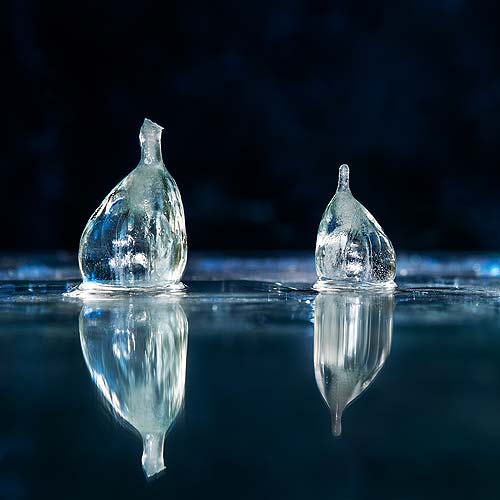
Janet-Tavener-Figs

It’s Figs, by Janet Tavener, from her recent exhibition at the Brenda May Gallery. The Art Student wanted to hang it over our bed, but it’s the middle of winter and the bed is generally cold enough to get into without having a huge photograph of melting ice sculptures hanging over it. So it has pride of place in the dining room, and the Art Student’s bright portrayal of the poppy’s life cycle keeps its place in the bedroom.

Incidentally, when we dropped in to pick up the photo today, we spent a good time enjoying Brenda May’s current exhibition, Mighty Small.

A parthian shot

The campaign to persuade the O’Farrell government to change its mind about precipitately withdrawing funding from fine art education in NSW TAFE has met with stony silence (if you don’t count the occasional statements by the premier about how he values art). When I saw the fact sheets on the coming changes to the TAFE system, I couldn’t resist:

art killed001


Enter the Duck

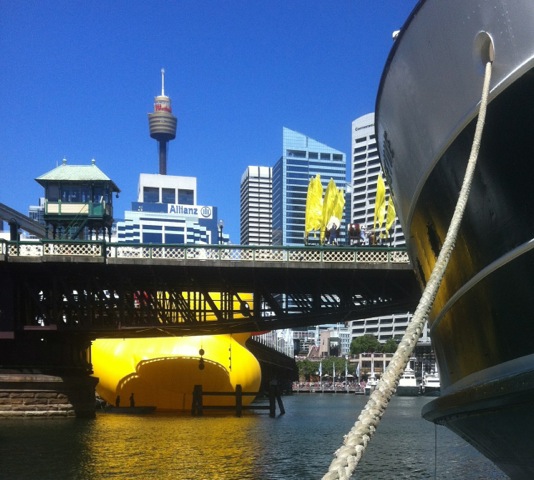
Whatever the ghost of Rembrandt might think about the state of Dutch art in the early 21st century the arrival of Florentijn Hofman’s magnum opus in Darling Harbour today was a hit, even after the seeming endless and mostly lame concert and tumbling act that preceded it. The figures beneath the yellow banners up on the Pyrmont Bridge are taiko drummers. They were splendid.

ducky

And so the 2013 Festival of Sydney begins. No first night celebration in which the city becomes a giant concert venue, but a giant rubber ducky isn’t too poor a substitute.

Enter the Duck

Whatever the ghost of Rembrandt might think about the state of Dutch art in the early 21st century the arrival of Florentijn Hofman’s magnum opus in Darling Harbour today was a hit, even after the seeming endless and mostly lame concert and tumbling act that preceded it. The figures beneath the yellow banners up on the Pyrmont Bridge are taiko drummers. They were splendid.

ducky

And so the 2013 Festival of Sydney begins. No first night celebration in which the city becomes a giant concert venue, but a giant rubber ducky isn’t too poor a substitute.

Crossing Cultures with Owen and Wagner

Stephen Gilchrist (editor), Crossing Cultures: The Owen and Wagner Collection of Contemporary Aboriginal Australian Art at the Hood Museum of Art (Hood Museum of Art, Dartmouth College 2012)

Until now I’ve assumed that exhibition catalogues were basically illustrated lists, of little or no interest to anyone who hasn’t been to the event they relate to. The Crossing Cultures catalogue has made me think again. My rethink was given a serendipitous boost by Mary Beard‘s contribution to TLS Books of the Year lists. She wrote:

Let me put in a plea (not for the first time) that we don’t forget the great contribution of exhibition catalogues, which often goes far beyond a simple record of the show concerned.

Like the esoteric-sounding catalogue she had in mind, Crossing Cultures ‘includes some wonderful essays and entries’. The bulk of the book is devoted to ten substantial essays, while the illustrated list – the ‘exhibition checklist’ – takes up less than a quarter of its pages. Since very few of my readers are likely to visit the exhibition (it’s in New Hampshire) or see the catalogue, I’ll give you a quick guided tour. The Art Student’s words when she first flipped through the book echo my own response and serve very well as a TLDR: At last, something that might help me understand some basics about Aboriginal art.

Will Owen kicks things off with an account of how he and Harvey Wagner created the collection of Aboriginal Art which they are now donating to the Hood Museum at Dartmouth College, and which constitutes the exhibition. People often bemoan the influence of collectors as a key part of the commodification of art and the art scene under capitalism. Will’s essay gives a different perspective. It describes how the urge to collect grew from being captivated by the art, and led him and Harvey to build relationships with dealers and artists, and to a deep engagement with ‘the complex social and cultural elements that informed [the art’s] creation’. Will’s blog demonstrates the intelligence, erudition, and passion he has brought to that engagement. (Will and I met online when I blogged about an exhibition of work from Aurukun, at which he and Harvey bought a sculpture over the internet. I think of him as a friend – and our copy of this catalogue is a generous gift.)

Then comes a trio of general articles:

Howard Morphy’s ‘Aboriginal Australian Art in America’ explores the role that US exhibitions and collectors have played in the process by which the non-Aboriginal art world has come to recognise ‘the value and aesthetic power’ of Aboriginal art, beginning with an image from the New York Times in 1941 that juxtaposed a bark painting from western Arnhem Land with paintings by Dali and Miro: decades before anyone would have thought of doing it in Australia, a US exhibition was suggesting an equivalence between Aboriginal and non-Aboriginal art. An observation that’s relevant to this exhibition:

The building of collections of Aboriginal art with a historical depth has … happened outside art museums, through the activities of private collectors and ethnographic museums.

In ‘In the Eye of the Storm: Issues Facing Contemporary Indigenous Art in Australia’s Remote Communities’ Brian Kennedy, former director of the NGA, summarises the social and political environment of Aboriginal art in recent decades – he doesn’t name John Howard or Mal Brough, but their dark presences are very much there. The general principle:

Each and every non-Indigenous person who hangs a work of Aboriginal or Torres Strait Islander art on the wall of his or her home or office thereby publicises Indigenous culture and sooner or later should contemplate the circumstances in which these works are made.

‘Painting the Law: Understanding the Law Stories in Aboriginal Art’ is an overview by N Bruce Duthu of the notion of the Dreaming and the importance of country in Aboriginal cultures. Duthu, a Professor of Native American Studies, quotes tellingly from a number of Aboriginal people, including this exchange between Aboriginal legal scholar Christine Black and David Mowaljarlai, senior law man from the Ngarinyin people of the Kimberley:

‘What about the areas where there are no Aboriginal people surviving, or at least living traditionally there any longer?’

‘You’re wrong there thinking like that. The land remained, you can’t get away from that. It acts for the people and their imprint is still there. If the land sinks into the ocean, the symbols will still be there. Only if the whole continent is blown to pieces and nothing is left of it, then it will be finished.’

Each of the remaining six essays focuses more narrowly

In ‘Daguerreotypes, Stereotypes, and Prototypes: Reframing Indigeneity’ Stephen Gilchrist, curator of the exhibition and editor of the catalogue, discusses photography. Six contemporary photographers are represented in the exhibition: Christian Thompson, Darren Siwes, Destiny Deacon, Bindi Cole, Ricky Maynard and Michael Riley. The essay takes us from a time when photography was a means for colonisers and anthropologists to define Indigeneity to the present when Aboriginal photographers

manage to push through the burdensome expectations of making racially explicit work and instead speak up against the persistent climate of ideological repression.

As the title suggests, Françoise Dussart’s ‘Mediating Art: Painters of Acrylics at Yuendumu (1983–2011)’ focuses on the work of Warlpiri artists in the Central Desert, particularly Yuendemu. After reprising the history of the beginnings of acrylic dot paintings at nearby Papunya, she draws of decades of conversations with Warlpiri artists, she explores the relationship between the acrylic art and the Dreaming stories it reflects, and pushes at the edge of how non-Indigenous people can read and understand the art:

Rooted in colonial and evolutionist views of exchange 
with indigenous peoples, practices of collecting have relied 
and continue to rely too often on sampling, on finding the
 ‘iconic’, on serial individualizing (concentrating on the career of a single artist), and on ‘preserving’. It may be time 
to instead embrace the truly panoramic representation of 
paintings from a specific time and place. Understanding 
the practices of indexicality articulated by Aboriginal painters will likewise force collectors and museums to think beyond sampling practices and the kinds of power relations
 that such practices generally structure.

Jennifer Deger’s ‘Art + Emergence’ focuses on northeast Arnhem Land. Her concern is to take her readers past looking at Yolngu barks and canvases as ‘elaborate messages in need of decoding’, to find ways to ‘sensually encounter’ the works – which means more than just finding them pretty. At the same time she writes very interestingly about the issue of who has the right to tell the stories that are contained in some paintings.

Sally Butler, Senior Lecturer in Art History at the University of Queensland, ranges from Cape York to Brisbane in ‘The “Presence” of Queensland Indigenous Art’. Queensland is huge, and the range surveyed in this essay is huge – from traditional Aurukun sculpture to the text-based protest art of Gordon Bennett and the extraordinary variety of Vernon Ah Kee’s work. Sally Butler, like most other contributors, quote artists of more traditional work in ways that indicate political / diplomatic intentions. An old man from Aurukun declared about Kugu Law Poles, ‘ I know your laws: now you can know mine.’

Among other things, Henry F Skerritt’s ‘Strange Relatives: Negotiating the Borderlines in East Kimberley Painting’ tells the story of Rover Thomas, and places his art in the context of Keith Windschuttle’s reactionary revisionism, which prompts me to reflect that if you were looking for a beautifully illustrated introduction to Aboriginal culture, history and politics, including the impact of dispossession, massacre and colonisation generally, as well as the integrity, courage and sheer brilliance of the ongoing struggles of Aboriginal people, you could do a lot worse than this book.

In the final essay, ‘Rethinking Western Desert Abstraction’, anthropologist and curator John Carty argues that in the process of claiming Aboriginal art as fine art rather than ethnographic artefact, ‘we have somehow neglected the basic disciplines of formal and art historical analysis’. Western Desert artists have moved on in their use of traditional forms, becoming increasingly abstracted, but art criticism has not kept pace – he traces the process in the works of ‘the incomparable Emily Kam Kngwarray’:

Her artistic trajectory resonated with the broader history of Western abstraction in ‘impossible’ ways, and yet it also expressed what some have come to interpret a a kind of Indigenous modernism. But the effusive proclamations of Kngwarray’s ‘genius’ have tended to obscure the fact that her dissolution of the structural and iconographic aspects of the aesthetic system was part of a broader creative process in much desert art of recent decades. Kngwarray has become the iconic embodiment of that process, yet singular as she was, her work encompassed developments in the abstractions of desert painting that both preceded and followed her own individual career.

He then gets down to cases, and has a fascinating discussion of concentricity, of dots and their relationship to meaning.

So, it’s not Contemporary Aboriginal Art for Dummies by any means. Each of the contributors speaks from deep knowledge, and many Aboriginal voices are quoted. But, speaking as a dummy, I find it hard to imagine how a single book could do a better job of informing me on the subject. Plus, of course, the images are plentiful, and brilliant.

Two kinds of fame

I’ve been helping the Art Student upload some video taken at ArtRage, a recent gathering of ‘prominent’ artists to express concern over the NSW government’s attack on art education in TAFE. Although some press representatives were there, and others had said they would be, the mainstream media ignored the event. So much for the media power of prominent visual artists in New South Wales.

All of that gives added poignancy to this YouTube clip showing an encounter between rapper Jay-Z and a ‘sweet little old lady’, via the Rachel Maddow blog (the shorter clip may have been removed from YouTube, so I’m linking to the whole short documentary, Where I’m From; the bit I mean starts at about the 16:50 mark and goes for just a minute or so):

The little old lady is artist Ellen Grossman, evidently well-known on the art scene. It wouldn’t be too hard to imagine a similar encounter between one of ArtRage’s participants, say Elisabeth Cummings, and, um, Guy Sebastian.

The New York encounter has a further resonance with current events in New South Wales. Ellen Grossman did her undergraduate studies at Cooper Union in New York City, where there is currently a fight going on over the imposition of student fees. The video at that last link is fun, if you’ve got a 4 minutes and 50 seconds to spare.