Tag Archives: journals

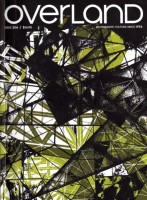
Overland 208

Jeff Sparrow (editor), Overland 208, Spring 2012

There’s a lovely interplay among articles in this issue of Overland: one voice picks up a theme introduced by another and amplifies it or does something unexpected with it, disagreements emerge and remain unresolved, odd harmonies and counterpoints pop up. It’s like ideas music.

Longtime working journalist Jonathan Green predicts the imminent death of the quality newspaper. Responding to the commonplace that newspapers have to develop a new business model in the age of the internet, he writes:

In truth there never has been a business model for quality journalism, only a happy coincidence in papers like the Sydney Morning Herald, the Age and the New York Times in which a successful platform for the publishing of classified advertising coincided with newspaper owners who saw advantage, influence, power – and perhaps even a public duty – in fostering serious, thoughtful journalism.

‘The sad truth for journalists in a commercial construct,’ he argues, ‘is that their department is exclusively a cost. It produces no revenue … In the commercial mind, journalistic content is either the plaster between the ads or something tailored specifically at attracting them. … No one ever valued serious journalism enough to pay for it.’ He doesn’t put it this way, but he’s describing the way contradictions work in capitalism – in order to make a profit, the enterprise has to provide people with something they need, and ever since the mid 18th century some for-profit newspapers have on the one hand served the ideological and commercial needs of capital but on the other provided their readers with a significant record of events and a forum for discussion,with a huge potential for fostering resistance to capitalism.

Alex Mitchell’s ‘Fatal Obsessions‘, about aspects of Rupert Murdoch’s early years, amplifies one element of that story. Murdoch as a newspaper owner has certainly fostered serious, thoughtful journalism, but Mitchell describes how, even his early years, he rubbed shoulders with ‘bent coppers, crooked politicians and illegal gamblers’, and put some of them on staff. It’s clearly a case where the ‘quality’ bit of quality journalism is there at the whim of the owner.

The veteran Green has no sooner lamented the passing of what quality newspapers have provided – ‘a mature, moderated conversation that was broadly shared and thus to be reckoned with’ – and shaken his head at ‘our more fragmented, shriller public life’, than young New Yorker Malcolm Harris pipes up with ‘Twitterland‘, describing Twitter as a terrain rather than a tool, and then, getting down to cases, telling us approvingly how Twitter can be used to lie on an industrial scale, to shout down ideological enemies, to hide from the consequences of your actions and to unleash mob actions against individuals. That these things are done, in his examples, for in order to draw a crowd to an Occupy event, counter corrupt but sophisticated arguments, evade malicious prosecution and ward off a harasser appears to render them unproblematic in his view. In the context of Green’s article, it’s hard to share his complacency.

The proximity of Harris’s article to Green’s raises another interesting question: if it is indeed, as Green says, a ‘happy little accident’, a ‘weird conjunction of advertising and reporting that has managed to maintain a healthy fourth estate’, isn’t it another happy little accident that makes commercial enterprises like Twitter available as places where progressive forces can organise?

Another set of resonances is kicked off by Anwen Crawford’s ‘Fat, Privilege and Resistance‘, a response to an article by Jennifer Lee in the previous issue. It’s brilliant, arguing that while Lee tellingly draws attention to fat oppression, she doesn’t take readers much beyond the act of recognition. In particular, Crawford introduces much-needed class analysis into the conversation. But it’s a different bit that fits my theme of serendipitous connections. Here’s Crawford taking issue with Lee’s argument that fat women should make themselves visible as a liberatory act:

Women – fat and thin – live with a particular kind of watchfulness, a sense of always being on display …

Perhaps we lack a word subtle enough for the condition that I described in [my essay ‘Permanent Daylight’, Overland 200] as ‘a deep and systemic psychic distress … of perpetual visibility’. If visibility is a condition of women’s oppression, then why should we keep demanding to be seen? If all the billboards across the world were replaced overnight, and fat women took the place of bone-thin models advertising underwear and perfume, would this constitute victory? I wouldn’t think so: I’m still being sold stuff, and someone else – another woman – is still being objectified for the purpose of selling it to me. To demand visibility is to submit to capitalism’s strictures: to accept that being an image is more important than being a subject; to accept representation in place of participation.

I’m sure there’s argument to be had there, but the phrase ‘representation in place of participation’ is cogent. And it casts a long shadow over the article ‘Outsider Porn‘, in which Matt Cornell argues, among other things, that ‘porn can be a powerful venue for self-expression, for asserting agency in a culture with narrow, constricting ideas of beauty, sexuality and gender expression’. If you are cut off from participation, then go for representation. I remain unconvinced of the liberatory value of porn. The connection to the debate about fat liberation becomes explicit:

One of the central critiques of pornography is that it objectifies women by reducing them to specific body parts. Yet this is what happens routinely to fat people who are photographed from the neck down for moralistic news stories on the obesity epidemic.

I’m sorry, this is just about as logical as the argument that feminists shouldn’t object to sexist abuse of women in public life if they don’t object with the same passion to male politicians being insulted: ‘You say this is oppressive. Well, that over there is oppressive too.’ I love it that Overland gives space for genuine, unresolved disagreement, publishing this porn-as-liberation article after issue 207’s ‘Porn and the misogyny emergency‘ debate, which was unanimous in seeing porn as degrading. I don’t know how the editorial team would feel about my quoting John Stuart Mill in support of their practice, but I dimly remembered a quote and found it by googling. It’s from On Freedom:

though the silenced opinion be an error, it may, and very commonly does, contain a portion of the truth; and since the general or prevailing opinion on any subject is rarely or never the whole truth, it is only by the collision of adverse opinions that the remainder of the truth has any chance of being supplied.

Then Juliana Qian’s personal essay ‘The Name and the Face‘ tackles the issue of visibility, objectification and agency from a whole other angle. She came to Australia from China as a child, one of a generation that ‘was promised equality after assimilation’. That promise was broken, and the essay ruminates on the kind of invisibility that comes from being stereotyped as an Asian/non-Indigenous person of colour, and the complexity that the stereotypes ignore:

I have a lot of stories. Most of them are not about tradition, nor about assimilation. Most of my life is not about tradition or assimilation. I grew up not between cultures, but within overlapping cultures that are themselves amorphous, contradictory and changeful.

The threads of connection reach into the fiction section, to Jannali Jones’s mock Kafkaesque ‘Blancamorphosis, in which cultures don’t so much overlap as weirdly implode: ‘Jon Dootson woke up in the morning to find he’d been transformed into a long, skinny white man.’

There’s more – it’s a bit of a bumper issue really, with a report on the Goulburn Valley Food Cooperative by Michael Green, a fable-ish (I’d say fabulous, but that means something different now) short story by Jennifer Mills, which has its own Kafkaesque quality, an elegant column on Jane Austen by Alison Croggon, and a swag of poems that, though they’re kept up the back on different coloured paper, do speak to the rest of the journal in many ways. This post has turned out to be far too long, so I’ll content myself with a couple of lines from Tim Thorne’s ‘Honesty‘ that touch on the theme of the quality newspaper:

When I was a teacher
the really smart kids saw through
‘Hard work brings rewards.’ But then,
I’ve always told lies for a living:
dole forms, poetry, I once wrote
a column for a Murdoch newspaper.
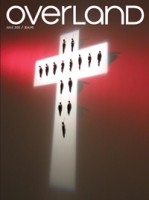
Overland 207

Jeff Sparrow (editor), Overland 207, Winter 2012

The winter issue of Overland arrived here while I was summering in Turkey, and it was still in its plastic wrapper when spring arrived with a burst of grevillea flowers and the thud of issue 208 on the front step. The spring arrival looks great – it includes a comic – but it will have to wait. Winter is enough for now.

Fat people are oppressed, says Jennifer Lee in ‘A Big Fat Fight‘, and they’re organising on many fronts. It’s a pugnacious article, which seems to anticipate a hostile response, and indeed I found myself wanting to argue with it. Anwen Crawford responds in issue 208, and addresses the things I was uneasy about much better than I could. I recommend the articles as a diptych. It doesn’t help your argument to tell readers that if they disagree with you it’s a knee jerk reaction.

Porn and the misogyny emergency‘ is a debate between Gail Dines and Sharon Smith, which I’m happy to report doesn’t descend into name-calling, as feminist debates on this subject have been known to – as in a twitter storm around Gail Dines at a recent Sydney Writers Festival.

Jessica Whyte’s ‘“Intervene, I said”‘ addresses the vexed subject of how talk of human rights is used to rationalise imperialist aggression and other nastiness. It strikes me as a sober discussion, not looking for villains or getting lost in its own rhetoric as sometimes happens when mainstream discourses are being critiqued. I didn’t know that Médecins Sans Frontières, undoubtedly good guys in my book, played a major role in popularising the so-called ‘right to intervene’ on humanitarian grounds, which was used to justify the invasion of Iraq and other dubious military ventures.

Matthew Clayfield’s ‘Waiting on the Arriaga-Ixtepec‘ is a first-hand observer’s account of the ordeals of undocumented immigrants to the US from South and Central America. It’s powerful stuff. I could have done without the occasional literary flourish, especially the opening reference to Casablanca with its use of the manglish ‘torturous’ instead of the original’s perfectly sound ‘tortuous’.

Louis Proyect, in ‘Republican Democrats‘, offers an analysis of Obama’s policies that is a bracing contrast to what wishful thinking would have us believe. He argues that the time may soon be at hand when the USA’s rigid two party system yields to something closer to real democracy. In the meantime, he seems to be suggesting that African-Americans are mistaken to support Obama. Having just read Ta-Nehisi Coates’s brilliant ‘Fear of a Black President‘ in The Atlantic (if you haven’t read that article stop wasting your time here and click on the link now), I found Proyect’s argument thin and unconvincing on this point.

There are three pieces identified as fiction, though the most immediately touching of them, 19 year old Stephen Pham’s ‘Holiday in little Saigon‘, isn’t fiction at all, but a meditation on the changes he has seen in his suburb, Cabramatta, in the last ten years, as it has transformed from heroin capital of Australia to tourist destination.

Sequestered up the back on different colored paper is the poetry. I particularly liked Andy Quan’s ‘Islands‘, a cool despatch from a grieving family; Mark O’Flynn’s ‘Corydalis‘, a poignant glimpse of someone else’s homesickness; Fiona Yardley’s ‘Your Bath‘, an unlikely celebration of a long lived love, perhaps an elegy; and Alan Wearne’s ‘Also Starring …‘ poem as parlor game or vice versa, in which actors arecast as dozens of Australian poets living and dead, and a couple of politicians. The pairings that I recognised in that last poem ranged from the wittily spot on, through cheerfully insulting, to gloriously inspired. My favourite is George C. Scott as Francis Webb. It’s a poem that invites reader participation: I’d add Robert Morley as Les Murray and Katharine Hepburn as J S Harry.

Undoubtedly the serious reflections in this issue on all that’s amiss in the world and the possibilities for change will have lasting impact on how I am in the world, but right now my vote for the best thing in it goes to Alan Wearne’s utterly frivolous poem.

Asia Literary Review 23

Martin Alexander (Editor), Asia Literary Review 23, [Northern] Spring 2012

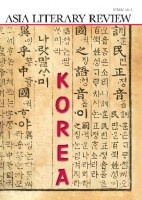
Issue 18 of Asia Literary Review has a sense of occasion about it. Like some previous issues, this one is devoted to a single nation. But a collection of English language pieces on China or Japan can confidently assume its readers will have heard of The Wind-up Bird Chronicle or those poets who are in trouble, even if they haven’t read any of them. This one, on Korea, can expect to be giving many readers their first real look at a national literature. All the more so as both North and South Korea are represented. The sense of occasion is marked by an appearance by the journal’s publisher, Ilyas Khan, who contributes a note on his personal connection with Korea and his appreciation of the Korean people.

If the state of the short story is any indication of the vigour of a literary culture (a big if, I know, but think of Australia in the 1890s), then South Korean writing is thriving. All four short stories here are grippingly weird: in Kim Young-ha’s ‘Ice Cream’ (translated by Dana Zur) a suburban couple phone to complain when a packet of their favourite ice cream tastes of petrol, with unsettling results; Park Mingyu’s ‘Is That So? I’m a Giraffe’ (translated by Sora Kim-Russell) takes the situation where commuters are pushed into the underground trains of Seoul and turns the surrealism up to full volume; in Jeon Sung Tae’s ‘The Korean Soldier’ (translated by Jae Won Chung) the hero, who seems to be the author’s alter ego, has a thoroughly civilian and richly comic adventure in Mongolia; ‘Black-and-White Photographer’ by Han Yujoo (translated by Janet Hong) is a chilling tale on what Martin Alexander’s editorial tells us is a recurring theme, the lost child. The lost child turns up again in the other piece of fiction from South Korea, an extract from What You Never Know by Jeong I-hyeon (translated by Chi-Young Kim), which I’m guessing is a gripping novel – at least I was left frustrated when the extract stopped and nothing was resolved.

Of the South Korean non-fiction, the stand-outs for me are the excerpts from Liu Jiaju’s memoir, ‘My Experiences in the Korean War’ (translated by Martin Merz), and Michael Breen’s ‘Image and Identity’ (crosscultural reflections of an Englishman who has been living in Korea for thirty years).

Two North Koreans speak directly in these pages. The first, Jang Gil-su, does so in a pencil drawing he did when hiding in his mid-teens on the way to successfully escaping to the South. The drawing shows a man being executed by a uniformed figure with a rifle. The caption informs us that everyone is expected to attend executions in North Korea, ‘including children’. The other, the poet–defector Jang Jin-sung, is represented by five poems (translated by Shirley Lee) as stark as the drawing that precedes them. I don’t generally ‘get’ poetry in translation, but these speak to me very strongly. According to the editorial, Jang Jin-sung will be representing Korea at the Cultural Olympiads, which must be happening round about now.

Of the pieces about North Korea, I felt most enlightened by ‘Pyongyang: City of Privilege and Pretence’ in which journalist Sue Lloyd-Roberts ranges far and wide trying to make sense of the outpouring of grief at Kim Jong Il’s death, and Daniel Levitsky’s ‘North Korea’s Revolutionary Cinema’, which lays out a part of the jigsaw explaining how people can accept the regime. Possibly the scariest piece in the whole issue is the photo essay ‘Holiday Tours to the DPRK’ by Simon Cockerell, an Englishman who has been taking tourists into North Korea every month for the last ten years. His text is as carefully noncommittal as the faces in his photos, and any irony in his final sentence is totally deniable: ‘A week at a beach resort may be temporarily refreshing but the same amount of time in the DPRK provides an experience that will last for a lifetime.’

I’m writing this on the iPad in Kayaköy, near the Turkish Mediterranean, and creating links to all these articles is more complex than I’m prepared to do while at this particular beach resort (about which I’ll write something tomorrow – it’s seven Ks from the beach, and not exactly a resort). But I’ve listed the translators because everything here read beautifully in English and at the same time retained its sense of having come from elsewhere. Many of the pieces I’ve mentioned are up on the Asia Literary Review site, where there’s an online supplement of material that wouldn’t fit in the magazine, which is well worth a look.

I’ve read most of this issue in Turkey, quite a bit on public transport. One friendly Turkish man picked it up, skimmed the pages, and asked, ‘Where are you from?’, clearly failing to fit me to his mental image of a Korean. The Art Student kindly gave permission to use this photo:

20120628-130109.jpg

Overland 206

Jeff Sparrow (editor), Overland 206, Autumn 2012

I’ve just realised that this blog is largely about the vastness of my ignorance. In the years since I left full time work I’ve been reading widely and unsystematically on subjects in which I’m either uneducated,  misinformed or wildly out of date, hoping something will stick – and then blogging about it, sometimes in a shamelessly opinionated way.

Take this issue of Overland for instance.

I’ve never studied economics or political science or 20th century history, but I’ll tell you confidently that Richard Seymour’s ‘The European meltdown: Crisis across the continent‘ talks sense about the current economic crisis in Europe. He describes the European Community as ‘a project that, from inception to denouement, has evinced an extraordinary distrust of the masses’. The crisis, he argues, is brought on not so much by the fecklessness or other failings of the Greeks, Irish, Spanish and Portuguese, as by the inherent instability of a system built to give France and Germany dominance over the less powerful nations, and to foster profit over the interests of the working class (he says it much better than that). And Mike Beggs’s ‘Occupy abundance: On whether Australians are too rich to protest‘ does a similarly enlightening job of unpicking the current Australian affluence. It’s true that since mid-1997 there’s been a 10 per cent increase in purchasing power ‘over the whole consumer basket’, but:

The average hour’s pay now buys 59 per cent more clothing and footwear, 71 per cent more household appliances, and an incredible 1066 per cent more audio, visual and computing power than in 1997.

But such goods make up only around a fifth of the average household’s expenditure. Much of the rest of the consumer basket has actually become less affordable. Compared with 1997, the average hours work earns enough to buy 2 per cent less food, 8 per cent less housing, 26 per cent less water, electricity and gas, 18 per cent less petrol, 5 per cent less healthcare and 21 per cent less education.

That may not be news to people who understand economics, but it is to me.

What do I know about life as an immigrant targeted by racism? Yet I can tell you that Michael Green’s ‘Between two oceans: The life and death of Michael Atakelt‘ and ‘The dangers of a single story: On acting and identity‘ by Tariro Mavondo are brilliantly complementary explorations of the subject. In the former (of which an edited excerpt was reprinted in the Fairfax Age, which either takes the sheen off Overland‘s back-cover boast that it is of the loopy-Left or justifies the Australian‘s nickname for the Age, Pravda on the Yarra – you be the judge!), the writer is in touch with Footscray’s Ethiopian community as they struggle to come to terms with the drowning of a young man shortly after his release from police custody, and the extraordinarily long wait for any cause of death to be made public: ‘This has become a story about a community’s right to exist – its need to understand and to be understood – but it is also a story of grief,’ Green writes. I would add that it’s also a story of an amazingly resilient community. Tariro Mavondo is about to become one of the first African-born acting graduates of the Victorian College of the Arts: from a relatively privileged background (‘the higher echelon of Zimbabwean society’), she is up against a different face of racism – but this article too is about the right of a community to exist – ‘”6 billion stories and counting.” But where is mine?’

What do I know about the history of sexuality? I spent the prime of my youth in a monastery, and working as a children’s editor for fifteen didn’t send much writing about sex my way. So Robert Darby’s ‘Another other Victorian: George Drysdale, a forgotten sex pioneer‘ was even more news to me than it will be to people who’ve read The Other Victorians. Drysdale’s tome, The Elements of Social Science: Physical, Sexual and Natural Religion, published anonymously in the 1850s, was never mentioned by name in mainstream writing and is generally ignored or misreported even today, but it ran through 35 editions and sold some 100 000 copies in 50 years. The book ‘argued for a new religion of reverence for the human body, condemned abstinence as unhealthy and productive of misery, called for an unfettered right to intercourse among the unmarried, and recommended regular use of contraception to guard against pregnancy and condoms to avoid venereal disease’. Sex wasn’t invented in 1963 (or in my case 1970) after all. The article is seriously interesting

Now, poetry. I did study Eng Lit and have a BA (Hons) to show for it. But I got my piece of paper before postmodernism broke upon the world. I’m not quite the guy who puts his hand up at the Writers’ Festival and asks why modern poetry doesn’t have rhyme or rhythm any more, and why are modern poets so deliberately obscure. My own poetry, such as it is, probably wouldn’t please that guy. But sometimes I feel as if I’m almost as much in the dark as he is. So I was very glad that Peter Minter took a full two pages for his Judge’s report on  the 2011 Overland Judith Wright Poetry Prize for New and Emerging Poets. Sadly, if I was hoping his notes on the winning poem, rock candy by Joel Ephraims, would be a guide to reading it, my hopes were dashed. But I could tell there was thought there, and a world of knowledge that’s yet to become open to me. Having said all that, it will probably not be received as a compliment if I say that I enjoyed the night-time flâneurism of ‘Constant companion‘ by the late Kerry Leves (who occasionally graced the School Magazine, with both his presence and his poetry) and ‘Sunday poem‘, an impressionistic take on a visit home by Fiona Wright.

And then there’s genre fiction. Overland doesn’t go in for it much, and nor do I, though I’m doing my best to pick up where I left off when I was 14. It’s probably fair to say that James Bradley’s ‘The inconvenient dead‘ is a zombie story for people who don’t read zombie stories. Anyhow, it worked wonderfully well for me.

The whole contents of the magazine are readable online. All the links except the one to the Age will take you to the Overland web site.

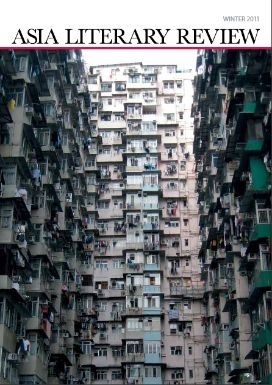
Asia Literary Review 22

Martin Alexander (Editor), Asia Literary Review 22, [Northern] Winter 2011

20120416-173808.jpg

[Note added in 2021: All the links in this blog post are broken except the ones in the journal title above and in the image to the left, and the profile of Amitav Ghosh and ‘The Sacred Cow‘. The whole journal is still available online to subscribers.]

The Asia Literary Review has a new Editor in Chief, the third in the nine issues since I first subscribed. There’s no note of farewell to Stephen McCarty, as there was none to Chris Wood before him. The silent turnover is just a little unsettling, but I guess we don’t read the journal for news of its staff. Martin Alexander, the new occupant of the chair, was previously (and still is) Poetry Editor. In his editorial, he addresses the journal’s identity:

… while Asia is a concept we may broadly understand, it would be foolish to attempt a precise definition. Asia’s identity is in a state of motion; we aim to capture that motion in these pages.

That’s not bad: if Asia is an imprecise entity, it would be a mistake to overdefine the journal’s scope or purpose. Its contents are in English, and they ‘capture’ Asia in some way. That’s enough.

‘Capture’ can describe what a tourist snapshot does, and there’s quite a lot of that in this issue, mainly but not exclusively in its four photo essays – of street scenes in Java, Vietnam, Hong Kong, and the grand but as yet unpopulated city of Kangbashi in Inner Mongolia. The photography is brilliant in each case, but in the end they are all picturesque street scenes, and so a lot less interesting than, say, Jack Picone’s ‘Planet Pariah’ about life on the Burma Thailand border in issue 19.

There are a number of excerpts from longer works, both prose and verse, which are like snapshots in a different way: tantalising glimpses, but sometimes hard to tell what it is one is glimpsing. An exception is the excerpt from Chen Xiwo’s novel I Love My Mum (banned in China, translated by Harvey Thomlinson, and published by Make Do Publishing), which stands alone as a tale of desperate brutality with chilling allegorical implications. You can read the whole excerpt at the link.

Sticking with the idea of ‘capture’, there’s Fionnuala McHugh’s profile of Amitav Ghosh. I’ve only recently discovered his writing, and was delighted to learn more about him, and about his Sea of Poppies. He reveals, for example, that having done a little sailing he knew that sailing was ‘very dependent on words’:

I thought there has to be a dictionary. I happened to be at Harvard but I found the Lascari dictionary in Michigan – published in 1812 in Calcutta by a Scottish linguist. I didn’t have to make anything up.

He sounds like a terrific man – if a Sydney Writers’ Festival scout happens to read this, could you invite him some time soon, maybe when the third book of the Ibis trilogy comes out?

The Ghosh profile is also part of what Martin Alexander calls ‘motion’, if he means by that the kind of dynamic interplay that can add spice to a literary magazine.  Ghosh, we read, turned down the 2001 Commonwealth Writers’ Prize because it was for works written in English, from a region ‘that was once conquered and ruled by imperial Britain’. This is honourable and hardly surprising, given the unflinching portrayal of the Raj in Sea of Poppies. But here it resonates interestingly with a short piece by Pico Iyer, The Empire Writes Back, Revisited, which argues that the formerly colonised have taken charge of the cultural centre, and that the English language, no longer dominated by the former colonisers, is being reclaimed and revitalised by a host of writers from India, China, the Caribbean, Africa, New Zealand, Australia. This ALR tends to bear out Ghosh’s side of the conversation, as most of the contributors seem to be of European or US extraction, and there is that strong touristic element. But Pico Iyer would find material to support his view as well.

Of the short stories, ‘The King, the Saint and the Fool‘ by A. K. Kulshreshth weaves a sweet romance from elements taken from the folk history of Singapore, and Sindhu Rajasekaran’s ‘The Sacred Cow‘ tells a distinctly modern love story in the context of Indian village life. The essay that stands out is Michiel Hulshof’s ‘Special Academic and Art Zones‘. Hulshof is a Dutch journalist living in China. Among other things his essay gives a fascinating account of the economic and political context of contemporary Chinese art (of the kind Sydneysiders get to enjoy at the White Rabbit Gallery).

Almost as good as getting on a plane and travelling for six months.

Ampersand 4

Alice Gage (editor), Ampersand Magazine 4: From the Heart of the Forest to the Edge of the Road (Art & Australia 2011)

20120211-182652.jpgI’d seen earlier issues of Ampersand in coffee shops around Newtown and assumed it was a kind of zine with advertising – you know, quirky, poorly crafted stories about queerness, spiky incoherent poems and blurry photos, interspersed with slick promos for hip merchandise. A quick, lazy flip through one copy while waiting for a hot chocolate wasn’t enough to make me rethink,

Then the Art Student gave me this issue for Christmas, and I discovered I WAS WRONG. True, there are a couple of rap-influenced poems, and an over the top postmodernish necrophiliac horror story. But from the opening fold-out photograph, ‘Black Friday’ by John O’Neil, with John Forbes’s ‘Going North’ luxuriating in white space on the back, to the charming appendix noting things that happened when the magazine was in production, this is a delight.

I don’t have to describe the physical magazine because there’s a video of an elegant pair of hands flicking through it here. (Go on, have a look. It only takes about 90 seconds.)

Tommy Murphy (Holding the Man and Gwen in Purgatory playwright) writes about his father’s dementia. Bob Brown (the senator, not an obscure namesake) writes about Oura Oura, his shack retreat in rural Tasmania. Three pages of comics by Leigh Rigozzi tell sweet quotidian anecdotes about life in Newtown (I don’t know if that’s exactly a correct use of quotidian, but it’s a Harvey Pekar term, and seems to fit). Fabian Muir visits people living in the Chernobyl exclusion zone (and makes me wish he and Merilyn Fairskye had been in touch: his article and Plant Life, her recent exhibition of photographs from Chernobyl speak volumes of each other).

There are a couple of wonderful young fogey articles, one inveighing against proposed changes to Fisher Library at Sydney University, to make it more efficient by getting rid of half the books, an auto da fé on an unprecedented scale being conducted in secret, the other lamenting the passing of toll booth operators. An iconoclastic piece on iconoclasm argues that the restoration of works of art that have been vandalised sometimes does more damage than the vandalism. There are pages and pages of high quality colour reproductions of art by Tracy Moffatt and a clutch of Western Desert artists, among others.

I wish I’d read this magazine three months ago, because then I would have made sure to go to the Carriageworks for My Darling Patricia’s Posts in a Paddock, a theatre piece built around murder by Jimmy Governor of ancestors of one of the company: the piece about it here is a brilliant example of Indigenous and non-Indigenous collaboration, infinitely more interesting than February’s I Am Eora at the same venue.

And as a final note: accustomed as I am to thinking of Melbourne as the place where solid new literary ventures come into being, I was pleased to see that this is a Sydney publication. I Googled the editor, Alice Gage, and discovered that though she is indeed a Sydneysider, she produced the first issue of Ampersand while in Melbourne. Her reflections on the difference in the milieux are worth reading,

I’m posting this the day before the launch of Ampersand 5: Eleventh Hour (the link is to that issue’s YouTube teaser).

4W twenty-two

David Gilbey (editor), 4w twenty-two New Writing (2011)

fourW is an anthology produced regularly by the Booranga Writers’ Centre, home of Wagga Wagga Writers Writers. The 22nd issue, the first I’ve read, is extraordinarily eclectic: in small part a showcase for local Wagga Wagga writers, it extends to work from Japan (a Noh play, some fine short poems) and elsewhere far beyond these shores, established writers rubbing shoulders with those still wet from the cocoon, the academic with the demotic, and a world of diversity in between: short stories with the ghosts of O Henry, Raymond Carver, Henry Lawson and maybe Tropfest hovering over their shoulders, a touch of magic realism, some ‘ladies who lunch’ pieces (is that a genre?), cryptic and narrative and lyric and satirical poetry. It was perfect to carry in my bag while I was immersed at home in the completely unportable Reamde.

My crabby editorial soul snarked into life once or twice, most strikingly at this: ‘Her mother … insisted she keep her hair long and plaited to trick the suitors into seeing her as young, virile and obedient.’ Um, note to author: I may be missing something, but I think you meant nubile.

Overland 205

Jeff Sparrow, editor Overland 205, Summer 2011

Someone in the offline world told me recently he was reading a book called The Left Isn’t Always Right. It must be one of the least controversial book titles of all time: how could ‘the Left’ be always right when lefties are forever fiercely, even violently disagreeing with each other? I mean, hadn’t the author heard of Trotsky? This issue of Overland continues in that fine tradition (of debate, I mean, not of violence). And although recent comments on this blog have described it as increasingly right wing, I think it does a nice job of bringing to bear a perspective that challenges the view that all can be well in a capitalist society.

It kicks off with Swedish scholar Mattias Gardell’s ‘Terror in the Norwegian woods‘, which places the recent killing spree in Norway in the context of the return of fascism to Europe. He moves well beyond the easy but still telling point that when the news of the killings broke, many pundits pronounced that it was the work of Muslim terrorists, but when the identity and beliefs of the killer were discovered, the same pundits said it was clearly the work of a lone madman, and not in any way connected to their hate speech – he moves beyond that point to a chilling account of the increasingly vocal and co-ordinated anti-Muslim movement in Europe and in the US, which would be an oddity if it weren’t for their influence on political leaders.

Next, Robert Bollard’s ‘ Who was Bet B?‘, tells the story of his own discovery of Aboriginal ancestry, and explores its implications. Among other things it provides a multidimensional, nuanced context to the brutish attacks on ‘light skinned Aborigines’ we’ve been hearing a bit about recently.

Xavier Rizos’s ‘Will the market save us?‘ could well be subtitled ‘The carbon tax for dummies’, and I mean that in a good way.

Brad Nguyen’s ‘Morality begone!‘ does a neat job of exposing the inadequacy of moral outrage as a tool for understanding, especially in relation to events like the riots in London in August last year. He doesn’t argue that morality has no place, but that relationships of power needs to be taken into account. ‘We can all agree,’ he writes, ‘that events such as 9/11 are the results of acts of evil. But why shouldn’t we let ourselves locate such events within the totality of global capitalism?’ He goes on, ‘If you so much as mention [US] imperialism, you open yourself up to charges of justifying the atrocities of 9/11.’ In a fabulous twist, he invokes Jesus, with a challenging reading of the injunction to turn the other cheek. (This isn’t the journal’s only surprise for those who confuse secularism with hostility to religion: Peter Slezak’s ‘Silence resembling stupidity‘ argues forcibly that the anti-Islamic stance of the ‘new atheists’ – Hitchens, Harris, Dawkins – actually plays into the hands of  those who would wage neo-imperialist and -colonialist wars.)

There are a couple of debates – Stephanie Convery and Katrina Fox on PETA’s use of pornography in its animal rights activism, Ali Alizadeh and Robert Lukins on Australian Poetry, the new peak industry body for poetry. The poetry one, as you might expect, is the more heated (‘Robert Lukins’ is … devoid of almost any substance with which to engage,’ says Alizadeh, unfairly in my view). The animal rights one has the higher moral tone (‘Let’s get our priorities right,’ says Fox, arguing that we shouldn’t object to PETA’s obnoxiousness when other people do much worse things – I guess you can tell where I stand on that one). And there’s a profound panel discussion about language and politics in Indigenous writing, featuring John Bradley, Kim Scott and Marie Munkara.

There are stories and poems, notably an excerpt from Alexis Wright’s forthcoming novel, Eileen Chong’s ‘Mary: A Fiction‘, and Angela Smith’s ‘Jennifer Maiden woke up in The Lodge‘, which I persist in seeing as a tribute to Jennifer Maiden rather than an attack.

Notice all those links! The thing about Overland  is that most of its content is online, and the Overland blog has follow-up interviews and discussions. This interview with Robert Bollard is a fine example. Still, reading it in hard copy has its pleasures, not least of which is the sense of righteousness that comes from sending money their way.

Asia Literary Review 21

Stephen McCarty (editor), Asia Literary Review No 21 ([Northern] Autumn 2011)

[Note added in 2021: All the links in this blog post are broken except the ones in the journal title above and in the image to the left. The whole journal is still available online to subscribers.]

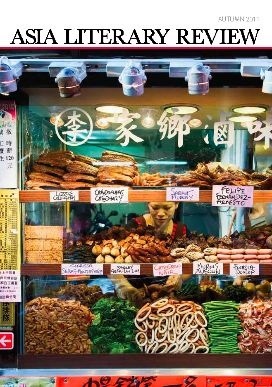
Under Stephen McCarty’s editorship, the Asia Literary Review tends to have themed issues. The last three focused on China, Burma and Japan respectively. This one moves to a subject that transcends political and geographic boundaries: food.

Where a focus on a single country can lead to a journal as diverse – and as integrated – as anyone could wish, other kinds of themes, even one as vast as food, risk crossing the line between relatedness and sameness. This issue comes close to that line a couple of times, but it manages to stay on the right side. Notably, Felipe Fernández-Armesto kicks things off with ‘History à la Carte‘, a short essay on food as an ‘instructive historical document’, particularly about the ‘relative input of different cultures to a globalising world’ over the centuries – and the pages that follow provide a number exemplars of the kind of thing he means: Fuchsia Dunlop, an Englishwoman who has trained as a chef in Sichuan, writes of her childhood love for sweet and sour pork, and explores its origins as a dish invented for despised foreigners (or was it?); Bernard Cohen’s story about a disintegrating marriage, ‘The Chinese Meal, Uneaten‘ can be read as a meditation on the cheap Chinese restaurants of a bygone Australia; in Erin Swan’s ‘Tomatoes‘, a couple of western tourists in the Himalayas get some humility about their privileged status thanks to a box of tomatoes; Jennifer 8. Lee’s ‘Making Pasta Sauce: My Independence’ tells of a Chinese New Yorker’s discovery in Italian cuisine (this little memoir-recipe, sadly not available online to non-subscribers, has had a significant impact on the cooking in this house); in Wena Poon’s story ‘Fideuà’, a woman who was a ‘China baby’ adopted by a Spanish couple finds in seafood noodles a deep emotional connection between her birth home and her adoptive one (a Chinese matriarch watches the protagonist cook Spanish fideuà in a paella pan and says, a little scornfully, a little proudly, ‘This pan is like our wok. This noodle, come from China. Seafood, same. All same. We call it hoi seen meen. We use same ingredients.’). Perhaps because a jungle of self-sown vines is producing abundantly in our tiny back yard, I particularly enjoyed the way tomatoes kept appearing: here we learn they are known in some parts of China as barbarian aubergines, there that Europeans thought they were poisonous for hundred of years after they were brought over from the Americas, in a third place that they have delicacy status in Himalayan villages.

I should mention Lizzie Collingham’s fascinating piece of history, ‘Japan and the Battle for Rice’, which makes the case for thinking of Japan’s participation in World War Two as in part a war about food, of which we may be about to see many more. Chandran Nair stops short of making that prediction in his chilling article, ‘The World Food Crisis – An Asian Perspective’, which echoes the Annie Leonard video I posted yesterday by calling on Asian governments to ‘reject the consumption-led growth model and adopt instead an approach that makes resources conservation the heart of all policymaking’. Good luck to us all with that!

Oh, and there’s ‘Table d’Hôte’ by Murong Xuecu, translated by Martin Merz and Jane Weizhen Pan. It’s the journal’s only prose piece translated from an Asian language and easily its most powerful fiction, with something of the feel of that contemporary Chinese art that plays around with death and mutilation.

And there’s plenty else. I’ve linked to the stories that are accessible online. If you want to read the others you have to subscribe.

Overland 204

Jeff Sparrow, editor, Overland 204, Spring 2011

At a time where the terms of Australian political debate are set by the self-styled ‘centre-right’ Australian to the extent that vehemently anti-Communist Robert Manne is seen as left wing, everyone who’s more socialist than Ghengis Khan should subscribe to Overland. It has been appearing regularly for more than 50 years as a journal of ‘progressive culture’, unashamedly of the left from its beginnings, creating a space where dissenting voices can be heard (arguing with each other as often as not), and staying for the most part readable by people (like me) who wouldn’t know Althusser from a hole in the ground. Unlike the Australian, it has no Rupert Murdoch to prop it up. You can read most of every issue online. The point of subscribing is to help sustain it.

In this issue, in no particular order:

  • ‘The birthday boy’, a short story from an early Overland updated and retold in sequential art (ie, as a comic) by Bruce Mutard. While the story here stands on its own merits, I’d love to read the original, by Gwen Kelly, so as to follow the process involved in the updating (who were the 1955 equivalents of 2011’s Sudanese students, for instance?). I couldn’t find it on the Web. Maybe I’ll make a trip to the State Library …
  • John Martinkus, in ‘Kidnapped in Iraq, attacked in Australia’, tells the story of his capture and release by Iraqi insurgents in 2004 and the attacks on him by the then Foreign Minister and rightwing ‘journalists’. There’s nothing new here – I wrote to Alexander Downer’s office at the time and received a boilerplate reply – but it’s very good to be reminded of this shameful moment just now when Downer has been on the TV denouncing David Hicks again and one of the ‘journalists’ has been wailing about free speech after being held to account by a court
  • an interview with Afghani heroine Malalai Joya. I was glad to read this after attending a crowded meeting in Marrickville Town Hall where the acoustics and sight lines made her incomprehensible and invisible to me. The interview gives a sharp alternative to the mainstream media’s version of what’s happening in Afghanistan and it’s a great companion piece to Sally Neighbours’ lucid ‘How We Lost the War: Afghanistan a Decade on from September 11‘ in the September Monthly
  • some splendid, almost Swiftian sarcasm from Jennifer Mills in ‘How to write about Aboriginal Australia‘: ‘First, be white. If you are Aboriginal, you can certainly speak on behalf of every Aboriginal person in Australia, but it is best to get a white person to write down what they think you should be saying.’
  • Andy Worthington’s When America changed forever and Richard Seymour’s What was that all about? reflecting on the damage done to democracy in the USA and its allies by the ‘war on terror’
  • Reading coffee‘, a short story by Anthony Panegyres that reminds us of anti-Greek violence in Western Australia during the First World War (and is also a good oogie boogie yarn)
  • Ellena Savage’s ‘My flesh turned to stone‘, which I may have misunderstood (it quotes Lacan, and refers at one point to gender-based torture, which may or may not be how the academies nowadays refer to torture of women), but seems to be putting the eminently sensible proposition that terrible experiences have lasting after-effects on individuals and communities, and expecting people to just get over them isn’t realistic
  • A number of poems, coralled off together in a section up the back, printed in white on pale green, which is either a cunning way of making us read the poems slowly or a case of a designer for whom readability isn’t a priority. The ones that spoke most to me are Jill Jones’s ‘Misinterpretations /or The Dark Grey Outline‘ and John Leonard’s ‘After Rain‘. Jill Jones discusses the former on her blog here. You may have to be fascinated by swallows to enjoy the latter – which is very short – as much as I did, but who isn’t fascinated by swallows?
  • Peter Kirkpatrick’s ‘A one-man writer’s festival’, a hatchet job on Clive James’s poetic aspirations. I found myself asking why. The poor bloke’s got cancer. Leave him alone.

I didn’t read everything, which is pretty much a hallmark of the journal-reading experience. You can skip things because of an annoying turn of phrase on the first page (as in a reference to Sydney’s western suburbs as perceived as ‘some bloody hell, beginning somewhere around Annandale’ – Annandale! I doubt if that would have got past the editors in a Sydney-based journal). You might be put off because something looks too abstract, or promises a detailed discussion of a book you plan to read. Or you might be pre-emptively bored by anything about publishing in the digital age, even while admitting the subject is important.

I read this Overland in a grumpy post-operative state. And enjoyed it.