Tag Archives: journals

Asia Literary Review 19 & 20

Stephen McCarty (editor), Asia Literary Review Nº 19 ([northern] Spring 2011) and 20 (Summer 2011)
[Note added in 2021: the links in this blog post are all broken, except for those in journal title above, and the cover images, which still work for subscribers to the Asia Literary Journal.]

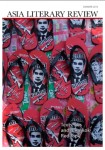
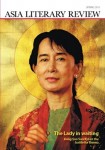
The cover image of Aung San Suu Kyi and the accompanying line ‘The Lady in Waiting’ announce that Asia Literary Review No 19 has a focus on Burma. The halo behind her head may seem to suggest a cheerful postmodern irony, but none of the irony, and very little cheerfulness, penetrates beyond the cover. The only appearance of Aung San Suu Kyi is an interview, effectively an extended sidebar to ‘The Generals’ Celestial Mandate‘, a grim account by Bertil Lintner of the world’s oldest continuous military dictatorship. The lady in waiting’s statement that there is great hope because so many young people are joining the democratic movement is like a tiny ember glowing in the horrendous darkness of state murder, incarceration, torture, and corruption. The Burma theme is continued in a number of pieces. Jack Picone’s ‘Planet Pariah‘ is a photo essay on life on the Thai-Burma border, where refugees, mostly Karen, live perilous and sometimes heroic lives. Incidentally, it brought home to me what an inspired piece of television SBS’s Go Back to Where You Came From was – having seen the reality TV version of refugees struggling to survive in a country that hasn’t signed on to the UN Convention, I found it easier to absorb information presented here in a more traditional mode. ‘Surveillance‘, a short story by Devan Schwartz in which the protagonist is broken in as an agent of the military, reads as a compassionate commentary on the former Burmese intelligence agent currently in the news in Australia (‘Maybe they kill 100 or 150 because I order them to do that. It’s not their fault, my fault. If they didn’t kill, they get killed too‘). There are poems by a political prisoner known only as Jimmy and by Ma Thida, a writer now practising medicine in Rangoon who has previously spent six years in prison.

Things don’t get any more frivolous when the journal moves away from Burma. In the photo essay ‘Qi Lihe’, Stephen J. B. Kelly explores the plight of impoverished Muslims driven from the increasingly arid countryside of northwest China to a scarcely less bleak life on the outskirts of Lanzhou. John Evans’s ‘Blood Money‘ is an ebullient but desperate tale about professional kick-boxers in Korea. In Meira Chand’s story ‘The Return‘ a young man comes home in disgrace from employment in Hong Kong that had been his family’s hope of financial salvation. These pieces contain a lot that’s rich, but it’s a grim world they inhabit.

Hsu-ming Teo’s ‘Fables of a Fractured City‘ departs from the pervasive grimness. The city of the title is, delightfully, Sydney, ‘the most Asian of Australian cities’. The fractures of the title are the four points of the compass, but also the disjunction between mainstream and Asian perceptions of the city: is the south to be represented by Cronulla, notorious for the 2005 riots, or by the fabulously multicultural ‘temple-land’ of the south-west?
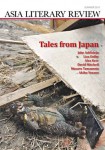
Just as I’d finally got around to reading issue 19, issue 20 arrived in my letterbox. Having made the former wait, the least I could do was move the latter to the top of my teetering bedside pile. The image of a broken Godzilla toy lying amid debris with the line ‘Tales from Japan’ gives an accurate account of its content. All but roughly 20 of roughly 200 pages are related in some way to Japan.

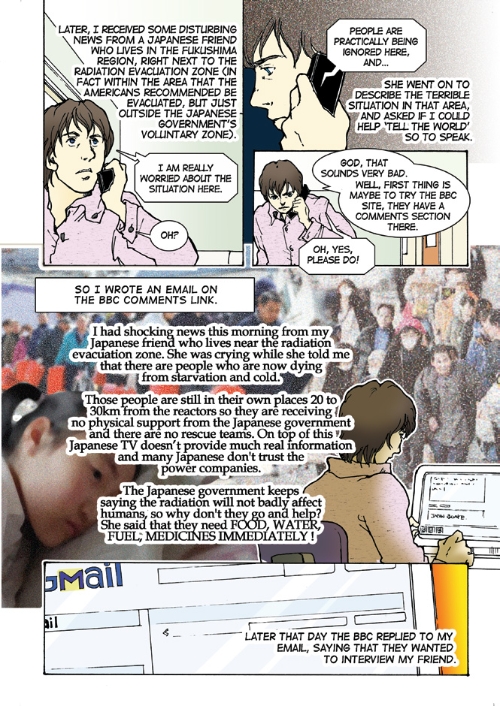
Perhaps the most interesting items are those that deal with the March earthquake, tsunami and nuclear threat. Jake Adelstein’s ‘The First Responders‘ is a fascinating account of the role the yakuza played in the immediate aftermath of the disaster, and the history behind their surprising (to me) civic responsibility. While government agencies were locked in bureaucratic straitjackets the criminal organisations moved swiftly and efficiently to bring aid and maintain order in shelters where there were reports of violence and sexual assault (a yakuza organisation sent 960 ‘peace-keeping’ members across the nation, while the National Police Agency managed 30 officers). Masaru Tamamoto analyses the government’s failure to respond flexibly and effectively in ‘Conformity, Deference, Risk Aversion: Parsing Japan’s CDR Complex)’. In ‘Reaction to Disaster‘, a manga-like comic by Sean Michael Wilson and Michiru Morikawa, a British resident of Southern Japan tells his story.

There are two short stories set in the aftermath of  the earthquake – by authors described at the back of the book as a ‘Singapore-born American novelist’ and a US expat who has ‘lived most of his life in Japan and Thailand’. I felt uneasy about them, as if it might be too early for fiction-writers to exploit these terrible events without disrespect being part of the package.

Other stories and poems move away from the recent news: a crosscultural relationship blooms and dies beneath the cherry blossoms and the fires of Obon; the great poet Basho has an inconclusive encounter with a young woman, also as the cherry blossoms fall; a man is slated for ‘voluntary’ euthanasia in a dystopian future; a depressed and overworked nashi farmer falls in love with a bird.

As this is an English-language journal, it’s probably not surprising that very few of the writers are Japanese – just Masaru Tamamoto, the poet Akiko Yosano (1878–1942), whose ‘Four Poems from the Kanto Earthquake of 1923‘ are perhaps the high point of the journal, and the poet Gina Barnard, who may not be the only mixed heritage Japanese writer here, but she is the only one who makes it her subject, which she does powerfully. Most of the other writers are from elsewhere in Asia or are North American or British writers who are living in Japan or have lived there. (Featured artists and photographers, on the other hand, are mostly Japanese, not the least of them being manga artist Michiru Morikawa.) The best known presence in the journal is novelist David Mitchell, author of Cloud Atlas, who is interviewed by James Kidd. The interview addresses possible unease about this preponderance of outside voices:

Having set many of his stories in Asia, from Japan to Korea, China to Mongolia, Mitchell is understandably sensitive to charges of Orientalism. I ask whether he has ever had any reservations, political or aesthetic, about writing in English about Asian culture. ‘I worry now,’ he replies. ‘At the beginning of my career I was too young and ignorant. I read Said’s Orientalism in my early 30s. I remember thinking, “Jesus, this guy would hate me and my books.” But still.’
Today, however, he improvises a response to Said’s hypothetical objections by posing a succession of counter-questions about his ‘right’ to imagine cultures other than his own. ‘Why do you have to be Asian to write about Japan? Why can’t I have a protagonist who’s my age but Japanese? Isn’t there a reverse racism if I say, “I’m white, therefore I have no business writing about non-white people”? By the same rather crap logic, no novelist from India or Pakistan or Africa or even South America has any business writing about the British – an untenable argument leading to a mutually uncomprehending world, right?’

It’s an issue that Asia Literary Review can be seen to grapple with constantly. With the temporary demise of Heat, though, it stands out as a publication in our region that has a deep platform of cultural diversity. I feel my horizons expanding with every page.

Overland 203

Jeff Sparrow (editor), Overland 203, Winter 2011

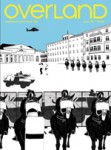
This is another excellent issue of Overland. Rodney Croome puts the current debate over who’s allowed to marry whom into an Australian historical context where restriction of marriage rights has been significant for convicts and until shockingly recently for Aboriginal people. Benjamin Law tells how Twitter kept him connected with his home city, Brisbane, when he was in India during the floods. Phillip Deery gives three alarming case histories from the bad old days (we hope) of ASIO. There’s a swag of poems, of which the ones that spoke most to me are by Ali Alizadeh (a poem dedicated to the Bard of the Hawkesbury Bob Adamson that begins cheekily, ‘Rivers are all the same. Dirty water / if you’re lucky, smelly mud and silt / increasingly the case.’) and Thomas Denton (an energetic vernacular narrative that shared with Judy Durrant the 2010 Overland Judith Wright Poetry Prize).

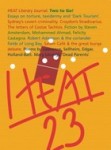
Fiona Wright has an excellent, optimistic piece on the Death and Rebirth of Heat. This is the first in the Meanland series of essays about the changing world of publishing that I’ve been able to engage with, and anyone who misses Heat as it was ought to read it. The essay took an unexpectedly personal turn for me. After noting the paucity of metropolitan newspaper reviews of Heat and other Giramondo publications, it goes on:

We’ve had much more support from bloggers, many of whom have given the magazine – and the books – consistent coverage and space. They’ve often written about HEAT with a level of thought and understanding that we should have expected, but didn’t. (One blogger in particular has always taken great pains to point out any typos we missed. But you can’t expect in-depth without a few ripples.)

Oh my god, she’s talking about me! Though perhaps not, because I didn’t so much point out typos as complain bitterly, some would say churlishly, about errors that either confused or, probably more often if I’m honest, amused me: ‘gauge’ instead of ‘gage’ really did stop me in my tracks, whereas ‘vesper’ for ‘Vespa’ was to smile. It would be nice to think I have been ‘instrumental in generating and spreading word of mouth’ for Giramondo’s publications, as she says bloggers often are, because of course I love their work.

A final word, because now I have a reputation to maintain: Thomas Nelson’s poem ‘The Pirouette’, set in a ‘beach joint’ in New Zealand, includes the line, ‘New Zealanders call this kind of house a Batch’. Well, not really. That’s not a typo, it’s a spelling mistake. What New Zealanders call that kind of house sounds like ‘batch’, but it’s generally spelled ‘bach’ (as in bachelor, I think). The mistake in this case may be attributed to the poem’s narrator, of course, but this is a piece of New Zealand English, like ‘pottle’ (what yoghurt comes in) and ‘section’ (allotment) and ‘dairy’ (milk bar) that can trip up unwary Australian editors.

Journals: Overland 201, Asia Literary Review 18

Overland 201 (Jeff Sparrow 2010)
Asia Literary Review 18 (Stephen McCarty 2010)

A dear friend of mine was once a member of the CPA (that’s the Communist Party of Australia, not the Chartered Accountants’ thingummyjig). Years after she left the Party, a former editor of Tribune asked her what she was reading to keep up to date with politics. When she named the National Times, an eminently liberal weekly of the day, he was scathing: ‘Surely you don’t think you can get decent information from the bourgeois press!’ I thought of him as I was reading these magazines: at least part of my motivation for subscribing to them is to ensure that I have a regular injection of thinking from respectively left and non-Western perspectives, neither of which – to put it mildly – is dependably represented in the mainstream press.

So, for instance, Jeff Sparrow’s article ‘The Banality of Goodism‘ starts with a quote from Aimé Césaire on the dehumanising effect that colonisation has on the coloniser, and goes on to argue that the war in Afghanistan is actually a colonial enterprise, that colonial enterprises have always dressed themselves in the robes of what he calls ‘goodism’ (we’re in Afghanistan for the sake of the women, the peoples of Central America needed to be rescued from human sacrifice), that the Soviet invasion of Afghanistan (bad) used some of the same justifications as the US invasion (good). He also reminds us that in the week after 11/9 George W Bush visited a mosque and described Islam as a religion of peace, a gauge of how the dominant Western conservatism has degenerated in the last nine years. This kind of thing has to be good for the soul.

Similarly refreshing are a debate on population policy, a reply to Cate Kennedy’s anti-Internet rant in issue 200, a piece on Bruce Petty’s heroic cartoon-wrestling with economic subjects, an article that discusses the state of ‘flow’ (that focused state attained by craftspeople), a challenging argument against corporations’ providing breast pump ‘lactation’ rooms in lieu of maternity leave, and indeed the replacement of ‘maternity leave’ with ‘baby leave’. I may have come across any of these pieces on the net, but I would have skimmed them there. Here, I either read them with full engagement or skipped them altogether (I couldn’t bear to read Marty Hiatt’s rebuttal of Cate Kennedy, for example, because Kennedy’s piece was exactly the kind of intervention that an incipient Internet addict such as I needed: I don’t want it watered down).

A third of this issue is given over to showcasing the work of Young Writers. No ages are given, but it’s fairly evident that the four writers involved aren’t young in the sense that term would be used in the context of children’s literature. The introductory note by retiring fiction editor Kalinda Ashton and Samuel Cooney invokes Mark Davis’s Ganglands, thereby apparently implying that these ‘young writers’ are Gen Xers. Whatever! In my naivety I had assumed that magazines like Overland would publish work by Gen X and much younger writers as a matter of course, and I found myself reading these four stories with half an eye out to see what made them ‘young’, not a good frame of mind for enjoying a story.  They’re all good stories, but Sam Twyford-Moore’s creepy ‘Library of Violence‘ was the only one that overcame the handicap created in my mind by the pigeonholing.

This issue of Asia Literary Review focuses on China, to the extent that all but three items are on topic.  There are photo essays, travellers’ tales, expat narratives, an odd little memoir by Jan Morris, and short stories. A short essay by John Batten, ‘Cracking the Sunflower Seed’, reflects on contemporary Chinese art such as we have seen at the White Rabbit Gallery in Sydney. There’s a poem by last year’s Nobel Peace Prize winner Liu Xiao Bo, as well as ten or so other modern poems, with a useful five page orientation by Zheng Danyi. I miss a lot of what’s happening in Chinese poetry – Zheng quotes a quatrain that ‘infuriated Mao’s wife, Jiang Qing’, but all I can see is a lament for a broken stove. So Lord knows what’s happening in Liu Xiao Bo’s poem, ‘You Wait for Me with Dust’, besides surface action of a man in prison writing to his waiting wife.

The three pieces that aren’t about China are almost worth the price of admission: Marshall Moore’s short story, ‘Cambodia’, about three US siblings visiting Phnom Penh, Burlee Vang’s ‘Mrs Saichue’, set in a Hmong community in the USA, and Anjum Hasan’s piece on E M Forster’s time in India, which includes this glorious photo:

I think it’s fair to say that Asia Literary Review is more fun than Overland this issue. Overland, on the other hand, invites sharper engagement with issues closer to home.

Heat 23, Overland 200 and Asia LR 17

The ‘dead white male’ critique of Western Civ […] did not lead, as many of us had hoped, to a new internationalism, but rather to a new form of nationalism that emphasised hyphenated Americans. Chinese-Americans and Chicanos were now part of  the intellectual universe, which was fine as far as it went, but Chinese and Mexicans were still excluded. Multiculturalism was, and is, not very multicultural at all.
(Eliot Weinberger, ‘The Post-National Writer’ in Oranges and Peanuts for Sale)

I’ve just read three literary journals whose roots lie respectively in a rejection of Australian xenophobia, in Communism with its commitment to internationalism and in a mission to publish Asian writing in English. Although we don’t do hyphens in quite the same way as the US, it seems reasonable to see how these journals stack up against Weinberger’s complaint.
***

Ivor Indyk (editor), Heat 23: Two to Go (September 2010)

This issue of Heat is atypical in not including any work in translation. Multicultural themes are addressed, but very little attention is paid to the world beyond our shores. There’s not even any travel writing, unless you count Vanessa Berry’s ‘Dark Tourism: Three Graveyard Tales’, in which the author visits two graves and strolls in a London cemetery (in a piece that might have been more accurately titled ‘Mildly Crepuscular Travels with my Mum’).

Turkish born, ethnically Greek Melburnian Dmetri Kakmi’s ‘Salam Cafe and the Great Burqa Debate’ might seem to fit Weinberger’s description of Clayton’s multiculturalism pretty well – a non-Muslim man joins the argument about what Muslim women should or shouldn’t be allowed or made to wear. But he puts the lie to that pigeonholing by acting as a conduit for Muslim points of view, drawing on his childhood memories of Turkey and his time as a student in Istanbul, and discussing burqa-related artworks by Muslims Shadi Ghadirian (a woman) and Kader Attia (a man, whose ‘Kasbah’ was shown in this year’s Sydney Biennale).

Weinberger’s aspersions might also seem to apply to Michael Mohammed Ahmad’s story, ‘The Hat Dance’, the piece that comes closest to the kind of hyphenation he dislikes. But this account of a dust-up in an extended family living in Western Sydney is so gloriously exuberant only some kind of Diversity Bean-counter could fail to relish it.

Of course, Heat doesn’t claim to fill a hypothetical Diversity Quota in every issue, and there’s no reason it should. Its characteristic approach to fostering diversity is by presenting crosscultural encounters, an approach I’m fairly sure Weinberger would approve of. Kakmi’s piece is an example of that approach. So is Michael Atherton’s portrait of Harry (christened Charalambos) Vatiliotis, who lives in the Sydney suburb of Croydon and makes classical violins in the manner of Stradivere, each one a unique work of art. Cassi Plate quotes from letters of Costas Tachtis, Greek novelist who lived for some years in Australia, and his friend Carl Plate, an Australian artist: ‘The letters,’ she writes, ‘take us into a cosmopolitan world within the heart of what is often assumed to be parochial 1950s Sydney.’ Maybe cosmopolitanism is a better word than diversity for the thing that Heat does so well.

Cosmopolitanism can incorporate voices from elsewhere, and also bring a sharp eye to bear on the local, as Peter Doyle’s fascinating ‘Bashful City: Sydney’s Covert Criminality‘ does to photographs from the archives of Sydney’s Justice and Police Museum.  It can also include intensely place-specific writing like  Mark Tredinnick’s review of  Judith Beveridge’s most recent book of poetry, in which, incidentally, he compares her to a shark and a Philip Marlowe thug, and convincingly means both as compliments.

I do worry about Heat‘s copy editing and proof reading. There’s curiousity, practicing (though correct Australian usage practises elsewhere), an umbilical chord. Someone is heard cluttering in his garage. In Robert Adamson’s delicately poised ‘The Coriander Fields of Long Bay Penitentiary’, a with is repeated over a line break – I know it’s poetry, but that’s just a mistake. One article has this near the beginning: ‘It is one of the great dividers between the civilised among us: those of impeccable taste.’ I wasn’t interested enough in the article’s subject – taxidermy – to endure whatever came after that.
****

Jeff* Sparrow (editor), Overland 200 (Spring 2010)

The first issues of Overland, published in 1954,carried the slogan ‘Temper democratic; Bias, Australian’, hardly a promise of cultural diversity or cosmopolitanism. But as a project of the mainly Communist Realist Writers’ Group, the journal had a commitment to internationalism. Surprisingly, there’s not a lot of that in this anniversary issue, unless you count a deference to Europe and the US. Not that there’s necessarily anything wrong with that: for instance, Alison Croggon’s ‘How Australian Is It?‘ talks with her characteristic clarity and generosity about the way much of our theatre has opened out to the world, freed from constricting preoccupations with national identity but distinctively Australian all the same. On the other hand, when Clive Hamilton characterises the Australian as an agent of ‘the Republicans’ war on climate science’, he implies – perhaps intentionally – that in this matter Australia is humiliatingly no more than an arena in which US battles are being fought. There’s a fair whack of ‘theory’**, enough to create a gnawing sense of Australia as a site for the application of theory developed elsewhere – no sign of Raewyn Connell’s Southern Theory here. (The most theory-rich piece, Alwyn Crawford’s ‘Permanent Daylight‘, which deals with the intimate connection between capitalism and anorexia, is nevertheless compelling reading because of a ballast of passionate personal testimony.) Christos Tsiolkas is the Literary Big Gun of this issue, with a short story about the market in European art, but I found it unreadable (that is to say, I couldn’t tell what the story was trying to do, whether it was a spoof or something else very dull). There’s no non-European voice, and little interest in non-European culture: one piece, by a non-Muslim, quoting no Muslim voices, uses the Western burqa debate as a springboard for theoretical reflections on the visibility or otherwise of women in the West; Jacinda Woodhead gives us an attractive profile of Melbourne rapper-comedians Fear of a Brown Planet (there’s a wonderful YouTube clip of one of them here); Kabul is mentioned in one article, but it’s in a quote from an organisation aimed at creating a market for US cosmetics there.

So Weinberger’s kind of internationalism isn’t overwhelmingly evident in Overland. The three outstanding pieces, in fact, aren’t even particularly multicultural. Chris Graham does a demolition job on Noel Pearson in ‘Telling whites what they want to hear‘. Graphic novelist Bruce Mutard re-tells a story from Overland 1: the story is ‘Nine O’clock Finish’ by John Morrison, a marvellous socialist realist writer, and the resulting 8-page comic is to weep. Janette Turner Hospital’s short story ‘Weird People’ is a tour de force centred on the captain of a tourist boat that takes mainly US tourists out to look at humpback whales off the coast of New South Wales – I suppose it could be read as a protest against our cultural client-state identity.

In Overland, though less so than in Heat, proofreading is a worry: ‘haute bourgeois’, the Communications Minster, and at least one article written in an academic style that apparently defeated all attempts to wrangle it into English.

* In a classic example of Mruphy’s law, when I first put this up, I misspelled Mr Sparrow’s first name – immediately after whingeing about someone else’s poor copy editing. I’ve fixed it now
**  Writers referred to include Ariel Levy (North American liberal feminist), Nina Power (British philosopher and feminist), Mark Fisher (British cultural theorist), Guy Debord (French theorist), Sheila Rowbotham (British feminist historian), Edward Said (the exception that tests the rule and finds that it holds up), Naomi Baron (US linguistics professor).

****

Stephen McCarty(editor), Asia Literary Review 17 ([Northern] Autumn 2010)

It’s a telling confirmation of Weinberger’s generalisation that the ALR’s web page header reads ‘Asia Literary Review – Asian American writing’, apparently promising US-ers that they can read it without danger of encountering anything genuinely foreign. Happily, it’s a false promise.

From the beginning, there’s no doubt that we’ve left the leisurely contemplation of anti-grand abstractions far behind. US-expat journalist Robbie Corey Boulet kicks off with a report on the first case tried – in 2009! –  by the tribunal set up to deal with ‘those most responsible’ for the crimes of the Pol Pot regime. Itself a fine combination of court-reporting, historical background and interviews with people still looking for answers about their murdered relatives, it is followed a few items later by a suite of poems by Peauladd Huy whose parents were murdered by that regime and who now lives in the USA. And it finds a grim echo at the end of the journal, in an excerpt from Frank Dikötter’s Mao’s Great Famine, which draws on archival sources to explore the terror and violence of the Great Leap Forward (‘at least 45 million people worked, starved or beaten to death’). There are other pairings, including a story and a photo essay about floods in the Philippines. A good bit of the ALR probably amounts to armchair dark tourism – much stronger medicine than the piece wearing that label in Heat.  The one actual piece of travel writing – about Mount Merapi, a Javan volcano –  has enough disastrous loss of life for the darkest tourist sensibilities.

There aren’t many laughs, but there’s plenty of wit and imagination: ‘Youth-in-Asia‘,  a story set in Korea by Canadian Ron Schafrick, delivers on its punning title; Priya Basil’s ‘Losing Their Religion‘ is a quietly entertaining memoir of religious conversion and un-conversion that spans three continents; GB Prabhat’s ‘The Silencer‘ gives us a clever inversion of  celebrity stalking.

There is no Australian presence, apart from two full-page ads, for the Melbourne Writers Festival (featuring a Hokusai wave) and Heat (‘Australia’s only international literary journal’) respectively.  Insert your own ironic comment.

One sentence leaps out to meet my eye.  Jonathan Watts, an English journalist, moved from Korea to Beijing in 2003. His interviewer James Kidd tells us:

The signs of conspicuous pollution made an immediate impression: a keen runner, Watts found himself wheezing after a short jog; a father, he was alarmed when his two daughters were not allowed outside during breaks at their Beijing school. It was China that taught him to fear for the future of the planet.

I’m not sure I can afford to keep up my subscriptions to all three of these journals. I was thinking of letting my subscription to Asia Literary Review lapse – but it’s teaching me to think in terms of the whole planet

Journals: Asia Lit Review 16 & Overland 199

Both these journals have been sitting on my desk for too long.  This is the first Asia Literary Review with Stephen McCarty as editor, which is not the hot news it would have been if I’d read it when it arrived months ago. With Overland, my tardiness is even more embarrassing – the  much awaited special 200th issue is being launched in Melbourne this weekend, making issue 199 so last season.


Stephen McCarty (editor), Asia Literary Review Nº 16 ([northern] Summer  2010)

This is only the third issue of the ALR I’ve read, and as far as I can tell the editorial change doesn’t herald any major shift in direction.

This issue includes work from and about Thailand, Laos, China, Japan, Vietnam, Korea, Indonesia, India, Singapore, Hong Kong, Turkey, and their diasporas. Intergenerational tensions loom large in almost every piece. Two sayings, one Indian and the other Chinese, capture something of the tenor of that looming. In Sandip Roy’s ‘No Country for Old Women‘, reporting on government attempts to reunite families where elderly parents have been abandoned or abused, he comments:

Love, my mother always says, flows downwards. You can’t force it flow the other way if it does not want to.

The fading popular singer who narrates Stephen Hirst’s ‘It’s All in the Silhouette‘ quotes a ‘lovely Chinese saying’:

One generation plants the trees, the next gets the shade.

Story after story, some very good, deals with a parent’s love and sacrifice, a child’s obedience or resentment and rebellion. There’s an awful lot of pain – grandmothers with bound feet occur in more than one story, and there are a number of guilt-pricked young men living in the USA.

There are other subjects: Gary Jones reports on the Red Shirt encampment in Bangkok earlier this year; Jaina Sanga’s story ‘The Maharaja and the Accountant‘ is a tale of politics from the dying days of the Raj; and there’s a short essay by Tippaphon Keopaseut, ‘Looking for Laos‘. In this last, the writer explores the cultural traditions of her country, beginning with the shocking observation that ‘compared to the great nations of the world, Laos seems little more than an empty space’, continuing with savage wit to give a history of colonisation and concluding:

So, I continue looking for Laos. And if it doesn’t exist? I’ll just have to invent it. After all, isn’t that what writers do?

I hope that’s not just youthful braggadocio. Certainly it’s not the words of someone obliged to stay in shade that someone else has sacrificed their life to plant for them. (The full stories behind those links are available only to subscribers, sorry!)

Jeff Sparrow (editor), Overland Nº 199 (Winter 2010)

If the Asia Literary Review serves to expand an Australian reader’s horizons, Overland helps one see more clearly what’s happening near at hand. The entire issue is, as always, available online, so it’s a bit ironic that the first item in the real-world version is ‘Driven to Distraction‘, in which Cate Kennedy inveighs persuasively against internet addiction. As soon as I’d read it, I opened the Twitter app on my iPhone and unfollowed @annabelcrabb, @andrewbolt and the other Tweeters whose witty observations had been delighting (and distracting) me since the election. My Twitter addiction is nipped in the bud. Thanks, Cate! All the same, as with many articles here, I did have a ‘Yes, but’ response: Yes, the internet is a distraction, but I hope not all blogging grows from ‘a compulsion that blunts our capacity for reflective, private contemplation’.

Sean Scalmer and Jackie Dickenson in ‘The March of the Insider‘ do a nice job of deconstructing the historico-journalism of Paul Kelly. I haven’t read any of his books, or indeed any insider accounts of Australian parliamentary politics, but I did recently read Mark Halperin and John Heilemann’s Race of a Lifetime, and this article’s shoe fits that book’s foot pretty well:

… the claim of political journalists to a special ‘insider’ knowledge might be considered an impediment rather than a spur to full democratic participation. The ‘inside’ requires an ‘outside’. The same rhetoric that elevated the journalist and the politician thereby also positions the voter as a perpetual outsider, sending the message that there is a separate political sphere of which they are not, and never can be, a part.

Yes, but isn’t it a whole other story when journalists, political or not, write books about issues such as the Tampa, the AWB scandal, or events on Palm Island?

Tad Tietze analyses the rise of the Greens as a party attractive to the left but with a complex relationship with left politics and left perspectives. Thomas Caldwell argues against the likes of Antony Ginnane and Louis Nowra who have recently been critical of Australian films en masse, with box-office takings as their sole criteria of success or failure. There’s a trio of articles that save from possible oblivion aspects of activist history: Zanny Begg discusses and illustrates political art and the counter-globalisation movement (yes, a tremendously interesting piece which I recommend, but isn’t it odd to discuss participatory art in terms that exclude people not trained in artspeak?); Michael Hyde’s memoir ‘Getting out of the Boat‘, gives the inside story of some key moments in Australian opposition to the Vietnam war; Seb Prowse talks to Iain McIntyre about the latter’s How to Make Trouble and Influence People (Breakdown Press, 2009) which deals with imaginative Australian protest, culture-jamming and graffiti from White settlement to the present.

And there’s literary stuff as well: short stories, poems, reviews, an engagement with the controversy around the PEN/Macquarie Anthology of Australian Literature and the new Cambridge History of Australian Literature.

I skipped the article on literary piracy, part of the Meanland project of exploring the implications of new technology for the written word. I know its important, but for now I’m very happy to get my literary journals in holdable, stainable, dog-earable form.

Asia Literary Review 14 and 15

Chris Wood (ed), Asia Literary Review, Nº 14 and Nº 15

I subscribed to the Asia Literary Review as an act of avuncular solidarity – I wanted a hard copy of issue 14, (northern) Winter 2009, which features ‘Broken’, a story by my niece Edwina Shaw. Having now read two issues, I’m a fan.

Asia, of course, covers a vast proportion of the Earth, from the Philippines in the east to the Arabian Peninsula in the west. The Asia (not ‘Asian’) Literary Review is a vast tent open to contributions from all of it and beyond. It’s an English-language journal, founded by Nury Vittachi in 1999, and currently edited by Chris Wood. It publishes work by writers and visual artists from Asian cultures in translation and originally in English, work by expat and former expat Westerners (like my niece), not all from English-speaking countries, work by Westerners who have engaged with Asia in other ways (there’s an extract from Henning Mankell’s The Man from Beijing in Nº 14), contributions from various Asian diasporas. There are interviews, both original and transcribed from The Book Show, and a wealth of illustration.

In Issue 15, just arrived in my letterbox this week, Hanif Kureishi (one of the interviewees) is quoted on racism:

It really is about language. It’s very traumatic to exist in a world of other people’s descriptions. Your own words have no force.

If he’s right, then the sheer multiplicity of voices here must be profoundly anti-racist. In Issue 14, ‘Noe’s Jiuta-mai’, a photo-essay by Bangkok based Xavier Comas on a traditional Japanese dance form, is followed by  ‘Nova Initia’, Thomas Lee’s first person narrative about a Korean man in the US learning about his father’s past, which in turn is followed by ‘Phallacy’, a laddish sonnet by England born Daljit Nagra (How oft do mates bang on at length about / how well they’re hung …). Issue 14 interviews Gao Xingjian, three times exiled from China for his writing and now living in France:

The writer is a weak individual and cannot overcome political oppression; he can only flee, or he has to write for the government. […] Dante fled Florence because he couldn’t write. Ibsen fled Norway; it wasn’t until Norway began to recognise him that he went back.

In Issue 15, dissident writer Liao Yiwu’s memoir ‘Go South, Go Further South’ concludes:

I had survived prison, while others had died within its walls. And I had survived a devastating earthquake while so many others perished. And hundreds of people are arrested or shot crossing the border. I don’t have a single reason to complain.
I accept my fate, which is to stay, and write.

Heroism has many faces. So does Asia. You get to meet a lot of them in this journal.

And in case I haven’t said it before, Edwina’s story can hold its head up in that multifaceted and exalted company.