Tag Archives: poetry

Ali Alizadeh’s Ashes and Brendan Doyle’s Bicycles

Ali Alizadeh, Ashes in the Air (UQP 2011, 2013)
Brendan Doyle, Glass Bicycles (Ginninderra Press 2012)

I needed books to read on a long plane trip and in the interstices of the conference at the end of the trip. These two jumped off the bookshop shelves, Brendan Doyle’s because I knew a little of his work from a previous life, Ali Alizadeh’s because I’ve heard him read from his memoir and have found his critical writings bracing.
0702238724To be honest, I’ve found Alizadeh’s critical writing intimidating rather than just bracing: way out of my intellectual league. So I approached Ashes in the Air expecting to struggle with obscure (post-)modernist play. Instead, I got a human voice, plainspoken, generous, sometimes raw, at other times laugh-out-loud funny, and at moments piercingly lyrical. There is impassioned politics, childhood reminiscence, love lyric, a number of verse essays.

Though it’s not a memoir, a narrative emerges: Ali Alizadeh came to Australia from Iran in 1991 in his mid teens. He struggled with the cultural transition, was subjected to xenophobic bullying and humiliation in Brisbane high schools, became an alcoholic and – if I’ve pieced the chronology together correctly – found his way to sobriety and equilibrium through the influence of his elder sister, through his relationship with the woman who is now his wife, and through poetry.

In some respects, this might seem like poetry that’s ripe for the dubious success of being set for classroom study, a sure way to generate sales but not necessarily build a readership. (A young friend of mine loathes the poetry of Peter Skrzynecki, which he was compelled to study for the Higher School Certificate.) Individual poems may be seized on in this way as shedding light on the immigrant experience: ‘Us and Them’ juxtaposes two deaths – of ‘another working class adolescent / charred by another Iraqi chemical / attack’ in the early 1980s, and of a ‘promising Creative Arts student / who threw himself under the train / one sunny day, at Southport Station’ a decade later; ‘A Familial Renaissance’ charts the immigrant family’s traumatic path to some kind of well-being. And others, including the complex and discursive ‘The History of the Veil’, would stir animated classroom conversation on ‘hot’ topics.

But the book as a whole is unlikely to be taken up by curriculum setters. It’s a long way from being categorisable as ‘immigrant poetry’ or ‘culturally diverse’. Some of the sweetest poems, including the first in the book, ‘Marco Polo’, are about travel that’s closer to tourism than migration. And how would you pigeon-hole ‘Sky Burial’, in which the speaker who has eaten many birds in his life contemplates making atonement by having his body eaten by vultures after he dies? On top of that, there are too many swear words, too many references to Baudrillard and other high theorists, too much fierce politics, too much that can’t be put to straightforward instructive use – you might say too much that a certain kind of teenager will love but that will deter a curriculum committee.

I expect I’ll reread it many times.
1bdgbGlass Bicycles also has an autobiographical dimension, but though the poems travel to Cambodia and France, and reach out to events in Iraq, Bali, Bosnia and East Timor, the unifying persona has a stable home base in the Sydney region. He starts out, in ‘Newtown Boy’, ‘Sittin’ on the gas box, / waitin’ for me dad’, has a romantic encounter in ‘Nielsen Park’, is revived by the Blue Mountains bush.

I read somewhere recently that a common difficulty with first books of poetry is that they lack thematic or structural coherence. In this book, structure seems to have been deliberately avoided: it would have been easy enough to group these poems into, say, commentary on current affairs, travel poems, nonsense poems, nature poems and family matters, but there seems to have been a deliberate decision not to do so. For what it’s worth, I think this was a good decision: it has given us a book where each poem stands alone, responding to its own occasion, whether it be a political commentator’s callousness, the bitter-sweetness of a child-access arrangement, or ash from a bushfire falling on the Harbour. the result is a friendly feeling, suggesting subliminally that readers could make poetry from their own occasions.

Since by happy accident I’m talking about these books together, how would this be for an exam question: ‘Ali Alizadeh and Brendan Doyle have both written poems about refugees. Compare and contrast.’

By Brendan Doyle:

Refugee
I kneel before the boatman.
The price is far too high.

I kneel before the pirate.
Not my daughter, not my wife.

I kneel before the aid man.
The land’s no longer mine.

I kneel before the soldier.
Will you spare a father’s life?

I kneel before the policeman.
A permit, to buy some rice.

I kneel before the altar
and pray for an end to strife.

I kneel before the embassy,
its heavy doors shut tight.

By Ali Alizadeh:

Shut Up
So he’s shut up. Vilified:
an unpleasant recalcitrant,

gagged for penning
Imperialist turpitude, then

summoned, sentenced
to purgation in Tehran’s

Evin Prison. How the writer
finally escapes, his fingers

nearly crushed and chopped. Has
himself smuggled, his heart

simmering with a whim,
freedom of speech, democracy

etc. Then branded ‘illegal
immigrant’ and caged in a camp

in Australia for three years, before
Temporary Protection after

his wrists have been indented
by his own razor, a rib fractured

by an overweight guard. He wants
to return to writing, but anger

blocks the passage of language
from the heart to the page. So he’s

shut up.

The colonial past keeps changing

Brian Elliott and Adrian Mitchell, Bards in the Wilderness: Australian colonial poetry to 1920 (Nelson 1970)

1bwTo judge by pencil notes in the margins, I read Bards in the Wilderness 40 or so years ago, but – such are the joys of age-related cognitive decline – I didn’t remember any of it when I picked it up again recently, looking for information on how white settlers in New South Wales thought about Aboriginal Australians in the first half of the 19th century. The book’s title didn’t bode well – you can only refer to Australia as a ‘wilderness’ if you ignore millennia of prior occupancy: those ‘bards’ were actually living in what Bill Gammage describes as The Biggest Estate on Earth.

Elliott and Mitchell’s introduction explains that poems were selected for what they demonstrate about the colonies’ preoccupations – ‘political, social and moral’, ‘for what they contributed to the foundation of the Australian literary tradition’.

On the evidence of this selection, the settlers didn’t think about Aboriginal people much at all. Up to 1850, which is as far as I read, there are exactly four references:

  • Charles Tompson’s 1826 ‘Black Town’ is an elegy for a failed attempt by Governor Macquarie, ‘the chosen Delegate of Heav’n’, to educate ‘Poor restless wand’rers of the wooded plain’ in the joys of tenant farming – the failure, it is strongly implied, being the result of the Natives’ fecklessness (rather than because, as Heather Goodall puts it in Invasion to Embassy, to take part in the scheme ‘would mean that they would lose control over their children and be denied access to other areas of their country’). Aboriginal people themselves are notably absent from the scenes portrayed in the poem.
  • John Dunmore Lang’s ‘Colonial Nomenclature’ rattles off a list of ‘native names’ as preferable to ‘Downing Street appellatives’, though again none of the people who gave the settlers words like Parramatta, Illawarra and Woolloomooloo are acknowledged.
  • Charles Harpur’s ‘The Creek of the Four Graves’ does feature frontier violence and there are Aboriginal actors in its drama, but the poem tells of an unprovoked lethal attack by ‘stript and painted Savages’, who turn out to be terrible at bushcraft as well as mindlessly violent.
  • ‘Tullamarine’, by Richard Howitt, comes the closest to acknowledging a common humanity with Aboriginal people: the speaker is an Aboriginal woman who utters a distinctly Victorian lament for a child who has died – of natural causes, nothing to do with any dispossession.

So what some people these days consider the most interesting thing – politically, socially and morally – about the early colonial period is passed over in virtual silence, sometimes silence of a pretty aggressive kind, as in the common trope that this new land has no history, these plants and animals have never been celebrated in song.

Perhaps one has to look elsewhere than to poets to find the traces I was after: the notebooks of William Dawes (which hadn’t come to the attention of scholars when this collection was published), the journals of early settlers as explored by Inga Clendinnen (in Dancing with Strangers) and others, the journals of explorers like Eyre and Sturt, who had a lot to report. Forget the poets.

But hold on, maybe it’s not so much that the early colonial poets ignored Aboriginal people so much that these editors de-selected poems that didn’t ignore them. The book’s scholarly paraphernalia suggests this might be so. According to the note on ‘Tullamarine’, Charles Harpur wrote unsuccessful ‘poems on elegiac Aboriginal subjects’ (not included here because, presumably, the editors didn’t consider that they contributed to ‘the foundation of the Australian literary tradition’). And William Charles Wentworth’s long poem, ‘Australasia‘, of which no excerpt is included, is quoted in the Introduction as referring to ‘the mournful genius of the plain’, which, the editors gloss, may or may not signify ‘aborigines’ [sic]. ‘Australasia’, it turns out, includes a passage of 64 lines addressed to Aboriginal people. They may not be great poetry, they may include sentiments that make a modern reader of whatever heritage cringe, but they’re there, acknowledging the pre-colonial inhabitants, beginning:

Ye primal tribes, lords of this old domain,
Swift‐footed hunters of the pathless plain,
Unshackled wanderers, enthusiasts free,
Pure native sons of savage liberty,
Who hold all things in common, earth, sea, air

I can only surmise that in 1970 non-Indigenous literary scholars felt that the kind of verse written about contact between Europeans and Indigenous Australians was best left undisturbed in its place of first publication.

A quick look at John Kinsella’s 2009 Penguin Anthology of Australian Poetry suggests that times have changed: even though this anthology doesn’t have a particular emphasis on colonial times, it includes three poems by Eliza Hamilton Dunlop that indicate a level of awareness not even hinted at in the Elliott and Mitchell anthology.. ‘The Aboriginal Mother’ is similar in tone and form to Howitt’s ‘Tullamarine’ but the mother is lamenting the loss of her man and her firstborn in, according to the site I’ve linked to here, the Myall Creek Massacre of 1838. Her other two poems are ‘The Aboriginal Father’, a transliteration of an Aboriginal song, and the translation of a poem by an Aboriginal man named Wullati.

I wonder if any scholars have taken on a 20-teens version of the Elliott and Mitchell anthology that reflects early colonial poets’ contributions to what we now see as ‘the Australian literary tradition’.

Gwen Harwood

Gwen Harwood, Selected Poems (Angus & Robertson 1975)

1gh Gwen Harwood is a Big Name in Australian poetry, but one whose poems have mostly been unread by me. In the early 1960s she had a pair of sonnets published in the Bulletin of which the first letter of each line spelled out so-l-o-n-g-b-u-l-l-e-t-i-n and  f-u-c-k-a-l-l-e-d-i-t-o-r-s. That’s about all I could have told you about her until Julie Chevalier’s ‘Corner of Glebe Point Road and Broadway’ sent me to her ‘Suburban Sonnet’, a powerful housewife’s lament that made me want more.

I picked this book up from the second-hand poetry shelf in Sappho’s in Glebe on one of my irregular visits soon after (and inadvertently paid a roughly new-book price for it; it’s inscribed by the author to a composer – I googled the name – who evidently didn’t reciprocate her ‘affection and admiration’ sufficiently to keep the gift). This isn’t where I’d have started if I was being systematic, because even though she was in her mid 50s in 1974, it was early in her publishing career. But it’s what turned up.

The book was in Angus & Robertson’s ‘Poetry Classics’ series, which is a bit rich given that the ink was barely dry on Gwen Harwood’s first book (Poems, published 1963). My reading may have been influenced by this presentation, but it felt to me that a lot of the poetry laboured to live up to a kind of poetic dignity. (If you clicked on the link to the scandalous Bulletin sonnets, you’ll see that even when taking the mickey she stuck to strict rhymes and laboured over her enjambments.) Many of the poems deal with the art and, especially, music, and there’s often a sense that the Australian social world is at odds with creativity – not so much cultural cringe as anti-Philistine rage, and the formality of the verse is perhaps a defensive structure. Still, it feels like museum art.

Which makes ‘Suburban Sonnet’ and ‘In the Park’, both harsh observations on the toll taken on a woman’s life by the social conditions of child-rearing, all the more breathtaking.

All the same, it was mainly poems towards the end of the book that I warmed to, that is, poems written closer to the mid-1970s publication: ‘Iris’, in which the Harwoods, ‘(husband and wife so long we have forgotten / all singularity)’, sail for the first time in a boat they have built and the poet tacks and veers among questions of identity and meaning; ‘At Mornington’, which I guess is a love poem, certainly a defiance-of-death poem; ‘David’s Harp’, a tale of lost young love; ‘Barn Owl’, which, well, it’s just a good poem.

Here’s a stanza from ‘In the Middle of Life’ that a) I like, and b) demonstrates nicely Harwood’s attachment to strict form and magisterial tone, and her ability to pull it off:

We need our enemies to teach us
what friends in kindness never show.
Where magnanimity can’t reach us
the darts of hatred lodge and glow,
lighting our follies and pretensions,
our self-esteem’s absurd dimensions.

I’ll read more of Gwen Harwood. I’m glad to have started at last.

awwbadge_2013 This is the ninth book I’ve read as part of the Australian Women Writers Challenge 2013.

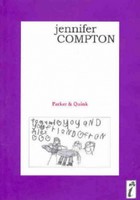
Jennifer Compton, Parker & Quink

Jennifer Compton, Parker & Quink (Ginninderra Press 2004)

1pq

Jennifer Compton was in her mid 20s when she burst onto the Australian theatre scene with her play No Man’s Land, which shared the 1974 Newcastle Playwriting Competition prize with John Romeril’s The Floating World (distinguished company!), was produced by Ken Horler at the Nimrod Theatre in Belvoir Street and, redubbed Crossfire to avoid confusion with Harold Pinter’s play of the same name, was published by Currency Press.

Parker & Quink came 30 years, 3 plays and at least 3 books of poetry later, and has been followed by other plays, other books of poetry. I came upon it by chance, as one still can in bricks-and-mortar bookshops. Time passes, we grow older, times change: that’s a recurring preoccupation of these poems, from the three-line title poem to the 18 stanzas of ‘During the Power Cut I Read, by Candlelight, “Ballade” by Kenneth Koch’.

Parker & Quink: the young might stare at these words blankly, but for us sexagenarians they have unmistakeable nostalgic power to evoke the sensual feel of a fountain pen, the aroma of quality ink, the dubious joys of blotting and smudging, perhaps even the quiet pleasure of receiving one’s first Parker pen as a reward for doing well in a school exam. The title poem, just three lines, draws on those associations, but its tone is more bemused than nostalgic:

Parker & Quink
To write your email address
with a fountain pen filled with ink
like lighting a candle on the moon.

The past isn’t just another country, it’s a whole other celestial body, with unbelievably limited, even ineffective communication technology. Yet to my way of thinking a lot of the poetry in the rest of he book uses just that technology: the kind that needs the reader to come and sit with it for a while, rather than providing instant hits, instant links. The second poem, ‘Imposing the Chat’, starts out with a chat room report of attending a gallery opening where (the capitals are hers)

ALL THE ARTWORKS HAD BEEN MADE BY
THE PARENTS OF MURDERED CHILDREN

I don’t understand chat room jargon, but I think the speaker is thrown out of the room, presumably because her subject is unacceptable. She is left to write in a form where ‘the words do not evaporate out of the top of the page’, where she can’t just shout in performative horror but goes on to grapple with the complex and disturbing experience of attending that opening, talking with some of those parents, remembering at least one of the murders and driving home wordlessly with her husband to look in at last on her sleeping children. As the first line of the poem puts it, ‘It should be hard to write.’ Sometimes candles and moonlight, however ineffective, are what’s called for.

That’s the first two poems. After them, the book touches on many subjects, speaks in many voices, reflects many moods. There are memories of a New Zealand childhood, private acknowledgement from an eminent theatre critic (though we’re left not knowing if this was real or imagined), a touch of Bildungsroman, the imitation of Kenneth Koch I mentioned earlier (a kind of compressed, fragmentary, cryptic autobiography), dreams, dramatic monologues, and perhaps my favourite, an imitation bird call whose title is, perhaps accidentally, three words from James McAuley’s ‘Magpie‘:

Every Morning, Waking
Out in the zero velvet of the night
swinging deep into left field
the first interrogatory of the aubade.

A startle of – Where was I? What!
Then the anxious, enquiring flex,
– And am I still a magpie? Yes!
awwbadge_2013

This is the seventh book I’ve read as part of the Australian Women Writers Challenge 2013. I undertook to read six and review four, and I’ve now read seven and reviewed six, so I guess I’ve met the challenge, but as a matter of interest and google fu I’ll keep adding a note when I read an AWW title.

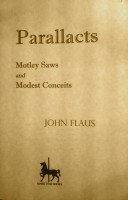
John Flaus’s Parallacts

John Flaus, Parallacts: Motley Saws and Modest Conceits (Mark Time Books 2012)

parallacts I was extremely lucky in the timing of my university studies. I started at Sydney Uni in 1967 when, because of an overhaul of the New South Wales school system, only a very small cohort had graduated from high school the year before. I was two years out of school myself, and for the next four years, I rubbed shoulders with a wonderful bunch of irregulars, especially the group doing Eng Lit Hons. Among them was a burly guy in his mid thirties who enlivened our seminars on pre-Shakespearean English drama with references to John Ford’s Westerns and wrote learned essays on film for the student newspaper, sometimes as Sean Borelich, borelich being Middle English for hairy, in honour of his impressive salt and pepper beard.

That was John Flaus. He could be relied on for an interesting opinion of any new film released downtown – memorably, Rosemary’s Baby was ‘a turd of a movie, a beautifully polished turd, but still a turd’. At SU Film Group screenings and occasional events at the Filmmakers’ Co-op, then in a space above a restaurant in Dixon Street, he educated us in the movies (which weren’t included in any university courses in that time and place). I learned from him that Hollywood produced art: it was OK to love the films of Roger Corman (which I already did) and Budd Boetticher (which he introduced me to). During one informal seminar–screening of Raoul Walsh’s Roaring Twenties, he rewound the film at one point so we could watch again Marlene Dietrich’s marvellous first, slow-blinking appearance. This was before the existence of VCRs or rewind buttons and just magical for the likes of me. John back then was a passionate advocate for film, autodidact, fanboy, nerd, polymath, teacher.

Since then, though he has generally flown under the mainstream media’s radar, his distinctive voice has been heard widely in the land as a critic and promoter of excellence in film. In the 1970s he embarked on an acting career. As far as I know his first reel outings were as himself in Dave Jones’s little-seen wonder Yackety Yack in 1974, and then a main role in John Ruane’s 1976 short film Queensland. My most recent sighting was as one of the chorus of codgers in the pub in Jack Irish on ABC TV.

All that is by way of explaining my delight when I stumbled this slim volume on the poetry shelves at Sappho’s bookshop, and for that matter my delight in reading it. It contains 120 couplets, each fitting the formal requirements announced in the first two:

THE PARALLACT (1)
Where differing perspectives contend;
Two lines, each of nine voiced syllables.

THE PARALLACT (2)
With the option of one ‘free syllable.
A discipline of my own devising.

Within this tight form, he fits all manner of things: philosophical, satirical or just plain smart-alecky observations, evocations of the turning points of movies and classic stories (Biblical, Greek, Norse, Japanese …), overheard snippets, jokes, paradoxes. The word ‘discipline’ is key. There is so much that could be said on the subject of each of these couplets, but the speaker – naturally discursive – ties himself down to just 18 or 19 syllables. You need background knowledge to appreciate quite a few of them, such as this:

JEPHTHAH’S BARGAIN
He comes victorious, true to vow;
She goes to greet him, dancing, joyful.

But in these cases, including about 20 referring to movies, he generally adds a note so the reader can chase up the reference (in the case of ‘Jephthah’s Bargain’, the note says, ‘See: Judges 11′).

Here are a few more:

BROTHERHOOD OF THE BLUE SINGLET
Sunburned, sweaty and staunch, yet denied
Our rightful place in the nation’s pride.

OCKER NUANCE
‘Where yous goin’?’ – I’m not joining you;
‘Where yez goin’?’ – I’d like to come too.

IRELAND’S REVENGE
They stole our land, laid waste our culture.
We occupied their literature.

I don’t suppose Flaus has considered starting up a blog where he posts regular parallactic film reviews and other observations. If he did, I’d subscribe. And one last thing:

ON PARALLACTS
Knowing no limits to questing thought,
he brings home the bacon, takes the pith.

Malouf Adamson Aitken Harrison: Rare Objects

Adam Aitken, November Already (Vagabond Press Rare Objects Series No 86, 2013)
Martin Harrison, Living Things: Five Poems (Vagabond Press Rare Objects Series No 87, 2013)
David Malouf, Sky News (Vagabond Press Rare Objects Series No 88, 2013)
Robert Adamson, Empty Your Eyes (Vagabond Press Rare Objects Series No 89, 2013)

I bought this quartet of chapbooks at the Sydney Writers’ Festival, where all four poets read brilliantly. At $15 each, this is poetry at just over a dollar a page, which isn’t a lot of bang for your buck if you measure it by the yard, but – speaking as someone who has ploughed through a number of Collected volumes in the hope of getting a feel for their authors’ work – I’d say these tiny, beautifully presented books are great value for money. The poems have room to breathe. [The list above is in order of publication, my random comments below are in order of my reading.]

1sn

It’s common wisdom that learning poetry by heart is a good thing, because – besides being able to surprise and delight your friends – it’s a way of making the poetry your own, inscribing it on yourself (as Dan Beachy-Quick said memorably, here). Reading David Malouf’s Sky News, I realised that, memorised or not, I haven’t really read a poem until I’ve heard it in my own voice, at least internally. I’ve loved hearing David read his poetry ever since he made sunlight glint off milk churns and today blaze from a lapel in his 70s imitations of Horace. But there’s a different pleasure in taking the poems into oneself.

The poems in Sky News are like piano pieces: there’s a right hand with lots of trills and arpeggios, images and alliterative wordplay, and a slower, deeper, meditative left hand. As I got to know each poem, I found myself looking for my own balance between the two, between being charmed by the right hand, as in this evocation of a quiet night in ‘At Clerici’:

Crickets strike up
a riff on the razzle-dazzle
of starlight, then stop.

and being moved by the left hand, which doesn’t lend itself to quotation because it’s often there by implication or comes into the foreground only in the final moments of a poem.

In ‘A Parting Word’, a rendering of Heinrich Heine’s ‘Der Scheidende’, Malouf the translator engages in a similar balancing act. I can’t read German, but compared to what looks like a close translation of the original, it’s evident that Malouf’s poem is a lot livelier: ‘Estorben ist in meiner Brust /
Jedwede weltlich eitle Lust’ (‘It has died in me, as it must, / Every idle, earthly lust’) becomes the playfully alliterative ‘All’s dashed in me, all’s dished and done’, and this playfulness keeps up all the way to the final lines, where ‘Der Schattenfürst in der Unterwelt’ (‘The shadow prince in the Underworld’) becomes

__________________First
in rank of the resident zombies. Top
dog in this dog-house, Hades.

In Heine’s poem, the speaker moves from a cheerless contemplation of his approaching death to a grim acknowledgement that the most vulgar of the living are better off than the noblest dead, so in the end by implication what does art matter? In Malouf’s, the mood is less gloomy – it’s still a poem about age and mortality, but the scales tip towards a celebration of life – it’s not that art is futile, but life is the thing.

1eye

The current submission guidelines for Going Down Swinging warn prospective contributors not to send ‘poems involving birds, wings, feathers or flight’. Luckily for Robert Adamson and his readers this prohibition doesn’t prevail everywhere. Henry Thoreau said an abode without birds was like meat without seasoning – Adamson without birds is unimaginable. From traffic casualties in the prose poem / flash fiction ‘A Proper Burial’ to birds that ‘call and call the light’ in ‘Michael Dransfield in Tasmania’, there are plenty of birds in Empty Your Eyes. Poets are here in plenty too: Adamson’s compadres like Dransfield and Charles Buckmaster, but also an assortment of Catholic convert poets – James McAuley, Pierre Reverdy and Francis Thompson (the only poet my mother ever quoted – ‘I fled him down the labyrinthine ways / Of my own mind; … and under running laughter’). Adamson’s poetry is steeped in the Hawkesbury River, in the world of poetry and poets, and increasingly in a kind of questing mysticism:

------------------I read
'The Hound of Heaven'
by a river in new South Wales:

There was a black chuckle
before the 'running laughter' –
Attention shifts, revelation grips.
1na

Perhaps even more than Adamson’s, Adam Aitken’s cool, postmodern, intercultural poems abound in allusions – not in an arrogant bugger-off-if-you-haven’t-read-Rimbaud way, but more in a let’s-have-some-dislocating-and-provocative-fun way. I went googling quite a bit as I read November Already: John Clare (hardly an esoteric reference, but I hadn’t read anything by him), Rimbaud (I couldn’t find the arachnid referred to in ‘Rimbaud’s Spider’, so I don’t know what I’m missing, but enjoyed the poem anyhow), Ezra Pound (who wrote a travel diary, A Walking Tour in Southern France), Raymond Roussel (I found a note on Adam’s blog that helped hugely in reading the poem ‘Rousselesque’).

There’s a lot of France in these poems: Paris and the tiny village of Mareuil, the Resistance and the Revolution, Roman relics and Australian expats. From what I’ve read of Aitken’s work, I have a sense that he generally writes as if he’s not quite at home, always with a dislocated, interrogative feel. So when a poem about a deserted railway line is entitled ‘On the Chemin du Fer’, it doesn’t read as a mistyping of chemin de fer, but as a marker of the speaker’s outsider status. In the poem, this outsider is on a disused length of railway surrounded by blossoming almond trees, ‘tougher, more industrial’ than cherry blossom, and in these beautifully evoked surroundings, before evoking the Terror by a mention of Saint-Just, asks:

Was that old man "Europe"
so often so hard, so cruel
a one-stop shop
for the soul?

Likewise, I think of Aitken as an urban poet, so when he misspells ‘chicken coop’, it doesn’t read as a mistake, deliberate or otherwise, but as the equivalent of a visitor from the city wearing shiny shoes in a cow paddock, adding to the edgy feel of the poem.

1lt

Martin Harrison’s poems, by contrast, feel completely at home in their mostly Australian landscapes. This may be especially true of the first poem in Living Things: Five Poems, ‘Wallabies’, a long, breathless (and sparsely punctuated) celebration of western New South Wales landscapes:

nothing is dead here the spaces between them are
inhabited leaves twigs debris fallen white-anted trunks

slopes rocks grass parrots galahs floating down
in pink streamers again the grey lack of edge

around sprays cream waterfalls of turpentines flowering
in high irrigated air-blue reaches she-oaks aspirant

with their million fingers and amber seed-flowers
spotted gums mottled as grandmothers but with contrasts

of grey brown white and silver as if dressed for a ball

He does more than describe natural phenomena, of course. A recurring theme here is ‘how events change time’s flow beneath perception’: a ‘small thump from somewhere’ (‘White-Tailed Deer’), thrips that are ‘quite possibly meaningless, quite possibly / microbes of non-significance’ (‘Cloud’), a frog you can hear ‘miles away, / long before you thought you could’ (‘The Frog’). Even the eponymous wallabies would be easy to miss if you didn’t read carefully. Some lines from ‘Blue Wren Poem’ suggest something of what’s going on:

____-_____________________Such

detail can be lost – bobbins, birds, refuge, storm –
when innocence starts holding out against the tide,
when radiance blurs the future.

Michael Brennan of Vagabond Press says this series will come to an end at 100 titles. That means there are 11 to go, and the distinctive design, with pasted-on cover art by Kay Orchison, will sadly be no more.

Julie Chevalier’s Linen Tough as History

Julie Chevalier, Linen Tough as History (Puncher & Wattmann 2012)

1lthI just couldn’t get on this book’s wavelength. I appreciate the cleverness of many of the poems, but very few of them speak to me personally. I’m glad I read it to the end, because the poems I most respond to occurred in the final section: ‘crease’, about enduring tensions between mother and daughter; ‘fifteen kinds of infidelity’, which is what it says on the tin; ‘the moon and the stars were our chandelier’, which lives up to its excellent title.

A number of the poems are self-described ‘responses’ to other poems or works of art. ‘Corner of Glebe Point Road and Broadway’ and ‘the day we almost hung’, for example, play with Gwen Harwood’s ‘Suburban Sonnet’ and Frank O’Hara’s ‘The Day Lady Died’ respectively, each line (with one exception in each case) ending with the same word as that line in the earlier poem. It’s clever, and fun, but the effect each time was to send me back to the earlier poem, in whose light the present poem seemed a pallid, arbitrary thing. Similarly, when I read the poems responding to work by Ron Muecke, Diane Arbus, Cy Twombly, Hans Bellmer and Giorgio Morandi, I went to those works, either in memory or by Google, and felt no particular urge to come back. Maybe that’s a problem inherent to ekphrastic poetry, or – more likely – there’s something I’m not getting.

awwbadge_2013 This is the sixth book I’ve read as part of the Australian Women Writers Challenge 2013, but I won’t add this post to the website, as it’s not really a review – more a note that I’ve read the book.

Julie Chevalier: her Darger: his girls

Julie Chevalier, Darger: his girls (Puncher & Wattmann 2012)

1dhgThe Art Student, who professes to hate poetry, recently went to a talk by Julie Chevalier about this book, and was so fascinated by the subject of Henry Darger she bought me a copy.

Darger is a fascinating man. He has a Wikipedia page. There’s a movie. John Ashbery wrote a long poem inspired by his work. Very briefly, he was a reclusive eccentric who lived in poverty and imagined a vast epic in which little girls take on armies and interplanetary beings. Shortly before his death his landlord discovered the bulky volumes of handwritten manuscript, along with the copious illustrations, and recognised a work of weird genius.

This book is an impassioned introduction to his story, or rather Julie Chevalier’s poetic record of her encounter with him. A six page introduction tells Darger’s story, defends him against hypotheses that he was a potential or actual child murderer, and argues that it’s incorrect to think of him as an Outsider Artist. The introduction is exactly the kind of courtesy I often yearn for in poetry books – but paradoxically the prosaic information was so interesting that I sometimes had trouble telling what the poetry was doing beyond reiterating it. Paradoxically again, the single poem that I found most satisfying is ‘an unusual child’, a prose poem made up entirely of phrases taken from Darger’s writing. It’s full of cliché, but generates an enormous emotional, quasi-erotic force:

she seemed for a moment to remind him of his own guardian angel in disguise _ she was smiling up again into his face _ hardened with the desperate struggle he was just then having with himself __ you resemble a guardian angel to me _ when I should be grown _ a man should protect a child _ how come you protect me _ the truth surging over him like the waves of a stormy sea _ breaking down the breakwater upon which he was seeking refuge _ a force mightier than his own will _ a voice in his soul crying out the truth _ that above all else he wanted to reach out his arms to the glorious creature

and so on.

awwbadge_2013 This is the fifth book I’ve read as part of the Australian Women Writers Challenge 2013.

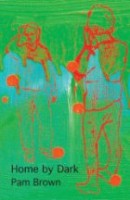
Pam Brown’s Home by Dark

Pam Brown, Home by Dark (Shearsman 2013)

1848612885The launch of this book last weekend (link is to a facebook photo gallery) was a convivial affair in an Erskineville pub. Unusually for a literary event, the football played silently on a large colour TV screen throughout, and a warm buzz of conversation echoed from the bar in the next room. Later, I saw myself in one of the facebook photos with a hand cupped behind one ear and a pained expression on my face. The pained look was, of course, nothing to do with the poetry or the company but was the result of my straining against the combined effect of Pam Brown’s quiet delivery, my deafness and the ambient noise.

On the day, Pam commented that the setting was appropriate, given the digressions and distractions of the poetry. As I was reading the book during the week, an alternative metaphor, even a fullblown analogy, occurred to me. For quietness, there’s the poems’ elliptical, almost throwaway quality – no assertive rhyme schemes, often no clear prose syntax, mostly no through narrative line; for deafness, there’s my ignorance of contemporary poetry – of the twenty or so poets mentioned in the acknowledgements or in the poems themselves, the only one I can honestly say I’ve read is Keats*, and L-A-N-G-U-A-G-E poetry and Oulipo (also mentioned) are pretty much closed books to me; for noises off, there’s PB’s daunting reputation as a poet’s poet, possibly even an academic poets’ poet – she’s the kind of person whose cover blurbs speak of precarity and sprezzatura. I realised I was approaching the page with a painful intensity, a virtual hand cupped behind my inner ear.

Well, of course scowling and squinting and feeling stupid is no way to read poetry. So I stopped it – the scowling etc – and read on regardless, going with the flow. And had a much better time. Of course, there are some poems I just didn’t get. There are some I kind of got but didn’t care about. And then there’s a lot that’s funny, thoughtful, sad, memorable … revisitable. I even read bits out to the Art Student, self proclaimed hater of poetry, and she wanted to steal them.

I think what appeals to me most is the sense in a lot of this poetry that it more or less fell out of Pam Brown’s head straight onto the page. (I know that’s an illusion, because I accidentally found an earlier version of one poem online, and got to see some of the careful reworking that went into creating that casual, uncrafted feel.) A number of the poems read as observations made while travelling – whether around town or across the planet, they display the same apparent randomness, the same self-deprecating wit, the same eye for the telling detail, the same play of mind.

From ‘Worldless’:

at the bus stop
_____long haired boys –
regenerate fashion,
_____retro,
fashions
_____arrive & go by
_______really quickly –
I had to live through
_________the entire decades!

______(peeved)

From ‘Leaving the World’ (I had to look up Jean Tinguely, but I’m glad I did):

along the LA freeway
black derricks
trundle up and down
like
Jean Tinguely sculptures
only__ominous
& witless
in a waterless world

The line that the Art Student wants to steal, the opening of ‘Haywire Here’:

who prepared this future?

and later in the same poem some lines where I enjoyed making my own sense (that may be quite different from Pam Brown’s):

and the barmaid’s
__never heard of sarsaparilla

(worse for me
_______& you)

Sarsaparilla was the favourite softdrink of my childhood, but it can be hard to find these days, so a barmaid who has never heard of it is a young woman with no sense of history. Worse, for us literary types, she hasn’t heard of Patrick White’s Season at Sarsaparilla, so we’re left feeling doubly invisible. Heh!

I recently came across a quote from 1935 letter by Wallace Stephens (of whose poetry I’ve read almost none and understood less): ‘As soon as people are perfectly sure of a poem they are just as likely as not to have no further interest in it; it loses whatever potency it had.’ And just before that, ‘As a rule, people very much prefer to take the solemn views of poetry.’ I think deciding not to scowl as I was reading this book was going against the preference for the solemn, and opening up to the potency of things I can’t be perfectly sure of.

awwbadge_2013 This is the fourth book I’ve read as part of the Australian Women Writers Challenge 2013.

* I did recognise a couple of lines from Bob Dylan, though he wasn’t acknowledged.

On the air again

My poem ‘Pronunciation Lesson’ was broadcast on Saturday in the repeat of ABC’s Poetica’s episode Hearing. You can listen online.