Tag Archives: poetry

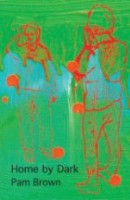
Pam Brown’s Home by Dark

Pam Brown, Home by Dark (Shearsman 2013)

1848612885The launch of this book last weekend (link is to a facebook photo gallery) was a convivial affair in an Erskineville pub. Unusually for a literary event, the football played silently on a large colour TV screen throughout, and a warm buzz of conversation echoed from the bar in the next room. Later, I saw myself in one of the facebook photos with a hand cupped behind one ear and a pained expression on my face. The pained look was, of course, nothing to do with the poetry or the company but was the result of my straining against the combined effect of Pam Brown’s quiet delivery, my deafness and the ambient noise.

On the day, Pam commented that the setting was appropriate, given the digressions and distractions of the poetry. As I was reading the book during the week, an alternative metaphor, even a fullblown analogy, occurred to me. For quietness, there’s the poems’ elliptical, almost throwaway quality – no assertive rhyme schemes, often no clear prose syntax, mostly no through narrative line; for deafness, there’s my ignorance of contemporary poetry – of the twenty or so poets mentioned in the acknowledgements or in the poems themselves, the only one I can honestly say I’ve read is Keats*, and L-A-N-G-U-A-G-E poetry and Oulipo (also mentioned) are pretty much closed books to me; for noises off, there’s PB’s daunting reputation as a poet’s poet, possibly even an academic poets’ poet – she’s the kind of person whose cover blurbs speak of precarity and sprezzatura. I realised I was approaching the page with a painful intensity, a virtual hand cupped behind my inner ear.

Well, of course scowling and squinting and feeling stupid is no way to read poetry. So I stopped it – the scowling etc – and read on regardless, going with the flow. And had a much better time. Of course, there are some poems I just didn’t get. There are some I kind of got but didn’t care about. And then there’s a lot that’s funny, thoughtful, sad, memorable … revisitable. I even read bits out to the Art Student, self proclaimed hater of poetry, and she wanted to steal them.

I think what appeals to me most is the sense in a lot of this poetry that it more or less fell out of Pam Brown’s head straight onto the page. (I know that’s an illusion, because I accidentally found an earlier version of one poem online, and got to see some of the careful reworking that went into creating that casual, uncrafted feel.) A number of the poems read as observations made while travelling – whether around town or across the planet, they display the same apparent randomness, the same self-deprecating wit, the same eye for the telling detail, the same play of mind.

From ‘Worldless’:

at the bus stop
_____long haired boys –
regenerate fashion,
_____retro,
fashions
_____arrive & go by
_______really quickly –
I had to live through
_________the entire decades!

______(peeved)

From ‘Leaving the World’ (I had to look up Jean Tinguely, but I’m glad I did):

along the LA freeway
black derricks
trundle up and down
like
Jean Tinguely sculptures
only__ominous
& witless
in a waterless world

The line that the Art Student wants to steal, the opening of ‘Haywire Here’:

who prepared this future?

and later in the same poem some lines where I enjoyed making my own sense (that may be quite different from Pam Brown’s):

and the barmaid’s
__never heard of sarsaparilla

(worse for me
_______& you)

Sarsaparilla was the favourite softdrink of my childhood, but it can be hard to find these days, so a barmaid who has never heard of it is a young woman with no sense of history. Worse, for us literary types, she hasn’t heard of Patrick White’s Season at Sarsaparilla, so we’re left feeling doubly invisible. Heh!

I recently came across a quote from 1935 letter by Wallace Stephens (of whose poetry I’ve read almost none and understood less): ‘As soon as people are perfectly sure of a poem they are just as likely as not to have no further interest in it; it loses whatever potency it had.’ And just before that, ‘As a rule, people very much prefer to take the solemn views of poetry.’ I think deciding not to scowl as I was reading this book was going against the preference for the solemn, and opening up to the potency of things I can’t be perfectly sure of.

awwbadge_2013 This is the fourth book I’ve read as part of the Australian Women Writers Challenge 2013.
* I did recognise a couple of lines from Bob Dylan, though he wasn’t acknowledged.

On the air again

My poem ‘Pronunciation Lesson’ was broadcast on Saturday in the repeat of ABC’s Poetica’s episode Hearing. You can listen online.

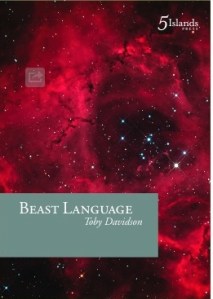
Toby Davidson’s Beast Language

Toby Davidson, Beast Language (Five Islands Press 2012)

Beast Language

In a recent post on the Southerly blog, Judith Beveridge quotes the Irish poet Michael Longley: ‘The poet makes the most complex and concentrated response that can be made with words to the total experience of living.’ That struck me as a reasonable description of what the poems in this book aspire to. She also writes, turning the spotlight away from the book and onto the reader:

What every poet wants I suppose are readers who are not necessarily other poets, who are not critics, who are not scholars, who are not dabblers, but people who are able to immerse themselves in reading so earnestly, so longingly that their experience of books is one of the best parts of their experience of life.

Well, I’m not necessarily another poet, a critic or a scholar, but as my regular readers would agree I’m prone to dabbling. I do know about earnest, longing immersion in the experience of reading: that’s how I used to read everything – Enid Blyton’s Finder-Outers in bed by light from the next room at 10, Agatha Christie when I was supposed to be studying for the Queensland Scholarship exam at 13, The Brothers Karamazov to challenge my faith as a pious Catholic 17 year old, Francis Webb as I was losing religion in my mid 20s. I could go on.

I still read a lot, but for whatever reason I’m less willing to commit myself these days. A writer – poet or otherwise – has to earn my earnest attention, and I’m more likely to approach a new writer with wariness than with longing. Something has to snag me before I can become, fitfully and imperfectly, that ideal reader.

As a dabbler, I enjoyed Beast Language. The language is alive and challengingly sharp, there’s plenty of wit and complex wordplay, and some brilliant images. Some elements, though, threatened to keep me at dabbler level: a lot of allusions (inevitably) left me mystified; some poems are compressed to the point of compaction; and I often found myself skimming without understanding (though not without enjoyment), starting with the very first poem, ‘Indian Ocean Dedication’, which begins ‘She has the genius of an ear / splitting hairs with either mind’ (I’m a lazy reader, but my couple of attempts at unpacking that have come up with nothing).

On the other hand, there’s a lot that makes me want to spend time with these poems. 1: I was predisposed to like them because Toby Davidson has done such a lovely job of editing Francis Webb’s Collected Poems and putting a spotlight on Webb more generally. 2: There’s a pervasive, attractive sense of seriousness, and of playfulness. 3. Where the poetry does communicate to me, I’m engaged. The second poem, ‘Genesis 1.2’, undoes the negative influence of the first with a sweet evocation of the effect of a cool breeze in a beach suburb. ‘Three Months Old’ inevitably invites comparison with Francis Webb’s ‘Five Days Old’, but shrugs it off: this is its own poem, a different person facing in his own way the experience of looking into a baby’s face: ‘Your eyes open mine like a sun strikes a planet / as planet eyes sun, our replete double-bond.’ And there’s much more.

So, the book is divided into three sections, ‘Juvenescence’, ‘Reproduction’ and ‘Hibernation’ – dealing roughly with childhood and youth, sex and art, and illness and death respectively. Starting with a child’s birthday party, an Australia Day punch-up, a zucchini, computer games, and especially, fabulously, car trips, the poems take us to unexpected, horizon-expanding places.

‘On Being a Toby’ is a poem I like a lot. Though it’s not particularly difficult, it’s a good example of the kinds of difficulty and pleasures I have found in this poetry. Here’s the whole poem, which I’ll assume is OK with Five Islands Press.

On Being a Toby

Triangular hat, jug of ale and a dog,
little brown mouse of children's tv,
Hamlet's cri de coeur incarnate;
all of my life it will be
---------------------me or not me.

What's in a name? Put that to a stem cell
conjugating the infinitive root;
not yet splitting, earthing, bonding
micro-pilgrims to our next
---------------------gnarled suit.

Cut to lump we live with what we have,
no one asks any more. Bearers of the question
of my name have twisted from the rack
and melted through the chimes of passing
---------------------to a lower floor.

In what's name? Ask hats, jugs, dogs,
mice, princes, star-crossed lovers and stem cells.
Ask them what it is to be
and they will say don't play the Dane
---------------------but understudy artfully:

for just as poems are understudies to Poems
your name is the understudy to a Name.

The first stanza starts out playing with associations on the poet’s name and progresses to wordplay referring to Hamlet that I’m embarrassed to say I initially found inscrutable, but I won’t insult you by spelling it out.

In the second stanza the plot thickens. It’s the kind of thing it’s easy to glide over when in dabbling mode. But when I reach it I’m feeling pleased with myself for having got the ‘to be or not to be’ reference, so I’m willing to do a bit of wrestling. Having invoked Hamlet‘s most famous line the poem now quotes the most famous line from Romeo and Juliet. (If you didn’t know anything about Shakespeare, this transition would still work, of course, but would give less pleasure.) Toby’s answer to the question couldn’t be further from Romeo’s. A name, he suggests, has something in common with a stem cell, whose development is described in a kind of metaphor mash-up of linguistics and embryology: stem cells act like etymological roots, and they develop as verbs are conjugated; cells and infinitives split, and the infinitive, now that it’s been mentioned, suggests something of the mystery of coming into being, from the infinite to the particular. A name is an abstract thing, all potential, as a stem cell is unspecialised, until complexity and experience give some shape, a gnarledness. (Skip that ‘suit’ for now. It stands out oddly, but sometimes skipping isn’t laziness, but negative capability.)

The next stanza isn’t easy either. Cut to lump? At first, looking for complication, I thought this might allude to the oafish character in She Stoops to Conquer. But no, Google tells me his name is Tony, not Toby, Lumpkin. I decided to read the phrase as a direction to the reader: cut from the image of delicate micro-pilgrims to the lumpish complete human. And of course there’s a hint of ‘Like it or lump it’. With ‘Bearers of the question / of my name’ we realise that the whole poem depends on getting the Hamlet reference. If you missed it back there, this phrase is pretty much a handful of nonsense. But what is this rack of which it speaks? The torture of indecision? And if so, what are the chimes? (Dylan’s ‘Chimes of Freedom’? Nah.) I take ‘a lower floor’ as my key: the poem has leapt to a department store (a leap, I now realise, that was foreshadowed by that ‘suit’ earlier), where some suits have twisted from their clothing rack and taken the lift (which chimes on arrival) downwards. I first read this as suggesting a descent into hell – suicide or failure to function, perhaps – but I think that’s a dead end: the lower floor is closer to the ground, so their movement is a continuation of the ‘earthing’ movement of the ‘micro-pilgrims’, from abstraction to the particular. (I wonder momentarily if ‘Cut to lump’ is a tailoring term, which would make the transition from microbiology to department store less abrupt, but as far as I know it’s not.)

‘In what’s name?’ At this point, extraneous information comes into play in my reading. I know that Toby Davidson has a book coming out this year entitled Born of Fire, Possessed by Darkness: Mysticism and Australian Poetry. So maybe we’re moving into mystical territory. The question seems to assume some deeper reality, perhaps a Platonic realm. But whereas the earlier question was to be asked of a stem cell, this one is to be put to the whole array of things, people and imagined entities evoked in the poem so far (including Romeo and Juliet but not off-the-rack suits). And they all line up behind Uncle Monty in Withnail and I (no I didn’t have the reference in my head, but the phrase ‘play the Dane’ rang a bell, and I found this online):

It is the most shattering experience of a young man’s life, when one morning he awakes and quite reasonably says to himself, ‘I will never play the Dane.’ When that moment comes, one’s ambition ceases.

Just as the poem gives a different answer to Romeo’s question, this means something different from Uncle Monty: as I read it, the ‘hats, dogs, jugs’, fictional creations and scientific knowledge, all are invitations to engage with the world – ‘don’t play the Dane’ means something like ‘don’t get lost in metaphysical introspection’.

And then the last two lines reassert the metaphysical world view that the chorus of hats etc has just rejected. I don’t actually know what’s being said here beyond a general sense that the lines are urging an attractive modesty, and I realise that that’s quite enough for me. When I was studying George Herbert in an earlier life, I was shocked by a distinguished scholar’s reading of ‘The Flower‘ that silently ignored that wonderful poem’s last stanza, in which the poet addresses God – clearly unnecessary to the scholar’s humanist sensibility. Maybe I’m doing that to this poem, but, well, at least I’m not being silent about it.

I ought to point out, as an afterthought, that one of my favourite lines in the whole book could be read as expressing a spiritual / mystical / transcendental yearning, but whether it does or not it embodies a similar, though definitely less cheerful reconciliation to the actual world as ‘On Being a Toby’. After describing a drunken punch-up on Australia Day, the poem ‘Skyshow’ ends:

__________To summarise: we are a noble people, unable to bear
ourselves without booze, if we can’t blow things up we just fight
for the hell of it, our national day is a crucible of destruction,
and I want to go home, I just want to go home, but this is where I live.

So there you are. I’ve barely given any kind of sense of the book as a whole, but that’s all my blogging time used up.

(I ought to mention that Five Islands Press gave me a free copy of this book. I would have bought one anyhow.)

Marrickville’s phantom mattress poet(s)

Old mattresses are notoriously hard to recycle – the charities won’t take them because it’s illegal to resell them, and who wants to inherit someone else’s lumpy, stained discarded bedding? Recently a number of these items have been turning up on Marrickville kerbs, bearing inscriptions. Here’s one that I’ve had the presence of mind to preserve for posterity, or at least for the internet. Appropriately enough, it’s leaning against the Shepherd Street fence of Marrickville Public School:

Mattress1

In case you can’t see the image, the words on the mattress are:

1 owner
54 cycles
6 lovers
and a baby boy

As I was taking the photo, a young man stopped and said, ‘There’s only one possible response: If you were single I’d take you home with me.’

From Jennifer Maiden’s backlist

Jennifer Maiden, Tactics (UQP 1974)
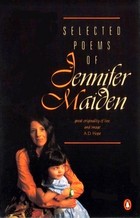
Selected Poems of Jennifer Maiden (Penguin 1990)
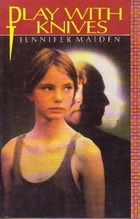
Jennifer Maiden, Play with Knives (Allen & Unwin 1990)

Friends of mine who met and married in their 40s discovered during their courtship that twenty years earlier they had moved in the same circles, shared similar enthusiasms, gone to the same demonstrations, once even posed in the same group photo, but never actually met. They speculate that if they had met back then, they might never have fallen in love, might not even have liked each other.

It can be like that with readers and writers. I may have heard Jennifer Maiden read in the early 1970s, and almost certainly read some of her poems in magazines and anthologies, but I didn’t engage with her poetry until her 1999 collection, Mines, and – as dedicated readers of this blog will have noticed – I now can’t get enough of her new work. In the last little while I’ve journeyed back in time to read three of her early books: her first poetry collection, a selection she got together after eight books, and a novel. I’ve enjoyed all three (though ‘enjoyed’ may not be quite the right word for some of the more gruesome bits), but I’m not sure I would have embraced the work of that 20- and 30-something writer when I was a 20- and 30-something reader.

IMG_0682It’s clear from Maiden’s first book, Tactics, why she was included in significant 70s anthologies like Kate Jennings’s Mother I’m Rooted (1975) and John Tranter’s The New Australian Poetry (1979), in which she was one of only two women. This early poetry is more compressed and elliptical, and in that way much more difficult, than more recent work, but it’s recognisably the same mind: grappling with issues of violence, holding a public event or abstract concept up against an intensely private perception or intimate moment, refusing easy answers. From the perspective of 2012, it’s interesting to read in the cover blurb, ‘She is interested in the Labor party, and married,’ two subjects that don’t get an obvious look-in in the poetry in 1974, but are addressed head-on by the more relaxed older woman in poem after poem (that is, if the notion of being married can be taken to include being a mother).

Reading the book at about the same time as Nigel Robert’s In Casablanca for the Waters, which hails from the same era, led to some interesting juxtapositions. Take Roberts’s ‘As Brian Bell said‘ and Maiden’s ‘Isolde and the Censor’. Both poems are about works of art that assert female sexuality, the former using what these days would be called explicit language about a Modigliano nude (the link saves me from risking my PG rating, though I should advise you there’s a typo – it should be ‘crap’ not ‘crab’), the latter describing a censor, ‘complacent Arbiter’, obliviously applauding a Wagnerian soprano who ‘carols the meltwater of her “heart”‘. Both poems, I realised, were written in the context of a struggle against repressive censorship: Maiden’s narrative celebrates euphemism as an evasive tactic, Roberts’s refusal of euphemism is a direct challenge to the censorious. I don’t think I would have understood the political seriousness of either poem if I hadn’t read them more or less together.

1spjmThe 1990 Selected Poems includes ‘The Problem of Evil’, alluded to in ‘Sphinx on Legs’ in this year’s Liquid Nitrogen. It’s a narrative but, possibly typically of its time, is not at pains to make itself understood. (I thought of Dr Jim Tulip’s saying that a certain poet’s work was like the pre–Vatican II Catholic Mass, where the priest kept his back to the audience and mumbled the ritual inaudibly in a foreign language.) It’s still worth reading even if, like me, you decide not to make the mental effort required to disentangle it. As the book progresses through the six books published between Tactics and 1990, there’s a lovely sense of the poetic voice relaxing, becoming more open.

There’s a lot to enjoy. One thing that struck me was the continuing exploration of evil, which reaches something of a climax in The Trust, a long poem in which a story-teller addresses a character in a story she is making up, a story that involves violent death and a suggestion of necrophilia (and incidentally makes it clear that the valuing of euphemism in ‘Isolde and the Censor’ doesn’t imply a rejection of blunt language). It’s not so much violence and evil that is being explored, as our fascination with it. Certainly there’s a lot in these poems that enriches my reading of more recent work: in them, violence is not only something out there, in other people, but something to be worried at in one’s own heart as well. Take these lines from ‘The Mother-in-Law of the Marquis de Sade’ (from Birthstones, 1978):

To sit people on gas-stove jets,
to plug them into light-sockets,
to prod with sparklers, stand
them barefoot in buckets of dry ice:
_____I remember I devised
all these things in the bored
South Africa of childhood,
________the shrill
Brazil that still entrances
the clean children next door

The Soweto uprising was recent when the poem was written, and Brazil was a brutal military dictatorship. The invocation of these regimes in the context of children’s cruel imagining could be read as trivialising them, but I think the poem works the other way, against the trivialising of childhood: the big public violence that fills the news and the private unspoken and unacted violent imagining are part of the same phenomenon. ‘Tiananmen Square’, one of the seven previously uncollected poems at the end of the book, prefigures the way recent poems respond sharply and personally to what Martin Duwell calls ‘media-experienced public events’: it begins, ‘I’m forty now.’ Two of these seven poems, ‘Aptly’ and ‘Chakola’, mark the debut appearance of a major character in the Maiden oeuvre, identified in the latter poem as ‘my three year daughter’.

1pkI wanted to read Play with Knives because its two main characters, George Jeffreys and Clare Collins, have reappeared many times in the last three books. Jennifer Maiden said in her recent fabulous interview with Magdalena Ball on Blog Talk Radio that it’s part of the conceit of the George Jeffreys poems that the reader knows these characters from previously, but it doesn’t really matter if she/he actually does know them. All the same, when I saw the book listed on the internet for a reasonable price I decided to buy and read.

If you avoid stories where terrible things are done to women, then stay away from this one. It’s a pretend genre piece involving a serial killer in Western Sydney, which reaches a truly nasty and unexpected climax. I say ‘pretend genre piece’ because the serial killer scenario is secondary to the story of a gossipy, slightly sleazy group of public servants and professionals involved in the release and return to civilian life of teenager Clare Forster/Collins who had killed and mutilated her three younger siblings when she was nine years old. At the heart of this story is Clare’s relationship with the narrator, probation officer George Jeffreys.

As I read the conversations between these characters, first as George is determining whether he will recommend Clare’s release, and then as he is her mentor while on parole, I was reminded of Gitta Sereny’s Cries Unheard, in which Sereny tries to get inside the mind of child murderer Mary Bell, through long and exhausting conversations with her as an adult. The Sereny book was published nine years after this one, so it’s not a source, and the books have very different angles on the subject of child murderers: Sereny asks how a child could have come to commit such an act; Maiden is interested in what life is like for the perpetrator afterwards – and what it means to be fascinated by such a person.

The broad outline of the George–Clare back-story is given in a note in Friendly Fire, and it’s true that even that much information might not be necessary for an understanding of the poems. But it’s clear to me that, having read the book with all its ethical creepiness, outright horror and high romance, I can read the poems better. It’s not as necessary as Shakespeare is to Eliot’s The Wasteland, but it helps.

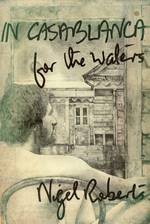
Nigel Roberts in Casablanca for the Waters

Nigel Roberts, In Casablanca for the Waters (Wild and Woolley 1977)

2015498179I’ve been vaguely on the look-out for this book for decades. Nigel Roberts was a regular reader at the Balmain Poetry Readings of the late 1960s and early 1970s, and something of a mover and shaker in the volatile poetry scene of those days. He was canonised as one of the generation of 68 in John Tranter’s New Australian Poetry; he turns up in Robert Adamson’s Inside Out as ‘a robust individual with a generous mind, passionate in his belief that poetry should reach more people at a street level’; he helped found a number of poetry magazines with names like Free Poetry; and he worked as an art teacher in the Department of Education, including at the school of one of my sons. He has stayed in my mind because of one half-remembered poem. I was very happy recently to find the book, and the poem, on the shelves of Berkelouw’s secondhand and antiquarian bookshop.

The poem is ‘Flavour of the Month’, in which the male speaker inveighs against flavoured vaginal douches in a romantic, anti-corporate celebration of the female body. It struck a chord with me 40 years ago: in spite of its ‘sexually explicit language’ it reminded me – perhaps by way of Blake’s proverb, ‘The nakedness of woman is the glory of God’ – of Gerard Manly Hopkins’s ‘God’s Grandeur‘: ‘all is seared with trade … nor can foot feel, being shod.’ Rereading ‘Flavour of the Month’ now, I still like it, but it does feel dated: what was fashionably transgressive 40 years now just seems crude.

As it happens, much of this collection is dated. There’s quite a lot of writing about sex, particularly oral sex, that may have been liberatory once but is now deadeningly familiar. There’s some smirking about marijuana, some right-on sentiments about the US-Vietnam War, quite a lot of ephemeral poetry-wars rhetoric and gossip, unaltered phrases from Bob Dylan’s songs, and satiric barbs whose targets have died or moved on. The introductory note, by no less a star than US poet Robert Duncan, reads now as a puerile collection of penis jokes – not a preface but ‘A Prepucal Face’.

The datedness is probably an inevitable by-product of the poems’ strengths – their spontaneity, their aim to ‘reach more people … at street level’. And perhaps it’s a matter of point of view. The poems offer a fascinating glimpse of an epoch that involved group houses, an odd explicitness about sex and sexism, marijuana as a symbol of subversion, and knockabout creativity.

A handful of poems stand out. For me at least there’s still ‘Flavour of the Month’. ‘The Quote from Auden’ is almost a parody of Dylan’s ‘The Gates of Eden’. With ‘In the Family Album’, the poetry comes into its own. I haven’t mentioned the use of illustrations. The photographs that punctuate the poems are mostly comic or ‘satirical’ in effect, as in the advertisement for Raspberry Douche that accompanies ‘Flavour of the Month’. Those incorporated into ‘In the Family Album’ are of a different order: they show the poet’s grandfather as a young man in a boater, at 75 at an Anzac Day March, waiting with Kitchener for a devastating Dervish attack in the Boer War, and their presence enriches the poem’s quiet contemplation of the relationship between the poet and that grandfather – so that when it ends with an anti-US-Vietnam-war chant and an anti-war slogan, the smart-aleckery and bravado that is characteristic of most of the book is just not there.

Tranter’s Choice

John Tranter (editor), The Best Australian Poems 2012 (Black Inc 2012)

bp2112My note on this book in the little blog where I keep a note of my reading provoked an anonymous comment full of rage and despair. (I’m linking to it, because it seems a pity that such passion should go almost unheard.) It may be that the commenter didn’t actually have this book in mind, since the poem s/he singled out for particular spleen is actually in last year’s Best Australian Poems, but it’s probably inevitable that any anthology claiming to be the best of something will annoy someone, especially if they’ve got a dog in the fight themselves.

Although I’d secretly love someone to decide that my November Sonnets were works of genius, I didn’t actually  have a dog in this fight. So I wasn’t annoyed. I can’t say that I was swept away either. I’d read and enjoyed about half a dozen of the poems, and was delighted to see them included. And there are fine poems by many writers whose work I know, and by many I don’t. John Tranter’s own contribution, at the conclusion of his introduction, is a kind of cento – an assemblage of lines and images from the chosen poems, but with Tranteresque impersonality they don’t form a coherent whole but are ‘chosen more or less at random’.

Some previously unpublished poems were submitted directly to this anthology. But most appeared previously in a wide range of publications, including books, literary journals and newspapers. Both Quadrant and Overland get a guernsey, likewise both Fairfax and Murdoch – a touch of poetry making the whole world kin? But why, I ask querulously, is there nothing from the paper I subscribe to, the Sydney Morning Herald? And I answer even more querulously because poems turn up in the Sydney Morning Herald only slightly more often than teeth in hens. SMH, Susan Wyndham, literary editor of the SMH.

Added a couple of hours later: I know this post isn’t a review. As it happens, Ali Alizadeh’s excellent discussion of the book went up on the Cordite Poetry Review site not long after I posted my little piece. I recommend it.

Jennifer Maiden’s Liquid Nitrogen

Jennifer Maiden, Liquid Nitrogen (Giramondo 2012)

In ‘The Year of the Ox’, the long poem that opens this collection, Jennifer Maiden identifies herself as an ox (her daughter, who has been appearing in her poems for at least 20 years, is a tiger):

==================I plough my furrow
heavily and fruitfully and my seldom rage
is that of the earth like an earthquake, sudden
and efficiently gutting. She is full of lovely
litheness and protection. Next year I
will still plough slowly, heavily.

She invites us to see her poems as ploughed fields, produced by steady work, but work performed with power, deliberation and passion, no hint of Vachel Lindsay’s ‘ox-like, limp and leaden-eyed‘. I wonder if it’s deliberate, though, that the poem doesn’t mention that oxen are ruminants – because while Jennifer Maiden’s poetry goes in for emeralds and sapphires and turquoise rather than lead, she certainly ruminates: in the ‘diary poems’ (there are three in this book – the term is ironical, taken from an essay by Martin Duwell [actually a review by Andrew Sant – see Katharine Margot Toohey’s comment]), and in the imaginary dialogues which often begin with one of the participants waking up (which I think of as being like the relevant synapses of the poet’s brain turning on).

A main preoccupation of these ruminations is political power. Many of Jennifer Maiden’s books have taken their titles from the jargon of warfare – Tactics (1974), The Occupying Forces (1975), The Border Loss (1979), Acoustic Shadow (1993), Mines (1999), Friendly Fire (2005). Liquid Nitrogen isn’t obviously in this tradition. The substance liquid nitrogen first appears here (in ‘George Jeffreys 11: George Jeffreys Woke Up in Langley’) as a cooling agent used to keep the CIA computers from overheating – not a weapon of war as such, but part of the machinery of repressive state power. It does turn up again in later poems and its metaphoric meaning transforms – ‘Liquid / nitrogen does not shred, it facilitates, / should not be exclusive to Satan, to Langley, is / too good’ (‘Diary Poem: The Uses of Liquid Nitrogen’). Like liquid nitrogen, Maiden’s poems provide an environment in which data can be preserved and experiments can be conducted.

So Hillary Clinton and Eleanor Roosevelt have challenging but affectionate conversations (two poems in this book); former parole officer George Jeffreys and former child murderer Clare Collins, characters from Maiden’s 1990 novel Play with Knives, continue their fictional adventures in trouble spots all over the world (four poems). Julia Gillard (in three poems) is scrutinised by the newly awakened Aneurin Bevan, for whom the actual Julia Gillard has expressed admiration. There’s also Kevin Rudd with Dietrich Bonhoeffer (one and a half poems) and Bob Carr with US Senator Robert Byrd (one poem). These poems may involve ox-like ploughing and rumination, they may be thought-experiments conducted in metaphorical liquid nitrogen. Unlike working oxen, though, they are often playful; and unlike liquid nitrogen they are suffused with warmth, and sometimes heat. I could quote lots, but here’s Dietrich Bonhoeffer on Kevin Rudd (in ‘Deep River’):

=========== He thought that he had never
actually seen anyone purse their lips as much
as Rudd did, even Germans, but the jokes
Rudd made were flirtily Teutonic, his slang
as strangely stylised as an Eden from a culture
he knew had never been, as if to say,
==========''Okay:
so we're all self-constructed out of trauma.
==========Standing here,
I defy you to file me away.'

I love the way this moves from deft observation of mannerisms to much-mocked peculiarities of speech to a completely unexpected flash of compassionate insight. That’s characteristic of these poems – ‘Diary Poem: The Uses of Powerlessness’ which rails angrily against Julia Gillard, begins with a cheerfully resigned address to the ‘Good Spirit of the Universe’ which has given Gillard as a subject, and develops as a meditation on the nature of a certain kind of political power, and in the end the scathing criticism has not been dulled, but it has been infused by a sense of Gillard as dreadfully deprived.

The book isn’t just a collection of disparate poems. Themes are developed from one poem to another. The development of the liquid nitrogen image is just one example. Relationships between the characters in the dialogue poems unfold in an almost novelistic way. In one poem, the poet writes of a weird little dog she and her daughter have seen on the TV news that she had considered giving it to George Jeffreys, then 25 pages later George and Clare adopt it in Cairo.

I should mention that Giramondo sent me a free copy, presumably because I’m a declared Jennifer Maiden fan. I’m grateful for the gift.

Sonnet #14: So many books

The best-of-2012 lists are starting to appear. The New York Times has published their 100 Notable Books. I’ve read only two of them, a novel and a memoir. So, for my 14th and last sonnet of the month:

Sonnet 14: So many books
So many books, so little life
still left. Some say they wake at three
and lose themselves in mental strife.
Not I. The darkest hours are free
from interruptions: time to read
a knotty verse, a learned screed,
a chapter that will make me weep.
Alas, I soon go back to sleep.
Too little life, too many pages:
War and Peace, The Iliad,
A la recherche, Upanishad.
I’ll have to suffer grief’s five stages:
though I clock fifty books a year
I still may never read Jane Eyre.

Sonnet #13: Daughter and mother cross the street

This happened outside my house today:

Sonnet 13: Daughter and mother cross the street
They stop the traffic. Big and small,
they stroll across the street with strollers,
no hand-holding, none of all
that worried care, those grinding molars.
Mother and her three year old
who pushes teddy, coolly bold,
sucking on her chup-a-chup,
mooch out and hold the traffic up,
though truth to tell it’s just one truck.
The driver waved them from the kerb
and watched with patience quite superb
a dreaming duckling and her duck
meander out. Ah, that’s the charm
to keep our young ones safe from harm.

I couldn’t fit everything into the 14 lines. I walked out of my door to see the woman and the little girl wandering across the road, with at least three metres between them – the little girl taking her own sweet time and completely out of reach in case a car came unexpectedly around a corner. I was amazed at the mother’s nonchalance. She mouthed ‘thank you’ to the truck driver. I took that as an opening , and when I caught up with her I said something like, ‘That was pretty amazing to watch.’ She explained that he had stopped for them even though there’s no pedestrian crossing.

The little girl pulled the lolly out of her mouth and waved at me with it. I said to her, ‘That would distract you from the road, wouldn’t it?’ Her mother explained that she had got the lolly from Woolworths where, in spite of her repeated complaints, they leave the sweets on a low shelf near the check-out: ‘I said, “I’m not paying for that. I don’t want it, but you’ve deliberately left it where my daughter can pick it up.” So we got it for free!’

We should all have had such mothers, to let us cross the street without fuss, to fight the wiles of capitalism, and to allow us an occasional sweet victory.