For decades newspaper cartoonists have laboured for metaphorical links between the Melbourne Cup and the US election that fell on the same Tuesday in November. This stanza labours a link between astronomical and political.
November verse 6: Eclipse

Here the streets were full of gazers,
faces to the shadowed moon.
No pyrotechnics to amaze us:
cosmic lightshow, gone too soon.
A woman said, 'It's good so many
came outdoors, when there's Sweet Fanny
Adams profit to be made,
just heaven's bodies on parade.'
But over there the lines of voters
braced themselves for Thunderdome
(though far too many stayed at home).
The climate, SCOTUS, former POTUS:
stakes are high this northern Fall –
this Tuesday’s poll could doom us all.
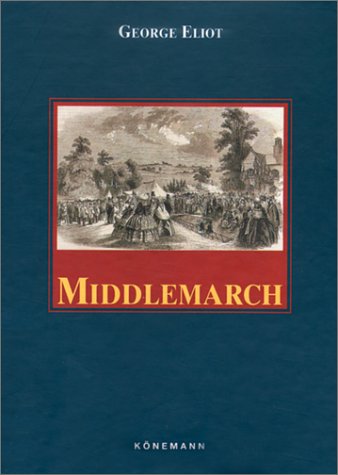
I had read just eight pages of Middlemarch, two mornings’ worth, squinting through sleep bleared eyes, when a kind friend lent me her copy, a beautiful two-volume edition from a German publishing house that is set in type that will demand less effort than the on I picked up from Gould’s bookshop.
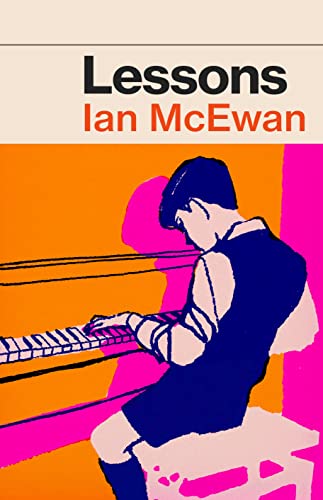
In other reading this month, when the protagonist of Ian McEwan’s Lessons reads the novel written by his estranged wife, he finds to his chagrin that it is brilliant, and includes ‘high-flying digressions offered up to the ghost of George Eliot’ (page 243).
So far, it’s not so much high-flying digressions as sharp authorial observations on the side that are delighting me. For instance, in the first scene where the gorgeous, privileged Rosamond Price and plain, less privileged Mary Garth have a scene together, there’s this brief excursion into the abstract:
Plainness has peculiar temptations and vices quite as much as beauty; it is apt either to feign amiability, or, not feigning it, to show all the repulsiveness of discontent: at any rate, to be called an ugly thing in contrast with that lovely creature your companion, is apt to produce some effect beyond a sense of fine veracity and fitness in the phrase.
(Page 130)
Part of the pleasure of this kind of thing is that it’s ironic. The narrator goes on to attribute to Mary the ‘vice’ of speaking with a satiric edge, a quality the narrator herself has in spades. There’s always a sense of the narrator as a character here, one who has a lot in common with George Eliot herself. In this example, it’s hard not to read the comment as springing in part from Eliot’s own experience of being seen as plain (‘horse-faced’, I dimly remember). The novel’s opening words, ‘To my dear husband’, affirm that George Eliot is a woman, and I guess she could assume that the English reading public knew who she was.
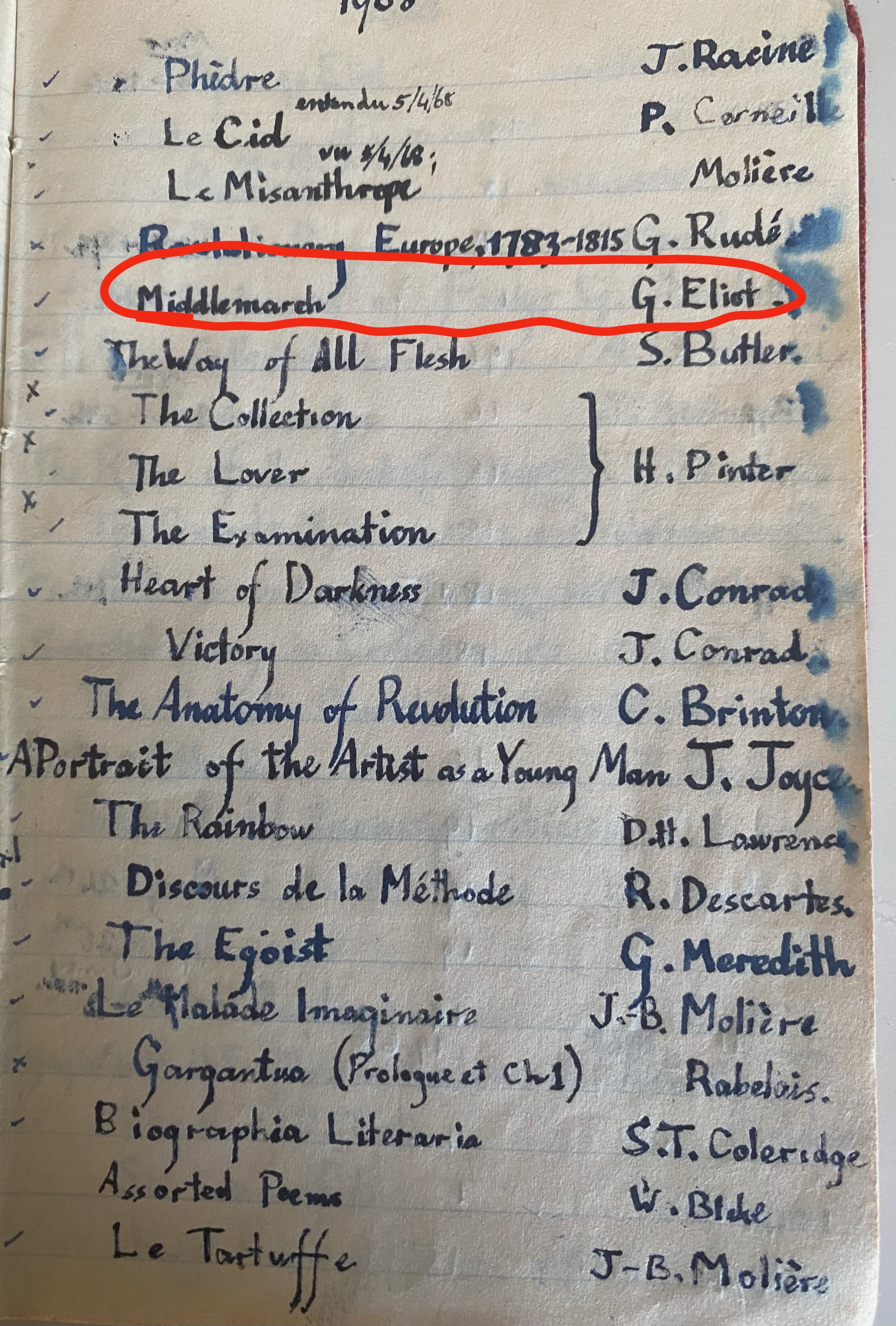
When I read Middlemarch in 1968, it was as part of an exhilarating immersion in literary classics. In the little notebook where I listed the books I read, it appears on the same page Racine’s Phèdre, Samuel Butler’s The Way of All Flesh, and books by Pinter, Conrad, Joyce, Lawrence, Descartes and Rabelais. So reading it now, with that tsunami well in the past and without my 20-year-old predisposition to awe, is like meeting it for the first time.
I’m pretty sure I picked up on the ironic tone back then, but I doubt if I understood that the affectionate mockery of the idealistic heroine Dorothea and her pragmatic sister Celia, of gorgeous Rosamond and her flibbertigibbet brother Fred, and of ‘plain’, sarcastic Mary all has to do with their youth. The narrator is in love with their lack of world-weariness, and I’m in love with them too, as I doubt I was the first time around, however much I loved the book.
Mind you, I’ve read to the Emerging Artist a couple of passages that gave me joy. She responded to the first with a noncommittal noise, and to the second, ‘Now I know I was right not to read past the first page.’ So it’s not a book for all tastes.
So far, Dorothea has committed herself to marry the dried up old stick, Mr Casaubon. Youngish Dr Lydgate has arrived in the area full of reforming zeal. Rosamond, whose beauty no man could resist, is determined to marry someone from outsides Middlemarch and Lydgate is a likely prospect. Fred is in love with Mary, who has been his friend since childhood. The older generation is rife with intrigue to do with religious intolerance, political ambition, greed, and owning-class pretensions. So far, it’s a frothy comedy of manners as told by an immensely erudite and morally serious narrator.
This morning, there was some dialogue worthy of Oscar Wilde. Mary is responding to Fred’s proposal of marriage, which we understand has been made many times before::
‘If l did love you, I would not marry you: I would certainly not promise ever to marry you.’ ‘I think that is quite wicked, Mary. If you love me, you ought to promise to marry me.’ ‘On the contrary, I think it would be wicked in me to marry you even if I did love you.’ ‘You mean, just as I am, without any means of maintaining a wife. Of course: I am but three-and-twenty.’ ‘In that last point you will alter. But I am not so sure of any other alteration. My father says an idle man ought not to exist, much less, be married.’ ‘Then I am to blow my brains out?’ ‘No; on the whole I should think you would do better to pass your examination.’
(Page 162)
I hope they end up living happily together, rich or poor. I know their love’s path will not be smooth, any more than that of any of the other potential love matches.
This happens every Tuesday, though the musical accompaniment is usually Latin disco rather than Glee.
November verse 5: At the Active Seniors Class

Meek we are, like lambs to slaughter –
not for killing, nor still young.
Lead us on, we say, no quarter,
keep us active, though we're bung.
A back, a knee, a frozen shoulder,
nameless aches from growing older,
long in tooth and short of breath:
we've miles to go before our death.
'What doesn't kill you makes you stronger':
that's the soundtrack as we squat,
lunge, lift weights, tighten cores, get hot
and sweaty. Can we last much longer?
Then it's stretches, brief applause,
and back to life outside those doors
No sooner had my last verse mentioned the joys of staying up all night than this happened. Please don’t read this as arguing that the solution to all problems is to call the police
November verse 4: When neighbours have a noisy party

I wake at two, hear thumping music,
sink back deep inside my dream
of old alarms. But meanwhile you stick
useless earplugs in, you scream
a silent (thank you!) scream, phone coppers:
Don't chase crime, be music-stoppers.
You pace, you read, drink water, weep:
the lads next door have murdered sleep.
And I snooze on, as some through warnings
scientists give on climate change,
through so much violence, so much strange
and deadly in our world. This morning
cops at last came, put things right.
Your vigil brought a silent night.
This is a tentative experiment in a different way (for me) of blogging about books: take page 75 and write whatever comes to mind about it. After my next birthday, if I keep this up, I’ll take page 76.
Page 75 of Lessons would probably have a red line drawn through it by someone writing a film script. It’s mainly a minor character’s backstory.
By this stage of the novel, the main character, Roland Baines, has been abandoned by his wife, Alissa, with no warning and no real word of explanation, leaving him to care for their infant son. He has received a couple of postcards from European addresses, the most recent saying she is about to visit her parents in Germany. Page 75 begins with his wondering why she is visiting her parents and imagining that if she tells them what she has done, ‘the row would be like no other’. McEwan delivers on this tease later when Roland hears the mother’s account of that row, which is quite different from what he imagines. Later still, that account is confirmed by Alissa herself.
The rest of the page begins the back story of Alissa’s mother, Jane: born in 1920, educated in a grammar school, and by the end of the page nursing literary ambitions working as a part-time typist at Cyril Connolly’s prestigious literary magazine Horizon (a real magazine):
She later told her son-in-law that she was seated in an invisible corner and given the dullest correspondence. She wasn’t beautiful or well connected and socially adroit like many of the young women who passed through the office. Reasonably enough, Connolly barely noticed her but occasionally she was in the presence of literary gods. She saw, or thought she saw, George Orwell, Aldous Huxley and a woman who may well have been Virginia Woolf. But, as Roland knew, Woolf had been dead for two years and Huxley was living in California.
There are many passages like this in the book: passages that fill us in on someone’s background, or summarise a novel or (in one case) a children’s picture book. As here, the writing keeps the main narrative in sight: we’re getting Jane’s story, but it’s as told to Roland, and commented on by him. There are plenty of dramatic scenes in the novel – Roland visits Berlin as the wall is coming down; he has a weird physical struggle with a conservative politician in the wilds of Scotland; in his 70s, he confronts a woman who sexually abused him as a 14 year old – but even in undramatic passages like this, there’s plenty of complexity to hold a reader’s interest. There’s also a version of one of the novel’s recurring motifs: a life lived in the shadow of fame.
The novel tells the story of Roland’s life, from early childhood in Libya, his time at boarding school where he has a deeply troubling sexual experience with his piano teacher, through years of drifting, his shortlived marriage to Alissa, single parenthood, some years of happiness in a new relationship, to old age. His early promise as a pianist is blighted by the early quasi-consensual sexual abuse: that and his abandonment by Alissa are the two intimate experiences that shape his life. The Suez crisis, the Cuban crisis, the building and fall of the Berlin wall, Brexit and Covid 19: each of these also has a direct impact. The novel is immensely satisfying as the story of an ordinary life that covers, as it happens, almost exactly the same period as my own. I feel as if I know Roland.
Rereading page 75 makes me realise that his story also functions as a conduit for other stories, mostly stories of women: his mother, the piano teacher, Alissa, Alissa’s mother Jane, Daphne who is a good friend and confidante in the early chapters and later become much more, and finally, briefly, his granddaughter Stefanie. Each of these stories can be seen as holding lessons for Roland, and for us, or at least they can be seen as posing questions: about adults’ responsibility to young people in their care, about complex issues of consent, about how to face death, about the competing demands of art and personal relationships, about ways to assess success and failure. Not that it’s didactic. When Roland reads Tomi Ungerer’s Flix to his granddaughter, he tries to make it a teaching moment by asking her if the story ‘is trying to tell us something about people’:
She looked at him blankly. ‘Don’t be silly, Opa. It’s about cats and dogs.’ He saw her point. A shame to ruin a good tale by turning it into a lesson. That could be for later.
(Page 481-482)
Lessons is a good tale, or a whole entwined mass of good tales. One of them is the tale of a man who is offered many lessons and learns some of them. If there is one overarching lesson, it’s that the more you know about someone’s life, the less easy it is to make a sharp moral judgement.
She fell again today. No broken bones this time, but something gave. She called my phone, all calmly spoken: ‘Help. I’m stuck. Please come and drive me home.’ No time for noes or maybes. Growing old is not for babies. Parkinson’s is crueller still. We all go when we get a call. Friends would once go dancing, singing, up to usher in the dawn, greet fate with our collective scorn. But now time’s chariot comes winging, we know when we face the gun it’s one for all and all for one.
It looks as if this year’s November verses are going to be diary entries.
November verse 2: Swimming with a two-year-old

He pushes me, says, 'Go way, Poppa!'
If I go away he'll drown.
Still, I obey. It's only proper.
Kicking, flailing, he goes down
then back up in my arms and grinning,
safe, a little shaken – winning.
Sister swims, so he will too:
skip the learning, let's just do!
The class begins: a different story.
Ring a rosy, crocodile,
wobble wobble, throw the ball:
each game a challenge, fun or scary.
Splash! We laugh and cry. We play.
We learn, it seems, just by-the-way.
For the thirteenth year in a row, I’m setting out to write 14 fourteen-line poems in November. I intend to write mostly Onegin stanzas*, and at least some of them will relate to the news of the day. As always the aim is quantity, and quality if possible.
So here goes with Verse Nº 1, hoping I don’t lose too many readers who might otherwise have been referred here by Twitter:
On quitting Twitter
I'll miss the cats and fancy dances,
Dreyer's copy-ed decrees,
First Nations chat – what are the chances
I'll find another path to these?
I'll miss the links to weighty writing,
jokes and spleen and humble-skiting,
praise apportioned, insults hurled.
I've closed my window on that world.

Thank Musk, speech freedom absolutist.
No longer am I like a chook
transfixed by python's stony look,
a string to algorithm's lutist.
Come on out, the real world's fine.
My idle moments now are mine.
For those who don’t know:
Benjamin Dreyer is chief copy-editor at Random House in New York, author of Dreyer’s English: An Utterly Correct Guide to English and Style, passionate advocate of the Oxford comma and endlessly amusing tweeter
Indigenous X is, or was until recent attacks led them to hit pause, a rotating Twitter account founded by Luke Pearson and hosted by a different First Nations person each week
* The Onegin stanza was probably invented by Alexander Pushkin and features in his verse novel Eugene Onegin. I first encountered it, and fell into its thrall, in Vikram Seth’s verse novel The Golden Gate. It consists of 14 lines of iambic tetrameter (meaning that each line has four beats, or four feet, of two syllables each) with the rhyme scheme aBaB ccDD eFF eGG, where the lowercase letters represent rhymes where the stress falls on the second-last syllable, and the uppercase represent rhymes where the stress falls on the last syllable.



 Me fail? I fly!