Category Archives: Books

End of Year List 4: Books

From the Emerging Artist, in her own words (links to the LibraryThing pages or, at her request, to my blog post when there is one):

Non fiction
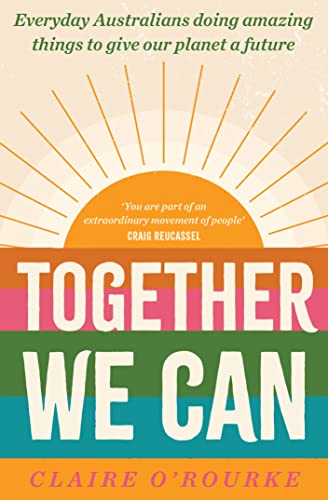
Claire O’Rourke, Together We Can (Allen & Unwin 2022)
I read this after hearing Claire talk on a Sydney Writers’ Festival panel on how to have hope in relation to climate change. It’s a good read, mixing specific examples of everyday Australians tackling what’s happening with broader theory on how to bring about change. It does fulfil its title, giving a real sense that “together we can”.

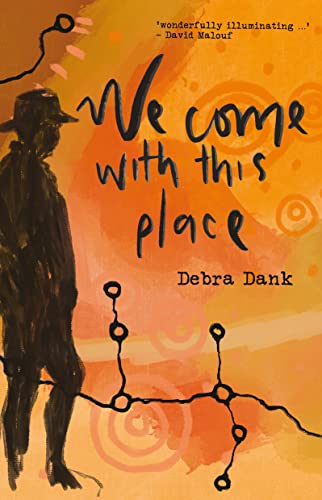
Debra Dank, We Come With This Place (Echo Publishing 2022)
We watched this book win four awards and heard Deborah Dank’s speech at NSW Premier’s Literary Awards 2023. We immediately went out to buy it. The writing is beautiful, a slow evocation of country and its connection to the author, while filled with story. I think it’s the must read of the year.

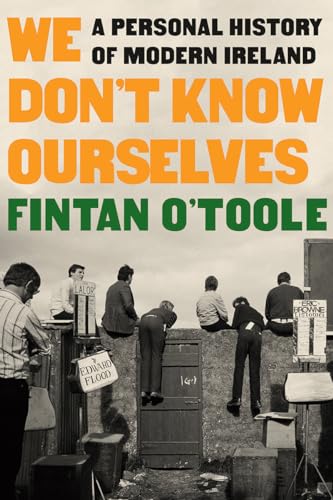
Fintan O’Toole, We Don’t Know Ourselves, a personal history of Ireland since 1958 (Head of Zeus 2021)
Hearing Fintan on the ABC’s Conversations, I immediately placed an order and waited patiently for four months for it to arrive. I’m glad I did. It’s written in short chapters in chronological order, but often picking up themes from chapter to chapter. It’s funny while documenting the appalling state of Ireland from 1958 through personal history, statistics and other sources. The incredible poverty (no running water in homes or sewage, no education for 80% of the population past primary school) made worse by the stranglehold of the Church and corruption in keeping poverty in place and the changes brought about by the impact of globalised capitalism all come alive in riveting storytelling.

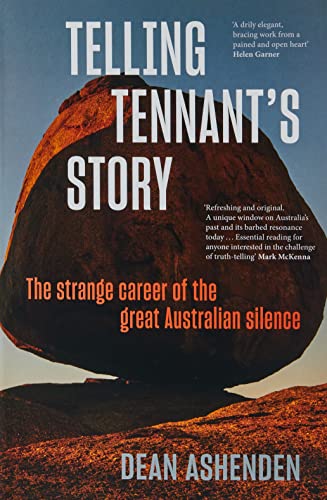
Dean Ashenden, Telling Tennant’s Story: The Strange Career of the Great Australian Silence (Scribe 2022)
A very readable history of post WWII Australian policies in relation to First Nations people where the impact of the policies on Aboriginal people in a specific area – Tennant Creek – are made clear. It tells how the policies of assimilation and later self determination came about and how far-reaching their effects have been. It would have been good for all those voting no to have been made to read this as a requirement for having a say.

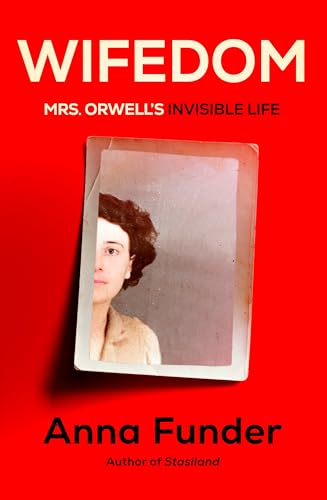
Anna Funder, Wifedom: Mrs Orwell’s Invisible Life (Penguin 2023)
So much has been written about this book already I don’t need to give a summary. I found it gripping. 

Fiction
I read 62 books this year, from quick comfort ‘junk’ reads to harder literary tomes. I take a photo of each book to prompt memory, and going through them all, it’s clear I have had an excellent selection to choose five favourites from. I’ve ended up deciding by level of enjoyment, not on some literary merit criteria.
Hilde Hinton, A Solitary Walk on the Moon (Hachette AUstralia 2022)
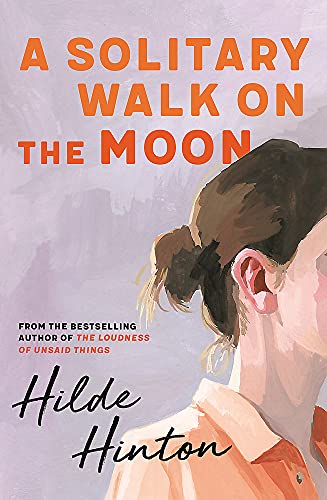
A totally enjoyable read while disquieting in its simplicity. This is a second novel by an Australian author who seems to slipped under the radar. I found it in my local library. 

Annie Ernaux, The Years (Fitzcarraldo Editions 2018)
This was also an entrancing read, covering a similar time period to my own life. It conjures up the similarities and immense differences between growing up in middle class France and Australia.

Thrity Umrigar, The Secrets Between Us (HarperCollins 2018)
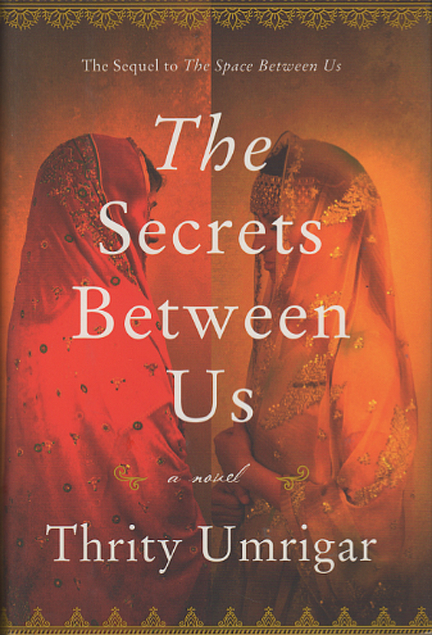
Another library chance find. I loved the three strong old women protagonists, the exploration of caste and how this is/isn’t changing in modern India.

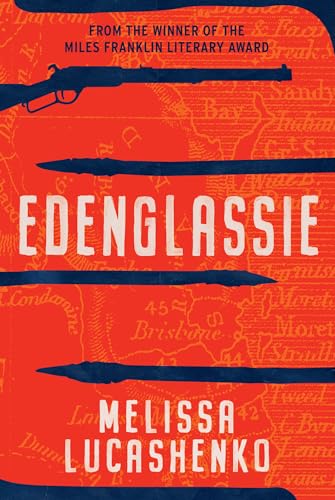
Melissa Lucashenko, Edenglassie (University of Queensland Press 2018)
This was gripping rather than straight out enjoyable, with a sense of what was to come on every page. I loved the imagined world of life at the point where the strangers are staying and growing in number, while keeping your own way of life intact.

Richard Russo, Somebody’s Fool (Allen & Unwin 2023)
Jonathan hasn’t yet been lured into the wonderful world that Richard Russo writes about, but I expect that to change soon. This is the latest in a series that includes Everybody’s Fool and Nobody’s Fool, all set in small town east coast USA. The books follow a number of interconnected characters over a few generations recording the process of change as late capitalism, racism and gender are played out in the town of Bath. He writes with affectionate humour about all of his characters. We see their frailties and appalling behaviour (between white and black, men and women, different generations) but in a number of cases we see how their connections with each other bring a shift in perspective. I love them. 


From me

I read 83 books (counting journals but not children’s books). I finished my slow read of Middlemarch and read St Augustine’s Confessions, a little each morning, but didn’t start another slow read in September because I was doing the Kelly Writers’ House course in Modern and Contemporary American Poetry (ModPo), which was great fun and probably taught me a lot.

I read:

  • 21 books of poetry
  • 26 novels
  • 4 comics
  • books in translation from Chinese (2), Spanish (3), French (2), Danish (1 or 3, depending on how you count), Russian (1) and Latin (1), and bilingual books containing Greek (1) and Maori (1)
  • counting editors and comics artists, 44 books by women, 39 by men
  • 12 books by First Nations writers, and
  • 15 books by other writers who don’t belong to the White global minority.

Biggest serendipity: Four books spoke powerfully to each other and to me in the wake of the referendum on the Voice: Debra Dank’s We Come with This Place, Melissa Lucashenko’s Edenglassie, Dean Ashenden’s Telling Tennant’s Story and David Marr’s Killing for Country (no blog post yet). Unlike Voice and Treaty, the third proposal from the Uluṟu Statement from the Heart – Truth – doesn’t have to wait for government action. These books, and so many others with them, are moving that project forward brilliantly and unsettlingly.

The most fun was probably two novels about poetry, which also spoke to each other: Chilean Poet by Alejandro Zambra and The Anthologist by Nicholson Baker.

Most interesting new discovery of someone who has been writing for decades: 2022 Nobel Prize laureate Annie Ernaux. I read Les années and Mémoire de fille, both of which mine her life story in ways that make most memoirs seem dull. Though I read them in translation, it seems right to name them in French.

Most imaginatively huge was Alexis Wright’s novel Praiseworthy, which incidentally is set in some of the same localities as Killing for Country.

Most memorable poetry: Sarah Holland-Batt’s Jaguar, with Ken Bolton’s Starting at Basheer’s (no blog post yet) a close second, the first for its precise, compassionate treatment of the poet’s father’s final illness, the latter because it filled me with joy about the everyday.


Happy New Year to all. May 2024 see the rejection of authoritarianism in elections and an end to mass killings everywhere. And may fossil fuels at last be left in the ground. Failing that, may we all keep our hearts open and our minds engaged.
End of Year List 2: TV series

I watch too much television, but at least in 2023 an awful lot of it has been very good.

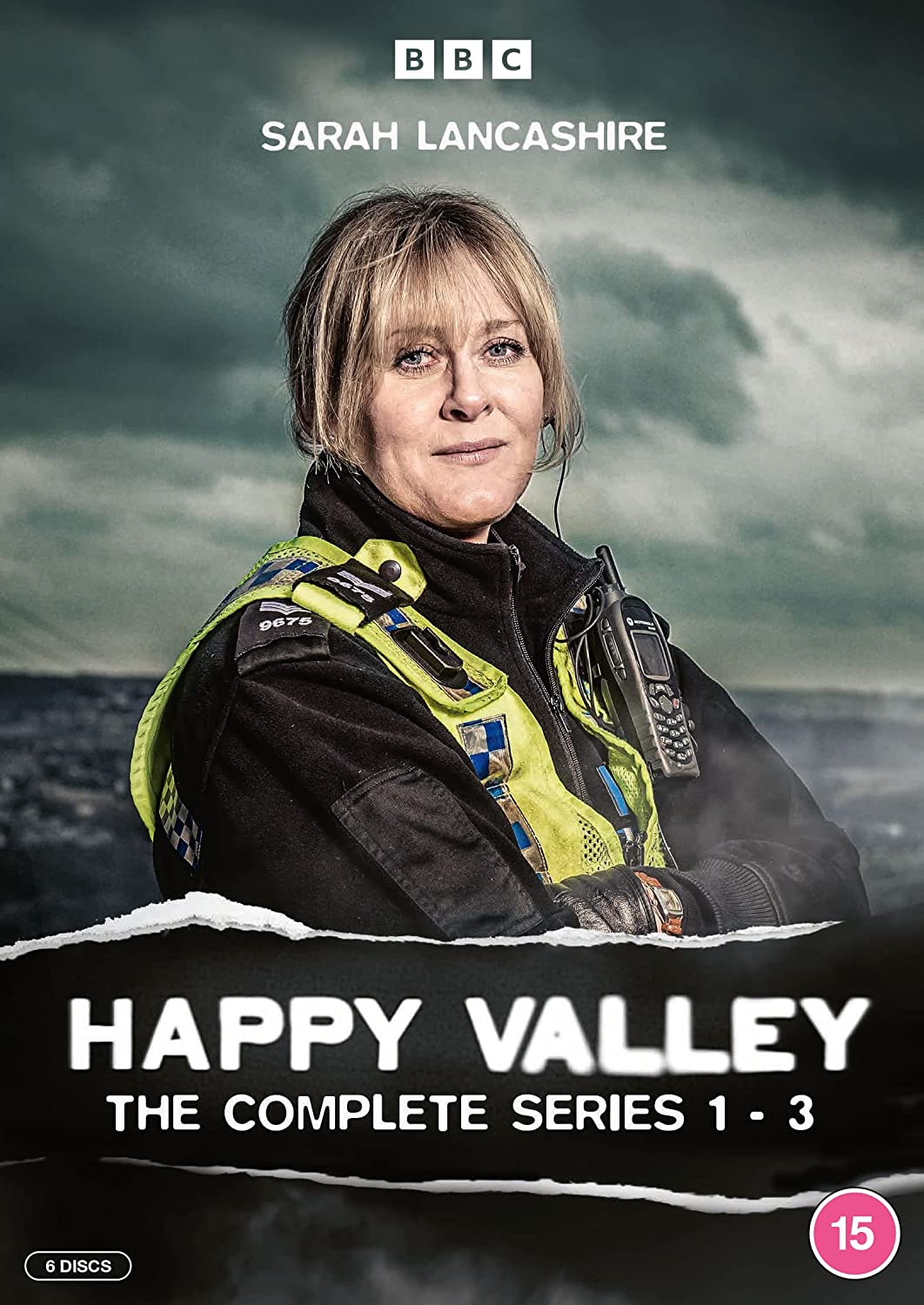
Last year we allowed ourselves to name just three shows. This year we decided to have two or three in each of five categories, and then in one of the categories we had to break that rule. It’s probably true that in every category we would have chosen different titles on another day. Three of the ones we chose were the final seasons of longer-running shows, all of them most satisfactory conclusions.

Cop shows

Documentaries / reality TV

Historical fiction

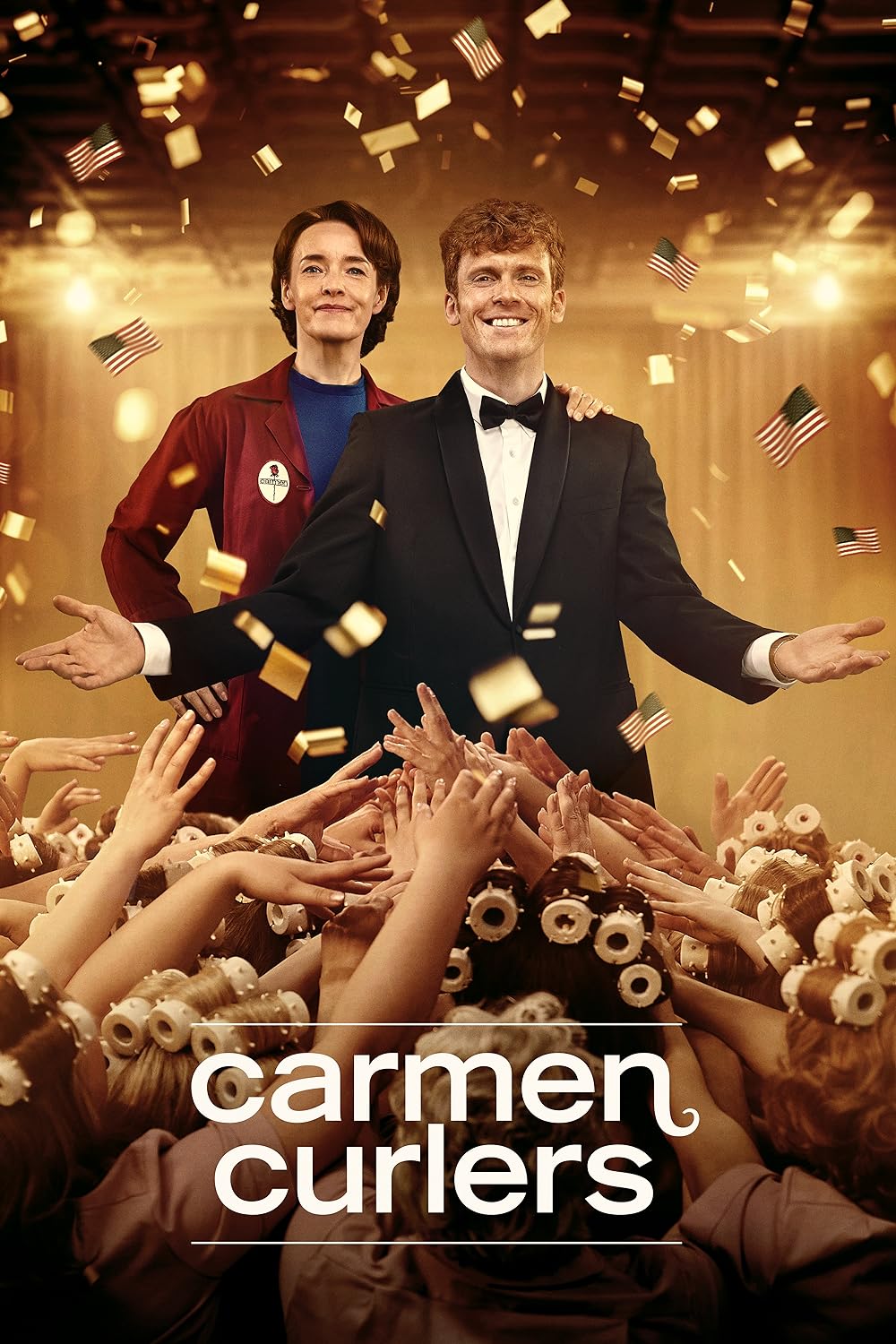
Comedy

Drama

Next, a much shorter list: Theatre

Melissa Lucashenko’s Edenglassie, page 76

Melissa Lucashenko, Edenglassie (University of Queensland Press 2023)

If you’ve been paying attention, you know that Edenglassie, a portmanteau of Edinburgh and Glasgow, was briefly the name for part of what is now Brisbane, and this book is a historical fiction set there in the 1850s, when First Nations people outnumbered settlers along the Brisbane River, a time of armed resistance to colonisation, and a time of genocidal atrocities including those committed by the notorious Native Police.

My blogging practice of focusing on page 76 (my age) comes up with a passage that at first seems a long way from that subject. For a start it’s set in Brisbane in 2024, the bicentenary of John Oxley’s sail up the Brisbane River, and begins with a genial picture of a weekend market that could be in any western city:

Winona weaved a path through the many bodies at the market. The young and the elderly; the able-bodied and the infirm; the slender hipsters; the defiantly fat, the tattooed, the pierced, the dull suburban middle-class and the fabulously wealthy. All these met in the mecca of the inner south, held there in the tight Kurilpa loop of the river which, having embraced you, was mighty slow to let you go.

The market is complex and inclusive, or at least tolerant. ‘Kurilpa’ tells you, if you have a web browser handy, that the city is Brisbane: the Kurilpa precinct borders on South Bank, and what was once the Tank Street Bridge is now the Kurilpa Bridge. The way the narrator uses the word suggests that it is more than a simple place-name, hinting at an Indigenous perspective: the river has agency, embracing and slow to let go.

As the paragraph continues, a character moves through the scene:

Winona wasn’t much interested in the crowd; she’d been caught instead by a steady pulse, thrumming from afar. She followed the sound of the didgeridoo dragging her to the far edge of the park, eager to see if she knew the fella playing, and discover what other Blak mob were around. Hopefully, Winona thought, she’d find a little oasis of Goories there to replenish her spirit, weakened from the hours she’d spent lately in the soul-sucking hospital.

‘Blak’ and ‘Goorie’ make it clear where we are, though readers from outside Australia may need their pocket browser here too. ‘Blak’ is a self-description currently used by many urban First Nations people as a way of ‘taking on the colonisers’ language and flipping it on its head’ (the quote is from an article on artist Destiny Deacon, at this link). Winona is a young, politically aware Indigenous woman. The narrative cleaves mostly to her point of view, but it’s interesting to notice that here they part ways briefly: the narrator sees and enjoys the crowd, and virtually tells us in so many words that the ancient Kurilpa embraces that various crowd as well; Winona is committed to an ‘us and them’ perspective. The non-Indigenous crowd is like a desert to her.

I won’t quote the rest of the page. Suffice to say that when she finds the didgeridoo player, he’s a white hippy who claims to be Indigenous – a coloniser, a thieving dagai, as Winona sees it – and her violent outrage lasts for several richly comic pages.

Once I got past my initial sense that this page wasn’t from the interesting, historical narrative, I realised that many of the novel’s key themes are suggested in it.

Winona is the central character in the near future part of the novel, where the main narrative thread is her budding romance with Doctor Johnny, a man of questionable indigeneity (though less questionable than the didge player’s). Her grandmother, whom she has been visiting in hospital, is leveraging her claim to be Queensland’s oldest Aboriginal to secure a major role in Brisbane’s bicentenary celebrations – and an apartment. So there’s romcom tension, trickster play, and a generally comic tone. At the same time, the narrative is firmly embedded in an Indigenous perspective – or perspectives, really, as Grannie Eddie and her ancient friends see things differently from the militant Winona, and Johnny, a child of the stolen generations, brings yet another point of view. Winona’s rage at the hippy didge player is a contrast to her almost flirtatious hostility to Johnny. Her indifference to the complex everyday crowd plays off against Granny Eddie’s generously inclusive concept of Aboriginal sovereignty.

It’s especially interesting to note the way these paragraphs are linked to the historical story. Words that in 2024 feel like cultural reclamation or perhaps remnants of lost language – dagai, Kurilpa – are part of ordinary speech in 1854. Just as the hippy claims an Indigenous identity, a white man back then – Tom Petrie, grandson of a pre-eminent settler in Brisbane, and in the process of taking on a sheep property in his own right – claims the status of an initiated man: it’s not an exact parallel, as Tom’s claim, like that of the real-life Tom Petrie, has the approval of elders. But as he invites his ‘brothers’ to work for him a tremendous unease develops: certainly I spent a good deal of the book dreading that he would betray his close friends, his initiated ‘brothers’. It would be spoiling to tell you if he does.

Like the 21st century story, the historical narrative centres on a romance between two First Nations people with very different relationships to traditional culture. Mulanyin is a traditionally raised young man who is in Kurilpa as a guest of an established family. In the early parts of the book, he goes naked around town – he only starts wearing trousers to protect his fertility when he starts riding horses. Nita has been taken as a servant to the prestigious Petrie family, who are relatively decent in their relationships to the local people. Nita is a Christian, always modestly dressed, and attuned to her employers’ desires and expectations.

The river is a powerful presence in both stories. The apparent throwaway line about how ‘having embraced you, [it] was mighty slow to let you go’ rings a lot of bells. It’s crossed by bridges and features the bicentennial celebrations in 2025; it’s a source of food and site of dramatic events in 1854. It remains the same river.

As I write this, I’ve read about half of David Marr’s Killing for Country, an unsparing account of frontier violence in eastern Australia, focusing in part on the Native Police and quoting extensively from breathtakingly brutal contemporary settler writing. The Native Police are a threatening presence in Edenglassie, and there’s devastating genocidal violence, but it happens offstage. Even a scene where Mulanyin intervenes in the humiliation of another man is reported by a character rather than told to us directly by the narrator. Where David Marr conveys the horror of our history, Melissa Lucashenko does the herculean task of imagining what it was to live with a strong connection to country, tradition and community while the horrors were multiplying all around, and up close.

We discussed this book along with Debra Dank’s We Come With This Place at my Other Book Club – the one that used to be just for swapping books with minimal discussion. Not everyone was as moved by it as I was. Unfortunately, or fortunately, I can’t tell you how the unimpressed readers saw it because I’m so dazzled by its achievements.

Vale Ian Dodd

This afternoon I attended a celebration of the life of Ian Dodd, who died last month. Ian was a much loved member of Sydney’s photographic community, and the celebration focused on his extraordinary career as a photographer. His most famous photograph is probably Wet Hair (1974), which is in the collection of the Art Gallery of NSW (you can see it here). More recent work is up at the website of the now defunct and sadly missed Stills Gallery, where he had a solo exhibition in 2006.

Ian and I knew each other through the School Magazine, a monthly literary journal for primary school students published by the NSW Department of Education since 1916. In the 1980s, the magazine’s editor Kath Hawke set out to overhaul the look of the magazine. She wanted something better than what she described as blurry postage-stamp sized drawings. Ian was a childhood friend who had been art director of a small adult magazine. When Kath offered him the challenge he rose to it, and when I started working at the magazine soon after he was designing lay-outs and coming into the office a couple of days each month to be the de facto art director. He continued to do the job under Kath’s successor, award winning children’s book author Anna Fienberg, and then me. It was a far cry from the sophisticated and often erotic work for which he was known in the world of photography, but we all learned a lot from him, and enjoyed his warm, wry humour.

I wasn’t able to stay for the speeches this afternoon. I hope someone told the story he once told me about a mother who asked him for help. Her teenaged son had his heart set on becoming an artist, and she asked her friend Ian, himself an artist and photographer, to have a chat with him, explaining how important it was to get a trade of some sort rather than dive straight into the precarious life of an artist. Ian agreed, and gave the boy a pep talk. As I remember him telling it, the gist of his talk was to tell the boy that if he wanted to be an artist, life would probably be hard, but if he didn’t do it he would probably regret it for the rest of his life. The boy was George Gittoes, and it’s fair to say that the world has benefited from Ian’s advice.

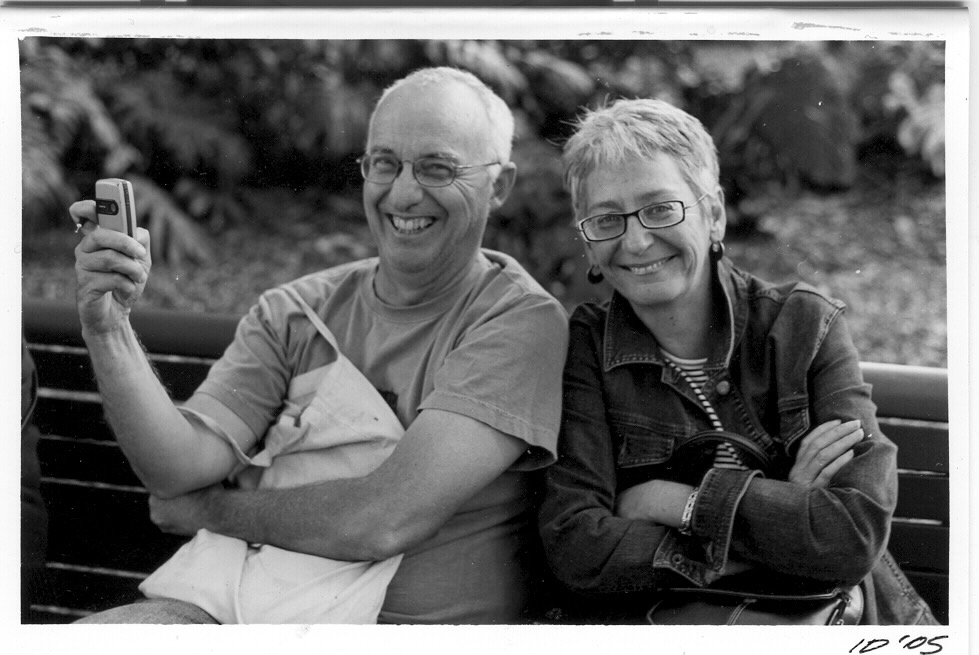
Here’s a photo Ian took of me and the Emerging Artist in Hyde Park, well before she set foot on the artistic path. I treasure it.

Lauren Groff’s Vaster Wilds

Laurn Groff, The Vaster Wilds (Hutchinson Heinemann 2023)

If you picked this book up in a shop or the library and turned to page 76, these are the first two paragraphs you’d see:

By now, the twilight had begun to thicken, however; and she had to find some shelter before thick night came on full of its roving predators. She sensed that it would be a very cold night as well.
When she stood, she found she had a hard time moving swiftly; she was so stiff and sore from her long walk.

You might gather that this was a story about a woman alone in a wilderness. You might notice a couple of quirks in the language: ‘twilight had begun to thicken’ with its awkward echo of Lady Macbeth’s ‘Light thickens, and the crow makes wing to the rooky wood’; the slightly archaic feel of ‘roving predators’ and ‘swiftly’. You might surmise that the action of the novel takes place in the not very recent past.

By the end of the page, the character has found shelter, ‘a little black space carved out of the rock wall of a ridge’. The cave exhales ‘a strange and musty warmth’:

Something in her said to her that she must be cautious, and she made herself go slowly and silently. But soon the coldness of the night oncoming frightened her more than the cave with all its menacing unknowns. She ducked low into the black space and felt instantly that it would be warm enough and out of the melting wet at least. It smelled dank and thick in there. The darkness welled and seemed to pulse at the back of the cave.

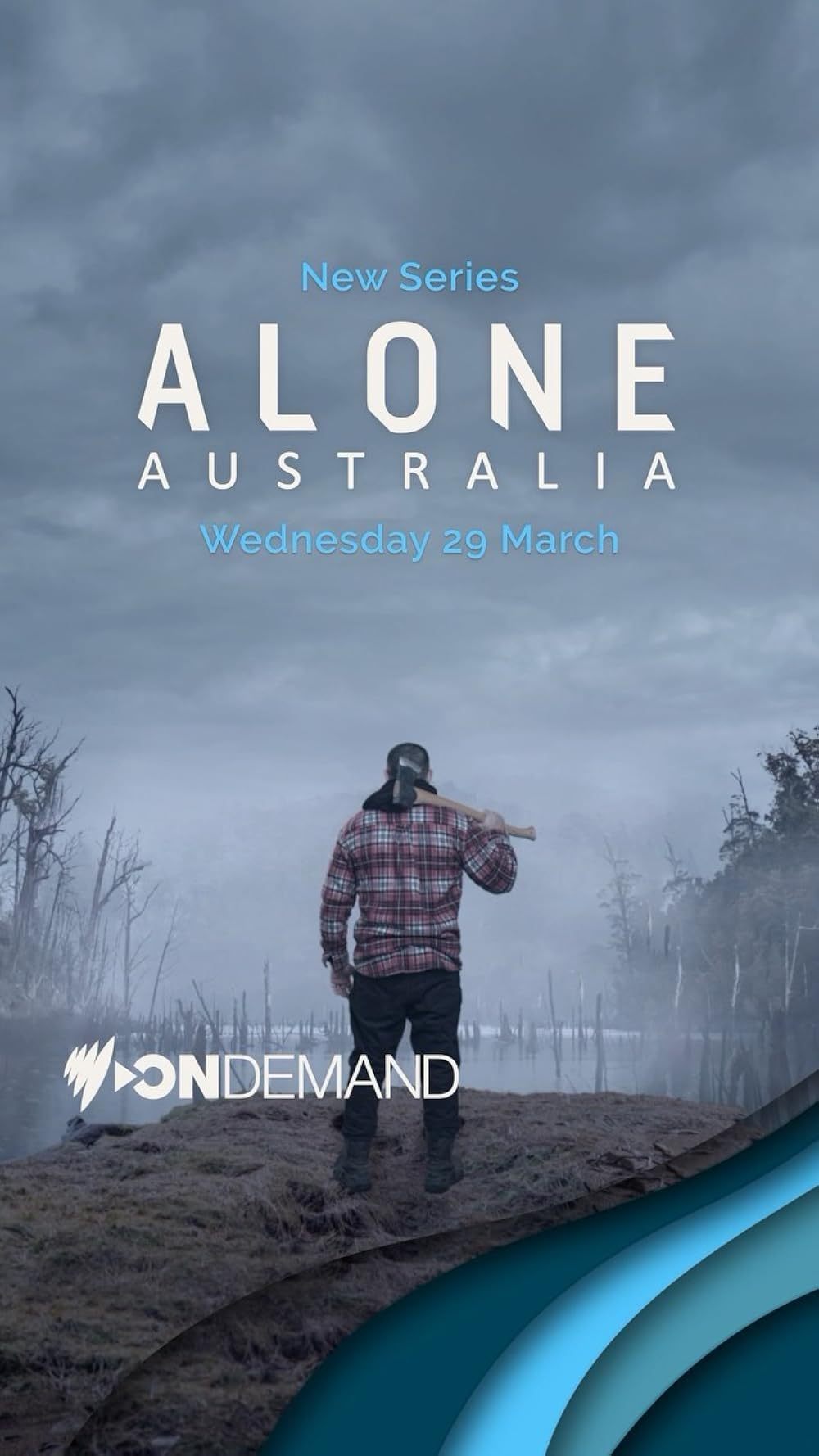
More of the archaic feeling in the language, not so much in the vocabulary as in the cadence and word order: ‘Something in her said to her’, ‘the night oncoming’, ‘the melting wet’. And the surmised threat of roving predators of the first paragraph has become more immediate, though still intangible, in the dank, thick, pulsing darkness. On the strength of this page you might expect something like a novel equivalent of the TV series Alone. And you’d be mostly right.

The novel begins with a character, known only as ‘the girl’ for the first hundred pages or so, running through forest in what we come to understand is the North American continent in the late sixteenth century. She has been brought from england (the book spells all places and nationalities without initial capital letters) as a servant, and we learn that she has committed some great crime and is running to escape retribution.

A number of questions are raised early: what was the girl’s crime? will she escape her pursuers and avoid whatever attackers, human and otherwise, she might encounter (see cave above)? what are we to make of her assumption that the ‘people of this place’ are savages to be feared? will her Christian world view be affected by her experiences in the wilderness? will she find the safety, even the ‘saviour’, she hopes for? These questions create a forward impetus, and the girl’s gradually revealed back story fleshes out her character, but it’s the narration’s attention to the detail of her life in the wild that most engaged my attention.

It took me maybe a hundred pages to get over my irritation with the olde worlde language: I was going to say there are too many untos, then realised there was probably only one, but that is too many. Your mileage may vary. I was uneasy with the treatment of the Native Americans on the periphery of the narrative, but that unease was elegantly dealt with, first with humour when in a rare departure from the girl’s point of view a couple of Native children see her and fall abut laughing at her incompetence in their environment; and more sombrely in the final movement as she reflects on her possible misunderstanding of near-encounters.

I’m not a fan of the individual-against-the-wilderness genre, so I’m not really part of this book’s intended readership. I did finish it, partly because I was reading it for my Book Club and felt obliged. I can see that it’s a very good book, and I especially appreciate the way it uses the genre to probe at the roots of the genocidal encounters of colonisation, without having the heroine be adopted by a Native tribe. We’ve come a long way since Booran by M J Unwin, which I studied at school in 1962, or Patrick White’s A Fringe of Leaves.

The Book Club I read it for is the one that formerly banned any book-discussion that lasted more than 30 seconds, but has now become more conventional. It was paired with Melissa Lucashenko’s Edenglassie. We had animated discussion of both books.

Debra Dank’s We Come With This Place at the book group

Debra Dank, We Come with This Place (Echo Publishing 2022)

Before the meeting: We Come With This Place won an amazing four prizes at the NSW Premier’s Literary Awards this year, including Book of the Year: you can read the judges’ comments here and here. They include this:

This sensational memoir is an unheralded reflection on what it is to be First Nations in Australia, and on the very deepest meanings of family and belonging.

In one of her modest acceptance speeches at the awards ceremony, Debra Dank mentioned that the book started out as part of her PhD study. In the Preface, she elaborates:

I wanted to show how story works in my community and how it has contributed to our living with country for so long. It seemed to me imperative to talk about those voices, both human and non-human, who guided Gudanji for centuries before anyone else stepped onto this land.

(page viii)

The weeks after the referendum on the Voice failed seemed a perfect time to read this book. The Uluṟu Statement from the Heart’s call for Voice, Truth, Treaty has been rejected at the political level: it’s a relief to listen to the voices of First Nations writers like Debra Dank, and participate in this form of truth-telling.

It’s a terrific book: an intimate portrait of family life, placed in the context of ancestral stories, a deep sense of connection to Country, and resilience in the face of the horrors of colonialism. The family lived ‘under the Act’ in Queensland, and managed ingeniously to hide little Debra when the Welfare came looking for light-skinned children; her father worked on a number of rural properties, where sometimes he was treated with great respect, other times not so much. She helps her father work on a windmill. There is a tactfully written scene where she stands up against family violence, and magical moments with her grandfather, and with her children and grandchildren. I love the pages where Dank’s white surfie husband (he’s saltwater, she’s dust) struggles to learn how to read the bush, to see the things that are glaringly obvious to his Aboriginal children.

Dank identifies as belonging to dry country, and she makes brilliant use of images of dust. On the very first page, ‘vague images try to speak to [her] through dust motes rising from the thick pale pages’ of a 400-year-old edition of a book by Aristotle, and a few pages later, she tells us that the stories of her people – the Gudanji kujiga – ‘grow from the fine dirt that plays around your feet and makes the dust that rolls over the the vast Gudanji and Wakaja country’. As a child she is fascinated by the way a drop of blood from a foot caught on barbed wire blends into the soil. Dust rises from the heels of a family group in the not so distant past running in terror from armed men on horseback. It memorably obliterates the Country-scarring road in the passage I versified the other day (here).

I don’t want to give the impression that the book is written in high metaphorical mode. Here’s a little passage from page 76 (for those who came in late, I like to have a closer look at that page because it’s my age). The family are driving from one place of employment to another, and appropriately enough the page starts with dust:

The wind brought dust in with it, but it was the Dry and the road wasn’t too bad. The caravan happily kicked up dust into frothing red feathers that followed us for a bit, then settled back onto the road. Long stalks of tall yellow grass formed a guard of honour as we traveled across the plains. We played games of spot the turkey and several times tried desperately to convince Dad to stop for the goannas that would run across the road and then lie still and flat in the shelter of the yellow grass and amber shadows, but we needed to get there so he didn’t stop. Besides, Mum said she refused to turn up at the new station with a dead gonna in the car.

You see what I mean: if you’re not alert to the dust motif, those frothing red feathers that follow and settle are a nice piece of decoration; if you’ve picked up on it, they’re a reassuring presence of Country. And this tiny moment embodies the way the family manages to live successfully in two worlds: goannas would be great, but not when you’re about to meet a new white boss.

After the meeting: It was our end-of-year meeting, so as well as discussing the book, we exchanged gifts – of books chosen from our bookshelves. I gave Diana Athill’s wonderful memoir, Somewhere Towards the End, and scored J M Coetzee’s 1986 novel, Foe. We also, in a three-year tradition, each brought a poem to read to the group: poems represented included Seamus Heaney, Oodgeroo Noonuccal writing as Kath Walker, Adrian Wiggins, J Drew Lanham, Rosda Hayes, and Sean Hughes.

There were seven of us. Two hadn’t read the book – it’s a busy time of year. One was ‘at about 55 percent’ on his device. One said he had read seven other books since so had difficulty recalling it with any clarity. We were in a pub rather than our usual domestic setting. None of that stopped the conversation from delving into the book, ranging widely and then finding its way back to the page. Those of us who had read it celebrated the way it presented the history from inside an First Nations point of view: even Kim Scott’s brilliant novel That Deadman Dance didn’t get to the inside story as completely as this; and it has a calm assurance that, say, Julie Janson’s Benevolence lacks, for all its other strengths (the second of these comparison came up in conversation in the car ride home).

One Covid-ed absentee emailed in some cogent comments – noting that there seemed to be a number of voices, and that the passages dealing with the author’s personal experience worked better than the narration of ancient stories. He loved, and others agreed, the bits of bushcraft such as reading shadows and catching fish with your hands in the desert, the cultural landscape connections.

I went on a bit about dust.

There was a lot of reflection on personal experiences the book reminded people of. There was also, as usual, much excellent conversation about unrelated matters, including Anna Funder’s Wifedom; the recent blockade in Newcastle and a similar one nearly 20 years ago which provoked a very different response from the police and the press; philosophy and poetry groups in a small town; behind the scenes stories from a fascinating film project; travellers’ tales.

And that’s a wrap for the Book Group for 2023.

Rising Tide in Newcastle

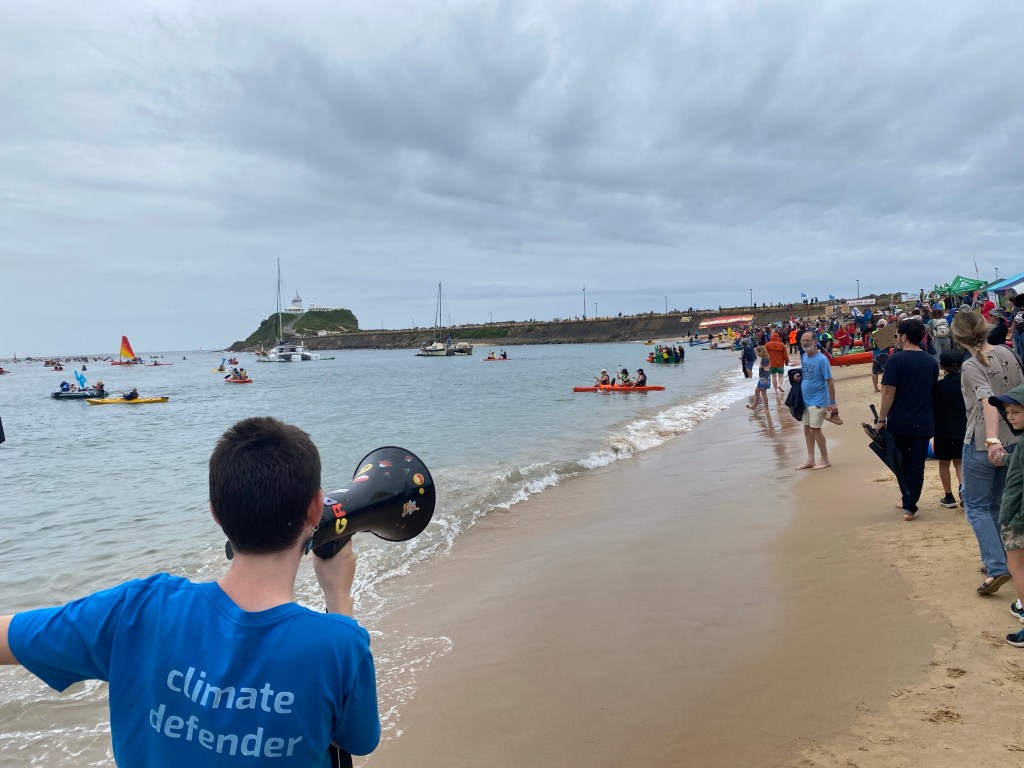
The Rising Tide blockade of Newcastle, said to be biggest coal port in the world, kicks off. It will last for 30 hours, hundreds of kayaks on the water.

Poem may follow.

November verse 7

7. On reading Burglar Bill for something 
like the thousandth time
Everything he owned was stolen:
bed, beans, teapot, teacup, tea,
the grate he heaped his stolen coal in,
helmet, handsaw, got for free
on his nightly torchlit outing,
in at windows, gaily shouting,
'That's a nice –––, I'll have that!'
(A question: Did he steal his cat?)
Then along came Burglar Betty:
being burgled isn't fun.
Betty's baby (daughter? son?)
turned them both from crime and yet he
now – a timid reader prays –
recalls with joy his wicked days.

If you’ve never read Burglar Bill, by Janet and Allen Ahlberg, you’ve got a treat in store. I probably haven’t actually read it a thousand times, but these days I can be asked to read it three times in a row. Like Maurice Sendak’s Where the Wild Things Are or Margaret Mahy’s A Lion in the Meadow, it never gets boring.

November verse 5

In honour of the flâneur elements of Kim Cheng Boey’s lovely book The Singer, I’ve written a walk-to-the-shops stanza. It turns out this isn’t the first of these I’ve done. An 2020 foray is here.

5. A walk to Marrickville Metro
Jacaranda, bouganvilly,
Roses, jasmine, bottlebrush,
strelitzia, gymea lily,
solo lorikeet in a rush:
most days I trudge past ignoring
all this colour, see just boring
ads for things that no one needs
and concrete broken up by weeds.
Grey hoodie man gesticulating
talks to god or to his buds. 
Woman's headset booms and thuds.
The cool youth by the pool are skating, 
young ones climb and swing and twist.
I pass by with my shopping list.

Kim Cheng Boey’s Singer

Kim Cheng Boey, The Singer (Cordite Press 2022)

There’s so much to love in this book.

I was inclined to love it sight unseen. I’ve been delighted by Kim Cheng Boey’s readings in past years when the Sydney Writers’ Festival had room for local poets. He co-edited (with Michelle Cahill and Adam Aitken) the excellent 2013 anthology, Contemporary Asian Australian Poets. He has written insightful reviews of one of my favourite poets, Eileen Chong, and had a walk-on role in one of her poems. This is the first of his books that I have read.

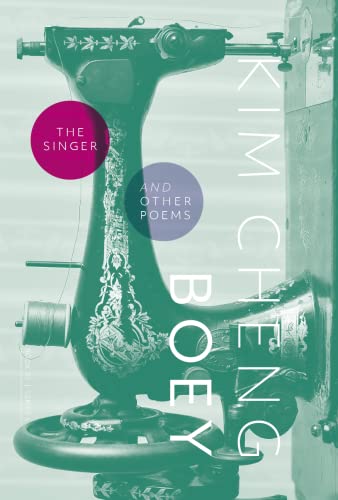
When I got my copy direct from Cordite Press – I tried at least three bookshops – I loved it for the cover alone. You expect the title The Singer to refer to the poet, perhaps in an attention-seeking way, but then you tilt the book and see the cover image clearly: it’s a Singer sewing machine. (My mother didn’t call her labour-saving devices the washing machine, the vacuum cleaner or the sewing machine, but the Hoover, the Electrolux and the Singer.) It’s a brilliant title: yes, poetry is like song, but it’s also craft.

And page by page, I kept on falling in love. There’s a Preface in which Kim Cheng writes of the different ‘weight’ of his poetry-making over time:

When I was younger, poetry carried me posthaste, high on the fuel of experience and freshness of thought, from initial impulse to final form. In middle age the roles are reversed – I am the mule, the porter, learning the weight and heft of the poem so I can carry it long-distance – over months and often years.

‘Perhaps,’ he continues, ‘the change occurred the moment I became a migrant.’ He migrated to Australia from his native Singapore in his early 30s, in 1997. Since then he has continued to take part in Singapore’s literary and cultural life as well as that of his adopted home. The book’s three parts can be read as tracing this geographical movement over time. The first, ‘Little India Dreaming’, has five long prose poems full of the smells and sights and sounds of a remembered Singapore childhood, including the title poem. Here’s a small extract to give you a feel for it:

You almost pray to the Singer, its dark cast-iron hull, to 
carry your mother's song. You pray for the treadle to 
stir, for the finished dress to be unstitched, its seams 
unpicked so the dress can materialise again from the 
chalk outline. You take the birthday outfit out of the 
wardrobe of forgetting and become the five-year-old 
wearing your mother's love.

The second section, ‘The Middle Distance’, is introduced with a quote from Louis Mac Neice, ‘This middle stretch / Of life is bad for poets.’ Each of its five poems is set in places other than Asia or Australia., and it’s tempting to see an unsettled, midlife quality to them.

The seven poems of the third section, ‘Sydney Dreaming’ – to simplify appallingly – lay claim to Australia as a place that can be called home.

My arbitrary blogging practice of looking at page 76 has once again given me a gift. That page occurs near the end of the book, in ‘Sydney Dreaming’, the title poem of the third section.

I love this poem (I know I’m using that word a lot, but it can’t be helped). In it the speaker walks around inner suburbs of Sydney, haunted by the tales and memories of other cities and ghosts of Sydney past. If it was terrible, banal rubbish, I might still have loved it because I have walked every step that the poem follows. I too lament the disappearance of second-hand book shops in Pitt Street. I know the painted up man with the didgeridoo in the Central tunnel, as well as the old Chinese man ‘scraping a dirge on his erdu’. Chinatown, Broadway, Glebe Point Road, Gleebooks, all lovingly named and recognisable. Then Darlinghurst Road, the wall, the Holocaust Museum, Macleay Street. The poem made me want to go for a long walk.

And it’s a terrific poem. Here are a couple of stanzas from page 76 – the walk down to Woolloomooloo from Kings Cross:

You follow the bend and the view opens to the ivory cusps 
of the Opera House and the dark arch of the bridge over the silver-glazed
azure scroll of the harbour, the sky burnished gold in the last exhalations of the sun.

Soon the flying fox formations will rise from hangars of Moreton Bay figs
in the Botanic Garden, and weave arabesques around the halo 
of the spanning arches of the Coathanger. You remember seeing this even
before you arrived, memory in the image, image in memory,

the sky and the harbour dyed incarnadine in the first postcard 
you ever received from a childhood friend settled in a new life

Notice that it’s in the second person: ‘You follow the bend.’ The poem’s speaker isn’t just telling the reader about a walk he has taken, he is inviting us to walk with him – which is especially effective for readers who have in fact walked in those places. The long lines have a leisurely, strolling feel: no hurry, no need to reach any rhyming points or keep to any metric timetable. The conversational tone and language creates a companionable feel.

Then the register shifts, as the poem enters its final movement.

You follow the bend and the language opens to ‘ivory cusps’ and ‘silver-glazed azure’ and ‘burnished gold’ and ‘exhalations of the sun’. That’s such a Sydney moment – any Sydneysider arriving at Circular Quay train station will have had their phone-absorption interrupted by the exclamations of tourists seeing the Bridge–Harbour–Opera House scene for the first time. Rounding that bend in Woolloomooloo has a similar breathtaking effect, and the language responds.

Then two things happen. First, the speaker asserts that he belongs here by looking forward in time: he knows that the flying foxes will soon fill the sky and enjoys anticipating the spectacle (still with the elevated language, ‘arabesques’ and ‘spanning arches’). Second, he knows that he hasn’t always belonged, and memory asserts itself. He had seen this sight in a postcard long before seeing the actual thing. I’m reminded of those passages in Proust about how the reality inevitably falls short of the anticipated image. That’s not how it is here, but there’s a strange unreality nonetheless – ‘memory in the image, image in memory’ – the present moment is a palimpsest. The whole poem revolves around that interplay of past, present, anticipated future and imagination. The whole walk is experienced as a palimpsest.

I’m restraining myself from quoting the lines that come next, because it’s getting close to the poem’s stunning conclusion, and even with poetry spoilers are an issue. Enough to say that the Bridge is transformed effortlessly from that spectacular postcard image to a terrific metaphor for the poet’s status in the midst of an ever-changing life of exile, belonging, and longing.

As a footnote: the title ‘Sydney Dreaming’ might be a worry. I don’t read it as claiming any of the First Nations meaning of the word ‘Dreaming’. In the course of his walk, the poet-flâneur passes a number of First Nations people: the man in the Central tunnel, and a real or imagined group of dancers in Woolloomooloo. The latter are mentioned after the speaker has been lost ‘in a dream of home, almost’: his dream is definitely lower case, and carefully distinct from that other, deeper, ancestral Dreaming.

The Singer won the Kenneth Slessor Prize for Poetry earlier this year (click here for the judges’ comments). Maybe it’s so hard to find in the bookshops because it sells out as soon as it hits the shelves. I hope so. Anyhow, especially but not only if you live in Sydney or are part of a Chinese diaspora, see if you can get hold of it. Did I mention that I love it?