The Marrickville Mattress Poet put in an appearance as part of the Marrickville Open Studio Trail on the weekend. This homage to Magritte was part of the Fairy Alley exhibition.
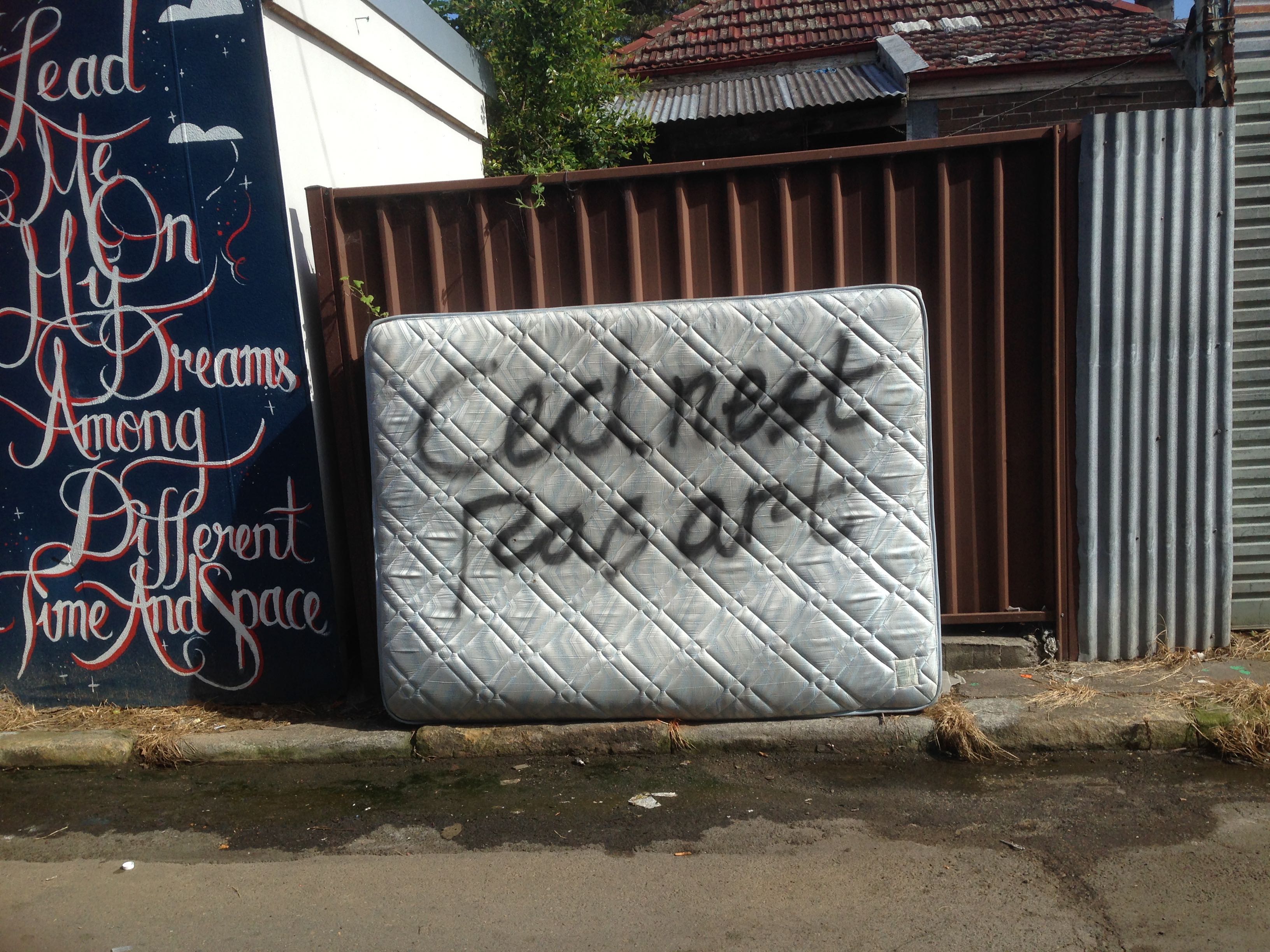

The Marrickville Mattress Poet put in an appearance as part of the Marrickville Open Studio Trail on the weekend. This homage to Magritte was part of the Fairy Alley exhibition.
Favel Parrett, When the Night Comes (Hachette Australia 2014)
 Favel Parrett’s first novel, Past the Shallows, published in 2011, was a hard act to follow. In When the Night Comes, her second, she moves to a bigger world, out past Tasmanian waters to Antarctica and Scandinavia, and into a delicate, tender relationship between an adult man and a girl just entering her teens.
I’m tempted to say that it’s actually two novels.
First there’s the one described in the author’s endnote. This is a celebration of the Norwegian ship, Nella Dan, a real ship whose history is sketched in the note, along with affectionate quotes from a number of people who sailed in ‘the little red ship’. If such a celebration had been written by, say, Neal Stephenson, it might have included bravura passages dramatising the ship’s inner workings – the heat and noise of the engine room, the pinging wheelhouse, the compartmentalisation of the hull. But this is not that kind of celebration. Here the engine is background noise that helps the sailors sleep; we spend time in the ship’s kitchen, but no ink is spilled on describing the stoves; if the size of the crew may be mentioned I don’t remember it. In fact, apart from its bright red paint and its size – sometimes surprisingly small, sometimes surprisingly big – we don’t have much sense of the ship as a physical thing at all. What we do have is the way all the characters respond to it, to her, as a dependable almost-maternal, almost-comradely, presence. Almost those things, because Nella Dan never really emerges as a character in her own right.
The other novel is the one I read, and was moved by. In it, the Nella Dan is an interesting setting for part of human story. This story moves between two points of view. The first is that of Isla, 12 or 13 years old, who has recently moved to Hobart with her mother and her younger brother (never known as anything other than ‘my brother’) after their parents’ marriage break-up. A Danish sailor named Bo becomes a regular part of the family. As Isla is completely uninterested in the world of adult relationships, we pretty much have to deduce that Bo and Isla get to spend time together because Bo and Isla’s mother are having a fling, a romance, a domestic relationship of some sort. Bo’s is the other point of view, and we travel with him on the Nella Dan into Antarctic waters.
Dramatic things do happen: each of the main characters has to deal with the violent accidental death of a close friend, for example, and the Nella Dan runs into the perils of the Southern Ocean. But the strength of the book lies in it depiction of the delicate connection between these two people that allows Isla to imagine herself in a much bigger world, and Bo to find sweet companionship. It feels easy, but when you consider we live in a climate where closeness between an adult male and a child not his own is often looked on with deep suspicion, I can only say I’m deeply impressed – and grateful – for what the book offers.
Sadly, my copy was on loan and has been reclaimed by its owner, so I can’t quote anything. Trust me. Favel Parrett writes lucid, supple prose. The book is full of pleasures.
 This is the third book I’ve read for the Australian Women Writers Challenge for 2015.
Joe Sacco, Bumf Vol. 1 (Fantagraphics 2014)
Scott Snyder & Sean Murphy, The Wake (Vertigo 2014)
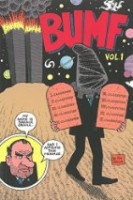 I can think of three possible meanings for the title of this comic. In my youth, ‘bumf’ was short for ‘bumfluff’, the fine hair that grows on the faces of teenage boys. That meaning is irrelevant. More recently, ‘bumf’ has signified the kind of material that people put stickers on their letter-boxes in a futile attempt to stave it off. Given that Joe Sacco’s reputation rests on meticulous journalism, and this book is scurrilous, quasi-libellous satire, perhaps the title suggests that this book is filling in time until he gets back to his real work. If so it’s ironic, because this is as serious a piece of commentary as you’re ever likely to come across.
The third possible meaning is indicated by the book’s subtitle, ‘I Buggered the Kaiser’. But perhaps, given that Sacco writes US English, that meaning would require the form ‘buttf’. (For reasons I don’t understand, anal rape of adult males is fair game for US humorists and satirists, unlike just about any other class of sexual nastiness.)
Anyhow, in Bumf Sacco casts aside his responsible-journalist persona and emerges as a satirist in the tradition of early Robert Crumb and pre-Maus Art Spiegelman. The front cover has an inset caricature of Richard Nixon, archetypal abuser of presidential authority, saying, ‘My name is Barack Obama … and I approve this message.’ Obama’s name is never mentioned again, but the main storyline – or one of them, the other one is the World War I epic referred to in the subtitle – features a resurrected Nixon who presides over the post-Abu Graibh, post-Snowden world of US surveillance, drones, rendition and torture machinery, and wonders, among other things, why there’s a beautiful Black woman in his bed.
There’s full frontal nudity on most pages, and quite a bit of it is en masse. And though the naked people tend to be plump and hedonistically involved, there’s something desperately pathetic about them – like the souls in Gustav Doré’s Inferno. 
You’ll notice that in the foreground of this grimly cheerful image there are scenes of sexualised torture. There’s a lot more of that.
To extend the Dante comparison, Sacco puts himself in the frame – not as a privileged visitor like Dante, but as a graphic novelist who is complicit in the propaganda and violation of human rights that Nixon/Obama sanctions.
If you’ve seen Citizenfour, Laura Poitras’s chilling documentary about Edward Snowden, you won’t find it easy to dismiss the extremity of Bumf as pure fantasy. The Nº 1 in the title suggests that there is more to come.
 One of my regular birthday joys is that I can expect comics as birthday presents from my sons. This year, I was given Bumf and The Wake.The latter came in a plastic wrapper, with stickers proclaiming it to be the winner of the 2014 Eisner Award for the Best Limited Series. That makes it an excellent birthday present even before the plastic has been broken.
Sadly, I can’t say I enjoyed it. It’s as dystopian as Bumf, and plays with our fears about climate change in powerful ways, involving giant tidal waves and huge monsters rising from the depths of the ocean. The plot, which involves a rewriting of human evolution, is bold, inventive, and well resolved. The images are powerful and dynamic. But I’m just not part of the target audience. Where Bumf is animated by rage at abuse of power, The Wake plays on despair and that form of human self-loathing that infects parts of the environmental movement. Completely understandable, but something that needs to be resisted rather than indulged.
A little over a month ago, I noticed a suspicious looking object on the pedestrian island just out the front of our house. It looked like a discarded shoe, but not quite. On closer inspection it revealed itself to be a Will Coles sculpture.
 In case you can’t quite read it, the text on the sole of this cement shoe is ‘forgotten’, making it an elegant addition to the scattering of cement objects in our suburbs reminding us of our fragility, and the fragility of our environment.
But ‘forgotten’ wasn’t meant to last. To tell the truth I’d forgotten all about it until a car collected the barriers on the island on the weekend. Only then did I notice that all that remained of the sculpture was a stark shoeprint:
 The shoe was gone before the barrier was knocked down.The barrier will be replaced in a week or so. The sculpture is now a prized – and prised – possession of a private art collector.
Joshua Ferris, To Rise Again at a Decent Hour (2014)

If this hadn’t been shortlisted for the Man Booker Prize I wouldn’t have lasted more than 30 pages. The narrator is a dentist who has a gift for clever sounding banality. He goes on about US baseball teams, his dental hygienist’s Catholicism (he’s an atheist himself, of Protestant background), Jews (one of whom has described him as philosemitic), the internet and of course himself – his sorry history with women and, obliquely, his miserable childhood. When on page 96 he uses the phrase ‘the chronic affliction of my self-obsession’, I felt strongly that it was the readers who were afflicted.
Take this, from page 120:
While standing in line to buy cigarettes …, I noticed a headline on the cover of a celebrity magazine. ‘Daughn and Taylor Back Together?’ it read on big print, and my mind returned to it later in the day while I worked on a patient. I didn’t know that Daughn and Taylor had gotten together, to mention nothing of them breaking up, and now, possibly getting back together again. More troubling still, I didn’t know who Daughn and Taylor were. Daughn and Taylor … I thought to myself. Daughn and Taylor … who are Daughn and Taylor? It was clear that I should know them, given the significant real estate their debatable reconciliation had commanded on the cover of one of the more reputable celebrity magazines. But I didn’t know them, and not knowing them, I realised I was once again out of touch. I would be in touch for a while, and then a headline like ‘Daughn and Taylor Back Together Again?’ would come along to let me know that I was out of touch again.
And he ruminates for another page and a half until he finally asks his office manager/ex-wife who Daughn and Taylor are.
Some readers might be riveted. The plot, to that point, is very slight. Someone has set up a web site in his name advertising his practice, and there is an odd quote that could be from the Bible in his website bio.
I told myself that if the Man Booker judges liked the book enough to prefer it to Siri Hustvedt’s The Blazing World, then something interesting must be lurking over the page. I read on.
The second half of the book is much more interesting than the first. It turns into a kind of Da Vinci Code or Foucault’s Pendulum, only written in decent prose and without exhausting historical research. It explores similar territory to Howard Jacobson’s The Finkler Question, with added fantasy. It even becomes fun. As a non US-er, I’m glad to have known a Red Sox fan and witnessed her joy when they won a 2004 baseball competition – it turns out that the narrator’s regular rants about the Red Sox have an excellent pay-off (as the many rants like the one about Daughn and Co don’t – they just don’t).
So my recommendation, in short: speed read the first five chapters (as literary judges, being busy people, may well have done) and you might end up loving this book.
Damon Galgut, Arctic Summer (Atlantic Books 2014)
 After Howard’s End was published, E M Forster began another novel named Arctic Summer, but never finished it. Damon Galgut has co-opted the title for this novel about Forster, appropriately enough given that the book is suffused with a sense of unfulfilled desire and unachieved goals.
Forster is homosexual (his term is ‘minorite’), which for a middle-class Englishman just a few decades after Oscar Wilde’s trial is terrifyingly illegal and paralysingly shameful. A central powerful thread of the novel follows Forster’s agonised path towards an active sexual life and the closely allied quest for intimacy. He has two great loves, neither of them ‘minorites’, and neither of them Englishmen. One, the Indian Masood, rejects his physical advances; the other, Egyptian Mohammed, accommodates what he calls his ‘foolishness’. Forster has other, more compliant sexual partners, but it is with these two men that he forms abiding emotional connections, as each of them reciprocates his love in deeply un-English, heartfelt ways.
The novel is also a story of artistic triumph, an imagining of how Forster came to write his greatest novel, A Passage to India. If I didn’t have other more pressing demands on my time I would now be rereading that novel, which must surely have been changed – enriched, I would guess – by the light shed on it by this one. Damon Galgut inspires trust, partly because he has obviously researched his subject meticulously, and partly because his protagonist’s inner life is so powerfully realised. The story he tells, persuasively, is that Forster’s cross-cultural relationships, with the men he loved and with others in India and Egypt, provided the emotional and dramatic heart of his novel.
It’s interesting how much this book is in dialogue with others. There are Forster’s books, of course: phrases from and references to A Passage to India are scattered though it, apparent even to someone whose memory of the book is as vague as mine; Howard’s End and Room with a View crop up, though they’re not named; Forster writes Maurice pretty much as wish fulfilment and shows the manuscript to friends; he has a couple of collections of short pieces published. The richly evocative dedication of Galgut’s novel, ‘To Riyaz Ahmad Mir and to the fourteen years of our friendship’, echoes that of A Passage to India, ‘To Syed Ross Masood and to the seventeen years of our friendship’, surely as elegant an indication of an author’s relationship to his subject as you’re likely to find anywhere.
Forster has significant conversations with other writers: Leonard and Virginia Woolf (the former wanting to publish him, the latter agreeing, not unkindly, when he says he’s not a novelist); Lytton Strachey (who loves Maurice and wants its title changed to Lytton); Edward Carpenter (who gives him a vision of relaxed homosexual intimacy); D H Lawrence (hilariously, dogmatically voluble, and totally heteronormative); and Cavafy (who reads his poems to Forster in Alexandria). Even the raffish character who in the first pages shows Forster some explicit erotic writing (a neat way of showing that Forster’s problem is not simply prudishness) turns out, according to the acknowledgements pages, to be historical.
As well as the intertextuality implied in these encounters, I wanted to put Arctic Summer on a shelf between Amitav Ghosh’s Sea of Poppies and a DVD of The Best Exotic Marigold Hotel: the three of them could have an interesting chat about the Raj, with Galgut’s novel forming some kind of bridge between the horrors portrayed by Ghosh and the movie’s golden-glowing nostalgia. I’d also like to eavesdrop on this book in conversation with Robert Dessaix’s Arabesques: where I found it hard to read Dessaix’s accounts of Oscar Wilde and André Gide’s erotic adventures with much younger men of colour as anything other than sex tourism, Galgut’s version of Forster’s superficially similar experiences reads as complex cross-cultural encounters.
At the Sydney Gay and Lesbian Mardi Gras Fair on Sunday there was a Police Department stall in the middle of all the glitter. That evening I went to Belvoir Street to see the supremely silly and sexy The Blue Wizard – billed as ‘the gayest one-man show ever’. I had this book in my bag at both events.
Posted in Books
Tagged Amitav Ghosh, Damon Galgut, E M Forster, Novel, Robert Dessaix, Sydney Gay and Lesbian Mardi Gras
Joseph Conrad, The Secret Agent (1907; I read it in a Conrad omnibus from the library)
 Before the meeting: I first read The Secret Agent 40 or so years ago, but all I remembered was a moment when a character hears a sound like a ticking clock and realises after a long paragraph that she is actually hearing blood dripping. That, a dark, clammy London, and a vague sense that the book’s anarchists were nasty, stupid big-talkers who bore very little resemblance to the anarchists of my acquaintance (except perhaps for the capacity to talk theory).
Rereading it for the book group, I found all those elements still firmly in place. Soon after starting the book, I made the mistake of getting hold of Christopher Hampton’s 1995 film version. I switched off about half way through the movie, but on the strength of what I saw I’m confident that the virtues of the book didn’t make their way onto the screen – with the exception of Robin Williams’s chilling, uncredited turn as a nihilistic bomb-maker. The Secret Agent is not a spy thriller; Joseph Conrad wasn’t a forerunner of John Le Carre.
The book proceeds largely by a series of conversations: Mr Verloc the eponymous secret agent meets Mr Vladimir of the Russian embassy; the largely self-deluding anarchists of 1880s London discuss political theory; an armchair radical has a beer with the nihilistic bomb-maker; the bomb-maker and a police inspector have a stand-off; the inspector and his superior jostle for the upper hand; the latter seeks the support of a Very Important Politician; Mr Verloc tries to calm his wife after her beloved brother dies dramatically; and so on. Most of the conversations are two-handers; in many of them one participant is virtually silent. The effect ranges from comic when the policemen are playing power games to almost intolerably suspenseful when Verloc is reassuring his wife, completely failing to grasp that her world has been shattered, and that she rightly holds him responsible. Every conversation goes on far longer than could be tolerated by any self-respecting filmmaker (with the possible exception of Louis Malle, who made the superbly garrulous My Dinner with André). Once I relinquished my cinema-trained desire for compression and speed, I was engrossed.
I don’t know that The Secret Agent has much of value to say about anarchism, beyond the observation that some anarchists tend to talk a lot and not do much. Terrorism at the end of the 19th century was a different beast from the terrorism of today, but the book’s central image resonates: when simple-minded Stevie is manipulated by a man he trusts to risk his life, his central motive is compassion for the suffering poor, but his act actually serves as fuel for repressive propaganda. It’s hard not to feel that the young men and women who strap explosives to themselves in the 21st century have a lot in common with him – just insert aggrieved religion in place of simple-mindedness.
The meeting: In the lead-up to the meeting, one chap emailed that if we ever made ‘another ill-thought out decision to read a book like The Secret Agent‘ he’d apply for a transfer to a women’s book group. It looked as if we were going to have a good old stoush. But it turned out that though some of us loved the book, some found it laugh-out-loud funny, and some would prefer to have spent their time on other things, we all at some level enjoyed it. (At this point I should say that I made a number of egregious errors of fact over dinner, and may be completely inaccurate on this matter as well.) There was some happy sharing of favourite sentences.
One guy read us a 2004 review from the New York Times, which made me think that our plan to read a book that dealt with terrorism might have been better served by Conrad’s Under Western Eyes. I guess we’ll save that for another day.
Joan London, The Golden Age (Random House 2014)
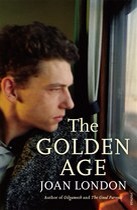
There are any number of ways a novel about children with polio could go wrong. There’s sicksploitation, in which the children are reduced to pity objects, their carers to embodiments of a heartless or incompetent medical system, and their parents to hand-wringing bystanders. There’s documentation, in which treatment is described in painful detail, and criticised in the light of what is now known to be effective. There’s advocacy, in which a longish final sequence shows the children, now in their sixties, dealing with post polio syndrome. And I’m sure there are others. Joan London avoids them all in The Golden Age.
When the book opens Frank/Ferenc, a thirteen year old boy, son of Hungarian Jewish immigrants, has newly arrived in a polio convalescent home named The Golden Age (a home of that name actually existed in Perth in the 1950s, and the novel draws on the reminiscences of people who were patients there). Frank has already decided his vocation is to be a poet, and he is drawn to Elsa, another patient about his own age. His growing love for Elsa and his development as a poet, both treated with respectful restraint, are delicately intertwined with the story of their rehabilitation and provide the novel’s central narrative thread.
In the other characters, especially Frank’s parents and Sister Olive Penny, the nurse in charge of the home, the moral and emotional world of post-war Perth is brought to life with apparent effortlessness. Even the sketchiest of characters – the gardener, say, or the ex-patient with whom Olive has an unconventional relationship, or the people who live across the road from the Golden Age – are deeply imagined. Big scenes – a piano concert in the quadrangle, the queens’ visit to Perth – unfold naturally and without ever losing sight of the main game.
For me, the emotional heart of the book lies in the relationships between the young people and their parents. Different parents’ emotional reactions to their children’s illness are deftly captured, ranging from scenes of operatic intensity to tiny, deeply intimate gestures. Anyone who has been in hospital or boarding school as a child will recognise the children’s ambivalence about their parents’ visits, as the institution comes to feel more like their real home and they realise that their parents don’t understand their new lives. The final major turning point, which I’m not going to reveal, emerges from the middle of this complexity as a surprise that is also, in the Nero Wolfe sense of the phrase, most satisfactory.
 This is the second book I’ve read for the Australian Women Writers Challenge for 2015.
We have NSW state elections coming up in a little over a month. I live in the newly created electoral seat of Newtown. If I were to decide my vote purely on the basis of advertising campaigns, there’s no competition.
This is from the Greens candidate, Jenny Leong:
And from the Labor candidate, Penny Sharpe:
Notice that the Greens candidate talks about policy in a range of areas, she talks about the nature of the electorate, and when she talks about herself it’s to tell us about her relevant experience. The Labor ad, on the other hand, is all about personality. Penny Sharpe supports same-sex marriage, and presumably can be counted on to be a staunch ALP member: the ALP as a friendship group rather than a machine. She is liked by her parliamentary colleagues and other friends who use empty words of praise, as friends do. As for the crack about her knowing bus timetables: um, would that have survived into a video about a male candidate?
The Liberal Party is fielding a candidate, Rachael Wheldall, but I couldn’t find a video.
Claudia Rankine, Citizen: An American Lyric (Graywolf Press 2014)
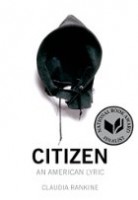
In the current instalment of his regular ‘Critic Watch’ feature in Sydney Review of Books, the formidable Ben Hetherington reflects on the state of poetry criticism in Australia. The article, ‘The Poet Tasters‘, is well worth reading, but I mention it here as an occasion to protest my ignorance. Hetherington says that all the reviewers he discusses seem to have taken ‘the same two courses at university: “British and Irish poetry from Wordsworth to Heaney” and “Modern American poetry from Whitman to L=A=N=G=U=A=G=E”‘. Well, they have left me in their dust: I hadn’t read Heaney, or Larkin, or Ted Hughes-for-adults, before I started blogging, and I barely know how to pronounce L=A=N=G=U=A=G=E (though I do know the meaning of ‘poetaster’, which Hetherington had to google).
One feature of my ignorance is that, deep in my heart, I want poetry to be about something. It’s no disparagement of Claudia Rankine’s Citizen that it definitely satisfies that desire: in a word, it’s about racism. It gets right inside that word and lights it up, makes it ultra-visible, ultra-clear, from death-by-a-thousand-cuts micro-aggressions to brutal murder.
In short pieces – prose poems / flash fictions / case studies – she gives us moments among friends or strangers when racism intrudes, the kind of thing a recent Beyond Blue anti-racism ad called ‘casual racism’; Claudia Rankine is much more incisive with her language than that. These moments are of a kind with the ‘joke’ made by the white MC at last year’s US National Book Awards. Claudia Rankine isn’t interested in stirring up a twitter-storm like the one that followed that remark: she wants something deeper than our outrage or our guilt, she’s trying to understand and invites us to join her.
A friend argues that Americans battle between the ‘historical self’ and the ‘self self’. By this she means you mostly interact as friends with mutual interest, and, for the most part, compatible personalities; however, sometimes your historical selves, her white self and your black self, or your white self and her black self, arrive with full force of your American positioning. Then you are standing face-to-face in seconds that wipe the affable smiles right from your mouths. What did you say? Instantaneously your attachment seems fragile, tenuous, subject to any transgression of your historical self. And though your joined personal histories are supposed to save you from misunderstandings, they usually cause you to understand all too well what is meant.
That mightn’t look like poetry to you, but what can I say: don’t let category problems put you off. If poetry is about language at its most intense then this book is the thing.
There’s a brilliant essay on Serena Williams’s moments of rage and exuberance on the tennis court, and a number of pieces about well publicised moments of brutal racism and sometimes violent reactions to it. Some of the latter are labelled as scripts ‘for Situation video[s] created in collaboration with John Lucas’. At least some of these videos are on line and well worth seeking out, but the scripts stand alone as prose poems. The one on Zinedine Zidane’s tragic moment at the 2006 World Cup works well on the page: much of it consists of quotations and here the sources are given as they aren’t in the video; and the pages’ illustrations do at least some of the work of the video. But even on a tiny browser window, the video packs an enormous wallop as Rankine reads the poem while those moments on the football field play out in stop motion over 6 minutes. Here’s a link: ‘October 10, 2006 / World Cup‘. As a public service, here are links to two more: ‘February 26, 2112 / In Memory of Trayvon Martin‘, ‘Stop-and-Frisk‘.
The book makes up for being typeset in an unpleasant sans-serif font on shiny paper by being illustrated with a number of brilliant and brilliantly apposite artworks. It has reached a much wider audience than usual for poetry, with more than 40 000 copies sold (though it’s not so easy to get in Australia – Gleebooks ordered my copy in from the US). It’s in the list of finalists for two of the US National Book Critics Circle Awards – poetry and criticism – the first book to have managed this. There’s coverage of its success on Harriet the Blog.
Posted in Books
Tagged Ben Hetherington, Claudia Rankine, Harriet the Blog, poetry, racism, Sydney Review of Books
 Currently reading & watching


 Me fail? I fly!