Malouf Adamson Aitken Harrison: Rare Objects

Adam Aitken, November Already (Vagabond Press Rare Objects Series No 86, 2013)
Martin Harrison, Living Things: Five Poems (Vagabond Press Rare Objects Series No 87, 2013)
David Malouf, Sky News (Vagabond Press Rare Objects Series No 88, 2013)
Robert Adamson, Empty Your Eyes (Vagabond Press Rare Objects Series No 89, 2013)

I bought this quartet of chapbooks at the Sydney Writers’ Festival, where all four poets read brilliantly. At $15 each, this is poetry at just over a dollar a page, which isn’t a lot of bang for your buck if you measure it by the yard, but – speaking as someone who has ploughed through a number of Collected volumes in the hope of getting a feel for their authors’ work – I’d say these tiny, beautifully presented books are great value for money. The poems have room to breathe. [The list above is in order of publication, my random comments below are in order of my reading.]

1sn

It’s common wisdom that learning poetry by heart is a good thing, because – besides being able to surprise and delight your friends – it’s a way of making the poetry your own, inscribing it on yourself (as Dan Beachy-Quick said memorably, here). Reading David Malouf’s Sky News, I realised that, memorised or not, I haven’t really read a poem until I’ve heard it in my own voice, at least internally. I’ve loved hearing David read his poetry ever since he made sunlight glint off milk churns and today blaze from a lapel in his 70s imitations of Horace. But there’s a different pleasure in taking the poems into oneself.

The poems in Sky News are like piano pieces: there’s a right hand with lots of trills and arpeggios, images and alliterative wordplay, and a slower, deeper, meditative left hand. As I got to know each poem, I found myself looking for my own balance between the two, between being charmed by the right hand, as in this evocation of a quiet night in ‘At Clerici’:

Crickets strike up
a riff on the razzle-dazzle
of starlight, then stop.

and being moved by the left hand, which doesn’t lend itself to quotation because it’s often there by implication or comes into the foreground only in the final moments of a poem.

In ‘A Parting Word’, a rendering of Heinrich Heine’s ‘Der Scheidende’, Malouf the translator engages in a similar balancing act. I can’t read German, but compared to what looks like a close translation of the original, it’s evident that Malouf’s poem is a lot livelier: ‘Estorben ist in meiner Brust /
Jedwede weltlich eitle Lust’ (‘It has died in me, as it must, / Every idle, earthly lust’) becomes the playfully alliterative ‘All’s dashed in me, all’s dished and done’, and this playfulness keeps up all the way to the final lines, where ‘Der Schattenfürst in der Unterwelt’ (‘The shadow prince in the Underworld’) becomes

__________________First
in rank of the resident zombies. Top
dog in this dog-house, Hades.

In Heine’s poem, the speaker moves from a cheerless contemplation of his approaching death to a grim acknowledgement that the most vulgar of the living are better off than the noblest dead, so in the end by implication what does art matter? In Malouf’s, the mood is less gloomy – it’s still a poem about age and mortality, but the scales tip towards a celebration of life – it’s not that art is futile, but life is the thing.

1eye

The current submission guidelines for Going Down Swinging warn prospective contributors not to send ‘poems involving birds, wings, feathers or flight’. Luckily for Robert Adamson and his readers this prohibition doesn’t prevail everywhere. Henry Thoreau said an abode without birds was like meat without seasoning – Adamson without birds is unimaginable. From traffic casualties in the prose poem / flash fiction ‘A Proper Burial’ to birds that ‘call and call the light’ in ‘Michael Dransfield in Tasmania’, there are plenty of birds in Empty Your Eyes. Poets are here in plenty too: Adamson’s compadres like Dransfield and Charles Buckmaster, but also an assortment of Catholic convert poets – James McAuley, Pierre Reverdy and Francis Thompson (the only poet my mother ever quoted – ‘I fled him down the labyrinthine ways / Of my own mind; … and under running laughter’). Adamson’s poetry is steeped in the Hawkesbury River, in the world of poetry and poets, and increasingly in a kind of questing mysticism:

------------------I read
'The Hound of Heaven'
by a river in new South Wales:

There was a black chuckle
before the 'running laughter' –
Attention shifts, revelation grips.
1na

Perhaps even more than Adamson’s, Adam Aitken’s cool, postmodern, intercultural poems abound in allusions – not in an arrogant bugger-off-if-you-haven’t-read-Rimbaud way, but more in a let’s-have-some-dislocating-and-provocative-fun way. I went googling quite a bit as I read November Already: John Clare (hardly an esoteric reference, but I hadn’t read anything by him), Rimbaud (I couldn’t find the arachnid referred to in ‘Rimbaud’s Spider’, so I don’t know what I’m missing, but enjoyed the poem anyhow), Ezra Pound (who wrote a travel diary, A Walking Tour in Southern France), Raymond Roussel (I found a note on Adam’s blog that helped hugely in reading the poem ‘Rousselesque’).

There’s a lot of France in these poems: Paris and the tiny village of Mareuil, the Resistance and the Revolution, Roman relics and Australian expats. From what I’ve read of Aitken’s work, I have a sense that he generally writes as if he’s not quite at home, always with a dislocated, interrogative feel. So when a poem about a deserted railway line is entitled ‘On the Chemin du Fer’, it doesn’t read as a mistyping of chemin de fer, but as a marker of the speaker’s outsider status. In the poem, this outsider is on a disused length of railway surrounded by blossoming almond trees, ‘tougher, more industrial’ than cherry blossom, and in these beautifully evoked surroundings, before evoking the Terror by a mention of Saint-Just, asks:

Was that old man "Europe"
so often so hard, so cruel
a one-stop shop
for the soul?

Likewise, I think of Aitken as an urban poet, so when he misspells ‘chicken coop’, it doesn’t read as a mistake, deliberate or otherwise, but as the equivalent of a visitor from the city wearing shiny shoes in a cow paddock, adding to the edgy feel of the poem.

1lt

Martin Harrison’s poems, by contrast, feel completely at home in their mostly Australian landscapes. This may be especially true of the first poem in Living Things: Five Poems, ‘Wallabies’, a long, breathless (and sparsely punctuated) celebration of western New South Wales landscapes:

nothing is dead here the spaces between them are
inhabited leaves twigs debris fallen white-anted trunks

slopes rocks grass parrots galahs floating down
in pink streamers again the grey lack of edge

around sprays cream waterfalls of turpentines flowering
in high irrigated air-blue reaches she-oaks aspirant

with their million fingers and amber seed-flowers
spotted gums mottled as grandmothers but with contrasts

of grey brown white and silver as if dressed for a ball

He does more than describe natural phenomena, of course. A recurring theme here is ‘how events change time’s flow beneath perception’: a ‘small thump from somewhere’ (‘White-Tailed Deer’), thrips that are ‘quite possibly meaningless, quite possibly / microbes of non-significance’ (‘Cloud’), a frog you can hear ‘miles away, / long before you thought you could’ (‘The Frog’). Even the eponymous wallabies would be easy to miss if you didn’t read carefully. Some lines from ‘Blue Wren Poem’ suggest something of what’s going on:

____-_____________________Such

detail can be lost – bobbins, birds, refuge, storm –
when innocence starts holding out against the tide,
when radiance blurs the future.

Michael Brennan of Vagabond Press says this series will come to an end at 100 titles. That means there are 11 to go, and the distinctive design, with pasted-on cover art by Kay Orchison, will sadly be no more.
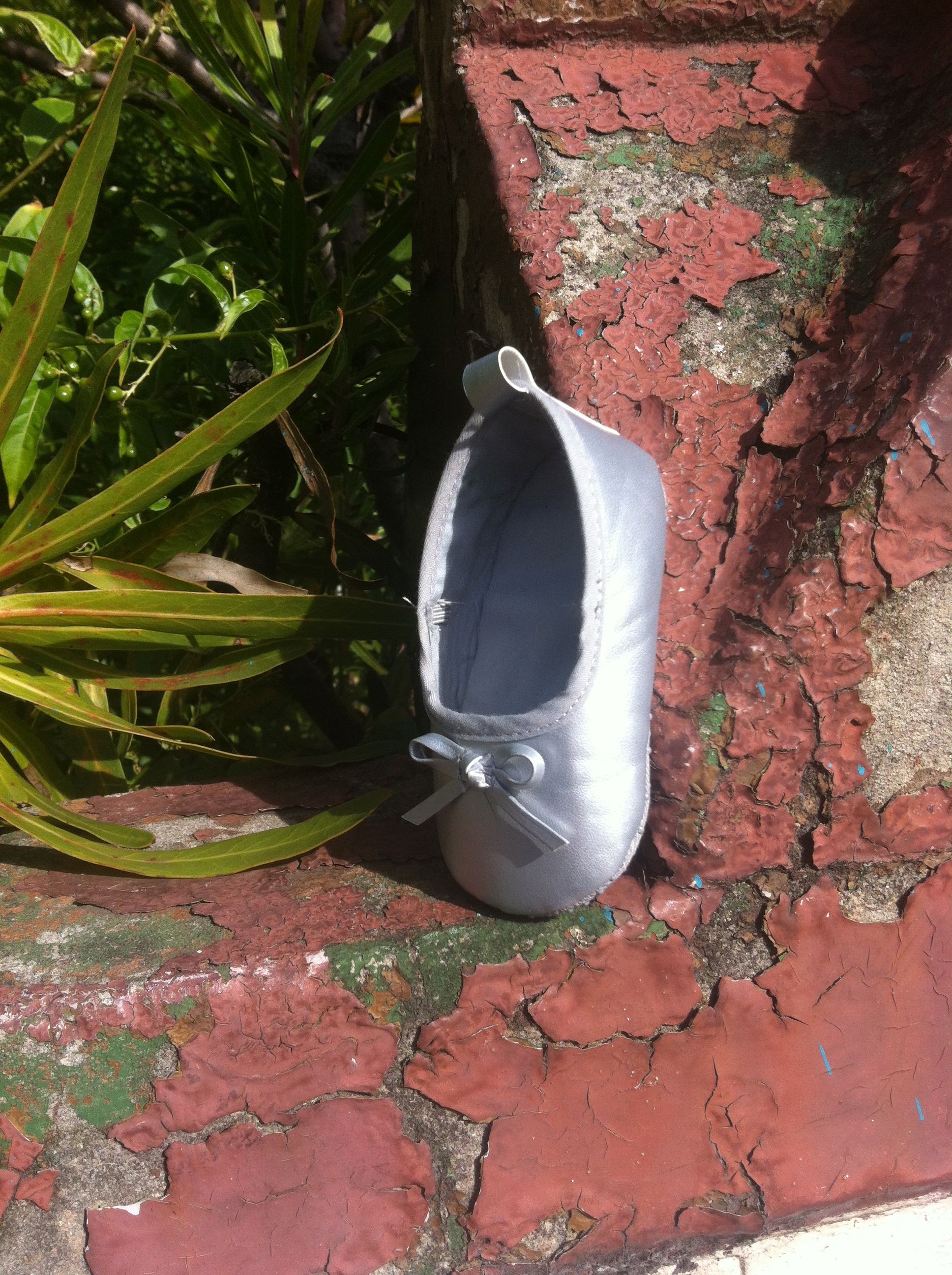
More evanescent street art?

Have I stumbled on a secret art movement? Here’s another carefully posed shoe spotted while walking the dog.

babyslipper

All set for the Sydney Film Festival

IMG_0748Much excitement in my boy-from-North-Queensland heart today when I picked up my Filmmaker Pass from the Delegates Lounge of the Sydney Film Festival.

It says on the back that it ‘is to be worn at all times during the 2013 festival’. It doesn’t get me into any movies, but I’ll try to keep you informed about what it does get me into.

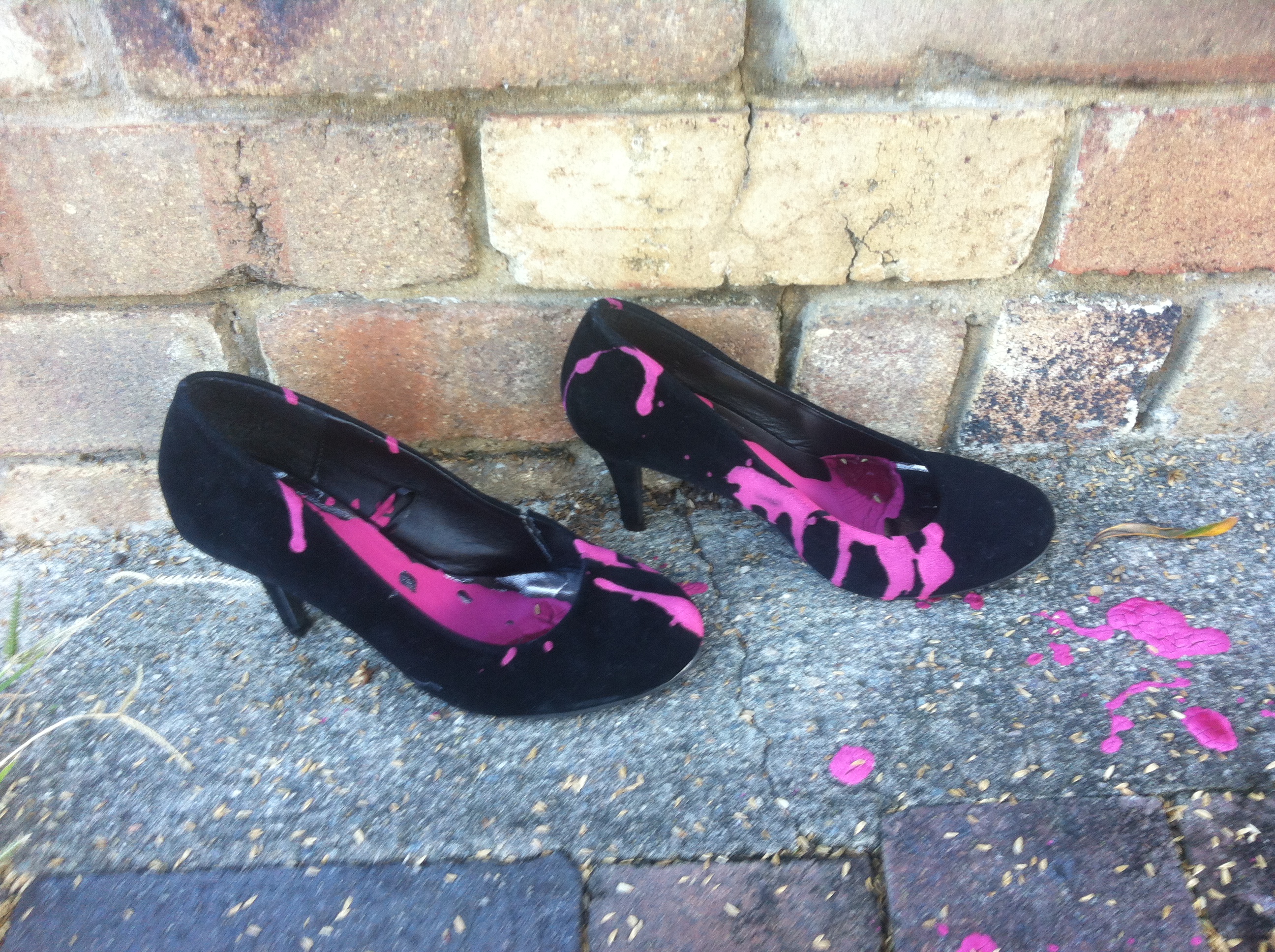
Evanescent street art

I came across three pairs of discarded shoes on my dog-walk today. This pair seemed to have been placed with a photographer in mind. Maybe they’re trying to tell us something.IMG_0745

Social Firefly at Wellington Lux

Sydney has Vivid. Wellington has Lux.

My son Liam Ryan and his collaborators Frank Maguire and Jason McDermott, have had installations in Vivid Sydney for three years now. This year they go international: Wellington Lux has invited them to bring their 2011 creation, Social Firefly, across the Tasman. It will be part of the Urban Alive exhibition in Wellington 21–24 June, and they will be speaking at a Symposium on Sunday 23 June. My Kiwi reader, if there is one, has now been given advance notice.

socialfirefly

Julie Chevalier’s Linen Tough as History

Julie Chevalier, Linen Tough as History (Puncher & Wattmann 2012)

1lthI just couldn’t get on this book’s wavelength. I appreciate the cleverness of many of the poems, but very few of them speak to me personally. I’m glad I read it to the end, because the poems I most respond to occurred in the final section: ‘crease’, about enduring tensions between mother and daughter; ‘fifteen kinds of infidelity’, which is what it says on the tin; ‘the moon and the stars were our chandelier’, which lives up to its excellent title.

A number of the poems are self-described ‘responses’ to other poems or works of art. ‘Corner of Glebe Point Road and Broadway’ and ‘the day we almost hung’, for example, play with Gwen Harwood’s ‘Suburban Sonnet’ and Frank O’Hara’s ‘The Day Lady Died’ respectively, each line (with one exception in each case) ending with the same word as that line in the earlier poem. It’s clever, and fun, but the effect each time was to send me back to the earlier poem, in whose light the present poem seemed a pallid, arbitrary thing. Similarly, when I read the poems responding to work by Ron Muecke, Diane Arbus, Cy Twombly, Hans Bellmer and Giorgio Morandi, I went to those works, either in memory or by Google, and felt no particular urge to come back. Maybe that’s a problem inherent to ekphrastic poetry, or – more likely – there’s something I’m not getting.

awwbadge_2013 This is the sixth book I’ve read as part of the Australian Women Writers Challenge 2013, but I won’t add this post to the website, as it’s not really a review – more a note that I’ve read the book.

Morphic Mirror at the Vivid Festival

Winter’s coming on in Sydney, with fog and bitter chills (bitter by Sydney standards – probably balmy if you’re from Saskatchewan). The Writers’ Festival is over and the Film Festival is more than a week away. But there’s Vivid to light up our nights.

The Opera House, Customs House and the MCA become screens for brilliant animation at 6 o’clock every night from last Friday to Monday week. I don’t think any of the three is up to the standard set in the last two years, but it’s still worth joining the crowds at Circular Quay each night for the spectacle. There are luminous spectacles along Macquarie Street, in Luna Park, and in Darling Harbour as well – I haven’t seen them yet, but the photos on the Vivid site are very promising.

Those are the big items. But the walk from the Opera House to the Rocks and down to Walsh Bay involves, I don’t know, hundreds of smaller scale light sculptures and installations. There’s an electric graffiti wall in a lane in the Rocks that has butterflies flying through rainforest – but all the foliage wilts and dies when anyone walks too close. There are myriad mirror balls in a Walsh Bay breezeway. There are enough interactive light-projecting set-ups to keep a family happy for hours.

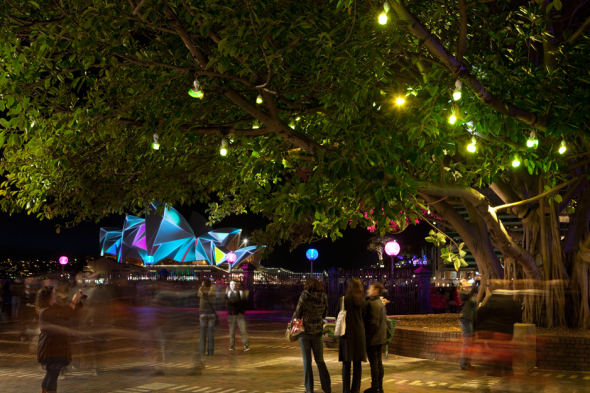
And again this year, my brilliant son Liam and friends are part of it, with their creation, the Morphic Mirror. It’s a responsive funhouse mirror: hold your arms wide and the surface of the mirror contorts so that  your reflection broadens; wave your hands in the air, cross your arms over your body, and your image morphs in response. Like the Social Fireflies and Screaming Rapture of previous years, the Morphic Mirror has an intimate, human-sized feel, and as this video demonstrates is a real crowd pleaser, one person at a time.

Morphic Mirror is created by Frank Maguire, Jason McDermott and Liam Ryan.

There’s more to Vivid than the lights. Evidently there’s music and ideas as well. The lights will do me.

Sydney Writers’ Festival: My Weekend

The best laid plans etc. I was going to blog about the SWF daily, but it turned out that though I only got to one event on Saturday I still had no time to write about it then or on Monday or Tuesday, so here are my days 3 and 4 all mooshed up.

Saturday returned to the cloudless sky that’s traditional for the festival. The average age of the punters dropped by about 20 years, but the crowds at Walsh Bay didn’t seem to be any worse.

My day started with the half past two session, Shami Chakrabarti: WOW at Sydney Writers’ Festival Lecture. WOW, ‘Women of the World’, is a big feminist festival held annually at London’s Southbank Centre. There were a number of WOW events at this festival, a kind of taster-festival within the festival, and a friend I met at quarter past two or thereabouts had been wowed at one of them in which a number of women spoke for ten minutes each (there’s a nice blog post about that one on Guys Read Gals).

The 2.30 session was a tepid affair. Jude Kelly, Artistic Director of the Southbank Centre and founder of WOW, gave a long and  promising introduction – introducing herself as a very senior arts administrator, WOW as a feminist festival unlike any other in the world, and Shami Chakrabarti as her friend and a foremost human rights activist in the UK. ‘Why Women of the World rather than Feminists United?’ she asked, and I honestly thought she was going to say, ‘Because Wow! is so much more attractive than Eff you!’ Sadly no: she explained that it was because the word feminist had such a bad rep and they wanted to attract as many people as possible. This explanation enraged one of my companions, who also bridled at Jude’s admittedly eccentric suggestion that the men in the audience should consider themselves to be women for the occasion. Neither of those things particularly distressed me, but I could understand.

Then Shami Chakrabarti spoke. The same friend told me later that Ms Chakrabarti is a brilliant and heroic activist, who often appears on British TV and is completely formidable, someone you are very glad to have on your side. That wasn’t evident from this speech. She started off saying that in her view gender rights is the most important human rights issue in the world today – she hadn’t always thought so, but she now does. But instead of giving the reasons for her change of mind – arguing, for example, that no other human rights abuse can be adequately addressed unless women’s issues are also addressed – she just repeated the assertion, listed off a number of appalling statistics and atrocities, gave us a timeline of the gaining of important rights by women in Australia and the UK respectively (a part of her talk that someone said afterwards sounded like notes she had taken in preparation for visiting Australia, failing to realise that a Sydney audience might already know, for example, that women had the vote here 20 something years before Britain). Towards the end, she said, ‘It’s not my place to tell you what you should be doing in this country …’, and it struck me that that may have been the problem: as a citizen of London she was trying so hard not to be condescending to us ex-colonials that she ended up not saying anything much. Or maybe she was just jet-lagged.

Whatever, I think I picked the wrong WOW event. I do wonder if at I’m a Feminist – Can I Vajazzle? Jude Kelly invited the men in the audience to consider themselves as women.

I tried to get into the 4 o’clock Marathon Poetry Reading, but if the room holds 100 people, I was 102 in line. I tried to sit in the sun and listen: the ear was willing but the bum was sore and I got a cramp. So I went and sat and read until I could meet up with my companions who had gone to hear Bob Brown on the Future of Activism, where the reciprocal passion so absent from the WOW talk was by all accounts there in spades – even though he kept pointing an accusing finger at his audience and telling them that come September they were about to vote against their own interests and the interests of their children.

Sunday was another brilliant day – I speak mainly of the weather and the way it was possible to strike up an interesting conversation with compete strangers.

We started with Sylvia Nasar: Is the West Over and What Would Keynes say? at 10 o’clock, probably my most worthily motivated event of the festival. As is often the case, the conversation bore very little relation to the title of the session. It was mainly a promotion of Sylvia Nasar’s book, Grand Pursuit: The Story of Economic Genius, which tells the history of economics through the lives of its key practitioners, and argues that economics is responsible for transforming the possibilities for human wellbeing. As one of my companions remarked afterwards, if the book is as facile as this session, it’s a good one to skip. Her responses to two questions at the end are indicative of that facileness.

A young woman, after a courteous squee about having a woman discuss economics, asked how Ms Nasar’s account of the vast benefits brought to humanity by economics related to the imminent threat from global warming. Ms Nasar said that many problems had been solved in the past and there was plenty of time so she was optimistic that economics would solve this one too. She probably didn’t mean that we should just place our faith in neoliberalism, but she could have meant that, and evidently didn’t see any need to dissociate herself from that view. Then someone asked what she saw as the importance of Amartya Sen. This question might well have been a chance to distance herself from the neoliberal world view, and perhaps come at last to the advertised theme of the session; instead she told us how she had followed ‘Amartya’ around in India for weeks when writing the book, and been struck by the way his photo appeared constantly on the front page of newspapers there – that in India economists could be treated as rockstars are in her native USA. End of reply.

Sylvia Nasar wrote A Beautiful Mind, the book about economist John Nash that was made into the excellent movie with Russell Crowe, so she’s clearly done better than this. Maybe she was jet-lagged too.

I dashed to the scene of my unsuccessful queuing on Saturday, and this time I was among the last five people admitted – to stand at the back of the room for Research and Writing. This session turned out to be a lot of fun. The panel was the winner and two shortlisted authors for the 2012 Nib Waverley Library Award for Literature: Jane Gleeson-White (Double Entry: How the merchants of Venice shaped the modern world – and how their invention could make or break the planet), Robin de Crespigny (The People Smuggler: The true story of Ali Al Jenabi, the ‘Oscar Schindler of Asia’) and Fiona Harari (A Tragedy in Two Acts: Marcus Einfeld & Teresa Brennan). They were billed as talking about their approaches to research, and that’s what they did.

If there was a common thread, it is that each of their books began with the discovery of an interesting person, and none of them knew when they started what the book was going to be about. Jane Gleeson-White (who incidentally had just done a fine job as Sylvia Nasar’s amiably sceptical interlocutor) started out writing about the Viennese Monk Luca Bartolomes Pacioli, intimate of Leonardo and teacher of Dürer, and had to be told by her editor that she had actually written a history of accountancy. Robin de Crespigny set out to make a film about people smuggling, but was so captivated by Ali Al Jenabi that it had to be a book and, evidently, an enduring friendship. Fiona Harari began with questions about Marcus Einfeld, the eminent former judge who perjured himself over a speeding offence and ended up disgraced and in gaol, intending to devote just one chapter to Teresa Brennan, the deceased person he had claimed was the speeding driver, but expecting hostility from Einfeld’s friends and family she decided to write the Brennan part first, only to discover a whole rich story there. The panellists enjoyed themselves and each other, and a good time was had by all.

Fiona Harari said that Teresa Brennan was famous for telling outrageous lies for the fun of it – she had convinced Sir Gustav Nossal that she was planning to become a nun. As I’d relayed on this blog something I was told by Teresa when I met her in 1976, I used question time to ask if I’d been sold a pup: but no, it’s on record that, among many other improbabilities, she had indeed been a publicist for Barry Humphries and it was quite plausible that she had written jokes for Edna.

My final event was Karl Ove Knausgaard in conversation with Sarah Kanowski. I’d nearly finished the first book in his six volume novel My Struggle, A Death in the Family, which we’ll be discussing at my Book Group, and which I’ll write about here after the meeting. So this session was like homework. All homework should be so mesmerisingly interesting.

Sarah Kanowski seemed to have read everything Karl Ove had written, some of it at least twice. She pronounced his name as if she had been speaking Norwegian all her life, and was right up there with Ramona Koval in establishing a warm rapport with her interviewee. Karl Ove said that shame is the dominant emotion in Norwegian culture and these books set out to name things that are simply not talked about: drunkenness and incontinence, but also mistreatment of children and sexual matters. When he was writing the novel he couldn’t imagine anyone wanting to read it, and now he is alarmed to think there are more than 500 thousand people who know all about his sexual inadequacies. He claimed that when he finished speaking to us he would go off by himself and vomit with shame. Was it just me, or would everyone in the room have been willing to hold him by the shoulders while he vomited?

I hadn’t been sure I would read on past the first book, even though I was exhilarated by it. Now it looks as if I won’t be able to resist reading the whole 2000+ pages. Evidently the final book is a 400-page essay about Adolf Hitler. Can you believe I’m looking forward to it?

So that was my festival. We didn’t get to the Big Read, a highlight of previous festivals, because its new time slot was in working hours. I’ve subscribed to the podcast of  ABC Radio National’s pale shadow of the Book Show so as to hear some of the sessions I missed. I’ll happily advise people devising sessions to think in terms of readings and conversations rather than delivery of papers or rambling discourse. I recommend anyone travelling to Sydney to time it so you can attend, especially if it continues to overlap in time and location with the Vivid Festival (about which I’ll blog a little tomorrow).

Sydney Writers’ Festival: My Day 2

Friday began wet and grim but cleared up to a spectacular harbourside brilliance, only to pelt down as darkness fell. But that was only he weather.

I only managed two events.

As a common or garden blogger and minimally published writer, I would have felt remiss if I didn’t attend Writers Who Blog. The four panellists came at blogging from quite different perspectives.

Mark Forsyth writes a short blog entry every day, always about some peculiarity of the English language (while here he met the word yakka for the first time). He admitted that he had started his blog The Inky Fool in the hope that it would lead to a book contract, and it did, to two books in fact.

Tara Moss already had a number of books published when she stumbled into blogging – she did a gig as guest blogger for the SWF a couple of years ago and wrote 21,000 words in a week. The appeal of writing and publishing without a moderator was irresistible, and as she has done more over the years, breaking all the standard rules about length, range, language level and frequency, her sense of herself as a writer has transformed.

Lorraine Elliott blogs full time at Note Quite Nigella, a blog about food. For her, blogging was a way out of the advertising world, which is ‘all about money’. I didn’t quite get how she does it full time, that is, whether it generates an income, but she told lovely stories of ow her blogging has created a bridge in her relationship with her mother.

Angela Meyer, of Literary Minded, was a participating chair who necessarily focused on chairing and made it look effortless. I would have liked to hear more about her own blogging experience, which she described in her intro as being in part about tracking her own trajectory as an emerging writer.

All four panellists seemed to count their hits in the hundreds of thousand. My biggest day scored 228. My impression is that questions at the end came mainly from bloggers on my scale. I got to ask the first question, and resisted the temptation to be one of those grey-haired gentlemen who seizes the opportunity to tell his life story. I asked about difficulties with comments. Mark had a ready, sensible answer: ‘Don’t start an argument on the Internet.’ Tara took the microphone: ‘My advice is, Start arguments on the Internet.’ They were both right, of course. I liked Tara’s final note: ‘When you do get into an argument, don’t say anything you wouldn’t want to see quoted in the newspaper.’

One key observation – I don’t remember by whom – chimed with Robert Green’s reflections on creativity the day before: blogging is still very new, and there are no hard and fast rules about how it should be done, and each of the panellists said that the rules as formulated so far as guides for beginning bloggers didn’t really apply. Come back in 50 years and we might have a set of clear rules like the ones that govern journalism now, but for the time being the field is wide open for creativity and discovery.

At half past two I had to choose among Beyond Climate Denial on a Neoliberal Planet with Jeff Sparrow, Robert Manne and others, Dermot Healy in conversation with Luke Davies , and Turning the Tide with Lionel Fogarty, Melissa Lucashenko and others. Would I opt for anxiety, pleasure or pain? It was a toss-up, and in the end I went for anxiety and climate change: I admire Jeff Sparrow’s writing and editing – I was interested to hear him and Robert Manne in conversation; I had read the article on climate change and neoliberalism in the current Overland by Philip Mirowski, Jeremy Walker and Antoinette Abboud, of whom the last two were also on the panel, and would love to hear its implications teased out in discussion.

It was probably a wrong decision. There was no conversation. Jeff Sparrow was a non-participating chair. Each of the three panellists delivered a paper, they didn’t address each other’s points except to complain that the session was too short, and as far as I could tell none of the presentations added anything substantial to what had been said in the previously published articles. ‘As far as I could tell’, because Jeremy Walker read so fast and assumed so much prior knowledge of (I think) economics that I was completely at a loss to know what he was saying. In short, Robert Manne thinks there’s little reason not to despair. Antoinette Abboud warned us not to be seduced by the neoliberal three-step strategy of denialism, carbon trading and geo-engineering. Jeremy Walker said something very complex and possibly profound.

The first person to speak in question time said we should all pay attention to Bill McKibben, and all panellists seemed to agree. ‘Why aren’t we out in the streets screaming about this?’ the same man asked when instructed by the chair to get to the question. Robert Manne had a ready answer: ‘Because we’re consuming.’

The problems of the world weren’t solved, and if Robert Manne is right they never will be. But change is never linear, and hope, the thing with feathers that perches in the breast, lives on.

Sydney Writers’ Festival: My Day 1

The Sydney Writers’ Festival has been going for days now, but my festival started yesterday, on a bleak, wet, grey Thursday.

I began with a 10 o’clock launch of four chapbooks in Vagabond Press’s Rare Objects series. Chapbooks are books of poetry so small they don’t even rate an ISBN. But where some chapbooks have a cheap and cheerful feel, the Rare Objects are beautifully crafted, a hundred numbered and signed copies of each title. The books being launched were by the stellar line-up of David Malouf, Robert Adamson, Martin Harrison and Adam Aitken.

Luke Davies gave one of the best launch speeches I’ve heard. He paid tribute to Michael Brennan of Vagabond Press and to the four poets in warmly personal terms, as people and as creators. The mutual respect and affection among the five people on the dais was something wonderful: completely the opposite of the internecine strife for which poets are supposedly famous. Each of the four launchees read: Adam Aitken from November Already, Robert Adamson from Empty your Eyes, Martin Harrison from Living Things)and David Malouf from Sky News (which my deafness heard Luke Davies announce, improbably, as Sky Nudist, but that would be a different chapbook). We the audience were very restrained, applauding politely after each reader – my guess is that we were too busy processing the complex pleasures we were being given to be too demonstrative. It really was a brilliant reading: a stunning prose poem from Adamson, crisp imagery from Malouf, Aitken taking the New York School to a tiny French village (not really, but that’s a mangled form of his own joke), Harrison in fine rhapsodic form. I loved Martin Harrison’s account of the genesis of his ‘Wallabies’: witnessing two young Australians in full xenophobic flight in a Parisian Internet cafe (and he described them to us with great relish), he took notes intending to write a satirical poem, but realised when he sat to write that what he really wanted to do was to celebrate the part is Australia they came from.

I couldn’t have asked for a better start. I bought all four of the Rare Objects, found a spot out of the rain and sat and read, did email things on my iPad, and chatted. (One of the striking things about the SWF is how easy it is to strike up a conversation with complete strangers.) Then it was time for the 1 o’clock session:Harbour City Poets: Some People You May Know, my first event in the Bangarra Mezzanine, which I think of as the poets’ space at the Festival. Again it was a pleasure to be read to, this time by a quintet of poets – Margaret Bradstock, John Carey, David Musgrave, Louise Wakeling and Les Wicks. The poems were about people, real, and imagined. Margaret Bradstock’s pieces about colonial characters made me want more. And there was some witty and elegant light satire. It may be because someone had told me just before the session about the man being hacked to death in London, but I found myself thinking that light satire, especially when performed giving broad Austealian accents to its objects, is a dangerous mode in which the satirist can all too easily come off as smug, class-bound, narrow-minded, bien-pensant and otherwise unappealing.

I rushed home (bus–train–bus), walked and fed the dog and was back, just a few minutes late for Robert Green: On Creativity at 4 oclock. This session wasn’t on my schedule, but a friend had a ticket she couldn’t use, and the Festival program promised ‘exercises to help rid [me] of blocks and unleash thinking that is more fluid and creative’. Given that I’m feeling out of my depth with a writing project just now, it was a case of what the hell archie, and I’d taken the tickets off her hands. It was turned out to be pretty much a motivational talk. The ‘exercises’ were three broadbrush strategies: embrace the blank page; think like an outsider; subvert your patterns of thinking. I enjoyed the talk, not least for the wealth of anecdote and Robert Green’s manifest passion for his message that every human brain is capable of brilliance, that mastery is possible. I especially liked the first question and response at the end. In summary, a white-bearded man suggested that next time a journalist asks him if he can seriously believe the stuff he says, he should try thinking like a mushroom; this was evidently meant as a witticism, but Green was completely nonplussed; after a bit of back and forth in which the point of excuse tin remained obscure, he agreed that he would give it a try.

More bus, more train, dinner at a pub in Chippendale then to the Carriageworks for Stories Then & Now. I’m a big fan of William Yang’s slide-show story telling, especially his exploration of his Chinese and north Queensland heritages over the years. For this show, along with Annette Shum Wah, he has mentored six mainly younger Asian-heritage people to tell the stories of their families (‘then’) and their personal stories (‘now’). Each story-teller had two turns alone on stage with a microphone in front of hem and two screens showing a series of photographs behind them. Ien Ang, Jenevieve Chang, Michael C. S. Park, Sheila Pham, Paul van Reyk and Willa Zheng were each completely engaging, and the combined effect of heir six presentations was extraordinarily rich. The Cultural Revolution, the Korean War, the American War in Vietnam, Indonesian independence, the White Australia Policy; a hilariously failed attempt at an arranged marriage, a weirdly romantic tale of serial fatherhood by sperm donation, a successful Internet match, intergenerational tension and conflict fled, faced and reconciled. We came out into the night exhilarated.