The Book Group on Karen Armstrong on the Bible

Karen Armstrong, On the Bible (Atlantic Books UK, Allen & Unwin 2007)

1ob Part of the function of a book group, or at least of mine, is to take you (me) out of your (my) comfort zone. So when On the Bible was proposed as the title for our March meeting, I resisted my urge to reach for a proverbial bargepole.

The urge didn’t come from a Dawkinsian disdain for religion. On the contrary, atheist though I am now, I was a member of the Marist Brothers in my teens and early 20s, and I treasure the memory of a series of lectures by nicotine-stained Brother Flavian, who was supposed to be teaching us Catechetics (whatever that is) but instead shared his passion for biblical studies an hour a week for a whole year. I wasn’t keen on revisiting the subject with what sounded like a dry introductory text.

But I’d seen Karen Armstrong’s TED Talk, Let’s Revive the Golden Rule, and the chap who proposed the book was very keen., so what the hell, archie, I thought, and happily supported the proposal..

It turns out that the stuff I remember from Brother Flavian’s lectures – the story of how the Bible was written and compiled, including the varied cultural and historical contexts – takes up just a fraction of the book. Karen Armstrong doesn’t linger on the poetry so much as sketch the politics, and though I miss the poetry, the politics is often fascinating, especially when there is an implied commentary on 21st century readings. For example, she describes P, the priestly strand of the Torah/Pentateuch, as proclaiming that ‘Israel was not a people because it dwelt in a particular country, but because it lived in the presence of God’; or, something that Brother Flavian could never have said but is glaringly obvious once articulated, ‘A thread of hatred runs through the New Testament.’ (Pharisee to Richard the Third: ‘You call that a hatchet job? This is a hatchet job.’)

The US title, The Bible: A Biography, is not only catchier, it also gives a better sense of what the book is: because once it has told the story of how the books of the Bible were written and assembled, it goes on with the process of canonisation (which happened over centuries, and was still being debated in Luther’s time), and then Armstrong’s real subject: how the way they were read changed over the centuries – by Jews, Catholics, Orthodox Christians and Protestants. The Midrash and Talmud, the Platonists, the early Christian Fathers up to St Augustine, the mediaeval exegetes and the Kabbalists all brought different understandings of what the Bible was, and how it should be read, and what one was to make of its many inconsistencies. Then came the Protestant Reformation and capitalism, and Lurianic Kabbalah and tikkun olam, followed by the Enlightenment, which brought Spinoza ‘who studied the historical background and literary genres of the Bible with unprecedented objectivity’ and was the forerunner of the German Higher Criticism. We arrive at last at the mystical reading of the Hasidim, and the extreme literalism of the fundamentalism that came into being in late 19th century USA:

This was an entirely new departure. In the past, some interpreters had favoured the study of the literal sense of the Bible but they had never believed that every single word of scripture was factually true. Many had admitted that, if we confined our attention to the letter, the Bible was an impossible text. The belief in biblical inerrancy … would, however, become crucial to Christian fundamentalism and would involve considerable denial. [The leaders of this approach] were responding to the challenge of modernity but in their desperation were distorting the scriptural tradition they were trying to defend.

And then there’s post-Holocaust Judaic literalism which adopted the until-then secular ideology of Zionism, and came up with a doctrine that was in fact completely novel even while claiming to be based in antiquity:

Unless Jews occupied the whole land of Israel, exactly as this was defined in the Bible, there could be no Redemption.

The blurb tells us Karen Armstrong was a religious sister briefly some decades ago. You can’t tell from this book whether she is still a Catholic or even a believer, but there’s no hostility to religion. What does come through loud and strong is her antagonism to movements that hijack the Bible for political purposes, while disregarding the extraordinary richness of its history.

There are dry stretches, where the treatment of various Kabbalists, say, or different strands of mediaeval Christian hermeneutics amount to little more than annotated lists, potentially useful if one were to go on to further study, but skippable for the drive-by reader. Perhaps, in fact, those dry patches make up most of the book, so that in effect it’s more successful as a reference book than as a narrative. I found the bits that transcended that dryness fascinating, among other things for the way they illustrate that reading, reading anything at all, is a tremendously complex act that can transform the text being read.

I was reminded of Constantine’s Sword, James Carroll’s powerful history of anti-Jewish oppression in Christianity, especially Catholicism, which could almost read as an elaboration of one thread of this book..

The meeting:
In the days leading up to the meeting there was a flurry of emails saying their writers had up after a hundred pages or less, and I wouldn’t have been surprised if the conversation last night had sputtered and died before moving on to the media’s nastiness about Julia Gillard. In fact, we stayed roughly on topic most of the evening – helped by a couple of the chaps having been to Seders the night before. Googling was banned for the evening, so there were interestingly speculative conversations about, among other things, the meaning of the orange on the Seder plate, and the colour and species of the animal that Jesus rode into Jerusalem.

Not many of us had read the whole thing. One had bought his copy of the US edition online from Able Books for 10 cents, no postage. The blurb on that edition referred to the book’s ‘cracking pace’, which we could all agree on, though it may have been precisely the ‘pace’ that made it hard going at times: the historical Jesus is dealt with in a single sentence, and I’m not sure if the historical books of the Hebrew Bible get even that. While a cracking pace is a good thing in a thriller, in an overview of a major element of western culture it tends to be either compacted or superficial. Still, I think there was a general respect for the book’s achievement in indicating the complexity of its subject without being impenetrable. Several of us remembered little, apparently casual observations that opened doors in our minds.

But there seemed to be a general thirst for some fiction as our next book

Alan Moore Unearthing Lost Girls

You know what I was saying the other day about superheroes? Well, same for pornography and illegible typographic design.

Alan Moore and Melinda Gebbie, Lost Girls (Knockabout / Top Shelf Productions 2012)

1lg

One of my sons gave me Lost Girls for my birthday. I knew enough about it to say as I tore the protective wrapping from the deluxe hardcover, ‘This is a rude book.’ I opened it at random and after a cursory glance showed the spread to my yum cha companions. ‘That’s not rude,’ someone said. ‘It’s pornographic.’ She was right. And there aren’t many spreads in the book that that’s not true of.

The eponymous lost girls are Wendy (as in Peter Pan and Wendy), Dorothy (as in The Wizard of Oz) and Alice (as in Alice in Wonderland), all grown up. They meet in a decadent European hotel just before the first World War and tell each other pornographic versions of their respective classic tales, then go on a seemingly endless series of sexual adventures. It’s a bit like a cartoon I remember from my early 20s that shows a crowd of Disney characters having an orgy. Only this goes on for, oh, 180 pages.

I can’t say I read it all, or looked at every image. I don’t know who would want to. I don’t understand why the brilliant story-teller Alan Moore and the fabulously talented artist Melinda Gebbie made the book in the first place. Evidently they married each other during the making of the series, so it can’t have been as off-putting for them as it was for me. If you want a proper discussion of the book, Tim Callahan discussed it as part of his Great Alan Moore Re-read on tor.com.


Alan Moore and Mitch Jenkins, Unearthing (Top Shelf Productions 2013)

1603091513

At the risk of incurring the wrath of truly hip commenters, I am now going to say that Unearthing also left me fairly cold. According to the back cover it began life as part of an anthology about London, and ‘evolved through a series of live performances and recordings’, before being published as this book. It’s a kind of biography of Steve Moore, a friend but no relation of Alan Moore, enmeshed with an account of Shooters Hill in South London, Alan Moore’s text and Mitch Jenkins’s photographs combined in a design phantasmagoria. I did read some bits: Steve Moore is an occultist who seems to use a lot of recreational drugs and have shared hallucinations with Alan on at least one occasion. The prose is overwrought, and in order to read it one has to variously read tiny print, decipher weird Gothic fonts, follow text presented in a spiral, distinguish pale type from an only slightly paler background, etc. And when the physical effort comes up with, for example,

The bookshelves there behind him are the hexagram with six unbroken lines, Chi’en, the Creative, are a doorway where the brilliance bleeds through from a next room that’s not there, a warren of such rooms stretching away above, below, on every side, a Hyper-London, an eternal fourfold town of lights. This is it, this is real, this lamp-glow that’s inside the world like torchlight through a choirboy’s cheeks, the mystical experience as Gilbert Chesterton’s absurd good news and it goes on for hours, goes on forever

I’m afraid I just lose the will to continue.


These books made wonderful birthday presents – beautiful, luxury objects, that took me well out of my comfort zone. I don’t know if either of them actually expanded my world, but they did make me wonder if pornography and occultism don’t have a function in common: to provide distractions from real issues in the real world. Lost Girls could even be read as saying as much in its last pages where (SPOILER ALERT) the motif of the poppy is transformed from a symbol of dreamy erotic surrender to an emblem of the carnage of war.

Books I didn’t finish

This post is a sop to the obsessive being that occupies part of my mind and insists that if I’m going to blog about my reading I should Leave Nothing Out. So here they are, the books I didn’t finish:

A C Grayling, Descartes: The life of René Descartes and its place in his times (2005, Pocket Books 2006)

1416522638 We started this as a read-aloud on a medium-length car trip, perhaps Sydney to Canberra, after hearing A C Grayling speak at a Sydney Writers’ Festival. The Art Student had previously read his polemical Against All Gods, and regaled me with some of the good bits. Neither of us knew all that much about Descartes: the AS had come across him in her Art History course and wanted to know more, and all I had was dim memories from second-year University French: ‘Je pense, donc je suis,’ a long night sitting in a stove, etc. And the cover blurb offered us revelations involving a spy story.

It’s not that the book wasn’t interesting, but the combination of philosophical seriousness and careful assembly of evidence for the hypothesis that Descartes was a spy was far from riveting. We hadn’t got much further than 50 pages (again) when we agreed that conversation or the radio would be a better option, and later neither of us felt any urge to read on solo.

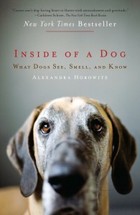
Alexandra Horowitz, Inside of a Dog: What dogs see, smell, and know (Scribner 2009)

1iadThis was read-aloud for a relatively short drive, discontinued because the book was a loan rather than because of any failure on its part to hold our attention. We knew we weren’t going to read the whole thing, so as reader-aloud I was given licence to pick and choose. I read the chapters towards the end about dogs’ theory of mind – asking the question whether dogs have versions in their minds of what is going on in our minds. It’s lively, fascinating stuff. Just as interesting as the dogs are the people who construct meticulous experiments to determine what dogs are actually doing when we project so much onto them.

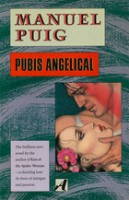
Manuel Puig, Pubis Angelical (1979, translation by Elena Brunet, Random House 1986)

1paThis book begins with a woman waking up alone in sumptuous surroundings the night after her wedding, having been drugged and subjected to sexual violence by her bridegroom. In the following chapters, written variously as diary entries and unannotated dialogue, a woman – not, it turns out, the same one – is in a hospital recovering from cancer surgery. Manuel Puig wrote The Kiss of the Spider Woman, and this novel has some kinship with that and the movies of Pedro Almodóvar. Evidently this style of febrile introspective suffering doesn’t do it for me in a novel, but I struggled on joylessly to page 50, where an arms dealer entertains some nasty images of brutally humiliating and killing his wife. Then I I gave up.

This post is about books I have no intention of returning to each of them when the urge strikes. There are others where my reading has stalled – Byron’s Don Juan, Grayling’s The Good Book, the Lehmann and Gray anthology of Australian poetry – but I’ll return to each of them in the fulness of time.

‘pose of powerlessness’

Ta-Nehisi Coates of the Atlantic reflects on what he was thinking ten years ago:

Back then I was seized with a deep feeling that what I thought did not matter much. …

I was skeptical of war, but if the U.S. was going to take out a mad tyrant, who was I to object? And more, who were you to object? I remember being out during one of the big anti-war protests and watching the crowds stream down Broadway. I remember thinking, ‘You fools believe that you matter? You think what you’re saying means anything?’

In fact it meant a lot. It meant that you got to firmly and loudly say, ‘No. Not in my name.’ It meant being on the side of those who warned against the seductive properties of power, and opposing those who would bask in it. It also meant pragmatism. …

And finally it meant the election of the country’s first black president whose ascent began at an anti-war rally in Chicago.

I say all this to say that if I regret anything it is my pose of powerlessness — my lack of faith in American democracy, my belief that the war didn’t deserve my hard thinking or hard acting … I am not a radical. But more than anything the Iraq War taught me the folly of mocking radicalism. It seemed, back then, that every ‘sensible’ and ‘serious’ person you knew – left or right – was for the war. And they were all wrong. Never forget that they were all wrong. And never forget that the radicals with their drum circles and their wild hair were right.

Going Down Swinging 33

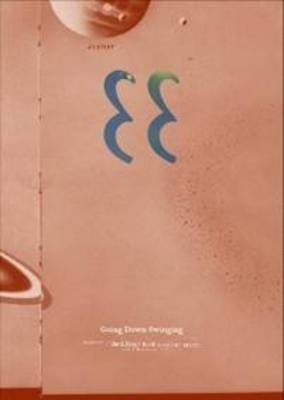
Going Down Swinging 33 (edited Geoff Lemon and Bhakthi Puvananthiran 2012)

20130222-211751.jpgGeoff Lemon, co-editor, was surely tempting fate and the critics when, as soon as the 32nd issue of GDS was complete, he nicknamed the impending No 33 the Jesus Issue. Wasn’t that like predicting the journal’s death, or at least inviting a crucifixion? Well, maybe, but after all it’s Going Down Swinging we’re talking about, whose title has been cheerfully proclaiming its imminent demise from the very start. Perhaps, then, the nickname was intimating that the physical object made of ink and dead trees was about to be resurrected, transformed into an incorporeal, wholly digital being. But no, though there is The Blue Corner online and a CD comes as part of the thing itself, the fabulous design of No 33, by Elise Santangelo and Stuart Hall, draws dramatic attention to its materiality, with tabs, die-cuts, a range of stocks, and clever use of showthrough – without, I say with heartfelt appreciation, detracting from legibility.

It looks as if the only actual consequence of the nickname was a number of Jesus-related submissions, enough of which made the cut to constitute a 38-page Jesus section. Like the rest of the magazine, these are predominantly hip inner-city Melbourne, the one surprise being ‘Out of the Kitchen Since 30 AD’, Elizabeth Redman’s straightforward personal essay reclaiming Christian faith from the reactionary fundamentalism and dubious institutional politics that tends to dominate public discussion of it.

Two other pieces stood out for me as admirably plain-speaking. André Dao’s ‘Out of Our Bodies’ is a memoir about Catholicism, atheism and mortality. He could have been describing a scene from Michael Haneke’s Amour in his final image of his grandparents singing together at his grandfather’s deathbed:

… My grandfather seemed finally to hear her, and then they were both singing, falling in and out of tune. For a moment they seemed lifted out of their slumped, brittle bodies, and their wrinkled faces were crumpled in concentration and remembered pleasure.

And Fiona Wright’s short poem ‘Consider the Camel’ feels as if it should always have been there, and manages to use the word ‘platyclades’ without missing a beat.

For the rest, there’s hardly a dud in the lot of them. ‘Atlas Dharma’, a commissioned by Cate Kennedy with watercolour illustrations by Simon MacEwan, recalls and recreates a childhood fascination with the Reader’s Digest atlas. Eric Yoshiaki Dando’s The Novel Teacher has fictional (I hope) fun with creative writing courses. Una Cruickshank gives us some memorable travel writing in ‘Varanasi’. I skipped an essay that begins with a quote from Lacan and a story that starts out, ‘Long, long ago, afore a-coming of the dust, the mani-lands were a-crowdening with mani-folk’, but that tells you more about me than them.

When I mentioned an inner-Melbourne sensibility, I wasn’t implying parochialism – quite the contrary, the feel is urbane, cosmopolitan. But I was struck by the way a number of pieces from oversea, and even interstate, stood out. You’d expect that of the stories from Russia and India (one each). It was contributions from the USA that prompted me, in the absence of an ‘About the Contributors’ section, to go Googling the authors – not because of a proofreaderish irritation at US spellings, though there was that, but because the voices were noticeably different in ways that are hard to specify – louder, more confident of their own centrality, something like that. When I think of the gigantic magazine that downloads to my RSS feeder, I’d guess that most of what I read there is from the US, and increasingly I live in a global culture. Here, where the proportion is roughly reversed, I’m surprised and reassured to feel a sense that local minds are engaging in locally inflected ways with issues that range from the intensely local to the cosmic.

Klaus Hagerup, Markus + Diana

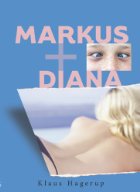
Klaus Hagerup, Markus + Diana (1997, English translation by Tara Chase, Front Street 2006)

1932425594Klaus Hagerup is evidently a well known playwright, screenwriter and writer for children and teenagers in Norway. This book, whose original title translates literally as Markus and Diana and Light from Sirius, was the first of a popular series featuring 13-year-old Markus Simonsen. I don’t remember who recommended it to me, but I’m grateful to them.

The evocation of Baz Luhrmann’s Romeo+Juliet in the English title isn’t completely arbitrary: Shakespeare’s play is mentioned, but it would be a bit of a stretch to call this a tale of star-crossed lovers, or even a love story.

Markus and his friend Sigmund are fringe-dwellers among their peers, Markus because he is timid and awkward and a bully-magnet, Sigmund because he is supremely confident of his own genius and all-round superiority. As readers, we get to be deeply embarrassed by our association with them but – I’m sure Henry James said something about this being the purpose of fiction – we don’t have to suffer the consequences that association would have in real life. Markus writes highly imaginative (that is to say, lying) letters to celebrities cajoling their autographs for his vast collection. The Diana of the title is a glamorous Hollywood soapie star – Markus writes to her pretending to be a millionaire and things get weird when she writes an unexpectedly personal letter in response.

It’s very funny, carried mainly by the dialogue and the series of hilariously implausible letters. Teachers preside obliviously over a scene of mob cruelty; early teenagers struggle to master the arts of adult behaviour, and mostly fail ingloriously; boys on the cusp of puberty are fascinated by a glimpse of nipple in a photograph or through thin cloth. A lot of the time you don’t know whether to laugh at the characters or suffer with them. Mostly I did both, and in the end when – improbably expectedly, and cleverly – things turn out for the best, I wanted to cheer.

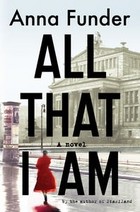
Anna Funder’s All that I Am

Anna Funder, All That I Am (Penguin Australia 2011)

1atia I read the first of this book’s three sections to the Art Student on the car trip from Airey’s Inlet in Victoria to Sydney. Given my proofreader past, this can be a punishing way to encounter a book – few things disrupt a book’s spell more than a reader-aloud complaining about misspellings, malapropisms, mixed metaphors, misquotes, or awkward turns of phrase. Embarrassing sex scenes will do it too (we may never get over The Slap). All That I Am stood up to the ordeal well, and we both enjoyed the trip. Mind you, the reading wasn’t disrupted by tears or cries of joy either. And I couldn’t tell at that stage whether hearing myself reading it all aloud made the different narrators’ voices sound much the same.

As everyone probably knows by now, the novel’s main characters were part of the left opposition to Hitler. Alternate chapters are told by Ernst Toller, a playwright and activist, dictating additions to his memoir in a New York hotel room in 1939, and Ruth Becker, a retired school teacher experiencing vivid memories in Bondi Junction in 2001. As both of them think back over their lives and their relationships, their shared story unfolds. Ruth, we are told in a note at the back, is based on a friend of the author. Ernst Toller was a real person, and so are the other main characters: Hans Wesemann, Berthold Jacob and the woman at the heart of the story, Dora Fabian.

Dora is a brilliant, charismatic, passionate revolutionary. She is Ruth’s adored cousin and intimate friend, and she is Toller’s assistant and the love of his life. Our narrators don’t have much to do with each other, but Dora has been central to both their lives. Through Ruth we see snatches of her childhood and later those parts of her activism that don’t revolve around Toller. Toller is very much the centre of his own world, both as the public figure Dora calls the Great Toller and as the private ma prone to depression and self doubt, but in 1939 he is acknowledging how important Dora has been to him in both spheres.

It’s a gripping yarn that takes us from the immediate aftermath of World War One to the brink of World War Two, with Ruth’s old age as a kind of integrated coda. I learned a lot about the resistance to Hitler in Germany and elsewhere, particularly  England. I can’t say that I was swept away by the story itself, but a slow burning emotional truth comes through about the importance of resistance, even in the face of apparently sure defeat: one of the characters says that they will all be forgotten by history, and it’s true that the Germans who opposed the rise of Hitler at huge cost to themselves tend to be ignored in popular versions of that history. The book captures brilliantly the gradual transformation of a group of revolutionaries who see their conflict with the Nazis, not necessarily as evenly matched, but at least on a scale that allows for cheerful awwbadge_2013derision, to their final condition as a dispossessed, demoralised group crying out from the margins and betrayed by those they held dearest. (I’m not giving you any spoilers there: most people know how that panned out.)

So that’s my second book in the Australian Women Writers’ Challenge. So far, so very good.

Daredevil, Batman and Sacco

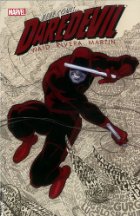
Mark Waid, Paolo M Rivera, Marcos Martin, Daredevil (Marvel 2012)
Alan Moore, Brian Bolland, Batman: The Killing Joke (©2008, deluxe Edition 2012)
Joe Sacco, Journalism (Metropolitan Books 2011)

It’s roughly 40 years since alcohol touched my lips, and booze is right at the top of my list of Boring Conversation Topics, but I was recently held spellbound by a conversation about wine making. My dinner companion was infectiously passionate on the subject. He described the effect of a vineyard’s microclimate on the colour and taste of grapes, and so of wine, discussed the qualities of different grapes, told me about a famous episode in which Australian vintners who had thought for years they were producing merlot were informed by experts that their grapes were actually a variety of cabernet. Wine may be boring, but the minds that make it aren’t.

The experience helped me with a confusion about superhero comics: clearly many of them are created by brilliant people, and I’ve been bemused by my own lack of response. Neil Gaiman’s Marvel 1602? Technically, wow! Otherwise, meh. Joss Whedon’s Astonishing X-Men? Meh. Frank Miller’s Dark Knight? I couldn’t bring myself to read it because I’d been so repelled by the sensibility of Sin City. Superhero comics leave me cold, or worse: they embody an ethos I loathe, that divides the world into good guys and bad guys and offers vigilantism as the solution to the world’s problems. What I have finally realised is that I should no more enjoy even the very best of superhero comics than feel compelled to drink the finest of champagnes. I’m just not into the thing itself.

But I was given two excellent superhero comics for Christmas, so I was in duty bound to read them, and I did it with hope in my heart.

0785152385 Daredevil is a superhero with a disability: he’s blind, though all his other senses are of course incredibly acute, and he has one or two extras. He also suffers a lot – everybody, including other well-meaning superheroes, wants to attack him. He’s socially awkward and apparently sex-obsessed in a fairly harmless way. Apparently comics about him have been around for a long time, and this is a reboot. Much fun is had in finding ways to convey visually the world as perceived by a blind man. But in the end he’s a superhero, the story moves from violent confrontation to violent confrontation, and my world is not expanded by reading it.

1bkjAlan Moore and Brian Bolland’s The Killing Joke is by all accounts one of the great Batman comics, often mentioned in the same breath as Frank Miller’s The Dark Knight Returns, and in this ‘Deluxe Edition’ the colours are printed as Brian Bolland intended them to be. Alan Moore is a brilliant story-teller (his Watchmen is the exception among superhero comics that has kept me reading them until now), and this may be the first Batman story where it’s explicit that superheroes and supervillains are two sides of the same coin – both, in the Joker’s words, ‘had a bad day and everything changed’. But the hallucinatory world of this comic, though brilliantly created and with added ‘psychological’ complexity, is still at base, to me, boring and even obnoxious.

0805094865I was going to blog separately about the third comic I got for Christmas, Joe Sacco’s Journalism, but Sacco belongs here because he is a bit of a real-world hero. He takes his pencil and notebook into dangerous places, asks awkward questions and keeps his eyes open, then turns what he has heard and seen and thought into powerful journalistic comics (the language is problematic – comics in this context have nothing to do with comedy, but what else can you call them?).

I haven’t read his most celebrated book, Palestine, but his Footnotes in Gaza deals with a 1956 massacre – not a footnote to anything, but an exploration of deaths and beatings that usually remain mere footnotes to history. Journalism collects disparate shorter pieces, so it doesn’t have the same concerted power, but it shines a powerful light in a number of dark and dangerous corners of the world.

Endnotes to each of the six sections – ‘The Hague’, ‘The Palestinian Territories’, ‘The Caucasus’, ‘Iraq’, ‘Migration’ and ‘India’ – give brief accounts of first publication in Time, the New York Times, the Guardian Weekend and so on, managing to hint at the uneasy status of this kind of journalism. The last two sections, consisting of one longer piece each, represent a blow struck for respectability, the first being published by the Virginia Quarterly Review, described on its web site as ‘a haven—and home—for the best essayists, fiction writers, and poets’, and the second in the French magazine XXI, which Sacco says is ‘the publishing industry’s greatest champion of comics reportage’. (The Indian piece, ‘Kushinagar’, has appeared in the VQR since its publication in this collection, and you can read excerpts on the New York Review of Books site, here. Part of the other longer piece, ‘Unwanted’, about ‘irregular immigrants’ to Malta, is available on the VQR site, here.)

Sacco is a journalist: he identifies his sources and is punctilious about giving more than one point of view. When he describes the appalling destruction being visited on Palestinian communities by the Israeli Defence Force, he seeks comments from Israeli spokespeople. The incredible hardships endured by Chechens in refugee camps are weighed against the policies described by the Russian authorities. In Kushinagar, we hear from the desperately deprived Dalits, but also from the Rajahs’ descendants who exploit them and a government official who cites the laws that are in place to protect them. But, even more than a photo essay or a TV documentary, both of which derive a dubious objectivity from our lingering belief that the camera never lies, comics journalism is unavoidably personal. IMG_0112Sacco may draw from photographs, but every image in the book is made by his hand and therefore personal. He makes no pretence at omniscient objectivity: a cartoony version of himself is omnipresent – awkward, responsive, questioning, dogged, alert, engaged.

So, does comics journalism have more than novelty value? Well, Sacco takes as long as four years to create a book, and has spent years living hand to mouth in order to commit himself to this work, so clearly it has value for him. And it does for me too. I doubt if I would have read a conventional article on African asylum seekers in Malta or extreme poverty in the Kushinagar District of Uttar Pradesh in India – too far from home, too many other claims on my attention. Presented as comics, the stories become supremely accessible. It’s a lot easier to follow a complex analysis while keeping sight of details when the material is presented in what the French call récit graphique.

I found ‘Unwanted’ particularly resonant. Malta has a population of 400,000. By August 2009, 12,500 people desperate to reach Europe ‘have washed up on the island’s shore’ as ‘irregular immigrants’ from Africa, mostly sub-Saharan Africa. That’s three percent of the population compared, say, to the minuscule proportion of Australia’s population that arrive here as asylum seekers. The two situations are very different, but the similarities are striking.

Saccopage153

The strength of the piece lies in the stories told to Sacco by the African immigrants: stories of why they left home, of what they hoped for (mostly to make their way to mainland Europe), and the reality of what they faced in detention and then as ‘freedoms’, released into the community – and in the juxtaposition of these stories with the responses of Maltese people, ranging from virulent racism (a small minority), through degrees of intolerance and discomfort, to compassion and advocacy (another minority).

Sacco created this piece on Malta partly because he comes from there. It turns out he spent most of his childhood in Australia before moving to the USA. One can only wonder what he would make of the dark but not so hidden features of our landscape.

Favel Parrett’s Past the Shallows

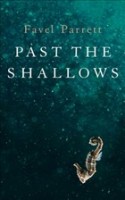
Favel Parrett, Past the Shallows (Hachette Australia 2011)

1psI had three compelling reasons for fast-tracking Past the Shallows to the top of my TBR pile. Favel Parrett is a friend of my novelist niece, Edwina Shaw, and Edwina gave me the book as a Christmas present (‘Read it and weep,’ she said). I met Favel at the NSW Premier’s Literary Awards dinner last year, for this book was shortlisted, and was charmed. And I’ve recently signed up with the Australian Women Writers Challenge to read a certain quota of AWWs in 2013. And there was an additional softener: it’s short.

awwbadge_2013 The book tells the story of three brothers and their father, who makes a marginal living as a dubiously legal abalone fisherman in southern Tasmania. The action unfolds in the long shadow cast by the death of the boys’ mother in a car accident some years earlier, and is seen in alternating chapters through the eyes of the two younger brothers, Miles and Harry. It’s Tim Winton territory: brothers growing up with the splendour and terror of the sea, in a family racked by emotional turmoil. Maybe I shouldn’t put the mockers on a young writer by saying so out loud, but I found the people and the world of this novel more convincing, more demanding of my compassion, than I ever have Winton’s; and the writing is more direct, draws attention to itself less, and allows for broader sympathies. The father is violent, irrational and dangerous, but neither the boys nor we lose sight of the grinding forces and bitter blows that have made him that way. The ocean is a place of pleasure and exhilarating challenge – Miles goes surfing with the eldest brother, Joe, while Harry hunts for treasures in the tidewrack. But it’s also the site of hardship, as in Miles’s exhausting work on his father’s abalone boat, and terror, especially in a climactic storm scene. You could probably read the book as a meditation on the ocean, with the human story there just to keep us reading: Favel Parrett writes about surfing, seamanship and heavy seas with a kind restrained precision that manages to suggest, and – very occasionally – explicitly invoke something like awe.

I haven’t mentioned the boys’ ages. It’s a measure of the book’s fineness that we’re not told how old they are until maybe halfway into the story. Instead, we’re left to work it out for ourselves from their preoccupations, their different strategies or dealing with the poverty and neglect, and their different degrees of vulnerability and protectiveness, innocence and savvy, openness and quiet desperation.

Terrible things happen in this story, and there are a number of revelations about terrible things in the past, but for me the book’s emotional power doesn’t lie there so much as in the brothers’ mutual tenderness, and even then not so much in the big moments – which are operatic in scale, but not overblown in the telling – as in tiny, poignant gestures.

My copy has half a dozen stickers on the cover boasting of prizes and shortlistings. I concur with all those judging panels. It also has pages of notes up the back for book groups. I didn’t read them: does anyone really want to have a questionnaire waiting for them when they emerge back into the shallows from deeps like this?

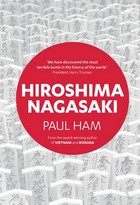
The Book Group, Paul Ham and Hiroshima Nagasaki

Paul Ham, Hiroshima Nagasaki (HaperCollins 2011)

1hnBefore the Group meeting: I heard Paul Ham speak about this book at Gleebooks early last year. He described it as narrative history, aiming to tell the story of what happened in the lead-up to dropping nuclear bombs on Hiroshima and Nagasaki, and in the aftermath, paying attention to what the various players knew and understood as events unfolded, as opposed to their later accounts. He focused on the phrase ‘the least abhorrent alternative’ used by the US leadership after the fact. It encapsulates the official version of events that is not borne out by the records: in fact, he said, no other alternative was ever seriously considered. And, he said at that Gleebooks event, the record puts the lie to received wisdom that the atomic bombs saved as many as a million lives by bringing about an immediate Japanese surrender: the Japanese leadership in fact barely discussed the bombs at all, but were despertely alarmed by Russia’s entry into the Pacific War. Yet Ham dissociated himself from ‘revisionist’ histories that saw the US use of the bombs as knowingly unnecessary. I bought a copy of the book and was looking forward to reading it, so I was very glad that someone proposed it for the book group.

I finished it with days to spare before the meeting, but other demands on my time meant I didn’t get to write anything. I found it completely gripping – one night in bed, reading accounts of Hiroshima just after the bomb was dropped, I gasped involuntarily at least three times, interrupting the Art Student’s beauty sleep.

The meeting: There were nine of us, including one of the Founding Fathers who had been away for more than a year while finishing a degree, and the other Founding Father who has more or less moved to Darwin, but managed to be in town that night. The book generated a lot of discussion over soup, salad and sausages, with a backyard pond full of frogs as background music. I think it made a deep impression on each of us: it confronted us with our ignorance /amnesia about the Allies’ ‘terror bombing’ of Hamburg and Dresden, and of 60 Japanese cities including Tokyo; one guy who always wants us, as an all-male group, to talk about masculinity, found plenty of grist for that mill; there was rumination on the ‘anything can happen’ theme. Basically, we reminded each other of what was in the book rather than getting into controversy. One of us confessed to having bashed people’s ears about it over Christmas meals. Another said that a friend who hadn’t read the book dismissed it as being akin to the sloppy macho war histories produced by a Household Name (unnamed here because I haven’t read any of his work) – but none of us felt it matched that description. We did discuss briefly the absence of any exploration of the US’s insulting treatment of Japan in the decades leading up to Pearl Harbor, and wondered if we would have responded any differently from the Japanese people who were in thrall to the propaganda urging mass honorable suicide, or from the US people who cheered with no misgivings the mass killing wrought in their name. Someone said that he enjoyed books that were beautifully written; I felt that this is such a book, but he meant something different.

It was one of the best nights we’ve had in the group.

After the meeting: Geoffrey McSkimming, creator of the much-loved Cairo Jim–Jocelyn Osgood books for young people, once told me he has a rule that there need to be three good gags a page (Geoffrey, if you read this, please correct me if I misremember). Hiroshima Nagasaki keeps this rule, except it does it with interesting/devastating details or revelatory flashes rather than gags.

When I mentioned the three-gag rule at the meeting, someone mistook me to mean I loved the accumulation of facts and statistics, which he said (and I agreed) did sometimes become onerous. I was thinking rather of the kind of moment that strikes a spark of emotion or insight, or sets you googling to find out more about someone or something mentioned in passing. I decided to do a little test. I chose a page at random by tossing coins: 2 heads, 6 heads, 3 heads – page 263.

263

This is a key point in the narrative. The Allies have issued the Potsdam Declaration demanding that Japan surrender unconditionally or face ruin and destruction. The Japanese leadership consider it, but the hawkish, ‘samurai’ side carries the day, and the Prime Minister reluctantly issues a statement saying they ignore the declaration as beneath consideration – the Japanese concept is mokusatsu. This is interpreted in the West as a rejection of the ultimatum, and plans to drop the new bomb are greenlighted. All that is interesting in itself: the page is a good example of how the book’s narrative drive. But how about he three-gag rule? I think it holds up.

One: It may be idiosyncratic of me, but I find that parenthesis at the top of the page riveting. Arguably the most important meeting of the Japanese leadership and one of the two men arguing against suicidal defiance just happened to be absent. Can history really turn on such tiny hinges?

Two: Though the linguistic/cultural titbit about mokusatsu has been introduced on the previous page (along with the equally interesting haragei or ‘stomach art’), here the ‘gag’ is the tragic lost-in-translation effect of those US headlines hot on the heels of t he various literal versions of Suzuki’s words.

Three: The aphoristic punch of ‘The Japanese resolve to continue fighting was a depressing example of the triumph of hope over experience.’

It may not be up there with the page that tells us what the Hiroshima bombing crew did on their return to base, but it fits the rule.

It’s a solid book, with a hideous subject, based on original research and painstaking trawling through archives, and managing at the same time to be a lively, at times appalling read. It sits happily on my mental book shelf with Marilyn Lake and Henry Reynolds’ Drawing the global Colour Line, which gives some perspective on the lead-up to Pearl Harbor; Robin Gerster’s Travels in Atomic Sunshine, about Australian occupying forces stationed near Hiroshima after the war; and The Boneman of Kokoda, an example of an extraordinary individual’s way of living honorably with his part in Japan’s war history..