David Adès ‘Bacha Posh’, which I blogged about yesterday, set me thinking about gender. I didn’t want to frame my little verse as a response to his, so here it is in a post of its own.
November verse 6: Gender
We learned the rules of gender early. Sugar, spice and all things nice were girls’, but boys were no way girly. Slugs and snails, and at no price the front end of a frisky puppy – these were ours. Real boys are happy we were told, with bats and balls and vaulting horses, never dolls. When we played at cops and robbers what did girls do? Who can tell? Drop the hanky, wishing well? Girls were weepy, wimpy dobbers. Boys were tough and didn’t cry. That’s all true and pigs can fly.
Apart from being a poet, David Adès is a podcaster. On Poets’ Corner, described on YouTube as ‘WestWords’ monthly encounter with celebrated Australian poets’, he has presented more than 50 poets, from Ali Cobby Eckermann to Mark Tredinnick. I could have linked to his conversation with Nathanael O’Reilly when I recently blogged about O’Reilly’s Separation Blues.
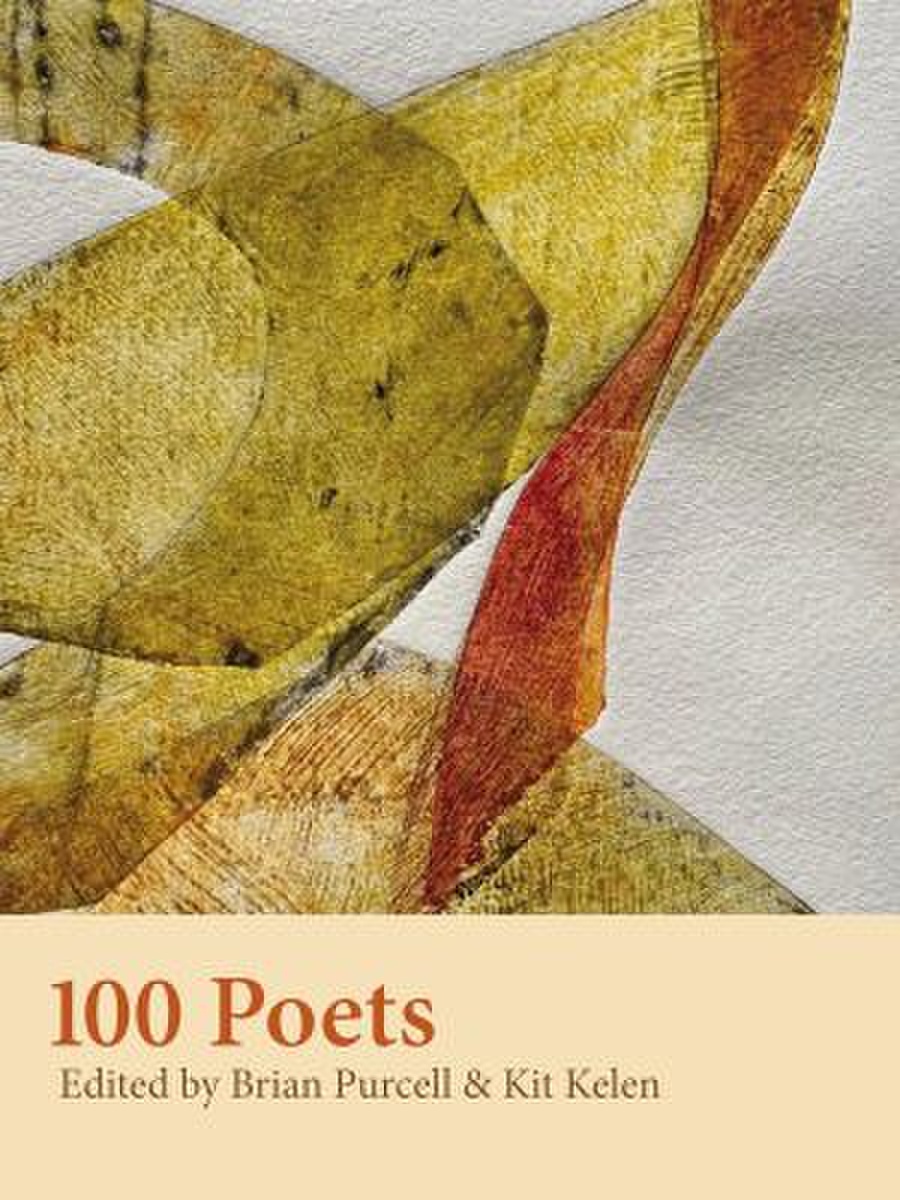
The Heart’s Lush Gardens, part of the Pocket Poets Series edited by Christopher (Kit) Kelen, is his fourth book. An introductory note dedicates it to the men in his men’s group, which has been meeting since 1992. ‘These Are the Men’, the title poem of the second of the book’s three sections, echoes that dedication:
Into their hearts' lush gardens they took me, gardens of unexpected flowerings amid bracken and tangles of vines, gardens where the soil had been laid bare and seeds planted, where I am welcome to roam and return.
That so resonates with the joy I remember feeling in my first consciousness-raising group (that’s what we called them in 1976).
This is not the only appearance of the men’s group, and masculine identity and the experience of being a man are broached in many other poems. ‘Slingshot’ imagines David facing Goliath without that weapon; ‘Small Man’ grapples with male entitlement (‘I am a small man in the house of my white skin, the skin of privilege’). The first poem in the book, ‘From Which I Must Always Wake’, is a complex, raw seven pages on heterosexual desire and relationship.
There’s a lot more. I’ll just mention ‘Ripples’, which a note tells us was inspired by a water-damaged original copy of someone’s thesis and poetry manuscript that Adès spotted abandoned on the footpath. The poem’s speaker addresses the writer of the lost work:
This is what you do not know: who picks up the petal
you have dropped into the Grand Canyon, who looks upon it in wonder
as if upon the first petal
My arbitrary practice of looking at page 78* has borne fruit once again. The fine poem ‘Bacha Posh’, which starts on that page, has an interesting take on gender.
According to its Wikipedia entry, bacha posh is a practice in Afghanistan in which, often motivated by poverty, some families will pick a daughter to grow up as a boy. I probably didn’t need to look that up to understand the poem – but it’s good to know that it refers to an actual practice.
I don’t know David Adès, but I’m assuming he’s a cis man, and so likely to be regarded with suspicion if he enters the current public conversation about gender, and in particular trans issues. The practice of bacha posh gives him a way of letting his mind play over aspects of gender, and gender non-conformity, and invite readers to join him. Here, the non-conformity is imposed on the child rather than arising from an inner motivation such as gender incongruence.
This is a terrific example of a poem doing something that would be hard to do in a prose essay. It’s not arguing a case or offering an opinion. You could say it makes music from the language of gender. A handful of words and phrases repeat, almost like chiming bells. I don’t know how well this will work on the screen, but here is a nerdy look at how the gendered words and verbs of being and becoming occur in the poem.
I am daughter of parents who needed a son, who needed someone to go out into the world, to work and support, to be a man.
I was a girl who dressed as a boy, who learned the freedom of a boy, to be outside, unconfined, to be able to play under the sky.
I became a woman, blood between my legs, breasts I tried to hide, but I could not become a woman, confined indoors to a woman's life.
I became a woman with the strength of a man and the heart of a woman, with a man's thoughts and dreams, with a woman's courage.
I am a woman who is more than a woman and less than a woman, a woman who dresses as a man but is less than a man.
I am a woman who does not avert her gaze, who lives in the world outside, without children or husband, without the life of a a woman.
I am my father's son, a woman called Uncle, a woman who goes where women cannot go, who does what women cannot do.
Out of necessity, I became more and I became less, I became half and half, outcast yet respected, choosing one life so as not to live another.
I didn’t notice until I did that exercise that the final stanza no longer has any gendered words, an eloquent absence. In addition, it repeats the phrase ‘I became’, the phrase of transition, three times. And, in contrast to the first stanza where the poem’s speaker has no agency (‘I am daughter / of parents who needed a son’), here he/she is engaged in a dynamic continuous act of choosing.
Having done that little erasure experiment, I now see that there are other bells in this chime. Active verbs are scattered throughout, appearing more densely towards the end (‘goes’, ‘go’, does’, ‘do’, ‘live’); and the prepositions ‘with’ and ‘without’ have a sort of call and response between stanzas 4 and 6.
Apologies for the nerdiness of this, but if you’ve got this far I hope you’ve enjoyed looking with me. I hope it, and the poem, make a small contribution to Trans Awareness Week, 13–19 November.
I have written this blog post on the land of Gadigal and Wangal of the Eora nation. I acknowledge Elders past and present of those clans, and welcome any First Nations readers.
* My blogging practice is to focus on the page that coincides with my age, currently 78.
Before the meeting: This is a massive family saga that spans three continents, a romance, an Indian–US comedy of manners, and a magic-realist tale (though Sonia, a writer, is critical of that term).
All of the principal characters are caught, one way or another, in a tangle of Indian and US culture. The central difference, gestured towards in the book’s title, is the contrast between US individualism and Indian sense of belonging to a family and a community: loneliness and embeddedness, self-determination and obligation. When this plays out in comic mode, it works brilliantly. In the Indian scenes, again and again, someone is asked in shocked tones why they are alone.
As you’d expect from the title, the central narrative strand is a romance. True to the form of the romcom (no spoiler really) the protagonists Sonia and Sunny have sex at almost exactly the midpoint and then are separated, seemingly irretrievably. Integral to the romcom are family intrigue, corruption, violent murder, and a dispersed conversation about arranged marriage. I loved all that.
There’s another story jostling for the centre. This begins with an unconvincing episode of coercive control and develops into a kind of ghost story that more or less centres on a mystic talisman that Sonia has inherited from her grandfather. A European painter who has held Sonia in his thrall steals the talisman and makes it central to his art (yes, appropriation!). I found this strand unconvincing at the level of character, but there’s an interesting reflexivity to it as the artist keeps telling Sonia, an aspiring novelist, what she should and should not write: we are clearly being invited to read this book as a repudiation of his advice.
Page 78* is early in the book, part of Sunny’s narrative. He is a young man living in New York City in the late 1990s with Ulla, a white US woman. He’s intent on making it in the USA as a journalist, and embarrassed by his mother’s insistent claims on him. He can barely read her long letters (‘Mummy, please stop this gossip!’), and on this page he explains the context of one of them to Ulla (and, incidentally, to the reader):
One tiny thing I’ll mention in passing. The bottom paragraph describes Sunny’s family home as a ‘gray modernist house … designed by a disciple of Le Corbusier’. So much information is conveyed in those few words. First, the family comes from wealth. Second, they are to some degree westernised – their house is modernist. Third, the fact that the architect was a disciple rather than Le Corbusier himself suggests something about the limitations on the aspirations of colonised elites. And fourth, ‘gray’ is an example of the the North American spelling conventions used throughout (‘neighborhood’ later in the paragraph is another): that these spellings persist in the UK edition is not a mistake, but an enactment at the micro level of the way US culture has come to dominate the book’s westernised Indian characters.
Before that, there’s a paragraph of raw exposition:
Sunny had explained that Vinita and Punita were his mother’s servant girls, daughters of his mother’s cleaning maid, Gunja, who had eight living children – three had died in infancy (Babita used the phrase “popped off”); and Gunja’s husband was a drunk who sold chicken and mutton bones for a living, collecting them from dhaba eating places, then transporting them to a bone meal fertilizer tactory. They occupied two rooms in Begumpur, but Gunja could not afford to have six daughters at home; she’d have to marry the elder one, although she was only fifteen. To give the child a little more time, she begged Babita to keep two of them in exchange for housework. <snip> Even though she had two servant girls for free, Babita was to her mind involved in a social experiment to uplift society.
The fate of Vinita and Punita, known collectively as Vini-Puti, is to be significant much later in the book. But because it’s November*, rather than discuss further, here’s a little verse:
November verse 5: So much in his mother's letter needs to be explained. Just who is Vini-Puti? Who is Ratty? What's this kebab how-de-do? Gunja, mother of six daughters, trains two up to follow orders, flee the confines of the slum, work for free for Sunny's mum, cook liver pâté soaked in brandy. This is tragic seen up close: the mum's small gain, the girls' great loss. But this ain't Hamlet, this is Sunny. Vini-Puti serve their turn like Rosencrantz and Guildenstern.
After the meeting: We discussed The Loneliness of Sonia and Sunny along with Arundhati Roy’s Mother Mary Comes to Me. I was astonished when the discussion of this book kicked off with one person saying she hated it and gave up at the 40 percent mark (she’s a Kindle reader). Nothing happened, she said. And that included Sonia’s harrowing emotional enthralment to the bizarrely irrational western artist. Probably needless to say, others disagreed.
Of the three of us (out of five) who had read the whole book, I liked it the best. For all three of us the first 40 percent (I make that about 260 pages) was what we enjoyed most. We had different versions of why it became less enjoyable: perhaps there’s a forced assertion of Indian ways of story-telling, a cultural repudiation of the western mode of the earlier parts; perhaps the talismanic object is too sketchily realised to carry as much narrative weight as seems to be intended; perhaps the book is just too long.
I persist in my opinion, shared by one other Clubbie, that it was a good idea to pair this with Mother Mary Comes to Me. Both books have domineering, eccentric mothers. The protagonists in both are secular Indians appalled at the rise of Hindu nationalism and the BJP – the Demolition of the Babri Masjid mosque looms in the background. Both explore myriad ways in which cultural differences can be negotiated by people from a globally non-dominant culture. Both have main female characters steeped in classic English literature.
We had an excellent dinner, including a dessert that fell flat on the floor when it was taken from the oven, but was delicious anyhow.
The group met on the land of Gadigal of the Eora Nation, and I have written this blog post on the land of Gadigal and Wangal. I acknowledge Elders past and present of all those clans, and welcome any First Nations readers.
* My blogging practice is to focus on the page that coincides with my age, currently 78, and in November I write fourteen 14-line stanzas in the month. which means incorporating one into most blog posts.
Before the meeting: Mary Roy (1933–2022) was an extraordinary woman. She successfully challenged an inheritance law in the Indian state of Kerala so that women were able to inherit property, and she founded a ground-breaking school. That school, Pallikoodam, has a photo of her on its home page, accompanied by a vision statement:
Pallikoodam is born of the vision of Mrs Mary Roy. For fifty plus years she worked on moulding an extraordinary school that imparts a creative and all-round education that produces happy, confident children, aware of their talents as well as their limitations, unafraid of pursuing their dreams and living life to its fullest. Today, every one of us in Pallikoodam works to realise and forge ahead with her dream.
Mary Roy was also the mother of writer Arundhati Roy. In this memoir, she emerges as a formidable woman who did brilliant things, earning the admiration and cult-like devotion of many while challenging patriarchal institutions, and was at the same time a tyrannical, unpredictable, terrifyingly self-centred mother. Near the end of the book, Arundhati Roy describes a moment in 2022 when she was having dinner with three male friends, including her close friend Sanjay. She received a message on her phone:
It was from my mother. They, all men, each of them, including Sanjay, beloved by their besotted mothers, must have noticed the blood drain from my face and wondered what had happened. How could I explain to them that what had scared me was that I had got a message from my mother saying that she loved me.
It says a lot that readers understand perfectly why the message is terrifying, and that we also understand the intense moral, emotional and intellectual complexities involved in Roy sending a positive reply.
I love this book. It’s the story of the intertwined lives of two brilliant women, with the last half century of Indian history as an often intrusive backdrop. The genesis of Arundhati Roy’s writing is vividly told: her two novels The God of Small Things and The Ministry of Utmost Happiness, as well as her non-fiction, ‘activist’ writing, opposing the construction of a big dam that would displace millions of people, exposing the suffering of the people of Kashmir, reporting on time spent in a jungle with communist (‘Naxalite’) guerrillas, opposing Narendra Modi’s regime, and more.
I can imagine the book being portrayed as a misery memoir in which a famous writer complains about her wretched childhood, or as an exposé of a monster generally regarded as a saint. But that would be to misrepresent it. Mrs Roy’s personality was no secret. Her most loyal adherents were aware of her rages, her indulgences (she was always accompanied by an attendant bearing her asthma medication and, later in life, a supply of jujubes). And though Arundhati and her brother suffered terribly at their mother’s hands, she was a powerful force for good in their lives. There are any number of quotable lines to illustrate this complexity. Here’s just one from page 61, when the daughter was fifteen years old:
Between her bouts of rage and increasing physical violence, Mrs Roy told her daughter that if she put her mind to it, she could be anything she wanted to be. To her daughter those words were a life raft that tided her over pitch-darkness, wild currents and a deadly undertow.
There’s so much to enjoy. Arundhati has a friendship with the legendary John Berger, which gives us the unforgettable image of him as an elephant fanning her with his flapping ears. Hollywood actor John Cusack makes a cameo appearance as a witness of the mother–daughter relationship.
A look at page 78* makes it clear that the book is at least as much about the ‘me’ of the song as it is about ‘Mother Mary’. Young Arundhati is at the Delhi School of Planning and Architecture, free for the first time of Mrs Roy’s overwhelming presence. She has re-encountered the young man she calls JC – her first meeting with him when she was nearly fifteen and he was nineteen had been the first time she understood what sexual desire was: ‘My brain, my heart, my soul – all parked themselves in my groin.’ Back then, she had tried to be invisible. But on page 77, he tells her that he had thought she was a beautiful girl:
I was delighted. I had never, not for half of half a second, thought of myself as beautiful. <snip> I was the opposite of what Syrian Christian girls were meant to be. I was thin and dark and risky.
Such is the power of the writing that one hardly stops to question how the stunningly beauty the young Arundhati Roy that we see in photos could ever have felt that way.
On page 78 – after a paragraph about the Delhi family connection, Mrs Joseph, who disapproves of her – Arundhati is still absorbing that first delight:
So, it was nice to be thought of as beautiful, even if it was the opinion of a minority of one.
The rest of the page evokes grungy student life at the School of Planning and Architecture in new Delhi.
Laurie Baker (Wikipedia page here) is named as standing for the opposite of what was taught at the school. He was a pioneer of sustainable, organic architecture who designed Mrs Roy’s Pallikoodam school. He had inspired Arundhati to veer away from her earliest ambition, to be a writer, and leave home to study architecture. Though Arundhati did go on to be a writer, it was at the School of Planning and Architecture that some of her most important, enduring relationships were formed. As much as anything else the book celebrates these friendships.
After the meeting: Everyone loved this book and we loved discussing it. Someone threw a small grenade, saying that she didn’t see that Mrs Roy was such a terrible parent, that really Arundhati Roy had unfairly demonised her. The catalogue of physical and emotional violence, the fact that Arundhati’s brother shared her view, the way independent witnesses described Mrs Roy as ‘your mad mother’ and laughed at the terror on Arundhati’s face when she had to deal with her: none of this made a dent in her view. We could agree that Arundhati didn’t stay victim – she saw her mother as a model of being powerful in the world, and eventually came to recognise that in her way she loved her, and had given her the wherewithal to build a big life for herself, even if that meant rebelling against her.
We all learned things. For some it was about Indian politics, in particular about Karachi. For all of us, the impact of winning the Booker Prize was a revelation. We all had our ignorance about the Syrian Christians of India slightly decreased (the Roys are Syrian Christians – in Modi’s India, not Indian enough).
We read and discussed the book along with Kiran Desai’s The Loneleiness of Sonia and Sunny. Both books feature complex mother-daughter relationships, both have rich insights into the cultural and political relationships between India and the West, a number of historical events feature in both. But no one was much interested in a compare-and-contrast discussions.
Because it’s November*, I will now burst into rhyme:
November verse 4: Student days Are student days always anarchic, smoke-filled, garbage-racked, insane, angry at the hierarchic lectures that would tame the brain with wisdom that's received as certain? Always the time that lifts the burden from the backs of those who bear the yoke of old beliefs? Time where new songs are sung and new words spoken, daughters, sons beyond command (don’t even try to understand), first loves formed and hearts first broken, new ways found with fork and knife, friendships made that last for life?
The group met on the land of Gadigal of the Eora Nation, and I have written this blog post on the land of Gadigal and Wangal. I acknowledge Elders past and present of all those clans, and welcome any First Nations readers.
* My blogging practice is to focus on the page that coincides with my age, currently 78, and in November I write fourteen 14-line stanzas in the month. which means incorporating one into most blog posts.
It’s already the 8th of November and I’ve only got two stanzas written. Here’s a third, knocked together for the deadline but coming from the heart:
November verse 3: Breakfast
It's the same thing every morning – juice from carrot, granny smith, ginger, celery stalk, not scorning beetroot for the colour, with toast and jam and peanut butter. That's for me. Because you'd rather Vegemite, that's what you'll get. No scrambled eggs or crepe suzette except on Sundays. Bubbling, dinging, whirring fill the room with noise and making breakfast is a joy. I'm spreading, pouring, scrubbing, singing. Then we sit, first you, then me. The day starts. What will be will be.
So much happening just now, but I’ve managed to make time for my second November stanza. I don’t have an over-arching theme or strategy this year, so who knows what I’ll end up with.
I’m doing a poetry course currently where we have been invited to eavesdrop shamelessly in cafes, on buses, wherever. Dutifully I put in my hearing aids and tried unsuccessfully to hear a number of conversations, and then hit gold with a young man telling this story to an older man, possibly a co-worker in his new place of employment. To give the speaker his due, he did lower his voice a little for his story’s key word. My asterisks aim to be a visual equivalent.
November verse 2: Overheard
The night’s already far too busy –
too much work, I’m there till two.
A manager gets in a tizzy:
‘Chairs need moving, now, by you.’
That’s two of us and forty heavy
chairs up stairs, looks like I’ll never
make it home, I’m in despair
and jokingly – she’s sitting there –
I say, ‘You fat c**t, move a muscle.’
Just a joke. Amused, she ain’t.
She makes a serious complaint.
Snowflake, woke shit razzle dazzle,
just a dreadful passing row.
A good man, me. It's over now.
Virginia Woolf, Mrs Dalloway (1925, Penguin Classics 2020)
Since taking nearly two years to read Proust’s À la recherche du temps perdu six years ago, I’ve had a classic slow-read on the go most of the time. When I’ve embarked on one of these slow-reads I regularly come across mentions of the book elsewhere. It’s like that with my current project, Mrs Dalloway.
Of all Woolf’s novels, Mrs Dalloway is the one most often read as semi-autobiographical and as a reckoning with unresolved trauma: of England’s in the wake of the first world war, and in the novelist’s own life. <big snip> Woolf has long been a lodestar for writers grappling with trauma – in their lives, and on the page, especially women writers.
Reading the first couple of pages, when upper-class Clarissa Dalloway is out in the early morning shopping for flowers and enjoying the life of the London streets, I couldn’t see much trauma. But then the scene broadens and darkens. By page 103, I’m now reading the book as mainly about aftermaths: Clarissa is recovering from an illness and enduring an unhappy marriage; the War and pandemic are still alive in collective memory; Peter Walsh, freshly returned from a decade in India, is still wounded by having been rejected by Clarissa many years earlier; returned soldier Septimus Smith is wandering London’s streets, hallucinating, suicidal, ‘shell-shocked’ and putting his Italian wife Lucrezia through hell. There’s plenty of trauma to go round.
I’m glad I’m reading this book just a few pages a day. It cries out for sharply focused reading, which I can just about sustain for three pages at a time. Read this way, the book is exhilarating. I had thought it was going to be the stream of consciousness of one upper-class Englishwoman. In fact there’s a whole array of characters, and the narrative voice flits among them. I say ‘flits’ because feels as if the narrator is an elf-like creature (I almost see her as Tinkerbell) who slips in and out of people’s minds, sometimes staying for barely a second, sometimes for several pages. Most of the characters are aristocrats of one sort or another, but not all. Lady Bruton’s maid Milly Brush has definite likes and dislikes as she stands impassively while her mistress entertains three gentlemen for lunch. One of those gentlemen is a bluff middle-class man with pretensions – he knows how to craft a publishable letter to The Times but believes women shouldn’t read Shakespeare for moral reasons. And Richard – Mr Dalloway – makes an appearance, buying flowers for Clarissa and resolving to tell her he loves her (which the reader knows is far too little, far too late). And so on. It’s much more complex, and funnier, than I expected.
Here’s page 78*:
And because it’s November**, here’s a verse drawn from it and the next page:
November Verse 1:Septimus Smith He might have made a great accountant but for Shakespeare, Keats and love that set him scribbling with his fountain pen all night. 'You need to tough- en up, play football,' said his mentor. War changed everything. He went to fight in France and made a friend, a cheerful manly friend, whose end in Italy was sudden, brutal. Mrs Woolf says War had taught him not to feel, to set at nought such loss. Sublime the total calm he felt. But, come next year, the sudden thunderclaps of fear.
I have written this blog post near what was once luxuriant wetland, in Gadigal and Wangal country, where I recently saw two rosellas (mulbirrang in Wiradjuri, I don’t know the Gadigal or Wangal name). I acknowledge Elders past and present of those clans, and welcome any First Nations readers.
* My blogging practice is to focus on the page that coincides with my age, currently 78. ** Each November I aim to post 14 fourteen line stanzas on this blog (see here for an explanation, though that explanation incorrectly calls my verses sonnets)
[This blog post was originally posted on 6 November 2006 in my now defunct blog Family Life. I’ve retried it here because I’m currently reading and will soon post about Arundhati Roy’s memoir Mother Mary Come to Me.]
Arundhati Roy’s acceptance speech for the Sydney Peace Prize makes interesting reading. The detail she gives on what’s happening in Iraq is heartbreaking. It’s not very long. Here are a couple of bits:
Invaded and occupied Iraq has been made to pay out 200 million dollars in ‘reparations’ for lost profits to corporations like Halliburton, Shell, Mobil, Nestlé, Pepsi, Kentucky Fried Chicken and Toys R Us.
And later:
The real tragedy is that most people in the world are trapped between the horror of a putative peace and the terror of war. Those are the two sheer cliffs we’re hemmed in by. The question is: How do we climb out of this crevasse?
For those who are materially well-off, but morally uncomfortable, the first question you must ask yourself is do you really want to climb out of it? How far are you prepared to go? Has the crevasse become too comfortable?
If you really want to climb out, there’s good news and bad news.
The good news is that the advance party began the climb some time ago. They’re already half way up. Thousands of activists across the world have been hard at work preparing footholds and securing the ropes to make it easier for the rest of us. There isn’t only one path up. There are hundreds of ways of doing it. There are hundreds of battles being fought around the world that need your skills, your minds, your resources. No battle is irrelevant. No victory is too small.
The bad news is that colorful demonstrations, weekend marches and annual trips to the World Social Forum are not enough. There have to be targeted acts of real civil disobedience with real consequences. Maybe we can’t flip a switch and conjure up a revolution. But there are several things we could do. For example, you could make a list of those corporations who have profited from the invasion of Iraq and have offices here in Australia. You could name them, boycott them, occupy their offices and force them out of business.
Those companies again: Shell, Mobil, Nestle, Pepsi, Kentucky Fried Chicken and Toys R Us.
Before the meeting: we had enjoyed Robbie Arnott’s previous novel, Limberlost, so Dusk was a promising choice.
It’s set in a place very like nineteenth century Tasmania. Iris and Floyd Renshaw, the twin children of notorious outlaws, travel to the highlands and aim to kill a puma named Dusk that has been ravaging the region, killing livestock and people. A bounty has been offered by the graziers, and the twins see it as a chance to move away from their life at the margins. The story of their encounters with graziers and other hunters, and with a community of people who lived there before the settlers arrived, is full of elegant twists and moral dilemmas. There are moments of sheer horror, and moments of great tenderness. The writing is consistently vivid – you can tell that Robbie Arnott has visited the landscape even while he adds surreal elements like giant bones protruding from the ground; and the twins’ physical ordeals are viscerally real.
Even as I recognised all these qualities, I had trouble engaging. From about page 100, when the twins and their companions come close to Dusk, I started to care, and where a couple of pages are blacked out after a dramatic moment, what might have seemed a bit of cleverdickery had me on the edge of my seat. But then I got lost again and the final pages left me, as the song says, wondering why.
At page 78*, the twins have just arrived in a small town full of men who are hunting the killer beast. She – Dusk, the puma – has killed the son of a wealthy grazier, whom the twins have encountered grieving extravagantly in the street. For the first time since they came to the highlands, Iris finds herself confronting what they may be up against, ‘the probability of being ripped into death, faster than blinking’. Now, ‘starkly aware of the softness of her flesh, the smallness of her body, the stumbling clumsiness of her humanity’, she encounters for the second time Patrick Lees, a man who stands out from the crowd of hunters. On page 77 he has proposed that the twins join him to help track down the beast. Floyd, characteristically, stays more or less silent.
‘So you are chasing the bounty,’ said Iris, annoyance bending her voice. Lees contemplated his pipe before slipping it back between his lips and speaking around it. ‘Maybe I’m just endlessly curious.’ Iris clenched her teeth, holding her irritation in. Floyd kept rubbing his chin, seeming to take in Lees’ words without making any effort to respond. All of it was maddening to Iris – Floyd’s stupid performance, the sudden appearance of Patrick Lees, the unmoored feeling she had while being near him, his casual offer, his playful duplicity – and she wanted to get away from both of them and from herself, so she tugged at the collar of her coat and touched her hat. ‘We’ll think about it.’ Lees nodded. ‘Of course.’ He indicated a lemon-gold building that rose above the stable. ‘I’m staying at the inn. I’ll be leaving at first light.’ Another little smile. ‘I hope to see you then.’
They left Patrick Lees breathing smoke at the plains and walked back through the stable to the street.
The main thing on display in this passage is Robbie Arnott’s deft use of tropes from romance novels. Iris is irritated by a suave, superior man, while having an ‘unmoored feeling’ while she’s near him. It’s no spoiler that Iris can’t resist the offer to go on the hunt with him, or that they do spend a night together. But as in the romance genre, there is every indication here that Lees is a cad: his little smile is surely a red flag, and while Iris may be uneasy, the reader can be reasonably certain that someone who breathes smoke is dangerous. You leave this page with a subliminal sense that Lees may not be just a romance-genre cad, but a horror-genre monster.
There’s a lot to admire in this book. There’s a lot to discuss. The surreal elements of the landscape read as both hamfisted metaphor and strategy for including First Nations characters who won’t be mistaken for actual palawa. But I was unconvinced. Even the basic set-up didn’t work for me, even if someone were to tell me that pumas were once introduced to Tasmania / lutruwita. I enjoyed some parts but never got on its wavelength
After the meeting: I couldn’t go to this meeting, and though I missed the people, I wasn’t sorry not to discuss the book. The WhatsApp report painted a picture of a very convivial evening, where everyone liked the book, some more than others. Evidently one person liked it more as the evening wore on – maybe I would have joined him in that movement. Maybe not.
I have written this blog post near what was once luxuriant wetland, in Gadigal and Wangal country. I acknowledge Elders past and present of those clans, and welcome any First Nations readers.
* My blogging practice is to focus on the page that coincides with my age, currently 78.
Radio National’s Top 100 Books of the 21st Century vote has concluded. You can read all about it at this link.
I didn’t vote, mainly because I generally think that the book I’m currently reading is the best or worst of all time. I’ve read 36 of the ones that made the cut. Some of them are terrific, some I wouldn’t give the time of day to in the street. Here are the books that I’ve read, with links to my blog post where they were published after about 2004, plus the 13 books I haven’t read but have seen a TV or movie version of, without links. I almost scored 50 percent.