Mirandi Riwoe’s Stone Sky Gold Mountain

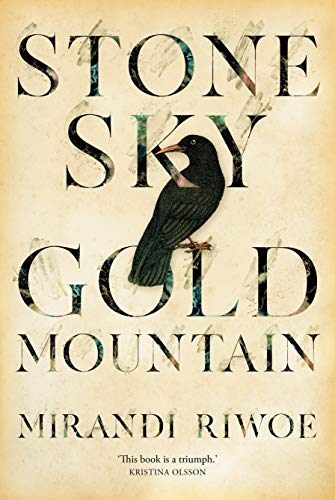
Mirandi Riwoe, Stone Sky Gold Mountain (University of Queensland Press 2020)

There are precious few books set in North Queensland. This is one. Its first epigraph is a quote from Taam Sze Pui, whose Innisfail department store, known as See Poy’s, was still going strong in my 1950s childhood, dominating the street corner opposite the gate to King George V Memorial Park. I’ve posted about Taam Sze Pui in this blog, here and here. The epigraph reads:

To search for gold was like trying to catch the moon at the bottom of the sea.

So Mirandi Riwoe had me at the epigraph. She kept me with her story-telling. A young Chinese woman Ying and her brother Lai Yue have come to the Palmer River goldfields in North Queensland in the mid 19th century, intending to return home when they have accumulated enough wealth to save their mother from poverty and buy their siblings back from servitude. Their story unfolds in triplets, each comprising a chapter from Ying’s point of view, a second from Lai Yue’s, and a third from the point of view of Meriem, a young white woman who is the maid to a sex worker in Maytown, a settlement close to the goldfield.

The book is firmly within an Australian tradition. There are echoes of Henry Handel Richardson in the descriptions of goldfields hardships; of Joseph Furphy in the woman disguised as a boy to survive in the harsh male world; of Henry Lawson in the man going quietly desperately mad in a lonely shepherd’s hut; of Barbara Baynton in the brutal violence endured by Meriem’s employer. But that tradition expands before our eyes as Chinese characters take centre stage, dealing with harsh oppression as well as the generally harsh conditions, escaping into an opium haze, negotiating issues around language and names (‘Jimmy’ or ‘Wui Hing’), reaching tentatively and sometimes tenderly across the racial divide, communing with the ghosts of those left behind, balancing the yearning for home against the appeal of the freedoms in the new land.

The Chinese characters are not absolved of complicity in the violent dispossession of First Nations people, and I was relieved when the possibility of romance was raised only to be sorrowfully dismissed. The story moves along so smoothly that you hardly notice how much of this is new in an Australian historical novel, and how much you trust that it’s underpinned by solid research.

Thanks, Mirandi Riwoe, for adding so elegantly to the slender stock of books about the place I came from.


Stone Sky Gold Mountain is the eleventh book I’ve read for the Australian Women Writers Challenge.

SWF 2020, Post 3

The Sydney Writers’ Festival 2020 didn’t happen, but it’s still going. I’ve now listened to five more sessions: rich conversations between authors none of whose books I’ve read (though I have read shorter pieces by some of them), sometimes about other authors whose books I haven’t read.

Philippe Sands: The Ratline 27 May

Otto von Wächter was one of Nazi Germany’s mass murderers. In 1945 he disappeared from public view and turned up dead in a Roman hospital four and a half years later. Philippe Sands, barrister and author of other books about Nazi leaders, gained possession of a huge trove of the papers of von Wächter and his wife Charlotte, and set about rediscovering the story of this almost forgotten Nazi. He produced a podcast and radio series and now a book: The Ratline: Love, Lies and Justice on the Trail of a Nazi Fugitive.

This is a terrific conversation between Sands and SBS World News presenter Janice Petersen. Because of his access to private papers – given to him by von Wächter’s son Horst – Sands has been able to give an account of Wächter’s personal life and relationships.

At the end of the conversation, Janice Petersen asked why he thinks there is such a continuing interest in the Nazis. He confirmed her premise: if you put the word ‘Nazi’ in a book’s title or subtitle, he said, its sales in the UK increase by 50 percent, though it’s probably not the same in other parts of the world, including the US.

For the British in part it’s a reminder of what is seen as a glorious episode, the vanquishing of evil, and it is also the fact that the people we are dealing with were highly educated, highly cultured, highly intelligent, highly organised and they left behind a wealth of detail. …
I think what’s different in this case is Charlotte. Charlotte is the beating heart of this story because Otto was not alone. Otto had a close, loving, dutiful, intelligent, articulate, literate wife who recorded the totality and so we’re able to get another perspective, and that enables us to think a little bit more about the question, ‘How is it possible?’ and the related question that any reasonable person might ask themselves, ‘Could I do it?’ …
In our own countries, we cross lines. In Britain as in Australia, the treatment of refugees and of certain minorities is a very very big issue. Some of the conditions, for example, in which women refugees are being held in Britain and of course the treatment in Australia of the refugee community, parts of it, parking them on faraway islands, raise very serious questions. It raises to my mind a most serious question which is evoked indirectly in The Ratline, ‘What happens when we commit ourselves as a society to cross a line?’ The lesson of Otto Wächter is that once you’ve crossed one line it becomes a lot easier to cross another line.


James Bradley: Ghost Species 1 June

I hope to read one of James Bradley’s books one day. But as I’ve heard quite a lot of him on the radio recently, I skipped through this conversation with Cassie McCullagh of ABC Radio’s The Bookshelf about his most recent book, Ghost Species, in which there is a project to resurrect extinct species, including Neanderthal humans. In my skipping, I heard some fascinating tidbits, including this about the role of CliFi, as someone is calling fiction about climate change:

We inhabit this weird space where we know what’s going on but we don’t let ourselves know.
One of the things fiction can do is let you sit in that space for a while and let you actually let go of having to keep that other stuff at bay. You can encounter your anxieties, think about them. …
One of the things that fiction helps people do is to find their way to a space of acceptance, that space of recognising the reality of things, which seems to me to be a good place to get to, because if people get there then we can start having honest conversations about where we are.


Cassandra Pybus: Truganini 3 June

Truganini is on my TBR shelf. This is a brilliant conversation about it. It’s by Cassandra Pybus, white historian, whose family ‘owned’ land on Bruny Island, Truganini’s country, land that Truganini visited often in her last years. By all accounts, including the account given in this podcast, the book reclaims Truganini’s memory from the prevailing image of her as the archetypical victim of colonial violence, ‘the last Tasmanian’, and presents her as a woman who was never colonised, who was resourceful and strategic and ultimately in important ways successful.

Here she talks with Jakelin Troy, a Ngarigu woman from south-eastern Australia and professor at the University of Sydney, who clearly loves the book, and loves that Cassandra Pybus has written it:

For me, as an Aboriginal woman, it’s so important to have this story told, and by somebody who is an expert at interrogating the historical record but who can bring out the reality of the story. It’s obviously something that has become part of your own story. I love when you say that Truganini inhabits you now. I’m sure that’s what she intended to do by continuing to walk across your family’s country, which was her family’s country. She was making the point, I’m sure she was making the point, that this was still her country and that she’s there, and even if they didn’t think deeply about the fact that it was her family’s country, I think that in reality you can’t avoid that that’s what it is.


Kay Kerr: Please Don’t Hug Me 3 June

This is a conversation between two neurodivergent women from southern Queensland, both of whom have young-adult novels appearing at about the time of the conversation. The focus is on Kay Kerr’s epistolary novel Please Don’t Hug Me, but there is frequent reference to Peta Lyre’s Rating Normal by Anna Whateley, her interlocutor.

Both women are smart, charming and have interesting things to say, especially about autism and prevalent misconceptions about people living with autism.

If this had been a live event, I would have been hoping someone would ask about ‘own voices’, a term they used to describe their books. The term is close to self-explanatory, and I’d heard it vaguely in the past, but it sounded as if there was history attached to it. In the absence of a Q&A session, I went online, and found that #OwnVoices is a hashtag originated in 2015 by a Dutch writer of young adult science fiction and fantasy novels, Corinne Duyvis (a longish interview with her about the hashtag is at this link).

A quick look around Young Adult publishers’ sites shows that the hashtag has taken off and, though sometimes used as a weapon by call-out warriors, it represents a powerful movement to recognise that the best people to write about a marginalised group are those who experience that marginalisation. Both participants in this conversation are #ownvoices authors about characters on the autism spectrum.


Eimear McBride: Strange Hotel 9 Jun, 2020

I heard Eimear McBride read, beautifully, from her first novel, A Girl is a Half-formed Thing at the 2014 Sydney Writers’ Festival. Here she talks to Heather Rose (whose books are on my TBR list) abut her third novel, Strange Hotel. I enjoyed the conversation. Unlike A Girl Is a Half-Formed Thing, the new novel is punctuated conventionally, but the author says she doesn’t think it’s any easier to understand (she’s a big fan of Joyce and Beckett). She read an excerpt, which was beautifully written, but – and that ‘but’ says more about me than her – it’s a scene where the protagonist is in a hotel in Auckland, and thinks of herself as being at the very edge of the earth, about to go over the edge. This raised my antipodean hackles. I was reminded of a British writer who visited my student household in the early 1970s and treated us to a stoned fantasy about how the edge of the world lay just outside the heads of Sydney Harbour. Too easy, and too unaware of the audience.


Coming when I’ve listened to them: Bob Brown and some interesting-sounding genre fiction, but still no books I’ve read.

My Brilliant Friend at the Book Group

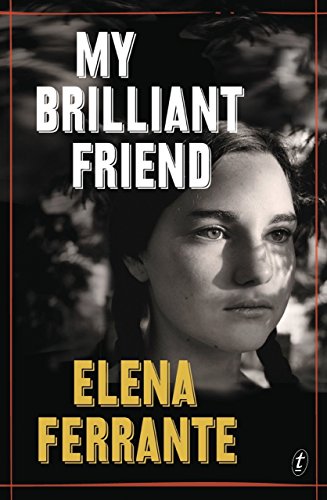
Elena Ferrante, My Brilliant Friend (translated by Ann Goldstein, Europa Editions 2012)
Elena Ferrante, L’amica geniale (e-book, Edizioni e/o 2011)

Before the Book Group meeting: This month’s Chooser nominated My Brilliant Friend in response to an interest in translation expressed at our last meeting (about Hwang Sok-yong’s At Dusk, blog post here). Given the years of buzz about Elena Ferrante and her series The Neapolitan Novels, it’s amazing that none of us had read this until now. This was a chance to find out what the fuss was about.

As I imagine everyone knows, this is the story of the friendship between two girls in a poor neighbourhood of Naples, starting when they are both in the first year of primary school and ending at the marriage of one of them. Though there is a kind of resolution at the end, this is clearly the first instalment of a long story, and a brief prologue in which the sixty-something narrator speaks to the forty-year-old son of her friend offers tantalising hints about where the narrative will go.

The narrator is Elena Greco, daughter of a porter. Her friend is Lila Cerullo, whose father is a shoe repairer. From the beginning, Lila is unpredictable, moody, a little dangerous, and, well, brilliant. Elena is more conventional, is in awe of Lila, and is also, in a more socially-approved way, brilliant. They both do well at school, until Lila drops out because she is needed at home, but then it turns out that Lila is keeping up with what Elena is learning by borrowing books from a library: she gives Elena hints about how to translate from Greek that help her excel in the classroom.

Elena is constantly in competition with Lila, now happy to know she is ahead of her (in schoolwork, in having her periods), now wretched when Lila excels (in her grasp of school subjects she is learning from books, in her attractiveness to men). It’s a striking rendition of a friendship that includes intense affection, resentment, irritation, envy and devotion.

The social environment of post-war Naples is graphically realised. Though the city is on the coast, the little girls have never seen the sea, and when they decide to go there the adventure comes to nothing. There’s a marvellous scene when a group of teenagers decide to visit a posh part of town, and it’s like being on another planet. In the coming of age process, Elena gradually learns about history – about Fascism, the war and war profiteering. At the very end of the novel, she’s sixteen years old and realises that if she starts to read newspapers and journals, beyond the novels that are all she has read until then, she will learn about how the world works.

I enjoyed the novel, but am successfully quelling any urge to get hold of the second book in the series, The Story of a New Name / Storia del nuovo cognome.

I bought a digital copy in the original Italian, so as to put at least some attention to the translation.

My high school Latin teacher once wrote ‘Good attempt’ on a translation of mine, and then was at pains to explain that this was high praise. All anyone can do is attempt to translate: it’s impossible to find an exact equivalent in one language for something written in another. ‘Traduttore traditore,’ he said, ‘Translator, traitor.’ I can’t comment on the accuracy of Ann Goldstein’s translation. I can see that her frequent run-on sentences are faithful to the original, for example, but I have no idea whether they are as irritating in Italian as they are in English.

One thing that snagged my attention is the title. In Italian it’s L’amica geniale, literally The brilliant friend. Why the change from the to my, I wondered, especially as the only time the phrase occurs in the book it’s used by Lila to describe the narrator. The Italian title leaves room for either of the friends to be the brilliant one. The English, sadly in my opinion, removes any ambiguity.

The other thing that struck me is a kind of clunkiness in the English –adverbs in an unusual order, and other places where the language doesn’t feel like that of a native English speaker. I was surprised to discover not only that Ann Goldstein is an English speaker, but that she learned Italian as an adult and works for The New Yorker, which is notoriously sticklerish for correct American English usage.

Look at this, the death of Don Achille, who was a kind of Godfather figure to the neighbourhood:

He was in the kitchen, and had just opened the window to let in the rain-freshened air. He had got up from bed to do so, interrupting his nap. He had on worn blue pajamas, and on his feet only socks of a yellowish color, blackened at the heels. As soon as he opened the window a gust of rain struck his face and someone plunged a knife into the right side of his neck, halfway between the jaw and the clavicle.

(Page 83)

Something about that last sentence felt awkward and anticlimactic on first reading. I read on, of course, but some corner of my mind marked the place. Just now, I looked up the Italian:

Era in cucina, aveva appena aperto la finestra per far entrare l’aria fresca della poggia. S’era alzato dal letto apposta, interrompendo la controra. Indossava un pigiama celeste molto usurato, ai piedi aveva solo calzini d’un colore gialliccio annerito ai calcagni. Appena aprì la finestra gli arrivò in faccia uno sbuffo di poggia e sul late destro del collo, proprio a mezza strada tra la mandibola e la clavicola, un colpo di coltello.

The first two sentences are straightforward (though ‘had on worn blue pyjamas’ is clumsy – why not ‘was wearing threadbare pyjamas’?). They establish a mundane domestic setting for the shock that is to come. But then the translation makes three choices in the final sentence that diminish that shock. First, why translate clavicola with the technical ‘clavicle’ rather than the everyday ‘collarbone’, especially when, thankfully, mandibola becomes ‘jaw’ rather than ‘mandible’? Second, the Italian language’s flexibility with word order allows the action to become apparent only in the last three words of the sentence (colpo di cotello = ‘knife-blow’), an effect lost in translation. Third, while the structure of the Italian sentence pairs the knife-blow with the gust of rain – so two things came at Don Achille through the window, one mundane and the other deadly – the English introduces ‘someone’ and ruins the parallel. Something like this would be truer to the original:

As soon as he opened the window, there came a gust of rain to his face, and to the right side of his neck, halfway between jaw and collarbone, a knife-blow.

My impression is that a lot of the translation is like that: sometimes keeping too close to the Italian rather than using a more natural English equivalent, sometimes departing too far from the Italian and losing rhetorical or dramatic effects.

I’m starting to sound like Brother Gerard, my Latin and French teacher from nearly 60 years ago. So, even though I cherish his memory, I guess that means it’s time to stop.

After the meeting: There was a brief online debate about whether we should meet in person or on screens, Screens won out, for now.

My NBN connection isn’t robust enough for zoom meeting in the evening, and I ended up joining the meeting on my phone. Next time I’ll do it on the computer using the phone’s hotspot to connect, but this time that didn’t want to work either, so I spent the two hours squinting at four faces at a time out of the eleven participants, and I expect my hand-held image wobbled annoyingly. But I won’t complain about zoom: it brought us the lovely moment when one chap said he had a son and a daughter, and a young face joined his on the screen, saying ‘I’m the daughter!’

Most of the chaps, many sporting scrappy Corona beards, loved the book. My complaints about clunkiness and quibbles about the translation were mostly received without sympathy. The simple solution to discontent with translation from Italian, I was told, was not to know Italian.

I was the second least enthusiastic. The least enthusiastic remained silent for a long time, and then, when prompted, said he had only kept reading out of love for the rest of us. He also said that as he listened to the discussion, he could see why he should have enjoyed the book, which is pretty much how I felt. I enjoyed it, but I never got invested in it. Others got really involved: remembering the politics of their own childhood communities, reflecting on male violence, recalling their own visits to Naples, being swept along by the story and experiencing shocks of recognition, even – at least one chap said – falling in love with Lila.

More than one had started reading the second book, and next meeting’s Chooser said he’ll be nominating the fourth book. I’m hoping it was a joke-threat.

Lisa Gorton’s Empirical

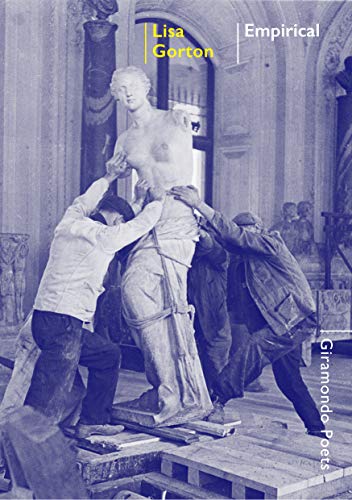
Lisa Gorton, Empirical (Giramondo 2019)

This is a book in two sections. The first, shorter section. ‘Empirical’, consists of eight poems related to Melbourne’s Royal Park. The second, ‘Crystal Palace’, deals with works of art – the Aphrodite of Melos/Venus de Milo, poems by Rimbaud and Coleridge.

A disclaimer: I’m not a critic. If you want to read a discussion of this book by someone who understands contemporary poetics, I recommend Michael Farrell’s flashily academic review in the Sydney Review of Books (link here) or David McCooey’s in ABR (link here), which is accessible in full only to subscribers.

The first seven poems, ‘Empirical’ I to VII, are deeply rooted in a particular place. The first poem (which you can read here) begins with a description:

A factory, the train line curving off
to cross the motorway – between them this
falling away of ground – two or three acres
where for years the council trucks
brought building rubble – mounds of shattered concrete,
brick shards, piping, steel mesh heaped here
where grass succeeds itself and flowering weeds

The poem’s speaker walks into ‘the wreckage’, and the reader, this one at least, is right there with her. Then the perspective shifts, as I read it, to the speaker’s subjectivity: she is transported to a place from her early life, perhaps a kind of template of place:

and it is the first place, place itself
grown inward to my sight, along the side of the house,
in the playground where dry ground
slants to the fence

And now I start to have trouble following. The weeds ‘have made for me a heraldry of my forgetting’, perhaps like the smell of the madeleine dipped in tilleul for Proust,

__________________________ and set me here
in its abyss giving the bright scenes place –
which is to say I have not seen it yet

This isn’t difficulty for its own sake, but a struggle to articulate what is happening for the speaker: the first thirteen lines have established the physical reality of the place, but all she can actually see is what she brings to it, so it becomes impossible to see in its own right. That’s a familiar line of reasoning among philosophers of epistemology, but here it’s not so much a line of reasoning as a description, even an enactment, of a mental process. Then the speaker takes a leap to imagine what it is that she cannot see. The place, the poem ends, is

__________________________ to itself a storm
perpetually in the front of light –

I can’t paraphrase that, and I don’t think I’m meant to. It’s reaching for something that can’t quite be said. The dash at the end suggests to me that the poem hasn’t so much finished as gone as far as it can go and then stopped.

Each of the seven ‘Empirical’ poems begins similarly with physical description, and ends similarly with a non-conclusive dash, with a similar play between what the place is in and of itself on the one hand, and what the observer/poet/artist can make of it on the other.

The eighth poem, ‘Royal Park’, begins with an echo of the start of the first poem:

A factory, the train line curving off to cross the motorway –

The reader realises, if she, or he, hasn’t already read the cover blurb, that the ‘two or three acres’ of the first seven poems is Melbourne’s Royal Park, or at least part of it.

This is a longer poem, which I found completely engrossing. It tells the history of that piece of ground, beginning with Batman and ‘what he called his treaty’. It consists mainly of a kind of collage of quotes – what the academics ‘bricolage’. A list of sources in a note up the back takes four pages: archival documents, paintings, maps, newspaper stories, learned articles. The park has been the site of a zoo, an orphanage and truant school combined, a quarantine station, a digging ground for beginners in geology, an exhibition ground for the ‘Centennial Exhibition’, a military camp, a rifle range, a Military Mental Hospital, a public recreation area. And for each of these incarnations there’s colour and movement.

In an author’s note that the publisher enclosed with my review copy, Lisa Gorton writes:

I was provoked by a statement in a heritage assessment of Royal Park that Andrew Long and Associates carried out for the government, in preparation for the East-West Link: ‘This location would not appear to have been of great likely attraction to Aboriginal past populations given its distance to local watercourses.’ This claim seemed to me to epitomise how a manufactured landscape can conceal the history of country. The ground now named Royal Park opened out alongside the Moonee Moonee chain of ponds … The dark and remarkable history of this patch of ground set up a drama of surface and depth, remembering and forgetting.’

The poem doesn’t presume to speak of or for the Aboriginal people whose country this is. It’s a colonial history of that patch of ground. It’s a mighty act of reclaiming collective memory.

In the second part of the book, the longest poem ‘Life Writing’, subtitled ‘Of Coleridge’s Kubla Khan‘, does bricolage on Samuel Taylor Coleridge, his poem ‘Kubla Khan’, the historical Kublai Khan, and a constellation of related subjects. It’s likewise full of bright colour and engaging movement, though possibly because it doesn’t have the chronological through-line of ‘Royal Park’, I got lost a number of times.

I am in awe of Lisa Gorton’s erudition and her ability to put words together. I’m grateful for the moments of deep pleasure I’ve found in this book.


Empirical is the tenth book I’ve read for the 2020 Australian Women Writers Challenge. I received a complimentary copy from Giramondo Publishing, for which I am grateful.

Proust Progress Report 10:

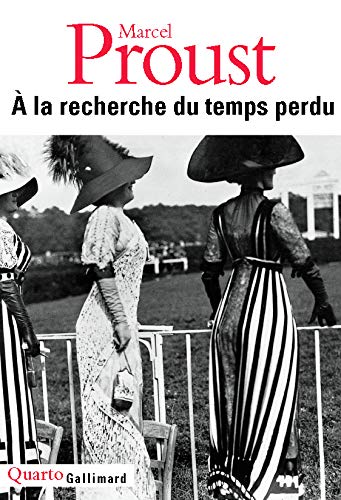
Marcel Proust, À la recherche du temps perdu (text established under the direction of Jean-Yves Tadié ©1987–1992): continuing Book 4, Sodome et Gomorrhe

I’ve now been reading À la recherche du temps perdu for ten months. One unexpected feature of this project is that Proust and this work keep turning up elsewhere. It’s happened least twice this month.

First, on a recent episode of the ABC’s Conversations podcast, the guest Maira Kalman told Sarah Kanowski about a ‘Proust group’ – eight people who read the whole of ‘Remembrance of Things Past or In Search of Lost Time‘ over seven years, a year for each volume. They read 50 pages a month, and met monthly to discuss and read aloud to each other:

It put the world in order in all of its madness, and such beauty that it was incomprehensible.

The group has moved on to other things, but will return to Proust because ‘it’s not a good thing not to have him in your life’. You can listen to the whole Conversation at this link (the Proust discussion is at about 2:30 minutes).

Then, in the latest season of the US policier Bosch, the Haitian crime boss is seen reading a suspiciously slender hardback with À la recherche du temps perdu emblazoned on its cover.

I’m reading quite a bit faster than Ms Kalman’s group, though I’m evidently enjoying it a lot less than them. And since I read it in the morning before getting out of bed, I don’t get to flaunt it as a sign that I’m more than just another evil thug.

There’s still a lot about the politics of salons, dinners and at-homes, still a lot about unconventional sexual practices, which I’ve just realised might be meant to be read with an ooh-la-la inflexion, still a lot of laboriously explained wordplay, still a lot of rhapsodic descriptions of scenery. There’s also still a lot that’s left brilliantly unsaid, much silliness, an occasional flash of self-mockery, and then observation that cuts right to the reader’s heart.

There are shocking moments, too. For example, in the middle of some gossip about the aggressively vulgar Mme Verdurin there’s this, about a Princess who had taken up her cause with people of high society (le monde):

Elle avait même prononcé son nom au cours d’une visite de condoléances qu’elle avait faite à Mme Swann après la mort du mari de celle-ci, et lui avait demandé si elle les connaissait. 

She had even mentioned her name [that is, Mme Verdurin’s name] in the course of a visit of condolence which she had paid to Mme. Swann after the death of her husband, and had asked whether she knew them [the Verdurins]. 

Unless I’ve missed something, that throwaway line is the first – and, so far, the only – mention of the death of Swann, who has been so significant in the narrator’s life and whose mortal illness has been achingly observed earlier in the book. Blink and you miss it.

And then, in the midst of an interminable recount of a dinner party, where conversations overlap and intersect like in an Altman movie, the narrator will rhapsodise about a beautiful sunset, will take a letter from his pocket and criticise the quirks of its writer, of will plunge without warning into melancholy reflections on lost loves of youth, like this one which reminds us sharply that the narrator is in terrible health, looking back at the events he describes, and also reminds us of his frankness about sexual maters (sorry, it’s a bit long):

On peut quelquefois retrouver un être, mais non abolir le temps. Tout cela jusqu’au jour imprévu et triste comme une nuit d’hiver, où on ne cherche plus cette jeune fille-là, ni aucune autre, où trouver vous effraierait même. Car on ne se sent plus assez d’attraits pour plaire, ni de force pour aimer. Non pas bien entendu qu’on soit, au sens propre du mot, impuissant. Et quant à aimer, on aimerait plus que jamais. Mais on sent que c’est une trop grande entreprise pour le peu de forces qu’on garde. Le repos éternel a déjà mis des intervalles où l’on ne peut sortir, ni parler. Mettre un pied sur la marche qu’il faut, c’est une réussite comme de ne pas manquer le saut périlleux. Être vu dans cet état par une jeune fille qu’on aime, même si l’on a gardé son visage et tous ses cheveux blonds de jeune homme ! On ne peut plus assumer la fatigue de se mettre au pas de la jeunesse. Tant pis si le désir charnel redouble au lieu de s’amortir ! On fait venir pour lui une femme à qui l’on ne se souciera pas de plaire, qui ne partagera qu’un soir votre couche et qu’on ne reverra jamais.

(page 1422)

 We can sometimes find a person again, but we cannot abolish time. And so on until the unforeseen day, gloomy as a winter night, when we no longer seek for that girl, or for any other, when to find her would actually frighten us. For we no longer feel that we have sufficient attraction to appeal to her, or strength to love her. Not, of course, that we are, in the strict sense of the word, impotent. And as for loving, we should love her more than ever. But we feel that it is too big an undertaking for the little strength that we have left. Eternal rest has already fixed intervals where we can neither make a move or speak. To set a foot on the necessary step is an achievement like not missing the perilous leap. To be seen in such a state by a girl we love, even if we have kept the features and all the golden locks of our youth! We can no longer undertake the strain of keeping pace with youth. All the worse if our carnal desire increases instead of failing! We procure for it a woman whom we need make no effort to attract, who will share our couch for one night only and whom we shall never see again.

I’m finally just gong with the flow as I read this book, and just today realised that I look forward to my daily 20 minutes or so. I’ve also started looking up some of the unfamiliar words. Sometimes it turns out that the general meaning had been obvious even if the English word hadn’t leapt to mind; at other times, the dictionary translation of a word is no help at all. When aa boy is described as coqueluche de toutes les dames, I could tell from the context that it meant he was the darling of all the ladies, which sure enough is how Moncrieff translates it. But the dictionary tells me that coqueluche is whooping cough. I do my best attempt at a Gallic shrug and read on.

Other times, the dictionary is more fun. As in these from the last week or so, pretty much all in the context of a Thursday evening chez Mme Verdurin:

  • gourgandine hussy
  • gredin crook, wrongdoer
  • astucieusement slickly, diplomatically
  • escarmouche skirmish
  • débandade stampede

That’s it until next month.

SWF 2020, Post 2

The Sydney Writers’ Festival, cancelled in deference to Covid-19, has gone virtual and is appearing in as a series of podcasts. This is my second post about it: five sessions I’ve listened to since 9 May (when I posted my first report, here). With any luck I’ll post about future sessions with shorter intervening intervals.

This time: five books that I haven’t read, all by authors none of whose books I’ve read talking to and sometimes about other authors whose books I haven’t read. So I’ve been learning a lot

Sophie Hardcastle: Below Deck 12 May 2020

Sophie Hardcastle talks to journalist and feminist commentator Georgie Dent about her novel Below Deck. She wrote it, she explains, in her time as a visiting scholar at Oxford University, where in her weekly meetings with her tutor she read to him from the work in progress. She reads to us at the start of the session, and to judge from that short and beautifully-written passage it wears its academic genesis very lightly. Nor does it show traces of what she says later in the session were its beginnings as a facebook status.

The key incident in the book is a rape at sea, and the podcast includes there’s a nuanced conversation about consent, sexual assault and #MeToo. An unexpected bonus is a fascinating chat about synaesthesia, a condition (or should that be superpower) shared by Hardcastle and her novel’s protagonist, in which a person sees sounds, numbers and other non-visual things as colours.

My favourite moment is this exchange, soon after the 30:40 mark, about a terrible relationship in the book:

Georgie Dent: Obviously I can’t ask you, but was it difficult to find inspiration for that relationship?
(Sounds that can probably be best described as snigger-snorting.)
Sophie Hardcastle: No.
Georgie Dent: That’s what I thought when I was reading it.


Intan Paramaditha: The Wandering 13 May 2020

Shirley Le from Western Sydney, who is working on her first novel, chats with Intan Paramaditha, Indonesian and currently living in Sydney, author of The Wandering, which is described on the Festival website as ‘a choose-your-own-adventure story’. The conversation feels intimate in a way that would have been hard to achieve on a stage in front of hundreds of mostly white festival-goers, and ranged widely – tips from a more-experienced to a less-experienced writer; the idea that the category of travel writing looks very different if you think of it as including Behrouz Bouchani’s No Friend but the Mountain as well as the usual books by white men and Eat Pray Love; brief but fascinating notes on the translation process (in this case the translator, Stephen J Epstein, worked closely with the author and the translation has some significant differences from the original); and much more.

I haven’t been a fan of the choose-your-own-adventure genre, which emerged when my sons were in the target audience, but it sounds as if in The Wandering it becomes a powerful – and also entertaining – way to embody stark contrasts between different modes of travel (as in tourism at one extreme and flight from threatened death at the other).

If this had been a live session, perhaps someone would have asked if either of the speakers had read Michelle De Kretser’s monumental novel Questions of Travel (my blog post here), which tackles similar issues, in a more conventional manner.


Ellen van Neerven: Throat May 19, 2020

Throat is second poetry collection from Mununjali Yugambeh writer Ellen van Neerven. In this podcast she talks with poet Tessa Rose. van Neerven reads her homage to a Brisbane suburban shopping centre, ‘Chermy’. The poem is a beauty, filled with affection for the place, family lore, and an occasional ember burst of long-range history. It’s a ‘page poem’ rather than spoken word, and you can read it in full on the Overland website, here, but I’m infinitely glad I first encountered it in this beautiful reading. van Neerven’s account of how she wrote it – interviewing elder relatives so that it became a social poem – is wonderful.

There’s a lot more to the conversation: the Queensland Art Gallery of Modern Art commissions poets to write poems inspired by their exhibits; though still relatively young, van Neerven works as a teacher and mentor and feels like ‘an emerging Auntie slash Uncle’; van Neerven speaks of young people and elders as both having a kind of wisdom that people in between may lack through being caught up in the day-to-day; a visit to Germany enriched van Neerven’s understanding of colonialism; there are many ‘Queensland Blackfeller’ artists who inspire the poet; and the process by which the book came together is described in an illuminating way. It’s now on my To Be Read list.


Richard Cooke: On Robyn Davidson May 20, 2020

Robyn Davidson is known almost entirely for her 1980 book Tracks, which told of her trek from Alice Springs to the Indian Ocean in 1977 at the age of 27 with only camels for company. Self-described fan Richard Cooke sets out to expand her image in the latest title in Black Inc’s Writers on Writers series of books. In this conversation with Michaela Kalowski, he observes that in his case it could have been called the Non-writers on Non-writers series, given that Davidson hasn’t exactly been prolific. Nevertheless, he makes some big claims for Davidson’s status as an Australian writer.

It turns out that this session is the middle of a trio about travel writing. I would love to have seen Richard Cooke on a panel with Intan Paramaditha and Liam Pieper, with the brilliant Roanna Gonsalves as moderator.


Liam Pieper: Sweetness and Light May 25, 2020

This is the third session in the trio about travel writing. Liam Pieper is a white man whose novel, Sweetness and Light, involves a white Australian man and a white US woman in India. There is no elephant in the room, as Roanna Gonsalves names the obvious with characteristic acuteness and generosity right at the outset:

As an Indian Australian I am particularly interested in that version of India and Indianness as experienced by white people that you render on the page in a very interesting way in Sweet ness and Light. In some ways the book may be read as part of a long tradition of white people, including many white Australians whose names we shall not name here, of writing about finding themselves or losing themselves in India or saving Indians with no mention of the crucial work being done by Indians on the ground already, or of using India as a backdrop for coming to terms with their own frailty or … India as a catalyst for their true natures being validated or confirmed

What follows is a wonderful conversation. I love the moment where the speakers find common ground: neither can swim, and both have experienced the humiliation of being an adult in a swimming class with seven year olds.


I’m still missing the milling crowds, the glare from the Harbour at Walsh Bay, the celebrity spotting and eavesdropping, the queuing for muffins and hot drinks, the odd poetry readings that almost certainly won’t make it onto the podcast program, and all that. But this is turning out to be a terrific Festival.

I didn’t go to the Vigil today …

I didn’t go to the Black Lives Matter vigil in Sydney today.

It was a dilemma. especially after the government took the matter to the High Court and the vigil was declared illegal, I felt a huge moral pressure to turn up. But I’m 73 and asthmatic, and I couldn’t see myself maintaining proper physical distancing in a potential crowd of 10 thousand that wasn’t allowed to spill out into the street.

So I wore black, I’m putting up this blog post, and I’ll make a donation to one of the campaigns of families of people who have died in police custody. (You can see a list of families here. It’s part of an excellent resource document prepared by the Australian Youth Climate Coalition with links to further reading and ideas for taking action.)

I also went with the Emerging Artist on a kind of pilgrimage. This year being the 250th anniversary of James Cook’s first landing in Australia, we went to La Perouse on the northern side of Botany Bay to see if we could find the place where Aboriginal people and allies gathered in April 1970 while Cook’s landing was being re-enacted at Kurnell on the southern side. We didn’t know each other fifty years ago, but we were both there.

I have two clear memories of the event. First, many people wore white headbands inscribed with the names of First Nations who had suffered at the hands and weapons of the invaders; one white man, whom I knew by sight, wore a headband marked ‘Hypocrite’, which I took to be an acknowledgement of his uneasy self-doubt – was he there just to assuage his own guilt? Maybe, I remember thinking at the time, but how could you choose to be anywhere else?

The other memory is hearing Kath Walker, later to be known as Oodgeroo Noonuccal, reading her poem ‘Dreamtime’. You can read the whole poem here. It begins

Here, at the invaders talk-talk place,
We, who are the strangers now,
Come with sorrow in our hearts.
The Bora Ring, the Corroborees,
The sacred ceremonies,
Have all gone, all gone,
Turned to dust on the land,
That once was ours.

The lines that struck me, carried on the wind to where I was at the very back of the crowd, and are central to my memory of that day, which were these:

The legends tell us,
When our race dies,
So too, dies the land.

That’s 50 years ago. Today we didn’t find the place where that ceremony happened, but though the land is suffering from the effects of colonisation and climate change, it is still alive and beautiful. So are its first peoples.

I did find some photographs at the State Library website, here.

Added later: Here with the Emerging Artist’s permission, is her painting from a photo she took on the day as people were coming back from having placed wreaths in the water. Recognisable in the foreground are Pastor Doug Nichols, Faith Bandler and John Newfong:

Still Mourning, April 27 1970, Penny Ryan 2019

Hilary Mantel’s The Mirror and the Light

Hilary Mantel, The Mirror and the Light (Fourth Estate 2020)

Now we live in an age of coercion, where the king’s will is an instrument reshaped each morning, as if by a master-forger: sharp-pointed. biting, it spirals deep into our crooked age.

(Page 65)

This is the third novel in Hilary Mantel’s Wolf Hall trilogy: my blog posts of the first two are here and here. When the first novel was published in 2009, the idea of Donald Trump as President of the USA was a barely-remembered joke from Back to the Future II (1989). Yet now that we’ve reached the third volume her portrait of Henry VIII as a flashy, erratic, concupiscent, self-serving despot has taken on sharp contemporary relevance. Henry had more wives than Donald. and treated them a lot worse, but on the other hand he believed in God and his sense of his own importance, for good or ill, was bound up with that belief.

How we could wish for a principled, pragmatic and effective Thomas Cromwell in the White House of our own crooked age!

Somewhere – or Nowhere, perhaps – there is a society ruled by philosophers. They have clean hands and pure hearts. But even in the metropolis of light there are middens and manure-heaps, swarming with flies. Even in the republic of virtue you need a man who will shovel up the shit, and somewhere it is written that Cromwell is his name.

(Page 435)

Ten years ago I thought of Thomas More as a saint, a model of integrity and courage, and Cromwell as corrupt, venal and murderous wielder of power. Now I think of the former as a vicious, misogynistic ideologue, and Cromwell as a basically decent man who, though not above murderous vengefulness, wasn’t afraid to get shit on his shoes or dirt on his hands in order to preserve social order and peace.

What to say about this huge (882 pages) book?

It’s beautifully written: someone told me his partner was reading a couple of pages of it to him each night, and I can see what a joy that would be.

It’s meticulously researched: it’s five decades since I studied Reformation History, so I’m no judge on its accuracy, but every time I checked a detail it turned out to be there in the record.

It’s spellbinding: even though you know in advance – or could do – that the main character is executed at the order of the king he serves and whose favour he enjoys, that conclusion seems both impossible and inevitable as events move inexorably towards it.

Though the resonances with Donald Trump’s presidency are strong, the book isn’t a thinly- or even thickly-veiled analogy for our times. One feels at every moment that Hilary Mantel has steeped her imagination in the England of the late 1530s. The food, the clothes, the specifics of patriarchy, the religious complexities, the lurking presence of the plague: all come startlingly alive. The bewildering array of characters that my generation of Australians learnt about in school – Henry VIII and his six wives, Thomas More, Cromwell himself, the bishops Cranmer, Pole and Latimer – are here as scheming and schemed against, sweet-talking, threatening, manoeuvring and grasping for survival, and in the middle of it all somewhere grappling with matters of principle.

I learned about the English Reformation from a Catholic perspective, and my childhood contempt for a clergy who modified their doctrines to suit the whims of a lusty king wasn’t changed much by my university studies. But this book, while it leaves me with even less respect for Henry, has given me a profound respect and admiration for the champions of the gospel around him.

In one reading, patriarchy remains intact and unchallenged in this book. There is no hint that both of Henry’s daughters would one day rule England – though women, including Mary, could cause terrible trouble by marrying against the king’s wishes. Women are seen largely as pawns in the dangerous game of royal succession: will this one please the ageing king enough for him to ‘do the deed’, will she get pregnant, will the child be a boy, will the boy survive childhood? But there are hints that elsewhere women can have different kinds of power. Some women inspire the heretics and papists who rise up against Henry. Thomas’s witnessing a Lollard woman burned at the stake is one of the formative horrors of his childhood. In the short chapter in which Jane Seymour gives birth to a son the narration moves away from Thomas’s point of view, and we are taken for a moment into a whole different world. Here not only do women have significant agency, but also the lore and wisdom inextricably bound up with the old Catholic religion comes into its own. Our sympathies are thoroughly with Cromwell the protestant, but Mantel’s imagination transcends anything like one-sided advocacy. A short quotation may help show what I mean:

When Mary gave birth to her Saviour and ours, did she suffer as other mothers do? The divines have sundry opinions, but women think she did. They think she shared their queasy, trembling hours, even though she was a virgin when she conceived, a virgin when she carried: even a virgin when redemption burst out of her, in an unholy gush of fluids. Afterwards, Mary was sealed up again, caulked tight against man’s incursions. And yet she became the fountain from which the whole world drinks. She protects against plague, and teaches the hard-hearted how to feel, the dry-eyed to drop a tear. She pities the sailor tossed on the salt wave, and saves even thieves and fornicators from punishment. She comes to us when we have only an hour to live, to warn us to say our prayers.
But all over England virgins are crumbling. Our Lady of Ipswich must go down. Our Lady of Walsingham, which we call Falsingham, must be taken away in a cart. Our Lady of Worcester is stripped of her coat and her silver shoes. The vessels containing her breast-milk are smashed, and found to contain chalk. And where her eyes move, and weep tears of blood, we know now that the blood is animal blood and her eyes are worked on wires.

From behind the papist virgin with her silver shoes there creeps another woman, poor, her feet bare and calloused, her swarthy face plastered with the dust of the road. Her belly is heavy with salvation and the weight drags and makes her back ache. When night comes she draws warmth not from ermine or sable but from the hide and hair of farm animals, as she squats among them in the straw; she suffers the first pangs of labour on a night of cutting cold, under a sky pierced by white stars.

(page 508, 510)

I finished this book with a sense of having witnessed a miracle.

Oh one last thing: earlier in the trilogy, Hilary Mantel got stuck into Thomas More and made Robert Bolt’s Man for all Seasons into a villain for our times, in this book Thomas Becket, the martyr hero of T S Eliot’s Murder in the Cathedral gets a similarly persuasive demotion. Is nothing sacred? I cry. To which Hilary Mantel apparently responds in the affirmative.

Ruby Reads 21: Books lent by a blog reader

I’m doing proportionally more posts about children’s books just now because this Covid lockdown is giving me more time than ever with granddaughter Ruby, and concomitantly less time for other reading.

After my last post about books I’ve read with Ruby, a lovely friend/blog reader lent me a swag of books she thought we’d enjoy. This is that swag:

Ian Falconer, Olivia Saves the Circus (Atheneum 2001)

The original Olivia has been a big success. Ruby talks about Olivia’s little brother Ian quite a lot and doesn’t want to go pink at the beach ‘like Olivia’. So this book, in which Olivia tells her class at school how she stepped into the breach when the circus performers were all sick, was very welcome. Although Ruby is a long way from getting the classroom jokes – the teacher is sceptical of Olivia’s tall tales and forces a near-admission of untruthfulness – she asks for the book on repeat. Olivia’s bold inventiveness is pretty irresistible.


Alison Lester, Clive Eats Alligators (OUP 1985)

The first spread of this gives us six children eating breakfast, all different. Turn to the next spread: the text on the left-hand page reads ‘But Clive eats alligators,’ and the image on the right shows Clive, perhaps disappointingly, eating a cereal called Alligator Pops. The book continues with Getting Dressed, Playing, Lunch, Shopping, Pets, Treats and Bedtime. Each of the seven children has a turn at having a spread to her or himself. The fun is in tracing any one of them through the book and seeing how their interests play out in the different contexts: the girl who loves horses, the bookish boy, and so on.


Shirley Hughes, Chatting (Walker Books 1994)

Shirley Hughes is one of the great children’s illustrators of the 20th century. The endpapers of this book are 18 wonderful, warm cameos of active small children, each with a present participle beneath it: laughing, aching, pushing, pouring, and so on. The body of the book picks up on one of these cameos, ‘chatting’. and rings variations on it. The first person narrator is a little girl who likes to chat, who is bored when adults chat for too long, whose mother calls her a chatterbox, whose best chats of all are with her dad when he comes to say goodnight. The illustrations are great, but not very enticing to Ruby, and the theme is a bit lost on her too, I think. (For my part, I rankled vicariously at the ‘chatterbox’ criticism.)


Vera B Williams, “More More More,” Said the Baby (Greenwillow Books 1990)

Subtitled ‘Three Love Stories’, this is exactly that. In three separate stories a small child – a toddler rather than a baby – has a great time with an adult and cries out, ‘More. More. More.’ Except , that is, for the third one, because she’s asleep and just says, ‘Mmm. Mmmm. Mmmm.’ Done in consciously arty gouache, and with attention to diversity, this is very sweet. It doesn’t have the dramatic hold of Olivia or Rosie (see below), but it’s terrific.


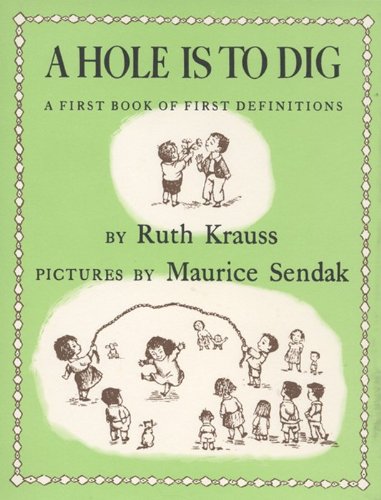
Ruth Krauss (writer) and Maurice Sendak (Illustrator), A Hole Is to Dig (Harper Collins 1952)

Subtitled ‘A first book of first definitions’, this is just that – a collection of definitions, mostly in the form ‘X is to y’: ‘A watch is to hear it tick,’ ‘A mountain is to go to the top,’ ‘A mountain is to go to the bottom,’ ‘A package is to look inside.’ The text is witty and charming, but what makes the book brilliant are the pen-drawing illustrations by Maurice Sendak, then 24 years old. It’s a book to treasure. Ruby doesn’t care for it at all.


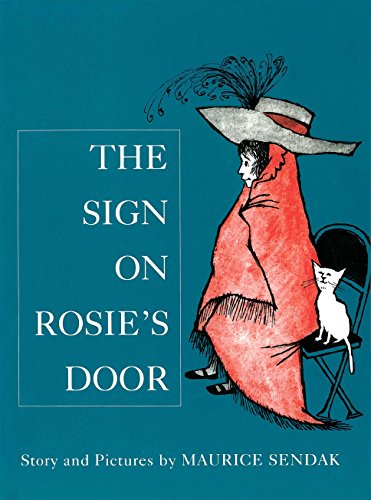
Maurice Sendak, The Sign on Rosie’s Door (1960)

Stung by Ruby’s indifference to the 1952 Sendak, I retrieved this chapter book from our bookshelves, expecting it to sail right past her. The book has been on high rotation ever since.

You can see Meryl Streep reading the first half of the book at Maurice Sendak’s 80th birthday party, complete with slides of Sendak’s drawings, at this link. In that half, Rosie becomes Alinda the Lovely Lady Singer. In the second half, which is even better, she becomes Alinda the Lost Girl (‘Who lost you?’ ‘I lost myself.’) and a giant firecracker, and finally (spoiler alert) a sleepy cat. So many lines in this book make my heart sing. It was inspired by children Sendak saw playing in the street outside his window in Brooklyn, in particular the little girl who ran the show. Like Ruby, Rosie creates a lot of fun, and takes on a range of identities as she goes. I love them both.


Clive Eats Alligators is the ninth book I’ve read for the Australian Women Writers Challenge 2020.

Camperdown Cemetery

I recently spent a peaceful hour or so in Camperdown Cemetery with the Emerging Artist and the Granddaughter. We played among the buttress roots of the giant fig. We rode a scooter on the rough tracks among one of Sydney’s few surviving patch of pre-colonisation grasses. We sat on the ledge of a tombstone whose inscription had been eroded to illegibility, and ate sandwiches.

I can’t think of another place in my life that is so filled with stories. I don’t mean that it’s filled with memories, though that’s true too. I mean it’s a place that calls to mind stories that are out there in the world, written, performed, become part of culture.

There’s surely more to this place than I know, but here’s a list.

Engraving of Thomas Mitchell from the Queensland Digital Library

Thomas Mitchell, an early surveyor-general in the colony of New South Wales is buried there. I don’t suppose many people these days have read his Three Expeditions into the Interior of Eastern Australia, but I have. My lasting impressions from that long-ago reading are of his descriptions of countryside in south-eastern Australia as resembling an English gentleman’s estate (descriptions that Bruce Pascoe draws on in Dark Emu), and of his accounts of brutal violence against Aboriginal people who, as we now know, were responsible for the beauty of that land.

Martita Hunt and Tony Wager in Great Expectations (still from IMDB)

Also buried there is Eliza Donithorne, believed to be a model for Miss Havisham in Charles Dickens’s Great Expectations. I was 12 when I read Great Expectations, having been swept away by David Lean’s 1947 movie. My visits to the cemetery are haunted by a time-blurred image of Martita Hunt (I had to look up the actor’s name) in her wedding dress among the cobwebs waiting for the bridegroom who will never come.

The tree among whose roots we played is the tree from Nadia Wheatley and Donna Rawlins’s brilliant picture book My Place. A series of children, each a decade further back in time, claims that tree as their own until in the last spreads, just before the arrival of the colonisers, the child says (from memory), ‘I belong to this place.’ I remember first reading the book with the not-yet-Emerging Artist on the floor in the children’s section of Gleebooks, both of us thrilled by the way the text communicated so much Australian social history and especially by the splendour of the tree in the final spread.

Then there’s Colleen Z Burke, who seems o have spent a lot of time in the cemetery with her children and grandchildren. It’s a frequent presence in her poems. Here’s a spread from Wildlife in Newtown (1994; my blog post here; right click on the image for a bigger version):

And Fiona Wright, a couple of generations younger than Colleen Burke, has also written beautifully about eating a sandwich while leaning against a tombstone. I wrote about that poem here. Come to think of it, though they are very different poets, both Fiona Wright and Colleen Burke seem to have given similar gifts to readers who live around Newtown, of filling the air with words. I heard recently that the thing that makes humans so successful as a species (so far) isn’t that we’re more intelligent than others, but that we communicate with each other. These poets help us to hear at least a little of what the environment is saying to us.

[Added later: The grave of Eliza Donnithorne and the magnificent fig tree feature strongly I Am Susannah (1987), a book for young people by Australian national treasure Libby Gleeson.]

I imagine that having literary allusions whirling around you isn’t anything special if you live in New York City or London, or in the Lake Country, or St Petersburg, etc. But it’s a pleasure worth noting for me in Marrickville-Enmore-Newtown.