Tag Archives: Ivor Indyk

Books I read in April [2007]

[7 August 2025: I’ve retrieved this post from my old blog because I’m currently reading a book by Geoff Page, and Lawrie & Shirley, reviewed here, is the only other book by him I’ve read since I started blogging]

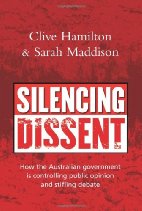
Clive Hamilton & Sarah Maddison, Silencing Dissent (Allen & Unwin 2007)
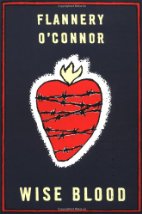
Flannery O’Connor, Wise Blood (1949)
Tim Baker (editor), Waves: great stories from the surf (HarperCollins 2005)
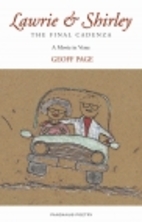
Geoff Page, Lawrie & Shirley: the final cadenza (Pandanus Poetry 2006)
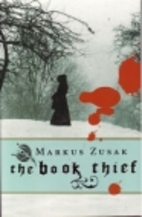
Markus Zusak, The Book Thief (Pan Macmillan Australia 2006)
Leonard Cohen, Book of Longing (Viking 2006)
Heat 13: Harper’s Gold (starting)
Harold Bloom’s Best Poems (continuing)
dissent

Gillian Leahy’s movie Our Park has a special place in my heart because the park in question is my local park. But it’s got an even stronger hold on my affections because of its uncomfortable, even gruelling depiction of democracy in action. As they struggle over what use should be made of a little patch of semi-derelict land, people disagree passionately, at times (off camera) come to blows, and (on camera) declare intense animosity for each other. But things are thrashed out. Many points of view are heard. Everyone owns the final result.

That’s not how democracy works in Prime Minister John w Howard’s Australia. People do get beaten up, of course, mostly off camera and with a legal requirement not to talk about it. But disagreement with the government’s policies doesn’t get much of a look-in. Silencing Dissent is a chilling look at the way dissenting voices have been systematically intimidated, bribed, excluded, marginalised or drowned out over the last decade or so. It lists the democratic institutions that have been undermined: the media, the senate, non-government organisations, intelligence and defence services, the public service, universities. Because it’s a book of essays all making the same point, there’s quite a bit of overlap and repetition, but for slow learners like me that’s all to the good. A young friend of mine is fond of saying that the Coalition are Fascists (he intends the term precisely) and that only cowardice stops people from saying so; the detail accumulated in this book makes him seem less hyperbolic.

wblood

To cheer myself up I moved on to a bit of fiction by Flannery O’Connor. I hope that sentence doesn’t make her turn in her grave, but paradoxically there is something cheering about Wise Blood. It reads to me as if it was written in a trance – as if some twisted angel had dictated it and the young Ms O’Connor just wrote it down, trusting it would amount to something. Most of its characters are all ‘a little bit off their heads’ and some are a big bit off the rails. Hazel Motes, played by Brad Dourif in the John Huston movie which I plan to watch again on DVD soon, is in obsessive revolt against the punitive and repressive Christianity of his childhood, and burns with an evangelical imperative to preach a Church of Christ without Christ (I would have said cacangelical but the word doesn’t seem to exist).

I remember reading a review of the movie that compared Hazel to the Monty Python character who was trying to train ravens to fly underwater. That comparison captures the bleak comedy of the book, but leaves out the appalling sense of waste and, in the end, awe that Hazel inspires. Flannery O’Connor was a Catholic living in the southern US. The characters in this book are all Protestant. Maybe she’s observing them from the other side of a sectarian fence and seeing them as wildly deluded, but the pervasive sense of intractable mystery, of not-knowing, and the lack of overt authorial commentary, makes a sectarian reading seem wide of the mark. I finished the last page with a sense that I’d been taken somewhere dark, weird and scarily believable.


waves

I read Waves as research for work. It reminded me in a roundabout way of an early review of David Williamson’s play The Removalists. As you probably know, in the course of that play, a man – Kenny – is terrorised and beaten up by two policemen. The review I’m thinking of by the late, magisterial H. G. Kippax, found fault with many aspects of the play, including the victimised man being described as a typesetter: according to Kippax, typesetters were not working-class yobbos like Kenny, but quirky individuals who were forever surprising their acquaintances with odd snippets of information. It came with the territory, you see: according to Harry, typesetters read much more widely, if also more shallowly, than normal people who weren’t handling other people’s words for their entire working lives. Like those possibly mythical beings, I often find myself acquiring information about the most unlikely subjects. Waves introduced me to a new world of specialised language: technical language for describing waves and related phenomena (lefties, beachbreaks, righties, peaks and barrels); jargon associated with surfing equipment and practice (coaming, mals, floaters, nosedives, guns); and the argot of the surfing culture, which includes but is not limited to the other two (groms, kahunas, charging and stoked).

The bit I enjoyed most was grand old champion surfer Nat Young’s 1974 encounter with Patrick White (whom Tim Baker describes disarmingly as a ‘gay literary luminary’). After Young is quoted as saying how important The Tree of Man had been to him, we are given this glimpse of Patrick White as filtered through a surfer sensibility:

This unlikely pair discovered they had a connection that went back twenty-five years. ‘He was living down at Werri at that stage, him and his boyfriend, and they were very much in love and they used to spend a lot of time walking on the beach. He said he used to watch surfing and watch waves. Werri, from my childhood, was very important because there was a golf club and it was abandoned and we used to go in and just stay there. And Patrick understood. He said, “Oh, we used to laugh about the way the golf club had turned into a derelict place and the surfers were squatting there on the weekends.” So he knew exactly where my head was at.’

lawrie

Lawrie & Shirley was a birthday present from my niece Paula.

Somewhere along the line I’ve absorbed, without really noticing it, the notion that poetry should be difficult – if it’s not difficult it’s doggerel; almost: if it rhymes and has a sense of humour, it must be bad. Not that I hold these assertions to be true, but they have insinuated themselves into my brain. But hell, if Lawrie and Shirley is doggerel, then let’s have lots more.

It’s a rhyming narrative, ‘A Movie in Verse’, about a relationship between a man in his early eighties and a woman who’s not a lot younger. Each of its 47 ‘scenes’ opens with screenplay-style directions of the ‘INTERIOR. DAY’ variety, and the story progresses mainly through visuals and dialogue. It’s light, funny, has an unsurprising range of characters (middle-aged children who see their inheritances threatened, disapproving former friends, etc), and manages to feel like an enjoyable romantic comedy, albeit a geriatric one. The great fear that hangs over the characters isn’t death – everyone knows that death isn’t far off – but disability, and more specifically dementia. I wouldn’t say it’s a major focus, but it crops up from time to time. Like this, where Shirley takes Lawrie to visit her aunt Ida in a nursing home – also a nice example of how the jolly dump-de-dum of the tetrameters can tilt over into genuine pathos:

Shirley looks around the room,
trying to locate the smile

she'll recognise as Auntie Ida's.
And finds her after quite a while

away off in a distant corner,
wasting quietly in a chair,

doing absolutely nothing,
no recognition in her stare;

no smile, no words like 'Hello, Shirley';
no formula like 'Hello, dear'.

Shirley stoops to take her hand
and, fighting back a hidden tear,

sighs to Lawrie, close beside her,
'There's no one in there any more.'

Eventually, they turn about
and walk back down the corridor.

Cross-fade to a final shot
of Ida's vacant, lunar face,

a kind of undiscovered planet
staring coldly into space.
thief

The Book Thief, another birthday present, is a terrific read. I guess it’s a YA title, though some of those famously nervous school libraries might have trouble with the swearing – even though it’s in German, it’s all meticulously translated. The action of the story takes place in a small community near Munich during the Second World War, and is narrated by Death, who doesn’t enjoy his work, is deeply curious about human beings and charmed by them even in the middle of the immense overwork of that period.

Such dark material, but delivered with delicacy, affection and even lightness. Some elements of the presentation might seem irritatingly tricksy to some readers, but they worked fine for me as something like aeration. There are two or three short books, lyrical graphic novels you might call them, within the book, and every now and then a short piece of text is separated from the body and printed in bold type with its own little heading: a key piece of dialogue, some background information on a character, statistics on parts of the war. I read a review somewhere online taking the book to task for trying to exculpate the German people over the murder of the Jews: that’s absolutely not how I read it. These are recognisably human people. They love their children; some take actions, small or huge, against the prevailing Nazis; all of them, willingly or by cruel force of circumstance, are complicit; and all of them suffer. The book has won awards, and it deserved them.


longing

Leonard Cohen’s book is a weirdly mixed bag. There are some memorable serious poems, introspective and embarrassingly honest; and one or two witty throwaways. There are the lyrics of songs, several of which are on his 2004 album, Dear Heather (I’ve just listened to them, and they’re fabulous as songs). But too much of it reads like excerpts from his notebooks – whingeing effusions about being fat, old, failing in love and as a monk, past his prime as poet and singer if he ever had a prime – adorned by innumerable variations on the same gloomy charcoal self-portrait, most of them accompanied by gnomic handwritten annotation. My sense is that if Leonard Cohen wasn’t a celebrity this book wouldn’t have seen the light of day, or at least would have been a much slimmer volume. I suppose we should be grateful that his celebrity status derives largely from his writing! The longing of the book’s title is everywhere, shot through with despair. Frankly, as a preacher in a Peter Cook sketch once said about sex and violence in the movies, we get enough of that at home. When the poem ‘Titles’ asked me:

and now Gentle Reader
in what name
in whose name
do you come
to idle with me
in these luxurious
and dwindling realms
of Aimless Privacy?

I was tempted to reply, ‘G-d alone knows.’ It’s a beautifully produced book, feels good in the hand, and there are some very good things in it. Deeply committed fans will almost certainly love it. I think his editor has let him – and us – down.

bloom

Sporadically I continue my way through the Bloom book: Edward Lear and Lewis Carroll made the cut, and make strange bedfellows indeed with Yeats, Hardy and the guy who wrote ‘Et in Arcadia Ego’ (‘I have been faithful to you, Cynara, in my fashion’). In his commentary, Harold does seem to like letting us know about intimate or passionate relationships poets have with people of the same gender.
heat13

I’ve just started the Heat. Gillian Mears has multiple sclerosis, and some years ago had an unrelated, horrific medical crisis that brought her close to death. When she was securely back from the brink, she bought an old ambulance and set off on a solitary adventure, driving and camping solo for many months. Her account of it is the first article in this issue, and it makes me hope that she has a book in mind: there are Walden-ish moments in the New South Wales bush, House MD-ish urgencies, a beautiful rendering of the way a mind does unexpected things in crisis …
 

Alexis Wright’s Praiseworthy

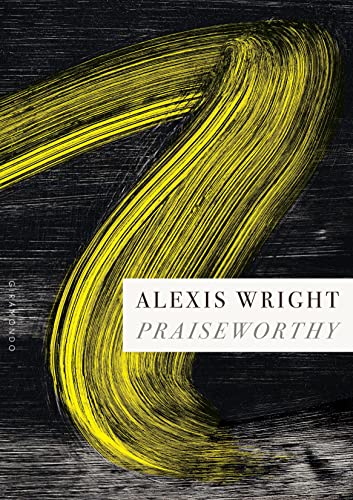
This post continues my experiment of taking page 76 – because it happens to be my age – and writing whatever comes to mind. For a book as vast and challenging as Praiseworthy the approach would be inadequate for a thorough review of the book but it’s appropriate for a modest blog post.

Alexis Wright, Praiseworthy (Giramondo 2023)

Page 76 of Praiseworthy is almost exactly a tenth of the way into the book. If this was a movie, it would be the moment for the first turning point, the ‘opportunity’. And maybe it is.

Tommyhawk has just been introduced. He is a pudgy eight year old, the youngest member of the family at the centre of the story. His father, Cause Man Steel (also known as Planet and Widespread), has a vision of ensuring that Aboriginal communities and culture thrive in the climate catastrophe by creating a global transportation conglomerate using feral donkeys (the book gets pretty surreal). His mother, Dance (called ‘moth-er’ for the first time on this page), has a mystical connection with moths and butterflies, and is often surrounded by millions of them. His older brother, Aboriginal Sovereignty, is to take on a weird allegorical significance as the tale unfolds.

Depending on your point of view, Tommyhawk is the book’s villain or its tragic hero. The real villains are the colonisers, who are described on the very first page as ‘land-thief criminals’ and referred to frequently as ‘the national Australian government for Aboriginal people’, but who are almost completely offstage. (All but two ‘onstage’ characters are Aboriginal.) Assimilation is the great moral evil in this book. Other characters, including the albino Major Mayor of the community of Praiseworthy, have assimilationist goals, but for Tommyhawk, as we begin to understand on page 76, it’s personal.

Tommyhawk has done well at school and has been given a bunch of electronic devices, which he uses to listen to mainstream media, and becomes entranced by the version of Aboriginal people he hears, especially a much repeated assertion that Aboriginal men are paedophiles.

On this page:

Tommyhawk became convinced that these good white righteous people were speaking to him in particular, and not to other Aboriginal children, because he was special, and this made him most at risk. He believed they were speaking directly to him, and what they were saying ran through his mind in sleepless nights this way and that while he tossed and turned in the heat until he became wholeheartedly convinced that he had not been placed on this Earth to be stuck with dangerous people. Even!

Even like his parents. They were a danger to him. That Cause Man Steel person could kill him. And Dance, the moth-er, she only noticed him, took pity when she had mistaken him for a butterfly, or as a cocooned baby being cared for by butterflies flying among the reeds, pandanus fronds, mangrove leaves, drifting in from the sea, like the story of Moses. Hatred was not a word strong enough for how he felt about his parents.

The radio voices are Tommyhawk’s equivalent of Macbeth’s witches. Where Macbeth is tempted to kill the king, Tommyhawk is called away from his Aboriginal family and culture. He decides, soon after this page, that he wants to be adopted by the Minister for Aboriginal Affairs (whom he sees as an apparition in the sky) and be taken to live in the palace of Parliament House in Canberra. It’s absurd, comic and tragic all at once. I won’t spoil it by saying if he succeeds.

I can imagine a Reader’s Digest Condensed version of Praiseworthy that was about a third as long. Such a version would capture the whole plot and and lose almost everything that makes the book interesting. The same can be said of this page. If you read it simply for what moves the story forward, what follows the paragraphs I just quoted adds almost nothing.

But you don’t read this book just for the story. Alexis Wright appeared at the recent Sydney Writers’ Festival in conversation with Ivor Indyk, her publisher. For me, the most revelatory moment of the session was when she talked about the relationship between her writing and music. While writing, she listens mostly to classical Indian music and yidaki. Both those musics have a kind of pulse to them, and she tries to create something similar in her prose. It’s the pulse of country, she said: ‘We say that we’re of one heartbeat with the country.’

The second half of page 76 is far from the most ecstatic passage in Praiseworthy. It doesn’t defy punctuation conventions or twist language in a way that so discombobulates people like me who can’t lay their internal proofreader aside (see my blog posts on Carpentaria and The Swan Book), but it’s a good example of the way Alexis Wright’s prose circles around itself in long, looping sentences, repeating motifs (‘the Australian government for Aboriginal people’), using words that aren’t technically accurate but create the right effect (‘smithereens’), tossing in an awkward cliché (‘plain as day’), making an acute observation (‘passionately, or indifferently’), all in a seemingly unstoppable flow. It’s prose that needs to be heard.

Try reading this aloud, exclamations and all. What I hope you’ll hear is the rhythm of the prose, its weirdness, and – now that Wright has given me the word – its pulse.

So! Very well then! Tommyhawk’s endless deciphering of the barrage of voices on the radio went on through the night and continued as relentlessly as the haze-loving mosquitoes buzzing around him, but neither the activity of squashing blood-bloated mosquitoes to smithereens, or growing his monstrous brain from listening to what was being said on the radio passionately, or indifferently, about the Aboriginal world, was without success. All was gained, and while Tommyhawk had initially wondered why these people were talking the way they did about Aboriginal people like himself, he finally broke the code. He knew the plan as plain as day, that his national Australian government for Aboriginal people was actually speaking directly to him through the voices of random bigots on talkback radio, or in the news, or whatever running commentary he was listening to where anyone was having a good go, giving it all about what they thought of Aboriginal people. This was how he always found the message that the government was trying to get to him. Mostly it was about how the government was trying to tell him, You must escape your black parents

Added on 16 June: Mykaela Saunders has a brilliant long review of Praiseworthy, ‘Think of the Children!’, in the Sydney Review of Books, which you can read at this link.

SWF 2023: My fifth day

12–1 pm: Crime and Justice

This session demonstrated the strengths of a two-person panel. It was progressing quite nicely, as Sarah Krasnostein (my blog post about her Quarterly Essay Not Waving, Drowning here) introduced the talent, Helen Garner (my relevant blog post here) and Hedley Thomas (creator of the podcast Teacher’s Pet), and asked about their writing process.

When Helen Garner is embarking on a long project, she buys a spiral bound A4 notebook and keeps a kind of diary of everything related to the project: not transcripts of interviews, but odd details, what she did, and thought, and felt. When it came time to marshal the material she had accumulated for Joe Cinque’s Consolations she was at a loss where to start, looked to the notebooks for inspiration and discovered that they contained the skeleton of the book.

Hedley Thomas was in the middle of answering a similar procedural question, when Garner was visibly excited by something he said. With a quick look at Sarah Krasnostein, half asking permission and half apologising, she interrupted to take the conversation off in a whole new direction: the way footballers tend to have a degree of immunity from police investigation because of their almost hallowed status in Australian society. From then on we were treated to a lively conversation between two people who had deep appreciation for each other’s work and were swapping stories and genuine compliments.

Sarah Krasnosteiin made a couple of attempts to restore order, but I think she could tell things were going swimmingly. This session is sure to appear on the SWF podcast during the year.


5–6 pm Alexis Wright: Praiseworthy

Alexis Wright’s third massive novel, Praiseworthy, was published just a couple of months ago. Ivor Indyk, director of Giramondo Publishing, stepped in at short notice to discuss it with her, replacing Sisonke Msimang, who had been called home to Western Australia unexpectedly. So, in this session, an author discussed her novel with her publisher and editor – that is to say, with a reader who had some influence on how the book turned out.

I was one of the few people in the room to have read the book. I was keen to lap up any guidance from either Ivor or Alexis on how to make sense of the experience. I’m glad to report that I got plenty.

For a start, it was reassuring that Alexis mentioned some of the more bizarre plot developments with a wicked smile, and the audience laughed quite a lot as the two of them named odd characters and moments. Ivor said towards the end of the conversation that the comedy of her work was often overshadowed by its epic qualities. For me, the issue was more how seriously to take the epic qualities when, as summarised by their author in this conversation, they had such absurd qualities.

Asked about the original idea for the book, Alexis Wright said she didn’t remember – she’d have to look up her notebooks. Perhaps it had to do asking what Aboriginal people are to in the new era of global warming and climate change. She started writing it when she was working on her multivocal biography of Tracker Tilmouth in 2017 (my blog post here), and the visionary at the heart of the novel ‘Cause Man Steel, Widespread or Planet, whatever you want to call him’) is in part based on Tracker. Widespread’s plan for a global transport conglomerate using Australia’s five million feral donkeys, though, is all hers: it’s absurd to the point of surrealism, but there’s something true in the way it leads to a cycle of vision and disappointment.

The book is in part a celebration of Aboriginal people’s will to survive, manifested in many ways, tainted by 240 years of living in the coloniser’s world. The enemy in this book is the project of assimilation.

Perhaps most interesting to me was the exchange about music. Referring to the Ice Queens – grotesque, larger-than-life women who appear toward the end of the book – Ivor wondered about the influence of opera. Alexis agreed that she loved opera, but seemed nonplussed at Ivor’s suggestion that these characters are operatic. The music she listens to most while writing is classical Indian music and yidaki (didgeridoo). She tries to capture the tone and rhythm of that music – the pulse, the heartbeat: ‘We say that we’re of one heartbeat with the country.’

‘You hear what you’re writing,’ Wright said. ‘Then it gets recorded and you want it to be the voice you heard, but it can’t be that voice.’

There was a lot more. Ivor touched on the way Wright defies conventions, at times inventing words that look like mistakes, but which are anything but.

I’ll be attempting my own blog post about Praiseworthy in the next couple of days. Wish me luck!


We made a quick dash to a smaller venue for 6–7 pm State of the Art

Kate Evans of ABC’s The Bookshelf presided over another panel. This time it was Eleanor Catton, Richard Flanagan, Tracey Lien and Colson Whitehead invited to discuss the state of the novel and the future of fiction.

I haven’t read anything books by any of these authors, apart from one novel that I hated, which I’m told is completely unrepresentative of their work. I enjoyed the ebb and flow of conversation, but didn’t have anything to ground myself in.

Kate Evans asked if ChatGPT and other AI content producers spelled the end of novelists. Tracey Lien, the youngest on the panel and the only one without a string of awards to her name (and not at all intimidated by that, she said smiling bravely), said she used ChatGPT as a research assistant, but it couldn’t do the writing. On the one hand, it doesn’t have a brain, but produces word after word by complex algorithms, and the act of reading is a back-and-forth between minds. On the other hand, ChatGPT lies.

Richard Flanagan, whose scowl occasionally gave to an appreciative grimace at another panellist’s point well made, said he didn’t care about AI. He’d just keep writing.

The subject of decent recompense for the work of writing, and of all creative work generally, provoked more interest. Digital publishing changes the landscape significantly. They all agreed they weren’t in it for the money, but money would be nice. Eleanor Catton said that working as a scriptwriter was hugely more remunerative. Responding to a question at the end about how to become a writer and also earn a living, Flanagan said he had decided to be a writer when he was very young and in order to achieve it he lived in poverty for years. There was no other way. Colson Whitehead said something similar: after a significant number of successful novels he was at least temporarily able to live on his earnings as a writer. He implied that this is precarious.

Whitehead, Flanagan and Catton spoke interestingly about not repeating themselves, each new novel being a whole new challenge.


Dinner in the Strangers’ Dining Room

[I originally put up this post in my old blog on 23 May 2005, but didn’t retrieve it when I moved to the WordPress platform. I’m republishing it now mainly because I’m about to write something about Ruby Langford Ginibi’s Haunted by the Past. The post also has a sadly ironic note from John Hughes, and a reminder that the late George Pell was on the nose in some quarters well before the child sexual abuse revelations. It’s also a reminder that the NSW Premier’s Literary Awards used to be presented at a slap-up dinner.]

Tonight the NSW Premier’s Literary Awards were announced at the traditional dinner in the Strangers’ Dining Room in Parliament House. I had been planning to go with my friend Moira, but she was ill, so after some phoning around I found a most satisfactory replacement in my young neighbour and budding writer Jack.

It was a fabulous evening, full of talk – speeches, conversation, argument – and celebrity spotting. Premier Bob Carr sang the praises of his Premier’s Reading Challenge, then undercut this necessary self-promotion by remarking that it was nice to be able to impose one’s values ‘in the nicest Stalinist way’ and going on to riff on the idea of flying banners all over Sydney’s bearing the Stalinist slogan: ‘Life has become better, comrades. Life has become merrier.’

The address for the evening was to be given by Amanda Lohrey, but she had been incapacitated by a fall, and her speech was read to us (with passion) by Susan Ryan. It was an apologia for secular liberal democracy, framed as a response to some remarks by Sydney’s Catholic cardinal George Pell. Where he had said that secular liberal democracy was empty of values, she argued that on the contrary it thrives on diversity and so is full. The speech did have the feel of an essay looking for a place to be aired rather than an address tailor-made for the occasion. But it was excellent to be reminded that the frisson of irritation that remarks like the Cardinal’s inspire in me can be the occasion for careful thought. (The phrase ‘to we liberal democrats’ did occur in the speech as given. I didn’t get hold of a written copy, so I won’t hold that syntactical atrocity against Ms Lohrey: it may have been Ms Ryan hyper-correcting her. I’m sorry to report, though, that I did not detect a shocked collective intake of breath from the audience.)

I was sitting at an awe-inspiring table. Apart from Jack and me and two other ancillary men, there were Nette Hilton, Wendy Michaels, Julie Janson and Ruby Langford Ginibi. Nette, Wendy and Julie were judges. Ruby, it turned out, received the special award, given each year as a kind of lifetime achievement award. I was sitting next to Ruby, and can report that she stays on message: she takes very seriously her calling to educate whitefellas about Aboriginal history, and she was full of information (about the two Aboriginal bowlers who dismissed Don Bradman for a duck; about the rolling back of Aboriginal education under the Howard government; about John Howard’s motives for refusing to apologise for the stolen generations; about the devastating and ongoing consequences of Aboriginal dispossession). She was also very funny, and I got to feel a little special because it fell to me to help her get various things – the envelope containing her speech, her glasses, a little photo album – out of the bag on the back of her wheelchair.

And as for the prizes, I was struck by the humility of most of the recipients. By that I mean that they gave the impression that their subject was more important than they were.

Gillian Cowlishaw, wispy grey-haired author of Blackfellas White fellas and the hidden injuries of race told of a conversation with two Aboriginal women in Burke:

Gillian’s friend: She wants to tape us for her book.
Sister of Gillian’s friend: If she want to tape me she’ll have to f***in’ pay me.
Gillian: If you want me to tape you, you’ll have to f***in’ pay me.
Gillian’s friend: Well, at least she’s learned the language.

Tony Kevin, awarded for A Certain Maritime Incident: the sinking of SIEV X, referred us to the web site on the subject and predicted that one day someone from Australia’s security institutions would break ranks and tell the truth about what happened: and only then would we know if what he has written is true or false. How’s that for humble?

Katherine Thomson, given a prize for her play Harbour, spoke about the waterfront skulduggery of not so long ago, and reminded us, as we hardly need reminding, that our industrial relations troubles are far from over. (I’m remembering the last moments of Bertolt Brecht’s play, The Resistible Rise of Arturo Ui: ‘Although the world stood up and stopped the bastard, the bitch that bore him is in heat again.’) She told a funny story: when she first approached the Maritime Union of Australia to research the play, she went with an open mind and told them so. She was introduced to one group of wharfies like this:

This is Katherine. She’s writing a play about Patrick’s. It’s not necessarily going to be on our side, but that’s OK, because if it isn’t we know where she lives.

John Hughes, gonged for The Idea of Home: autobiographical essays, placed his book in relation to the Demidenko fake, and the way it did the dirty on, among other things, real stories of migration. He attributed his ability to complete it (at the rate of 20 pages a year) to the persistent encouragement he received from other people, especially Ivor Indyk.

Sherryl Clark, recognised for her verse novel for young readers, Farm Kid, used her moment at the mike to remind us of the tragedy unwinding in the country as the current drought continues.

Samuel Wagan Watson, who won the poetry award and the Book of the Year award for  Smoke Encrypted Whispers, was modest in a different way. He said among other things that knowing he’s won the award but not being able to tell anyone made him look constipated to his friends; that writing poetry is a tough game – ‘Before I got published, you know, I used to be white.’

Steven Herrick (please note the spelling – we got it wrong in the magazine recently), receiving his second award, this time for By the River, showed us the medal and said that when he shows his other one to school students, there’s always someone who points out that it’s silver. In trying to convince them that he’s not a loser, he tells them that the premier gave him $15 000 as well as the medal. So, he said, when he leaves, his audience is probably left with the impression that he is a loser and Bob Carr is very rich.

Tim Winton, whose excellent The Turning was the only prize-winning book I’ve read, was brief, said with obviously genuine discomfort that he felt he had robbed the other writers on the shortlist of something, and then thanked many people, including, with a nod towards Amanda Lohrey’s speech, ‘the loyal, dogged, civilian reader’.

And on top of all that, I caught up ever so briefly with a number of friends, and did a little professional fence-mending, possibly some bridge-building. It was a terrific night. Jack said he had a good time too.

Posted: Mon – May 23, 2005 at 05:57 PM

Journal Catch-up 14

Both the journals in this month’s catch-up are slim enough to be carried around for reading on pubic transport waiting in queues or even, if the talkative company allows, in the sauna.


Alexandra Christie (editor), Heat Series 3 Nº 2 (Giramondo 2022)

There’s an excellent article on Heat on the State Library of New South Wales website, entitled ‘On Fire‘. The author, Miriam Cosic, gives a quick history, from editor Ivor Indyk’s rage at the Hand That Signed the Paper affair to Alexandra Christie’s appointment as editor of Series 3, and pays appropriate homage to Jenny Grigg’s elegant minimalist design of the new series. She interviews Christie, who has a deep respect for the multiculturalism, internationalism, and especially commitment to good writing that characterised the earlier series of Heat, as well as their providing opportunities for new writers:

‘It takes a long time to become a good writer, to really hone your craft,’ Christie says. ‘I want to bring [emerging writers] into the mix and elevate them next to established voices. That’s really important to me.’

The second issue opens with a black and white photo of a bark painting by Naminapu Maymuru-White, which serves as a kind of acknowledgement of country, and has a caption alerting us to an exhibition of Yirrkala bark paintings to take place in New Hampshire in September this year. The six pieces of writing follow:

  • ‘Ludic Literature’, an abstract literary essay by British novelist Helen Oyeyemi
  • ‘Unlock to Ride’, a short story by New Zealand novelist and short story writer Pip Adam
  • ‘Min-Min’, a prose poem / flash fiction by First Nations poet Samuel Wagan Watson 
  • ‘Sit Down Young Stranger’ a short story by Luke Carman, a Heat veteran
  • Three prose poems by Michael Farrell, also a Heat veteran
  • ‘Allen’, a short story by Ren Arcamone, this issue’s ’emerging writer’.

I enjoyed Luke Carman’s story about a depressed musician in Katoomba, and look forward to his next book, which is due out very soon. But, perhaps because I’ve been reading a diary I kept nearly 50 years ago when I was living in a shared house, the piece that most engaged me was ‘Allen’, in which an inner-city 20-something couple have an imaginary flatmate that they can blame when things go wrong in their flat. By good fortune, ‘Allen’ is the one piece from this Heat that has been made available online. If you’re interested, here it is.


Evelyn Araluen and Jonathan Dunk (editors), Overland 244 (Spring 2021)
(Much of the content is online at overland.org.au, and I’ve included links)

There’s so much excellent stuff in this edition of Overland that it’s hard to know where to start. The high point for me is probably the short story ‘Shane’s castration‘ by Michael James, a tale of early teenage humiliation at the skateboard rink that negotiates the intersection of sexism and the oppression of young people with profound compassion for all its characters, and maintains the tension right to the final sentence. The other three short stories are strong, but inevitably pale in comparison. Someone in the sauna asked me what I was reading just as I started Kathryn van Beek’s ‘Honey Babe‘. I read out the first sentence, in which bras are mentioned, and no one asked me to read further. It turns out to be a weird story in which a woman gives birth to a large peach: I’ll never know how it would have gone down with that audience.

The poetry section is, as always, strong. The poems that touched me most were both by Belinda Rule. ‘Pointless, in space‘ is a lament for the Croajingalong National Park devastated by 2019–20 bushfires, and an atheist’s prayer for the timber men (particularly poignant for me as I’ve just read John Blay’s Wild Nature, blog post yet to come, in which the author walks through that forest just before the fires); ‘In the only flats in a posh suburb‘ is a complaint about noisy neighbours, kind of.

It’s the cumulative richness of the articles that take up just over the first half that leaves me in awe. In particular:

  • I would prefer not to‘ by Ellena Savage discusses the toll ‘turbo-neoliberalism’ takes on the lives of millennials, compares her situation to that of her boomer (?) father, and takes both him and Herman Melville’s Bartleby the Scrivener – whose catchphrase gives the article its title – as heroes
  • Reading Humphrey McQueen’s A New Britannia in decolonial times‘ by Jon Piccini does what it says on the lid, and among other things argues that Mcqueen’s later self-criticism was unreasonably dismissive of this work (‘There are books that, without you even knowing it, have shaped who you are as a thinker’)
  • Taking what’s owed‘ by Rafi Alam describes the way Community Legal Centres, founded as independent community-based initiatives, have largely been transformed under the influence of neoliberal policies into charities competing for government subsidy
  • Life-making through and beyond the pandemic by Miriam Jones focuses on ‘life-making’ workers, in particular early-childhood educators, speaking as an early-childhood educator herself and doing a brilliant job of contrasting the perspectives of policy-makers who see childcare as primarily a way of keeping women in the workforce, and the the workers themselves who ‘know that children are not only the nations’s future, but powerful, insightful and creative human beings in the here and now’.

Antigone Kefala’s Fragments, and my Verse 11

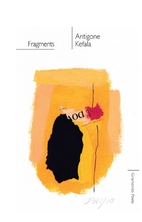
Antigone Kefala, Fragments (Giramondo 2016)

frag.jpg

The final issue of Ivor Indyk’s literary journal Heat, published an astonishing 6 years ago, included an interview of Antigone Kefala by Amanda Simons. The conversation ranges widely, from Kefala’s ‘scribbling’ in her childhood home in Romania before World War 2, over the role her mother played in her creative life, to the critical isolation that comes from being classified as an ‘ethnic’ writer. She says this about poetry:

It is a medium that has its own directions. It comes when it wants to come, doesn’t come when it doesn’t want to come. You can never force it, you have to wait for it.

Fragments is a collection of 61 poems that feel absolutely unforced in that way, almost as if each poem catches an unbidden thought, or dream, or observation, or burst of emotion, and finds a precise form of words for it. If they are fragments of some greater unity, the book is not concerned to find that unity, or to explain contexts, but invites us to focus on each fragment in its own right. Take the first poem:

The Voice
At the sound
I turned
my veins full of ice
that travelled
at high speed
releasing fire.

This return
the past attacking
unexpectedly
in the familiar streets.

The speaker hears a voice from her past. Perhaps it’s associated with a terrible memory, or it might remind her of the voice of a loved one who has died. The poem isn’t interested in the specifics, nor in what happened next. Did the speaker approach the owner of the voice, did she go about her day as if nothing had happened or was she shaken to the core? The poem doesn’t go anywhere near these questions. It focuses tightly on the moment of hearing, and renders it with wonderful precision and complexity: there are the explicit images of ice and fire, and possibly an implied reference to the kinds of warfare that turns city streets into war zones. It’s not ‘difficult’ poetry, but it rewards you for time spent in its company.

The poems, only a handful of them much longer than the first, are divided into five sections. Here’s my guess at their organising principles:

  1. a thematic introduction: poems of memory and loss, dream renderings, observations of social life, dark love poems
  2. evocations of places, mainly Australian, including a scene from the movie Wake in Fright
  3. poems of grief, loss and impending loss
  4. dreams and visions, surrealism and metaphysics
  5. social poems – quick character sketches, satirical jabs, laments, a little politics.

In the Heat interview, Antigone Kefala observes that ‘we ethnics are constantly being compared to other ethnics, but not to Australian writers’, and asks if her interviewer has ever seen a comparison between her work and that of Les Murray. Well, perhaps with that quote working at the back of my mind, I found myself making just such a comparison. Here’s her poem ‘Weapons’ – I hope it’s OK to quote it in full:

Weapons
Ruins
corpses in the sun
men moving cautiously
in the abandoned streets
close to the scarred walls.
Men on top of houses, hills,
coming from dark undergrounds,
men holding on, hugging
these metal erections
firing them
a spray of semen
rushing with velocity
to breed another race of killers.

The evocation of the battle-zone is followed by what at first looks like crude, even trite feminist anti-war rhetoric – the gun as phallic symbol – which becomes almost shockingly explicit with the ‘spray of semen’, and then is brought home in the powerful last line: this isn’t just emotive rhetoric, there’s a strong idea here.

The poem reminded me of Les Murray’s ‘I wrote a Little Haiku‘, which similarly compares bullets to semen. In Murray’s poem, the molten bullets drip from a burning farm rail, and he sees the drip as ‘the size of wasted semen / it had annulled before’. It’s the visual image that counts: one’s response is to admire the poet’s mental agility in seeing such a comparison: the notion that the bullets had ‘annulled’ real semen when they were fired in the past – that is, they had killed young men and so prevented them from fathering children – is almost a melancholy afterthought. In Kefala, the visual image matters, but the force of the poem is in its idea. We’re not invited to admire her cleverness, so much as to dwell on what she has unearthed.

Oddly, the comparisons that came to mind most strongly as I read this book are with Bob Dylan and Leonard Cohen, both of whom have grappled with ageing in their recent work – Dylan’s ‘Mississippi’ for example, or Cohen’s heartbreaking ‘I’m Leaving the Table’. Kefala too brings a ruthless eye to the experience of ageing, and at the same time, like those two writers (in other ways very different from her), conveys a deep joy in living and creating. I love the bitter-sweet final lines of the book’s last poem, ‘Metro Cellist’:

we were floating on sound.
The earth was singing,
singing in an exuberance
of youth.

AWW2016Fragments is the thirteenth book I’ve read as part of the 2016 Australian Women Writers Challenge. I am grateful to Giramondo for my free copy.
—–
As my regular readers will know, I have a self-imposed task of writing fourteen 14-line verses each November and putting them up on my blog. I was going to let this post go by to avoid putting any of my verse on the same page as Antigone Kefala’s infinitely superior work, but then I read her saying in the Heat interview that she could not write a sonnet: ‘You know how writers do exercises in terms of poetic forms; I have never been able to do that.’ Perhaps one day I’ll outgrow my attachment to the form of the Onegin stanza, but for now, here’s one more, an attempt to explain the joys of this attachment:

November Verse 11: 
A turn of phrase, a half idea:
that’s enough for my first lines.
The path ahead is far from clear
but through mind’s muddle somehow shines
an argument. Then, as I’m seeking
rhymes and scans, the sense starts leaking
into somewhere unforeseen
and who knows what line eight will mean?
Six lines to go, and now I’m counting.
So much that I wish I’d said,
not on the page, still in my head!
Its all a mess. The panic’s mounting.
With luck I end my little song
as if I meant it all along.

Sydney Writers’ Festival 2015: My Day 2

My Friday at the Festival was a long day. Also wet. Anticipating queues, I arrived early for my first event, and turned out to be one of three people sheltering under the long marquee for a good half hour. Sadly, attendance was pretty sparse for an excellent session:

10 am: Australia in Verse
As is often the case, this event’s title was irrelevant. With poetry events at the SWF, it’s the who that counts rather than the what.

Sam Wagan Watson and Ali Cobby Eckerman were in conversation with Ivor Indyk. Jennifer Maiden’s name was in the program but back trouble kept her away, that and her wish that the two Indigenous poets should have the floor. I was sorry not to see her, but it was wonderful that we got so much of the two who were there.

The poets spoke about their backgrounds. Sam’s south-east Queensland childhood was full of story-tellers, writers and artists, solidly Aboriginal though not in denial about European heritage as well. He described himself as a child of popular culture. Ali’s mother was taken from her family when very young; Ali herself was taken; and she relinquished her own baby son. Their paths to becoming poets were vastly different, as is their poetry.

Both read a number of poems, and spoke about what their poetry meant to them. Ivor Indyk was wonderful in the chair. When Sam said something about his early poems being well received, Ivor said that was because they were good: ‘And I’ll say what was good about them in a minute.’

There was a lot of laughter, and some tears.

And on to:

11.30: Writers on Writers: Rilke
I know very little about Rilke. I read his Letters to a Young Poet when I was a young non-poet, and I love this passage from Etty Hillesum‘s diaries, written on her way to Auschwitz, which makes me want to know more:

I always return to Rilke.
It is strange to think that someone so frail did most of his writing within protective castle walls, would perhaps have been broken by the circumstances in which we now live. […] In peaceful times and under favourable circumstances, sensitive artists may search for the purest and most fitting expression of their deepest insights so that, during more turbulent and debilitating times, others can turn to them for support and a ready response to their bewildered questions, a response they are unable to formulate for themselves, since all their energies are taken up in looking after the bare necessities.

So I was interested.

There was a lot to absorb. All four panelists knew an awful lot about Rilke, which they were enthusiastic to share: much more than could possibly fit into an hour. Luke Fischer, enthusiastic young scholar–poet, fell over his own words as he gave us three trains of thought at once. Lesley Chamberlain, a learned Englishwoman in jeans, made sure we knew how to pronounce Brancusi properly. Peter Morgan, from Sydney University’s German department, was in the chair and had interesting things to say about translating Rilke. Elder poet Robert Gray seemed to rise every now and then from the depths of abstract thought to make a brief contribution. It was fascinating theatre, and pretty good as an impressionistic introduction to a poet who, they said, sits at the beginning of modernism.

Not that it was like a fish and chip shop, but I had three takeaways:

  • Rilke is the one who ended a short poem describing an ancient sculpture with a phrase that seemed to come from nowhere and go everywhere, ‘You must change your life.’
  • He regarded his letters as part of his literary output. (This was a relief, because if the Letters to a Young Poet were dashed off there’s no hope for the rest of us.)
  • Something that came up in response to a question at the very end, that seems relevant to to Etty Hillesum quote is Rilke’s concept of the reversal. As far as I could understand, the idea is that if you set out to experience any pain and painful emotion fully rather than numbing them out or seeking distraction from them, then at some point a reversal happens, and the pain is in some way transcended.

Time for lunch, in what was now a beautiful sunny day by the Harbour, and then:

1.30: The World in Three Poets

3 poets

This was a wonderful session. Kate Fagan (not pictured), herself no mean poet, did an amazing job of introducing poets Ben Okri, David Malouf and Les Murray. That is, she said just a few extraordinarily well crafted words about each of them, leaving most of the hour for them to read to us, followed by a short question time. It was an almost overwhelming combination of talents.

The woman sitting next to me said she was there mainly for Ben Okri – she’d read some of his novels (‘if you can call them novels’) and hoped that hearing him read in person would help to understand them. As if he’d heard her, his final reading was from his current novel, which he introduced by saying that his novels had often been described as poetic. My transitory companion was pleased.

Les Murray read nothing from his most recent book, which of course was because he had a whole session on that book – Waiting for the Past – the next day. What he did read was marvellous. And when David Malouf read, Les was a picture of concentration – as if he was in training for an Olympic event in Listening to Poetry.

David began with his ‘Seven Last Word of the Emperor Hadrian’. Heard in the context of the previous day’s session on the classics, this revealed itself more clearly: the speaker, anticipating death, bids a tender farewell to his soul, the reverse of what we would expect in the Judaeo-Christian mindset, and there is something deeply moving about that.

All three of these extraordinary poets shone in the question time.

3  pm: Australia’s Oldest Stories: Indigenous Storytelling with Glen Miller
It’s 51 years since Jacaranda Press published a children’s book, The Legends of Moonie Jarl by Moonie Jarl (Wilf Reeves) and Wandi (Olga Miller), which has been described as the first book written by Aboriginal people. The Indigenous Literacy Foundation have re-published it this year. Glen Miller, nephew and son respectively of the authors, talked to Lydia Miller about his own very interesting life – as very young worker in the coal mines, public servant, cultural tourism entrepreneur, and now as elder and activist in the Maryborough Aboriginal community – and about the origins of the book as he remembered them. He was very good value, but I can’t have been the only person in the audience who was hanging out to be read to. Eventually, he did read us one story – almost apologetically, as if an audience full of adults wouldn’t want to be read a children’s story. There were no complaints.

It being Friday, I was joined by the Art Student for:

4.30: The Big Read
The Big Read is where a big theatre full of people, mainly adults, sits back to be read to. This event used to be for ninety minutes, but it’s sadly been cut back to just an hour, and that hour has to accommodate the presentation of the Sydney Morning Herald Best Young Australian Novelist Awards.

This year the awards presentation featured some unscheduled theatre. The set-up has always been a little awkward, as one by one the young novelists stand silently off to the side of the stage while their novels are described, and then again while the others have their turns. This year, the first recipient, Michael Mohammed Ahmad, clearly feeling the awkwardness acutely, sat down in a spare chair while his book (The Tribe) was being described. When he was shepherded away from that chair after receiving his award, he looked around and saw that there wasn’t a chair (Beatles reference intended), so sat on the floor. His successors – Maxine Beneba Clarke, Ellen van Neerven and Omar Musa (Alice Pung, the fifth recipient, was in Melbourne with a small baby) – each made the decision to join him. Linda Morris from the SMH said it was like a sit-in. Perhaps next year there will be chairs, and the young novelists may even have a moment each at the microphone.

On to the show itself: Camilla Nelson read from Alice Pung’s book; Kate Grenville read from One Life, a kind of biography of her mother; Steven Carroll read an extended passage about a guitar from his novel, Forever Young; Damian Barr gave us a snippet of Glaswegian childhood from his memoir Maggie and Me. Annette Shun Wah was as always a warm and charming host.

It’s probably telling that when we went to Gleebooks on our way to dinner to buy Damian Barr’s book it was sold out. After a dinner up the hill at the Hero of Waterloo, we uncharacteristically returned to the Festival for an evening session:

8.00 Drafts Unleashed + Slam
MCd by Miles Merrill, mover and shaker on the Australian spoken word scene, this featured an open mic plus a number of featured guests, all of whom were invited to read something completely new. Benjamin Law read us the opening scene of the TV series currently in production based on his memoir The Family Law. He did the voices and the accents, and it was a wondrous thing to see this slight, mild man transformed before our eyes into a big, loud, wildly inappropriate woman. The rest was fun too, but we were weary and left before the show was over, walking back to Circular Quay through the spectacle and crush of the Vivid festival.

Southerly 74/1

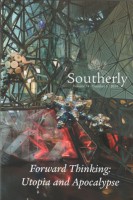
Elizabeth McMahon and David Brooks (editors), Southerly Vol 74 No 1 2014: Forward Thinking: Utopia and Apocalypse

southerly741If I read  the editorials in journals at all, I generally leave them until last, so I read without regard for any theme. I did read enough of this Southerly‘s editorial to gather that it was anticipating the 500th anniversary of Thomas More’s Utopia, but in the rest of the journal I mostly registered mentions of Utopia or utopianism as peripheral to what I found interesting. Some of my highlights:

  • Rozanna Lilley’s memoir, ‘The Little Prince, and other vehicles’, would be wonderful reading whatever her parentage: it’s very funny on the subject of inter-generational bad driving and builds to bitter-sweet reflections on her relationship with her father. But as Lilley’s parents were Dorothy Hewett and Merv Lilley (a fact coyly avoided in the Editorial and Notes on Contributors, but explicit in the memoir itself), it makes a substantial addition to the lore about that magnificent couple. For example, the passing mention that Rozanna had hidden her father’s rifle away from him in his erratic old age is particularly chilling in the light of Merv’s book, Gatton Man, which argues plausibly that Merv’s father was a serial killer, and convincingly that he was capable of murder.
  •  ‘Exile on Uranium Street: The Australian Nuclear Blues’, by Robin Gerster, author of the brilliant Travels in Atomic Sunshine about the Australian occupying force in Hiroshima after the bomb, is a sprinting survey of Australian responses to the nuclear age. Wilfred Burchett’s famous report from Hiroshima, Neville Shute’s novel On the Beach and Stanley Kramer’s film of it have overshadowed other responses, from Helen Caldicott’s activism to protests about Maralinga’s murderous tests. This essay fills out the picture in a way that makes one hope there’s a book on the way. It has a disconcertingly jaunty self-deprecating tone, but occasionally moves in for the kill, as when it challenges our current complacency about nuclear weapons: ‘There is no cause for panic, then – unless one ponders the possibilities.’
  • ‘And in our room too’ by Liesl Nunns starts from the experience of being woken by an earthquake in the middle of a storm in Wellington, New Zealand, and ruminates interestingly about the unexpected, weaving together stories of Maori gods and taniwha, personal experience, and scientific data in true essayist style. I am uneasy about her telling Maori stories in a way that makes them sound like Greek myths, but they powerfully evoke the instability of that part of the world, as does her recurring phrase, It never occurred to me that this could happen.
  • A number of pieces deal with individual mortality. Nicolette Stasko’s poem ‘Circus Act’ deals with the stark unreality of death in a hospice. Susan Midalia’s short story ‘The hook’, in which a woman goes travelling alone two years after her partner’s death, captures the way grief persists but life eventually begins to reassert itself.
  • As always, there’s a satisfying range of poetry. Apart from ‘Circus Act’, I most enjoyed Andy Jackson’s pantoum ‘Double-helix’, Margaret Bradstock’s ‘The Marriage (1823–1850)’ (another of her fragments of colonial history) and Ben Walter’s ‘Joseph Hooker’s Hands’. Geoff Page’s review of books by Tim Thorne and Chris Wallace-Crabbe made me want to read them both.
  • I skipped much of the scholarly content (Southerly is, after all, a scholarly journal), but Jessica White’s ‘Fluid Worlds: Reflecting Climate Change in The Swan Book and The Sunlit Zone‘ was worth persevering with for its interesting insights about Alexis Wright’s work. Danny Anwar’s ‘The Island called Utopia in Patrick White’s The Tree of Man‘ may do the same for Patrick White, but the near-impenetrable technical language proved too daunting for me. My prize for impenetrability goes, though, to A J Carruthers’ review of Melinda Bufton’s Girlery, which isn’t so much densely technical as splendidly uncommunicative, not to mention disdainful of the need for consistent punctuation or the workings of the French language, as in this snippet (because I can’t make WordPress show non-itals in quotes, words that should be in italics appear here as red):

Think of Girlery as a sociostylistic and amorous liaison with girlish grammar. Around each coquine clause the female reader eyes the book, “Hitherto unwritten”, knowingly participating in a kind of ‘quixotica,’ an erotics of reading where “a little grin does that thing only read in books / Plays on our lips / Tout les deux” (27).

Someone in these pages talks about the role of the creative writer in helping us to bring our minds to bear on frightening or otherwise potentially numbing realities. It’s important work, and this Southerly is part of it.

Sydney Writers’ Festival: My Day 5

Sunday morning gestured vaguely in the direction of imminent winter. The sky was overcast and the breeze was making a stab at being chill. By the middle of the day, we were back in balm once more, but don’t anyone mention climate change. If I was  a truly conscientious blogger I would have managed at least three events, but non-SWF life called, so I’m reporting on only one:

10 am: Real Worlds / Imagined Worlds
This poetry session was chaired by Ivor Indyk, whose Giramondo Press publishes all four poets on the panel. (It also publishes at least two of the #threejerks from yesterday, which says a lot about the diversity of its list.)

Having acknowledged the traditional custodians, Ivor also acknowledged the slipperiness of themes at the SWF. The title and description of the session were what he had come up with for the program, he said, but the poets might well decide  to read something else altogether. The theme, which might or might not hold, was to be travel – either to other places or to other realities. Actually, it’s hard to imagine a poem that can’t be tied to that theme somehow so it was fairly safe.

Judith Beveridge took us to ancient India in readings from her new book, Devadatta’s Poems, written from the point of view of the Buddha’s cousin who tried to kill him three times, and in his voice: many intensely physical images of unpleasant things, delivered in Judith’s cool, self-effacing manner.

Ali Alizadeh ruminated a little about whether the whole idea of travel poem amounted to some kind of commodification, then read a number of what I think were unpublished works, plus ‘Robespierre’ from Ashes in the Air (my blog on which is here).

Kate Middleton’s most recent book, Ephemeral Waters, is a trip down the Colorado River, so she fitted the theme exactly. I especially liked a poem about Monument Valley, bristling with movie references (the Valley and the poem both). My sense is that we got the barest hint of the richness of this book.

Ivor Indyk introduced John Mateer as Australia’s main traveller poet. He read from his most recent book, Unbelievers, or ‘The Moor’ and other places, taking us to mediaeval Spain and Portugal, and then to those modern places.

There was time for questions. Poetry readings always seem to provoke questions that are either profound or silly, or both. Here the first question, something like, ‘What use does poetry have in the West, for us … for me?’ provoked interesting responses. Ali Alizadeh took it as a challenge – ‘You obviously think it doesn’t have any use, from the way you asked the question’ – and went on to argue that poetry is useless: it doesn’t make any money in the novels do, and it doesn’t give information like non-fiction. He then ruined his own argument by telling us he was working on a poem called ‘The Wink’, so that people would never forget what kind of man we have as Prime Minister right now.

The other question was even more profound/silly. ‘How do you work out what words to use when you write poetry?’ As the questioner explained what she meant, it emerged that as someone from a complex cultural background, she was wrestling with how to write when it felt as if she had to choose between languages and cultures. Again, Ali Alizadeh played the enfant terrible: ‘I disagree with you about cultural difference. If someone came here from Mars and looked at us, they’d say, “You all look the same to me. Get over it.”‘

And my Festival was over: three poetry sessions, two movies, one evening of stand-up, no rain; the world as a battlefield, the heart and mind as tools for liberation; a lot of laughter, a quantity of rage, some tears, and one or two gasps of delight. I got to see a fraction of it, but I intend to see more by way of the blogosphere and podcasts as I seek them out or stumble across them. Plus, I’ve got a swag of books either already bought or on my list to buy.

I love this Festival.


NSWPLA and NSWPHA Dinner

I didn’t expect to attend a NSW Premier’s Literary Awards Dinner this year. For a while back there it looked as if the awards might go the way of the Queensland equivalent, but the Liberal Party-approved panel’s unpublished report must have come down in favour of continuation, because here they were again last night, six months late, run by the State Library rather than the Arts NSW, charging $200 [but see Judith Ridge’s comment] for a book to be considered, and sharing the evening with the History Awards, but alive and kicking. And pretty special for me, because I got to go as my niece’s date, my niece being Edwina Shaw, whose novel Thrill Seekers was shortlisted for the UTS Glenda Adams Award for New Writing.

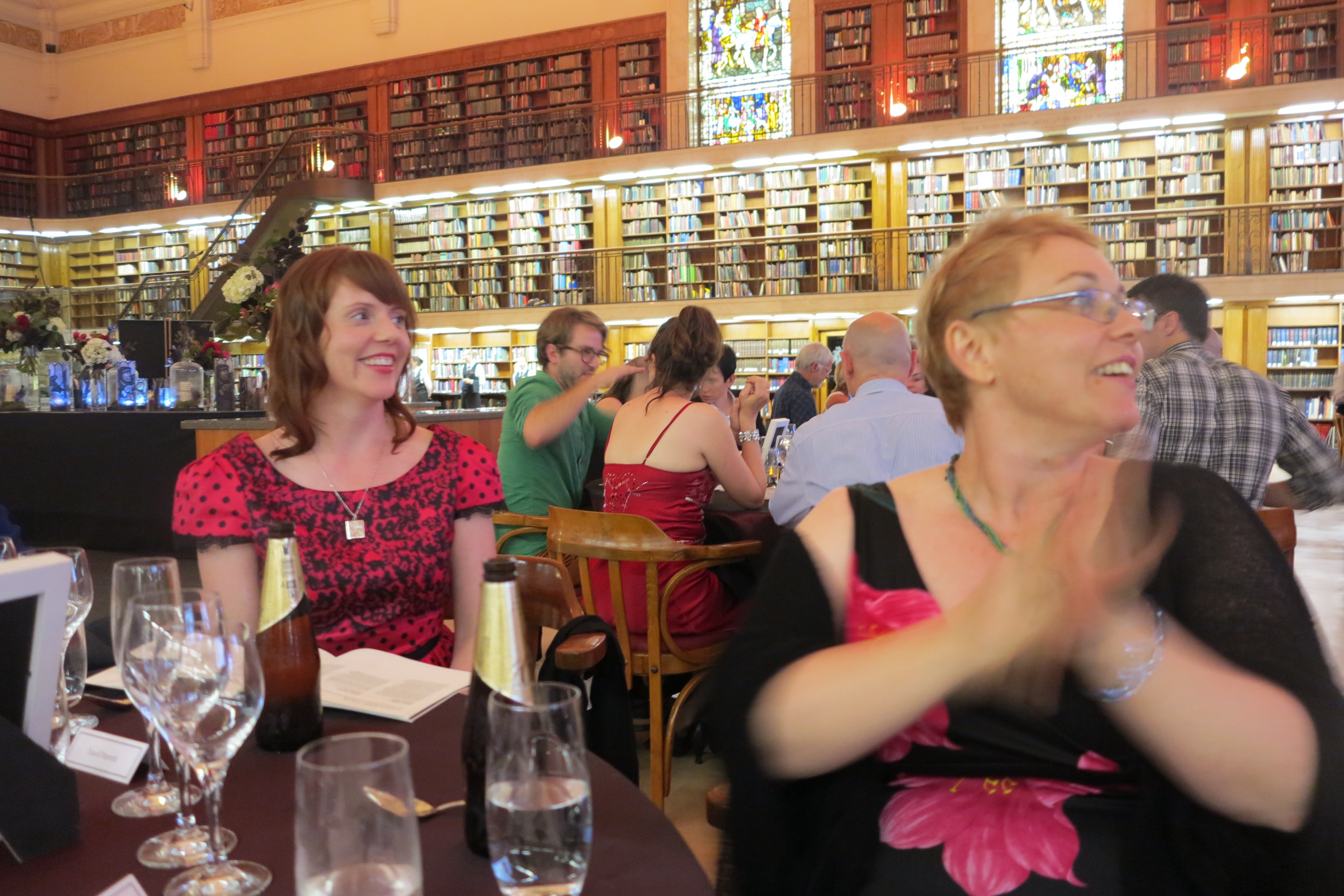
The dinner was held in the magnificent reading room of the Mitchell Library. Not everyone approved of the venue – I was in the Research Library in the morning when a woman complained very loudly that she had driven the four hours from Ulladulla only to find the Mitchell’s doors were closed for the day so it could be converted into a banquet hall. She must have been placated somehow because she stopped yelling, but there were other problems. None of the shortlisted books were on sale – Gleebooks had a table at this event for years [but see Judith Ridge’s comment], as the Library has its own shop, which wasn’t about to stay open late just for us. And library acoustics aren’t designed for such carryings-on: the reverberation in the vast, high-ceilinged room made a lot of what was said at the mike unintelligible at the back of the room. But those are quibbles. It’s a great room with happy memories for a good proportion of the guests.

Aunty Norma Ingram welcomed us to country, inviting us all to become custodians of the land.

Peter Berner was the MC. He did OK, but organisers please note: the MC of an event like this needs to be literate enough to pronounce Christina Stead’s surname correctly.

The Premier didn’t show up. Perhaps he was put off by the chance of unpleasantness in response to his current attack on arts education. The awards were presented by a trio of Ministers, one of whom read out a message from the Premier saying, among other things, that art in all its forms is essential to our society’s wellbeing. But this was a night for celebrating the bits that aren’t under threat, not for rudely calling on people to put their money where their mouths are.

The Special Award, sometimes known as the kiss of death because of the fate met by many of its recipients soon after the award, went to Clive James – whose elegant acceptance speech read to us by Stephen Romei necessarily referred to his possibly imminent death. He spoke of his affection for New South Wales, of his young sense that Kogarah was the Paris of South Sydney, and his regret that he is very unlikely ever to visit here again. He also said some modest things about what he hoped he had contributed.

After a starter of oyster, scampi tail and ocean trout, the history awards:

NSW Community and Regional History Award: Deborah Beck, Set in Stone: A History of the Cellblock Theatre
The writer told us that the book started life as a Master’s thesis, and paid brief homage to the hundreds of women who were incarcerated in early colonial times in the Cellblock Theatre, now part of the National Art School.

Multimedia History Prize: Catherine Freyne and Phillip Ulman,  Tit for Tat: The Story of Sandra Willson
This was an ABC Radio National Hindsight program about a woman who killed her abusive husband and received  lot of media – and wall art – attention some decades back. Phillip Ulman stood silently beside Catherine Freyne, who urged those of us who enjoyed programs like Hindsight to write objecting to the recent cuts.

Young People’s History Prize: Stephanie Owen Reeder, Amazing Grace: An Adventure at Sea
This book won against much publicised Ahn Do on being a refugee (The Little Refugee) and much revered Nadia Wheatley on more than a hundred Indigenous childhoods (Playground). It not only tells the story of young Grace Bussell’s heroic rescue of shipwreck survivors but, according to the evening’s program, it introduces young readers to the ‘basic precepts of historical scholarship’. It also looks like fun.

General History Prize: Tim Bonyhady, Good Living Street: The Fortunes of My Viennese Family
A member my book group rhapsodised about this book recently, comparing it favourably to The Hare with Amber Eyes. It’s a family history, and in accepting the award Bonyhady told us it had been a big week for his family because the lives of his two young relatives with disabilities would be greatly improved by the National Disability Insurance Scheme introduced by the Gillard government.

Australian History Prize: Russell McGregor, Indifferent Inclusion: Aboriginal People and the Australian Nation
This looks like another one for the To Be Read pile. Russell McGregor acknowledged Henry Reynolds and Tim Rowse as mentors.

After a break for the entrée, a creation in watermelon, bocconcini and tapenade, it was on to the literary awards:

The Community Relations Commission Award: Tim Bonyhady was called to the podium again for Good Living Street, but he’d given his speech, and just thanked everyone, looking slightly stunned.

The newly named Nick Enright Prize for Drama was shared between Vanessa Bates for Porn.Cake. and Joanna Murray-Smith for The Gift. Perhaps this made up to some extent for the prize not having been given two years ago.
Joanna Murray-Smith said she learned her sense of structure from the Henry Lawson stories her father read to her at bedtime. As her father was Stephen Murray-Smith, founding editor of Overland, she thereby managed to accept the government’s money while politely distancing herself from its politics. She lamented that her play hadn’t been seen in Sydney and struck an odd note by suggesting that the Mitchell Library and a similarly impressive building in Melbourne may have been the beginning of the Sydney–Melbourne rivalry: I wonder if any Sydney writers accepting awards in Melbourne feel similarly compelled to compete. Vanessa Bates couldn’t be here, so her husband accepted her award, with his smart phone videoing everything, perhaps sending it all to her live.

The also newly named Betty Roland Prize for Scriptwriting (and I pause to applaud this conservative government for honouring an old Communist in this way): Peter Duncan, Rake (Episode 1): R v Murray
Peter Duncan gets my Speech of the Night Award. He began by telling the junior minister who gave him the award that he was disappointed not to be receiving it from Barry O’Farrell himself, because he had wanted to congratulate Barry on the way his haircut had improved since winning the election. At that point we all became aware that Peter Duncan’s haircut bears a strong resemblance to the Premier’s as it once was. He then moved on to congratulate the Premier for instituting a careful reassessment of the Literary Awards and deciding to persevere with them. He expressed his deep appreciation of this support for the arts. (No one shouted anything about TAFE art education from the floor. See note above about this being an evening to celebrate the bits that aren’t under threat.)

The Patricia Wrightson Prize for Children’s Literature: Kate Constable, Crow Country (Allen & Unwin)
I hadn’t read anything on this shortlist, I’m embarrassed to confess. It looks like a good book, a time-slip exploration of Australian history.

The Ethel Turner Prize for Young People’s Literature: Penni Russon, Only Ever Always (Allen & Unwin)
Again, I hadn’t read any of the shortlist. But Bill Condon and Ursula Dubosarsky were on it, so this must be pretty good! Penni Russon’s brief speech referred to the famous esprit de corps of Young Adult writers: ‘You guys are my people.’

There was break for the main course to be served, and for about half the audience go wander and schmooze. I had the duck, the two vegetarians on our table were served a very fancy looking construction, only a little late. Then onward ever onward.

The Kenneth Slessor Prize for Poetry: Gig Ryan, New and Selected Poems
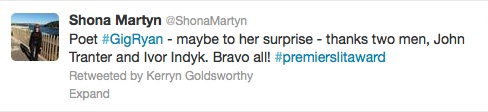
Again, I hadn’t read any of the shortlisted books, but wasn’t surprised that Gig Ryan won, as this is something of a retrospective collection. She speaks rapidly and her speech was completely unintelligible from where I was  sitting (like some of her poetry). However, someone tweeted a comment that got laughs from the front of the room:
tweet

The Douglas Stewart Prize for Non-fiction: Mark McKenna, An Eye for Eternity: The Life of Manning Clark
Another lefty takes the government’s money, and a good thing too.

The UTS Glenda Adams Award for New Writing: Rohan Wilson, The Roving Party (Allen & Unwin)
I know nothing about this book. Rohan Wilson is in Japan just now. His agent told us that when she asked him for an acceptance speech ‘just in case’, he emailed back, ‘No way I’ll win – look at the calibre of the others.’ The three writers on my table who were in competition with him seemed to think it was a fine that it had won:

Favel Parrett and Edwina Shaw respond to not winning the UTS Glenda Adams Award for New Writing

Favel Parrett and Edwina Shaw respond to not winning the UTS Glenda Adams Award for New Writing

The Christina Stead Prize for Fiction was almost an anti-climax. It went to Kim Scott for That Deadman Dance. We had a small bet going on my table, and I won hundred of cents. Kim Scott’s agent accepted on his behalf.

There was dessert, layered chocolate and coffee cake, then:

The People’s Choice Award, for which voting finished the night before, went to Gail Jones for Five Bells. She was astonished, genuinely I think, and touched that her book about Sydney as an outsider should be acknowledged like this. I haven’t read the book yet, but I’m also a bit astonished, because what I have read of her prose is not an easy read.

Book of the Year: Kim Scott, That Deadman Dance. No surprise there!

No surprise, either, that the award to Clive James overshadowed all the others in the newspaper reports.

I believe that the judging panel for next years literary awards has had its first meeting. The dinner will move back to the Monday of the week of the Writers’ Festival, where it belongs.

Added later: Edwina has blogged about the evening.