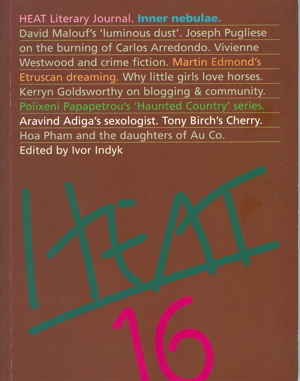
After 14 years, Heat is to appear no more in book form. In this final issue Ivor Indyk, the editor and publisher, departs from his usual practice and speaks to us, explaining the reasons for his decision and sketching some possibilities for an electronic afterlife. (He spoke again to Ramona Koval on the Book Show.) The sad economic reality is that as a 240 page book, Heat is a monster to produce several times a year and then to distribute and warehouse. The community of people who are glad of its existence is much larger than the journal’s market – the people who buy it, and so contribute to its viability. As I’ve subscribed for ten years and written blog entries (I don’t really think of them as reviews), I have a twinge of smug virtue mixed with my sorrow: like, ‘It’s not my fault!’ I don’t know that I’ve ever felt part of a Heat community – too middlebrow, too whitebread, too shy – but it hasn’t been a purely economic relationship. I’ll miss this regular dose of austere high culture, and emergent/experimental/cosmopolitan writing.
Some of the culture in this final issue is incontestably high. Adrian Martin’s article, ‘Devastation’, after a wonderful anecdote about a working class man’s response to Terence Davies’ Distant Voices, Still Lives, goes on to discuss the films of Maurice Pialat. I’m a keen and frequent filmgoer, but I had to check with Google to be sure the article wasn’t a spoof and Pialat a comic invention – an archetypally grim French auteur whom Martin praises for daring to have sitting and standing characters in the same shot, and compares to a number of other auteurs I hadn’t heard of. It’s not a spoof: it’s the kind of article that sheds enough light on its subject to reveal the dark vastness of its reader’s ignorance. By way of contrast, Andrew Riemer’s brilliantly erudite ‘Four Glimpses of the Zeitgeist’ takes one gently by the hand and illuminates a web of connections joining Freud, Mahler, Riemer’s ancestors, conductor Bruno Walter, His Master’s Voice records, Hitler, playwright Thomas Bernhard and others, all converging in a Viennese theatre in 2010. Jeffrey Poacher’s reflection on the poetry of Peter Porter , who died last year, is likewise kind to general readers without, I hope, boring those who know Porter’s poetry well.
Cosmopolitanism is alive and well, particularly n Andreas Campomar’s ‘Uruguay Made Me’, a discussion of Eduardo Galeano in the context of his native Uruguay that makes me want – need – to read Galeano.
There’s plenty of emerging/experimental work too, mainly in the poetry. I was happy to see two typographically adventurous poems by Patrick Jones, who commented critically on this blog a while back.
But I don’t want to get hung up on classification. There’s a terrific poem by Adam Aitken dedicated to Susan Schultz – both Adam and Susan have graced my comments section recently. Ali Alizadeh and Jennifer Maiden are in fine form. Alan Wearne does some Gilbertian editorialising on the current move to form an Australian peak industry body for poetry. Amanda Simons interviews Antigone Kefala on her writing practice: Kefala says that, for her, writing and speaking are two completely different forms, and it’s delightful to encounter the conversational Antigone here alongside two characteristically non-conversational poems (there’s that austere high culture again).
I was struck by two examples of things a book you hold in your hand can do that a boundless (the word is from Ivor Indyk’s editorial) electronic creation can’t. In Nicolas José’s ‘What Love Tells Me’ a recently widowed man and his young son attend a performance of Mahler’s Third Symphony where the ‘blasting and pummelling and smashing’ music opens them up to emotional resolution and communication. The story is moving in its own right, but it gains an extra fizz from the fact that 150 pages earlier Andrew Riemer has been telling us something of what Mahler’s music (though not this precise symphony) meant at the time it was written. In my mind at least, that mental connection is made possible by the weight of the book in my hand
The other moment is a theatrical coup in Gillian Mears’ ‘Fairy Death’. This memoir begins with a title page: a right-hand page that’s blank except for the title and a brief note on the author. When you turn over, expecting the story to begin on the verso, you find instead a striking image of what seems to be a dress-shop mannequin with a crack or join around its middle, arranged on a bed and photographed from above. The figure’s face makes you realise that it’s actually a live, extraordinarily thin woman, that what looked like a join is a string tied around her waist and attached to what you now recognise as a red balloon in the photo’s foreground. The photo, taken by Vincent Lord Long, is of the author, and her mannequin-like thinness is the result of advanced multiple sclerosis. The article is in part an account of how it came to be taken. Though the memoir is astonishingly powerful, addressing (with what in another context would be Way Too Much Information) the effects of MS on the author’s sexuality, the act of turning the first page onto that image creates extraordinary poignancy – which I don’t believe could happen in an electronic form.
One perhaps minor advantage of ceasing to exist as a physical object is that proofreading and even copy editing can continue after publication. Heat 24 is far from egregious in that department – apart from a miniscule (which is a special case as the Microsoft spellchecker ignorantly allows it), I was plunged into confusion and irritation by only one editing error, which I won’t bore you with. It looks as if the presumably underpaid copy editor had enough time and/or other resource to do an excellent job on this issue, so he can go out with his head held high.
Just to be half clever, here’s the last stanza of John Shaw Neilson’s ‘The Poor Poor Country’, slightly altered:
The New Year came with Heat and thirst and the little lakes were low,
The blue cranes were my nearest friends and I mourned to see them go;
I watched their wings so long until I only saw the sky,
Down in that poor country no pauper was I.
Update 1 March 2011:
Over at Adam in (), Adam Aitken was kind enough to link to this page, and he asked me a question. I tried three times to respond in his comments section but for some reason my comments wouldn’t stick, so I’ll have go here.
Adam:
Jonathan, I don’t know why you see yourself as “whitebread”. Are HEAT writers “brownbread”? I won’t miss the so-called austerity of HEAT, as I feel on the contrary that HEAT would sometimes verge on the too rich, too dense side of things (by virtue of each issue being such a fat book).
Well, Adam, I’m not sure where I picked up the term ‘whitebread’, but my (now former) suburb, Annandale, got described that way by some of my more hip friends. They meant that the people of the suburb were the kind who ate only white, preferably sliced and packaged bread, remaining ignorant of or uninterested in the existence of pumpernickel, sourdough, ciabatta and challah, let alone pita, roti and naan. So my implication was Heat writers (and anyone else who belongs to its community) can come from anywhere in that vast world of different breads (quite a few of which are actually white, come to think of it). I have never read an issue of Heat without having my horizons extended, and I was amusing myself by saying that in a self-deprecatory way.
I agree with you on the richness and density of Heat. It’s been admirably austere in the sense that it would never have given us a review of the latest Oprah recommendation or blockbuster movie, and in a different way I’ve thought of Ivor Indyk’s editorial silence as austere. In this final issue he speaks to us, but presents it as asking our indulgence. I for one would have happily indulged him in this way many times over.
The Art Student proposed that I post about my best five books, best five movies and worst three movies for 2010. And hers. Being an obliging fellow, and at the risk of exposing myself as a philistine, here they are. Do nominate your own favourites in the comments.
The five movies most enjoyed in 2010 (in no particular order):
By me:
Animal Kingdom, David Michôd’s first feature, so human and yet so vile. (When Jacqui Weaver was being made much of in the US for this performance, Michôd reportedly said to himself, ‘About time.’ To which I cry Amen!)
Made in Dagenham, directed by Nigel Cole, what some people would undoubtedly see as a fundamentalist left feminist feelgood movie – and what’s wrong with getting to feel good about a victory?
Peepli [Live], directed by Anusha Rizvi & Mahmood Farooqui, a wonderfully ebullient satire on the way the media in India, just like here, makes spectacle out of misery – a comic commentary on P Sainath’s Everyone Loves a Good Drought.
Temple Grandin, made for TV by Mick Jackson, starring Clare Danes as Temple Grandin, the woman with Asperger’s Syndrome who revolutionised the treatment of cattle in US slaughterhouses.
In the Loop, exuberantly enraged, foul mouthed satire directed by Armando Iannucci and starring Peter Capaldi, which I found cathartic. –
By the Art Student:
City Island, a genial comedy directed by Raymond De Felitta, starring Andy Garcia, and Julianna Margulies playing a very different character from Alicia in The Good Wife on TV.
The Yes Men Fix the World, featuring culture jammers Andy Bichlbaum and Mike Bonanno, and any number of corporation representatives being taken for a ride.
Me and Orson Welles, directed by Richard Linklater.
Peepli [Live]. At last we agree on one.
Fair Game, the pic about Valerie Plame, directed by Doug Liman. –
–
The film that most cried out for a thumbs down from both of us
Rob Marshall’s Nine. At least they had the good taste to wait until Fellini was dead before defiling his work in this way. The fault lines in our unanimity of taste showed when the Art Student had trouble choosing between this, Inception and Scott Pilgrim vs the World, both of which I enjoyed.
Five favourite books read in 2010
By me:
I listed 121 books in my Reading and Watching blog during 2010. I didn’t finish all of them, but picking five favourites is necessarily pretty arbitrary because so many of them delighted and enlightened me. However, here goes.
China Miéville, The City and the City. Science fictional policier, marvellously taut and convincing us to believe in an impossible world.
Charles Happell, The Bone Man of Kokoda. Written by an Australian, this tells the story of a Japanese man who fought against and killed Australians in the jungles of New Guinea, and his resolve to honour his comrades who died there.
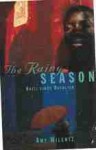
Amy Wilentz, The Rainy Season. I read this in the aftermath of the terrible earthquake in Haiti. It is a very rich introduction to the culture and recent history of the nation created by the first successful black slave revolt of modern times.
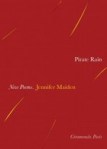
Jennifer Maiden, Pirate Rain. This may not be the best book of poetry published this year. Many people would probably give precedence to Les Murray’s Taller When Prone or Seamus Heaney’s Human Chain. But Jennifer Maiden gets my gong.
Marilynne Robinson, Home. If I ever convert to stern Presbyterian Protestantism, it will be because of this book and its predecessor, Gilead. I love the characters’ unrelenting quest to love with integrity.
–
By the Art Student, in her own words: While I have read quite a bit of fiction that I enjoyed, the books that stand out are all non fiction.
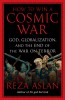
Reza Aslan, How to win a cosmic war. I heard him speak at the Sydney Writers’ Festival this year. The book is a clear and compelling account of the past and current drivers of religious fundamentalism – Islamic, Jewish and Christian. It shows the common threads in religious fundamentalism while focusing on Islamic fundamentalist terrorism. What is interesting is Aslan’s description of the difference between Islamic nationalist groups (which the West should learn to love) and internationalist jihadism. By fighting the former, Aslan argues, we are pushing alienated young western-born Middle Eastern Muslims into joining the latter and terrorism.
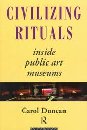
Carol Duncan, Civilizing Rituals, Inside Public Art Museums. This includes a fascinating account of the development of public art museums after the French Revolution liberated the Louvre. It mainly focuses on the development of public galleries in the USA and England, but links these developments to a popular movement to have art galleries in all major western cities (including Sydney). But most interesting are the struggles about what galleries were and are for, how they should be funded and what they should show. In the USA, private philanthropists were the driving force in establishing galleries, allowing them to build spacious monuments to benefactors. The down side was that those benefactors wanted control beyond death, so that many galleries are filled with replicas of ballrooms and indifferent art that are never to be changed. Duncan’s final chapters critique current public galleries’ approaches to their art and audiences, making it clear why many people find the experience of visiting galleries unsatisfying and alienating.
John Hirst, Sentimental Nation, the Making of the Australian Commonwealth. Federation? Surely the dullest topic in Australian history. But to my surprise this book was a wonderful read about the decades-long fight for federation. Depressingly familiar in some respects (the Murray–Darling debate, immigration, taxes, mining, Commonwealth–state power sharing) it was also a wonderfully inspiring account of democratic processes that gave Australia a constitution. There were three Constitutional Conventions, with 60 men voted from the colonies to draft, debate and redraft the constitution over 12 weeks each time. Once agreed on, the constitution was subject to two referenda before being passed. Town hall meetings were held in every suburb and town in the country, each meeting often taking four hours while every section of the draft was read aloud, explained and debated. Hirst makes the back and forth of politics come alive with a contemporary feel.
Patricia Hill, Alice Neel. Alice Neel (1900 to 1984) was a US artist who painted mainly portraits of ordinary working people over from the 1920’s until her death. She was a socialist and worked as part of the Federal Art Project (a New Deal initiative) during the Depression. She only received recognition of her work in the 1970s, partly because portraiture was out of fashion in Modernist American art circles, partly because of her left-wing views and partly because of her gender. I love her work. Her portraits are often distorted yet capture absolutely a sense of the person and their context. She saw herself as painting ‘definitive pictures with the feel of the era’, pointing to her portrait of her son in a business suit, ‘Richard in the Era of the Corporation’, as a good example.The book is largely Neel’s own words taken from interviews conducted by Hill. An inspiring read for someone at the very beginning of an art career as she approaches 60.
Regular readers will know that I’m a Jennifer Maiden fan. I expect few people will have read her poem ‘shortlist’, in her most recent book, Pirate Rain, and assume it counts as fair use if I give you the lines from that poem that refer to Dame Joan Sutherland, wrenched from their context with ragged edges, but a lovely description all the same:
when I was young, I heard the great
Sutherland sing quite often and saw
how she expanded the idea _____ of voluptuousness
with a sweep of russet hair, her diaphragm
as wide as love’s horizon, lower lip
seductively trembling with each high note, as the dawn
flutters across a mountain, while
her molten silver, complex coloratura had
such ethical logic in it
10 : 00 Marie Munkara in conversation with Irina Dunn
I first heard of Marie Munkara’s Every Secret Thing on Will Owen’s blog last December, and it’s been on my To Be read list since then. If it hadn’t been, this session would have put it there, especially when she read the opening pages, beginning most memorably, ‘It had been a shit of a day for Sister Annunciata and Sister Clavier.’ Irina (full disclosure: she’s an old and dear friend) did a lovely job of drawing out Marie’s biography in relation to the book, giving her scope to be – miraculously – funny about her experience as a member of the stolen generations meeting up at last with her Aboriginal family:
My mother was black. I was thinking, ‘That can’t be my mother. And you know how they say all black people look the same … I’d say, ‘Hello, Auntie,’ and my mother would say, ‘Don’t talk to her, she’s rubbish.’ I’d say, ‘But isn’t that Auntie …’ ‘No!’
When she was little her class at school had to draw a picture of what they wanted to be when they grew up. She drew a figure with a red cloak and a crown. Sister Damien said, ‘Marie, you can’t be a king.’ But young Marie insisted that that’s what she wanted to be, because a king has lots of money and can do what he wants. ‘Now,’ said Marie today, ‘I haven’t got much money but I do what I want.’
11 : 30 Terrorism: How to Win a Cosmic War – Reza Aslan talking to Tony Jones about the futility of the War on Terror
I am not a Tony Jones fan. Ever since his extraordinary performance interviewing Nicole Cornes on election night 2007, I have had trouble watching him interview anyone. But Reza Aslan’s articulate confidence was a match for his combative style, and their sparring was actually enjoyable. Reza Aslan distinguished between Islamism and Jihadism. Islamism, he says, is a form of nationalism seeking to establish an Islamic state in principle no more diabolical than a Christian state like Greece or a Jewish state such as Israel. Jihadism is anti-nationalist, seeking to establish planet-wide Islamic theocracy. He went on to say that Islamism is the answer to Jihadism: that if Islamists are able to participate in normal political processes, Jihadism will lose its recruiting grounds. It was a riveting presentation, and we bought his book.
13:00 to 14:00 Three Australias: Les Murray, Ali Cobby Eckermann and Kim Cheng Boey reading their poems, chaired by Rhyll McMaster
This was the only event I attended where I had to stand in one of the monster queues and for some reason receive a “Good work” stamp on my wrist. The readings were interesting. I was especially glad to hear more of Ali Cobby Eckermann’s work, having read only her long piece on the Intervention in the Best of 2009 collection. Kim Cheng read one of the poems he read on Friday morning, and it was a pleasure to hear it again. Les Murray, who was probably the reason this event was held in one of the bigger spaces, was as always Les Murray, and a good thing too.
Ali Cobby Eckermann acknowledged the Gadigal people, as Anita Heiss and Boori Prior did yesterday. I wonder if it was by formal decision that such acknowledgements were not made at any other events, at least none of those I attended. Whether deliberate or not, I think the festival was the poorer for the absence of such acknowledgements. I also missed the PEN chairs at paid events, and the brief explanation of the imprisoned writer each chair represented. There is a roped off area in the vast Heritage Pier populated by a dozen beautifully painted chairs and a soundscape. The chairs are to be auctioned to raise money for PEN, but that’s not the same as explicit acknowledgement of named individuals.
2: 30 Who’s Interviewing Who? Alan Ramsey and John Faulkner
These two – a retired journalist famous for his take-no-prisoners opinion pieces and the Federal Minister for Defence famous for his ineluctable pursuit of corruption – have been friends for 20 years or so. They told us in all seriousness that the reason the friendship has thrived for so long is that they never discuss politics. They then moved on to discuss politics, with some tense moments. They were very funny together. At one stage Ramsey left the stage to get the quotes he’d left somewhere. Faulkner continued in the role of interviewee.
17 : 30 The Big Reading: Hanan al-Shaykh, Willy Vlautin, Dubravka Ugresic, Natasha Solomons and Rupert Thomson
This was my last event for the festival. It was, as it always is, pleasant to be read to. In particular I loved being read to again by Rupert Thomson – and the tone of the extract he read from This Party’s Got to Stop couldn’t have been further from that of the one he read on Thursday morning. It must be an intriguingly complex book.
I had been planning to stay in the general area to hear Jennifer Maiden, David Brooks and Adam Aitken read. But the reading didn’t start until 9.30, and it was in a wine bar. As a non-drinker who is very often in bed by 10 o’clock, I found the deterrents outweighed the attractions. I had heard a little of Aitken and Brooks this week (though the latter hadn’t been reading his own work), and I decided with regret that I would have to forgo the great pleasure of hearing Jennifer Maiden.
The Festival’s slogan this year was Read, Rethink, Respond. There wasn’t a lot of space at the festival itself for responding (question times just don’t do it!), and for that matter not a lot of reading got done, at least by the punters. But I’ve come away with plenty to think about, and the world is full of opportunities to respond, and far too much waiting to be read.
I think this is a poem, but the chances of anyone else publishing it are very slim, so here it is, blogged.
Open letter to Jennifer Maiden
Dear Jennifer, please write about Kevin
and Julia. The best I could manage
was a clerihew when they won the election: oooKevin Rudd ooomay be a bit of a fuddy-dud ooobut at least we’ll no longer be showered ooowith the duplicitous spittle of Howard.
But now that he’s backed off
from tackling climate change
and Julia’s refusing
to talk to the teachers’ unions
we need something stronger
and wiser
than my easy rhymes –
a muddy rabbit, mesmerised by moonlight,
a studied habit, of playing to the polls,
or bloody sabot-age.
Couldn’t you write us something
about the way his top lip tightens
or hers curls,
her pontifical drawl, his parsonical clip?
Something like your George’s
lethal little injections and your Condi’s
costume jewellery, to help us see them
as human?
Jennifer Maiden’s poetry never fails to delight me, so a new book is a thrill. I don’t understand why she doesn’t get rockstar treatment.
Her last book, Friendly Fire, included a ‘cluster’ of poems featuring George Jeffreys and Clare Collins, characters from two of her novels (one of them ‘notoriously unpublished’). Clare had killed her two younger siblings when she was nine years old. George has been her probation officer and is now her mentor, friend and lover. As Jennifer Maiden explained in an introduction to the poems, through these characters ‘the horror-inhibited portions of [her] brain might speak’. First, in a prose piece, they were in the New York of 9/11. Then came the six poems, each of them beginning:
George Jeffreys woke up in [Kabul/Kandahar/London/ Berlin/the White House/Baghdad].
George Bush Junior was on the TV, obsessed
as usual with Baghdad.
and then going to unexpected places. In the five years since then, as seen in Pirate Rain, she has written four more ‘George Jeffreys woke up’ poems (in New Orleans, Rio, Beirut, and a Pirates’ Ship), which are collected here along with one in which ‘Clare Collins woke up in the Paris Hilton’, eight in which Eleanor Roosevelt or Hilary Clinton wakes up somewhere, and one each for Florence Nightingale’s pet owl Athena, Mother Teresa and Grahame Greene, who wake up respectively ‘on the wild cliffs of Crimea’, ‘in London, at /The Inquest for Princess Diana’ and ‘in the Saigon Caravelle/ Hotel in 2006’.
That might sound like a bit of a bore, but it’s actually quite the contrary. Those first-line awakenings are launching pads for a wide range of poems: a couple come close to being straight action-adventure, others enter strange supernatural fantasy worlds, and always there’s a serious play with the big news of the day. (I would have liked the poems to be dated, which would have made it possible to find out easily at what stage of George W Bush’s foreign adventures the conversations in the poems were taking place. For instance, I seem to remember that the bit where George talks about torture in the Abu Ghraib prison was written before those sensational photographs were made public – and this surely affects how the poem is read.)
Maybe one day I’ll write something in which I figure out why I love Maiden’s poetry so much. Penny says it’s because her mind is like mine. I wish it were so! One thing that I can tell is that she writes about the public world, the world we see on the television, and makes sharp observations and judgements about it. Her portraits of George W Bush and Condoleezza Rice are wonderful. In this volume, there are Jim Cairns, Hillary Clinton and, most touchingly, Don Dunstan. (I want her to do Rudd, Abbott, Gillard, Obama, Kristina Keneally, … … … ) She argues about the nature of poetry, and fame, without every disappearing up her own kazoo. She reports conversations with her daughter without going cute – in fact, the poems involving those conversations generally astonish in the way they bring disparate elements together. ‘Night on water’ does this superbly. I hope it’s fair dealing to quote the whole poem:
night on water Seeing him was like reading Shakespeare by flashes of lightning – Coleridge on Edmund Kean’s acting.
‘Mum, are you famous?’ ______ with insouciant irony asks
my daughter, when one of her friends
says, ‘Is your mum famous?’
on the phone. That flirty incorruptible
compassionate eyebrow arches
at me and I answer, ‘No, just
an ageing hippie who’s had
a few books published,’ wishing that
either this or the fame thing were true,
momentarily, as she repeats my reply.
Later, she comforts as usual,
‘Don’t worry – you’ve got me,’ and I agree
‘Yes,’ as usual, feeling the old nervous
delight at that, think that if she has
as I once wrote, ‘eyes like night on water’,
there is also there the rapid glow
of fireworks on the harbour, remember
how once in a storm season when
the fences were blowing away, she
illuminated me from the bathroom window,
held onto its hinges to stop
it leaving as I gripped the fence sheets
together in the blinding, deafening rain.
Her torchlight and the lightning swung
wildly on my face and she called down,
sincerely and suddenly. ‘Mum, you
look beautiful.’______I’ve thought
ever since, this the most powerful
thing that the concept of beauty can do:
glance into the heart of you, like her,
and keep you going. __I’ve thought the
concept of fame somewhat like that, sometimes:
without too much charm,
money or position, it seems to me
a vague modicum of fame, however
mysterious it may seem to others, gives
one enough currency to survive. But
there’s still no real security, except _____in some stunning
moment in practical tempestry when
one is seen as one would see, is read
like Shakespeare by flashes of lightning.
I didn’t fold any page-corners down in this book, because I’ll want to reread the whole thing, many time I’m sure.
John Freeman, of Granta magazine, had an excellent piece in TheAustralian in July (pretty much the same article as published in the Independent a month earlier, with a little Australian – and Australian – content inserted). The primary function of literary journals, he said:
is to […] promote gross miscegenation, messiness, conflict and disorder; to subvert the market; and to place writers in unexpected places, where they can create an unlikely community of readers. …
It is presumptuous of any literary journal to claim that it has discovered any writers – novelists and poets are hardly nickel deposits, after all – yet a good journal can make it far easier for readers to discover a new writer’s work. It can take a piece of writing, regardless of where it comes from and what unusual shape its story takes, and ask readers to smash into it. For these reasons the ideal reader of a literary journal is one who yearns for the lash of the new, the way a boxer needs to be hit.
I can’t say that I yearn to be lashed by anything, really, but Heat does offer the kind of discomfort John Freeman describes, and I suppose I read it as a kind of homage to the gods of literature. Every issue contains things by writers who are completely new to me. Admittedly some of them are also, to me, almost completely unreadable; but others are sublime. In this issue Jennifer Maiden’s ‘Diary Poem: Uses of Privacy’ is in the sublime category, though I’m not new to her poetry. And there are a number of pieces that range from completely engrossing to callow, self-indulgent or academic-exercise-ish. I enjoyed and was instructed by Elizabeth Bryer’s ‘Peru’s Heartbeat’, an essay on a Peruvian drum. I was glad to learn about Aileen Palmer, daughter of Vance and Netty, and Rosa Cappiello who wrote novels in Italian during her years as an immigrant in Sydney (though I’m deterred from reading the latter’s Oh Lucky Country by the fact that her translator’s article here includes more than one sentence as awkward as this: ‘The Italian original is written in a language that is precise and explicit and yet metaphorically complex, and which sometimes reflects the influence of Neapolitan syntax and lexemes, popular Italian and some elements of the Australian variety of Italian.’)
It’s two translations from the Chinese, though, that got me closest to a lashing and mashing experience, both of them being unsettlingly odd: ‘An Inexperienced World‘ by Sheng Keyi, in which an older woman/writer lusts after a younger man she meets on a train; and ‘1989: My Confession‘ by Ah Jian, which seems to be excerpts from a longer, gossipy account of events among Beijing intellectuals in and around Tian’anmen Square in that year.
Part of each issue these days seems to be devoted the literary equivalent of “The Making Of” pieces: this time Evelyn Juers writes fascinatingly about her recent Giramondo title House of Exile: The life and times of Heinrich Mann and Nelly Kroeger-Mann, blending diverse elements including subtle self-disclosure, intriguing historical snippets, and tourist impressionism.
I share Pavlov Cat’s view that Ivor Indyk is a living national treasure, but the copy-editing of Heat often gives me pause. This issue is no exception: a supercede and at least one faux-gentility (‘a literary prize that enabled my partner and I to…’) have snuck past the editorial defences. Everyone makes mistakes. But there is one genuine puzzlement. In Ah Jian’s piece we read that the writer’s friend Zhao Yueshen wrote ‘about the ancient Greek [sic] poet Virgil’s Georgics‘. That ‘[sic]’ is not mine. It’s in the magazine. So someone – most likely the (uncredited) translator – made a note of Ah Jian’s slip (Virgil was actually Roman), and someone – most likely an editor or a series of editors and proofreaders – decided to leave it there so the readers would see it as well. It looks as if the editors, being primarily academics, treated the text as if it were something they were quoting in a scholarly paper, distancing themselves from the error but taking care to quote it accurately. But such meticulous respect for the text ends up looking like derision of the author. For the record, I want editors, quietly and without fuss, to correct my stupid mistakes.
Beautiful day in Sydney, what better to do than take the bus into town for a free event at the Museum of Contemporary Art. ‘The Young Appreciators‘ was part of the fourth floor exhibition, avoiding myth & message: Australian artists and the Literary world (capitalisation not mine!), which seems to be mainly about artists and literary folk from the late 1960s and on – that is to say, not so much Sidney Nolan–Ern Malley as Tim Burns–John Forbes.
Today is the first time I’ve realised that there is a group of Australian poets known as the 68ers, or perhaps the 69ers: John Forbes, Robert Adamson and John Tranter (whom those in the know refer to by second name only), and quite a few others who are sometimes hard to see because of the long shadows cast by those three. The three speakers at today’s event are younger than the 68/9ers: the oldest admitted to 39, and I’d guess the other two were quite a bit younger. That is to say, none of them had been born in those days when I used to go regularly to poetry readings to hear John Forbes, who I thought was a bit of a smart aleck and not as interesting as, say Martin Johnston (another 68/9er who doesn’t seem to cast such a long shadow).
Anyhow, it was fun. The first speaker spoke of Vicki Viidikas, beginning her talk by saying she hadn’t known much about her until after she’d accepted the invitation to talk. Since I’d heard the ABC radio programs that she based most of her talk on (with acknowledgement), I can’t say I was riveted. The second tackled John Forbes, mostly, as she said, in terms of marginalia and biography – mentions of herself she’d found in published Forbes letters, for example. It was in her talk that I became aware that those poets of my youth have since become the subject of academic attention. The third, the elegant poet Tim Wright, speaking softly and swiftly enough to be near to incomprehensible to me, talked about Pam Brown, visibly writhing with embarrassment at having the subject of his talk actually in the room.
I loved the moment during the brief question time when Kerry Leves, another of the apparently short-shadowed 68/9ers, admitted that when he’d seen a particular person’s work on a table in the exhibition, he’d said, ‘I don’t remember her!’ It’s a small world, the world of Australian poets and artists.
And I got a real hand in my understanding of Pam Brown’s poetry. I managed to hear Tim Wright say that her work was in many ways similar to Jennifer Maiden’s, but that whereas you tend to read one of Jennifer Maiden’s poems right through to the end, and when you do you feel you’ve learned something (a true statement), with Pam Brown’s work it’s not like that. You tend to stop and ponder a phrase, stare into space, let it sink in or just be distracted (he called her the master of the poetry of distraction, or something of the sort), then go back and read it again: it’s perfect for reading on public transport. I realised that my unexamined working assumption that reading is a linear process – you start at the beginning and go to the end and derive meaning on the way – has made quite a lot of poetry hard to enjoy. And I do read it while walking the dog — surely picking up a bag of dog poo or playing tug-of-war with a stick between lines should have put me in the perfect state of mind. I’ll try again, not so much harder, as with less resistance to the forces of distraction.
[I posted about this in my old blog in 2008, and am retrieving it to this one because it mentions Somewhere Towards the End by Diana Athill, who died in January, and whose more recent book of essays, Alive, Alive Oh! I plan to blog about soon – JS, 31 March 2019]
As I mentioned last month, I started reading Schulz and Peanuts to check its suitability for a young fan. I’m happy to report that in general it passes with flying colours. A young woman has a termination, and the break-up of ‘Sparky’s’ first marriage is gruelling, but these are both handled with a good bit more tact than you’d find in many YA novels.
Every week, for just months short of 50 years, Charles M Schulz sat at his drawing board to produce six daily strips and a longer Sunday piece. He inked every line himself, and penned in every letter until his final stroke meant that the speech balloons in the very last frames were filled by computer-generated lettering. Peanuts was the most important thing in his life; he hated being away from home, and died the day his last cartoon was published.
This isn’t a tale of heroic physical exploits or grand public gestures, but David Michaelis seems to have interviewed every living soul who had a meaningful connection with his subject, from the psychology student who gave him an impromptu – and effective – counselling session on his agoraphobia at a tennis tournament and never had another conversation with him, to Joyce nee Halvorsen, the main model for Lucy, his first wife and the mother of his many children (one of the best bits of the book could have been titled The First Wife’s Story).
The result is a fascinating, many-faceted portrait of an artist and of a man. Peanuts strips are scattered through the pages, not as decoration but as integral elements of the narrative. Cartooning was not only Schulz’s life work, the fulfilment of a central ambition; it was also, dare I say, a spiritual discipline by which he found perspectives on the difficulties and dilemmas of his life (and the lives around him) that allowed the release of laughter. While Michaelis is very bold (and repetitive) in some of his psychologising, I found his thesis persuasive: that what we common or garden readers received as Schulz’s comic reflections on life in the abstract were often if not always born out of particular moments of pain or joy. Schulz seems to have been an excellent exemplar for Neil Gaiman’s advice on how to deal with trouble: Make good art.
Michaelis places Schulz interestingly in the history of comics – though he barely mentions comic books as opposed to strips, and surely the moral panic in the 1950s epitomised by Fredric Wertham’s Seduction of the Innocent (which led to a nun confiscating a Phantom comic from me in Grade Three, and to our teachers’ recommending that we read the boring Catholic comic Topix) had something to do with the runaway success of Schulz’s wholesome creation. It’s surely not entirely coincidence that for a time in the 1940s, before he got his big break, Schulz did lettering for Topix.
[I passed the book on to my young friend, whose mother reports that after dipping into it he said, ‘It’s not all that interesting to me, even if it is to Jonathan. But he reads everything.’ Then, softening the blow, ‘Some of it is pretty good.’]
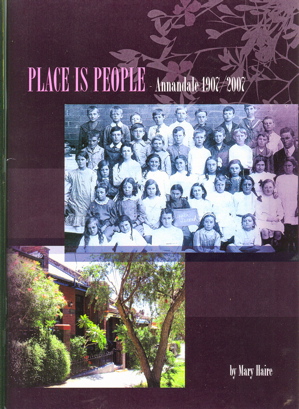
Place is People is a strange little book, neither an attractive collection of photographs to introduce the suburb to visitors nor a quick historical overview. It’s got elements of both those, but is something more personal and less orderly than either; if it was even more personal, it might have been an extended prose poem, but it isn’t quite that either.
Mary Haire leads walking tours, and the book has something of the serendipitous feel of such tours: here’s a little girl walking to school; let me tell you about a boy that age who went to the same school a hundred years ago. I know more about my suburb’s history having read it; some errors have been corrected, and some tantalising trails laid in my mind: Cardinal Freeman was born here, for instance, and the young woman at the florist’s is a single mother. How can I put those two snippets in the same sentence, you ask? I plead that the book sets a precedent with its gloriously unconcerned potpourri approach to its subject.
Talking at Gleebooks recently, Helen Garner paid tribute to Elmore Leonard’s essay, ‘Ten Rules of Writing‘: she has his sentence, ‘If it sounds like writing, I rewrite it,’ on the wall above her desk. In The Spare Room, she has given us a feminine Elmore Leonard story: it’s about the emotional tangles between two women, or at least those tangles provide the language for its telling, but it has the clean lines, the sure forward movement, the lack of hooptedoodle, that give such pleasure in Leonard’s tough-guy narratives from The Tall T to, say, Pagan Babies.
It’s a very quick read, and an intense one. There’s plenty of complexity, some of which I’ve found making itself known to me weeks after finishing the book. For instance, ‘Helen’ the character, who is manifestly a version of Helen the writer, claimed my allegiance and assent to her judgements while I was reading, but has since come to seem much less reliable, much too caught up in her own emotional reactions to be able to give us the full picture (some of which the book gives us in spite of her). It’s a magnificent achievement.
I doubt if David Campbell (1915–1979) is still studied in Eng Lit courses at many Australian unis, but I hope he is fondly remembered and occasionally reread by more than just me. He and Martin Johnston share a posthumous moment in John Forbes’s elegiac ‘Lassù in Cielo’; he cropped up in a footnote in the John Manifold collection I read last month; a recent Poetica featured his correspondence with Douglas Stewart; lines and images from his poems arrive in my mind unbidden from time to time.
Most of the poems in this selection are a strange mixture of the bucolic and the erudite (and just in case I’ve misused those words, I mean rustic and scholarly), and there’s a pleasant music to them. When I read the sequence of twelve twelve-line rhyming poems of ‘Cocky’s Calendar’, I found myself wondering how he managed to pick up his pen again after writing something so wonderful. Back in the early 1970s, in an Aust Lit seminar on this sequence, a student from North America totally didn’t get them: while the rest of us were being drawn into the poetry’s intensely personal relationship with the landscape, he lost patience altogether and said the whole thing read like verse you’d find on a Norman Rockwell calendar. I thought then that he was missing something, and I find I still do. This is the ninth poem, for September:
Under Wattles
Now, here and there, against the cold,
The hillsides smoulder into gold
And the stockman riding by
Lifts to the trees a yellow eye.

It's here the couples from the farms
Play in one another's arms
At yes and no – you'd think the trees
Sprang from their felicities.

So may our children grow up strong,
Got while the thrush drew out his song,
And love like you and I when we
Lie beneath the wattle tree.
How about that present tense ‘lie’, eh?
I think the sequence as a whole speaks to me so strongly because of my father. At a family gathering once, another farmer, of a younger generation, said something about the boredom of spending a whole day driving around a paddock in a tractor (this was before the days of air-conditioned tractor cabins and iPods). When my father said mildly that he didn’t get bored, one of my female cousins asked him what he did with his mind when he was out there all day. As he drew breath to answer, my mother came to the rescue by changing the subject (‘Oh Jenny, you know you’ve been asking me about tatting, I have a pattern here I can show you’). Probably to his relief, my father didn’t get to answer the question. I like to think that David Campbell’s contemplative poems, even though his is a sheep property while my father grew sugar cane, provide some version of what my father might have wanted to say back then over tea and scones.
With The Omnivore’s Dilemma I was back to farming, in three categories: industrial, of which I read with a mixture of horror and curiosity; pastoral, which is not synonymous with ‘organic’, but tends to have the virtues claimed for it; and personal, in which the author creates a meal from things he has personally grown, hunted and killed, or foraged. I don’t know that anyone could read this tremendously engaging book without changing the way they think about food. It’s very heartening that it was a New York Times best seller. If you want a quick look at the central part of the book, which deals with ‘intensively managed grazing’ or clever grass farming, here’s a video from Michael Pollan’s recent TED talk:
The book integrates into its narrative any number of lively essays: on the ethics of meat-eating (in which Pollan engages with Peter Singer), the joys of hunting (ditto Ortega y Gasset), attempts at humane design in modern abattoirs (Temple Grandin), the US domestic and international politics of corn (in which he doesn’t discuss the so-called Free Trade Agreements that leave the US free to subsidise its grossly inefficient corn agribusinesses while preventing other nations from continuing with similar protections, but he makes their absurd brutality abundantly clear), on just about anything you can think of that’s related to his central question, ‘What should we have for dinner?’ Some of it is very funny. Some is inspiring. Some horrendous. All of it is engrossing.
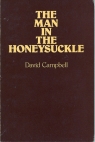
I hadn’t read David Campbell’s The Man in the Honeysuckle before. As with Selected Poems, I’m fairly indifferent to the learned bits, mainly translations and imitations from the Russian, but some of the lyrics, especially the Aust Pastoral pieces, are extraordinary. The book was published posthumously, and it’s hard not to read a number of the poems as being poignantly suffused with a sense of death as imminent. ‘Crab’, ‘The Broken Mask’ and the whole ‘With a Blue Dog’ section stand out for me in this first encounter. How’s this:
Wind in Casuarinas

Camped under the she-oaks
With a dog and swag

The woman a white sapling
A straight flame
Blown all ways
And the children off
On their several roads

Lives rounding like river stones
Or washing out in wheel ruts

A high sky over tree and hill
And the clouds taking fire
I am spread out I burn
Yellow and rose – blessing and blest
A still flame in the arms of the she-oaks

Life butting into the world
With five wants and a howl
And shambles out with a blue dog.
I want to put ‘five wants and a howl’ right up there with ‘helpless, naked, piping loud’.
I don’t imagine Elmore Leonard would care much for this Heat. There’s hoptedoodle galore … though generally very high quality hoptedoodle. Ironically, the one article that seem to me to be 90 percent hoptedoodle is by a crime writer whose point seems to be that crime fiction has advantages from being bound to an absence of hoptedoodle (but maybe I was just irritated because her essay on the relationship between genre fiction and literary fiction totally ignores the existence of children’s literature and science fiction).
There’s a terrific piece on blogging by Kerryn Goldsworthy, not a hopt or a doodle in sight; a lovely pairing of a story by Eva Sallis (‘Abattoir’) and an essay by Elizabeth Campbell (called ‘Why Little Girls Love Horses’ on the contents page but ‘Envy Worship and Passion’ on its own title page); chiming mentions of the catacombs of Paris, of which I’d never heard, first in one of Jennifer Maiden’s still-intriguing George Jeffreys–Clare Collins poems and then in an engrossing essay by Sarah Knox about researching historical novels, her own and Hilary Mantel’s; and a number of memorable pieces on aspects of migration: Elisabeth Holdsworth’s memoir ‘New Holland’, a short story by Hoa Pham, poems by Ali Alizadeh (on his unborn baby) and Peter Skrzynecki (on his late father). There’s lots more. I’m a happy subscriber.
I understand that it must be a nightmare to copy edit a magazine like this: so many words, so many different voices, so little time. But there are enough lapses to present a significant obstacle to the reader, at least to this one. At one point, havoc is ‘wrecked’; as something wreaks havoc just a few pages later in the same article, it seems likely that the error resulted from an editor’s dependence on a spellchecker rather than ignorance. In the sentence, “The memoir becomes a book about illness to many reviewers; a ‘survivors’ tale; a plumbing of the issue of women’s health, and the continuing masculinist paternalism of the public health system” it looks very much as if the apostrophe after survivors was misunderstood by someone who inserted another before it to make it function as a quote mark; and the comma after health almost derails the sense. I don’t want to go hunting for similar moments, but the erratic comma and absent apostrophe in ‘reconstruction, so redolent of the historian’s duty, and the re-enactors fancy’ just leapt up at me from further down the same page (p 172). This might be just the irritated snitchiness of an underemployed pedant, but in this context it becomes hard to tell if the truly eccentric punctuation in a number of the poems is what the poet intended or the product of editorial inattention.</curmudgeonly grumble>
How could I resist reopening The Branch of Dodona, my only other David Campbell book? This one had pride of place in the bathroom for a week, to allow for contemplative reading in short bursts. Again, it’s his farming poems – in this volume, the ‘Works and Days’ sequence, with its love–hate relationship to sheep – that speak most strongly to me. Even his ‘My Lai’, which I remember him reading at Vietnam Moratorium Readings in another age, works so powerfully because of the farmer-to-peasant solidarity it embodies:
I was milking the cow when a row of tall bamboo
 Was mowed by rifle fire
 With my wife and child in the one harvest,
 And the blue milk spilt and ruined
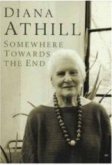
I’m not sure what the friend had in mind who gave me Diane Athill’s reflections on old age, Somewhere Towards the End, as a present for my 61st birthday. As Ms Athill is almost exactly 30 years older than me and still going strong, I’ll assume she wasn’t hinting it’s time I hang up my spurs.
In terms of my current reading, the book’s matter-of-factness, its almost belligerent steadiness of gaze play as a sober counterpoint to the rage and evasion of The Spare Room: both books generate what Athill calls an ‘addictive excitement of the mind’, and they speak to each other. Ms Athill’s brief reference to Hilary Mantel’s A Place of Greater Safety endorses Sarah Knox’s praise of it in her essay in Heat. The book has in spades a (to me) miraculous quality that I think of as Protestant integrity, a quality also displayed, ineffably, in the manner of my friend J’s leavetaking. I wouldn’t mind having a mind like Diana Athill’s when I’m 90. She manages to be remarkably cheerful about things usually discussed, if at all, in gloomy mode. One chapter begins, for example (the emphasis is mine):
When you begin discussing old age you come up against reluctance to depress either others or yourself, so you tend to focus on the more agreeable aspects of it: coming to terms with death, the continuing presence of young people, the discovery of new pursuits and so on. But I have to say that a considerable part of my own old time is taken up by doing things or (worse) failing to do things for people older, or if not older, less resistant to age, than myself.
Can’t you just see that paragraph, followed by the word ‘Discuss’, as an exam question on The Spare Room?










 Me fail? I fly!