Tag Archives: poetry

November rhyme # 14

Better late than never. At least the event that inspired this happened in November:

Rhyme #14: Dinner 
From canapes to mango cheesecake
conversation didn’t flag.
(Two teenage boys sat mute – like, please make
this weird food go. It makes me gag.)
A window shows the inner working
of lab mice. There’s no one smirking
that a boyfriend in North Bay
was hit by two cars. Who can stray
down George Street in a hypo stupor
or drop unconscious in a pool
while holding baby? The Art School
exhibition’s still on – super!
Records from ASIO. Oh my!
Too much man sex in London Spy.

And so ends my task of 14 rhymes for November for 2015. I told the emerging Artist (formerly the Art Student) that I was thinking of keeping the doggerel  up, if at a slower rate, as a regular thing in the blog. Tactfully, she said people really like my prose. So normal functioning will resume shortly.

November Rhyme #13

OK, this is a fridge door poem I made earlier, but since the object it describes is once again being exhibited I’m passing it off as done today

as+for+living+II+web

As for Living III, by Penny Ryan. Photo by Kate Scott

Rhyme # 13: Piece in an exhibition
A broken ribcage from some broken
evolutionary line?
But these  aren’t bones – too glibly spoken!
That’s no knotted ridge of spine.
This work displayed in art school stairway
is not by some apprentice Yahweh,
nor did the wondrous Burgess Shale
a woven life like this unveil.
And yet it speaks of some great sorrow,
something beautiful that’s lost,
A world bereft, left with a ghost.
Perhaps a warning for tomorrow
unless we act, lives we hold dear
will be as if they never were.

Rumi in Strathfield and November Rhyme #12

IMG_1447

On Friday evening at the Australian Catholic University, two Muslim scholars sat with an audience and discussed the great 13th century Persian poet Mevlana Rumi.

Ustadh Feraidoon Mojadedi, an Afghani scholar who now lives in the USA, was in conversation with Imam Afroz Ali, of the Sydney Seekers’ Hub, a place of Islamic learning.

They spoke of Rumi as a great spiritual teacher, not just for Muslims, but for all humanity. Ustadh Feraidoon Mojadedi wears his enormous erudition lightly, and had us laughing even as he explained the complexity and depth of Rumi’s vision. He argued that what non-Persian readers need is more, better commentary rather than translation, because all translation is misleading. There’s much more to Rumi than you would gather from the quotes you see on Facebook.

I went along for a number of reasons, but mainly because a friend gave me a copy of The Essential Rumi decades ago which has remained, literally, a closed book. I’m also aware that my ignorance of Islam can’t be a good thing in the age of Corey Bernardi and Donald Trump.

Well, I know a tiny bit more about Rumi, and I’m planning to go to another event next week. But possibly more significant is how the evening altered my sense of Islam.

The relaxed, affectionate  relationship of the two scholars was in sharp contrast to images I have from movies.

In question time, it was women who asked all the questions – so much for the notion that women are silenced in Islam.

And most interestingly we were all invited to join the sunset prayer part way through the event. I’m not at all religious, but I’d joined in the Our Father at an Anglican ceremony the previous day. I checked with a number of people and joined the prayers. I did a lot wrong: I hadn’t arrived in an abluted state, I didn’t take my shoes off, I joined a line that turned out to be the women’s line, and I’m pretty sure I failed to follow all the standing and kneeling correctly (though my Catholic youth and childhood was some preparation for that). And of course I didn’t understand what was being said by the prayer leader. But there is something profound in joining a group of people who humbly bow repeatedly in the face of the mystery of the universe, and I returned to the lecture with an extraordinary sense of our shared humanity. Which was also the content of much of the talk.

So I went to the event expecting a literary evening, and found something quite different.

I’ve set myself a task of writing a 14-line rhyme with each blog entry in November (originally inspired by those people who write a whole novel in November – not sweating over quality, just getting the words out). Here goes for this one:

Rhyme #12: On joining sunset prayers
I bow, I kneel, I touch my forehead
to the grass. I have no God:
no disrespect, I take these borrowed
gestures (like my childhood’s nod
at Jesus’ name, or genuflection)
not to seek some Power’s protection,
but to say: The world is vast,
my time here comes and goes so fast.
Right now I humbly pay attention
to what is deepest in my heart:
my loves, my challenges, the part
I choose to take past good intention.
We bow, we stand, we’re flesh and bone
and mind. We’re none of us alone.


November Rhyme # 11

I’m having to produce a 14-line stanza a day if I’m to meet my quota. This is a true story:

Rhyme #11: Intimations
Between the ATM and Woollies,
death brushed my shoulder, had a word.
The voice was not a schoolyard bully’s,
but soft, you’d almost say it purred:
‘You’ll lose all this, perhaps not tomorrow,
but time runs out – beg, steal or borrow
makes no difference, you’ll be gone
as silent as a babe unborn.’
A baby sucked juice from a bottle.
A tricep showed a red-inked rose.
The checkout chaps had wispy moes.
The air outside was drenched in wattle.
The dog snapped at a passing fly.
One day all this will say goodbye.

November Rhyme #10

This weekend the United Nations Climate Summit begins in Paris. The huge march through the rues and boulevards that had been planned has been cancelled because of the risk of mass murder, but all over the rest of the world people will gather in a massive display of concern about climate change. The Sydney event starts at 1 o’clock, in the Domain.

The ‘People’s Climate March team’ emailed me suggesting I share a post of theirs on social media. The post was fine, but I realised that my real challenge is to say something from my own brain. So, at the risk of seeming to trivialise the issue, Sunday’s March is the subject of today’s little rhyme. It turns out that my own brain is full of fragments of other people’s wisdom.

Rhyme #10: Three days before the People’s Climate March
There’s no such thing as a human being,
there’s only humans and everything else:
stars that pull from beyond our seeing,
myriads living in our cells.
The human race has disunited,
Earth’s love for us gone unrequited,
who favour empire, comfort, gain,
and make the whole world our domain.
Saint Francis called the fire his brother,
water his sister. Was he wrong,
or was there muscle in his song?
This time we have is like no other:
last week is gone, next year’s too late,
what we do now decides our fate.

Bathurst Regional Art Gallery and Rhyme #5

On Saturday we drove to Bathurst to see an exhibition John McDonald had reviewed in the previous weekend’s Sydney Morning Herald. The exhibition’s full name is guwiinyguliya yirgabiyi ngay yuwin.gu gulbalangidyal ngunhi (they made a solitude and called it peace) by Jonathan Jones, in collaboration with the Bathurst Wiradyuri and Aboriginal Community Elders, commissioned  as part of the Bathurst Bicentenary.

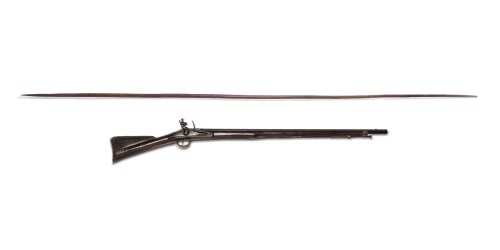
Musket_and_spearIt’s  not a vast exhibition, but its powerful. There are stunning video works – a giant screen on which the camera glides endlessly through beautiful bush, and a room with six portraits of Wiradyuri elders looking out at us from significant locations in the Bathurst area. The main room has a musket and a spear on the wall (though the image above, lifted from the BRAG website, is missing the musket’s lethal bayonet), and in front of them on the floor a circular arrangement of flint fragments and grevillea flowers: the catalogue explains that the stone is waste from a Wiradyuri and Aboriginal community stone-tool making workshop. In a second room an elegant shape on the floor, made up of mussel shells cast in bronze mixed with lead musket balls, points at a pile of dusty potatoes – again, the catalogue adds to what’s already a strong image by telling us that the Bathurst wars of the 1820s began when a Wiradyuri family was massacred over some potatoes. There’s a room with surveyors’ maps and traditional parrying shields around the wall, and another with the cadavers of six small trees painted gold. All of it is very beautiful, and all invites the viewer to find out more about the history of the Wiradyuri wars, and to meditate on that history.

If you’re interested you can download a PDF of the catalogue from the Bathurst Regional Art Gallery web site, but I recommend taking the trip to walk through the six small rooms of the exhibition in person. Apart from anything else, it’s a stunning example of work created by a very fine artist collaborating humbly with a community. In the catalogue, the Bathurst Wiradyuri and Aboriginal Community Elders say they have been working with Jonathan, ‘directing him, teaching him and supporting him’. The drive from Sydney isn’t so long. We stayed overnight because the weather was threatening, but we could have done it as a day trip.

There is one room we didn’t see. It features two possumskin cloaks, made by members of the local community and evoking a moment when Windradyne, the great warrior leader, presented a similar cloak to Governor Macquarie. It was our good fortune to visit the gallery while a weaving workshop was happening in that room, so we stayed out. (We did see the gorgeous cloaks in a room that isn’t part of the exhibition but which, on Saturday, was temporarily home to them and an array of objects woven by local people.) This was good fortune for two reasons: first because during our visit the gallery was filled with the sounds of Aboriginal people enjoying each other’s company, in effect proclaiming their resilience; and second because two elders generously absented themselves from the workshop to chat to us whitefellas about the cloaks and the woven objects, about the Wiradyuri dictionary app, about the uses of some woven objects (‘Good for carrying babies, but not much good for water. That’s why we have bottles for beer.’).

And it’s November, so here’s an attempt to say in verse what I can’t figure out how to say in prose:

Rhyme #5: An exhibition in Bathurst, November 2015
Steel v hardwood, stone and blossom,
mussel shells v musket balls,
prim English maps, cloaks of possum.
Unsmiling elders on the walls
Look out from Country. Devastation
here finds mute  commemoration.
The Romans made their solitudes
and called them peace. Such platitudes
prevail now too, the past obscuring.
But lively voices here resound,
Wiradyuri are still around. 
They greet us, chat with us, ensuring
that we whitefellas will own
that solitude, but not alone.

Rhyme #3

A rough tribute to the fabulous humans associated with Penzance Prince, winner of this year’s Melbourne Cup

#3: A hundred to one shot
Michelle Payne won one for the bookies,
said the chauvies could get stuffed
and spoke up for all women jockeys.
Latham et al huffed and puffed
and found her lacking in decorum.
Language Latham! Ipse lorem!
Like Cathy Freeman wrapped in flag
she’d won the race – not theirs to bag.
No one huffed at her big brother,
Down syndrome and cheerful as,
a strapper good enough for jazz.
Great to see them love each other:
horse, woman, man. The racing gods
gave each a win against the odds

November Sonnet No 1 for 2015

November in Sydney: Sculpture by the Sea; jacaranda, coral trees and bougainvillea in startling bloom; moustaches; exams; and here on Me Fail? I Fly! a sonnet challenge.

For the last few years I have set myself the task of writing 14 sonnets for the blog in November. It turns out that my favoured sonnet form isn’t actually a sonnet at all, but the Onegin stanza – the 14-line stanza used by Pushkin in his narrative poem Eugene Onegin and by Vikram Seth in The Golden Gate. It took me a couple of years to realise that I wasn’t even doing that form properly. Now I think I’ve got it. Here goes with my first poem for 2015.

Because this stanza was developed for narrative, and because I have unfinished business with Virgil’s great, weighty narrative, the Aeneid (I studied Book Two  in high school more than 50 years ago), I thought I’d see what happened if I tried pouring some of his lines into Pushkin’s nimble form. It was more fun than I expected. This covers Book 1, lines 1–11 (‘refugee’ is a precise translation; ‘detention’ less so):

Sonnet No 1: Aeneid 1:1–11
War and one man, that’s my story.
A refugee from Homer’s Troy
he started something, built Rome’s glory,
but on the way found little joy.
His boats were stopped, and cruel detention
held him. Courage and invention
won through: he built a dynasty,
brought culture and civility.

It’s here I seek for inspiration:
if we’re to make sense of this world,
what harm was done, what grief unfurled
that one of such sound reputation
was made to suffer, struggle so?
Was there some cosmic rage on show?

For anyone wanting to explore further, here is Dryden’s 1697 translation :

Arms, and the man I sing, who, forc’d by fate,
And haughty Juno’s unrelenting hate,
Expell’d and exil’d, left the Trojan shore.
Long labors, both by sea and land, he bore,
And in the doubtful war, before he won
The Latian realm, and built the destin’d town;
His banish’d gods restor’d to rites divine,
And settled sure succession in his line,
From whence the race of Alban fathers come,
And the long glories of majestic Rome.

O Muse! the causes and the crimes relate;
What goddess was provok’d, and whence her hate;
For what offence the Queen of Heav’n began
To persecute so brave, so just a man;
Involv’d his anxious life in endless cares,
Expos’d to wants, and hurried into wars!
Can heav’nly minds such high resentment show,
Or exercise their spite in human woe?

And if you’re really serious, here’s Publius Vergilius Maro:

Arma virumque canō, Trōiae quī prīmus ab ōrīs
Ītaliam, fātō profugus, Lāvīniaque vēnit
lītora, multum ille et terrīs iactātus et altō
vī superum saevae memorem Iūnonis ob īram;
multa quoque et bellō passus, dum conderet urbem,
īnferretque deōs Latiō, genus unde Latīnum,
Albānīque patrēs, atque altae moenia Rōmae.
Mūsa, mihī causās memorā, quō nūmine laesō,
quidve dolēns, rēgīna deum tot volvere cāsūs
insignem pietāte virum, tot adīre labōrēs
impulerit. Tantaene animīs caelestibus īrae?

Added later: You notice interesting things when you translate something, even as roughly as this. I took out the references to supernatural beings – gods, the muse etc. But that, plus the largely ungendered nature of English, strips out a key bit of patterning. In Latin, nouns are generally either masculine, feminine or neuter. In these 11 lines, the man (virum), and his descendants (patres) are masculine, and almost everything else is either neuter (war, fate, godhead) or feminine (especially the goddess Juno, but also rage, cities and so on). The effect in the Latin is of a masculine figure in a feminine world, much of which is inexplicably hostile to him.

Australian Poetry Journal, recent issues

Michael Sharkey (editor),  Australian Poetry Journal, Volume 5, Issue 1 (2015)
Bronwyn Lea (editor),  Australian Poetry Journal, Volume 3, Issue 1 (2013)

apj51

Australian Poetry Journal is a twice yearly publication of Australian Poetry Ltd, which describes itself, surely with a wistful edge, as the peak industry body for poetry in Australia. You don’t have to be a poet to join APL (the poetry industry includes readers), and membership fees cover a subscription to the journal.

This issue is attractively democratic. Award winners with many books on their CVs rub shoulders with people who have had poems published in newspapers and journals. I wouldn’t dream of singling any poems out as ‘the best’ but I do need to give you a taste of some. This is from Judith Beveridge’s ‘Clouds’:

Let blue skies stop their rhetorical grandstanding.
We know they’re filled with the breath of men cocked
and fettled by greed. One by one I call the clouds in.
A cloud for each child hungry, ragged, naked. A cloud

for all exiles whose voices can’t find a single raindrop,
whose eyes are stones that out-weather the past.
A cloud for those in war-ravaged places where shadows
terrorise doorways, and the old live between rubble
and crumbled bread.

Jeff Rich’s ‘Not getting things done’ deals with those to-do lists where some items just got moved from list to list, or projects dreamed of but never begun. The final lines bring it all home beautifully:

Whole careers, projects without plans.
Journeys of recovery and feats of weakness

Pile like chaos in the attic
Awaiting defeat

By distraction and habit and boredom and chance
Four deadly horsemen more real than the rest.

Fay Zwicky’s ‘Boat Song’ responds to the callous feral poetry of a Tony Abbott slogan with child-like rhyming that is anything but infantile. I’ll resist the pull to quote the whole thing:

Remote ideologies send bonnie boats
Like broken-winged birds to our merciful votes.

And we turned them away, yes we turned them away
As we went out to play
In our dead-hearted country, the bounteous place
Where neighbourly love puts a smile on each face.

Apart from the poetry, there are interviews – Paul Magee interviews Samuel Wagan Watson and Josh Mei-Ling Dubrau interviews Julie Chevalier; a personal introduction to Greek poet Tasos Leivaditis by his translator N N Trakakis; a review by Tim Thorne of eleven titles from Ginninderra Press – which expresses gratitude for the publisher’s ‘let a hundred flowers bloom’ policy while being unsparing of the blooms that aren’t up to scratch; a history of another small publisher of poetry, Black Pepper Press, by Margaret Bradstock, who paints a fascinating picture of the critical reception of a number of their books; and three review articles that I found illuminating, especially Bonny Cassidy on Spatial Relations, a two-volume collection of John Kinsella’s prose.

Bonny Cassidy begins her review, ‘It must be said, straight up, that this two-volume publication … is unlikely to attract the recreational reader.’ (And she might have finished it by saying that a smaller, more selective publication may yet bring Kinsella’s prose to a wide and appreciative readership.) I could have said, straight, up that while Australian Poetry Journal might not attract too many recreational readers, any who wander into its pages are likely to be pleasantly surprised.

1apj31Having been pleasantly surprised by Volume 5 No 1, I realised Volume 3 No 1 had been wallflowering on my bookshelf for a year. It turns out to be another treasure trove. I’ll just mention two very funny poems by Anthony Lawrence –  ‘The Pelican’, in which the eponymous bird snatches a Jack Russell puppy, flies off with it

clearly visible through the lit
_____transparent pouch beneath its beak

and swallows it in full view of a horrified human crowd, and ‘Lepidoptera’, in which a gift of butterflies to the speaker’s sister meets with a dreadful fate, with an implied analogy to the frequent fate of poems.

There’s  a section on the poetry of the late Philip Hodgins – an introduction by Anthony Lawrence and then a selection of poems, mostly in some way to do with farming life, and death. A section titled ‘Criticism’ includes, among others, David McCooey on Jennifer Maiden; Martin Duwell – always worth reading – on a book about postwar US poetry; and an essay by Stuart Cooke about stray animals in Central and South America, which I enjoyed but whose title suggests I missed the point: ‘A Poetics of Strays’.

Alice Walker’s Hard Times Require Furious Dancing

Alice Walker, Hard Times Require Furious Dancing: New Poems, with foreword and illustrations by Shiloh McCloud(New World Library 2013)

1htrfd
If I write
poems
just
one
or two
words
to a line,
or at least
no more than four,
you will
know
that every word
has been
weighed
carefully
in my soul

and if I say
things
that are wise
you will
read them slowly
so
they sink in

and if I say
things
that are egocentric
or silly
or banal
or even callous
they may sound measured
and wise

especially
if the book
is decorated
with drawings
of New Age
goddess figures

and editors
who pay
by the line
will give me
more money.

Actually this book isn’t as bad as that. It is, after all, by Alice Walker. ‘I will keep broken things‘ is one to remember, and ‘Sixty-five!’ is a great birthday poem. But I did feel that I was reading a devotional booklet for a New Age religion that I’m not a member of.