Tag Archives: poetry

Cate Kennedy’s taste of river water

Cate Kennedy, The Taste of River Water (Scribe 2011)

When Cate Kennedy read, marvellously, from this book at the Sydney Writers’ Festival, she described her poems as meditations through narrative, and that’s a nice description. Her poems generally have a narrative thread, whether it’s the story of the woman who wins second prize in a photography competition in ‘8 x 10 colour enlargements $16.50‘ or the moving hand of a baby at the breast in ‘Dawn service’.

Mostly this is no-frills poetry: very little by way of formal rhyme schemes, and even less prosodic adventure – no clever enjambement, uncanny syntax, esoteric allusion. Almost universally, the cadences and imagery are those of conversation, sometimes intensely intimate but always intelligent, generous and emotionally engaged. There’s an attention to fleeting moments, to things easily overlooked: a tight smile, a gesture accidentally caught on camera, a detail from a larger narrative, a parent’s childhood memory, a tiny act of wanton cruelty. These become the subject for meditation, their meanings explored. Many of the poems can be read as reflections on art and communication, though the immediate subjects range from the laying of a brick path to being caught in a rip, and include a locust plague coming to the city, a little girl dancing in a square of sunlight, or the auction of the contents of a deconsecrated church.

What I wasn’t prepared for was that the sixteen poems in the second section of this book constitute what Frank Moorhouse used to call a discontinuous narrative: each poem stands alone, but there are lines, even words (a throat-tightening ‘again’ in ‘Thank you’, for instance) that gain tremendous force from their place in the sequence. Although it’s in many ways a very different beast, I was reminded of Sarah Gibson’s wonderful short lyric film The Hundredth Room.

Cate Kennedy read some of the poems and chatted with Ramona Koval on the Book Show on 19 May. It’s worth a listen, but be warned that the conversation reveals quite a lot about Section 2. Not that there’s a twist to the tale or anything of the sort – but there’s something to be said for letting a narrative reveal itself to you rather than approaching it with foreknowledge.

Rhyll McMaster at Sappho’s

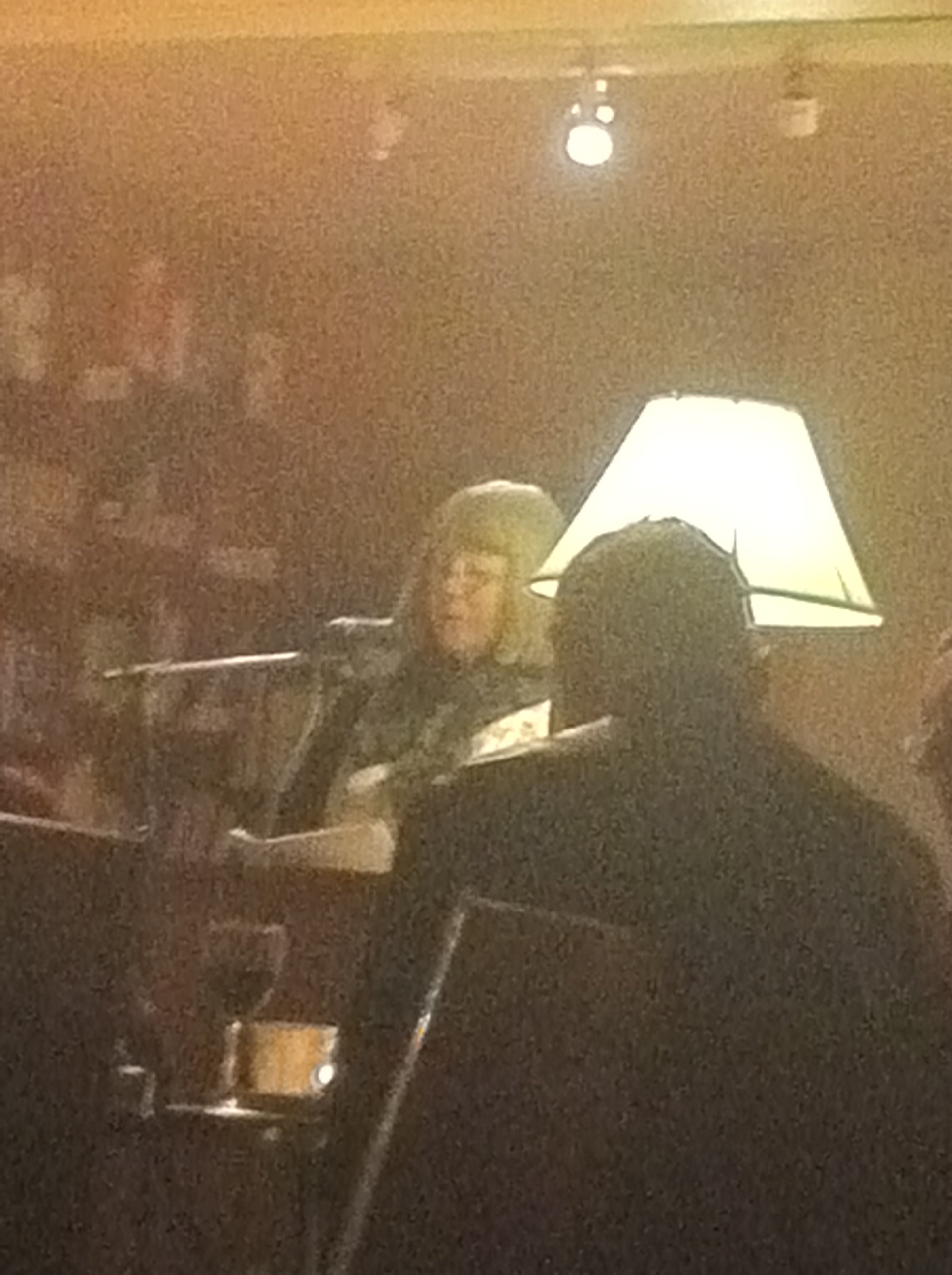
Next door to Gleebooks, Sappho’s Book Shop stages monthly poetry readings. Last night Rhyll McMaster read from her next book – she’s writing poetry again after years engaged one way or another with the novel Feather Man.

No one was smoking in Sappho’s courtyard, but I like the way this phone photo suggests the classic smoke-filled ambience for poetry reading.

Reading about Francis Webb

Bill Ashcroft, The Gimbals of Unease: The poetry of Francis Webb (Centre for Studies in Australian Literature 1996)
Michael Griffith, God’s Fool: The life and poetry of Francis Webb (Angus & Robertson 1991)
Poetry Australia September 1975: Francis Webb (1925–1973) Commemorative Issue
Peter and Leonie Meere, Francis Webb, Poet and Brother: Some of his letters and poetry (Old Sage Press 2001)

Having recently re-read Francis Webb’s collected poems, I didn’t want to just put the book back on the shelf. In order to be as booked-up as possible for the Sydney Writers’ Festival session on Webb next month, I got hold of three books about him, and dusted off my copy of the 1974 Poetry Australia commemorative issue. I can now assert that I have read every book published on the subject of Francis Webb.

Bill Ashcroft was writing an MA thesis on Webb in the Sydney University English Department in the early 1970s when I was a postgraduate student there. Michael Griffith was also in the Department then, and interested in Webb. Both of their books were published in the 1990s. Poetry as dense as Webb’s yields its riches slowly, so I was interested to read the results of such long gestations.
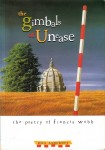
Bill Ashcroft’s emphasis is on explicating the poetry. He talks about Webb’s use of language, and about Webb as Catholic, as schizophrenic and as explorer. I believe Bill approaches Catholicism as an outsider, since he seems to miss references to Catholic liturgy and lore, but his analysis may be all the more useful for that, as he goes instead to major spiritual and intellectual traditions within Catholicism (namely the Thomist–Ignatian and the Augustinian) and locates tensions between them in the poetry.

His discussion of schizophrenia reads as if it was mostly thought through in the 1970s when R D Laing and the anti-psychiatry movement hadn’t lost the battle with Big Pharma for domination. In my opinion it’s all the better for that. He argues that Webb’s extraordinary use of metaphor is intimately connected to the condition for which he was repeatedly hospitalised, drugged and subjected to electroconvulsive therapy; that people diagnosed as schizophrenic often don’t distinguish, as others do, between metaphoric and literal ways of thinking, that this is generally a brilliant way of dealing with impossibly painful situations rather than the symptom of an illness. In the section on Webb as explorer, he argues that Webb’s poetry is groundbreaking post-colonial work, holding ‘a balance between the European spiritual roots and the post-colonial vision’.

According to the book’s back cover, Bill Ashcroft has been a trailblazer in post-colonial studies. As might be expected, then, his prose is heavy with theoretical ballast, and occasionally reaches dizzying heights of abstraction. I expect book would repay close, careful study, but at least for now I’m happy to have read it in a companionable way: I might not understand a lot of what this bloke says, but it’s good to have listened to him talk at length.

Michael Griffith co-edited Cap and Bells, a selection of Webb’s poems that came out the same year as God’s Fool, so he’s probably done as much as anyone to keep the poetry in print for the last 20 years. This book is an offshoot of Griffith’s PhD Thesis. ‘In reducing the work from its longer academic form,’ he writes in his introduction, ‘I have tried also to introduce some aspects of Webb’s humanity which had less place there.’ For this departure from academic rigour, I for one am grateful.

When I studied Eng Lit we did a lot of close reading, and the idea of approaching literary work by way of the author’s biography was sneered at. Bill Ashcroft deals with such potential sneers by talking about the poetry and the poet’s life as two intersecting texts that illuminate each other. Michael Griffith doesn’t see the need for such justification, and just gets on with the illuminating. He does do some explicating of the poetry, but I found much more value in his delving into Webb’s life story than in any tight focus on the text. He draws on Webb’s letters and other documents, including two ‘Hospital Confessions’ written as part of campaigns to have him released from institutions. He quotes correspondence with Norman Lindsay, Douglas Stewart and David Campbell among Webb’s elders, and Rosemary Dobson, Nan Macdonald, Vincent Buckley and others of his contemporaries. One day a collection of Webb’s letters may see the light, but in the meantime this book draws on those that have been preserved by colleagues and family to show us a working poet who, in spite of long periods of incarceration and serious difficulty in coping outside of institutions, was a cherished and active member of a creative community. In particular, it is fascinating to learn details of his early connection to Norman Lindsay, and to consider his poetry of the 1950s in the context of the resurgence of Christian, even Catholic, themes in Australian poetry and art at that time.

The September 1975 issue of Poetry Australia was devoted to Webb, who had died nearly two years earlier. As well as several previously unpublished poems (all of them now available in Toby Davidson’s 2011 Collected Poems), it includes essays by Griffith, Ashcroft and other scholars, but its enduring interest lies in contributions from Webb’s fellow poets who knew him and appreciated his work – Rosemary Dobson, A D Hope and Vincent Buckley among them. There is also a poignant memoir by Sister M. Francisca Fitz-Walter, a Good Samaritan Sister who befriended Webb.

These essays are a striking reminder of how the language of literary criticism has changed in the last 40 or so years. Compare Vincent Buckley, in his essay ‘A Poet of Harmony’:

He was a great phrase maker and 
there are phrases, sentences, cadences in poem after poem that are quite 
unforgettable. He was a great master, and sometimes a victim, of metaphor, 
the most metaphor addicted poet in this country, I would say, and it is noticeable that time and time again the energy of those very ample driving
 rhythms is also the energy with which metaphors are picked up, created
 and extended through the stanza.

with Bill Ashcroft, 30 years later:

The compatibility of schizophrenia and the post-colonial, or to put it a different way, the schizophrenic discourse of post-colonialism, is seen most markedly in the similarity between the absence of the metacommunicative mode in schizophrenic language and [the] metonymic gap [of post-colonial discourse].

I don’t discount the importance of Bill’s theorising – on the contrary, it opens up great vistas of understanding. But Vin (as Webb called him) says a lot more about the immediate experience of reading the poetry.
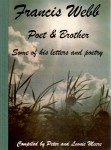
Francis Webb, Poet and Brother is a labour of love, compiled and self-published by Webb’s younger sister and her husband in 2001, when they must have been in their 70s. It includes a number of poems that had not been previously published – but which are mostly in Toby Davidson’s collection. Its appendices include an impressive bibliography of critical writings about Webb; nearly 60 pages listing all his poems, the place and date of first publication, the place of composition where that’s known, and all subsequent publications; and 12 pages listing errors in those publications and in writings about Webb. All this will probably be of interest to scholars, but then there are the letters – 56 of them, written to his three sisters and his brothers-in-law from 1943 when he was 18 to a month before his death in 1973, with linking passages by the Meeres, including occasional quotes from other sources, such as for example Vincent Buckley’s memoir Cutting Green Hay – a quotation which, incidentally, tells a story of youthful drunkenness that Buckley hinted at but declined to tell in his Poetry Australia essay. If Webb’s letters to colleagues are as compelling, and poignant, and interesting as these, someone really ought to be getting a collection together.

Four things shine through: Webb’s great affection for his family, especially for Leonie and Peter Meeres; his Catholic piety (almost every letter ends asking to be remembered in the recipient’s prayers, and promising to remember them in his); his single-minded dedication to his calling as poet; and his mental anguish. The reason for his repeated confinement in psychiatric institutions remains (of course) obscure: he repeatedly insists that he is completely non-violent, but the letters are peppered with references to incidents such as ‘a silly brawl’. Whatever the reason, it’s heartbreaking to read his pleas for help, his assurances of his harmlessness, his wretched descriptions of himself as a no-hoper, and towards the end his warnings not to upset and possibly damage children by bringing them to see him in his abject state – and through it all, his piety, his affection and his hunger for solitude and peace enough to write poetry.

The Japanese artist Yayoi Kusama lives in a mental hospital in Tokyo, and is able to go to her studio regularly. It may be that Francis Webb needed to be kept apart from the general community, for his own or other people’s safety, but that he lived a life of such deprivation must surely stand as a reproach to the way people labelled mentally ill have been treated in this country. Yet the miracle of it is that he too created marvellous works:

Are gestures stars in sacred dishevelment,
The tiny, the pitiable, meaningless and rare,
As a girl beleaguered by rain, and her yellow hair?

Andy Kissane’s Out to Lunch

Andy Kissane, Out to Lunch (Puncher & Wattman 2009)

Continuing on my advance reading for the NSW Premier’s Literary Awards: here’s another title from the shortlist.

This book’s cover, featuring an electric plug that looks more North American than Australian, led me to expect some kind of postmodern smart-arsery that would speak to a placeless, hip readership. Then ‘The Earlwood–Bardwell Park Song Cycle’ on the contents page seemed to promise more smart-arsery, this time taking the mickey out of Les Murray’s ‘Taree–Buladelah Holiday Song Cycle’. I was prepared, one way and/or the other, to be alienated, left out in the cold, feeling like I was too just old for this world.

It didn’t happen like that at all. After being tantalised by Anna Kerdijk Nicholson’s poetry and wrestling with Francis Webb’s, I took to Andy Kissane’s like a duck, or perhaps a horse, to water. The first poem, ‘Loaves and Days’, describes a baker at work; the second, ‘Bus Ride with Grey Owl and Dancing Woman’ has a woman dancing on a bus to the music from her Walkman while the poet reads Native American poems at the back of the bus. There are poems about surfing, about the death of friends, about the joys of fatherhood, about visiting friends and family in Melbourne, about adolescent ideals (what does happen to them?). The poems are mostly conversational – no extreme compression of language or dense metaphor, none of the quality I think the blurbs mean when they say poems are permeable or unfenced (something like,’Here are the words, you make the meaning’). Some are pleasantly silly – ‘The Humble Sausage’, for instance is a collection of short pieces having fun with famous lines (‘I wandered lonely as a sausage / Without a slice of bread …’). Some celebrate quotidian joys:

My daughter runs ahead, hair flying out behind her
like the tail of a beloved horse – an appaloosa

mare or brindle stallion – her hoofs kicking
up sand as she jumps the creek and canters
towards the rocks.

As for ‘The Earlwood–Bardwell Park Song Cycle’, there’s nothing smart-arse or mickey-taking about it, though it’s not without humour. In fact, I just checked and found that Les Murray included a section of it in his Best Australian Poems 2005. And it’s deeply deeply rooted in a place that isn’t far from places I know well myself. Let me quote the ending, because it’s lovely, and also because it mentions my new home suburb:

 _________________The moon rises over the hills
of Marrickville, the moon of workers and mystics, the moon
of the tax return and the tax refund, the cadmium yellow moon
of homework and tears at bedtime. The moon of the coming
election, of palm tree and  hoop pine, of all things passed and yet
to pass. Swaying peacefully in the water until a fish jumps
and the globe breaks, before forming again – the full moon
hanging in the dark sky and floating in the dark water.

Paradoxically, the book’s final section, the source of its title, is the one that appealed least to me. The poet has lunch with a series of literary figures – Osip Mandelstam, Atticus Finch, Raskolnikov, and so on – and tells about them in poems with a studiedly dashed-off feel. It’s a nice idea, one that makes me itch to give it a go for my own amusement – just imagine lunch with one of Marilynne Robinson’s patriarchs, or Sam Pollitt, or for that matter Henny Pollitt! But compared to the rest of the book they feel (to me – I may be missing something) so light as to be hardly there at all.

Rereading Francis Webb

Francis Webb, Collected Poems (Angus & Robertson 1969)
Toby Davidson (ed.), Collected Poems: Francis Webb (UWA Publications 2011)

I reach for Francis Webb’s poetry fairly regularly – mainly the same handful of late poems. After listening to pieces about him on the Book Show and Poetica (parts One and Two), both on the ABC, having wept at the superb readings on the latter and been stung by Geoff Page’s describing the poetry as defective on the former, I decided to re-read the whole book. I started out on my 1969 edition, with its copious pencilled annotations by twenty-something me, but about a third of the way in I bought a copy of the new edition and switched to that. One learned person, according to my faint pencil notes, wrote that ‘reading Francis Webb is like wrestling with an angel’. No one would disagree that wrestling is involved: just decoding the syntax can be a challenge in many of these poems, then there are compacted metaphors, elusive rhyme schemes, buried religious references, and an expectation that the reader will be as alarmingly erudite as the poet. Just have a look, say, at the first lines of ‘Stendhal’:

Italy, and a nom de plume – better than in the van
Of France defeated: his clean scarlet brain
Must work in a pure detachment over man
Who was nothing without his D.R.O.s again.
Love, hate, ambition mustered at his bugle,
Sorties of good and evil were in vain.
With watchful eye and towerings of the eagle
He must disarm the priests, immobilize pain.

To which I admit I don’t have much more to say than ‘Huh?’

The angel part is harder to describe – the exciting part, that makes you feel you’ve been through the wringer, but that the world is somehow clearer, richer and more harshly beautiful because of it. He writes about sunsets, fog and wind as if they contain all the deepest struggles of the cosmos.

If you haven’t read any of Webb’s work, I recommend you start with the relatively straightforward ‘Five Days Old’. My mother, no lover of difficult language, wrote to me in a 1972 letter: ‘”Five Days Old” is sweet. I have to concentrate to read poetry so I haven’t read the others yet.’ More ambitiously, you might try the two sequences, Eyre All Alone and Ward Two. (If you’ve got plenty of time, I recommend reading Edward John Eyre’s Journals of Exploration as interesting in itself, but also, as my pencilled notes remind me, because it sheds interesting light on Webb’s poem, which at some points comes close to paraphrasing passages from it.) I’d skip the radio plays about Hitler (Birthday, this one was broadcast on the BBC in 1955), the Holy Grail (The Chalice), the anthropogenic end of the world (The Ghost of the Cock) and the man who invented electroconvulsive therapy (Electric).

One of the things that I loved about Webb’s poetry from the start is that it’s work. You can feel the labour of getting the words down, squeezing meaning onto the page, into the shape of the poem. Even at his most difficult, he is working at communication, never being difficult for its own sake.

Forty years ago I went searching for the first publication of his early poems, and found one or two that hadn’t been collected, and others that had been substantially edited on the way to being collected. The former and one or two of the latter are in the new collection, but my favourite example of revision isn’t. Here are the first three stanzas of ‘The Day of the Statue’, in which fishermen catch an ancient statue in their nets, as they appear in both Collected Poems:

You look for prodigies leaning on the sill of storm,
Or loose in the yellow gap at a candle’s end,
But here was patience: fishermen out on the bay,
Work and silence inching with the minute-hand.

Moored in a lulled spinny of sun and shadow,
With an impotent tremor in the sails, the ketch nosed down
To the long lunge of the swell, rose dripping, gasping
As if with eagerness to suck in air again.

And the men, snug in this casual pediment of time,
Their gestures grouped and restricted and interlocking,
Felt the haul stubborn to their hands, an eye-tooth wrenched
From the iron gums of the sea-bed, shuddering and aching.

Compare the first five stanzas of the version published in the Bulletin on 8 October 1947, when Webb was 22 years old:

You look for prodigies leaning on the sill of a storm
Or loitering about the wake of a snuffed-out light;
But such things are apt, as you know, on these days of full sunshine
To be quietly pocketed or else shoved clean out of sight.

Certainly, three fishermen out on the bay
And the shaping of a miracle are rarely aligned,
History bells hours only, clock on the walls of speeches:
Work and silence tick unnoticed with the second-hand.

Moored to drifting banks of sun and shadow,
With an impotent tremor in the sails, the ketch nosed down,
plunged to the bowsprit in the swell, rose dripping, gasping
As if with eagerness to suck in air again.

And the men grouped snugly in this leeward pediment of time,
With their slow gestures of toil, felt a curious lagging in the strands
Of their sunken net, as if parallel action under the water
Passed on a sort of nerveless shock to the hands.

Your touch on a net-load of fish short-circuits life:
The cargo is arteries stabbed in their element and shaking,
But this haul yielded stubbornly like an eye-tooth wrenched
From the iron jaws of the sea-bed, shuddering and aching.

I love the way he pared those stanzas down, even at the risk of making his meaning harder to grasp. And the revisions towards the end of the poem are even more telling. The last stanza changed from

Beauty comes baleful as a skull, comes riven from the sea:
Well to consider the mortal, the native token
Before you polish, incise – before you replace
What that bronze arm once clutched that time has broken.

to

There were some to roll back the heavy stone of the sea;
There was none to ponder the mortal, the living token.
But later, men polished, incised, established at last
What that raised hand once clutched and years had broken.

With great economy, the resurrection of Christ is invoked, and the contrast between the practicalities of dragging up the statue and understanding it is conveyed as a further piece of narrative rather than in a slightly priggish address from the author.

Ramona Koval said she’d never heard of Francis Webb. That’s a great shame. The Sydney Writers’ Festival has a session on ‘The Lost Poetry of Francis Webb’. I’m assuming that phrase refers to his whole body of work rather than to the handful of previously uncollected poems that begin and end Toby Davidson’s collection. I plan to be there.

Anna Kerdijk Nicholson’s Possession

Anna Kerdijk Nicholson, Possession (5 Islands Press 2010)

I picked this up because it’s shortlisted for the New South Wales Premier’s Literary Awards. I’m pleased to report, however, that I read it without Barry O’Farrell in mind, not even a bit.

The subtitle, ‘Poems about the voyage of Lt James Cook in the Endeavour 1768–1771’ seems to promise a book that’s squarely in the Australian Explorer Poem Tradition (AEPT). Kenneth Slessor’s ‘Five Visions of Captain Cook‘, James McAuley’s Captain Quiros, some of R D Fitzgerald’s poems dealt with sea exploration, and used to be studied at universities, and land exploration has grabbed the attention of many of our poets, notably Francis Webb (in whom I’m currently immersed). The book’s apparatus seems to confirm this promise: the page before the table of contents quotes from the Lords of the Admiralty’s instructions to Cook to ‘proceed to the southward in order to make discovery’ of the fabled Great South Land, and the poems are followed by a seven page chronology, beginning with his birth and ending 56 years after his death, with the death of his widow Elizabeth.

It’s true the book engages with Cook’s voyage of ‘discovery’, but it does so with a postmodern, post-colonial sensibility. There is a sense of overall unity, but no grand narrative, no unifying point of view, certainly not an unambiguous sense of Cook as hero. Unlike the main works of the AEPT, it doesn’t shy away from the less than honorable episodes of the voyage, or from the devastation it brought to many people – peoples, in fact. The 31 poems fall roughly into three kinds: most of them are addressed to Cook, with headers giving place and date, referring to incidents on his voyage (‘You imagine the scent of South Sea fruit on your fingers / and the lustful smells of fresh roast pig and cocoanut.’). A second kind are set in the early 21st century, mainly in Kangaroo Valley in New South Wales, and feature the poet, sometimes but not always with her mind on James Cook. And then there are half a dozen with the page header ‘Extracted from notes on a lost manuscript’, which are generally more elusively reflective: the first of these has the look of a found poem – a dictionary definition of ‘explore’, with etymology, not as dull or as neutral as you might expect.

I’m enjoying the book so far. It’s like a music album, that you need to play a few times before you’ve absorbed it, and maybe you’ll go back to it from time to time and find something new each time. I’m still at the absorbing stage. For example, the acknowledgements page tells us that the titles of individual poems ‘make reference to the poetries of’ five poets. None of the titles rang any bells for me, and Google shed no light, so evidently they aren’t direct quotes from those poets. Maybe one day I’ll come across the references, but for now I’m happy to stay in the dark, for the titles to remain a tease. That dictionary definition poem, for example, is titled ‘Each object we name and place leads us’ – I have no idea whose poetry that makes reference to, but it sits in nice tension with the poem.

This teasing intertextuality – which is echoed in the often oblique relationships between the modern and historical poems – is hardly in line with the cafe poet-in-residence program described in today’s SMH, which aims to ‘demystify the work of poets and deliver it to a broader audience’. But it’s fun – probably even more fun for people who get the references. I look forward to hearing Anna Kerdijk Nicholson read and perhaps talk at the Sydney Writers’ Festival next month.

In which I go on a bit about buying two books

I happened to be in Glebe this morning, and as I had earned a little bit of money last weekend I allowed myself to yield to the allure of the bookshops.

First, the secondhand poetry shelves of Sappho’s beckoned. There were a number of tempting morsels – enough to make me think that a Sydney poetry lover had recently died or radically downsized. There was a book of Philip Martin’s, inscribed in a shaky hand  that suggested he had already embarked on the disease that was eventually to kill him; Adamson’s Waving to Hart Crane signed ‘affectionately Bob’. But the one I bought was a selection of Stevie Smith’s poems. When I worked at Currency Press, our Editor in Chief Phillip Parsons impressed me hugely by reciting the last page of Stevie Smith’s Novel on Yellow Paper, and I became a fan on the spot (of Phillip, yes, but also of Stevie Smith). I recently saw a copy of her slected poems on a friend’s bookshelf – I took it down, and behold it was inscribed on the inside cover as a birthday present to a different close friend – a birthday present from me. The birthday girl later denied all knowledge of having given the book away, so I was left with a nagging sense that one or other of my dear friends was a book thief, a liar or an ingrate. Somehow when I saw this book in Sappho’s today – same selection, different cover – it seemed that buying it would make everything all right again. So I bought it.

Oh I am a cat that likes to
Gallop about doing good.

And then next door to Gleebooks. I’d listened to Poetica’s excellent two part broadcast on France Webb recently, heard Geoff Page deliver a  lukewarm account of him on the Book Show (Maybe you need more than one poetry reviewer, Ramona! But I don’t need to say much, as commenter named Junius has given you the rounds of the kitchen on this one.) and been prompted to open up my 1969 Collected Poems. This is one of my favourite books – I mean the actual battered, slightly foxed object on my shelf, which I love because I spent quite a bit of intensive time with it in my mid 20s. I was planning on writing an MA thesis on Webb’s poetry. It didn’t happen, but I did a bit of work that left its traces in the margins of my copy (as well as in a little exercise book in which I pasted photocopies of poems by Webb that had been published but not collected). His explorer poems sent me off to read the published journals of Leichhardt, Sturt, Grey and Edward John Eyre. My book has notes on when and where poems were first published, textual variations and any annotations, and occasionally there’s a commentary from me. For example, in ‘Leichhardt in Theatre’, just before the explorer’s party is attacked by the people whose land they have invaded, the poem goes:

————————————Gilbert, the naturalist,
is planting some precious flowers that he has found,
Cradles them in his hands like diamonds

There’s a pencilled note in the margin:

This indicates he had probably not read the Journal – Gilbert was learning to plat (sic)

Presumably it was Leichhardt who misspelled ‘plait’. I imagine these notes would annoy anyone else, but they fill me with an affection for my younger self.

But back to the visit to Gleebooks. On the display table in the poetry section was the new Collected Poems, published by UWA Publishing and edited by Toby Davidson. I flipped it open and had to buy it. Not only does it include the poems I had found in my postgraduate days, plus more. It also promises to correct errors Webb had noted in the 1969 edition (his notes evidently came to light in the 1980s). Am I doomed to read with both books open – one for the poetry and the other for young Jonathan’s occasional comment?

I thought you’d like to know.

Judith Beveridge’s Wolf Notes

Judith Beveridge, Wolf Notes (Giramondo 2007, 2010)

On a Sydney Writers’ Festival panel some years ago Inga Clendinnen indulged in a flight of metaphor, saying that the writer of a personal essay takes the reader by the hand and says, ‘Come walk with me,’ while a novelist invites a reader to play Catch-me-if-you-can. The novelist who chaired the panel commented afterwards that though he adores Inga (as who doesn’t?), he was a little offended. At the risk of offending poets everywhere then, I’d like to suggest that the author of a book of poems is saying, ‘Come in, make yourself at home, stay a while.’

That is to say, I have to live with a book of poetry for a while before I feel that I’ve actually read it. At this stage of my relationship with Wolf Notes, I can say confidently that there’s lots of good stuff in it, but I’d have read it again, dip into it, and do some digging before I could say anything useful about it. (I’ve just read Martin Duwell’s latest entry on his Australian Poetry Review site, and I tell you I’m in awe.)

For an example of why I’m not competent to say much about this book, I have no idea why the first of its three parts is called ‘Peregrine’: it begins with character sketches of people you might see in an Asian city or countryside – a saffron picker, a pedlar, a bone artisan –, and goes on to a miscellany of other subjects – a contemplative walk beside a lake, a suicide, a boy killed by leeches, a mother wrestling with inexplicable sadness, a crew of three on a fishing boat, and so on. Does the title suggest that the poet is a pilgrim? A falcon? I draw a blank.

In a different way, it seems that to appreciate the middle section, ‘Between the Palace and the Bodhi Tree’, described in an introductory note as ‘an imaginative depiction of the time Siddhattha spent wandering in the forests and towns before achieving enlightenment’, I would have to learn something about Buddhism and the story of the Buddha. I found many of these poems beautiful, especially the ones filled with observations of the natural world, but I have very little clue where they stand in relation to Buddhism: are they devout meditations or relatively unengaged textual games? I think the former, but don’t know enough to be sure. (The third section, ‘Signatures’, presents no general problem – it’s a number of monologues, easily understood to be their speakers’ signatures.)

So far I’m just a visitor to this book, then, but it offers enough observation, drama, wit and seriousness to make me want to spend more time here. One pleasurable thing is the way the moon appears again and again, especially in the middle section. If I quote a number of its appearances, you’ll get some idea of Judith Beveridge’s voice, at least when she’s channelling Siddhattha:

From ‘The Rains’:

————— I look at the moon
primed and narrow as the sting
of a scorpion’s tail.

From ‘Quarry’:

I watched the moon gather shine
like limestone in a mason’s hands.

From ‘Circles’, after describing vultures in picking at a dead ox:

I saw the moon, a desecrated bone
upon which those birds
might drip some blood.

From ‘New Season’:

——————————— the sky’s
depth, where the moon pares itself down
into the smile of an obedient wife

From ‘The Krait’:

I was scared. I didn’t notice the moon,
a fang poised above my slightest act.

From ‘Doubt’:

Today I hear only wind smuggled in.
The moon bears down with its gift-less smile.

From ‘Death‘ (possibly the most immediately accessible poem in the book, it’s the fourth or fifth one down at that link):

Even the moon can’t keep itself clean:
soap soiled by a dung-collector’s hands.

From ‘Ficus Religiosa’:

I vow with all beings
to sit until the moon, a bowl,
is almed only by the Good.

Same moon, same poet, different poems, different feel. I won’t be shaking this book’s dust from the soles of my sandals for a while yet.

Jo Shapcott’s Of Mutability

Jo Shapcott, Of Mutability (Faber & Faber 2010)

I never know how to write about a poetry collection, where every page is a new beginning. Some poems grab you, some don’t. Some yield their meaning immediately, some take a while, others need a bit of research before they make any sense at all. Occasionally you have to put the book down and go for a walk to get used to a world where what you’ve just read can exist. Sometimes you’re compelled to read something aloud to a friend who  happens to be at hand, whether they want to be read to or not. All these things were part of my experience of reading Of Mutability, which was Book of the Year in this year’s Costa Book Awards. (Thank you, judging panel, for pointing me to it.)

I often feel that I need a bit of help with poetry, and dust jackets, being unavoidably more interested in potential buyers than actual readers, aren’t always much help. The dustjacket flap here, for instance, talks about poems ‘which have a way of turning physics into the physical, the subatomic field of matter into one vast erogenous zone’. That’s all very sexy, but it doesn’t help with, say, these lines from ‘Era’, early in the book:

I left home shortly after eight-thirty
on foot towards the City. I said goodbye
to the outside of my body: I was going in.

What would have helped was a little note somewhere telling us that many of these poems were written when the author was dealing with breast cancer. OK, not such a good marketing ploy, and any bookshop browsers who weren’t put off might buy the book expecting something like a Health Crisis Novel in Verse, only to be bitterly disappointed to find that many of the poems are about other kinds of mutability (dementia, ageing, the seasons …), and some about completely unrelated subjects such as urban architecture or peeing.

It turns out that, though I found out about the breast cancer elsewhere, Jo Shapcott points the acute reader to that information, and offers other useful tips, in her acknowledgements. An electronic version might present the last part of the acknowledgements something like this:

My thanks also […] to the neuroscientist Mark Lythgoe who, for the poem ‘Composition‘, introduced me to latent inhibition (the ability we have to filter out irrelevant stimuli).
The artist Helen Chadwick is the presiding spirit of this collection. Many of the poems, including ‘The Oval Pool‘ and ‘Piss Flower‘, refer directly or indirectly to her work. I am also indebted to Marina Warner‘s illuminating writings about her.
The book owes everything to Dr Sam Guglani, Dr Sean Elyan and their team at Hereford County Hospital.

Adding those links and titles took me far too long, but if you were to read a version of the book with them in place, life would be much simpler. You could not only be looking at images of the two works by Helen Chadwick within moments, you could find out with two clicks that doctors Guglani and Elyan specialise in cancer, and  you’d have a fair idea of what they and their team did for the poet: ‘I was going in’ starts sounding a lot more like surgery than catatonia. Cancer isn’t named anywhere in the book, but things like:

Too many of the best cells in my body
are itching, feeling jagged, turning raw

or

forgive, and forget what's
happening in my cells.
It's you I'm thinking of

work a lot better for me if I have a ballpark idea of what’s going on with the cells.

Of course, I wouldn’t have gone searching like that if the poetry hadn’t already grabbed me, and some of the poems don’t need any supporting apparatus at all. ‘Procedure’, which you can hear Jo Shapcott read in this interview with Sarah Crown of the Guardian, is one such. Perhaps my favourite of the selection, ‘Uncertainty is Not a Good Dog’

Uncertainty is not a good dog.
She eats bracken and sheep shit,
drops her litters in foxholes
and rolls in all the variables

wriggling on her back until
she reeks of them,
until their scents are her scents.

is another. (That’s not the whole poem, in case you’re wondering.)

Two last remarks: baldness will never look the same to me again, and the phrase ‘piss holes in the snow’ is changed forever.

Andrei Codrescu’s Poetry Lesson

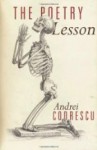
Andrei Codrescu, The Poetry Lesson (Princeton University Press 2010)

Exquisite Corpse is the name of that game where players make up a story together. It’s also the name of an online literary journal. Andrei Codrescu, a poet who recently retired from teaching at the State University of Louisiana, is its editor, and this is his most recent book.

It’s not a book of poetry. Nor is it a book on bow to write poetry, though there are some possibly useful tips such as this list of ‘The Tools of Poetry’:

1. A goatskin notebook for writing down dreams
2. Mont Blanc fountain pen (extra credit if it belonged to Madame Blavatsky)
3. A Chinese coin or a stone in your pocket for rubbing
4. Frequenting places where you can overhear things
5. Tiny recorders, spyglasses, microscopic listening devices
6. A little man at the back of your head
7. The Ghost-Companion
8. Susceptibility to hypnosis
9. Large sheets of homemade paper, a stack a foot thick
10. A subscription to cable TV

The book is a wildly unreliable account of the first lesson for the year in his Introduction to Poetry Writing course, in which he assigns each of his 13 students a ‘Ghost-Companion’ – a poet living or dead whom they are to read and turn to for guidance. This slender narrative frame is fleshed out in any number of ways –  with sex-and-drugs-and-poetry reminiscence, gossip, a touch of postmodern cleverdickery, a hallucinatory moment or two, some surreal invention (at least I assume it’s invention) involving a disused missile silo, reflections on the weird intergenerational activity known as teaching, cranky-old-man observations on technological and other change, a lightning tour (during a pee-break) of his office, which is also the editorial office of Exquisite Corpse, and all manner of intelligent self-indulgence. It’s an oddity that reminds me of nothing more than of Brother Wilbred, my superbly eccentric Grade 8 teacher, who regularly treated us – 40 or so 13 year old boys – to impassioned and not entirely comprehensible rants on non-curricular subjects dear to his heart.

Andrei Codrescu taught for more than 25 years: I imagine many past students will enjoy the book as a comic look at what was happening on the other side of their student–teacher interface. Those of us who haven’t previously heard of Mr Codrescu, who have chosen the book as a replacement for a Christmas present we’ve already read, attracted perhaps by the incongruity between the title and the supplicant skeleton in the cover illustration, can only imagine that insiders’ pleasure, but we still get a privileged glimpse behind the tapestry, and an unexpected, sometimes exhilarating ride.