Tag Archives: poetry

LoSoRhyMo 14: The end

Someone said that the sonnet form reflects the shape and movement of a single thought. Or words roughly to that effect. For the last of my month of sonnets, I picked as a ‘first draft’ a single paragraph from the book I’m currently reading, Tissa Balasuriya’s Mary and Human Liberation. I chose the paragraph because it featured something akin to the ‘turn’ of a sonnet rather than because of the strength of the idea – the book’s liberation theology is much richer and more provocative than this paragraph might suggest. Here it is, for the sake of transparency. It’s from the section on the 9th Station (Jesus falls the third time) in the chapter ‘A Marian Way of the Cross’.

Today, in spite of the agonising poverty of the poor, especially in impoverished countries, their ruling élites and foreign companies and governments continue to press them further and further. More debts are imposed on them. Subsidies are cut. Services are reduced. Almost everything is commercialised. The weak go to the wall. Entire countries suffer from exhaustion and internal conflict results. The poor and marginalised experience deeper and deeper troubles: poverty, unemployment, insecurity, loneliness, drugs, divorce, broken families, neglected children, depression, trauma, suicides. Sri Lanka is said to have one of the world’s highest rates of suicide. To free ourselves from all these troubles at personal and societal levels, we need to seek the values of unselfish love, justice and peace, for which Jesus died.

And here’s the sonnet:

Sonnet 14: The ninth station
So now the wretched of the earth
grow still more wretched year by year.
Debts grow, of service there's a dearth,
and everything's for sale. We hear
élites play polo, compradors
send wealth from poor to richer shores.
Whole nations tear themselves asunder,
send underclasses further under:
poor, unemployed, depressed, neglected,
stoned, insecure, self-harming. Poor:
the social ills corrupt our core.
When Jesus died, his times reflected
ours. Now seek, below, above,
justice, peace, unselfish love

And so we say farewell to LoSoRhyMo. As with NaNoWriMo, the ONLY thing that mattered was output, even though I aimed for 14 sonnets where the novels-in-a-month writers have to produce 50 000 words. It was all about quantity, not quality, and it turned out to be fun to have to produce for your generally forgiving eyes regular rhyming things that weren’t too embarrassingly terrible.

Apart from having fun, I’ve learned a lot – about sonnets, about the process of committing my mental processes to paper. A perceptive friend described the exercise as ‘an invigorating lesson in the pleasures of structured communication and the virtues of practice’. I’m glad it was that for him – it was  doubly so for me.
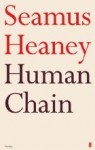
LoSoRhyMo 7: After reading Seamus Heaney’s Human Chain

Seamus Heaney, Human Chain (Faber & Faber 2010)

Blogging about Human Chain as part of my LoSoRhyMo sonneteering is lighting a penny candle to a star, and not just because none of its poems are sonnets. I  don’t have any pretensions to writing even a pastiche of Seamus Heaney. But a quota is a quota, so I’ll just say the book is something to immerse oneself in, and get on with it. I hope this makes some kind of sense.


Sonnet 7: Northern Ireland / Far North Queensland
Ask me to translate Seamus Heaney
(Derry, seggins, Upper Broagh),
I’ll try lantana, Mirriwinni,
Waugh’s Pocket – my dad’s puzzling laugh
when someone spelled that ‘whore’ – but stet
Church Latin, soil and honest sweat,
Virgil, cards: Bill Markwell, joker,
feared dona f’rentes Greeks at poker.
Wraiths of our fathers thirsting still,
voiceless now Kramastos, Markwell.
Like torches shining down a dark well
may poems give them drink until
they come back to the light of day,
beloved, but not all the way.

Dorothy Hewett’s Selected Poems

Selected Poems of Dorothy Hewett, edited and introduced by Kate Lilley (UWA Press 2010)

When she launched this book at Gleebooks Gail Jones warned against becoming so fascinated by the iconic figure of Dorothy herself that we forget to actually read her poetry. Good advice, no doubt, but I’m probably no different from anyone who knew Dorothy at all in being completely incapable of reading these poems without feeling that I’m in the presence, not so much an icon as a … well, a presence.

Dorothy was a frequent visitor to Currency Press, where I worked in the 1970s. She commanded attention, was never dull, and was never stuck for words. Her first appearance in my time there was by way of a letter written to her good friend our editor in chief Philip Parsons, which he read aloud to the staff (all three of us). She was approaching 50, and wrote that she wanted to celebrate her birthday on a beach in Bali, laid out in a coffin surrounded by black candles. We were amused. When she saw the Currency edition of her play The Chapel Perilous (on the front cover a glamorous photo of  Dorothy when young, on the back a pensive Dorothy in her late 40s), she exclaimed,  ‘Time’s cruel!’ I really don’t need to say this, but Dorothy approaching 50 didn’t exactly lack glamour. We were amused again. In 1976 we published her much earlier play, This Old Man Comes Rolling Home, and I marked up the typescript for the printer. When you mark up a text you take it one word at a time and if it’s a play it tends to perform itself in your head. As I neared the end of my pencil-wielding way through This Old Man, tears were streaming down my cheeks. Dorothy walked into the office soon after I’d finished it, and I told her, with feeling, how much I loved the play. ‘Ah well,’ she said, rolling her eyes, ‘you work away for ten years and they still say your first thing was the best.’ Once, impertinent pup that I was, I told her she had misused a word in a piece published in Overland (writing bisexual but meaning, I said, androgynous). She didn’t slap me down: her eyes lit up, and we had an animated conversation. The last time I saw her was at the NSW Premier’s Literary Awards dinner in 2000, where she received the Special Award, and though she was ill and walked with difficulty, she was as commanding and glamorous a presence as ever, her hair still wild.

If you said that none of those random memories had anything to do with the poetry I couldn’t say confidently that you were wrong.  But it would be odd to quarantine Dorothy’s poetry from her plays and prose, or from what we know of her life. The subject matter of her plays and autobiographical writing is revisited here: her childhood in the Western Australian wheat belt, her sexual adventures and ordeals, her history with the Communist Party. As Kate Lilley writes in her introduction, Dorothy was a ‘magnificently unabashed poet of female narcissism’. (She’s also a magnificently unabashed poet of Australian Communism and disillusion with Communism.) In the poems, even more explicitly than in the plays, she puts herself on the … I was going to say ‘on the chopping block’, and I think I’ll stick with that. If this is narcissism, it’s a ruthless variety; if sometimes her laments over her suffering as a woman sound like self pity, there’s a pitilessness in the way she holds that emotion up to the light. Nothing is quarantined in these poems, and when I read them, I hear Dorothy’s voice.

I think I’m blathering.

Excerpts from the autobiographical  ‘The Alice Poems’ take up about a third of the book, and fill me with chagrin that the book Alice in Wormland is out of print. But the quieter poems of the last 20 pages, which look squarely at old age, the effects of cancer, and the approach of death, are the real treasure. From ‘The Last Peninsula’:

death in his blue cowl
takes one reluctant step away
while the suffering flesh
cut sewn and sealed
lies still in its narrow bed
the spirit looks down and is healed
Healed for what? says the voice
More of the same?
And the currawong sings Rejoice
I have called your name
.

I find the last poem in the book, ‘What I Do Now’,  intensely moving. After a quote from Frank O’Hara (‘I always wanted my life / to have some kind of meaning’), the poem walks us through the speaker’s day – lying in bed reading, getting up at 6 pm, watching television until midnight, and staggering back to bed. Then, with what might be read as desolation, but which to me sounds like a reprise in a minor key of Dorothy’s grimly stoic, eye-rolling response to the Chapel Perilous photos or my response to her early play:

–––––––––the wind howls
ripping my poems to shreds
the paper lantern whirls

I listen to the semis
changing gear
to tackle the 40 Bends
in the tapestry chair
the cat snores loudly
will I live to a great old age?
there are lots of mad old women
in these mountains
shut up in their houses dying.

Freebies

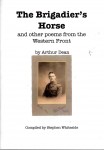
Arthur Dean, The brigadier’s horse and other poems from the western front (Stephen Whiteside 2010)
Michael Mohammed Ahmad (Editor), Violence: Westside Jr Vol 2 (Bankstown Youth Development Service 2010)

My initial reason for doing a combined blog entry about these two books – a very slim vol of verse written by the publisher’s grandfather and a glossy publication showcasing writing by young refugees in Western Sydney – was the accident of their both arriving in my letterbox last week. (Even a blog as modest and marginal as mine occasionally cops a freebie.) On reflection, yoking them together is a long way from meaningless.

Stephen Whiteside’s previous self-published booklets have featured his own poems, mainly bush ballads and C J Dennis parodies. This one is not so different in style, and even includes a Dennis tribute, but it’s quite a different beast: it rescues from obscurity the poems written during the First World War by Arthur Dean, later to be a Victorian Supreme Court judge, and the publisher’s grandfather. The judge’s poetic endeavours have not gone unnoted before now. His Australian Dictionary of Biography Online entry says: ‘He was something of a “trench poet”, contributing light verse to army magazines.’ In this little book are eight of his poems, all – as his grandson tells us in his introduction – probably written in 1916. The title poem won  a £3 prize from the Diggers’ newspaper The Rising Sun, for which young Arthur received a congratulatory letter from C E W Bean, reproduced in an appendix here.

Arthur Dean was no Rupert Brooke. This is accomplished light verse, composed to distract the poet and his comrades from their lot as soldiers, and perhaps allow a little relieving laughter. Though offered as entertainment in 1916, it still hits some living targets:

Everyone’s scavenger, everyone’s slave;
The papers may splutter about us being brave,
How nobly we fell and how honoured our grave,
But that is the luck of the few.
ooooooooooooooooooooooooooooooooo(from ‘Infantry’)

The ADB entry tells us that Dean’s ‘delight in composing “doggerel” was to continue all his life’, so perhaps we can expect further volumes – perhaps doing for the law what this one does for war.

In an Afterword to Violence, BYDS Director Tim Carroll tells us that his father, ‘a gentle man, full of love’, serves in the Air Force in World War 2: ‘He killed hundreds, if not thousands, of people in those dark times and carried the guilt of those killings with him to his death.’ This is the kind of thing that simply could not be said in prize-winning light verse written in the trenches, or perhaps in any poetry written by a soldier in a combat zone: do any of the celebrated war poets talk of themselves as killers? And how could they contemplate the long tail of war – the creation of refugees, the lives devastated by loss, the generations of dysfunction?

The long tail features loud and clear in this book.

Refugee Action Support (RAS) is a government funded program that supports young refugees with English language literacy. As part of the program, BYDS Bankstown Youth Development Service) ran a number of two-hour writing workshops in schools in Western Sydney. The bulk of the book is writing that emerged from those workshops. There are eloquent photographs of BYDS facilitators working with students, and a number of pieces by non-students (including interviews with a boxer, a psychiatrist, Wafa Zaim, manager of Muslim Women’s Association, and Craig Greenhill, who took some of the most telling photographs of the Cronulla violence in 2005), but it’s the refugee students’ writing that makes the book.

The editor, Michael Mohammed Ahmad, explains in his introduction that he decided ‘to present the raw versions of each artist’s work’ – that is, not to ‘repair the grammar’, and so on. He also decided to preserve words and passages that had been crossed out by the writers, so every few pages there is a word, a phrase a sentence with a line through it. My editor’s heart recoiled when I read this, but having read the result I think the decision was completely correct. The effect is to present the writing as process rather than as product: most of the young writers are clearly struggling with English as at best a second language, and most of the pieces are struggling with crushingly difficult subjects – war, domestic and other violence, dislocation, racism. The unconventional use of English and the occasional striking out effectively dramatise the difficulty of the undertaking. For example, this short piece (author not specified from the list of participants, as a way of protecting privacy):

Being Muslim is crime in this world. When some people heard of Muslim or meat a Muslim they think of terrorists. They don’t think who real Muslim people are. They don’t know who the real terrorists are.

Tidied up, that would lose what it now has, a strong sense of a mind seeking to communicate across a cultural divide. The reader is granted an unexpected sense of intimacy.

Interesting things are coming out of Western Sydney.

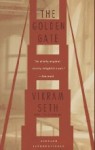
Vikram Seth’s The Golden Gate

Vikram Seth, The Golden Gate (1986, Vintage International 1991)

A virus had me sick in bed,
Too thick of head to watch TV.
I’d try to read but lose the thread.
Oh bored bored bored, Oh woe was me!
A friend* said, ‘Read The Golden Gate.’
‘Five thou, five hundred fifty-eight
Lines in iambic tetrameter –
No way! That’s not one for the amateur
And drowsy reader.’oooo ‘Have a go!
Just take one sonnet at a time.
They zip along and even rhyme.’
I read, coughed, slept, read, slept, went slow.
My friend was wise, the book’s a joy,
Seven years before A Suitable Boy.

The year is roughly 1980,
AIDS a whisper, Soviet bloc’s
Intact. A yuppie seeks a mate, he
Finds love through a PO box.
San Francisco, sexy, witty,
Like Maupin’s first Tales of the City.
John loves Liz and Phil loves Ed,
Though Ed loves Jesus more than bed.
Jan (sculptor) holds a torch for John.
An anti-nuclear demonstration
Includes a powerful oration.
The pleasure here was so full on
I’d like to read, though there’s no hurry,
Fredy Neptune by Les Murray.
——
* The ‘friend’ was Jo Walton, a writer and avid reader of, and blogger about, fantasy whom I’ve never met. She enthused persuasively about the The Golden Gate earlier this year on the tor.com blog. A copy turned up on BookMooch almost instantaneously.

Teenage boys perform Gertrude Stein

This fabulous thing has been up on YouTube for years, ignored by millions – there aren’t even any comments that need to be avoided.

Who’d have thought Gertrude Stein could be such fun? Thanks Harriet the Blog

Cheap at a fraction of the price

Having got as much of my work done today as I could manage I listened to a Guardian podcast, which mentioned that Seamus Heaney has a new book out, and it’s topping  the best seller lists in the UK. I went browsing to see if it’s available in Australia. One bookshop says it will be here 14 September, but they all agree you can’t buy it in Australia yet. Mostly prices are around the $30 mark. The Co-op Bookshop offered this spectacular anti-bargain:

Not only free delivery, but also a members’ discount $54.55. Who could resist?

Pam Brown in the 70s: notes from a naïve reader

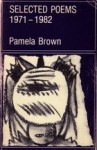
Pamela Brown, Selected Poems 1971–1982 (Women’s Redress Press, Wild & Woolley 1984)

Just call me angel of the morning angel
Just brush my teeth before you leave me baby

That’s a mondegreen, and if it doesn’t make you smile you don’t know the song ‘Angel of the Morning’. Retitled  ‘Radiopoem 1968’ and given a page to itself in a poetry book (as, for example, page 67 in this book), it’s still a mondegreen and still funny, but it has now become a poem, and so invites a different kind of attention. You might read it as a satiric jibe at pop romance, an oblique reflection on the nature of intimacy, an implied confession that the poet worries about her morning breath, a surrealist squib, but we read it differently here than if we had stumbled across it in, say, a ‘Kids say the darnedest things’ column in the Reader’s Digest.

In a lot of Pam Brown’s work, the poetry is in the selection, and there’s a mystery at work. Mondegreen as poem is one example. There are plenty of others. Take, one of many possibilities from the early parts of this book, this untitled poem:

HEY SHIT,
SHE SAID TO
NOBODY,
GRAVE DIGGERS
ARE CONCEPTUAL
ARTISTS.

Or ‘The Leaps’ on the next page:

MYOPIC POSSUMS
MYOPIC POSSUMS
MYOPIC POSSUMS
Coked off my stoop

A snatch of absurd conversation, some stoned nonsense … transformed into poetry pretty much by being excised from their original context and put on these pages. Not so much cut-up as cut and paste. Don’t misunderstand me, I’m not saying they’re terrible poems. On the contrary. For some of them, though, it feels as if you had to be there. That is, to really understand a lot of the earlier poems you probably have to have been around, when Pam Brown was performing in cabaret, making movies, hanging out with a particular creative crowd. (I wasn’t.) Kate Jennings’s introduction tells us that this volume is, ‘a fever chart, an ecg of the times when the new feminism demolished the geography in our heads, blew up the bridges of retreat, and mined the way forward.’ If so, the instrument recording the chart is no mechanical transcriber. The poetry is in the selection, in choosing which fragments of  those times to record, which will retain their fragrance when replanted.

By the end of the decade, possibly because there’s less coke on the stoop, things are much more intelligible. There are some intensely personal pieces about / growing out of / feeding into relationships, but there are still those oddly banal moments, there for no obvious reason, but catching something, some whiff of the times, like the end of ‘Drought’:

so i drank
oomineral water
ooootried two
ooooooredhead
oooooooomatch tricks
solved them both

There’s much more to these poems than this, of course, but it’s a feature of PB’s work that has persisted over the decades. There’s an excellent conversation between her and John Kinsella in Jacket 22, where she talks very interestingly about her practice. This book is out of print (well, what do you expect, it’s poetry and published 26 years ago?), but her 2003 book Dear Deliria includes a handful of the same poems.

Dementia Blog: reading backwards

Susan M. Schultz, Dementia Blog (Singing Horse Press 2008)

Pam Brown turned up in my comments section recently to recommend this book. How could I not seek it out?

Like Rocky & Gawenda, it started life as a blog. Unlike R&G, it has kept many blog trappings: date and time stamps, a note of the number of comments on each post (though not the comments themselves), and every so often a list of links (‘About me’, ‘View my complete profile’ and so on, but not any actual URLs). More consequentially, the entries appear in reverse chronological order, as in an archived blog. Unlike Michael Gawenda’s blog, the one that gave birth to this book is no longer on line – at least, my googling attempts came up with zip. The book is meant to stand in its own two covers.

And it does. In just over 50 ‘blog entries’, most of them roughly one and a half pages long, we move from January 2007, when the poet’s mother is living in a dementia facility, back to the beginning of August 2006, when the poet and her family visit the mother who is still living at home with the kind of difficulty and drama familiar to anyone who has a relative with Alzheimer’s or, as they say, a related disorder. So there’s a strong narrative backbone to the book. But this isn’t a novel disguised as a blog: within the blog entries, narrative does not rule. I suppose they count as prose poems, but however you classify them they make an excellent read. They reflect the multiple roles of the writer: daughter of a woman with deepening dementia; mother of two adopted children, five and seven years old and learning to read and write; creative writing teacher variously dismayed and stimulated by her students; citizen responding to the egregiousness of Bush & Rumsfeld; poet reflecting on poetics and the work of other poets, and also – of course – doing the thing that poets do with language and experience, which includes butting those different subjects up against each other, interweaving them, sometimes fusing, even confusing them, finding meaning and hints of meaning in them.

I probably would have found it unreadable as an actual blog, suffering as I do from Internet-related shrunken attention span (IRSAS – you saw the acronym here first). It invites focus, concentration, memory, deep engagement. But, speaking as one who generally finds prose poems alienating and reads them as not much different from bad prose, I found it completely accessible, and engaging. As usual in contemporary poetry, there’s quite a lot of obscurity, but when the subject is dementia and the loss of coherence, references I don’t understand – whether to US sports culture or political journalism, to poetic theory or to people in the poet’s life – I feel the momentary disorientation less as a problem than as another enactment of the theme.

The first/last couple of blog entries were printed in Jacket 35. They are the most vivid evocation of the social life of a dementia ward I’ve yet seen, but the book is much more various than they might lead you to believe. Perhaps I can quote a couple of paragraphs from one of the early entries towards the end of the book, posted at 6:27 am Saturday, August 05, 2006 (because my WordPress theme italicises indented quotes and ignores instructions to leave words upright, I’ve bolded the words that are in itals in the original):

–Eleanor called to say that Mom had been angry at Milt, but was amazingly lucid yesterday. She knows what’s going on in Russia. I wonder what is going on in Russia.

–Is there a Dementia for Dummies?

–How would it define words like knowledge, or like wisdom. Let alone safety and comfort. At the end, comfort is our wisdom. The philosophy of consolation. The minor fictions that give us another hour before worry’s onset, if we’re lucky.

—Is that creature woman coming tomorrow? —Martha, that is rude; you shouldn’t say that about people. Sara is coming tomorrow.

—Sangha wonders what the words cease fire mean. We watch news of rockets and bombings, see bodies taken out of ruins. Rice says there is no civil war in Iraq; there are sectarian tensions. When the reporter mutters, she allows that some of the tensions are violent.

—I have never said anything overly optimistic about the situation in Iraq, says Donald Rumsfeld. You’d have to look like the dickens.

I plan to reread this.

Poetry, dementia

It seems Penny isn’t the only one to find that poetry with strong rhymes goes down well with people with dementia. Harriet the Blog quotes The Orlando Sentinel about the Alzheimer’s Poetry Project:

The Alzheimer’s Poetry Project, founded by New York poet Gary Glazner, is not built on the traditional, stand-at-the-podium-and-read poetry recital. Rather, it uses the simple rhymes typically learned in childhood or whimsical works created on the spot with audience participation. The facilitator moves among the seniors, holding their hands, touching their shoulders, gently prodding them to share their thoughts, reawakening long-ago memories.

‘There was a guy in [one] group, his head was down, he wasn’t participating, and I said the Longfellow poem, “I shot an arrow in the air…”‘ Glazner says, recalling the initial workshop that spawned the project. “And his eyes suddenly popped open, and he said, “It fell to earth, I know not where.” In that instant, he was back with us and was able to participate. It was very powerful.”

The Project’s web site has a book for sale with 75 poems they use.