Category Archives: Book Group

The book group go to Bleak House

Charles Dickens, Bleak House (1852, Project Gutenberg version, prepared by Donald Lainsman with revision and corrections by Thomas Berger and Joseph E Loewenstein)
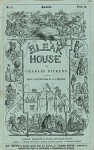
Unless you count comics or movie and TV adaptations, just about anything by Dickens is likely to win me a game of Humiliation (rules at the link). When someone suggested him for our next Book Group title I was happy, and even happier when we settled on Bleak House: Neil Gaiman has been going on about it on his blog recently, and my friend Cassandra Golds says it is a huge presence in two of her recent novels.

Before the meeting:
This is the first book I’ve read on iPhone and iPad, and it was a good experience. The iPad is more satisfyingly book sized, but I was surprised at how much I enjoyed the sense of continual progress that comes with the iPhone. One of the book’s 8041 screens had to be ‘turned’ every couple of seconds – so many words, but in such tiny portions!

I was probably out of harmony with the spirit of the book, not so much because of the electronic devices as because I read it in just a few weeks. It was originally published as a serial over 20 months: if you read one of its 67 chapters a week you would have kept pace. I doubt if anyone much reads at such a leisurely pace any more, and we’re probably the poorer for it. Anyhow, it’s a truly wonderful book which I recommend for when you’re in the mood for sustained, leisurely reading.

I’m confident I have nothing at all original to say about the book itself, so I’ll presume on a little of your time by ruminating on translation issues. Every now and then someone writes an article saying that each generation needs its own translation of [insert name of classic work here]. The idea is that we need to have ancient Latin or Renaissance Spanish served up in contemporary language. By this logic, Italian or Spanish readers need a fresh translation of Dickens every 50 years or so. If so, doesn’t it follow that we need an updating in English just as regularly? After all, the language has changed in the last 150 years, and early 21st century English speakers have a very different, and more diverse, take on the world than their mid-19th century equivalents. Where Dickens could assume that literate English speakers shared a vast set of references – the Hebrew and Christian Bibles, Shakespeare and classical mythology come to mind, and there’s plenty of each in Bleak House – we can no longer do that. Just for the heck of it, I thought I’d see how a hypothetical translator might tackle the opening:

London. Michaelmas term lately over, and the Lord Chancellor sitting in Lincoln’s Inn Hall. Implacable November weather. As much mud in the streets as if the waters had but newly retired from the face of the earth, and it would not be wonderful to meet a Megalosaurus, forty feet long or so, waddling like an elephantine lizard up Holborn Hill.

I thought ‘translating’ this would be a straightforward bit of fun, but by the second word I was in trouble. When I was at university we had three terms, Lent, Trinity and Michaelmas, but surely Dickens isn’t talking about university here? Did the English courts have terms? (Do they still?) What is Lincoln’s Inn Hall, and who is the Lord Chancellor again? And so on. None of this worried me at all when I read the book, but a translator might feel obliged to do something like:

London. The year coming to an end, and the nation’s most eminent judge, the Lord Chancellor, hearing cases in Lincoln’s Inn Hall. Implacable November weather. As much mud in the streets as if the Flood had just withdrawn from the face of the earth, and it would not be surprising to meet a Megalosaurus, forty feet long or so, waddling up Holborn Hill.

There, now that’s more accessible, isn’t it? (No need to gloss the Megalosaurus for 21st century readers, I thought, but the edgy play on biblical and palaeontological versions of prehistory does need clarifying.) It’s not quite Dickens, but then what translation is? Interestingly enough, even being facetious I couldn’t bear to touch what comes next:

Smoke lowering down from chimney-pots, making a soft black drizzle, with flakes of soot in it as big as full-grown snowflakes – gone into mourning, one might imagine, for the death of the sun. Dogs, undistinguishable in mire. Horses, scarcely better; splashed to their very blinkers. Foot passengers, jostling one another’s umbrellas in a general infection of ill temper, and losing their foot-hold at street-corners, where tens of thousands of other foot passengers have been slipping and sliding since the day broke (if this day ever broke), adding new deposits to the crust upon crust of mud, sticking at those points tenaciously to the pavement, and accumulating at compound interest.

In short, I found the novel irresistible, especially for the way it wallows in language. And Cassandra is right – it’s full of echoes of Clair de Lune and The Museum of Mary Child.

After the meeting:
It’s winter in Sydney, and half of us were away, either home sick or visiting warmer climes. Of the five who showed, three had read the whole book, one was a hundred or so pages from the end, and the last confessed up front that he’d picked up a copy in a bookshop, and then thought, ‘Nah!’, though it turned out he had read it 20 or so years ago.

It was a good book to discuss. We talked about Mr Guppy’s withdrawal of his proposal, the death of Little Jo, the use of catchphrases (‘Discipline must be maintained!’), the pleasure of reading bits aloud. Someone knew that the appalling Mrs Jellyby was based on Caroline Chisolm, and the execrable Skimpole on an actual person. We wondered about the politics, the anti-Jewish nastiness (‘Smallweed is a Jew’), the depiction of industrialisation. Someone had thought about this book in comparison to the other Great Works we’ve read, Anna Karenina and The Tree of Man, and found it suffered from the comparison. I don’t know what I think of that. I know I enjoyed it at least as much as the Tolstoy and quite a lot more than the White, but I suppose enjoyment isn’t everything.

I haven’t been deliberately secretive about this blog and its reports on the group, but nor have I deliberately drawn people’s attention to it. If anyone from the group does drop in, welcome! Please add a comment.

The Book Group, the Finkler Question and the SWF by night

Howard Jacobson, The Finkler Question (Bloomsbury 2010)

This won the Booker Prize last year. Howard Jacobson lectured on Dickens to at least one member of my book group at Sydney University in the 1960s. He’s a guest at this year’s Sydney Writers’ Festival and we’d decided to combine our group meeting with a visit to the festival. Even if three members of the Book Group weren’t gentiles married to Jews, this book, which is broadly speaking about gentile–Jew relationships, would have been a logical choice.

Before the group meeting:
When I’d read to about page 80 I wrote a draft blog entry explaining why I didn’t finish the book. Mainly, I found the central narrative thread, in which a gentile man obsesses over the implications of having been mugged and called a Jew, to be both flimsy and ponderous. That wouldn’t have mattered if it was funny – and after all, much has been made of the Booker going to a comic novel – but I didn’t laugh once. Too often a character is given just enough two-dimensionality to allow the writer to take a satiric pot shot at her/him. There are jokes. Our gentile hero (he’s a serial romantic, Treslove by name, get it?) is in love with a woman who confesses that she’s ‘a bit of an arsonist’, and in the morning he wakes to ‘twin realisations’:

The first was that she had left him. The second was that his sheets were on fire.

Boom-tish! or Clunk! You be the judge.

In that draft I said, with only slight exaggeration, that a two page account of a Google search was the most interesting thing in the book up to that point. I did read on, hoping only for a cute line to quote as the point where the book and I parted company.

It was not to be. The Google search – “Anti-Semitic Incidents” – foreshadows a transition to something much more interesting. The unfunny humour keeps coming, and all but one or two of the characters stay paper thin, but from about the halfway point the book begins ringing the changes in a tantalisingly complex way on themes of Jewish identity and culture, Judaism, anti-Semitism, internalised anti-Semitism, Zionism and anti-Zionism. Viewpoints multiply, transmogrify, collide, dissolve. Just as you think the book is coming to a settled view, a telling incident or a forceful argument challenges that view. It’s not just the familiar ‘two-Jews-three-opinions’ thing, though it includes that. It becomes a dramatisation of intractable complexity.

Raissa Maritain, Russian Jew turned French Catholic philosopher, wrote what could have served as an epigraph to the second half of The Finkler Question: ‘To every argument can be opposed an argument, and thus appears the futility of all argument.’ Or perhaps it wouldn’t serve, as she was talking about faith as superior to reason. Up to a point, the arguments are tested here, not against faith but against the characters’ experiences – of love, loss, betrayal, disappointment, kindness, stupidity, brutality – but the characters are so thin it’s hard to believe the testing is real.

Yet other people, including the Booker judges, have loved the book. I came away feeling that I’d somehow missed the point, much as Treslove does throughout the book.

After the group meeting:
We met at a pizzeria in the wharf precinct. Three of the seven of us came straight from Howard Jacobson at the Sydney Recital Hall. Those three and I had read the book, a third had reached page 225 and was enjoying it. All the others had a much better time with than I did. One said that like me he’d noticed page 79 as the point where things became interesting, but unlike me he’d found what came after that funny in the I’ve-got-to-read-this-to-my-wife way. Others related strongly to Treslove. When I said there was almost nothing to the character they agreed, but saw that as a brilliant depiction of a certain kind of personality: ‘There’s a little Treslove in all of us.’ Someone related strongly to the theme of men of a certain age (he said ‘our age’) looking out for each other when their wives have died. Sex scenes that I found weirdly unfunny and not much else were to other people touchingly intimate. The scenes towards the end that I read as competently introducing some much needed pathos (please note the emotional distance in that way of saying it) made St least one grown man cry.

I found myself conceding that I’d enjoyed more of the book than I’d been willing to admit. But mainly it was interesting to see that the book spoke so personally to the others who had read it. Evidently I was right – I’d somehow missed the point. And the thing is, if I were to reread the book, I expect I’d miss it again. I’m the wrong horse for that course.

Our plan had been to go to the Chaser’s Empty Vessel  show at  nine o’clock, but by the time we got to the venue it was half past, and the person in orange T-shirt told us it was sold out. Some of the others went on to the poetry reading at the Number One Wine Bar. I came home.

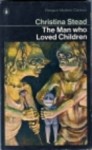
The men who read The Man who Loved Children

Christina Stead, The Man Who Loved Children (©1940, Penguin Modern Classics 1970)

Someone on the Internet recently described The Man Who Loved Children as one of the greatest novels ever written. Jonathan Franzen has championed it, with the result that it has recently been republished. The copy I’ve just reread is the 1970 paperback of the edition resulting from the book’s being championed by another USian, poet Randal Jarrell. I ‘did’ Christina Stead’s For Love Alone at university, and remember it vividly, but this book, which I read independently of any study requirements, had faded from memory, leaving only a recollection of having loved the book and hated the eponymous Sam Pollitt. So I was glad when the Book Group picked it. Logically we should have picked Seven Poor Men of Sydney or For Love Alone because we were after something to follow on from Delia Falconer’s Sydney and Ruth Park’s Harp in the South, but evidently those of us who’d read this, combined with those who’d read of Franzen’s enthusiasm, swung the vote.

Before the meeting:
For the first 200 or so pages, as we are taken into the Pollitt family, the book is completely engrossing, though far from simply pleasurable. In fact, it’s a bit like being taken into the implacable embrace of a two-headed boa constrictor. Sam and Henny Pollitt must be among the awfullest parents in literature. Sam is a monumental monster, relentlessly garrulous, playing with the language in elaborate baby-talk with his children, lecturing them endlessly on his own peculiar and increasingly repulsive utopian socialism, turning them against each other by vicious teasing and, whenever anyone takes offence, whining that they have hurt his feelings or defied his authority. Manipulative, narcissistic, brutally sexist and convinced of his own goodness, he makes Henny’s life a misery and is surely giving his children material for decades in therapy. But though we feel for her, Henny is hardly an attractive character. Even when she’s not storming and threatening destruction all round in blind, operatic rage, hardly a word comes out of her mouth that isn’t tinged with venom – against Sam, the children, the world. It’s a horror story. In the first half, there’s little sense of movement or plot progression – just an appalling claustrophobic massing of incident. What makes it readable is the language: both Sam and Henny are intensely verbal, she with an embittered satirical phrase for everyone and everything, he with a pyrotechnicon of silly voices and accents, quotations, nicknames, puns.

As the halfway marks approaches, there’s a blessed reprieve when Sam goes off to Malaya for eight months and Sam and Henny are no longer under one roof. We see Sam’s ebullient, insensitive, visionary self-engrossment outside the claustrophobic confines of his family, and recognise in him a buffoonish version of the ‘obtuse and destructive American innocence and idealism’ (I’m quoting Wikipedia) of Graham Green’s The Quiet American. Then it’s back to the hothouse, and things get worse. But now at least there’s movement, downstream of course, to an overwrought climax. Astonishingly, for all its gut-wrenching quality, I didn’t remember how the book ended. Perhaps when I was 20 I read it completely as a fantasy construct, whereas now, sadly, I’m prepared to entertain the possibility that monsters such as Sam do exist in our world.

At the meeting:
There were seven of us. Only one had finished the book. I was 70 pages from the end (I hadn’t reached the aforementioned climax – I said I guessed that adolescent Louie left home and Henny either killed herself or didn’t, and the one who had finished said, ‘Worse,’ and was right). One who didn’t come, wrote to say he stopped caring about any of the characters when he heard someone on the Book Show talk about how Christina Stead rewrote the book from a Sydney to a DC and Maryland setting at the bidding of a US publisher (which, incidentally, she did with remarkable thoroughness). One had put the book down at page 72, too irritated with Sam and the language to contemplate going further. Others had struggled to return to it, and it’s very long.

We had a terrific discussion, interspersed with reflections on the negative aspects of ensuite bathrooms, the terrible prospects facing us at the State elections this weekend, initiatives for peace in the Middle East, quiche and ice cream. I think I liked the book more than anyone: what was the point of all this wretched misery, what insight did it offer, someone asked. I don’t have an answer to that question, but I do think that almost any paragraph picked at random offers up abundant riches. And it has to mean something that, as I read yesterday on Literati, the book has been included along with The Female Eunuch on at least one university course.

After the meeting:
Last night and today, I finished it. Let me finish by taking up the challenge implied in my comment about ‘any paragraph picked at random’. [Opens at random.] Here’s one. It’s not what I would have chosen, because it’s part of a scene that takes place away from the toxic Pollitt home, but I did say ‘random’. Henny is talking with her sister Hassie and their mother Old Ellen while Louie and Evie, Henny’s two daughters, eavesdrop. Henny has just delivered a self-pitying aria, concluding, ‘Why was I ever born?’

‘It’s too late to ask me that,’ said Old Ellen. ‘But you mightn’t have been.’ She began to laugh. ‘Your old man sent me anonymous letters himself to make me divorce him.’ She rippled with he-hes. ‘I hung on to spite him. I didn’t want him. It’s my only pleasure left.’ She laughed. ‘All I’ve got left is to sit in the sun and watch Barry booze and sometimes give him a kick in the pants. Sit in the sun and watch barflies, huh?’

(Barry is Henny’s alcoholic brother, and after her husband’s death, Old Ellen will indeed be left to look after him.) Out of context, I suppose the most striking thing about this paragraph is the disjunction between Old Ellen’s laughter and the terrible things she is saying. In context, it’s brilliant for what it does with point of view. We are  wrenched from Henny’s self-preoccupation  to the old woman’s misery, from which she has snatched a kind of bitter, self-destructive victory, and in the process Henny receives yet another blow to her sense of self. When you consider that the underlying point of view is that of the eavesdropping children, the paragraph takes on cataclysmic proportions – or would, except that we suspect they have been hearing things like this all their lives, that Old Ellen has been saying this kind of thing to her own daughters for most of theirs. The only person really appalled by her words is the reader – for everyone else it’s just renaming old pain, adding a further numbing twist to old confusion. Someone at the book group said he found it hard to get into the rhythm of the book; someone else said he thought that was because the point of view kept changing, and no one’s story had room to progress without interference. This little paragraph is a small example of that process at work.  And there’s that laughter. Hitler laughed when Ribbentrop gave him a birthday present of an ornate wooden box containing a copy of every treaty he had broken – Old Ellen’s laughter is about as cheering as Hitler’s. The book is full of  laughter and smiles that make the blood run cold.

No  wonder it’s a neglected classic!

The book group’s Harp in the South

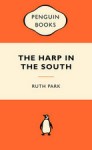
Ruth Park, The Harp in the South (1948, Penguin 2009)

Our Book Group’s last title was Delia Falconer’s Sydney, which quotes liberally from Ruth Park’s writing about this city from the middle of last century. One guy was keen to have Park’s Companion Guide to Sydney as our next title, but the general feeling was that we didn’t want another book about Sydney (Jan Morris’s Sydney was rejected for the same reason). The Harp in the South – a novel set here – was proposed as a compromise, and rejected on the night, but when the next day the papers were full of news that Ruth Park had died we ditched our first choice.

Before the meeting: I loved this book. I believe it was written with the passionate aim of calling attention to the lives of the poor in Sydney’s inner suburbs. That documentary impulse means that 60+ years later it’s full of fascinating historical detail: the shape of Australian coins in the 1940s, the way garbage was collected in Surry Hills (dumped from household rubbish bins onto a big sheet of hessian laid out in the street), how the poor celebrated New Year’s Eve (with a bonfire built from the neighbourhood’s rubbish), ways of thinking about sexual morality, sexual politics, Aboriginality, cultural diversity (yes, in the 1940s that we’re always being told were totally monocultural). I don’t mean to imply that my interest was purely anthropological-historical: the woman who was to give the world the Muddleheaded Wombat knew how to create solid human characters and spin a gripping yarn. In the late 1940s the book caused upset by insisting that its slum-dwelling characters be taken seriously, and that unpalatable facts of life such as abortion be acknowledged. The subject matter is no longer shocking, but some of the characters’ resigned acceptance of, say, a touch of domestic violence or callous racism can still wring a reader’s withers.

We follow the lives of the Darcy family: overweight Mumma who holds everything together, Hughie who has given up on life and seasons his stoicism with alcohol, teenage Roie and her younger sister Dolour. Roie’s two romantic relationships – one disastrous, the other redemptive – constitute the backbone of the plot. Her febrile panic as she finds true love is wonderfully realised. The young Ruth Park was well up to the challenge of writing about sex without what has come to be known as explicit language. There’s a brilliant example in the account of Roie’s wedding night. Roie is frightened. She eventually gets into bed and Charlie, her new husband, comes out of the shower, drying his tousled hair:

He looked down at her.
‘Are you scared of seeing me with my clothes off?’
‘A little bit.’
He dropped the rest of his garments on the floor. He was slender and shapely and tawny-skinned. His neck rose out of his shoulders like a short pillar of bronze; his dark head was beautifully set on it. He looked at her without any selfconsciousness, without any shyness or embarrassment in his golden eyes.
‘I’m just like other men.’

That seems bland enough, but then, if you’re me, you realise that Roie has seen Charlie’s head and neck a thousand times, she’s just been swimming with him so she knows what his body looks like. You realise we’re meant to see through the chaste language here and understand that Roie is actually looking at a different short pillar with a dark head on it, and finding what she sees to be beautiful.

At that moment, I fell in love with Ruth Park.

After the meeting: Sadly, a sudden intense flu-ish infection meant I didn’t go to the meeting last night. The official report, just to hand, said: ‘Mostly approved of Harp in the South, as much for its historical flavour as for its literary qualities. Then a deep discussion about whether men are afraid of other men.’ So I didn’t get to see whether my reading of that wedding-night passage would be dismissed as peremptorily as my finding a coded reference to Aboriginal massacre in The Tree of Man.

Delia Falconer’s Sydney and the Book Group

Delia Falconer, Sydney (New South 2010)

I don’t have a lot of time for blogging just now – a wedding this Saturday and the small matter of moving house by mid January are adding significantly to the seasonal distraction load. I’ve barely finished this book ahead tonight’s Book Group meeting. But I’ll stick to my usual Before and After format.

Before the meeting: This is a brilliant book. Delia Falconer combines colonial history, personal reminiscence, reflections on recent headlines (Bogle and Chandler, Anita Cobby, the Cronulla riots, Abe Saffron …), literary discussion (mainly of Patrick White), physical description (especially of  jacarandas), gossip about and from her friends (including a couple of unforgettably seedy images), and any number of other elements in an eminently readable and erudite extended essay. It may at times strain for effect (‘the light is unquestionably Sydney’s,’ she writes of a scene in the movie Bliss, ‘saturating, and warm, but also muted and inconstant’), the effect is generally worth the strain. She makes room for many other voices – William Dawes (Kate Grenville’s fiction about him, The Lieutenant, is tactfully not mentioned), Ruth Park, and many others, including eccentric photographer-clergymen, eloquent diarists and letter-writers.

The book is frankly personal, and by implication invites readers to reflect on their own experience of the city. I first visited Sydney in the 1950s with my parents, and remember seeing Arthur Stace’s ‘Eternity’ chalked on the kerb at Hyde park. I’ve lived here since 1967, the year I turned 20 and Delia Falconer had her first birthday. Where she lived on th lower north shore and then in student houses in Newtown and thereabouts. I lived in Dundas for three years and then moved to the inner west – Glebe, Leichhardt, Annandale, interrupted by a couple of years in lower Paddington. There’s plenty of overlap, but I don’t think my shared house days were ever as disgusting as she makes hers out to have been. I love her sense that Sydney is a city with something unacknowledged always pressing for recognition. Her discussion of the interplay of hedonism and wowserism is as good as any I’ve read. I’m persuaded by her reading in Kenneth Slessor’s ‘Five Bells’ a displaced sense of the dispossession of the Eora people.

After the meeting:
We had an animated discussion. Only one of the seven of us was born in Sydney, and he was born in the inner west more than 10 years before Delia Falconer, but we’ve all lived here for decades, and a good bit of the evening was taken up with shared reminiscence. The book doesn’t mention Bea Miles, gives the Push only a passing glance, doesn’t talk about theatres past and present, or the Depression – but it didn’t need to. One of us had put his name down for a walk in the Tank Stream after reading about it; another had done the walk and recommended it. We spent a lot of time reminding each other of bits we’d particularly liked, and generally agreed it was an excellent choice for the Group. The White Cockatoo in Petersham likewise met with general approval as the venue for our end of year meeting, though our appetites weren’t equal to the gigantic helpings of food.

Marilynne Robinson’s Home at the Book Group

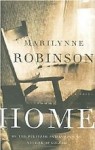
Marilynne Robinson, Home (Farrar, Straus & Giroux 2008)

This will be quick as my blogging time this month is mostly taken up with writing what poet and commenter John Malone has called, at least by implication, unremarkable sonnets.

In Marilynne Robinson’s novel, Jack, the black sheep of a midwestern Presbyterian pastor’s family comes home for a couple of months, rebuilds some kind of relationship with his youngest sister, now 38 and home to lick her wounds after being exploited by a cad, and fails to reconcile with his ageing father. Perhaps unexpectedly, it was a great success at the book group. Most of us loved it, and those who didn’t were still interested. Over excellent quiches and salad, followed by ice creams on sticks that our host had bought for his grandchildren, we had some of the most animated discussion we’ve had since I joined the group. Several of us are planning to read or reread the companion novel Gilead.

I was just a little smug to be able to report that I’d picked up early on the clues that Jack’s great, lost love might be Black. My recent reading of W E B Du Bois’ Souls of Black Folk meant that I got the hint when Glory asked Jack what he was reading :

‘W.E.B. DuBois,’ he said. ‘Have you heard of him?’
‘Well, yes. I’ve heard of him. I thought he was a Communist.’
He laughed. ‘Isn’t everybody? I mean, if you believe the newspapers?’ He said, ‘Now I suppose you’ll think I’m up here reading propaganda.’

The Book Group and The City and the City

China Miéville, The City and the City (Macmillan 2009)

Before the Book Group meets:
We decided to read some science fiction. Rather than opting for someone’s idea of a classic (Asimov, Heinlein, early Gibson or Stephenson) we decided to pick something current. I’d loved China Miéville’s Perdido Street Station and heard interesting things about The City and the City – among other things it had been nominated for a Hugo [and now has tied with Paolo Bacigalupi’s The Windup Girl for Best Novel]. I suggested we take it on, and the suggestion carried the day.

So I was suffering a mild case suggester’s anxiety when I started reading. What response would the book get from Groupers who’ve read even less science fiction than I have? Would the meticulous world-building strike them as so much tedious scenery-painting? Would they see the elegant police procedural plot as something from a by-the-numbers TV show, the characters as two-dimensional, the tantalising central conceit the equivalent of a one-joke comedy? I’m pleased to report that after a while I stopped caring and was absorbed in the book’s world and its story.

The City and the City is hard to write about because it really is an extended exploration of a single conceit. I would infinitely prefer to have had it revealed  to me by the narrative itself, and don’t want to have a hand in spoiling it for anyone else. In a Book Show interview, Miéville went as far as saying that the story is set in two cities that share an unusual relationship to each other, which is true but doesn’t give anything away. Not until the end of the first chapter is there any hint that the world, or at least the cities, of the book are in some sense science fictional/fantastic. I would love to know how a reader who wasn’t forewarned would understand that first jarring moment, and how long it would take to grasp the full situation. Of course, in one sense, the full situation isn’t clear until the very last pages: as in Kafka and Raymond Chandler, to whom Miéville acknowledges indebtedness, the narrative at one level concerns itself with solving a single crime, but it also unfolds the deeper political realities of the world of the novel.

Pushing the spoiler envelope just a little, I had an insight into the book when out walking recently with the Art-Student. As we approached a small group boys riding their scooters in the street, one of the boys momentarily lost control and wheeled directly into our path. He pulled up short and called over his shoulder to his friends, ‘I’ll try that again.’ He had carefully avoided hitting us, but otherwise acted as if we dog-walking old people weren’t even there. He had ‘unseen’ us. Then I remembered noticing on my last visit to Cairns that though there were plenty of Aboriginal people in the streets, the non-Aboriginal people generally behaved as if they weren’t there, and vice versa – another case of mutual unseeing. The City and the City takes this common phenomenon to impossible extremes, and much of the joy of the book lies in how consistently and thoroughly he has imagined it. Miéville succeeds to the extent that every now and then a reference to the world as we know it – to Coke, or Madonna, or a Google search – brings one up short: oh, this is all happening in the world as I know it! The climactic point of the story consists of four people walking briskly down a street in close physical proximity – and it’s totally thrilling, not just because one of them is carrying a gun. That’s all I’m saying.

After the meeting:
It was a small meeting, but all of us had enjoyed the book. The group meeting had been postponed for six weeks or so, so quite a bit of time had passed since most of us had read the book. And even though in the intervening weeks one had reread it and another had read Perdido Street Station, our memories weren’t generally fresh enough to generate much detailed discussion. I needn’t have worried about the appeal of the world building: everyone enjoyed it. And my curiosity about how the setup was revealed to the unspoiled reader was gratified: the consensus seemed to be that the odd word (‘crosshatched’) created a sense of unease, enough to alert rather than alarm, and there was pleasure as more of the workings of the cities was revealed, until one felt (several times over), ‘Ah, now I get it!’

The Tree of Man revisited with the Book Group

Patrick White, The Tree of Man (1955, Vintage 1994)

Before the group meeting:
My mother’s letters in the 1970s would occasionally report on her reading. She once transcribed a paragraph from Salman Rushdie’s Midnight’s Children because it seemed to describe the noses of our family. The other day when I read the first page of the Drought chapter of The Tree of Man, I wondered if she’d thought, as I do, that this description of Stan Parker evokes aspects of my father (allowing for the fact that Dad grew sugarcane rather than running a dairy, and was never ‘broad’):

He was respected. He was inseparable from the district, he had become a place name. His herd was small, but of good quality for the herd of a man in a small way, neither rich nor ambitious, but reliable, the cans would always reach the butter factory to the minute, without fail. He went to church too, singing the straight psalms and rounder hymns, in praise of that God which obviously did exist. Stan Parker had been told for so long that he believed, of course he did believe. He sang that praise doggedly, in a voice you would have expected of him, approaching the music honestly, without embellishing it. Standing in the pew, singing. the back of his neck was by this time quite wrinkled, and the sinews were too obvious in the flesh. But he was a broad and upright man.

I’ll never know if she made that kind of connection, but she mentioned the book in passing in a comment on Cancer Ward:

It seems queer but I think Patrick White writes much like [Solzhenitsyn], so simply. I’ve read only one of his, The Tree of Man, & really enjoyed it.

Not bad, eh? She made no claim to literary sophistication, but she picked White’s affinity with the Russians. And she found his prose simple!

The prose is simple, but it’s not easy. It’s also impossible to read fast, lacking what A D Hope believed a novelist needs: ‘a plain style, a clear easy stride, a good open texture of language to carry him [sic] to the end of his path’. But it’s certainly not ‘pretentious and illiterate verbal sludge’, as Hope famously described it. It does constantly pull you up and make you look at a particular word or image – or, if you don’t stop, leave you with an uneasy feeling that you’ve missed something. The point of view frequently moves around within a single short sentence, or rather within a grouping of words between consecutive full stops, since White is a great user of what are sometimes known in the editing trade as frags. Even the very first sentence, innocuous enough at first glance (‘A cart drove between the two big stringybarks and stopped’), has the reader slightly wrong-footed with its abrupt rhythm, its lack of a human, or even animal, subject, its slightly skewed use of articles (‘the cart drove between two big stringybarks’ would be more natural, but of course it would mean something quite different).

The book’s peculiarities, and its arrogance, intimidated me in first year university in 1967. But not this time. True, I came close to genuflecting at the first four chapters, which tell of the primal encounter of ‘the man’, ‘the woman’ and the bush. I wondered if I would be able to keep up with the intensity of the prose for the whole 480 pages. But once the narrative emerged into something resembling a social world, I was less enthralled. In fact I became increasingly irritated. I just don’t believe in the nastiness of most of the characters. I can’t stand the snobbishness of the narrative voice. The drunken Irish shenanigans (read domestic violence, despair, wretched poverty and, towards the end, dubious religion) of the O’Dowds fail to amuse me. The pretentions of the nouveaux riches Armstrongs are awkwardly unconvincing, as is almost everything about the younger Parkers. The book seems to assume that some people, inarticulate or otherwise, have an honest capacity for rich inner lives, while others (most?) don’t, and must settle at best for synthetic souls with occasional exalted glimpses. For all the towering strengths of the book – and they certainly aren’t limited to the first chapters – I became increasingly obsessed with calculating what fraction of the pages I had yet to read.

Perhaps the most striking disappointment is the vast, gaping silence about Aboriginal Australians. When Stan’s cart stops between the stringybarks in that first sentence, it’s definitely in terra nullius. ‘Blacks’ are mentioned twice, once when young Ray refers to their arcane knowledge of how to survive in the desert, and again in the closing pages when the missionary mentions sex with black women as a sign of his youthful depravity. The phrase ‘dream time’ occurs twice. The first time, Stan and Amy have come to an ‘uneasy dream-time’. Since that probably signifies that neither of them was fully awake in relation to the other, the Aboriginal reference may be coincidental, but in the second, near the beginning of the fourth and final part, Stan looks back on his first days at the farm as ‘the dream time’. Here the phrase does refer to a time of creation, of beginnings, and it must disturbingly invoke for any Australian reader now, and surely for some in the 1950s, this continent’s history of genocide, dispossession and cultural appropriation. Invoke without acknowledging. The Irish are despised. The working class barely exist. Aboriginal people have been erased and over-written.

Then, here’s Stan, further down the first page of the Drought chapter:

There were certain corners of his property that he could not bring himself to visit, almost as if he would have discovered something he did not wish to see. […] Once he had been looking at a crop of remarkably fine sorghum that was almost ready to bring in, when he remembered that same stretch of land after he had cleared it as a young man, and on it the white chips lying that his axe had carved out of the trees, and some trees and young saplings still standing and glistening there, waiting for the axe. So that he forgot his present crop and went away disturbed, and thinking.

In a book that makes much of ‘things that are too terrible and wonderful to speak of’ is it too much to imagine that in this moment the thing Stan does not wish to see is the silenced Aboriginal history? That the dispossession on which Stan’s settlement of the land is built is almost forcing its way into the narrative? Surely it’s not just my idiosyncrasy that those white chips of wood remind me of the bones in the red earth of a massacre site in a William Yang photograph?

There may well be hundreds of learned articles about this disturbed silence, but that’s my two bob’s worth.

After the group meeting:
Tonight we met in a pub in Paddington, rather than in someone’s home. All but one of us turned up, and almost half had read all or most of he book. We had an animated discussion. Only one of us really loved the book. One, who may not have read it, considered it to be dated imperialism. The two of us who read the Vintage edition agreed that the cover was absurdly inappropriate (a horse? northern hemisphere trees?) No one shared my unease about the absence of Aboriginal characters: the consensus seemed to be that the original inhabitants of the Parkers’ land had been dispossessed long before Stan and Amy arrived, and that my reading of the white chips passage was drawing a long bow. As someone said, what’s the point of a bow that’s not long? And I still think that the general silence enacts a kind of genocide.

Whatever, unlike Anna Karenina, The Tree of Man couldn’t hold its own against the need to discuss Other Things – the sins of the ALP and the worse sins of the Coalition, our various adventures in work and education, travel and the weather. As always it was a fun evening.

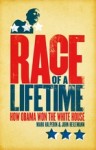
The Book Group’s Race of a Lifetime

Mark Halperin and John Heilemann, Race of a Lifetime: How Obama won the White House (Penguin 2010)

Before the Book Group meeting:

This book’s US title is Game Change, with the subtitle Obama and the Clintons, McCain and Palin, and the Race of a Lifetime. This is snappy and gives a fair idea of the book’s contents. So why the change to a lame and inaccurate title for this British edition? Maybe it was revenge on the US for renaming J K Rowling’s first book Harry Potter and the Sorcerer’s Stone.

The authors say in their introduction that they set out to give ‘an intimate portrait of the candidates and spouses who (in our judgement) stood a reasonable chance of occupying the White House’ after the 2008 election. They conducted more than 300 interviews with more than 200 people between July 2008 and September 2009, while memories of the election campaign were still fresh, and produced a book bristling with direct quotes from behind the scenes. I wouldn’t describe much of it as intimate in any real sense, but it’s got a kind of gossipy fascination. The Obamas, the McCains, the Edwardses and especially the Clintons are all big characters, and all have marriages that have had to withstand unbelievable strain. Todd Palin gets mentioned quite a bit, but doesn’t become a character in his own right, and not a lot of ink is spent on Sarah Palin herself – though what there is of her is even more bizarre than the press suggested at the time.

I don’t know that the book does much to deepen the reader’s understanding of the US political system in general or the 2007–8 election campaign in particular. The main take-home message seems to be that you don’t have to be some kind of sociopath to run for President or Vice-President of the United States, but it helps. Miraculously, Barack Obama doesn’t seem to be one. One does weep for US-style democracy, at least as seen through the lens of political journalism. I found myself empathising with the widespread fear of democracy in mid nineteenth century Australia, expressed in 1853 by John Plunkett, Attorney General of the colony of New South Wales:

All serious convulsions are carried out by demagogues; as a boiling cauldron throws its scum to the top, so in all social convulsions unworthy persons will be sure to get to the top, and betray the people for their own selfish purposes. The people left to themselves, and uncontrolled, will be hurled on to ruin by the ruffians who make them their dupes.

(Quoted in Peter Cochrane, Colonial Ambition, MUP 2006, p 379)

Not that ruffians and demagogues prevailed in 2008, but one gets the impression that without ruffianly behaviour and demagoguery, and certainly not without being able to deal with lashings of both, no one could ever become Potus.

Kate Jennings’s Quarterly Essay, American revolution: The fall of Wall Street and the rise of Barack Obama, though not an insider’s account, probably casts more light on the issues at stake in the campaign and is almost as thrilling a ride. I do feel an itch to read an account as candid and thorough, and occasionally lurid, as this about an Australian election. Sadly, I doubt if even Tony Abbott, for all his lycra and chest pounding and people skills, could equal any one of a score of moments in this rip-roarer.

After the meeting:

Tonight we were five, then six and eventually seven, the last arrival being delayed by an argumentative accountant and a locked car park. The conversation folded back on itself a number of times, with recaps and revisitings. Most of us, I think, had found the book interesting, though a number hadn’t been able to finish it – the apparent weighting of the scales towards Obama was a factor (either the Clintons are actually really weird or the journalist/authors decided it was good ‘narrative’ to portray them that way), an absence of politics-tragicality on the part of the non-finishers was another: do we really care about advice from yet another aide that was disregarded by yet another candidate? As an innovation tonight was also discussed an article – on climate change – and though none of us was ardent about the article, the juxtaposition emphasised the way the book favours personality above policy and implies that the US democratic process does likewise. I think its true to say we were all shocked and awed by the sheer amount of money spent on presidential campaigns.

The fact that the ABC had been reporting a leadership challenge in Canberra meant the book’s holding power was tested. Once the conversation veered – even lunged – towards a debate about Rudd and the intense stupidity of the NSW Right of the ALP, who are largely responsible for Rudd’s losses in the polls and now (I’ve learned since coming home) have decided to dump him, none of us was wildly enthusiastic to get back to the book.

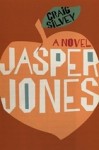
Jasper Jones at the Book Group

Craig Silvey, Jasper Jones (Allen & Unwin 2009)

The fourth paragraph of Jasper Jones begins:

This is the hottest summer I can remember and the thick heat seems to seep in and keep in my sleepout.

‘Keep in’? That’s awkward, I thought, and it chimes oddly with ‘seep in’ and ‘sleepout’. The paragraph continues:

It’s like the earth’s core in here. The only relief comes from the cooler air that creeps in between the slim slats of my single window. It’s near impossible to sleep …

Seep in, keep in, sleepout, creeps in and sleep, all in five lines: this is definitely odd, but – along with the heat, the relief and those slats, which are slim for no reason other than alliteration – it’s clearly deliberate.

Over the next pages, while the story had my attention from the word go – thirteen year old Charlie Bucktin, the narrator, is woken in the night by the town’s bad boy Jasper Jones and led to a secret place in the bush where he’s faced with a terrible spectacle and an equally terrible dilemma – I had a weather eye out to see if anything would come of this stylistic oddity. Nothing did, in the sense that if you didn’t notice it you weren’t missing a vital clue to the book’s meaning. But Charlie is in love with language, and bursts of assonance and alliteration for their own sake amount to something of a stylistic signature. I did a quick scan before returning the book to the library, and noted, from many examples, ‘a bundle of lonely bones tied to a stone’ (page 123), ‘Pored over it, taking little portions’ (page 128), and this, in one of Charlie’s reflective moments:

Sorry means you feel the pulse of other people’s pain, as well as your own, and saying it means you take a share of it. And so it binds us together, makes us as trodden and sodden as one another. Sorry is a lot of things. It’s a hole refilled. A debt repaid. Sorry is the wake of misdeed. It’s the crippling ripple of consequence. Sorry is sadness, just as knowing is sadness. Sorry is sometimes self-pity. But sorry, really, is not about you. It’s theirs to take or leave.

Like the frequent references to Charlie’s reading – To Kill a Mockingbird, Batman, Breakfast at Tiffany’s (which he hasn’t read, but Eiza, the love interest, has, and seen the film), Huckleberry Finn, The Wizard of Oz – this fascination with words is important in establishing Charlie’s character and the tone of the book. It’s been described as an Australian To Kill a Mocking Bird, but I doubt if Harper Lee’s book was anything like as intertextual as this. The description is OK as a sales pitch but I’m surprised that reviewers have echoed it.

Anyhow, it’s a terrific, fast moving, undemanding read: a coming-of-age romance cum mystery cum homage to Mark Twain cum historical drama (the Vietnam War is on, and the Beaumont children are mentioned towards the end) cum tale of pre-adolescent friendship (with a substantial nod towards the movie Stand By Me). There’s a beautiful description of a cricket match in which Charlie’s best friend, a very short Vietnamese boy (‘Jeffrey Lu on debut’) makes a splash, in a way that reminded me of Ruth Starke’s brilliant book for younger readers, Nips XI.

One thing I don’t understand is what makes the book ‘mainstream’ rather than ‘young adult’. There’s some pretty intense swearing, I guess, but sex is treated with great tact; even when sexual abuse is described explicitly in a letter that’s crucial to the plot, we don’t get to read the letter. The story is told from a thirteen-year-old’s point of view, and there’s no hint that he’s in any way an unreliable narrator: we don’t know any more than he does and we’re not invited to make judgments that differ from his – we learn about the world with him. In fact, Charlie’s angry mother is treated with less adult-sympathy than similar mothers in many a YA title. I’ve heard that the classification was a policy decision on the part of the publishers – that they were invited to submit the book for the Children’s Book Council Awards, but declined. The mainstream classification seems to have paid off in adult readership and award nominations – always assuming that a Miles Franklin shortlisting is more prestigious than one from the Children’s Book Council, and that being on the New South Wales Premier’s Literary Awards shortlist alongside David Malouf’s Ransom and Coetzee’s Summertime is more dignified than being named in the same breath as Justine Larbalestier’s Liar (not a view I share: I’m looking forward to Justine’s book as keenly as I am to David’s, and who in their right mind would want to compete for a prize against Malouf and Coetzee?). I hope this taxonomical decision hasn’t discouraged the young people who are the book’s natural readership. [Since writing that I’ve seen an online  trailer that is clearly aimed at teenagers, so it looks as if the pubisher is having two bob each way, and a good thing too.]

I wrote that much a number of weeks ago. The Book Group met last night.

With one exception, we were lukewarm. No one actively hated the book, but different people saw different things as gaping flaws. One man said he found Charlie’s decision at the very start to help conceal a crime highly implausible, and intolerably hackneyed – from then on he read with very little pleasure. Another was irritated by the banter between Charlie and Geoffrey (though one man said he thought that was the best thing in the book). Others found the narrative voice, and the characters’, wildly inconsistent – perhaps especially in beautifully written passages such as the aria on ‘sorry’ I quoted from above. I think we were unanimous in finding the characters’ emotional responses to crises (a grisly death, the acrimonious departure of a parent, the discovery of a grandparent) lamentably one-dimensional. I’m sorry to say that as we talked the book’s charms diminished. I proposed a reading that transcended these concerns for consistency, verisimilitude and psychological realism. Perhaps we ought to see the book as akin to the startlingly discontinuous novelitas of César Aira that I’ve just been reading about in the current Heat. But that didn’t wash. Its one defender said it reminded him vividly of things he had felt when he was an adolescent, and he wasn’t howled down.

Sorry, Craig.