Category Archives: Books

The Book Group’s Race of a Lifetime

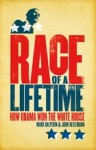
Mark Halperin and John Heilemann, Race of a Lifetime: How Obama won the White House (Penguin 2010)
Before the Book Group meeting:

This book’s US title is Game Change, with the subtitle Obama and the Clintons, McCain and Palin, and the Race of a Lifetime. This is snappy and gives a fair idea of the book’s contents. So why the change to a lame and inaccurate title for this British edition? Maybe it was revenge on the US for renaming J K Rowling’s first book Harry Potter and the Sorcerer’s Stone.

The authors say in their introduction that they set out to give ‘an intimate portrait of the candidates and spouses who (in our judgement) stood a reasonable chance of occupying the White House’ after the 2008 election. They conducted more than 300 interviews with more than 200 people between July 2008 and September 2009, while memories of the election campaign were still fresh, and produced a book bristling with direct quotes from behind the scenes. I wouldn’t describe much of it as intimate in any real sense, but it’s got a kind of gossipy fascination. The Obamas, the McCains, the Edwardses and especially the Clintons are all big characters, and all have marriages that have had to withstand unbelievable strain. Todd Palin gets mentioned quite a bit, but doesn’t become a character in his own right, and not a lot of ink is spent on Sarah Palin herself – though what there is of her is even more bizarre than the press suggested at the time.

I don’t know that the book does much to deepen the reader’s understanding of the US political system in general or the 2007–8 election campaign in particular. The main take-home message seems to be that you don’t have to be some kind of sociopath to run for President or Vice-President of the United States, but it helps. Miraculously, Barack Obama doesn’t seem to be one. One does weep for US-style democracy, at least as seen through the lens of political journalism. I found myself empathising with the widespread fear of democracy in mid nineteenth century Australia, expressed in 1853 by John Plunkett, Attorney General of the colony of New South Wales:

All serious convulsions are carried out by demagogues; as a boiling cauldron throws its scum to the top, so in all social convulsions unworthy persons will be sure to get to the top, and betray the people for their own selfish purposes. The people left to themselves, and uncontrolled, will be hurled on to ruin by the ruffians who make them their dupes.

(Quoted in Peter Cochrane, Colonial Ambition, MUP 2006, p 379)

Not that ruffians and demagogues prevailed in 2008, but one gets the impression that without ruffianly behaviour and demagoguery, and certainly not without being able to deal with lashings of both, no one could ever become Potus.

Kate Jennings’s Quarterly Essay, American revolution: The fall of Wall Street and the rise of Barack Obama, though not an insider’s account, probably casts more light on the issues at stake in the campaign and is almost as thrilling a ride. I do feel an itch to read an account as candid and thorough, and occasionally lurid, as this about an Australian election. Sadly, I doubt if even Tony Abbott, for all his lycra and chest pounding and people skills, could equal any one of a score of moments in this rip-roarer.

After the meeting:

Tonight we were five, then six and eventually seven, the last arrival being delayed by an argumentative accountant and a locked car park. The conversation folded back on itself a number of times, with recaps and revisitings. Most of us, I think, had found the book interesting, though a number hadn’t been able to finish it – the apparent weighting of the scales towards Obama was a factor (either the Clintons are actually really weird or the journalist/authors decided it was good ‘narrative’ to portray them that way), an absence of politics-tragicality on the part of the non-finishers was another: do we really care about advice from yet another aide that was disregarded by yet another candidate? As an innovation tonight was also discussed an article – on climate change – and though none of us was ardent about the article, the juxtaposition emphasised the way the book favours personality above policy and implies that the US democratic process does likewise. I think its true to say we were all shocked and awed by the sheer amount of money spent on presidential campaigns.

The fact that the ABC had been reporting a leadership challenge in Canberra meant the book’s holding power was tested. Once the conversation veered – even lunged – towards a debate about Rudd and the intense stupidity of the NSW Right of the ALP, who are largely responsible for Rudd’s losses in the polls and now (I’ve learned since coming home) have decided to dump him, none of us was wildly enthusiastic to get back to the book.
Bruce Beaver, Lauds and Plaints

Bruce Beaver, Lauds and Plaints (South Head Press 1974)

I was going to start this off by reminiscing about two occasions on which I’d met Bruce Beaver. But some dim recollection made me go trawling back through this blog and confirm that I would have been fogeyishly repeating myself. If you want the reminiscence, it’s here.

I must have bought this book in 1974, the year it was published, but have no memory of it. Maybe I tried to read it fast and so didn’t really read it at all. Whatever, I enjoyed it hugely this time around: there’s a lovely ode on Arthur Stace, Sydney’s ‘Eternity’ graffitist:

oooooeternity

I knew it was here already surrounding
ooooousooooadding to subtracting from
oooooour moments

crossing and dotting our Is and lives
oooowith its big beautiful script looping
oooovolute

that was before I learned of the commonest
ooooagony of allooootime’s rape of
oooothe timeless

as I watched the generations of dogs
ooooexcreting religiously over it
oooothe myriad

leather soles taking a little of it
oooowith them into homes shops
oooooffices

and the closest thing to sanctuaries
ooooof grass stone leaf sand
oooowave-lapped

rockooooout of the streets and into
ooootheir lives blindly underfoot
ooooalways

A series of poems marks a week’s separation from his beloved, of which you can read one at the Poetry International site. There’s an elegy to a 98 year old Manly character, two powerful pieces about a door in his family home, and all through the book an engrossing play of mind – reflective, chatty, impassioned, anguished, erudite.

Excuse me if I now say something that has been glaringly obvious to everyone else, but reading these poems I finally twigged that when a poem lacks all punctuation apart from line breaks and occasional larger spaces between words, it’s not necessarily trying to be obscure, ambiguous or even generally annoying. It may be trying to slow the reader right down. At least that’s the effect in these poems. They can’t be read fast. Nor is it generally possible to coast along on their sonorousness – too many latinate words and unsonorous sibilants. Reading them is a constant process of deciphering, of immersion, allowing the meaning to make itself known, and as such is tremendously pleasurable.

David, Kevin, Rage. So?

David Marr, Power Trip: The political journey of Kevin Rudd (Quarterly Essay 38)

In Quarterly Essay 36, Mungo MacCallum explored the miasma of myth and collective emotion that, he argued, accounted for Kevin Rudd’s popularity. Rudd’s recent plummet in the polls suggests that the popularity may actually have been based on more concrete factors, such as his promising stand on global warming, but the essay was a good read nonetheless. Two issues further on, the series once again addresses (I nearly said ‘attacks’) the Rudd phenomenon. David Marr asks not what we see in Rudd, what we hope of him, what he stands for, not centrally whether his leadership is effective or his policies correct, but ‘Who is he?’ It’s a fair enough question. There is something oddly impersonal in his media persona, a sense not so much that he’s hiding something as that he doesn’t know how to show himself. There have been baffling moments, especially his odd, televised disregard for Kristina Keneally.

The question is fair enough, but I’m not sure the answer gets us anywhere much. A cruel short version would be: ‘Kevin Rudd yelled at me when I told him he was an all round disappointment, so now I know that rage is at his core.’ David Marr writes well, and he marshalls biographical facts into a coherent story, sifting through the hostile and hagiographic scuttlebuck alike, for which much thanks. But in the end, the essay is unsatisfying. His strategy of beginning with Rudd’s use of expletives about the Chinese at Copenhagen and ending with a moment when Rudd sets his diplomat’s blandness aside and tears strips of the writer (in private, quietly, in response to provocation) may be structurally satisfying, but the conclusion that anger is Rudd’s ‘juice in the machine’ is a wee bit tenuous. Perhaps I identify with Rudd, as a mostly mild-mannered Catholic man from rural Queensland who uses four-letter words and gets cranky when personally attacked. I imagine David Marr himself swears occasionally and has the odd tantrum – at least I hope he does for the sake of his mental equilibrium.

Tellingly, Kevin Rudd’s response, as reported by the ABC,  was a verbal shrug: ‘Commentators, writers, analysts – they will draw their own conclusions.’

But a distinctive feature of the Quarterly Essay series is that it promotes discussion. No doubt all manner of responses will be aired in Nº 39. Here, the title essay accounts for roughly two thirds of the book, leaving the remaining 40 odd pages to discussion of Waleed Aly’s essay last quarter on conservatism. As a first, a number of voices from the neo-right have appear in these pages, many of them doing their usual polemic attack on straw men. Jean Curthoys (not from the right) suggests that Aly really needs a dose of social democracy. Martin Krygier’s piece makes me decide that if I ever make him cross I’d better lay low. And Aly responds to all comers with precision, grace and – in one or two cases undeserved – respect.

Diana Wynne Jones is very ill

Just in case there’s a Diana Wynne Jones fan who reads this and hasn’t heard from elsewhere: this most wonderful of fantasy writers has cancer and has chosen to stop chemotherapy treatment and may have only months to live.

If you send her an email message (‘no questions please’) at <meredithxyz at googlemail dot com> it will be printed out and posted to her. I have this news from Kate Nepveu at Tor’s blog, who had it from Ansible and a DWJ fan site.

Isle of Joy

Don Winslow, Isle of Joy (1996, Arrow Books 2008)

Here’s more genre fiction in print form instead of the more congenial moving pictures, this time a spy thriller of sorts. Apart from a prologue, the action takes place in New York City in the last week of 1958. It’s not a meticulously recreated period piece: someone talks about exchanging bodily fluids fairly early on, so anachronism-haters are warned off, and though the list of shows on Broadway is almost certainly correct, it remains just that, a list. The main character goes into a theatre showing Orson Welles’s A Touch of Evil, but there’s no sense that either he or the author has seen any part of the film.  It’s not a period piece, but it does play around tittilatingly with the historical record. A  charismatic, womanising New England Catholic senator who is about to run for president against Richard Nixon is having an affair with a big-breasted blonde Hollywood actress. Though the Senator’s name is Joe Keneally and the actress is Marta Marlund, we know who we’re talking about. Or we think we do until about the half way point …

It’s a solidly constructed murder–intrigue–espionage machine that’s a bit too slow to get going and shows its workings a bit too obviously. The characters are mostly functional rather than interesting in their own right, there’s some unconvincing unconventional sex, and a tedious, incomprehensible football match that makes me appreciate all over again the brilliance of Jasper Jones‘s cricket match. It’s probably a book for committed fans of the genre. I don’t go much beyond Le Carre, and this didn’t make me want to change my ways. On the other hand, I didn’t feel like throwing it across the room, and the complex threads of the second half of the book were enough to keep me reading when I should have been asleep..

Hommage to Jordie Albiston

Inspired by Jordie Albiston’s use of her grandmother’s diary in The sonnet according to ‘m’, I dug out the folder of letters from my mother that I typed up in the mid 1970s. Here’s a sort of a sonnet based on one of the earliest of the letters, written in June 1964. My sister Mary Ann and I were both at boarding school, in Brisbane and cold Mittagong respectively. Our youngest sister Elizabeth was still at home, and our elder brother Eddie was working on the family farm.

Just a hurried scrawl which I hope you can read –
MA quite often can’t read certain words.
Eliza’s doing a Guides Test on Sat, Child Minding,
we’ve realised we don’t know any three year olds.

They mind a child in the Tester’s house. She checks
for what they do wrong. Lize can’t mind Stephanie Dillon
who’s barred because she’s too good & not a fair test.
Jackeline’s engagement’s still secret. Rumour predicts

a party in July to announce it – they’ll be broke!
I hope you’re taking the tablets to stop your chilblains
’cause you’ll feel the cold worse this year. Eddie’s in bed
with an awful cold he’s had for 2 weeks, but

he’s worked in the rain the whole time. Dad
has started painting the outside of the house.

I don’t know if it’s fun to read, but it was fun to do. Almost every word, including the ampersand, is from my mother’s pen.

Why Brendan Ryan Is Not a Farmer

Brendan Ryan, Why I Am Not a Farmer (Five Islands New Poets Series 2000)

This is a slim volume of poetry, published 10 years ago, so what are the chances of it still being in the shops? As it turns out, the chances are a hundred percent at Gleebooks, thanks partly to the poet’s name being towards the back of the alphabet so that the book is shelved just off the carpet where only the diligent searcher will see it,  and partly to the cover, which includes a clever photomontage of dairy cattle in a paddock with Melbourne’s skyline towering in the background but somehow manages to look like a pamphlet issued by the State Department of Agriculture. Of course I’m glad I was able to get a copy, but sad that sales have evidently been so slow. Perhaps other readers of Brendan Ryan’s article on the Ash Wednesday fires in the current Heat will be stirred, like me, to seek the poems out. There were at least five more copies there in the middle of last week.

Rural life tends to be romanticised in Australian poetry – or deeply imbued with identity politics. You don’t have to go back to the 1890s. Here’s David Campbell from ‘Cocky’s Calendar’

The hawk, the hill, the loping hare,
The blue tree and the blue air,
O all the coloured world I see
And walk upon, are made by me.

Even Les Murray, from the other end of the socio-economic spectrum, mostly keeps farm work at arm’s length, as in ‘The Family Farmers’ Victory’:

Cane work was too heavy for children
so these had their childhoods
as not all did, on family farms

Brendan Ryan’s poetry in this book is spattered with the shit and blood of work on a dairy farm. ‘Losing to the Cow’, for instance, is a graphic account of a bull calf’s difficult birth. ‘The Benefits of a Rotary Dairy’ takes the reader into the process of milking a herd of cattle. (Brendan Ryan spent his childhood on a dairy farm in western Victoria. On my father’s cane farm in north Queensland, we only ever milked two cows, and I didn’t do any actual milking, but the poem rings all sorts of bells for me just the same.)

 Back then, most cows
had names. You knew their history by the type of knot
you tied their outside ankle back with.
A double knot for the heifers and mongrel choppers
who kicked in a three-foot arc, and kept you wary,
a single knot for old Jerseys like Mary, who dragged her teats
in the mud and stood in the bail meditating
before the nail holes of light in the door.

Alan Wearne gets it right on the back cover: ‘these clear, sombre pieces make the reader exclaim “So that’s what it’s like!”‘

My high school Latin teacher said you could tell Virgil was a city man because in the Georgics he speaks of cow manure as disgusting. Brendan Ryan may well be citified, but he doesn’t shrink fastidiously from the details of labour on the family farm. He’s not whingeing. He has no obvious chip on his shoulder. And there’s no self-pity, as there would be if he took on Les Murray’s ‘not all did’. There is nostalgia perhaps, but it’s not so much a vague yearning for a lost home, as an ache to integrate, to come to terms with experience. In ‘May Day Reunion’ he meets another refugee from the district (‘it’s our eyes that give us away’):

As the reason for leaving
becomes the need for another beer,
the idea of going back
becomes a type of union against
being seen on the street as someone's son
who can't get a job.

Still, we lean forward

Really , I don’t know if anyone else has written as well as this about what is after all a very common experience, the migration from small rural community to city life.

The Blue Star

Fletcher Pratt, The Blue Star (©1952, Ballantyne Books 1969)

These days I get my genre fiction – science fiction, fantasy, crime and romance – mainly on screens. I’ve learned that Lynda La Plante and Steven Bochco are for external application only (ie, as novelists they suck), and I prefer my J K Rowling that way as well. All the same, even though the number of books I’ll get to read before the lights go out is shrinking daily, I’m not prepared to give up the pleasures of reading genre just yet. The Blue Star predates The Lord of the Rings: it’s fantasy from an earlier era – no dwarfs, elves or Celtic myths, and what magic there is is only slightly less abstract than the sex.  Actually, the 1969 edition I acquired via BookMooch is labelled adult fantasy, and one of the unexpected pleasures of the book is discovering just how chaste adult fantasy could be back then.

A prologue promises an alternative universe where magic occupies the place that science occupies in ours. If that promise creates an expectation of something like Terry Pratchett’s Discworld, then the book will disappoint. In fact, the practitioners of magic are a tiny, proscribed minority. Our young hero starts out as an idealistic member of a revolutionary group in a land ruled by a queen (who remains an abstraction) and a repressive social order. Following orders from the Central Committee he seduces a young witch and promises fidelity in order to gain control of her Blue Star, an amulet that gives its wearer telepathic powers. There’s a love story, then, and a political story: will the seduction lead to true love? can a revolutionary movement with such a utilitarian attitude to young love really lead to freedom? The playing out of these questions is diverting enough, and the subversively anti-romantic politics are engaging, especially the section about the Amorosans, who talk the talk of everything being done in love, but in the place where they hold power they are just as repressive as their enemies. On the whole, though, this is not a landmark book. If you can imagine a Lord of the Rings where Bilbo decides that there are more important things than destroying the ring and that the Return of the King and the defeat of Sauron, for good or bad, will happen (or not) without his help, you have some idea of the impact.

A word of warning: skip Lin Carter’s spoilerish introduction, or at least save it for after you’ve read the rest of the book. You might also want to skip the prologue, which seems to be there to justify the fantasy mode, and doesn’t do it very well.

Sonnets according to ‘m’

Jordie Albiston,  The sonnet according to ‘m’ (John Leonard Press 2009)

The M in these poems is not from Fritz Lang (‘When out of grace in Peter Lorre’s eyes’?) or the James Bond franchise (‘If gin and vermouth stirred not shaken are’?), but is, as the back cover blurb tells us in a manner ominously reminiscent of the  labels in contemporary art exhibitions, ’emblematic of recurrence and precipitousness’. It’s a commonplace that poets nowadays don’t generally have a huge audience. The most recent variation I’ve heard was from David Brooks, at a Sydney Writers Festival workshop: the world is desperate for poetry but poets aren’t writing the poetry that the world wants. It’s almost as if, he said (but blame me if this is crudely expressed, I took skimpy notes), you have to choose between writing for poets or writing for the public. As a reader, I definitely identify as part of the public, and Jordie Albiston’s clever play with the sonnet form in this book tends to intimidate and alienate me rather more than it delights. Yet, there is delight here, and a little sharpening of attention brought rewards.

There are at least three Ms: ‘me’, Marsi  and em. Marsi, the acknowledgements page informs us,  was the poet’s maternal grandmother, whose diary, kept for a month in 1959, provides the basis for 12 of the book’s 54 sonnets.  Em is Emily Skinner, Jordie’s paternal great-great-grandmother, whose memoir lies behind another four of them. I found the use of these sources fascinating. At the Sydney Writers’ Festival, Adam Aitken read a poem based on his father’s letters, so perhaps this kind of familial translation is a common practice. It’s certainly an interesting one, and here the Marsi sonnets in particular provide a kind of rootedness. They tend to observe metrical and rhyming conventions, not strictly, but more so than the ‘me’ poems, and the quiet intelligence they bring to the concerns of a 50s housewife  demonstrate Albiston’s range marvellously:

well we have waited twelve months to see
what the nuns would do with the old wood
house 00 a noise at last from the sainthood:
the roof is coming off! 00 now of course we

are curious to know What Next!

and so on. Compare this to the ebullient play with form in ‘mandatory’ (all but the ’em’ poems have titles beginning with  m):

well you gotta be good 00 but
you gotta be bad 00 you gotta
be both glad & sad 00 yep you
gotta be human it says in the
book but look! 00 there’s that
creature inside! 00 you gotta be
nothing you gotta be all 00 you
gotta be both great and small

Would you have picked that as the octet of a sonnet? There’s a huge variety here. There’s quite a bit that seems to be just for fun (as in ‘methinx (i)’, ‘2moro 2moro & 2moro / goes slo frm day 2 day’). Katherine Mansfield scores a sonnet. There are a number entitled ‘mural’ that celebrate and mourn the passing of verbal graffiti. Some seem to embody a very contemporary feeling of derangement. And so on.

I ended up being completely won over.

Heat 22: The Persistent Rabbit

Ivor Indyk (Ed), Heat 22: The persistent rabbit (Giramondo May 2010)

This issue of Heat has much that is wonderful. The title, following tradition, is a phrase chosen apparently at random from the contents, in this case from πO’s exuberant nonsense poem ‘Rabbit Proof Fence’:

The average person blinksoooo22 rabbits a minute.
Burke & Wills went into the desertoooowith a dozen rabbits
Obsession isooooa persistent rabbit.
The causes of a rabbitooooaren't clear.

Perhaps Ivor Indyk, the editor, is quietly suggesting that the seemingly  miraculous persistence of Heat owes not a little to obsession.

I understand Heat to be about diversity, about presenting a version of literary Australia that is open to the whole planet. It often includes, for instance, travel writing, translated pieces, news from abroad, and fiction, essays or images that grow from places where cultures intersect. In this issue there are examples of each of these – respectively, Barbara Brooks’s self-styled fictional memoir ‘Lost in the House’ (which powerfully combines tales of travel, dementia, memory and intergenerational relationships); Stuart Cooke’s ‘Two Mapuche Poets’ (the Mapuche people are indigenous to parts of Chile and Argentina); Priya Basil’s ‘My Home is Our Castle’ (about a communal housing project that won a major architecture prize in Berlin last year); Michelle Moo’s colonial historical fiction, ‘New Gold Mountain’ (white women and Chinese men on the Australian goldfields); Barry Hill’s ‘Ezra Pound: The tragic orientalist’; and the centre section of art by Guan Wei, ‘Longevity for Beginners’. (The last three provide a nice example of the kind of counterpoint that Edward Said recommended.)

Apart from Barbara Brooks’s memoir three pieces stood out for me.

Brendan Ryan (whose book of poetry, Why I Am Not a Farmer, I am now actively seeking) has a gripping personal essay on the 1983 Ash Wednesday fires in western Victoria, which is enough by itself to justify the price of the journal. Sadly, not even part of it is up on the Heat website.

Lee Kofman’s essay, ‘Revisiting the Geography of My Body’, just as gripping and as intensely personal, includes incidental elements of a migration story, but is mainly about scars, particularly scars on a woman’s body, and their almost complete absence from literature and visual arts: wounds, scars as something to be healed, scars on men (she doesn’t have to mention Coriolanus), but scars as such, particularly on a woman’s body, reside ‘outside the linguistic and public realm’. By sheer chance, I happened to walk past this piece of graffiti in Newtown just as I finished reading the essay. I hope Ms Kofman would enjoy it:

I said I wouldn’t whinge any more about proofing errors in this Heat, but there is one good old-fashioned belly laugh in this essay. The pursuit of bodily perfection, it tells us, ‘can be traced back to Pluto’s ideal of human beauty as the “natural”, unmarked body’. Roman myth, presumably, rather than Disney.

Of the poetry, Kate Middleton’s poems on a Hansel and Gretel theme stand out for me. They are billed as excerpts from Where Dingoes Tread. I look forward to seeing the whole thing:

Remember when hunger
was simple?
ooooooooooooThere was nothing
and we ate nothing. Then plenty returned
and I turned
to austerity.