We’re in Bali for a couple of weeks. Rather than write home about it in prose, I’m taking the opportunity to practice rhyming. Here’s a first instalment.
A fortnight away We booked our trip online (oh please, no blame –
I know the globe is warming, but our gnarly
joints have given gip since winter came
so we bought pain relief: two weeks in Bali).
We hit a snag. When I’d typed in my name
it wasn’t what my passport said. Bizarrely,
it cost two hundred dollars to set right.
But phew! We got it changed, and made the flight.
A pair who honeymooned there thirty years
ago, said, ‘Stay away from tourists. That’s
what spoils it now.’ A woman close to tears
saves wildlife: monkeys, an iguana, cats
and dogs. The water’s free, they charge for beers
and food (it’s Virgin). Nearby inflight chats
are few – devices rule. In Denpasar
an hour in imigrasi, two by car
to Puri Suksma, Ubud. Every Wayan,
every Made, Nyoman, Ketut is
on the road, and this greenhorn Austrayan
has knuckles turning white as endless scooters
brush past on every side. I’m only sayin’
it looks and sounds like chaos, but a toot is
just to say, ‘I’m here.’ No rage, no lanes
keep order, just calm interactive brains.
I’ve just come back from visiting Tokkōtai, an exhibition of work by contemporary Australian and Japanese artists to mark the 75th anniversary of the so-called Battle of Sydney Harbour. If you’re in Sydney, I recommend you try to get to see it before it closes on 12 June. It’s in the T5 Camouflage Fuel Tank in Georges Heights, Mosman.
On the night of 31 May 1942, three Japanese midget submarines made a surprise attack on Sydney Harbour. Twenty-one Australian naval personnel and six Japanese submariners were killed. Though the exhibition program says the episode ‘left an indelible mark on Australian identity and the course of our history’, really it has been swallowed up by the Great Australian Amnesia except for an occasional newspaper mention, its meaning unarticulated and its impact unresolved. In this exhibition there’s a sense of that night being dragged back into awareness, and not so much as a key event in Australian history as a point of departure for cross-cultural understanding.
Ken Done’s series of paintings, Attack – Japanese Midget Submarines in Sydney Harbour, is the big surprise. It’s as far from the Sydney Harbour prints that he’s famous for as you could imagine. In fifteen paintings he tells the story of the Japanese men on the subs, from their inculcation into the ethos of self-sacrifice to their burial with full military honours in Sydney in 1942.
There are two pieces of video art. Jennie Feyen’s Sakura and Steel features dancer Kei Ikeda. Miku Sato’s Not the Yellow Submarines is accompanied by a tiny model of a submarine floating in the air, bathed in yellowish light that creates an underwater feel.
For me, Michelle Belgiorno’s A Thousand Stitches of Hope and Sue Pedley’s Orange-Net-Work are the real guts of the show. Each of these involved the participation of hundreds of people, and gained a huge emotional impact from that.
Belgiorno’s work consists of 75 senninbari belts – belts that were traditionally good luck tokens given to soldiers before they went to war. The beautiful belts in the exhibition were made in a series of sewing workshops where Japanese and Australian women ‘of all ages’ sewed together ‘while discussing reconciliation and Australian–Japanese history’.
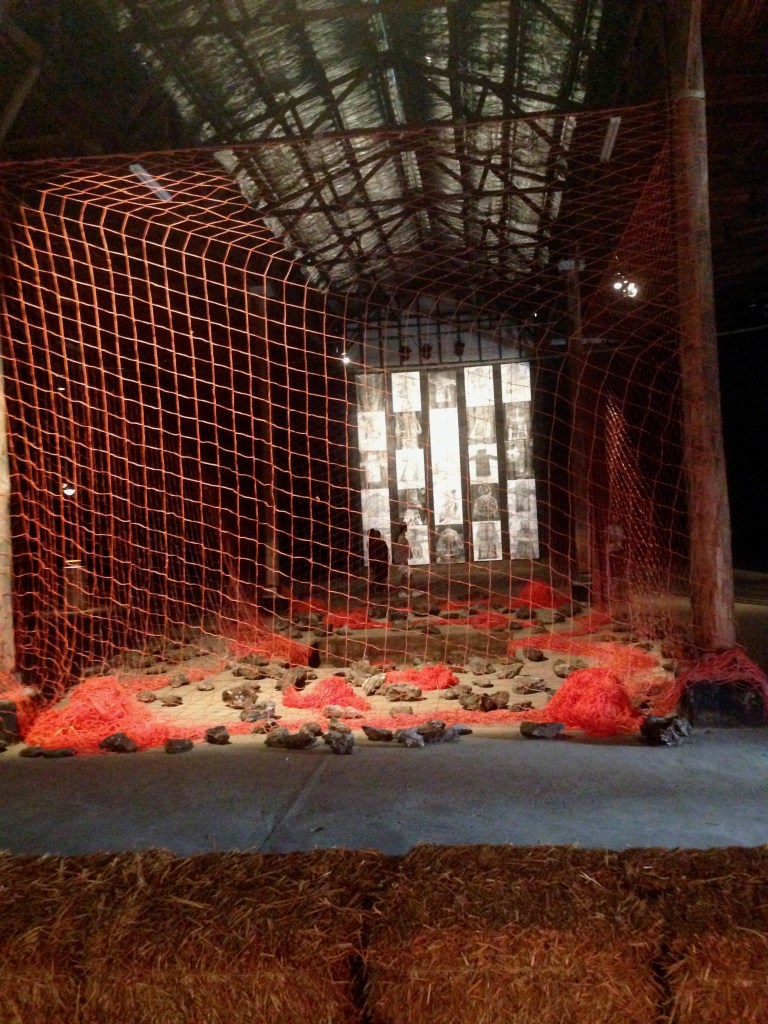
The centrepiece of Pedley’s work is a huge orange net that was made for another artwork some years ago by volunteers in a small fishing village in the Japanese Inland Sea. Repurposed here, and hung around the four great pillars of the Fuel Tank, enclosing chunks of rock, it creates a shrine-like space that has one thinking of traditional Japanese life, zen gardens, and the underwater net that was lethal to two of the six submariners. A wall of ghostlike rubbings from clothing from the fishing village and a military museum completes this very powerful work.
Unfortunately, the remaining work, Gary Warner’s Orange-Net-Work-Soundings, a soundscape that accompanied Sue Pedley’s work, was inaudible when I was there, drowned out by the soundtrack of the videos.
It’s a terrific exhibition. Photos don’t do any part of it justice, but here’s what I could come up with.
I’ve been neglecting the blog a little bit lately, because other things (I think they’re collectively called ‘life’) have intervened. No tired horses involved, I just like that song.
One of the distractions has been my role as offsider to the Emerging Artist. On the weekend a small mob of us went up to Fingal Bay north of Newcastle to shoot a short video. I took this little mother and son snap. (Mother is Emerging Artist, son has short film Red Ink showing at the Sydney Film Festival as part of the Lexus Australia Short Film Fellowship Gala Screening).
I’d set my phone to remind me this morning at a quarter past nine – 8.15 am Japanese Standard Time – to mark the 71st anniversary of the bombing of Hiroshima by the USA.
I sat for a minute in silence. Life went on around me without a perceptible ripple. I thought I should spend another couple of minutes making my minute into a social event. (I believe that the opening ceremony in Rio fell silent for a minute – but I wasn’t watching the telly.)
So much fuss is rightly made here of the number of Australians who died in a single day on the Somme in 1915. But that appalling tragedy involved men who were combatants – they had been sent by their government to kill and, as it happened, be killed. The people who died at Hiroshima, instantly or in the long agony of radiation disease, were largely civilians – babies at the breast, old women on their deathbeds, cooks, poets and potters – going about their ordinary lives in the city of two rivers, as much as life could be ordinary in that country at that time. And the Hiroshima anniversary creates hardly a blip on the Australian public radar these days.
The horror of the atom bomb took a while to be generally known, and was overshadowed by the relief of the war ending. What struck me this morning was that my generation is the first to be born into a world where nuclear weapons had already been used to kill people, the first to be born after what scientists now call Year Zero (because radiation dating has to be calculated differently after 1945), the first to live with the knowledge that human beings have the power to wipe ourselves out, and so – for many of us – the first to spend a lot of energy keeping that knowledge away from the front of our minds. The temptation to think small, to look after number one, to cultivate one’s garden, to turn away from the suffering of other people, to live in a bubble, became significantly stronger 71 years ago today.
A minute of silence goes a small way to opening the mind to the possibility of shrinking that sphere of numbness, of embracing the whole world and all that it has to offer, the joys and challenges as well as the horrors.
Since this is mainly a book blog, I should mention some books. Paul Ham’s Hiroshima Nagasaki is an excellent narrative historyof the planning for the bomb and the dropping as it happened. Robyn Gerster’s Travels in Atomic Sunshine and subsequent articles (here, and here) are excellent on Australian responses, as is Michael Bogles’ piece in Overland 218 (my blog mention here).
National Art School degrees were conferred today. The Emerging Artist whipped her cap and gown off before I could take a photo, but consented to be snapped before leaving the school.
She says that when the head of the institution handed her the testamur, he said, ‘You look terrific.’ And she does.
Dimity Figner, feminist, artist and generally lovely person died on Thursday in a nursing home in Nowra. She had been sick for some time, and some of her many friends were with her at the end.
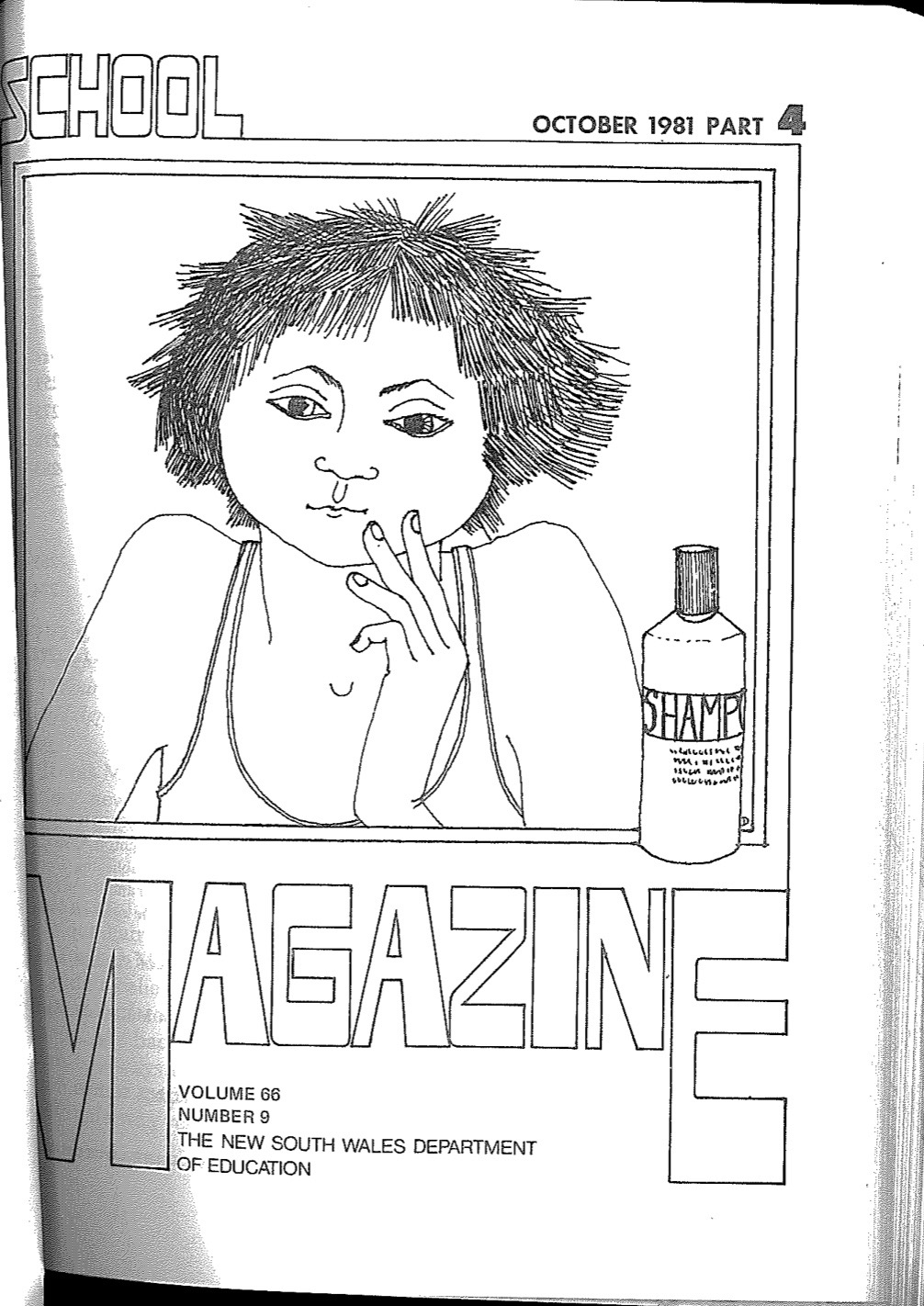
There was a retrospective exhibition of Dimity’s art in Nowra earlier this year, and she was active in the Older Women’s Network until recently (at that link is a photo of Dimity and 13 other rambunctious older women celebrating the publication of a history of Nowra OWN). In the 1970s she designed a beautiful Women’s Liberation symbol that has been widely used on badges and publications in Australia. She briefly illustrated for The School Magazine in the early 1980s. Back when I used to run into her regularly I could count on her to say she liked my hair just about a day before my official grooming consultant told me it was time to visit the barber.
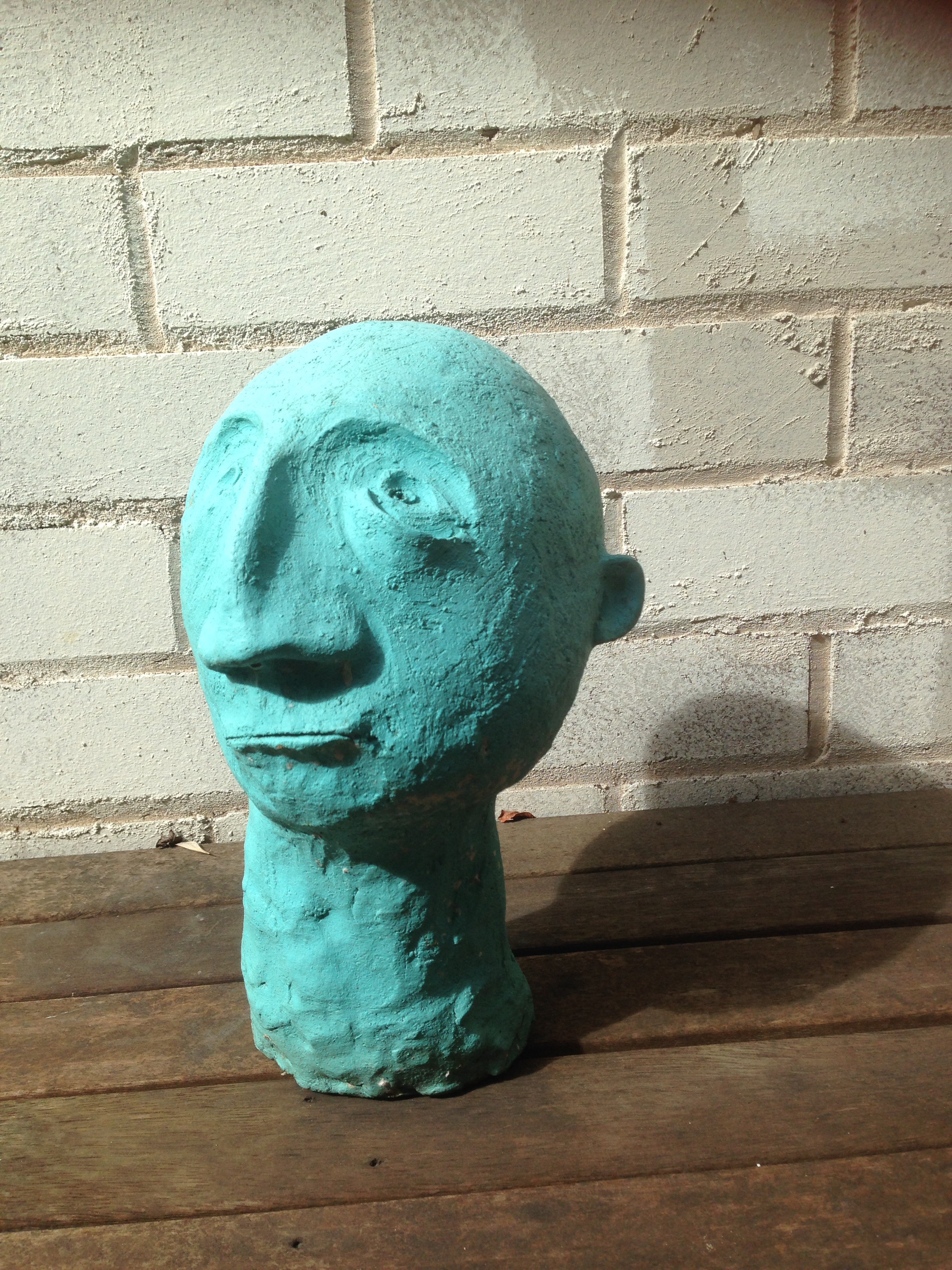
One of our most cherished art acquisitions is this wonderful little bust, her creation:
Many people will miss Dimity. I’m one of them.
Added on 6 May: I don’t think many people will be aware of Dimity’s work with The School Magazine. Here’s a scan we managed to get of a 1981 cover by her (difficult if not impossible to get a perfect scan, as the bound volumes don’t flatten out without damage):
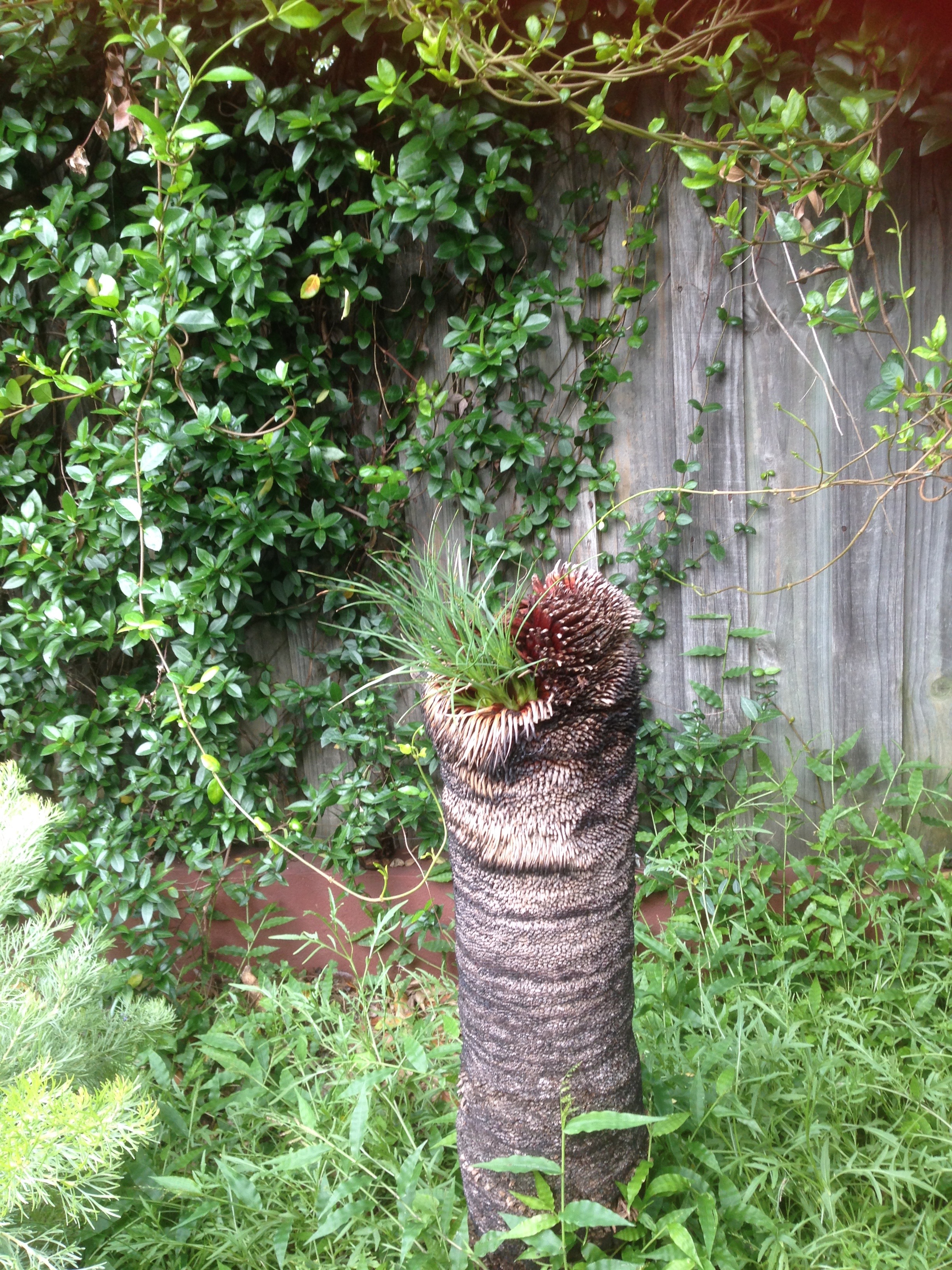
When we moved to our current house six years ago, we transplanted our beautiful xanthorrhoea (grass tree) from the pot in which it had thrived just outside the kitchen window in our old house into the ground in our new back yard. After about two years, it was ailing. On the advice of a local nursery owner we cut it back severely, and for a time it revived, even putting out a spike for the first time ever. I blogged about it here.
But the revival was short lived. The spike fell off and then it turned very sick and brown. I followed the folk advice and set fire to a cardboard carton on its head, but to no avail. It really really died and has stood as a memorial to itself for at least two years.
Our weekend was chockers with fabulous art. On Saturday we visited the Carriageworks for El-Anatsui exhibition with not only his breathtaking tapestries made from discarded wine bottle caps and wire, but also some older works: ceramics, wood carvings, drawings. Then into town for one part of the Destination Sydney exhibitions – Margaret Preston, Grace Cossington Smith and Cressida Campbell at the S H Erwin. Today we went in late morning to the MCA for the incredibly busy work of Grayson Perry, and then an excellent exhibition of work from Tiwi artists. And there were Lloyd Rees’s extraordinary landscape drawings from the 1930s at the Sydney Museum on the way home.
But the biggest thrill happened in the street. I’ve passed Jenny Holzer’s I Stay many times but never stopped to look at it. It consists of text rolling up a couple of slanting pillars outside an office block in the CBD. It turns out that the text is excerpts from a large number of Aboriginal source – historical documents, poems, essays, etc. Only a few words are visible at any one time and the sources aren’t identified (unless, as a plaque explains you go to Jenny Holzer’s website http://www.istaybyjennyholzer.com/). The big revelation today was that if you stand and read the text for a couple of minutes, not only do you absorb the content of the fragment that happens to pass along the column at that time (in our case it was some thing about the colour of water), but when you look away, the rest of the world looks shaky and insubstantial – the buildings around you, all the solid realities of post settlement Sydney – seem to waver like mirages. The word that comes to mind is unsettling.
It’s not a vast exhibition, but its powerful. There are stunning video works – a giant screen on which the camera glides endlessly through beautiful bush, and a room with six portraits of Wiradyuri elders looking out at us from significant locations in the Bathurst area. The main room has a musket and a spear on the wall (though the image above, lifted from the BRAG website, is missing the musket’s lethal bayonet), and in front of them on the floor a circular arrangement of flint fragments and grevillea flowers: the catalogue explains that the stone is waste from a Wiradyuri and Aboriginal community stone-tool making workshop. In a second room an elegant shape on the floor, made up of mussel shells cast in bronze mixed with lead musket balls, points at a pile of dusty potatoes – again, the catalogue adds to what’s already a strong image by telling us that the Bathurst wars of the 1820s began when a Wiradyuri family was massacred over some potatoes. There’s a room with surveyors’ maps and traditional parrying shields around the wall, and another with the cadavers of six small trees painted gold. All of it is very beautiful, and all invites the viewer to find out more about the history of the Wiradyuri wars, and to meditate on that history.
If you’re interested you can download a PDF of the catalogue from the Bathurst Regional Art Gallery web site, but I recommend taking the trip to walk through the six small rooms of the exhibition in person. Apart from anything else, it’s a stunning example of work created by a very fine artist collaborating humbly with a community. In the catalogue, the Bathurst Wiradyuri and Aboriginal Community Elders say they have been working with Jonathan, ‘directing him, teaching him and supporting him’. The drive from Sydney isn’t so long. We stayed overnight because the weather was threatening, but we could have done it as a day trip.
There is one room we didn’t see. It features two possumskin cloaks, made by members of the local community and evoking a moment when Windradyne, the great warrior leader, presented a similar cloak to Governor Macquarie. It was our good fortune to visit the gallery while a weaving workshop was happening in that room, so we stayed out. (We did see the gorgeous cloaks in a room that isn’t part of the exhibition but which, on Saturday, was temporarily home to them and an array of objects woven by local people.) This was good fortune for two reasons: first because during our visit the gallery was filled with the sounds of Aboriginal people enjoying each other’s company, in effect proclaiming their resilience; and second because two elders generously absented themselves from the workshop to chat to us whitefellas about the cloaks and the woven objects, about the Wiradyuri dictionary app, about the uses of some woven objects (‘Good for carrying babies, but not much good for water. That’s why we have bottles for beer.’).
And it’s November, so here’s an attempt to say in verse what I can’t figure out how to say in prose:
Rhyme #5: An exhibition in Bathurst, November 2015
Steel v hardwood, stone and blossom,
mussel shells v musket balls,
prim English maps, cloaks of possum.
Unsmiling elders on the walls
Look out from Country. Devastation
here finds mute commemoration.
The Romans made their solitudes
and called them peace. Such platitudes
prevail now too, the past obscuring.
But lively voices here resound,
Wiradyuri are still around.
They greet us, chat with us, ensuring
that we whitefellas will own
that solitude, but not alone.
Hidden is an outdoor sculpture exhibition that takes place amongst the gardens and graves in one of the oldest sections of [Rookwood] Cemetery. The exhibition invites artists to ponder the notion of history, culture, remembrance and love and allows audiences to witness creative expression hidden throughout Australia’s largest and most historic cemetery.
This is Hidden’s seventh year. I’ve been in previous years, and there’s something marvellous about the sculptures placed among the tombstones. (It’s in an older part of the cemetery – no one will see the grave of someone who died recently being visited by an antic Don Quixote or a bright perspex rainbow.)
This year the Emerging Artist formerly known as the Art Student is part of the exhibition. Her piece, Bush Memorial, comprises two giant ceramic banksia seeds. Yesterday we installed it.
This slideshow requires JavaScript.
2.
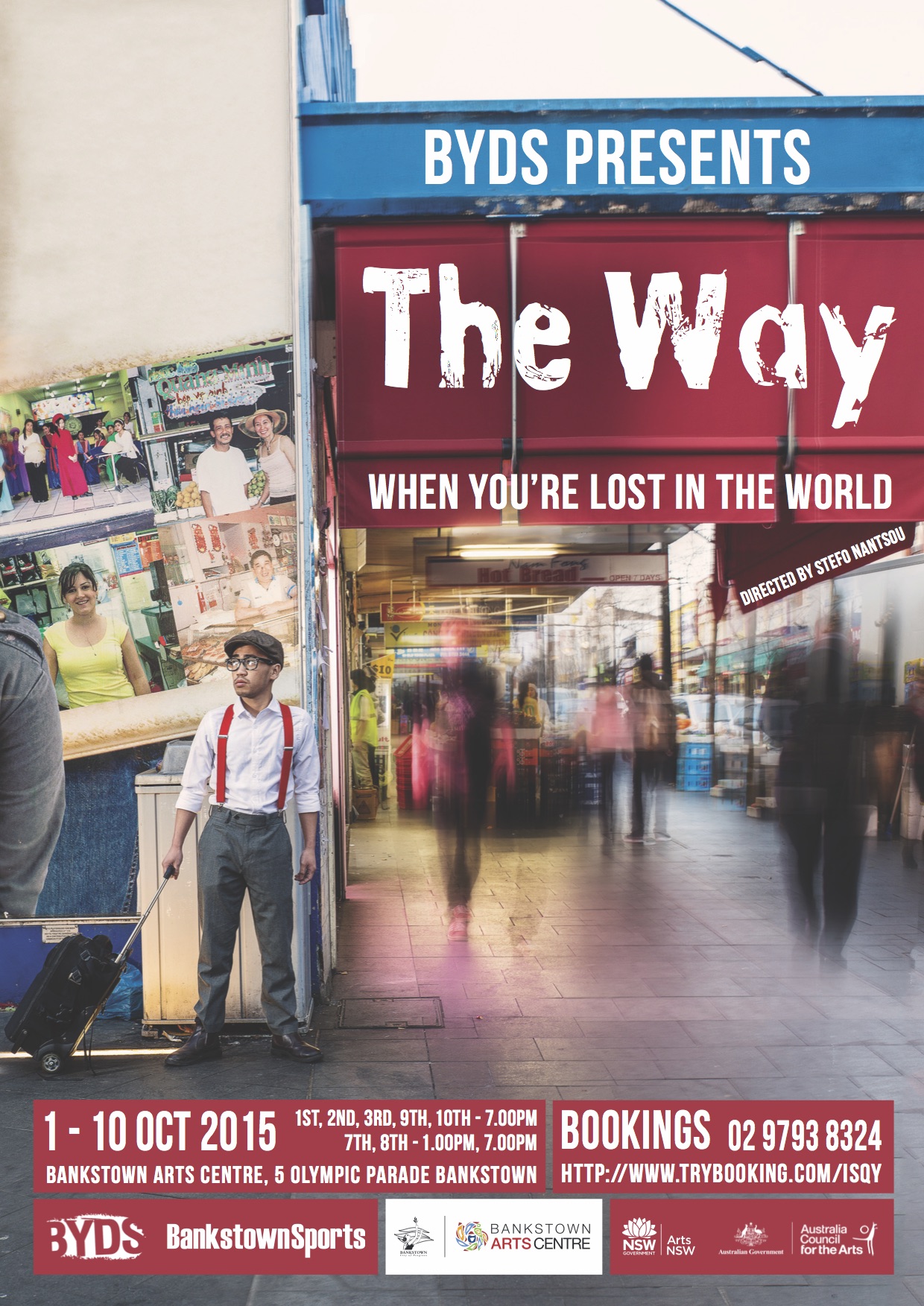
THE WAY: Bankstown Arts Centre, 1-10 October. (It’s not free but it’s unbelievably cheap)
This is the third play in a trilogy that has grown out of a collaboration between BYDS (Bankstown Youth Development Service) and the Sydney Theatre Company. I saw the second play, The Other Way, in 2013. The collaboration of professional actors with local community members, led by actor/ writer/ director/ musician Stefo Nantsou, produced a brilliant evening of theatre. Here’s a bit from my blogging about it:
This isn’t professional/industrial theatre, where success is judged by the length of the run and size of box office takings. It’s community, where the division between audience and performers is porous, where there’s an intimate sense that people are telling their own stories and those of their neighbours.
There’s a wonderful scene where a group of boys are teasing/harassing a group of girls, who are giving back as good as they get. In the middle of the chiacking and posturing one of the girls looks one of the boys full in the face and says, ‘Hello!’ and the group falls silent. The whole thing falls apart, moves onto a different plane. Sure, it was scripted and stylised, but it felt like it was really happening right then and there.
I gather that The Way has a similar structure to its predecessors: over a single day in Bankstown, storylines intersect as people from diverse backgrounds experience their multitudinous joys and crises. I’m looking forward to it.
The Other Way was evidently seen by a relatively small total audience over its short run. The Way has eight scheduled performances. If you live in Sydney I recommend that you put it in your diary and book seats soon. You can read more about it here. Bookings: 02 9793 8324 or http://www.trybooking.com/isqy





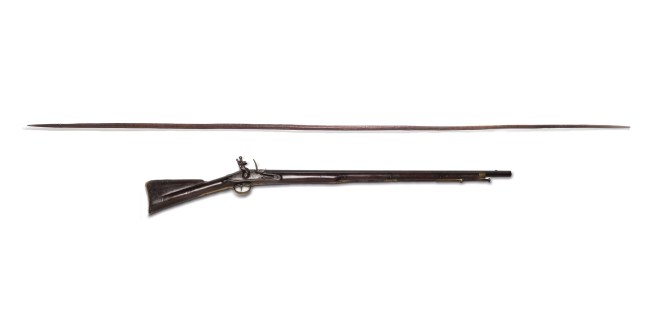 It’s not a vast exhibition, but its powerful. There are stunning video works – a giant screen on which the camera glides endlessly through beautiful bush, and a room with six portraits of Wiradyuri elders looking out at us from significant locations in the Bathurst area. The main room has a musket and a spear on the wall (though the image above, lifted from the BRAG website, is missing the musket’s lethal bayonet), and in front of them on the floor a circular arrangement of flint fragments and grevillea flowers: the catalogue explains that the stone is waste from a Wiradyuri and Aboriginal community stone-tool making workshop. In a second room an elegant shape on the floor, made up of mussel shells cast in bronze mixed with lead musket balls, points at a pile of dusty potatoes – again, the catalogue adds to what’s already a strong image by telling us that the Bathurst wars of the 1820s began when a Wiradyuri family was massacred over some potatoes. There’s a room with surveyors’ maps and traditional parrying shields around the wall, and another with the cadavers of six small trees painted gold. All of it is very beautiful, and all invites the viewer to find out more about the history of the Wiradyuri wars, and to meditate on that history.