From Freecycle

Freecycle is a wonderful system for giving away stuff without leaving it sitting on the nature strip exposed to the weather. Occasionally it’s exploited by secondhand dealers (which I realised after the same person had taken four large pieces of furniture off our hands – I will no longer respond to her emails), and people do post requests for things that may be hanging around unused in other people’s houses –baby clothes, car seats, etc. A Freecycle member named Chris seems to have had some kind of crisis induced by the optimism of some of these requests, and struck back today with this lovely bit of outrageousness. I especially like the opening sentence, a nice reference to the kinds of notes that often accompany requests and offers:

Subject: [freecycle_sc] Wanted :  Lamborghini preferably 2009 model

Only genuine offerers need reply to this email I really don’t want anyone to waste my time.

If you have one up on blocks in the backyard I would be very interested in re registering it and using it for sporadic trips to the nearest ALDI supermarket for the weekly shopping.

I know that this is a really long shot but if you also have roof racks to suit that would be great as I was hoping someone here in freecycle land has a spare jet ski in their garage that they also don’t use any more that I could place on said racks and transport it at breakneck speed to the nearest waterway when I have the urge to use it.

Thanks in advance and happy freecycling

PS . I don’t want to bug you all but some straps to tie down the jet ski would be awesome. and possibly a few dollars toward the first tank of fuel wouldn’t go astray.

This almost made up for Marion being kicked off Master Chef (though Aaron’s dismay at beating her was one of the sweetest things I’ve seen on the box for a long time).

Poetry, dementia

It seems Penny isn’t the only one to find that poetry with strong rhymes goes down well with people with dementia. Harriet the Blog quotes The Orlando Sentinel about the Alzheimer’s Poetry Project:

The Alzheimer’s Poetry Project, founded by New York poet Gary Glazner, is not built on the traditional, stand-at-the-podium-and-read poetry recital. Rather, it uses the simple rhymes typically learned in childhood or whimsical works created on the spot with audience participation. The facilitator moves among the seniors, holding their hands, touching their shoulders, gently prodding them to share their thoughts, reawakening long-ago memories.

‘There was a guy in [one] group, his head was down, he wasn’t participating, and I said the Longfellow poem, “I shot an arrow in the air…”‘ Glazner says, recalling the initial workshop that spawned the project. “And his eyes suddenly popped open, and he said, “It fell to earth, I know not where.” In that instant, he was back with us and was able to participate. It was very powerful.”

The Project’s web site has a book for sale with 75 poems they use.

Reading while walking, episode 732

Reading a book while walking is different from walking while wearing earphones. A little moment from yesterday illustrates:

I was walking the dog home from the Orange Grove markets reading the Patrick White novel that we’ll be discussing at our next Book Group meeting.

A voice from behind me called out, ‘Is that The Tree of Man?’ It was Dancer1, one of the men from the Group, behind the wheel of his car emerging from the side street I’d just crossed. ‘Where are you up to? The flood or the fire?’

‘Finished the flood,’ I called back. ‘Still waiting for the fire.’

‘I’m loving it.’

‘Me too. I was completely bowled over by the first four chapters.’

‘Yes, I kept saying to my wife, “Listen to this bit!”‘

Go on, have a conversation like that with someone listening to their iPod.

—–
1This inaugurates a policy of giving the chaps from the Book Group noms de blog.

Itstorm

It’s a long time since the Art-Student and I have been to a Gleebooks event. Tonight we went to a discussion of a book (pic on the left leaves off the first two letters of its name) about Kevin Rudd’s handling of the Australian branch of the Global Financial Crisis. As we arrived the A-S observed that it was a different crowd –  men were wearing ties, and women were coiffed. That plus the fact that Malcolm Turnbull was chairing the discussion should have warned us to sit next to the aisle instead of right against the wall where early exit was virtually impossible.

As Upstairs at Gleebooks was filling to capacity, Malcolm Turnbull took the microphone to do a bit of a warm-up. He asked how many of us knew the original owner of Gleebooks and when only a couple of us raised a hand he said he’d give us a bit of history. After a couple of disparaging hyperboles about Tony Gallagher’s body, he told is that he had been a teacher at Malcolm’s high school, where he had produced King Lear with young Malcolm in the role of Edgar. End of history lesson, beginning of anecdote about young Malcolm getting into a scrape.

The authors of the book, an economist and a political journalist, joined Turnbull on stage. I can’t say that the conversation that followed was very enlightening. We were told, for instance, that the global financial crisis was brought about by government being too much at the centre of the US economy (it was Turnbull the corporate warrior who said that), that Rudd exaggerated the severity of the crisis (that was Turnbull the politician) and that Rudd deliberately downplayed the severity of the crisis (that was the journalist). I suppose the A-S and I had gone there naively hoping for some kind of insight into what had happened to Kevin Rudd’s government. Instead, it was the kind of crowd where every time one of the panel referred to him as the former prime minister they successfully invited widespread sniggering. The book may be interesting and insightful, and there were indications that at least one of the authors had a more nuanced view than Turnbull’s (in short: ‘Rudd did it all wrong, except overseas. and he should have listened to me’). But the evening left a bad taste in the mouth – and to judge by the questions, there were a number of people in the audience who shared out response.

I’m pleased to report that when a woman asked the panel’s response to her sense that Rudd and Co had deliberated talked up the financial crisis and swine flu to scare her, both the authors disagreed, and even Malcolm could tell that truth ought to take precedence over an opportunity to denigrate a political opponent.

Coming into the Country

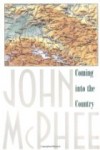
John McPhee, Coming into the Country (Farrar, Straus & Giroux 1977, 1991)

I had no obvious reason to read this book. It’s about Alaska, after all, written more than 30 years ago, originally as three articles spread over eight issues of The New Yorker and dealing with such historical dead ducks as the vote to move the state capital from Juneau to somewhere more accessible1: more than 400 pages of dated journalism about a distant, cold place.  But a discerning friend gave it to me a while back with the implication that it was something I’d enjoy. It turns out he was right.

On a recent Book Show, Philip Gourevitch – himself among other things a writer for The New Yorker – described McPhee as having a ‘wonderfully informative, wonderfully vivid way of conveying knowledge as pleasure rather than as sort of eat-your-vegetables data.’ That’s spot-on: history, politics, geology, geography, climatology, anthropology, zoology – these pages offer a a huge diversity of knowledge for pleasurable absorption. The explorer Roald Amundsen rides into the book as naturally as he rode into the town of Eagle in 1905. The ‘winter bear’ phenomenon, in which a bear gains an armour of ice that makes it invulnerable to spears or even guns (shades of Iorek Byrnison) is mentioned almost in passing. There are helpful hints about how to leave a log cabin in the woods so as to minimise any damage by curious bears – not that you or I will ever need such hints, but reason not the need. The third essay in particular, which gives the book its title and accounts for more than half the pages, explores the intricacies of life in and around the tiny ‘city’ of Eagle, on the Yukon River, near the Canadian border, entirely through McPhee’s relationships with people there, interspersed with forays into history and an occasional string of quotes from the judgemental gossip that thrives there as in any small community. Eagle is divisible into the Christians, the bootleggers, the ‘river people’ (who live, illegally, out in the bush) and the Indians (who mostly live in Eagle Village, a couple of miles down the river). There’s plenty of animosity between these groups, but McPhee seems to have developed strong, trusting relationships in all groups – and the reader is invited to sympathise with them all as well.

Gourevitch said on The Book Show:

Coming into the  Country remains one of the two or three essential books about the nature of Alaska, and by that I mean its character, the people who are there, why they’re there, what it means to be Alaskan, what the state is in America.

I was surprised to read that only a thousand people voted in the 1974 Alaskan gubernatorial elections. Suddenly Sarah Palin’s governorship looks a lot less impressive. Likewise, having shot a moose is less of a feat when you consider that if you live in one of the larger population centres you have to be very well off to be able to afford to go hunting, and we can be fairly sure that the Palins weren’t among the people who choose the extremes of life ‘in the country’, where moose is a staple food.

McPhee evidently lived in Alaska for months if not years on the way to this book, long enough to get to know some of its people well, to learn the peculiarities of language as spoken there, to develop a deep feel for the country, to amass a vast store of fact and anecdote, to ferret out first-person accounts of incidents that had become legendary. This is journalism that’s not so much embedded as immersed.

There’s some wonderful nature writing, combining lyrical description with other perspectives as in this, from a much longer account of Mt McKinley:

The Alaskan Range elevates with a rapidity rare in the world. Its top is about two-thirds as high as the top of the Himalayas, but the Himalayan uplift is broad and extensive. if you were looking toward Mount Everest from forty miles away, you would lift your gaze only slightly to note the highest in a sea of peaks. Forty miles from McKinley you can stand at a bench mark of three hundred and climb with your eyes the other twenty thousand feet. The difference – between your altitude near sea level and the height of that flying white mountain – is much too great to be merely overwhelming. The mountain is a sky of rock, seemingly all above you, looming. Until it takes itself away, you watch it as you might watch a hearth fire or a show in colour of aurorean light. […] The Athapascans are not much impressed that a young Princeton graduate on a prospecting adventure in the Susitna Valley in 1896 happened to learn, on his way out of the wilderness, that William McKinley had become the Republican nominee for President of the United States. In this haphazard way, the mountain got the name it would carry for at least the better part of a century, notwithstanding that it already had a name, for uncounted centuries had had a name, which in translation had been written, variously as The Great one, The Mighty One, The High One. The Indians in their reverence had called it Denali. Toponymically, that was the mountain’s proper name.

Possibly my single favourite passage is about fifty-five-gallon drums:

A fifty-five-gallon steel drum is thirty-four and three-quarters inches high and twenty-three inches in diameter, and is sometimes called the Alaska State Flower. Hundreds of them lie around wherever people have settled. I once considered them ugly. They seemed disappointing, somehow, and I wished they would go away. There is a change that affects what one sees here. Just as on a wilderness trip a change occurs after a time and you cross a line into another world, a change occurs with these drums. Gradually, they become tolerable, and then more and more attractive. Eventually, they almost bloom. Fifty-five-gallon drums are used as rain barrels, roof jacks, bathtubs. fish smokers, dog pots, doghouses. They are testing basins for outboard motors. They are the honeypots of biffies, the floats of rafts. A threat has been made to use one as a bomb. Dick Cook, who despises aircraft of all types, told a helicopter pilot he would shoot at him if he ever came near his home. The pilot has warned Cook that if he so much as points a rifle at the chopper the pilot will fill a fifty-five-gallon drum with water and drop it on the roof of Cook’s cabin. Fifty-five-gallon drums make heat stoves, cookstoves, flower planters, bearproof caches, wood boxes, well casings, watering troughs, culverts, runway markers, water tanks, solar showers. They are used as rollers for moving cabins, rollers to smooth snow or dirt. Sliced on the diagonal, they are the bodies of wheelbarrows. Scavenged everywhere, they are looked upon as gold.

By the time I reached the end I could almost understand what some people find attractive about living in a place that gets to 40 below zero (Farenheit) and stays there for a good part of the year.
—–
1 When the book was first published, the quest for a new capital was still under way, and supplied the backbone for the second essay, ‘What They Were Hunting For’: I had to look up Wikipedia to discover by what chicanery the vote was overturned.

Later: WordPress’s automatic link to possibly related blog posts went to Wickersham’s Conscience,, in which an Alaskan blogger echoes Philip Gourevich’s evaluation:

If you want to try to understand Alaska, its people, its politics and why I live here, this book is the best place to start. This book is a great writer’s greatest book.

For science

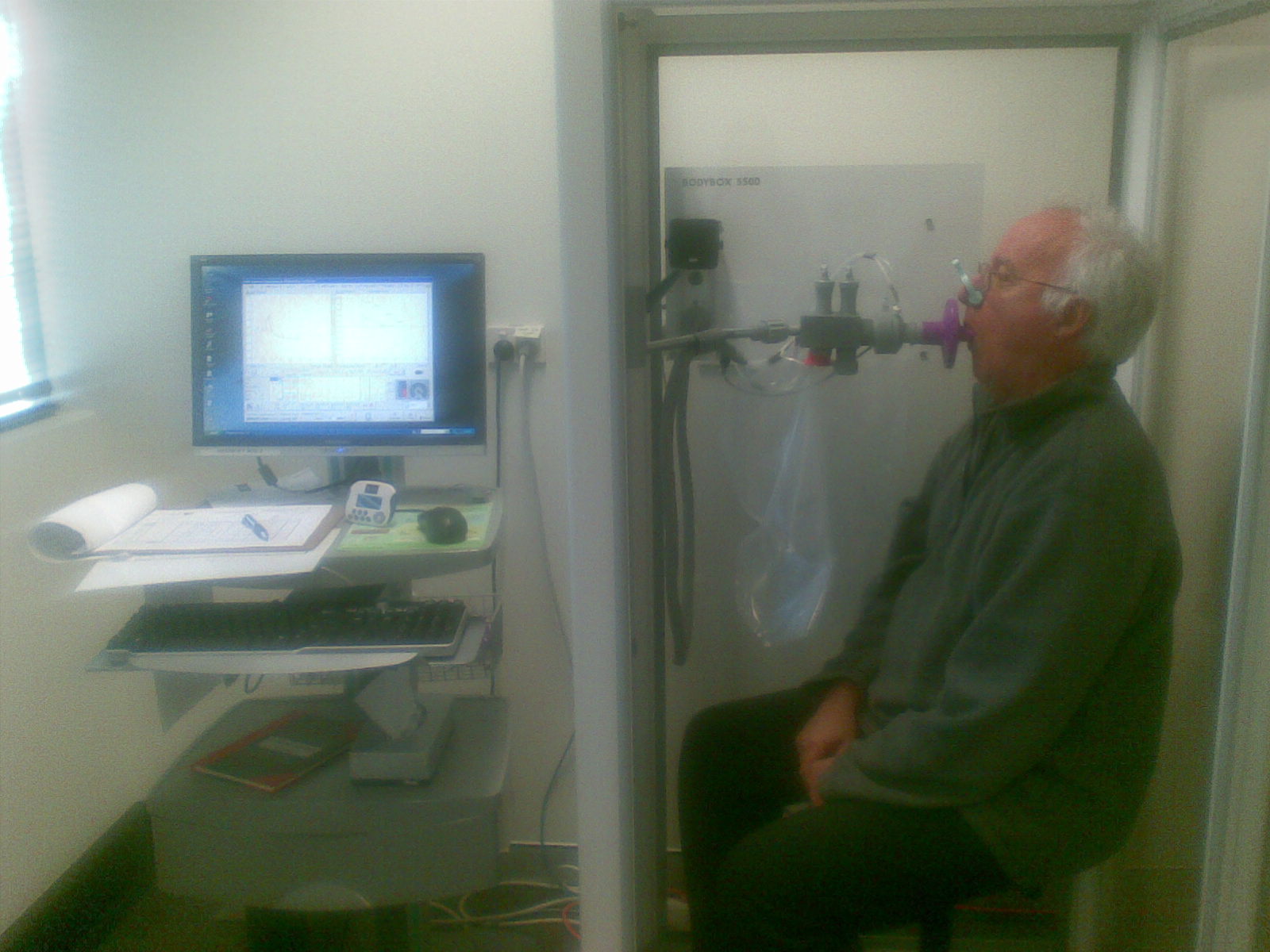
I’m mildly asthmatic, and every now and then lend my body to science. Today I spent a couple of hours in a high-tech environment doing mildly undignified things – mainly breathing into various gadgets.

Jess, the charming PhD student who told me what to do and harvested the data I generated, kindly agreed to take this photo for you, dear reader. I am in an airtight cabinet called, I think, a Body Room. There were no body bags in sight.

I for one welcome our new double X overlords

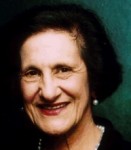
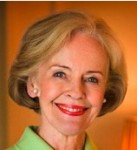
As pointed out in the comments over at Still Life with Cat, if you live in a certain part of the city of Sydney you’ve got this:


Lord Mayor


State representative


State Premier


Federal rep


Prime Minister


Governor


Governor General


Monarch

Savour the moment.

Oh, and be careful out there! Remember what happened to the last elected official who picked a serious fight with the mining companies.

The Book Group’s Race of a Lifetime

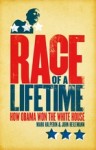
Mark Halperin and John Heilemann, Race of a Lifetime: How Obama won the White House (Penguin 2010)

Before the Book Group meeting:

This book’s US title is Game Change, with the subtitle Obama and the Clintons, McCain and Palin, and the Race of a Lifetime. This is snappy and gives a fair idea of the book’s contents. So why the change to a lame and inaccurate title for this British edition? Maybe it was revenge on the US for renaming J K Rowling’s first book Harry Potter and the Sorcerer’s Stone.

The authors say in their introduction that they set out to give ‘an intimate portrait of the candidates and spouses who (in our judgement) stood a reasonable chance of occupying the White House’ after the 2008 election. They conducted more than 300 interviews with more than 200 people between July 2008 and September 2009, while memories of the election campaign were still fresh, and produced a book bristling with direct quotes from behind the scenes. I wouldn’t describe much of it as intimate in any real sense, but it’s got a kind of gossipy fascination. The Obamas, the McCains, the Edwardses and especially the Clintons are all big characters, and all have marriages that have had to withstand unbelievable strain. Todd Palin gets mentioned quite a bit, but doesn’t become a character in his own right, and not a lot of ink is spent on Sarah Palin herself – though what there is of her is even more bizarre than the press suggested at the time.

I don’t know that the book does much to deepen the reader’s understanding of the US political system in general or the 2007–8 election campaign in particular. The main take-home message seems to be that you don’t have to be some kind of sociopath to run for President or Vice-President of the United States, but it helps. Miraculously, Barack Obama doesn’t seem to be one. One does weep for US-style democracy, at least as seen through the lens of political journalism. I found myself empathising with the widespread fear of democracy in mid nineteenth century Australia, expressed in 1853 by John Plunkett, Attorney General of the colony of New South Wales:

All serious convulsions are carried out by demagogues; as a boiling cauldron throws its scum to the top, so in all social convulsions unworthy persons will be sure to get to the top, and betray the people for their own selfish purposes. The people left to themselves, and uncontrolled, will be hurled on to ruin by the ruffians who make them their dupes.

(Quoted in Peter Cochrane, Colonial Ambition, MUP 2006, p 379)

Not that ruffians and demagogues prevailed in 2008, but one gets the impression that without ruffianly behaviour and demagoguery, and certainly not without being able to deal with lashings of both, no one could ever become Potus.

Kate Jennings’s Quarterly Essay, American revolution: The fall of Wall Street and the rise of Barack Obama, though not an insider’s account, probably casts more light on the issues at stake in the campaign and is almost as thrilling a ride. I do feel an itch to read an account as candid and thorough, and occasionally lurid, as this about an Australian election. Sadly, I doubt if even Tony Abbott, for all his lycra and chest pounding and people skills, could equal any one of a score of moments in this rip-roarer.

After the meeting:

Tonight we were five, then six and eventually seven, the last arrival being delayed by an argumentative accountant and a locked car park. The conversation folded back on itself a number of times, with recaps and revisitings. Most of us, I think, had found the book interesting, though a number hadn’t been able to finish it – the apparent weighting of the scales towards Obama was a factor (either the Clintons are actually really weird or the journalist/authors decided it was good ‘narrative’ to portray them that way), an absence of politics-tragicality on the part of the non-finishers was another: do we really care about advice from yet another aide that was disregarded by yet another candidate? As an innovation tonight was also discussed an article – on climate change – and though none of us was ardent about the article, the juxtaposition emphasised the way the book favours personality above policy and implies that the US democratic process does likewise. I think its true to say we were all shocked and awed by the sheer amount of money spent on presidential campaigns.

The fact that the ABC had been reporting a leadership challenge in Canberra meant the book’s holding power was tested. Once the conversation veered – even lunged – towards a debate about Rudd and the intense stupidity of the NSW Right of the ALP, who are largely responsible for Rudd’s losses in the polls and now (I’ve learned since coming home) have decided to dump him, none of us was wildly enthusiastic to get back to the book.

Mollie news

Mollie is in a bad way.

It’s been months since she could walk. She has been using a wheelchair, sitting up at her spot in the dining room for a good part of each day, and being wheeled to and from her room. At Christmas Carols last year, the former manager of our institution noticed that she seemed uncomfortable in the chair and instructed – right there, right then, with ‘The Little Drummer Boy” banging on over the PA system and hundreds of elderly people being herded in all around us – that a sheepskin pad to be put under her, as a precaution against pressure sores. As it turned out, the precaution wasn’t enough, and somehow she managed to develop a large, ulcerated sore on her bottom. A tiny sore, even a red spot, is a signal for complete bed rest for a couple of days. By the time this one was noticed, Mollie had to go to bed indefinitely. Several weeks  and multiple courses of antibiotics later, the sore is showing no sign of ever healing. Presumably because of the pain, Mollie pretty well stopped eating for a while and though she is eating again now (we’re told), she is shockingly thin, and spends most of her time sleeping. She is now being given morphine for the pain, so she may be in a narcotic trance rather than actually sleeping.

On the weekend, Penny noticed that Mollie’s skin had a yellowish tint to it. Imagining that this could be a sign of something seriously wrong with the liver, she spoke to the chief nurse. When she said that her brother was in Europe and couldn’t get back in less than a fortnight, ‘Oh,’ said the nurse, ‘two weeks should be all right.’ This was the first indication from the nursing staff that death might be in the air. ‘How long would he be away if he didn’t interrupt his trip?’ the nurse asked next. When Penny named a date later in July, she responded with an ominous, sympathetic twist of the mouth.

She hardly vocalises at all now, and her facial expressions are hard to read, but she looks you full in the face, grasps your hand firmly, and sometimes reaches up to stroke a visitor’s face.

From the family archives: skills

Not really from any archive, but from my mother’s letters, here’s this gem. In 1972, when my nephew Matthew was five years old, my mother was told of the following conversation – not (‘of course’) by any of the protagonists. The only background you need to know is that Matthew and his family had Oxley Creek flowing past the back of their Brisbane home, and there was a little rowboat pretty much permanently moored at the bottom of their yard

Matthew: Daddy, I can  swim.
Michael (Matthew’s father): How do you know? It’s winter and the pool is empty.
Matthew: I fell out of the boat.

My mother’s comment: ‘Thank God he could swim, eh?’