I treasure my memories of Martin Johnston from when we were both in our mid 20s. I was an Eng Lit student, he was a poet – an intense, chain-smoking, introverted writer of largely incomprehensible but manifestly learned poetry. I was in awe. But not just awe: I loved hearing him read – it was like being taken to a different part of the brain. I don’t think I grasped the depth of feelings in the poems back then, dealing as many of them did, opaquely, with the death of his parents.
This book dates from well after those student days, but Martin’s voice is still vividly recognisable. Many of the poems remain impenetrable to me, but that doesn’t seem to matter any more. The pleasure is the main thing. There’s probably a profound reflection on poetry to be made here, something about it being important to take care what you read when young because those poems do to your brain what a magnet does when it strokes a lump of iron: they configure the molecules to be receptive to a particular kind of input.
That is to say, even though Martin’s poetry is austere, erudite, uncompromising, as I read it now I experience the joy and comfort of greeting an old friend. According to a despatch by John Tranter from the Poetry Wars (the 68ers vs the rest?), Les Murray said to Martin of the long sequence ‘To the innate island’: ‘It’s wonderfully rich, evocative and vivacious, but I fear you’ve left the poetry out.’ I have profound respect for Les Murray, especially since he accepted one of my poems for publication in Quadrant, but I can’t see that he’s right. Here’s the opening of the sequence (which admittedly reads a little =differently now in these post LOLcats days:
The small grey cat in the yard has a knack for the punctuational,
Confronted with unfamiliar yoghurt, it curls
bristling into a fluid query, later ingratiates
itself into tactful receding aposiopesis towards the garbage bag,
illuminated exclamation over the yellow light
of a butterfly to be slapped and broken, lays out evenings
in commas at the window, sentences from Proust
lapping to night where all cats are grey.
See what I mean? ‘Aposiopesis’? But if there’s no poetry in it, I’m easily conned.
I googled a phrase from this poem and came up with nothing, so I’m putting it up on the web for the world. It’s from Andrew Huntley’s Lyrical Ballast, Ode and Divers Poem, published (along with Martin Johnston’s first book, shadowmass, and Terry Larsen’s Tar Flowers) by Arts Society Publications in (I think) 1970. It was a big hit with student audiences.
An Essay on Criticism (for Martin Johnston)
Maisie were a critical
Severe she wore her bun
She lecturing on literature be grim.
Arnold he be engineer
He’s reading just for fun –
Maisie meaning all the world to him.
Maisie has her secret
She blush when she bethink:
‘Tide me woe I Arnold loving you.’
But engineer is simple
He silently and blink
So other love the neither lover knew.
He pass around her passage
She walk with head abstruse
But fingernail she clench into a page.
Poor engineering Arnold
What skulking is the use?
She bridges scorn, he building them in rage.
Thus pass they days in likewise
Till one day force his mind –
He burst upon a paper ‘I love you’.
The brain alit in lightning
He search and searching find
A blending rhyme that rhyming ‘Eyes of blue’.
In short he writing poem
His first and only work.
He nameless post to Maisie English Lit.
Her greenly eye she cast up from
The paper with a jerk
She running find her colleagues of the crit:
‘Oh someone be me sending
Such funny little verse
What drivel are this word upon the sheet.’
They look and fog their glasses
It torn to shreds, and worse –
For Arnold pass and hear them in their heat.
His ears start to burning
His soul it next to go
He sneak away before his hair catch flame,
For Maisie she were laughing
At all the love he know
And take apart he’s poem like a game.
Her echo follow Arnold –
He rush where to forget –
Go building bridges on the upper Nile;
And one day – is it accident? –
He fall and getting wet
And getting eaten by a crocodie.
Maisie now professor are
A virgin do I add
She going down ‘The Great Tradition’ way –
She whittles off the authors
She think they mostly bad
And glaring from her pedestal she say:
‘Dismiss dismiss disnissing
Minor minor miss
Discuss disgusted there is only one!’
Her nightmare re-occurring
(She always dreaming this)
She in the campus bookstore getting Donne.
She publish pile of article
She talk and talking talk
She crossing out in pen that mostly red,
She pouring scorn on versicles –
Through literature she stalk –
She only still and silent in her bed.
If moment had y0u faltered
O Maisie long ago
You spy the love that helplessly he send,
You might have found it Arnold
You might have come to know
A poem can be way to make a friend.
I can’t track Andrew down to get his permission. (If you read this, Andrew, please get in touch. Of course I’ll take it down if you want, but I do think it deserves to live.)
Added 22 June 2020: Andrew has given this poem as his contribution to the Recollections page on the website commemorating the 30th anniversary of the death of poet Martin Johnson (at this link).
Having mentioned the ‘sixty-eighters’ a couple of times on this blog, I poked around on the net to find out what I was talking about. It looks as if the idea of a distinct ‘generation of 68’ among Australian poets can be traced to John Tranter’s 1979 anthology, The New Australian Poetry: the work of twenty-four poets from Australian poetry’s most exciting decade. The notion of a ‘generation’ was challenged almost immediately by, among others, Rae Desmond Jones (‘the … highly successful anthology and the polemical introduction had only marginal relevance to each other’), but it has lived on. More recently, as one might have predicted, the 24 68ers have been portrayed as a mob of up-themselves, cliquish poetry warriors, and – also no surprise – have been defended against those charges. (The article by Alan Wearne on that last link demonstrates nicely that reality is more complex, interesting and benign than the labels might suggest.) When the Tranter anthology came out I was distracted by being a new parent and earning a living and the like, but during the late sixties and early 70s I had been a regular at poetry readings in Sydney (and once, memorably, in Canberra) and can testify that the poetic times were pretty exciting. I have a copy of a 1971 publication, We took their orders and are dead: An anti-war anthology(edited by Shirley Cass, Ros Cheney, David Malouf and Wichael Wilding), which captures some of the feel of the Moratorium Poetry Readings where elder statesmen of Aust verse like AD Hope shared a stage with as yet un-labelled 68ers like John Tranter or Vicki Viidikas and quite a few in-betweeners like, say, David Campbell. (The 68ers themselves, of course, are now either dead or approaching elder status.)
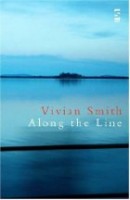
All of which is a convoluted lead-in to Along the Line, which I bought a while ago as my contribution to Salt Publishing’s Just One Book campaign. If memory serves, Vivian Smith read at those long-ago Moratorium readings. He’s certainly got a poem in the anti-war anthology. But he’s not a 68er – and not just because John Tranter didn’t include him. The poems in this book have a quiet formality that shows none of the influences or impulses that besotted the young ones in those heady days. The poems don’t spread across the page like spider webs catching and displaying apparently random flies of perception. They aren’t Chinese boxes or monkey puzzles. Neither the Ramones nor Bob Dylan are referred to even once. Iambic pentameters rule and straightforward subjects dominate: there are many arrivals in Sydney, the poet’s home, and at least as many returns to Hobart, where he grew up; there are poems about poetry, poets and painters, depression, friends alive and dead. I used the word ‘quiet’ , and that is the overwhelming effect: quiet reminiscence, quiet elegy, quiet observation, quiet wit, even, in ‘Deathbed Sketch’, some quiet philippic. Something of a quiet achiever, then, and reading him is a quiet pleasure.
Incidentally, ‘Return to Hobart’, the poem that appeared in the 1971 anti-war anthology makes another appearance here, unchanged except for much improved editing, which makes me realise that this is not a collection of new poems, but some kind of unspecified retrospective, which accounts for a sense of temporal dislocation – the poet’s daughter is a little girl on one page, for instance, and quite grown up a couple of pages later, and all those comings and goings between Sydney, Hobart and the rest of the world don’t have any discernible sequence.
Rather than say more about the poetry, let me declare an interest. Vivian Smith was the supervisor of my aborted MA thesis in the mid 1970s. Of course it wasn’t his doing that the thesis came to nought, though I wish I’d got my facsimile copy of Edward John Eyre’s Journals of Expeditions back from him before leaving the university. (Vivian, if you chance to read this and happen by some miracle to have those books still in your possession, I love your poems, please drop me a line …)
I have a vivid memory of a Year 3 elective in which Dr Smith gave a series of lectures to a tiny scattering of students. He was a quiet, unassertive lecturer, poles apart from, say, David Malouf, who lectured us with passionate brilliance on the Jacobean playwrights. At about the third lecture, there may have been only three of us in the audience – me up the front dutifully taking notes, and two older women (they must have been at least 28), one of whom has since gone on to wield power and influence in the ABC and elsewhere, the other to do impressive work as a journalist and writer, leaning together like grumpy conspirators. As Dr Smith was discussing the two main kinds of poetry being written in England during the post-war years, open and closed poetry if I recall correctly, the future journalist interrupted his flow:
‘Excuse me, but aren’t these generalisations almost completely meaningless?’
She had a point. Dr Smith responded quietly, modestly, and not at all defensively, ‘Yes, but they provide a structure that allows me to talk about the poetry.’
And he continued with the lecture, of which I remember nothing else. (Maybe I should be explicit here: I’m not suggesting that the poetry in this book is ‘completely meaningless’: rather that it isn’t out to impress, or seduce, or dazzle, but offers itself as a mind at work and play, take it or leave it.)
Beautiful day in Sydney, what better to do than take the bus into town for a free event at the Museum of Contemporary Art. ‘The Young Appreciators‘ was part of the fourth floor exhibition, avoiding myth & message: Australian artists and the Literary world (capitalisation not mine!), which seems to be mainly about artists and literary folk from the late 1960s and on – that is to say, not so much Sidney Nolan–Ern Malley as Tim Burns–John Forbes.
Today is the first time I’ve realised that there is a group of Australian poets known as the 68ers, or perhaps the 69ers: John Forbes, Robert Adamson and John Tranter (whom those in the know refer to by second name only), and quite a few others who are sometimes hard to see because of the long shadows cast by those three. The three speakers at today’s event are younger than the 68/9ers: the oldest admitted to 39, and I’d guess the other two were quite a bit younger. That is to say, none of them had been born in those days when I used to go regularly to poetry readings to hear John Forbes, who I thought was a bit of a smart aleck and not as interesting as, say Martin Johnston (another 68/9er who doesn’t seem to cast such a long shadow).
Anyhow, it was fun. The first speaker spoke of Vicki Viidikas, beginning her talk by saying she hadn’t known much about her until after she’d accepted the invitation to talk. Since I’d heard the ABC radio programs that she based most of her talk on (with acknowledgement), I can’t say I was riveted. The second tackled John Forbes, mostly, as she said, in terms of marginalia and biography – mentions of herself she’d found in published Forbes letters, for example. It was in her talk that I became aware that those poets of my youth have since become the subject of academic attention. The third, the elegant poet Tim Wright, speaking softly and swiftly enough to be near to incomprehensible to me, talked about Pam Brown, visibly writhing with embarrassment at having the subject of his talk actually in the room.
I loved the moment during the brief question time when Kerry Leves, another of the apparently short-shadowed 68/9ers, admitted that when he’d seen a particular person’s work on a table in the exhibition, he’d said, ‘I don’t remember her!’ It’s a small world, the world of Australian poets and artists.
And I got a real hand in my understanding of Pam Brown’s poetry. I managed to hear Tim Wright say that her work was in many ways similar to Jennifer Maiden’s, but that whereas you tend to read one of Jennifer Maiden’s poems right through to the end, and when you do you feel you’ve learned something (a true statement), with Pam Brown’s work it’s not like that. You tend to stop and ponder a phrase, stare into space, let it sink in or just be distracted (he called her the master of the poetry of distraction, or something of the sort), then go back and read it again: it’s perfect for reading on public transport. I realised that my unexamined working assumption that reading is a linear process – you start at the beginning and go to the end and derive meaning on the way – has made quite a lot of poetry hard to enjoy. And I do read it while walking the dog — surely picking up a bag of dog poo or playing tug-of-war with a stick between lines should have put me in the perfect state of mind. I’ll try again, not so much harder, as with less resistance to the forces of distraction.
I was mooching a book from someone in England, and they wanted me to take more than one book to make it worth their while. They had this illustrated Warning on their inventory. It’s a poem I’ve seen on feminist fridges for more than 30 years, so I added it to my list. I had it in mind to give to someone as a gift, but by the time it arrived – by surface mail – yesterday I’d forgotten who. So I gave it to the self-described poetry loather I live with.
She read it, said it had more in it than she remembered, and read it to me. Helped by the layout – one or occasionally two lines a page – she read it beautifully, slowly, thoughtfully. I vaguely remember reading somewhere that Jenny Joseph has said she wishes she’d never written the bl*dy thing. Certainly she’s famous for issuing take-down notices when her many fans put it up on their sites without thinking to ask. But it’s a good poem.
There’s a lot to be said for publishing poems with illustration. This is something I had used to agonise over when publishing a children’s magazine. By presenting poems with illustration were we straitening the readers’ responses, telling them how to read the poem rather than giving the words free play? It made the page more inviting, but at what expense?
I’ve had a couple of experiences recently that make me think there should be much more of it.
When Carol Ann Duffy was recently appointed Poet Laureate, I came across an animation of one of her poems, and though I found the animation not at all to my taste, or a fair reflection of the poem, it slowed my reading down, and let the poem sink in – it’s a good poem. I’ve just found it on YouTube.
A couple of years ago, I was very taken with the Poetry Foundation’s sadly brief series Poem as Comic Strip, which similarly slowed the brain down to receptive speed. I particularly liked the Emily Dickinson–Gabrielle Bell page (this link is to a 580k PDF). See what you think.
Having done a “before” post, I now feel obliged to do an “after”.
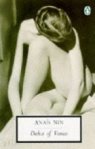
As it turned out we were all white, middle-aged, heterosexual and in long-term relationships. No one had much interest in discussing Anaïs Nin – most hadn’t been interested enough in Delta of Venus to read the whole thing, though one chap had read a second, similar collection of her dollar-a-page pieces, and another had read some of her diaries. Someone went to the trouble of saying he found some of it offensive. We decided she belonged to another era, and moved on. (Is there something of hers that you, dear reader, would recommend?)
It turned out that if I am timidly vanilla in my taste for erotica I was in a room of similarly minded souls. I did read the Kathryn Lomer poem, and people liked it. One of our number had assiduously ransacked his memory, the web (by googling “erotic poetry”) and the bookshelves at an auction down the road, and shared some gems he’s found. He read us a steamy encounter between Elizabeth Bennett and Darcy in Pride and Promiscuity : The Lost Sex Scenes of Jane Austen – we agreed that that’s probably a perfect read-aloud book for consenting adults. He played recordings of two marvellous poems, one from ancient Egypt and another incorporating a Native American story about a winged penis. He read, with some apologies, Charles Bukowski’s “Like a Flower in the Rain” (warning, that link includes anatomically correct four-letter words), in which one can only marvel at how one word can transform a poem. Someone mentioned the bath scene in The Reader. We talked a little about the early scenes in Silk.
We kept asking each other what makes something erotic rather than pornographic. Clearly our collective taste veered to the non-pornographic end of erotica. We agreed we like our erotica with a bit of wit, a lack of emphasis on the plumbing (though no aversion to it being named), a context, and a sense of minds being engaged.
Tonight at my book group (this is the all male one) we turn our collective attention to erotica. (Welcome everyone who found this entry via a google search.) A number of us had heard of Anaïs Nin, so we decided to go with a couple of her books, though there was an invitation to bring along a passage to read aloud from anywhere else. I’m posting this before the meeting.
Of A Spy in the House of Love, the less said by me the better: not so much erotica as neurotica. The long, ecstatic paragraph near the start that ended ‘but only that one ritual, a joyous, joyous, joyous impaling of woman on a man’s sensual mast’ had me thinking that if that was erotica I’d happily do without it. Thankfully there were no recurrences.
Maybe I’m showing my age, but I can’t say I warmed to Delta of Venus, either, which had lots of impaling. The most interesting thing about the book is probably the introductory pages, excerpts from Anaïs Nin’s 1940 diaries describing the way she and a swathe of her literary friends churned out erotica for a mysterious ‘Collector’ for a dollar a page.
Back in 1970 or so, there was a lot of anti-censorship activity in Sydney, including the publication of pornographic editions of student newspapers and “Porn Fests”, at which distinguished academics and undistinguished enthusiasts read rude bits from Henry Miller, Sam Shepard, John Wilmot second earl of Rochester, the Marquis de Sade and so on to crowded lecture theatres. It was all in a good cause – blows struck in the struggle for free speech – and some of it was funny, but overall it was squirm-making. Delta of Venus seems to me to belong in that context: it does contain some characters and narrative, but the ‘dirty bits’ are its raison d’être. Already dated in 1976 when Anaïs Nin decided to publish it, it reads as totally quaint now, quaint and vicious in its playing with paedophilia, incest, rape and so on. However, I did read it from cover to cover, so it clearly has titillation value. What I’ve realised is that if writing is to work as erotica for me, it needs to arise from a complex, recognisably human reality. Maybe we should have agreed to read Anaïs Nin’s diaries, where presumably she talks about more than who is doing what to whom with what.
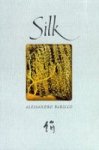
I went to the theatre on Sunday with another group member, who was similarly unenthused by the Anaïs Nin books. Someone had recommended Silk to him, and he lent it to me with his recommendation. It’s a very short book, something of a fable about love and passion. Most of it is taken up with a slow-building sexual charge. Then there are a couple of explicit, erotic pages – which work because they’ve had 80 pages of build-up. Then the tale ends with a bitter-sweet twist that makes one want to re-read the erotic pages again …
At the moment I’m tossing up what read-aloud to take tonight: A D Hope’s ‘The Countess of Pembroke’s Dream’ perhaps, or Kathryn Lomer’s ‘Tentative love poem’, which begins:
Snow comes late; only the air
between our mouths is warm,
a microclimate in which whispered words
are storms building. Our skins catch
what little light is cast – mine reflects,
yours absorbs.
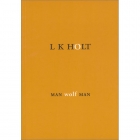
man wolf man won the Kenneth Slessor Award this year. Whatever may be wrong with literary awards (promoting the view that art is a competition, for example), they do extend some readers’ range, mine included. How would I have picked this up if it hadn’t been singled out by the judging panel? I’m glad I did pick it up.
Luke Davies is quoted on the publisher’s website as saying, ‘Holt’s is one of those voices that blast from the sky now and again, like a lightning bolt.’ To which I reply, ‘Fair enough.’ The writing in this book is sharp and playful and versatile and makes wonderful music. There are two long pieces, series of long sonnets (that is, sonnets with 18 lines – I don’t know if this is something L K Holt invented). One of them, ‘Unfinished Confession’, starts out with almost A-D-Hopish gravitas, talking about an ancient pioneer of anatomical knowledge, then in the last lines of the first sonnet lurches into crude, impatient vernacular and reveals its totally contemporary subject, still serious, still – like much of A D Hope – rich in scientific reference and allusions to works of art, and preoccupied with sex, but very much its own thing. (I’m trying not to be spoilerish, and also keep my PG rating.) In the book as a whole, there are many delights in the patterning of language, many memorable lines.
The very first poem, ‘Man is Wolf to Man’, begins with a grim commonplace:
Until the consummation of things
man, wolf, man.
and goes on, elegantly, with a catalogue of horrors, ending:
Sometimes the enemy knocks before
entering. A baby is hidden in the drawer.
It seems to be saying that humans, or perhaps just men, are incorrigibly vicious to each other and that the best we can hope for is sometimes to protect something precious. I find this view of things repugnant, its pessimism in some way too easy (not the attribution of lupine viciousness, but the notion that it will be with us forever, that it cannot be effectively resisted). It’s a gauge of how good the book is that I intend to keep it, and reread it, and will seek out more of L K Holt’s work.
(An unsatisfactory explanation of the title of this post can be found in a post on my superseded blog, Family Life.)
Apart from the conviviality, the food, the cards, the ever expanding list of draconian (and largely ignored) rules, what I love about our book club is that it makes me read things I might otherwise not have touched – books about secret rendition and Guantanamo Bay, someone else’s favourite detective novels, intimidating poetry.
One of the welcome consequences of my self-imposed task of blogging something about every book I read is that it pushes me to reflect on my reading.
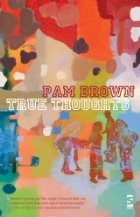
So with Pam Brown’s True Thoughts I’m doubly blessed: without the book club I doubt I would have read it, but here it is with an affectionate inscription to one of the club members; without the blog my mind might not have lingered on it any longer than it took my initial bemusement to fade. But here I am, remembering that poetry usually requires the reader to do a little work, and knowing that I would be revealing myself as an unforgivably lazy reader if I just wrote something like, ‘I don’t get it,’ or even, ‘I don’t grasp how these pieces hang together to make poems — I can barely tell where one ends and the next begins.’ (By pure serendipity, after I’d written that para I heard a Poetry Off the Shelf podcast in which Matthew Zapruder talks about immersing himself in John Ashbury’s poems because they moved him somehow even though he didn’t understand them at all, so I’m clearly in good company, and I imagine Pam Brown would be happy to be discussed analogously to Ashbury.)
So, in spite of feeling that I needed someone to take me by the hand and explain how to read Pam Brown’s poems, I went back, took my time, ruminated, savoured, absorbed and, eventually, enjoyed. It was a fascinating process. At the start I was like a colour-blind person looking at one of those red-and-green patterns, then with sustained, though not strained, attention it was as if the colour-blindness healed and the formless array of dots and squiggles reorganised themselves before my eyes into elegant shapes. For example, ‘Peel me a zibibbo’ begins:
I could go [extra characters are spacers & meant to be invisible] oooooooin any direction
but it’s best thatooohere and now ooI remain lesbian, oooookeep my vanishing cream
sealed.
On first reading, this seemed little more than verbal noise, a bit like the start of an Ern Malley poem. And in the middle of the poem, there’s this:
imperfection in kindness ooooooocomes with the void, oyou need to ooooochoose ithe ‘I’m feeling lucky’ google option.
To which I said, ‘Huh?’
I still don’t really get this second quote, but now that the green dots and the red dots have sorted themselves out, I do get that the first quote is meant to tease, and not meant to yield its meaning until the last line, where she addresses the poets and others whose names have cropped as the poem meanders with apparent aimlessness through a day in the life of the poet, and we realise they are all men:
Hi Kurt,ooooooooooooooooohi John T,
oooohi Nick,oPaddy,oooohi Shakespeare,
oooooooopeel me a zibibbo
ooooooooooooooooooo would you, ooooone of you guys?
(A zibibbo, as a note up the back tells us helpfully, is a delicious kind of grape.) The first lines suddenly yield their meaning. The busy-busy Lesbian poet, after making workaday contact with male poets and artists alive and dead, indulges for a moment in a fantasy that she’s some kind of Mae West femme fatale surrounded by male attendants. And I am amused.
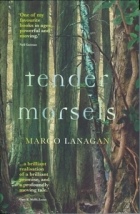
Tender Morsels an exception as book club books go: I would have read it with or without the BC’s agency. In fact, I’ve been wanting to read it since it came out nearly 12 months ago. I gave it as a Christmas present to one of our members, secure in the knowledge that it would come to the table at one of our meetings. When it did surface, I was a little taken aback when the person offering it, she to whom I’d given it for Christmas, said she’d stopped reading at about 40 pages because she didn’t want to go on reading a litany of suffering. And I confess that when it was my turn, I was close to giving up on page 40 myself. But I read on, and can report that on page 42 everything changes!
This is a wonderful book, and the gruelling first movement is absolutely essential. We need to know just how much the heroine suffers, so that we understand her need to escape, and when other characters (and possibly the back cover blurb as well) make assumptions about what she is avoiding, we know that they completely fail to grasp the strength of character that has enabled her to survive and function as well as she does. The fairy tale ‘Rose Red and Snow White’ plays through the story beautifully. The use of language is exhilarating. Though in one sense things are resolved by about the two thirds mark, there are unexpected twists and turns right to the very last page. Margo Lanagan walked across in front of my car when I was stopped at lights in the city recently. She looked like just another person on her way to an office job. I wondered how many of those others crossing the street were also total geniuses in disguise.
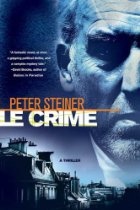
Le Crime‘s cover quotes compare Peter Steiner to John Le Carré, Len Deighton, Peter Mayle, Agatha Chsitie, Robert Ludlum, Alan Furst and Graham Greene. I have no idea how embarrassed the quoted reviewers are to see their phrases taken out of context like that. The book is not in the league of any of those writers. It creaks, its psychology is implausible, the plot is completely silly, and the structure barely holds up – but it’s a quick, enjoyable read. I liked it mainly for a flashback that lasts for three of the 26 chapters, in which the hero goes on a long walk through the French countryside, starting at Charles De Gaulle Airport and finally crossing the border into Spain (though we don’t go all the way with him). P and I have just booked in for a much shorter walk in France later this year, supported as befits our ageing selves, and these thirty-odd pages make it seem like a very good idea.

 I treasure my memories of Martin Johnston from when we were both in our mid 20s. I was an Eng Lit student, he was a poet – an intense, chain-smoking, introverted writer of largely incomprehensible but manifestly learned poetry. I was in awe. But not just awe: I loved hearing him read – it was like being taken to a different part of the brain. I don’t think I grasped the depth of feelings in the poems back then, dealing as many of them did, opaquely, with the death of his parents.