Laurie Duggan’s Old New and Selected

Laurie Duggan, New and selected poems, 1971-1993 (UQP 1996)
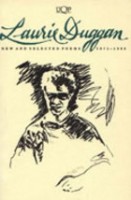
1ld

One result of reading poetry as it turns up in the secondhand bookshops is that I meet things out of sequence. As a retrospective of Laurie Duggan’s work, this book was superseded by 2005’s Compared to What: Selected Poems 1971–2003, and Duggan has published a number of books since then, not to mention his mainly photographic blog, Graveney Marsh. Still, this is the book I’ve got. It’s a fabulously mixed bag.

Laurie Duggan strikes me as a poet’s poet: not necessarily in the sense that he writes primarily for an audience of poets (though that could also be true), but in the sense that much of his work is concerned with the poet identity. You know how there are gay poets, and feminist poets, and nationalist poets? Well, there are also poet poets. Other poets turn up in his poems with extraordinary frequency, in two ways.

First, there are references to their work: there are poems imitating Rimbaud, Alan Wearne, John Forbes, John Tranter, and taking satiric digs at Les Murray, Robert Gray, A D Hope – ‘the last / Augustan poet claimed alive’ – and a number of translations from poets ancient and modern. I probably miss most of the allusions, but I spotted lines from Kenneth Slessor, James McAuley, Martin Johnston, and a number of 20th century US  poets.

And then there are poets as enemies, or more frequently as members of the community he belongs to:

Anna & Ken's blue V.W. crawls up the opposite hill
off for milk___cottage pie ingredients

That’s Anna Couani and Ken Bolton. I was reminded of a moment in Ken Bolton’s essay ‘Some Memories of John Forbes’ in Homage to John Forbes (2003):

I remember driving, with Anna Couani at the wheel and Laurie in the passenger front seat. The blue Vee-dub, … the car loaded up. As we got to the Broadway end of Glebe Point Road … we spotted John’s familiar figure steaming along ahead away from us down the footpath. … Laurie leaned out the window and called Heeeeyyy, POET!

And a host of poets, mostly of the so-called ‘Generation of 68’, turn up by first name as the book progresses. The sense of a community of poets persists to the final poem ‘Ornithology’ which starts out as an elegy for poets Bob Harris, Martin Johnston and Jas Duke (misspelling the title of Martin’s ‘In Memoriam’, incidentally), becomes an extended soul-searching, and could now be read as a foreshadowing elegy for John Forbes.

I don’t want to give the impression that these are coterie poems or an exercise in navel-gazing. In general, there’s a seductive, self-deprecatory wit and, especially in the continuing Blue Hills sequence (recently gathered into a single book by Puncher & Wattman) and The Ash Range from the mid 1980s, a deep engagement with place.

In a 2010 interview with Fiona Scotney published in The Long Paddock, the online component of Southerly 71/3, Duggan said this about his poetic approach:

I like the idea of plonking something here and something there next to it and the result is something else.

‘Plonking’ is a way of describing bricolage – a kind of verbal scrapbooking, of which Duggan is a superb practitioner. ‘Clayton West 1’, the first poem in the book, includes this:

____________________my Grandmother's cup
clinks in its saucer, table ordered with
teapot, grapefruit, marmalade
STH VIET TROOPS FLEE LAOS

It’s just a newspaper headline at the breakfast table, but the result here is something else – what that something is, the poem leaves up to the reader to decide. I could give a hundred examples.

‘Plonking’ also happens in Duggan’s translations, especially of the epigrams of Martial, of which there are 50 here. If you compare them to a literal translation, again and again you see something from ancient Rome plonked down next to something from 20th Century Australia, to delightful effect. Take Epigram VII xx,

Cum facias versus nulla non luce ducenos,
Vare, nihil recitas. non sapis, atque sapis.

literally:

Though you write two hundred verses every day, Varus, you recite nothing in public. You are unwise, and yet you are wise.

And in Duggan’s ‘translation’:

Dransfield, who wrote
__200 poems each day,
was wiser than his editor
__who printed them.

This was my introduction to Martial, and I find it hard to imagine a better one.

As a reintroduction to Laurie Duggan, the book is pretty good too. Oh, inspired by a page of anagrams of contemporary Australian poets  (to stick with Michael Dransfield: ‘Dead man chills fire’), I offer one of my own: I laud a grunge.

Details Unknown

Last night we went to the Penguin Plays Rough event at the Justice and Police Museum: the Grand Finale of the Details Unknown evenings. On previous evenings in the series people have presented stories, songs, and videos inspired by this photo from the museum’s archives.

des_cos126

For the grand finale, PPR handed things over to unhappen, an experimental theatre group that used the 18 pieces produced for the previous nights to create an interactive evening of experimental carry-on. There was a weird pas-de-deux in which to actors dressed in nighties enacted a bedroom murder over and over, alternating the parts of visitor and murdered woman (it didn’t seem to matter that one of the actors was male, the other female), and varying their actions in accordance with words typed by audience members. There was a silly puppet theatre. In one tiny courtyard a 1940s police photographer took mug shots. We could stand around watching a tattooed prisoner languish in her cell, though other people told me that when they went into that room they were offered a stick of opium (which turned out to be a chocolate bullet). My favourite of the small sideshows was the interrogation room, in which, though we’d been promised that interactivity did not mean audience participation, relatively unsuspecting audience members were grilled by a slightly demented pair of detectives as possible witnesses to the woman’s murder – I saw at least four people being questions, and sometimes virtually accused, and was impressed by how well they reacted under pressure: other people ran screaming from the room as soon as they realised what was happening.

The museum was originally a police station, and included a small courtroom. In that courtroom we could sit in the gallery, or perhaps it was jury seats, while one actor after another read a story that told how the woman died. We could, if we chose, draw images on butchers’ paper as we listened, and those images were hung on the walls of the murder bedroom.

It was great fun. We were promised a reward at 10 pm, but my little group had been out to midnight the night before at Flickerfest and up early, so we sloped off after only two hours or so. Penguin Plays Rough’s future is not clear. If there is to be a hiatus, it’s good that they’ve gone out with such a bang.

Usually Penguin Plays Rough has a number of wild cards – people who put their names down on the night and read something. That didn’t happen last night, but I wrote 14 rhyming lines anyhow:

Details Unknown
She’s dead, and though it may seem foolish
to make up stories, sing new songs
about her image, even ghoulish
imagining what dreadful wrongs
she may have suffered, or what shocking
act may have unclipped that stocking,
what cruel or pathetic scene
involved that true-crime magazine,
her death derides out pale inventions:
silent, name and tale unknown,
this monument of film, not stone,
though made for plain police intentions
commands our eyes: Attention here.
A life snuffed out. Be still. Revere

Southerly 73/2

David Brooks and Elizabeth McMahon (editors), Teja B. Pribac (Guest Co-editor),  Southerly Vol 73 No 2 2013: Lyre/Liar

73-2-sI didn’t read enough of this Southerly to write a review. It says more about me than about the journal that I just couldn’t make myself read a collection that focuses on exploration of ’emerging ethical implications of writing, with a particular emphasis on representations of nonhuman animals’. A quick skim seemed to show writer after writer identifying as vegan or animal liberationist in a way that felt just a little too correct-line for my taste. I may be wrong, and if I come back and find that I am, I’ll write a retraction, but I wasn’t deterred from my rash judgement by an extraordinary disclaimer from the Southerly editorial team, saying their views are not necessarily reflected by the ‘views expressed in this issue’.

I did read, though, an excellent review of Jordie Albiston’s The Book of Ethel by Mark O’Flynn (which articulates nicely some of what Albiston does with internal rhyme), some memorable poetry including ‘Mouse Plague’ by John Kinsella and ‘A Second Ago’ by Pam Brown, and an illuminating essay on lyric poetry in ‘post-theory’ times by Claire Nashar.

Ramayana for children (and westerners) in English

Upendrakishore Ray Chowdhury, Ramayana for Young Readers (translated by Swapna Dutta, The Book Mine, Hachette India 2013)

1rtl;dr: If you’re as ignorant of Indian culture as I am, this book will go a long way to filling gaps. You can buy an ebook from Hachette UK for less than $20 Australian.

The Ramayana, one of the two great epics of Hinduism, dates from well before the common era and its images and characters permeate Indian and related art. Most moderately literate westerners are at least vaguely aware of it, and have surely encountered art derived from it: monkeys battling demons in the Balinese Kecak dance; images or reliefs of Rama and Sita, possibly with a golden deer; paintings and statues of Hanuman the monkey god carrying a mountain; Javanese shadow puppets; chants of ‘Hare Rama’ in western city streets. But few of us have read even a fraction of its 24 thousand verses. This little book, just 165 small pages plus some child-friendly notes, is of course no substitute for reading the original Valmiki Ramayan, but it does tell pretty much the whole story, and enables us to put those fragments in context.

The Chheleder Ramayan, the Bengali book of which this is a translation, has its own distinctive history. Its author, Upendrakishore Ray Chowdhury (1863–1915), was a famous Bengali polymath, friend of the even more famous Rabindranath Tagore and grandfather of filmmaker Satyajit Ray. He had a personal mission to make literary works available for young people, and retold not only the Ramayana but also the other great epic, the Mahabharata. He’s not the only one to have retold these works. Indeed, the translator Swapna Dutta lists several Ramayanas that she has read. But his retelling holds a special place as a project to make the story available to early 20th century Bengali-reading children. This translation makes his Ramayana available in English for the first time.

Like all epics, it contains an awful lot of fighting, so much so that at times it reads like the script for a computer game. In the great climactic battle between the monkey army and the demons, you can almost see the game move up a level, as the lower ranking warriors are all killed or worn out and the next rank come to the fore with increasingly powerful weapons, until at the end it is the two mighty figures of Rama and Ravana facing off with nuclear-level arsenals. I have no idea how this plays out in the original, or how gripping it would be for a young western reader with no prior knowledge of the characters or the different supernatural beings, but even though I was never in doubt who would prevail, I stayed engaged.

This Rama is not a god, but an extraordinary man. His great prowess as a warrior is overshadowed by his superhuman sweetness. The story is set in motion when one of his father’s wives, incited to jealousy by an Iago-like maid, tricks King Dashratha into denying Rama his birthright as heir to the throne and sending him into exile. While Rama’s mother, the people of the kingdom, and Rama’s brothers, including the brother who is to be king instead of him, urge him to resist this manifestly unjust treatment, he refuses and accepts his father’s decrees with extraordinary persistence. He is a model of kindness, forgiveness, trusting openness.

The story stands by itself, but it’s all the richer for the many echoes (or are they foreshadowings?) of episodes from other great tales like The Iliad, tales of Greek, Roman and Norse gods, or the biblical the story of David.

My copy came free from Hachette India, and Swapna Dutta is a friend of mine from my days as editor of a children’s magazine. Swapna and her publisher have given me a great gift. There’s a preview on Google Books, and you can buy an ebook or a hard copy from Hachette UK.

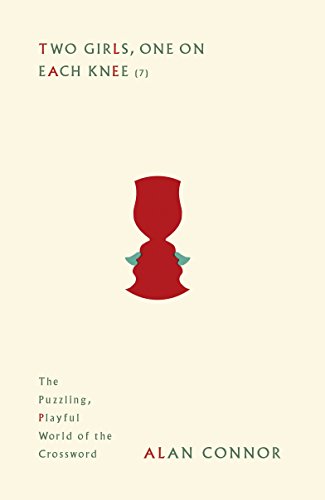
Alan Connor’s Two Girls, One on Each Knee

Alan Connor, Two Girls, One on Each Knee (Particular Books 2013)

Let me start with a factoid, a movie anecdote and a memory, all crossword-related:

  • Ronald Knox (1888–1957), Catholic convert scholar and single-handed translator of the Latin Vulgate Bible into English, is said to have completed The Times crossword each morning, first the across clues, then the down.
  • In the 1961 movie Very Important Person (also known as A Coming-out Party) the James Robertson Justice character arrives in a German prisoner-of-war camp and is left alone in a hut while the other prisoners are all on work details. He sees a copy of The Times on the rough wooden table, and turns to the crossword. His hut-mates arrive to discover that in a matter of minutes he has deprived them of their week’s only pleasure.
  • I once did a cryptic crossword in which the answer to each of three clues – referring respectively to a little pig, a village and a Shakespearean drama – was HAMLET.

None of those appears in Two Girls, One on Each Knee. but they could have: Alan Connor gives us a wealth of similar crosswordiana: gossip about famous solvers; scenes from movies, television and novels; great moments in setting. He also tells the history of crosswords, introduces us to some of the outstanding setters, and goes down the kinds of byways you would expect from someone who writes a regular column on crosswords for the Guardian. The book would be a useful guide to someone wanting to find out how cryptic clues work, or a student researching the history of crosswords, but its main mission seems to me to be to communicate the pleasures of the pastime. It fills this mission brilliantly. As something of an addict myself, I found the book immensely enjoyable.

Due homage is paid to The Times crossword, which appears in The Australian. For years I’ve been a fan, and I confess that in the past I have given money to the Murdoch empire in order to enjoy the crossword. These days I frequent a cafe where the staff tolerate me defacing the complimentary copy. I used to wish someone would edit it for Australian solvers, replacing the more parochial London references with more generally accessible ones, but really, it’s not broke so better not fix it.

There’s a chapter on The Listener, the most difficult crossword in the world, which a friend introduced me to in my 20s. The Listener went out of print decades ago but its crossword lives on in The Times each weekend. Though I rarely have access to it, it’s always a challenging pleasure. I’ve even completed it occasionally. The Spectator crossword comes closest to it in my experience, and has the advantage of being available in Australia and closer to humanly possible.

Connor compares UK and US crosswords. I once subscribed to the New York Times crossword online for a couple of months. The difference from English and Australian puzzles was striking. Apart from the shocking way brand names and capitalist enterprises appear with the same nonchalance as cities and famous people, the US puzzles have a very different kind of playfulness. I enjoyed it, but not enough to keep up my subscription.

Just one of the many clues Connor includes is by David Astle (DA), doyen of the Sydney Morning Herald‘s puzzles, and I’m surprised he rated even one, as in my experience when DA and his minions are not being annoyingly imprecise or obvious, they mosyly offer challenging exercises, but little by way of the pleasure that this book celebrates. And what can you say about a quick crossword in which eastern is clued as ‘from the east’ and pensive as ‘nervous’, or a cryptic with surface meaning as awkward and cryptic play as obvious  as ‘Spoil in a mooring site (6 letters)’? David Astle’s book Puzzled may have been as much fun as Two Girls, One on Each Knee. I hope so, but I doubt it.

One startling fact emerges from the book: there is no evidence for the frequent claims that doing crosswords, especially cryptic crosswords, is a way of staving off cognitive decline. The same can be said for the book itself: I doubt if there is any evidence that reading it will improve the reader in any way. But like the puzzles it discusses, it’s fun anyway.

Rabbit 10, Jordie Albiston 13

Jessica L Wilkinson, editor, Rabbit No 10: Gravity (2013)
Jordie Albiston, XIII Poems (Rabbit Poets Series 2013)

I bought these two slim volumes at their Sydney launch a couple of weeks ago.

rabbit10 Rabbit is a beautifully produced ‘journal of non-fiction poetry’ based in Melbourne, with a great feel for deign and a sense of humour. This issue, for which Felicity Plunkett was guest poetry editor, includes not only poetry from Melbourne and beyond, well beyond Australia in fact (I was a little disconcerted when sagebrush and coyotes turned up in the first poem), but also a generous selection of evocative photographs of 1970s Melbourne by poet Ian McBryde, a scholarly essay on Dante, an interview, and a number of reviews.

I’m not clear what the non-fiction tag means apart from excluding fiction narratives. I hope we’re not being encouraged to take lines about heartbreak or suicidal intentions as transparently representing the writers’ condition. But the question didn’t exercise my mind too much … I enjoyed the poetry: so much that was excellent, but the ones that struck me most were ‘The Gravity of Bones’ and ‘Crunchy No Bruises’ by Anna Jacobson, which read as if they’re from a series about visiting a nursing home.

Nicholas Walton-Healey’s interview with Kerry Loughrey is excellent. Kerry Loughrey has been performing her work around Melbourne for more than two decades, but had her first poetry collection published just over a year ago. She has interesting things to say about the relationship between performance poetry and page poetry, and about poetry in general – like this, which begins with an updating of Pope’s ‘What oft was Thought, but ne’er so well Exprest’:

I’ve always thought that the poet was supposed to say what’s on the tips of other people’s tongues. That’s our job. So people have this sense of relief when they read or hear it and go ‘ahhh, that’s what I meant.’ …

I’m compelled to say things … I feel it at the back of my throat. And I think everyone does when they’re like ‘I really want to say this.’ Or a bloke talking to his missus who’s much more articulate and so he’s going ‘I wish I could just say this thing but she’s going to take it the wrong way.’ I guess I have to consider being taken the wrong way as well.

xiii Jordie Albiston’s previous books have been unified works rather than gatherings of disparate poems. So, she told us at the launch, when Jessica Wilkinson invited her to be the first in the new Rabbit Poets Series, she saw a prospect of new life for some of her ‘orphan poems’.

The orphans gathered here are not impoverished waifs begging for alms. On the contrary, they are rich in many ways, and speak from a place of deep belonging. They are, however, extraordinarily diverse.

There are a number of what I think of as public poems. ‘Gallipoli’, which opens the book, is a long narrative poem commissioned as inspiration for a piece of music commemorating the centenary of the landing at Anzac Cove. Three long poems – ‘Six Black Saturday Squares’, ‘Lamentations’ and ‘A Kinglake Quartet’ – respond to Victoria’s terrible 2009 bush fires. And ‘A White Woman’s Guide to Indigenous Art’,another commissioned piece, is a response to a painting by Carol Maanyatja Golding that broadens out to the endlessly interesting question

At the other extreme, there are intensely private poems: three love sonnets – ‘The Sea’s Pleasure’, ‘Three Degrees’ and ‘Duplex’ – and ‘Golden’, a poem celebrating the poet’s body on her 50th birthday.

The poems are also wonderfully varied formally. Some of them rhyme, and Albiston’s way with rhyme, both at line ends and internally, is truly wondrous. So is her extraordinary way of playing poetic form off against speech rhythms. Take the first eight lines of ‘Three Degrees’, for example:

Three degrees against your skin, and the heart
begins to freeze. The inclement night creeps
right in, shoves blood aside with its starting
gun, and you become antarctic. Yes, steeped

in snow from tip to toe, the land outside your
carapace says little, remembers less: no choice
but that of missing him, missing him, warmth
a continent ago. You try to invoke his voice.

For me, the most striking piece is ‘Lamentations’. It speaks in the language of the King James Bible, including the odd word in italics and a smattering of ‘Behold!’s.

Alas! we are the people that have seen the fire, on this day of days, on this seventh day of the second month of the year.
Alas! it has led us, and brought us to darkness, and delivered us not into light.
Against us has it turned: it has turned with the wind, against us all the day.

It could have been an embarrassing pastiche in lesser hands, but it’s actually extraordinarily powerful.

awwbadge_2014XIII Poems is the first book I’ve read as part of the 2014 Australian Women Writers Challenge. Yes, I’ve signed up again.

William Nagle’s Odd Angry Shot

William Nagle, The Odd Angry Shot (Angus & Robertson 1975, 1979)

20131230-200308.jpg Before I looked up IMDB, I would have said The Odd Angry Shot (1979), directed by Tom Jeffries and featuring a number of well-known comic actors, was the only feature film dealing with Australia’s involvement in the US–Vietnam War. I was wrong, but it’s certainly the only such film that most people remember, whether they’ve seen it or not (I haven’t). This is the book it was based on. The cover of the film tie-in edition that I’ve just read features a group of military men laughing intensely, and the words: ‘Cry a little, laugh a lot / Aussies being Aussies in The Odd Angry Shot.’ That is, you’re invited to expect something like Leslie Thomas’s Virgin Soldiers: larrikin japes among young men living together, with a seasoning of casual sexism, racism and homophobia, and an occasional reminder that there’s a war going on somewhere nearby.

Well, up to a point, Lord Copper. There are indeed plenty of larrikin japes: our group of SAS soldiers make a wanking machine for the padre who has annoyed them, and the padre surprises them by being a good sport; they bet on a battle to the death between their pet spider and the pet scorpion of nearby US soldiers, and lose the bet gracelessly; they vie for the favours of a woman they assume to be a bar girl but who turns out to be a school teacher and definitely not available. The barracks banter is lively and rings true, and there’s more than enough humour about bodily functions to fill the genre’s requirements.

But readers who expect The Virgin Soldiers with an Australian accent or a celebration of the larrikin Anzac spirit will be disappointed. The book takes the genre and busts it open. The homophobia may stay casual, but the sexism reaches peaks of visceral misogyny, the racism leads to more than one act of hideous brutality against non-combatants, and the combat episodes are graphically, horrifically rendered. The humour is the manifestation of a group ethos that the young men see , correctly, as a kind of stoicism, but at least to this reader communicates a ruthless ban on any show of emotion apart from rage, and almost any conversation apart from chiyacking.

The book is about the group. It’s not The Red Badge of Courage or Regeneration, where we are invited to imagine the effects of soldiering on an individual mind. These young men resent the people back home who demonstrate against the war. They occasionally recognise that the Viet Cong and North Vietnamese soldiers they are fighting are as much pawns in the broader politics as they are themselves, but they don’t have the luxury of questioning those politics. If they can’t make a joke they down a can or four of beer. There’s a telling moment towards the end, when one of the young men asks, ‘Do you suppose we’re doing any good by being here?’ His mate answers:

Not much … because when we get home we’ll be an embarrassment to our wonderful nation. The only bastards who’ll want to know about us are the silly buggers in this man’s army. Let’s face it, we’ve got no one else.

The question is asked, but can’t be answered. The best the mate can do is respond to a different question: ‘Will people appreciate what we’ve done here?’ The narrator does finally break free of the enforced lack of reflection a couple of pages from the end:

We are stuck here, refusing to admit defeat, an army of frustrated pawns, tired, wet and sold out. Yet we still believe in our task; still, after all this, we are bound together all over the world, friend and enemy alike, the soldier, the green-clad, second-class citizen of the earth …

We will arrive at any dictated hour to join in our pastime – to hunt and dispose of each other in the ultimate test of the mind, the reward of which is life for another day, another week. You have angered us, all of us, your praetorians from the red tabs downwards are angry.

… We, the survivors, will come home, will move amongst you, will wait, will be revenged.

That is so unlike any other writing in the book it might have been inserted by a canny editor if it weren’t for its awkwardness. I read it as the author struggling against the code of silence he has shown us in the rest of the book.

The Odd Angry Shot shared the 1975 Australian National Book Council Award for Australian literature. Although it remains steadfastly on the side of its soldier characters, it doesn’t sit easily with the current rhetoric about heroes and veneration of those who sacrificed all, as in this, which I saw in Balmain as I was finishing the book. I suspect William Nagle would have sided with the pigeons against the notice poster.

[In case you can’t read the notice, it says: ‘This is a war / memorial / to honour our fallen / diggers / not a lunch seat / or a child’s playground / Please treat it / with the respect it / deserves / Lest we forget’]

Lest We Forget

2013 in review (lazily)

Many good things happened in my life this year. Possibly the biggest was that Ngurrumbang, the short film whose screenplay I co-wrote with my elder son, was screened at three festivals in Australia and one in Europe, with Flickerfest still to come. But here are three relatively lazy looks at the year that’s just finishing.

One: The first sentence (or sometimes the first two sentences) of the first blog post for each month:

January: Whatever the ghost of Rembrandt might think about the state of Dutch art in the early 21st century the arrival of Florentijn Hofman’s magnum opus in Darling Harbour today was a hit, even after the seeming endless and mostly lame concert and tumbling act that preceded it.

February: I heard Paul Ham speak about this book [Hiroshima Nagasaki] at Gleebooks early last year.

March: Geoff Lemon, co-editor, was surely tempting fate and the critics when, as soon as the 32nd issue of Going Down Swinging was complete, he nicknamed the impending Nº 33 the Jesus Issue.

April: I recently heard a distinguished novelist claim that she grew up believing New South Wales was mostly settled peacefully and that damage to the original inhabitants was largely unintended, caused by infectious diseases and the like.

May: The launch of this book [Pam Brown’s Home by Dark] last weekend was a convivial affair in an Erskineville pub.

June: Sydney has Vivid. Wellington has Lux.

July: I was extremely lucky in the timing of my university studies. I started at Sydney Uni in 1967 when, because of an overhaul of the New South Wales school system, only a very small cohort had graduated from high school the year before.

August: After Karl Ove Knausgaard’s mountains of mundane detail, we wanted our next book to be one that spins a great yarn.

September: It’s about two and a half years since we moved home. About a year ago, the grass tree (Xanthorrhoea) that had stood outside our kitchen window in the old house was ailing in its new location – most of its fronds were brown or browning.

October: This book [Contemporary Asian Australian Poets edited by Adam Aitken, Kim Cheng Boey & Michelle Cahill] seems to be part of a current efflorescence of attention to Asian Australian writing, and of Australian attention to Asian writing.

November: It’s November, and once again, while all over the world people with stamina take on NaNoWriMo, I’m setting myself the modest goal of 14 sonnets in the month – LoSoRhyMo (Local Sonnet Rhyming Month).

December: As Vagabond Press’s beautifully crafted Rare Objects series of chapbooks approaches its hundredth and final title, Jennifer Maiden makes her debut at Nº 95.

Two: Top Ten Movies (in no particular order)

Me The Art Student
Philomena (Stephen Frears) 1p
In Bob We Trust (Lynn-Maree Milburn)
130_ibwt
Blue Jasmine (Woody Allen)
140_bj
Stories We Tell (Sarah Polley)
140_swt
The Rocket (Kim Mordaunt)
1r
A Gun in Each Hand (Cesc Gay)
1geh
Twenty Feet from Stardom (Morgan Neville)
140_20f
The Past (Asghar Farhadi)
136_past
What Maisie Knew (Scott McGehee and David Siegel)140_wmk
The Attack (Ziad Doueiri)
140_a
No (Pablo Larrain)
140_no
Barbara (Christian Petzold)1barbara A Late Quartet (Yaron Zilberman)
140_p

Three: Notes on the year’s reading

Rather than single out some books as the best, let’s see how I went in reading diversely.

I’ve listed 63 books in my ‘Reading and Watching’ column. I didn’t finish at least five of them and quite a few were journals, not books at all. It looks as if I read 53 books as such.

  • 31 were by men, 22 by women
  • 6 were translations – two from Norwegian, one each from Bengali, Russian, German and Catalan
  • 32 were Australian
  • 24 were poetry books, including substantial anthologies as well as tiny chapbooks
  • 7 were Book Group books
  • not necessarily the best, but 3 books that enriched my sense of what Australia is were Heather Goodall’s Invasion to Embassy, Noel Beddoe’s The Yalda Crossing and Contemporary Asian Australian Poets, the anthology edited by Adam Aitken, Kim Cheng Boey & Michelle Cahill
  • the Art Student’s pick from her year’s reading were Michael Chabon’s Telegraph Avenue, Eleanor Caton’s The Luminaries and her crime fiction discovery, Martin Walker’s Bruno xx series.

That’s it. Happy New Year, all!

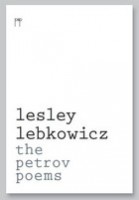
Lesley Lebkowicz’s Petrov Poems

Lesley Lebkowicz, The Petrov Poems (2013)

1pp

I was seven years old in 1954, and have dim memories of what Wikipedia bills as the Petrov Affair. Vladimir Petrov, third secretary of the Russian Embassy in Canberra, defected, and some days later his wife Evdokia followed suit, generating a dramatic front page photograph showing two burly Russians manhandling a distraught woman across the tarmac of Sydney aerodrome – tellingly, the woman has lost one of her shoes.

It’s not clear that the Petrovs had anything substantial to reveal about Russian espionage, but their defection was a boon to the Menzies government’s anti-Communist machinations and has fired the national imagination, or sections of it, for decades.

The affair was the subject of Ralph Peterson’s 1959 play The Third Secretary, which was part of The Currency Press’s first Playtexts Series in 1971, in the august company of Dorothy Hewett’s The Chapel Perilous and Louis Esson’s The Time is Not Yet Ripe. Robert Manne’s exhaustive account, The Petrov Affair, was published in 1980, and again in a revised edition in 2004. The Petrovs feature offstage in Ursula Dubosarsky’s magnificent 2006 children’s book The Red Shoe. So far I was keeping up. Then Noelle Janaczewska’s Mrs Petrov’s Shoe won a Queensland Premier’s Literary Award in 2006 (back in the days when the Queensland government gave money to the arts), and Andrew Croome’s Document Z got a gong in the NSW equivalent in 2010. How many books could one minor incident sustain?

I tried to read Andrew Croome’s book. It’s probably very good. But I couldn’t get past the first line of the first page, so strong was my reluctance to read one more word about the Petrovs. They may be our only spy scandal, I thought, but they’re just not that interesting. Yet when someone at our book club (the one where we swap books, not the one where we discuss them) offered Lesley Lebkowicz’ book of poems, I surprised myself by taking it home.

I don’t think any book could have completely dispelled my pre-emptive ennui, but this book came pretty close. It’s pretty much a verse novel, keeping a fairly tight focus on the two main characters, known mostly by their pet names Volodya and Dusya. It begins as they arrive in Sydney, seen from Dusya’s point of view:

Volodya is solid – more than a husband – an ally.
She touches his arm, feels its warmth, the play
of slack flesh over bone. Softness had long fled
his mind. He had seen hundreds shovelled
into their graves, thousands destroyed like ants
swept away by hot water.

The narrative takes us through the process of disaffection to their defections, their interrogations and then their dislocated new life. It ends, after Volodya’s death, with Dusya living with her sister Tamara in suburban Melbourne:

Dusya and her sister walk along the flat paths of Bentleigh

like any two women from Europe.
They're on their way to drink coffee in the suburb's first café.
They talk about whether to buy veal
for dinner and watch The Bill on TV. Whatever

Tamara says makes Dusya happy – it's hearing
her voice. Occasionally Dusya mentions Volodya

and Tamara looks at her
but says nothing. His name falls out of their lives.

So it’s as much the story of a relationship that plays out in extraordinary circumstances, a migrant story with high stakes and the glare of publicity. The part of the story that struck home most forcefully for me is in the last two sections, ‘The Petrovs at Palm Beach’ and ‘The Petrovs in Melbourne’, where they continue with their lives after the drama, neither celebrated nor left alone. From ‘Sentences’:

'I am Petrov,' he tells a fellow in Manly,
expecting some sign.
'Congratulations,' the man says and walks off.

His photograph regards him every day from The Herald.
What he's done must mean something –

From ‘They know we are Petrovs’:

The whole street knows they are Petrovs –
too many photos, too much publicity.
One journalist never leaves them alone.
He lurks in his car outside their house.

A kind neighbour builds a gate in their fence
so when the journalist comes, they slip out
through his garden.
In Russia it would have been different –

no one would have known who they were.

The verse is always clear and sharp as this. A lot of it is in unrhymed sonnets, but there’s much variety in form. If you haven’t read much about the Petrov Affair, and OK even if you have, this is a good story well told. If you want to read more about it, I recommend the excellent review by Sue at Whispering Gums.

awwbadge_2013

This is the last title in my Australian Women Writers Challenge for 2013. I seem to have read 15, and it’s been fun. I’ve signed up for the 2014 challenge.

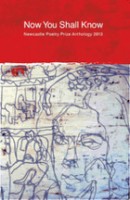
Now You Shall Know the Newcastle Poetry Prize Anthology

Dennis Haskell and Jean Kent (editors), Now You Shall Know: Newcastle Poetry Prize Anthology 2013 (Hunter Writers Centre, October 2013)

1nysk The Newcastle Poetry Prize is described on its website as ‘the richest and most prestigious stand-alone poetry competition’ in Australia. It has existed for more than three decades under one name or another, and for some years now the Hunter Writers Centre has published an anthology comprising the winner and a selection of other entries. This year’s anthology, named for Jennifer Compton’s winning poem, contains 27 poems and runs to 140 pages, so it’s distinguished from other annual anthologies by including mainly longer poems.

The book is a feast, and even though it owes its existence to a poetry competition it’s a beautiful demonstration of the silliness of pitting poems and poets against each other so that one must emerge as The Best. Not that I challenge the judges’ decisions: all the prize winners and commended poems deserve to win. But so do almost all the others.

Among many pleasures, there’s a strong element of place in the collection. Jennifer Compton’s ‘Now You Shall Know’ kicks things off with a brilliant evocation of the non-place of a passenger plane in mid-flight. Of the two other prize winners, Karina Quinn’s ‘Always Going Home (a domestic cycle)’ has a section named ‘A nowhere place’, which refers to a very specific not-quite-room in the family home, and among other things the poem is about the power exerted on the speaker by the place that is home; and Mark Tredinnick is in full Blue-Mountains-bardic flight in ‘Two or Three Days with Claude Debussy in Late October’. In Kathryn Lomer’s ‘Vapour Trails over Sassafras’ the speaker visits the Tasmanian landscape of her childhood. The dialogue in Ron Pretty’s ‘Picnicking on the Safety Ramp’ creates a gloriously recognisable rural masculinity; Christopher Kelen’s ‘The Shed’ is a location where a similar masculinity finds solitude; the title of Rachael Mead’s ‘Lake Eyre Cycle’ doesn’t mislead.

Two pieces resonated strongly for me as a north Queenslander.  B R Dionysius’ ‘Unicorns Cross Here’  is a sonnet sequence that tours the north, beginning with the giant statue of James Cook in Cairns and visiting the Daintree and the Atherton Tableland. Here are the opening lines of the third sonnet, describing the environment of my childhood:

Through the silk thin mist, sugarcane fields stand as Roman armies
At the end of empire. Forlorn, thirsty, they occupy the flat ground,
Blades held stiff as they form up, row upon green row in perfect
Drilled unison. A thousand years of domesticating iron has tamed
the wilderness. Axes bite deeper than words, saw teeth whisper in
Death’s white noise. On the hills behind them, the rainforest seethes
In undisciplined chaos; disordered ranks thrown back in confusion.

Where Dionysius is a visitor to cane country, the speaker in Victoria McGrath’s ‘Cane Smoking’  comes from there:

I was cradled deep within the blackened root of something
rank and rich in déjà vu, and my curves and crannies,
like so many cinerary urns, claimed without question
the confetti-ash that drifted inevitably to earth.

Carmel Macdonald Grahame’s ‘Wishful Thinking’ isn’t particularly a place poem, unless you count a certain kind of Catholic childhood as a place. From its first lines

You grew up learning not to say
things you were told you should not think

you know exactly where you are. The poem does what I would have thought impossible – it deals with child sexual abuse and keeps its head, even managing moments of playful wit:

it was never the cat that got your tongue,
it was the catechism.

There’s much more, as they say in the ads. Andy Jackson’s ‘Marfan Lives’, Ian Crittenden’s ‘The Red Soil Elegies’, … Really, it’s a wonderful collection.