M-day minus 6

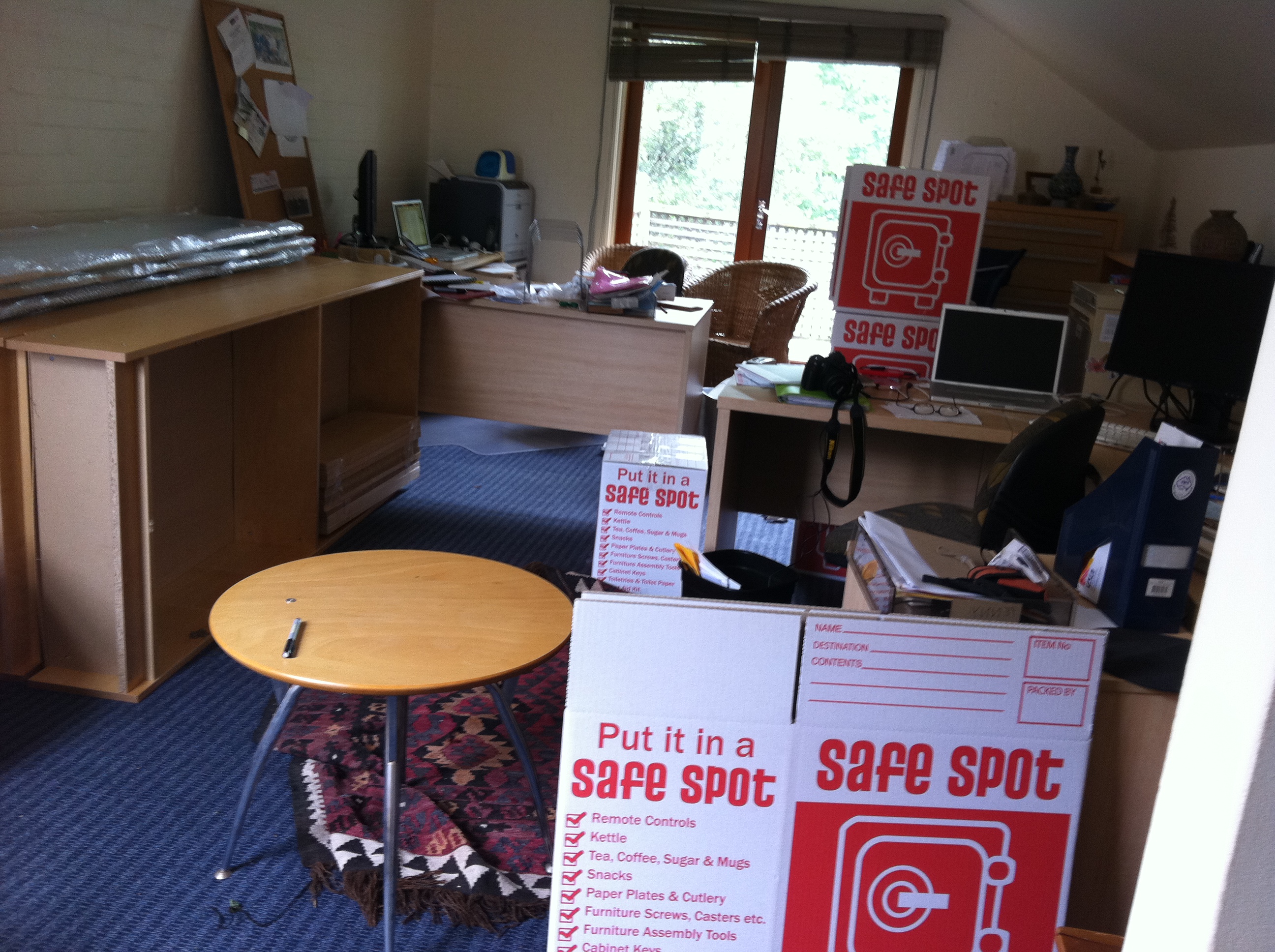
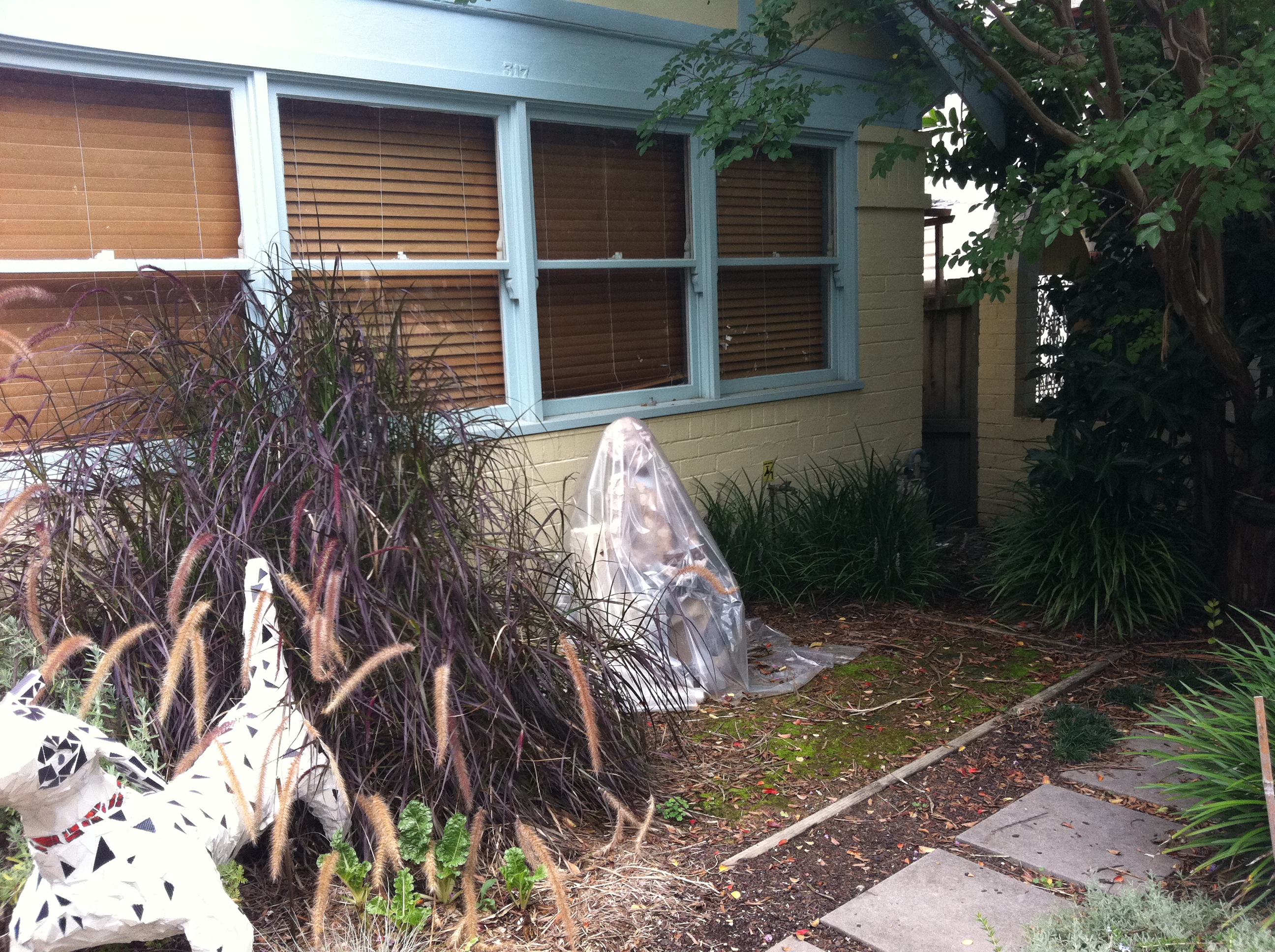
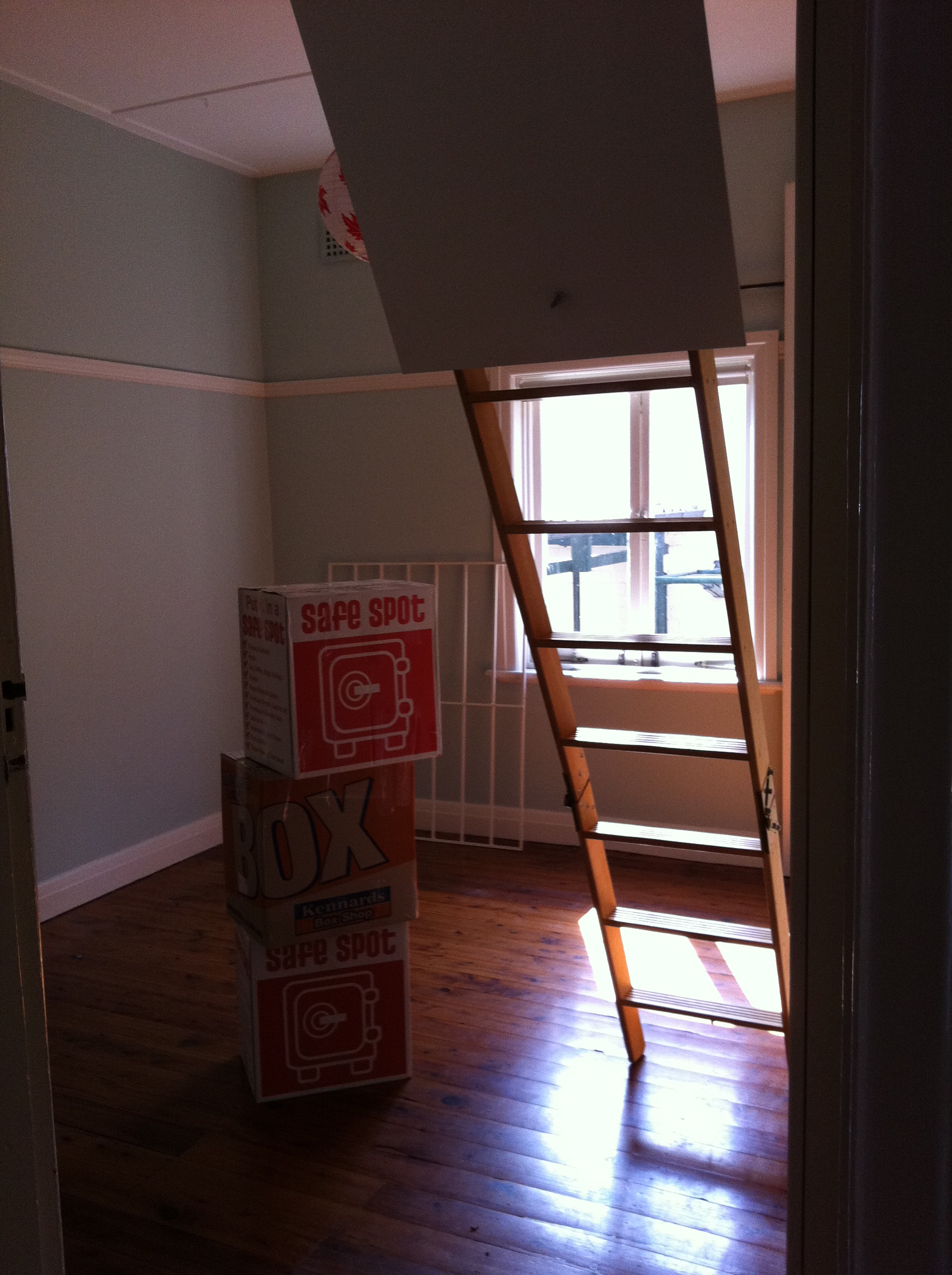
As we move closer to taking possession of our new house – filling the attic and the kitchen cupboards, we come across little treasures that have been left for us by the lovely people known as The Vendors. There are some small black hexagonal tiles which will come in handy if the bathroom floor suffers serious trauma, several cans of paint clearly marked with the room they belong to, a roll of toilet paper (an act of superb thoughtfulness). And then there are the grace notes: a plastic soldier missing one leg; a dog-suitable tennis ball; and this little putti lyrist on the paling fence:

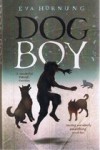
Eva Hornung’s Dog Boy

Eva Hornung, Dog Boy (Text 2010)

Our species has long been fascinated by stories of human children raised by wild animals , as the Wikipedia page on feral children attests. I don’t have to strain my memory muscle too hard to come up with (in order of my encountering them) Mowgli, Romulus and Remus, Truffaut’s L’enfant sauvage, and the ‘wolf girls’ Amala and Kamala (about whom we published a story in the School Magazine, not realising the whole story was made up to raise funds for an Indian orphanage). Dog Boy tells one of those stories, and evokes that fascination brilliantly.

On page 15 Eva Hornung gets explicit about the challenge she has taken on:

And so it was, trotting with three dogs through ordinary lanes, past ordinary tenements, past ordinary lives, a lone boy crossed a border that is, usually, impassable – not even imaginable.

The stories of feral children I’ve encountered (add to the list above the Werner Herzog movie about Kaspar Hauser, and Louis Nowra’s first play, Inner Voices, and wasn’t there a Peter Handke play as well?) focus on what happens when the child returns to human society, and chronicle the process of learning, or failing to learn, how to be human. I don’t think I’m giving anything away to say that  this book pretty much ends where those stories start. I was given it as a Christmas present with a card suggesting it might help me get in touch with my animal nature. Certainly it was a wonderful book to read while walking a couple of dogs: Eva Hornung may have done extensive research on the ethology of feral dog clans, but it’s very obvious that she has also had intensive personal experience with dogs. There’s a lot I could say about the way the book explores what it is to be human, our relationship with other species, especially dogs,  parenthood, love, post-Soviet Russia (the story unfolds mostly in the devastated outer suburbs of Moscow) and so on. But its power is in the way it takes us into the smelling, scratching, snarling world of doghood, as experienced by a small boy who comes to think of himself as a dog but never completely loses his sense of difference.

It’s tremendously moving. There are some major shifts in the narrative, all of which I resisted crankily at first and each of which led me to unexpected places. If my heart has segments, then the book moved systematically through a number of them, and pulled hard at each in turn. Even when, quite a way in, the narrative leaves the dogs’ perspective for a time and actually names some of the story’s precedents, including some listed in my first paragraph, in a kind of metatextual play, the spell isn’t broken. Tightened, if anything.

If, as I do, you ‘accidentally’ skip to the end and read the last sentence, you may think you know how the story ends. Don’t read the second last sentence.

Now, back to packing up the house, carefully not stepping on the dog who is clearly very disturbed by the growing chaos.

M-Day minus 8

One house gets itself into boxes. The other lies in wait.

‘We live together or we die together’

Have a look at this:

Thousands of Muslims honored a promise made by their leaders and showed up at Christmas Mass or at candlelight vigils outside Egyptian churches on Friday, offering their bodies as human shields against any acts of terrorists. The observances were tense, in view of the New Year’s Day bombing of a cathedral in Alexandria, which killed 21. The Egyptian Coptic Orthodox Church celebrates Christmas on January 7. Among those Muslims making this statement was beloved comedian Adil Imam. Since the 1990s Imam has been active in combating radicalism, memorably in his film “Kebab and Terrorism” (Kebab wa Irhab).

Thanks to Patrick Nielsen Hayden.

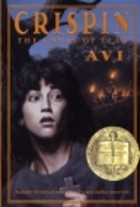
Crispin: The Cross of Lead

Avi, Crispin: the Cross of Lead (Scholastic 2002)

Moving house is supposed to be one of the most stressful things you can do. It certainly claims a lot of attention, and I thought perhaps a mediaeval adventure for young readers would be an appropriately diverting read. Crispin: The Cross of Lead turned out to be just the ticket – it’s straightforward but intelligent, with enough authenticating detail, political savvy and period vocabulary (I’m familiar with terce, sext and none, can guess what a glaive is, and had to look up mazer) to be interesting.

The 13 year old hero – ‘Asta’s son’ – doesn’t even know his own name at the start of the book. He and his mother have been outcasts in their small village, and now that his mother has died he is almost completely alone in the world. Things get rapidly worse. For reasons he doesn’t understand his life is threatened, and he flees the village that is all he has ever known. He is taken under the wing of a traveling juggler who turns out, of course, to be more than he seems, and we get an age-appropriate taste of the kind of 14th century European politics that informed Umberto Eco’s Name of the Rose. There’s a twist involving the young hero’s identity that you might be able to guess even from that wispy outline, and would be unsurprising to most of the 10 to 12 year old target readership (a phrase that always reminds me of a Tohby Riddle cartoon where a cheerful adult is taking aim at the head of a small child with a book that’s about to become a projectile). The final scenes are awfully implausible, in way that suggests a tight deadline was being met, but that wasn’t enough to take away from my enjoyment of the book as a whole.

If you don’t know Avi’s work (evidently that’s not a pen name, but the name he was given by his sister when he was small it’s the only one he uses now in his early seventies), I’d recommend starting with The True Confessions of Charlotte Doyle, in which another 13 year old has equally implausible but wonderfully swashbuckling adventures on the high seas in the early 19th century.

Mark Haddon’s Spot of Bother

Mark Haddon, A Spot of Bother (Vintage 2007)

This is a Family-Celebration-Goes-Horribly-Wrong comedy, and since we’ve just had a Wedding in the Family it was a timely read for me. Thankfully none of our disasters got beyond impending status, though the heavens came close to opening, the dog could easily have been kidnapped when he stayed behind in the park to cadge barbecued sausages from perfect strangers, and any number of half acknowledged emotional storms were crackling on the far horizon. In this book, as indeed in this whole genre of comedy, the disasters actually happen – the bride’s brother turns up late covered in mud and subsequently snogs his boyfriend in shocked view of the born-again in-laws, her father gives a bizarre speech and then headbutts one of the guests – but everything turns out all right in the end.

What makes the book interesting – compared, say, to Frank Oz’s dire box office success Death at a Funeral (so great a success that there was a remake within five years) – is the way it takes us inside the mind of a man who becomes increasingly irrational as the book progresses. George, father of the bride and disrupter of the wedding reception, is a fairly dull man, recently retired and building a studio so he can pursue his long neglected art hobby. On the first page of the book, he sees a suspicious lesion on his hip and panics. From there on, he progressively loses his grip on reality, helped by a number of the key certainties of life crumbling before his eyes. But this isn’t the The Yellow Wallpaper: eve n when George is suffering the worst, it stays funny. The prose is straightforward and engaging, as you’d expect from an accomplished writer for children, though the sex scenes make it unlikely that this will cross over from adult to child readers as The Curious Incident of the Dog in the Night-Time did.

I found it refreshing to be taken on a journey into (and possibly out of) irrationality that isn’t Gothic, or medicalised, or political, or in other ways portentous. I’m uneasy that the comic treatment may involve the domestication of awful suffering, but it’s never callous. That is to say, this is an enjoyable, light read with some substantial barbs in it.

Dogs on ice

Here’s a dog treat idea that deserves wide currency.

You do need a little equipment: a balloon (one balloon for each dog); some scraps of meat or peanut butter or other substance attractive to dog(s); water.

Chop the meat up fine and force it into the balloon. I used a kitchen funnel. I pushed the meat into the narrow part of the funnel using the handle of a bowl scraper, then kneaded it down the neck of the balloon. It wasn’t too hard.

Fill the balloon with water. It doesn’t need to be very full – I was happy with a diameter of about seven centimetres.

Tie the balloon off, and put it into the freezer for 24 hours or more.

Give to dog(s) when they are in need of entertainment, or just when the weather is unpleasantly hot.

This slideshow requires JavaScript.

The year in review (lazily)

A handy blogging tradition which I got from Pete is to cut and paste the first line of the first post of each month of the year as a way to reflect briefly on 2010 without necessarily engaging the mind. So here goes:

January: I came out of  Wes Anderson’s Fantastic Mr Fox wondering if I oughtn’t reconsider my devotion to the cinema.

February: Thanks to Antony Loewenstein for this, from Winter Soldier testimony in 2008.

March: It can’t be! Two full weeks since I blogged! I must have been busy.

April: We went this morning to what we’re told these days is even more popular with Australians than the beach or the footie – the art gallery.

May: One of my highlights of last year’s Sydney Writers Festival was Alleyway Honour in the Bankstown Town Hall.

June: Dennis Hopper does Rudyard Kipling … on the Johnny Cash show. (via Harriet the Blog)

July: Reading a book while walking is different from walking while wearing earphones.

August: This morning people in my house said to each other, ‘How about that wind?’

September: There are wordy conflagrations in Melbourne around about now that are sending occasional sparks up Sydney way.

October: Today is Arthur Boothroyd’s hundredth birthday.

November: Those who know about such things say the best introduction to Philip K Dick’s fiction is his short stories, especially ‘We Can Remember It for You Wholesale’.

December: This book inspired two of my November blog sonnets, but that’s no reason not to give it a separate entry.

No mention of weddings, buying and selling houses, girlfriend transforming from harried consultant to blithe Art Student, etc etc etc. But there you have it. Happy New Year, all!

LOLdogs (not!)

Our dog Nessie has many virtues and at least as many vices. Here’s a seasonal story in which  the consequences of her vices, though vile enough by any reasonable measure,  are less vile than those of her virtues.

You could argue that the whole thing was the humans’ fault. On Christmas evening, the Art Student and I packed a basket of leftovers from lunch, including most of a roast chicken, and set off for dinner with my sister and her family who are in town for the holiday break and living just down the street. After a pleasant evening, in which the Art Student displayed her Auntie qualities to striking effect, and my sister’s leftovers, including spectacular poached salmon, won the day, we brought most of the chicken home with us. We went straight to bed, absentmindedly leaving the bag of chicken in the basket on the stairs.

Enter evil Nessie.

The next morning, Boxing Day, the chicken bag was on the kitchen floor, completely empty: no bones, no crumbs of stuffing, not even a smear of grease on the lino. We didn’t know which of the dogs was the culprit –  Oscar, the Honeymooners’ foxy Jack Russell, is staying with us while they’re in Thailand – but our dog-walks during the day made the criminal’s identity clear, as Oscar was his usual energetic and regular self Nessie was uninterested in chasing balls and failed to produce anything for our doggy-do bags.

That night when we humans went to bed, we shut doors as usual: the back door so the dogs couldn’t get out to bark at the possum, the front door in case of an unlikely intruder, our bedroom door, and the door that separates the front of the house, where we sleep, from the kitchen area, where the dogs sleep, because Oscar hasn’t quite accepted the principle of Separate Sleeping Quarters. The Art Student, usually a very light sleeper, took some anti-inflammatories for pain she’s been having in her hip. So there’s the setup: many closed doors, two deep sleepers (I don’t need drugs to make me stone deaf when asleep), and a dog with a dangerously overloaded digestive system.

I’ll spare you a description of the state of the kitchen floor the next morning. It was at least as retch-makingly noxious as you can imagine. That was the result of her vice –  and though the ghost of a smell still lingers, there was nothing that carpet foam, scrubbing brushes, newspaper, disinfectant, deodorant and the passage of time couldn’t fix. It was her virtue that caused the serious damage. Unlike A Small Dog That Shall Not Be Named, she recoils from the very idea of crapping or piddling indoors, and had tried desperately to make the back door open: from the evidence she knocked, scratched and bit, presumably in the hope that one of us would appear, godlike, as we normally do to the faintest of her knocks because the door is new and beautifully stained – at least it was. We didn’t hear. And the door is a mess. We didn’t have the heart to beat her severely or even yell at her, but our hearts bleed for the door. Behold just some of the damage:

Preincarnate

Shaun Micallef, Preincarnate: A novella (Hardie Grant 2010)

Shaun Micallef is a comedian who affects a kind of supercilious gaucherie, a little like Stephen Fry without the erudition or the authentic blue-ribbon class credentials. I’ve mainly seen him on television, and been amused, though not enough to make me watch  Talkin Bout Your Generation, the TV game show he MCs, unless by accident.

This book was a Christmas present from a friend who doesn’t watch a lot of television and was enticed by the stylishly witty cover. I gladly accepted it as a challenge to my prejudices. Sadly, I gave up a third of the way through, my prejudices unallayed. There’s quite an interesting plot involving time travel, culminating (I peeked at the last couple of pages) in logically determined absurdities redolent of the climactic scenes of excellent farces. My problem was that the writing was constantly striving to be ‘funny’, interrupting itself with strenuous jokeiness or sketch-comedy interludes. For example, in a seventeenth century context:

Moray wore a parrot hidden under his vest during all his subsequent meetings with the Dutch émigré , and every conversation recorded by the parrot was later transcribed. It was an arduous process. The parrot had a learning difficulty and Moray would often have to trick Leeuwenhoeck into repeating entire conversations, sometimes fifteen or twenty times. eventually, enough evidence was amassed to establish a prima facie case.

It goes on with the parrot shooting himself out of guilt, and none of it moving the plot forward perceptibly. Funny, if you’re in the mood. Otherwise annoying.

Clive James doesn’t like to be thought of a comedian, and has said so in a number of places, including in an interview with Peter Thompson on ABC TV’s Talking Heads:

I’m not really a comedian and I don’t even tell jokes. If I do anything funny it’s because I’ve expressed something real in a very short space. The result is, if you make an article interesting enough on that level … So you’re saying something complex but some of it comes out funny, and you get this reputation as a comedian, then journalistically these two reputations get in each other’s road. ‘He can’t be serious because he’s funny,’ ‘He can’t be funny because he’s serious.’

I hope I’m wrong, but it looks to me as if Shaun Micallef has bought into that journalistic dichotomy, and opted for funniness at the expense of all else.