Category Archives: Books

Mrs Dalloway, report 2

Virginia Woolf, Mrs Dalloway (1925, Penguin Classics 2020) from page 103 to end
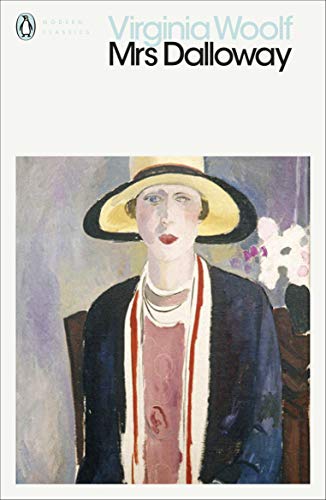
As I expected, it took me just two months to read Mrs Dalloway three pages a day. If you haven’t read it, I recommend doing it slowly in just this way: three pages at a time seems to be just about perfect.

The book looks for the person behind the public-facing name Mrs Dalloway, to create a kind of literary cubist portrait: beneath the skin of the upper-crust English lady whose life centres on giving parties for the right people are the remains of a glorious, multi-faceted creature who once lived with grace and passion. We see her from many angles, through the eyes of her husband (who barely sees her), her daughter, a resentful working class history teacher, a maid, a man whose proposal of marriage she rejected in spite of their mutual passion, a woman who was also drawn to her when young, an older aristocratic woman of the type played so splendidly by Maggie Smith, and more

In one way the book is about the disappointment of youthful hopes and expectations. For example, Sally Seton, who once ran naked down the corridors of an country mansion, is now Lady something or other with six sons and insists that she is completely happy. Clarissa herself is married to Richard who is at best a mediocre politician. Peter Walsh, her former suitor, has spent most of his life in India, unhappily married and now caught up in an awkward affair. And quite unconnected to Clarissa until the final pages is Septimus Smith, a soldier returned from the trenches of the ‘Great War’ with what we would now call PTSD. He is haunted by the image of a friend who was killed in the War, and in the end (spoiler alert, but the book is a hundred years old after all) kills himself in desperation. When Clarissa learns of his death, she is playing hostess at her party, to which the whole book has been building. Suddenly she is alone and grapples with thoughts of her own mortality.

I came to the book expecting it to be difficult and a bit airy-fairy. Maybe it is both. The English class system is rock solid in its pages, and though Clarissa is criticised as a snob, the basic viewpoint of the novel can’t be entirely absolved of that charge. But I wasn’t prepared for how much pleasure there is in the way the narrative glides among different points of view, for the almost Whitmanesque celebration of city life, for its laugh-out-loud moments, or, in the end, for the pervading sense pathos in a society and individual souls who have survived the momentous events of a World War and a pandemic. I wasn’t prepared for just how much, sentence by sentence and page by page, I enjoyed it.

it’s hard to pluck a passage out of context, but here is a bit I love. Peter Walsh is watching Clarissa as she escorts the Prime Minister from the party:

And now Clarissa escorted her Prime Minister down the room, prancing, sparkling, with the stateliness of her grey hair. She wore ear-rings, and a silver-green mermaid’s dress. Lolloping on the waves and braiding her tresses she seemed, having that gift still; to be; to exist; to sum it all up in the moment as she passed; turned, caught her scarf in some other woman’s dress, unhitched it, laughed, all with the most perfect ease and air of a creature floating in its element. But age had brushed her; even as a mermaid might behold in her glass the setting sun on some very clear evening over the waves. There was a breath of tenderness; her severity, her prudery, her woodenness were all warmed through now, and she had about her as she said goodbye to the thick gold-laced man who was doing his best, and good luck to him, to look important, an inexpressible dignity; an exquisite cordiality; as if she wished the whole world well, and must now, being on the very verge and rim of things, take her leave. So she made him think. (But he was not in love.)

Yeah, right! He wasn’t in love!

Maybe I should give To the Lighthouse a go.


I have written this blog post in Gadigal and Wangal country. I acknowledge Elders past and present of those clans, and welcome any First Nations readers.
Tug Dumbly’s Tadpoems

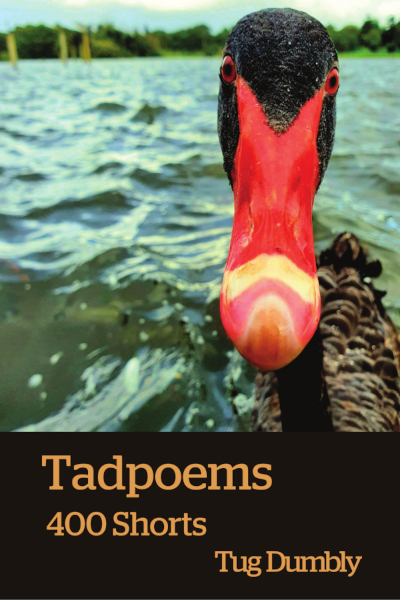
Tug Dumbly, Tadpoems: 400 Shorts (Flying Island Books 2024)

Most poetry books are at least a little intimidating to most people. Tadpoems is not one of them.

In an introductory note, Tug Dumbly (offstage name Geoff Forrester) calls the poems ‘little squibs’ and explains that many of them were born on walks, his mind ‘conversing with whatever it passes at the moment … or maybe just playing with words’. Most of them first appeared on Facebook. ‘A few,’ the note continues, ‘are shameless life-support systems for dad jokes’. It’s rare for a book of poetry to include such a clear and unassuming account of itself.

In addition to the 400 tiny poems, there are more than 40 photos, many of water scenes around Sydney, and close-ups of insects, birds and plants. The book is not only accessible fun, it’s also gorgeous.

It’s a book to be dipped into, enjoyed a moment at a time.

Many of the poems nudge the dad joke genre towards something satirical of even at times profound. One of my favourites:

After too much talk in the cultural hub
it's good to wing home over a bay
of beautiful banality.

I like this too:

Recycle.
Be re-astounded
by the same dear things.

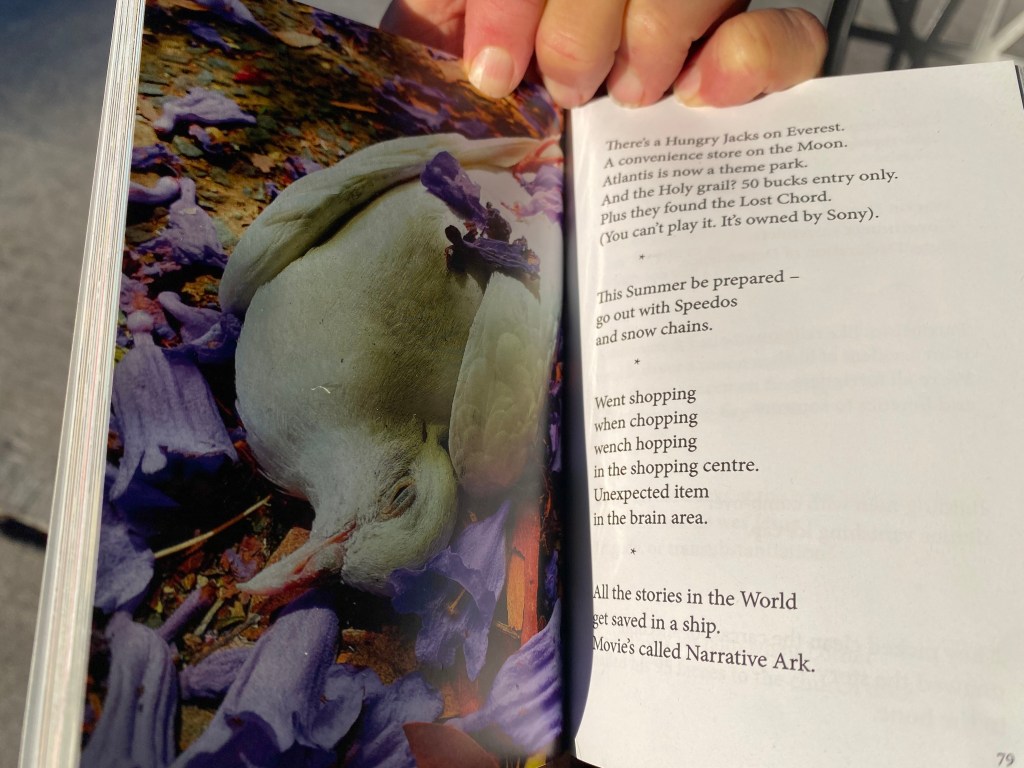
Page 78* is a striking photo of a dead seagull among fallen jacaranda blossoms – a very Sydney image, and not at all typical of the abundant life in most of the book’s images. There are four ‘tadpoems’ opposite:

The poems include a throwaway, bitter criticism of the commodification of everything, ending with a mildly erudite reference to Arthur Sullivan’s song ‘The Lost Chord’:

Plus they found the Lost Chord.
(You can't play it. It's owned by Sony.)

There’s a not-quite-successful joke about changeable weather, and a pun on lit crit terminology. I wouldn’t mind seeing the movie Narrative Ark

And a bit of wordplay that is exactly the kind of thing you can imagine happening in a wordy person’s mind as they go walking:

Went shopping 
when chopping
wench hopping
in the shopping centre.
Unexpected item
in the brain area.

It’s silly and makes no claims for itself, but something sticks. The last two lines could refer back to the first three. A paraphrase would be, ‘That discovery of homophones that just popped into my head is unexpected.’ A humourless discussion of the poem might use terms like metapoetic or recursive. One nerdy person might see a reference to shopping malls as pickup locales (I just googled “shopping mall pickup” and sure enough it’s a porn trope). Another might see the poem as enacting an important non-linear mode of mental activity. I think they’d be right, but I’d be too busy moving on to the next ‘squib’ to join the conversation.

It’s a friendly, unpretentious book. Reading it is a bit like going for a walk with someone who points out interesting things in the environment, and who shares his thought bubbles. He’s good company.


I have written this blog post on the land of Gadigal and Wangal of the Eora nation. I acknowledge Elders past and present of all those clans, and welcome any First Nations readers.


My blogging practice is to focus on the page that coincides with my age, currently 78.

Brian Purcell’s Filmworks

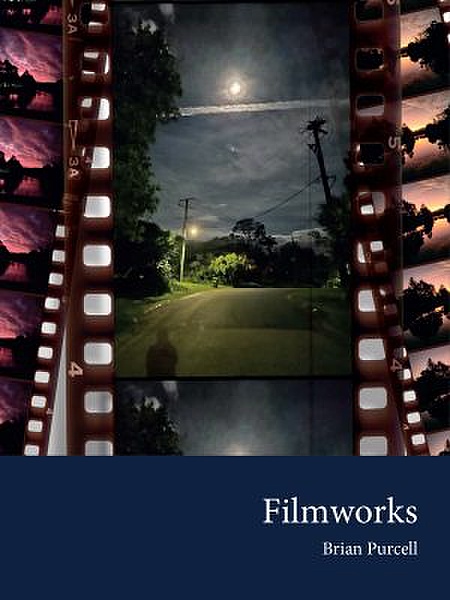
Brian Purcell, Filmworks (Flying Islands 2025)

Brian Purcell is a painter as well as a poet. He was lyricist and singer with the rock band Distant Locust, which gets a consistent rating of four stars (out of five) on rateyourmusic.com. He’s been involved in community literature for decades – in 2010 he founded the Bellingen Readers and Writers Festival, which celebrated ’15 years of storytelling magic’ in June this year.

Filmworks is a collection of 41 poems, all but one of them named with film titles. The exception, ‘Reason’, has the subtitle ‘Man Ray’s films of the 1920s’, so it’s barely an exception at all.

Here’s a random selection of opening lines to give you an idea of the range of movies that make the cut and the range of poetic responses to them.

An autobiographic note in the first poem in the book, ‘2001’:

A small boy beneath a big screen
that begins to split, somersault, explode
at the beginning of an infinite journey.

Notice the lower case ‘depression’ in ‘Top Hat’, so that it can signify both the context of the movie’s creation and a mental state that it may help with:

A parallel universe
where depression does not exist

High level showbiz gossip in ‘The Misfits’:

Her husband wrote the part for her
as a farewell gift.

Details of the movie are evoked vividly in ‘Blue Velvet’, though this is not how I remember the film beginning, probably another example of my unreliable memory:

The crushed blue velvet gently moving
at the beginning of the film
hangs down like an enchanted sea
or a field where fabulous creatures roam.

In ‘The Imitation Game’ – dedicated, of course, to Alan Turing – the film is a springboard for a poem on our attention economy:

Secrets
we all have them
and they kill us.

I love this book. It feels like an extended conversation with another film lover, a conversation that can go anywhere, and does. And not a Marvel Universe blockbuster in sight. It makes me want to do a similar collection of poems about my own favourite movies.


I have written this blog post on the land of Gadigal and Wangal of the Eora nation . I acknowledge Elders past and present of all those clans, and welcome any First Nations readers.

David Adès’ Heart’s Lush Gardens

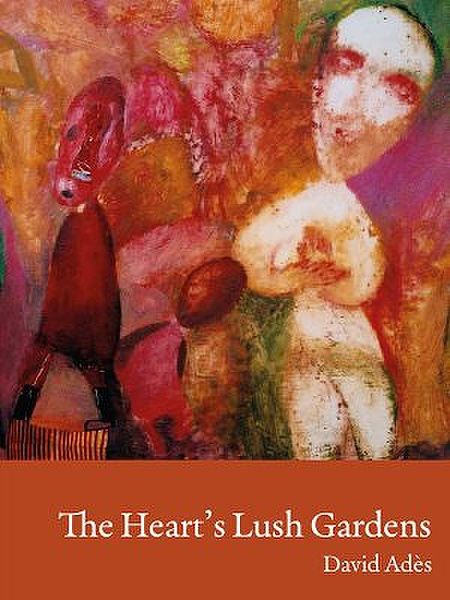
David Adès, The Heart’s Lush Gardens (Flying Island Books 2024)

Apart from being a poet, David Adès is a podcaster. On Poets’ Corner, described on YouTube as ‘WestWords’ monthly encounter with celebrated Australian poets’, he has presented more than 50 poets, from Ali Cobby Eckermann to Mark Tredinnick. I could have linked to his conversation with Nathanael O’Reilly when I recently blogged about O’Reilly’s Separation Blues.

The Heart’s Lush Gardens, part of the Pocket Poets Series edited by Christopher (Kit) Kelen, is his fourth book. An introductory note dedicates it to the men in his men’s group, which has been meeting since 1992. ‘These Are the Men’, the title poem of the second of the book’s three sections, echoes that dedication:

Into their hearts' lush gardens
they took me,
gardens of unexpected flowerings
amid bracken and tangles of vines,
gardens where the soil had been laid bare
and seeds planted,
where I am welcome to roam and return.

That so resonates with the joy I remember feeling in my first consciousness-raising group (that’s what we called them in 1976).

This is not the only appearance of the men’s group, and masculine identity and the experience of being a man are broached in many other poems. ‘Slingshot’ imagines David facing Goliath without that weapon; ‘Small Man’ grapples with male entitlement (‘I am a small man in the house of my white skin, the skin of privilege’). The first poem in the book, ‘From Which I Must Always Wake’, is a complex, raw seven pages on heterosexual desire and relationship.

There’s a lot more. I’ll just mention ‘Ripples’, which a note tells us was inspired by a water-damaged original copy of someone’s thesis and poetry manuscript that Adès spotted abandoned on the footpath. The poem’s speaker addresses the writer of the lost work:

This is what you do not know:
who picks up the petal

you have dropped into the Grand Canyon,
who looks upon it in wonder

as if upon the first petal

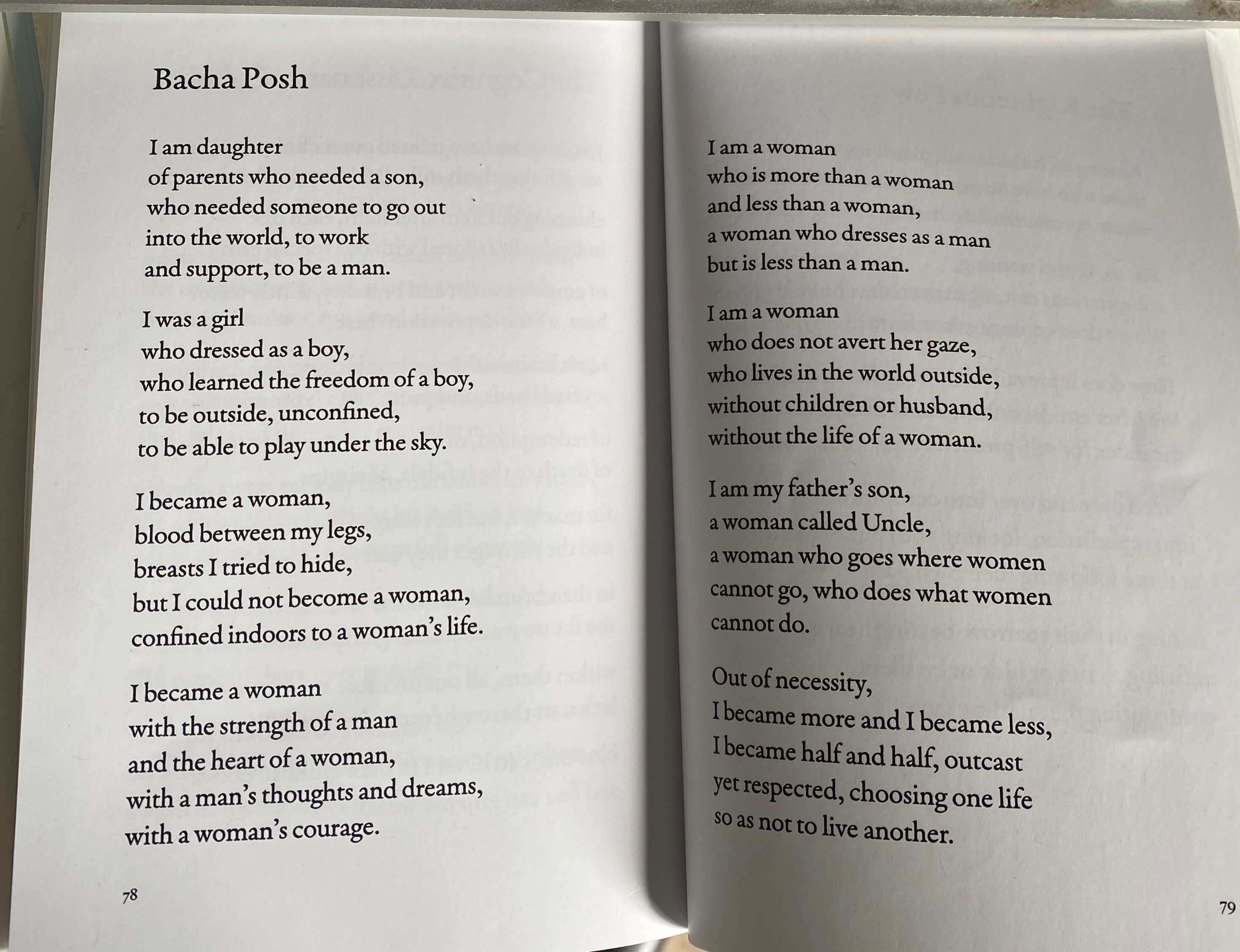
My arbitrary practice of looking at page 78* has borne fruit once again. The fine poem ‘Bacha Posh’, which starts on that page, has an interesting take on gender.

According to its Wikipedia entry, bacha posh is a practice in Afghanistan in which, often motivated by poverty, some families will pick a daughter to grow up as a boy. I probably didn’t need to look that up to understand the poem – but it’s good to know that it refers to an actual practice.

I don’t know David Adès, but I’m assuming he’s a cis man, and so likely to be regarded with suspicion if he enters the current public conversation about gender, and in particular trans issues. The practice of bacha posh gives him a way of letting his mind play over aspects of gender, and gender non-conformity, and invite readers to join him. Here, the non-conformity is imposed on the child rather than arising from an inner motivation such as gender incongruence.

This is a terrific example of a poem doing something that would be hard to do in a prose essay. It’s not arguing a case or offering an opinion. You could say it makes music from the language of gender. A handful of words and phrases repeat, almost like chiming bells. I don’t know how well this will work on the screen, but here is a nerdy look at how the gendered words and verbs of being and becoming occur in the poem.

I am daughter
of parents who needed a son,
who needed someone to go out
into the world, to work
and support,
to be a man.

I was a girl who dressed as a boy,
who learned the freedom of a boy,
to be outside, unconfined,
to be able to play under the sky.

I became a woman,
blood between my legs,
breasts I tried to hide,
but I could not
become a woman,
confined indoors to a woman's life.

I became a woman
with the strength of a man
and the heart of a woman,
with a man's thoughts and dreams,
with
a woman's courage.

I am a woman
who is more than a woman
and less than a woman,
a woman who dresses as a man
but is less than a man.

I am a woman
who does not avert her gaze,
who lives in the world outside,
without children or
husband,
without the life of a a woman.

I am my father's son,
a woman called Uncle,
a woman who goes where women cannot go,
who does what
women cannot do.

Out of necessity,
I became more and I became less,
I became half and half, outcast
yet respected, choosing one life
so as not to live another.

I didn’t notice until I did that exercise that the final stanza no longer has any gendered words, an eloquent absence. In addition, it repeats the phrase ‘I became’, the phrase of transition, three times. And, in contrast to the first stanza where the poem’s speaker has no agency (‘I am daughter / of parents who needed a son’), here he/she is engaged in a dynamic continuous act of choosing.

Having done that little erasure experiment, I now see that there are other bells in this chime. Active verbs are scattered throughout, appearing more densely towards the end (‘goes’, ‘go’, does’, ‘do’, ‘live’); and the prepositions ‘with’ and ‘without’ have a sort of call and response between stanzas 4 and 6.

Apologies for the nerdiness of this, but if you’ve got this far I hope you’ve enjoyed looking with me. I hope it, and the poem, make a small contribution to Trans Awareness Week, 13–19 November.


I have written this blog post on the land of Gadigal and Wangal of the Eora nation. I acknowledge Elders past and present of those clans, and welcome any First Nations readers.


My blogging practice is to focus on the page that coincides with my age, currently 78.

The Loneliness of Sonia and Sunny, Kiran Desai, the book club and November verse 5

Kiran Desai, The Loneliness of Sonia and Sunny (Penguin 2025)

Before the meeting: This is a massive family saga that spans three continents, a romance, an Indian–US comedy of manners, and a magic-realist tale (though Sonia, a writer, is critical of that term).

All of the principal characters are caught, one way or another, in a tangle of Indian and US culture. The central difference, gestured towards in the book’s title, is the contrast between US individualism and Indian sense of belonging to a family and a community: loneliness and embeddedness, self-determination and obligation. When this plays out in comic mode, it works brilliantly. In the Indian scenes, again and again, someone is asked in shocked tones why they are alone.

As you’d expect from the title, the central narrative strand is a romance. True to the form of the romcom (no spoiler really) the protagonists Sonia and Sunny have sex at almost exactly the midpoint and then are separated, seemingly irretrievably. Integral to the romcom are family intrigue, corruption, violent murder, and a dispersed conversation about arranged marriage. I loved all that.

There’s another story jostling for the centre. This begins with an unconvincing episode of coercive control and develops into a kind of ghost story that more or less centres on a mystic talisman that Sonia has inherited from her grandfather. A European painter who has held Sonia in his thrall steals the talisman and makes it central to his art (yes, appropriation!). I found this strand unconvincing at the level of character, but there’s an interesting reflexivity to it as the artist keeps telling Sonia, an aspiring novelist, what she should and should not write: we are clearly being invited to read this book as a repudiation of his advice.

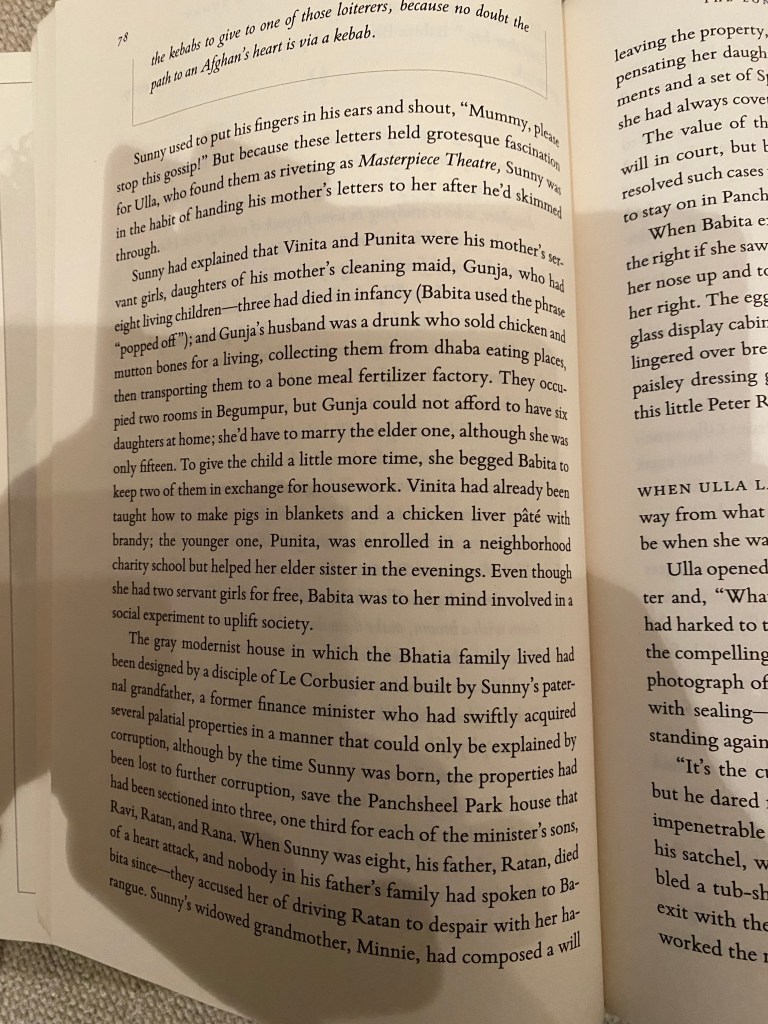
Page 78* is early in the book, part of Sunny’s narrative. He is a young man living in New York City in the late 1990s with Ulla, a white US woman. He’s intent on making it in the USA as a journalist, and embarrassed by his mother’s insistent claims on him. He can barely read her long letters (‘Mummy, please stop this gossip!’), and on this page he explains the context of one of them to Ulla (and, incidentally, to the reader):

One tiny thing I’ll mention in passing. The bottom paragraph describes Sunny’s family home as a ‘gray modernist house … designed by a disciple of Le Corbusier’. So much information is conveyed in those few words. First, the family comes from wealth. Second, they are to some degree westernised – their house is modernist. Third, the fact that the architect was a disciple rather than Le Corbusier himself suggests something about the limitations on the aspirations of colonised elites. And fourth, ‘gray’ is an example of the the North American spelling conventions used throughout (‘neighborhood’ later in the paragraph is another): that these spellings persist in the UK edition is not a mistake, but an enactment at the micro level of the way US culture has come to dominate the book’s westernised Indian characters.

Before that, there’s a paragraph of raw exposition:

Sunny had explained that Vinita and Punita were his mother’s servant girls, daughters of his mother’s cleaning maid, Gunja, who had eight living children – three had died in infancy (Babita used the phrase “popped off”); and Gunja’s husband was a drunk who sold chicken and mutton bones for a living, collecting them from dhaba eating places, then transporting them to a bone meal fertilizer tactory. They occupied two rooms in Begumpur, but Gunja could not afford to have six daughters at home; she’d have to marry the elder one, although she was only fifteen. To give the child a little more time, she begged Babita to keep two of them in exchange for housework. <snip> Even though she had two servant girls for free, Babita was to her mind involved in a social experiment to uplift society.

The fate of Vinita and Punita, known collectively as Vini-Puti, is to be significant much later in the book. But because it’s November*, rather than discuss further, here’s a little verse:

November verse 5:
So much in his mother's letter
needs to be explained. Just who
is Vini-Puti? Who is Ratty?
What's this kebab how-de-do?
Gunja, mother of six daughters,
trains two up to follow orders,
flee the confines of the slum,
work for free for Sunny's mum,
cook liver pâté soaked in brandy.
This is tragic seen up close:
the mum's small gain, the girls' great loss.
But this ain't Hamlet, this is Sunny.
Vini-Puti serve their turn
like Rosencrantz and Guildenstern.

After the meeting: We discussed The Loneliness of Sonia and Sunny along with Arundhati Roy’s Mother Mary Comes to Me. I was astonished when the discussion of this book kicked off with one person saying she hated it and gave up at the 40 percent mark (she’s a Kindle reader). Nothing happened, she said. And that included Sonia’s harrowing emotional enthralment to the bizarrely irrational western artist. Probably needless to say, others disagreed.

Of the three of us (out of five) who had read the whole book, I liked it the best. For all three of us the first 40 percent (I make that about 260 pages) was what we enjoyed most. We had different versions of why it became less enjoyable: perhaps there’s a forced assertion of Indian ways of story-telling, a cultural repudiation of the western mode of the earlier parts; perhaps the talismanic object is too sketchily realised to carry as much narrative weight as seems to be intended; perhaps the book is just too long.

I persist in my opinion, shared by one other Clubbie, that it was a good idea to pair this with Mother Mary Comes to Me. Both books have domineering, eccentric mothers. The protagonists in both are secular Indians appalled at the rise of Hindu nationalism and the BJP – the Demolition of the Babri Masjid mosque looms in the background. Both explore myriad ways in which cultural differences can be negotiated by people from a globally non-dominant culture. Both have main female characters steeped in classic English literature.

We had an excellent dinner, including a dessert that fell flat on the floor when it was taken from the oven, but was delicious anyhow.


The group met on the land of Gadigal of the Eora Nation, and I have written this blog post on the land of Gadigal and Wangal. I acknowledge Elders past and present of all those clans, and welcome any First Nations readers.


My blogging practice is to focus on the page that coincides with my age, currently 78, and in November I write fourteen 14-line stanzas in the month. which means incorporating one into most blog posts.

Mother Mary Comes to me, Arundhati Roy and the Book Club

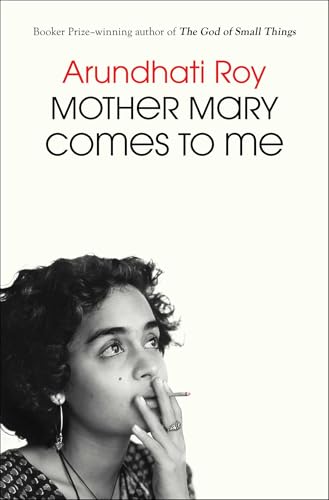
Arundhati Roy, Mother Mary Comes to Me (Scribner 2025)

Before the meeting: Mary Roy (1933–2022) was an extraordinary woman. She successfully challenged an inheritance law in the Indian state of Kerala so that women were able to inherit property, and she founded a ground-breaking school. That school, Pallikoodam, has a photo of her on its home page, accompanied by a vision statement:

Pallikoodam is born of the vision of Mrs Mary Roy. For fifty plus years she worked on moulding an extraordinary school that imparts a creative and all-round education that produces happy, confident children, aware of their talents as well as their limitations, unafraid of pursuing their dreams and living life to its fullest. Today, every one of us in Pallikoodam works to realise and forge ahead with her dream.

Mary Roy was also the mother of writer Arundhati Roy. In this memoir, she emerges as a formidable woman who did brilliant things, earning the admiration and cult-like devotion of many while challenging patriarchal institutions, and was at the same time a tyrannical, unpredictable, terrifyingly self-centred mother. Near the end of the book, Arundhati Roy describes a moment in 2022 when she was having dinner with three male friends, including her close friend Sanjay. She received a message on her phone:

It was from my mother. They, all men, each of them, including Sanjay, beloved by their besotted mothers, must have noticed the blood drain from my face and wondered what had happened. How could I explain to them that what had scared me was that I had got a message from my mother saying that she loved me.

It says a lot that readers understand perfectly why the message is terrifying, and that we also understand the intense moral, emotional and intellectual complexities involved in Roy sending a positive reply.

I love this book. It’s the story of the intertwined lives of two brilliant women, with the last half century of Indian history as an often intrusive backdrop. The genesis of Arundhati Roy’s writing is vividly told: her two novels The God of Small Things and The Ministry of Utmost Happiness, as well as her non-fiction, ‘activist’ writing, opposing the construction of a big dam that would displace millions of people, exposing the suffering of the people of Kashmir, reporting on time spent in a jungle with communist (‘Naxalite’) guerrillas, opposing Narendra Modi’s regime, and more.

I can imagine the book being portrayed as a misery memoir in which a famous writer complains about her wretched childhood, or as an exposé of a monster generally regarded as a saint. But that would be to misrepresent it. Mrs Roy’s personality was no secret. Her most loyal adherents were aware of her rages, her indulgences (she was always accompanied by an attendant bearing her asthma medication and, later in life, a supply of jujubes). And though Arundhati and her brother suffered terribly at their mother’s hands, she was a powerful force for good in their lives. There are any number of quotable lines to illustrate this complexity. Here’s just one from page 61, when the daughter was fifteen years old:

Between her bouts of rage and increasing physical violence, Mrs Roy told her daughter that if she put her mind to it, she could be anything she wanted to be. To her daughter those words were a life raft that tided her over pitch-darkness, wild currents and a deadly undertow.

There’s so much to enjoy. Arundhati has a friendship with the legendary John Berger, which gives us the unforgettable image of him as an elephant fanning her with his flapping ears. Hollywood actor John Cusack makes a cameo appearance as a witness of the mother–daughter relationship.

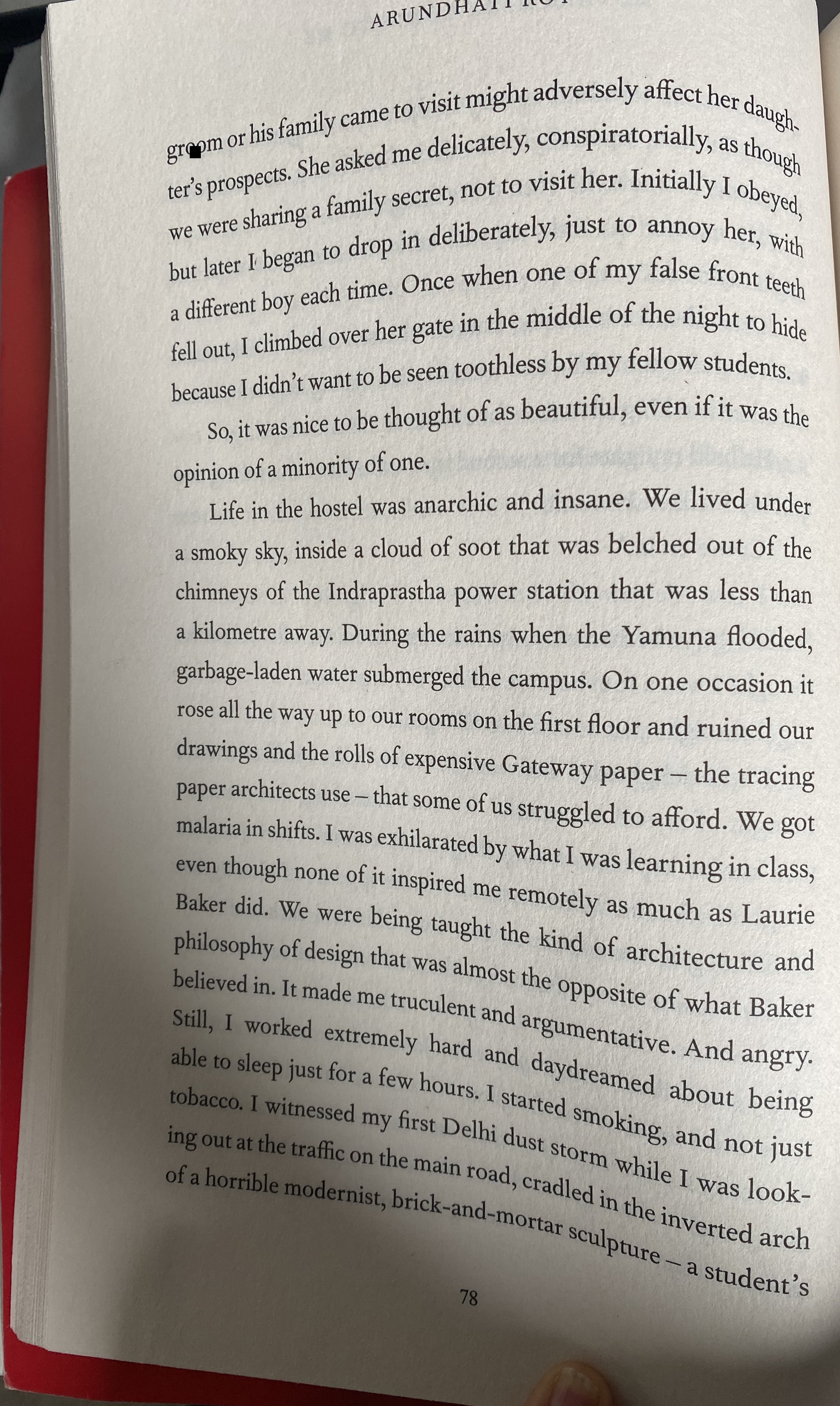
A look at page 78* makes it clear that the book is at least as much about the ‘me’ of the song as it is about ‘Mother Mary’. Young Arundhati is at the Delhi School of Planning and Architecture, free for the first time of Mrs Roy’s overwhelming presence. She has re-encountered the young man she calls JC – her first meeting with him when she was nearly fifteen and he was nineteen had been the first time she understood what sexual desire was: ‘My brain, my heart, my soul – all parked themselves in my groin.’ Back then, she had tried to be invisible. But on page 77, he tells her that he had thought she was a beautiful girl:

I was delighted. I had never, not for half of half a second, thought of myself as beautiful. <snip> I was the opposite of what Syrian Christian girls were meant to be. I was thin and dark and risky.

Such is the power of the writing that one hardly stops to question how the stunningly beauty the young Arundhati Roy that we see in photos could ever have felt that way.

On page 78 – after a paragraph about the Delhi family connection, Mrs Joseph, who disapproves of her – Arundhati is still absorbing that first delight:

So, it was nice to be thought of as beautiful, even if it was the opinion of a minority of one.

The rest of the page evokes grungy student life at the School of Planning and Architecture in new Delhi.

Laurie Baker (Wikipedia page here) is named as standing for the opposite of what was taught at the school. He was a pioneer of sustainable, organic architecture who designed Mrs Roy’s Pallikoodam school. He had inspired Arundhati to veer away from her earliest ambition, to be a writer, and leave home to study architecture. Though Arundhati did go on to be a writer, it was at the School of Planning and Architecture that some of her most important, enduring relationships were formed. As much as anything else the book celebrates these friendships.


After the meeting: Everyone loved this book and we loved discussing it. Someone threw a small grenade, saying that she didn’t see that Mrs Roy was such a terrible parent, that really Arundhati Roy had unfairly demonised her. The catalogue of physical and emotional violence, the fact that Arundhati’s brother shared her view, the way independent witnesses described Mrs Roy as ‘your mad mother’ and laughed at the terror on Arundhati’s face when she had to deal with her: none of this made a dent in her view. We could agree that Arundhati didn’t stay victim – she saw her mother as a model of being powerful in the world, and eventually came to recognise that in her way she loved her, and had given her the wherewithal to build a big life for herself, even if that meant rebelling against her.

We all learned things. For some it was about Indian politics, in particular about Karachi. For all of us, the impact of winning the Booker Prize was a revelation. We all had our ignorance about the Syrian Christians of India slightly decreased (the Roys are Syrian Christians – in Modi’s India, not Indian enough).

We read and discussed the book along with Kiran Desai’s The Loneleiness of Sonia and Sunny. Both books feature complex mother-daughter relationships, both have rich insights into the cultural and political relationships between India and the West, a number of historical events feature in both. But no one was much interested in a compare-and-contrast discussions.


Because it’s November*, I will now burst into rhyme:

November verse 4: Student days
Are student days always anarchic,
smoke-filled, garbage-racked, insane,
angry at the hierarchic
lectures that would tame the brain
with wisdom that's received as certain?
Always the time that lifts the burden
from the backs of those who bear
the yoke of old beliefs? Time where
new songs are sung and new words spoken,
daughters, sons beyond command
(don’t even try to understand),
first loves formed and hearts first broken,
new ways found with fork and knife,
friendships made that last for life?

The group met on the land of Gadigal of the Eora Nation, and I have written this blog post on the land of Gadigal and Wangal. I acknowledge Elders past and present of all those clans, and welcome any First Nations readers.


My blogging practice is to focus on the page that coincides with my age, currently 78, and in November I write fourteen 14-line stanzas in the month. which means incorporating one into most blog posts.

Mrs Dalloway, report 1, and November verse 1

Virginia Woolf, Mrs Dalloway (1925, Penguin Classics 2020)

Since taking nearly two years to read Proust’s À la recherche du temps perdu six years ago, I’ve had a classic slow-read on the go most of the time. When I’ve embarked on one of these slow-reads I regularly come across mentions of the book elsewhere. It’s like that with my current project, Mrs Dalloway.

This month, a friend sent me a link to Zora Simic’s article in The Conversation, Trauma memoirs can help us understand the unthinkable. They can also be art. Here’s an excerpt:

Of all Woolf’s novels, Mrs Dalloway is the one most often read as semi-autobiographical and as a reckoning with unresolved trauma: of England’s in the wake of the first world war, and in the novelist’s own life. <big snip> Woolf has long been a lodestar for writers grappling with trauma – in their lives, and on the page, especially women writers.

Reading the first couple of pages, when upper-class Clarissa Dalloway is out in the early morning shopping for flowers and enjoying the life of the London streets, I couldn’t see much trauma. But then the scene broadens and darkens. By page 103, I’m now reading the book as mainly about aftermaths: Clarissa is recovering from an illness and enduring an unhappy marriage; the War and pandemic are still alive in collective memory; Peter Walsh, freshly returned from a decade in India, is still wounded by having been rejected by Clarissa many years earlier; returned soldier Septimus Smith is wandering London’s streets, hallucinating, suicidal, ‘shell-shocked’ and putting his Italian wife Lucrezia through hell. There’s plenty of trauma to go round.

I’m glad I’m reading this book just a few pages a day. It cries out for sharply focused reading, which I can just about sustain for three pages at a time. Read this way, the book is exhilarating. I had thought it was going to be the stream of consciousness of one upper-class Englishwoman. In fact there’s a whole array of characters, and the narrative voice flits among them. I say ‘flits’ because feels as if the narrator is an elf-like creature (I almost see her as Tinkerbell) who slips in and out of people’s minds, sometimes staying for barely a second, sometimes for several pages. Most of the characters are aristocrats of one sort or another, but not all. Lady Bruton’s maid Milly Brush has definite likes and dislikes as she stands impassively while her mistress entertains three gentlemen for lunch. One of those gentlemen is a bluff middle-class man with pretensions – he knows how to craft a publishable letter to The Times but believes women shouldn’t read Shakespeare for moral reasons. And Richard – Mr Dalloway – makes an appearance, buying flowers for Clarissa and resolving to tell her he loves her (which the reader knows is far too little, far too late). And so on. It’s much more complex, and funnier, than I expected.

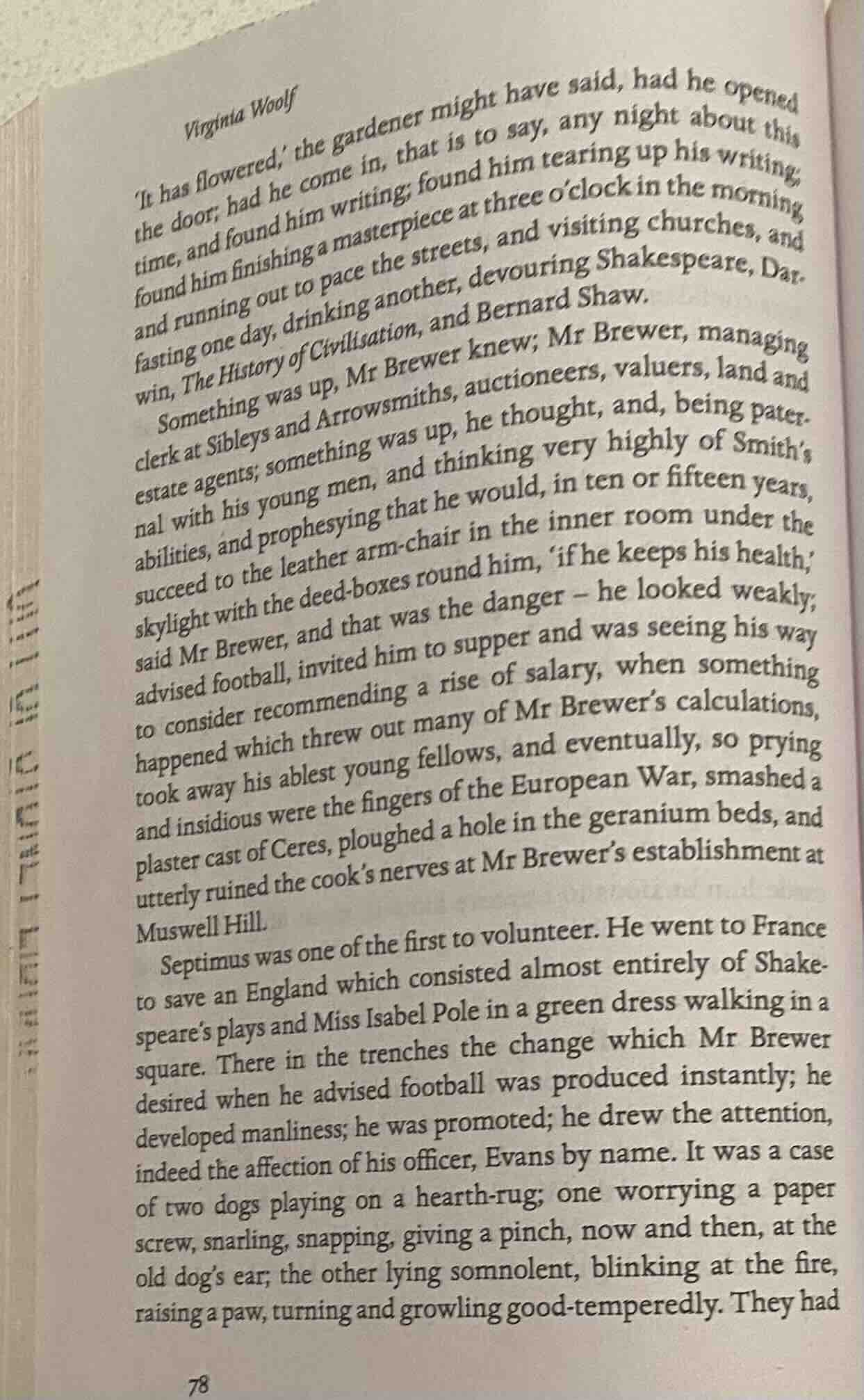
Here’s page 78*:

And because it’s November**, here’s a verse drawn from it and the next page:

November Verse 1: Septimus Smith
He might have made a great accountant
but for Shakespeare, Keats and love
that set him scribbling with his fountain
pen all night. 'You need to tough-
en up, play football,' said his mentor.
War changed everything. He went to
fight in France and made a friend,
a cheerful manly friend, whose end
in Italy was sudden, brutal.
Mrs Woolf says War had taught
him not to feel, to set at nought
such loss. Sublime the total
calm he felt. But, come next year,
the sudden thunderclaps of fear.

I have written this blog post near what was once luxuriant wetland, in Gadigal and Wangal country, where I recently saw two rosellas (mulbirrang in Wiradjuri, I don’t know the Gadigal or Wangal name). I acknowledge Elders past and present of those clans, and welcome any First Nations readers.


My blogging practice is to focus on the page that coincides with my age, currently 78.
** Each November I aim to post 14 fourteen line stanzas on this blog (see here for an explanation, though that explanation incorrectly calls my verses sonnets)

Robbie Arnott’s Dusk and (not) the book group

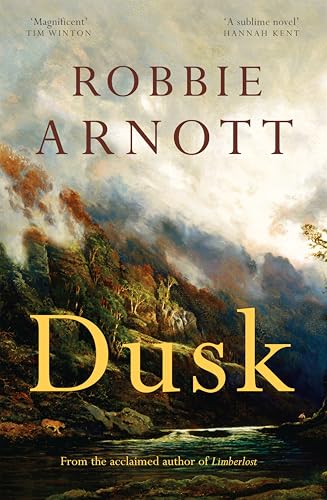
Robbie Arnott, Dusk (Picador 2024)

Before the meeting: we had enjoyed Robbie Arnott’s previous novel, Limberlost, so Dusk was a promising choice.

It’s set in a place very like nineteenth century Tasmania. Iris and Floyd Renshaw, the twin children of notorious outlaws, travel to the highlands and aim to kill a puma named Dusk that has been ravaging the region, killing livestock and people. A bounty has been offered by the graziers, and the twins see it as a chance to move away from their life at the margins. The story of their encounters with graziers and other hunters, and with a community of people who lived there before the settlers arrived, is full of elegant twists and moral dilemmas. There are moments of sheer horror, and moments of great tenderness. The writing is consistently vivid – you can tell that Robbie Arnott has visited the landscape even while he adds surreal elements like giant bones protruding from the ground; and the twins’ physical ordeals are viscerally real.

Even as I recognised all these qualities, I had trouble engaging. From about page 100, when the twins and their companions come close to Dusk, I started to care, and where a couple of pages are blacked out after a dramatic moment, what might have seemed a bit of cleverdickery had me on the edge of my seat. But then I got lost again and the final pages left me, as the song says, wondering why.

At page 78*, the twins have just arrived in a small town full of men who are hunting the killer beast. She – Dusk, the puma – has killed the son of a wealthy grazier, whom the twins have encountered grieving extravagantly in the street. For the first time since they came to the highlands, Iris finds herself confronting what they may be up against, ‘the probability of being ripped into death, faster than blinking’. Now, ‘starkly aware of the softness of her flesh, the smallness of her body, the stumbling clumsiness of her humanity’, she encounters for the second time Patrick Lees, a man who stands out from the crowd of hunters. On page 77 he has proposed that the twins join him to help track down the beast. Floyd, characteristically, stays more or less silent.

‘So you are chasing the bounty,’ said Iris, annoyance bending her voice.
Lees contemplated his pipe before slipping it back between his lips and speaking around it. ‘Maybe I’m just endlessly curious.’
 Iris clenched her teeth, holding her irritation in. Floyd kept rubbing his chin, seeming to take in Lees’ words without making any effort to respond. All of it was maddening to Iris – Floyd’s stupid performance, the sudden appearance of Patrick Lees, the unmoored feeling she had while being near him, his casual offer, his playful duplicity – and she wanted to get away from both of them and from herself, so she tugged at the collar of her coat and touched her hat. ‘We’ll think about it.’
  Lees nodded. ‘Of course.’ He indicated a lemon-gold building that rose above the stable. ‘I’m staying at the inn. I’ll be leaving at first light.’ Another little smile. ‘I hope to see you then.’

They left Patrick Lees breathing smoke at the plains and walked back through the stable to the street.

The main thing on display in this passage is Robbie Arnott’s deft use of tropes from romance novels. Iris is irritated by a suave, superior man, while having an ‘unmoored feeling’ while she’s near him. It’s no spoiler that Iris can’t resist the offer to go on the hunt with him, or that they do spend a night together. But as in the romance genre, there is every indication here that Lees is a cad: his little smile is surely a red flag, and while Iris may be uneasy, the reader can be reasonably certain that someone who breathes smoke is dangerous. You leave this page with a subliminal sense that Lees may not be just a romance-genre cad, but a horror-genre monster.

There’s a lot to admire in this book. There’s a lot to discuss. The surreal elements of the landscape read as both hamfisted metaphor and strategy for including First Nations characters who won’t be mistaken for actual palawa. But I was unconvinced. Even the basic set-up didn’t work for me, even if someone were to tell me that pumas were once introduced to Tasmania / lutruwita. I enjoyed some parts but never got on its wavelength


After the meeting: I couldn’t go to this meeting, and though I missed the people, I wasn’t sorry not to discuss the book. The WhatsApp report painted a picture of a very convivial evening, where everyone liked the book, some more than others. Evidently one person liked it more as the evening wore on – maybe I would have joined him in that movement. Maybe not.


I have written this blog post near what was once luxuriant wetland, in Gadigal and Wangal country. I acknowledge Elders past and present of those clans, and welcome any First Nations readers.


My blogging practice is to focus on the page that coincides with my age, currently 78.

Top 100 Books and me

Radio National’s Top 100 Books of the 21st Century vote has concluded. You can read all about it at this link.

I didn’t vote, mainly because I generally think that the book I’m currently reading is the best or worst of all time. I’ve read 36 of the ones that made the cut. Some of them are terrific, some I wouldn’t give the time of day to in the street. Here are the books that I’ve read, with links to my blog post where they were published after about 2004, plus the 13 books I haven’t read but have seen a TV or movie version of, without links. I almost scored 50 percent.

95. Susanna Clarke, Piranesi

92. Gillian Flynn, Gone Girl (Movie directed by David Fincher 2014)

90. Adam Kay, This Is Going to Hurt: Secret Diaries of a Junior Doctor (TV series starred Ben Whishaw 2022)

89. Geraldine Brooks, People of the Book

88. Helen Garner, This House of Grief

82. Alexis Wright, Carpentaria

81. Melissa Lucashenko, Too Much Lip 

76. Mem Fox & Judy Horacek, Where is the Green Sheep?

72. Mary Ann Schaffer, Annie Barrows, The Guernsey Literary and Potato Peel Pie Society (Mike Newell’s 2018 movie)

71. Paul Murray, The Bee Sting

65. Richard Flanagan, Question 7

64. Ann Patchett, Bel Canto

61. Helen Garner, Joe Cinque’s Consolation (I read this extraordinary book before I started blogging)

60. Madeline Miller, The Song of Achilles

59. Mark Haddon, The Curious Incident of the Dog in the Night-Time (Another one I read before I started blogging)

58. Percival Everett, James

56. Alexander McCall Smith, The No. 1 Ladies’ Detective Agency (Yet another read before blogging)

55. Bernadine Evaristo, Girl, Woman, Other

52. Stieg Larsson, The Girl with the Dragon Tattoo

48. Yann Martel, Life of Pi (Read before blogging)

47. J.K. Rowling, Harry Potter and the Goblet of Fire (Movie directed by Mike Newell 2005)

44. Robbie Arnott, Limberlost

43. Anna Funder, All That I Am

42. Fredrik Backman, A Man Called Ove (Movie directed by Hannes Holm, 2015)

41. Douglas Stuart, Shuggie Bain

40. Tim Winton, Dirt Music (Read before blogging)

38. Tim Winton, Breath (Movie directed by Simon Baker, 2017)

37. Christos Tsiolkas, The Slap

36. Richard Osman, The Thursday Murder Club (TV movie, directed by Chris Columbus 2025)

34. Kazuo Ishiguro, Never Let Me Go (Wonderful movie directed by Mark Romanek 2010)

33. Min Jin Lee, Pachinko

32. Sally Rooney, Normal People (Excellent TV series directed by Lenny Abrahamson & Hettie Macdonald 2020)

28. Jane Harper, The Dry (Movie directed by Robert Connolly, 2020)

27. Elena Ferrante, My Brilliant Friend

24. Craig Silvey, Jasper Jones

21. Ian McEwan, Atonement (Movie directed by Joe Wright, 2007)

20. Kate Grenville, The Secret River

19. Cormac McCarthy, The Road (Movie directed by John Hillcoat, 2009)

18. Bruce Pascoe, Dark Emu

15. Geraldine Brooks, Year of Wonders (Read before blogging)

11. Claire Keegan, Small Things Like These

10. Hilary Mantel, Wolf Hall

9. Hanya Yanagihara, A Little Life

6. Hannah Kent, Burial Rites

5. Bonnie Garmus, Lessons in Chemistry (2023 TV series)

4. Anthony Doerr, All The Light We Cannot See

3.Amor Towles, A Gentleman in Moscow

2. Marcus Zusak, The Book Thief

1. Trent Dalton, Boy Swallows Universe

July Books [2006]

[This was originally posted in my now defunct blog Family Life, on 2 August 2006. I’m retrieving it today because it includes some comments on Kate Grenville’s The Secret River, which recently came in at number 20 in Radio National’s Top 100 Books of the 21st Century.]

Books I bought in July:
Robert Charles Wilson, Spin (Tor Books 2005)

Books read:
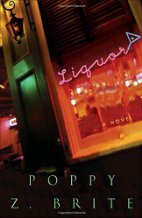
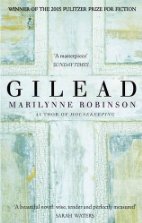
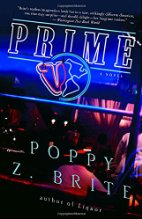
Poppy Z. Brite, Liquor (Three Rivers Press 2004) and Prime (Three Rivers Press 2005) Marilynne Robinson, Gilead (Virago 2006)
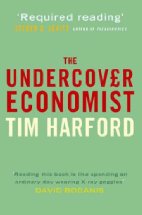
Tim Harford, The Undercover Economist (Little Brown 2006)
Jared Diamond, Collapse (Penguin 2005) (finished)
Kate GrenvilleThe Secret River (Test 2005)
Philippe Geluck, Le Chat (Casterman 2002)

As this month has been spent travelling, I’ve laid aside a couple of books only partly finished, and mostly started on a whole new swag

liquor

I read Poppy C Brite’s Liquor and most of Gilead on the plane to Europe. It’s hard to think of a greater contrast, one about heavy-drinking chefs in pre-Katrina New Orleans, the other an elegiac look at three generations of austere men of religion. Both of them were infinitely preferable to trying to watch a movie in those circumstances (I gave up when an announcement about duty-free shopping interrupted the opening scene of Candy). Poppy C. Brite’s book strikes me as a thinly disguised love song – love for her city (New Orleans, pronounced with the emphasis on the middle syllable), for the world of restaurant work and I presume for her chef husband, and for lovely bits of the English language. The plot is functional, but that’s not where the interest lies.

1844081486

Gilead is also a love letter, with a lot less disguise: it’s in the form of a letter written from a dying man to his seven-year-old son, in the expectation that the son will be an adult by the time he reads it. The narrator is deeply in love with his little son; Marilynne Robinson clearly loves her narrator, probably the last of a line of passionate preachers in the US midwest. He is a man of profound faith, saturated in bible-awareness, but also acquainted with other intellectual traditions. He is writing the boy’s ‘begats’ – that is to say, he tells the story of his own grandfather, a wild, pistol-wielding preacher called by a vision to fight slavery, of his father, an equally single-minded man of peace, and of himself, struggling with a world where his kind of faith is more and more under attack – by secularism on the one hand and television evangelism on the other. It’s a book full of grace and wisdom.

0316731161

In Amsterdam I moved on to The Undercover Economist. I’d heard Tim Harford speak at the Sydney Writers’ Festival, and been taken as much by his Tin-Tin quiff as by his talking sense about economics. I feel as a result of reading this that I now have a basic grasp of classic market economics, and it was more or less fun to read.

1400050081

Prime is a sequel to Liquor, and like that book it abounds in glorious descriptions of the joys of cooking and eating. The book gained extra piquancy for me from being read in Ireland, where we had some difficulty finding palatable food (we gave a special award to the lightly spiced salmon patties served up in a posh-looking hotel dining-room and called Thai fish cakes).

0713992867

In London, I finished Collapse. Again, this was appropriate, not because it’s a great escapist holiday read (it’s anything but), but because it cast a sharp light on the experience of London’s hottest summer days ever: this wasn’t just a frivolous news story about Poms not knowing how to build cool houses; it was a harbinger of major things to come for all of us. It was good to read his chapter on Australia in London as well, because he argues that our persistent identification with British traditions is one of the things preventing us from choosing environmentally sound directions. I was struck by his articulation of one of the key challenges facing the world:

the challenge of deciding which of a society’s deeply held core beliefs are compatible with the society’s survival, and which ones instead have to be given up.

Before leaving the brick of a book behind on the train to Gatwick (to avoid excess baggage charges), I copied out this from his final section, where he talks about what anyone can do about the current crisis:

an individual should not expect to make a difference through a single action, or even through a series of actions that will be completed within three weeks. If you do want to make a difference, plan to commit yourself to a consistent policy of actions over the duration of your life.

secret

I moved on to The Secret River with high expectations. But whereas recent readings, Neal Stephenson’s Baroque Trilogy and Seamus Heaney’s ‘District and Circle’, had both evoked London localities so vividly that I was constantly being reminded of moments from that novel and that poem during my stay there, I was disappointed that this book’s London remained pretty bodiless. Once the hero, Will Thornhill, arrived on the Hawkesbury with his family, however, my disappointment disappeared: there the book’s true subject emerged, and at the same time the physical world became powerfully present:

When Thornhill jumped over the bow the mud gripped his feet. He tried to take a step and it sucked him in deeper. With a huge effort he dragged one foot out and looked for a place to set it down between the spiky mango roots. Lurched forward into even deeper mud, pulled his other leg up with a squelch, feeling the foot stretch against the ankle, and floundered towards the bank. He put his head down and butted blindly through a screen of bushes, bursting out at last onto dry land. Beyond the river-oaks the ground opened onto a flat place covered with tender green growth and studded with yellow daisies.

His own. His own, by virtue of his foot standing on it.

Will’s first real encounter with one of the people he is dispossessing in this moment occurs within pages, and the book becomes as gripping as the Hawkesbury mud – in which I have no doubt Kate Grenville has had her feet stuck.

220334024X

Le chat was my one book in French, a bande dessinée whose measure I found very hard to take. It consists the Steven-Wright-ish monologues of a large, cool, besuited cat. For example:

Le mot ‘long’ est plus court que le mot ‘court’. C’est dingue, non?

And now I return to Romanesque churches and ancient Cathar towers.

Posted: Wed – August 2, 2006 at 03:54 AM