Category Archives: Diary

Enter the Duck

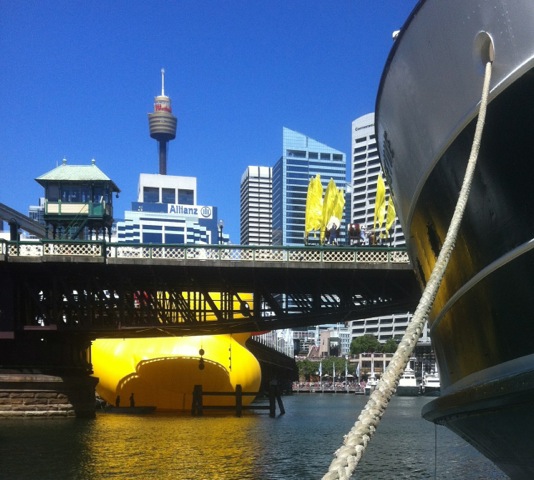
Whatever the ghost of Rembrandt might think about the state of Dutch art in the early 21st century the arrival of Florentijn Hofman’s magnum opus in Darling Harbour today was a hit, even after the seeming endless and mostly lame concert and tumbling act that preceded it. The figures beneath the yellow banners up on the Pyrmont Bridge are taiko drummers. They were splendid.

ducky

And so the 2013 Festival of Sydney begins. No first night celebration in which the city becomes a giant concert venue, but a giant rubber ducky isn’t too poor a substitute.

Enter the Duck

Whatever the ghost of Rembrandt might think about the state of Dutch art in the early 21st century the arrival of Florentijn Hofman’s magnum opus in Darling Harbour today was a hit, even after the seeming endless and mostly lame concert and tumbling act that preceded it. The figures beneath the yellow banners up on the Pyrmont Bridge are taiko drummers. They were splendid.

ducky

And so the 2013 Festival of Sydney begins. No first night celebration in which the city becomes a giant concert venue, but a giant rubber ducky isn’t too poor a substitute.

NSWPLA and NSWPHA Dinner

I didn’t expect to attend a NSW Premier’s Literary Awards Dinner this year. For a while back there it looked as if the awards might go the way of the Queensland equivalent, but the Liberal Party-approved panel’s unpublished report must have come down in favour of continuation, because here they were again last night, six months late, run by the State Library rather than the Arts NSW, charging $200 [but see Judith Ridge’s comment] for a book to be considered, and sharing the evening with the History Awards, but alive and kicking. And pretty special for me, because I got to go as my niece’s date, my niece being Edwina Shaw, whose novel Thrill Seekers was shortlisted for the UTS Glenda Adams Award for New Writing.

The dinner was held in the magnificent reading room of the Mitchell Library. Not everyone approved of the venue – I was in the Research Library in the morning when a woman complained very loudly that she had driven the four hours from Ulladulla only to find the Mitchell’s doors were closed for the day so it could be converted into a banquet hall. She must have been placated somehow because she stopped yelling, but there were other problems. None of the shortlisted books were on sale – Gleebooks had a table at this event for years [but see Judith Ridge’s comment], as the Library has its own shop, which wasn’t about to stay open late just for us. And library acoustics aren’t designed for such carryings-on: the reverberation in the vast, high-ceilinged room made a lot of what was said at the mike unintelligible at the back of the room. But those are quibbles. It’s a great room with happy memories for a good proportion of the guests.

Aunty Norma Ingram welcomed us to country, inviting us all to become custodians of the land.

Peter Berner was the MC. He did OK, but organisers please note: the MC of an event like this needs to be literate enough to pronounce Christina Stead’s surname correctly.

The Premier didn’t show up. Perhaps he was put off by the chance of unpleasantness in response to his current attack on arts education. The awards were presented by a trio of Ministers, one of whom read out a message from the Premier saying, among other things, that art in all its forms is essential to our society’s wellbeing. But this was a night for celebrating the bits that aren’t under threat, not for rudely calling on people to put their money where their mouths are.

The Special Award, sometimes known as the kiss of death because of the fate met by many of its recipients soon after the award, went to Clive James – whose elegant acceptance speech read to us by Stephen Romei necessarily referred to his possibly imminent death. He spoke of his affection for New South Wales, of his young sense that Kogarah was the Paris of South Sydney, and his regret that he is very unlikely ever to visit here again. He also said some modest things about what he hoped he had contributed.

After a starter of oyster, scampi tail and ocean trout, the history awards:

NSW Community and Regional History Award: Deborah Beck, Set in Stone: A History of the Cellblock Theatre
The writer told us that the book started life as a Master’s thesis, and paid brief homage to the hundreds of women who were incarcerated in early colonial times in the Cellblock Theatre, now part of the National Art School.

Multimedia History Prize: Catherine Freyne and Phillip Ulman,  Tit for Tat: The Story of Sandra Willson
This was an ABC Radio National Hindsight program about a woman who killed her abusive husband and received  lot of media – and wall art – attention some decades back. Phillip Ulman stood silently beside Catherine Freyne, who urged those of us who enjoyed programs like Hindsight to write objecting to the recent cuts.

Young People’s History Prize: Stephanie Owen Reeder, Amazing Grace: An Adventure at Sea
This book won against much publicised Ahn Do on being a refugee (The Little Refugee) and much revered Nadia Wheatley on more than a hundred Indigenous childhoods (Playground). It not only tells the story of young Grace Bussell’s heroic rescue of shipwreck survivors but, according to the evening’s program, it introduces young readers to the ‘basic precepts of historical scholarship’. It also looks like fun.

General History Prize: Tim Bonyhady, Good Living Street: The Fortunes of My Viennese Family
A member my book group rhapsodised about this book recently, comparing it favourably to The Hare with Amber Eyes. It’s a family history, and in accepting the award Bonyhady told us it had been a big week for his family because the lives of his two young relatives with disabilities would be greatly improved by the National Disability Insurance Scheme introduced by the Gillard government.

Australian History Prize: Russell McGregor, Indifferent Inclusion: Aboriginal People and the Australian Nation
This looks like another one for the To Be Read pile. Russell McGregor acknowledged Henry Reynolds and Tim Rowse as mentors.

After a break for the entrée, a creation in watermelon, bocconcini and tapenade, it was on to the literary awards:

The Community Relations Commission Award: Tim Bonyhady was called to the podium again for Good Living Street, but he’d given his speech, and just thanked everyone, looking slightly stunned.

The newly named Nick Enright Prize for Drama was shared between Vanessa Bates for Porn.Cake. and Joanna Murray-Smith for The Gift. Perhaps this made up to some extent for the prize not having been given two years ago.
Joanna Murray-Smith said she learned her sense of structure from the Henry Lawson stories her father read to her at bedtime. As her father was Stephen Murray-Smith, founding editor of Overland, she thereby managed to accept the government’s money while politely distancing herself from its politics. She lamented that her play hadn’t been seen in Sydney and struck an odd note by suggesting that the Mitchell Library and a similarly impressive building in Melbourne may have been the beginning of the Sydney–Melbourne rivalry: I wonder if any Sydney writers accepting awards in Melbourne feel similarly compelled to compete. Vanessa Bates couldn’t be here, so her husband accepted her award, with his smart phone videoing everything, perhaps sending it all to her live.

The also newly named Betty Roland Prize for Scriptwriting (and I pause to applaud this conservative government for honouring an old Communist in this way): Peter Duncan, Rake (Episode 1): R v Murray
Peter Duncan gets my Speech of the Night Award. He began by telling the junior minister who gave him the award that he was disappointed not to be receiving it from Barry O’Farrell himself, because he had wanted to congratulate Barry on the way his haircut had improved since winning the election. At that point we all became aware that Peter Duncan’s haircut bears a strong resemblance to the Premier’s as it once was. He then moved on to congratulate the Premier for instituting a careful reassessment of the Literary Awards and deciding to persevere with them. He expressed his deep appreciation of this support for the arts. (No one shouted anything about TAFE art education from the floor. See note above about this being an evening to celebrate the bits that aren’t under threat.)

The Patricia Wrightson Prize for Children’s Literature: Kate Constable, Crow Country (Allen & Unwin)
I hadn’t read anything on this shortlist, I’m embarrassed to confess. It looks like a good book, a time-slip exploration of Australian history.

The Ethel Turner Prize for Young People’s Literature: Penni Russon, Only Ever Always (Allen & Unwin)
Again, I hadn’t read any of the shortlist. But Bill Condon and Ursula Dubosarsky were on it, so this must be pretty good! Penni Russon’s brief speech referred to the famous esprit de corps of Young Adult writers: ‘You guys are my people.’

There was break for the main course to be served, and for about half the audience go wander and schmooze. I had the duck, the two vegetarians on our table were served a very fancy looking construction, only a little late. Then onward ever onward.

The Kenneth Slessor Prize for Poetry: Gig Ryan, New and Selected Poems
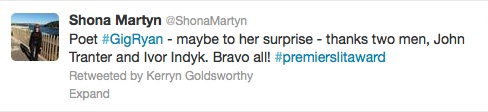
Again, I hadn’t read any of the shortlisted books, but wasn’t surprised that Gig Ryan won, as this is something of a retrospective collection. She speaks rapidly and her speech was completely unintelligible from where I was  sitting (like some of her poetry). However, someone tweeted a comment that got laughs from the front of the room:
tweet

The Douglas Stewart Prize for Non-fiction: Mark McKenna, An Eye for Eternity: The Life of Manning Clark
Another lefty takes the government’s money, and a good thing too.

The UTS Glenda Adams Award for New Writing: Rohan Wilson, The Roving Party (Allen & Unwin)
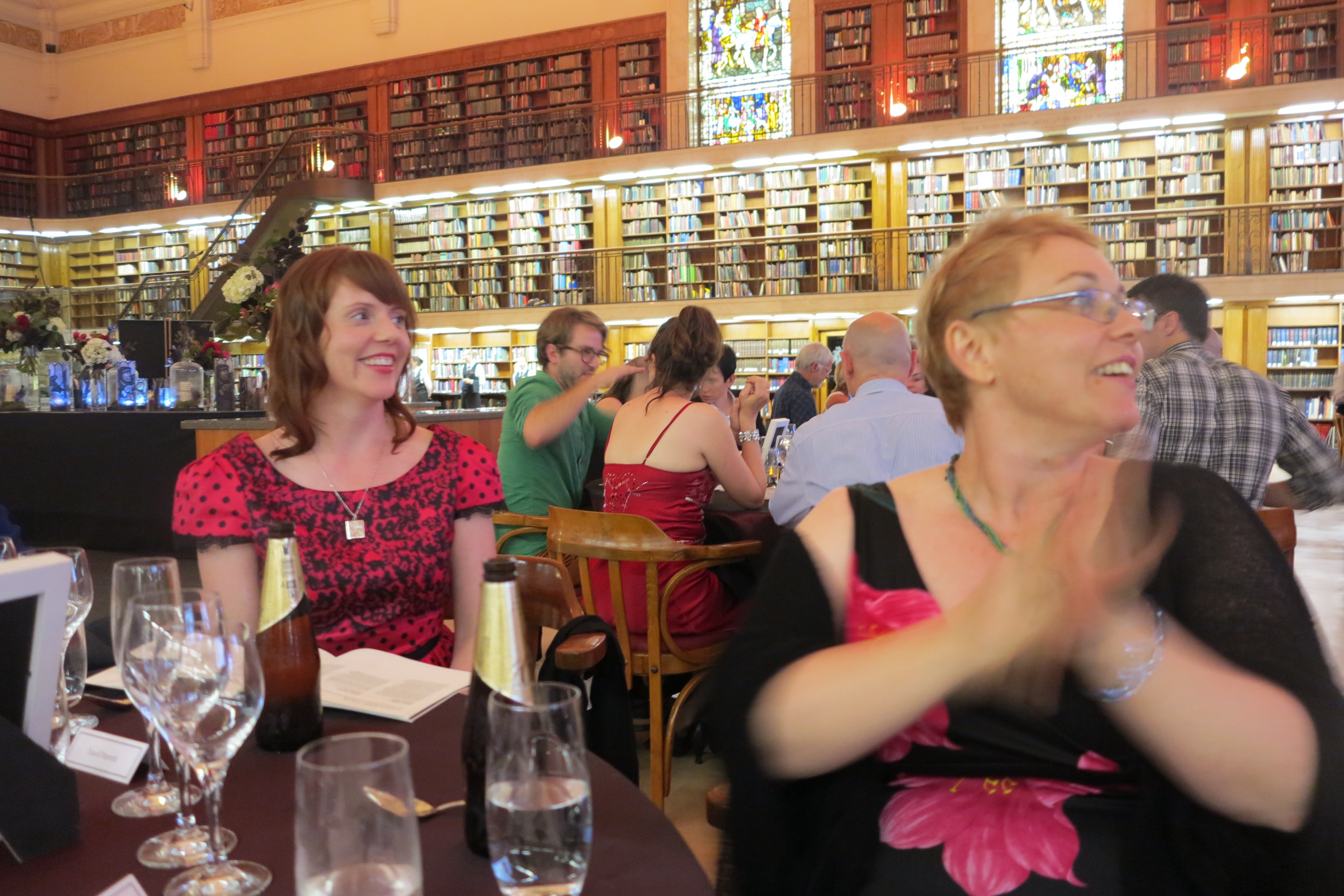
I know nothing about this book. Rohan Wilson is in Japan just now. His agent told us that when she asked him for an acceptance speech ‘just in case’, he emailed back, ‘No way I’ll win – look at the calibre of the others.’ The three writers on my table who were in competition with him seemed to think it was a fine that it had won:

Favel Parrett and Edwina Shaw respond to not winning the UTS Glenda Adams Award for New Writing

Favel Parrett and Edwina Shaw respond to not winning the UTS Glenda Adams Award for New Writing

The Christina Stead Prize for Fiction was almost an anti-climax. It went to Kim Scott for That Deadman Dance. We had a small bet going on my table, and I won hundred of cents. Kim Scott’s agent accepted on his behalf.

There was dessert, layered chocolate and coffee cake, then:

The People’s Choice Award, for which voting finished the night before, went to Gail Jones for Five Bells. She was astonished, genuinely I think, and touched that her book about Sydney as an outsider should be acknowledged like this. I haven’t read the book yet, but I’m also a bit astonished, because what I have read of her prose is not an easy read.

Book of the Year: Kim Scott, That Deadman Dance. No surprise there!

No surprise, either, that the award to Clive James overshadowed all the others in the newspaper reports.

I believe that the judging panel for next years literary awards has had its first meeting. The dinner will move back to the Monday of the week of the Writers’ Festival, where it belongs.

Added later: Edwina has blogged about the evening.

Busy busy busy

It’s all go chez Me Fail just now. Here’s a brief despatch from the fronts.

Shooting the movie soon to be known as the movie previously known as Scar finished yesterday. I managed to visit the location on Wednesday for a couple of hours. Contrary to all the stuff I’ve read about writers being without honour in the film industry, I found I was very welcome on set. More than one person congratulated me. This was a sweet reminder: because I’d been out of the country for a month during the pre-production period, I’d come to think of myself as Interested Party, Supportive Parent, and Believer in the Project, and effectively forgotten I was Part of It All. This in spite of the FM’s having scrupulously consulted me over proposed changes.

What I saw of the movie looks great, the wrap party is today, and I may have a chance to drop in – in spite of being roughly twice the average age of crew and cast (more than 30 of them, not counting the cow), I’m told I’ll be welcome.

Meanwhile the Art Student is up to pussy’s bow in Hungry for Art – a festival that centres on The Gallery School (as the art department of Meadowbank TAFE is known). Last night there was a pop-up art event at the Top Ryde City mall: people were invited to break out of the lockstep shopping experience to take in a huge video screening of Todd Fuller’s Summer’s End and three pieces of Will Coles‘s street-friendly sculpture (familiar to Newtown but new to Ryde), and many did. There was also a little theatre, some beatbox and an oil painting created before shoppers’ very eyes. The big events – DrawFest and Open Day at the Gallery School tomorrow and an Art Trail through the Ryde suburbs on Sunday – are yet to come. And the Art Student is in the thick of it – organising volunteers, making signs, standing guard over sculptures under threat from sugar-high young people. I’m off elsewhere for the weekend, but if you’re in the neighbourhood, drop in. There’s more, but time is short.

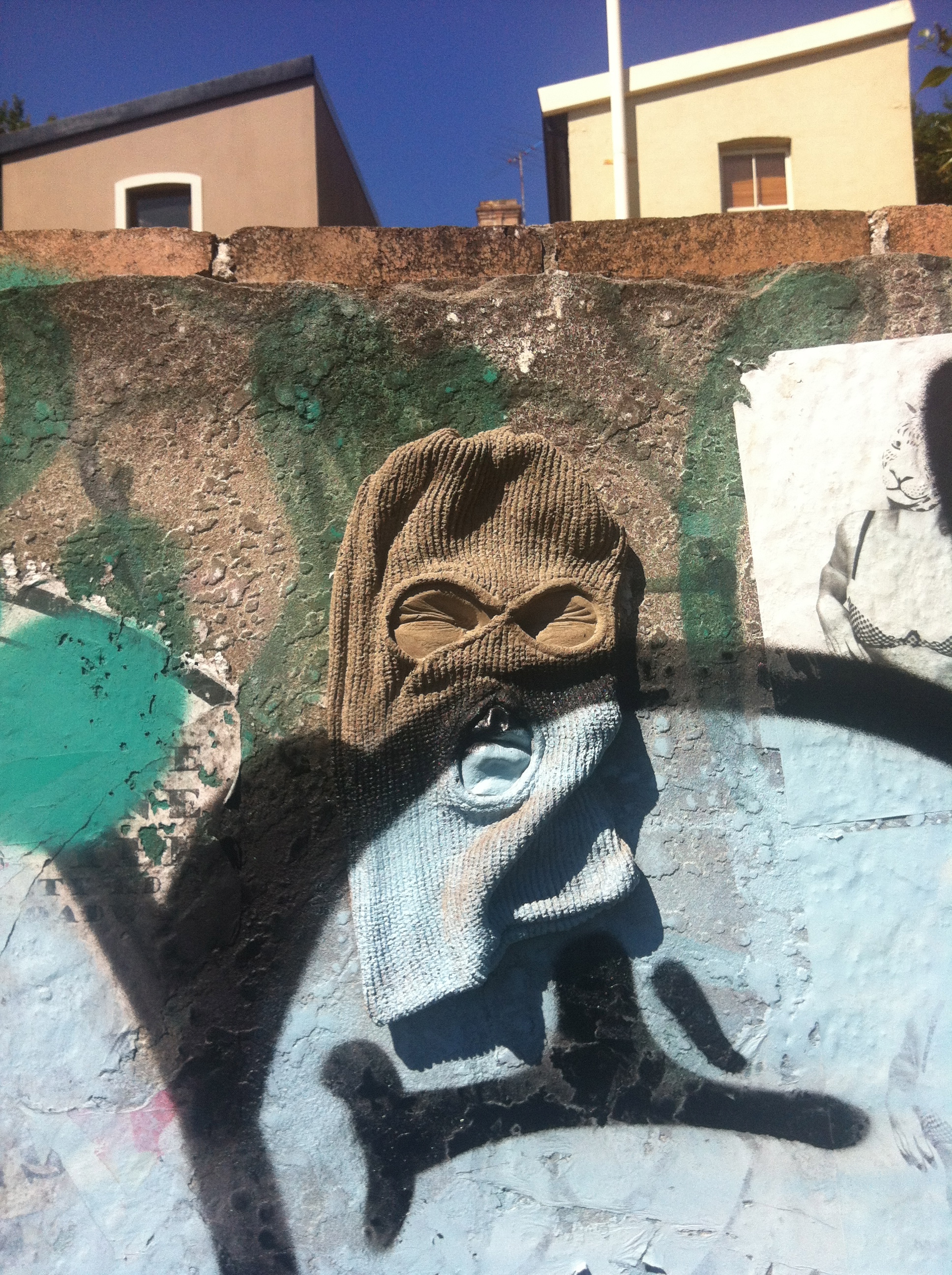
PS: When I went looking for links, I realised that I have a photo of one of Will Coles’s works, taken a couple of months back. The work, ‘Laissez-faire‘, had been overwritten by graffiti, to extraordinary effect. No wonder he was so calm last night when the speedy children were doing their best to damage his ‘Finite’.

Masculinities at Penrith

We drove out to Emu Plains yesterday to visit the Penrith Regional Gallery – the Art Student had had a lecture on Gerald Lewers and Margo Lewers, the sculptor and painter whose bequest formed the basis of the gallery, and as our friend Steven Vella was part of a show there, we decided to make the trek (all of 53 minutes, it turned out).

Curiouser & Curiouser, which includes work by James Blackwell and Peter Williamson as well as Steven Vella, is on display in the gallery that was the Lewers’ home. These three artists may not constitute a movement, but their work sits beautifully together. They all take objects from the natural world – feathers, seeds, leaves, twigs, bird bones, inflorescences – and make art from them. Peter Williamson has raised basket weaving to a high art. James Blackwell’s delicate, fragile lattices seem completely artificial until you look closely. And Steven Vella’s headdresses and bowls suggest ritual uses, and even though some have a funereal edge, they’re extraordinarily exuberant. The catalogue describes the work collectively as ‘detailed organic assemblages of remarkable beauty’.

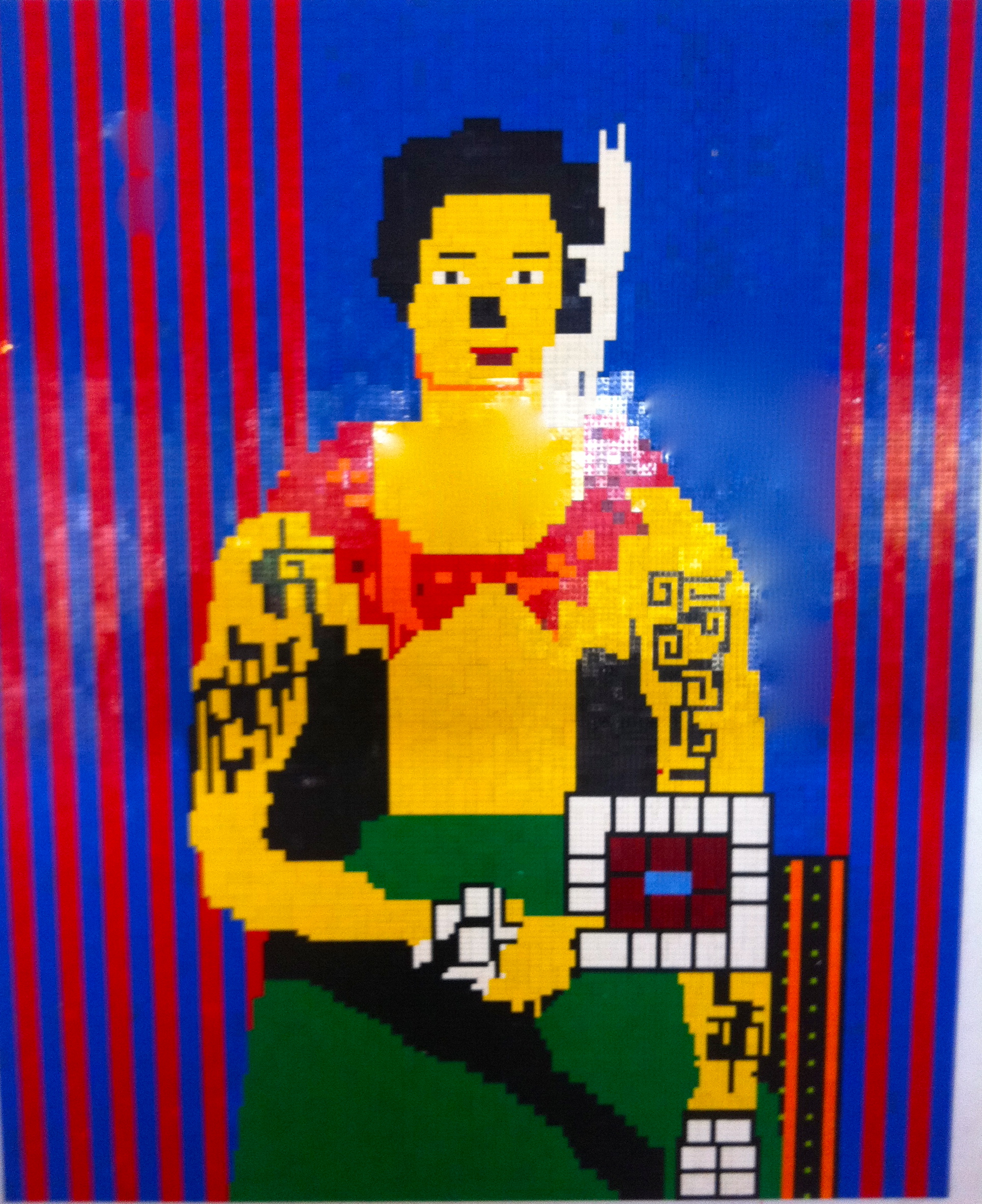
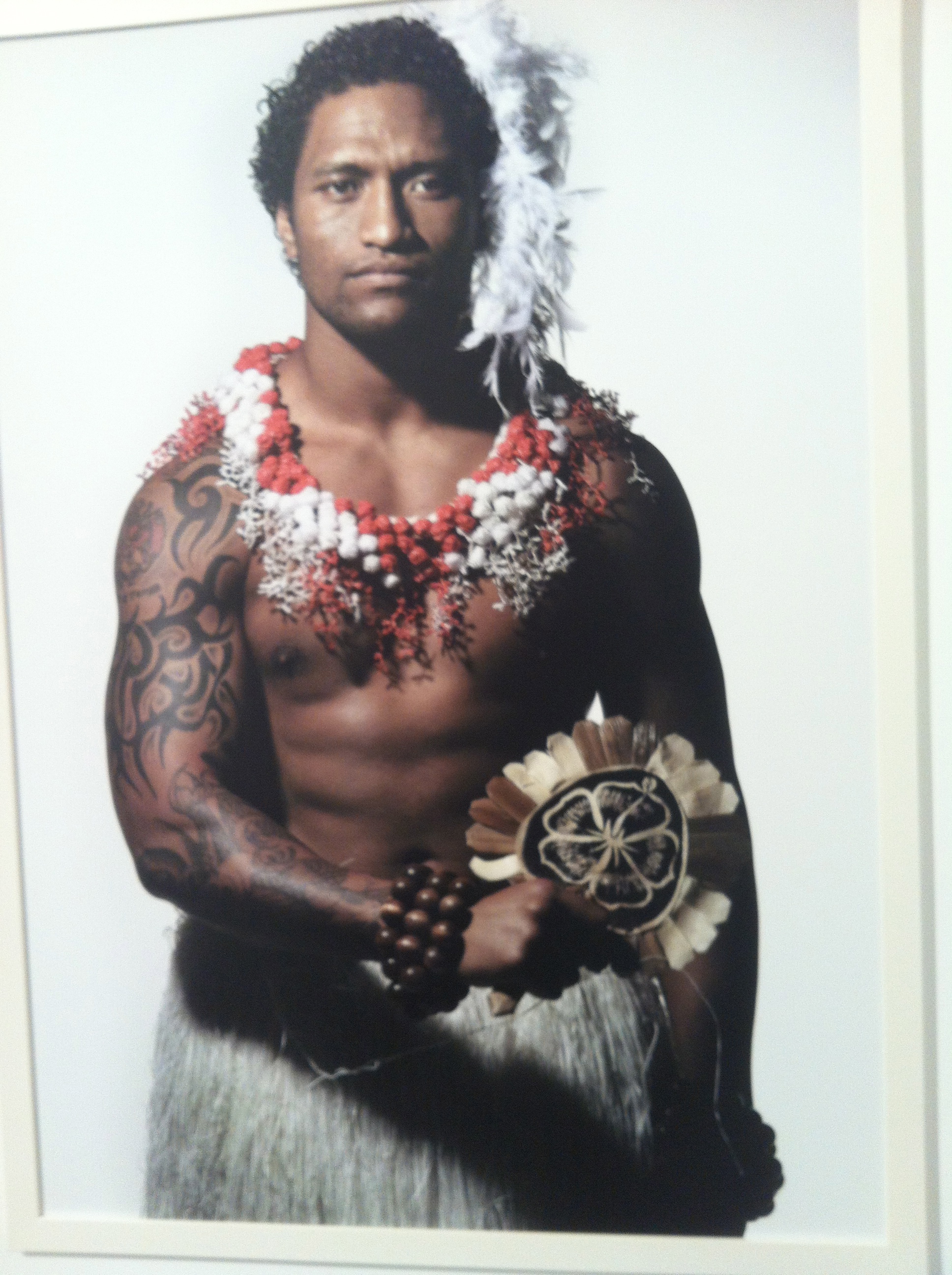
That would have been worth the trip. But there was more. A Lego corner for young patrons featured a substantial mural created by students from a nearby public school, a version of a photograph in the main gallery (both pics taken on my phone – but you get some idea):


The fabulous image on the right is William Booth’s photograph of Manu Vatuvei, a New Zealand Rugby League player, dressed as a traditional warrior from his native Tonga. It’s part of Body on the Line, photographs of 13 League players of Pacific Island heritage as cultural warriors. This, and Heads Up in the next room, ten huge close-ups of Penrith Panthers players and fans taken by Craig Walsh and Josh Raymond within minutes of losing a major match, bruised and gutted, gave me a new respect for the qualities of elite sportsmen.

Nowhere does the gallery try to draw a connection between the meticulous, fine-tuned contemplative aesthetic in the old house and the heroic muscularity of the main gallery, but I’d love to see the various makers and their subjects chatting over canapes at a joint opening.

My trip to Turkey PS: Rome

We had slightly less than 48 hours in Rome on our way home from Turkey, just long enough to catch up with our dear friend Anny, visit the Maxii gallery and catch the exhibition from the Papal archives that’s on at the Capitoline Museums.

Anny had come down from her home in Florence to have dinner with us on Friday (our plane landed at 7.30 but it was nine o’clock by the time we met her at our hotel, and one in the morning by the time we said goodnight. We met up again to stroll along Via Cola Di Rienzo on Saturday morning, she had to catch the train back north for a Nora Jones concert that night. It was, as Anny said to an Italian friend on her mobile, ‘come si dice, Memory Lane‘. It was also a chance to hear her beautiful, lilting Italian as she did the honours with waiters, bus ticket sellers, and shop assistants.

20120715-152409.jpg

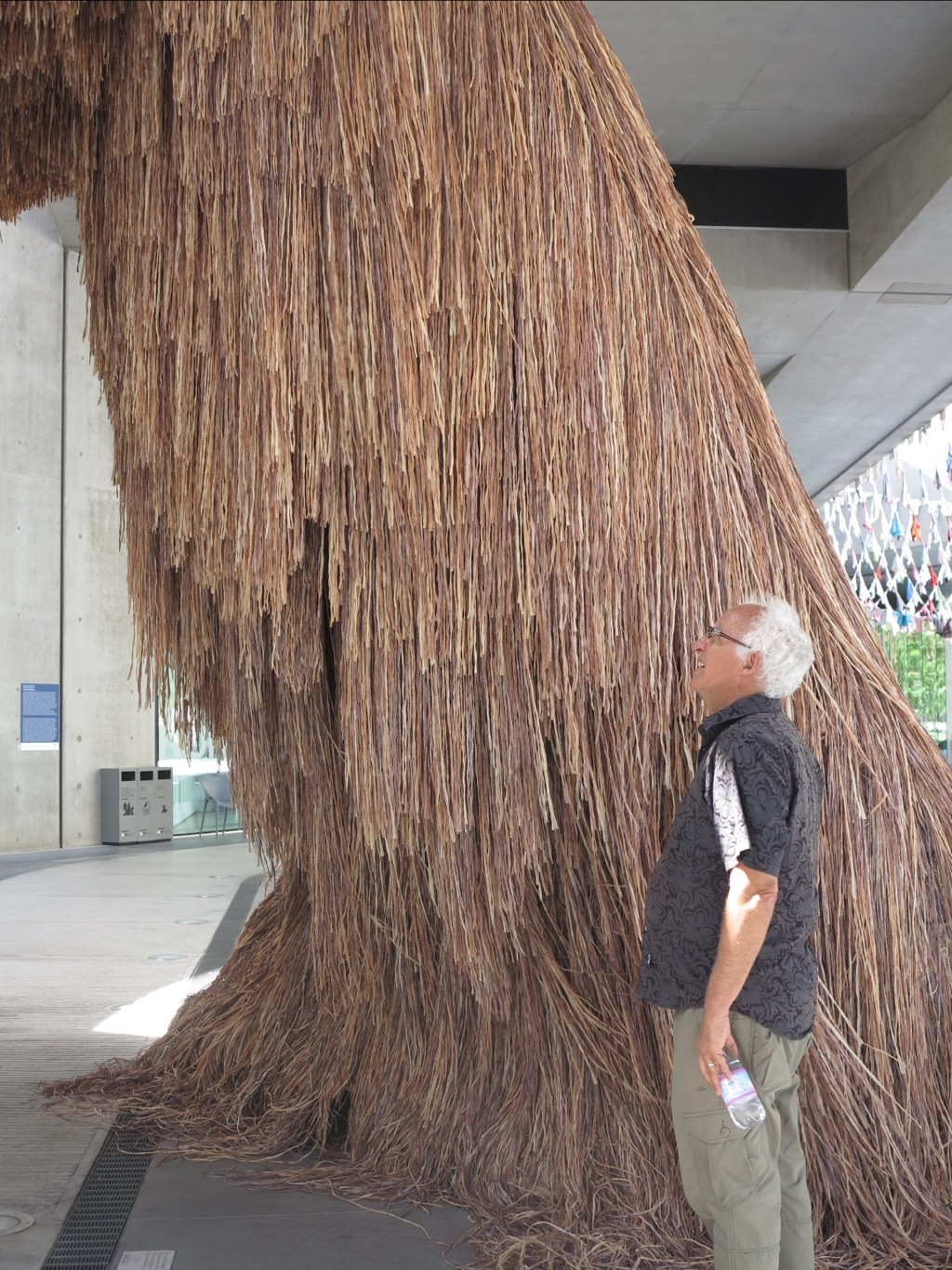
Later in the afternoon, on our own again, we made our way to Maxii, a contemporary art museum, where there this wonderful creation loomed outside the main entrance.

20120715-152507.jpg

Inside, the building was intriguingly maze-like with ramps and mezzanines and bridgeways, but I was unmoved and/or mystified by most of what I saw, the main exception being an exhibition of photographs by Paola de Pietri. These were gorgeous images of landscapes along a European border, of places – according to the curatorial statement – where there had been bitter fighting in the First World War: trenches worn smooth and partly filled with snow, others like scars near the crest of a hill, bunkers that could have been the remains of ancient shepherds’ huts, stony terrain, peaceful meadows. The impact was huge.

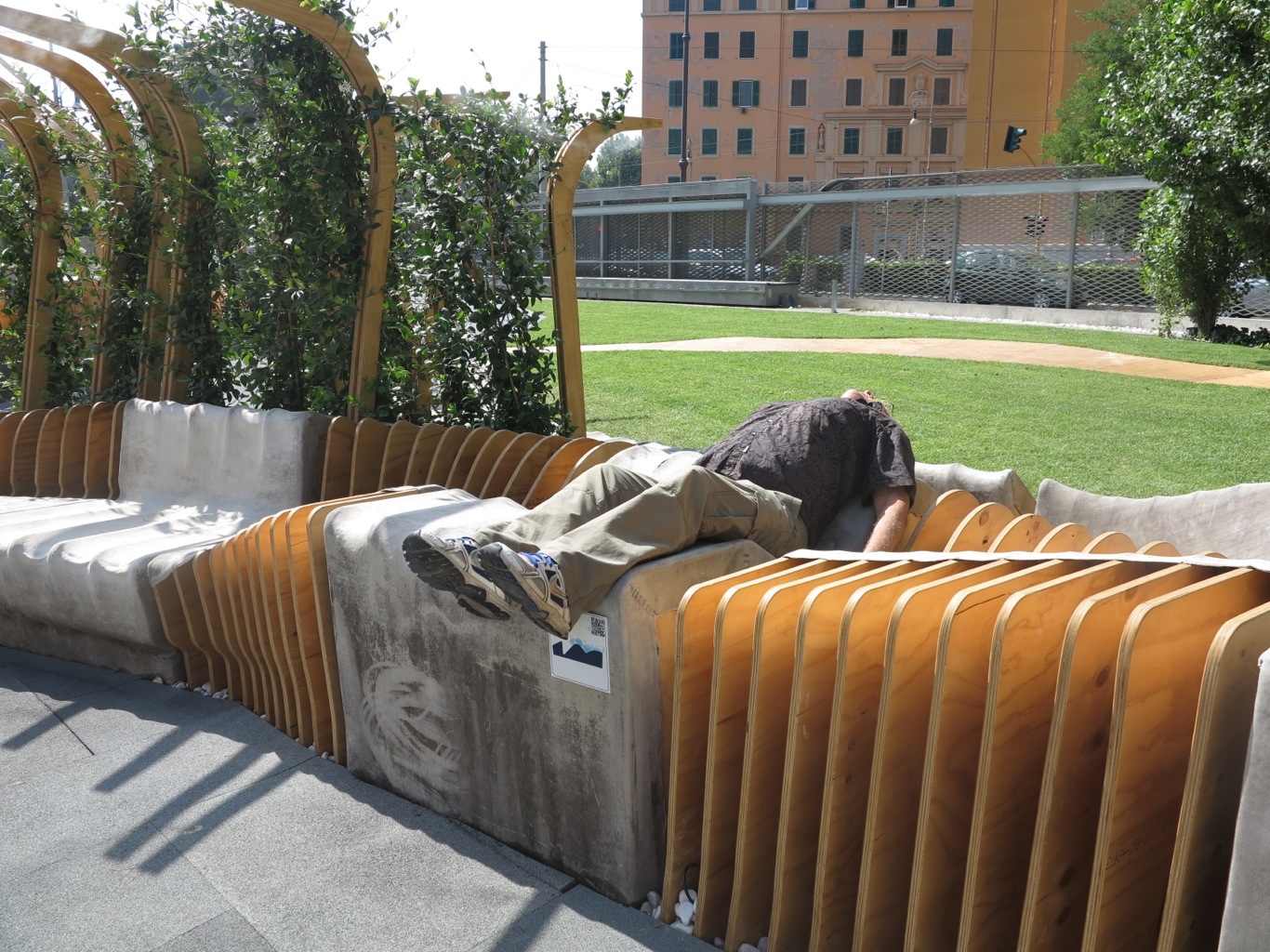
There was a beautiful presentation about a competition for young designers to make use of an area at the front of the museum. Each set of finalists discussed their project in larger than life video, while a written account of it scrolled down the wall, and a model and drawings could be perished at leisure. An even larger video showed the massive works involved in constructing the winning project. We ventured out to experience the finished thing. There were many seats made from slotted ply and cement, made to accommodate the human form in a variety of postures indicated by tiny ideograms. Sadly, whichever posture you chose, the seats were intolerably uncomfortable. I gather it’s not the first time a design competition has been won by something totally impractical.

20120715-152527.jpg

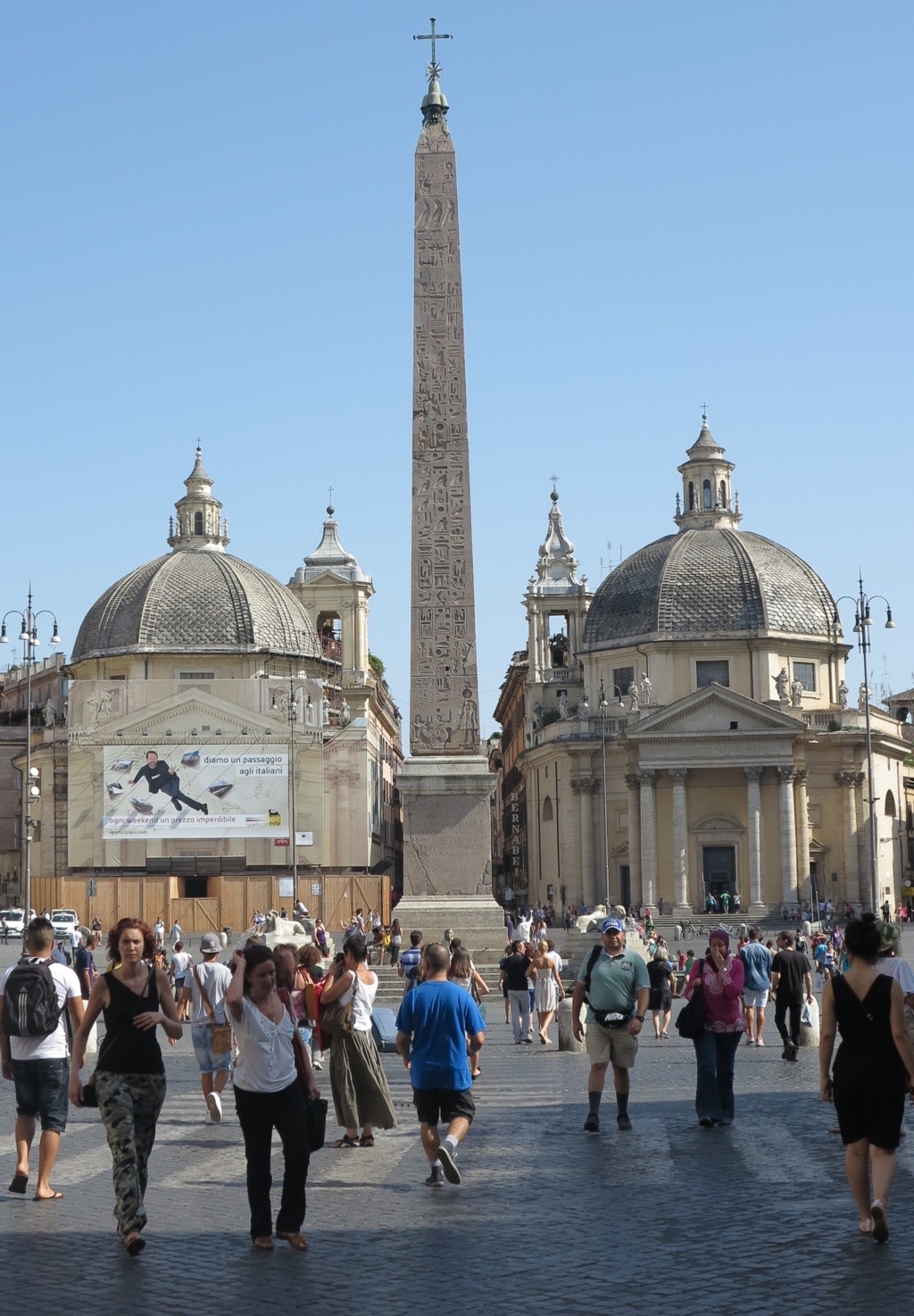
This being Rome, we passed the odd antiquity and renaissance grandiosity on the way home.

20120715-152438.jpg

At dinner time we walked to a little trattoria around the corner by way of St Peter’s square.

Sunday morning we walked – by way of Piazzo Navona, the statue of Pasquino, Campo Dei Fiori with its looming statue of Giordano Bruno who was burned there, and a caffe where no one could tell us how to get to the Musei Capitolini (‘Non lo so! Sono di San Giovanni, io) – to the Vatican archives exhibition.

Bernadette Soubirous wrote to one pope in a tiny neat handwriting, wishing him a holy life. Voltaire wrote to another congratulating him on his excellent Latin. A couple of popes wrote decrees establishing themselves as the supreme power on earth. A community of Native American Catholics wrote to the pope of their time. A Moroccan ruler wrote asking the pope to appoint a decent man to replace a recently deceased archbishop. More than one decree was issued ending the schism between the Roman Church and the Greek Orthodox Church. All of these documents were filed away in the Vatican archives, and all are among the hundreds of items on display.

There is a huge scroll, of which about four meters are exposed, containing the evidence taken against the Knights Templar. There’s a sizeable piece of paper beseeching the pope of the time to allow Henry VIII’s marriage to his first wife to be annulled, and hanging from the paper on leather thongs are the seals of the members of the House of Lords, at least fifty of them and every one elaborate. Photography was forbidden and there were no postcards. I gnash my teeth.

We had a quick look down on the forum below the Capitoline hill, a quick pasta lunch, a quick moment of respite from the heat at our hotel, then we were off to the airport. I’m typing this on the plane from Frankfurt to Singapore. The holiday is all but over.

Tourist fashion in Istanbul

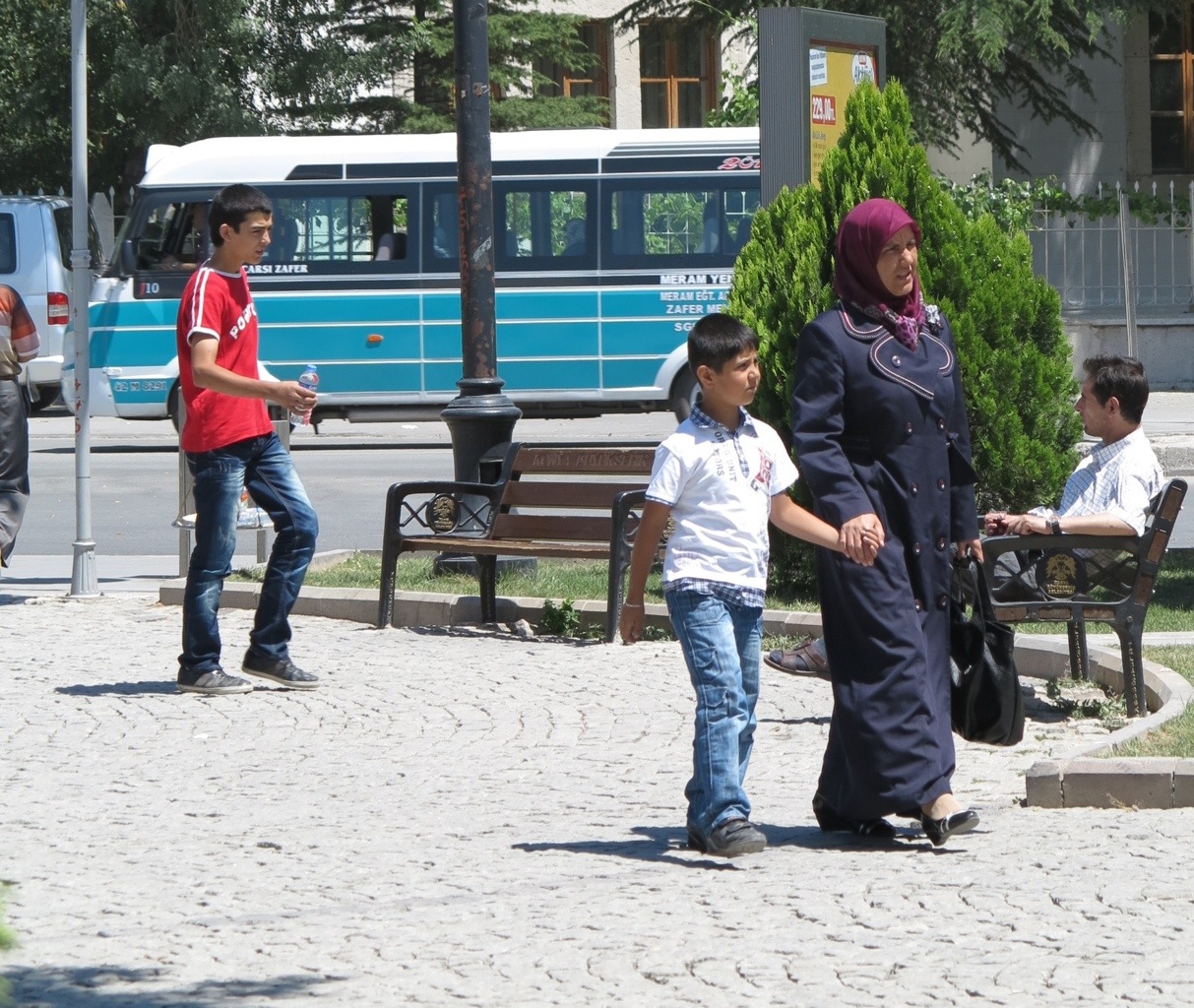
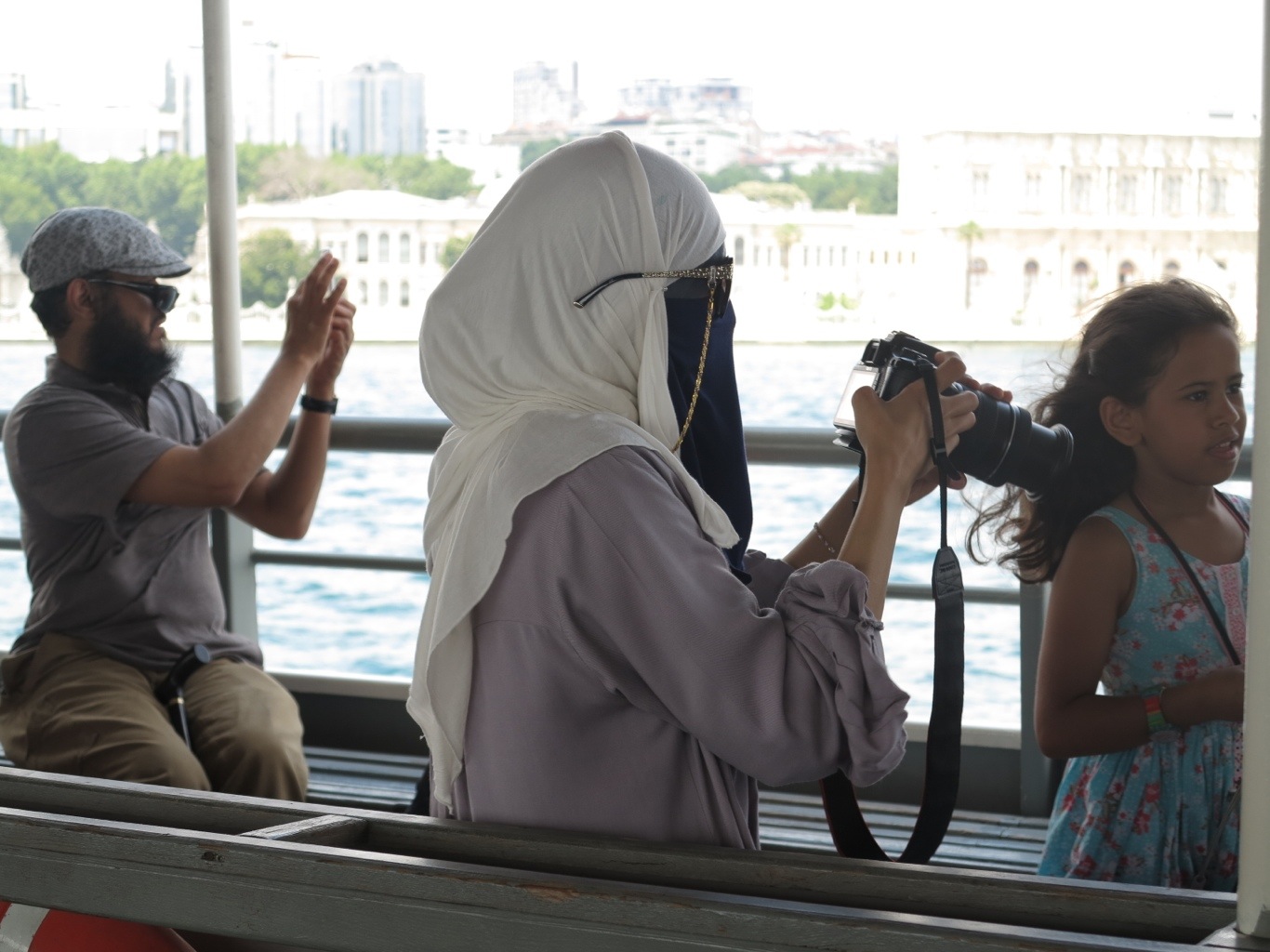
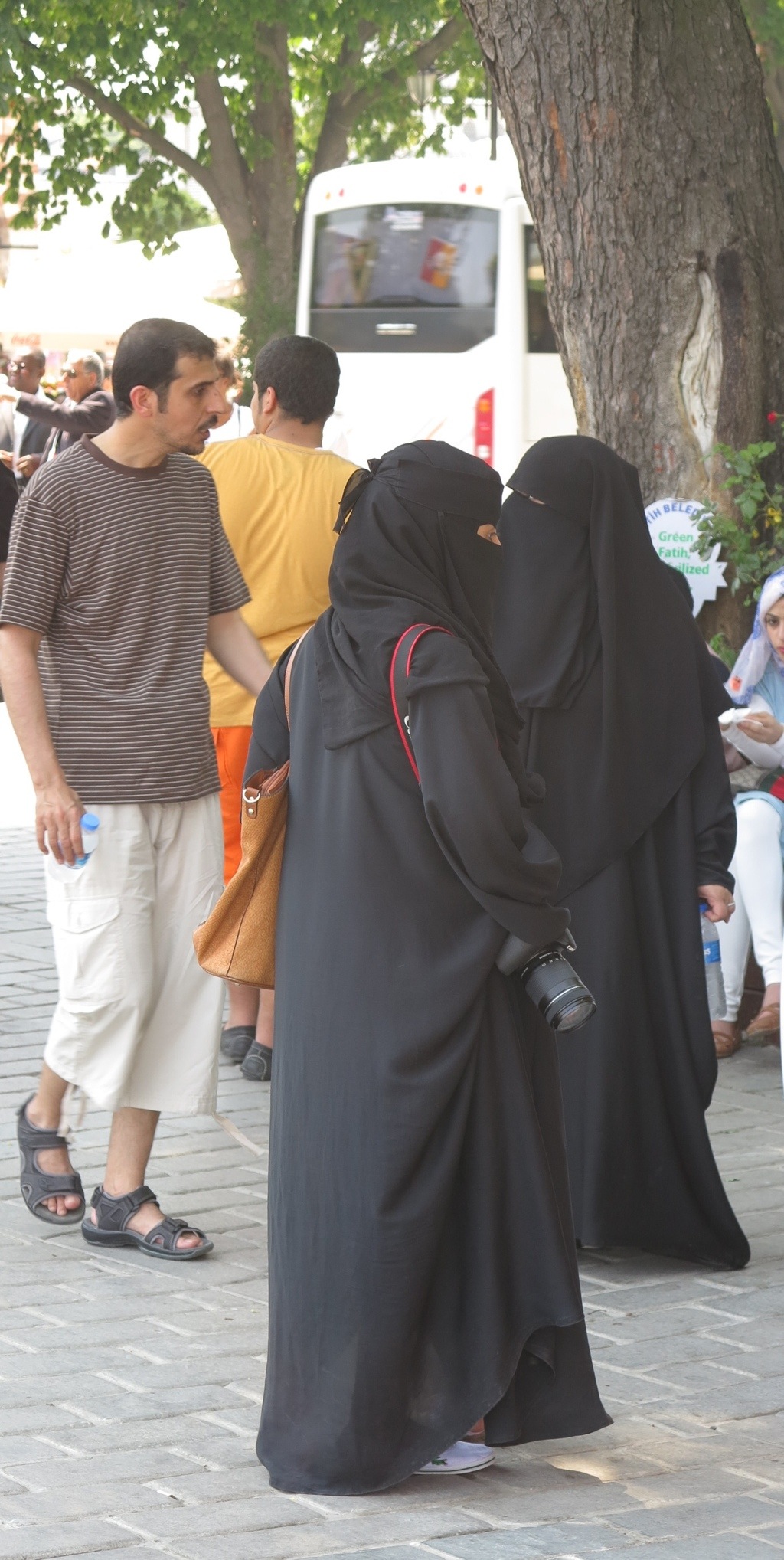
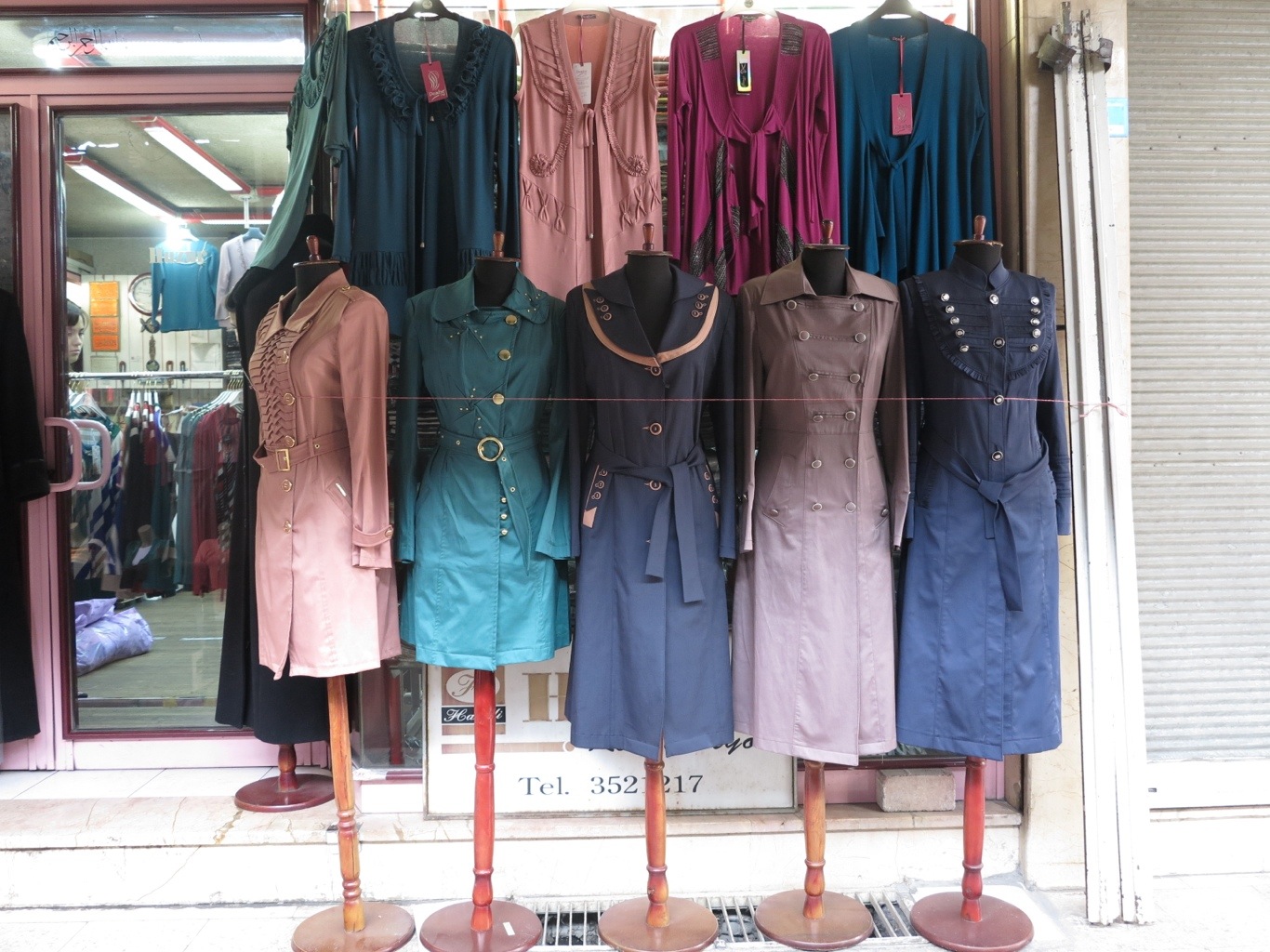
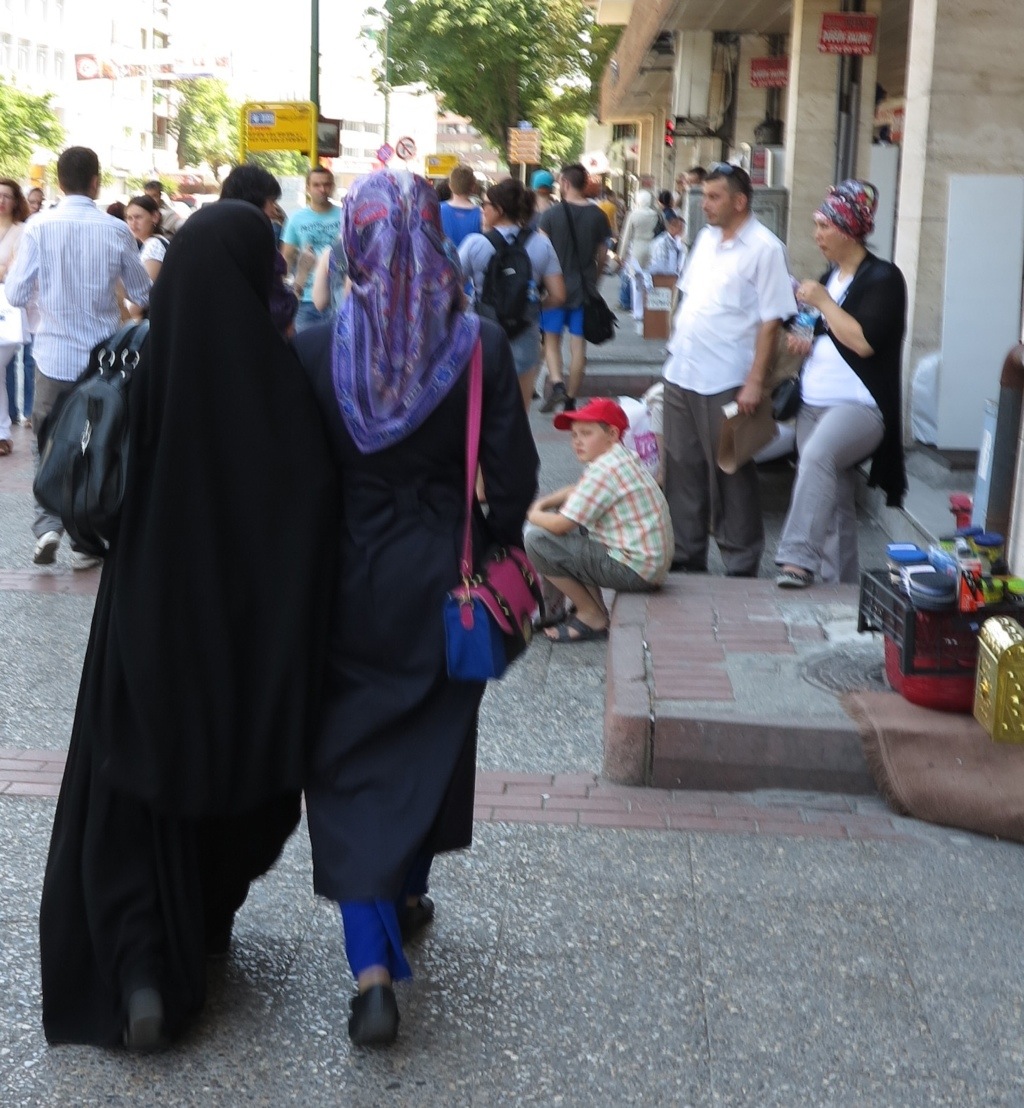
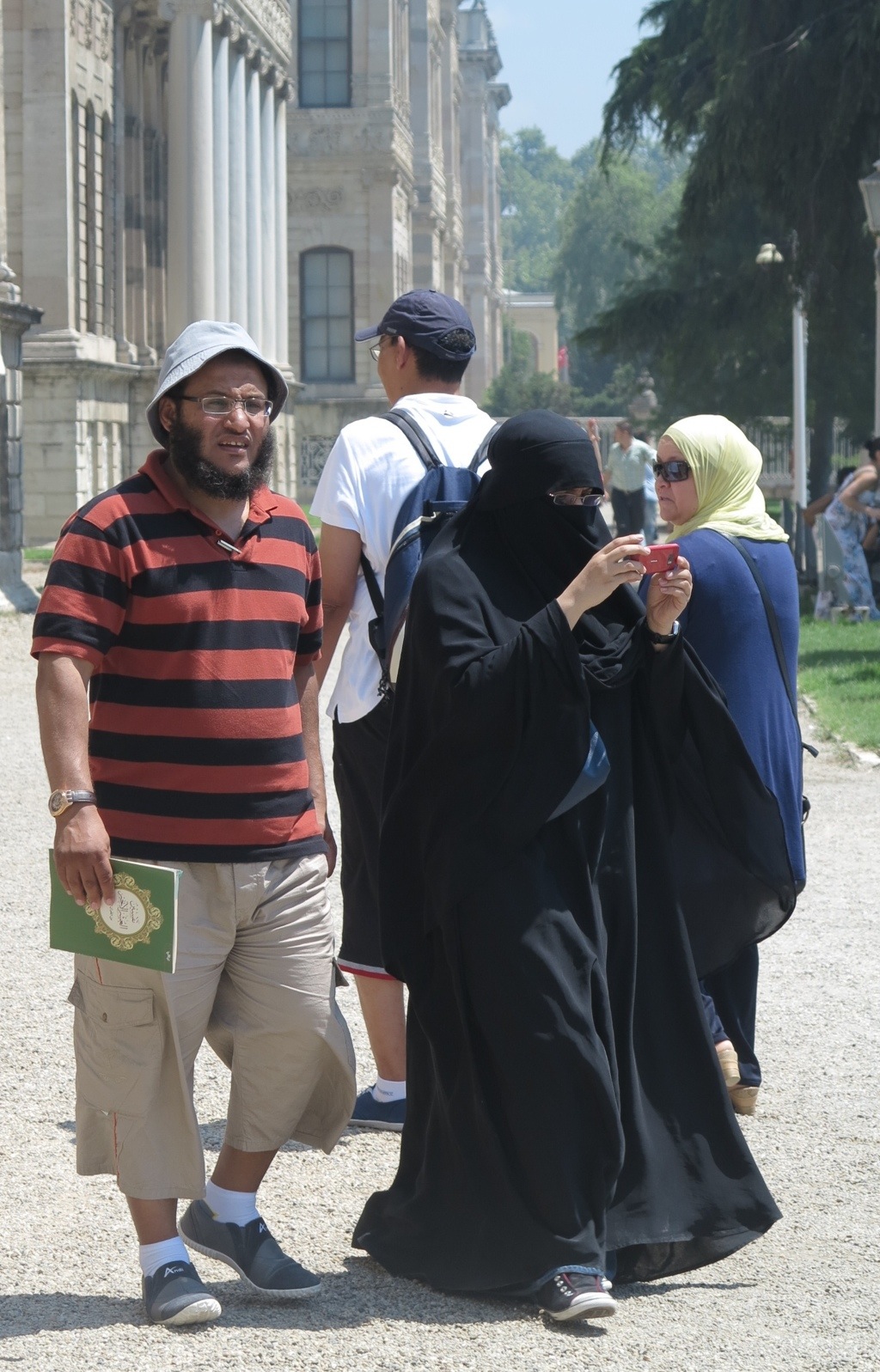
One last post on Turkey. My companion, known here as the Art Student, was fascinated, even obsessed with the many women tourists in Istanbul who were dressed in black from head to toe, faces veiled and even sometimes hands concealed by black gloves. She was indignant that their male companions were very often wearing shorts. Far too hot for a man to wear long pants, they seemed to say, while the women simply sweltered. Paradoxically, many of these women carried cameras. We did see some lowering the veils to below their chins so as to be photographed, but mainly they took snaps and remained themselves unsnappable. Traditional Turkish attire for women involving garments resembling trench coats of varying lengths and colours, didn’t look much cooler, but at least the women showed their faces in public,

20120709-192838.jpg

20120709-192911.jpg

20120709-192937.jpg

20120709-193007.jpg

20120709-193043.jpg

20120709-193305.jpg

20120713-075633.jpg

My trip to Turkey 13: Istanbul days 7 to 9

Our last two and a half days in Istanbul were interesting, but there doesn’t seem to be a lot to blog about. We bought presents for people back home. With no sense of paradox at the time, the Art Student bought two books about Turkey and I bought a miniature painting of a bearded Sufi. The Art Student came down with a tummy bug that may have had something to do with eating an unwashed nectarine. Several men wished us a happy honeymoon – whatever the Turkish is for blarney, there’s a lot of it around in Sultanahbad. Several more told us that ‘Aussies’ are their favourite tourists because we have a sense of humour. (There may be a kind of truth in that, as Australian and Turkish senses of humour show signs of great compatibility. My best example of this was somewhere in Anatolia when a chickpea stallholder demonstrated to me how he could tell from our faces that I was a visitor and Burak, our tour leader, was Turkish: he pointed at me and his face became a picture of wide-eyed, mildly idiotic curiosity; he pointed at Burak, actually a very cheerful person, and became the personification of long-suffering grimness. Burak and I both enjoyed the performance.)

We weighed up the pros and cons of a Bosphorus Cruise, a night at the opera (which would have let us see the inside of Haghia Irene), a Turkish dance performance that’s Istanbul’s top rated attraction on TripAdvisor, but ended up not opting for any of them.

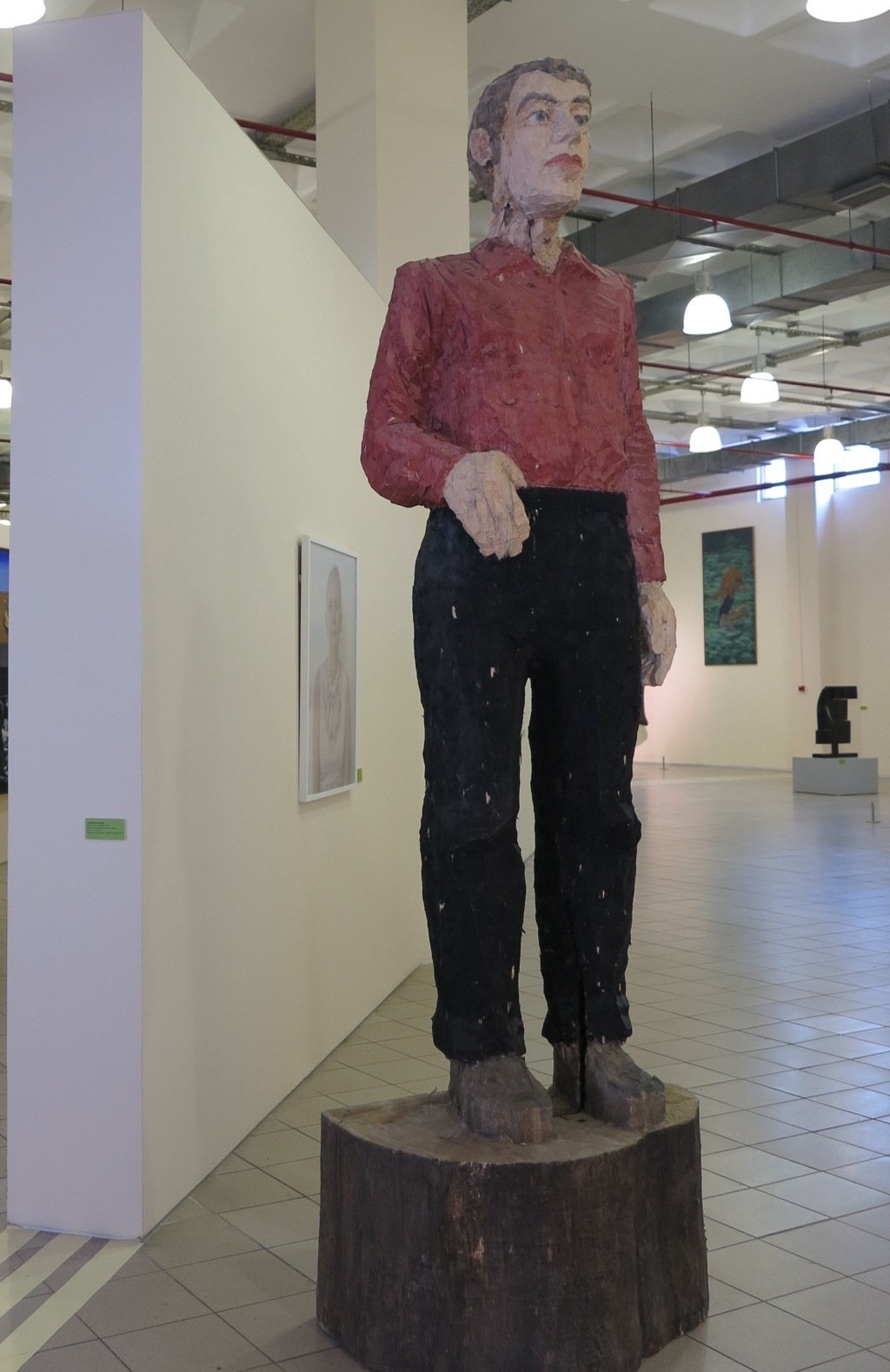
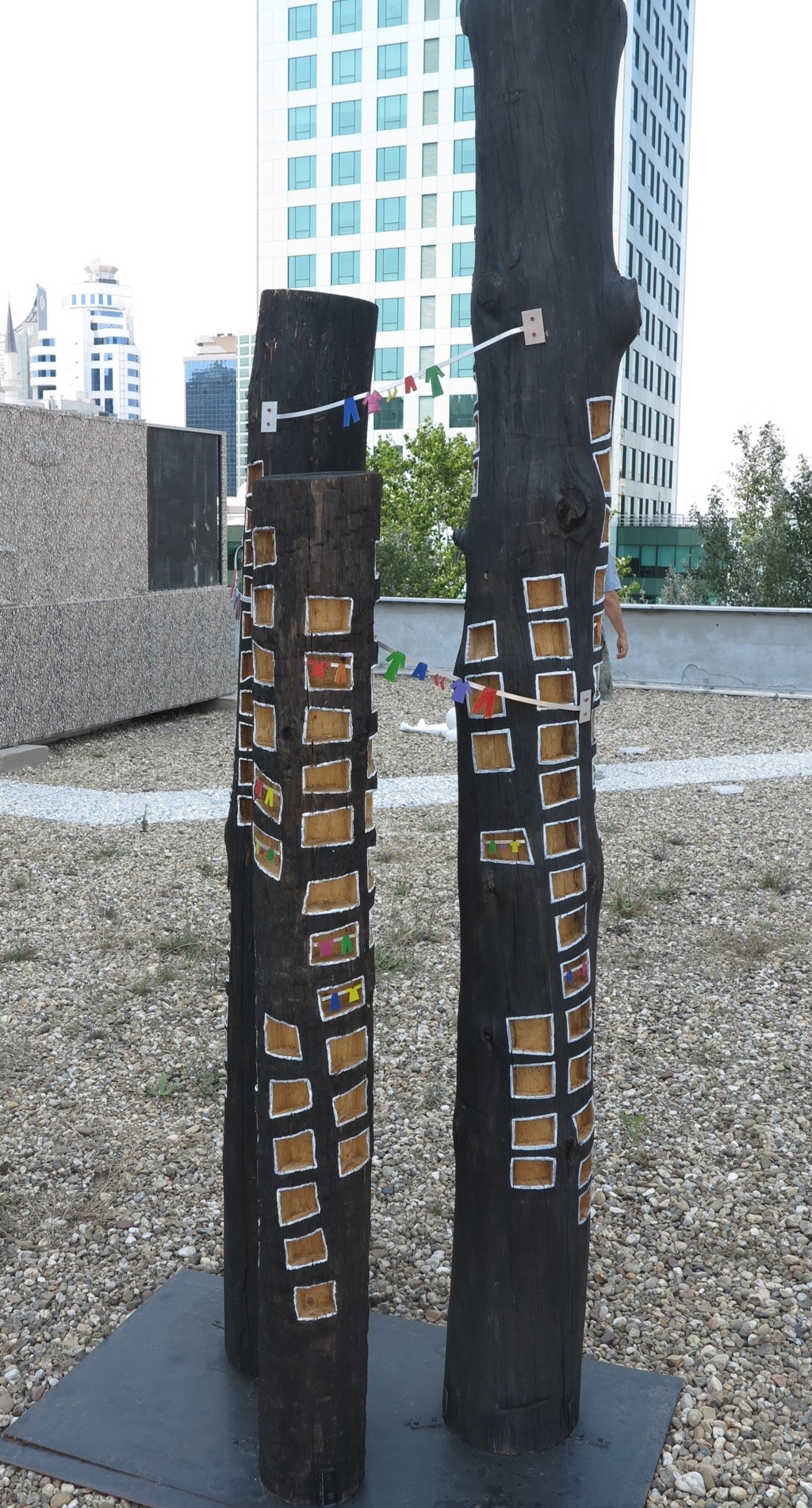
We did go on two excursions, each to places off the beaten track for which getting there was a good part of the fun. The first, on day 7, was to the Elgiz Museum of Contemporary Art. We gleaned from Time Out Istanbul and the museum’s website that the museum was in Maslak, 20 k or so out of town. Wikipedia told us to catch the Metro from Sishane. This we did, and the metro is a striking contrast to the tramvay – quiet, smooth, with plenty of available seats and passengers who could have been from a city that’s not infested with tourists. At our second stop, a couple of older men tried to tell us something, including, mysteriously, that we had to get off. We did as we were told, and then understood, because the train almost immediately went back the way it had come. We managed to get on one going in the direction we wanted, but … Wikipedia had said to go to Maslak station, and there was no such place on the metro map. We finally asked someone, ‘Maslak?’ He didn’t speak English, but led us to the map and showed us the stop we needed, Ayazaga ITU, which we had just passed. So we swapped trains once again, and soon we were there.

Like Sydney’s White Rabbit Gallery, this is a private museum set up to exhibit its owners’ collection. It was well worth the effort to get there. A charming young woman greeted us warmly, told us a bit about the gallery and the collection, and engaged in arty conversation with the Art Student. We had a good time strolling around. There was contemporary Turkish art displayed alongside work from Europe, the US and China – nothing from Australia, though our hostess said she’d like it to include some Aboriginal art. My favourite pieces were a shiny evening dress made from beetle carapaces and in the sculpture courtyard a marble Cybele (that is, the many-breasted Athena of Ephesus) only without the arcane insignia and – such a relief – nipples on her many breasts. Here are a couple of the Art Student’s snaps.

Stephan Balkenhol’s Big Man 2002

20120714-092251.jpg

Ayla Turan’s Letter to the Neighbour Unknown, 2112, in the new rooftop sculpture garden

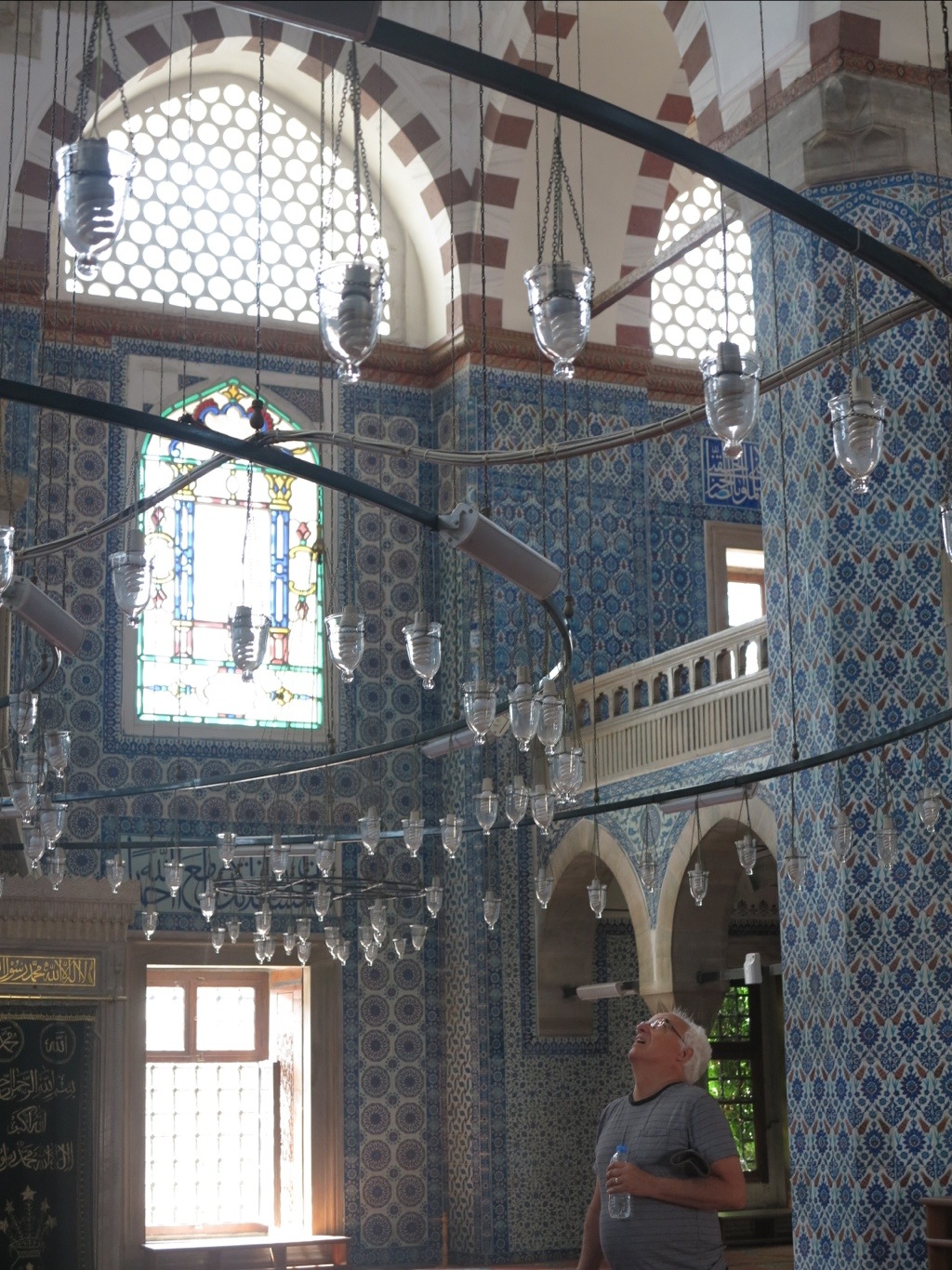
The other excursion, to the Rüstem Pasha mosque, took two attempts. We had visited this tiny mosque on our first day with Intrepid. I wanted to see again, the Art Student was ‘over mosques’, so on Day 8 I left her alone and queasy in our luxurious hotel room and struck out by myself. I didn’t have a map, but I knew its general location. The Fatih municipality has deployed hordes of keen young people in bright blue T shirts to help tourists. My quest turned out to be an opportunity to get into conversation with a number of them. None had heard of the mosque, and it wasn’t on the map they had been issued. With the third group, I said I thought it was near the tomb (‘Toom?’ ‘Turbe.’ ‘Ah! Turbe!’) of Sinan the Architect. We found the tomb on the map, but after trying to tell me how to get there (‘Go through Gate 2 of the Great Market and turn left …’), they offered to come with me. So I wandered through the narrow streets with two university students, studying environmental engineering and child psychology respectively, and a high school student. I don’t know about them, but I enjoyed our awkward conversation hugely. I now know that the best football team in Istanbul is Galata Sarayi, and the names of the others don’t matter at all. I know that the women with veiled faces around old Istanbul are Definitely Not Turkish. I know that the level of English taught is high school in Istanbul is very high. We found the tomb. I had misremembered: it was right outside Suleyman’s great mosque. I gave my young guides my email address and went into that beautiful structure for a moment, before inadvertently taking a long way back to the hotel.

This morning, on our last day, we set out together to find the Rustem Pasha mosque. This time, armed with a map that showed it as clear as day, we found it with only a little confusion, turning right in the spice market where we should have turned left. And then a street vendor had parked his pretzel cart in front of its modest gate and we almost missed it. Once inside, it was every bit as beautiful as I remembered.

20120714-092739.jpg

20120714-093345.jpg

Goodbye Turkey, land where a man will say you break his heart by offering 45 lira instead of the 49 he’s asked for, then refuse the four lira you hold out to him, where two vehicles come face to face in a single lane street that’s marked as one-way and the drivers negotiate cheerfully the question of who will back up, where the call to prayer drowns out conversation five times a day and waiters make jokes about your manhood if you don’t drink alcohol, where a hotel employee will say to an embarrassed guest who has no small notes for a tip, ‘The tip does not matter. The humanity is important.’ Goodbye sweet Turkey.

20120714-094404.jpg

(Written on the plane to Rome.)

My trip to Turkey 12: Istanbul day 6

We’ve settled into a daily routine in Istanbul: after a hotel breakfast, we head out for the major excursion of the day. Then we’re back to the hotel for a couple of hours snoozing, reading, respectively drawing and blogging, with perhaps an excursion to the teras for a slice of cake proudly baked and offered for free by the young woman who sometimes helps at the front desk. We go out again for dinner some time between 7 and 9, which generally involves a lot of strolling, a little getting lost, continuous people and animal watching, intermittent admiration of antiquities (the aqueduct, Constantine’s column, the minarets of Sultanahbad), occasional recognition of another loan word in Turkish (like kuafor for hairdresser or tuvalet, pronounced toilette, for toilet), and all that. Then it’s back to the hotel for some TV, always looking for the moment in a dubbed US or UK show when a bright squiggle turns up to mask the presence of a cigarette.

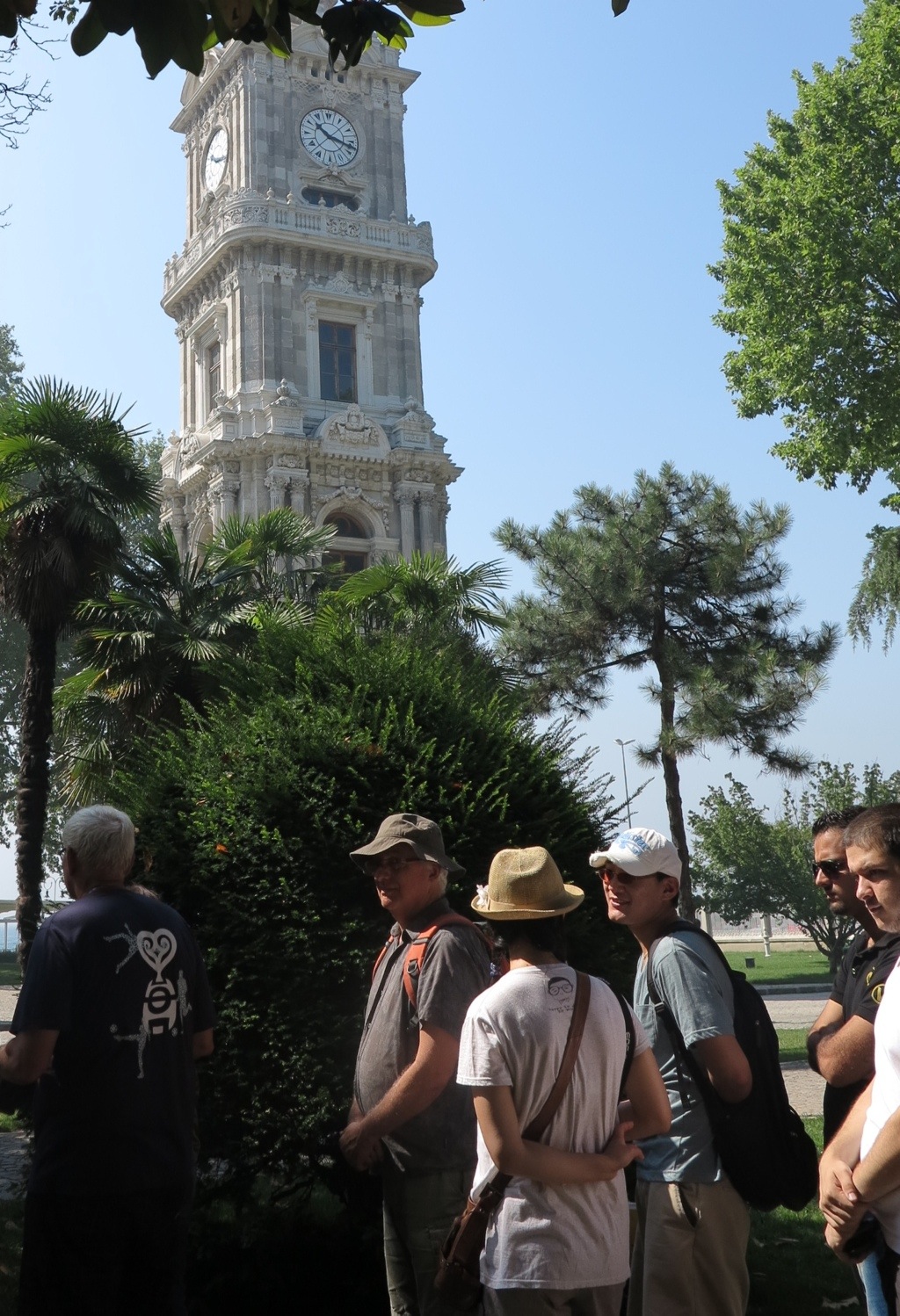
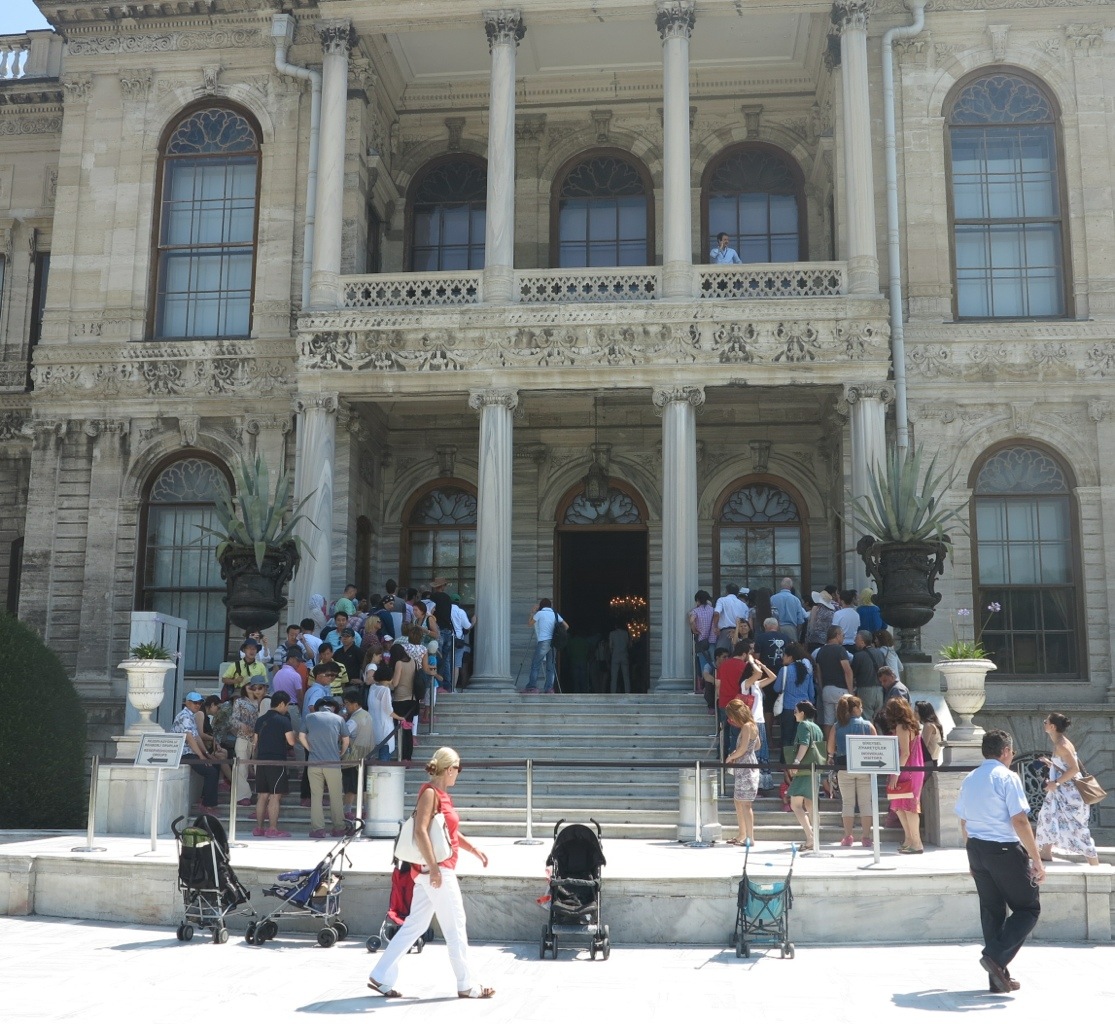
Yesterday’s main excursion was to Dolmabahçe Sarayi, the palace that replaced Topkapi Sarayi as the residence of the Sultans and their wives in the 1850s, and the place where Kemal Ataturk died in 1938. We’d intended to visit it on Sunday but after standing in the queue for half an hour or so without making much progress we decided to come back when it was less crowded. Hah!

We arrived at 10 past 10 in the morning. Queue No 1, for the security check, was a non-event. Queue No 2, to buy tickets, was less than half the length of Sunday’s. But it moved just as slowly. Here I am soon after joining it.

20120711-223707.jpg

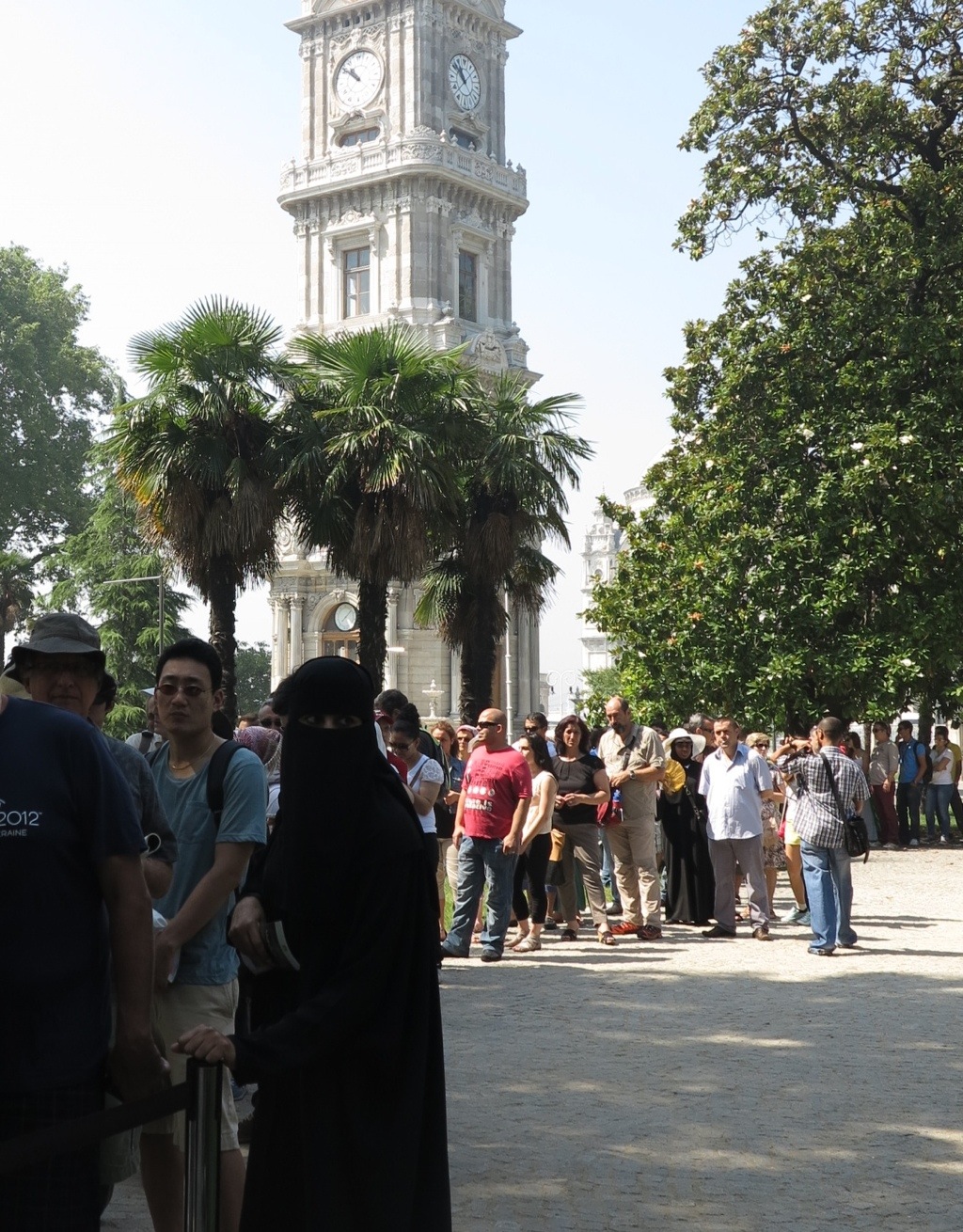
And here I am half an hour after that, with only ten minutes or so to go, just entering the roped section:

20120711-224242.jpg

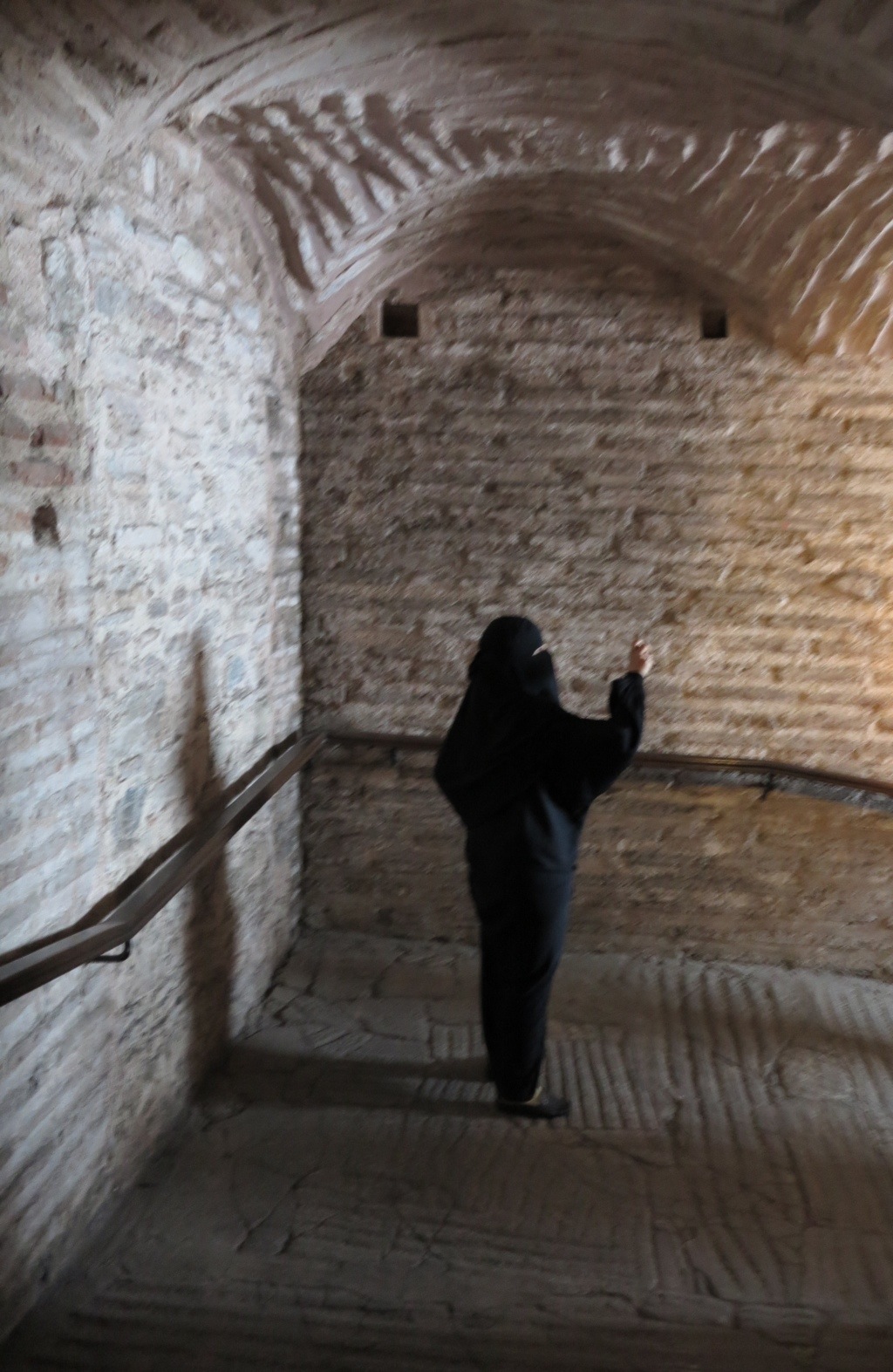
Note the woman swathed in black with a hand resting on the bollardy thing. If you are ever in a queue and she turns up beside you, challenge her. If she says demurely, ‘My husband,’ pointing with her eyes toward the front of the queue, DO NOT accept the implication that her husband is up ahead between the ropes. DO NOT LET HER PASS. Her husband has sent her in to save them both the 50 minute wait. I suppose I should add that if you do courteously allow her past, and advise the people immediately ahead of you do do so as well, when you realise that despite her appearance of a pious Muslim woman she is actually a lying scumbag of a queue jumper, you probably shouldn’t shout after her, ‘Madam, you are a liar. You lied to me!’ even if you’ve observed on Tripadvisor that Saudi tourists call hotel staff they don’t like liars quite a lot, so you know the term has currency. Your companion is likely to find this behaviour embarrassing. But of course, you’d have no way of knowing if it was the same woman. I could recognise her by her large brown bag, and noted with grim satisfaction that her male companion was one of the many men accompanying women sweltering in black to the eyeballs who found the weather far too hot for long trousers.

Queue No 3 turned out to be a pack:

20120711-230300.jpg

On the left, the sign said, were tour groups, on the right individual visitors. Another sign that was invisible until we reached the top of the stairs said that no individual visits were allowed: we weren’t queuing at all, we were waiting for the English-language tour at 11.35.

The tour turned out to be pretty much a moving queue, Queue No 4, as a hundred or so of us, many of whom spoke very little English, followed the guide, whose English was largely incomprehensible anyhow, through vast room after vast room, each furnished with great opulence.

Queues No 5 and 6, for the harem, were a repeat of Nos 3 and 4, though shorter and more comprehensible respectively.

Perhaps you’ll forgive me for going on so much about the queues if I quote a chap we’d met somewhere along the line: ‘After all that it was all the same, room after room of kitsch!’ I thought he put it well.

The man marshalling the harem queue ushered the Art Student and me to seats off to one side, probably out of consideration for our grey hair (have I mentioned that we’ve met with the most extraordinary generosity and kindness on this trip?), and said that audio guides were being developed and some year soon all this queuing and herding would come to an end. Compared to places like Iran, he said, Turkey is doing brilliantly, but it is still modernising, not there yet.

There was a weird pleasure in seeing how the other 0.1 percent lived, and it was eerie to peer into the queen mother’s room where Ataturk died, but really, I’d rather have the three hours of my life back and the 80 euro it cost for two of us. Your mileage may vary. If you do go, I strongly recommend you do it with a tour group.

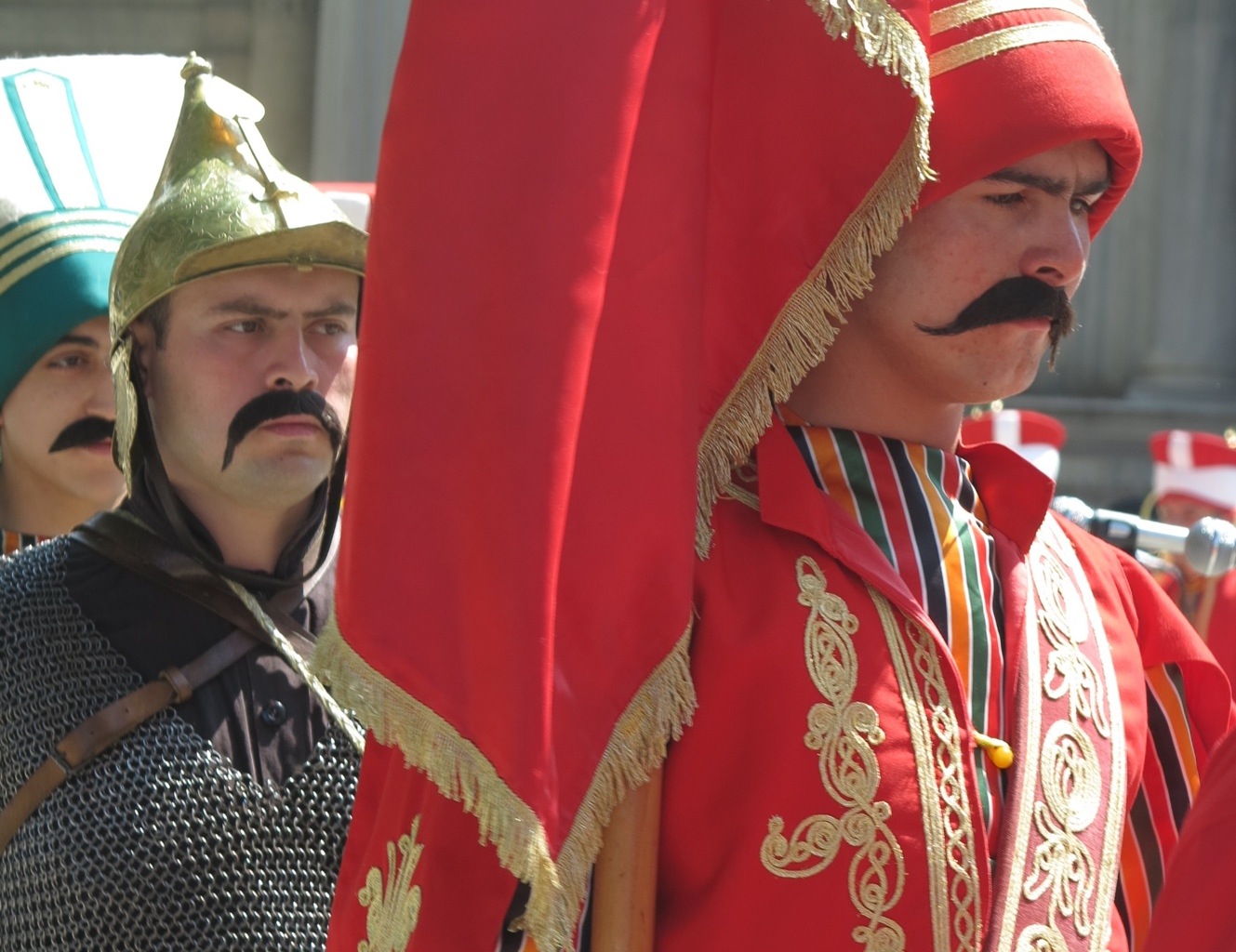
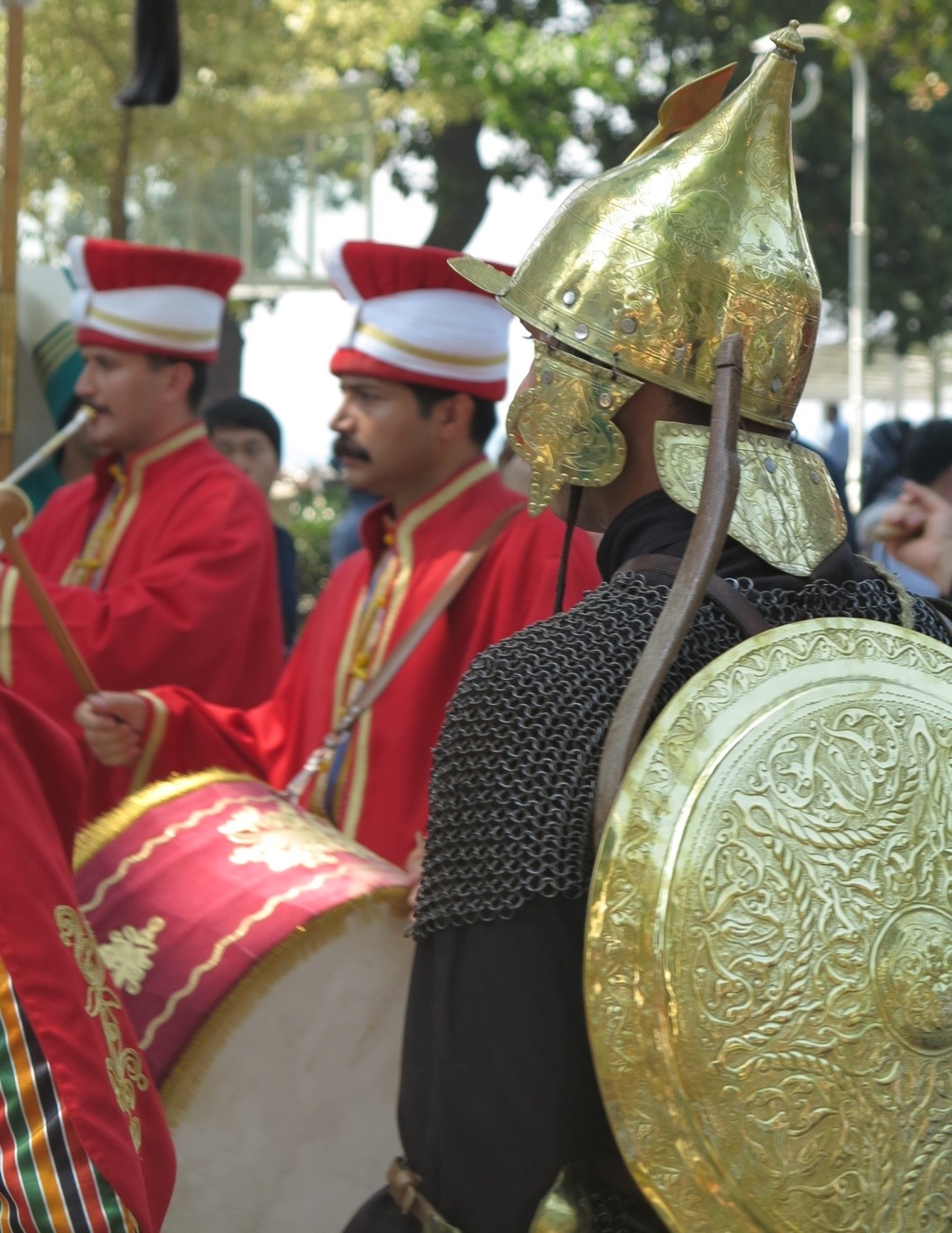
Oh, the best thing about the visit, apart from the drama with the lady in black, was a performance by a military band in full Ottoman drag and fierce Jannisery glares, which we could have seen for free.

20120711-232009.jpg

20120711-232118.jpg

My trip to Turkey 11: Istanbul day 5

We debated back and forth whether to go on a cruise up the Bosphorus. There’s something offputting about the Offers on every street corner down at Eminömü, towards the Galata Bridge and the piers. Just 30 euro each for a six hour cruise, they say, and I don’t know which I’d miss, more the euro or the hours. We decided instead to spend 1.75 Turkish lira on a ferry ride to the Princes’ Islands/Adalar, a small archipelago in the Marmara Sea where members of various royal families who were out of favour over the millennia have lived and died in exile.

It was a bit more than an hour, across the mouth of the Bosphorus and then out into the Marmara. There are four inhabited islands, of which we went ashore on the second biggest, Heliabatsu. Fabulous views of Istambul’s minaret-ful skyline, of the Asian side, the still,sea and the cloudless sky, and once were ashore, we walked through picturesque narrow streets where the only motor vehicle allowed seemed to be the fire engine – tourists of every stripe rode past us on bikes and horsedrawn carriages. With the help of a complimentary map from one of the many kebab shops, we went in search of the synagogue and a famous old church. We had no success, but we did pass by a number of spectacular wooden houses:

house

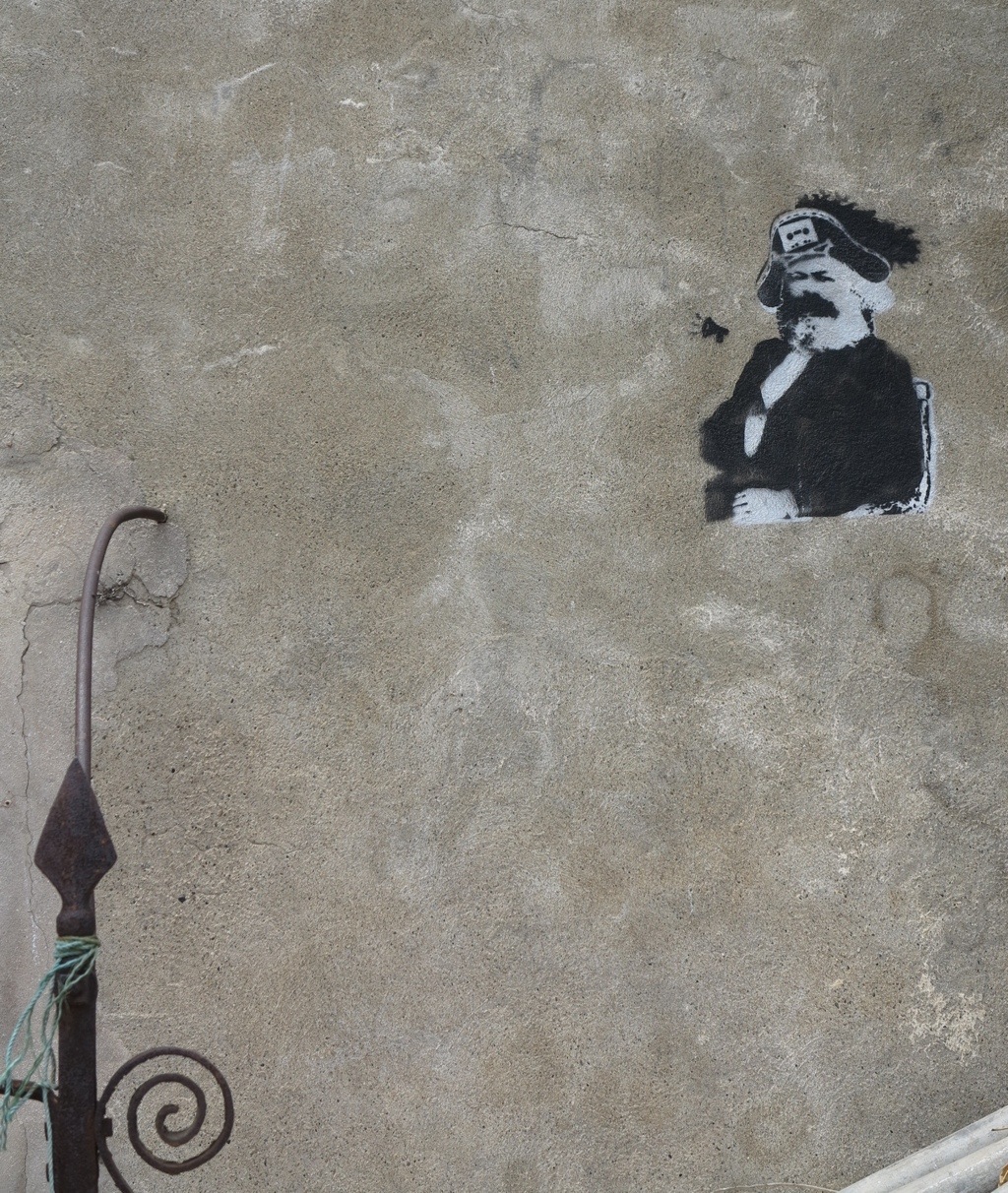
We saw Karl Marx as pirate on a wall:

Marx pirate

And there was quite a bit of stuff on sale. These floral crowns are everywhere, and that sign is pronounced tatch, not tack.

taç

Heliabatsu was home to two famous poets, who are commemorated by special benches along the waterfront:
front-of-chair

backofchair

And then there was this:

cat

Maybe this is the place for a paragraph about cats and dogs in Turkey. They are part of every streetscape, and don’t seem to belong to any particular human or household. Many of the dogs have plastic tags in their ears to indicate that they are participants in the canine population control program, and some have collars, but I’ve only seen one on a leash. Most of the cats seem to be well looked after. I’ve seen one of them on a leash too, tied up outside a baklava shop. I’ve seen three young men watching a fourth playing with a tabby with a foot. Tourists ooh and aah over them. One evening when we were eating dinner on a terrace we watched a man on a roof below us pursue a wild kitten, grab it, and place it on a high spot next to a bowl of food, then stalk its mother with similar intent. It’s one of the many unadvertised attractions of this country that it’s full of purposeful dogs and independent cats, living more or less harmoniously with humans.

We caught the fast ferry back to town – 6 Turkish lira each.