Antony Beevor’s Stalingrad

Antony Beevor, Stalingrad (2004, Penguin 2008)

Antony Beevor visited Sydney for the Writers’ Festival in 2007. His talk was interesting, and it evoked high-quality audience questions that came from a whole world of War History geekiness previously unknown to me. Although he’d recently published a book about the Spanish Civil War, it was Stalingrad that generated the serious senior fanboy passion. We bought the book not much later, but didn’t start reading it until July 2008. Now here we are, in mid 2011 and it’s done!

Notice I said ‘we’. The reason I took longer to read the book than Anthony Beevor took to write it is that I read it exclusively on long car rides, aloud to my regular driver, usually known on this blog as The Art Student. Apart from the reading being disrupted by our lamentable failure to do much travelling by car in the last three years (two return trips to Canberra, perhaps one southward, and just now north to Red Rock and surrounds), it was an excellent way to read this book.

As with Jared Diamond’s Guns, Germs and Steel, another car-journey book, the flow would be interrupted frequently by one or other of us exclaiming, querying, drawing parallels or pronouncing judgements. Once or twice, we had to stop the car so the driver–listener could peruse a map. After a certain point I stopped reading out the full name of every military unit, and occasionally I would give up the struggle to pronounce a German or Russian name in full. But such bumpy moments in no way detracted from the book’s holding power. It manages to move, apparently without effort, from close-up accounts of human cruelty, brutality and suffering to a broader strategic narrative; from the obsessions and denials of Hitler and Stalin, to the petty rivalries, quirks and duck-shovings of the officers on both sides, to the German troops’ sentimental yearning for family or the Russians’ pursuit of alcohol.

The wonderful Barbara Ehrenreich said on her blog recently, ‘War has been, and we still expect it to be, the most massive collective project human beings undertake.’ Having just read about the sheer logistics of attack and counter-attack, siege and counter-siege at Stalingrad, I can only say, ‘True, that!’ ‘But,’ Barbara Ehrenreich continued, ‘it has been evolving quickly in a very different direction, one in which human beings have a much smaller role to play.’ If that’s so, we can only be glad of it. The human participants in Stalingrad endured almost unbelievable extremes of cold and hunger: men literally dropped dead from hunger, wounded soldiers froze to death by the cartload. They performed acts of understandable but almost unimaginable cruelty and callousness: Russian prisoners-of war starved in scenes that foreshadowed the images of Jewish prisoners at the end of the war; German prisoners were shot at random by their Soviet guards. There was plenty of heroism as well, of course, and an extraordinary episode of contact between individuals from both sides.

I turned down two page corners. The first was to mark the account of Hitler’s speech on 30 January 1943, the 10th anniversary of his accession to power, when the German army at Stalingrad was surrounded, starving, under-equipped, low on ammunition and facing almost certain defeat (Hitler expected them to fight on and the generals to commit suicide). The speech, delivered for some reason by Goebbels, made just one mention of Stalingrad:

The heroic struggle of our soldiers on the Volga should be an exhortation to everyone to do his maximum in the struggle for Germany’s freedom and our nation’s future, and in a wider sense for the preservation of the whole of Europe.

Of course there’s no comparison with the circumstances of Australian troops in Afghanistan, but doesn’t that rhetoric sound awfully familiar, and isn’t it equally hollow?

My other turned-down corner marks that contact between individuals I mentioned. In early January, when things were already obviously hopeless for the Germans, the Russians sent envoys under a white flag to offer a truce. The whole episode, drawing on an unpublished manuscript by Nikolay Dmitrevich Dyatlenko, one of the envoys, is marvellously told, full of poignant detail, but one moment grabbed my imagination.The envoys approach the German lines. They call out that they have a message for the German commander-in-chief.

‘Come here then,’ [a warrant officer] said. Several more heads popped up and guns were levelled at them. Dyatlenko refused to advance until officers were called. Both sides became nervous during the long wait. Eventually, the warrant officer set off towards the rear to fetch his company commander. As soon as he had left, German soldiers stood up and started to banter. ‘Rus! Komm, komm!’ they called. One soldier, a short man, bundled in many rags, clambered up on to the parapet of the trench and began to play the fool. He pointed to himself in an operatic parody. ‘Ich bin Offizier,’ he sang.
_____‘I can see what sort of an officer you are,’ Dyatlenko retorted, and the German soldiers laughed. The joker’s companions grabbed his ankles and dragged him back into the trench. Smyslov and Siderov [the other envoys] were laughing too.

And then back to the serious business of war, of the truce being offered and refused as per Hitler’s orders, and thousands more deaths being decided by the event. But in the middle of all that, with the stakes so high and the conditions already so desperate, that short man, bundled against the terrible cold, could stand tall and mock the whole catastrophe.

On the Carbon Price etc

The mining industry and their pals and puppets (I especially like the Popeye puppet) have already started their billion-dollar disinformation campaign about the Carbon Package unveiled yesterday. Thank god for GetUp! I’m about to send them some money. Here’s their modest but very clear video:

Overland 203

Jeff Sparrow (editor), Overland 203, Winter 2011

This is another excellent issue of Overland. Rodney Croome puts the current debate over who’s allowed to marry whom into an Australian historical context where restriction of marriage rights has been significant for convicts and until shockingly recently for Aboriginal people. Benjamin Law tells how Twitter kept him connected with his home city, Brisbane, when he was in India during the floods. Phillip Deery gives three alarming case histories from the bad old days (we hope) of ASIO. There’s a swag of poems, of which the ones that spoke most to me are by Ali Alizadeh (a poem dedicated to the Bard of the Hawkesbury Bob Adamson that begins cheekily, ‘Rivers are all the same. Dirty water / if you’re lucky, smelly mud and silt / increasingly the case.’) and Thomas Denton (an energetic vernacular narrative that shared with Judy Durrant the 2010 Overland Judith Wright Poetry Prize).

Fiona Wright has an excellent, optimistic piece on the Death and Rebirth of Heat. This is the first in the Meanland series of essays about the changing world of publishing that I’ve been able to engage with, and anyone who misses Heat as it was ought to read it. The essay took an unexpectedly personal turn for me. After noting the paucity of metropolitan newspaper reviews of Heat and other Giramondo publications, it goes on:

We’ve had much more support from bloggers, many of whom have given the magazine – and the books – consistent coverage and space. They’ve often written about HEAT with a level of thought and understanding that we should have expected, but didn’t. (One blogger in particular has always taken great pains to point out any typos we missed. But you can’t expect in-depth without a few ripples.)

Oh my god, she’s talking about me! Though perhaps not, because I didn’t so much point out typos as complain bitterly, some would say churlishly, about errors that either confused or, probably more often if I’m honest, amused me: ‘gauge’ instead of ‘gage’ really did stop me in my tracks, whereas ‘vesper’ for ‘Vespa’ was to smile. It would be nice to think I have been ‘instrumental in generating and spreading word of mouth’ for Giramondo’s publications, as she says bloggers often are, because of course I love their work.

A final word, because now I have a reputation to maintain: Thomas Nelson’s poem ‘The Pirouette’, set in a ‘beach joint’ in New Zealand, includes the line, ‘New Zealanders call this kind of house a Batch’. Well, not really. That’s not a typo, it’s a spelling mistake. What New Zealanders call that kind of house sounds like ‘batch’, but it’s generally spelled ‘bach’ (as in bachelor, I think). The mistake in this case may be attributed to the poem’s narrator, of course, but this is a piece of New Zealand English, like ‘pottle’ (what yoghurt comes in) and ‘section’ (allotment) and ‘dairy’ (milk bar) that can trip up unwary Australian editors.

Ah, the fourth estate

I recently saw Jon Stewart in conversation with someone on the US Fox network. His interlocutor claimed to see an equivalence between Fox’s reactionary agenda and the liberal agenda of, for example, the New York Times. Stewart conceded that the Times had a liberal bent, but, he said, it wasn’t an agenda like Fox’s. The problem he saw in the mainstream press was not ideological blinkeredness, but laziness and sensationalism. I thought of that exchange when I saw this little trio of posters outside the newsagents in Woolgoolga.

20110705-073800.jpg

But I suppose ‘We don’t know how serious the hendra outbreak is’, ‘Solar industry spokesperson overstates case’ and ‘Muslim community generally approves legislation on burqa’ just don’t get the adrenaline running or serve anyone’s interests apart from the public’s.

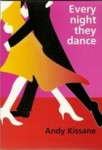
Andy Kissane’s Every night they dance

Andy Kissane, Every Night They Dance (Five Islands Press 2000)

Someone I’ve never met emailed me to say they’d stumbled upon my blog post about Andy Kissane’s recent book, Out to Lunch, and told me among other things that the one remaining copy of his previous book was on the shelves at Gleebooks in Dulwich Hill. Well, what is one to do in response to such individualised marketing? I caught the 428 to Dulwich Hill that afternoon.

I probably would have bought this book if I’d picked it up by pure chance and opened it at the table of contents. It’s got ‘The Ghosts of Marrickville Metro’ – the ‘Tro is now my local shopping centre. It’s got ‘Jean Devanny Writes’ – Jean Devanny wrote Sugar Heaven, the socialist realist novel set in my town of origin. And it’s got ‘The Separation Sonnets’, a title that could have been designed as bait for me, sucker for the sonnet that I am.

The book is in two parts. The contents of the first could be described as public poems in one way or another. There are historical pieces, some of them monologues, like the Marrickville Metro poems or ‘The Station Owner’s Daughter, Narrandera’ (an elliptical account of a massacre). Other monologues are vehicles for meditation on art and artists: Arthur Streeton, John Brack, Jean Devanny (though that one is a letter – to ‘Miles’ – rather than strictly a monologue). And there’s a longish narrative, ‘Tristan and Isolde’, that has genuine emotional force, but somehow feels public, like a reflection on modern relationships rather than a cry from the thick of it.

The second part gets personal. Narrative is still the dominant mode, but mostly it feels as if the voice of the poems is close to being Andy Kissane’s. Even an obvious exception, ‘Fanny Burney’s Mastectomy, 1811’, takes on a very intimate feel from being part of ‘Breast Triptych’, in the other two poems of which the poet tells of his mother’s breast cancer. There are poems about the vicissitudes of renting, the joys of sex (‘Beyond Metaphor’), the awkwardness of a father-son relationship. The 12 unrhymed ‘Separation Sonnets’ tell a story that may be just as much a fiction as ‘Tristan and Isolde’, but it’s much more rooted in a sense of real life and cuts much closer to the bone.

And then there are the poems about reproduction – ‘Miscarriages’, ‘Nineteen Weeks’, ‘Christmas Tree’ and ‘Birth’. All of these are wonderful, wonderful. I don’t remember reading anything by a man on these subjects, certainly nothing as unaffectedly heartfelt. The middle two in particular, dealing with a late-stage abortion, are finely poised, tender, undefensive, generous, heartbreaking.

Thanks, Andy.

360 Throw it All Away

Music video by Alex Ryan. On his facebook page, he says to watch out for the director’s cut, but I quite like this version, especially my tiny appearances, as at 2:10:

And there’s a ‘making of’ video as well:

Talking about looking at painting about bombing Guernica

In my 20s, on my first trip overseas, Picasso’s Guernica and I happened to be in New York at the same time. It had a room to itself in the Museum of Modern Art. I wandered in and admired it with pretty much the same undifferentiated awe as I’d brought to pretty much everything else in MOMA. I suppose I was suffering a kind of low-grade colonial Stendhalism (you know, the condition where visitors to Florence grow faint from exposure to too much beauty). The only other person in the room, a young man about my own age, spoke: ‘I’ve been wanting to see this all my life. Isn’t it amazing?’ I thought he was some kind of weirdo, either that or an art student.

I saw Guernica again in Madrid five years ago, this time in the context of a major Picasso exhibition, and, having read Alice Miller’s essay on Picasso in The Untouched Key, I saw it a little better.

Last night the Art Student and I caught a bus to town to hear a Sydney Ideas talk by Professor Timothy J Clark, art historian from the University of York in England: ‘Looking again at Picasso’s Guernica‘. I came away feeling that when it comes to looking at something like this painting, I’m not much better than a day-old kitten.

As the fast-talking professor who introduced the speaker said, we mostly hear Picasso spoken of in connection with erotic adventures and high auction prices. CJ Clark’s interest lies elsewhere. Guernica, he said, is a history painting, already an anachronism when it was painted in 1937, but a history painting that refuses to die: it crops up again and again in anti-war demonstrations. A tapestry at the United Nations building was covered with black felt at the insistence of Colin Powell when the US was bombing civilians somewhere. How to account for its enduring power?

His stab at answering this question focused on Picasso’s relationship to space. Picasso for him, he said, ‘is a history painter’, and the main history he painted was ‘the end of room space’, that is the traditional subject of paintings – a space built for human habitation, with a roof, walls, furniture and perhaps a window looking out onto external space. That subject would seem to be a long way from Franco’s bombing of the historic Basque town of Guernica. Yet, as far as I could understand the argument, CJ Clarke was saying that the struggle to resolve issues of space – both room space and public space – is at the heart of the painting’s success. The painting was completed in five weeks from its inception, and Picasso spent just 26 days working on the canvas. His ‘muse and lover’ (Wikipedia’s description) Dora Maar took a series of photographs of the work in progress, of which Clarke used slides to take us through his argument: we looked at the way classic motifs were introduced and then obscured, at the importance of the sheer scale of the painting, at the role of geometry, etc etc. We didn’t touch on Alice Miller’s key (she locates the painting’s emotional force in its connection to major childhood trauma) and the erotics of the painting, we were told in an aside, is a story yet to be told.  That is to say, a lot was said about the painting, but there is so many more important things that can be said from so many other valid perspectives, so much more to be discovered in this one painting.

Such close looking may be commonplace for art students – for me it was breathtakingly interesting. I couldn’t see how, or even if, the discussion actually went any way towards explaining the painting’s enduring power, but I’ll leave that to people with better equipped eyes to answer.

Clarke’s next book is Picasso and Truth: From Cubism to Guernica. I expect it will be a good read.

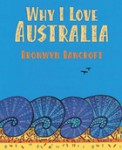
Why Bronwyn Bancroft Loves Australia

Bronwyn Bancroft, Why I Love Australia (Little Hare 2010)

I was given an iTunes voucher for my birthday on the understanding that I would use it to buy book. It’s taken a couple of months and a system upgrade, but I’ve bought this one. And of course now I want a dead-trees copy. It’s on the short list for the Prime Minister’s Literary Awards, and a good thing too. If like me you feel ever so slightly squeamish when you watch those Qantas ads, ‘I still call Australia home’, this is a marvellous antidote – a brilliant, bold, spectacularly beautiful acknowledgement of country.


Fireflies in the Inner West Courier

That‘s my son, one of ‘three inner west designers’:

In a fig tree in Circular Quay there are 48 mechanical fireflies ready and waiting to dance with you.

Each firefly has a brain, which is a circuit board, and an energy efficient LED light in their tail.

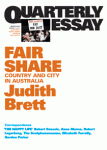
Quarterly Essay on the country and the city

Judith Brett, Fair Share: Country and city in Australia (Quarterly Essay 42)

Judith Brett has an admirable capacity for seeing beyond the surface of ugly or bizarre utterances to the valid concerns or at least genuine pain that has given rise to them. In this essay, for example, she resists (or perhaps doesn’t even feel) the pull to mock or repudiate Bob Katter’s extreme language when he’s arguing for his constituency. And she doesn’t indulge in the city dweller’s revulsion from book-burning when she discusses the farmers who burned copies of the Murray–Darling Basin Authority’s draft plan last year – no snide comment about people who condemn and burn documents they haven’t had time to read.  That is to say, she side-steps the kind of point-scoring that tends to pass for debate in the press these days. Instead, she addresses her subject seriously and respectfully. Even as she argues that ‘economic rationalism’ brought havoc to rural Australia, charts the rise and fall of the Country/National Party, or notes the impact of Pauline Hanson, she avoids cheap shots.

It’s an excellent, thoughtful essay. This paragraph comes close to encapsulating its argument :

City and country in Australia share a history, a long history both of interdependence and of watchful suspicion. The understanding of that interdependence was strong in the first two centuries of Australia’s European settlement, and the attempt to build a vibrant and self-sustaining countryside was a major political preoccupation. The country made claims on the city for support, and by and large the city attempted to meet them as part of a compact in which Australians shared the cost of living in a big country. This understanding has waned rapidly since the neoliberal 1980s. Since then the country has seemed to be in a perpetual state of crisis: dying towns, depressed and ageing farmers, unproductive farms carrying too much debt, environmentally unsustainable irrigation schemes, droughts and flooding rains, crisis-ridden marketing schemes like the wool stockpile and the Australian Wheat Board, and so on. The picture is of irreversible decline. Yet, as Tony Windsor reminds us, over 30 per cent of Australians live outside the big cities. What is their role in the nation? And what are we to do with all that land beyond the ranges and the thinly settled coastal strip?

My two cents worth: read it – you’ll see the world a little better!

As usual, this Quarterly Essay includes correspondence about the previous issue. The contributors here are all but unanimous in their appreciation of David Malouf’s The Happy Life, calling it variously ‘beguiling’, ‘characteristically delicate’, ‘elegant and humane’, ‘thoughtful and courteous’. They are also all but unanimous in finding that he didn’t say anything definitive about happiness. A Russian scholar argues that his reading of A Day in the Life of Ivan Denisovich is simplistic an uninformed. A psychiatrist invokes the academic literature about happiness. Several others push their respective barrows with varying degrees of elegance and insight.

David Malouf does not rejoin the conversation. I read his silence as signifying that he’s perfectly happy for other people to have their say, to correct him where needed, to have their own crack at the subject. After all his piece differed from most Quarterly Essays by being in the tradition of the essay as a crack at a subject rather than a tightly argued thesis. Sometimes the appropriate response to an essay is not to argue with it. Maybe Marieke Hardy got it right on the First Tuesday Book Club last night. She said she felt as she was reading The Happy Life that she was sitting on David Malouf’s lap resting her cheeks on his bald head and letting him read to her.