Another walk, another 17 syllables

Jacaranda’s green
Five bright flowers on the ground
Ten live in the leaves

Meeting W E B Du Bois

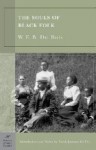
W E B Du Bois, The Souls of Black Folk (1903, Barnes & Noble Classics 2003)

I got a BA Hons degree in English Literature from a Good Australian University in 1970. Forty years later, it’s as if I’m standing on a hilltop with a view to the horizon in every direction, and all I can see are the boundless plains of my own ignorance. I hope I’ll go to the grave reconciled to the fact that I know almost nothing about anything, but for now I find the condition not so much frustrating as tantalising: so much to learn and only one brain. It may be a kind of information gluttony, but I can’t quite see that there’s anything wrong with it.

Reading W E B  Du Bois was like climbing a little higher up my hill and seeing that my ignorance was even vaster than I imagined.  I knew vaguely that he was an eminent African American scholar who wrote about racism, that he became a Communist. I may have half heard that he renounced his US citizenship in the 1960s. It never occurred to me that I might want to read him until Marilyn Lake and Henry Reynolds began their Drawing the Global Colour Line with a quote from his ‘The Souls of White Folk’.

The Souls of Black Folk, published a couple of years before that essay, is his best known work. I’m going to assume that I’m not the only person in the world who doesn’t know it well, and tell you that it a passionate and judicious exposition of the condition of ‘Negroes’ in the USA, particularly the South with detailed attention to the ‘Black Belt’ of Georgia, three decades after Emancipation. This centenary edition has an excellent introduction by Farah Jasmine Griffin, a professor at Columbia University, who identifies features of the fourteen essays that account for their  status as ‘a founding text of African-American studies’:

its insistence on an interdisciplinary understanding of black life, on historically grounded and philosophically sound analysis, on the scholar’s role as advocate and activist, and on close study of the cultural products of the objects of examination

I would add that the book is beautifully written: all the marshalling of fact, the polemic, the analysis would stand strongly by themselves, but the music of the writing carries them home. And it’s intensely personal. Perhaps the most poignant moment  (poignard means dagger) occurs in the 11th essay, ‘On the Passing of the First-Born’, in his description of his infant son’s funeral procession:

The busy city dinned about us; they did not say much, those pale-faced hurrying men and women; they did not say much, – they only glanced and said, ‘Niggers!’

In a book that often says we to mean the society as a whole, that consistently speaks to our common humanity, that last word is worth a thousand pictures.

The word racism didn’t exist until the 1930s. Du Bois  talks about ‘the Veil’, sometimes ‘the Veil of race’. Far from being a literary affectation as a contemporary review included in this edition implies, the image communicates powerfully. Du Bois describes himself as living within the Veil; he holds his baby son in his arms and see the shadow of the Veil fall across him; he hopes that for the ‘thousand thousand dark children’ tempted to hate, ‘someone will some day lift the Veil, – will come tenderly and cheerily into those sad little lives and brush the brooding hate away’; he takes joy from Shakespeare, Balzac, Aristotle, because when he is with them, he dwells above the Veil.

There’s an awful lot in this book that’s quotable, an awful lot that could have been written this morning, though it probably would have been couched differently – less reference to classical myth, for instance). The need to communicate through the world’s many Veils is at least as pressing today as in 1903 (not for nothing did the government of the day ban journalists anywhere near the asylum seekers on the Tampa in 2001). Du Bois writes (ignoring the existence of women as he does when generalising though not when attending to specific events):

herein lies the tragedy of the age: not that men are poor, – all men know something of poverty; not that men are wicked, – who is good? not that men are ignorant, – what is Truth? Nay, but that men know so little of men.

But the book is not just about racism or Black folk as victims. It’s about people with souls. In the final essay, he writes:

Your country? How came it yours? Before the Pilgrims landed we were here. Here we have brought our three gifts and mingled them with yours: a gift of story and song – soft, stirring melody in an ill-harmonized and unmelodious land; the gift of sweat and brawn to beat back the wilderness, conquer the soil, and lay the foundations of this vast economic empire two hundred years earlier than your weak hands could have done it; the third, a gift of the Spirit. Around us the history of the land has centred for thrice a hundred years; out of the nation’s heart we have called all that was best to throttle and subdue all that was worst; fire and blood, prayer and sacrifice, have billowed over this people, and they have found peace only in the altars of the God of Right. Nor has our gift of the Spirit been merely passive. Actively we have woven ourselves with the very warp and woof of this nation, – we fought their battles, shared their sorrow, mingled our blood with theirs, and generation after generation have pleaded with a headstrong, careless people to despise not Justice, Mercy, and Truth, lest the nation be smitten with a curse. Our song, our toil, our cheer, and warning have been given to this nation in blood-brotherhood. Are not these gifts worth the giving? Is not this work and striving? Would America have been America without her Negro people?

I went for a two-hour walk …

… and all I got was 17 lousy syllables.

Footpaths stained purple
Jacarandas are still  green
Mulberries underfoot

Freebies

Arthur Dean, The brigadier’s horse and other poems from the western front (Stephen Whiteside 2010)
Michael Mohammed Ahmad (Editor), Violence: Westside Jr Vol 2 (Bankstown Youth Development Service 2010)

My initial reason for doing a combined blog entry about these two books – a very slim vol of verse written by the publisher’s grandfather and a glossy publication showcasing writing by young refugees in Western Sydney – was the accident of their both arriving in my letterbox last week. (Even a blog as modest and marginal as mine occasionally cops a freebie.) On reflection, yoking them together is a long way from meaningless.
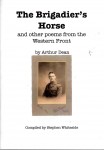
Stephen Whiteside’s previous self-published booklets have featured his own poems, mainly bush ballads and C J Dennis parodies. This one is not so different in style, and even includes a Dennis tribute, but it’s quite a different beast: it rescues from obscurity the poems written during the First World War by Arthur Dean, later to be a Victorian Supreme Court judge, and the publisher’s grandfather. The judge’s poetic endeavours have not gone unnoted before now. His Australian Dictionary of Biography Online entry says: ‘He was something of a “trench poet”, contributing light verse to army magazines.’ In this little book are eight of his poems, all – as his grandson tells us in his introduction – probably written in 1916. The title poem won  a £3 prize from the Diggers’ newspaper The Rising Sun, for which young Arthur received a congratulatory letter from C E W Bean, reproduced in an appendix here.

Arthur Dean was no Rupert Brooke. This is accomplished light verse, composed to distract the poet and his comrades from their lot as soldiers, and perhaps allow a little relieving laughter. Though offered as entertainment in 1916, it still hits some living targets:

Everyone’s scavenger, everyone’s slave;
The papers may splutter about us being brave,
How nobly we fell and how honoured our grave,
But that is the luck of the few.
ooooooooooooooooooooooooooooooooo(from ‘Infantry’)

The ADB entry tells us that Dean’s ‘delight in composing “doggerel” was to continue all his life’, so perhaps we can expect further volumes – perhaps doing for the law what this one does for war.

In an Afterword to Violence, BYDS Director Tim Carroll tells us that his father, ‘a gentle man, full of love’, serves in the Air Force in World War 2: ‘He killed hundreds, if not thousands, of people in those dark times and carried the guilt of those killings with him to his death.’ This is the kind of thing that simply could not be said in prize-winning light verse written in the trenches, or perhaps in any poetry written by a soldier in a combat zone: do any of the celebrated war poets talk of themselves as killers? And how could they contemplate the long tail of war – the creation of refugees, the lives devastated by loss, the generations of dysfunction?

The long tail features loud and clear in this book.

Refugee Action Support (RAS) is a government funded program that supports young refugees with English language literacy. As part of the program, BYDS Bankstown Youth Development Service) ran a number of two-hour writing workshops in schools in Western Sydney. The bulk of the book is writing that emerged from those workshops. There are eloquent photographs of BYDS facilitators working with students, and a number of pieces by non-students (including interviews with a boxer, a psychiatrist, Wafa Zaim, manager of Muslim Women’s Association, and Craig Greenhill, who took some of the most telling photographs of the Cronulla violence in 2005), but it’s the refugee students’ writing that makes the book.

The editor, Michael Mohammed Ahmad, explains in his introduction that he decided ‘to present the raw versions of each artist’s work’ – that is, not to ‘repair the grammar’, and so on. He also decided to preserve words and passages that had been crossed out by the writers, so every few pages there is a word, a phrase a sentence with a line through it. My editor’s heart recoiled when I read this, but having read the result I think the decision was completely correct. The effect is to present the writing as process rather than as product: most of the young writers are clearly struggling with English as at best a second language, and most of the pieces are struggling with crushingly difficult subjects – war, domestic and other violence, dislocation, racism. The unconventional use of English and the occasional striking out effectively dramatise the difficulty of the undertaking. For example, this short piece (author not specified from the list of participants, as a way of protecting privacy):

Being Muslim is crime in this world. When some people heard of Muslim or meat a Muslim they think of terrorists. They don’t think who real Muslim people are. They don’t know who the real terrorists are.

Tidied up, that would lose what it now has, a strong sense of a mind seeking to communicate across a cultural divide. The reader is granted an unexpected sense of intimacy.

Interesting things are coming out of Western Sydney.

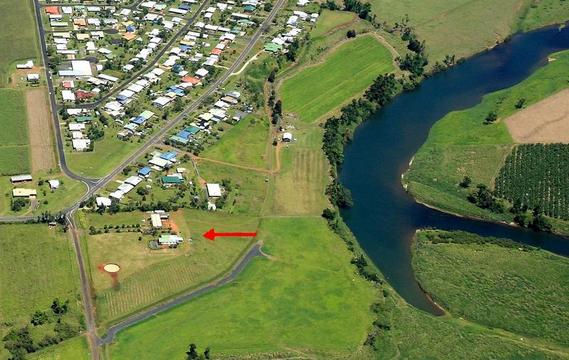
Anybody want to buy my childhood home?

The auction is on 13 November.

It’s quite a while now since it left our family. Cyclone Larry wasn’t kind to it, and tragedy struck the man who bought it from my brother and sister-in-law. So here it is again, shorn of cane paddocks and big trees, looking for a new owner.

Bath 2 Bed 4 [having been home to at least two seven-member families] Car 5
7 acres so close to town – red soil
Large queenslander – 2 sheds – High & dry
Fantastic views of river & surrounding area – very private

Vikram Seth’s The Golden Gate

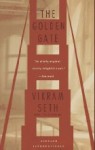
Vikram Seth, The Golden Gate (1986, Vintage International 1991)

A virus had me sick in bed,
Too thick of head to watch TV.
I’d try to read but lose the thread.
Oh bored bored bored, Oh woe was me!
A friend* said, ‘Read The Golden Gate.’
‘Five thou, five hundred fifty-eight
Lines in iambic tetrameter –
No way! That’s not one for the amateur
And drowsy reader.’oooo ‘Have a go!
Just take one sonnet at a time.
They zip along and even rhyme.’
I read, coughed, slept, read, slept, went slow.
My friend was wise, the book’s a joy,
Seven years before A Suitable Boy.

The year is roughly 1980,
AIDS a whisper, Soviet bloc’s
Intact. A yuppie seeks a mate, he
Finds love through a PO box.
San Francisco, sexy, witty,
Like Maupin’s first Tales of the City.
John loves Liz and Phil loves Ed,
Though Ed loves Jesus more than bed.
Jan (sculptor) holds a torch for John.
An anti-nuclear demonstration
Includes a powerful oration.
The pleasure here was so full on
I’d like to read, though there’s no hurry,
Fredy Neptune by Les Murray.
——
* The ‘friend’ was Jo Walton, a writer and avid reader of, and blogger about, fantasy whom I’ve never met. She enthused persuasively about the The Golden Gate earlier this year on the tor.com blog. A copy turned up on BookMooch almost instantaneously.

The Book Group and The City and the City

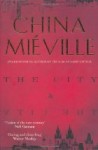
China Miéville, The City and the City (Macmillan 2009)

Before the Book Group meets:
We decided to read some science fiction. Rather than opting for someone’s idea of a classic (Asimov, Heinlein, early Gibson or Stephenson) we decided to pick something current. I’d loved China Miéville’s Perdido Street Station and heard interesting things about The City and the City – among other things it had been nominated for a Hugo [and now has tied with Paolo Bacigalupi’s The Windup Girl for Best Novel]. I suggested we take it on, and the suggestion carried the day.

So I was suffering a mild case suggester’s anxiety when I started reading. What response would the book get from Groupers who’ve read even less science fiction than I have? Would the meticulous world-building strike them as so much tedious scenery-painting? Would they see the elegant police procedural plot as something from a by-the-numbers TV show, the characters as two-dimensional, the tantalising central conceit the equivalent of a one-joke comedy? I’m pleased to report that after a while I stopped caring and was absorbed in the book’s world and its story.

The City and the City is hard to write about because it really is an extended exploration of a single conceit. I would infinitely prefer to have had it revealed  to me by the narrative itself, and don’t want to have a hand in spoiling it for anyone else. In a Book Show interview, Miéville went as far as saying that the story is set in two cities that share an unusual relationship to each other, which is true but doesn’t give anything away. Not until the end of the first chapter is there any hint that the world, or at least the cities, of the book are in some sense science fictional/fantastic. I would love to know how a reader who wasn’t forewarned would understand that first jarring moment, and how long it would take to grasp the full situation. Of course, in one sense, the full situation isn’t clear until the very last pages: as in Kafka and Raymond Chandler, to whom Miéville acknowledges indebtedness, the narrative at one level concerns itself with solving a single crime, but it also unfolds the deeper political realities of the world of the novel.

Pushing the spoiler envelope just a little, I had an insight into the book when out walking recently with the Art-Student. As we approached a small group boys riding their scooters in the street, one of the boys momentarily lost control and wheeled directly into our path. He pulled up short and called over his shoulder to his friends, ‘I’ll try that again.’ He had carefully avoided hitting us, but otherwise acted as if we dog-walking old people weren’t even there. He had ‘unseen’ us. Then I remembered noticing on my last visit to Cairns that though there were plenty of Aboriginal people in the streets, the non-Aboriginal people generally behaved as if they weren’t there, and vice versa – another case of mutual unseeing. The City and the City takes this common phenomenon to impossible extremes, and much of the joy of the book lies in how consistently and thoroughly he has imagined it. Miéville succeeds to the extent that every now and then a reference to the world as we know it – to Coke, or Madonna, or a Google search – brings one up short: oh, this is all happening in the world as I know it! The climactic point of the story consists of four people walking briskly down a street in close physical proximity – and it’s totally thrilling, not just because one of them is carrying a gun. That’s all I’m saying.

After the meeting:
It was a small meeting, but all of us had enjoyed the book. The group meeting had been postponed for six weeks or so, so quite a bit of time had passed since most of us had read the book. And even though in the intervening weeks one had reread it and another had read Perdido Street Station, our memories weren’t generally fresh enough to generate much detailed discussion. I needn’t have worried about the appeal of the world building: everyone enjoyed it. And my curiosity about how the setup was revealed to the unspoiled reader was gratified: the consensus seemed to be that the odd word (‘crosshatched’) created a sense of unease, enough to alert rather than alarm, and there was pleasure as more of the workings of the cities was revealed, until one felt (several times over), ‘Ah, now I get it!’

Teenage boys perform Gertrude Stein

This fabulous thing has been up on YouTube for years, ignored by millions – there aren’t even any comments that need to be avoided.

Who’d have thought Gertrude Stein could be such fun? Thanks Harriet the Blog

Jennifer Maiden on Joan Sutherland

Regular readers will know that I’m a  Jennifer Maiden fan. I expect few people will have read her poem ‘shortlist’, in her most recent book, Pirate Rain, and assume it counts as fair use if I give you the lines from that poem that refer to Dame Joan Sutherland, wrenched from their context with ragged edges, but a lovely description all the same:

when I was young, I heard the great
Sutherland sing quite often and saw
how she expanded the idea
_____ of voluptuousness
with a sweep of russet hair, her diaphragm
as wide as love’s horizon, lower lip
seductively trembling with each high note, as the dawn
flutters across a mountain, while
her molten silver, complex coloratura had
such ethical logic in it

Namatjira, Perkins, Du Bois, Stojanovski

There’s been an extraordinary confluence in my cultural intake over the last week: Hettie Perkins’s Art + Soul on the ABC, Big hART’s Namatjira at Belvoir Street, Andrew Stojanowski’s Dog Ear Cafe, and W E B Du Bois’ The Souls of Black Folk, which I’m just starting. If I was a public institution and the Coalition was in power I’d have my funding cut.

A major element of Namatjira is the story of the friendship between the man known to non-Arrernte people as Albert Namatjira and the white World War One veteran Rex Battarbee. If Dog Ear Cafe had a single take-home message, it would be about the importance of solid relationships. In an exchange between Stojanovski and Robin Japanangka Granites, a Warlpiri elder. Stojanovski (named Yakajirri in Warlpiri) says that he feels that blackfellas (Yapa) and whitefellas (Kadiya) are standing on opposite sides of the Grand Canyon ‘looking at each other and waving at each other, but our cultural worlds are so different that we are not connecting at all’. Robin answers:

No, Yakajirri, I think you are wrong. I see tightropes across that canyon, and I see people like you and me walking those tightropes, connecting both sides.

Probably the most attractive thing about Art + Soul is the way Hettie Perkins puts herself in the frame, letting us see the warmth, but also the awkwardness of her relationships, as an urban Aboriginal woman and curator, with artists from remote communities.

The first of the 14 essays in Du Bois’s 1903 book begins with a brief impression of white folk clumsily attempting relationship:

Between me and the other world there is ever an unasked question: unasked by some through feelings of delicacy; by others through the difficulty of rightly framing it. All, nevertheless, flutter round it. They approach me in a half-hesitant sort of way, eye me curiously or compassionately, and then, instead of saying directly, How does it feel to be a problem? they say, I know an excellent colored man in my town; or, I fought at Mechanicsville [site of a Civil War battle]; or, Do not these Southern outrages make your blood boil? At these I smile, or am interested, or reduce the boiling to a simmer, as the occasion may require. To the real question, How does it feel to be a problem? I answer seldom a word.

I know the legacy of US slavery is very different from that of Australian genocide and dispossession, but they do share some features, and I couldn’t resist blogging about this  little volley of reminders of the importance of personal relationships in dealing with those histories.