NSW Premier’s Literary Awards Night

The NSWPLA night used to be a grand affair. Long before my time there was a bread-roll throwing affair when Morris West droned on too long in his acceptance speech. I got to be on the free list one year, then coughed up good money for a number of years after that, and one year I got to be the plus one of my shortlisted niece. It became less fun when it changed from being a full-blown dinner to a drinks and powerpoint affair, but I still followed it, at least on Twitter. (I dutifully blogged the event for quite a while, and if you really want to, you can plough through my blog posts for 2006, 2007, 2009, 2010, 2012, 2013, 2014, 2015, 2016 and 2017).

This year, thanks to the Great Leveller, SARS-Cov2, it was again possible to attend the whole event without stirring from home or spending a cent.

So here’s how it went:

After an elegant introduction by John Vallance, Chief Librarian, speaking to us from an empty Mitchell Library, President of the Library Council George Souris spoke from his home and introduced Gladys Berejiklian, who somehow found time off from crisis-management to record a short message. John Vallance then announced the winners without any frills apart from little speeches from a range of relevant politicians:

Multicultural NSW Award went to The Pillars by Peter Polites (Hachette Australia). Peter did a to-camera piece expressing gratitude to, among other things, his publisher’s bowties.

Nick Enright Prize for Playwriting: Counting and Cracking, S Shakthidharan and auxiliary writer Eamon Flack. The writer, the second from Western Sydney: ‘This award helps to weave this little story from Western Sydney into the tapestry of all the great Australian stories.’ Eamon Flack used his platform to contrast the ‘neglect and carelessness’ of current art policy with the years of policy that enabled Counting and Cracking to happen.

Betty Roland Prize for Scriptwriting: joint winners The Cry, Episode 2, Jacqueline Perske (Synchronicity Films), and Missing, Kylie Boltin (SBS). Kylie Boltin dedicated the award to her mother and grandmother. Her grandmother died yesterday.

Patricia Wrightson Prize for Children’s Literature: Ella and the Ocean, Lian Tanner, Jonathan Bentley (Allen & Unwin). Both author and illustrator spoke. She spoke of starting the book twelve years ago and then leaving it in the folder marked ‘Abject Failures’ for years. He, a humble illustrator: ‘Thank you for choosing me.’

Ethel Turner Prize for Young People’s Literature: Lenny’s Book of Everything, Karen Foxlee (Allen & Unwin). Karen said, ‘I want to use this platform to thank readers everywhere who continue to buy books in these times. I want to thank everyone who supports the arts.’

Kenneth Slessor Prize for Poetry: Enfolded in the Wings of a Great Darkness, Peter Boyle (Vagabond Press). Peter Boyle paid tribute to his late partner Debora Bird Rose (herself a great writer).

Indigenous Writers’ Prize: The White Girl, Tony Birch (University of Queensland Press). Tony Birch gave a shout out to ‘every Blackfella across Australia who is writing’.

Douglas Stewart Prize for Non-Fiction: from 136 entries, the winner was Tiberius With a Telephone, Patrick Mullins (Scribe Publications), a book about William McMahon. Patrick Mullins, looking scarily young, acknowledged his debt to writers and journalists whose work was important to his, and to the many people he interviewed.

UTS Glenda Adams Award for New Writing: Real Differences, SL LIM (Transit Lounge). SL LIM looked even younger, with pink hair and a soft toy, and plugged her coming book, which (I think I heard correctly) calls for the end of the family.

Fiction (Christina Stead Award): The Yield, Tara June Winch (Penguin Random House). Tara June Winch spoke of the centrality of language to human life. ‘It is a sacred thing,’ she said, in Wiradjuri. The Yield also won the People’s Choice Award and the Book of the Year. Tara June Winch got to speak again, and spoke of her esteem and fellow feeling for the other writers having a hard time just now. She asked the Federal Government to treat ‘our sector’ as our families do. ‘We can’t tell you the story of what is happening to our country now if the only thing on our minds is how to afford the next week’s rent.’ She hopes that our First Languages will be included in our schools’ curriculum.

That was it. It turns out that though I’d read a couple of the shortlisted books, I hadn’t read a single one of the winners, and had seen only one of the performances – the absolutely stunning Counting and Cracking.

You can watch the whole ceremony at:
I think of Mierle Laderman Ukeles

I’ve been thinking of Mierle Laderman Ukeles a lot in recent weeks. At the supermarket checkout, passing the post deliverer in the street, receiving a hand-delivered book from Gleebooks, putting the garbage out for collection, seeing a childcare centre that has stayed open, and especially when being tested for Covid–19 by a young man in a mask and a blue gown several sizes too big for him, I feel the urge to say, ‘Thank you for keeping us alive,’ and think of her.

Mierle Laderman Ukeles {Wikipedia entry here) has been the unsalaried artist in residence at the New York City Department of Sanitation since the late 1970s. I first heard of her when the Emerging Artist was doing her MFA and regaling me with stories of public art projects. One of them was Ukeles’ Touch Sanitation. In this performance art project, she spent eleven months in 1979–1980 visiting each of the New York Sanitation Department’s districts and shaking hands with every worker who would accept her handshake, roughly 8500 of them. She looked each worker in the eye and said, ‘Thank you for keeping New York City alive.’

The conversations didn’t stop there – she also listened to the workers, and documented their personal stories. There are some wonderful photos (for example, here, here, here and here).

Plenty of people have commented that in Covid-19 times the poorly paid, low-esteem jobs are being recognised as essential and offered more respect if not better remuneration. Artists help us make sense of our times. Mierle Laderman Ukeles did this major performance 40 years ago: it speaks directly to our circumstances now.

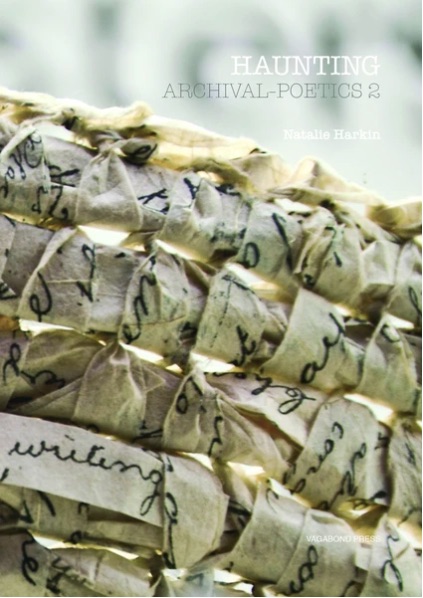
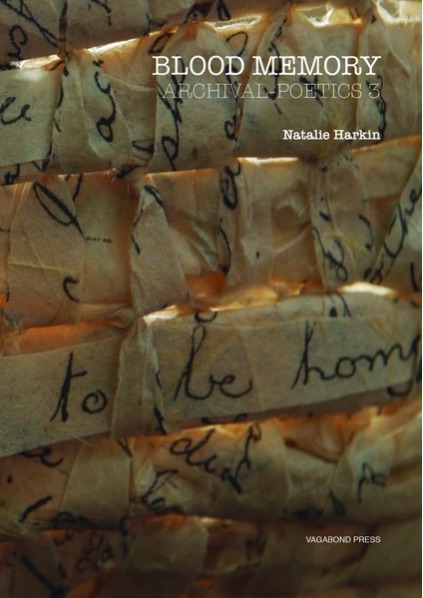
Natalie Harkin’s Archival-Poetics

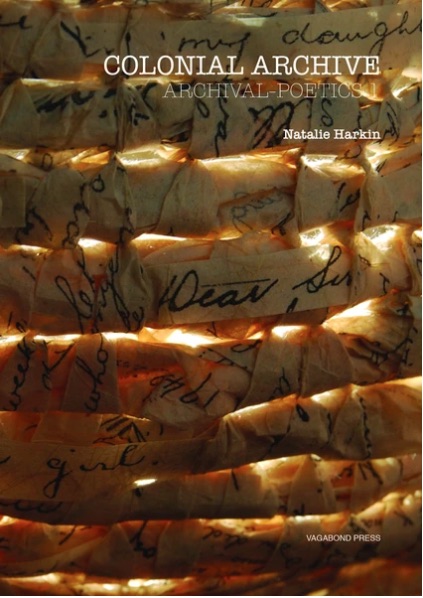
Natalie Harkin, Archival-Poetics (Vagabond Press 2019)

This is an extraordinary book. To quote from the eloquent and accurate cover blurb:

Archival-Poetics is an embodied reckoning with the State’s colonial archive and those traumatic, contested and buried episodes of history that inevitably return to haunt … Family records at the heart of this work highlight policy measures targeting Aboriginal girls from removal into indentured domestic labour

I like that word ’embodied’. There have been many books that are based on archival research, and more than a few that describe the process of archival research, including research into the history of the stolen generations and stolen wages. This book – actually three very slim books in a slipcase – takes the reader into the experience. The titles of the three books – ‘Colonial Archive’, Haunting’ and ‘Blood Memory’ – indicate the process of increasing immersion into the poet’s family history: first there are narratives to be read and decoded, then as the imagination engages further it is as if those young women are returning like ghosts from the past, and finally, a realisation that there is a deeper richer connection, a sense of belonging.

Archival-Poetics is categorised as poetry, and has deservedly won or been shortlisted for a number of poetry prizes. But, like African-American Claudia Rankine’s Pulitzer-winning Citizen, it pushes well past the generally understood boundaries of that category. There’s a lot of straightforward prose. Natalie Harkin writes of ‘an unassuming warehouse holding the State’s Aboriginal Records archives’ – the State, in this case, being South Australia, in Kaurna country. She reflects on the nature of memory, official records and oral history. There are excerpts from government documents, Aboriginal people’s personal letters, newspapers and women’s magazines. There are brilliantly apposite quotes from other Aboriginal artists (Julie Gough, Judy Watson, Vernon Ah Kee). French theory is invoked – and for what it’s worth, this is the first time I’ve read a Jacques Derrida quote that makes me want to read its source. And there are images of artworks, including the three cover photographs of a basket woven from torn up photocopies of letters from the archives.

A lot of the poetry lies in the juxtaposition of these elements. For example, page 28 of the second book, gives two would-be amusing anecdotes from The Australian Woman’s Mirror in the 1920s: vile, condescending references to Aboriginal girl servants. At the top of page 29, there’s a brief quote from the Australian Aborigines Progressive Association from the same time beginning ‘… girls of tender age and years are torn away from their parents’, and beneath that, this poem, as if a song is wrung from the archive reader’s heart:

APRON SORROW
apron-folds and pockets --- keep secrets
--pinned--- tucked-- hidden
------they whisper into linen-shadows-- that flicker-float with the sun 
------------– hung -
--------- limp on the breeze they sway
------------------------------------- a rhythmic sorrow.

There are ‘odes’ – rhyming poems, but laid out without line breaks, so that the reader is invited to slow down and unearth the verse form, in a process analogous to the way a researcher has to unearth information from impersonal bureaucratic language. Three austerely modern sonnets in ‘Hauntings’ tell three girls’ stories.

A series of prose poems, ‘Memory Lessons’, form a kind of philosophical backbone, with almost Proustian reflections on the nature of memory. The third book ends with a letter that begins, ‘Dear Nana’.

I hope that gives you some idea of this book. It contains hard truths about Australia’s history, and the conveys pain of unearthing them in their particularity. The form isn’t always easy for people not at ease with contemporary poetics, but it’s not difficult for its own cryptic-crossword-like sake. And it’s physically gorgeous – hats off to Michael Brennan of Vagabond Books for a brilliant design.

Archival-Poetics is the seventh book I’ve read for the 2020 Australian Women Writers Challenge.

Neel Mukherjee’s State of Freedom

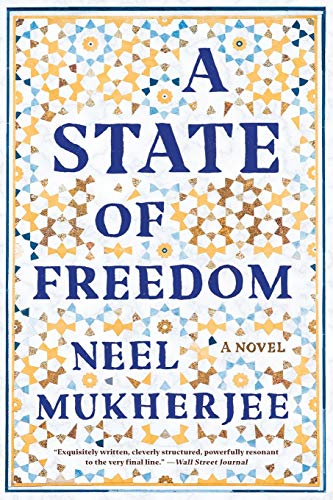
Neel Mukherjee, A State of Freedom (W W Norton & Co 2019)

Short stories don’t sell. At least, I believe that’s the prevailing wisdom among publishers. That’s probably why this excellent collection of short stories – or more accurately three short stories and two novellas – has been marketed as a novel. Still, if that’s what it takes to draw readers in, then why not?

All the stories happen in India, though they are five different Indias. An expat returns from the USA with his seven-year-old son, and takes him to see the Taj Mahal and Fatehpur Sikri; another expat, this one from England, visits his parents and gets to know their cook; a man from a poor village goes on the road with a dancing bear; a girl from another poor village is sent off to a life of domestic servitude in ever bigger and further away cities, while her best friend joins the Maoist guerrillas; a man suffering from asbestosis does dangerous construction work in a city far from his home village.

All the protagonists are dislocated. Some of them turn up as minor characters in another’s story: the bear man is the twin brother of the man with asbestosis, and both of them, having left home intending to send money back, have left their wives and children to fend for themselves. The cook in the second story has it in for another servant, who turns out to the the girl in the fourth story.

These are grim stories. The first starts out like a mini-travelogue, though one with a dark cloud over it, and ends with devastating heartbreak; in the second, what might have been a piece of food-tourism comes hard up against the desperation of the poor; and in the rest, the harsh inequalities of class destroy people’s lives. There’s a Reading Group Guide up the back of my copy, which I skimmed. These notes insist that this is a novel with a brilliant structure. Perhaps they’re referring to the way the stories are ordered as a descent into ever more desperate situations.

It’s a grim book, and a beautifully written one. There’s some romance, some intrigue, some terrible domestic violence and cruelty to animals, but also kindness and a glimmering promise that things might improve.

I’ve read it during the Great Covid–19 Lockdown, and am writing this with cold symptoms waiting in strict isolation for the results of a Covid test [test came back negative about six hours after I wrote that]. Without wanting to trivialise the situation of the character, here’s a passage that seems to speak to my current situation and may give you a feel for the writing, and also a sense of the irony in the book’s title. Milly, the protagonist, is working as a maid in Mumbai, and her employers have forbidden her to leave the apartment block:

It was not that she needed to go out – where would, could, she go, in this endless city, without knowing anyone? – but something so fundamental denied is that thing made disproportionately enormous, consuming, and she began to think of herself as a caged bird, defined by the fact of nothing except its imprisonment …

She experienced a new feeling, at night, of the kitchen walls inching forward slowly from all four sides to crush her, lying in the middle. Their hut in the village had been tiny and eight of them had to sleep together, huddled, but she had never thought of that as small. Besides, there was always the great open outside – fields, forests, groves, river bank. The idea of space of something small or big, something that could be reduced, had never occurred to her, not even on the train, in the general compartment so dense with people that the air had sometimes felt too thick to breathe. not even in that battery-cage had the thought ever crossed her mind that ‘this is too small’. Now, in a Mumbai flat bigger than any house she had ever known, she felt trapped and squeezed.

(Page 228)

Sound at all familiar?

My copy of A State of Freedom is a loan from my book-swapping club.

Proust Progress Report 8: The Cities of the Plain

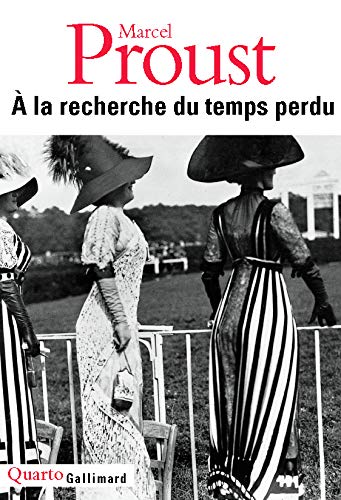
Marcel Proust, À la recherche du temps perdu (text established under the direction of Jean-Yves Tadié ©1987–1992): The last 100 pages of Book 3, Le côté de Guermantes, seconde partie, and the first 80 pages of Book 4, Sodom et Gomorrhe

I’m reading À la recherche du temps perdu five pages a day, mostly without a dictionary and therefore with limited comprehension. Currently, as I’m making my way through seemingly endless accounts of more or less random encounters at a range of social events, I’m quite enjoying it moment by moment, but if there’s a forest I can’t see it for the trees.

The main thing in the pages that I’ve read this month is that M de Charlus has come into the foreground. He’s the close relative of the dazzling Oriane de Guermantes who visited the narrator’s bedroom at Balbec in the second volume, and creepily stroked his chin the next day (as I mentioned in my third progress report, here).

In Le côté de Guermantes, the narrator is invited to M. de Charlus’ home late at night, where he is taken completely by surprise by an angry tirade. Thinking the M. de Charlus is accusing him of slandering him, the narrator swears that he has never said anything that could have offended him. What follows, though deranged, is a fabulous model for how to respond to a faux apology of the ‘I apologise for any offence my remarks may unintentionally have given’ kind:

— Et qui vous dit que j’en suis offensé?» s’écria-t-il avec fureur … «Pensez-vous qu’il soit à votre portée de m’offenser? Vous ne savez donc pas à qui vous parlez? Croyez-vous que la salive envenimée de cinq cents petits bonshommes de vos amis, juchés les uns sur les autres, arriverait à baver seulement jusqu’à mes augustes orteils?»

(Page 1173)

In English (from this link, with one or two changes by me):

‘And who told you I am offended?’ he screamed in fury … ‘Do you suppose that it is within your power to offend me? So you do not know to whom you are speaking? Do you imagine that the envenomed spittle of five hundred little gentlemen like you and your friends heaped one upon another would manage to slobber even as high as my august toes.’

Sodome et Gomorrhe (usually called The Cities of the Plain in English, primly avoiding the suggestion of sodomy, though that suggestion is clearly intended by Proust) gets off to a riveting, though still Proustily longwinded, start with a revelation about M. de Charlus. A 21st century reader will have gathered, or at least suspected, that M. de Charlus is homosexual well before now. But it comes as a revelation to our narrator when he sees him in an erotic encounter – well, he hears the heavy-duty erotic bit through a wall; what he sees is a weird bit of strutting and flouncing that precedes it.

After this revelatory moment, Proust goes off on a mini-essay about homosexuality. Apart from conflating homosexuality and gender fluidity, his reflections about the psychic damage done by the need for secrecy has aged amazingly well. He draws a parallel to Jews and antisemitism: in both cases it’s possible to ‘pass’ and man do. He describes the way internalised oppression can lead men (so far he’s talking almost entirely about men) who are in the closet to penalise and exclude anyone who is openly gay. While it’s not clear whether he thinks Zionism is a good idea, he’s emphatically against the idea of a movement to rebuild Sodom as a homeland for ‘Sodomites’, because:

Or, à peine arrivés, les sodomistes quitteraient la ville pour ne pas avoir l’air d’en être, prendraient femme, entretiendraient des maîtresses dans d’autres cités où ils trouveraient d’ailleurs toutes les distractions convenables. Ils n’iraient à Sodome que les jours de suprême nécessité, quand leur ville serait vide, par ces temps où la faim fait sortir le loup du bois, c’est-à-dire que tout se passerait en somme comme à Londres, à Berlin, à Rome, à Pétrograd ou à Paris.

In English:

For, no sooner had they arrived than the Sodomites would leave the town so as not to have the appearance of belonging to it, would take wives, keep mistresses in other cities where they would find, incidentally, every diversion that appealed to them. They would go to Sodom only on days of supreme necessity, when their own town was empty, in the times when hunger drives the wolf from the woods; in other words, everything would go on very much as it does to-day in London, Berlin, Rome, Petrograd or Paris.

That gives you some idea of the delicate path he treads between serious and interesting analysis and satirical barbs.

But then he goes to another party and we’re back on the subject of the glittering high society that he partly despises and mostly is entranced by. In his newly illuminated state, he notices and remarks wickedly on a number of homoerotic currents. For instance, M. de Charlus makes a big fuss of the woman who is his brother-in-law’s latest mistress, even though everyone would expect him to snub her. The reason for this unexpected behaviour is not, as the narrator’s friend Robert de Saint-Loup, back in town for the evening, is convinced, because his uncle Palamède is a womaniser, but because, as the narrator has told us, the woman in question has two strikingly beautiful sons, whose beauty is reflected in their mother’s.

There’s more. There’s lots more. There are amusingly vicious character sketches, lyrical descriptive passages, surprising asides about the nature of memory, insights into human folly sharp observations about Dreyfusards and antisemitism and, just once so far, a direct address to the reader who the narrator (correctly) assumes wants him to cut to the chase and get on with the story. I’m once again reassured by Clive James’s remark that having read À la recherche in French he then read it in English to find out what he’d read.

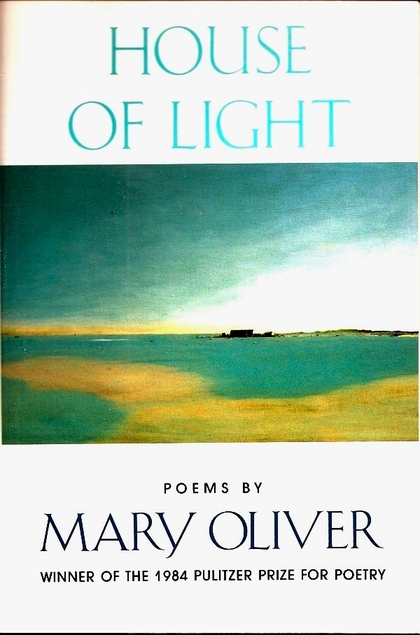
Mary Oliver’s House of Light

Mary Oliver, House of Light (Beacon Press 1990)

When Covid-19 was just a cloud on the northern horizon, I borrowed this book from a street library. Poems by Mary Oliver, I thought, are just the thing for the times ahead: she consistently holds out to her reader reminders of what it means to be alive and human on this planet.

Within days most street libraries had closed down.

So, what was this book that I may have risked lives to acquire?

For a start there’s a lot of death in it. Mary Oliver seems to have spent a lot of time outdoors, watching plants, birds and animals, though ‘watching’ might be too mild a word: the poems bear witness to a deep attention, contemplation, absorption.

The first poem in the collection, ‘Some Questions You Might Ask’, is a kind of manifesto: ‘Is the soul solid, like iron?’ it asks; then, ‘Who has it, and who doesn’t?’ and after considering the moose, the swan, the black bear and other animals, the poem ends:

What about the blue iris?
What about all the little stones, sitting alone in the moonlight?
What about the roses, and lemons, and their shining leaves?
What about the grass?

These lines dance on the edge of naffness. But they manage not to fall: they convey a strong sense of the speaker seeing these things, at least in her mind’s eye, with great clarity, and her pseudo-theological question, ‘Do animals have souls?’ comes to read as code for a joyful embrace of what she sees. That embrace is there in all these poems. Sometimes it has to be fought for, as in ‘Singapore’, which begins with the image of a woman washing something in a toilet bowl at an airport:

Yes, a person wants to stand in a happy place, in a poem.
But first we must watch her as she stares down at her labour

You can read that whole poem at this link to see for yourself where she goes from there. I think she pulls it off. (At this link, you’ll find a vehemently opposite view.)

You could think of Mary Oliver as a 20th century (and almost two decades into the 21st) devotional poet. That opening poem about souls certainly reminds me of primary classroom lessons from the nuns, and, for instance, ‘That Summer Day’ opens with a question straight out of the catechism I studied in primary school: ‘Who made the world?’ But there’s a difference. The poem doesn’t answer the question. It leaves it as an expression of awe, leaving hints of a creator God there in a take-it-or-leave-it way. The central lines of this poem are:

I don't know exactly what a prayer is.
But I do know how to pay attention, how to fall down
into the grass, how to kneel down in the grass

The poem is reaching for a way to express feelings that used to be attached to religious piety, but to free them from religious connotations. I think of Richard Dawkins writing about wonder without resiling even slightly from his militant atheism. Mary Oliver is similarly reclaiming wonder, though the line, ‘I don’t know exactly what a prayer is,’ carefully formulated to allow that she may know about ‘prayer’ as opposed to ‘a prayer’, indicates that she’s not oppositional, just going a different way. That poem ends:

Tell me, what is it you plan to do
with your wild and  precious life?

It’s an exhortation, not to be virtuous (the first poem of hers I read begins ‘You do not have to be good’), but to notice what it is to be alive.

I want to talk about death, though. Not just because of Covid-19, which I think of as a curtain-raiser for the hugely destructive climate-change crisis, but because it’s an insistent theme of these poems. The nature that they so closely and lovingly observe involves ruthless killing, but the death of the speaker, or death in general, is often evoked. Here is ‘The Terns’ (click on the image to enlarge, or read the poem at this link):

In the first 18 lines, the speaker is doing her usual thing, noticing the life in the wetlands near her home. The lines are filled with a birdwatcher’s delight. Then the lines

This is a poem
about death

come as a surprising twist. At first they seem to reach back and highlight the ‘little silver fish’, whose violent death has gone almost unnoticed. But that’s not where the poem goes:

about the heart blanching
in its folds of shadows because it knows
someday it will be
the fish and the wave
and no longer itself

I don’t think she’s offering the image of the terns vanishing under the water and then coming back as an almost mediaeval allegory for death and resurrection, though you might read it that way. As I see it, with these lines, the speaker’s mood intrudes into the poem. She’s not happy, and death is on her mind. It’s her heart that she imagines blanching, and she’s the one who knows she’ll be re-absorbed into the natural world, that her consciousness will cease to be.

But then:

this is a poem about loving
the world and everything in it

We might have expected ‘This is a poem about living’, but this small surprise carries the weight of the poem. It’s not offering a vision of life after death; the terns’ diving and rising don’t symbolise death and resurrection after all. The notion of being re-absorbed into the natural world can have in it a deep joy – it’s like that Sweet Honey in the Rock song, ‘Breaths‘ (If you don’t know it, click on the link). Re-absorption isn’t about being eaten by worms in the grave, or scattered as ashes, or even planted under a tree. In death, what remains of us will continue to be part of this dynamic universe.

To love ‘the world and everything in it’, including oneself, is a completely appropriate response to such thoughts. It’s a long way from, ‘Yea, though I walk through the valley of the shadow of death, no evil will I fear.’ I just read on Wikipedia that Mary Oliver dealt with a lot of abuse in her childhood. I think that’s what saves her poems from being glibly Life Affirming. There’s always a sense, as in this poem, that the affirmation is not so much made as won in the face of mostly unnamed contrary forces.

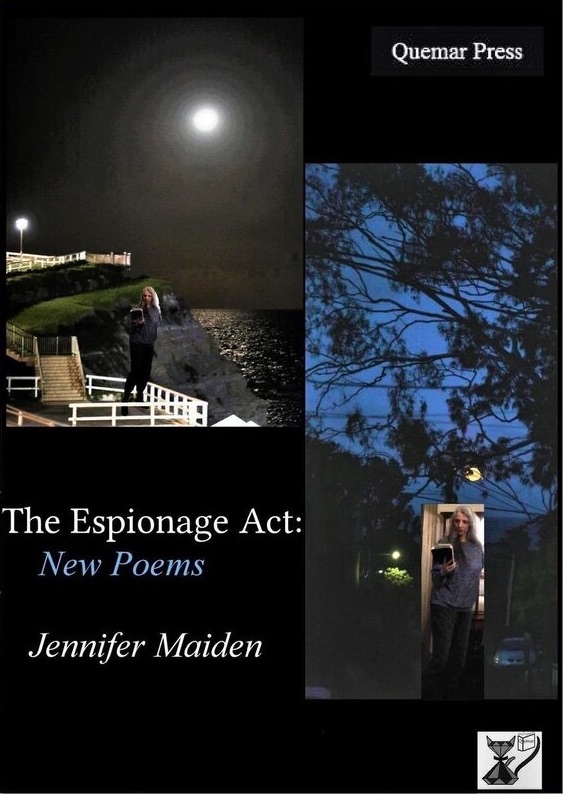
Jennifer Maiden's Espionage Act

Jennifer Maide, The Espionage Act (Quemar Press 2020)

In May 2019 Julian Assange was indicted on 17 counts of violating the USA’s Espionage Act. It’s the kind of event we’re used to reading about in journalistic language: what and why and when and how and where and who, though not necessarily in that order. You can click here to see how the New York Times reported it.

Jennifer Maiden’s books for the last decade or more have dealt with that kind of incident, but done it obliquely, in imagined scenes that usually begin with the ‘waking up’ of a historical or fictional character who is somehow connected with the news item. As Assange was taken from the Ecuadorean embassy in London, he was clutching a copy of Gore Vidal’s History of the National Security State: in the first poem in this book, ‘Resistance’, Vidal wakes up beside Assange in a London Magistrate’s Court. He does it again, in prison, in four more poems, in one of which they are joined by a newly awake Emma Goldman – who, we are told by Vidal, was sentenced under the same act in 1917 – and in another by Diana Spencer.

These are political poems, but no one would call Maiden ‘our protest poet’ as a recent headline did, reductively, the late Bruce Dawe. Her imaginary dialogues have a clear point of view, but they are exploratory rather than declamatory. In ‘Resistance’, for instance, Vidal’s ruminations are a means to inform the reader (or remind her, if she’s better informed than I am) that the magistrate presiding in Assange’s hearing ‘was the one who had / stopped a private prosecution of Tony Blair for war crimes’, and to remind us (or inform, etc.) of the circumstances of Assange’s removal from the Ecuadorean embassy. But Vidal does exist as a fictional creation, anxious to know if Assange liked his book, vain about his own quotability, dropping the occasional name from high society. Lady Diana wears the dress she was buried in to remind us ‘of the easiness with which one ignores murder’, but flairs the dress out, ‘actress-fashion’. In these poems, it’s as if Maiden puts two or more characters in dialogue to see what she thinks about something, but they are invariably more than just mouthpieces for ideas.

There are two other sets of dialogues in this book. In five poems, Maiden’s longstanding characters George and Clare converse, have sex, look after their toddler son, Corbyn. George chats on the phone to Donald Trump and a friend in the CIA. Three poems feature an Australian critic, who chats with Jackson Pollock and Brett Whiteley (in front of Blue Poles in Canberra), with Dorothy Wordsworth (and quotes to her the passage from her diaries that her brother drew on for his famous poem about daffodils), and with Gabriel Garcia Marquez (who doesn’t like the term ‘magic realism’).

There are other poems – one responds to a comment, reproduced on the back cover, that Maiden should be considered for the Nobel Prize; three feature her recent creation, a cute little marsupial named Brookings (after the Brookings Institution); one features Alan Turing; several ‘Diary Poems’, ruminate on the Federal Police raid on the ABC, on Jeffrey Epstein’s death in prison, on the Australian ‘poetry wars’, on the writing and reception of other poems in the book.

If there’s an overall subject, it’s the way reactionary politics infiltrates and influences the general culture, belittles creativity and promotes art that serves its purposes. And what it means to struggle against that influence.

It needs someone more learned than I am to talk about the formal qualities of the poems. I’ll just mention one thing. Have a look at the opening lines of the title poem, ‘The Espionage Act’:

Emma Goldman woke up uneasily in Belmarsh Prison Hospital.
She recognised the sharp shape of a reading Gore Vidal,
who was watching over Julian Assange, curled foetal
in a prison sheet not blanket, not at all
well, she thought, but fragile as an angel.
Death had made her even more maternal
and she had always been motherly, since a girl.
Vidal gave her his usual tough smile:
'I've really been expecting you for a while'

You could read this as prose that’s been interrupted by an occasional line break, but if you did you’d be missing a lot. You might not notice, but this is rhyming verse. All 56 lines of this poem end in ‘l’. Sometimes there’s a full rhyme like ‘smile’ and while’, or later ‘fall’, all’ and ‘recall’. Once you notice it, the effect is hypnotic, but even without your noticing it the lines have a wonderful musicality that pushes the narrative forward.

I’ve been reading and rereading this book for a while now. I’ve been learning about history (I think of Muriel Rukeyser’s repeated line, ‘Pay attention to what they tell you to forget’), making connections between things I’ve known and kept in silos in my mind, and questioning received versions of things, all with Jennifer Maiden’s insistent music in my ears.

A sampler of the poems from this book are online at the Quemar website, at this link, including ‘Resistance’, ‘Except’, ‘Brookings Gets A Helmet’, ‘George Jeffreys: 25: George Jeffreys Woke Up on Abu Musa Island’, ‘The Espionage Act’, ‘Diary Poem: Uses of Fear’, ‘Clare’s Dream’, ‘Brookings Tries Out Ubiquity’, ‘Diary Poem: Uses of Alan Turing’, ‘Diary Poem: Uses of Poetry Wars’, ‘What if all the village were vampires?’ and ‘Maximum Security’.

The Espionage Act is the sixth book I’ve read for the 2020 Australian Women Writers Challenge.

Tohby Riddle’s Astronaut’s Cat

Tohby Riddle, The Astronaut’s Cat (Allen & Unwin 2020)

On Wednesday Tohby Riddle facebooked that he couldn’t have a launch for his new picture book because of the social isolation regime. I ordered a copy yesterday morning (Friday) from Gleebooks online. David Gaunt, Gleebooks head honcho, delivered a copy to my door yesterday afternoon – he said he was hand delivering books as a way of dealing with his anxiety. All three bricks and mortar Gleebooks are shut and their post-Covid survival is in doubt. So I’m writing this post about an utterly joyous book through a haze of proleptic grief.

The book is brilliant. It’s brilliant anyway, but it’s absolutely a book for our socially-isolating times.

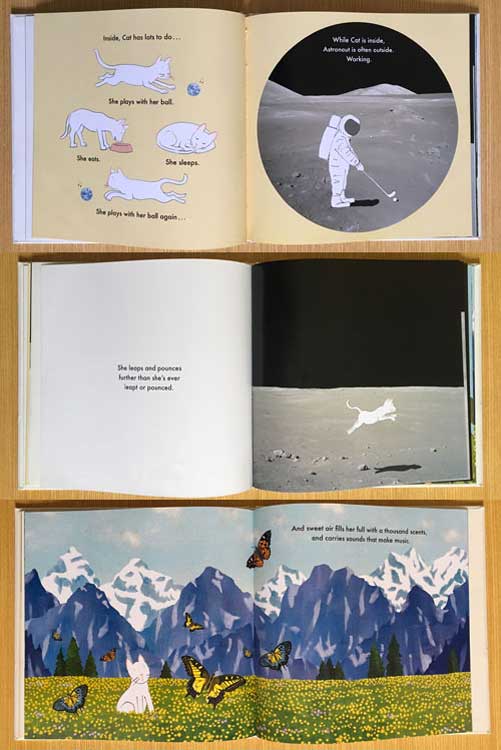
The Astronaut’s cat is an inside cat. The text never mentions the moon, but that’s where she is. She likes to look outside but doesn’t want to go there. She dreams of going out to frolic in the low-gravity landscape, and then within the dream she dreams of going to live on the blue ball that rises over the horizon – and after all the stark moonscapes there are four full-colour spreads to make the heart sing. All this told in sparse, perfectly judged text.

Tohby has put a couple of his favourite spreads up on facebook (at this link). I’m assuming he won’t mind me putting them up here as well:

When I blog about children’s books, I label them as ‘Ruby Reads’. So that’s how I’ve labelled this one. While I expect toddler Ruby to enjoy it, I doubt if she’ll fall as intensely in love with it as I have.

Vale Bruce Dawe

Bruce Dawe died on Wednesday, aged 90. He was one of Australia’s most loved poets, and one of the most accessible. During the Vietnam War, his poems ‘Weapons Training’ and ‘Homecoming’ made a big impression on me.

This is one of his poems from the 1990s that strikes a chord with me as one of the privileged ones who has water to wash my hands, a home to stay in, and a faltering NBN to keep me in touch with friends.

You and Sarajevo
for Gloria

Hearing the sound of your breathing as you sleep,
with the dog at your feet, his head resting
on a shoe, and the clock's ticking
like water dripping in a sink
– I know that, even if reincarnation were a fact,
given the inherent cruelty of the world
where beautiful things and people
are blasted apart all the day long,
I would never want to come back, knowing
I could never be this lucky twice ...

Added later: Sue at ANZ LitLovers LitBlog has blogged at more length about Bruce Dawe, and there’s a write-up in the Sydney Morning Herald at this link.

Peter Hartcher’s Red Flag

Peter Hartcher, Red Flag: Waking Up to China’s Challenge (Quarterly Essay 76, 2019) – and correspondence in Quarterly essay 77)

My usual practice is to delay reading each Quarterly Essay until the next one arrives in my letterbox. Peter Hartcher’s essay on Australia’s response to China’s growing economic strength and political influence, published at the end of 2019, in pre-rona days, feels as if it comes from a past era. Of course, that feeling doesn’t completely reflect the reality, but the essay is looking at the China–Australia connection through a different lens from the one that tends to obsess us at the moment.

In a prescient moment, arguing that it’s unwise for Australian businesses to put all their export eggs in the China basket, Hartcher writes, ‘The thermal coal market is highly diversified globally. Other industries would have a harder time. Universities come to mind.’ However, he’s not talking about a possible crisis in which the Australian government bans flights from China. His concern is with the risk of the risk of a Chinese economic slump or, more central to the argument of his essay, the risk of Beijing using the trade connection as an instrument of political coercion.

The essay’s argument is easily summarised. Under President Xi Jinping, the Chinese Communist Party is in effect on a war footing with the rest of the world, using economic leverage and cyber weapons rather than military means, and with motives that are seen in China as defensive but by the rest of the world as aggressive. Australia has become increasingly dependent on trade with China and is still largely complacent about any threat. It’s not a matter of choosing China over the increasingly unreliable USA. ‘Whenever Australia is asked to choose between China and America, the ultimate answer must be that we choose Australia.’

The red flag of the essay’s title is both the Chinese national flag and the red flag of warning that Hartcher is raising.

Hartcher tells of a number of Australians who have been hit by the realisation that the Chinese government and its representatives seek to influence politics in Australia. In six of his cases, five – Joe Hockey in 2013, Stephen Conroy in 2016, Penny Wong, Bill Shorten and Richard Marles in 2017, Professor Feng Chongyi in 2016, and journalist John Garnaut in 2009 – resisted the Chinese overtures. The sixth case is Sam Dastyari, who famously fell from grace by departing from party policy on China’s actions in the South China Sea. In his response to correcspondence in QE 77, Hartcher clarifies his point: we know about these cases because the Chinese attempts to influence Australian policy were unsuccessful: we just don’t know about the successful ones.

He lists cases when China has used economic heft to influence the policies of other countries. ‘In the past ten years,’ he writes (p 43), ‘Beijing has imposed economic punishment on at least eleven countries. for a wide range of perceived offences.’ The connection between the crime and the punishment is often not made explicit, but a pattern has emerged. He lists countries ranging from tiny Palau and Mongolia to Canada and, finally, Australia.

He makes a number of recommendations, on immigration, on vetting politicians, on diversifying our trade relations, on defending our democracy. I’m in no position to comment on the rightness or wrongness of his analysis or his proposals, but I can accept his general argument that it’s not a good idea to be complacent.

Sadly the 35 pages of correspondence published in Quarterly Essay 77, Margaret Simons’s Cry Me a River, also predate Covid, apart from Peter Hartcher’s response, and that was clearly written before the serious economic consequences were becoming clear.

The correspondents all take issue with Hartcher’s argument. He relies too heavily on the words of a previous head of ASIO; his proposal to have ASIO vet potential MPs and senators is terrible – Hartcher agreed, but argues for a new parliamentary body to vet candidates; he mistakes Xi Jinping’s statements of intentions for inevitable achievements; he doesn’t allow for the disruptions to China and the rest of the world that climate change will wreak; he underestimates the strength of resistance as it stands; he misunderstands the complexity and diversity of Chinese-heritage and Chinese-born Australian citizens. One response, by Caroline Rosenberg, is a personal testimony from someone who came to Australia from China in her teens: she wishes she had been given this essay as a teen (though if she had been she wouldn’t have read it), because she was totally unprepared for the way the West saw China, and her, and this would have helped. I think, but I can’t be positive, that that is an incredibly subtle and polite way of calling bullshit.