Two kinds of fame

I’ve been helping the Art Student upload some video taken at ArtRage, a recent gathering of ‘prominent’ artists to express concern over the NSW government’s attack on art education in TAFE. Although some press representatives were there, and others had said they would be, the mainstream media ignored the event. So much for the media power of prominent visual artists in New South Wales.

All of that gives added poignancy to this YouTube clip showing an encounter between rapper Jay-Z and a ‘sweet little old lady’, via the Rachel Maddow blog (the shorter clip may have been removed from YouTube, so I’m linking to the whole short documentary, Where I’m From; the bit I mean starts at about the 16:50 mark and goes for just a minute or so):

The little old lady is artist Ellen Grossman, evidently well-known on the art scene. It wouldn’t be too hard to imagine a similar encounter between one of ArtRage’s participants, say Elisabeth Cummings, and, um, Guy Sebastian.

The New York encounter has a further resonance with current events in New South Wales. Ellen Grossman did her undergraduate studies at Cooper Union in New York City, where there is currently a fight going on over the imposition of student fees. The video at that last link is fun, if you’ve got a 4 minutes and 50 seconds to spare.

NSWPLA and NSWPHA Dinner

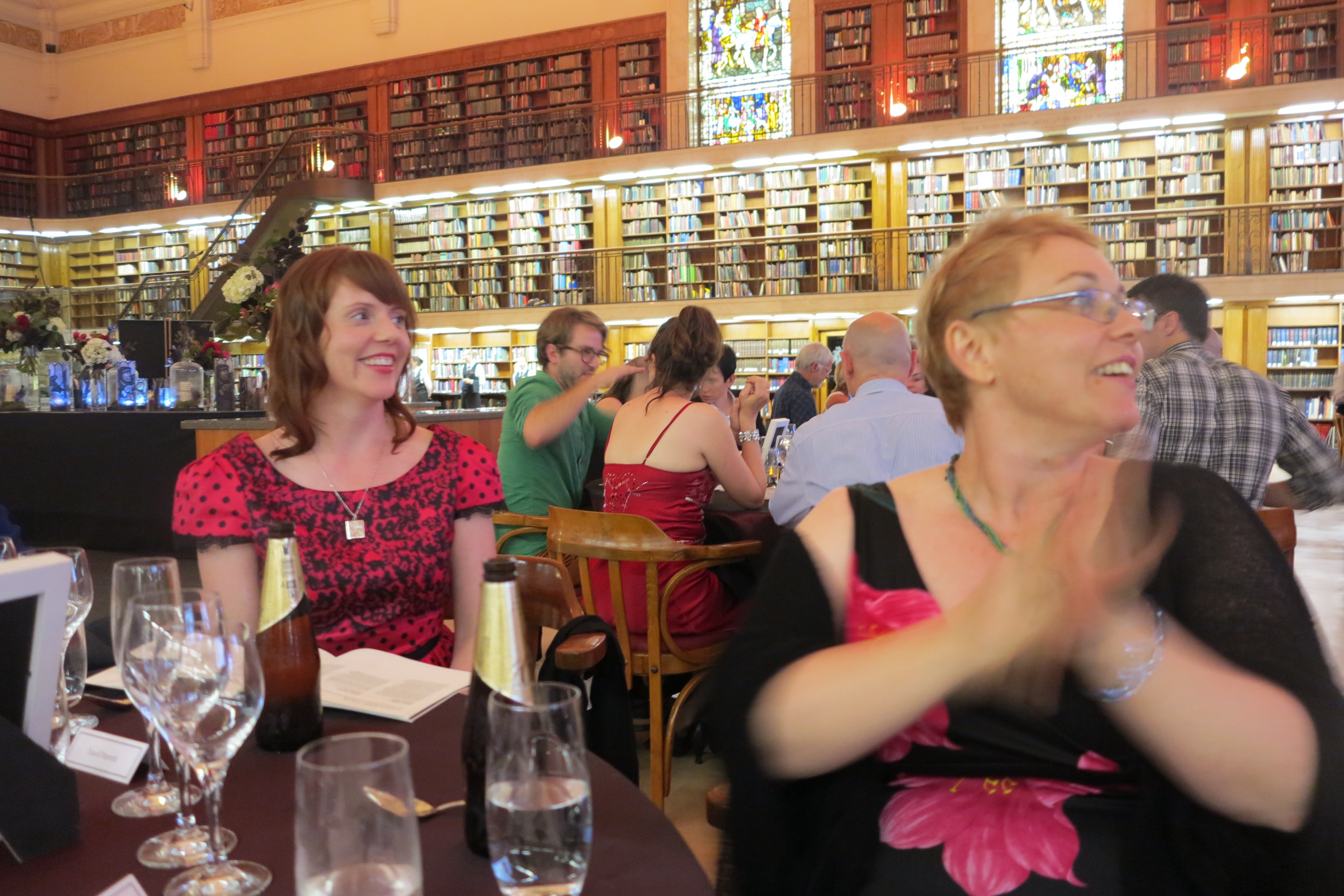
I didn’t expect to attend a NSW Premier’s Literary Awards Dinner this year. For a while back there it looked as if the awards might go the way of the Queensland equivalent, but the Liberal Party-approved panel’s unpublished report must have come down in favour of continuation, because here they were again last night, six months late, run by the State Library rather than the Arts NSW, charging $200 [but see Judith Ridge’s comment] for a book to be considered, and sharing the evening with the History Awards, but alive and kicking. And pretty special for me, because I got to go as my niece’s date, my niece being Edwina Shaw, whose novel Thrill Seekers was shortlisted for the UTS Glenda Adams Award for New Writing.

The dinner was held in the magnificent reading room of the Mitchell Library. Not everyone approved of the venue – I was in the Research Library in the morning when a woman complained very loudly that she had driven the four hours from Ulladulla only to find the Mitchell’s doors were closed for the day so it could be converted into a banquet hall. She must have been placated somehow because she stopped yelling, but there were other problems. None of the shortlisted books were on sale – Gleebooks had a table at this event for years [but see Judith Ridge’s comment], as the Library has its own shop, which wasn’t about to stay open late just for us. And library acoustics aren’t designed for such carryings-on: the reverberation in the vast, high-ceilinged room made a lot of what was said at the mike unintelligible at the back of the room. But those are quibbles. It’s a great room with happy memories for a good proportion of the guests.

Aunty Norma Ingram welcomed us to country, inviting us all to become custodians of the land.

Peter Berner was the MC. He did OK, but organisers please note: the MC of an event like this needs to be literate enough to pronounce Christina Stead’s surname correctly.

The Premier didn’t show up. Perhaps he was put off by the chance of unpleasantness in response to his current attack on arts education. The awards were presented by a trio of Ministers, one of whom read out a message from the Premier saying, among other things, that art in all its forms is essential to our society’s wellbeing. But this was a night for celebrating the bits that aren’t under threat, not for rudely calling on people to put their money where their mouths are.

The Special Award, sometimes known as the kiss of death because of the fate met by many of its recipients soon after the award, went to Clive James – whose elegant acceptance speech read to us by Stephen Romei necessarily referred to his possibly imminent death. He spoke of his affection for New South Wales, of his young sense that Kogarah was the Paris of South Sydney, and his regret that he is very unlikely ever to visit here again. He also said some modest things about what he hoped he had contributed.

After a starter of oyster, scampi tail and ocean trout, the history awards:

NSW Community and Regional History Award: Deborah Beck, Set in Stone: A History of the Cellblock Theatre
The writer told us that the book started life as a Master’s thesis, and paid brief homage to the hundreds of women who were incarcerated in early colonial times in the Cellblock Theatre, now part of the National Art School.

Multimedia History Prize: Catherine Freyne and Phillip Ulman,  Tit for Tat: The Story of Sandra Willson
This was an ABC Radio National Hindsight program about a woman who killed her abusive husband and received  lot of media – and wall art – attention some decades back. Phillip Ulman stood silently beside Catherine Freyne, who urged those of us who enjoyed programs like Hindsight to write objecting to the recent cuts.

Young People’s History Prize: Stephanie Owen Reeder, Amazing Grace: An Adventure at Sea
This book won against much publicised Ahn Do on being a refugee (The Little Refugee) and much revered Nadia Wheatley on more than a hundred Indigenous childhoods (Playground). It not only tells the story of young Grace Bussell’s heroic rescue of shipwreck survivors but, according to the evening’s program, it introduces young readers to the ‘basic precepts of historical scholarship’. It also looks like fun.

General History Prize: Tim Bonyhady, Good Living Street: The Fortunes of My Viennese Family
A member my book group rhapsodised about this book recently, comparing it favourably to The Hare with Amber Eyes. It’s a family history, and in accepting the award Bonyhady told us it had been a big week for his family because the lives of his two young relatives with disabilities would be greatly improved by the National Disability Insurance Scheme introduced by the Gillard government.

Australian History Prize: Russell McGregor, Indifferent Inclusion: Aboriginal People and the Australian Nation
This looks like another one for the To Be Read pile. Russell McGregor acknowledged Henry Reynolds and Tim Rowse as mentors.

After a break for the entrée, a creation in watermelon, bocconcini and tapenade, it was on to the literary awards:

The Community Relations Commission Award: Tim Bonyhady was called to the podium again for Good Living Street, but he’d given his speech, and just thanked everyone, looking slightly stunned.

The newly named Nick Enright Prize for Drama was shared between Vanessa Bates for Porn.Cake. and Joanna Murray-Smith for The Gift. Perhaps this made up to some extent for the prize not having been given two years ago.
Joanna Murray-Smith said she learned her sense of structure from the Henry Lawson stories her father read to her at bedtime. As her father was Stephen Murray-Smith, founding editor of Overland, she thereby managed to accept the government’s money while politely distancing herself from its politics. She lamented that her play hadn’t been seen in Sydney and struck an odd note by suggesting that the Mitchell Library and a similarly impressive building in Melbourne may have been the beginning of the Sydney–Melbourne rivalry: I wonder if any Sydney writers accepting awards in Melbourne feel similarly compelled to compete. Vanessa Bates couldn’t be here, so her husband accepted her award, with his smart phone videoing everything, perhaps sending it all to her live.

The also newly named Betty Roland Prize for Scriptwriting (and I pause to applaud this conservative government for honouring an old Communist in this way): Peter Duncan, Rake (Episode 1): R v Murray
Peter Duncan gets my Speech of the Night Award. He began by telling the junior minister who gave him the award that he was disappointed not to be receiving it from Barry O’Farrell himself, because he had wanted to congratulate Barry on the way his haircut had improved since winning the election. At that point we all became aware that Peter Duncan’s haircut bears a strong resemblance to the Premier’s as it once was. He then moved on to congratulate the Premier for instituting a careful reassessment of the Literary Awards and deciding to persevere with them. He expressed his deep appreciation of this support for the arts. (No one shouted anything about TAFE art education from the floor. See note above about this being an evening to celebrate the bits that aren’t under threat.)

The Patricia Wrightson Prize for Children’s Literature: Kate Constable, Crow Country (Allen & Unwin)
I hadn’t read anything on this shortlist, I’m embarrassed to confess. It looks like a good book, a time-slip exploration of Australian history.

The Ethel Turner Prize for Young People’s Literature: Penni Russon, Only Ever Always (Allen & Unwin)
Again, I hadn’t read any of the shortlist. But Bill Condon and Ursula Dubosarsky were on it, so this must be pretty good! Penni Russon’s brief speech referred to the famous esprit de corps of Young Adult writers: ‘You guys are my people.’

There was break for the main course to be served, and for about half the audience go wander and schmooze. I had the duck, the two vegetarians on our table were served a very fancy looking construction, only a little late. Then onward ever onward.

The Kenneth Slessor Prize for Poetry: Gig Ryan, New and Selected Poems
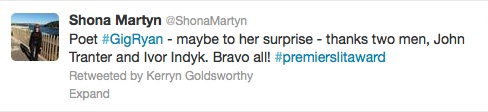
Again, I hadn’t read any of the shortlisted books, but wasn’t surprised that Gig Ryan won, as this is something of a retrospective collection. She speaks rapidly and her speech was completely unintelligible from where I was  sitting (like some of her poetry). However, someone tweeted a comment that got laughs from the front of the room:
tweet

The Douglas Stewart Prize for Non-fiction: Mark McKenna, An Eye for Eternity: The Life of Manning Clark
Another lefty takes the government’s money, and a good thing too.

The UTS Glenda Adams Award for New Writing: Rohan Wilson, The Roving Party (Allen & Unwin)
I know nothing about this book. Rohan Wilson is in Japan just now. His agent told us that when she asked him for an acceptance speech ‘just in case’, he emailed back, ‘No way I’ll win – look at the calibre of the others.’ The three writers on my table who were in competition with him seemed to think it was a fine that it had won:

Favel Parrett and Edwina Shaw respond to not winning the UTS Glenda Adams Award for New Writing

Favel Parrett and Edwina Shaw respond to not winning the UTS Glenda Adams Award for New Writing

The Christina Stead Prize for Fiction was almost an anti-climax. It went to Kim Scott for That Deadman Dance. We had a small bet going on my table, and I won hundred of cents. Kim Scott’s agent accepted on his behalf.

There was dessert, layered chocolate and coffee cake, then:

The People’s Choice Award, for which voting finished the night before, went to Gail Jones for Five Bells. She was astonished, genuinely I think, and touched that her book about Sydney as an outsider should be acknowledged like this. I haven’t read the book yet, but I’m also a bit astonished, because what I have read of her prose is not an easy read.

Book of the Year: Kim Scott, That Deadman Dance. No surprise there!

No surprise, either, that the award to Clive James overshadowed all the others in the newspaper reports.

I believe that the judging panel for next years literary awards has had its first meeting. The dinner will move back to the Monday of the week of the Writers’ Festival, where it belongs.

Added later: Edwina has blogged about the evening.

Sonnet #14: So many books

The best-of-2012 lists are starting to appear. The New York Times has published their 100 Notable Books. I’ve read only two of them, a novel and a memoir. So, for my 14th and last sonnet of the month:

Sonnet 14: So many books
So many books, so little life
still left. Some say they wake at three
and lose themselves in mental strife.
Not I. The darkest hours are free
from interruptions: time to read
a knotty verse, a learned screed,
a chapter that will make me weep.
Alas, I soon go back to sleep.
Too little life, too many pages:
War and Peace, The Iliad,
A la recherche, Upanishad.
I’ll have to suffer grief’s five stages:
though I clock fifty books a year
I still may never read Jane Eyre.

Sonnet #13: Daughter and mother cross the street

This happened outside my house today:

Sonnet 13: Daughter and mother cross the street
They stop the traffic. Big and small,
they stroll across the street with strollers,
no hand-holding, none of all
that worried care, those grinding molars.
Mother and her three year old
who pushes teddy, coolly bold,
sucking on her chup-a-chup,
mooch out and hold the traffic up,
though truth to tell it’s just one truck.
The driver waved them from the kerb
and watched with patience quite superb
a dreaming duckling and her duck
meander out. Ah, that’s the charm
to keep our young ones safe from harm.

I couldn’t fit everything into the 14 lines. I walked out of my door to see the woman and the little girl wandering across the road, with at least three metres between them – the little girl taking her own sweet time and completely out of reach in case a car came unexpectedly around a corner. I was amazed at the mother’s nonchalance. She mouthed ‘thank you’ to the truck driver. I took that as an opening , and when I caught up with her I said something like, ‘That was pretty amazing to watch.’ She explained that he had stopped for them even though there’s no pedestrian crossing.

The little girl pulled the lolly out of her mouth and waved at me with it. I said to her, ‘That would distract you from the road, wouldn’t it?’ Her mother explained that she had got the lolly from Woolworths where, in spite of her repeated complaints, they leave the sweets on a low shelf near the check-out: ‘I said, “I’m not paying for that. I don’t want it, but you’ve deliberately left it where my daughter can pick it up.” So we got it for free!’

We should all have had such mothers, to let us cross the street without fuss, to fight the wiles of capitalism, and to allow us an occasional sweet victory.

Robert Creeley 1950–1965 (and Sonnet #12)

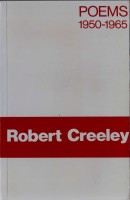
Robert Creeley, Poems 1950–1965 (Marion Boyars 1967)

First things first: If you’re a student looking for help with an essay or if you love Robert Creeley’s poetry and are looking for a like-minded spirit, stop, turn back, you are going the wrong way. I don’t pretend to have anything sensible to say. This is largely a blog post about my ignorance.

Robert Creeley is held in very high esteem by them that know about these things. I think he might be a poet’s poet. A quick google produces a number of learned and instructive articles, in which I learned much, including that this UK publication seems to be Creeley’s first US trade book, For Love, plus an extra five years worth of poems. Creeley makes a commanding appearance in Ron Mann’s 1982 movie Poetry in Motion. Robert Adamson lectured about him recently, and evidently he was a major influence on a generation of Australian poets. I know all this, because as I made my way through this book I felt at a loss, and was casting around for guidance. Sadly, asking for guidance on how to read a poet is like asking to have a joke explained. I could kind of see what people were saying but I was like the person who sort of understands the explanation but still doesn’t laugh at the joke.

I found a lot of mentions of Charles Olson (another gap in my general education), and when I looked Olson up on Wikipedia I found:

Olson called for a poetic meter [Wikipedia uses US spelling] based on the poet’s breathing and an open construction based on sound and the linking of perceptions rather than syntax and logic.

Ah, I was doing it wrong. I had to stop needing conventional syntax and use my ears more. In an excellent article in the London Review of Books, Stephen Burt says:

Creeley’s quiet poems demand that we read them slowly, even when they appear brief and simple. Taken too fast, or too many at a time, his poems … can sound cramped, monotonous and repetitive. Read at leisure, the best poems are subtle, musically gifted, memorably terse.

I had been finding the poems cramped, monotonous and repetitive, so clearly I was doing it wrong, again. I slowed right down, and read just a couple of poems at a time. That’s not to say I slavishly submitted my faculties to Burt. He describes ‘The Crisis’ as horrifying, and quotes its opening lines:

Let me say (in anger) that since the day we were married
we have never had a towel
where anyone could find it,
the fact.

Now this was one of the few poems that had actually spoken to me at the time I read Burt’s article, and I wasn’t horrified. Maybe it was possible to write those lines without self-mockery in the 1950s, but I read them as obviously ironic, an oblique apology from the poet for losing his temper.

Then there’s a Paris Review interview published in 1968, just a couple of years after this book:

INTERVIEWER: How long does the writing of a poem take for you?
CREELEY: For me, it’s literally the time it takes to type or otherwise write it – because I do work in this fashion of simply sitting down and writing, usually without any process of revision. So that if it goes – or, rather, comes – in an opening way, it continues until it closes, and that’s usually when I stop. […] I’ll come into the room and sit and begin working simply because I feel like it. I’ll start writing and fooling around, like they say, and something will start to cohere; I’ll begin following it as it occurs. It may lead to its own conclusion, complete its own entity.[…] Of course, I have no idea how much time it takes to write a poem in the sense of how much time it takes to accumulate the possibilities of which the poem is the articulation.

Another way I’d been doing it wrong! No wonder I was floundering. I tend to read poems as if they’re carefully wrought, deeply considered utterances, but according to the man himself his are something quite different, something much more risky and of the moment. I took this with a grain of salt, but I did take it.

I can’t say I’d come to love Creeley’s poetry in general by the end of the book. But it kept me reading to the end. Round about 1960, either he or I had a turning point, and I was enjoying a lot. Look at ‘Love Comes Quietly’:

Love comes quietly,
finally, drops
about me, on me,
in the old ways.

What did I know
thinking myself
able to go
alone all the way.

With this poem, I no longer felt that I was reading this collection because it was good for me. Creeley here seems to have a moment’s respite from the intense, punishing self-consciousness that characterises the poetry generally. But if something was different in the poetry, something had changed in me too. Suddenly I could hear the music: ‘quietly’ ‘finally’ ‘about me’ ‘on me’ / ‘know’ ‘go’ ‘alone’ / ‘old ways’ ‘alone all the way’. Such short lines and so much happening in the sound of them – as well as in the sense. Any number of other poems were singing to me from then on.

A handful of longer poems towards the end of the collection are just marvellous: ‘The World’, about a lover’s grief; ‘The Women’, an amazing attempt to articulate feelings about sex and the object of sexual desire; ‘Anger’, about anger;  ‘Something’, which starts – unpromisingly you might think – with a lover’s embarrassment at having a pee in his presence.

My warning at the start of this blog entry still stands, and I especially don’t get what’s going on in some of the poems with very short lines. But I’m glad to have made this poet’s acquaintance.

And now, because it’s November, a sonnet of sorts. This is not a parody of Creeley – in my wildest dreams I couldn’t bring off  his way with rhyme, so I’ve stuck to my usual rhyme scheme. But there are some quotations, and because his lines are characteristically very short, I’ve cut mine down:

Sonnet 12: Evening
I speak, I
think I think
it asks my-
self to drink.
Position is where you
put it. I care too
little, I smoke
no joke,
therefore I am not
in attitude perplexing
a man so vexing
to flex or rot.
Woman so addressed
is easily depressed.

Sonnet #11: For Naomi Grace

The Art Student and I have spent a long weekend away from activism and the desk respectively to help celebrate the first birthday of my great-niece Naomi. I didn’t manage a sonnet for the occasion, and that was just as well, as Naomi’s parents had devised a sweetly solemn naming and welcoming ceremony that was a complete thing in itself without any great-avuncular versifying. But November’s quota must be filled, so here’s one after the event:

Sonnet 11: For Naomi Grace
Naomi Grace has just turned one,
a girl who lives up to her name:
delightful, graceful – just as sun-
flowers the sun or moths the flame,
all faces follow where she goes
and stop when she’s in yoga pose.
Today at Cram’s Farm was her naming
ceremony: father Damon,
read aloud with mother Paula,
called on us to be her people
(rellies, friends, no church, no steeple),
and whatever might befall her
love her, back her each endeavour,
weep as needed, dance forever.

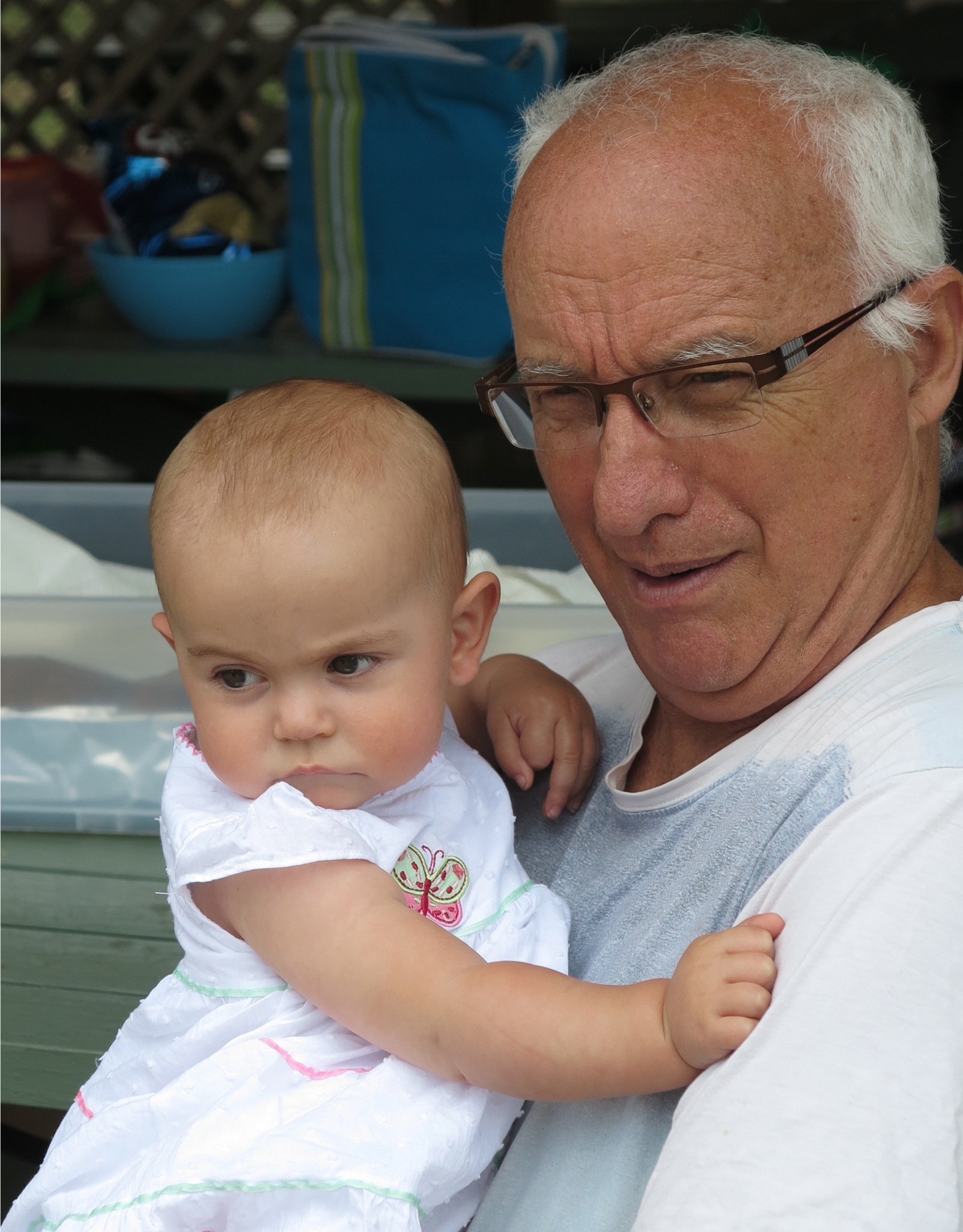
Which of these two looks more intelligent, would you say?

Sonnet #10: From the Sydney Morning Herald

Today’s post is all about keeping up my sonnet quota. I don’t think this can really claim to be a sonnet. It’s probably not even verse, but here it is anyhow:

Sonnet 10: From today’s Sydney Morning Herald
Gillard walks in Howard’s footprints.
Palmer has a life-sized T-rex.
Smith rants, ignores the judge’s hints.
Karzai doesn’t care what he wrecks.
Benedict says, ‘Keep the ox.’
Elmo’s voice no longer rocks.
Refugees are sent to limbo
like crimes’ victims. Arms akimbo,
Libs urge nuclear rethink.
Punchbowl boys grow mos for cancer.
Nauru camp is not the answer.
Congo teeters on the brink.
Page fourteen, Israel–Gaza war:
five to one-three-nine the score.

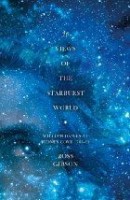
Ross Gibson’s 26 Views and my 14 lines (Sonnet #9)

Ross Gibson, 26 Views of the Starburst World (UWAP 2012)

My formal education left me with a lingering sense that Australian history was boring: a drab procession of convicts, explorers, squatters, gold miners, politicians arguing about free trade and train gauges, soldiers, shearers, horsemen – and somewhere on the sidelines an undifferentiated, disappearing mass labelled ‘Aborigines’.

I began to see things differently in the theatre in the early 70s, with the irreverence and vigour of plays like The Legend of King O’Malley (Ellis and Boddy 1970), The Duke of Edinburgh Assassinated (Ellis and Hall 1972) and Flash Jim Vaux (Blair, Clark and Colman 1972), and exhumed splendours like Edward Geoghegan’s The Currency Lass (from the 1840s, published by Currency Press in 1976) and Katharine Susannah Prichard’s Brumby Innes (written 1927, first professional production at the Pram Factory in 1972). Skipping forward a couple of decades, Inga Clendinnen’s brilliant Dancing with Strangers (the link is to Will Owen’s review), by taking a probing scalpel to journal accounts of the first years of the settlement at Port Jackson, made me realise what an extraordinary moment that was, whose meaning is still a long way from being fully understood.

Ross Gibson’s 26 Views of the Starburst World is even more of a revelation, and has an even tighter focus than Dancing with Strangers. It looks at two notebooks, ninety pages in all, in which William Dawes recorded his notes on the ‘language of N. S. Wales, in the neighbourhood of Sydney (Native and English)’ in the late 18th century.

William Dawes was a marine lieutenant and astronomer who lived in Sydney from 1788 to 1791, years in which the world of the Eora changed catastrophically and in which that of the British invader–settlers likewise was transformed. These two notebooks were rediscovered in London in 1972. In compiling them, Dawes drew on his relationships with a small group of Eora, including most memorably a young woman named Patyegarang, who visited him at his tiny observatory on the edge of the settlement. They record snippets of conversation, and give sometimes enigmatic glimpses of tiny interactions.

Gibson describes the notebooks as ‘fragmented, unfinished, heuristic’, with ‘a prismatic quality’. And his book might be described in similar terms: it quotes, questions, analyses, peers closely at faint marks, speculates, extrapolates. It comes at the notebooks from, well, at least 26 angles: there’s biography, linguistics , psychology, anthropology, the history of colonisation, the history of science (1788 was a time of a high romantic approach to scientific enquiry in England), communication theory, the politics of Rugby League in 21st century Sydney. Apart from Dawes’ contemporaries Watkin Tench, David Collins and Arthur Phillip, it quotes Wordsworth, Emerson, Walden, Mallarmé, James Agee, Kenneth Slessor, the 2oth century haiku master Seichi, Robert Gray, Barry Hill – all of them pertinently … And sometimes it lets the notebooks speak for themselves. Gibson describes his approach as ’roundabout, relational, a tad restless and unruly’, and in a slightly less alliterative moment as ‘a little like history, a little like poetry, a little maddeningly like a séance’.

Possibly my favourite moment in the book is the facsimile of page 37 of Notebook A, on which there are just four words:

Yánga
________Present
––––________I
___________thou

Gibson gives us a caption – and bear in mind that everywhere else he refrains from speculation about any sexual dimension to the relationship between Dawes and Patyegarang:

‘Yanga’ – a verb that Dawes records but does not translate. Other colonial word lists, not compiled by Dawes, suggest ‘yanga’ means ‘to copulate’.

The School of Oriental and African Studies (London) has put the complete notebooks are online, with transcriptions of their contents, at http://www.williamdawes.org/.

But I’m falling behind on my quota of November sonnets, so here goes:

Sonnet 9: William Dawes and Patyegarang
He lived apart to study stars
and drew dark students to his table –
students and ambassadors
who drank his tea so he was able
to write their words down, turn their breath
to marks on paper. War and death
were soon to dominate this story
but then there was a kind of glory:
‘Paouwagadyımíŋa,’
she said, ‘You shade me from the sun.’
She said, ‘We’re angry, fear the gun –
Gulara, tyérun gu̇nın.’
The future loomed with genocide:
these marks show some opposed that tide.

What do you want to do when you grow up? Create?

On the front page of today’s Sydney Morning Herald, there’s an article by Rachel Browne on a survey of 6200 children aged between 10 and 12 in 47 countries asking them what they want to do when they grow up. Cathy Wilcox’s cartoon gives the gist of the article – two white children are chatting: ‘Lots of kids in developing countries want to be doctors’ says one, and the other replies, ‘They don’t have the luxury of squandering their education on a sporting career!’

You have to read to the seventh paragraph to discover that, while ‘professional athlete is the highest ranked career choice for Australian children’, the second rank is ‘entertainer and professional artist or creative professional’. The latter is immediately dismissed by someone associated with the study as ‘probably influenced by popular TV shows’. Lisa Power’s article in the Telegraph, presumably based on the same press release, includes a table that seems to indicate that Rachel Browne got it wrong:

If you combine ‘Entertainer’ with ‘Artist/creative professional’ you get 26%. What’s that? More Australian children want a career in entertainment and the arts than in sport. But that doesn’t fit the media narrative, so let’s bury it.

Has it occurred to anyone else that our governments are willing to back young people’s sporting aspirations with millions of dollars, but leave their artistic aspirations unresourced so that for most of them it remains an unrealistic dream? It’s not just that winning gold at the Olympics is seen by the press and politicians as more important and newsworthy than making things ‘with which the soul of any witnessing human being can resonate and conceivably find comfort, catharsis, awakening, provocation, solidarity, beauty and, perhaps, enlightenment,’ as Clare Strahan put it recently on the Overland blog. Young people’s desires to do the latter must also be trivialised and marginalised. The current precipitate withdrawal of funding from fine arts education in TAFE is symptomatic. So is the Sydney Morning Herald‘s almost total silence about the cuts.

And now a quick sonnet:

Sonnet 8: To children who responded to a survey
We ask you what you want to do
and what you fear. It’s no surprise
if drought, rape, kidnap threaten you
you don’t desire a glittering prize
but want to build the general good,
to teach or heal. And in a land
where gold and silver most command
acclaim, of course it’s understood
your heart goes bling! Celebrity
can look like meaning when you’re ten.
The headlines mock you: Sport! again!
Oh child! child! We’ve corrupted thee!
They don’t hear that your brave young heart,
wants to make, give, create art.

Sonnet #7: Rally at the Gallery

On Friday evening the Francis Bacon exhibition officially opened at the Art Gallery of New South Wales. Premier Barry O’Farrell was to preside, on whose watch a number of gallery staff have been summarily sacked and fine arts courses in the TAFE (Technical and Further Education) system almost as summarily deprived of government funding, with devastating effect on the equitable provision of studio-based arts education in the state. A demonstration was called for, and happened. Maybe two hundred of us gathered outside the gallery with banners and art works, chanting and singing and staging a mock funeral, and handing leaflets to the invited guests. One bejewelled matron, when approached by the Art Student with a leaflet, told her imperiously to get a job.

In what looked like a display of political pusillanimity, the Premier didn’t risk having to face some of the people whose lives he has disrupted. George Souris, Minister for Arts and, among other things, Horse-Racing, did the honours instead. Invited guests were asked to turn their backs during his speech in solidarity with the sacked staff and stranded students. Evidently some did, and there was little if any applause. Outside, as he spoke, we chanted, ‘Save TAFE art’. Guests continued to arrive and I noticed that the man on the door was very quick to open the door for them and slow to close it after them, thereby ensuring, perhaps deliberately, that the door was open for as much of the speech as possible, allowing our uncouth ruckus to be heard inside.

This probably deserves more than a sonnet, but a sonnet is all I’ve got:

Sonnet 7: Rally at the Gallery
Swallows, bats and other pests
perform outside the gallery.
Some fly, some squeak, some accost guests
to talk about O’Farrell. He
was due to launch the Francis Bacon.
‘Barry, Barry, we’re not fakin’…’
‘We want to keep art education
for the future generation.’
”Oh, get a job.’ ‘Art is work.’
Don’t celebrate dead money-spinners,
snatching all funds from beginners.
No art, no soul. We’d go berserk!
Inside, poor Francis’ heads explode.
Bats claim the night on Gallery Road.

Edgar Alvarez, student, holds up his homage to Francis Bacon cum reproach to the O’Farrell government. The other feet belong to his brother.