The poet Mary Oliver died yesterday, aged 83. I’ve only blogged about one of her books, here, and didn’t say much about it. But every time I’ve read one of her poems – in a book lying around in a conference centre or picked from a friend’s bookshelf – she’s struck a nerve. Someone on Twitter begged the world not to straightwash her, so I’ll mention that she wrote sweet poems to her same-gender lovers.
I hope her estate will be OK with me sharing this, which was published i 2006, when she was the age I am now.
When Death Comes
When death comes
like the hungry bear in autumn;
when death comes and takes all the bright coins from his purse

to buy me, and snaps the purse shut;
when death comes
like the measle-pox

when death comes
like an iceberg between the shoulder blades,

I want to step through the door full of curiosity, wondering:
what is it going to be like, that cottage of darkness?

And therefore I look upon everything
as a brotherhood and a sisterhood,
and I look upon time as no more than an idea,
and I consider eternity as another possibility,

and I think of each life as a flower, as common
as a field daisy, and as singular,

and each name a comfortable music in the mouth,
tending, as all music does, toward silence,

and each body a lion of courage, and something
precious to the earth.

When it's over, I want to say all my life
I was a bride married to amazement.
I was the bridegroom, taking the world into my arms.

When it's over, I don't want to wonder
if I have made of my life something particular, and real.

I don't want to find myself sighing and frightened,
or full of argument.

I don't want to end up simply having visited this world.
This is a book of yarns. I’ll start this blog post with one of them.
In the mid 1990s at the Gulf of Carpentaria, Murrandoo Yanner was involved in negotiations with Ian Williams, the general manager of a major mining company. Recently introduced Native Title legislation required that the mining company negotiate with traditional owners about plans for a zinc mine. One of the issues under discussion was the proposed mine’s proximity to sacred sites in the Lawn Hills–Boodjamulla National Park. The Queensland Premier, Wayne Goss, had given assurances about the National Park, but word was that he had reneged. Just before Yanner’s scheduled meeting with Williams, Tracker Tilmouth suggested a strategy for using the meeting, where there would be no government representative, to influence the government. Here’s Yanner’s account of what happened:
So we go through hours of negotiations and I hear [Tracker] suddenly cough, bloody when I least expected it – it was in something interesting that I wanted to listen to, so I go, Ian, by the way, what happened with Lawn Hills National Park? Do you know if Goss has gazetted it yet? There was a big silence, and things were going so well and Williams did not want to tell me, and then he said, Actually he made a decision not to. And Tracker, I was still trying to get him to play bad cop but he had me play it, and when Williams tells me that I jump up and I bang the table. Tracker made me do all this, and bang the table. He had said: Make it bloody genuine or they won’t believe you. They have seen a lot of blokes put acts on. So I bang the table and say, Fucking ridiculous, you can’t trust you bastards. I told you, Tracker, you can’t trust these bastards. I go outside and Tracker told me the next part later. I jump in my car and do big figure eights and spinning gravel, and off I go swearing. Ian Williams shits himself and the mob too because everything was going so great, and he says, Oh! Well! Shit what are we going to do? Tracker says, This is what you do. State parliament was sitting that day and he says, Ring Gossy now, get him out of parliament for a second. Boom, boom, boom.
And bugger me, there is a historical fact. If you go to the transcript or Hansard or whatever of the state parliament, you’ll see it was gazetted that afternoon, late afternoon, that day. That very day Goss got pulled out of parliament, got spoken to on the phone from Burketown by Ian Williams, and went straight back into parliament and gazetted it after publicly saying he wouldn’t. And I was blown away, not just the fact that it was done, but the fact that they really do run the state government at times, and that his mad trick worked.
(Pages 207–208)
If that doesn’t grab your attention, then you’d probably be impervious to the charms of this book.
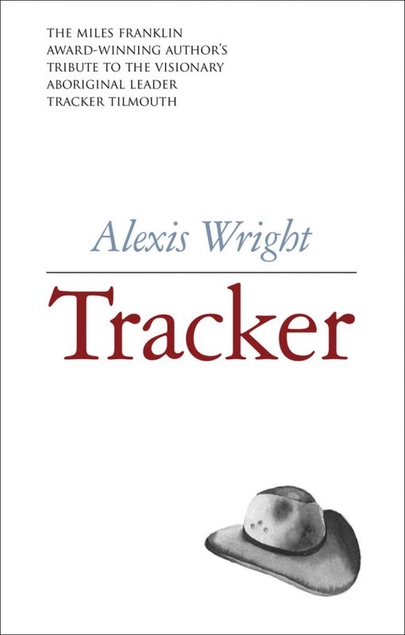
Tracker Tilmouth was a member of the Stolen Generations of Aboriginal children. The picture that emerges from this book is of a big thinker, a man of entrepreneurial spirit, committed to the project of establishing economic independence to the Aboriginal peoples of central and northern. He was a significant figure in the history of the Central Land Council, and enormously influential beyond there. He came close to standing for the Australian Senate as a member of the ALP, and had friendly and mutually respectful relationships with Bob Katter. His sense of humour was legendary, and not always diplomatic (when he met Jenny Macklin for the first time shortly after she had failed to end the Intervention in the Northern Territory, he called her ‘Genocide Jenny’), but he was a frequent presence in Parliament House in Canberra, and regularly visited the United Nations in New York. He could rub people up the wrong way, and the book doesn’t completely dispel the charges of misogyny, but the overwhelming impression created here is that he was a great Australian.
The book includes a photo of the front page of Murdoch’s NT News for 13 March 2015: a photo of the man himself with the huge headline ‘TERRITORY FAREWELLS ‘TRACKER” and nothing else except a line across the bottom about football.
Alexis Wright has done a brilliant job of capturing dozens of voices (all chosen by Tracker himself) and organising them: Tracker’s own voice, the voices of his brothers, of Aboriginal people who worked with him or benefited from his wisdom, of whitefellas who fell under his sway, of politicians, pastoralists, mine managers. There are some glaring absences – people whose names occur often, but whose stories would probably take a very different hue. I’ll mention only Tony Abbott, but not all these absences are whitefellas.
Having learned to be suspicious of hagiographies, I asked a friend who had lived in the Northern Territory for decades what he thought of the book. He hadn’t read it, but he said, ‘I know some whitefellas who worked with him, and they worshipped him.’
The result is not a biography: the first chapter gives wonderful accounts of his childhood on Croker Island Mission, where his ‘house mother’ Lois Bartram read Alan Paton’s Cry the Beloved Country to the children, but, though his wife Kathy is mentioned often, she remains hardly more than a name – there is no account of how they met or of their wedding. What we do get is a compelling mosaic portrait.
Alexis Wright’s own voice is heard only in her Introduction, that is if you leave aside the couple of instances where one of her questions makes it onto the page. Some people have found the introduction hard going; at least one person I know gave up on the book part way through it. I think the reason is that Wright struggles to justify her decision not to write a conventional biography, and to somehow summarise something that the book itself demonstrates cannot be easily summarised.
The book’s longest section (more than 150 pages), ‘The Vision Splendid’, is dominated by the voice of Tracker himself spelling out his analysis of the situation of Aboriginal peoples, arguing about priorities, lamenting the lack of unity among Aboriginal leadership (while being harsh about other Aboriginal leaders), mapping out future directions. I imagine it would repay careful rereading, but it assumes so much prior knowledge (and my ignorance was only partly countered by Alexis Wright’s occasional footnotes) and spins off in so many directions – like the rest of the book, it captures the feel of the spoken word, of a mind that is thinking, revising, repeating, contradicting itself as it goes – that it is hard to follow.
But that’s not even a complaint. I became increasingly aware of my own whiteness as I read this extraordinarily generous, multifaceted book – at times hilarious, at times tragic, at times profound. As a whitefella, my response is overwhelmingly to be grateful.
Added later: I recommend Kathy Gollan’s review at Newtown Review of Books, which gives a much fuller sense of the book than my blog post, and uses quotation brilliantly.
I’ve been a Dylan fan for five decades. I remember playing John Wesley Harding on repeat in the late 60s, and sitting hunched over a tiny radio in the dead of night hearing a bootleg ‘This Wheel’s on Fire’ for the first time. I wrote a piece for my college magazine about ‘Dear Landlord’. Occasionally these days when I’m need of a pick-me-up, I’ll play ‘Like a Rolling Stone’ or ‘It Ain’t Me Babe’ on full volume. ‘Mississippi’ speaks directly to my heart. I even love Dylan’s recent versions of ‘Autumn Leaves’, ‘I Was a Fool to Love You’, ‘Some Enchanted Evening’ and all. But a couple of hours spent with Dylanologist/garbologist A J Weberman‘s ridiculously obsessive analyses of Dylan’s lyrics in my early 20s cured me of any pressing desire to read about his work, or to do any kind of close reading of his lyrics. I was all too happy to accept Dylan’s own implication in his memoir Chronicles: Volume One that he was often more interested in rhyme than meaning.
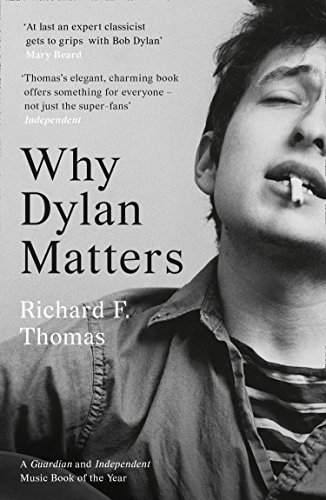
It was the title of this book that grabbed me. It’s all well and good to be a fan, but does Dylan matter, and if so, why?
Sadly, though Why Dylan Matters taught me a lot about Dylan’s life and his songs, it just doesn’t answer its own question. It would have been more accurate to use Mary Beard’s cover blurb quote as a title: ‘At last an expert classicist gets to grips with Bob Dylan’. But I guess that’s just not catchy.
Richard F Thomas is a bona fide classicist. He is a professor at Yale, and has written extensively about Virgil, Horace, Tacitus and Ovid. He is also a self-described Dylanologist (though not, thankfully, a garbologist), who attends three or more Dylan concerts annually and teaches a semester course on Dylan to first year students every four years.
He takes us through Dylan’s early exposure to classical literature – he was a member of the Latin Club at the Hibbing High School, and played a Roman soldier in a school theatrical production, and probably went to Hollywood movies set in Ancient Rome. Then he walks us through Dylan’s career, arguing that intertextuality is a significant feature of his works, arguing strenuously (and, given that Dylan started out as a folk singer, unnecessarily) that his stealing of phrases from other sources is not plagiarism, but adds richness and depth to his songs.
Leaving aside Dylan’s use of motifs and turns of phrase from the folk tradition (as Thomas largely does), it’s interesting to learn that he is a serial ‘stealer’ from literary sources: Rimbaud, US Confederate poet Henry Timrod, and – bringing Thomas’s two fields of study together – Ovid (the Tristia), Virgil (from whom whole sentences appear), and finally, in Tempest, Homer. My understanding of the personas he takes on, especially in the last four albums that he wrote, has been greatly enriched. Thomas talks about these personas as ‘transfigurations’.
Sadly, I often found the book’s combination of fannish speculation and scholarly attention to detail irritating. The playlists at his concerts and what I have previously taken to be stoned utterances in interviews are scrutinised for what they reveal of deep artistic intentions. At times there’s an almost stalkerish enthusiasm. The album Tempest is never mentioned without being described as a masterpiece, and we are told several times that Dylan’s wife Sara was a former Playboy Bunny.
I’m glad I persevered to the end, because the final chapter, dealing with the Nobel Prize, gives a lovely account of Patti Smith’s performance of ‘Hard Rain’, of the way that song has transcended the circumstances of its composition to remain powerfully of the present moment, and of Dylan’s acceptance speech.
But I’ve renewed my resolve to avoid books about Dylan, and just let the songs to their work on me.
John Purcell, The Girl on the Page (Fourth Estate 2018)
This is a quick, fun read about the current parlous state of fiction publishing – set in London, written by an Australian whose biographical note says that, like one of the book’s characters, he has written a successful series of novels ‘under a pseudonym’.
Helen Owen and Malcolm Taylor, a near-octogenarian couple who have dedicated their lives to writing literary novels, are facing a crisis brought on by Helen’s writing what everyone knows will be a best seller and receiving an advance that enables them to move from their cramped flat in Brixton to a comfortable house in a nice suburb. A raunchy young woman editor who is an expert in what sells is sent in to ensure that the rewrites will be delivered. Imagine Amy Schumer from Train Wreck wandering into the world of Glenn Close in The Wife, only with English accents.
One of the joys of the book is the counterpoint between the ideals of the elderly writers and the kind of book they inhabit. One of Malcolm’s many pronouncements:
There’s uphill reading and downhill reading. As you can imagine, uphill reading requires more effort. Downhill, less so. Readers will do both in their reading lives. Most will tend to favour downhill reading. It’s thrilling to race headlong through a book. Uphill reading is more taxing and requires a certain amount of humility. We need to accept that we won’t always enjoy or even understand all we read. It can be a hard slog at times. The ego takes a battering. But the rewards are great.
(Page 281)
I wouldn’t say The Girl on the Page is a headlong race, but it’s a long way from being an uphill slog. Admirably, it refrains from quoting even a single phrase from either Helen’s or Malcolm’s Man Booker and/or Nobel worthy works, though I was convinced that these people could have written such books. The sex scenes are robustly phallocentric without going into embarrassing detail. I laughed a lot, and enjoyed the cleverly crafted illusion that the story was just one or two removes from actual publishing-world gossip. Not that I can – or would want to – imagine any of the editors or ghost writers I know engaging in noisy public sex in a suburban street after midnight.
In short, a good holiday read and – for me – a palate cleanser after Alexis Wright’s Tracker, a monumental work that makes big demands and offers great rewards, about which I’ll blog soon.
As regular readers know, every now and then this blog bursts into rhyme. This has been happening in November for nine years now, and occasionally at other times. I’ve just published through Lulu.com the fourth hard copy collection of these rhymes: Four, Good Measure.
I gave copies to a number of people as glorified Christmas or end-of-year cards, I still have some left. If you think you should have received one, email or text me and I’ll rectify the omission.
Otherwise, you can buy one, cheap, from lulu.com. It’s not listed at Amazon yet, but the previous three books are for sale there, here, here and here. There’s information about all four books on my Publications page.
The Emerging Artist and I are in Victoria for the New Year, but we’re squeezing in (or should that be squeezing out?) our end-of-year lists.
Best Movies:
We allowed ourselves to pick five each. The Emerging Artist went first, and then I chose five that weren’t on her list. The last one I picked was Juliet, Naked – and it got in on the grounds that there was no comedy on the combined list. There probably should have been more.
Juliet, Naked (Jesse Peretz 2018)
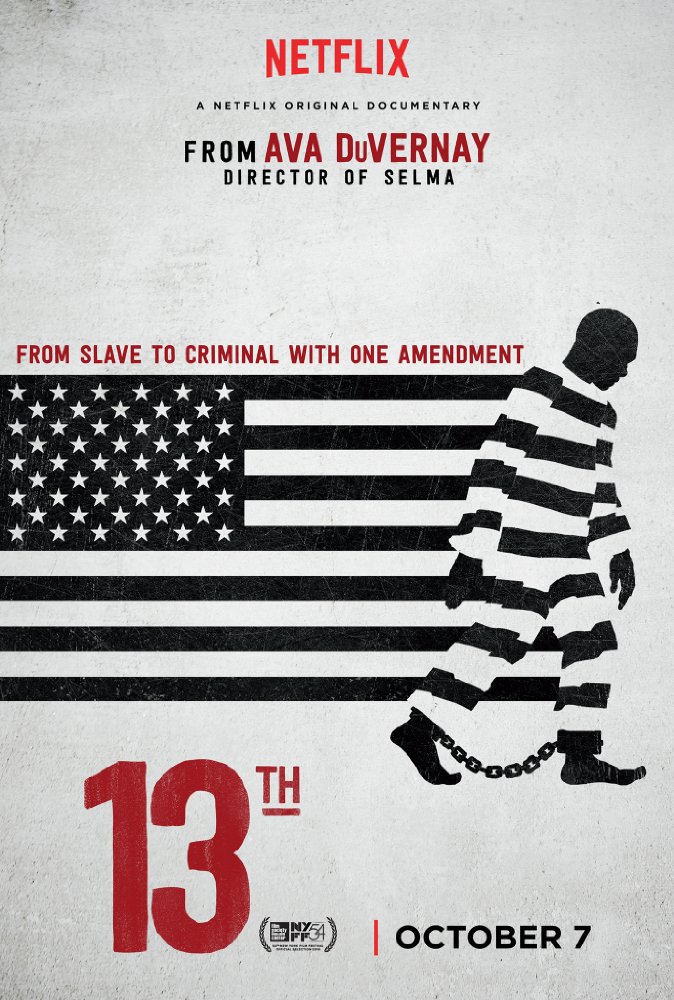
13th (Ava DuVernay 2016)
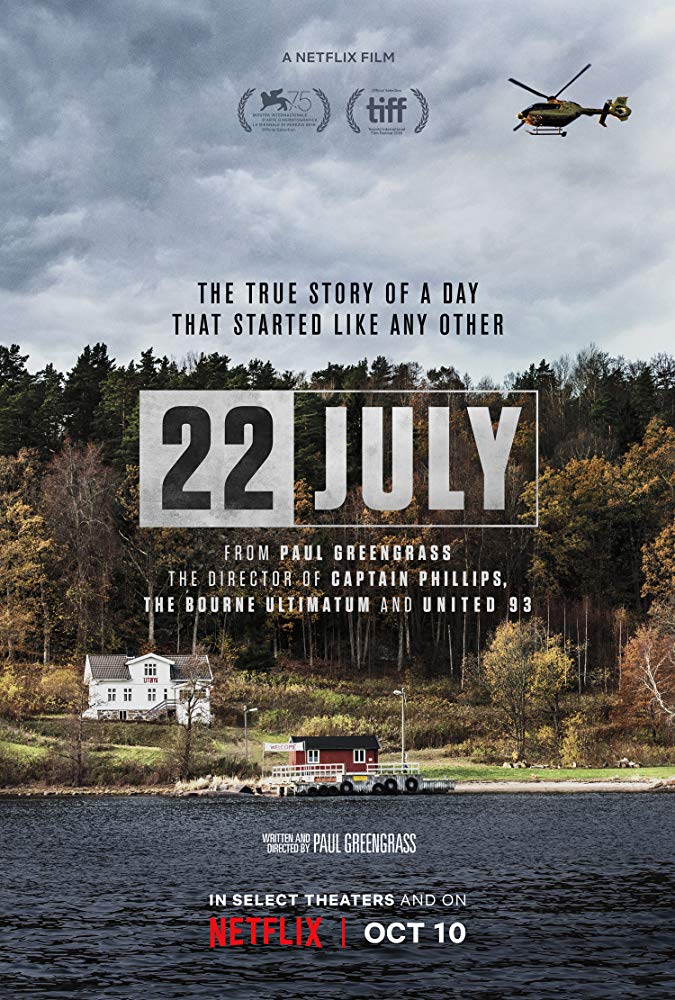
22 July (Paul Greengrass 2018)
Jirga (Benjamin Gilmour 2018)
BlacKKKlansman (Spike Lee 2018)
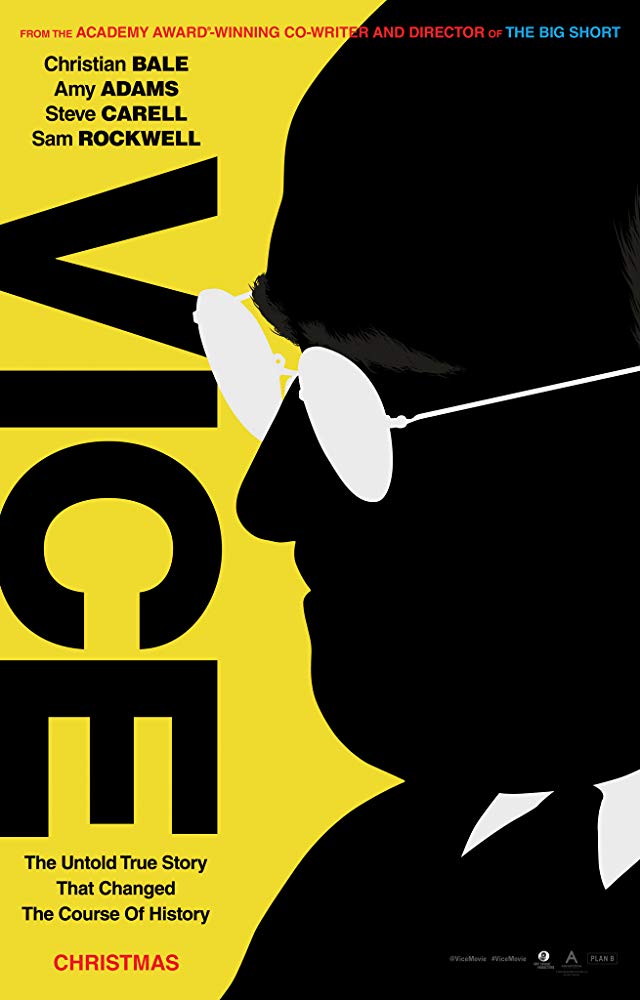
Vice (Adam McKay 2018)
One Day (Zsófia Szilágyi 2018))
Three Billboards Outside Ebbing, Missouri (Martin McDonagh 2017)
It’s hard to single out best theatre for this year. Belvoir Street had a good year, beginning with My Name is Jimi and ending with The Dance of Death, with treasures in between. And we spent six weeks in London, where we managed to go to some excellent theatre. We get to name one each from London and Sydney for the year. We both chose Matthew Lopez’ The Inheritance Part 2 at the Old Vic in London (we were exhausted on the evening we’d booked for Part 1, but Part 2 was stunning as a stand-alone event). It’s about Gay men in the age of AIDS. We booked because Vanessa Redgrave was in it, but though she was terrific she was by no means the main attraction.
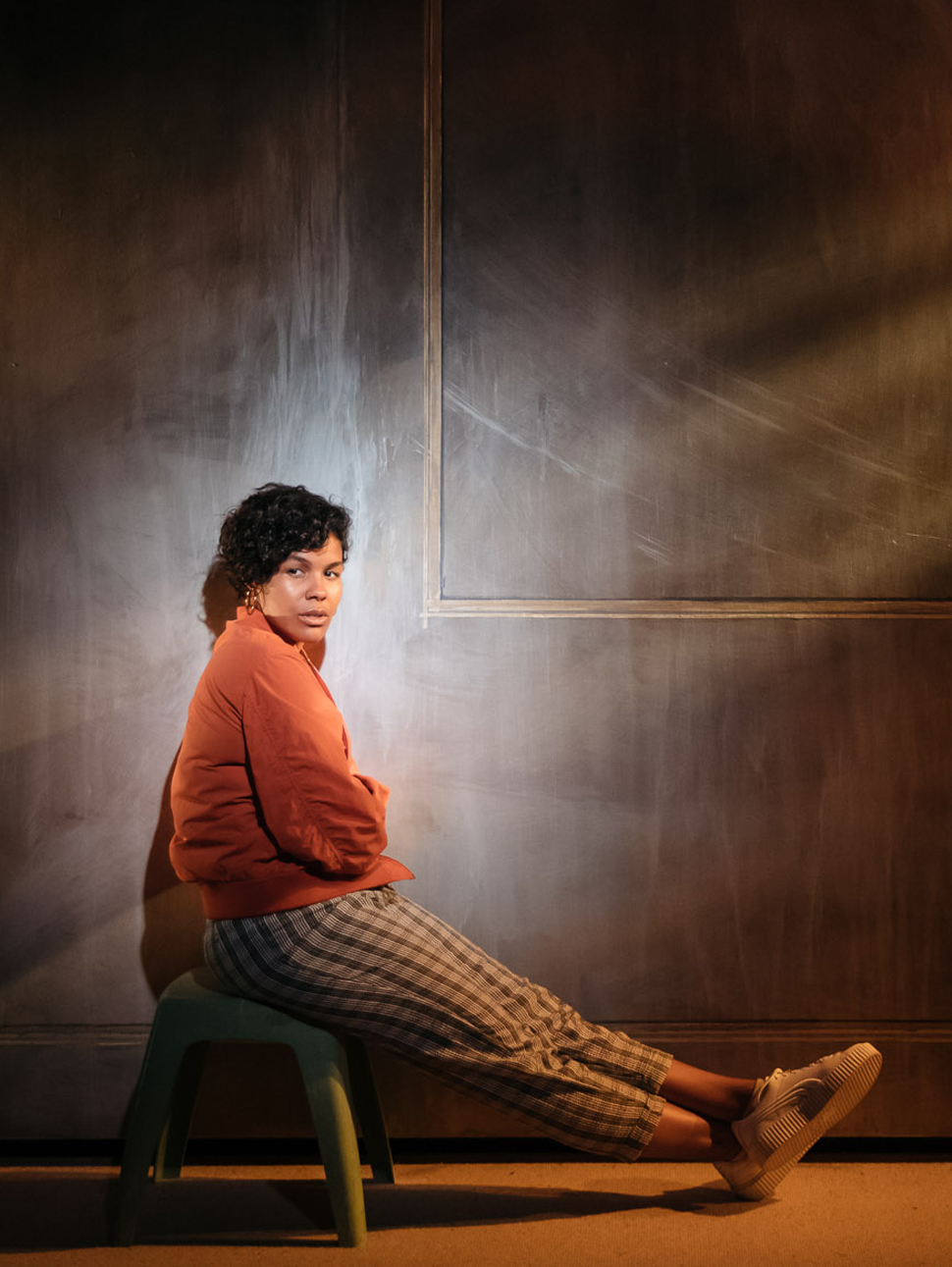
Back home, the EA chose debbie tucker green’s one-hander, random, directed by Leticia Cáceres, with a bravura performance by Zahra Newman. I chose Calamity Jane, directed by Richard Carroll, which was great fun – Virginia Gay’s raucous, swaggering gaucheness made Doris Day’s Jane look like a maiden aunt.
Books:
Rather than a list of our Best Books, I’ve decided to follow a meme that originated at the vlog memento mori and came to me by way of Lisa at ANZ LitLovers LitBlog.
1) What’s the longest book I read this year and the book that took me the longest to finish?
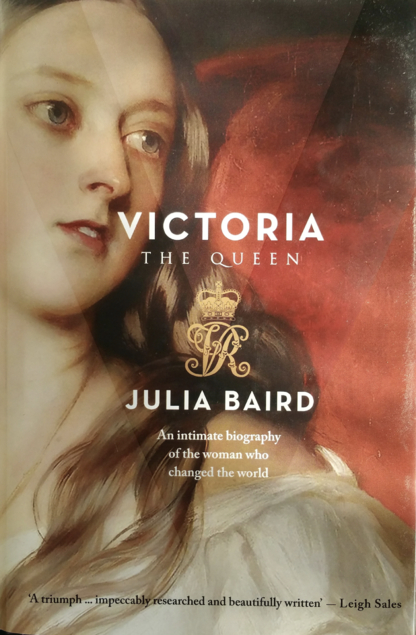
Emerging Artist:Victoria: The Queen by Julia Baird (Random House 2016) was both. It was a Christmas present, whose size meant it was awkward to read in bed, so I was reluctant to take it on, and then the detail, though fascinating, needed breaks to digest. It turned out to be an excellent complement to the British TV series, which we watched soon after I finished reading the book, and a welcome gift after all.
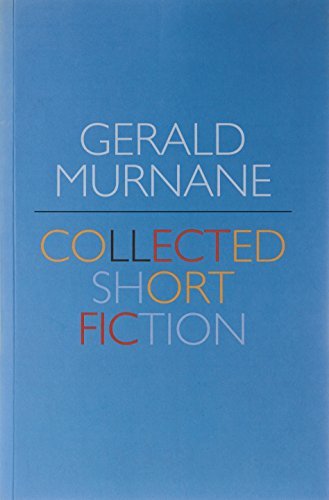
Me: The longest book was probably Gerald Murnane’s Collected Short Fiction (Giramondo 2018).
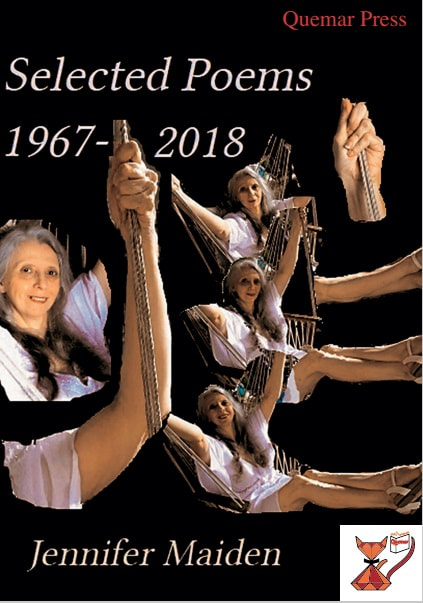
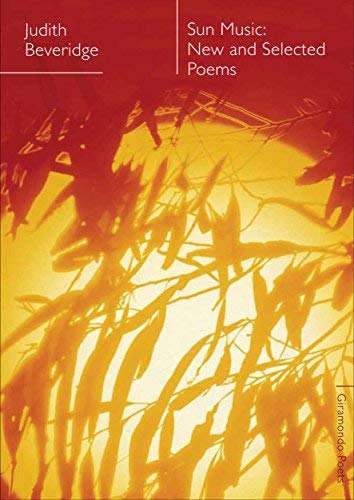
The one that took longest was either Jennifer Maiden’s Selected Poems 1967–2018 (Quemar Press 2018) or Judith Beveridge’s Sun Music: New and Selected Poems(Giramondo 2018): they both include decades of work by fine poets, and I enjoyed them both immensely.
2) What book did I read in 2018 that was outside of my comfort zone?
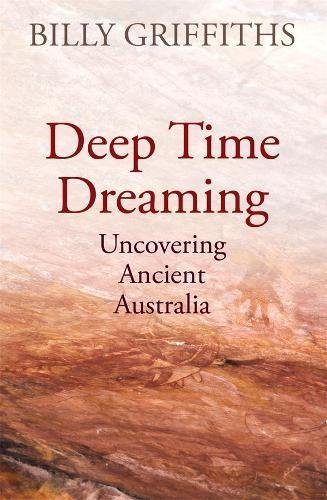
EA:Deep Time Dreaming by Billy Griffiths (Black Inc 2018) is a fascinating book about palaeontology and archaeology in Australia in relation to actual Aboriginal people, but there’s a lot of technical scientific writing that is not my favourite recreational fare.
Me: Gerald Murnane’s Collected Short Fiction again. I had gleaned something of his characteristic style some time ago and completely failed to grasp how wonderful it is. I wouldn’t have opened the book if it hadn’t been picked for the Book Group. Reading it was a joy-filled revelation.
3) How many books did I re-read in 2018?
EA: None.
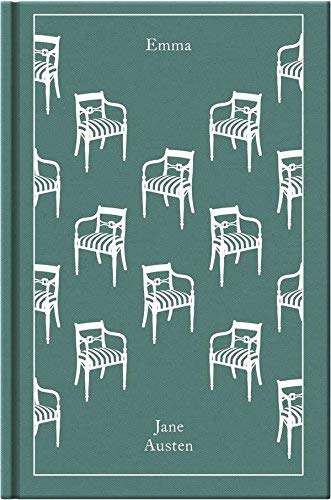
Me: Just one, Jane Austen’s Emma. I loved it all over again.
5) What book did I read for the first time in 2018 that I look forward to re-reading in the future?
EA: Change the question to, ‘What writer did I read in 2018 that I look forward to re-reading?’ My answer is Geoff Dyer. I first read him years ago, and rediscovered him this year when I found The Colour of Memory on our bookshelves. I’ve just bought Out of Sheer Rage, his book about himself and D H Lawrence.
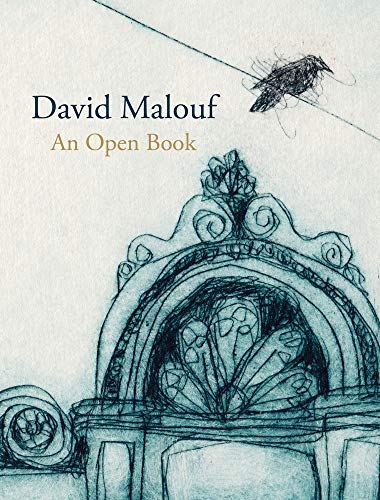
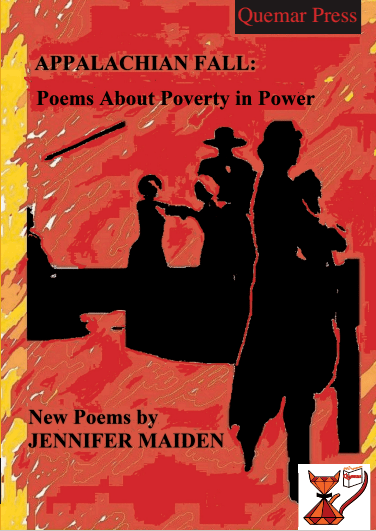
Me: There are so many, but I’ll pick David Malouf’s An Open Book (UQP 2018). I will dip into so many of the books of poetry I read this year, but I think this is the one I’m most likely to reread in its entirety. That and Jennifer Maiden’s Appalachian Fall (Quemar 2017)
6) What’s my favourite short story or novella that I read in 2018?
EA avoids short stories and didn’t read any novellas.
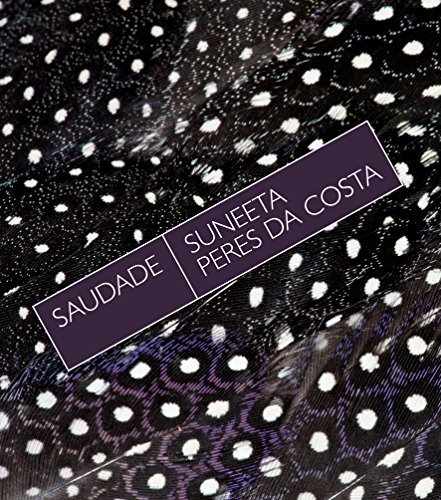
Me: Given that Gerald Murnane is in a class of his own, I’ll name Suneeta Peres da Costa, Saudade (Giramondo 2018), which is a coming of age story set in the context of the Angolan war of liberation. (I was astonished to hear Ms Peres da Costa say at a reading that she has never been to Angola, as the place comes alive in this short book.)
7) Mass appeal: which book would I recommend to a wide variety of readers?
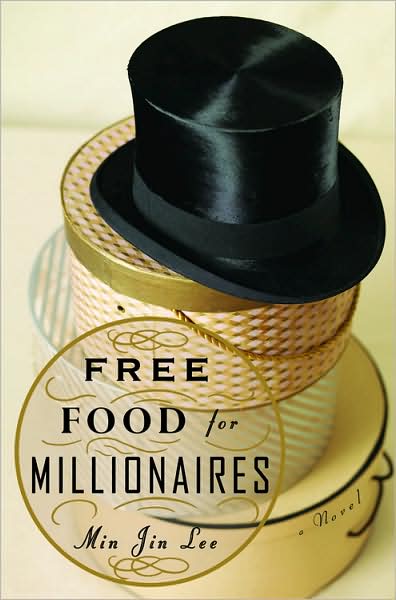
EA: Free Food for Millionaires (Head of Zeus 2018) by Min Jin Lee, author of Pachinko: it’s hard to think who wouldn’t love it.
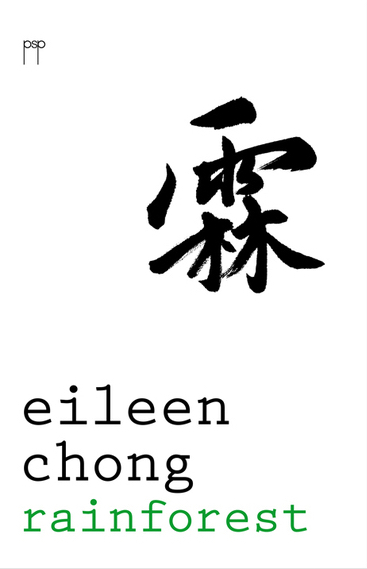
Me: I know many people these days think of poetry as an esoteric art to be avoided by everyone except poets and cryptographers. All the same, I recommend Eileen Chong’s Rainforest (Pitt Street Poetry 2018) to anyone interested in being alive and human.
8) Specialised appeal: which book did I like but would be hesitant to recommend to just anyone?
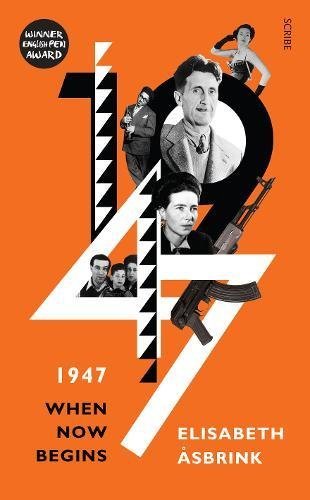
EA: I loved Elisabeth Åsbrink, 1947: When Now Begins, translated into English by Fiona Graham (2016, translation 2017). If you are interested in history, then the way this interweaves so many themes as they manifested in 1947 will fascinate you and illuminate our times.
Me: I’m rarely confident that books I’ve enjoyed will appeal to ‘just anyone’, so I’ve got lots to choose from, but bypassing all the titles I’ve mentioned so far, I nominate China Miéville, The Scar (Del Rey Books 2002), which, to quote my blog post about it, ‘includes, not necessarily in order of importance, vampir (sic) bureaucrats, cactus people, probability mining (I won’t try to explain), fabulously bloody sea battles, a sweetly tragic love story (not of the romantic variety), a vast crack in the universe, and a charming account of the process of learning to read.’
And that’s it for 2018. Have a great New Year, reader!
Now I’m signing up for another year, at the Franklin level, which means I aim to read and review 10 books by Australian women in 2019. Given that I expect to read at least a couple of small children’s books as part of the challenge, I’ll probably read more than 10 books, but that’s all I’ll commit to. Add to that, I plan to read at least two by Aboriginal and/or Torres Strait Islander women, of whom I read none this year.
On a related topic, I’ve done a quick gender check on books I read this year altogether. Not counting illustrators of children’s books or comics, I read:
34 by women
29 by men
I read four books in translation (two each from German and Polish), and two books by Aboriginal authors. I’d like to have more diversity in my reading.
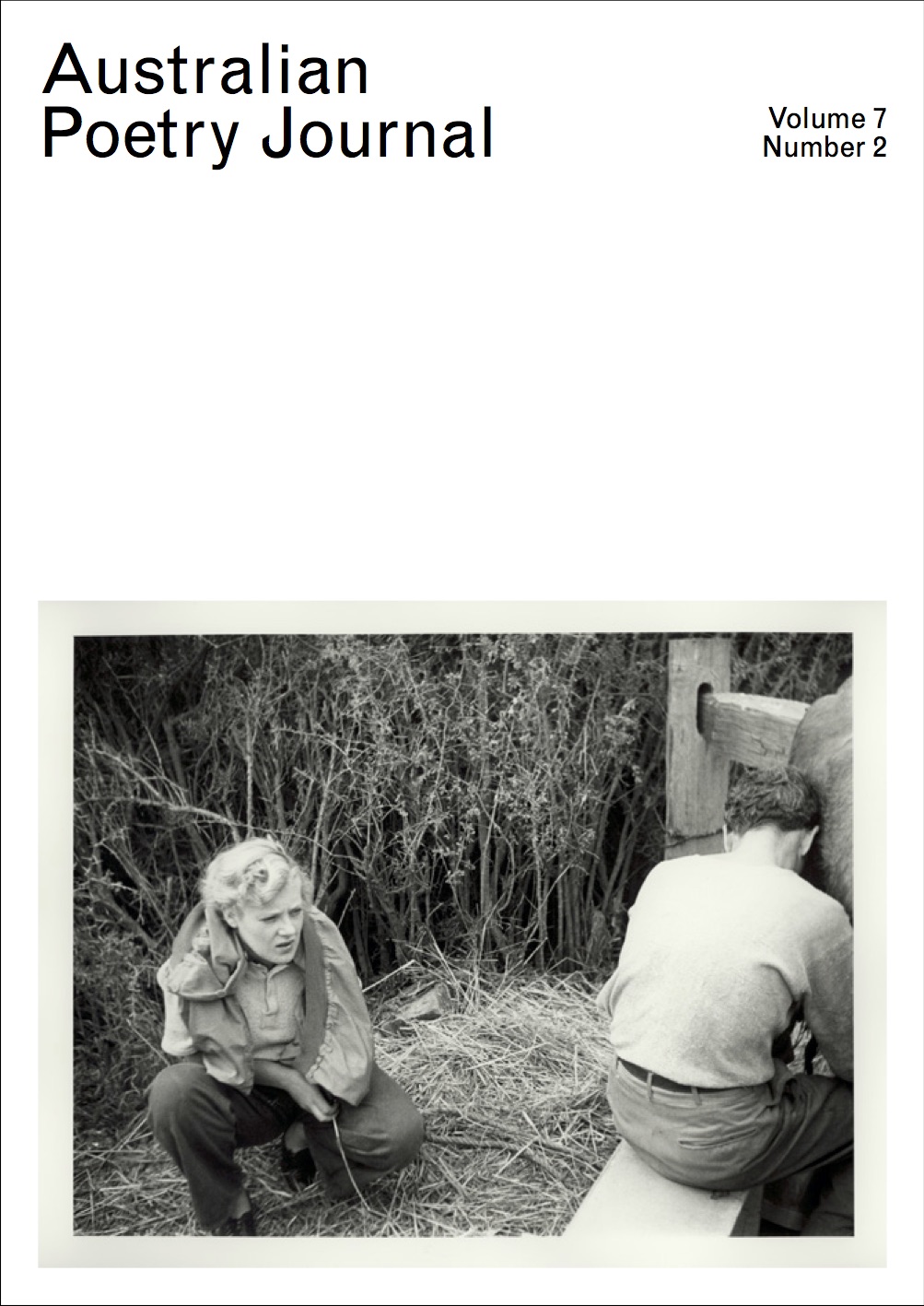
I mainly read this issue of The Australian Poetry Journal on my computer screen. It sat on my desktop to be dipped every now and then, a bit like Twitter only more than 280 characters, more nuanced, less infested with outrage and snark, and more nourishing. Here are some of the bits I enjoyed a comment on the front cover and then some snippets from poems that struck me (though not the only ones that did).
The cover illustration, a photo taken by artist Albert Tucker of artist Joy Hester watching art patron John Reed milking a cow at the artist’s colony Heide in 1942, is rich with metaphorical implications in reference to the journal’s theme of work. It reminds me of Jerome K Jerome’s famous quip about liking work: ‘It fascinates me. I could sit and look at it for hours.’
From Jill Jones, ‘This Could Take a While’:
How do you get through days

that have already curved too far?
From Andy Kissane, ‘The Study Before the Major Work’:
I finish one sketch and start another, in love
 with the repetition that is the texture of my life,
waking each morning to currawong calls,
raising the blinds to the shifting architecture
 of light, dressing in loose clothes, keen to dwell
 in the lilting halls of wonder.
From Geoff Page, ‘In medias res’:
I should perhaps have warned you all
my death will be in medias res:
 a carload of musicians

driving up from Sydney
 and being switched to voicemail
From Judith Beveridge, ‘The Pest Inspector’:
He gave good advice: ‘Always listen at night,
and if you hear a sound as though you’ve left
a record on after all the songs have played,
the ticking of a needle as it tracks in a groove;
 if you hear what you take to be the scratching
of a mouse, the contractions of a cooling
tin roof, or click beetles snapping their thoraxes
 and abdomens to flip themselves right way up –
 take note, they could turn out to be the mandible-crafted
ticks of termites eating along the grain
 of your floorboards.’
The whole of Cameron Lowe’s ‘Botanic / Beginning with four words from a poem by Joseph Massey’, which maybe I love because there was a giant fig behind my childhood home in North Queensland:
There’s little
 to say. The fig –

giant – leans
across the

bridge, reaches
up into

itself, names
fading

from the love
heart

scored in its
trunk.
Cameron Lowe’s poem is part of ‘New Shoots: Garden of Poems’, a special feature that takes up nearly half of the journal’s pages. In 2017, under the auspices of Red Room Poetry, Australian Poetry Inc and the Melbourne Writers Festival, Tamryn Bennett commissioned ten poets to create a new suite of poems each, inspired by plants and histories they encountered in the Royal Botanic Gardens in Melbourne. The poems they produced have had other outings – at the Festival, as a poetry trail at the Gardens, and in an online recording accompanied by interviews (here). They make a brilliant feature here: first the poems, then nine pages of ‘Reflections’ by the poets, which mostly allow for a much deeper reading experience. Just for one example, Bruce Pascoe’s powerful poem, ‘Kuller Kullup’, about the 19th century Wurundjeri elder of that name, becomes even richer when read in the light of his reflection, which begins:
It is very hard for Aboriginal people to get through a day without being reminded of loss, sometimes accompanied by a profound sadness, sometimes by mere elevated irony. When I was walking around the gardens with the other poets dread was dragging at my heels, feeling for my throat. The talk of last and natural and heritage was clutching at me with scrabbling fingers.
There’s much more, in the ‘New Shoots’ section and in the journal as a whole. Copies are available for sale from Australian Poetry Inc.
Eileen Chong, Rainforest (Pitt Street Poetry 2018)
Rainforest is Eileen Chong’s fifth book of poems in five years. I’ve blogged about three others here, here, and here and I’m still a complete fan.
The book’s title is explained in a note: the Chinese character on the cover, which is the third character of Eileen’s Chinese name (the Lin of Zhang Yi Lin) ‘refers to a constant, nourishing rain’, but the radicals that comprise it are yu, meaning ‘rain’, and mù, the radical for ‘wood’. So though the word doesn’t translate as ‘rainforest’, the note explains, ‘the rainforest is embedded within the word itself’. The poem plays on the contrasting connotations of this and those of her western name, Eileen/Helen:
My namesake, so greatly desired
men set fire to a thousand ships –
the light they must have given off,
each sail a blackened flame sooting

the sky. I prefer the rain, a cloud
cradling drops that fall at an angle
over a forest waiting to receive.
It goes on to offer a kind of poetic manifesto in the form of a playful take on nominative determinism – the idea that unconscious processes mould our lives to fit our names: we can choose, it says, how to read our names. What an advantage it is if your name can be represented in pictograms!
So ‘Rainforest’ invites us to expect something like a self-titled album. And the book is intensely personal, though generous to the reader, inviting us in to play, to commiserate, to share joy and occasionally, as in the title poem, to learn.
There are four roughly equal sections, ‘East’, ‘South’, ‘West’ and ‘North’. It’s not that there’s a narrative, but the book has a dramatic shape, and it works so well that I had to stop reading on the first two pages of ‘North’ to weep tears of relief.
‘East’ comprises poems of Chong’s Singaporean Chinese heritage, childhood family, and identity: poems feature food, history, places, connections with other Chinese expatriates. ‘South’ is a collection of Australian poems: places again, artworks, relationship to First Peoples, and especially the five-part ‘Country’, a response to Dorothea Mackellar’s ‘My Country’, where Chong stretches beyond her generally joyful tone to include some ugly manifestations of racism, though I don’t think we’re meant to take the bleakness of the final lines, whose context is a ‘coastal walk’, as her last word on her adopted home:
_______________You hear about walkers
who stray and die of thirst or exposure.

Always bring water. Leave enough time
for the return journey. Watch the sun's path.
You're on your own. This country cares for no one.
However ironic, these lines certainly lay the ground for the third section, ‘West’. Geographically, they are mostly if not entirely set in Europe. Thematically they deal with trauma, painful memories, and darkness.
It takes a while to realise what’s happening, because the images and language lose none of Chong’s clarity and grace. From the first poem in the section, ‘Measure’:
Words: fallen soldiers on a page.
They come and they go. Memory

as surprising as a laden donkey
picking its way towards the church

at the top of a hill. On this island
even the cats sleep with one eye open.
Or this, from ‘Tide’:
That morning in spring I'd thought
I was at peace. To think of you and walk
past without pain. This evening the moon
rose above the treeline. I stepped into
the garden – sharp, clean air. Autumn.

The same moon, but changed.
As the section progresses, the poems become more graphic: violence in an intimate relationship, miscarriage and childlessness are evoked in unsparingly explicit language. Really, don’t read ‘Sandpaper’ if you’re feeling fragile.
The geographical reference of the final section, ‘North’, is Scotland. Thematically, it opens with a deft piece of misdirection, ‘Warhol: Notebooks’, a wonderfully sensuous account of a Warhol pencil drawing of a ‘man undressed, lying on his back’, the soles of whose feet form
________________________a wrinkled cave
of skin, akin to a woman's soft receiving
It turns out that unthreatening erotic allure of this announces the theme of beautifully. After the ordeals of ‘West’, the poet finds happiness and intimacy with a man rom Scotland. The poems are full of the joy of that relationship. While it would be a mistake to take every poem in the book as strictly autobiographical, one can’t help but be very glad for Eileen Chong, particularly in the half-dozen love poems that start with the section’s title poem, whose final lines are where I started crying:
True north: I sought you
in the darkest of nights.
Drop anchor. Deep harbour.
There’s a lot more to this book than I’ve been able to say. Kim Cheng Boey has a beautiful and enlightening review in the Sydney Review of Books. He may not be as keen on the third and fourth sections as I am, but if if I haven’t persuaded you to have a look at Rainforest, perhaps he will.
Erich Kästner and Walter Trier (illustrator), Emil and the Detectives (1929; translation by Eileen Hall 1959; Puffin 1984)
My virtual To-Be-Read pile includes innumerable children’s literature classics. Emil and the Detectives is one of them. I have somehow come to own a copy of it, and it seemed like the perfect read after the rigours of Edward Said’s On Late Style. I knew almost nothing about it. And of course, not being a children’s literature scholar, I still don’t know what its historical claim to fame is, but I did enjoy it, and had a complex enough response that I felt compelled to do a little background reading
First published in Germany in 1929, it evidently broke new ground by telling a tale set in recognisable current reality, mainly in Berlin, with a mainly realistic story. Emil, who lives with his mother in the tiny village of Neustadt, sets out by train to visit his grandmother and aunt and family in Berlin. His mother gives him the enormous sum of seven pounds (in Eileen Hall’s 1959 translation the money is British), one pound for spending money, the rest to help Grandma out. The money is stolen, and Emil has to catch the thief and retrieve the money. He is helped by an ever expanding gang of Berlin boys, and one girl. It’s not really a spoiler to tell you that they are successful.
The book was a delight to this 71 year old, and the note on my yellowing copy’s opening page is almost certainly accurate:
It is a book everyone reads with pleasure. Forward readers of eight could tackle it, while those in their early teens still enjoy it without wanting to disguise the fact.
The squabbling among the boys, their awe in the presence of the only girl, the presence of a kindly journalist named Mr Kästner, the acknowledgement to the smallest boy whose undramatic contribution to the project was nonetheless heroic, the attention paid throughout to tiny practical details, the evocation of the city of Berlin – nostalgic now but no doubt fresh and new then: so much to love.
The thing that sent me to Wikipedia was this: I became uneasy in the climactic scenes leading up to the villain’s capture. Some of this is described from his point of view:
Mr Grundeis found himself completely surrounded. He looked about in amazement, Boys swarmed round him, all laughing and talking among themselves, jostling each other, yet somehow always keeping up with him, Some of them stared at him so hard that he hardly knew where to look.
Then – whizz – a ball flew past his head. He did not like that, and tried to move more quickly; so did the boys, and he remained surrounded. Then he tried to take them by surprise by turning abruptly to go down a side street, but he could not get through the mass of children which seemed to stream across his path whichever way he turned.
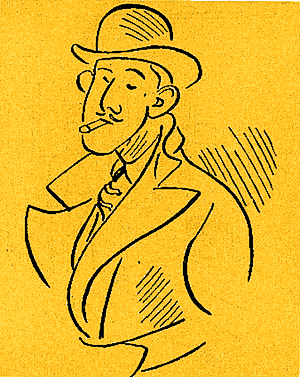
And it goes on. Mr Grundeis threatens to call the police, but the boys call his bluff. And so on, until there’s a violent confrontation in a bank, and the boys convince the tellers and police (who do eventually turn up) that the man is indeed a thief. I can’t be the only one to be made uneasy by this scene of a cheerful mob of adolescent boys harassing a solitary man, especially in late 1920s Berlin. It’s possible that Mr Grundeis has some of the cultural markers for ‘Jew’. He is certainly described in more detail than any other character. He wears a bowler hat, and has ‘a long face, with a small black moustache and a lot of wrinkles around his mouth’. In addition, ‘His ears were thin and stuck out from his head.’
So I was uneasy. I did go to Wikipedia, where I learned that this is the only pre-1945 book by Kästner that wasn’t censored by the Nazis, so I’m reasonably assured that this isn’t deliberate anti-semitism. But I’m putting it out there as a question to people who know more about the history of this book than I do. Does this lovely book about youthful solidarity and power contain a coded version of the antisemitism that Hitler and the Nazis built on? Is it possible for the same story to make one think of the recent school students’ demonstrations for the environment, and in the same moment to remember that boy in Cabaret singing so sweetly, ‘The future belongs to me’? Or am I being hyper-vigilant in this age of assertive identity politics.