November poem 2: Time’s arrow
The unforgiving fourth dimension
points one way, no turning back.
A single moment’s inattention
cycling on the Riesling track
going 20 k or faster
courts an imminent disaster.
Do not gaze at grazing sheep
or rocks thrust up from ancient deep:
you’ll clip the wheel you follow after,
hit the ground hard, skin your knee,
be run over, then all three
lie about in helpless laughter,
bloodied, bruised and now quite sure
to feature large in family lore.
In the middle of moving house, I’m currently in South Australia to celebrate a sister’s 70th birthday and a niece’s 30th, with any number of other siren calls on my attention. But November is LoSoRhyMo (Local Sonnet Rhyming Month), and I am obliged to produce 14 x 14-line poems over these 30 days. Rhyming is essential and quantity matters more than quality. (The fact that I’m the sole LoSoRhyMo-ist doesn’t render the obligation any less binding.) So here goes:
The Second of November: Memories of a Catholic childhood
On All Souls’ Day, each church visit
sets a suffering sinner free
from Purgatory. How could we miss it?
Duck inside and bend a knee,
Our Father, then a Hail and Glory
Be, and out. Repeat the story.
Girls held hankies to their hair.
No time to sit and think and stare.
Yet this cuckoo-clock palaver
held coding from a long-gone day
like amber that traps DNA.
Now I learn from calaveras
that those acts then, inside my head,
built friendly shrines to all my dead.
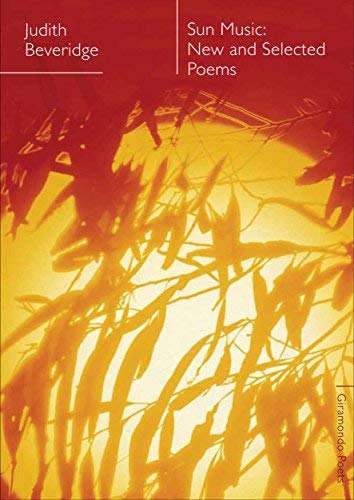
tl;dr: I love this book. Judith Beveridge writes a great self-introduction, and she is the queen of similes.
The six-page Author’s Note at the start of Judith Beveridge’s Sun Music is a class act. She begins by talking about her ‘pathological shyness’ as a child, adolescent and adult, seeing in it a partial explanation for why nature features ‘as an abiding source of connection’ in her poems, and for her turning to literature and the written word as a source of intense pleasure and a means of communication.
She goes on to describe the kind of poet she is – mainly lyrical, she says, rather than having ‘an over-heated experimental or exploratory approach’, deriving ‘idiosyncrasies of rhythm, music, voice, sensual knowledge, syntactical deportment, emotion and ideas’ from the body. She also acknowledges that she is a dramatic poet, particularly in two long sequences centred on the life of Siddhatta Gotama the Buddha (not included in this selection but promised as two thirds of a future book), and ‘Driftground’, about a group of fishermen, which account for 27 marvellous pages here.
She discusses influences and aspirations, and generally provides an excellent orientation to the 103 poems that follow. One sentence stood out for me:
It’s the challenge of trying to write a good poem rather than feeling that I have something unique to say that motivates me.
That sentence prepares one for the way her poetry is marvellously open to its subjects. She never comes wielding an agenda, but pays attention with tremendous humility, often to breathtaking effect.
I loved reading Sun Music, and came away resolved to keep my eyes and ears more open to the world, especially but not only to the birds and animals in my life.
When I wrote a blog post about Beveridge’s book Wolf Notes seven years ago I quoted lines about the moon from a number of poems. Looking back, I realise I was trying to communicate my awe at her use of similes. That awe deepened as I read this volume. Some random examples: ‘an egret posed like a too-slim / model in the glossy light’ (‘Sun Music’), or ‘On the headland motels light up / like bright perfume bottles’ (‘Resort Town’), or ‘bluebottles are cast up in clusters / of varicose knots’ (‘Spittle Beach’), or (from ‘Lighthouse Beach’):
________________________________________a lighthouse
stands still as an altarpiece, then for a moment,
sea-misted, it looks like a whale's spout
about to give way to wind and waves.
Occasionally there’s some showing off – as in ‘The Harbour’, where everything in the poem is seen as something to do with food or its preparation or consumption (the Opera House like an ‘arrangement of prim serviettes’). But it almost always feels as if Beveridge’s similes arise from the quality of attention she has paid to the thing she sees (or hears) – as if it gives her words to describe it, words that she then passes on to us.
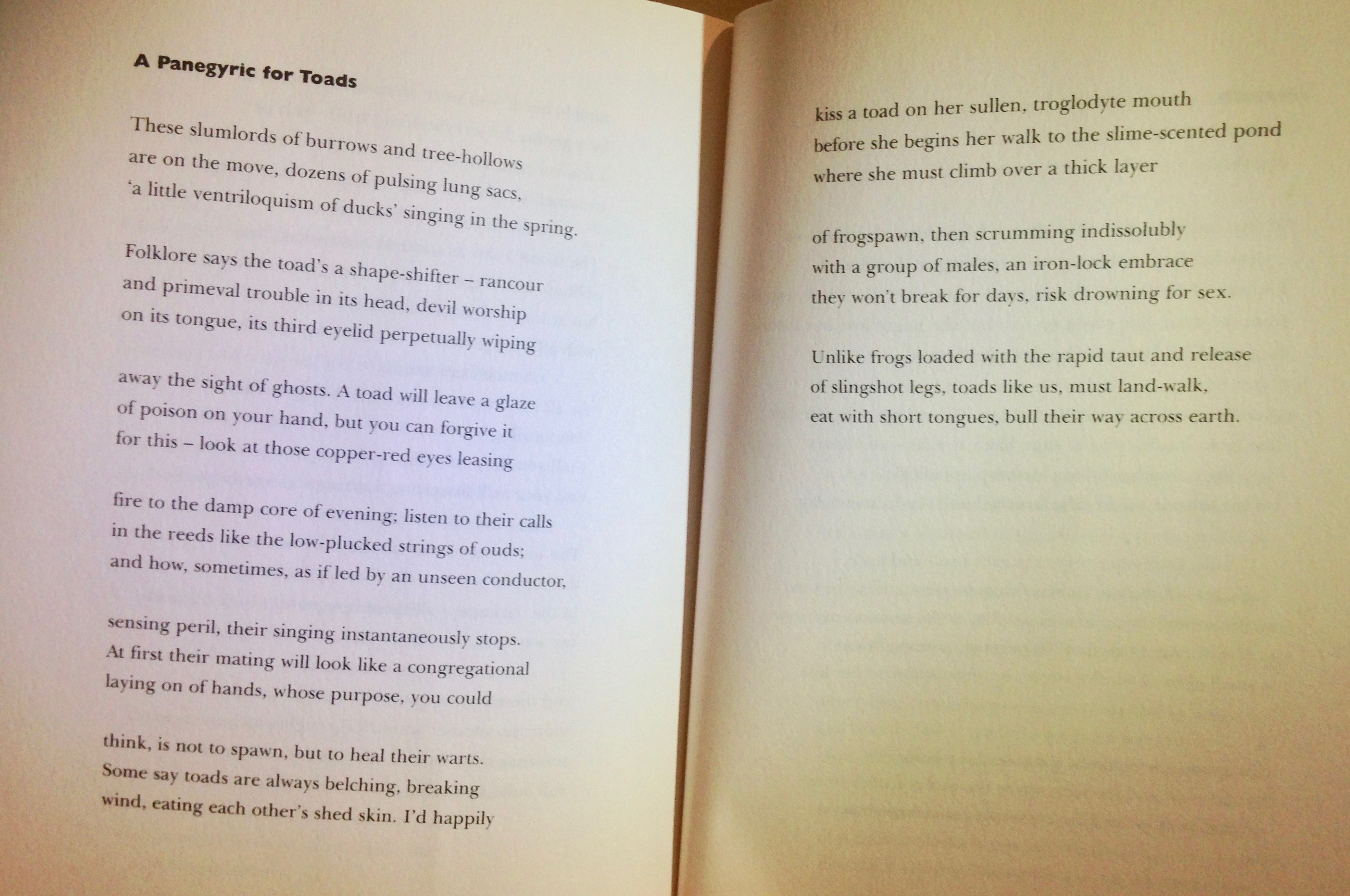
I generally try to single out just one poem I connect with when I blog about a book of poetry. There are so many to choose from here, but I’ve settled on ‘Panegyric for Toads’, one of the thirty-three new poems on the final section – because I’ve been thinking about my North Queensland childhood recently, and this poem restored memory of the ubiquitous cane toads, and captures something of the secret affection I had for them as a child. Here’s the poem (click to enlarge):
The beginning – ‘These slumlords of burrows and tree-hollows / are on the move’ – evokes an image of toads – squat and repugnant as cartoon slum landlords, then after the line break they are ‘on the move’. This is not a panegyric to a single toad, and not to toads in general, but to a particular set of toads, dozens of them, part of the pestilential spread of their species across vast tracts of Australia. The general point isn’t laboured, it may not even be intended, but it’s strongly there, and the poem goes back to beautifully concise description of their appearance and sound.
The rest of the poem moves back and forth between general cultural and scientific knowledge about toads and precise, felt observation. There’s the folklore, the glaze of poison (we had a dog that tried to eat a toad and got very sick), the mating . All pretty yuck, really. But
__________look at those copper-red eyes leasing

fire to the damp core of evening; listen to their calls
in the reeds like the low-plucked strings of  ouds;
and how, sometimes, as if led by an unseen conductor,

sensing peril, their singing instantaneously stops.
Well, yes, one has to concede, there is that. But then she goes for the most grotesque aspect of these creatures, their mating (here’s a link to a video in case you need to refresh your memory). There’s a marvellous reversal of the expected order here: there is description of the grotesquerie, the female
____________________scrumming indissolubly
with a group of males, an iron-lock embrace
they won't break for days, risk drowning for sex.
But that comes after the process has been described as ‘like a congregational / laying on of hands’, whose purpose is to heal their warts. And it comes after the poem’s genuinely shocking moment:
Some say toads are always belching, breaking
wind, eating each other's shed skin. I'd happily

kiss a toad on her sullen, troglodyte mouth
It’s hard to know what to make of that, apart from to be revolted. The fairytale reference suggests that some transformation might result: it could be that the poet would happily kiss the toad to spare her from the ordeal of the mating scrum, but I don’t think that’s it. Maybe there is a transformation here, though: the poet has seen past the belching, farting, dead-skin eating, sullen wartiness to what is wonderful about these creatures and her response to them has been transformed into something like love. Certainly, coming where they do in the poem, the lines about indissoluble scrumming and risking drowning for sex are celebratory more than anything.
The last three lines, after evoking the beauty of frogs, end with an assertion of fellow-feeling. Maybe we like to think of ourselves as agile, smooth-skinned frogs, but really, warts and all, we’re like toads.
The poem was included in Black Inc’s The Best Australian Poems 2016 edited by Sarah Holland-Batt. A reviewer in in The Australian (link here, not behind pay wall) wrote:
Judith Beveridge’s ‘A Panegyric for Toads‘ is a breathtaking piece that conflates the behaviour of toads with our reckless treatment of the environment.
I’m not saying that’s wrong, but I just don’t see it. I don’t think the toads here represent anything. Sometimes a toad is just a toad.
Follow the Leader is Laura Tingle’s third Quarterly Essay, a third instalment in a loose trilogy. Great Expectations (QE 46 2012) dealt with Australian expectations of government, Political Amnesia (QE 60 2016) with failing institutional memory, and now Follow the Leader with political leadership in the modern world (links are to my blog posts). ‘For,’ Laura Tingle writes, ‘whatever our expectations of government, whatever the state of our institutions and institutional memory, it is leadership that helps to settle those things, and change them.’
She might have added that the ills of political leadership looms large in the age of Trump, Duterte, Putin, Rudd–Gillard–Rudd–Shorten and Abbott–Turnbull–Dutton–Morrison.
The tagline on Laura Tingle’s website is ‘Reporting on politics from Canberra’. This essay is very high level reporting, and not just about Canberra, offering incisive accounts of political developments in the years since Howard’s prime ministership and invoking the insights of historians, political scientists, politicians (from Kim Beazley to Barack Obama), speechwriters, military leaders, philosophers, other journalists and more.
The essay takes a key idea from Ronald Heifetz’s 1994 book Leadership WithoutEasy Answers that ‘leadership, power and formal authority too often get confused and need to be carefully distinguished’, and offers his definition of leadership as ‘helping a community embrace change’ as a touchstone against which to judge the functioning of our elected leaders. (incidentally, her account of Heifetz’s discussion of Lyndon Johnson’s handling of the US war in Vietnnam – big fail – and Civil Rights – big win – is enlightening.)
The reality is that elected leaders in Australia and elsewhere are much more committed to their own survival in office, treating their rivals as enemies or pushing their ideological agendas as ‘would-be strong men’ (I love the way that phrase punctures postures) than to leading in the Heifetz sense, and in the face of global warming, mass displacement of people, stunning unequal distribution of wealth, and increasingly dangerous international politics, that is just plain terrifying. Laura Tingle gives an account of how we have come to this dire situation, and perhaps reassuringly sketches alternatives, mainly in the leadership style of Angela Merkel, who is masterly at building consensus, and giving her opponents room that allows compromise.
I’ll give Laura Tingle the final word in this sketchy account of the essay. Her closing words, which I wish could appear in letters of fire over the entrance to parliament House (notice the eleg:
We need our leaders to be wary of simple solutions built on scapegoating and hatred, and to resist succumbing to those who relentlessly conjure up reasons for intolerance. We should expect our leaders to help rebuild the national debate and protect other voices within it. We should be looking for strong leaders to follow, not a strongman.
If, like me, you expect an essay on economics to be dry and jargon-ridden, you will be relieved to find that this Quarterly Essay is witty, passionate and accessible. On the 2018 Sydney Writers’ Festival podcast of Richard Denniss discussing his previous book, Curing Affluenza, there are a number of Anna Russell ‘I’m not making this up’ moments: the audience laughs at a piece of snark about the workings of capitalism and right-wing politics, and Denniss protests that what he has just said is the simple truth. These pages bristle with the written equivalents of those moments. It would be hilarious if it wasn’t real
The main thesis:
Neoliberalism, the catch-all term for all things small government, has been the ideal cloak behind which to conceal enormous shifts in Australia’s wealth and culture. It has provided powerful people with the perfect language in which to dress up their self-interest as the national interest.
Neoliberalism pretends to be a coherent theory of economics that says the market should be allowed to function without government interference – hence deregulation and privatisation are always the way to go. But as preached and practised in Australia it is really a rhetoric to disguise greed and self-interest. Denniss multiplies examples of places where the proponents of ‘small government’ are all for government subsidy and regulation, so long as it goes to them or helps causes close to their hearts. The Murdoch media empire and Adani coal mine are only the most egregious instances.
Since I started drafting this blog post, Australia’s Prime Minister has dismissed the ALP’s policy emphasis on welfare, health and education as being about ‘More taxes, more taxes, more taxes, more taxes and more taxes’. He has also described the Sydney Opera House as ‘Sydney’s biggest billboard’. I could almost hear Richard Denniss’s pen scratching these utterances into his notes for future articles.
But yelling at the absurdities and cruelties of neoliberalism is a game we all play in front of our televisions every night. Denniss offers analysis and some steps towards remedy. The real power of neoliberalism, he writes,
has been to convince the media and large swathes of the public that … debates about the shape of our communities and the design of our institutions are somehow a ‘distraction’ from the main game of further tax cuts and industrial relations reform. Neoliberalism has produced the bizarre result that serious politicians and serious political parties define themselves by their ‘economic agenda’, while declaring simultaneously that it is individual choice, not government policy, that creates jobs and prosperity.
Faith in our democratic institutions, he argues persuasively, has been eroded:
The opposite of the narrow economic agenda of neoliberalism isn’t a progressive economic reform agenda; it is the re-establishment of a broad debate about the national interest. After thirty years of hearing that politicians, government and taxes are the things that ruin the economy, it is time for the public to hear and see that politicians, government and taxes are the foundations on which prosperous democratic nations are built.
The essay ends with a list of five new institutions that might help restore a vibrant democracy – institutions that Denniss would like to see introduced only if citizens are consulted at the beginning, the middle and the end of the process of their creation. The institutions, none of which are either left or right propositions, are:
• A charter of rights – to place our collective vision of our fundamental rights above any attempts to limit such rights based on the politics of the day. This would have protected us from the recent ‘robot-debt’ debacle, and would curb the current expansion of Peter Dutton’s powers.
• A National Interest Commission – to replace the Productivity Commission and provide ‘broad advice on the kind of advantages (as opposed to benefits) and disadvantages (as opposed to costs) that m=a major project like … an enormous new mine … might entail’.
• A federal corruption watchdog – hardly needs arguing for.
• Democratic education – that is, education in the workings of our democratic system, especially perhaps in the nature of the Senate and how Senate voting works.
• A sovereign wealth fund – ‘imagine if all tax collected from the mining industry went into the same fund from which all [mining] subsidies were drawn. Not only would there be much greater transparency and accountability concerning the subsidies, the revenue collected from the sale of our scarce resources also could not be squandered on short-term vote-buying.’
This QE was published in June. An advantage of coming to it late is that the next in the series has been published, with 47 pages of correspondence about Dead Right up the back (not bad for a 77 page essay). As always, the correspondence sheds new and interesting light on the essay’s subject. This is particularly true of John Quiggin’s account of how Tony Abbott’s prime-ministership dealt the death blow to Australian neoliberalism’s credibility. Interesting in a different way is John McTiernan’s attack, which is a brilliant example of a kind of political writing that distorts the writer’s enemy’s position and then tramples all over the straw man it has created: this is apparently quite effective in the opinion columns of the Australian, when readers of the attack can be assumed not to have read the thing being attacked – here it just makes Mr McTiernan look illiterate. On the other hand, The Australian‘s economics editor, Adam Creighton, is one of several economists who criticise Denniss’s essay trenchantly without grossly misrepresenting it.
Denniss uses his right of reply deftly and with more courtesy than sarcasm. He says in his concluding paragraph:
It is a privilege to have my arguments tested by such diverse voices. The conclusion of Dead Right is that the opposite of neoliberal economics isn’t progressive economics, but engaged democracy. And engaged democracy requires exactly the sort of well-meaning debate contained in these pages.
A little less than eight years ago, she who was to become the Emerging Artist and I sold our house and bought the smaller one where we now live. I recorded the process in verse.
4 November 2010:
On selling the family home
Our home for more than twenty years
Our haven, our Three Seventeen,
Where children’s laughter, rage and tears,
And adults’ too, and in between
Have filled the air, where stains and scratches,
Dents and holes, loose threads and patches
Are records of our history
With love’s abiding mystery
Was sold on Tuesday, seven thirty.
Our shell, our outer skin, alive,
We’ll trade for one point five two five.
It’s brick and wood, some bits quite dirty.
We’ll shuffle off to somewhere new:
New owners, may it welcome you.
6 November 2010:
Looking to buy
Flexible, unique and charming,
spacious, stylish, redesigned,
with northern sun, and traffic calming,
details of the classic kind,
potential for downsizers’ retreat
in much sought after treelined street,
we seek it here, we seek it there,
our new home could be anywhere,
in Earlwood, Petersham, St Peters,
Marrickville or Hurlstone Park,
(Burwood’s too far off the mark).
At each new door the agents greet us.
We turn up, armed with cheques, not knives,
Buying, not fighting, for our lives.
26 November 2010:
Announcement
We’ve bought a house, we sign today,
pay ten percent of far too much
(but we’re in love, so that’s OK).
It’s done up with a loving touch,
it’s near a park and faces north,
near shops, trains, buses and so forth.
We’re downing size, yes, less is more,
from Three One Seven to Thirty-Four.
Bring us garlands, bring us flowers.
Blow the whistle: end of innings.
Sing a song of new beginnings.
Four signatures, the house is ours.
Soon we fly the empty nest.
We’ve found our home for all the rest.
And now we’ve just done it again, this time moving into an apartment about a block away from where we now live. It’s astonishing how those three stanzas describe the process and the feelings that go with it. we exchanged contracts on our present house on 25 September, and bought the apartment at auction on 6 October.
This time it’s serious downsizing. Many books have already found new homes, and many more are yet to do so.
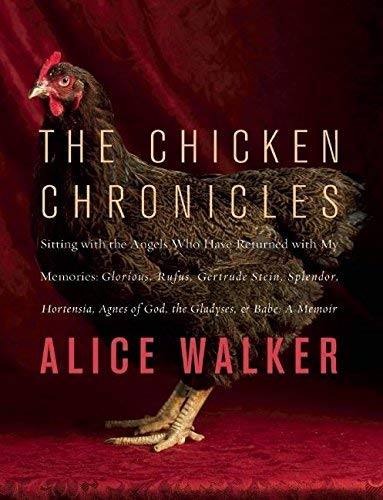
The Chicken Chronicles consists of 37 short chapters, originally blog posts, about keeping chickens. Not just keeping them, but spending time observing them, enjoying them, being sat on and pecked and fed by them, communing with them, falling in love with them as individuals and as a species, and following the mind wherever they take it.
One of Alice Walker’s childhood chores was to wring the neck of a chicken each week for the Sunday dinner. Chickens, or more specifically roosters, featured in her 1992 novel Possessing the Secret of Joy – as a nightmarish presence to do with the genital mutilation of little girls. It’s tempting to read The Chicken Chronicles as Walker’s joy-filled atonement for those sins and slanders of the past.
The first chapter describes an encounter with a mother hen who was ‘industrious and quick, focused and determined’. The memory of that encounter kept resurfacing, and Walker writes:
I realised I was concerned about chickens, as a Nation, and that I missed them. (Some of you will want to read no further.)
I took this as a warning and a challenge to anyone who finds that capitalised ‘Nation’ ridiculous or even offensive: if you read on, be prepared for some tendentious animal-liberation rhetoric, perhaps. I did read on, and I was glad to have been forewarned, especially when there is a change of register after half a dozen chapters, and from then on Walker addresses the chickens directly and refers to herself as Mommy (and the person who until then had been her partner as Daddee), telling them about her travels and her admiration for figures such as Gandhi and Ho Chi Minh, or delivering little sermons to them and the eavesdropping reader. Like this:
Mommy’s mind is dizzy and her heart sore from all the troubles in the human realm. She sees pictures of other birds, no less wondrous than you, covered with oil and dying of suffocation and despair. How can they fathom what is happening to them? How can they understand they are not to blame? What have they done but be themselves, flying about eating insects and grubs, while appearing marvellous to the human spirit, even whole doing so? She learns soldiers from her country have shot and killed two pregnant women in Afghanistan, one of them Mommy of ten. What is an Afghanistan? You will wonder. Is it edible? Mommy has never been there but she used to wear beautiful long dresses made of velvet and embroidered in many colours, which came from Afghanistan.
There’s something real happening here: in addressing the chickens, the mind can go to some basic questions. But any grumpy and humourless children of the Enlightenment should probably stay away from this book. I’m grumpy but not completely humourless, and had to work hard to appreciate passages like that one, and I found a lot to enjoy elsewhere.
The chapter that picks up the notion of ‘sitting with the angels’ from the book’s title is an example. (I’ve just discovered that a version of this chapter is online in Alice Walker’s facebook timeline – you could do worse than read the whole piece.) As she spends time with the chickens, sitting in her ‘meditation chair’ in their enclosure, Walker finds that memories of her childhood come back to her:
For, spending time with you, not only did Mommy recall and visualise her own mother’s thumb with its deep, beloved scar, and from the thumb begin to see her mother’s face and actions, but she also began to see, in stark detail, the house near Ward’s chapel: the final and most wretched of all the grey shacks; the house that her mother attempted to hide, as she camouflaged all the others, behind a vibrant wall of flowers. And inside the house that shook when anyone walked from room to room, there was Mommy’s room papered with real wallpaper, though too thin and delicate to actually touch! While in her parents’ room her mother had done the Mommy thing that was so typical of her: she had papered her own bedroom with flattened cardboard boxes and brown butcher’s paper.
As she describes the way the chickens gave her back these memories, she also gives memories back to the reader – at least to this one. We had chooks in my childhood home, though I didn’t have to wring any necks and our chicken meals were a lot less frequent than the Walker family’s. This book is full of wonderful descriptions of chickens – their behaviour around roosting, their alarm at predators (river rats and hawks in my case, North American beasties in Walker’s), their joy at being fed and called to by humans’ crude impersonation of their cries. These felt like a generous gift of memory. Walker brings to her chickens with the kind of attention I remember from my childhood, and her descriptions of them capture beautifully the joy of being close up to other species.
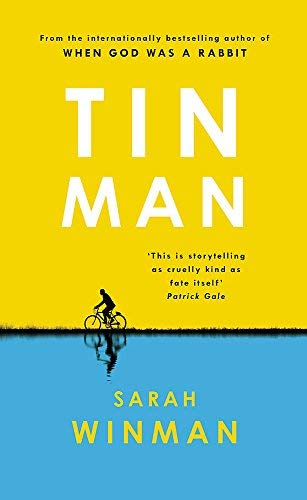
This is a gentle love story. It starts out with a man who we gradually discover is grieving for the loss of his wife and best friend in a car accident. Over the novel’s short length we discover the rich complexity of the relationships among the three of them, the depth of their loves, their joys and their sorrows, maybe particularly their sorrows: not a ménage à trois, but what one of the characters calls a mélange.
It’s very English, tactful when erotic, and filled with the kindness of strangers and the healing of wounds.
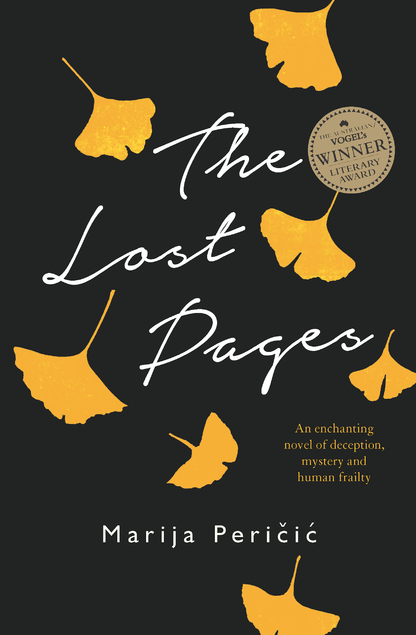
The imprint page includes standard disclaimer, ‘Any resemblance to actual persons, living or dead, events or locales is entirely coincidental,’ but what follows purports to be an account by Max Brod (a real person, you can look him up on Wikipedia) of his relationship with Franz Kafka (ditto). Brod famously disobeyed Kafka’s deathbed instruction to burn all his papers, and so gave the world The Trial and other works that established Kafka’s eminence in 20th century literature. So we’re set up from the beginning for a historical novel about a literary friendship.
Usually, historical novels thrive in the gaps in the historical record: the facts as we have them remain fixed points, and the novelist’s imagination goes to work with people, events and dialogue that have been undocumented. In The Lost Pages, things aren’t so cut and dried. Brod’s biography of Kafka is one of the main historical sources about him. This novel is presented as a manuscript found in Kafka’s papers as preserved by Brod and now owned by two Israeli sisters (which really do exist, unexamined by scholars): so what the fictional Brod writes here can claim to override the historical Brod’s version.
And it does.
It’s a tale full of obsession, anguish, betrayal, jealousy, paranoia (well, it is a story about Kafka), hallucinatory episodes (ditto), and enormous improbabilities which are resolved by even less likely revelations. I kept forgetting that it was written by a 30-something woman living in Melbourne – I was away in the world of Prague literary celebrity a century ago, having a great time. It would be wrong to say the book is silly, but I find it hard to think of a better word for its quality that most charmed me. It’s a romp, if a romp can include social exclusion (Brod in real life and in the novel had severe spinal curvature), abject humiliation, extreme mental anguish …
Sue Lawson, Freedom Ride (Walker Books Australia 2016)
This is a YA novel, that is to say, a novel intended for young teenagers. Fifteen-year-old Robbie Bowers lives with his bank-employee father and his grandmother in the tiny fictional New South Wales town of Walgaree. (One can’t help but notice that this sounds like a portmanteau of Walgett and Moree.) Robbie’s a frequent target for the school bully and his cronies, and home is no refuge. His grandmother is prim, humourless and authoritarian, a terrible cook with nasty gossiping friends. His father is hardly any better, having come back to live with his mother after losing his wife when Robbie was a baby. The stage is set for a coming of age story, in which Robbie must find a way to independence of spirit, connection with some decent people, and perhaps even a little happiness.
Things play out as expected. Robbie is befriended by the young man who has come home from London to take over the caravan park after his father died. Robbie accidentally unearths some family secrets and lies, exposes his father and grandmother and their friends as terrible people, and ends up with the possibility of a new life opening up for him.
At the same time, the novel is about the 1965 Freedom Ride, in which a group of university students led by Charles Perkins hired a bus and travelled through rural New South Wales for two weeks, documenting the living conditions of Aboriginal people and staging protests at, among other things, RSL clubs that excluded Aboriginal veterans and swimming pools that banned Aboriginal and non-Aboriginal children from sharing the pool. The students arrive in Walgaree about four-fifth of the way through the book. In terms of the plot, they don’t do much more than provide a dramatic backdrop for Robbie’s climactic outburst. In fact, in terms of the plot, the terrible racism that is endemic in Walgaree serves mainly as a broader social justification for Robbie’s rebellion against his father and grandmother: they’re not only mean, deceitful, and bad cooks, but they’re unmitigated genocidal racists.
A historical note at the back lists the 37 participant in the Freedom Ride, and links it to the 1967 Referendum, the Land rights Campaign, the setting up of the Tent Embassy and the apology to the Stolen Generations. The book clearly aims to informs a new generation of readers of a significant moment in Australian history. I think it will do that. However, I have two caveats.
First: even though there’s a language warning in the opening pages, the bruisingly racist dialogue, taken together with the focus on a white boy’s coming of age story while all but one of the Aboriginal characters are pretty one-dimensional, makes me think it’s a book that should be read alongside something by an Indigenous writer: Anita Heiss’s anthology Growing up Aboriginal in Australia, which I hope to read soon, comes to mind. And there’s a big list of Indigenous Australian YA book here. [Added later: In the comments below, Greenspace01 mentions A Bastard Like Me by Charles Perkins, who led the Freedom Ride and appears as a character in this book.]
And second: there’s not a lot of complexity in the non-Indigenous characters. The racists are all mean-spirited bullies, gossips, who are willing, down to the last one of them, to cover up the most heinous crimes against Aboriginal people, and also they have horrible voices and can’t cook. The ones who take a stand against racism are good looking, warm, generous, and witty. Denouncing your racist family and getting the hell out of there is clearly the only thing to do. Sadly, it’s not always like that in the real world. It’s not that I wanted the book to soften its depiction of racism, but when the lines are drawn as simply as this, the story is unlikely to prompt its non-Indigenous readers to look at their own collusion in, or at best benefiting from, the oppression of Indigenous people.