Category Archives: page 78

The Loneliness of Sonia and Sunny, Kiran Desai, the book club and November verse 5

Kiran Desai, The Loneliness of Sonia and Sunny (Penguin 2025)
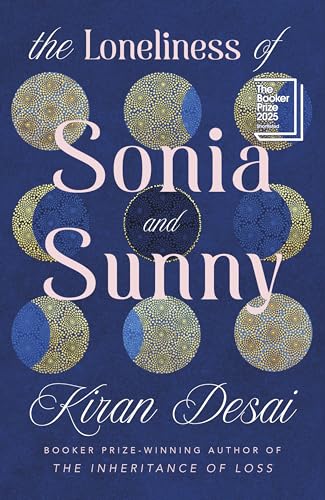
Before the meeting: This is a massive family saga that spans three continents, a romance, an Indian–US comedy of manners, and a magic-realist tale (though Sonia, a writer, is critical of that term).

All of the principal characters are caught, one way or another, in a tangle of Indian and US culture. The central difference, gestured towards in the book’s title, is the contrast between US individualism and Indian sense of belonging to a family and a community: loneliness and embeddedness, self-determination and obligation. When this plays out in comic mode, it works brilliantly. In the Indian scenes, again and again, someone is asked in shocked tones why they are alone.

As you’d expect from the title, the central narrative strand is a romance. True to the form of the romcom (no spoiler really) the protagonists Sonia and Sunny have sex at almost exactly the midpoint and then are separated, seemingly irretrievably. Integral to the romcom are family intrigue, corruption, violent murder, and a dispersed conversation about arranged marriage. I loved all that.

There’s another story jostling for the centre. This begins with an unconvincing episode of coercive control and develops into a kind of ghost story that more or less centres on a mystic talisman that Sonia has inherited from her grandfather. A European painter who has held Sonia in his thrall steals the talisman and makes it central to his art (yes, appropriation!). I found this strand unconvincing at the level of character, but there’s an interesting reflexivity to it as the artist keeps telling Sonia, an aspiring novelist, what she should and should not write: we are clearly being invited to read this book as a repudiation of his advice.

Page 78* is early in the book, part of Sunny’s narrative. He is a young man living in New York City in the late 1990s with Ulla, a white US woman. He’s intent on making it in the USA as a journalist, and embarrassed by his mother’s insistent claims on him. He can barely read her long letters (‘Mummy, please stop this gossip!’), and on this page he explains the context of one of them to Ulla (and, incidentally, to the reader):
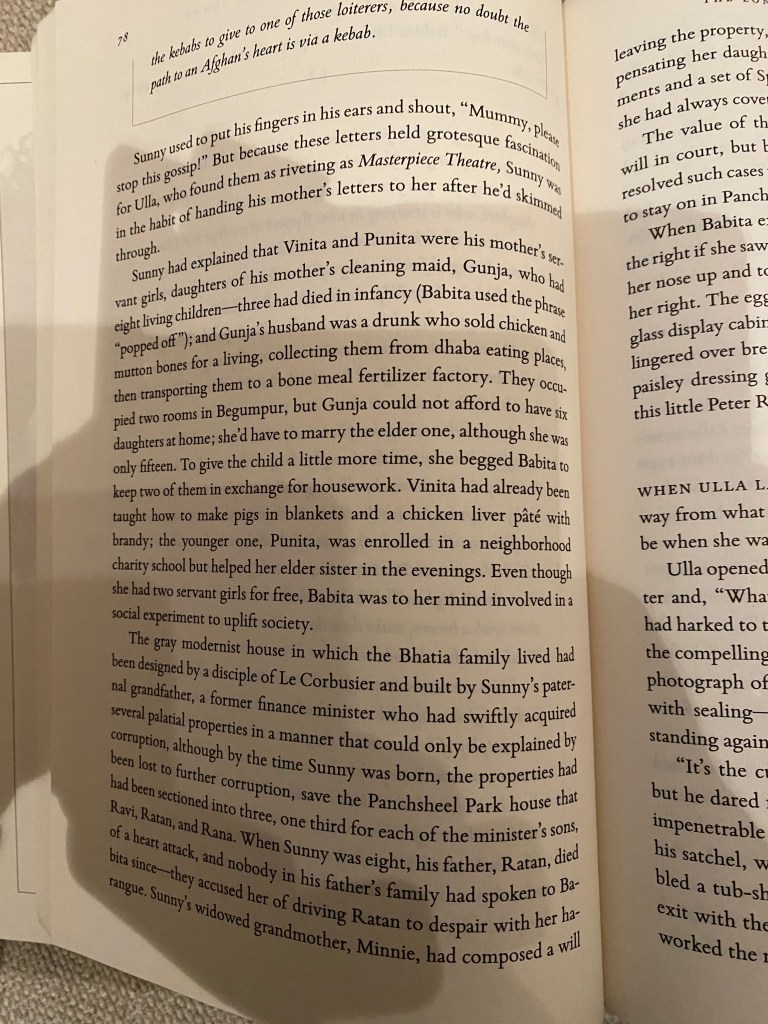
One tiny thing I’ll mention in passing. The bottom paragraph describes Sunny’s family home as a ‘gray modernist house … designed by a disciple of Le Corbusier’. So much information is conveyed in those few words. First, the family comes from wealth. Second, they are to some degree westernised – their house is modernist. Third, the fact that the architect was a disciple rather than Le Corbusier himself suggests something about the limitations on the aspirations of colonised elites. And fourth, ‘gray’ is an example of the the North American spelling conventions used throughout (‘neighborhood’ later in the paragraph is another): that these spellings persist in the UK edition is not a mistake, but an enactment at the micro level of the way US culture has come to dominate the book’s westernised Indian characters.

Before that, there’s a paragraph of raw exposition:

Sunny had explained that Vinita and Punita were his mother’s servant girls, daughters of his mother’s cleaning maid, Gunja, who had eight living children – three had died in infancy (Babita used the phrase “popped off”); and Gunja’s husband was a drunk who sold chicken and mutton bones for a living, collecting them from dhaba eating places, then transporting them to a bone meal fertilizer tactory. They occupied two rooms in Begumpur, but Gunja could not afford to have six daughters at home; she’d have to marry the elder one, although she was only fifteen. To give the child a little more time, she begged Babita to keep two of them in exchange for housework. <snip> Even though she had two servant girls for free, Babita was to her mind involved in a social experiment to uplift society.

The fate of Vinita and Punita, known collectively as Vini-Puti, is to be significant much later in the book. But because it’s November*, rather than discuss further, here’s a little verse:

November verse 5:
So much in his mother's letter
needs to be explained. Just who
is Vini-Puti? Who is Ratty?
What's this kebab how-de-do?
Gunja, mother of six daughters,
trains two up to follow orders,
flee the confines of the slum,
work for free for Sunny's mum,
cook liver pâté soaked in brandy.
This is tragic seen up close:
the mum's small gain, the girls' great loss.
But this ain't Hamlet, this is Sunny.
Vini-Puti serve their turn
like Rosencrantz and Guildenstern.

After the meeting: We discussed The Loneliness of Sonia and Sunny along with Arundhati Roy’s Mother Mary Comes to Me. I was astonished when the discussion of this book kicked off with one person saying she hated it and gave up at the 40 percent mark (she’s a Kindle reader). Nothing happened, she said. And that included Sonia’s harrowing emotional enthralment to the bizarrely irrational western artist. Probably needless to say, others disagreed.

Of the three of us (out of five) who had read the whole book, I liked it the best. For all three of us the first 40 percent (I make that about 260 pages) was what we enjoyed most. We had different versions of why it became less enjoyable: perhaps there’s a forced assertion of Indian ways of story-telling, a cultural repudiation of the western mode of the earlier parts; perhaps the talismanic object is too sketchily realised to carry as much narrative weight as seems to be intended; perhaps the book is just too long.

I persist in my opinion, shared by one other Clubbie, that it was a good idea to pair this with Mother Mary Comes to Me. Both books have domineering, eccentric mothers. The protagonists in both are secular Indians appalled at the rise of Hindu nationalism and the BJP – the Demolition of the Babri Masjid mosque looms in the background. Both explore myriad ways in which cultural differences can be negotiated by people from a globally non-dominant culture. Both have main female characters steeped in classic English literature.

We had an excellent dinner, including a dessert that fell flat on the floor when it was taken from the oven, but was delicious anyhow.


The group met on the land of Gadigal of the Eora Nation, and I have written this blog post on the land of Gadigal and Wangal. I acknowledge Elders past and present of all those clans, and welcome any First Nations readers.


* My blogging practice is to focus on the page that coincides with my age, currently 78, and in November I write fourteen 14-line stanzas in the month. which means incorporating one into most blog posts.
Mother Mary Comes to me, Arundhati Roy and the Book Club

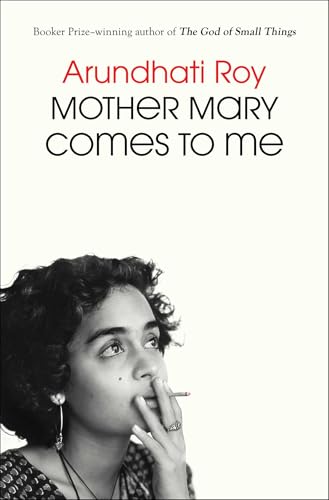
Arundhati Roy, Mother Mary Comes to Me (Scribner 2025)

Before the meeting: Mary Roy (1933–2022) was an extraordinary woman. She successfully challenged an inheritance law in the Indian state of Kerala so that women were able to inherit property, and she founded a ground-breaking school. That school, Pallikoodam, has a photo of her on its home page, accompanied by a vision statement:

Pallikoodam is born of the vision of Mrs Mary Roy. For fifty plus years she worked on moulding an extraordinary school that imparts a creative and all-round education that produces happy, confident children, aware of their talents as well as their limitations, unafraid of pursuing their dreams and living life to its fullest. Today, every one of us in Pallikoodam works to realise and forge ahead with her dream.

Mary Roy was also the mother of writer Arundhati Roy. In this memoir, she emerges as a formidable woman who did brilliant things, earning the admiration and cult-like devotion of many while challenging patriarchal institutions, and was at the same time a tyrannical, unpredictable, terrifyingly self-centred mother. Near the end of the book, Arundhati Roy describes a moment in 2022 when she was having dinner with three male friends, including her close friend Sanjay. She received a message on her phone:

It was from my mother. They, all men, each of them, including Sanjay, beloved by their besotted mothers, must have noticed the blood drain from my face and wondered what had happened. How could I explain to them that what had scared me was that I had got a message from my mother saying that she loved me.

It says a lot that readers understand perfectly why the message is terrifying, and that we also understand the intense moral, emotional and intellectual complexities involved in Roy sending a positive reply.

I love this book. It’s the story of the intertwined lives of two brilliant women, with the last half century of Indian history as an often intrusive backdrop. The genesis of Arundhati Roy’s writing is vividly told: her two novels The God of Small Things and The Ministry of Utmost Happiness, as well as her non-fiction, ‘activist’ writing, opposing the construction of a big dam that would displace millions of people, exposing the suffering of the people of Kashmir, reporting on time spent in a jungle with communist (‘Naxalite’) guerrillas, opposing Narendra Modi’s regime, and more.

I can imagine the book being portrayed as a misery memoir in which a famous writer complains about her wretched childhood, or as an exposé of a monster generally regarded as a saint. But that would be to misrepresent it. Mrs Roy’s personality was no secret. Her most loyal adherents were aware of her rages, her indulgences (she was always accompanied by an attendant bearing her asthma medication and, later in life, a supply of jujubes). And though Arundhati and her brother suffered terribly at their mother’s hands, she was a powerful force for good in their lives. There are any number of quotable lines to illustrate this complexity. Here’s just one from page 61, when the daughter was fifteen years old:

Between her bouts of rage and increasing physical violence, Mrs Roy told her daughter that if she put her mind to it, she could be anything she wanted to be. To her daughter those words were a life raft that tided her over pitch-darkness, wild currents and a deadly undertow.

There’s so much to enjoy. Arundhati has a friendship with the legendary John Berger, which gives us the unforgettable image of him as an elephant fanning her with his flapping ears. Hollywood actor John Cusack makes a cameo appearance as a witness of the mother–daughter relationship.

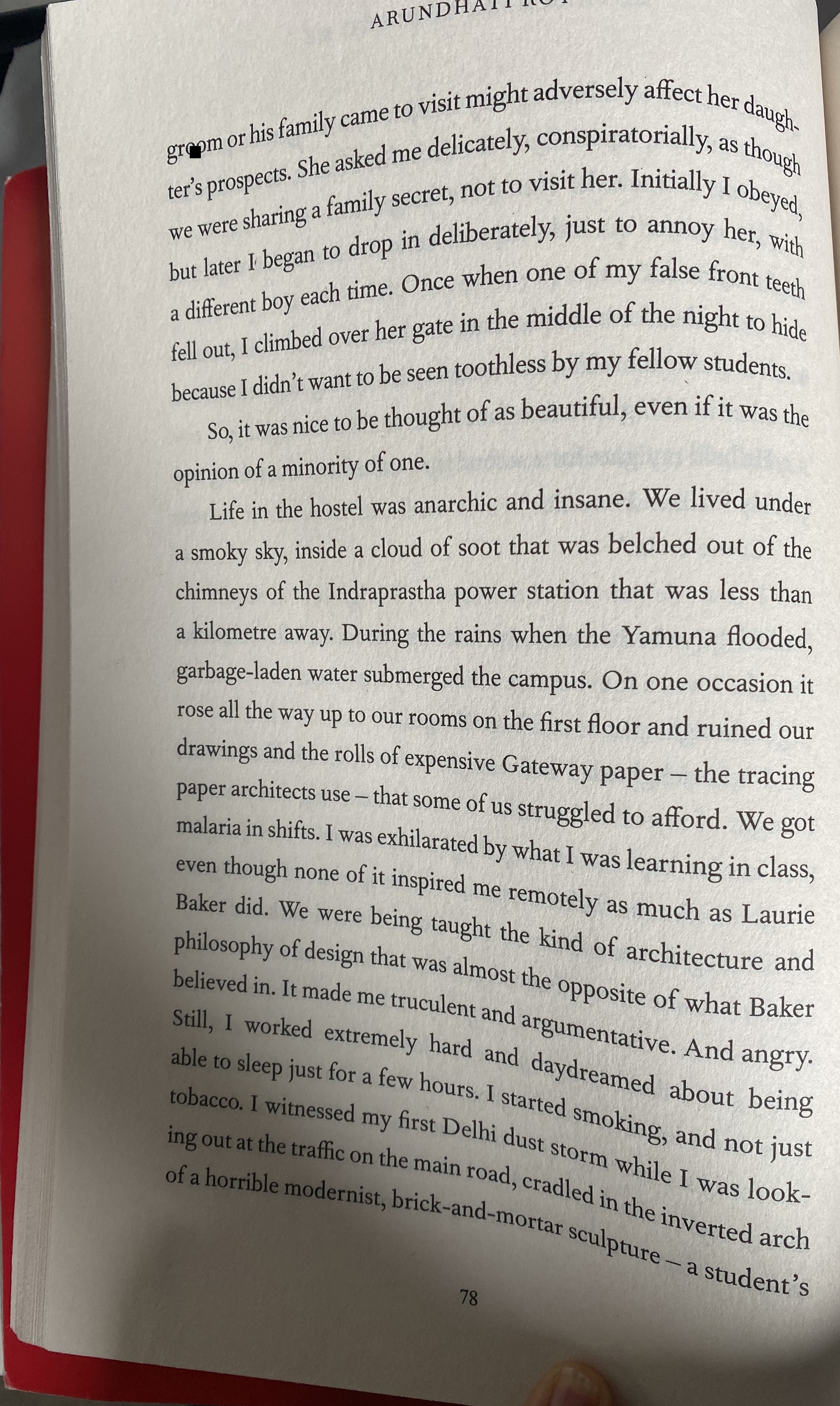
A look at page 78* makes it clear that the book is at least as much about the ‘me’ of the song as it is about ‘Mother Mary’. Young Arundhati is at the Delhi School of Planning and Architecture, free for the first time of Mrs Roy’s overwhelming presence. She has re-encountered the young man she calls JC – her first meeting with him when she was nearly fifteen and he was nineteen had been the first time she understood what sexual desire was: ‘My brain, my heart, my soul – all parked themselves in my groin.’ Back then, she had tried to be invisible. But on page 77, he tells her that he had thought she was a beautiful girl:

I was delighted. I had never, not for half of half a second, thought of myself as beautiful. <snip> I was the opposite of what Syrian Christian girls were meant to be. I was thin and dark and risky.

Such is the power of the writing that one hardly stops to question how the stunningly beauty the young Arundhati Roy that we see in photos could ever have felt that way.

On page 78 – after a paragraph about the Delhi family connection, Mrs Joseph, who disapproves of her – Arundhati is still absorbing that first delight:

So, it was nice to be thought of as beautiful, even if it was the opinion of a minority of one.

The rest of the page evokes grungy student life at the School of Planning and Architecture in new Delhi.

Laurie Baker (Wikipedia page here) is named as standing for the opposite of what was taught at the school. He was a pioneer of sustainable, organic architecture who designed Mrs Roy’s Pallikoodam school. He had inspired Arundhati to veer away from her earliest ambition, to be a writer, and leave home to study architecture. Though Arundhati did go on to be a writer, it was at the School of Planning and Architecture that some of her most important, enduring relationships were formed. As much as anything else the book celebrates these friendships.


After the meeting: Everyone loved this book and we loved discussing it. Someone threw a small grenade, saying that she didn’t see that Mrs Roy was such a terrible parent, that really Arundhati Roy had unfairly demonised her. The catalogue of physical and emotional violence, the fact that Arundhati’s brother shared her view, the way independent witnesses described Mrs Roy as ‘your mad mother’ and laughed at the terror on Arundhati’s face when she had to deal with her: none of this made a dent in her view. We could agree that Arundhati didn’t stay victim – she saw her mother as a model of being powerful in the world, and eventually came to recognise that in her way she loved her, and had given her the wherewithal to build a big life for herself, even if that meant rebelling against her.

We all learned things. For some it was about Indian politics, in particular about Karachi. For all of us, the impact of winning the Booker Prize was a revelation. We all had our ignorance about the Syrian Christians of India slightly decreased (the Roys are Syrian Christians – in Modi’s India, not Indian enough).

We read and discussed the book along with Kiran Desai’s The Loneleiness of Sonia and Sunny. Both books feature complex mother-daughter relationships, both have rich insights into the cultural and political relationships between India and the West, a number of historical events feature in both. But no one was much interested in a compare-and-contrast discussions.


Because it’s November*, I will now burst into rhyme:

November verse 4: Student days
Are student days always anarchic,
smoke-filled, garbage-racked, insane,
angry at the hierarchic
lectures that would tame the brain
with wisdom that's received as certain?
Always the time that lifts the burden
from the backs of those who bear
the yoke of old beliefs? Time where
new songs are sung and new words spoken,
daughters, sons beyond command
(don’t even try to understand),
first loves formed and hearts first broken,
new ways found with fork and knife,
friendships made that last for life?

The group met on the land of Gadigal of the Eora Nation, and I have written this blog post on the land of Gadigal and Wangal. I acknowledge Elders past and present of all those clans, and welcome any First Nations readers.


* My blogging practice is to focus on the page that coincides with my age, currently 78, and in November I write fourteen 14-line stanzas in the month. which means incorporating one into most blog posts.
Robbie Arnott’s Dusk and (not) the book group

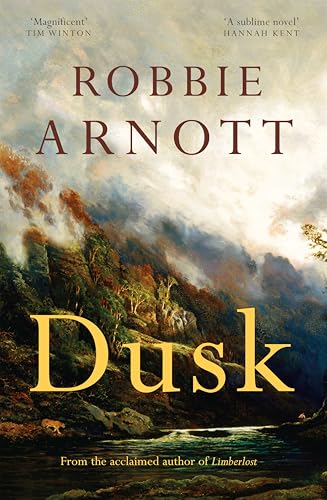
Robbie Arnott, Dusk (Picador 2024)

Before the meeting: we had enjoyed Robbie Arnott’s previous novel, Limberlost, so Dusk was a promising choice.

It’s set in a place very like nineteenth century Tasmania. Iris and Floyd Renshaw, the twin children of notorious outlaws, travel to the highlands and aim to kill a puma named Dusk that has been ravaging the region, killing livestock and people. A bounty has been offered by the graziers, and the twins see it as a chance to move away from their life at the margins. The story of their encounters with graziers and other hunters, and with a community of people who lived there before the settlers arrived, is full of elegant twists and moral dilemmas. There are moments of sheer horror, and moments of great tenderness. The writing is consistently vivid – you can tell that Robbie Arnott has visited the landscape even while he adds surreal elements like giant bones protruding from the ground; and the twins’ physical ordeals are viscerally real.

Even as I recognised all these qualities, I had trouble engaging. From about page 100, when the twins and their companions come close to Dusk, I started to care, and where a couple of pages are blacked out after a dramatic moment, what might have seemed a bit of cleverdickery had me on the edge of my seat. But then I got lost again and the final pages left me, as the song says, wondering why.

At page 78*, the twins have just arrived in a small town full of men who are hunting the killer beast. She – Dusk, the puma – has killed the son of a wealthy grazier, whom the twins have encountered grieving extravagantly in the street. For the first time since they came to the highlands, Iris finds herself confronting what they may be up against, ‘the probability of being ripped into death, faster than blinking’. Now, ‘starkly aware of the softness of her flesh, the smallness of her body, the stumbling clumsiness of her humanity’, she encounters for the second time Patrick Lees, a man who stands out from the crowd of hunters. On page 77 he has proposed that the twins join him to help track down the beast. Floyd, characteristically, stays more or less silent.

‘So you are chasing the bounty,’ said Iris, annoyance bending her voice.
Lees contemplated his pipe before slipping it back between his lips and speaking around it. ‘Maybe I’m just endlessly curious.’
 Iris clenched her teeth, holding her irritation in. Floyd kept rubbing his chin, seeming to take in Lees’ words without making any effort to respond. All of it was maddening to Iris – Floyd’s stupid performance, the sudden appearance of Patrick Lees, the unmoored feeling she had while being near him, his casual offer, his playful duplicity – and she wanted to get away from both of them and from herself, so she tugged at the collar of her coat and touched her hat. ‘We’ll think about it.’
  Lees nodded. ‘Of course.’ He indicated a lemon-gold building that rose above the stable. ‘I’m staying at the inn. I’ll be leaving at first light.’ Another little smile. ‘I hope to see you then.’

They left Patrick Lees breathing smoke at the plains and walked back through the stable to the street.

The main thing on display in this passage is Robbie Arnott’s deft use of tropes from romance novels. Iris is irritated by a suave, superior man, while having an ‘unmoored feeling’ while she’s near him. It’s no spoiler that Iris can’t resist the offer to go on the hunt with him, or that they do spend a night together. But as in the romance genre, there is every indication here that Lees is a cad: his little smile is surely a red flag, and while Iris may be uneasy, the reader can be reasonably certain that someone who breathes smoke is dangerous. You leave this page with a subliminal sense that Lees may not be just a romance-genre cad, but a horror-genre monster.

There’s a lot to admire in this book. There’s a lot to discuss. The surreal elements of the landscape read as both hamfisted metaphor and strategy for including First Nations characters who won’t be mistaken for actual palawa. But I was unconvinced. Even the basic set-up didn’t work for me, even if someone were to tell me that pumas were once introduced to Tasmania / lutruwita. I enjoyed some parts but never got on its wavelength


After the meeting: I couldn’t go to this meeting, and though I missed the people, I wasn’t sorry not to discuss the book. The WhatsApp report painted a picture of a very convivial evening, where everyone liked the book, some more than others. Evidently one person liked it more as the evening wore on – maybe I would have joined him in that movement. Maybe not.


I have written this blog post near what was once luxuriant wetland, in Gadigal and Wangal country. I acknowledge Elders past and present of those clans, and welcome any First Nations readers.


* My blogging practice is to focus on the page that coincides with my age, currently 78.

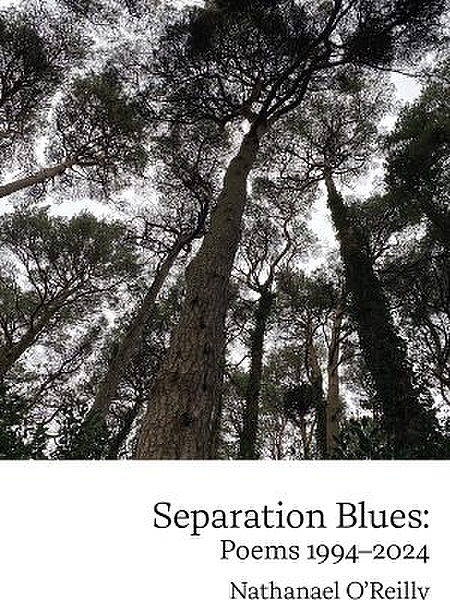
Nathanael O’Reilly’s Separation Blues

Nathanael O’Reilly, Separation Blues: Poems 1994–2024 (Flying Island Poets 2024)

Separation Blues is a selection of poems from Nathanael O’Reilly’s nine previous books, published over 30 years. Each of those books had its own coherence of theme and manner, but this book mostly hangs together beautifully. There’s a bit of whiplash when eight Covid lockdown poems from boulevard (Downingfield Press 2024) are followed by four from Selected Poems of Ned Kelly (also Downingfield Press 2024), which mimic the semi-literate style of the famous Jerilderie letter. But I’m not complaining.

I’m currently reading Arundhati Roy’s memoir, Mother Mary Comes to Me. Something she writes (on page 53) seems relevant to these poems:

Maybe it’s best to leave some things un-understood, mysterious. I’m all for the unclimbed mountain. The unconquered moon. I’m weary of endless theories and explanations. I think I have begun to prefer descriptions.

Most of the poems in this collection avoid theories and explanations, or overt expressions of emotion. Most of them describe. Many are structured as lists – of things, people and thoughts encountered while travelling; youthful escapades; political events witnessed. There are a couple of dramatic narratives – a poem’s speaker faints at a service station, and in a different poem he catches fire at a backyard barbecue – but they too have a laconic descriptive air. Even the love poems and elegies, of which there are quite a few, mostly leave their emotional heft to be implied, hovering in the silence around the poem.

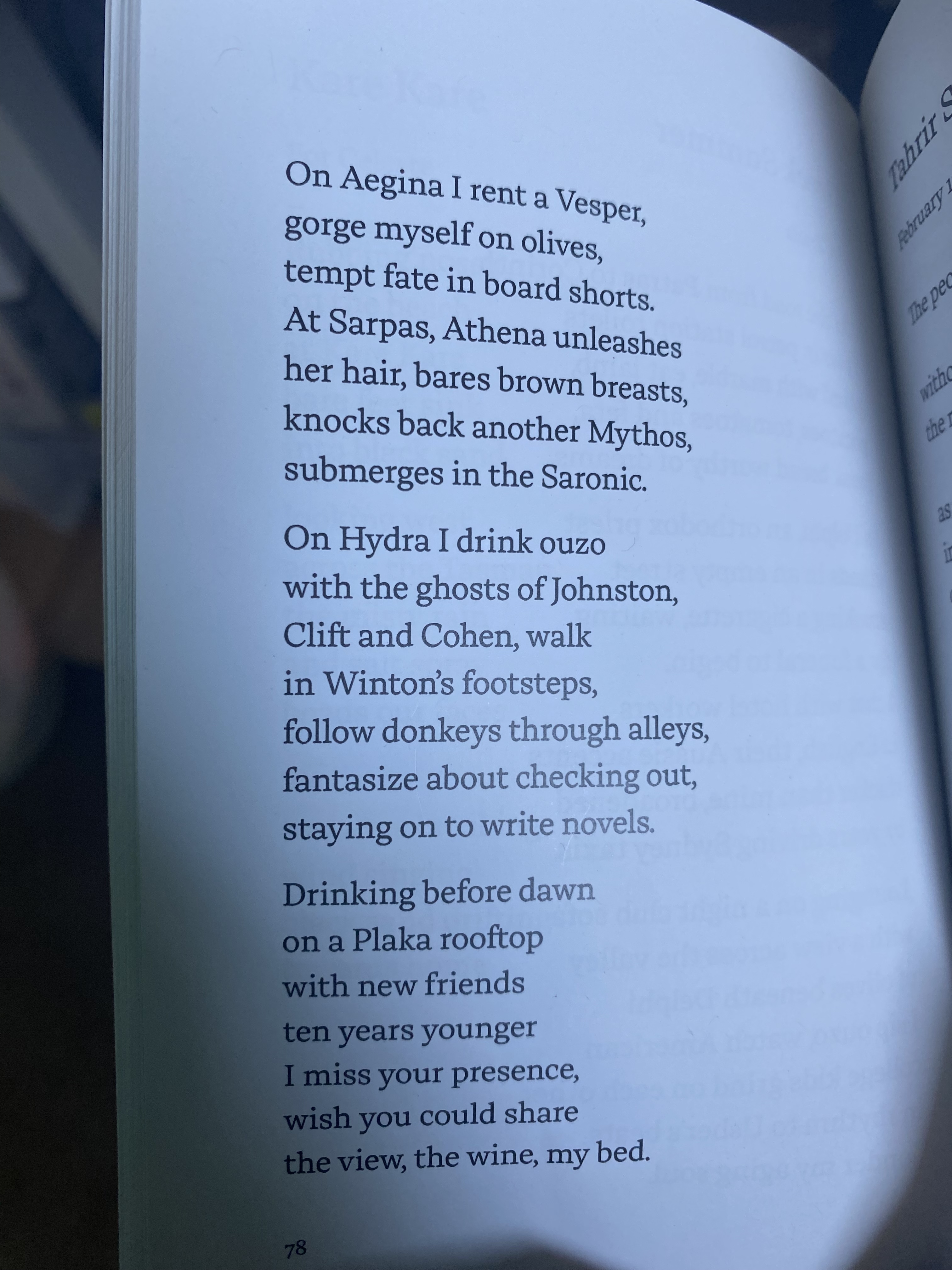
Page 78* is the second page of the poem ‘Greek Summer’.

This is one of five poems in the book with the dedication To Tricia. Some of the others are travel poems featuring ‘we’. ‘Côte dAzur (1905)’, for example, begins ‘During our last childless summer / we lay on the beach at Eze’. In ‘Greek Summer’ the poet travels alone. The first two stanzas on page 77 begin, respectively, ‘On the road from Patras to Corinth’ and ‘In Delphi’, and in the third he is again in Delphi. In those stanzas, he eats, drinks ouzo, performs bodily functions, chats with the locals, notices things – including the strong Australian accents of some taxi drivers, and American college kids who ‘grind on each other’. He ends the third stanza pondering his ageing soul. It’s an impressionistic travel diary.

On Page 78 our solitary poet visits two more islands, and arrives at Athens on the mainland.

First there’s Aegina:

On Aegina I rent a Vespa, 
gorge myself on olives,
tempt fate in board shorts.
At Sarpas, Athena unleashes
her hair, bares brown breasts,
knocks back another Mythos,
submerges in the Saronic.

More eating and drinking and mild intercultural discomfort – are board shorts acceptable? At Sarpas Beach, there’s a little poetic playfulness: this is the land of the Ancient Olympians, so when a woman goes topless on the beach, he imagines her as an avatar of Athena, the virgin goddess of wisdom, and suggests (punning on Mythos, the name of a local beer) that by letting down her hair and baring her breasts she’s knocking back the myth that she, Athena, is aloof, dignified and virginal. He’s enacting the male gaze all right, but not full-on lasciviously. He doesn’t imagine the woman as Aphrodite goddess of love, and the detail of her breasts being brown suggests that his interest is at least partly sociological: this is her usual behaviour at the beach. His gaze is detached, touristic, the erotic element quietly backgrounded.

On to the next stanza and the next island:

On Hydra I drink ouzo 
with the ghosts of Johnston,
Clift and Cohen, walk
in Winton's footsteps,
follow donkeys through alleys,
fantasize about checking out,
staying on to write novels.

More drinking. Here, he is a literary tourist, wearing his Australianness on his sleeve. Australian writers Charmian Clift and George Johnston famously did a lot of writing, drinking and fighting on Hydra in the 1960s, some of it in the company of young Leonard Cohen. Tim Winton’s novel The Riders has a sequence on Hydra, in which, if I remember correctly, he rides a donkey on a winding hillside path searching for his wife who has done a runner (and whom he never finds).

As a matter of nerdy interest, this poem appeared in O’Reilly’s 2017 book, Preparations for Departure (UAP Press), before the current resurgence of interest in Charmian Clift and the time Leonard Cohen spent on Hydra. See Nick Broomfield’s Marianne and Leonard: Words of Love (2019), the 2024 Norwegian TV series So Long, Marianne, Nadia Wheatley’s selection of Charmian Clift’s newspaper columns, Sneaky Little Revolutions, or Suzanne Chick’s memoir, Searching for Charmian.

The poet’s fantasy of checking out ‘to write novels’ has the same detached feel as his gaze at ‘Athena’ earlier.

The tourist narrative continues:

Drinking before dawn 
on a Plaka rooftop
with new friends
ten years younger

Without breaking a sweat, threads come together. He’s in the Plaka, a neighbourhood near the Parthenon, the ruined temple of Athena, who is now an abstraction, no longer topless with her hair down. Earlier he has watched young people and felt his age, he now drinks through the night with them, but his mention of the age difference here reinforces rather than contradicts his sense of having an ‘ageing soul’.

I miss your presence, 
wish you could share
the view, the wine, my bed.

And boom! The poem reveals itself to be a love poem. It’s not a travel diary after all, but a letter home. The details that make up his narrative have been selected with the letter’s addressee in mind. I see young people grinding (and I think of you). I see Athena letting her hair down at the beach (and I think of you). I think of George and Charmian’s relationship (and I think of you), of The Riders (and I think of you).

Many of the poems in this book have similarly unflashy appearances. I don’t know if they all repay close, careful reading as much as this one. I do know that some made me cry. One or two made me gasp. More than one left me pondering a surprising word.

I was searching for a way to finish this blog post, when I came across Anne Casey’s speech launching the book, in the Rochford Street Review (at this link), which includes this:

Here, you will learn of his great loves – gained, lost, and those most closely held. There are elegant elegies – to cherished friends, family, places and times; hymns to eroding ecology and loss of innocence; casually dropped epiphanies; and searing sociopolitical commentary. Small moments provide windows into worlds, slipping through the decades of Nat’s life and his many travels. In this book, he also visits with ghosts of Australia’s troubled settler history.

All true, especially the bit about small moments providing windows into worlds.


I wrote this blog post on the land of Gadigal and Wangal of the Eora Nation, where I saw two sleek crows enjoying the brilliant sunlight this morning. I acknowledge Elders past and present of all those clans, and welcome any First Nations readers.


* My blogging practice is to focus on the page that coincides with my age, currently 78.

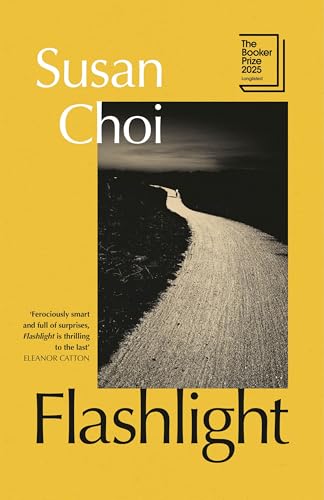
Susan Choi’s Flashlight at the Book Club

Susan Choi, Flashlight (Jonathan Cape 2025)

Be warned: the back cover blurb of this novel reveals something that the novel itself only begins to hint at at about the midpoint. Luckily I didn’t read the blurb until after I’d reached that hint – but thanks a lot, Jonathan Cape!

Before the meeting: I’ll avoid spoilers here, and just say the novel becomes something quite different from what you might expect from the first hundred pages or so. But when you go back and reread the start, you find that the writer has played fair. Sharper and better-informed minds than mine may well have understood the broad shape of the story from the beginning.

As in many novels these days, each chapter takes up the story from the point of view of a different character.

There’s Louisa, whom we first meet as an intelligent, uncooperative child in a therapy session: she has lost her father, presumed drowned, a loss that hangs over the whole book.

Seok, Louisa’s father, was born in Japan just before World War 2 to Korean parents. When the war ends he is shocked to discover that he isn’t in fact Japanese. His parents emigrate to North Korea, but he refuses to join them and goes instead to the USA where, now known as Serk, he gets a job at a provincial college, marries, has a daughter (Louisa) and lives as much of the American dream as is allowed to a Korean green card holder in the 1960s and 1970s.

Serk’s white wife, Anne, escapes from the thrall of a charismatic religious leader, garners an education by doing secretarial work for a literary scholar, and marries Serk. She’s dramatically unhappy in the marriage, especially when she accompanies him on a temporary posting in Japan. By the time of his disappearance at the beach, she is almost completely disabled by alienation from Japanese society and what turns out to be multiple sclerosis.

As well as those three main characters, there’s Tobias, Anne’s child by the charismatic religious leader, whom she gave up to be adopted at birth. He comes back into her life as a troubled teenager and continues to play a role over the decades. And one other character, a South Korean named Ji-hoon, has a chapter to himself late in the book.

So it’s a family story, and the family is fractious. Mother and daughter don’t have a single conversation over the decades that remains affectionate or even cordial for more than a minute. Before he disappears, Seok/Serk is abrasive both to his family and to pretty much anyone who tries to get close to him, especially other Koreans. Tobias is charming and kind, but loopy. And, the miracle of it, we like and care about them all as one small family being crushed under the weight of geopolitics.

Page 78* is in one of Serk’s chapters.

A lot is happening on this page. Serk meditates on his connection with his daughter, on her brilliance and creativity. He briefly acknowledges to himself that his bursts of rage are beyond his control.

Only five and six years old when she’d created these things; her mind was always at work, it amazed him. He was trying to make her a present as well, and nights he didn’t feel compelled to leave the house, blown on a gust that he couldn’t control, he worked on the gift in their basement, and entered a rare sort of peace from using only his hands, not his mind.

And he tackles correspondence with his sister Soonja, the only family member who has stayed in Japan. In a typically tangential way the narrative acknowledges the racism in the background of the action that happens in the USA (there is racism in Japan too, similarly backgrounded for the most part).

He had a letter in progress that he extracted, as well as the series of received letters. It bothered him that their glaringly foreign airmail sheets, outweighed by their numerous conspicuous stamps, arrived so often at his office, despite such exoticism being, as he knew, almost expected of him, as the only foreigner on the permanent teaching staff. That he was using his college letterhead and not an airmail sheet himself was pure vanity for which he’d pay with the stamps.

Then we are shown a little of the content of the correspondence. Here, late at night and alone, he is able to engage with his Korean life, of which his US family and colleagues are completely unaware.

Running his eyes over his characters, he read, where he’d left off, ‘I cannot even begin to consider this without having confirmation in hand,’ and then he had to go back to the most recent letter to refamiliarise himself with Soonja’s latest equivocation. Or perhaps it was confusion, or ill-founded conviction, or just a function of her wretched written Japanese, arrested at the level of a child; she’d never had a scientific mind in the first place, her emotionalism often caused her to misrepresent supposition as fact, and being obliged to write him in her poor Japanese because his written Korean was undeniably worse likely added resentment to the other counterfactual tendencies in her personality; they might have last seen each other almost twenty years before, but he was still her elder brother. He still remembered all her shortcomings.

‘The permits are certain, the time is not certain, it cannot be made certain until you because for just a short length so you are the problem as I said in my letter before. Should I tell our parents you say NO?’

If that doesn’t make sense to you out of context, be reassured. It’s close to incomprehensible when you do have the full context. Later, Serk meets up with Soonja in person, but we never get a clear idea of what she is asking of him. What we know is that Seok, now Serk, feels a tremendous gravitational pull of eldest-son responsibility for his family, and that he resists this pull. We can’t tell what it is that they want from him. Around about this page, I started to wonder if he didn’t drown a year or so after this scene, but somehow deserted his beloved Louisa to go to North Korea. (That’s not a spoiler, I’m not saying if I was right, just that there’s a growing sense of unease about what happened.)

After the meeting: We all enjoyed this novel. Its acknowledgements list fifteen books about Koreans in Japan and the historical events that impinge on Serk and his families. Some of us had never heard of these events (I’m in that group). Others knew of them, and so weren’t completely surprised by the revelation that arrives soon after the halfway mark. One person thought they were urban myths but she was reassured when we looked up Wikipedia.

The discussion brought to light a feature of the book that I hadn’t focused on: many narrative strands are simply not resolved. For instance, there is one other Asian staff member at Serk’s college, known as Tom. He is also Korean, though Serk does his best to keep him at arm’s length and at one stage has a blazing row with him when he believes, wrongly, that he is a North Korean sympathiser. Tom disappears and soon after so does his distraught wife. We never learn what happened to them. For another instance, Louisa as a young adult marries a young man she meets on a bus – he is unwashed and smelly, and we understand that she finds this comforting because in that way he is similar to her older half-brother Tobias who was kind to her after Serk’s disappearance. She marries him, and then he pretty much disappears from the story except as an offstage character – wealthy, entitled and abusive (though we don’t learn any details). Another: when she’s old and living as a grumpy isolate in a community of old people, Anne develops a relationship with a man named Walter. The beginnings of this connection are beautifully realised as Walter is cheerfully unfazed by Anne’s prickliness. But then, as years pass with the turn of a page, he’s not there any more. As someone pointed out, given that the book’s central event is a disappearance, it’s only right that there are many subsidiary vanishings.

Perhaps related to that, one person felt that the shift of narrative focus with each new chapter was frustrating. Balls were left in the air and by the time we came back to that person the balls had landed and the person’s life had moved on. I certainly felt a kind of whiplash, especially in the final third, when time passes quickly, but I wasn’t frustrated so much as energised.

We discussed this book along with Michelle Johnston’s The Revisionists. Both books deal with significant historical events of the past half century. Reading The Revisionists I felt like a FIFO western observer. Flashlight is more like a deeply intimate conversation.


The group met on the land of Gadigal and Wangal of the Eora Nation, where I have also written this blog post. I was born on MaMu land, and spent formative years on the Gundungurra and D’harawal land. I acknowledge Elders past and present of all those clans, and welcome any First Nations readers.


* My blogging practice is to focus on the page that coincides with my age, currently 78.

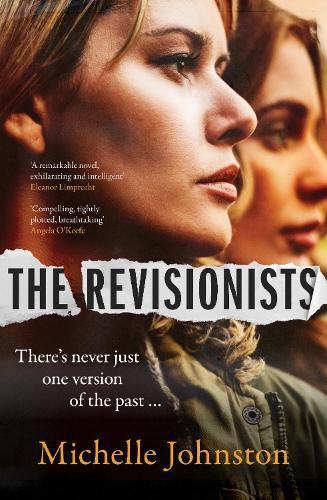
Michelle Johnston’s Revisionists and the Book Club

Michelle Johnston, The Revisionists (Fourth Estate 2025)

Before the meeting: Michelle Johnston’s day job is in emergency medicine. According to a 2023 interview on ABC Perth, she had written a draft of this novel when she decided that she had to go to Dagestan, a small republic in south of Russia where most of the novel’s action takes place, because ‘if you’re going to write somebody else’s story, you’ve got to respect it by going there and trying to understand it from the ground level up’. It was risky – DFAT advised against going and the Smart Traveller website warned of possible terrorist attacks – but she went out of dedication to the integrity of her writing, and in fact ‘had the most beautiful trip’.

The novel’s main character, Christine Campbell, doesn’t have such a beautiful trip, though the book captures the physical beauty of the place and the wonderful hospitality of its people. Christine is a journalist. Disenchanted with what Western Australia has to offer including an implausible level of sexism in Perth’s newsroom, she decides to travel to Dagestan to join Frankie, her best friend from schooldays who is a doctor working in a clinic in a tiny village there. Christine is there to help – she organises supplies and teaches first aid to local women – but she harbours an ambition to publish a groundbreaking piece of journalism about the possible outbreak of war.

It’s an odd set-up. We know from the beginning that Christine’s ambitions outstrip her abilities, and that her journalistic ethics are shaky. She intuits that the women of the village know that war is coming, but she can’t get them to say it outright. In fact everyone knows there’s a serious risk of war. It’s 1999: the war in neighbouring Chechnya ended in 1996, armed Islamist groups are forming everywhere, Russia is determined to fight them off, and the place, as Christine keeps saying, is a ‘tinderbox’. But she’s determined to write a feminist-leaning piece in which she gives voice to the women of the village saying what she just knows they would say if only they would say it. Her article will be titled ‘The Cassandras of the Caucasus’, because she believes the classical allusion will lend it class. (And the samples we see of her over-egged writing are consonant with that kind of thinking.) Frankie hints that she might expose the women to the danger of reprisals. She meets a famous journalist who gives her some Journalism 101 advice that seems to be news to her: if you’re out to get information from people, tell them up front that you’re a journalist.

The book opens in Manhattan 25 years later, in 2023, with Christine watching a TV documentary about herself and the one article that made her famous. A little later, Frankie turns up at her door, and challenges her about the untruths she told in the documentary and in the famous article. As the book proceeds, alternating between the two time periods, we learn the full story of how the article came to be written, and the fate of the Dagestan village. Revelation follows revelation. Christine’s ethics are a lot worse than shaky.

The book tackles important subjects: journalist ethics, the nature of memory, the role of ‘helpful’ but insensitive Westerners, the question of who owns a story. There’s a strong sense of place, not only in the austere beauty of Dagestan, but also in London where Christine and her friends have a brief respite, and Manhattan where she spends more than two decades in guilt, luxury and inertia.There’s a tumultuous affair with a man that we know is up to something, and a painfully real portrait of an unhappy marriage

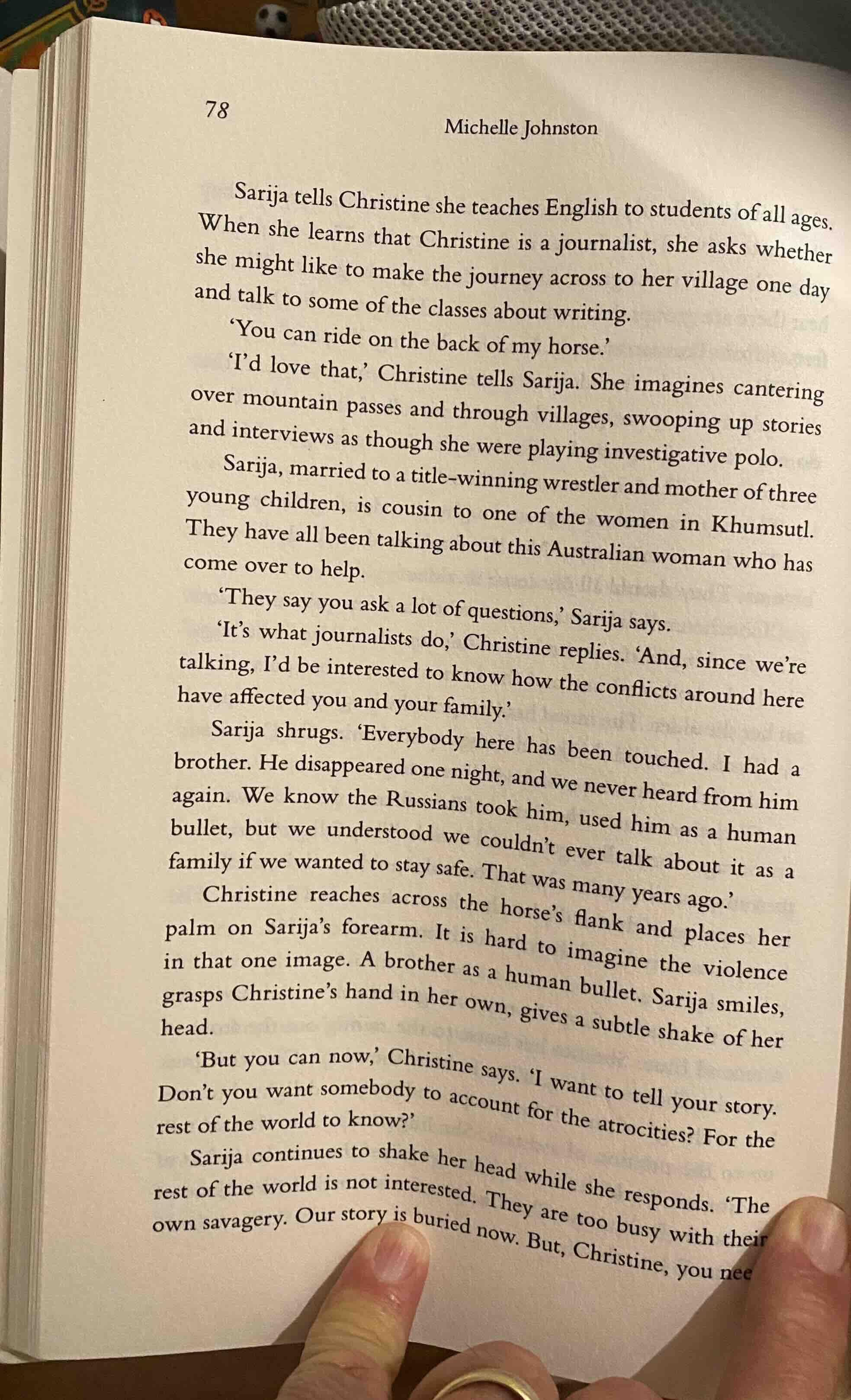
On the strength of all that, you’d think I would have been engrossed. But I struggled with it, and it’s not easy to say why. It turns out that a close-ish look at page 78* suggests a possible reason.

Sarija is a teacher of English from a nearby village who has attended Christine’s first-aid classes, and even acted as her assistant. Here, the two women are chatting, leaning against the dusty haunches of Sarija’s horse. Sarija suggests that Christine might visit her village to talk to her students about writing:

‘You can ride on the back of my horse.’
‘I’d love that,’ Christine tells Sarija. She imagines cantering over mountain passes and through villages, swooping up stories and interviews as though she were playing investigative polo.

This is an example of many similar moments. I would have said it hits a false note: why would Christine, formerly Crystal from the WA wheat belt, think of polo? Surely the forced simile is an awkward writerly intrusion? On rereading, I see it differently. What’s happening is that the narrative voice, while technically telling the story from Christine’s point of view, looking over her shoulder as it were, actually undermines her, mocks her as callow, exploitative, self-serving, in effect accusing Christine of thinking of her journalistic quest as a jolly sporting venture.

There are more examples even in this one page of dialogue.

‘They say you ask a lot of questions,’ Sarija says.
‘It’s what journalists do,’ Christine replies. ‘And, since we’re talking, I’d be interested to know how the conflicts around here have affected you and your family.’

This is a woman who has been uncomplainingly lugging boxes around the clinic, winning the trust of the local women as she teaches them first aid. As soon as she thinks of herself as a journalist she becomes patronising (‘It’s what journalists do’) and would-be exploitative (‘Since we’re talking…’).

Sarija opens up to her anyway. Again, Christine makes a small gesture of sympathy, but her mind goes to the juicy turn of phrase:

It is hard to imagine the violence in that one image. A brother as a human bullet.

‘I want to tell your story. Don’t you want somebody to account for the atrocities? For the rest of the world to know?’
Sarija continues to shake her head while she responds. ‘The rest of the world is not interested. They are too busy with their own savagery. Our story is buried now. But, Christine, you need to know this: you don’t find answers here by asking questions.’ She pauses. ‘You find the answers by being quiet.’

To which this reader, led by the narrative voice, wants to shout, ‘Yair, Christine. Be quiet.’

Later, when Christine is frustrated at the lack of usable quotes from the women, she thinks back to this conversation and sees Sarija as her likeliest source of good copy. There may be some truth to this portrait of journalism in the field, but when she’s being a journalist Christine is almost completely unlikeable. Later, when she manages an interview with a self-styled warlord, she castigates herself for doing something terrible with what she has been told. The narrative voice holds back from condemning her, so even when she’s hard on herself, she is seen to be missing the point. She does commit one major journalistic sin, and in that case goes from self-deception about the gravity of her offence to wallowing in shame and remorse.

Though Christine goes on to make amends in some respects, I get the impression that Michelle Johnston doesn’t like her main character – and that makes a book hard to read.

Other people like this book a lot more than I do. Lisa Hill’s review is definitely worth reading.

Just before the meeting: We read two books at each meeting of the Book Club. The Revisionists was paired with Susan Choi’s Flashlight, and the comparison wasn’t kind to The Revisionists. For just one thing, both books deal with terrible historical events. In her acknowledgements, Susan Choi lists fifteen books of fiction and non-fiction about her subject so the reader can check how closely her fiction sticks to known facts. Michelle Johnston tells us nothing about her sources. This might not have mattered, but when there is an unreliable central character, it would be good to know if two atrocities in particular were invented for the horror of it or were documented events.

After the meeting: We were pretty unanimous in not caring for this book. Not everyone agreed that the author didn’t like her central character – what I saw as criticism of her as callow and exploitative, others saw as ironic highlighting of her naivety. But none of us much liked her anyway. One person went so far as to say the book shouldn’t have been published. Someone who has visited New York City quite a lot was exasperated that when Christine decides to sell a Rothko that has come into her possession, she takes it to a local gallery. ‘I’m sorry,’ she said, ‘if you have a Rothko to sell you go uptown to Christie’s or Sotheby’s.’ Rookie error, I guess.

We pondered the meaning of the book’s title. Perhaps it refers to the way Christine altered some key facts in her famous article. Perhaps it highlights an otherwise inconsequential moment in the last pages when Frankie and Christine realise they have completely different memories of how Christine came to be in Dagestan. We also pondered the meaning of the cover image: two women in profile, both with the abstracted air of models. None of us could see how it related to the actual novel.

On the other hand we had culturally eclectic creations from Tokyo Lamington for dessert, and Flashlight (blog post to come) is an excellent book that provoked interesting conversation.


The group met on the land of Gadigal and Wangal of the Eora Nation, where I have also written this blog post. The days are getting longer, and warmer, and I’ve been encountering a beautiful, satiny crow near my home. I acknowledge Elders past and present, and welcome any First Nations readers.


* My blogging practice is to focus on the page that coincides with my age, currently 78.

Jock Serong’s Rules of Backyard Cricket

Jock Serong, The Rules of Backyard Cricket (Text 2017)

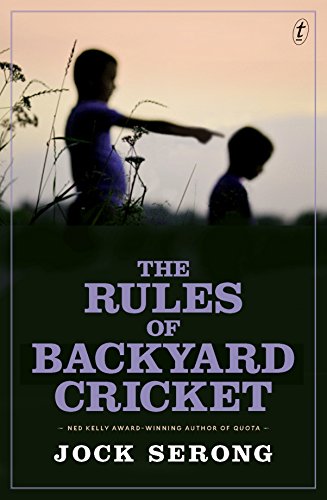
I was given The Rules of Backyard Cricket as a gift some years ago. Friends had told me it was excellent, but I knew nothing about it. The cover illustration, which shows two small boys in silhouette, one of them pretending to shoot the other in the back of the head, suggested that it might be less benign than the ‘Cricket’ episode of Bluey.

The opening chapters have a lot in common with that episode. Two brothers in the suburbs spend endless hours playing cricket with makeshift equipment and their own idiosyncratic rules. Like Bluey‘s Rusty they become excellent and go on to bat for Australia.

But that’s where the similarity ends: the brothers, Darren and Wally Keefe, are locked in vicious mutual combat even while their brotherly bond is strong, which puts the book in a long tradition of stories about quarrelling brothers: think Cain and Abel, Jacob and Esau, Romulus and Remus, William and Harry. As they come to prominence in the cricketing world, Darren, the younger brother, attracts headlines for his off-pitch misbehaviour with drugs and chaotic relationships, and a terrible hand injury excludes him from cricketing heights. Wally becomes captain of the Australian team and can be depended on to present the ideal face of professional sport, though his personal life suffers under the strain. They typecast themselves: ‘Wally as responsible, grave: a leader. [Darren] a force of nature: a talented freak with no mooring.’ (Page 73)

In the background is the world of organised crime, match-fixing and corruption – embodied in Craig, their friend from teenage years who now lives a shadowy criminal life. Also in the background is their single mother, whose unfailing belief in both of them has been crucial to their success, and their long-suffering women partners, where I choose the word ‘suffering’ deliberately.

At the start of the novel, Darren is locked in the boot of a car, on the way to an unknown destination where, he assumes, he is about to be killed. He’s not sure who is going to kill him or why, and as he tries to work his way free he thinks back over his life, and in so doing narrates the book. Each chapter begins with a brief report on what’s happening in that boot, a device that both reassures readers that the story is something other than a biography of two fictional sportsmen, and challenges us to spot the moment when Darren falls foul of someone murderous.

I’m not a cricket fan, but I can follow a conversation about it (unlike the AFL in Helen Garner’s The Season). I loved the descriptions of cricket matches here – the fast bowling, the sledging, the many technicalities. Some readers will need to skim those bits. I’m with them in not getting most of the references to famous cricketers, but it didn’t worry me.

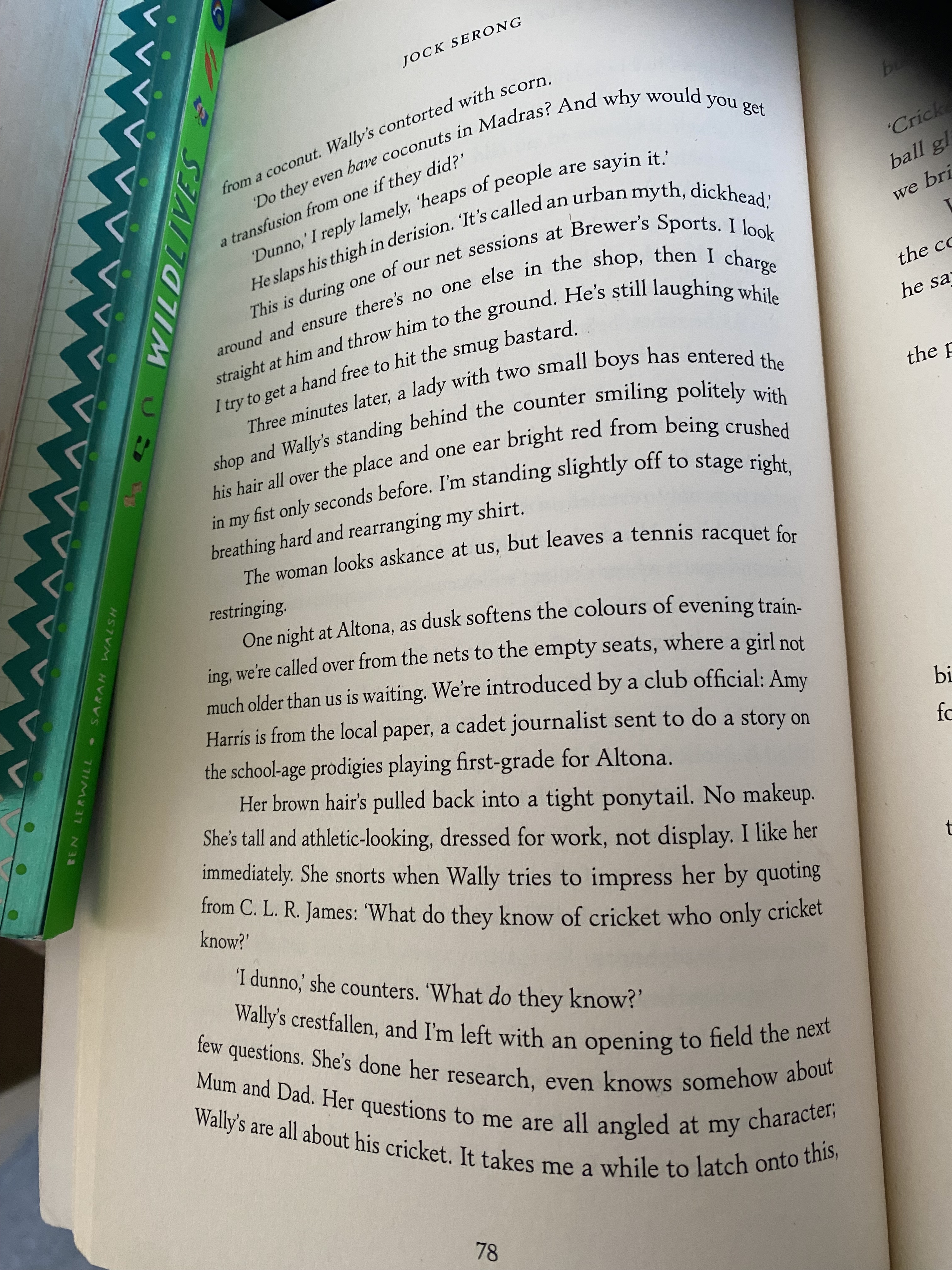
On page 78*, about a quarter into the book, the teenaged brothers have recently moved out of home. Wally is being recognised as a cricketer of ‘phenomenal self discipline’ but, according to Darren, when they play in the back yard he’s still ‘vengeful, savage and petulant’. They are in a sports-gear shop where Wally has a job, and where Darren visits to play with the cricket gear.

Two things happen on this page, one to do with the boys’ relationship and the other introducing a character who will play a crucial role. First, Wally sneers at Darren for believing an improbable story about a Test cricketer being given a transfusion ‘from a coconut’:

I look around and ensure there’s no one else in the shop, then I charge straight at him and throw him to the ground. He’s still laughing while I try to get a hand free to hit the smug bastard.
Three minutes later, a lady with two small boys has entered the shop and Wally’s standing behind the counter smiling politely with his hair all over the place and one ear bright red from being crushed in my fist only seconds before. I’m standing slightly off to stage right, breathing hard and rearranging my shirt.
The woman looks askance at us, but leaves a tennis racquet for restringing.

There’s comedy in the way the brothers fight compulsively like much younger children. But there’s something unnerving about the way Wally laughs and recovers quickly to present a polite face to the world. By referencing stage directions – ‘slightly off to stage right’ – Darren invites us to visualise the scene: one brother stands centre stage as far as the world is concerned, while the other is a dishevelled and disreputable support actor. This is the story as seen by the latter, and the scene is emblematic of their relationship.

Then:

One night at Altona, as dusk softens the colours of evening training, were called over from the nets to the empty seats, where a girl not much older than us is waiting. We’re introduced by a club official: Amy Harris is from the local paper, a cadet journalist sent to do a story on the school-age prodigies playing first-grade for Altona.
Her brown hair’s pulled back into a tight ponytail. No makeup.
She’s tall and athletic-looking, dressed for work, not display. I like her immediately. She snorts when Wally tries to impress her by quoting from C. L. R. James: ‘What do they know of cricket who only cricket know?’
‘I dunno,’ she counters. ‘What do they know?’
Wally’s crestfallen, and I’m left with an opening to field the next few questions. She’s done her research, even knows somehow about Mum and Dad. Her questions to me are all angled at my character; Wally’s are all about his cricket. It takes me a while to latch onto this, but like an idiot I play extravagantly into her hands.

Darren’s extravagance gives Amy her headline when he says that he and Wally bring people what they want from cricket now, drama and action: ‘Bradman is dead.’ It’s one of Darren’s rare victories in their lifelong rivalry – and like all his victories it’s a bit on the nose.

If you don’t know who Bradman was, you’d be pretty lost in this book. But you don’t necessarily have to know about C. L. R. James. In fact, it feels as if Jock Serong is speaking directly here, as it seems unlikely that Darren would have read the work of Trinidadian Marxist intellectual C. L. R. James, even if he had heard James’s riff on Kipling’s, ‘What do they know of England who only England know?’ Whether Amy knows where the quote comes from doesn’t matter. She sees it for what it is, a bit of misjudged pretension on Wally’s part. She’s out for a juicy headline. She’ll continue to be out for juicy stories for the rest of the book.

Like the fighting between the brothers, the headlines get darker as time goes by. So yes, the book is about cricket – backyard, community, state, international test and one-day varieties. It’s also about the corrupting effects of capitalism on sport, about masculinity toxic and otherwise, about the damaging effects of celebrity, about the role of the media. And it moves at a ripping pace.


I wrote the blog post on the land of Gadigal and Wangal of the Eora Nation where the days may be be growing warmer and lorikeets are starting to make their presence known. I acknowledge Elders past and present, and welcome any First Nations readers.


* My blogging practice is to focus on the page that coincides with my age, currently 78.

Yao Feng’s Great Wall Capriccio

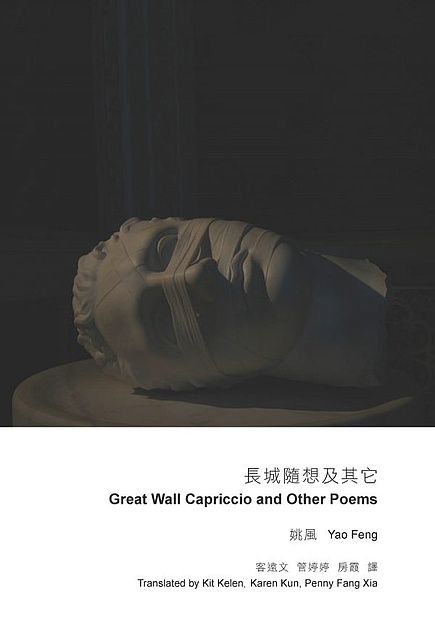
Yao Feng, Great Wall Capriccio and Other Poems, translated by Kit Kelen, Karen Kun and Penny Fang Xia (Flying Island Books 2014)

Beijing born Yao Feng is a much awarded poet, translator, artist and prose writer. In 2014 when this small book was published he was Associate Professor in the Portuguese Department at the University of Macau, where Kit Kelen, one of the translators of this book and series editor of Flying Island Books, was also a professor.

One of the lovely things about Flying Island Books is that they have two publishers, one in the cosmopolitan city of Macao (which seems to be the accepted spelling in English) and the other in Markwell, a tiny village 16 kilometres from Bulahdelah in New South Wales. The Macao partner is ASM (the Association of Stories in Macao), which has been described as ‘the most devoted publisher of translated literature in Macao’. As far as I can tell ASM was originally Kit Kelen’s baby, and is now under the directorship of Karen Kun, another of this book’s translators.

The book’s title poem is a series of eight dramatic monologues by characters who have stood on the Great Wall over centuries, from lonely soldiers to graffiiti-ing tourists. There are other poems that deal with Chinese history, including ‘memories yet to be disarmed’, a reflection on a painting in memory of the Cultural Revolution. But not all the poems are about China – and not all of them are on serious subjects. The poet sits in the sun and watches jacaranda blooms at the summer solstice, he looks in the mirror and sees that his ears have mysteriously disappeared, he imagines in what circumstances he might renounce his atheism and ‘approach God on all fours’. Poems are set in various parts of China, but also in Portugal, the Netherlands, the USA, Japan … the list goes on. There are poems about Pushkin, Ceaușescu, Aung San Suu Kyi and Marilyn Monroe. In other words, these 130 pages contain multitudes, and are a terrific introduction to this poet.

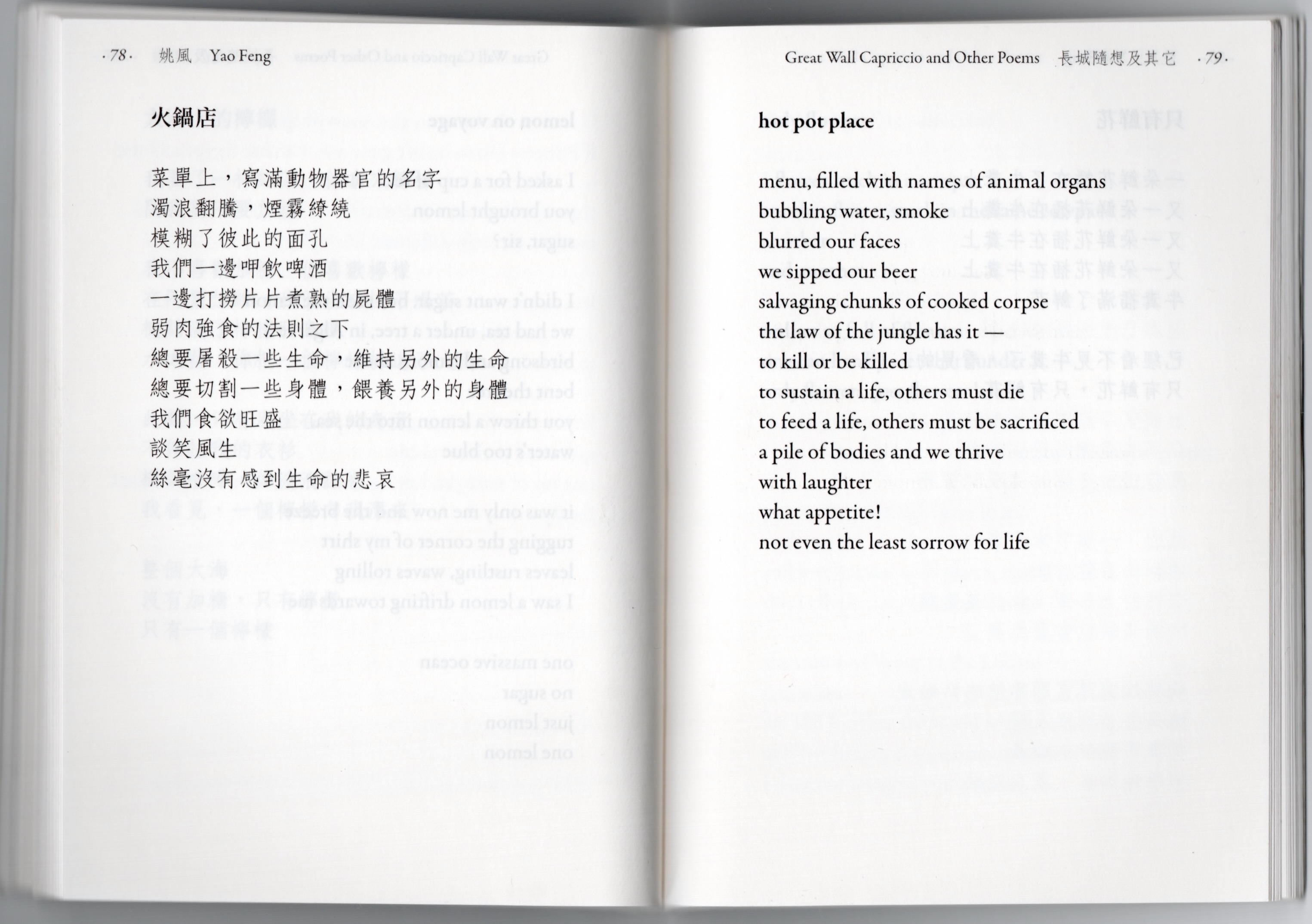
The poem on page 78, which I’m focusing on because of my arbitrary blogging rule*, has personal resonance for me.

hot pot place

menu, filled with names of animal organs
bubbling water, smoke
blurred our faces
we sipped our beer
salvaging chunks of cooked corpse
the law of the jungle has it —
to kill or be killed
to sustain a life, others must die
to feed a life, others must be sacrificed
a pile of bodies and we thrive
with laughter
what appetite!
not even the least sorrow for life

Let me start with my grandson.

My four-year-old grandson is uncompromisingly vegetarian. He likes lambs or pigs to pat in a petting zoo, not to eat. When he overheard a WhatsApp message from someone saying they’d bring a chook to the Book Group, he asked if the chook would be alive, and I felt like a criminal when I told him it would be cooked and ready to eat. There was horror in his voice when he told me one afternoon that the lunch at daycare had been spaghetti bolognese.(He went hungry that day.)

‘Hot Pot Place’ lobs neatly right there. In case you need reminding, in such restaurants a variety of uncooked food is placed on the table, and the diners drop their chosen morsels into a communal pot of boiling stock. The first four lines conjure a cheerfully exuberant social occasion in one: the smells, the sounds the tastes are effectively implied.

The tone changes in the fifth line. The diners aren’t just fishing pieces of meat from the pot, but ‘salvaging chunks of cooked corpse’. The harshness of the language is completely in tune with my grandson’s horror at bolognese sauce, and the next four lines, with their change from past to present tense, can be read as a defensive response from a meat-eater. Everywhere in nature animals eat the corpses of other animals. So it makes sense to enjoy this meal.

But this is a poem, not an argument. The lines about the law of the jungle can also be read as affirming: in eating meat we are playing our part in the natural order of things.

I remember the particular joy I had as a child – quite a bit older than four, I think – when a bullock I’d known from when he was a calf was cooked on a spit at a party to celebrate a family member’s major birthday. Terry, the bullock, even had a nickname. We children called him Pookie because his head was often adorned by a little cap of cow poo from approaching his adopted mother’s udder from behind. I don’t remember feeling any horror, more a kind of comfort that I was eating an animal I knew, not one that had been turned into a commodity.

Then the last four lines. Are they the words of someone recoiling from the carnivorous spectacle? Or are they celebrating the event? Or even somehow both?

It’s not possible to read the phrase ‘a pile of bodies’ without thinking of horrendous events of the last hundred years, including some events where the bodies have been those of animals – I’m thinking of beached whales and recent massive fish kills in New South Wales. So the line ‘a pile of bodies and we thrive’ holds an almost impossible tension. It doesn’t condemn, but it won’t look away.

The last line, I think, does make a judgement. The poem’s speaker isn’t arguing for vegetarianism. It’s ‘sorrow for life’ that is absent, not guilt. He is noticing a callousness in himself and his companions. My mind goes back to Terry/Pookie: along with the joy of eating him, there was something that you might call reverence. The poem doesn’t ask, but it opens out towards asking: is it possible to thrive with laughter and appetite and at the same time honour the lives of the beings we eat, to feel the sadness of the dispensation in which ‘to feed a life, others must be sacrificed’?

My grandson would probably read the poem differently from me. It’s a bit beyond his capacity right now, but if he ever does get to read it, I hope he finds as much joy in it as I have.

This is my sixth post for National Poetry Month, and the fourth bilingual book from the Flying Island Books.


I first read Great Wall Capriccio while flying between Djaubay land and Gadigal Wangal land. I wrote the blog post on the land of Gadigal and Wangal of the Eora Nation. I acknowledge Elders past and present of all those Nations, and welcome any First Nations readers.


* My blogging practice is to focus on the page that coincides with my age, currently 78.

Judy Johnson’s Exhibit

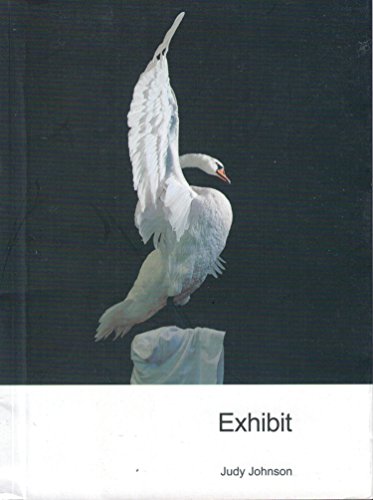
Judy Johnson, Exhibit, translated into Chinese by Iris Fan Xing (Flying Island Books & ASM 2013)

This is my fourth post for National Poetry Month.

Like Geoff Page’s Codicil, Exhibit is a bilingual book, aiming to bring an Australian poet to a Chinese readership.

According to the book’s dust-flap, Judy Johnson has been writing and publishing poetry for 20 years, and has won a number of prizes. She was editor of Picaro Press’s Wagtails series of chapbooks for some years. In 2021 she appeared with David Ades on his Poet’s Corner video show (link here), where among other things she spoke interestingly about her African-American convict ancestors and her book Dark Convicts, which I now have on order from Gleebooks.

Iris Fan Xing, the translator, was a PhD student at the University of Western Australia when the book was published in 2013. An interview with Robert Wood in Liminal Review of Books in 2021 (at this link) makes lovely reading for anyone who’s interested in translators, wonder-workers who are usually pretty much invisible. Sadly, my only response to her work in this book is to enjoy its visual beauty.

The book’s verso pages – that is to say, the English text – are terrific. To attempt the impossible and generalise: the poems tend to focus on small things (‘Three Tools’ fulfils the promise of its title), specific places (‘Walking Nobby’s Breakwall’ is almost a poetic manifesto for focusing on the small and partial), small interactions (‘Words, after an Absence’), without ever being trivial. Again and again in this book I was struck by a brilliant metaphor.

A poem that could provide a fun exercise for students, one of several set in Ireland, is ‘Saint Kevin and the Blackbird’ (which you can read as first published in Westerly in 2012 at this link – it’s a PDF, and you need to scroll quite a lot). The late great Seamus Heaney wrote a poem of the same name (which you can read at this link). Both poems tell the legend of a bird building a nest in the saint’s hand outstretched in prayer. One imagines what is happening in the saint’s mind and body; the other makes acerbic feminist comment on his broader life. Judy Johnson isn’t afraid to take on the big names.

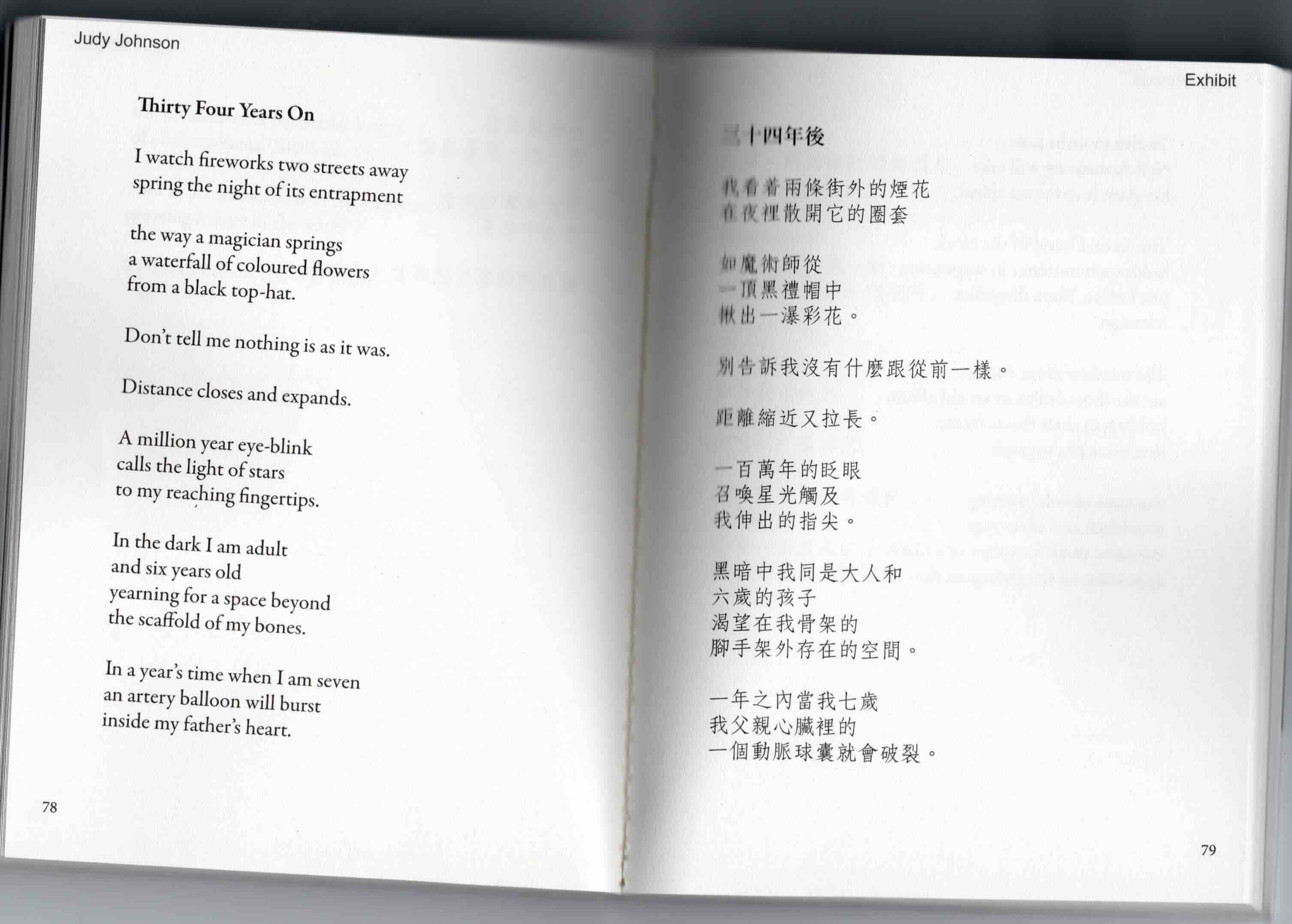
If you were browsing in a bookshop and flipped to page 78* of Exhibit, you’d be looking at the first of two pages of the poem ‘Thirty-Four Years On’. Here it is, with the Chinese translation opposite:

The title is a bit of a tease: thirty-four years on from what? My guess, based on the numbers given in the poem, is that its present moment is the year 2001, and the immediate prompt of the poem is a fireworks display, probably as part of Australia’s centennial celebrations. The fireworks remind the poem’s speaker of a similar display from her childhood, which she calculates to have been 34 years earlier. (It’s not that 34 is a significant anniversary, as in the episode of the Seth Hogan show Platonic when a character celebrates her ‘big two-six’.)

Thirty Four Years On
I watch fireworks two streets away
spring the night of its entrapment

I’m used to thinking of fireworks as embodying ephemerality: now they’re here, and beautiful, now they’re gone leaving nothing but the smell of cordite. In this poem they have a different effect. The night is normally trapped in just one time, but the fireworks explosion frees the speaker’s mind to be in more than one time at once, like magic:

the way a magician springs 
a waterfall of coloured flowers
from a black top-hat.

This is the kind of thing I mean about Judy Johnson’s use of metaphor. The firework’s time-freeing effect is magic, and the fireworks share other elements with a magician’s act – the cascading colours produced from a hat, which further bolsters the metaphor by being black like the night.

The next three stanzas play with time and space in more or less abstract ways. How this relates to the opening image won’t become clear until the following stanza.

Don't tell me nothing is as it was.

A possible paraphrase of this is, ‘I don’t want you to remind me of the obvious fact that that things are always changing.’ The poem’s speaker is experiencing the present moment as identical to some other moment.

Distance closes and expands.

She is also experiencing physical space as relative. In her mind, she is living in two times and places at once.

A million year eye-blink 
calls the light of stars
to my reaching fingertips.

Isn’t that beautifully put? We know how long it takes light to reach us from the stars, but that’s not how we experience it. It’s both a million years and an eye-blink. At the same time, the stars remind us that the poem started with a fireworks display two streets away – and also 34 years ago.

The next stanza brings us back to the present moment:

In the dark I am adult 
and six years old
yearning for a space beyond
the scaffold of my bones.

At a literal level, then, the fireworks remind the speaker of a similar display when she was six years old. The ‘scaffold of my bones’ echoes the ‘entrapment’ of the night. She remembers as a child longing for transcendence.

Because I’m looking at the poem closely, I’ve done my sums. Judy Johnson was born in 1961. She was six in 1967, and 34 years after that, she is 40 and Australia is celebrating its Centenary. The poem is prompted by a fireworks display in 2001.

Having been taken back to that moment, she then moves forward in time:

In a year's time when I am seven 
an artery balloon will burst
inside my father's heart.

If the poem ended here, it would be a bit of a downer: ‘Ah, these magical fireworks remind me of a similar display when I was six. Oh, then my father died.’ But that’s not the tone. The next stanza, over the page, also a three-liner, moves forward to the next year, 1969, with an abrupt change of register from intensely personal to public. 1969 is the year when ‘Neil Armstrong will take / his giant leap for mankind’.

This progression changes the way her father’s sudden death is presented: not so much a personal trauma as simply the next major event after the fireworks, with the moon landing the one after that. It’s not that the pain of her father’s death is minimised – it’s just not indulged, and it’s not mentioned again in the four remaining stanzas of the poem. In my reading, that silence is the heart of the poem.

I want to quote one more stanza:

The second hand of the clock
holds each moment in suspension
just before, like a slingshot
it lets go.

The observable way a second hand moves jerkily becomes a metaphor for the way we remember moments, almost like still photographs, but that time moves on inexorably.

The final paragraphs return to the fireworks, seen through a window, whose ‘four corners / are cardboard clips in an old album / holding in their freeze frame / that same photograph’. Time moves on, things change constantly, but this moment make those past moments present: the fireworks, the clouds of smoke (‘black an silver rags’), and

the same small footprint of a man
appearing on the ghostgum moon.

I’ve heard Evelyn Araluen speak derisively about how settler Australians love to write about ghost gums. At the risk of incurring her mockery, I think ‘ghostgum moon’ is perfect here – as an Australian reference that contains the word ‘ghost’ it does a lot of subliminal work. The poem focuses closely on that ‘same small footprint of a man’, leaving the bursting artery balloon in the realm of the unspoken, almost unspeakable, but with just the wisp of a reference to it in those final two words of the poem.

(For reasons that are probably peculiar to me, I find myself remembering Biblical quotes and theological concepts from my youth: ‘The seven years seemed to him to be just seven days, so great was his love’; the sacrifice of the Mass doesn’t just commemorate Jesus’ sacrifice on the cross, it is that sacrifice, happening in the present moment, not repeated but the same.)

Not that I saw all that on first reading, but I felt some of it, which is what poetry can make happen.


I first read Exhibit while flying over countries between Djabugay land and Gadigal Wangal land. I wrote the blog post on the land of Gadigal and Wangal of the Eora Nation. I acknowledge Elders past and present of all those Nations, and welcome any First Nations readers.


* My blogging practice is to focus on the page that coincides with my age, currently 78.

Geoff Page’s Codicil

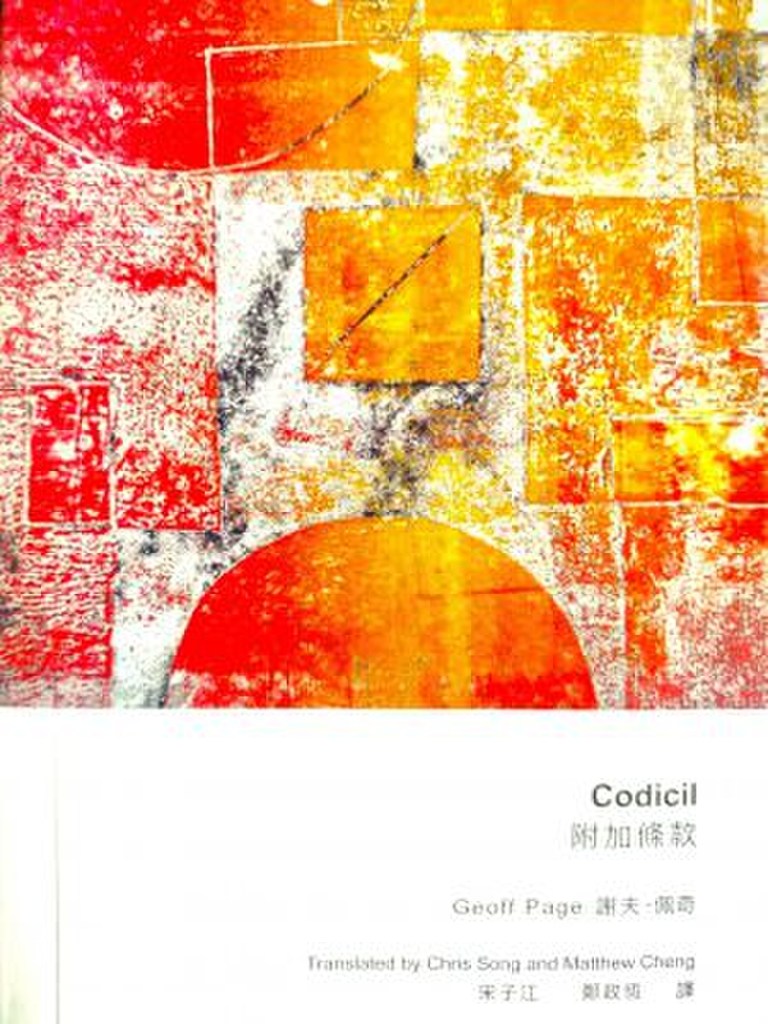
Geoff Page, Codicil, translated into Chinese by Chris Song and Matthew Cheng (Flying Island Books 2019)

It’s National Poetry Month in Australia. The Red Room Poetry site lists a plethora of events, workshops and competitions, promoted by ambassadors ranging from journalist Stan Grant to comedian Suren Jayemanne.

Codicil is the third book of poetry I’ve read so far in Poetry Month. I plan to read and blog about three more.

Geoff Page’s poetry has been around for a long time. I have an alarming number of anthologies of Australian poetry on my bookshelves, and his work appears in most of them, from Poet’s Choice (Island Press 1971, a limited, hand-set and -printed edition of 500 copies) to Contemporary Australian Poetry (Puncher & Wattmann 2016). His work is wonderfully accessible, using traditional forms without being trite or hidebound. For an intelligent discussion of his poetry, you’d find it hard to go past Martin Duwell’s review of his New Selected Poems (Puncher & Wattmann 2013). The whole review is worth reading, but I’ll just quote his description of Page as ‘a public poet who reflects the social concerns of the time of the Bicentennial and into the first decade of the twenty-first century’, and as a writer of personal poems with the ‘dominant image of himself as an outsider in a family he loves’.

Duwell’s description fits Codicil, which includes some new poems and at least three of his most anthologised poems, ‘Smalltown Memorials‘ (1975), ‘Grit’ (1979) and ‘My Mother’s God‘ (1988) – the links are to recordings of Page reading the poems on the Poetry Archive website. What I take to be the most recent poems here deal with ageing and the approach of death – the title poem is instructions for the disposal of the poet’s ashes on the Clarence River, where he spent his childhood.

I imagine that the poems were selected by the translators, themselves accomplished poets in Hong Kong, with the intention of introducing Page’s work to Chinese readers. I wish I could read Chinese, because I’d love to know how they have dealt with the frequent Australian idioms and throwaway references. Like this from ‘Three Akubras’:

Three Akubras in a row
my brothers underneath them
standing at the saleyards there

Or this, from ‘Severance’, an imagined speech to an employee being sacked:

User Pays and 
Market Forces
are all the rhet-
oric you'll get.

(And what have they done with that weird hyphen that’s there for the sake of metre and rhyme?)

And I’d love to know what a Chinese reader might make of his occasional professions of allegiance to iambics, as in ‘I Think I Could Turn Awhile’, in which he imagines writing ‘like the Americans’, an heir to Whitman. But then:

I'd hear the clipped
iambics calling,
my template just
beneath the line

For me, alas, the bilingual aspect of the book amounts to a purely visual effect – and it is fascinating to see what these very Australian poems look like in Chinese characters.

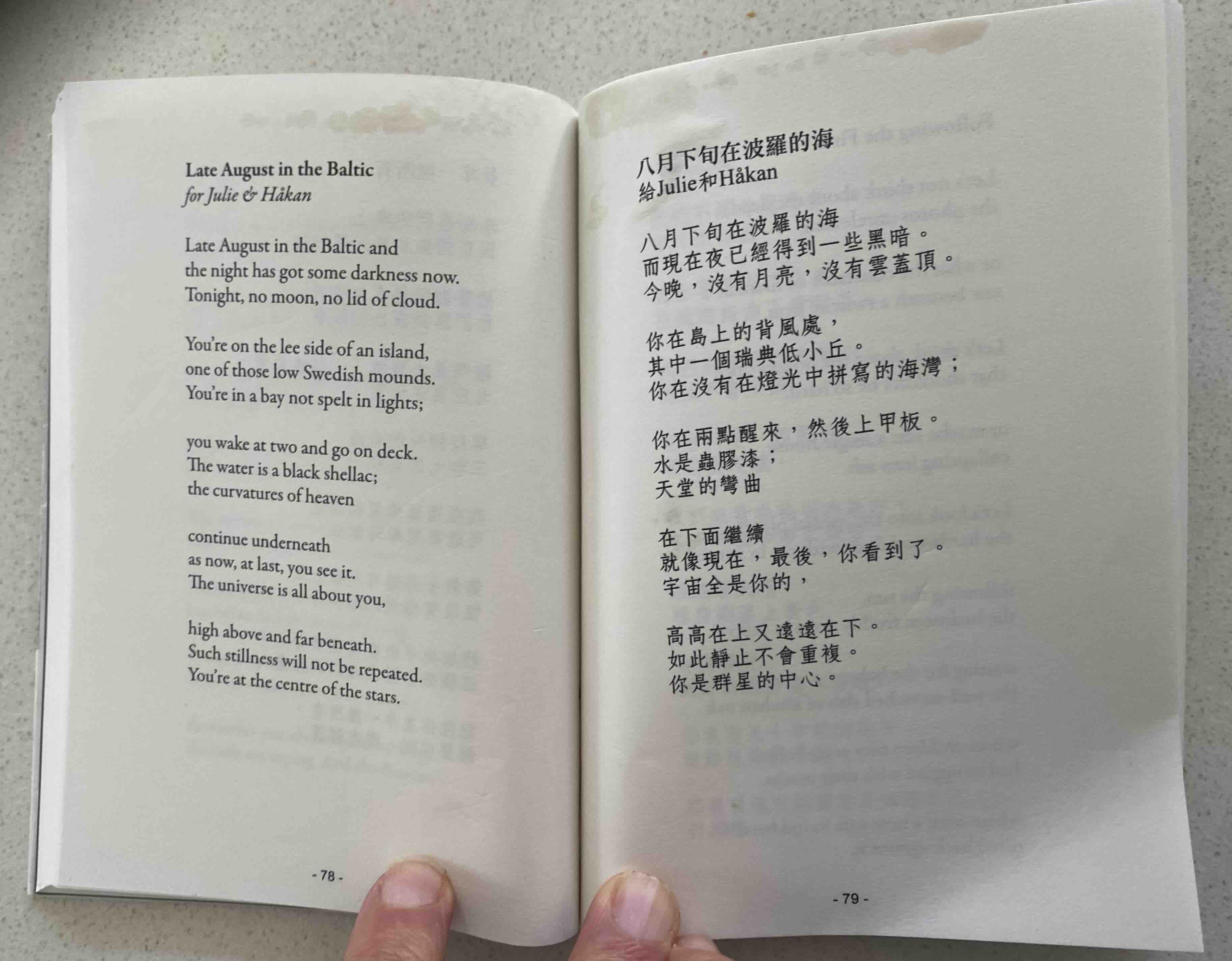
Here’s an image of pages 77 & 78*:

The poem, first published in Island magazine in September 2009, is neither a public poem dealing with issues of the day, nor a personal poem dealing directly with family or mortality. I read it as a letter to friends who are on a boat somewhere on the Baltic Sea, perhaps in response to a photo they have sent. Whatever, it’s a wonderful evocation of a still, moonless night on the water.

It’s almost a sonnet. The first eight lines paint the scene, and the almost perfectly regular iambic pentameters (de-dum de-dum de-dum de-dum) enact the calm of the night.

Late August in the Baltic 
for Julie & Håkan

Late August in the Baltic and
the night has got some darkness now.
Tonight, no moon, no lid of cloud.

You're on the lee side of an island,
one of those low Swedish mounds.
You're in a bay not spelt in lights;

you wake at two and go on deck.
The water is a black shellac;

Then there’s a turn, so gentle, in mid stanza with just a semicolon to mark it. The lines get shorter, and the literal elements of the poem – the island, the time of year, the deck, the absence of lights on shore – give way to more fanciful language:

the curvatures of heaven

continue underneath
as now, at last, you see it.

Then the regular iambics re-establish themselves – as if a small wave of metaphor has momentarily disrupted the stillness of the poem, and it can now continue, but with a broader view:

The universe is all about you,

high above and far beneath.
Such stillness will not be repeated.
You're at the centre of the stars.

Pause for a moment to look at the second last line. Without it, the poem would have been a sonnet, and the bunching up of sibilants in ‘Such stillness’ strikes a dissonant note. I don’t think this is a flaw. What the line says – a warning not to expect life always to be like this – is unobtrusively reinforced by its comparative harshness and a faint sense that it disrupts the form. Whatever, it makes sure that what is to come in the last line is read as humbling rather than grandiose.

The last line gives us the word that has been implied but conspicuously missing from the first part of the poem: ‘stars’. It’s not completely irrelevant that this is the word that comes at the end of each book of Dante’s Divine Comedy.

We are at the centre of myriad points of light – not a narcissistic centre, but one who for this unrepeatable moment has a glimpse of the immensity and splendour of the cosmos. I’m reminded of Yayoi Kazuma’s infinity mirror rooms.

I’m in awe of Chris Song and Matthew Cheng for taking on the task of translating a poem that works so much through the rhythms and traditions of its native language.


I read Codicil on Wulgurukaba land, beautiful Yunbenun. I wrote the blog post on the land of Gadigal and Wangal of the Eora Nation. I acknowledge Elders past and present of all those Nations, and welcome any First Nations readers.


* My blogging practice is to focus on the page that coincides with my age, currently 78.