Laura Tingle’s Great Expectations

Laura Tingle, Great expectations: Government, entitlement and an angry nation (Quarterly Essay Issue 46, 2112)
In 1965, my classmates and I helped to fight the terrible Chatsbury/Bungonia bushfire in the Southern Tablelands of New South Wales. I vividly remember a woman whose house had been burned down crying out in rage and distress, ‘I’ll never vote Labor again!’

It’s easy to mock such blame-the-guvmint mentality, and we did. We weren’t without compassion, but we were 18 years old and not very forgiving.

But these days – I grow old, I grow old – the misogyny, anti-science and book-burning that characterise our blame-the-guvmint discourse feel too serious for mockery. In this riveting Quarterly Essay, not a cheap shot in sight, Laura Tingle brings decades of experience as a political journalist to bear and argues that they are the symptoms of a deep, longstanding and unfaced confusion over what we can expect from the government, a confusion that has been pushed to something like crisis point by the economic rationalist reforms introduced by Hawke and Keating, extended and exploited by Howard, and maintained, with some ineffectual backtracking, by Rudd and now Gillard.

To diagnose the confusion, she goes back to the autocratic/paternalistic beginnings of the colony of New South Wales and the development of its democratic institutions, drawing on historian John Hirst – Convict Society and its Enemies and The Strange Birth of Colonial Democracy. The glimpses she gives of his books make them seem like ideal contrapuntal readings for the late Robert Hughes’s The Fatal Shore: the vicious brutality Hughes describes was far from being the whole story – for many if not most convicts the colony provided much greater opportunity than they would have if they had not been transported. For example, the children of convicts had access to public education well before children of similar class background in Britain.

The history is interesting. The essay’s thesis is lucidly argued. As we come closer to the present time, the narrative takes on an authoritative feel – Tingle never says it in so many words, but there’s an ‘I know this, I was there’ edge, especially to her account of Howard’s and Rudd’s prime ministerships. Her conclusion:

Australians will be forced in the next decade to consider what level of government intervention we really want and what form it should take. That will require us to forge a much more explicit new settlement, a much clearer social contract than the one we have had to date. We must assess what level of government intervention works in an open economy and how best to deliver it. We will have to go back to the idea that government assistance is on a needs – not an entitlements basis [a change brought about largely by Howard’s strategy of bribing the electorate] and work out which needs we are prepared to support. Our politicians will have to face up to the question of what governments can realistically promise – and what they can no longer pledge to provide – and change their messages accordingly.

I’m looking forward, as always to the correspondence about this essay. It would be good to see a Marxist response, though on past showings there’s unlikely to be one. My own grasp of Marxism is pretty crude and old fashioned, but it seemed to me that what Laura Tingle calls variously ‘the world’ or ‘an open economy’ or ‘market forces’ is actually international capitalism – driven by profit to the exclusion of other considerations. What she calls government paternalism is the role of government in restraining capitalism, protecting people from its ruthlessness. She traces the process by which we have been misinformed and bribed into accepting the dismantling of structures that served the common interest and replacing them with for-profit structures. People’s anger, then, comes not so much from an unreasonable sense of entitlement, as from an intuition that behind the confusing smokescreen of economic techno-talk, and in spite of the many handouts of the Howard era, something valuable has been lost.

Two Rare Objects and a Stray Dog

Christopher (Kit) Kelen, Green Thought – Green Shade: A Sabbatical Set (Vagabond Press, Rare Object No 79, 2012)
Adrian Wiggins, Chooks (Vagabond Press, Rare Object No 81, 2012)
J S Harry, Sun Shadow, Moon Shadow (Vagabond Press, Stray Dog Editions No 3, 2000)

I bought these three books last weekend at the Gleebooks launch of half a dozen chapbooks from Vagabond Press. A chapbook is a small collection of poetry – usually cheaply produced and inexpensive to buy. The Rare Object series, now numbering more than 80, small (16 pages), saddlestitched and without ISBNs, with a print run of 100 copies each, are at the deluxe end of the chap spectrum: they have swanky, translucent fly leaves, and a small printed image glued on the front cover, and each numbered copy is signed by the author.

At the launch there was some uneasy joking about the presence of non-poets. Like sceptics at a seance or woman reporters in a male football team’s change room, we were kind of welcome but unsettling. (Although I’ve had a handful poems published, as a reader I’m definitely a non-poet.) Pam Brown’s launching remarks, an edited version of which is up at the Rochford Street Review site, had none of that uneasiness. She was generous and straightforward, made all six books sound desirable, and modelled in an unfussy way the kind of work needed to read these compressed, allusive and/or oblique contemporary poems. (Besides the books by Kit Kelen and Adrian Wiggins, the others being launched were by Niobe Syme, S. K. (Steve) Kelen, James Stuart and Nicolette Stasko.)

Kit Kelen’s book is a set of poems written while home on sabbatical in country New South Wales. For a prosaic reader like me, it helps to know that before you start, and to know that he mainly lives in Macau, and is a painter as well as a poet. You may also need to be warned that you’re entering a punctuation free zone, so a little extra decoding work will be needed. Given all that, the poems speak very directly, with a sweet sense of place, and a whiff of Chinese or Japanese sensibility. From ‘Iona’:

mosquito the size of a small bus
comes and passes and is gone

Kelen has made some interesting remarks about how these poems relate to the pastoral tradition and to the problematic nature of non-Indigenous land ownership in Australia. ‘The challenge,’ he says, ‘is to have fun while you problematise (otherwise please don’t write a poem).’ The elegance, humour and directness of the poems mean the problematic elements slide into the reader’s mind without a bump.

Chooks is Adrian Wiggins’s second book of poetry – it’s 18 years since the first. I understand the title to be presenting these poems as a yard full of chooks, each going in its own direction, scratching, pecking, clucking, fussing over chickens, and generally filling the yard with life. I can’t say I follow them all, or even most of them. For example, ‘The Astronaut’s Lovesong‘, which mixes cosmic imagery with images of bondage, might have been impenetrable to me without Pam Brown’s gloss: ‘Yes, it’s about the wildly jealous astronaut Lisa Nowack who tried to kidnap a female airforce captain who was involved with an astronaut on whom Lisa had a big crush.’ I suspect there’s a lot of play with poetic conventions and politics in the book, some of which I get: I find the idea of John Forbes cosplay (in ‘New Season’) irresistibly funny, but there are almost certainly people who would be driven to Google by both ‘John Forbes’ and ‘cosplay’. One person’s esoterica are another person’s commonplaces, and if the prose meaning eludes me I still enjoy the ride – in some ways it’s like being a child reader again.

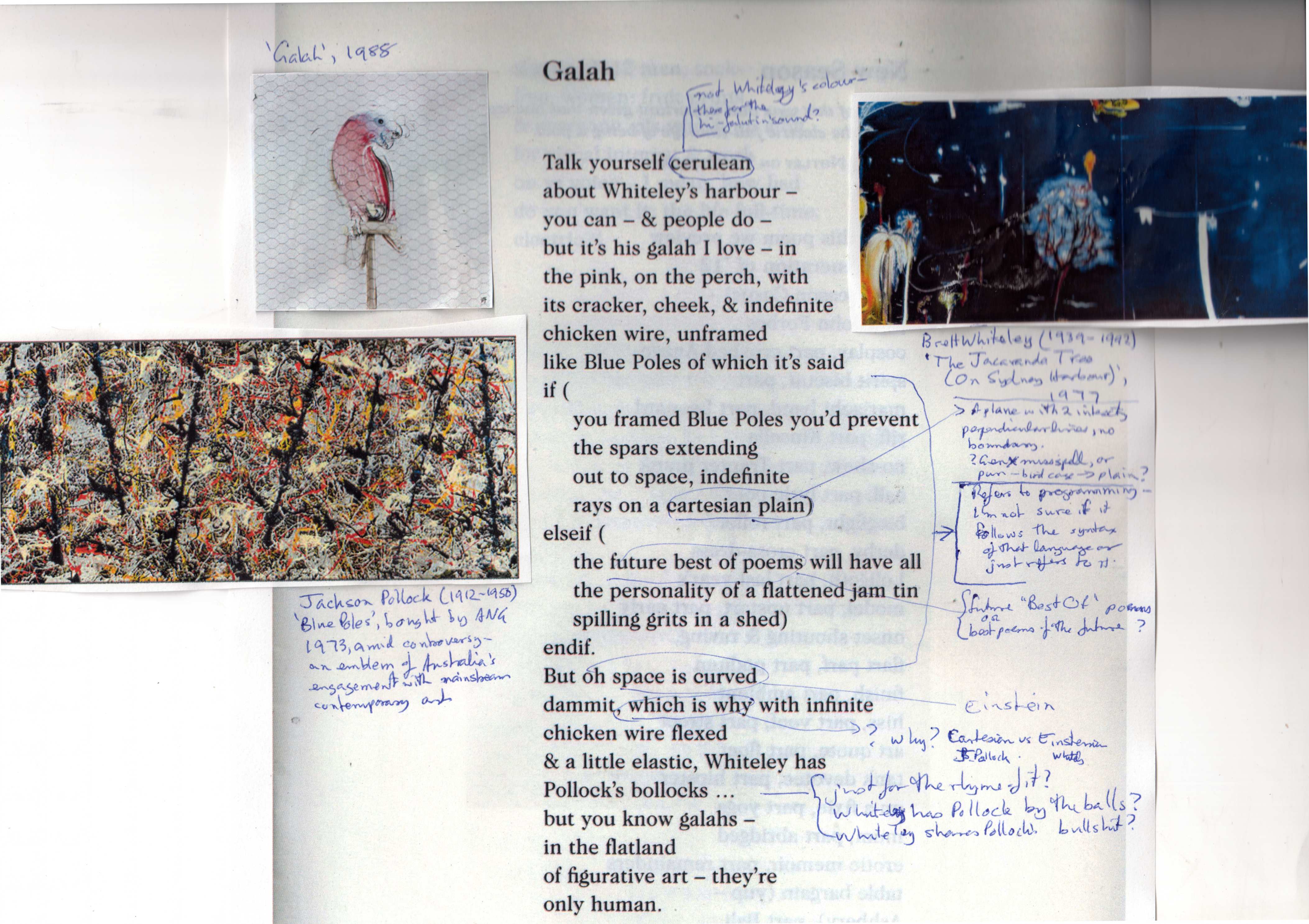
For the fun of it, I scribbled all over the first poem in the book, ‘Galah’ (a photocopy – I wouldn’t dream of defacing this beautiful rare object), just to have a visual take on where the poem took me. It’s not a particularly obscure poem, but it does fly off in many directions:

It’s a measure of how much I enjoyed the poem that my inner proofreader didn’t spot the misspelling of ‘plane’, deliberate or otherwise, until I was quite a way into the annotating.

For me (Mr Prosaic Reader), apart from ‘Galah’ the prize fowl is ‘Macquarie River swimming’, a sharply rendered piece of nostalgia for youthful days when the poet and his friends, swinging on ‘a straggly rope tied to a river-gum’,

________________________let rip
with an imitation aerialist’s flip, a shout,
and fell through the day, new bullets

through old rifling, laughing from the noon’s
blue meridian to a cold, dark hole midstream.

J S Harry’s Not Finding Wittgenstein (2007) featured the adventures of Peter Henry Lepus, a rabbit who goes to Iraq and other places and knocks around with philosophers. I was intrigued by this odd character, and tantalised by the few poems about him I’d read. I thought Sun Shadow, Moon Shadow from 2000, not much bigger than the Rare Objects (though big enough for an ISBN) – might be a way to ease myself into his world. Alas, there was no easing to be had, no Origin Story, just a rabbit who has been provoked into trying to think. He’s a strange creation, and the poems are strange too, peppered with erratic spacing and capitalisation and font changes. But definitely alive, and wide ranging. Peter tries without much success to understand the poetry scene. He encounters a literary critic in a poem that might be more fun for readers who know or are willing to find out who Altieri is. In ‘They‘, Peter tries to explain to ‘the flowerbed rabbit / who lives deep in dark leaves’ what humans (‘they’) mean by the ‘pronoun called I’. In ‘A Sunlit Morning, Labor Day, Late Twentieth Century’, he sees and does not understand the death of a magpie friend. He’s clearly a device for looking freshly at the world, for exploring philosophical questions and any number of things, but he is also a character in his own right. His meeting with the cat Chairman Miaow (a different Chinese whiff from Kit Kelen’s) in “Moonlight Becomes You?” may be an enigmatic meditation on art, but it’s also a scary confrontation with a predator. After his conversation with the flowerbed rabbit about the pronoun called I, he realises he has lost an opportunity to

follow the white
bobs of her tail
disappearing
into the scarlet flowers.

I guess I’ve now got Not Finding Wittgenstein on my To Be Read list.

Stephen Greenblatt’s Swerve

Stephen Greenblatt, The Swerve: How the world became modern (Norton 2011)

This book tells of the rediscovery in 1417 of a copy of Lucretius’ poem De rerum natura (Of the nature of Things) as a key moment in the transformation of European culture – in the Renaissance. The preface begins promisingly with a moving account of the author’s own first encounter with the poem as an impressionable young man, but my antennae started twitching when, describing the contents of the poem, it said:

All things … have evolved over vast stretches of time. The evolution is random, though in the case of living organisms it involves a principle of natural selection. That is, species that are suited to survive and to reproduce successfully endure, at least for a time; those that are not so well suited die off quickly.

Hmm, I’ll bet London to a brick that the phrase ‘natural selection’ wasn’t around long before Darwin: even Alfred Russel Wallace, co-discoverer of the mechanism, didn’t use the term. And that paragraph manages to suggest the very Darwinian ‘survival of the fittest’. It looks awfully as if Mr Greenblatt is a bit over-keen to claim modernity for the poem, and to read the past through an excluding modern lens. A passing reference two pages later to ‘Robert Burton’s encyclopaedic account of mental illness’ (melancholy=mental illness? Really?) confirmed my distrust.

Sure enough, the book’s thesis, that the discovery of De rerum natura changed everything, comes across as a marketing hook rather than a serious argument. But then if you’re writing about something as dry as an ancient Roman philosophical poem, the temptation to play up any conflict or drama (mediaeval monks stupid and repressed / Renaissance humanists bold and clever) and to gloss over inconvenient complexities must be so great as to seem a necessity. In a deeply unsympathetic account of the early development of Christian theology, for example, Greenblatt comes close to saying the theology was formulated as a way of fighting off challenges from Epicureanism in general and Lucretius’s poem in particular, an implausibly narrow claim I would have thought. For the mediaeval Christian church, he tells us in other examples, curiosity was a mortal sin, and the silence during monastic meals was imposed for the purpose of preventing discussion. These assertions probably aren’t flat-out wrong, but it took five seconds with Google to find Thomas Aquinas going on about ‘the vice of curiosity’ in a nuanced way that makes it clear that the phrase has been taken out of context, and I’d like to see a debate about mediaeval monasteries and literacy between Greenblatt and Thomas Cahill, author of How the Irish Saved Civilization.

The book tells a good story. It gives a lively, heart-rending account of the destruction of the vast body of written work built up during Greek and Roman antiquity, and brings home with great force the way it was sheer chance that De rerum natura and many other works survived and were recovered – sheer chance plus the prepared mind of book-hunter Poggio Bracciolini, who knew what he’d found when he saw it on the shelves of a monastery somewhere in Germany. Poggio was fairly famous in his own time as a humanist writer and discoverer of ancient texts. Greenblatt has done us a service in giving us a lively portrait of him.

I’d just written that last paragraph when a link turned up in my Feedly reader to a review by Morgan Meis in n+1. As opposed to this blog post, it’s a proper review which gives a good account of The Swerve‘s argument and then gets stuck into its slipperiness from a better informed position than mine. I recommend the review as a whole, but here’s a quote for those who won’t click through to it:

The end of all Lucretius’s observation and wonder is to reach ataraxia, the point at which we look with indifference at the natural world. We realize we have no control over it and that it doesn’t matter what happens to us anyway. […]

A tremendous amount of desire is expressed in The Swerve. It is the desire, first and foremost, to present the modern age as a definitive solution to the human problem. Greenblatt wants Lucretius to be telling us it is OK to love the world and to be engaged with one another in the pursuit of pleasure and the avoidance of pain. There is immense joy to be found in that pursuit, Greenblatt thinks, and it is one that human beings have foolishly denied themselves again and again. Greenblatt finds great satisfaction in the fact that a two thousand-year-old poem expresses, in his view, this exact desire. Coming back to Lucretius is thus coming back to ourselves.

But Greenblatt can only make this argument by ignoring ataraxia, the whole point and purpose of Epicurean philosophy.

In other words, someone who knows quite a bit more about the subject than I do has confirmed my sense that the book should be treated warily. Greenblatt is a scholar writing for the masses, and he simplifies, which sometimes leads to distortion. He’s a secularist Jew writing in a US where self-righteous fundamentalist Christians are increasingly prominent in public life, and he goes in to bat for a different point of view, which sometimes leads to significant omissions and distortion. He’s witty, has an eye for the telling anecdote, paints a convincing picture of  life among the humanists employed in the courts of the more or less corrupt popes of the late 14th and early 15th centuries, reminds us that the renaissance didn’t just happen but had to be fought for, and above all whets the appetite for reading Lucretius (whose name, I now remember, was often on the lips of my high school Latin teacher).

Added much later: There’s a heartfelt smackdown of this book by Jim Hinch in the Los Angeles Review of Books of 1 December 2012.

The indefatigable Art Student

The Art Student has been busy since we arrived home from splendidly warm northern places. Currently at the Balmain Watch House there’s an exhibition of prints, nominally by the graduating third year printmaking students from The Gallery School, Meadowbank, but actually including work by a large number of professional artists. You can catch it this Saturday and Sunday between 10 and 4. (Information at the Balmain Association web page: click on the link and scroll down to ‘Printeresting’.)

The Art Student is one of the third year students. We’ve been living with her big piece – ‘The details’ – for months, but it only came together last week, with help from our clever industrial designer son. In case you can’t tell from the photo, it’s like a giant version of one of those sliding puzzles, inspired in large part by Heather Goodall’s Invasion to Embassy: Land in Aboriginal Politics in New South Wales, 1770-1992, which lays out in some detail the way Aboriginal people in this state have been dispossessed, driven off their land repeatedly. You may be able to read some of the small text if you click through. And no, the pieces of the puzzle don’t move. Even if they did, there’s no obvious solution. [Added after the AS saw this post: The blue in some of the internal borders isn’t there in the actual work – it’s the black acrylic backing reflecting the flash.]

Not satisfied with making art, the AS has been busy with FAIM (Fine Arts Incorporated Meadowbank), an organisation started by students and alumnae of The Gallery School with the aim, among other things, of raising the profile of the school’s See Street Gallery. Coming up is their first fabulous major initiative, the Hungry for Art Festival, which is going to be bigger than Ben Hur, with exhibitions, competitions, an Art Trail through the Ryde Municipality, you name it. From the web site:

  • DrawFest & Open Day, 18 August – The Sydney Gallery School … present a full day’s program of art exhibitions, talks, workshops, drawing and sculpture activities, art market, performance, music, food and more.
  • Art Trail, 19 August – The suburbs come alive with the first ever Art Trail. Local artists open their doors, providing a rare opportunity to see inside their studios. Galleries and visual art businesses will participate revealing a region rich in creative activity.

There’s a Mobile Phone Photo Competition that closes this Friday, open to anyone who lives, works or plays in Ryde Municipality – and who has never played in Ryde? Go on, how often do you get a chance to have one of your photos hung in a white-wall gallery?

The Book Group and Edmund de Waal’s Hare with Amber Eyes

Edmund de Waal, The Hare with Amber Eyes: A Hidden Inheritance (©2010, Vintage 2011)

The Art Student read this a while back, and did a real-life approximation of live-tweeting it to me. That, plus hearing Edmund de Waal on a couple of podcasts, meant I felt no real need to read it for myself. When the Book Group chose it as our next title, though, I was happy enough, and took a paperback in my luggage to Turkey. Even when it went missing when left in a hotel holding room, I remained undeterred, but didn’t get a replacement copy until we were back in Sydney, and was only a third of the way into it when the Group met.

The meeting:
The Hare with Amber Eyes is the story of a collection of 264 netsuke (small Japanese carvings) that had been in the author’s family for 130 or so years – and it’s a partial history of the family itself, the Ephrussis, wealthy Jewish bankers of Paris and Vienna. At the meeting, I was still mixing with the Impressionists in Paris with the Dreyfuss affair looming, while the rest of the chaps had already dealt with the Nazis in Austria, moved on to post Hiroshima Japan and followed the netsuke to their current resting place. No one was particularly careful about spoilers, and I got the impression that the Parisian section, which I was enjoying, was comparatively forgettable.

In general our wives and female partners had been more taken with the book than we were, but along with our usual conversation about recent trips, family weddings, changes of employment, Abbotophobia and so on, we had some animated book talk.  Were the netsuke just a device to hang a family history on? Is the project overwhelmed by the seriousness of the Nazi episode, so that we lose interest in the netsuke? Is the final third of the book a bit rushed as if, one chap said, the author’s wife said, ‘OK, Edmund, that’s enough. Time to wrap it up’? I was curious to know if the potter’s sensibility – the alertness to the feel and heft of things – that is such a strong feature of the first third persists all the way (and got a definite no).

At least two people said that the family story, especially the part to do with the Nazis, was uncannily close to their own, or their partner’s, including the survival of some small object as a link with the past, and details like the image of entwined initials in architectural ornamentation. I recognise from my own experience some of the thrill of finding records of one’s forebears in contemporary sources, though in comparison to de Waal’s great-great-uncle being a model for Proust’s Swann or appearing in Renoir’s Luncheon of the Boating Party, a paragraph in the weekly Queenslander in 1881 (the same year as the Renoir painting) praising my great grandfather’s turnip crop is pretty tame.

A number of the finishers commented on the devastating reversals of fortune suffered by the family – a dramatic reminder that the comfortable middle-class Australian assumption that we determine our own lives is a delusion.

After the meeting:
The ‘spoilers’ didn’t spoil anything for me. On the contrary, they gave me some propositions to test against my own reading. For instance, the netsuke didn’t fade from my mind during the account of the Anschluss (the German annexation of Austria in 1938): all through the Nazi juggernaut, the tiny but momentous betrayals, the opportunism of non-Jewish neighbours, scholars, curators and art collectors, the cruel humiliations and the resonant use of the single word ‘Dachau’, the author’s silence about the tiny, much-loved netsuke worked for me like a solemn background hum or a detail, relatively insignificant in itself, that acted as a point of reference within the horrific bigger picture – a little like the red dress in Spielberg’s Schindler’s List. De Waal tells us that when he was researching the Nazi part of the story he didn’t weep until he saw the documents where his grandparents’ first names had been overstamped with the generic names given to all Jews by the Nazis. I didn’t weep until the netsuke reappeared. I certainly didn’t agree they were purely a literary device.

Anything after the graphic horrors of the Anschluss was going to seem anticlimactic, but I didn’t find the final third rushed. The book follows the netsuke from the aftermath of the war against the Nazis to the aftermath of the bombing of Tokyo. De Waal’s great-uncle Iggy, now the custodian of the netsuke, is neither part of the occupying army nor one of the derided visitors in search of ‘authentic’ keepsakes. He goes to Japan partly to take the netsuke home and lives there the rest of his life with his Japanese partner. It is here that de Waal first sees them and hears the family story about them. It is here that the book – at last – tells us a little of their history before they were bought by Charles Ephrussi, connoisseur, during the 19th century Parisian craze for all things Japanese. And even though they have been named and described repeatedly throughout the book, it is in this final section that they become most palpable though, frustratingly, never pictured. (I recommend the illustrated edition to anyone who hasn’t yet read the book. It costs a bit more but this is a text that cries out for illustrations, and not just of the netsuke.)

I still think the Paris section, with its glimpses of the art scene as a scarily familiar terrain of jealousies, dependencies, malice, fickleness and anti-Semitism along with all its brilliance, is among the book’s most interesting.

Incidentally, I happened to be reading the Anschluss section the evening I went to see The Dark Knight Rises: it made the comic-book seduction of Gotham City’s poor by Bane’s rhetoric seem shockingly plausible.

Irfan Orga’s Portrait of his Turkish Family

Irfan Orga, Portrait of a Turkish Family (©1950, Eland & Galeri Kayseri 2004)

This was my letting-go-of-Turkey read. We bought it at Galeri Kayseri English Bookshop right next door to the McDonalds within shouting distance of the Blue Mosque and Aya Sofya. Evidently the Galeri Kayseri had decided it was ideal for tourists wanting to read an Istanbul story, as there were big piles of it near the counter. They were right.

It’s a memoir. Irfan Orga was born in 1908 into a wealthy family in Istanbul, then the capital of the Ottoman Empire. His mother, a great beauty who had married at 13, hardly ever went out into the world, and when she did she went veiled and chaperoned. His grandmother was the dominant personality of the household, and of the whole neighbourhood – an early chapter gives a richly comic account of five year old Irfan accompanying her on a trip to the Turkish baths.  The family lived a blissfully entitled life within sight and sound of the Sea of Marmora (as he spells it) until the First World War, when Irfan’s father, previously a successful businessman, was conscripted and killed. That, plus a fire that destroyed the family house and all their savings, completely overturned the family’s fortunes, and what follows is a chronicle of terrible poverty and struggle. Nobody and no relationship emerges from the years of struggle unscathed, and the final scenes between Irfan and his mother are devastating.

Meanwhile, Turkey itself was going through major upheaval: poverty was widespread, the Ottoman empire was defeated and in disarray, and by 1923 Kemal Atatürk had led the revolutionary forces to establish the Turkish Republic. The fez was banned and the introduced hat, seen by many as offensively Christian, led to violence in the streets. (Incidentally, I was in Turkey in the summer and don’t remember seeing a single Turkish man wearing a western hat, which makes me wonder about the success of Atatürk’s cultural change.) When Irfan’s mother went out alone and unveiled, boys threw stones at her in the street. One day, in Ottoman Turkey, school students were beaten for arriving late at prayers; a few days later, in the secular Turkish Republic, the few who remained devout were likely to be beaten because prayers made them late for class.

The story of this family is heartbreaking, and though there is much hilarity and some high melodrama, the general trend is towards devastation and disintegration. Not that there’s any nostalgia for the days of the Ottomans, but the human cost of the radical changes – political, cultural and economic – that happened in Turkey between 1914 and 1940 is made painfully real. An afterword by the author’s son, Artes Orga, in 1988 makes it clear that the pain continued for the rest of his life. (He formed a liaison with a non-Turkish woman, whom he eventually married, and as this was somehow illegal he lived in exile, raising his son in a kind of cocoon of Turkishness in London. This book was a big hit, but he never really prospered or found contentment.)

I find it hard to think how a book could be better at giving a reader a way of getting behind the cheerful tourist façade of the old city of Istanbul. Reading it, you become aware of the ghosts of women behind the latticed windows of those old wooden houses latticework, hiding from the gaze of the street. You get that the muezzin calls were once the unamplified sound of human voices. You realise that today’s sleek, crowded trams are luxurious compared to the rattling, swaying ones of yore. And you realise that the prosperity of modern Turkey, and for that matter the modernity of Turkey, didn’t fall as a gift from the sky.

My trip to Turkey PS: Rome

We had slightly less than 48 hours in Rome on our way home from Turkey, just long enough to catch up with our dear friend Anny, visit the Maxii gallery and catch the exhibition from the Papal archives that’s on at the Capitoline Museums.

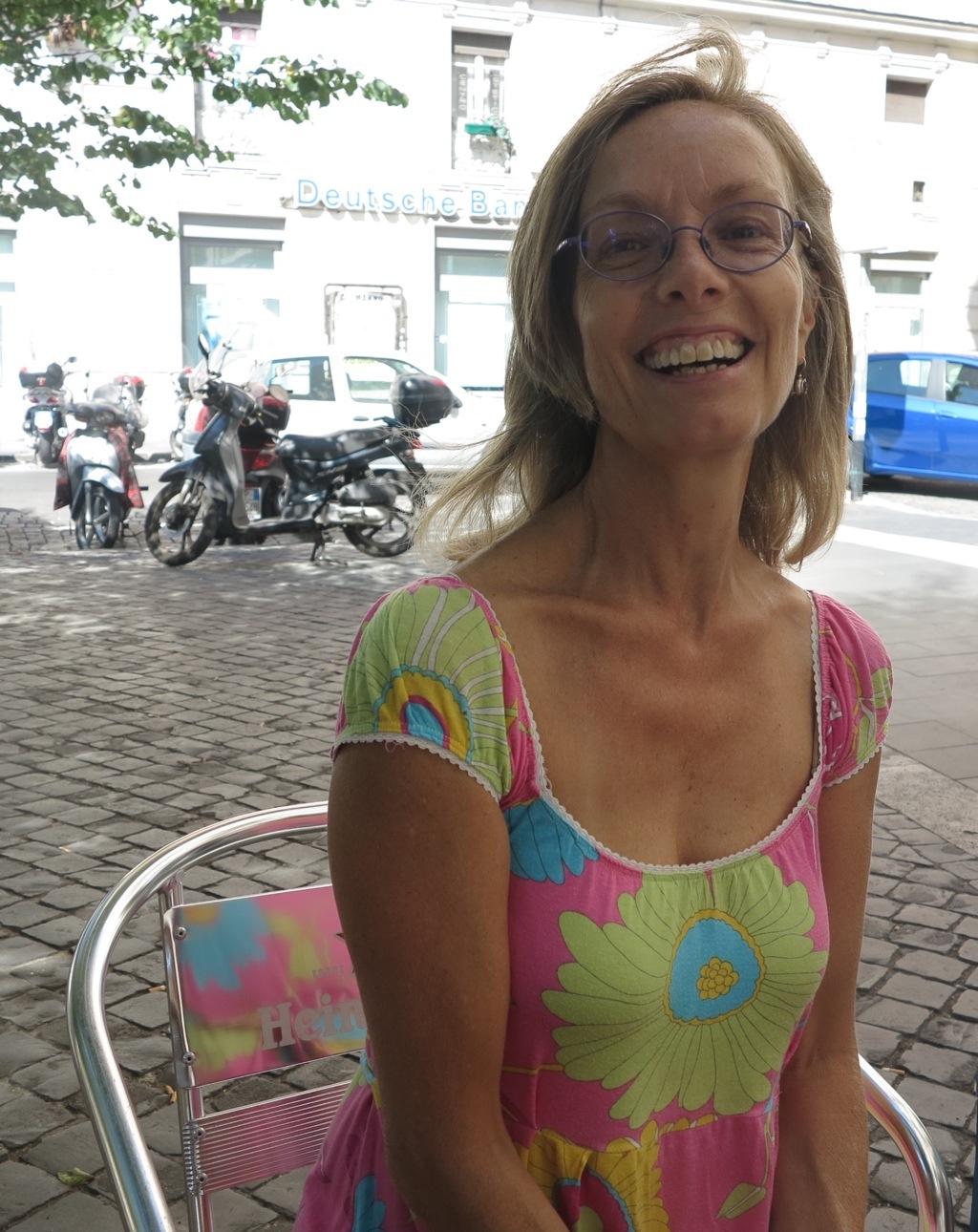
Anny had come down from her home in Florence to have dinner with us on Friday (our plane landed at 7.30 but it was nine o’clock by the time we met her at our hotel, and one in the morning by the time we said goodnight. We met up again to stroll along Via Cola Di Rienzo on Saturday morning, she had to catch the train back north for a Nora Jones concert that night. It was, as Anny said to an Italian friend on her mobile, ‘come si dice, Memory Lane‘. It was also a chance to hear her beautiful, lilting Italian as she did the honours with waiters, bus ticket sellers, and shop assistants.

20120715-152409.jpg

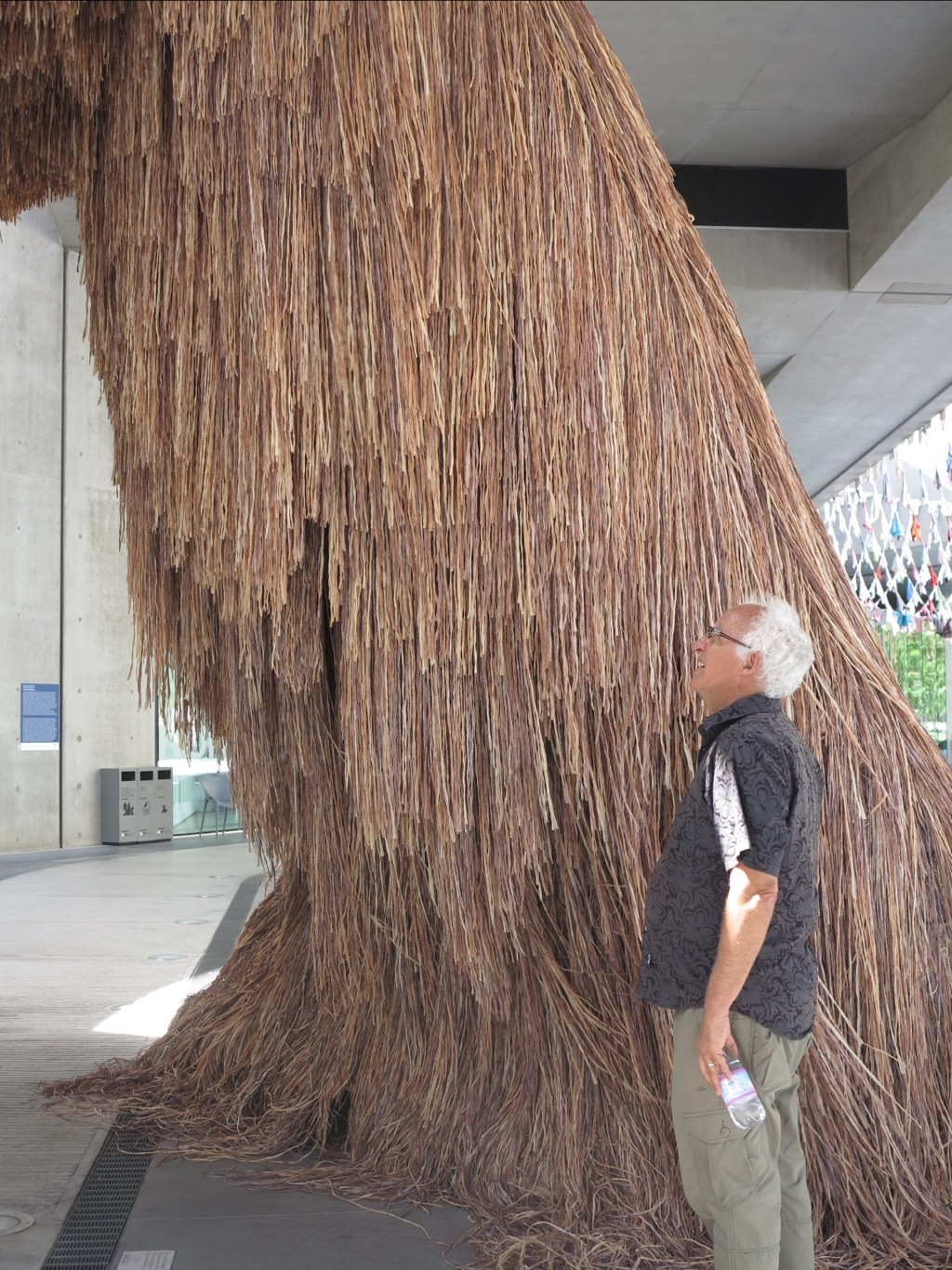
Later in the afternoon, on our own again, we made our way to Maxii, a contemporary art museum, where there this wonderful creation loomed outside the main entrance.

20120715-152507.jpg

Inside, the building was intriguingly maze-like with ramps and mezzanines and bridgeways, but I was unmoved and/or mystified by most of what I saw, the main exception being an exhibition of photographs by Paola de Pietri. These were gorgeous images of landscapes along a European border, of places – according to the curatorial statement – where there had been bitter fighting in the First World War: trenches worn smooth and partly filled with snow, others like scars near the crest of a hill, bunkers that could have been the remains of ancient shepherds’ huts, stony terrain, peaceful meadows. The impact was huge.

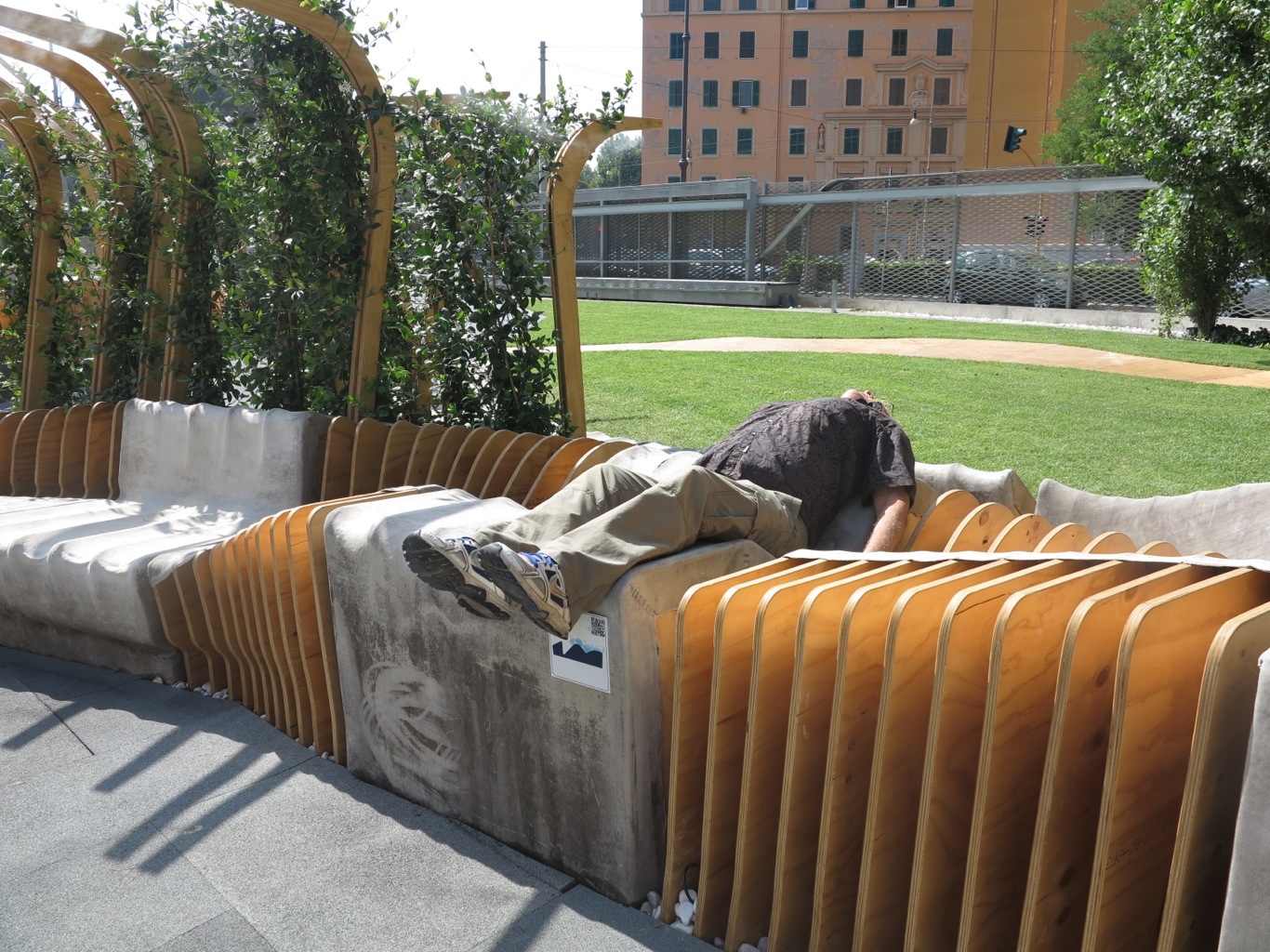
There was a beautiful presentation about a competition for young designers to make use of an area at the front of the museum. Each set of finalists discussed their project in larger than life video, while a written account of it scrolled down the wall, and a model and drawings could be perished at leisure. An even larger video showed the massive works involved in constructing the winning project. We ventured out to experience the finished thing. There were many seats made from slotted ply and cement, made to accommodate the human form in a variety of postures indicated by tiny ideograms. Sadly, whichever posture you chose, the seats were intolerably uncomfortable. I gather it’s not the first time a design competition has been won by something totally impractical.

20120715-152527.jpg

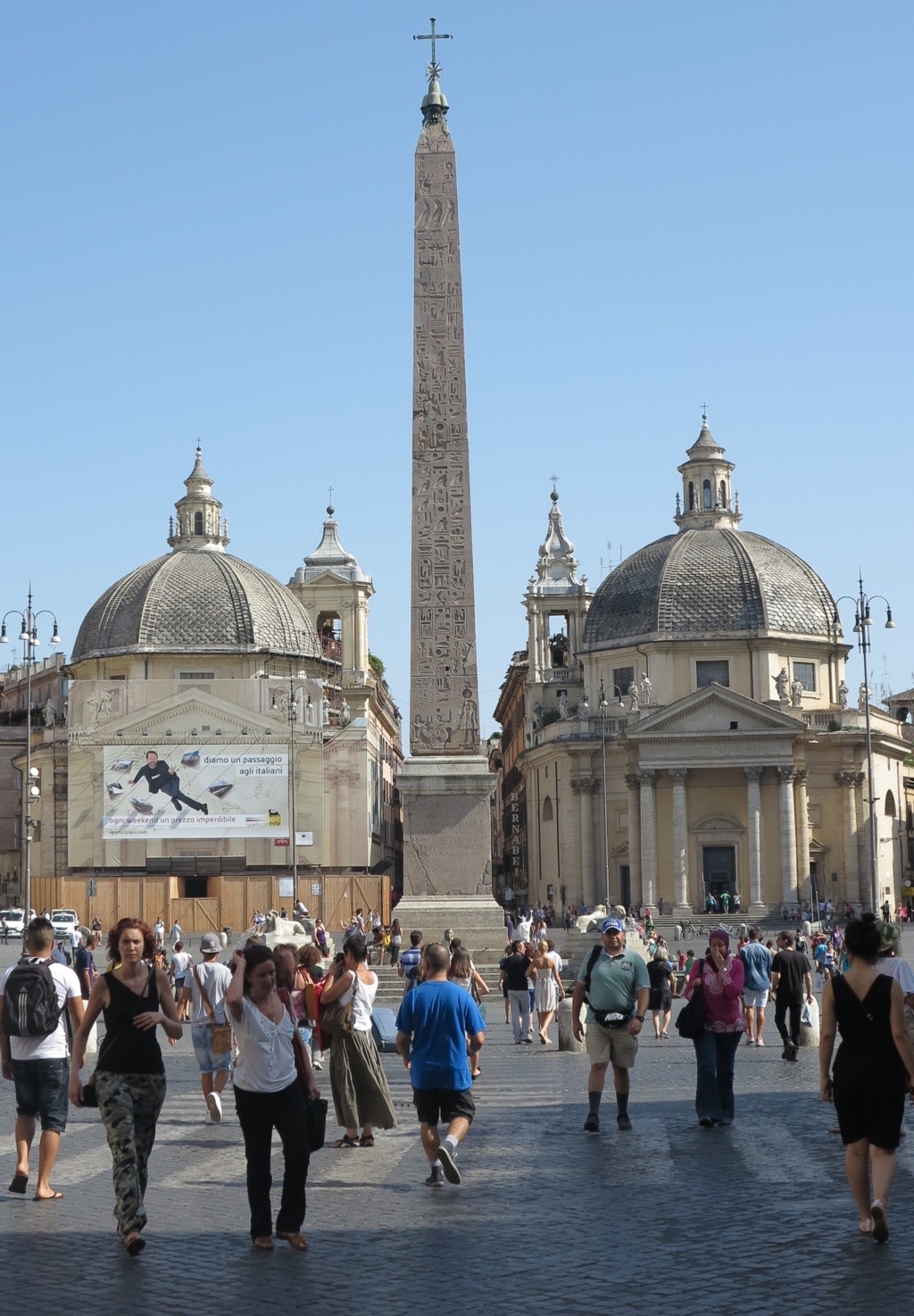
This being Rome, we passed the odd antiquity and renaissance grandiosity on the way home.

20120715-152438.jpg

At dinner time we walked to a little trattoria around the corner by way of St Peter’s square.

Sunday morning we walked – by way of Piazzo Navona, the statue of Pasquino, Campo Dei Fiori with its looming statue of Giordano Bruno who was burned there, and a caffe where no one could tell us how to get to the Musei Capitolini (‘Non lo so! Sono di San Giovanni, io) – to the Vatican archives exhibition.

Bernadette Soubirous wrote to one pope in a tiny neat handwriting, wishing him a holy life. Voltaire wrote to another congratulating him on his excellent Latin. A couple of popes wrote decrees establishing themselves as the supreme power on earth. A community of Native American Catholics wrote to the pope of their time. A Moroccan ruler wrote asking the pope to appoint a decent man to replace a recently deceased archbishop. More than one decree was issued ending the schism between the Roman Church and the Greek Orthodox Church. All of these documents were filed away in the Vatican archives, and all are among the hundreds of items on display.

There is a huge scroll, of which about four meters are exposed, containing the evidence taken against the Knights Templar. There’s a sizeable piece of paper beseeching the pope of the time to allow Henry VIII’s marriage to his first wife to be annulled, and hanging from the paper on leather thongs are the seals of the members of the House of Lords, at least fifty of them and every one elaborate. Photography was forbidden and there were no postcards. I gnash my teeth.

We had a quick look down on the forum below the Capitoline hill, a quick pasta lunch, a quick moment of respite from the heat at our hotel, then we were off to the airport. I’m typing this on the plane from Frankfurt to Singapore. The holiday is all but over.

Hilary Mantel brings up the bodies

Hilary Mantel, Bring up the Bodies (Fourth Estate 2112)

20120704-175516.jpg I’m probably the only person of my generation whose grasp of what it was like to live in the courts of the Tudors comes mainly from an article written for The School Magazine by award winning children’s novelist and occasional commenter on this blog, Cassandra Golds. ‘The Princess in the Tower’ focused on Elizabeth, imprisoned during the reign of her half sister Mary, but there’s a memorable paragraph . It likens the court to a jungle where elegant people circled each other like wild beasts, seeking the advantage. Sadly, I’m writing this far from home, so can’t give you a quote. (Cassandra, if you read this, maybe you could add one in the comments section?) [Added later: Cassandra has commented with the passage which is even more apposite than I had remembered. Thanks, Cassandra.]

Even more than Wolf Hall, to which it’s a sequel, Bring up the Bodies validates that image in its portrayal of the court of Henry VIII. But at its heart there’s Thomas Cromwell, no wild beast but a methodical tactician, serving the king and good of the kingdom, receiving insults with apparent stolidity but forgetting nothing, keeping his own counsel, taming some beasts and destroying others.

I was reading this in a cafe in Goreme in Cappadocia, when an Australian woman (the cafe offered a decent flat white, much sought after by Australian coffee drinkers) called from several tables away.

Australian flat-white-drinking woman: ‘How are you finding that? I loved Wolf Hall but I found that one a bit hard to get into.’
Me: I’m loving it. I think it’s miraculous the way she gets right inside the minds of people from that time.
Australian flat-white-drinking woman’s grey-haired male companion: it’s all in the mind.
Me: Um, yes.
AFWDWGHMC: It’s past lives.
Me: Oh, you think Hilary Mantel was there in a past life.
AFWDWGHMC: Not just her, everybody.
Me: Well, that’s a conversation stopper if ever I heard one. (I didn’t say that, I just wish I had.)
AFWDWGH: She’s written another book, you know, a nonfiction book called Anne Boleyn, Witch.

So there you are. If anything was going to make me believe in past lives, it might well be this book. And if Hilary Mantel has written that nonfiction book, I wish she had spent the time on the next novel about Cromwell. It’s not that I want to see him get his comeuppance, as of course he will. I just want more of him. And I worry about his sweet, naive son Gregory.

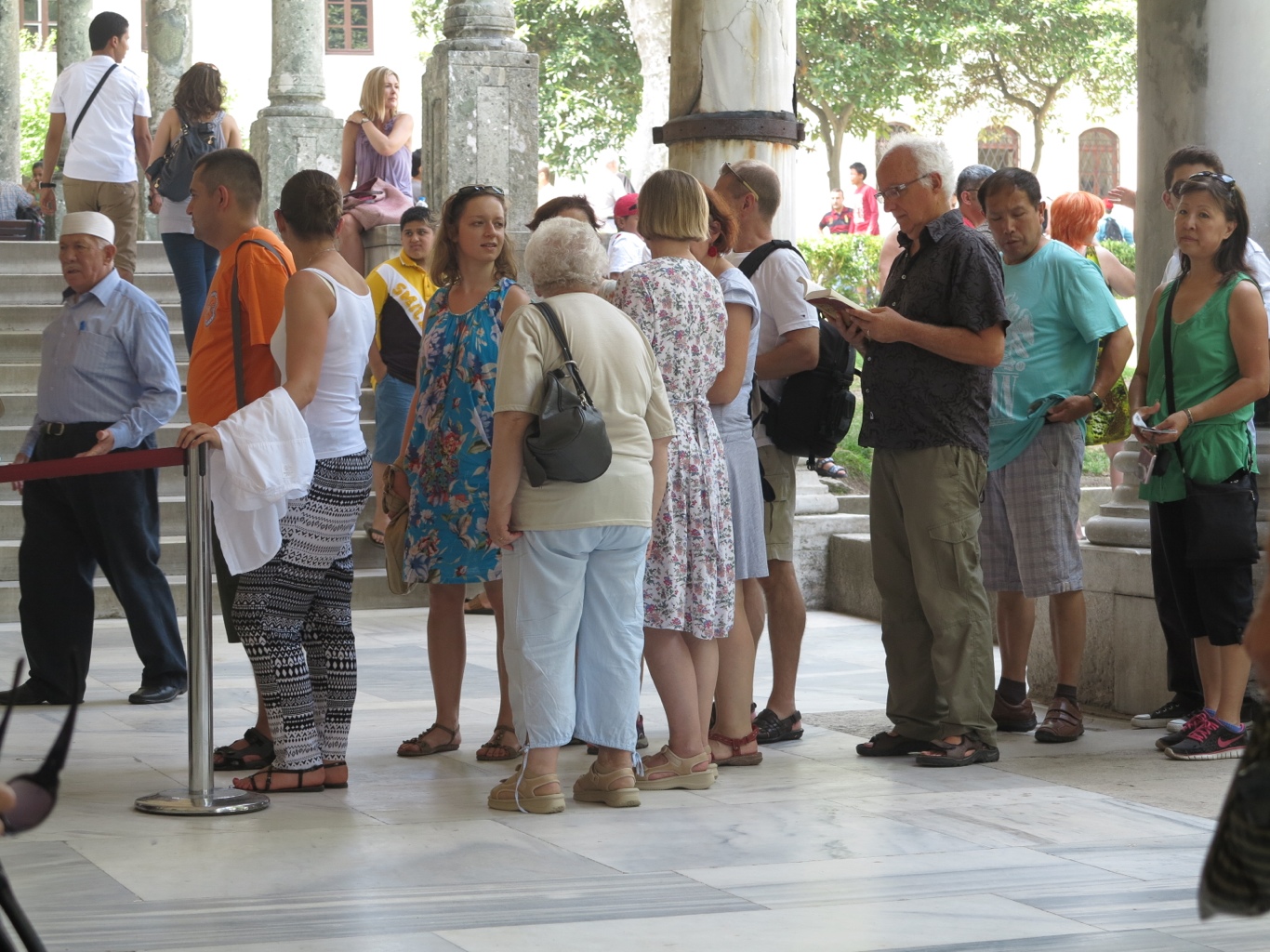
PS: I read this in Turkey, among relics of rulers at least as much at the mercy of their whims as Henry Tudor. I wonder how English history might have gone if Henry could have had a harem. Surely if he had four wives at a time the need to have a son might have been less desperate. Mostly I didn’t take the book on outings, preferring to take thinner volumes. But here I am, reading it in the queue to see the treasures in Topkapi Palace.

20120715-133643.jpg

Tourist fashion in Istanbul

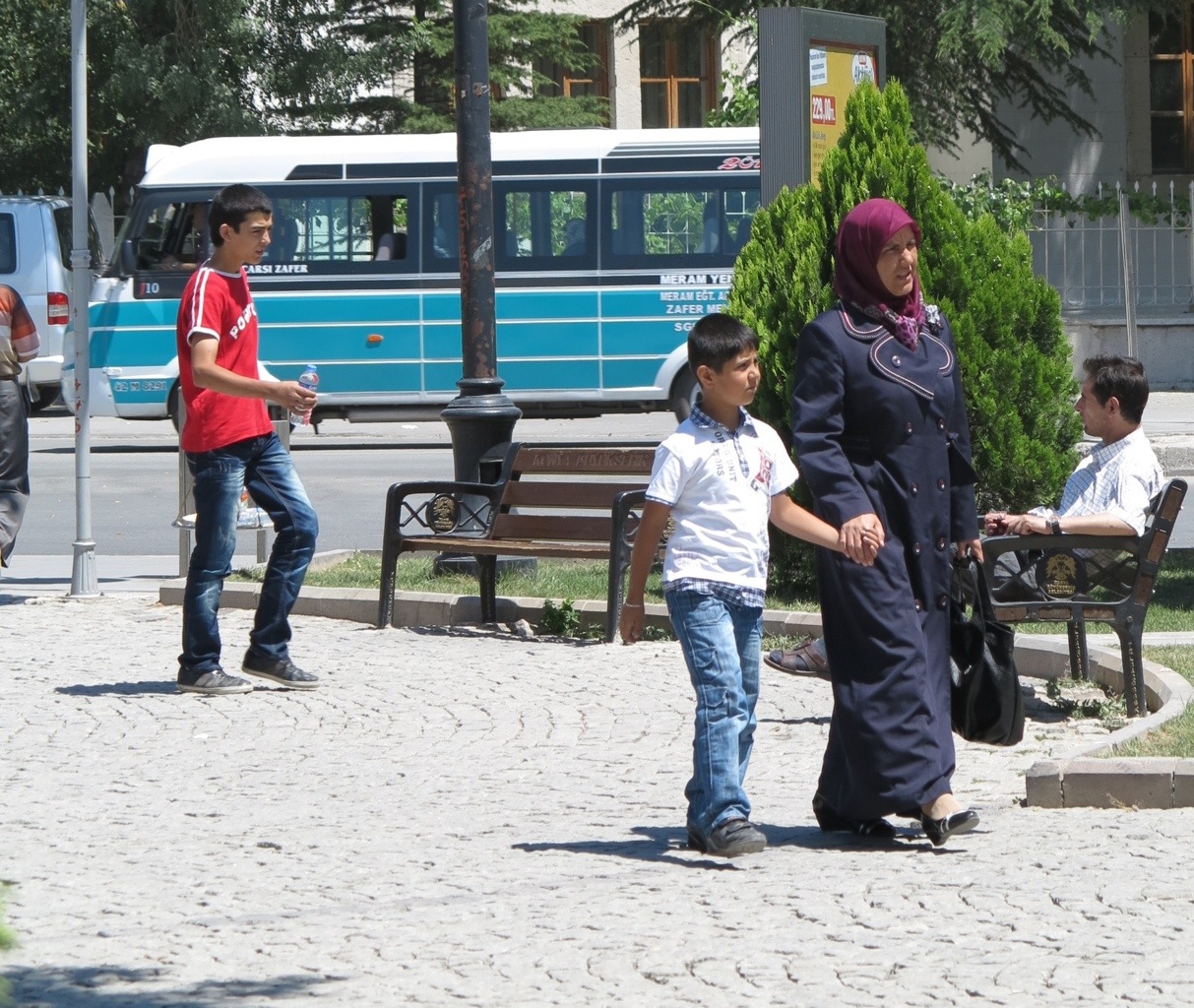
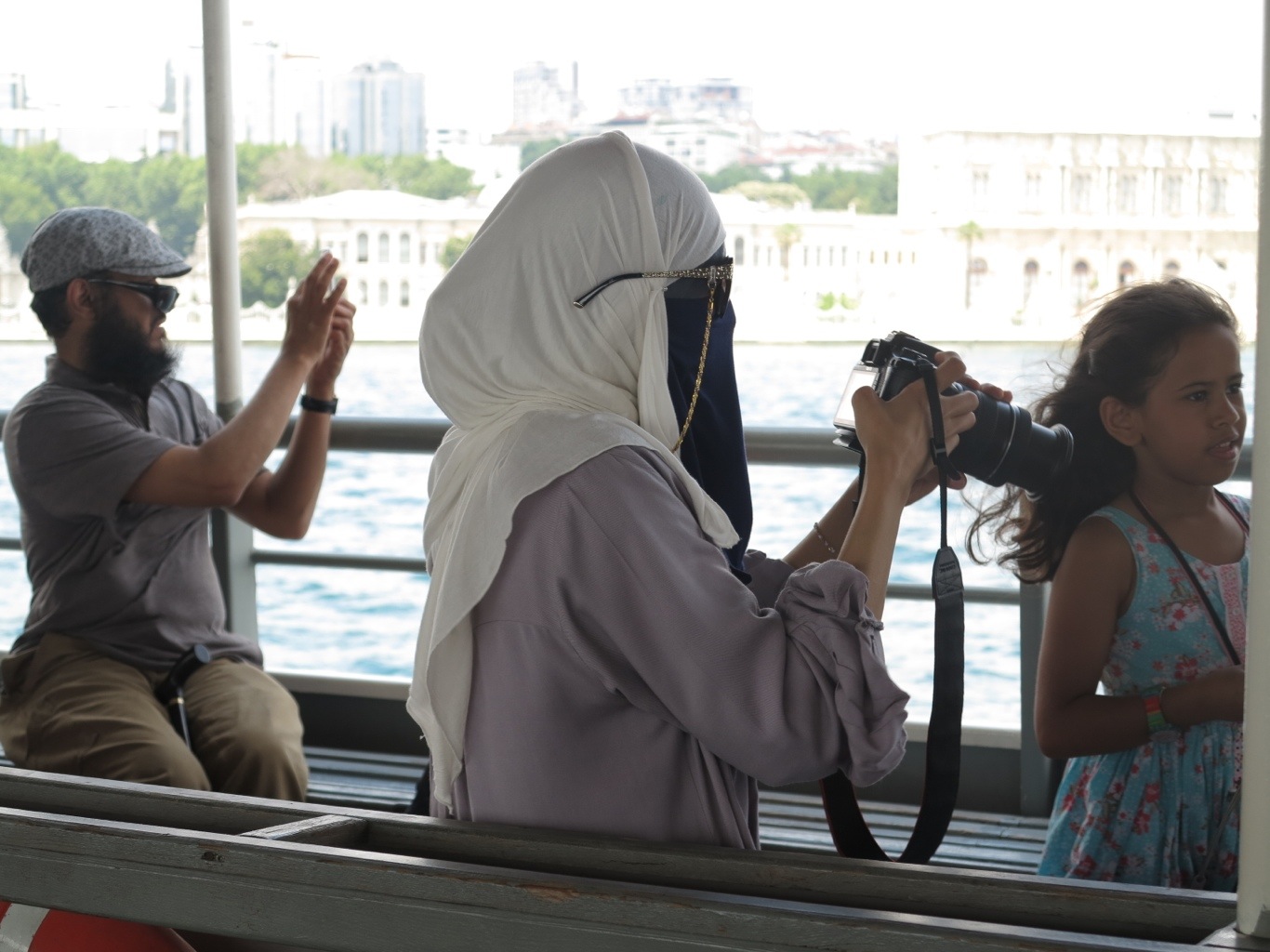
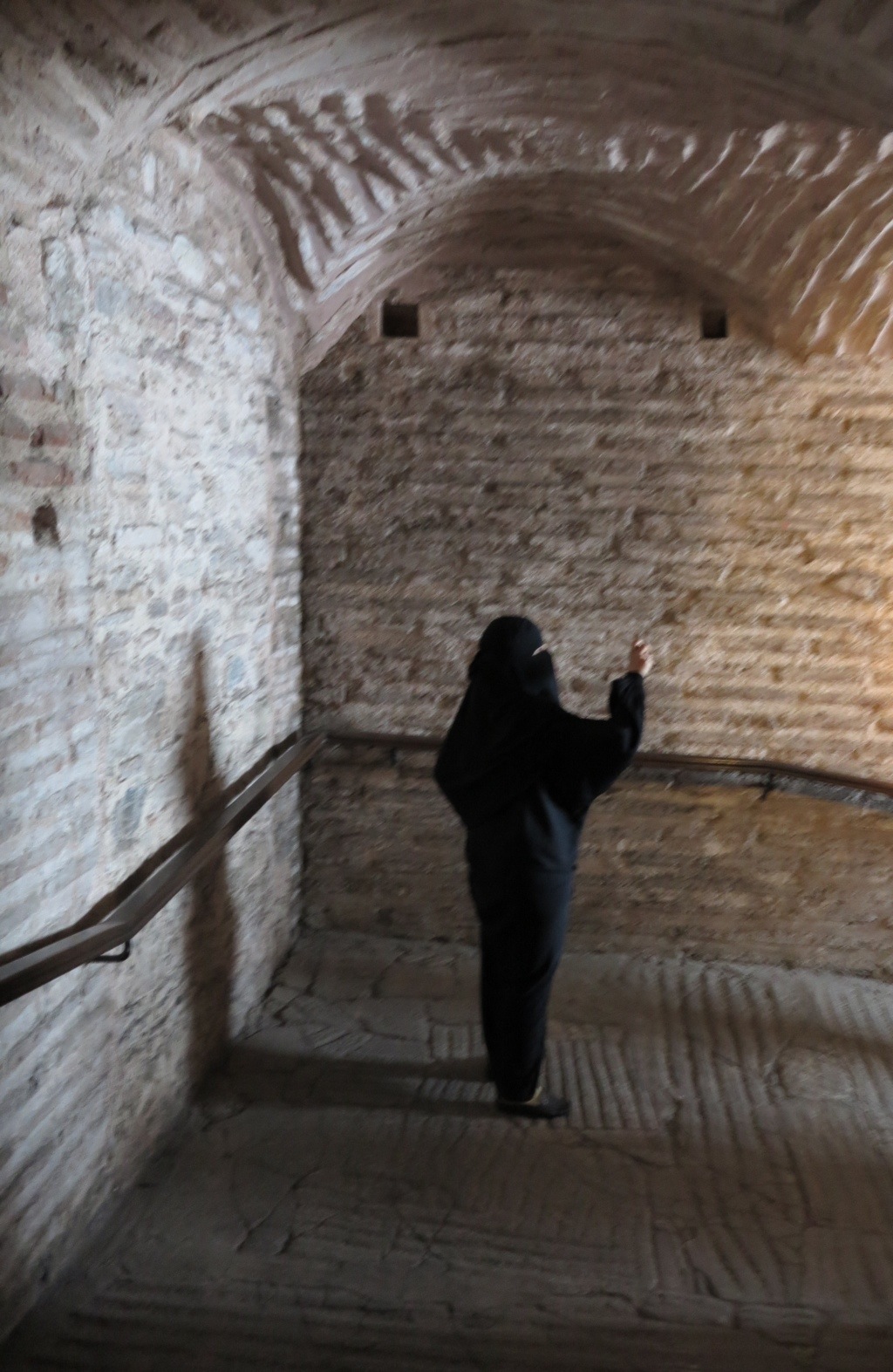
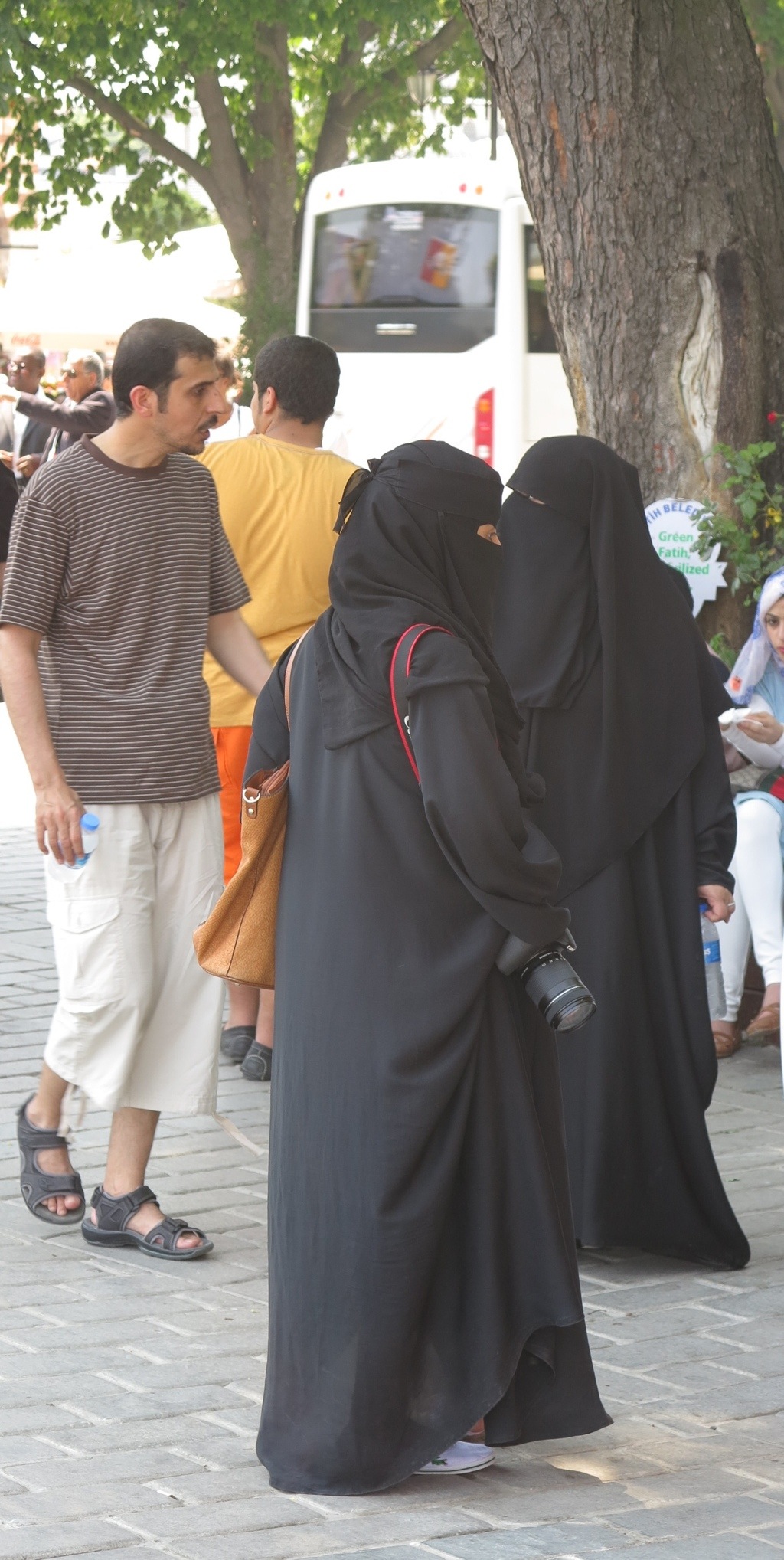
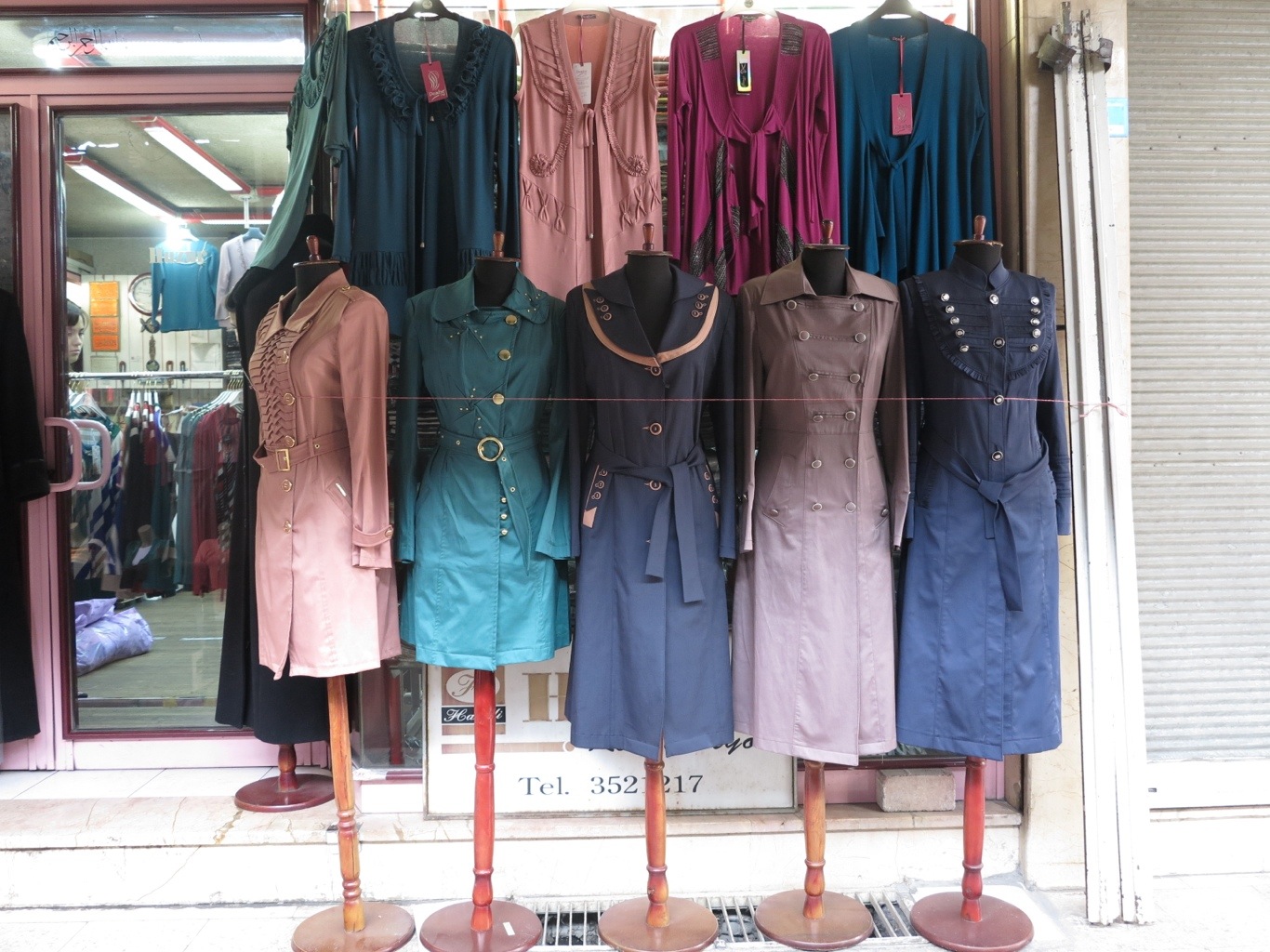
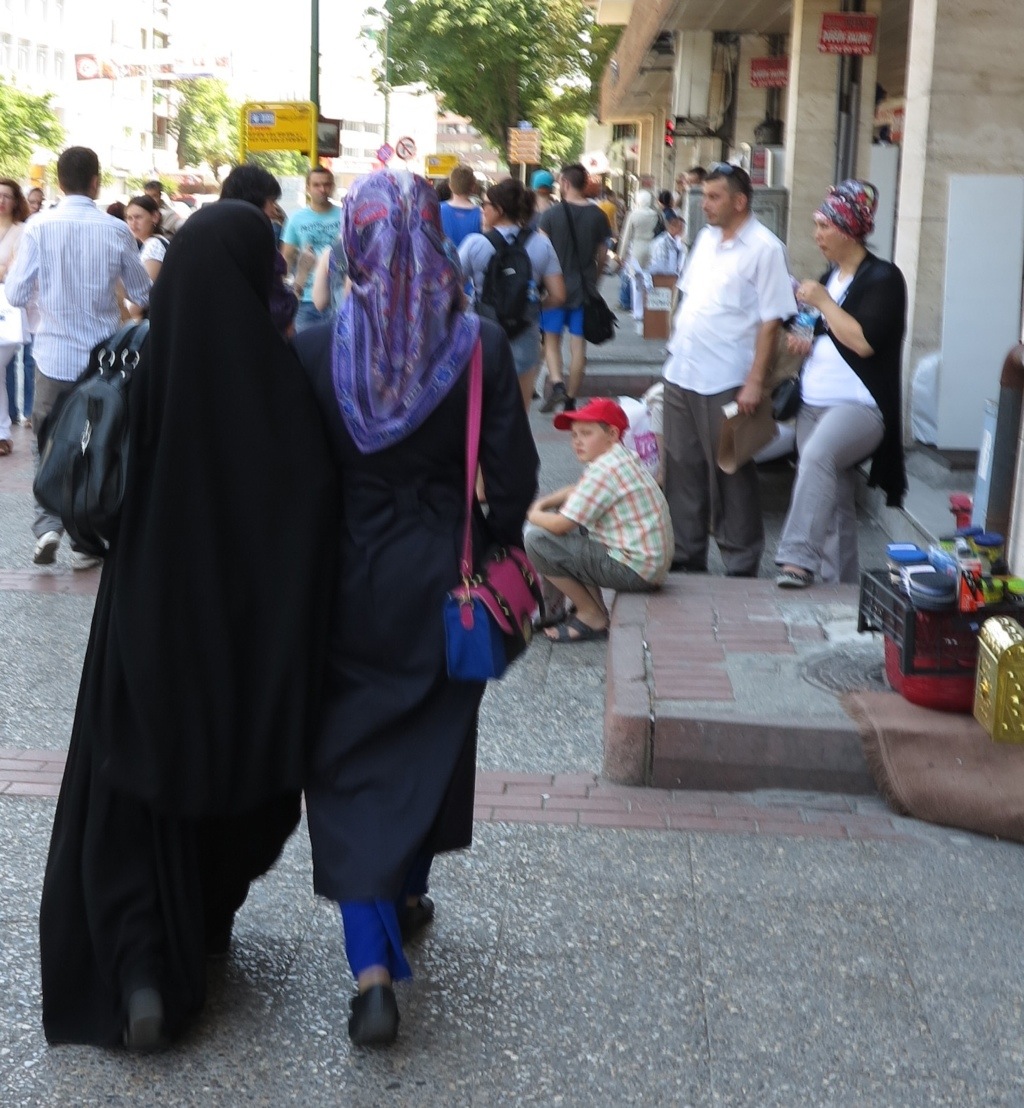
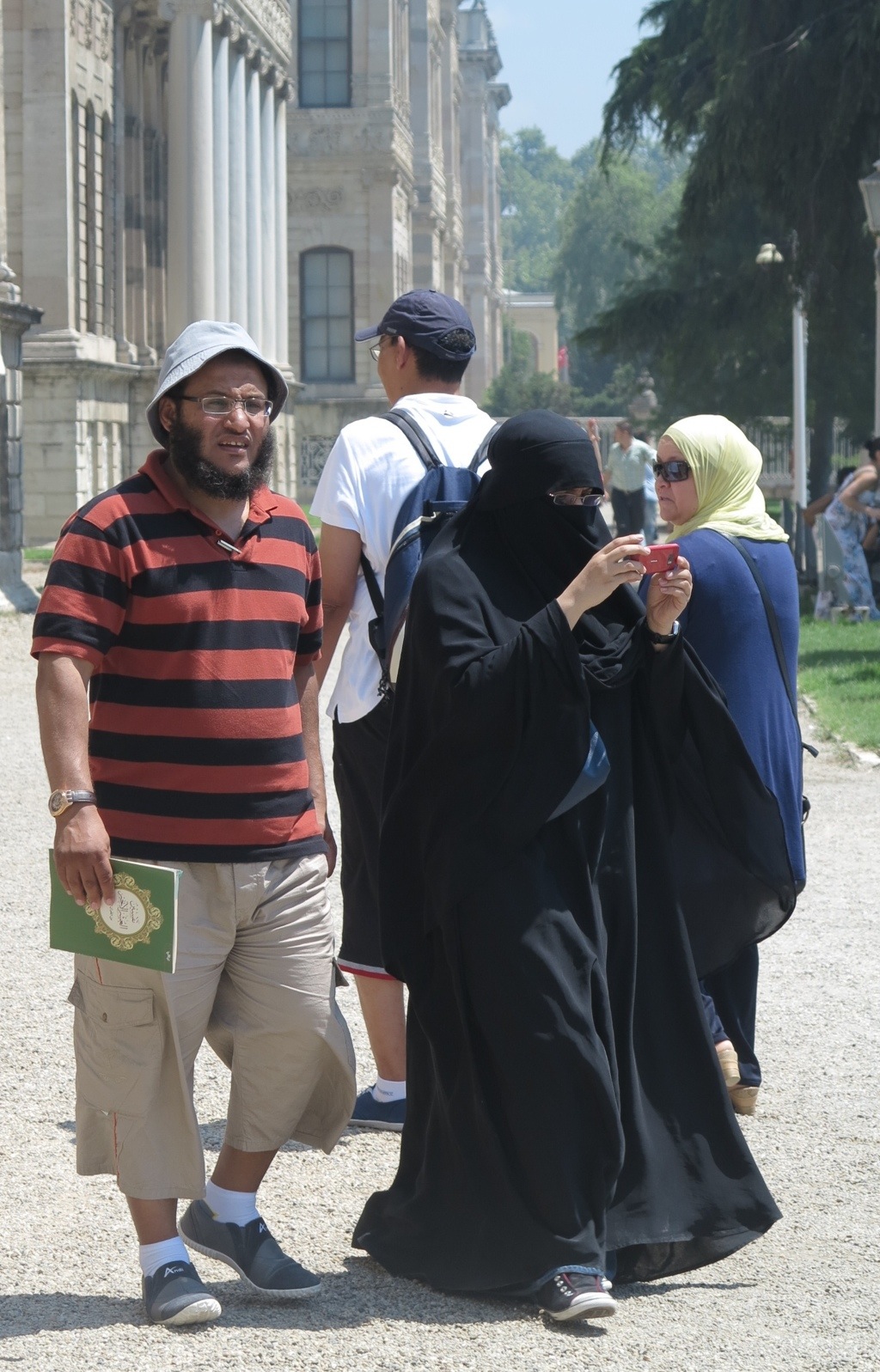
One last post on Turkey. My companion, known here as the Art Student, was fascinated, even obsessed with the many women tourists in Istanbul who were dressed in black from head to toe, faces veiled and even sometimes hands concealed by black gloves. She was indignant that their male companions were very often wearing shorts. Far too hot for a man to wear long pants, they seemed to say, while the women simply sweltered. Paradoxically, many of these women carried cameras. We did see some lowering the veils to below their chins so as to be photographed, but mainly they took snaps and remained themselves unsnappable. Traditional Turkish attire for women involving garments resembling trench coats of varying lengths and colours, didn’t look much cooler, but at least the women showed their faces in public,

20120709-192838.jpg

20120709-192911.jpg

20120709-192937.jpg

20120709-193007.jpg

20120709-193043.jpg

20120709-193305.jpg

20120713-075633.jpg

My trip to Turkey 13: Istanbul days 7 to 9

Our last two and a half days in Istanbul were interesting, but there doesn’t seem to be a lot to blog about. We bought presents for people back home. With no sense of paradox at the time, the Art Student bought two books about Turkey and I bought a miniature painting of a bearded Sufi. The Art Student came down with a tummy bug that may have had something to do with eating an unwashed nectarine. Several men wished us a happy honeymoon – whatever the Turkish is for blarney, there’s a lot of it around in Sultanahbad. Several more told us that ‘Aussies’ are their favourite tourists because we have a sense of humour. (There may be a kind of truth in that, as Australian and Turkish senses of humour show signs of great compatibility. My best example of this was somewhere in Anatolia when a chickpea stallholder demonstrated to me how he could tell from our faces that I was a visitor and Burak, our tour leader, was Turkish: he pointed at me and his face became a picture of wide-eyed, mildly idiotic curiosity; he pointed at Burak, actually a very cheerful person, and became the personification of long-suffering grimness. Burak and I both enjoyed the performance.)

We weighed up the pros and cons of a Bosphorus Cruise, a night at the opera (which would have let us see the inside of Haghia Irene), a Turkish dance performance that’s Istanbul’s top rated attraction on TripAdvisor, but ended up not opting for any of them.

We did go on two excursions, each to places off the beaten track for which getting there was a good part of the fun. The first, on day 7, was to the Elgiz Museum of Contemporary Art. We gleaned from Time Out Istanbul and the museum’s website that the museum was in Maslak, 20 k or so out of town. Wikipedia told us to catch the Metro from Sishane. This we did, and the metro is a striking contrast to the tramvay – quiet, smooth, with plenty of available seats and passengers who could have been from a city that’s not infested with tourists. At our second stop, a couple of older men tried to tell us something, including, mysteriously, that we had to get off. We did as we were told, and then understood, because the train almost immediately went back the way it had come. We managed to get on one going in the direction we wanted, but … Wikipedia had said to go to Maslak station, and there was no such place on the metro map. We finally asked someone, ‘Maslak?’ He didn’t speak English, but led us to the map and showed us the stop we needed, Ayazaga ITU, which we had just passed. So we swapped trains once again, and soon we were there.

Like Sydney’s White Rabbit Gallery, this is a private museum set up to exhibit its owners’ collection. It was well worth the effort to get there. A charming young woman greeted us warmly, told us a bit about the gallery and the collection, and engaged in arty conversation with the Art Student. We had a good time strolling around. There was contemporary Turkish art displayed alongside work from Europe, the US and China – nothing from Australia, though our hostess said she’d like it to include some Aboriginal art. My favourite pieces were a shiny evening dress made from beetle carapaces and in the sculpture courtyard a marble Cybele (that is, the many-breasted Athena of Ephesus) only without the arcane insignia and – such a relief – nipples on her many breasts. Here are a couple of the Art Student’s snaps.

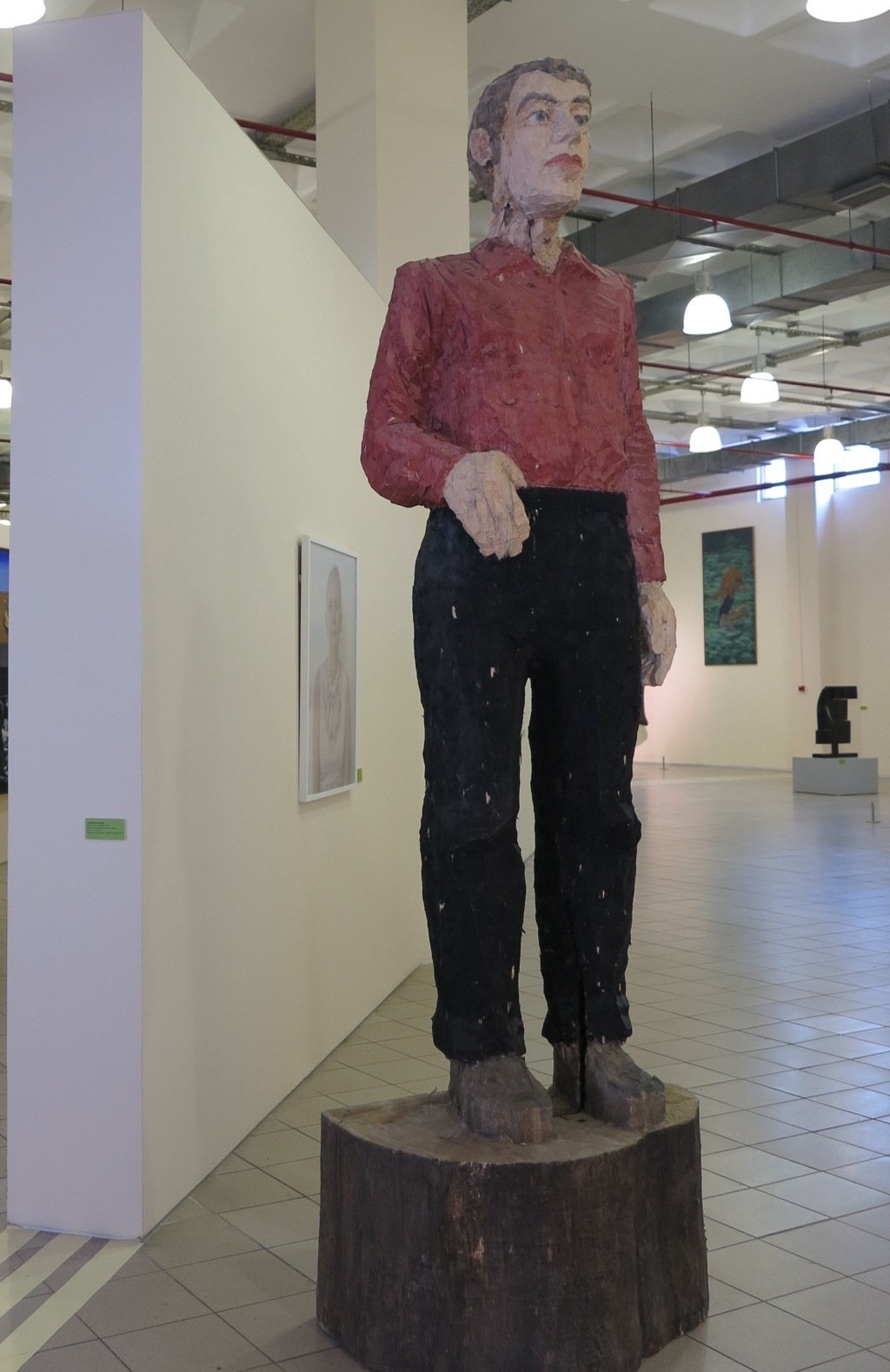
Stephan Balkenhol’s Big Man 2002

20120714-092251.jpg

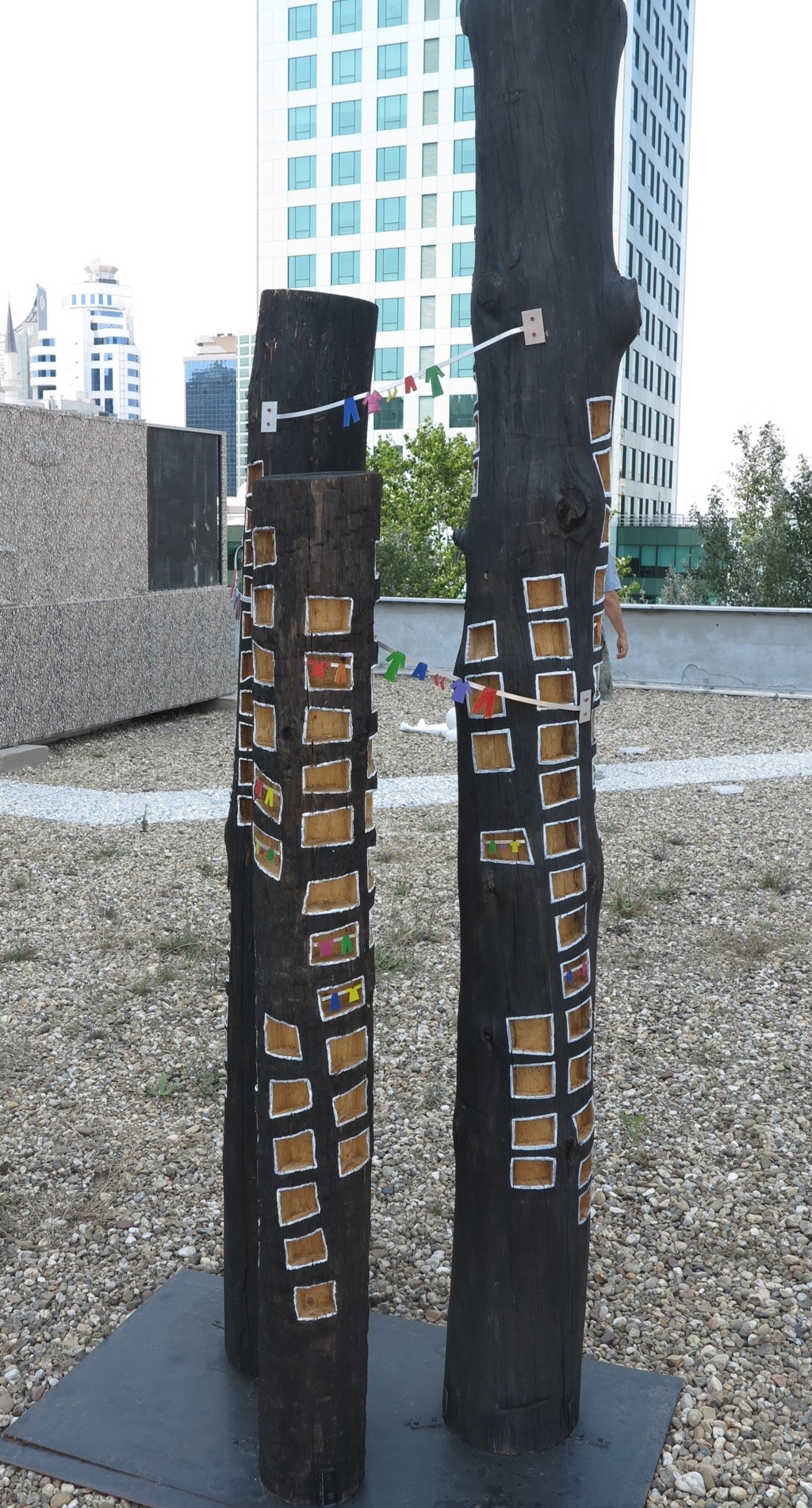
Ayla Turan’s Letter to the Neighbour Unknown, 2112, in the new rooftop sculpture garden

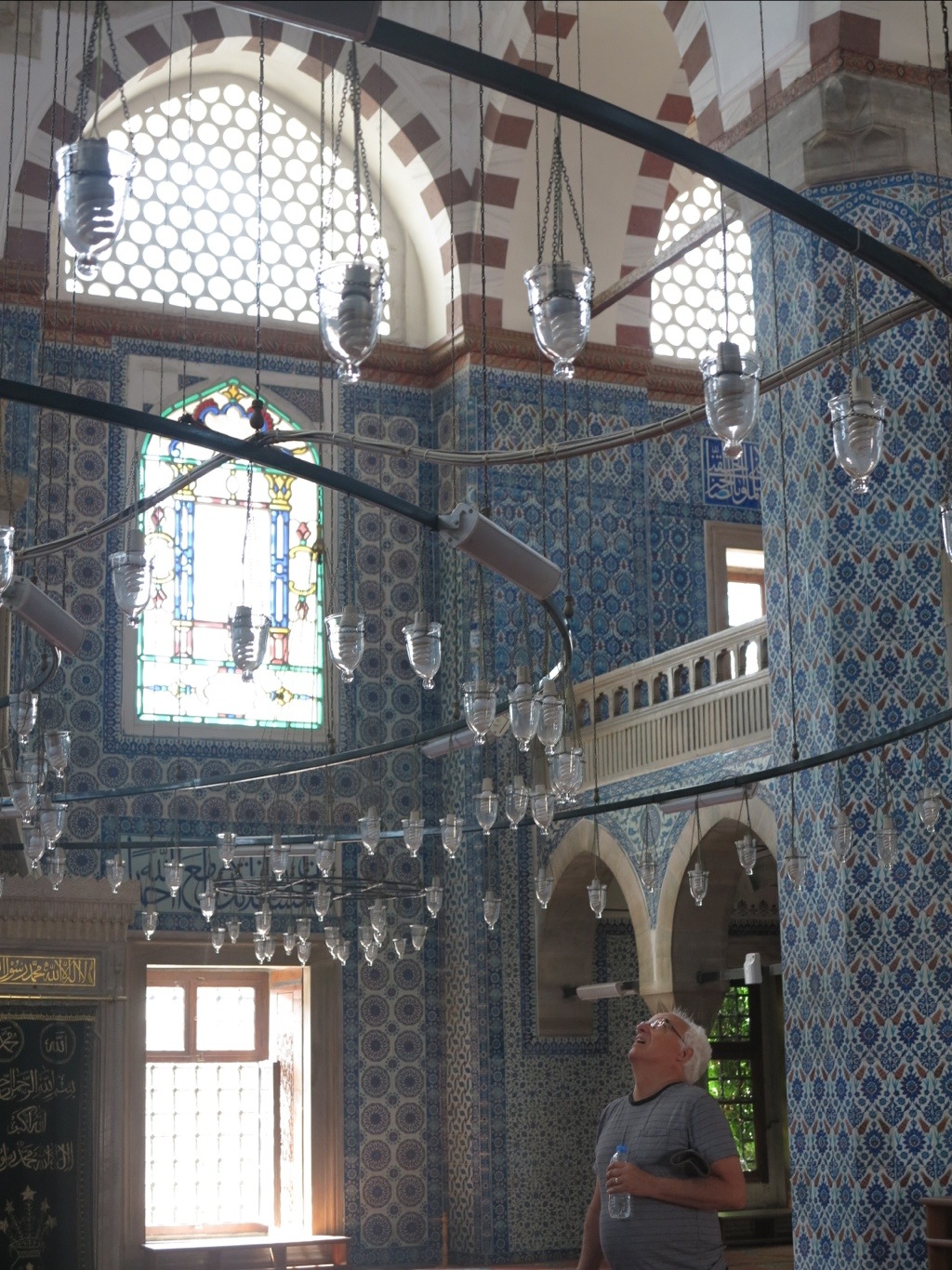
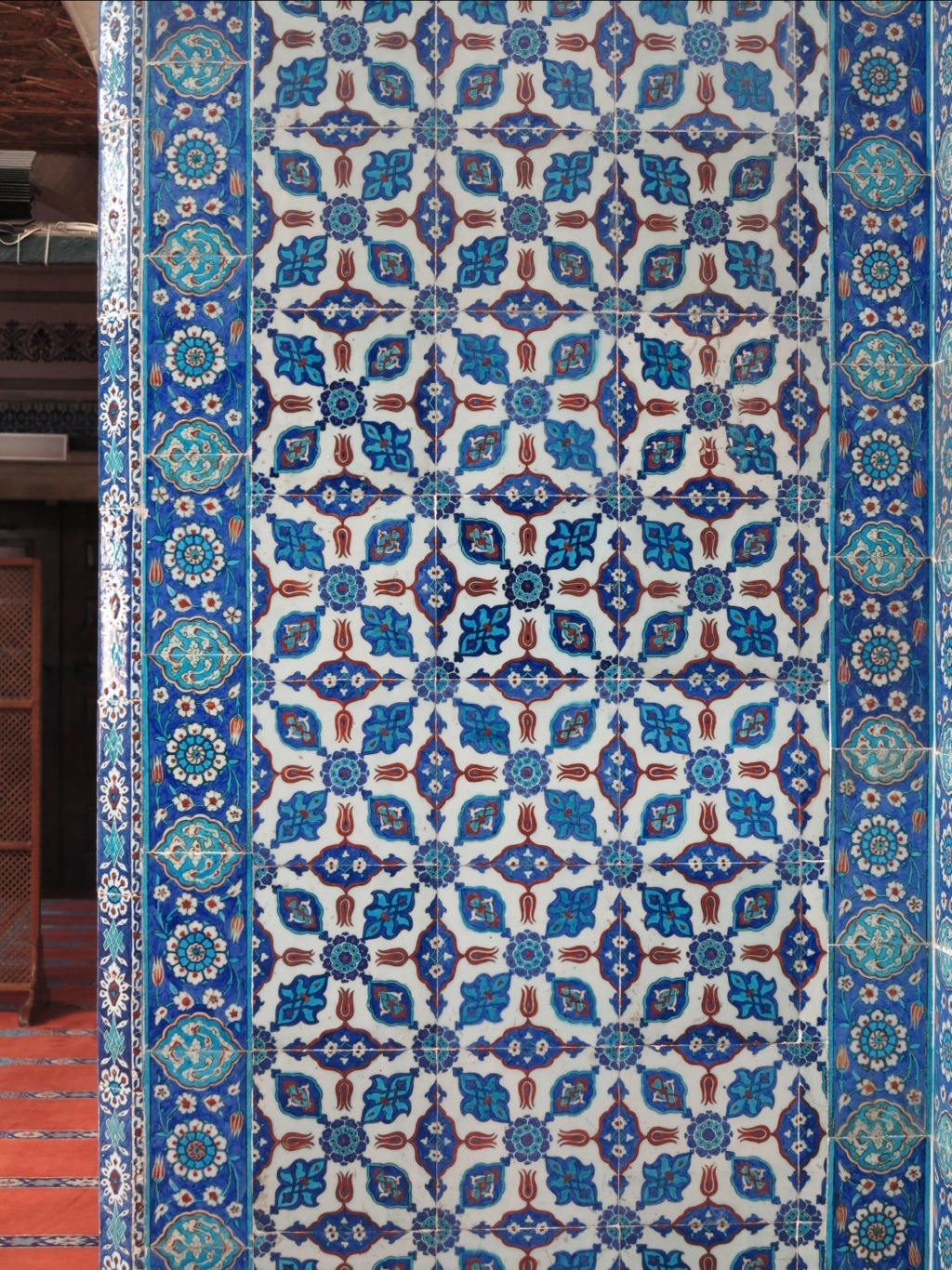
The other excursion, to the Rüstem Pasha mosque, took two attempts. We had visited this tiny mosque on our first day with Intrepid. I wanted to see again, the Art Student was ‘over mosques’, so on Day 8 I left her alone and queasy in our luxurious hotel room and struck out by myself. I didn’t have a map, but I knew its general location. The Fatih municipality has deployed hordes of keen young people in bright blue T shirts to help tourists. My quest turned out to be an opportunity to get into conversation with a number of them. None had heard of the mosque, and it wasn’t on the map they had been issued. With the third group, I said I thought it was near the tomb (‘Toom?’ ‘Turbe.’ ‘Ah! Turbe!’) of Sinan the Architect. We found the tomb on the map, but after trying to tell me how to get there (‘Go through Gate 2 of the Great Market and turn left …’), they offered to come with me. So I wandered through the narrow streets with two university students, studying environmental engineering and child psychology respectively, and a high school student. I don’t know about them, but I enjoyed our awkward conversation hugely. I now know that the best football team in Istanbul is Galata Sarayi, and the names of the others don’t matter at all. I know that the women with veiled faces around old Istanbul are Definitely Not Turkish. I know that the level of English taught is high school in Istanbul is very high. We found the tomb. I had misremembered: it was right outside Suleyman’s great mosque. I gave my young guides my email address and went into that beautiful structure for a moment, before inadvertently taking a long way back to the hotel.

This morning, on our last day, we set out together to find the Rustem Pasha mosque. This time, armed with a map that showed it as clear as day, we found it with only a little confusion, turning right in the spice market where we should have turned left. And then a street vendor had parked his pretzel cart in front of its modest gate and we almost missed it. Once inside, it was every bit as beautiful as I remembered.

20120714-092739.jpg

20120714-093345.jpg

Goodbye Turkey, land where a man will say you break his heart by offering 45 lira instead of the 49 he’s asked for, then refuse the four lira you hold out to him, where two vehicles come face to face in a single lane street that’s marked as one-way and the drivers negotiate cheerfully the question of who will back up, where the call to prayer drowns out conversation five times a day and waiters make jokes about your manhood if you don’t drink alcohol, where a hotel employee will say to an embarrassed guest who has no small notes for a tip, ‘The tip does not matter. The humanity is important.’ Goodbye sweet Turkey.

20120714-094404.jpg

(Written on the plane to Rome.)